
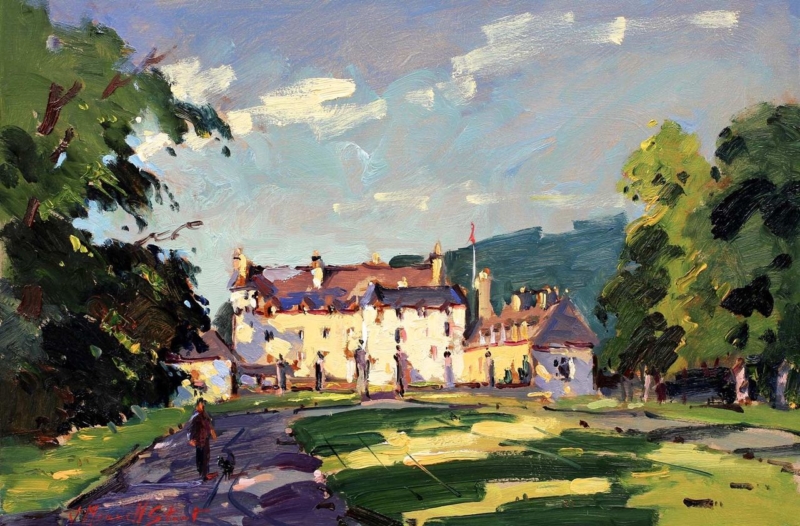
Art for a hallway works especially well when the composition seems to extend the route through the home. In Traquair House, a curving approach leads between deep trees toward a sunlit historic house. That progression can give a narrow or windowless passage a welcome sense of destination.
Position art for a hallway along the natural sightline
Look from the doorway
Choose the wall that remains visible as someone enters and moves through the hall. The bright building should read before the smaller figures and garden detail.
Relate the frame to the route
Align the work with a console, radiator cover or strong door frame. This makes the landscape feel connected to the architecture rather than floating between several openings.
Check evening glare
Hall lighting often sits close to the wall. View the proposed position after dark and move the frame away from a direct reflection if the facade becomes difficult to see.
The warm house and lawn can relieve a cool passage, while the large areas of sky and shadow provide breathing room. Keep nearby objects low so the painted path remains visually open.
Preserve the light that draws the eye forward
The appeal lies in the contrast between shaded trees, loose brushwork and the luminous facade. Colour-managed Giclée reproduction keeps those values separate. A bespoke frame adds an orderly edge that suits the hallway without making the painting feel formal or remote.
To understand the history and setting represented in the painting, visit the official Traquair House website. Browse the Joseph Maxwell Stuart collection, or view the exact Traquair House framed print.
When choosing art for a hallway, Traquair House offers more than decoration: its path, light and welcoming architecture can make movement through the space feel purposeful.