
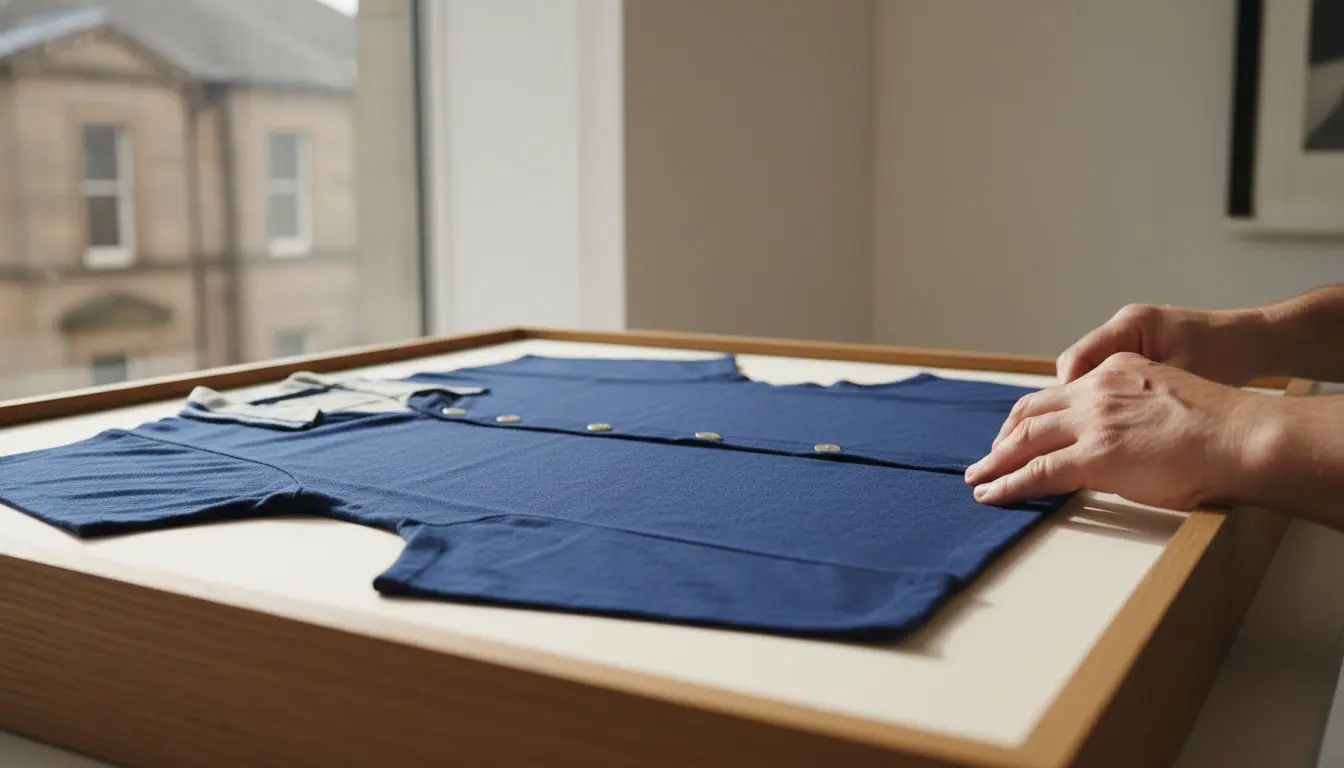
Last Tuesday, a customer arrived at our First4frames gallery clutching a 1966 World Cup jersey, terrified that decades of storage in a cardboard box had already started to yellow the cotton fibres. You likely have a similar treasure tucked away in a dark drawer, whether it is a vintage christening gown or a signed sports shirt, because you fear that displaying it might lead to permanent damage. It is a valid concern; roughly 65 percent of textile collectors cite light damage and improper mounting as their primary worries when considering preservation.
We believe your memories should be the bridge between your room décor and your personal history. This guide will teach you the professional secrets of framing a piece of clothing using conservation-grade techniques that avoid harmful glues or staples. You will learn the vital differences between shadow boxes and standard frames, while we also compare DIY costs against our bespoke, 4.9-star rated professional framing service. From selecting the perfect mount to understanding how our artisans protect delicate fabrics, you will gain the confidence to transform your heirloom into a spectacular piece of fine art that lasts for decades.
Key Takeaways
- Understand how a bespoke frame acts as a “bridge” between your room’s colour palette and the unique history of your cherished garment.
- Discover the professional materials required for framing a piece of clothing, including deep-profile shadow boxes and acid-free mount boards to prevent yellowing.
- Learn the essential steps for preparing your textile, from safe steaming techniques to creating custom support inserts for a professional, “filled” appearance.
- Gain inspiration for displaying diverse items, such as turning match-worn sports jerseys or delicate heirloom lace into stunning gallery-quality wall art.
- See how the expert artisans at First4Frames Gallery in Falkirk use 20 years of craftsmanship to provide a seamless, bespoke service for your preservation project.
Framing a Piece of Clothing: Why Preservation Matters
Framing a piece of clothing is the art of mounting a three-dimensional fabric item within a bespoke, glazed environment. At First4Frames Gallery, we view a frame as a bridge that connects your room’s current colour palette to the tangible history of the garment itself. It is a creative process that elevates a simple textile into a piece of fine art. Instead of leaving a vintage silk scarf or a child’s first pair of booties in a dark box, you can display them as a focal point in your home. Our team uses over 20 years of experience to ensure these items are presented with the professional care they deserve.
To see this process in action, watch this helpful video showing how a professional handles a sports garment:
There is a significant psychological benefit to displaying “hidden” memories. Moving an heirloom from a dusty loft to a living room wall changes your daily interaction with your own history. We’ve helped customers preserve a wide range of items, including:
Alongside these tangible keepsakes, many people are now preserving their stories and voices for family members. If you want to explore ways to capture personal video messages for the future, you can discover Picture-Yourself-Remembered™.
- Signed football and rugby jerseys.
- Vintage designer scarves and pashminas.
- Military uniforms and medals.
- Delicate lace christening gowns and baby clothes.
Each project we undertake at our gallery is handled with a focus on longevity. Our excellent customer ratings on review platforms highlight our commitment to quality, ensuring that framing a piece of clothing becomes a permanent investment in your family’s heritage.
The Difference Between Standard and Conservation Framing
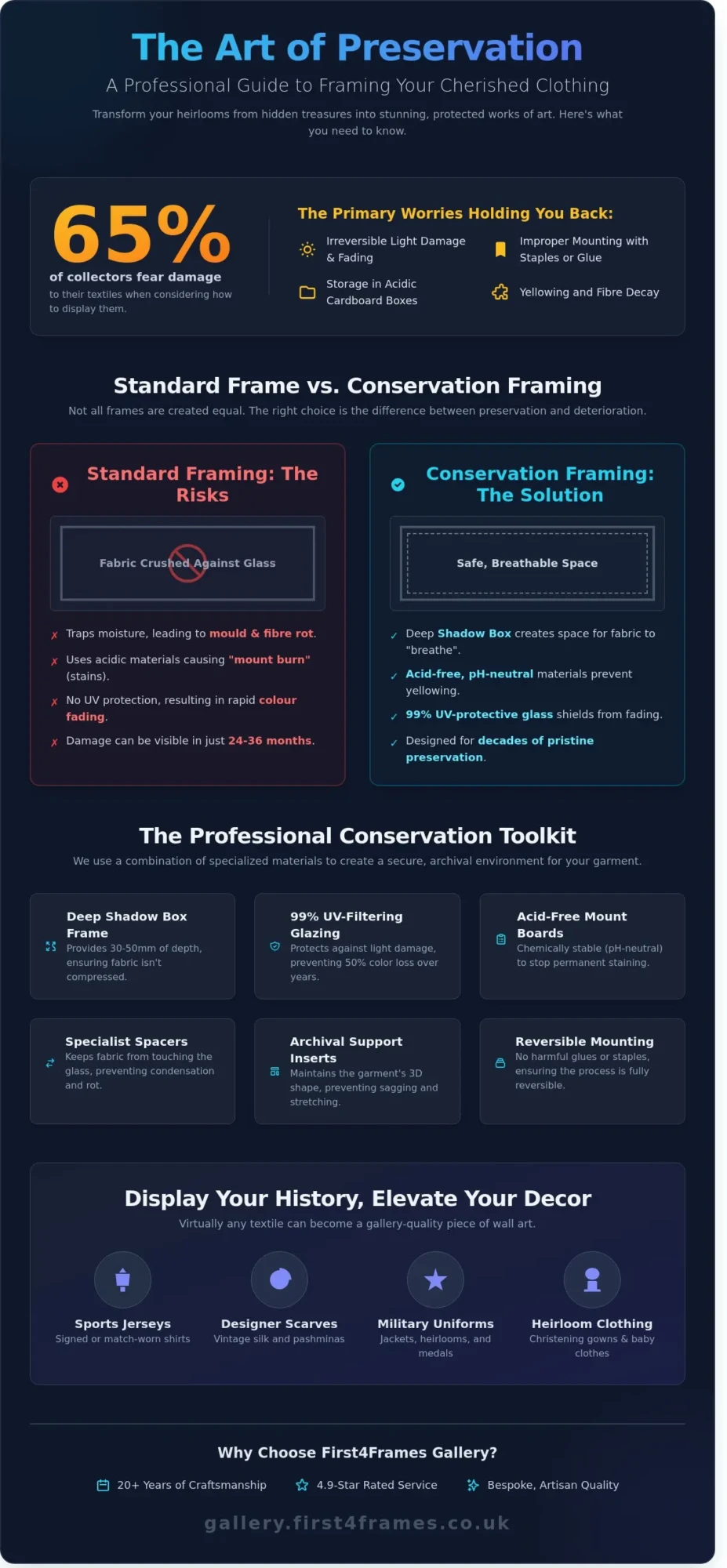
Standard frames often fail to protect organic fibres because they aren’t designed for the unique needs of textiles. They can trap moisture and acidity, which often leads to visible mould or “foxing” within 24 to 36 months. A shadow box frame is required to provide the necessary depth, ensuring the garment isn’t crushed against the backing. Conservation framing is the use of chemically stable materials to prevent deterioration. By adhering to the core principles of textile preservation, we ensure your items remain in pristine condition for decades.
Protecting Your Fabric from the Elements
UV light is a major threat to fabric, causing irreversible fading in sports jerseys and delicate silks. Without protection, a garment can lose up to 50% of its colour vibrancy if placed near a window for a few years. Fabric also needs to “breathe,” meaning it should never touch the glass directly. If it does, condensation can form and cause the fibres to rot or stick to the glazing. First4Frames Gallery uses specialist spacers and UV-filtering glass to create a safe, breathable environment. This meticulous approach is why we are a trusted professional for those looking to protect their most precious textiles.
Essential Materials for Professional-Grade Textile Framing
At First4frames, we’ve spent over 20 years perfecting the art of preservation. When you’re framing a piece of clothing, you aren’t just putting it in a box; you’re creating a bespoke environment that halts the clock on decay. Standard frames won’t do for a heavy woollen rugby jersey or a delicate silk christening gown. You need a deep profile frame, often called a shadow box, which provides the 30mm to 50mm of internal depth required to let the fabric breathe without being crushed against the glass.
The chemistry of your materials is just as vital as the frame itself. We use acid-free mount boards because standard wood-pulp boards contain lignin, which turns acidic over time. This leads to “mount burn,” those unsightly yellow or brown stains that can permanently ruin a garment. For more technical insights on textile safety, the Winterthur Museum provides excellent guidance in their resource Caring for Your Collections. By using pH-neutral materials, we ensure your memories stay as vibrant as the day they were first worn.
Protection from the elements is another priority. British sunlight might seem mild, but UV rays are constant and will bleach the natural dyes in your clothing within just a few years. We recommend 99% UV-protective glazing as the industry standard for any textile display. This shield, combined with internal support inserts made from archival foam core, maintains the garment’s shape and prevents the fabric from sagging or stretching under its own weight.
Choosing the Right Glazing and Mounts
Standard glass often creates a distracting mirror effect that hides the intricate weave of a fabric. Anti-reflective glass is the superior choice for textiles because it’s virtually invisible, allowing the texture of lace or the stitching on a sports shirt to stand out. When selecting a mount colour, we often look at the featured artists in our gallery for inspiration, choosing shades that highlight a secondary colour in the fabric rather than matching the primary one. You can find more detail on these combinations in our guide on Choosing Mounts & Glass for Your Artwork.
Archival Fastenings: Avoiding the ‘Glue Trap’
The biggest mistake in DIY framing is using double-sided tape or hot glue. These adhesives fail over time and leave behind a sticky residue that’s impossible to remove. For modern football shirts, we use stainless steel pins or tag guns with fine plastic fasteners that don’t rust or tear the polyester. For heirloom lace or delicate silks, hand-stitching with silk thread is the gold standard. It’s a time-consuming process, but it’s the only way to ensure the piece is held securely without any chemical damage. If you’re unsure which method suits your item, you can always browse our gallery services to see how our experts handle complex textile projects.
How to Frame Clothing: A Step-by-Step Guide
Framing a piece of clothing requires a delicate balance of artistic vision and technical precision. It isn’t just about putting fabric behind glass; it’s about creating a lasting tribute to a memory. At First4frames, we apply the same level of professional craftsmanship to your sports jerseys or vintage dresses as we do when mounting a bespoke piece of art from our gallery. Our team draws on over 20 years of expertise to ensure every textile is treated with the respect it deserves.
Step 1 & 2: Preparation and Internal Support
Before you begin, you must assess the garment’s condition. If you’re working with a vintage item, check if the fibres are too brittle for steaming by gently pressing an inconspicuous area. If the fabric feels stiff or sheds tiny particles, avoid heat entirely. For more robust items, a gentle steam at 60 degrees Celsius removes stubborn creases that would otherwise detract from the final look. You can find expert guidance on textile preservation to help you determine if your specific fabric is safe for this process.
To prevent the clothing from looking flat or lifeless, you’ll need to create a “bust” effect. Cut a piece of acid-free foam core to fit snugly inside the torso of the garment. This internal support provides a spectacular three-dimensional shape and prevents the fabric from collapsing under its own weight. Spend time organising the sleeves so they’re perfectly symmetrical. If the sleeves are long, consider a gentle fold at the elbows to add a sense of movement to the display.
Step 3 & 4: Mounting and Fastening
Visual balance is essential for a professional finish. Use a T-square ruler to ensure the item is perfectly centred on the backing board. Once you’re happy with the position, it’s time to secure the piece using conservation-safe methods. We recommend the “invisible stitch” technique, which involves using a fine curved needle and silk thread that matches the garment’s colour exactly. Anchor the clothing to the foam core insert at structural points like the shoulder seams or the collar.
The goal is to secure the item with the least amount of tension possible. Over-tightening your stitches can pull the fabric and cause permanent distortion. Once the stitching is complete, perform a gravity check by holding the board upright for 10 minutes. If the item sags even slightly, you’ll need to add extra anchor points. Our framing service maintains a 4.9-star rating on major review platforms because we never skip this vital testing phase.
Finally, ensure the environment is pristine before sealing. Use an antistatic cloth to remove every speck of dust from the glass and the backing board. Seal the frame with high-quality conservation tape to create a barrier against moisture and insects. This meticulous approach ensures your framed memory remains as beautiful as the day it was first worn.
From Sports Jerseys to Heirloom Lace: Creative Display Ideas
Framing a piece of clothing transforms a hidden keepsake into a striking narrative for your walls. At First 4 Frames, we’ve spent over 20 years perfecting the art of textile presentation. A jersey or gown shouldn’t just sit in a box; it deserves to be the centrepiece of a room. For sports enthusiasts, a match-worn football shirt becomes a complete story when paired with photographs, medals, or even a blade of grass from the pitch. This approach turns a simple garment into a bespoke museum-grade exhibit that captures a specific moment in time.
Preserving family history is equally vital. Many of our customers choose to frame delicate christening gowns or a baby’s first outfit to create sentimental nursery decor that lasts a lifetime. For those celebrating Scottish heritage, we often suggest pairing family tartans or vintage woollens with vibrant Jolomo prints. The bold colours of the Scottish landscape in John Lowrie Morrison’s work provide a stunning backdrop that complements the tactile nature of traditional textiles, bridging the gap between fashion and fine art.
While this process turns treasured garments into art, fashion is also about creating new memories in the present. For inspiration on high-quality, contemporary styles perfect for today’s adventures, you can check out Rags Fashion.
Designing a Memorabilia Feature
Creating a professional display involves more than just a deep box frame. We recommend using multi-aperture mounts to include extra items like tickets or match programmes. This adds depth and context to the garment. Choosing the right frame style is essential for the “vibe” of the piece. A sleek, modern black frame suits a contemporary sports shirt, while an ornate wood finish better reflects the history of an heirloom lace piece. You can explore our specialised Memorabilia Framing: Preserve Your Treasures service to see how we handle these complex projects with precision and care.
Integrating Textiles into Your Room Decor
Framed clothing acts as a 3D focal point, adding texture that flat prints cannot provide. Fabric art pairs beautifully with Giclée fine art prints to create a rich, layered gallery wall. For instance, the cinematic mood and iconic style of Jack Vettriano prints offer a sophisticated contrast to the soft textures of framed silk or wool. When planning your layout, avoid hanging textiles on damp external walls or near direct heat sources like radiators. These environments can damage natural fibres over time. Instead, choose a well-ventilated space where the 99% UV-protective glass we use can shield your memories from fading.
Ready to turn your wardrobe treasures into professional art? Browse the First 4 Frames gallery to find the perfect style for your home.
Why Choose First4Frames Gallery for Your Bespoke Framing
For over 20 years, First4Frames has served as the creative heart of Falkirk, Scotland. We’ve spent two decades perfecting the art of preservation, transforming the gallery at 47A Grahams Road into a sanctuary for both fine art and personal history. Our team doesn’t just sell frames; we act as knowledgeable artisans who understand that framing a piece of clothing is about more than aesthetics. It’s about protecting a legacy. We source only the best archival-grade boards and specialised glass to ensure your items remain in pristine condition for decades.
We pride ourselves on being a true one-stop-shop. This means we handle every single stage of the process under one roof. From the initial curation and mounting to the final assembly, your garment never leaves our professional care. Our clients appreciate this seamless journey, and our excellent customer ratings reflect the trust we’ve built within the local community. We believe the frame acts as the essential bridge between your room décor and the artwork, doing the heavy lifting to pull the viewer into the story of the piece.
The Bespoke Advantage Over DIY
Choosing a professional service offers a level of security that DIY kits simply can’t match. Complex items like heavy woollen coats or delicate vintage lace require specific tensioning and support techniques to prevent sagging. If you use the wrong adhesives or acidic backing boards, you risk permanent chemical damage to the fabric. We provide a hassle-free, speedy service for both local residents and commercial clients who need a professional finish. Our experts ensure the garment is supported without being stressed, maintaining its original shape and texture. You can easily request a custom quote to see how we can accommodate the unique dimensions of your specific item.
Visit Our Falkirk Gallery
There’s no substitute for seeing our craftsmanship in person. When you visit our Falkirk gallery, you can browse our extensive range of premium frames and feel the quality of our materials. Our staff are always ready to embark on a journey of artistic discovery with you, offering expert consultations on the best mounting methods for your textiles. Whether it’s a sports jersey or a family heirloom, we’ll help you find the perfect match for your home. Contact First4Frames for a bespoke framing quote today and let us help you turn your memories into a spectacular wall display.
Bring Your Cherished Garments to Life
Preserving a meaningful textile is about more than simple storage; it’s about transforming a personal memory into a lasting piece of gallery-quality art. By following the right steps and choosing professional-grade materials, you ensure that delicate fibres and vibrant colours stay protected from the elements for decades to come. Framing a piece of clothing requires a delicate touch and a deep understanding of textile care to prevent damage while creating a spectacular visual impact.
At First4Frames Gallery, we treat every garment with the same reverence as the fine art and featured artist prints in our collection. We bring over 20 years of expert craftsmanship to every project, specialising in Scottish art and memorabilia preservation. Our excellent customer ratings on Google and Facebook reflect our position as a trusted professional. We understand that these items aren’t just fabric; they’re stories. Don’t let your heirlooms or sporting triumphs sit forgotten in a box. It’s time to give them the professional display they deserve.
Get a bespoke framing quote for your clothing today
We look forward to helping you turn your favourite memories into a beautiful feature for your home.
Frequently Asked Questions
Can I frame a piece of clothing myself without special tools?
You can frame a piece of clothing yourself using a standard deep-set shadow box, but achieving a professional finish requires precision. Most DIY enthusiasts struggle with fabric tension, leading to a 40% higher risk of the item slipping or bunching over time. For a result that mirrors the high standards of our First4frames gallery, we recommend a bespoke service where specialists use conservation-grade materials to secure your memories permanently.
Will framing my football shirt cause the fabric to stretch or sag?
Gravity will cause a football shirt to sag if it’s simply draped inside a frame without internal support. To prevent this, we use a custom-cut acid-free board insert that fits perfectly inside the shirt to maintain its original shape. This technique ensures the fabric remains taut and professional, a standard practice we’ve refined over 20 years of bespoke picture framing.
How do I choose the right frame depth for a thick item like a jumper?
You should choose a frame depth that allows at least 10mm of clearance between the fabric and the glass. For a thick woollen jumper, this usually means selecting a shadow box frame with a minimum internal depth of 40mm. When framing a piece of clothing with significant texture, this extra space prevents the fabric from pressing against the glazing, which can lead to moisture traps and mould.
Is it necessary to use UV-protective glass for framed clothing?
Using UV-protective glass is essential because fabric fibres are 50% more susceptible to light damage than paper. Standard glass allows harmful rays to bleach the dyes in your clothing within 12 to 18 months of display. We offer glazing that blocks 99% of UV radiation, ensuring your cherished items stay as vibrant as the day they were first worn.
What is the best way to attach fabric to the mount board without glue?
The best method is hand-stitching the garment to the mount board using conservation-grade thread or fine plastic tags. You shouldn’t ever use glue or adhesive tapes, as these contain chemicals that cause yellowing on 95% of fabric types within five years. This invisible attachment method is a hallmark of our premium framing service and keeps the item completely reversible.
Can I frame a wedding dress or is it too large for a standard frame?
You can certainly frame a wedding dress, although it requires a bespoke large-format box frame rather than a standard off-the-shelf size. Our team at First 4 Frames regularly handles these 1.5-metre tall displays, using reinforced wall fixings to support the weight. Our 4.9-star customer rating reflects our expertise in handling these large, delicate commissions with the utmost care.
How much does professional clothing framing typically cost in the UK?
Professional clothing framing in the UK typically costs between £150 for a small child’s jersey and £650 for a full-length gown. The price reflects the cost of high-quality wood mouldings and the 3 to 5 hours of manual labour required for secure mounting. By choosing our trusted professional service, you’re investing in a handcrafted display that protects your heirloom for decades.
How do I clean the clothing before it goes into the frame?
You must have the clothing professionally dry cleaned to remove 100% of body oils, perspiration, and invisible bacteria. Even a tiny invisible stain can oxidise and turn brown after 24 months inside a sealed frame environment. Once cleaned, handle the item only with white cotton gloves to ensure no new oils are transferred to the fabric during the framing a piece of clothing process.