
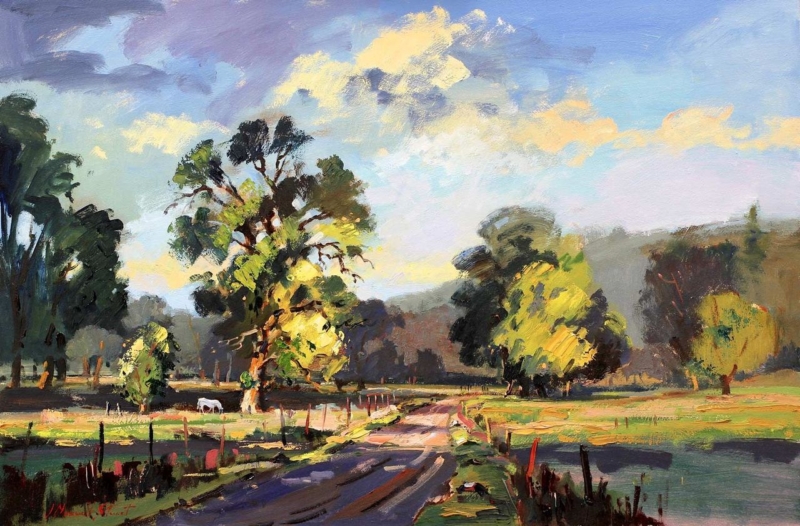
Giclee art prints becomes more useful when the artwork answers a real feature of the room. Late Afternoon offers a clear example because the scene’s atmosphere depends on the transitions that occur as stronger daylight softens towards evening.
What to notice in Giclee art prints with subtle light
A print built around time of day needs more than a bright overall result. Look for separation between the lightest areas, middle tones and deeper passages. If those zones collapse together, the atmosphere becomes flat. A colour-managed workflow is valuable because it aims to reproduce those relationships consistently.
| Viewing check | What to look for |
|---|---|
| Morning daylight | Quiet tones should remain distinct rather than appearing washed out. |
| Late afternoon | Warm room light should support the scene without turning every neutral orange. |
| After dark | A nearby lamp should reveal detail without reflecting directly in the glazing. |
Late Afternoon is offered in 350 × 230 mm and 550 × 365 mm print sizes. Compare the finished framed outline with the viewing distance, since the larger option can reveal gradual tonal changes more readily from across a room.
Frame atmosphere without introducing visual noise
First 4 Frames produces colour-managed Giclée work in-house in Falkirk. A restrained bespoke frame can then protect the quieter mood, while careful positioning prevents glare from hiding the tonal work the print process preserves.
For background on the print method, read Tate’s definition of a Giclée print. You can also browse the Joseph Maxwell Stuart collection or view the exact framed product.
The appeal of Giclee art prints lies partly in controlled detail and tone. Late Afternoon rewards checking those qualities under the real light in which the finished work will be seen.