
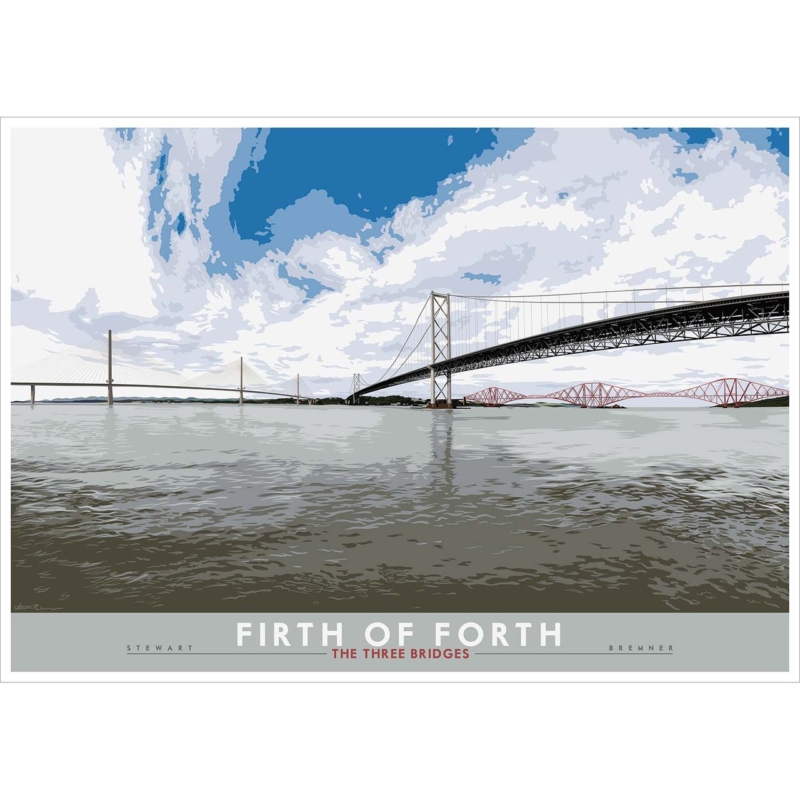
office wall art works best when it responds to the room rather than filling a convenient gap. Firth of Forth: the Three Bridges gives this decision a specific starting point because the three Forth crossings show different structural eras in one landscape-format Scottish view.
Choose office wall art that rewards technical curiosity
An engineering workplace does not need motivational typography to express what its people value. The rail bridge, road bridge and Queensferry Crossing let viewers compare cantilevers, suspension and cable-stayed forms. That gives the image relevance without turning the reception or meeting room into a corporate display.
| Placement | Useful test |
|---|---|
| Meeting room | Keep the bridges visible from occupied seats, not only from the doorway. |
| Reception | Allow enough clear wall for the long structural lines to read at first glance. |
| 594 x 420 mm print | Try it over a compact console or within a smaller project room. |
| 840 x 594 mm print | Template the full framed outline on a broad wall before ordering. |
Coordinate the frame with one existing finish, such as dark metal, pale timber or a restrained painted edge. Avoid adding models, technical diagrams and several bridge photographs around it. One composed view leaves room for the real projects and people in the space.
Frame office wall art for changing workplace light
Glazing and overhead light can create reflections across a detailed landscape. Check the sightline from desks and meeting chairs. Colour-managed Giclée output keeps Stewart Bremner’s printed detail clear, while in-house mounting and a hand-finished frame give the two substantial sizes a stable professional edge.
For engineering and heritage context behind the best-known crossing, read UNESCO’s account of the Forth Bridge. Browse the Stewart Bremner collection, or inspect the exact framed product and its available options.
Office wall art feels credible when it relates to the work without explaining it too loudly. The Three Bridges offers structure, Scottish identity and a useful conversation across generations of design.