
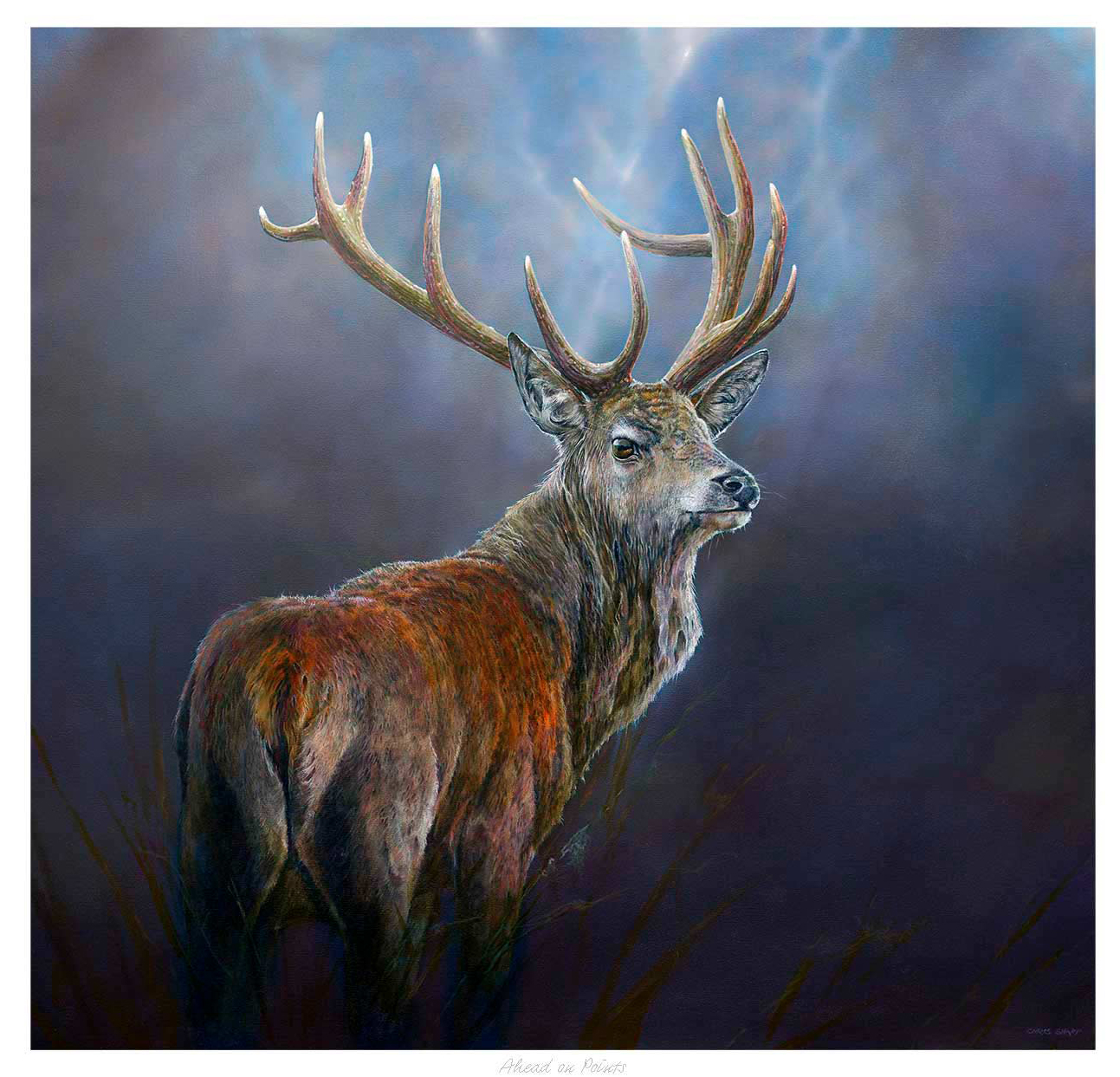
Scottish stag wall art for a blue-grey room can bring life to a cool interior without disrupting its calm. Ahead on Points by Chris Sharp places an alert stag against a misty blue setting. The background relates naturally to slate, denim and blue-grey paint, while the warmer fur and antlers stop the scheme from becoming flat. It creates presence through close observation rather than through a loud colour contrast or a printed slogan.
Why a cool room benefits from a natural focal point
Blue-grey is restful and adaptable, but too many similar surfaces can make a room feel remote. More paint in the same family will not solve that problem. The scheme needs a change in texture, shape or subject. Wildlife art can provide all three while keeping the palette controlled.
The stag in Ahead on Points has a strong silhouette, yet fine changes across the face, coat and antlers reward a closer look. That combination works from several distances. Across the room, the animal gives the wall a clear centre. Nearby, the detail prevents the image from becoming a simple emblem.
Build Scottish stag wall art for a blue-grey room into the palette
Begin by identifying which blue-grey the room contains. Some paints lean towards green, while others have a cooler violet cast. Upholstery may appear different in morning and evening light. The artwork does not need to match exactly. It only needs enough common colour for the background to feel connected while the stag remains distinct.
- Photograph the wall in daylight. This records the paint more reliably than a memory formed under a warm lamp.
- Look for existing warmth. Timber, leather, wool and brass can all relate to the stag without adding another colour family.
- Mark the finished frame size. Judge the full presentation, not only the printed image.
- Remove obvious motifs. Antler ornaments, tartan signs and novelty wildlife accessories will weaken the artwork’s authority.
- Check after dark. Make sure the face and antlers stay defined when the room’s main lights are on.
The aim is relationship, not perfect coordination. A misty background can sit comfortably with the walls even if its blue is lighter or darker. Variation creates depth. Exact repetition would make the picture look selected from a decorating chart rather than chosen because the subject has meaning.
Keep the stag subject refined rather than themed
A single wildlife image can introduce Scottish character to a living room, study or dining area. Several antler shapes, checked fabrics and rustic signs can quickly turn that character into a set. Let the stag carry the subject on its own. Surround it with useful objects, good materials and clear wall space.
Treat the stag as the room’s living presence, not as instructions for a complete Highland decorating theme.
This restraint also makes the piece easier to live with over time. Furniture can change, and the wall may later be repainted. A carefully presented animal study will still work because its appeal comes from observation, atmosphere and craftsmanship rather than a temporary trend.
Decide the scale from the antlers outward
Antlers create a wide visual gesture even when the central face is compact. Give the complete silhouette room. Above a sideboard, the finished frame should relate to the furniture below without being squeezed between tall lamps. On a narrower wall, check that open doors and curtains cannot enter the frame’s space.
| Possible position | Why it works | Main risk |
|---|---|---|
| Above a low sideboard | Furniture anchors the strong animal portrait | Tall objects cutting across the antlers |
| Opposite the room entrance | The stag creates an immediate focal point | A frame that feels undersized from a distance |
| Beside a reading chair | Close viewing reveals finer detail | A lamp reflecting across the face |
| On a blue-grey feature wall | The misted setting feels integrated | Insufficient frame contrast around the edge |
Frame for definition and warmth
A dark moulding can sharpen the antler line and connect with black metal lighting. Warm timber can draw out the natural colour in the coat and prevent a cooler room from feeling severe. A pale mount gives the misted background separation from a closely related wall colour. Each option changes the balance, so samples should be assessed beside the actual print.
First 4 Frames provides colour-managed Giclée production and bespoke, hand-finished framing at its Falkirk workshop. Its one-to-one service helps customers compare moulding, mount and finished size in relation to their own interior. Accurate reproduction is important here because subtle transitions in the mist and fur give the image its depth.
See more of Chris Sharp’s Scottish wildlife practice
Chris Sharp is known for detailed work shaped by Scottish landscape, wildlife and outdoor life. Visit Chris Sharp’s official website for more context, then explore the Chris Sharp collection at First 4 Frames to compare other landscape and field-sport subjects.
Thoughtful Scottish stag wall art for a blue-grey room adds warmth and alert natural character while preserving the room’s quieter palette. View the framed Ahead on Points limited edition print for a finely observed stag that can hold a wall without turning the interior into a theme.