
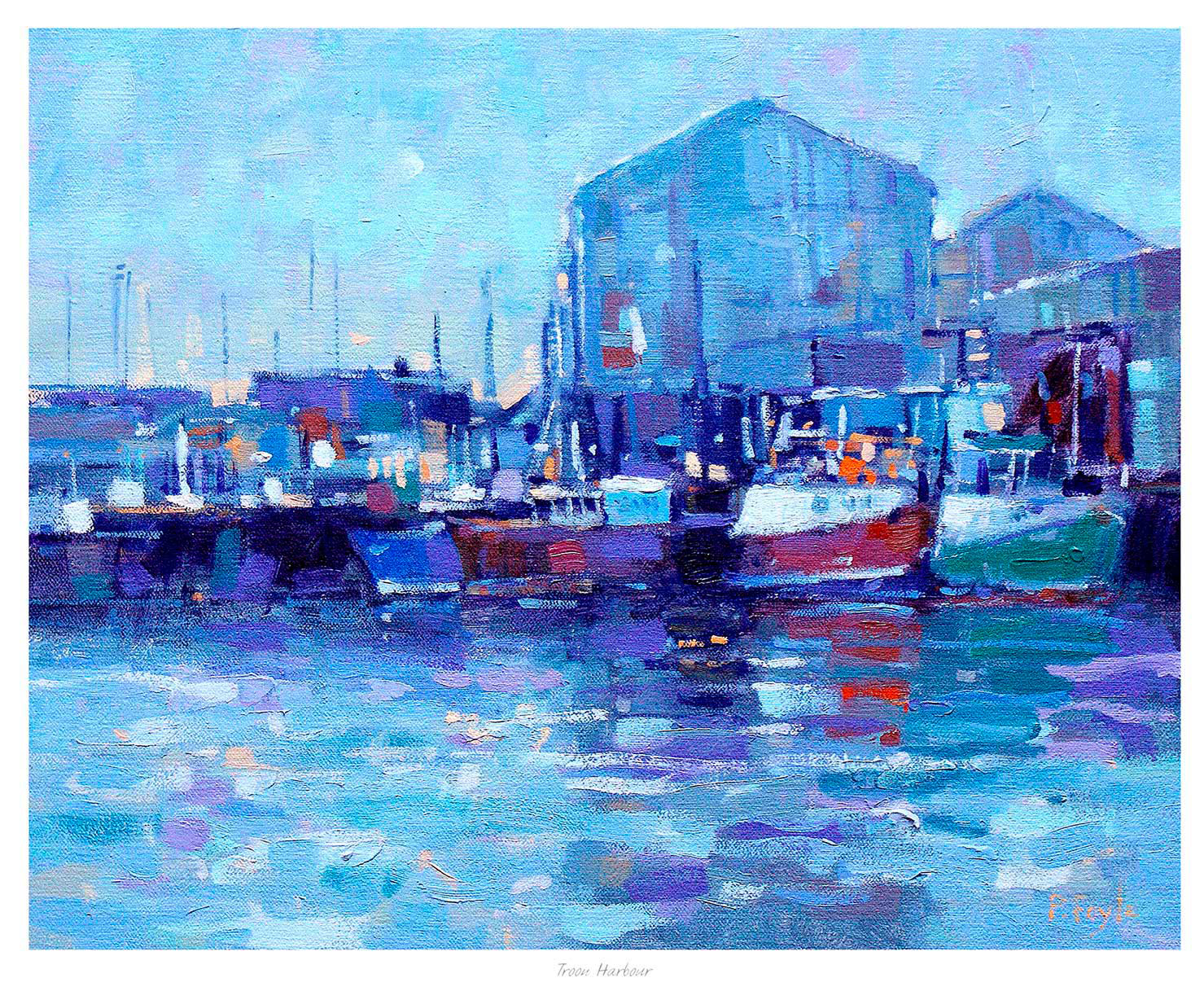
coastal wall art for a sailing club lounge should recognise the life of the water without turning a shared room into a collection of anchors, ropes, and nautical signs. Troon Harbour by Peter Foyle offers a more grounded approach. Its boats, harbour buildings, and coloured reflections describe a real working place, giving members and visitors a subject they can discuss as well as enjoy.
Why coastal wall art for a sailing club lounge needs authenticity
A club lounge has several jobs. It may welcome visiting crews, host committee conversations, serve post-race refreshments, and provide a quieter place to watch changing weather. Generic seaside decoration rarely connects those uses. A recognisable harbour scene feels more credible because it reflects boats as part of daily coastal life rather than as a decorative motif.
The industrial forms in Troon Harbour are important. They keep the view from becoming sentimental, while the blue water and lively reflections retain warmth. That balance suits a club that values seamanship and local history but still wants its public rooms to feel bright, current, and professionally maintained.
Place the picture where people naturally pause
Choose a wall that allows the long composition to be read from several seats. Above a low sideboard, the picture can anchor a refreshment area without taking space from trophies or practical notices. On a wall opposite the windows, it can offer a second view when weather hides the real horizon. Avoid positioning it among race instructions, safety information, or densely arranged photographs.
| Club-room check | Why it matters |
|---|---|
| View from the entrance | The harbour should read clearly as visitors arrive |
| Check seated sightlines | Tables and high-backed chairs should not cut through the composition |
| Test daytime glare | Reflected windows should not hide the painted reflections |
| Keep notices separate | Operational information stays legible and the artwork keeps its presence |
Build a restrained coastal palette around it
There is no need to match every blue in the image. Let the print supply varied water colour, then use practical upholstery and simple timber finishes around it. One or two warm accents can pick up the harbour buildings or boat details. This creates connection without making the lounge feel overly coordinated.
A darker moulding can give the scene definition on a pale wall. A natural timber may suit a room with traditional joinery. The mount and frame should also provide enough separation from patterned wallpaper, honours boards, or timber panelling. First 4 Frames can advise on those choices and completes the colour-managed Giclée printing and bespoke framing in-house at its Falkirk workshop.
A harbour painter with a feel for light
Peter Foyle paints Scottish coasts, harbours, cities, and still life with particular attention to atmosphere and reflected light. Explore more of his work on Peter Foyle’s official website, or compare other coastal subjects in the Peter Foyle collection at First 4 Frames.
Well-chosen coastal wall art for a sailing club lounge can express a club’s relationship with its surroundings while remaining useful interior design. View the framed Troon Harbour print for an Ayrshire harbour scene finished with lasting, hand-completed craftsmanship.