
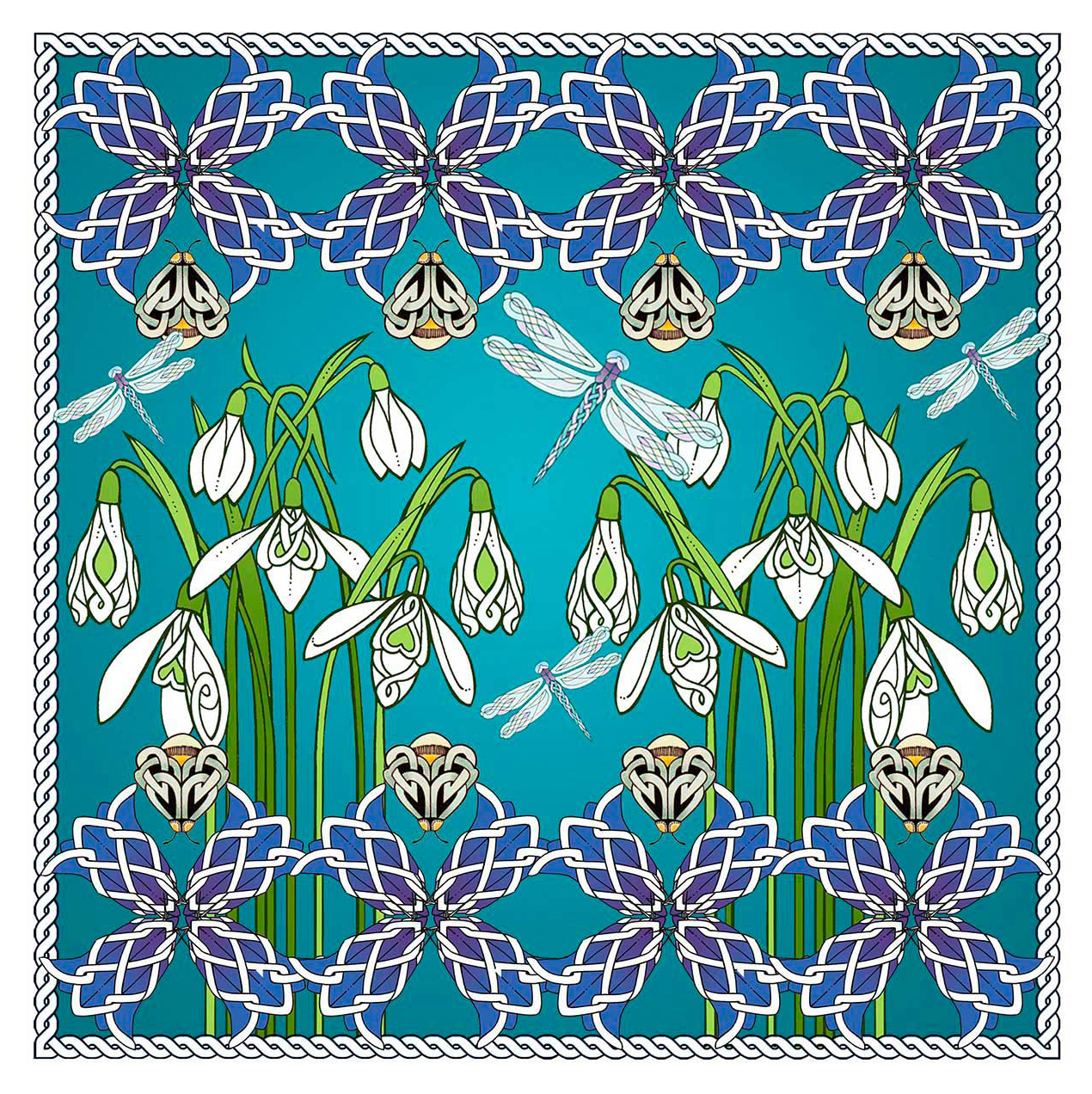
botanical wall art for a room with woven blinds brings together two detailed surfaces, so one must be allowed to lead. Snowdrops and Harebells provides a specific starting point rather than a generic decorating formula.
Control daylight around botanical wall art for a room with woven blinds
Snowdrops and Harebells combines white flowers, blue ground, dragonflies and a Celtic border. Lower and raise the blind through a normal day before choosing the wall. Woven material may cast moving lines of light and shadow across fine detail.
- Check the picture with the blind open, filtered and closed.
- Avoid sustained direct sun.
- Test lamps for a bright reflection over the blue ground.
- Leave clear wall around the decorative border.
- Use plain upholstery if the blind has a strong weave.
Should fabrics repeat the flowers?
Usually not. The picture already combines plants, insects and knotwork. One blue or green note can connect it to the room without floral curtains and leaf-print cushions competing.
Natural fibre supplies warmth while the blue background provides cooler depth. Keep nearby baskets and dried grasses edited. The artwork, rather than a collection of accessories, should remain the source of intricate botanical detail.
Give botanical illustration a clean framed boundary
The flowers, dragonflies and knotwork need crisp reproduction at close range. Colour-managed Giclée production supports those fine relationships, while bespoke framing creates a measured pause between border, wall and woven texture.
For natural-history context around one represented flower, read the Woodland Trust snowdrop guide. Browse the Marjory Tait collection, then view the exact product.
Botanical wall art for a room with woven blinds works when texture and illustration have separate roles. The blind softens light; Snowdrops and Harebells supplies the focal detail.