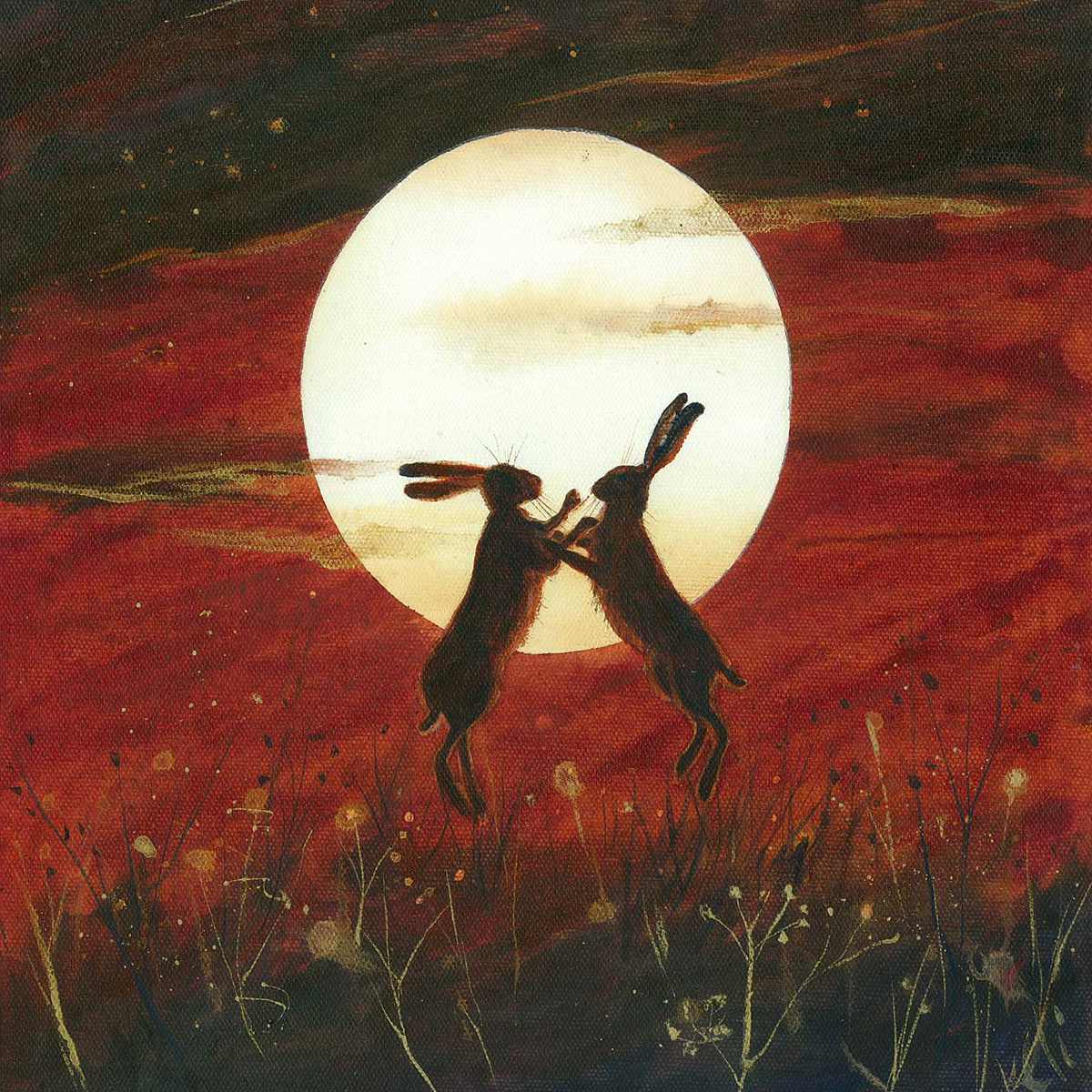
moonlit rabbit wall art for a reading nook can make a quiet corner feel imaginative after dark without filling it with obvious literary props. Lunar Energy by Keli Clark shows two rabbits upright beneath a luminous full moon, set against a vivid red-orange sky. The scene has movement and curiosity, but its strong colour and balanced square format allow it to work in an adult reading space as well as a family room.
What Lunar Energy brings to a reading corner
A reading nook needs enough calm for concentration, yet complete visual neutrality can leave it feeling like leftover space. The paired rabbits introduce a small moment of interaction. They appear alert and animated, giving the eye a story to consider before a book is even opened. The moon then steadies the composition and draws attention back to the centre.
The warm sky is equally useful. Many reading corners sit beside a lamp and are used mainly in the evening. Red, orange and gold tones respond naturally to that softer light. Unlike a pale daytime landscape, the picture does not lose its atmosphere when the window turns dark. It begins to feel more at home.
Build moonlit rabbit wall art for a reading nook into the layout
Place the chair first. It should have comfortable back support, space for a side table and a lamp that illuminates the page without shining directly into the reader’s eyes. Then use the remaining wall to position the artwork. The picture can hang beside the chair or above a low bookcase, where it stays connected to the nook without sitting directly behind the reader’s head.
- Mark the finished frame size. Use paper or low-tack tape rather than judging from the print dimensions alone.
- Sit in the chair. Check that the moon remains visible above stacked books and the lamp shade.
- Switch on evening lights. Look for reflections across the rabbits and darker foreground.
- Open nearby doors. Make sure the frame is clear of cupboard doors, curtains and passing shoulders.
- Remove one unnecessary accessory. A calmer surface gives the artwork and books more room to breathe.
Use the orange sky without overmatching it
The strongest mistake would be to repeat every warm tone across cushions, throws, lamps and shelves. That can flatten the artwork into part of a colour scheme. Instead, choose one restrained echo. A rust-coloured cushion, a small amber glass or the spine of a favourite book can be enough to connect the image to the corner.
Deep green, ink blue, charcoal and natural timber can all give the glowing sky room to stand out. Pale walls will make the square image feel crisp. A deeper wall can create a more enveloping evening mood, provided the frame and moon retain clear contrast. The aim is warmth with depth, not a completely orange corner.
Keep wildlife art imaginative rather than childish
Rabbit subjects are often placed automatically in nurseries. Lunar Energy has a broader character. Its animals are not presented as cartoon figures, and the saturated sky gives the scene an expressive, contemporary quality. In a reading nook, that sense of mystery can complement novels, nature writing and poetry without dictating a single theme.
Keep surrounding objects useful and personal. A small shelf of current books, a reading lamp and one tactile throw will support the purpose of the space. Avoid adding moon phases, rabbit ornaments and several woodland prints. The artwork already provides the narrative. Repetition would make the nook feel decorated around a motif rather than assembled for reading.
Choose lighting that works for pages and art
A shaded floor lamp or adjustable wall light can create a pool of task lighting around the chair. Keep its bulb warm but sufficiently bright for comfortable reading. If the artwork needs extra light, use a gentle separate fitting rather than turning the whole room up. The moon should appear luminous because of the printed colour, not because a harsh spotlight bleaches the surrounding sky.
Daylight still matters. If the nook sits beside a window, avoid prolonged direct sun on the print and test whether the glazing reflects the brightest part of the room. A wall at right angles to the window often keeps colour readable while still allowing natural light to reach the chair.
Frame the square composition as one complete scene
A simple dark moulding can contain the vivid sky and connect with charcoal shelving or a black lamp. Natural timber can make the image feel softer beside oak furniture and woven textiles. A measured mount separates the energetic colour from the wall and gives the rabbits’ silhouettes more definition. Avoid an ornate frame that competes with the radiating moon.
Keli Clark works across imaginative themes, wildlife and Scottish subjects, with the natural world and changing light among her influences. Discover more through Keli Clark’s official website, or browse the wider Keli Clark collection at First 4 Frames.
First 4 Frames uses colour-managed Giclée production and completes bespoke framing in-house at its Falkirk workshop. Careful printing helps retain the transition from the bright moon and warm sky to the darker grasses below. Hand-finished presentation then gives this imaginative wildlife scene a polished, ready-to-hang place in the home.
Well-placed moonlit rabbit wall art for a reading nook can turn a small reading corner into a destination with its own evening atmosphere. View the framed Lunar Energy print for warm colour, gentle wildlife movement and a little visual storytelling beside your books.