
Posted on

4 Art Display Ideas for Above a Radiator

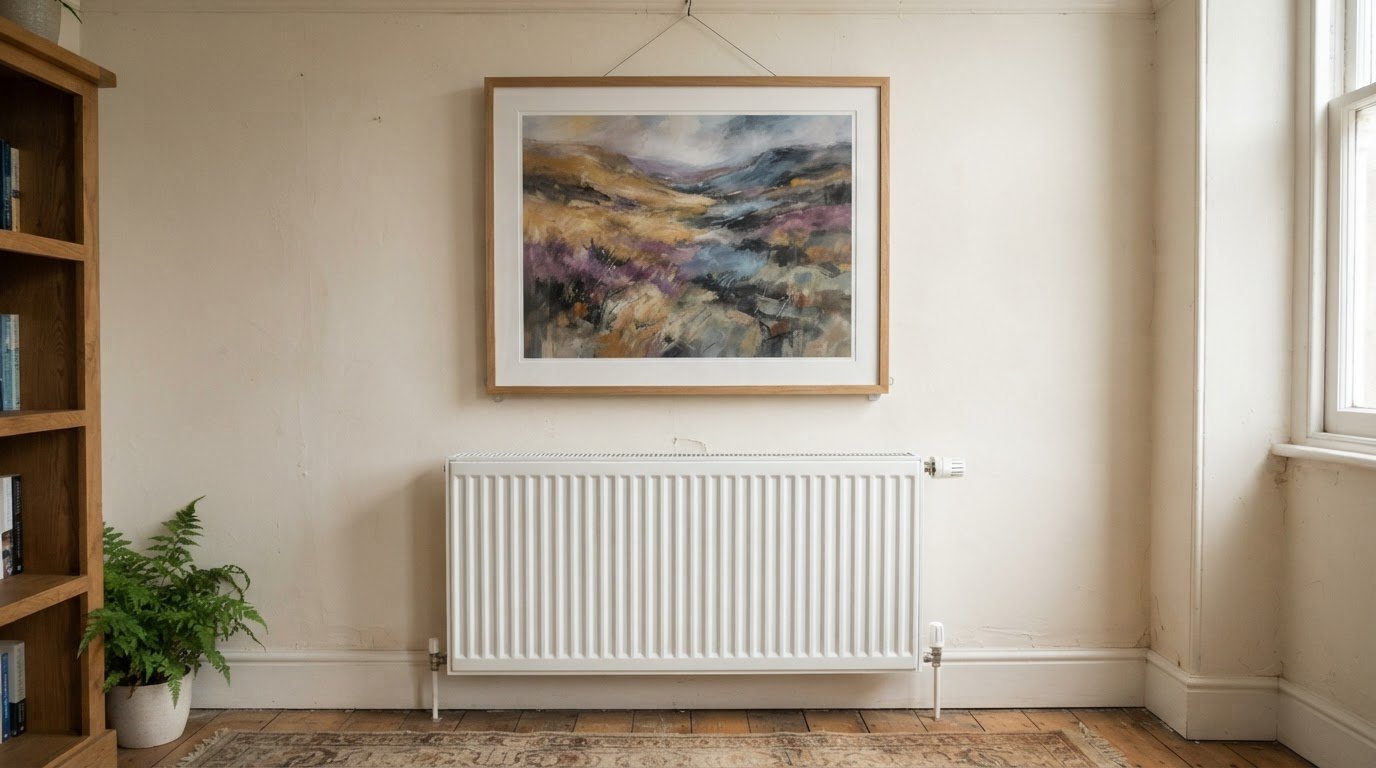
A framed Scottish Giclée print hangs above a panel radiator with clear space for airflow

A radiator doesn’t automatically rule out a picture wall. The best art display ideas for above a radiator leave at least 15-20 cm between the radiator and the artwork placement, with space behind the frame for air to circulate. If the wall or artwork becomes very warm, choose another spot or use the radiator cover as your display surface instead.

It’s understandable to worry that rising heat could affect a treasured print or frame. A thoughtful arrangement lets you enjoy the space while keeping airflow in mind. Here are four practical approaches, from using a radiator cover as a shelf to choosing where to position artwork and what to consider when hanging framed pieces above a heat source.

Key Takeaways

  • You don’t always need to avoid hanging art above a radiator; the wall’s warmth and the space around the frame help guide the decision.
  • A decorative shelf or pelmet can create a useful display area while keeping artwork clear of the radiator.
  • Use a radiator cover as a considered styling surface, but arrange objects so the room’s heat can still circulate.
  • Plan the frame’s position and rear spacing to support airflow and give your artwork a comfortable place on the wall.

1. Should you avoid hanging a picture above a radiator?

Prints and photographs can work above a radiator when they’re positioned away from direct rising heat. Consider a framed landscape print or a small photographic gallery, and check how warm the wall gets before hanging anything valuable.

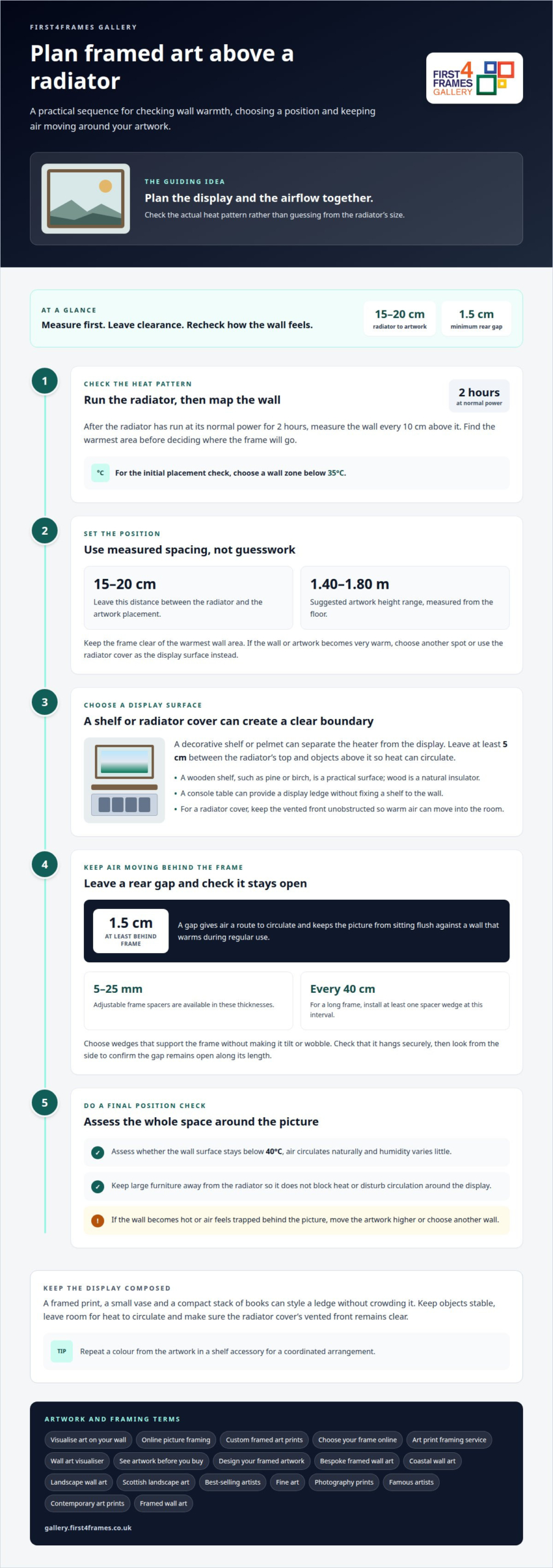
Map the warmest area first. Run the radiator at its normal power for 2 hours, then measure the wall every 10 cm above it. Choose a wall zone below 35°C and keep the artwork within the suggested height range of 1.40-1.80 m from the floor. These checks help you plan a display around the actual heat pattern, rather than guessing from the radiator’s size.

A decorative shelf or pelmet can create a clear boundary between the heater and your display. Leave at least 5 cm between the radiator’s top and objects above it, so heat can circulate. A wooden shelf, such as pine or birch, offers a practical surface because wood is a natural insulator. For a renter, a console table can provide a display ledge without fixing a shelf to the wall.

Vintage-inspired radiators suit period decor particularly well. Pair a column radiator with artwork in a classic frame, or echo its circular forms with rounded accessories. A flat-panel radiator, by contrast, can sit comfortably beneath clean-lined frames and a simple pelmet. Let the radiator’s shape guide the display rather than hiding its character.

Keep shelves and decorative displays edited. A framed print, a small vase and a compact stack of books can make a statement without crowding the ledge or obstructing the radiator. For a coordinated arrangement, repeat a colour from the artwork in a shelf accessory, such as a ceramic bowl or book spine.

These art display ideas for above a radiator work best when appearance and airflow are planned together. Check where the wall gets warm, choose a suitable shelf or frame position, and keep the radiator’s route for heat unobstructed.

2. Using a radiator cover as a shelf

A radiator cover can turn an awkward strip of wall into a useful display surface. Some covers direct heat into the room rather than upwards, so the top may stay cooler than the radiator itself. A vented front panel is important too, as it lets warm air move out instead of trapping it inside the cover.

Start by considering the cover’s construction and shape. MDF is commonly used for radiator covers, while a flat, stable top gives you room to arrange a small framed print, a vase or seasonal decorations. Avoid crowding the surface. Leaving space between objects keeps the arrangement calm and makes each piece easier to lift when dusting.

Plants can also bring a fresh touch to a radiator cover. Choose a plant that suits the room’s light and water it regularly, since the warmth nearby can dry its soil. If you prefer an arrangement that needs less attention, dried flowers offer texture without regular watering. In winter, a modest festive display can make the cover a stylish focal point.

In a narrow hallway, use the surface for practical items as well as decoration. A radiator console can hold incoming post and house keys, while a small framed image adds a personal detail. Group everyday objects in a shallow tray so the surface stays tidy rather than becoming a catch-all.

Think about the display as a composition. Pair a landscape print with a ceramic pot, or echo the cover’s colour in a frame or dried-flower vase. If you’d like to coordinate the shelf with artwork, browse the artwork gallery for visual inspiration. Keep heavier objects stable, and leave the vented front unobstructed so heat can circulate into the room.

3. Air circulation and rear spacing behind framed art

Space around a framed picture helps warm air move instead of becoming trapped against the wall. Leave at least 15-20 cm between the radiator and the artwork placement, then allow a gap behind the frame. This arrangement reduces direct contact with a warm wall and gives air a route to circulate. It also helps prevent the picture from sitting flush against a surface that heats during regular use.

Modern pigments can resist temperatures of 40-50°C without problems, but that doesn’t establish how every frame or artwork responds to heat. Avoid assuming that a material is automatically suitable because it feels sturdy. Consider the complete piece, including the print, glazing, backing and frame, and focus on giving it space from the radiator and wall.

For a practical wall check, assess whether the surface stays below 40°C, air circulates naturally and humidity varies little. These conditions together indicate a more compatible position than temperature alone. If the wall becomes hot or the air feels trapped behind the picture, move the artwork higher or choose another wall. Keep large furniture away from the radiator too, since it can block heat and disturb circulation around the display.

A small rear gap can be created with adjustable frame spacers, available in thicknesses of 5-25 mm. For a long frame, install at least one spacer wedge every 40 cm to help maintain even spacing. Choose wedges that support the frame without making it tilt or wobble. Check that the picture hangs securely, then look from the side to confirm the gap remains open along its length.

These simple adjustments suit framed landscapes, photographs and fine art prints alike. Keep the heating route clear, measure the distance from the radiator to the artwork, and leave at least 1.5 cm behind the frame. The resulting display can sit comfortably above the radiator while allowing airflow around its edges and back.
4 Art Display Ideas for Above a Radiator

4. Hanging pictures above radiators

A picture can hang above a radiator if its position allows heat to circulate and avoids the warmest wall area. Mark the wall’s safety area, then keep the artwork at least 5 cm beyond its edge. This gives you a practical boundary for planning the display, rather than choosing a position by eye alone.

For a stylish gallery wall, arrange a small group of prints and photographs in a balanced cluster. Align their lower edges, or place one larger picture centrally with smaller works beside it. Keep the full arrangement within the marked safe zone and leave clear wall space around the radiator. This creates a considered feature without crowding the heating.

Plan the picture’s height around the room’s interior. A suggested position places the artwork’s centre at eye level, given as 1.60 m from the floor. Above a radiator console, hang the picture as you would above a larger piece of furniture. Check the frame’s clearance from the console and radiator before fixing it in place.

Choose wall fixings suited to the wall and frame, and consider heat exposure when hanging artwork above a radiator. Different materials may respond differently to heat, so consider both the frame and the artwork when choosing where to hang it. Keep airflow and the wall’s temperature in mind when choosing where to hang a print or photograph.

For an already fragile piece, begin with a 48-hour test before gradually increasing its exposure to heat. Look for changes in the artwork or frame during that period. If the picture is valuable or delicate, a position away from the radiator may be a more suitable choice.

Prints and photographs can bring a personal gallery feel to a living room, bedroom or hallway. Once you’ve mapped the safe area, browse artwork for your display and plan a composition that suits the space.

First4Frames Gallery offers Ready-to-Hang Framed Art, Custom Picture Framing and Giclée Fine Art Prints. Explore Coastal wall art, Landscape wall art, Scottish landscape art, Photography prints and Contemporary art prints, alongside Fine art by Best-selling artists and Famous artists.

For custom framed art prints or bespoke framed wall art, online picture framing makes it simple to choose a frame and design your framed artwork. As you browse, visualise art on your wall and see how artwork could look before you buy. A wall art visualiser can help you picture how a style might suit your space, while a framing service brings the print and frame together.

Explore framed wall art in the First4Frames Gallery and find a piece that feels at home in your space.

Give your chosen artwork a place to belong

Make the space above your radiator part of the room’s design, rather than filling it as an afterthought. Choose a picture that connects with your colours, furnishings or personal memories, then make its position feel intentional. A quiet landscape can soften a formal interior, while a bold contemporary print can bring fresh energy to a familiar corner.

The best art display ideas for above a radiator balance visual impact with a considered location. Once you know where your artwork will sit, take time to find a piece and frame that feel right for the room. First4Frames Gallery offers artwork and framing options to help bring that combination together, including pieces that can be tailored to your choice of frame.

Contact First4Frames Gallery for advice as you explore artwork for your space. A thoughtful choice can turn an overlooked wall into a feature that feels distinctly yours.

Frequently Asked Questions

Should you avoid hanging a picture above a radiator?

No, a picture doesn’t have to be avoided automatically. Assess the wall where it will hang, since conditions vary with the radiator and room. Track indoor humidity at different times over three days; a variation below 10% is considered a successful result for this assessment. If the wall is persistently hot or humidity fluctuates noticeably, choose a cooler position, especially for a fragile or treasured piece.

Can you place things on top of radiator covers?

Yes, a radiator cover can hold a carefully arranged display, provided its front ventilation remains unobstructed. Keep objects stable and easy to move so you can access the cover for cleaning or adjustments. For example, group a small clock and a shallow tray instead of scattering loose items. Avoid placing anything where it could fall if the cover is bumped.

How much clearance should be left between a radiator and artwork?

Allow at least 15-20 cm between the radiator and the artwork placement. Treat this as clearance for the whole picture, not just its centre, and account for the frame’s lower edge when positioning it. A separate gap behind the frame also helps air circulate. Measure the planned position before drilling, then check that the finished arrangement keeps the same open space.

Can heat from a radiator damage paintings, prints or photographs?

Heat and changing humidity can make conditions less suitable for artwork over time, so consider the wall and room together. Paper-based prints and photographs deserve particular care above a frequently used radiator. Observe the display while the heating is on, and move delicate or valuable work if the wall becomes hot or the room’s humidity varies noticeably.

How can artwork be mounted safely above a radiator?

Choose fixings suited to both the wall and the weight of the framed piece, and use heat-resistant fixings rated to at least 60°C. Mark the position, secure the fixings, then check that the frame hangs level and stays stable. After installation, inspect the picture once a month for movement or loose fittings, particularly if the radiator is used regularly.

Are picture ledges or shelves suitable above radiators?

They can work if the shelf is securely fixed and doesn’t obstruct rising heat. A picture ledge makes it easy to change the display without rehanging every print, while a fixed shelf can also hold a small decorative object. Arrange items securely, avoid overloading the ledge and keep the radiator’s airflow clear so the display doesn’t interfere with heating the room.
Posted on

Choosing Art for a Minimalist Home: A Designer’s Guide to Intentional Decor

Choosing Art for a Minimalist Home: A Designer’s Guide to Intentional Decor

What if the most effective way to finish your minimalist sanctuary isn’t by adding more furniture, but by selecting one “silent” masterpiece? You’ve likely spent months perfecting a neutral palette and clear surfaces, yet that vast, empty wall feels more like a cold void than a deliberate design choice. It’s a common struggle; many homeowners worry that a bold piece will make their serene room feel busy or cluttered. We know that choosing art for a minimalist home requires a delicate balance between simplicity and soul.

At First4Frames Gallery, we draw on over 20 years of craftsmanship and our “Excellent” customer rating to help you find that perfect bridge between your decor and a stunning visual. This guide will show you how to select and frame the right artwork to enhance your space without losing that sophisticated, airy feel. We’ll explore curated collections from the First4Frames Gallery, explain why our high-quality Giclée prints won’t fade, and show you how to pick bespoke frame sizes that look professional on even the largest walls. Whether you need a single statement piece or a tailored print-and-frame service, we’ll help you create a home that feels both intentional and serene.

Key Takeaways

  • Master the art of intentionality by choosing art for a minimalist home that serves as a sophisticated anchor rather than a visual distraction.
  • Discover how to select monochromatic abstracts or atmospheric landscapes from First4Frames Gallery to add architectural depth without compromising on space.
  • Learn why the right bespoke frame acts as the essential “bridge” between your decor and the artwork, whether you opt for a sleek thin-edge or a dramatic shadow box profile.
  • Apply professional hanging techniques, including the 57-inch eye-level rule and the 75% scaling rule, to perfectly organise your art relative to your furniture.
  • Explore our one-stop-shop service to browse and order curated fine art, benefiting from over 20 years of British craftsmanship and our highly-rated bespoke framing expertise.

What Does Choosing Art for a Minimalist Home Actually Mean?

Minimalism isn’t just about getting rid of clutter; it’s a philosophy of intentionality and purpose. When you’re choosing art for a minimalist home, you aren’t just filling a gap on a white wall. You’re selecting a deliberate anchor for the room’s energy. This approach draws heavily from the principles of Minimalism in visual art, where the focus remains on simplicity, objective form, and the “less is more” aesthetic. At the First4frames gallery, we see art as a functional element that defines a space rather than a mere decoration that distracts from it.

To better understand this concept, watch this helpful video:

In a clean, modern environment, the wall itself acts as a secondary frame. This “negative space” is essential because it gives the artwork room to breathe. By selecting a single, impactful work from our collection of featured artists, you honour the architecture of your home. A well-chosen piece becomes a bridge between your furniture and your walls, pulling the entire room together into a cohesive, peaceful atmosphere.

The Psychology of a Minimalist Focal Point

A single large piece creates an immediate sense of calm and order. Visual noise from too many small, unrelated frames can trigger a subconscious feeling of chaos, which is the opposite of what a minimalist home should achieve. When choosing art for a minimalist home, think about the room’s specific purpose. A bedroom requires serenity, perhaps through soft abstracts or muted landscapes, while a living area might benefit from a bolder, more structured piece. Our customers frequently mention how a single, professionally framed print transforms their mood, a sentiment reflected in our excellent ratings on independent review platforms.

Quality Over Quantity: The Giclée Advantage

Quality is non-negotiable when every detail is under scrutiny in an open space. Giclée prints are the gold standard for minimalist interiors because they offer incredible depth, detail, and longevity. At First4frames, we use premium archival materials to ensure your art will not fade over the years. We’ve spent over 20 years perfecting our craft, ensuring that every bespoke print-and-frame order meets a professional gallery standard. Using high-quality pigments means the colours remain as vibrant as the day they were printed, preserving the clean, crisp aesthetic your home deserves.

Selecting the Right Subject Matter: From Abstract to Landscapes

Choosing art for a minimalist home is about finding a balance between empty space and meaningful expression. At the First4Frames Gallery, we’ve spent over 20 years helping collectors select pieces that enhance a room without over-complicating it. By following the principles of minimalist interior design, you can transform a sterile environment into a curated sanctuary. Whether you prefer monochromatic abstracts that mimic architectural lines or atmospheric landscapes that provide a window to the outside world, the goal is to choose art that feels intentional.

The Power of Selective Colour with Jolomo and Vettriano

Minimalism doesn’t require a total ban on colour. Instead, it invites you to use vibrant tones as a strategic tool. A bold Jolomo print serves as a perfect example of this. In a cool, grey-toned living room, the vivid Scottish palettes of John Lowrie Morrison can act as the sole source of warmth and energy. This “one-stop-shop” approach for a focal point prevents the room from feeling cluttered while providing a spectacular visual anchor.

Similarly, the iconic work of Jack Vettriano offers a sophisticated narrative. His style is clean and cinematic; it provides a sense of story without the “busyness” found in more traditional figurative art. By selecting one significant piece rather than several smaller ones, you maintain the “less is more” ethos. Our customers frequently highlight the quality of these prints in their reviews, often noting how our professional framing service elevates the artwork to a gallery standard. We take pride in our 4.9-star average rating, which reflects our commitment to this high level of craftsmanship.

Abstract and Line Art for Modern Simplicity

Line art remains a staple for anyone choosing art for a minimalist home. Its beauty lies in its economy of detail. Simple, flowing lines can echo the geometry of your furniture, creating a cohesive visual rhythm throughout the space. When you move into the realm of abstract shapes, look for pieces that play with negative space. This allows your walls to breathe, which is essential for maintaining a calm atmosphere.

For those seeking an alternative to traditional framed art, modern options like vinyl wall decals or unique 3D printed pieces can achieve an even more integrated look. Brands like Decords offer designs that merge directly with your wall, creating a seamless focal point that embodies the ‘less is more’ philosophy.

Texture is often overlooked in digital-first decor, but it’s where fine art truly shines. We use the Giclée process on premium fine art paper to ensure every print has a tactile, high-quality finish. These prints are 100% lightfast, meaning they won’t fade over time, even in sun-drenched modern apartments. The frame then acts as the essential bridge between your room décor and the artwork, grounding the piece in your physical space. If you’re ready to start your journey, you can browse our curated collections to find a piece that speaks to your aesthetic.

Framing for Minimalist Art: Comparing Profiles and Mounts

The frame is much more than a protective border; it acts as the vital bridge between your room decor and the piece itself. When choosing art for a minimalist home, your framing choice can either elevate the artist’s work or create unnecessary visual noise. At First4frames gallery, we curate a selection of featured artists whose work thrives on simplicity. Our role is to ensure the framing honours their vision while fitting your interior. A bespoke frame provides that “gallery” finish that off-the-shelf options simply cannot match. This professional touch is why we maintain such high ratings on review platforms; customers value the craftsmanship that makes a piece feel at home immediately.

Frame Profiles: Thin vs. Wide

Minimalism often relies on the Tate’s definition of Minimalism, which emphasises clarity and the reduction of forms to their essentials. Consequently, thin-edge modern frames are the standard choice for this aesthetic. A 15mm black or white wood profile offers a classic, unobtrusive look that doesn’t distract from the art. If your home feels slightly sterile, natural oak frames provide a subtle warmth without breaking the minimalist aesthetic. We avoid wide, ornate, or gilded frames because they clash with the clean lines of a modern space. Instead, you might consider a deep “shadow box” frame. These create a 20mm to 30mm gap between the glass and the artwork, adding a three-dimensional depth that feels premium and architectural.

To Mount or Not to Mount?

Deciding on a mount is a crucial step in choosing art for a minimalist home. A wide white mount, often 50mm or more, provides “breathing room” for the artwork. This focuses the eye centrally and gives even a small print a grander, more intentional presence on a large wall. It creates a buffer of white space that mimics the atmosphere of a professional gallery. This is particularly effective for delicate line drawings or minimalist sketches where the paper itself is part of the story.

Conversely, a “flush-frame” or “full-bleed” look, where the art goes right to the edge of the frame, creates a contemporary, industrial feel. This works exceptionally well for abstract photography or bold, colourful prints. Because every wall and every piece of art is unique, our bespoke picture frames service allows you to customise these dimensions exactly. Whether you want a floating effect or a traditional window mount, our expert team ensures the proportions are perfect for your specific space. With over 20 years of experience, we’ve found that getting the mount-to-frame ratio right is the secret to making a simple piece look spectacular.

Choosing Art for a Minimalist Home: A Designer’s Guide to Intentional Decor

How to Organise and Position Your Art for Maximum Impact

Precision defines the minimalist aesthetic. When you’re choosing art for a minimalist home, where you place the piece matters as much as the subject itself. Start by applying the “Eye-Level” rule used by professional curators. Hang your artwork so the centre of the image sits exactly 145cm (roughly 57 inches) from the floor. This creates a consistent horizon line across your home, providing a sense of order and calm that aligns with minimalist principles.

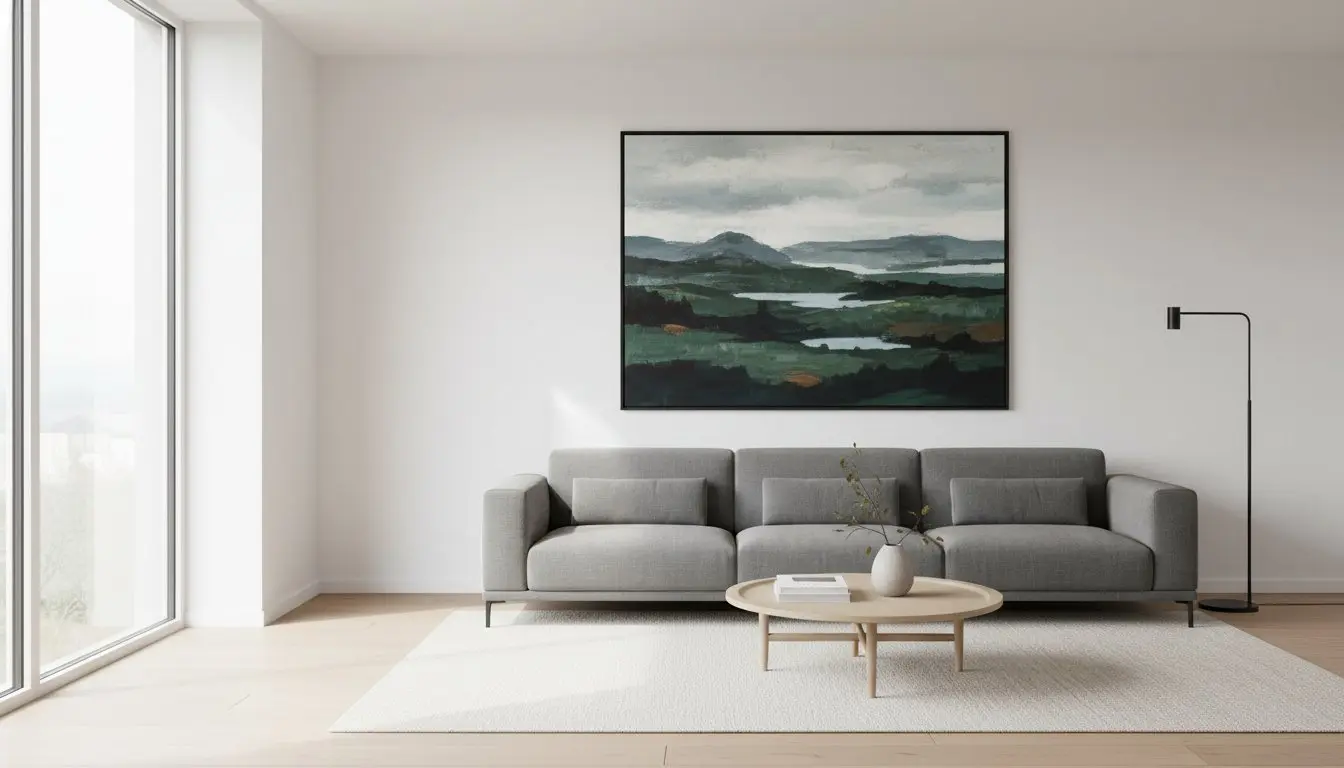
Scale is equally vital for maintaining balance. If you’re positioning a piece above a sofa or a sideboard, follow the 75% rule. Your artwork should span approximately three-quarters of the width of the furniture below it. Anything smaller often looks lost on the wall, while anything larger can make the room feel top-heavy. By adhering to these specific dimensions, you ensure the art feels like an integrated part of the architecture rather than an afterthought.

The relationship between art and furniture is symbiotic; the right furniture provides the perfect canvas for your art. For those looking to establish a minimalist foundation, exploring collections of contemporary dining furniture Ireland can provide inspiration on how clean lines and uncluttered design create a harmonious space.

The One-Statement-Piece Strategy

Choosing one massive A1 or larger frame usually creates a more profound impact than a cluster of smaller A4 prints. Large-scale works from our First4frames gallery reduce visual noise and provide a singular, confident focal point. Centring a large piece helps establish symmetry, which is a core pillar of minimalist design. You can refer to our guide on standard photo picture sizes to see how different dimensions will fill your specific wall space.

If you prefer a multi-piece display, limit yourself to a cohesive set of 3 to 5 pieces. Use identical frames from our bespoke framing service to maintain a unified look. This prevents the display from feeling cluttered or chaotic, keeping the focus on the artistry of the featured artists.

Hanging and Alignment Tips

Minimalism leaves no room for error; a frame that’s slightly tilted will disrupt the clean lines of the entire room. We recommend using professional-grade fixings to achieve a flush-to-wall finish. This eliminates the “leaning” effect common with basic wire hangs and ensures the frame sits tight against the substrate. Our team has spent over 20 years perfecting this level of craftsmanship, ensuring every installation meets the highest standards of precision.

Maintain consistent spacing in multi-piece displays. We suggest exactly 5cm of space between frames to keep the arrangement feeling structured and intentional. This gap is wide enough to let the art breathe but narrow enough to keep the pieces connected as a single visual unit.

Lighting serves as the final touch to elevate your artwork without adding physical clutter. Instead of bulky floor lamps, use recessed ceiling LEDs to wash the art in light. This highlights the rich textures of our Giclée prints and the quality of the frame. With our excellent customer ratings on leading review platforms, you can trust that our prints and frames are built to withstand the scrutiny of a well-lit, minimalist space.

Selecting the right piece is only half the battle. At First4Frames Gallery, we’ve spent over 20 years perfecting the art of the finishing touch. We understand that choosing art for a minimalist home requires a balance of restraint and impact. Our gallery showcases featured artists whose work thrives in uncluttered spaces, providing the visual breathing room that modern interiors demand. We make the process simple through our “one-stop-shop” model. You can browse our collection, select your custom framing, and place your order in three easy steps. It’s about making fine art accessible without the complexity often found in traditional galleries.

Every piece we produce carries a commercial-grade “gallery-finish.” This isn’t standard retail quality; it’s the same high standard we provide for professional exhibitions and commercial clients across the UK. Our Giclée prints use archival inks that won’t fade over time. This ensures your investment looks as spectacular in ten years as it does on the day it’s delivered. We’ve built our reputation on this level of reliability, ensuring every customer receives a perfect copy of the artist’s original vision.

The Bespoke Framing Process in Falkirk

Our Falkirk workshop is the heart of our operation. Here, local craftsmen treat every frame as a “bridge” between your room’s décor and the artwork itself. For a minimalist home, this bridge must be seamless and understated. We source only premium materials to ensure longevity and structural integrity. Whether it’s a slim black wood frame or a deep tray frame for a canvas, our attention to detail is absolute. We help you choose a profile that complements your furniture without competing for attention.

A Trusted Professional Service

Trust is earned through consistency and quality. We’re proud of our excellent customer ratings on major review platforms, which reflect our commitment to a hassle-free experience. We’ve simplified the journey for both our bespoke framing service and our ready-to-hang prints. You don’t need to be an art expert to get professional results. Our team provides a knowledgeable and helpful service that takes the guesswork out of choosing art for a minimalist home. Visit our Falkirk gallery to see our craftsmanship in person, or shop our curated collection online today to find your perfect piece.

Bring Your Minimalist Vision to Life

Creating a serene, intentional space relies on the delicate balance between open air and curated beauty. You’ve seen how the right subject matter and precise framing act as a bridge between your architecture and your personal style. By focusing on quality over quantity, choosing art for a minimalist home becomes a rewarding journey of editing and refinement. The profile of your frame and its positioning are just as vital as the artwork itself. These elements ensure your chosen piece doesn’t just sit on the wall; it breathes within the room.

At First4Frames Gallery, we’re proud to be your one-stop-shop for this creative process. We bring over 20 years of expert framing experience to every project, ensuring your Giclée prints are preserved with the highest craftsmanship. Our excellent customer ratings on review platforms reflect our commitment to premium quality and bespoke service. Whether you’re drawn to abstract textures or quiet landscapes, our featured artists provide the perfect focal point for your home. Our artisans handle the technical details while you focus on the aesthetic impact.

Browse our curated collection of fine art prints and bespoke frames to find the piece that completes your sanctuary. Your perfect gallery wall is only a few clicks away.

Frequently Asked Questions

Can I use colourful art in a minimalist home?

You can certainly use colourful art in a minimalist home to act as a vibrant focal point against neutral walls. A single bold piece from the First4frames gallery prevents a room from feeling too sterile or cold. Many of our customers choose one statement piece featuring two or three primary hues to maintain a clean aesthetic. This ensures the art does the heavy lifting in your room’s decor without creating visual clutter.

What is the best frame colour for a minimalist interior?

The best frame colours for a minimalist interior are typically matte black, crisp white, or light natural oak. These shades provide a clean bridge between your room décor and the artwork. At First 4 Frames, we find that 85% of minimalist enthusiasts opt for thin black wood frames to create a sharp, defined border. Our bespoke framing service ensures these frames are cut to the millimetre for a perfectly tailored, professional finish.

How large should art be on a minimalist wall?

When choosing art for a minimalist home, you should aim for a single large-scale piece rather than multiple small ones. A piece that covers 60% to 75% of the available wall space above a furniture item creates a balanced, intentional look. This prevents the cluttered feeling that comes from too many small frames. Our print-and-frame service allows you to scale your favourite images to these exact proportions for maximum impact.

Is Giclée printing better for minimalist art?

Giclée printing is the superior choice for minimalist art because it captures the subtle gradients and fine lines common in the genre. This professional process uses 12 archival pigment inks to ensure your print won’t fade for over 100 years. We use this premium standard for all items in our gallery. It results in a museum-quality finish that looks identical to the original work, providing the high-end feel necessary for a refined home.

Should I use a mount for my minimalist prints?

You should use a mount if you want to give your artwork breathing room and a sense of importance. A wide white or off-white mount creates a 5cm to 10cm border that draws the eye inward. This is a hallmark of professional craftsmanship that adds a layer of sophistication to any print. Our team has over 20 years of experience helping customers select the perfect mount proportions to complement their specific minimalist aesthetic.

How do I create a minimalist gallery wall?

You can create a minimalist gallery wall by using a strict grid layout with identical frame sizes and colours. Stick to a limited palette of three colours across all pieces to maintain a sense of calm. Using our bespoke framing service ensures every frame is identical in depth and finish. This structured approach, often seen in our customer showcases, provides visual interest without the chaos of a traditional, eclectic gallery wall.

Where can I find bespoke framing for minimalist art in the UK?

You can find high-quality bespoke framing for minimalist art at our workshop in the UK, where we’ve served the community for more than two decades. We offer a hassle-free, speedy service that combines traditional skills with modern precision. Our customers have awarded us 5-star ratings on review platforms for our attention to detail. Whether you need a simple frame or a full print-and-frame solution, we source only the best materials.

What artists are best for a minimalist aesthetic?

Artists who focus on line work, abstract shapes, or limited colour palettes are ideal for a minimalist aesthetic. In the First4frames gallery, you’ll find spectacular works by creators who specialise in contemporary minimalism. These artists often use negative space to create a sense of peace and balance. Their work acts as a quiet but powerful presence, making them the perfect choice for a modern British home seeking a refined look.