
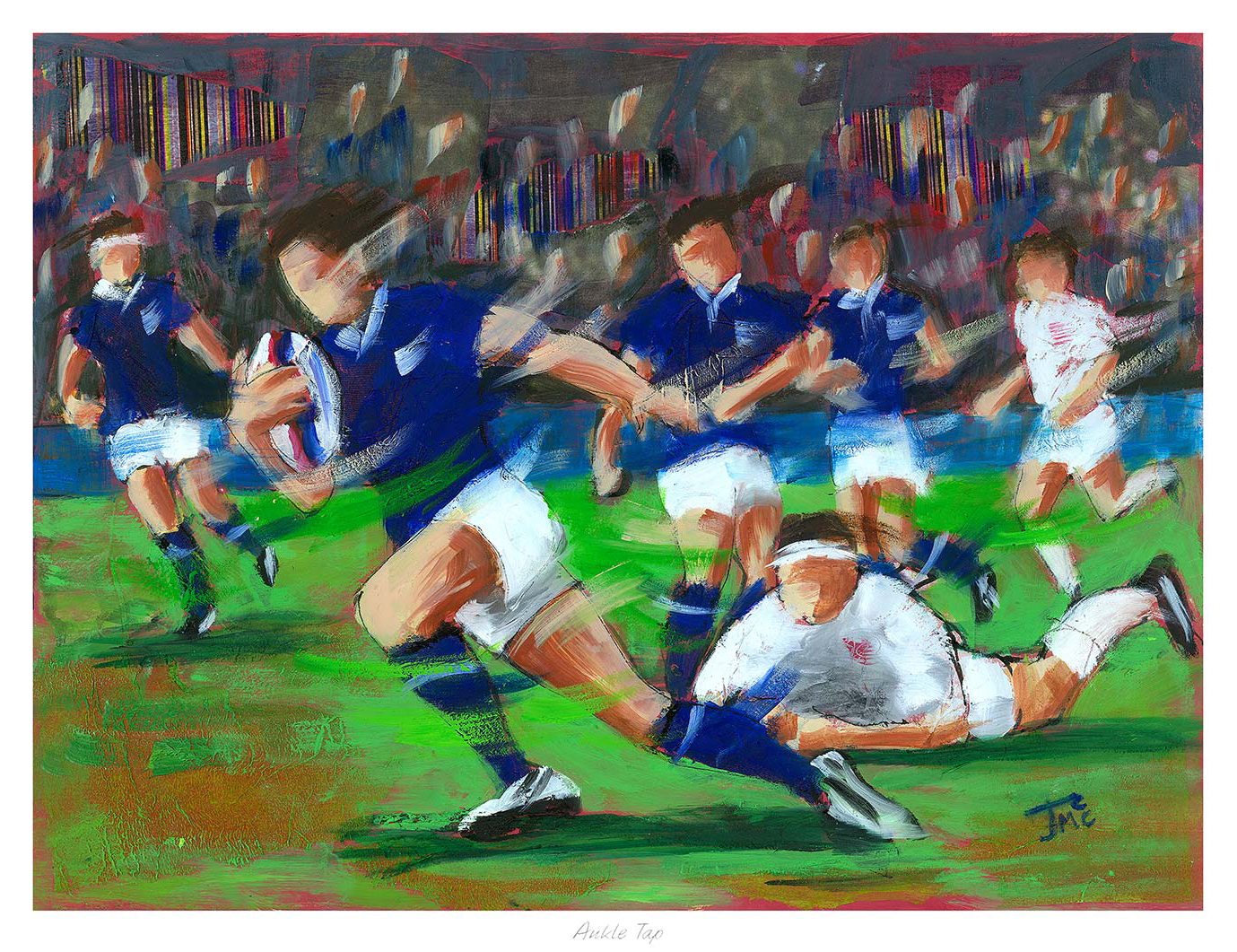
Scottish rugby wall art for a clubhouse lounge should express the energy of the game without making the social space feel like an equipment store. Ankle Tap by Janet McCrorie captures a decisive instant: a blue-clad runner drives forward as an opponent reaches for the ankle tackle. The loose marks and blurred background make speed the subject. That sense of motion can give a clubhouse lounge identity while leaving trophies, photographs and conversation room to breathe.
Start with the purpose of the clubhouse lounge
A good lounge serves several groups. Players may arrive after training, families may gather on match day and visitors may use the room for presentations or private functions. Artwork therefore needs clear sporting relevance, but it should not depend on one team photograph or one season’s result.
An action scene works well because it describes the game itself. The tackle, balance and forward movement are familiar across age groups and eras. Members can recognise the physical judgement behind the moment, while a visitor can still enjoy the colour and composition without knowing a particular player.
Place Scottish rugby wall art for a clubhouse lounge
Begin with the main sightlines. A picture above low seating can hold a conversation area together. A quieter wall near the entrance can establish the room’s character before guests reach displays and noticeboards. Avoid a position where open doors, tall screens or standing crowds regularly hide the central tackle.
| Possible position | Why it can work | Check before hanging |
|---|---|---|
| Above a sofa | Connects the artwork to the social seating zone | Allow a safe gap above heads and centre on the furniture |
| Opposite the bar | Gives people a strong view while they wait | Control reflections from downlights and glass shelving |
| Near the honours display | Links present-day sporting energy with club history | Leave enough wall so neither display feels crowded |
| Inside the function area | Adds club identity when the room hosts outside groups | Keep portable screens and decorations clear of the frame |
Mark the complete framed size with low-tack tape. Then check the outline from seated and standing positions. A clubhouse often has more viewing angles than a domestic room, so test it from the doorway, the main tables and the route to the bar. The image should read clearly without obstructing practical signs.
Let the action provide energy, not visual clutter
The blue kit, white opponent and warm crowd tones already give the image strong contrast. There is no need to repeat every colour around the lounge. Pick one connection instead. Upholstery in a related blue, warm timber tables or a restrained accent wall can help the picture belong without making the interior look over-coordinated.
- Keep laminated notices and fixture sheets away from the artwork’s immediate edge.
- Group small historic photographs separately instead of surrounding the action print.
- Use closed storage for loose kit, awards packaging and event materials.
- Choose warm, even lighting that reveals the brushwork without creating glare.
Club colours matter, but exact matching is rarely necessary. A frame that works with permanent joinery and seating will remain useful when the room is redecorated. If the team’s colours are already strong across the walls, a calmer mount and moulding can give the artwork a valuable visual pause.
Use sporting art beside memorabilia with discipline
Trophies, caps and signed shirts carry direct club history. Their value comes from specificity. Art plays a different role: it can convey the feeling of play and make the room welcoming even when visitors do not share those memories. Give each type of display its own zone rather than asking one wall to carry everything.
A useful arrangement might place trophies in a lit cabinet, team photographs in a chronological group and the print above the main seating. This creates a hierarchy. The action image is the broad focal point, while members can approach the smaller records when they want detail.
Choose presentation for a busy shared room
Clubhouse walls face more movement than most living rooms. Chairs may be rearranged, events may bring temporary decorations and people may pass close to the frame. Fixing, finished dimensions and glazing should therefore be considered alongside colour. The frame needs to support the print and suit the practical conditions of the site.
First 4 Frames produces colour-managed Giclée prints and completes bespoke, hand-finished framing in-house at its Falkirk workshop. A one-to-one consultation can help the club compare mouldings, mounts and the final scale against existing displays. That measured approach gives the limited edition print presence without making it feel oversized.
Explore the artist behind Ankle Tap
Janet McCrorie is known for expressive figures and a lively treatment of movement. Visit Janet McCrorie’s official website for more artist context, then explore the Janet McCrorie collection at First 4 Frames to compare sporting and dance subjects.
Well-placed Scottish rugby wall art for a clubhouse lounge can honour the game and improve the room without competing with the club’s real history. View the framed limited edition Ankle Tap print for a scene built around timing, balance and the instant before a runner breaks free.