
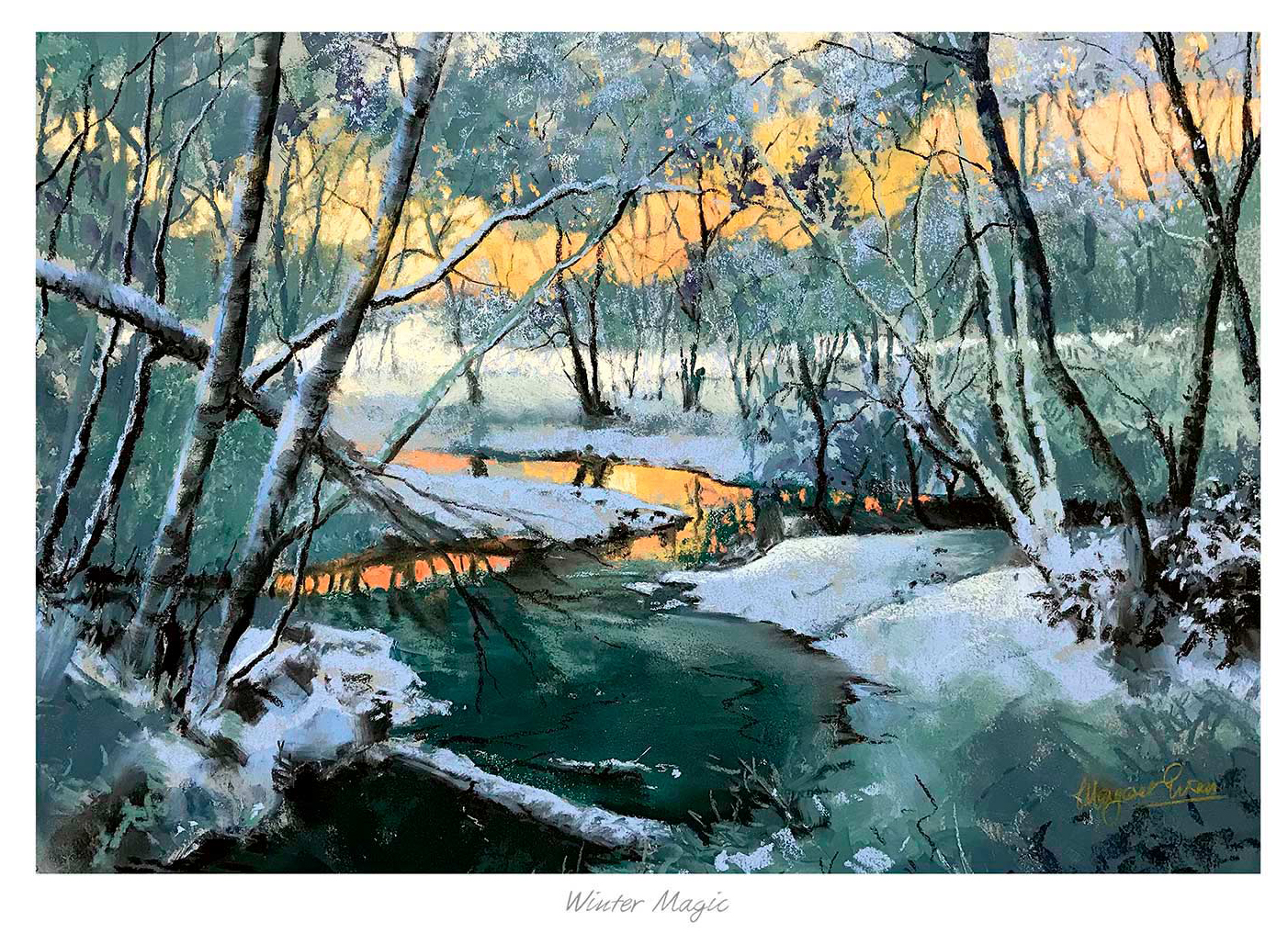
winter landscape art for pale blue walls needs to respond to the room as well as the subject. Winter Magic offers a useful starting point because Margaret Evans’s snowy river and bare trees echo a cool wall colour, yet the landscape’s tonal depth can stop blue paint from feeling flat when warmer materials remain.
Layer winter landscape art for pale blue walls with warm material
Hold a paint sample beside the product image in the room’s actual light. Some pale blues lean grey; others appear green or violet after dark. The artwork does not need to match. It needs enough separation for snow, water and branches to remain legible.
| Element | Balancing choice |
|---|---|
| Pale blue paint | Retain one warm timber, wool or woven surface. |
| Snowy subject | Avoid repeating snowflakes and winter signs. |
| Square composition | Relate the complete frame to furniture or a clear wall bay. |
| Evening light | Use a warm lamp and check glazing reflections. |
Harmony comes from shared atmosphere; warmth comes from contrast in material and light.
One rust, oatmeal or natural wood note can make the room feel inhabited. Heavy silver accessories and frosted surfaces may push the scheme towards an artificial winter theme.
Choose a frame for art for pale blue walls in the room
Snow contains subtle colour rather than plain white. Colour-managed Giclée production preserves those quiet distinctions, while one-to-one framing can introduce definition or warmth without placing a heavy border around the winter landscape.
For context on the woodland environment behind seasonal scenes, see the seasonal overview of winter. Explore the Margaret Evans collection, then view the exact product and framing choices.
Art for pale blue walls should deepen the palette rather than freeze it. Winter Magic supplies atmosphere and distance, while warm material, light and a considered frame keep the room welcoming.