
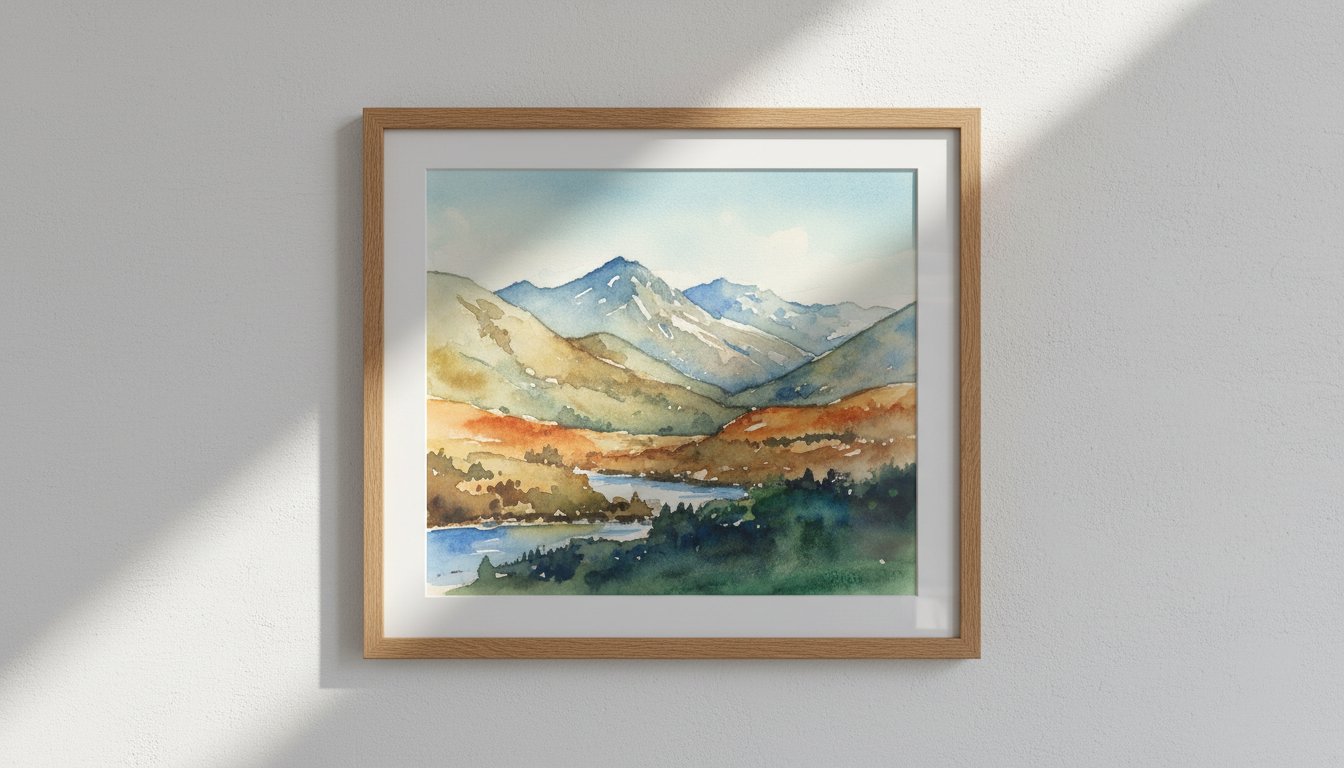
That beautiful piece of art you chose for your wall-the one that perfectly captures a memory or completes your room-is under constant threat from an invisible enemy. Every ray of sunlight, while brightening your home, contains UV light that can cause irreversible fading, slowly robbing your artwork of its vibrancy. But what if you could provide an invisible shield? This is the crucial role of premium UV protection framing glass, which acts as a guardian for your treasured prints and photographs, preserving them for years to come.
Navigating the world of bespoke framing can feel overwhelming, filled with technical terms about reflection control and conservation grades. We understand the worry of making an expensive mistake. This guide is designed to be your trusted partner, demystifying the options with clear, straightforward advice. We’ll walk you through everything you need to know, empowering you to confidently choose the perfect glass to protect your investment, ensuring your art looks spectacular and lasts a lifetime.
The Invisible Threat: How UV Light Permanently Damages Your Artwork
We’ve all seen it. A treasured family photograph left on a mantelpiece, its once-vibrant colours now a pale, washed-out memory. Or a beautiful print that, over the years, has developed a sad, yellow tinge. This heartbreaking transformation isn’t just a sign of age; it’s the result of a silent and relentless attacker: ultraviolet (UV) light.
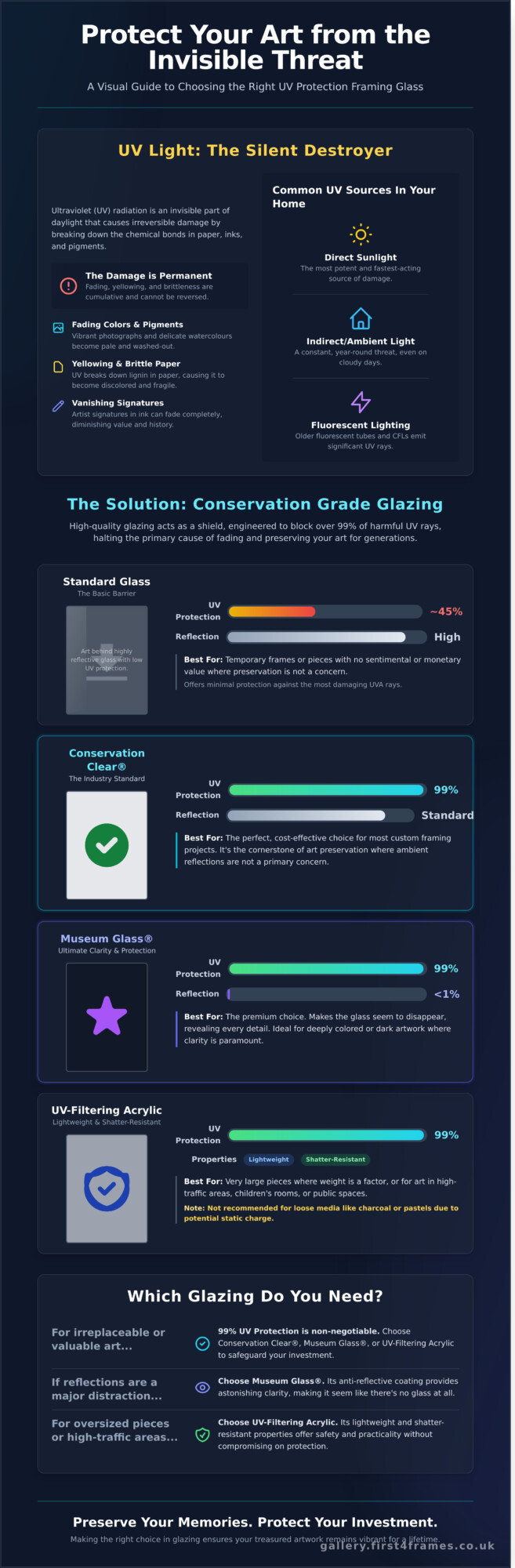
Think of UV light as an invisible, high-energy part of daylight. While we can’t see it, its effects are profound. It works tirelessly to break down the chemical bonds in paper, inks, and pigments, causing irreversible damage that robs your artwork of its life and value.
To see how different glazing options stand up to this invisible threat, this short video offers a clear demonstration:
The damage from UV exposure is cumulative and permanent. Every moment your art is exposed, a little more of its original beauty is lost forever. This happens even on overcast British days, as UV rays easily penetrate cloud cover. This is why investing in professional UV protection framing glass is not an indulgence, but an essential act of preservation for any piece you love.
What Exactly Fades? Pigments, Dyes, and Signatures
UV radiation attacks the very molecules that create colour. Delicate watercolours can fade to near invisibility, and the rich tones in a photograph can become flat and discoloured. Even the artist’s signature, often penned in ink, can vanish completely, taking with it a crucial part of the artwork’s history and value. Furthermore, UV breaks down a compound called lignin within paper, a process that causes the familiar yellowing and brittleness. Understanding the role of different types of picture-framing glass is the first step in preventing this.
Common Sources of UV Radiation in Your Home
While you might think your art is safe indoors, UV radiation is surprisingly pervasive. The main culprits include:
- Direct Sunlight: The most potent source. Even a few hours of direct sun per day can cause significant fading in a short time.
- Indirect Sunlight: Ambient light from windows is a constant, year-round source of UV radiation that slowly degrades your artwork.
- Fluorescent Lighting: Older fluorescent tubes and compact fluorescent lamps (CFLs) emit significant levels of UV, making them a hidden danger.
Fortunately, modern LED lighting emits virtually no UV radiation. However, with sunlight being the primary and most powerful threat, choosing high-quality UV protection framing glass remains the single most effective step you can take to safeguard your cherished pieces for generations to come.
Your Shield Against Fading: An Introduction to Conservation Glazing
When we talk about framing, the ‘glazing’ is the clear, protective layer that sits between your artwork and the world. This can be either glass or acrylic, and its role is far more critical than simply keeping dust off. While standard picture frame glass offers a basic physical barrier and blocks some UVB rays, it does almost nothing to stop the most damaging UVA rays. Over time, this exposure causes irreversible fading, yellowing, and brittleness in your beautiful prints and photographs.
This is where conservation-grade glazing becomes an essential part of any bespoke framing project. Think of it not as a luxury, but as vital insurance for your treasured pieces. As detailed by preservation experts, Limiting Light Damage is crucial for longevity. High-quality UV protection framing glass is engineered to block over 99% of harmful ultraviolet rays, effectively halting the primary cause of fading and ensuring your art remains as vibrant as the day it was created.
Conservation Clear® Glass: The Industry Standard
For most custom framing needs, Conservation Clear® glass is the perfect choice. It provides the crucial 99% UV protection that is the cornerstone of art preservation. As our most popular and cost-effective conservation option, it offers peace of mind without a premium price tag. It’s the ideal glazing for any project where the spectacular clarity of your art is the focus and ambient reflections are not a significant concern.
Museum Glass®: The Ultimate Protection and Clarity
When you want to feel as though there is nothing between you and the artwork, Museum Glass® is the answer. It combines the same 99% UV protection with an astonishingly effective anti-reflective coating. This advanced optical technology makes the glass seem to disappear, revealing every intricate detail, subtle texture, and deep colour in your piece. It is the premium choice for deeply coloured or dark artwork where clarity is paramount.
UV-Filtering Acrylic (Plexiglass): When to Choose It Over Glass
Sometimes, glass isn’t the most practical solution. Our UV-filtering acrylic offers the same 99% UV protection but in a lighter and shatter-resistant format. This makes it the ideal UV protection framing glass alternative for very large pieces where weight is a factor, or for artwork displayed in high-traffic areas, children’s rooms, or public spaces. One important consideration is that acrylic can carry a static charge, so we don’t recommend it for loose media like charcoal or pastels.
Making the Right Choice: Which UV Protection Do You Really Need?
Choosing the right glazing for your artwork doesn’t need to be complicated. The perfect choice is a simple balance between the artwork’s value (both monetary and sentimental), where it will hang in your home, and your budget. Our goal is to demystify the options, empowering you to discuss your project confidently with a professional framer and make a choice that protects your art for decades to come.
When is 99% UV Protection Non-Negotiable?
For some pieces, settling for anything less than 99% UV protection is a risk not worth taking. Light is a primary agent of deterioration, causing irreversible fading and damage to colours and materials. This level of protection is essential for:
- Original artwork, limited edition prints, and signed pieces: These items are valuable and often irreplaceable, making maximum protection a crucial investment.
- Irreplaceable sentimental items: Precious wedding photographs, family heirlooms, and historical documents all hold value that money can’t replace.
- Textile-based art: Fabrics are highly susceptible to fading. This includes everything from antique needlepoint and tapestries to signed memorabilia shirts.
Choosing Between Conservation Clear and Museum Glass
Once you’ve decided on 99% UV protection, the next choice is between clarity and reflection control. Conservation Clear Glass is the industry standard and the perfect choice for most pieces displayed in rooms with controlled, indirect lighting. It offers fantastic protection without the premium cost of an anti-reflective coating.
However, you should invest in Museum Glass when viewing clarity is paramount. Its advanced anti-reflective coating makes the glass seem to disappear, offering a breathtakingly clear view. It’s the ideal choice if your art will hang opposite a window or bright light source, or for dark and intricately detailed pieces where reflections would obscure the beautiful craftsmanship.
Is Standard Glass Ever an Option?
We rarely recommend standard picture glass, as it offers no UV protection. It should only ever be considered for easily replaceable, low-value posters or prints that are displayed in a room with absolutely no natural light, such as a basement. Even in these cases, we encourage you to consider the small extra cost for proper UV protection framing glass. It’s a minor investment that provides major long-term peace of mind, ensuring your piece looks its best for years. If you’re still unsure, we’re here to help. Get a personalised recommendation from our framing experts.
Beyond UV Rays: Why Anti-Reflection is a Game Changer
Choosing the right glass to protect your cherished artwork from fading is a crucial first step. But preservation is only half the battle. After all, what is the point of protecting a beautiful piece if you can’t truly see it? We’ve all experienced the frustration: you stand back to admire a newly framed print, only to be met with the distracting glare of a window or your own reflection staring back at you.
This is where anti-reflective coatings completely change the game. Think of it like the difference between a standard camera lens and a professional, multi-coated one, or the crystal-clear view you get with high-quality anti-glare eyeglasses. This technology isn’t just an add-on; it’s an essential component for the ultimate viewing experience, ensuring your art is seen exactly as the artist intended.
How Anti-Reflective Technology Works
The magic lies in advanced optical engineering. Anti-reflective glass is treated with microscopic layers of metallic oxides that are invisible to the naked eye. These coatings are precisely designed to disrupt and scatter reflected light, dramatically reducing glare and reflections to less than 1%. This allows far more light to pass directly through the glass. While standard glass has a light transmission of around 90%, premium options like Museum Glass® boast an incredible transmission of over 97%. This seemingly small difference makes colours appear richer, blacks deeper, and fine details spectacularly sharp.
Is Museum Glass Worth the Extra Investment?
For anyone passionate about presentation, the answer is a resounding yes. Combining 99% UV filtering with near-invisibility, this premium UV protection framing glass delivers a powerful “wow” factor. It creates the stunning illusion that there is no glass there at all, allowing you to connect directly with the texture and depth of the artwork.
Investing in this level of clarity provides several key benefits:
- A Gallery-Quality Finish: It provides the high-end, professional presentation seen in the world’s finest galleries and museums.
- Unmatched Clarity: Your art is viewed without the interference of distracting reflections, from any angle.
- Elevates the Entire Piece: The perfect clarity enhances not only the art but also the craftsmanship of the bespoke frame surrounding it.
This top-tier UV protection framing glass doesn’t just preserve your art; it presents it. It’s an investment in the daily joy and appreciation you get from your collection. Explore our gallery to see the stunning clarity for yourself.
Your Art’s Future is Clear: The Final Frame
Your artwork is more than just decoration; it’s a story, a memory, and a source of daily inspiration. As we’ve explored, the invisible threat of UV light can permanently fade those vibrant colours, but the right defence can preserve them for a lifetime. Choosing high-quality UV protection framing glass is the single most important step you can take. When combined with the stunning clarity of anti-reflective coatings, you not only shield your art from harm but also enhance your viewing experience, removing distractions and pulling you into the picture.
Making the perfect choice doesn’t have to be complicated. With over 20 years of professional framing experience, our passion is matching your piece with the perfect protective solution. We use premium, conservation-grade materials as standard and offer the expert advice needed to guide you. Protect your art for a lifetime. Discuss your bespoke framing options with us today. Let’s give your cherished pieces the beautiful, lasting home they deserve.
Frequently Asked Questions About UV Protection Glass
Does UV protection glass have a visible colour or tint?
Modern, high-quality UV protection glass is engineered to be virtually invisible. Unlike older materials that might have had a slight green or yellow hue, today’s premium options offer exceptional clarity. For the most spectacular view, options with an anti-reflective coating not only block UV rays but also reduce glare, making it seem like there is no glass there at all. This ensures the true colours of your beautiful artwork shine through without any distortion.
How long does the UV-blocking coating on framing glass last?
The UV-blocking properties of professional framing glass are designed to last a lifetime. The protective coating is not a temporary film but is bonded directly to the glass during manufacturing. This durable layer will not peel, bubble, or degrade over time. When you invest in quality UV protection, you are securing a permanent shield that will tirelessly protect your art from fading for as long as it hangs on your wall, a testament to true craftsmanship.
Can I just apply a UV-filtering film to my existing frame’s glass?
While applying a UV-filtering film might seem like a cost-effective solution, we strongly advise against it for fine art. These films can often bubble, peel, or yellow over time, distorting the view of your artwork and diminishing its aesthetic appeal. Professional UV protection framing glass offers superior clarity, durability, and a more effective, permanent barrier. For a truly professional finish that honours your art, integrated UV glass is always the best choice.
Is UV glass still necessary if I use archival, acid-free mats and backing boards?
Yes, UV glass is still absolutely essential. Archival, acid-free materials protect your artwork from internal chemical damage, preventing yellowing and deterioration from contact with acidic materials. However, they offer no defence against external threats like light. UV radiation will fade pigments and damage paper regardless of the matting used. For complete, long-term preservation, you need both: archival mounting to protect from the inside and UV glass to shield from the outside.
Do I need to worry about UV damage from modern LED lights in my home?
It’s a common misconception that LED lights are completely safe for art. While they emit significantly less UV radiation than older fluorescent or halogen bulbs, they are not entirely UV-free. Over many years, even this low level of exposure can cause cumulative, irreversible fading. For any piece that is valuable or holds sentimental importance, we always recommend UV-protective glass as a wise and necessary precaution, ensuring its vibrancy for generations to come.
What is the best way to clean UV and anti-reflective glass without damaging it?
To clean your specialist glass without risking damage, always use two soft, lint-free microfibre cloths. Lightly spray an ammonia-free glass cleaner onto one cloth-never directly onto the glass itself, as liquid can seep under the frame. Gently wipe the surface with the damp cloth, then immediately follow up with the second, dry cloth to buff away any streaks. This simple method protects the delicate anti-reflective and UV coatings, keeping your view pristine.
What’s the real cost difference between standard, conservation, and museum glass?
The cost varies based on size, but you can think of it as an investment in your art’s longevity. If a piece of standard 2mm float glass for a medium frame costs around £15-£20, you can expect Conservation Clear glass (with 99% UV protection) to be roughly £35-£50. For the ultimate in clarity and protection, Museum Glass (with UV filtering and anti-reflective properties) could cost anywhere from £80 to over £120 for the same size, preserving your art’s value and beauty.