That beautiful piece of art, treasured family photograph, or signed memorabilia deserves to be the centrepiece of your home. But the journey from unframed to perfectly displayed can feel daunting. Will it be protected? Which frame, mount, or glass is the right choice? Finding a local professional you can trust with your precious items is paramount. Here at First4Frames Gallery, we believe that expert Falkirk picture framing should be a simple, inspiring, and collaborative process. We combine decades of passion and craftsmanship to create bespoke solutions that not only protect your art but elevate it.
In this guide, we’ll walk you through our hassle-free service, demystifying the choices and showcasing how the perfect frame acts as a beautiful bridge between your artwork and your décor. Discover how our premium, custom framing can preserve your memories for a lifetime, giving you complete confidence and a spectacular result you’ll be proud to display. Embark on a journey with us to give your treasured items the presentation they truly deserve.
Key Takeaways
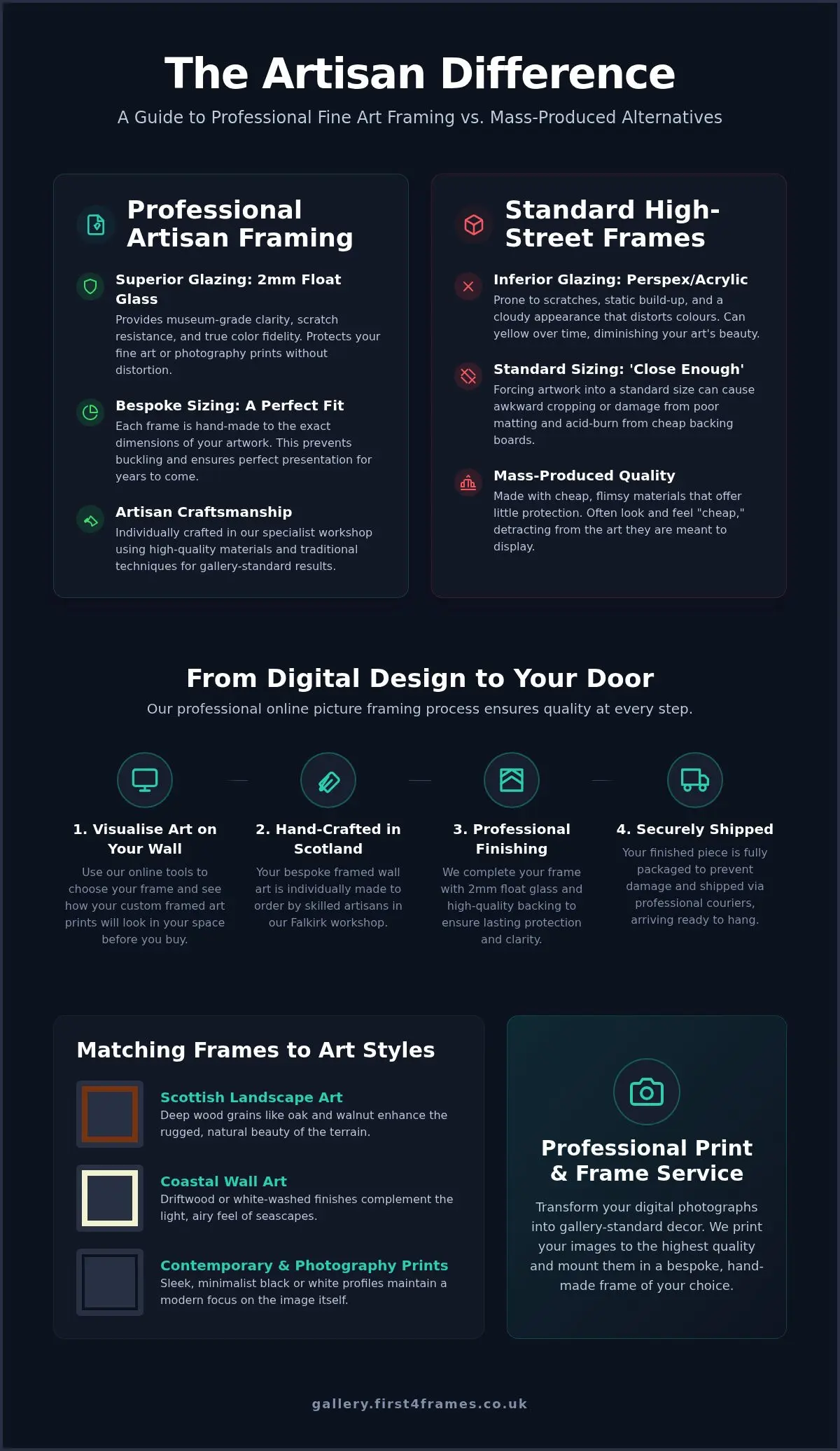
Discover how professional framing protects your treasured items from damage in ways that standard, off-the-shelf frames cannot.
Our expert Falkirk picture framing service extends beyond prints to beautifully display 3D objects like sports memorabilia and family heirlooms.
Walk through our simple, collaborative consultation process designed to turn your vision into a perfectly finished masterpiece.
Learn the importance of using conservation-grade materials to ensure your artwork is preserved and displayed beautifully for years to come.
Why Professional Picture Framing in Falkirk Matters
A treasured piece of art, a family photograph, or a hard-earned certificate deserves more than a standard, off-the-shelf frame. While convenient, these frames often lack the quality materials needed to protect your item long-term. Professional, bespoke framing is an investment-a crucial step in preserving your memories and enhancing their visual impact. The frame has a long and storied past, and understanding the history of the picture frame reveals its dual purpose: to protect and to present.
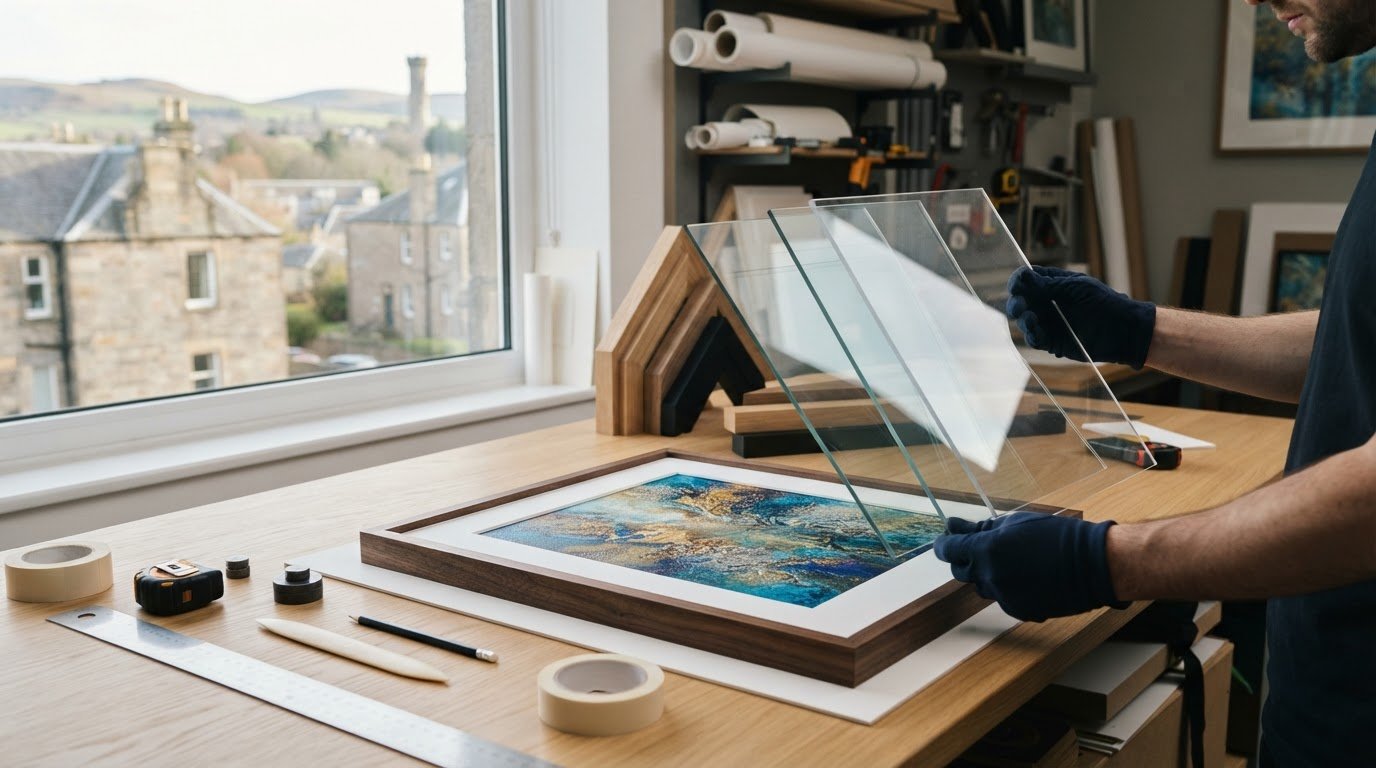
To see the craftsmanship involved, take a look at the work of a professional picture framer:
At First4Frames, we bring over 20 years of artisanal experience to every project. We understand that expert Falkirk picture framing is about the perfect marriage of conservation science and design artistry. It’s the difference between an item that simply hangs on a wall and one that truly comes to life, becoming a focal point in your home. Our passion is to provide a premium, bespoke service that ensures your piece looks spectacular for generations.
Preservation: Protecting Your Art for a Lifetime
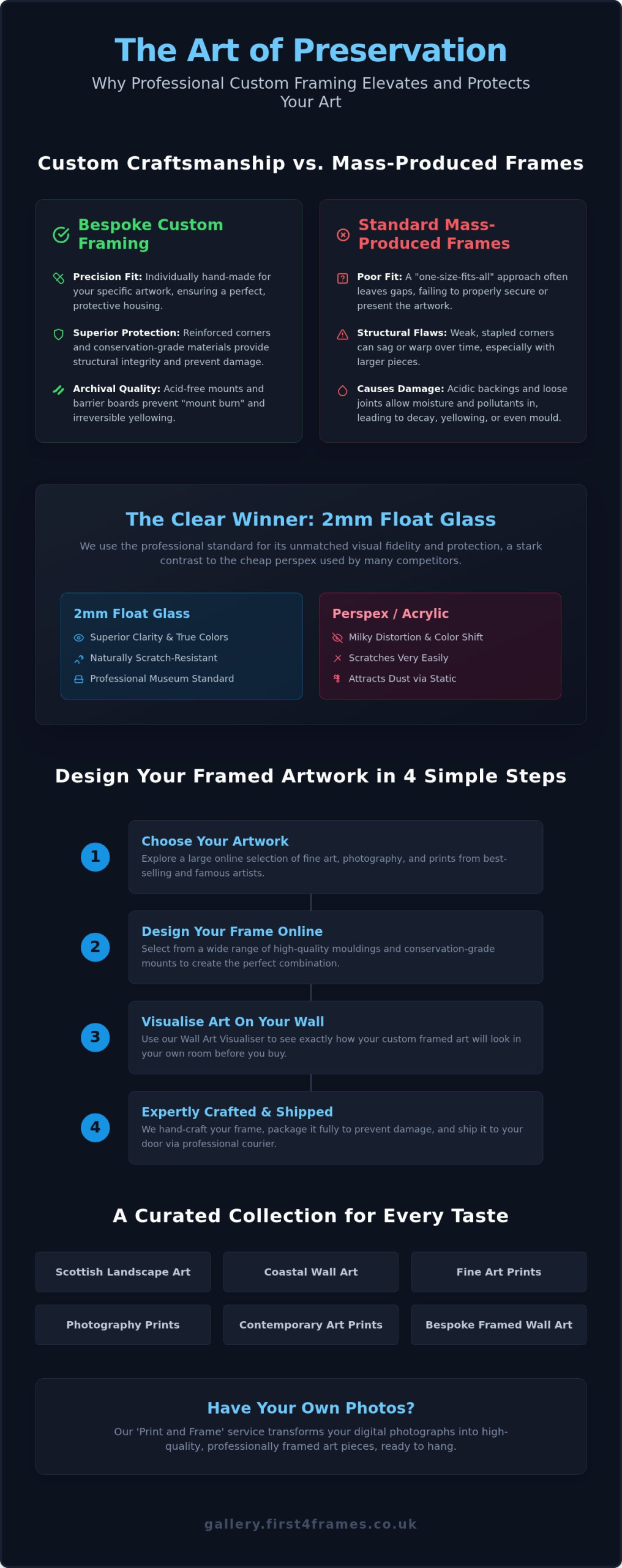
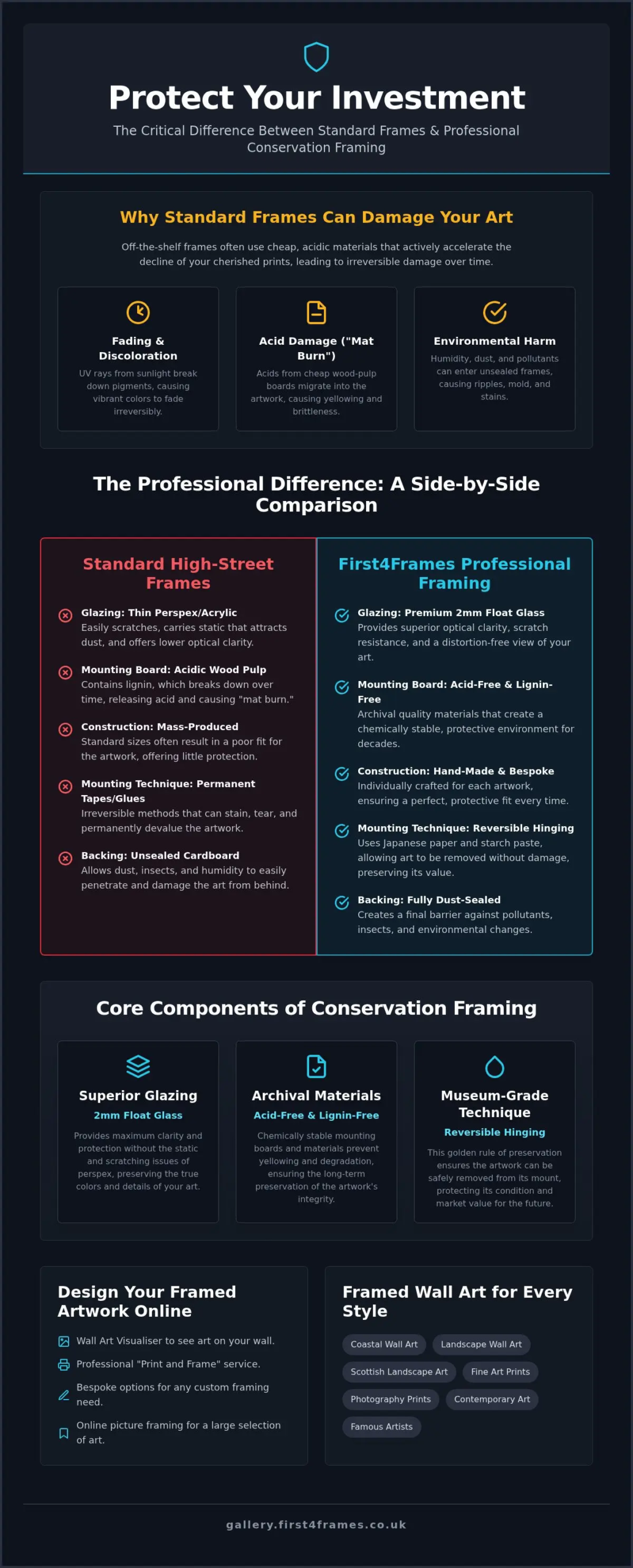
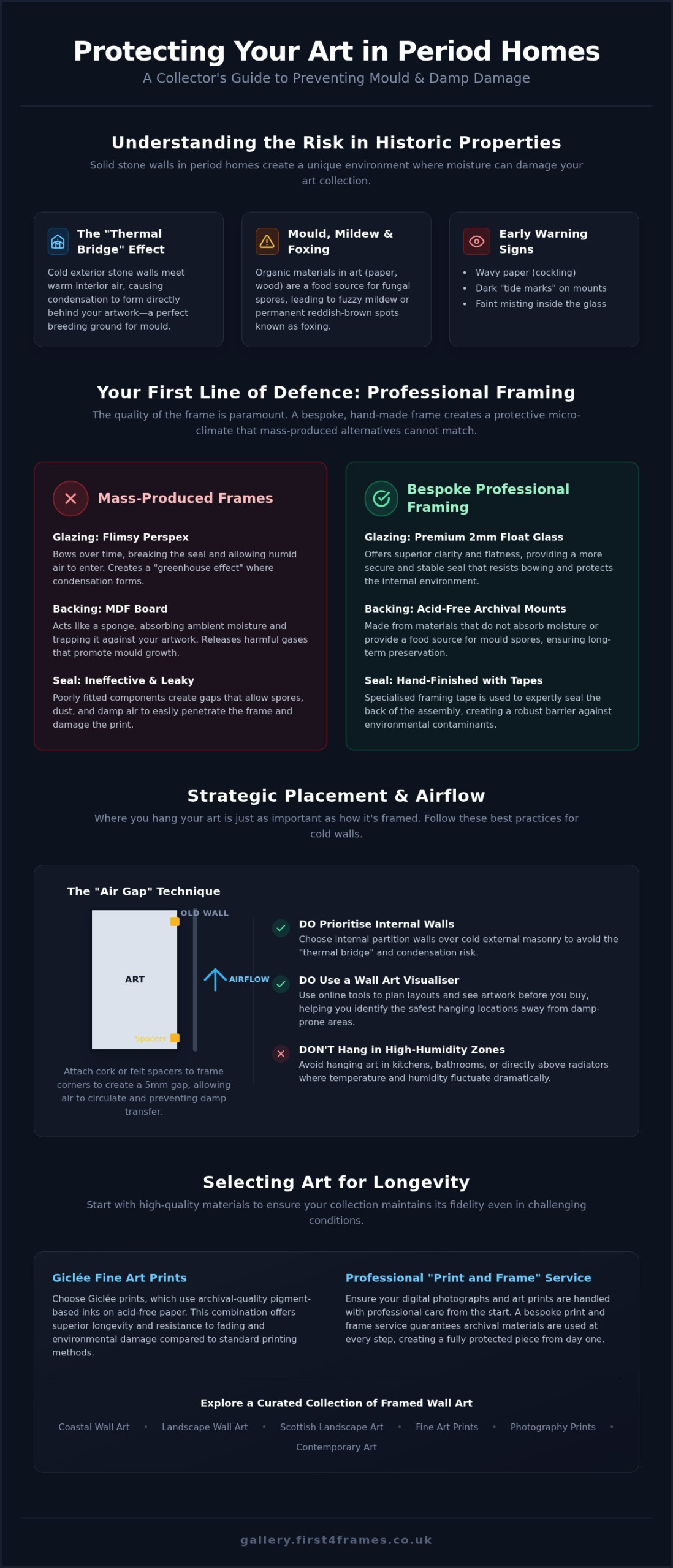
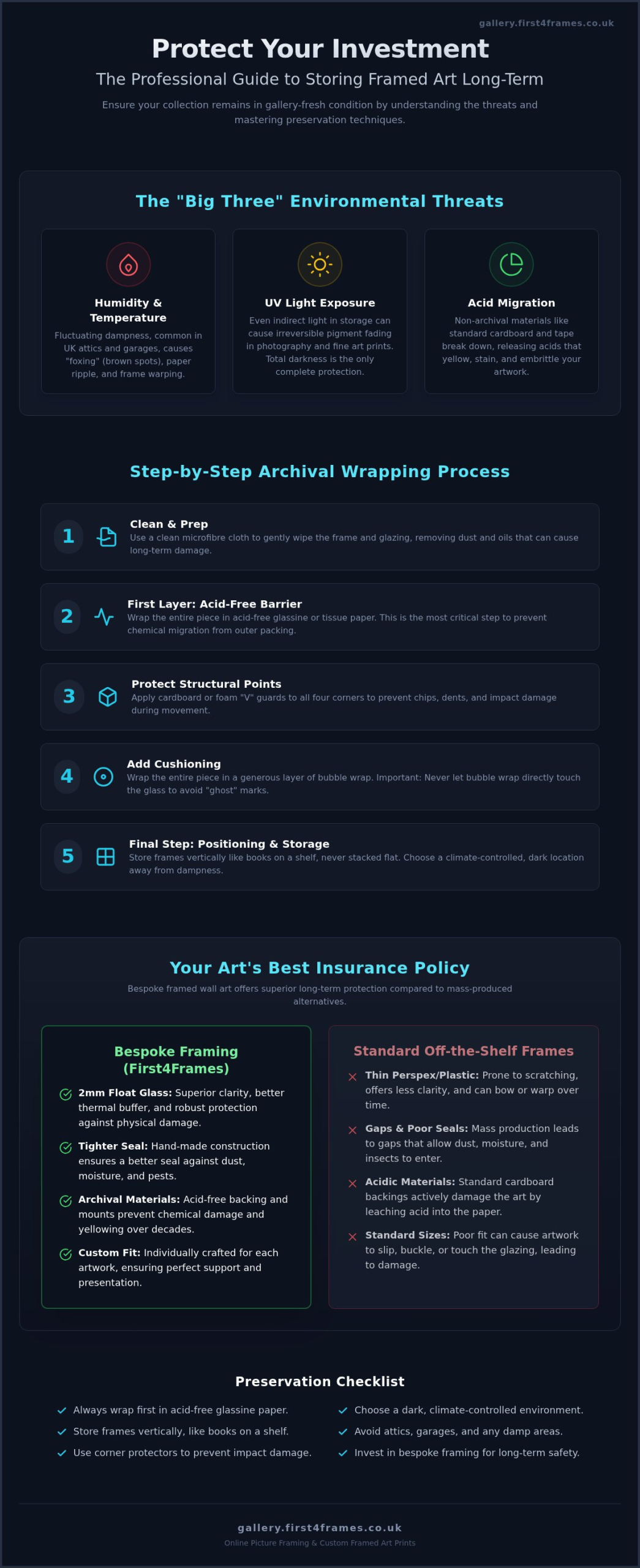
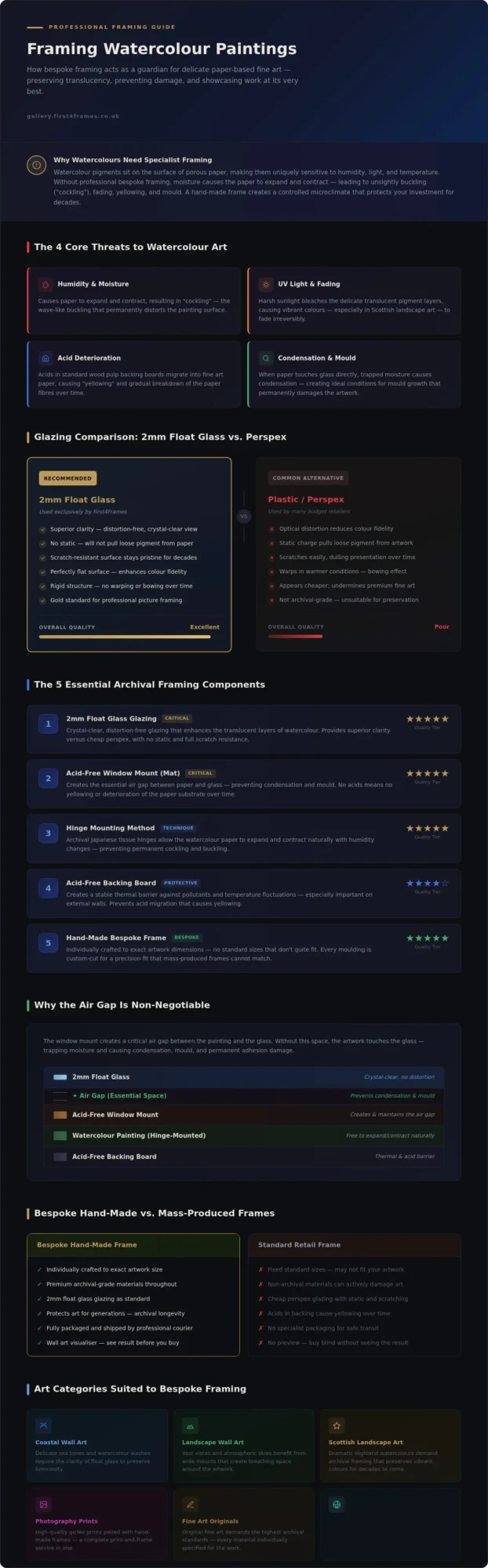
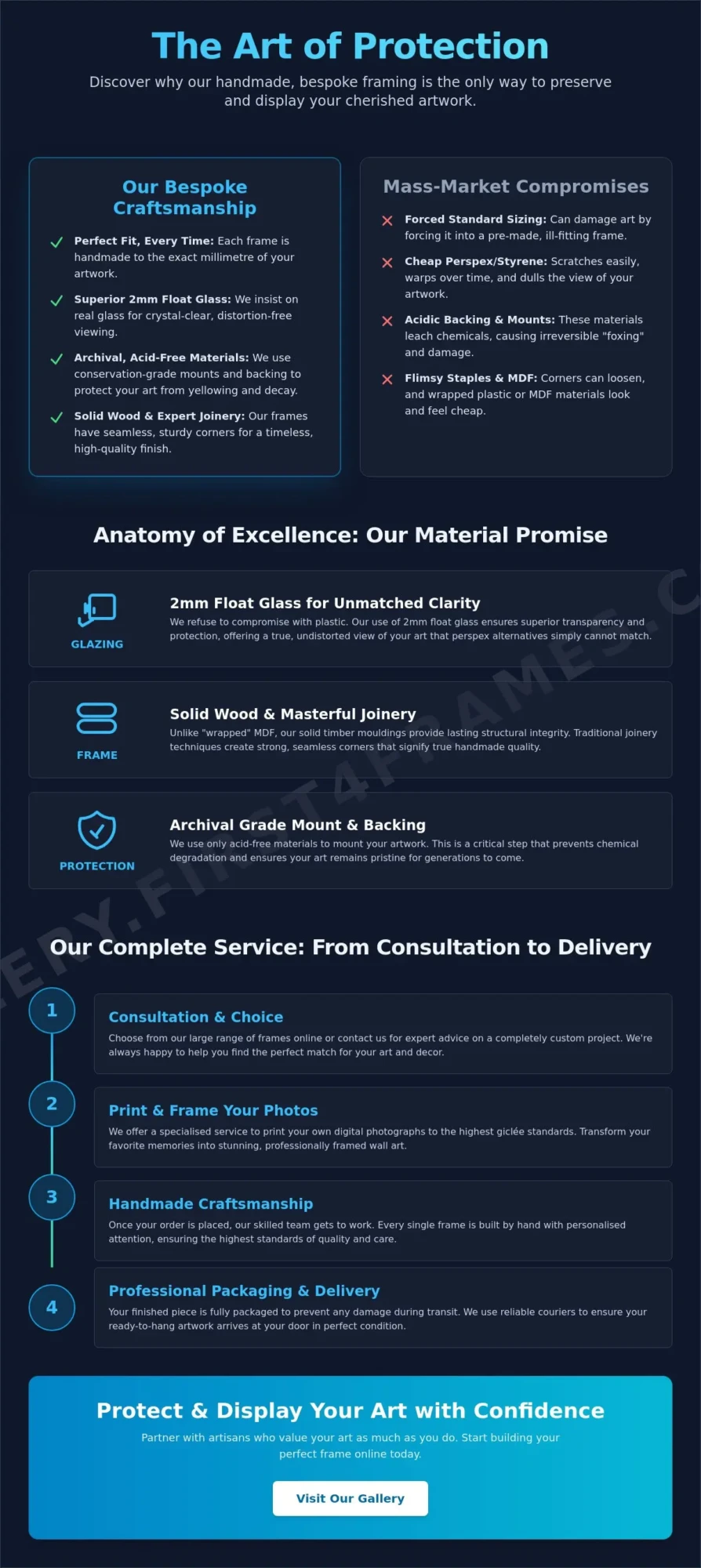
Your artwork is vulnerable to environmental damage over time. Our conservation-grade materials offer a vital line of defence, far superior to those found in standard frames. We use:
Acid-free mounts and backing boards to prevent the ‘browning’ and discolouration that can permanently damage paper and photographs.
UV-protective glass that acts like a sunscreen for your art, blocking up to 99% of harmful ultraviolet rays that cause colours to fade.
Professional sealing techniques to create a stable micro-environment inside the frame, keeping out damaging dust, humidity, and insects.
Presentation: The Art of a Perfect Finish
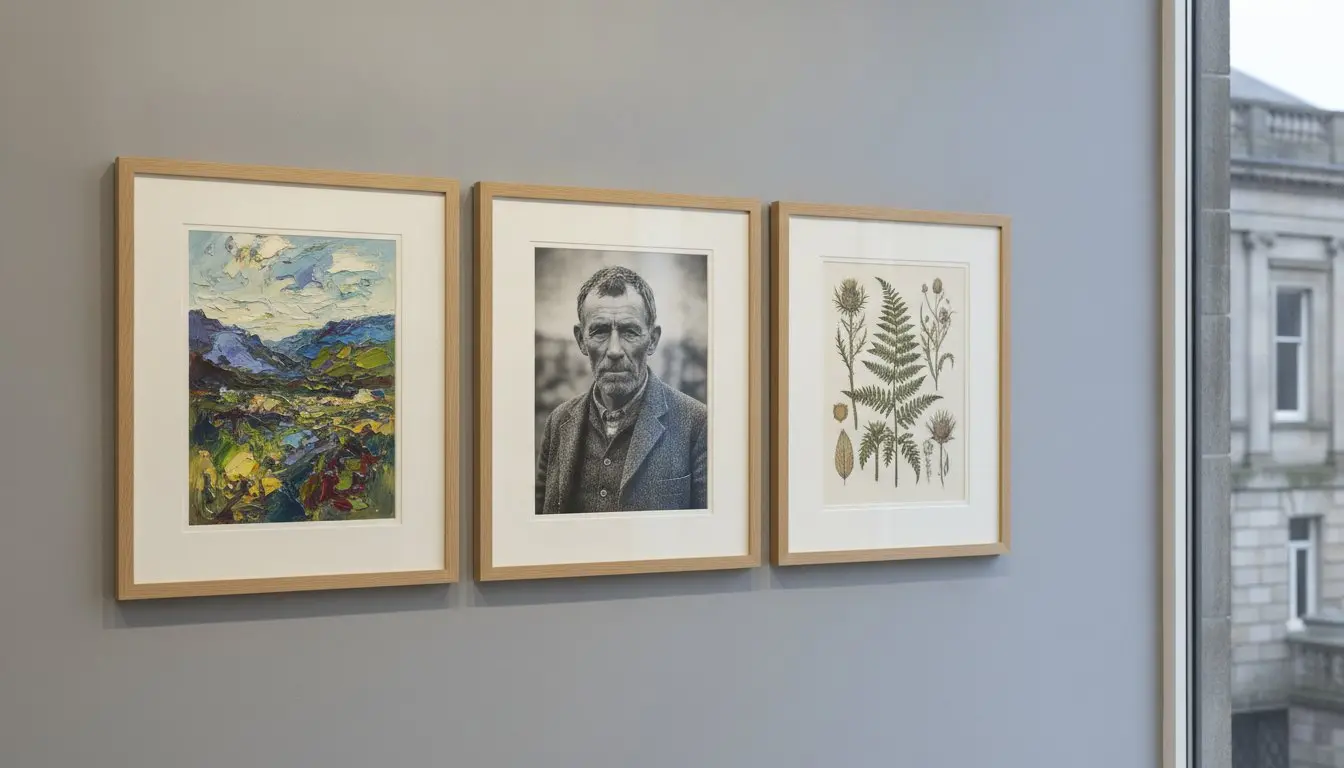
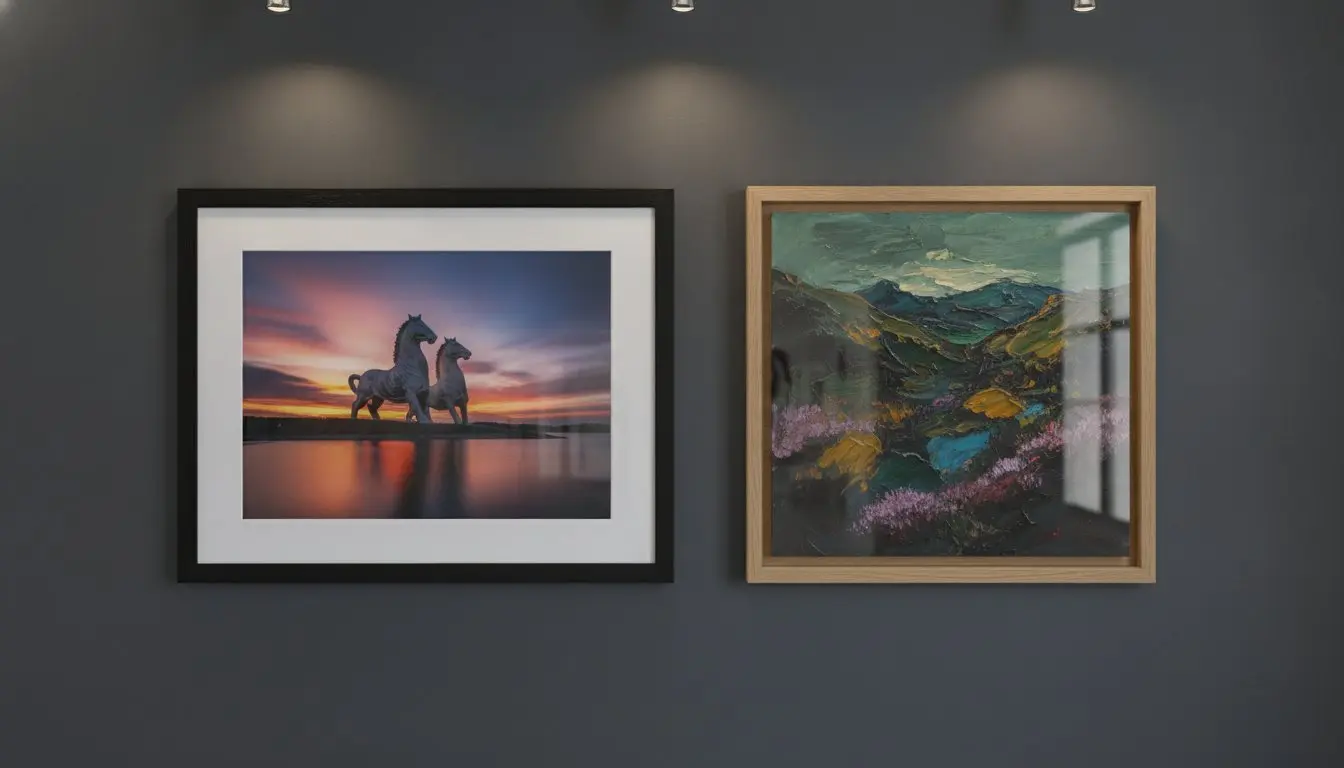
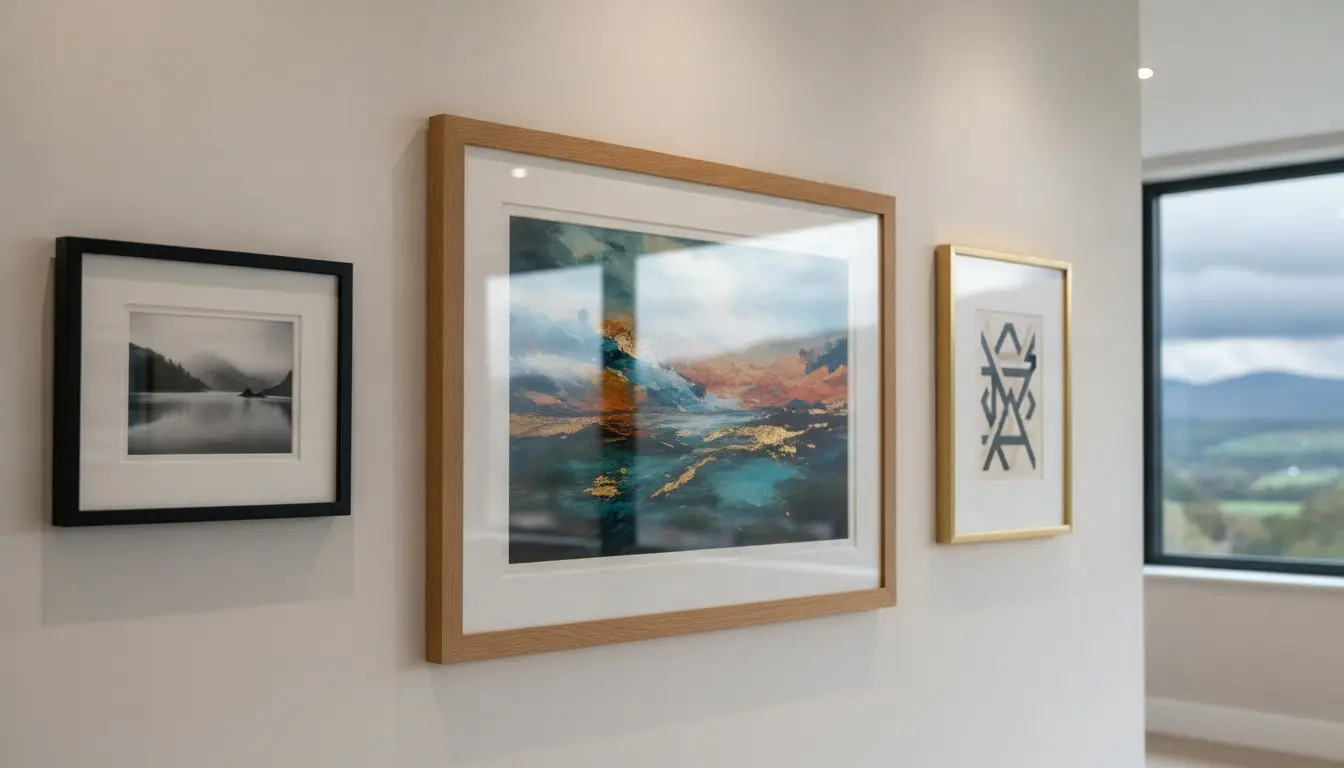
A bespoke frame does more than protect; it elevates. The right choice in moulding, colour, and mount proportions creates a beautiful, cohesive finish. We help you select a frame that not only complements the artwork but also harmonises with your interior decor. A well-proportioned mount draws the viewer’s eye towards the subject, creating visual balance and breathing room. In essence, the frame becomes the perfect bridge between your artwork and your room, tying everything together perfectly.
Our Bespoke Framing Services: For Every Kind of Treasure
At First 4 Frames, we believe every treasured item deserves to be presented beautifully. Our bespoke Falkirk picture framing service is built on a foundation of passion, precision, and decades of expertise. From a child’s first drawing to a large-scale corporate art piece, we handle every project with the utmost care. We proudly serve both individual collectors and commercial clients, offering a premium framing solution that turns your valued items into spectacular displays.
Fine Art Prints & Paintings
We specialise in framing original artwork, ensuring its beauty and longevity are preserved. Whether you have one of our own spectacular Giclée prints, a delicate watercolour, or a limited edition piece, we have the perfect solution. We offer advanced options like float mounting to elegantly display the deckled edges of fine art paper. Our choice of conservation-grade materials and UV-protective glazing is crucial for protecting artwork from light damage, keeping your investment safe for years to come.
Photographs & Certificates
Transform your cherished memories and achievements into timeless displays. From precious family portraits and wedding photographs to academic degrees and professional certificates, we ensure every piece is mounted with absolute precision. Our techniques guarantee your photos remain perfectly flat without the use of damaging adhesives. For a truly unique display, consider a custom multi-aperture frame, allowing you to create a beautiful, handcrafted collage of your favourite moments.
Memorabilia & 3D Object Framing
Some treasures can’t be pressed flat. Our expertise extends to the intricate world of 3D object framing. We create stunning shadow boxes and deep-rebate ‘box frames’ to display everything from signed football shirts and military medals to baby shoes and other cherished keepsakes. We use specialised, non-damaging mounting techniques to secure your items, ensuring they can be removed in their original condition if ever needed. Let us turn your memorabilia into a spectacular piece of personal history.
Your Framing Consultation: The First4Frames Process
Embarking on a custom framing journey can feel daunting, but at First4Frames, we make it a simple and inspiring experience. Our one-to-one consultation is designed to guide you through the creative process, transforming your cherished item into a beautifully finished masterpiece. We believe expert advice should be accessible to all, which is why our consultations are always complimentary and without obligation. Whatever your style or budget, our Falkirk picture framing service is tailored completely to you.
Step 1: Visit Our Falkirk Workshop
Your journey begins when you bring your artwork, photograph, or memorabilia to our welcoming workshop on Grahams Road. Our friendly team will sit down with you for a personal consultation to understand your vision, discuss where the piece will hang, and carefully assess your item. This initial conversation is all about listening to your ideas and needs, ensuring we create something you’ll love.
Step 2: Designing Your Perfect Frame
This is where your vision truly comes to life. We’ll guide you through our extensive collection of premium materials, helping you find the perfect combination to complement both your art and your home décor. You can explore:
Frame Mouldings: A vast selection from ornate and classic to sleek and contemporary, sourced from the finest suppliers.
Mount Boards: Hundreds of colours and textures to create depth, add a border, and draw the eye to your artwork.
Glazing Options: Choose from standard glass, anti-reflective for perfect clarity, or conservation-grade UV-protective glass to preserve your piece for years to come.
Need some inspiration? You can see examples of our finished work in our online gallery.
Step 3: Expert Craftsmanship & Collection
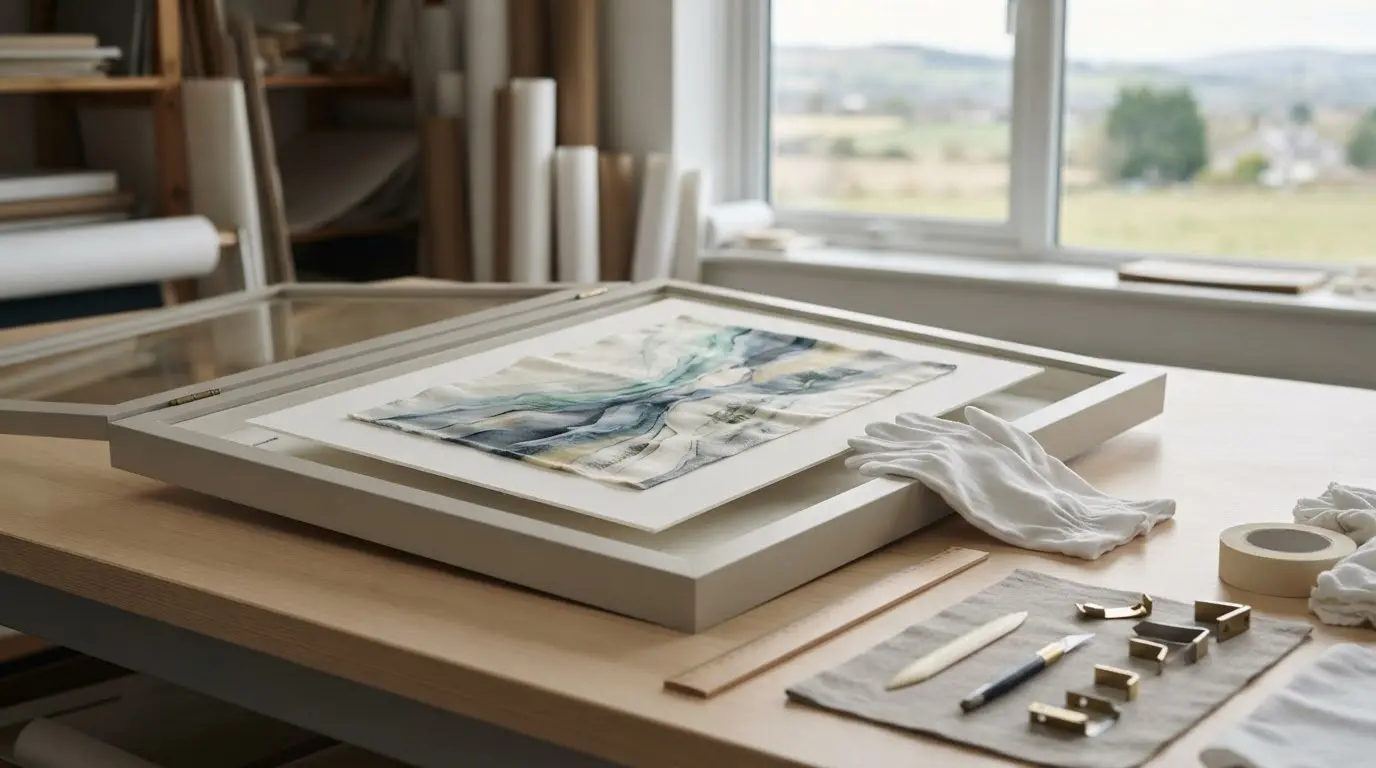
Once you’re happy with the design, our skilled framers get to work in our on-site workshop. We combine traditional techniques with modern precision to craft every frame to the highest standard. Our commitment to quality reflects the best practices advocated by bodies like the Professional Picture Framers Association (PPFA), ensuring a flawless finish. As soon as your bespoke Falkirk picture framing is ready, we’ll contact you. You’ll collect your artwork beautifully protected and ready-to-hang, complete with all necessary fittings.
Meet Your Local Falkirk Framers
At the heart of every great frame is a craftsman’s passion. Here in Falkirk, we are more than just a business; we are your local artisans, dedicated to the art of presentation. We believe that a frame does more than just hang on a wall-it acts as a bridge between your art and your living space, protecting memories and elevating aesthetics. Our workshop is a hub of creativity and precision, where traditional techniques meet modern technology. When you choose us for your Falkirk picture framing needs, you’re choosing a personal, dedicated service from experts who genuinely care about your art.
Our commitment extends beyond the workshop floor. We thrive on helping our clients bring their visions to life, offering friendly advice and creative solutions for everything from family photos to large-scale original canvases. Your satisfaction is the true measure of our success, and we take immense pride in every piece that leaves our studio.
Our Commitment to Quality Materials
A beautiful frame begins with exceptional materials. We meticulously source premium, sustainable woods and high-grade mouldings to ensure your frame not only looks spectacular but provides lasting durability. To truly protect your art, we exclusively use conservation-standard, acid-free mountboards that safeguard against discolouration and environmental damage. In our professional workshop, this commitment to quality is matched by our investment in precision equipment, guaranteeing flawless joins and perfect cuts every time.
Visit Us on Grahams Road, Falkirk
We warmly invite you to visit our workshop to see our craftsmanship firsthand and explore our extensive range of options. There is no substitute for seeing the textures and colours in person. We are conveniently located in the heart of Falkirk, and our friendly team is always on hand for a no-obligation consultation.
Our Location: 47A Grahams Road, Falkirk, FK1 1LA
Easy Parking: Convenient parking is available right outside the workshop.
Opening Hours: We are open Monday to Friday, from 9:00 AM to 5:00 PM.
Consultations: Walk-ins are always welcome! Come and chat with us about your project.
As we’ve explored, choosing the right frame is an art in itself-a way to protect, enhance, and celebrate the pieces that matter most to you. From family photographs to fine art, the right bespoke frame transforms an item into a treasured display. The key is combining your personal style with expert craftsmanship and the highest quality materials to ensure your memories are preserved beautifully for years to come.
Our passion for exceptional Falkirk picture framing is built on a foundation of trust and expertise. With over 20 years of framing experience, we are dedicated to providing a service that is both personal and professional. In our local Falkirk workshop, you’ll find hundreds of frame and mount options and our promise to use conservation-grade materials as standard for every project.
How much does custom picture framing cost in Falkirk?
The cost of bespoke framing is unique to each project, depending on the size of your artwork, the style of frame moulding, the type of mount, and the glass selected. A simple frame for a small photograph might start from around £40, while a large, intricate piece with conservation-grade materials could be £200 or more. We provide a complimentary, no-obligation quote during your consultation, ensuring we find the perfect, premium solution that beautifully suits your art and your budget.
How long does bespoke framing take?
Our standard turnaround time for bespoke framing is typically 7 to 14 days. This allows our skilled artisans the time to apply their meticulous craftsmanship to every detail, from cutting the materials to the final assembly. If you require your frame for a specific date or special occasion, please let us know. We will always do our best to accommodate your deadline without compromising the exceptional quality of our work.
Can you frame my own artwork, or do I have to buy a print from you?
Absolutely! We are passionate about framing the art and objects that are special to you. Whether it’s an original painting, a family photograph, a limited-edition print, or your child’s first masterpiece, we would be honoured to help you protect and display it. Our core service is providing expert Falkirk picture framing for your personal items. Simply bring your piece to our workshop, and we can begin designing its perfect new home together.
What’s the difference between standard glass and UV-protective glass?
Standard picture framing glass offers excellent clarity and protection from dust and handling. However, it does not block the harmful ultraviolet (UV) light that causes colours in artwork to fade over time. UV-protective glass is specially coated to filter out up to 99% of these damaging rays. We highly recommend it for preserving original art, signed prints, and any irreplaceable items, ensuring their vibrancy and value are protected for decades to come.
Do I need to make an appointment for a framing consultation?
While you are always welcome to visit our workshop, we do recommend booking an appointment for a framing consultation. Scheduling a time ensures you have our undivided attention to explore our wide range of beautiful frame and mount options. This dedicated time allows us to fully understand your vision and provide expert guidance, guaranteeing a relaxed, thorough, and inspiring design experience from the very start.
Can you help me frame something unusual, like a sports shirt or medals?
Yes, we specialise in creating stunning shadow box frames for all kinds of 3D objects and memorabilia. From football shirts and military medals to concert tickets and christening gowns, our bespoke service can preserve and display your most treasured memories. We use conservation mounting techniques to ensure your items are kept safe and secure, transforming them into a spectacular piece of wall art that tells a story.
That cherished piece of art, family photograph, or precious memorabilia deserves more than just a frame; it deserves to be celebrated. But finding professional picture framing in Birmingham that you can trust, without the worry of damaging your item in transit or the confusion of choosing the right materials, can feel overwhelming. The hassle of taking a delicate or large piece to a shop is often enough to put the project on hold indefinitely, leaving your beautiful items hidden away.
Imagine a seamless service where expert craftsmanship meets ultimate convenience. This guide will walk you through how to achieve a spectacular, gallery-quality finish for your art from the comfort of your home. Discover how to get personalised advice on the perfect bespoke frame, premium mount, and protective glass, all created by our passionate artisans and delivered securely to your door. It’s time to transform your treasured items into beautifully protected masterpieces that will enhance your home for a lifetime.
Key Takeaways
Learn how a bespoke frame protects and enhances your art in ways that off-the-shelf options simply cannot match.
Discover our simple and secure service for professional picture framing birmingham, bringing 20+ years of expert craftsmanship to your door.
Understand our fully-insured process for safely sending us your artwork for picture framing birmingham and receiving a perfectly finished piece, hassle-free.
Get clear, expert guidance on choosing the ideal combination of frame mouldings, mounts, and glazing to achieve a stunning, gallery-quality result.
Why Choose Bespoke Picture Framing for Your Valued Items?
Whether it’s a treasured family photograph, a spectacular piece of fine art, or a cherished memento, every item you choose to display deserves to be presented perfectly. While off-the-shelf frames from high-street shops can seem like a quick solution, they often fall short of providing the tailored fit and long-term protection your valuables need. A bespoke frame is more than just a border; it’s a bridge between your artwork and your décor, designed to enhance its beauty and preserve its condition for a lifetime.
Embarking on a custom framing journey ensures your piece is treated with the care and craftsmanship it warrants. To understand some of the core principles behind a great finish, this video offers some helpful insights:
The Pitfalls of Ready-Made Frames
Standard-sized frames force your artwork into a one-size-fits-all box, which can lead to a host of problems. These mass-produced options often compromise on quality, putting your valued items at risk. Key issues include:
Incorrect Sizing: A frame that is too large or small can cause creasing, warping, or damage to the edges of your artwork over time.
Acidic Materials: Many ready-made frames use cheap, acidic paper mounts and backing boards that cause permanent discolouration, known as ‘mat burn’, and accelerate fading.
Poor Construction: Flimsy joints and low-quality materials mean the frame can easily break or fall apart, offering little physical protection.
No UV Protection: Standard glass offers almost no defence against harmful UV rays, which are the primary cause of colours fading in prints and photos.
The Professional Difference: Artistry and Protection
Choosing professional picture framing in Birmingham is an investment in both aesthetics and preservation. A skilled framer provides a level of artistry and technical expertise that ready-made frames simply cannot match. The benefits of this bespoke service include perfectly sized frames and mounts tailored to your piece, ensuring it is supported and displayed correctly. We use only premium, acid-free materials for mounts and backing boards, which is a fundamental principle of archival framing discussed in this detailed Picture frame overview. This commitment to quality protects your art for decades to come.
You also gain access to a spectacular choice of high-quality wood and metal mouldings to perfectly complement your item and your home. To complete the protective shield, we offer specialist glazing options, including anti-reflective glass for crystal-clear viewing and conservation-grade UV-protective glass to safeguard your memories against sun damage. This is the ultimate way to honour your art.
Our Custom Framing Services for Birmingham Art Lovers
At First4Frames Gallery, we believe a frame is the bridge between your art and your space. With over 20 years of dedicated craftsmanship, we offer a comprehensive range of bespoke framing services, delivered directly to your home in Birmingham. Whether you wish to frame a treasured piece you already own or select a beautiful print from our gallery, our passion is to protect and present your art perfectly. Our expertise spans from timeless, traditional styles to sleek, contemporary designs, ensuring we find the perfect match for your artwork and your interior.
Fine Art, Prints, and Photography Framing
Every piece of art tells a story, and our job is to give it the perfect voice. We provide expert framing for a wide variety of mediums, ensuring each one is treated with the care it deserves. Our services include:
Original Artwork: Specialist framing for delicate watercolours, rich oil paintings, and original works on paper.
Giclée Prints: Using premium materials to preserve the vibrant colour and intricate detail of your fine art prints.
Photographs: From cherished family portraits to professional artistic shots, we create displays that last a lifetime.
Canvas Work: We also offer professional canvas stretching and modern floating frames for a clean, gallery-ready finish.
Memorabilia and 3D Object Framing
Some of our most precious items aren’t flat. We specialise in creating stunning, custom-built box frames to display your treasured memories. Our team has extensive experience in the delicate art of securely mounting 3D objects without causing any damage, making us a leading choice for specialist picture framing delivered across Birmingham. Popular requests include:
Football shirts and sports memorabilia
Military and sports medals
Graduation certificates and awards
Personal keepsakes and collections
Let us transform your memorabilia from a box in the attic into a beautiful display case you can be proud of.
Mirrors and Commercial Projects
Beyond artwork, we create beautiful bespoke mirrors, framed to your exact specifications to perfectly complement your interior décor. We are also a trusted partner for commercial projects, offering bespoke framing solutions to businesses across Birmingham. We work closely with Birmingham-based interior designers, businesses, and property developers to provide high-quality framing for offices, hotels, restaurants, and show homes. If you have a larger project in mind, we can provide a tailored solution to meet your needs and budget. Contact us for a commercial framing consultation.
Our Process: How We Bring Scottish Craftsmanship to Birmingham
You might wonder how our Scottish workshop can provide exceptional picture framing in Birmingham without you ever leaving the city. The answer is a seamless, secure, and surprisingly simple process designed entirely around your convenience. We’ve perfected our remote service to ensure your cherished artwork is treated with the utmost care from the moment it leaves your hands to the moment it returns, beautifully framed and ready to display.
Our four-step journey is fully insured, completely transparent, and puts our passion for quality at the forefront.
Step 1: Get Your Free Online Quote
It all begins with a conversation. Simply fill out our online quote form with a few key details about your piece. We’ll typically ask for:
The dimensions of your artwork (height and width).
The type of frame you have in mind (e.g., wood, colour, style).
Your preference for a mount and glazing (glass).
Once submitted, one of our framing experts will contact you for a free, no-obligation consultation to discuss your vision, offer professional advice, and provide a final quote.
Step 2: Secure Collection from Your Birmingham Address
Once you’re happy to proceed, we arrange for our specialist, fully-insured art courier to collect your piece directly from your home or office at a time that suits you. We can send a custom, professional-grade art box for you to package your work in, or we can provide detailed guidance on how to pack it safely. From the moment of collection, your artwork is tracked and in safe hands.
Step 3: Expert Framing in Our Workshop
This is where the magic happens. Back in our state-of-the-art workshop, our skilled artisans begin the bespoke framing process. We use only the highest quality, conservation-grade materials and premium wood mouldings to protect and enhance your artwork. Our commitment to craftsmanship ensures every corner is perfect and every detail is considered. We can even send you progress photos for complete peace of mind. To see examples of our finished work, feel free to browse our online gallery.
Step 4: Safe and Secure Delivery Back to You
The final step is the most exciting. We encase your newly framed artwork in robust, custom-built packaging to ensure it is completely protected during transit. The same secure, insured courier service will deliver it right back to your door in Birmingham. Your piece will arrive ready to hang, a perfect bridge between your art and your decor, ready to be admired for years to come.
A Guide to Frame Mouldings, Mounts, and Glazing
Choosing a bespoke frame is a journey of creative discovery. With over two decades of experience in picture framing birmingham, we’re here to be your trusted guide. Understanding the three core components-the moulding, the mount, and the glazing-empowers you to make choices that will protect and beautifully showcase your art for years to come. Let’s demystify the terminology together.
Choosing a Frame Moulding
The moulding is the frame itself, the primary element that acts as a bridge between your artwork and your room’s décor. The material and style you choose can dramatically alter the final look. We source only the best materials to suit any piece:
Solid Wood: Offers timeless warmth and natural grain, perfect for traditional art and photography.
Painted Finishes: From simple black and white to any custom colour, these offer incredible versatility for a modern, cohesive look.
Ornate & Gilt: Adds a touch of classic elegance, ideal for oil paintings or antique prints.
Metal Frames: Provides a sleek, minimalist finish well-suited to contemporary art, posters, and certificates.
As a rule of thumb, a wider, more substantial frame can give a small piece more presence, while a delicate artwork often benefits from a thinner, more understated moulding.
The Importance of the Mount (Mat)
More than just a border, the mount (or mat) serves two critical functions. Firstly, it creates visual breathing space, drawing the viewer’s eye inward towards the artwork. Secondly, it separates the art from the glass, preventing potential damage from condensation or direct contact. A single, crisp white mount is a classic choice, but using colour can accentuate tones within your piece. For added sophistication, a double mount introduces a second layer, creating spectacular depth and a truly professional finish.
Selecting the Right Glass (Glazing)
Glazing is the final, protective shield for your artwork. The right choice depends on your piece’s value and where it will be displayed. We offer several premium options:
Standard Picture Glass: A clear, high-quality, and cost-effective option for general framing.
Anti-Reflective Glass: Dramatically reduces glare and reflections, ensuring crystal-clear viewing in brightly lit spaces.
Conservation UV-Protective Glass: This is our top recommendation for any valuable or sentimental artwork. It blocks 99% of harmful UV rays, the primary cause of fading and discolouration, preserving your art’s vibrancy for a lifetime.
Investing in UV-protective glass is the single best step you can take to protect your memories and investments. Feeling inspired? Explore our online gallery to see how these elements come together to create the perfect frame.
Your Art’s Perfect Partner: Bespoke Framing in Birmingham
Choosing the right frame is an art in itself, the final, crucial step in celebrating a piece you love. As we’ve explored, a bespoke frame does more than just surround your artwork; it creates a bridge to your décor, protects your investment with conservation-grade materials, and enhances its visual story. From selecting the perfect combination of mouldings and mounts to applying our time-honoured Scottish craftsmanship, every step in our process is designed to honour your treasured pieces.
With over 20 years of professional experience, we are passionate about providing the finest picture framing birmingham residents can trust. We combine this expertise with a commitment to quality, using only the best materials and a fully insured specialist courier service to ensure your artwork receives the ultimate protection from our workshop directly to your wall. Your art is in expert, caring hands.
How much does bespoke picture framing in Birmingham cost?
The cost of bespoke picture framing varies depending on the size of your artwork, the choice of frame moulding, and the type of glazing you select. As a guide, a simple, elegant frame for an A4 print typically starts from around £45. For larger pieces or those requiring premium materials like conservation-grade glass, the price will be higher. We always provide a transparent, no-obligation quote before any work begins, ensuring complete clarity.
Is my artwork insured when I send it to you for framing?
Absolutely. We understand the value-both monetary and sentimental-of your artwork. From the moment your piece arrives at our workshop to the moment it is safely returned to you, it is fully insured against damage or loss. Our professional team handles every item with the utmost care and respect in our secure, purpose-built facility, giving you complete peace of mind throughout the entire process.
How long does the entire framing and delivery process take?
Our standard turnaround for most projects is typically between 7 to 10 working days. This allows our artisans the time needed to give your artwork the attention and craftsmanship it deserves. More intricate or large-scale commissions may take slightly longer. Once complete, we use a trusted courier for secure delivery, which usually takes an additional 1-2 working days. We will always keep you informed of your order’s progress.
Can you help me choose the right frame if I’m unsure?
Of course! We would be delighted to help. Our passion is finding the perfect frame to complement your art and your home. We offer a complimentary consultation service where our experienced team will guide you through our beautiful collection of mouldings and mounts. We consider your art, your décor, and your personal style to ensure the final result is a spectacular piece you’ll treasure for years to come.
Do you only frame prints bought from your gallery?
While we love framing our own fine art prints, we are proud to offer our expert framing services for your personal treasures too. Whether it’s an original painting, a family photograph, a concert poster, or a child’s first drawing, we apply the same meticulous care and premium craftsmanship. Our goal is to be your trusted partner for all professional picture framing in Birmingham, no matter the origin of the artwork.
What is the largest size you can frame and deliver?
Our workshop is equipped to handle large-scale projects, and we can professionally frame pieces up to approximately 200cm x 150cm. For artwork of this size, we take special care in selecting materials that ensure structural integrity and a perfect finish. We also arrange for specialist couriers to ensure safe and secure delivery of oversized frames, so your new statement piece arrives in flawless condition.
That treasured piece of art, sentimental photograph, or irreplaceable print sitting in storage deserves to be the centrepiece of your room. But the process of getting it framed can feel daunting, filled with questions and worries. Will your precious item be safe? How do you choose the right combination of frame and mount to truly make it shine? For many, the perceived complexity means their most cherished pieces never make it to the wall.
We believe that premium, bespoke picture framing in Manchester should be an inspiring and simple experience. This guide will show you how our passionate, expert craftspeople make it possible. We’ll walk you through our straightforward online service, designed to help you create the perfect, museum-quality frame that protects your art for a lifetime. Discover how easy it is to achieve a spectacular finish that perfectly complements your home, delivered securely from our workshop to your door.
Key Takeaways
Learn how a bespoke frame does more than just fit your art; it actively protects, preserves, and enhances it for years to come.
Access specialist craftsmanship for your picture framing manchester needs without leaving home, thanks to a simple and secure UK-wide service.
Understand the key components of a custom frame-from mouldings to glazing-to make confident choices that perfectly complement your artwork.
Explore the wide range of items we can frame, from delicate prints and family photos to unique 3D objects and treasured memorabilia.
Why Choose Bespoke Picture Framing Over Off-the-Shelf?
You’ve found the perfect piece of art, but the search for a frame leaves you compromising. Standard, off-the-shelf frames force your artwork into a one-size-fits-all box, often failing to do it justice. A true frame has three vital roles: to protect, preserve, and perfectly present your piece. When you choose bespoke picture framing in Manchester, you’re not just buying a border; you’re commissioning a tailor-made home for your art that enhances its beauty and secures its future.
To see how precision and care come together in the framing process, take a look at this insightful video:
The Perfect Fit for Any Artwork
Every piece of art is unique, and its frame should be too. Whether you have a sweeping panoramic photograph, an unusual square print, or a deep-edged canvas, a bespoke frame is crafted to the millimetre for a flawless fit. We use custom-cut mounts to create visual space, drawing the eye to the heart of the image and preventing the art from touching the glass. More than just a fit, a custom frame acts as a bridge between your art and your interior, allowing you to select the perfect moulding, colour, and finish to complement your décor.
Preservation and Protection for Your Valuables
An off-the-shelf frame can actively damage your art over time. The acidic materials in cheap mounts and backings can cause ‘mat burn’-a permanent yellowing stain-while standard glass does little to stop the fading caused by UV light. Conservation framing is the professional solution. A purpose-built picture frame creates a safe micro-environment for your art, using:
Conservation-Grade Mounts: 100% acid-free materials that will never discolour or damage your artwork.
Protective Glazing Options: Choose from glass that filters up to 99% of harmful UV rays or anti-reflective glass for crystal-clear viewing without glare.
This level of protection is essential for preserving original art, limited edition prints, and cherished memorabilia for generations to come. It’s an investment in the longevity of your valuables.
Our Framing Services for Manchester Art Lovers
From the vibrant art scene of the Northern Quarter to the treasured memories in your own home, Manchester is a city full of stories worth preserving. We understand that every piece you bring to us has a unique value, whether it’s a high-end gallery purchase or a cherished family photograph. Our bespoke picture framing Manchester service is designed to honour that value, providing the perfect showcase for everything you love.
Our craft is built on a passion for detail and a deep respect for the items entrusted to us. We combine traditional techniques with premium, conservation-grade materials to create frames that not only look spectacular but also provide lasting protection.
Fine Art Prints, Paintings & Photography
Whether you have a beautiful Giclée print from a local artist, a delicate watercolour, or a bold oil painting, we have the expertise to frame it perfectly. We understand the specific needs of different media. For works on paper framed behind glass, we use subtle spacers to create a crucial air gap, preventing moisture damage and ensuring the artwork never touches the glazing. For canvases, our service includes professional canvas stretching to ensure a taut, flawless finish before it’s set into a traditional or floating frame.
Memorabilia & 3D Object Framing
Some of life’s most precious items won’t lie flat. We specialise in creating stunning displays for your three-dimensional treasures, from football shirts and military medals to wedding bouquets and certificates. Using custom-built box frames, we create the necessary depth to house your objects beautifully. Every item is meticulously mounted using secure, non-invasive methods that hold it firmly in place without causing any damage, preserving your memorabilia for years of enjoyment.
Posters, Photos, and Family Treasures
Professional framing isn’t just for expensive art; it’s for anything that matters to you. A quality bespoke frame can transform a simple concert poster into a piece of wall art or elevate a collection of family photos into a breathtaking feature. The right frame acts as a bridge between your décor and the image itself. For those seeking inspiration on this, Christie’s offers some expert tips on choosing the perfect frame to complement your piece. Let us help you create a stunning gallery wall that tells your family’s story with elegance and style.
How Our UK-Wide Service Works for Manchester Customers
While our workshop isn’t located in Manchester, we believe this is one of our greatest strengths. It means you can access specialist, museum-quality craftsmanship from the comfort of your home, without being limited to local options. Our dedicated UK-wide service for picture framing manchester customers is designed to be simple, secure, and completely transparent. We bring over twenty years of expertise directly to you through a seamless and convenient process.
Here’s how our trusted three-step service works:
Step 1: Online Consultation & Quoting
Embark on your framing journey by getting in touch via our contact form or a quick phone call. To provide you with an accurate, no-obligation quote, we’ll ask for a few details:
The dimensions of your artwork (height and width).
A few photos of the piece.
Any initial ideas you have for the style, colour, or finish.
Our experts will then provide personalised advice, guiding you through our premium selection of mouldings, mounts, and glazing options to find the perfect combination that acts as a beautiful bridge between your art and your décor.
Step 2: Sending Your Artwork To Our Workshop
We understand that your art is precious. That’s why we’ve made this step as secure as possible. We will provide clear, detailed instructions on how to package your artwork safely for transit. We recommend trusted couriers like Parcelforce or DPD for reliable collection and delivery to our workshop. The moment your piece arrives, we will contact you immediately to confirm its safe receipt, so you have complete peace of mind.
Step 3: Secure Delivery Back to Your Manchester Address
Once our artisans have completed their work, your beautifully framed artwork is ready for its journey home. We use professional, art-safe packaging with multiple layers of protection to ensure it arrives in perfect condition. Every single shipment is fully insured against damage or loss. From the day we receive your art, you can typically expect your professionally framed piece to be delivered back to your Manchester address within 7-10 working days.
A Guide to Choosing Frame Mouldings, Mounts & Glazing
Embarking on a bespoke framing journey is an exciting creative process. The right combination of frame, mount, and glazing doesn’t just protect your artwork; it elevates it, turning a simple picture into a spectacular centrepiece. Understanding these core components empowers you to make confident choices that perfectly reflect your style and enhance your art. Think of us as your guide to creating something truly special.
Selecting the Right Frame Moulding
The moulding is the beautiful border of your artwork, the bridge between the piece and your room’s décor. The material you choose sets the tone. Natural woods like oak or ash offer warmth and timeless appeal, while sleek black or white painted finishes provide a contemporary edge. For traditional pieces, an ornate, decorative frame can add a touch of classic grandeur. The width is also crucial; a delicate frame suits smaller pieces, whereas larger artworks often require a wider, more substantial moulding to feel balanced and impactful.
The Importance of the Mount
Often overlooked, the mount (or mat) is essential for professional presentation and preservation. This high-quality card border serves two key functions: it creates vital visual “breathing room” around your artwork, drawing the eye inward, and it separates the art from direct contact with the glazing, preventing potential moisture damage. While classic off-whites and creams are eternally popular, choosing a mount with a subtle accent colour drawn from the artwork can create a stunning, cohesive look. For added depth, a double mount introduces a second, slim border of colour for a truly refined finish.
Choosing the Best Glass (Glazing)
The final protective layer, glazing, is more than just a sheet of glass. The right choice ensures your art is both safe and seen at its best. At our workshop for picture framing in Manchester, we offer several premium options:
Standard Glass: Offers excellent clarity for most projects in rooms without direct sunlight.
Acrylic (Perspex): A lightweight and shatter-resistant alternative, perfect for very large frames or pieces in high-traffic areas.
UV-Filtering Glass: Think of this as sunscreen for your art. It blocks up to 99% of harmful UV rays, preventing fading and preserving colours for decades. An essential for valuable or sentimental works.
Anti-Reflective Glass: For rooms with bright lights or windows, this specialist glazing minimises reflections and glare, providing a crystal-clear, almost invisible finish.
Navigating these choices is part of the joy of bespoke picture framing in Manchester. Our expert team is always here to provide advice, ensuring your final piece is nothing short of perfect. See how these elements come together in our online gallery for inspiration.
Why Manchester Trusts First4Frames for Bespoke Framing
In a city as creative and vibrant as Manchester, your art deserves a frame that enhances its beauty and protects its value for years to come. While you have many options, discerning art lovers, galleries, and homeowners choose First4Frames Gallery because we combine two decades of master craftsmanship with a genuinely personal and straightforward service. We are not just a framing company; we are your dedicated partners in presentation.
Over 20 Years of Master Craftsmanship
Our passion for art is matched only by our dedication to the craft of framing. For over 20 years, our team of expert artisans has been creating beautiful, bespoke frames that stand the test of time. We believe in quality without compromise, which is why we meticulously source only the finest, conservation-grade materials, from sustainable wood mouldings to UV-protective glazing. This commitment ensures your artwork is not only spectacularly displayed but also perfectly preserved.
A glimpse into our workshop’s recent creations, showcasing our precision and care.
A Hassle-Free, Personal Service
We’ve streamlined our process to make professional picture framing in Manchester simpler than ever, but we’ve never lost the personal touch. Unlike faceless online retailers or high-street chains, you’ll deal directly with the expert framers handling your piece. We provide friendly, practical advice to help you find the perfect combination of mount, frame, and glazing to make your art sing.
“The advice from the team was invaluable, and the final frame is a work of art in itself. First4Frames Gallery treated my print with such care and professionalism. I wouldn’t trust anyone else.”
Feeling inspired? Explore the possibilities and see how a bespoke frame can transform your art. View Our Gallery for Inspiration.
Your art is a reflection of you. Give it the expert attention and premium finish it deserves. Contact our friendly team today to start your bespoke framing journey.
Your Masterpiece Awaits its Perfect Frame
Choosing the right frame is the final, crucial step in honouring your artwork. As we’ve explored, a bespoke frame does far more than an off-the-shelf alternative; it elevates the piece, protects it with conservation-grade materials, and creates a seamless bridge to your interior décor. For discerning clients seeking expert picture framing manchester wide, our service combines traditional craftsmanship with modern convenience. We believe every print, photo, and painting has a story, and our passion is to craft the perfect final chapter for it.
With over 20+ years of framing expertise, we ensure every detail is perfect, from the mount to the glazing. Our commitment to excellence is why we use museum-quality materials and offer a secure, insured delivery service across the UK, bringing our workshop’s quality directly to your Manchester home. Don’t let your art be an afterthought-give it the beautiful, lasting presentation it deserves.
Do I need to visit your workshop or do you have a shop in Manchester?
We operate from a dedicated workshop where our skilled artisans create every beautiful frame. While we don’t have a public retail shop, our service is designed for your complete convenience. You can arrange everything online or over the phone, and we offer a hassle-free collection and delivery service across the Manchester area. This approach allows us to focus entirely on premium craftsmanship while keeping our bespoke services accessible and straightforward for you.
How do I measure my artwork correctly for an online quote?
Measuring for a quote is simple and ensures accuracy. Using a tape measure, please record the exact height and width of the visible image you want to frame, not including any white borders. Provide these dimensions in millimetres (mm) for the greatest precision. If you have a specific request regarding a border, just let us know. Don’t worry, as we always re-measure your piece professionally once it arrives at our workshop to guarantee a perfect fit.
What is the safest way to post my art or photograph to you?
To ensure your artwork arrives safely, we recommend sandwiching it between two pieces of sturdy cardboard, cut slightly larger than the art itself. Secure this with tape, then wrap it in a protective layer of bubble wrap before placing it in a well-fitting box. For peace of mind, always use a tracked and insured service like Royal Mail Special Delivery. For high-value pieces, we can help you arrange a specialist art courier for maximum security.
How much does bespoke picture framing typically cost?
The cost of a bespoke frame is shaped by your unique choices, including the frame size, moulding style, mount board, and type of protective glazing. As a guide, a simple, elegant frame for an A4-sized print could start from around £45. Larger or more ornate projects will vary. We are committed to transparency and will provide you with a detailed, no-obligation quote before any work begins, so you know the full cost upfront.
How long will it take to get my artwork framed and delivered to Manchester?
Our standard turnaround for bespoke picture framing in Manchester is typically between 7 and 10 working days from the moment we receive your artwork. This timeframe allows our craftspeople to give your piece the meticulous attention it deserves. If you require your frame for a specific date or event, please let us know when you order. We will always do our utmost to accommodate your schedule and meet your deadline.
Can you frame a 3D object like a football shirt or a medal?
Absolutely. We specialise in creating stunning 3D box frames for all kinds of treasured objects and memorabilia. From sports shirts and medals to family heirlooms, our expert framers use conservation-grade techniques to mount and display your item beautifully. This process not only creates a spectacular display piece but also protects your precious keepsake from dust, damage, and UV light for years to come, turning memories into timeless art.
What happens if my frame arrives damaged?
While we package every frame with the utmost care, accidents can happen. In the unlikely event your order arrives damaged, please contact us within 48 hours. Simply email us a few photos showing the damage to the frame and the packaging. Your satisfaction is our priority, and we will immediately arrange to have the frame repaired or replaced at no cost to you, ensuring you receive the perfect, professionally finished product you expected.
That beautiful shaft of sunlight streaming into your living room brings life and warmth to your space. But for the cherished artwork on your walls, it can be a silent, slow-motion threat. Do you ever worry that your favourite pieces are losing their vibrancy, or feel you must choose between a bright, airy home and the preservation of your art? It’s a common dilemma for art lovers, but the solution is simpler and more elegant than you might imagine.
Thankfully, understanding how to protect art from sun damage doesn’t mean sacrificing your light-filled rooms. In this expert guide, we will walk you through the essential techniques to keep your collection safe. From the secrets of strategic placement to demystifying the world of UV-protective glass and bespoke framing, we’ll provide clear, actionable steps. You will gain the confidence to display your art beautifully and the knowledge to ensure its colours remain rich and true for a lifetime, safeguarding the pieces you love.
Why Sunlight is Art’s Greatest Enemy: Understanding the Damage
That beautiful stream of sunlight pouring into your room may feel warm and inviting, but for your cherished artwork, it’s a silent and persistent threat. The primary culprit is invisible to the human eye: ultraviolet (UV) radiation. This high-energy light is the single greatest cause of irreversible damage to art. The harm is cumulative, building up slowly over time until one day you notice that the vibrant colours you fell in love with have become a pale, faded memory. Understanding this process is the first step in learning how to protect art from sun damage effectively.
To see how different solutions can mitigate this damage, this video offers a helpful visual guide:
The Science of Fading: How UV Rays Break Down Pigments
Think of UV rays as tiny, energetic bullets that constantly bombard your artwork. When they strike the surface, they trigger chemical reactions that break down the molecular bonds in the pigments and dyes. This process, known as photodegradation, is what causes colours to fade. Certain pigments are more fragile than others; vibrant reds, yellows, and purples often fade much faster than earthy tones like browns and blues. Even our premium Giclée prints, which use archival-quality inks for longevity, are not immune and require proper protection to preserve their spectacular detail.
Beyond Fading: Heat and Visible Light Damage
UV radiation isn’t the only danger lurking in sunlight. The heat from direct sun causes materials to expand and contract, a cycle that puts immense physical stress on your art. Over time, this can lead to oil paint cracking, canvases sagging, and paper or photographs becoming warped and distorted. Furthermore, even intense visible light contributes to the decay, causing paper and mounting boards to yellow and become brittle. Managing these environmental factors is a core part of the preventive conservation techniques used by museum professionals to ensure a piece’s longevity.
Which Art is Most at Risk?
While all art is vulnerable to sunlight, some types are far more susceptible than others. It is crucial to know where your collection stands to provide the right level of care.
Highly Susceptible: Watercolours, photographs, and any works on paper are at the top of the list. Paper is absorbent and its fibres are easily broken down, leading to rapid fading and brittleness.
Textiles and Fabrics: Tapestries, quilts, and other fabric-based art can fade and their fibres can weaken and disintegrate very quickly when exposed to direct light.
More Robust (But Still Vulnerable): Oil and acrylic paintings are generally more resilient, as the pigments are suspended in a protective binder. However, they are still prone to cracking from heat and their colours will inevitably fade over many years of exposure.
Strategic Placement: Your First and Easiest Line of Defence
Before you even think about specialist glazing or frames, the most powerful tool in your art protection arsenal is completely free: the layout of your room. When learning how to protect art from sun damage, controlling the environment where your art lives is the foundational first step. A little planning when you first hang a piece can prevent a lifetime of irreversible fading and damage. It’s about working with your home, not against it.
Mapping the Sun in Your Home
Take a day to become a light cartographer in your own home. Observe which walls receive direct sunlight and, crucially, at what time of day. In the UK, north-facing walls are your safest bet, as they receive the least direct, most consistent light. Conversely, south-facing walls bear the brunt of the sun’s intensity, especially during midday, and require the most careful consideration for any valuable artwork.
The Best and Worst Walls for Hanging Art
With your new sun map in hand, choosing the right spot becomes much simpler. The goal is to minimise direct UV exposure as much as possible. Follow these key principles:
The Golden Rule: Never hang important or delicate art, like watercolours or photographs, in a location that receives prolonged, direct sunlight.
Avoid Direct Opposition: Walls directly opposite large, south-facing windows are high-risk zones. They receive both direct and intense reflected light.
Beware of Reflections: Be mindful of light bouncing off shiny surfaces. A polished wooden floor, a glass coffee table, or a mirror can redirect harmful rays onto a seemingly safe wall.
Using Window Treatments to Your Advantage
Your windows are the gateways for UV rays, but they don’t have to be an open invitation for damage. Simple, elegant solutions can make a spectacular difference. During peak sunlight hours, drawing curtains or lowering blinds is a highly effective tactic. For a more permanent and invisible solution, you can install professional window films that block UV rays, often rejecting up to 99% of them without obscuring your view. Even a simple set of sheer curtains can work wonders, diffusing harsh light and significantly reducing its damaging impact.
The Protective Power of a Professional Frame
While strategic placement and window films offer a great first line of defence, the single most effective, long-term solution for protecting your art is professional conservation framing. A beautiful bespoke frame is far more than a decorative border; it is a precisely engineered conservation tool designed to create a safe, stable environment for your treasured piece. This is the ultimate answer to how to protect art from sun damage, safeguarding it from multiple environmental threats for decades to come.
Choosing the Right Glazing: A Shield Against UV Rays
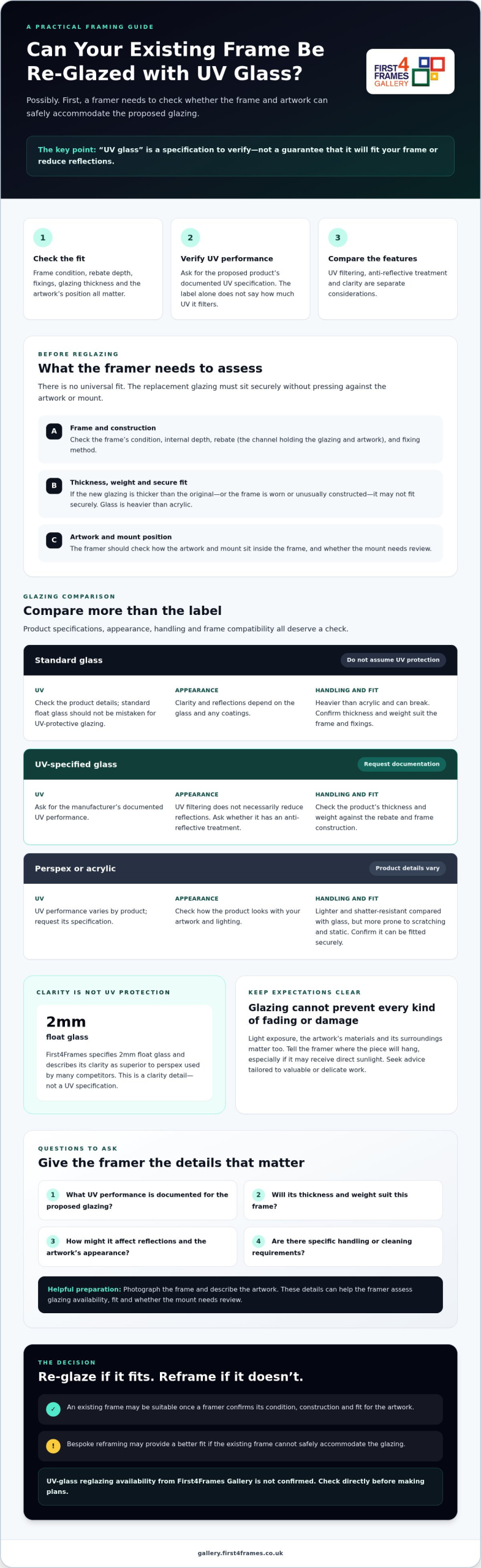
The glass or acrylic (glazing) is your artwork’s primary shield against light. Standard picture glass offers minimal protection, blocking less than half of damaging UV rays. To truly protect your art, you need specialist glazing. Invisible UV radiation is the main culprit behind fading, breaking down the chemical bonds in pigments. You can learn more about the science of how UV rays cause fading from university research, but the solution lies in choosing the right material:
Conservation Clear Glass/Acrylic: This is the industry standard for preservation. It is specially coated to block up to 99% of harmful UV rays, dramatically slowing down the fading process.
Museum Glass/Acrylic: The premium choice for both protection and viewing. It offers the same 99% UV protection but includes an advanced anti-reflective coating, making the glazing virtually invisible for breathtaking clarity.
The Importance of Archival Mounts and Backing
Light isn’t the only enemy. The materials touching your artwork are just as critical. Standard mount boards contain acidic compounds that, over time, can leach into the paper, causing irreversible yellowing and brown marks-a phenomenon known as ‘mat burn’. We only use premium, acid-free archival mount boards (made from pure rag mat or alpha-cellulose) that will never discolour or damage your art.
Furthermore, a professional frame is sealed with a sturdy, archival backing board. This creates a robust barrier against dust, moisture, pollutants, and even insects, ensuring the artwork remains pristine from all sides.
How a Bespoke Frame Provides a Complete Seal
An off-the-shelf frame rarely provides the perfect fit, leaving small gaps that allow dust and humidity to creep in. A bespoke frame is crafted to the exact dimensions of your artwork, ensuring a complete and secure seal. This creates a stable micro-environment, buffering your art from the damaging effects of fluctuating humidity that can cause paper to warp or ripple. It’s this complete, 360-degree approach that provides true, lasting protection.
Protecting your beautiful art doesn’t stop once it’s perfectly hung on the wall. The journey of preserving its vibrancy and value is an ongoing one, built on simple, consistent habits. By understanding how to protect art from sun damage and other environmental factors inside your home, you can safeguard your entire collection-from professionally framed prints to unframed canvases-ensuring they remain a source of joy for years to come.
The Hidden Danger of Artificial Lighting
While direct sunlight is the most obvious threat, it’s a common misconception that your art is completely safe indoors. All light sources contribute to gradual fading over time. To minimise this risk, choose your lighting with care.
Embrace LED Bulbs: Modern LEDs are the best choice for illuminating art. They emit negligible UV radiation and very little heat, which helps preserve the delicate pigments in your favourite pieces.
Avoid Direct Halogen Spotlights: Older halogen and incandescent bulbs produce significant heat and UV rays, which can accelerate fading and cause lasting damage. Never aim a powerful, hot spotlight directly at your artwork.
Maintaining a Stable Environment
Fine art, much like any object of premium craftsmanship, thrives in stability. Drastic fluctuations in temperature and humidity cause materials like paper, canvas, and wood to expand and contract. This can lead to warping, cracking, or even mould. To create a safe haven for your art, avoid hanging it in areas with extreme environmental shifts, such as:
Directly above radiators or near fireplaces.
In the direct path of an air conditioning or heating vent.
In rooms prone to high humidity, like bathrooms or damp conservatories.
A consistent, moderate environment is crucial for long-term preservation.
The Art of Rotation: Keep Your Collection Fresh and Safe
One of the best professional tips for collectors is also one of the most enjoyable: rotate your art. Periodically swapping the pieces on your walls with those you have in storage significantly limits the cumulative light exposure for any single work. This simple practice not only preserves your most treasured pieces but also gives you a wonderful opportunity to refresh your home’s decor and fall in love with your collection all over again. It’s the perfect excuse to find a spectacular new print to add into the mix. Why not explore our gallery for fresh inspiration?
Give Your Art the Lasting Protection It Deserves
Protecting your cherished artwork from the irreversible effects of sunlight is a vital part of being a collector. As we’ve explored, from strategic placement away from direct light to mindful long-term care, every step you take makes a difference. Ultimately, understanding how to protect art from sun damage is about combining these smart daily habits with the unparalleled security and aesthetic finish of professional conservation framing.
At First4Frames Gallery, we bring over 20 years of bespoke framing experience to every piece we handle. We are passionate about our craft and believe a frame does more than just decorate-it protects. Trusted by artists and collectors across Scotland, we use premium, high-quality conservation materials to build a beautiful shield that preserves colour and detail for generations to come. Your art is an investment in joy, and it deserves to be preserved with expert care.
Frequently Asked Questions About Protecting Your Art
Can sun-damaged art be repaired or restored?
Unfortunately, prevention is far better than a cure. Fading caused by UV light is irreversible, as the light has permanently altered the pigments in the ink or paint. While a professional art conservator may be able to treat issues like yellowing or brittle paper, the process is often complex and costly. The best strategy is always to protect your beautiful artwork from the very beginning to preserve its original vibrancy and integrity for years to come.
How can I tell if my artwork is already sun-damaged?
Look for tell-tale signs of UV exposure. The most obvious is fading, where colours appear washed out or less vibrant-reds and purples are often the first to go. You might also notice the paper or canvas has turned yellow or brown. In advanced cases, the material may feel brittle to the touch. A simple check is to carefully lift a corner of the art from under the frame’s lip and compare its colour to the exposed area.
Does UV-protective glass make the artwork look darker or change its colours?
This is a common concern, but rest assured, modern conservation-grade glazing is designed for optical purity. High-quality UV-protective glass is exceptionally clear and will not make your artwork look darker or alter its true colours. In fact, premium options often include anti-reflective properties, which can reduce glare and actually enhance the viewing experience, allowing the piece’s spectacular details and colours to shine through without interference from distracting reflections.
Is reflected or indirect sunlight still harmful to my art?
Yes, absolutely. UV rays are relentless and can bounce off walls, floors, and even furniture to reach your artwork. This means a piece hung on a wall opposite a bright window is still at significant risk. Understanding how to protect art from sun damage means recognising that any exposure to natural light, direct or indirect, contributes to cumulative and irreversible harm over time. Even on a cloudy day, harmful UV radiation is still present.
How much more does a frame with UV-protective glass cost?
Investing in UV-protective glazing is a wise choice for preserving your art. Typically, you can expect it to add between £20 and £60 to the cost of a standard-sized frame in the UK, depending on the size and the specific grade of protection. While it is an additional upfront cost, consider it a small price to pay for the priceless peace of mind that comes with safeguarding a valuable or sentimental piece from permanent damage.
Are LED lights completely safe for artwork?
LEDs are by far the safest lighting option for art, as they emit negligible UV radiation and very little heat compared to older incandescent or halogen bulbs. However, no light source is completely harmless. All visible light can cause fading over time, so it’s still best practice to use low-wattage LEDs, position them a sensible distance from the artwork, and only illuminate the piece when it’s being enjoyed rather than leaving lights on continuously.
That beautiful print you finally bought, the family photograph you cherish, or the original artwork you invested in – these pieces deserve more than just a frame; they deserve the perfect one. Yet, navigating the world of mounts, glass types, and materials can feel overwhelming. It’s easy to make common picture framing mistakes to avoid that could, at best, fail to do your art justice, and at worst, cause costly and irreversible damage over time. Don’t let uncertainty prevent you from creating a stunning display.
As passionate experts in bespoke craftsmanship, we’re here to guide you. This article will walk you through the ten most common pitfalls, ensuring you can confidently choose the right elements for your piece. You’ll learn how to protect your artwork from fading, achieve a spectacular, gallery-quality finish in your own home, and understand exactly when it’s worth investing in a professional service. Let’s ensure your art is beautifully and safely displayed for a lifetime.
Mistake #1: Ignoring Conservation-Grade Materials
One of the most significant picture framing mistakes to avoid is viewing a frame as purely decorative. While a beautiful frame enhances your artwork and complements your décor, its most crucial role is preservation. A well-made picture frame is a protective shield, and opting for cheap, low-quality materials can cause irreversible damage to the very piece you wish to display. This is where the professional standard of ‘conservation framing’ becomes essential, ensuring your art is protected for generations.
At its core, conservation framing uses premium materials specifically designed to protect your artwork from environmental damage. To see why this is so important, the video below offers an excellent overview of common pitfalls.
Using Acidic Mounts and Backing Boards
Standard mount boards are often made from wood pulp, which contains acid. Over time, this acid leeches out of the board and into your artwork, causing a brownish stain known as ‘mat burn’. This discolouration is permanent and is perhaps the most common cause of damage we see. To prevent this, always insist on professional-grade materials like acid-free or, for ultimate protection, 100% cotton rag mounts and backing boards. These are chemically inert and will not harm your art.
Choosing the Wrong Type of Glazing (Glass)
Think of standard glass as a window that lets in damaging sunlight. It offers virtually no protection from ultraviolet (UV) rays, which are the primary cause of fading in photographs, prints, and original watercolours. The damage is gradual but devastating. In contrast, conservation-grade glazing is coated to filter out 99% of harmful UV rays, dramatically slowing the fading process. For crystal-clear viewing without distracting reflections, you can also opt for premium anti-reflective glass.
Improperly Securing the Artwork
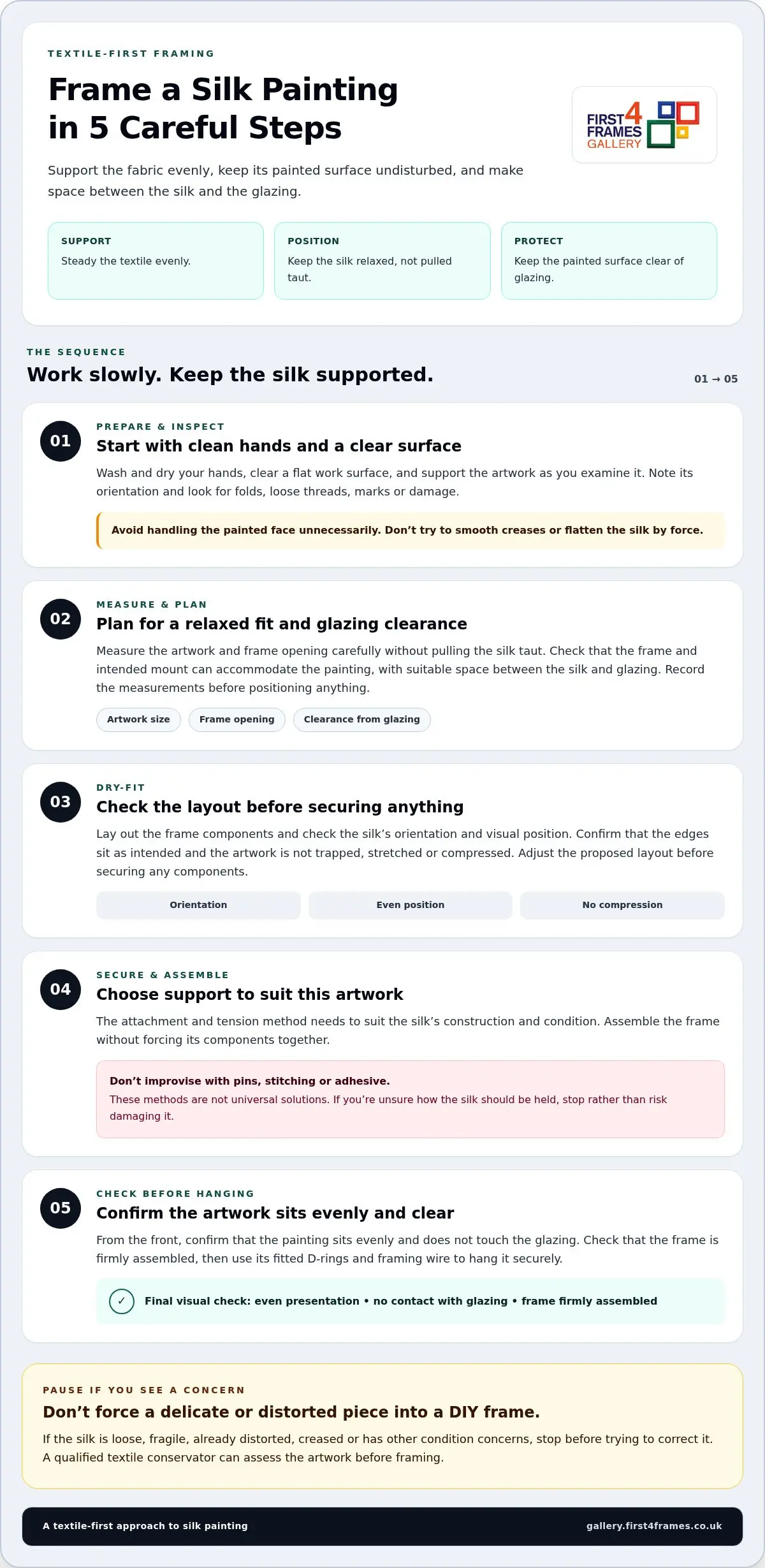
Never, ever use household tapes like Sellotape or masking tape to attach your art to its mount. These tapes contain acids and adhesives that will yellow, become brittle, and leave a sticky, damaging residue that is extremely difficult to remove. The professional method involves using specialised acid-free paper ‘T-hinges’ to suspend the artwork from the backing board. This allows the paper to expand and contract naturally with changes in humidity, preventing buckling while ensuring it can be safely removed in the future.
Mistake #2: Making Poor Aesthetic and Design Choices
While the first mistake focuses on preservation, this one is about presentation. A frame does more than just protect; it’s a critical design element that completes the artwork. The right choice enhances the piece, pulling you into the picture, while the wrong one can be a jarring distraction. The goal is to create harmony between the art, the frame, and your room’s decor. The impact of picture frames on an interior space is significant, and getting the colour and proportions right is crucial for a spectacular result.
Selecting the Wrong Frame Size or Proportions
Proportion is everything. A frame that is out of scale with the artwork can make the entire presentation feel unbalanced. A large, powerful piece of art will look flimsy and unsupported in a frame that’s too thin. Conversely, a delicate sketch or a small photograph can be completely overwhelmed by a thick, bulky frame. A good rule of thumb is for the frame’s width to be a noticeable accent but never so wide that it competes with the art for attention. Think of it as the final, perfecting touch, not the main event.
Mismanaging the Mount (Mat Board)
The mount, or mat board, provides visual breathing space and is key to a professional finish. One of the most common picture framing mistakes to avoid is using a mount with perfectly equal borders. For a more balanced and visually stable look, the bottom border should be slightly ‘weighted’-or deeper-than the top and sides. This subtle adjustment prevents the optical illusion of the artwork ‘slipping’ down inside the frame. We also advise choosing a neutral mount colour, like off-white or soft grey, to let the artwork’s colours shine without competition.
Clashing the Frame Style with the Artwork
Your frame style should always complement the artwork’s personality. Placing a sleek, contemporary abstract print into a heavily ornate, traditional gold frame creates a jarring visual disconnect that serves neither the art nor the frame. The key is to consider the artwork’s era, style, and mood. Minimalist black or natural wood frames often pair beautifully with modern photography, while classic art may call for a more detailed profile. It’s about creating a harmonious pairing that feels intentional. See how we pair frames with art in our gallery.
Mistake #3: Falling into the ‘Ready-Made’ Frame Trap
We’ve all been there. You find a piece of art you love, and the next logical step is a frame. The high street and online giants offer a tempting solution: cheap, ready-made frames that promise a quick fix for just a few pounds. While the low price tag seems like a victory, it often hides a much greater cost down the line. Many people believe professional framing is too expensive, but this is one of the most common picture framing mistakes to avoid. Think of it not as an expense, but as an investment in protecting something you cherish. The real cost of a cheap frame is the potential damage to your art-a classic case of “pay now or pay later.”
Forcing Your Art into a Standard Size
The first problem you’ll encounter is the one-size-fits-all approach. Most original art, prints, and photographs don’t conform perfectly to standard A4 or 50x70cm dimensions. This leaves you with a difficult choice: do you crop the edges of your beautiful artwork, or do you leave awkward, uneven gaps around it? Neither option does justice to the piece. A bespoke frame, however, is built with precision craftsmanship around your art, ensuring a perfect, harmonious fit that elevates the final presentation from amateur to spectacular.
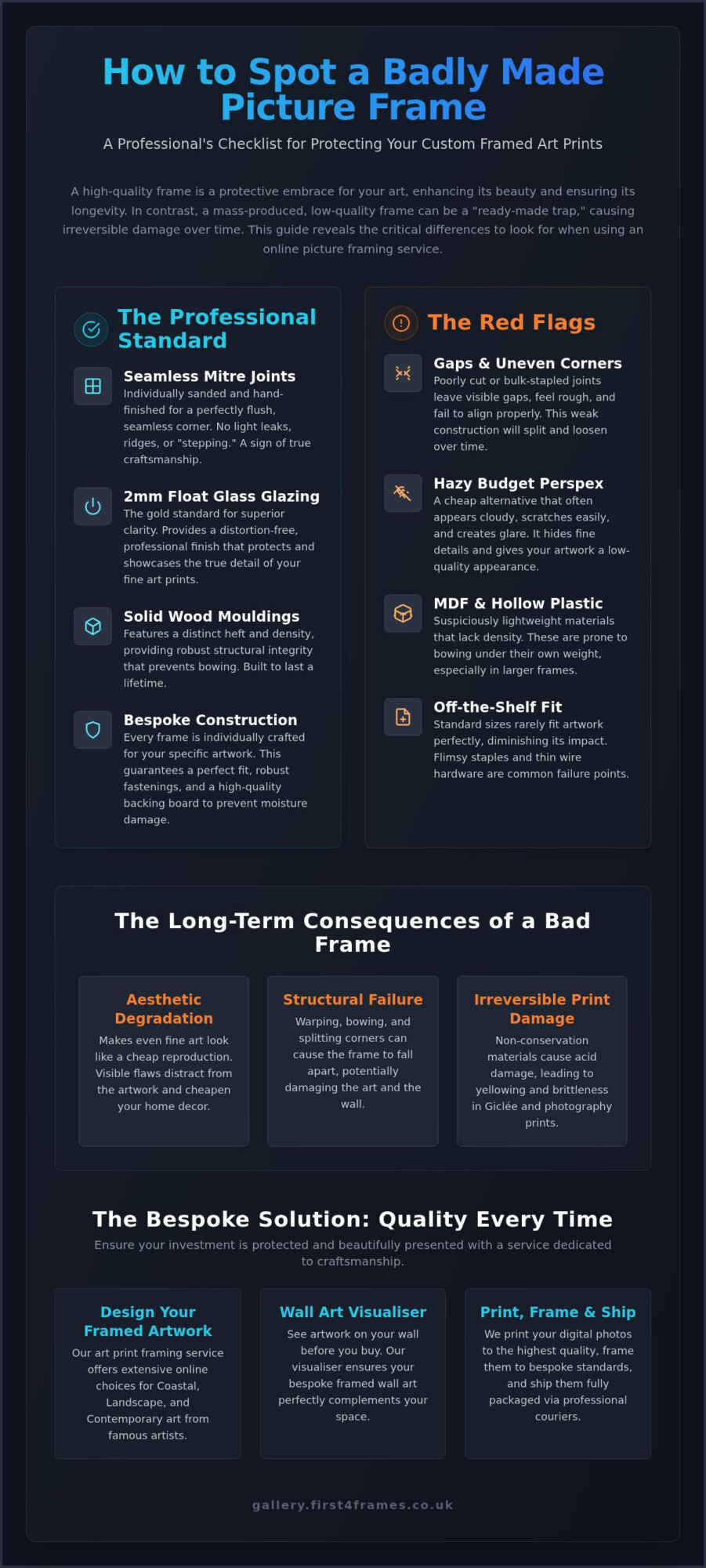
Overlooking Low-Quality Construction
Beyond the poor fit, the materials used in mass-produced frames are simply not designed for preservation. You’ll often find:
Flimsy plastic or styrene glazing that scratches easily and offers no UV protection.
Thin, acidic backing boards made of cardboard that will leach chemicals and cause yellowing over time.
Poorly joined corners held by staples that can separate, leaving the frame unstable.
These materials are a false economy. They actively harm your artwork. True preservation requires archival-quality, acid-free materials as outlined in professional conservation framing guidelines. Choosing a quality, professionally made frame is the single best way to ensure your art is protected for years to come, avoiding one of the costliest picture framing mistakes to avoid. A premium frame is a protective home, not just a decorative border. To see the profound difference that professional craftsmanship makes, we invite you to explore our online gallery.
Mistake #4: Committing Hanging and Placement Errors
You’ve invested in a beautiful, bespoke frame that perfectly complements your art. The job is done, right? Not quite. How and where you hang your artwork is the final, crucial step in its presentation. Even a professionally framed masterpiece can look out of place if hung incorrectly. Committing these common placement errors is one of the most disheartening picture framing mistakes to avoid, but thankfully, they are simple to fix.
Here are our expert tips for hanging your art with the precision and care it deserves.
Hanging Artwork Too High
This is perhaps the most frequent interior design mistake we see. Art hung too high feels disconnected from the room and its furniture. The solution is simple: follow the gallery rule. The centre of your artwork should be at average eye level, which is between 57 and 60 inches (approximately 145-152 cm) from the floor. This standard creates a natural, comfortable viewing experience and ensures your art feels grounded in the space.
Poor Lighting and Environmental Placement
Where you hang your art matters just as much as how high you hang it. The wrong environment can not only diminish its visual impact but also cause irreversible damage over time. Keep these key points in mind:
Avoid Direct Sunlight: Even with UV-protective glazing, prolonged exposure to harsh, direct sunlight will cause colours to fade. Choose a wall that doesn’t receive direct sun.
Beware of Humidity and Heat: High-moisture areas like bathrooms or kitchens can lead to warping and mould. Similarly, hanging art above a radiator or fireplace can cause the materials to dry out and crack.
Illuminate Intentionally: To make your art truly stand out, consider using directional spotlights or a dedicated picture light. This ensures your piece is beautifully lit without being exposed to harmful elements.
Creating Awkward Groupings or Spacing
The relationship between artworks and the space around them is critical. A tiny frame floating alone on a vast wall will look lost, while a gallery wall with inconsistent, wide gaps can feel chaotic. When creating a gallery wall, treat the entire collection as one single unit. A professional tip is to lay out your arrangement on the floor first. Trace each frame onto paper, cut them out, and tape them to the wall to perfect your spacing before hammering a single nail.
Getting the placement right is the final flourish that honours your art. Once you’ve mastered these hanging techniques, you’ll be ready to find your next spectacular piece. Explore our gallery for inspiration.
Frame Your Memories, Flawlessly
Your artwork tells a story, and its frame is a crucial part of the narrative. From selecting conservation-grade materials that protect against fading to making aesthetic choices that enhance its beauty, the details matter immensely. Escaping the ‘ready-made’ trap and ensuring correct placement are just as vital. By understanding these common picture framing mistakes to avoid, you can ensure your cherished art is preserved and presented perfectly for generations to enjoy.
Don’t leave it to chance. At First4Frames Gallery, we bring over 20 years of professional framing experience to every project. Our passion lies in craftsmanship, using only the finest conservation-grade materials to offer a truly bespoke service tailored to your artwork and your home. We build the perfect bridge between your piece and your décor, ensuring a flawless result every time. Avoid these mistakes. Trust our experts with your bespoke framing needs.
Embark on your framing journey with confidence. Let’s give your art the spectacular, lasting home it truly deserves.
Frequently Asked Questions
Is professional picture framing really worth the cost?
Absolutely. While professional framing can range from £50 to over £200, it’s a worthwhile investment in protecting your art. A professional framer uses archival, acid-free materials and UV-protective glass that prevent fading and irreversible damage over time. This bespoke craftsmanship not only enhances the artwork’s beauty but ensures its longevity, making it a crucial step for any piece you truly value, whether its worth is sentimental or monetary.
How can I tell if my current picture frame is damaging my art?
Look for tell-tale signs of poor-quality framing. Yellowing or brown marks on the artwork or mount board, known as acid burn, are a clear red flag. If the colours in your print appear faded, it likely lacks UV-protective glass. Also, check if the artwork is pressed directly against the glass; this can cause moisture damage and sticking. A flimsy frame that feels loose or weak also fails to provide adequate physical protection for your piece.
What is the most important thing to invest in: the frame, the mount, or the glass?
While all three elements work together, the mount and the glass are most critical for preservation. An acid-free, archival-quality mount is essential to prevent chemical burns that can destroy your artwork. Secondly, investing in glazing with at least 99% UV protection is the only way to prevent colours from fading over time. The frame provides the structural support and aesthetic finish, but the mount and glass do the real heavy lifting in protecting your art.
Can I frame a canvas painting myself?
While it is possible to frame a stretched canvas at home, especially with a simple floater frame, it requires care and precision. The main challenge is ensuring the canvas is stretched with perfect, even tension to avoid sagging or rippling over time. For valuable or sentimental paintings, we always recommend professional framing. This ensures the canvas is handled correctly and securely fitted, helping you steer clear of common DIY picture framing mistakes to avoid long-term damage.
How do I clean the glass on my framed pictures without causing damage?
The golden rule is to never spray cleaner directly onto the glass. Liquid can easily seep under the edge of the frame and damage the mount or the artwork itself. Instead, lightly spray a gentle, ammonia-free glass cleaner onto a clean microfibre cloth. Wipe the glass carefully, then use a dry part of the cloth to buff away any streaks. For acrylic or Perspex glazing, use only a cleaner specifically designed for acrylic to prevent scratching.
What’s the best way to hang a very heavy picture frame securely?
For any frame weighing over 10kg, standard picture hooks are not sufficient. The most secure method is to use two heavy-duty D-rings screwed into the back of the frame, hung on two separate, robust wall hooks. This distributes the weight evenly and helps keep the frame level. Always ensure your wall fixings are drilled into a solid stud in a plasterboard wall or secured with appropriate rawl plugs in a brick wall for maximum safety.
That beautiful watercolour painting deserves a place of honour on your wall, but the thought of framing it can be daunting. The delicate paper, the vibrant pigments-it’s natural to worry about the artwork wrinkling, the colours fading, or choosing the wrong materials for your precious piece. This is precisely why understanding how to frame a watercolour painting correctly is not just a skill, but an act of preservation and celebration.
Consider this your professional guide, where our passion for craftsmanship meets practical, clear advice. We will bridge the gap between your art and its perfect presentation, giving you the confidence to do it yourself or the knowledge to choose a professional framer. We’ll walk you through the essential steps, from selecting premium archival mounts and UV-protective glass to ensuring your art is perfectly secure. By the end, you’ll have the secrets to create a spectacular, lasting display that protects your treasured artwork for a lifetime.
Why Framing Watercolours Requires Special Care
Watercolour paintings possess a unique, luminous quality, where light seems to glow from within the paper itself. This delicate beauty, however, is also their greatest vulnerability. Unlike robust oil or acrylic paintings on canvas, watercolours on paper are incredibly susceptible to damage from their environment. Understanding how to frame a watercolour painting correctly is not just about aesthetics; it’s a crucial act of preservation to protect your beautiful artwork for generations to come.
To see these principles in action, take a look at this helpful guide:
The Challenge of Watercolour Paper
At its core, watercolour paper is a natural fibre that breathes. It absorbs and releases moisture from the air, causing it to expand and contract. In a humid environment, this can lead to a wavy, wrinkled effect known as ‘cockling’. This is why a watercolour painting should never be placed in direct contact with the frame’s glass. Trapped moisture can lead to mould growth and can even cause the paint to permanently fuse to the glass, causing irreversible damage.
Protecting Delicate Pigments from Fading
The transparent pigments used in watercolour are notoriously sensitive to light. The ultraviolet (UV) rays in sunlight and even some indoor lighting can break down the chemical bonds in the colours, causing them to fade and appear dull over time. A vibrant crimson can become a pale pink, and a rich blue can wash out completely. A professional framing solution includes UV-protective glazing, which acts as a vital shield, blocking up to 99% of harmful rays without compromising the view of your artwork.
The Frame’s Role: More Than Just a Border
A well-chosen frame does more than just complement your artwork; it creates a complete, protective micro-environment. This sealed package provides the essential structure to hold the glazing, mount, and backing board securely in place. This approach aligns with established art conservation principles, which emphasize creating a stable environment to shield the art from physical damage, dust, humidity, and insects. It is the foundation of any professional guide on how to frame a watercolour painting.
The Essential Components for Framing a Watercolour
Properly framing a watercolour is about more than just aesthetics; it’s about preservation. Think of the final assembly as a protective, archival sandwich, with your beautiful artwork nestled safely in the middle. Each layer has a specific job, and understanding them is the key to knowing how to frame a watercolour painting for lifelong enjoyment. The single most important rule is to use archival, acid-free materials at every stage to protect your art from damage and discolouration over time.
The Mount (or Mat): Creating Essential Airspace
The mount, often called a mat in the US, is the elegant cardboard border that sits between the frame and your artwork. Its primary job is practical: it creates a crucial air gap that prevents the watercolour paper from touching the glazing. This stops moisture condensation from causing mould and prevents the delicate paint from sticking to the surface. Aesthetically, a well-chosen mount provides visual breathing room, drawing the viewer’s eye inward to the heart of the painting. Always insist on acid-free, conservation-grade mountboard to avoid ‘mat burn’-a permanent yellowing stain caused by acid leaching into the artwork.
The Glazing: Your Artwork’s Shield
Glazing is the clear barrier that protects your art from dust, moisture, and, most importantly, light. Watercolours are particularly susceptible to fading, so choosing the right shield is vital. Your main options include:
Standard Glass: Offers excellent clarity but can be heavy and reflective.
Acrylic (Perspex): Much lighter and shatterproof, making it safer for larger pieces or shipping.
UV-Filtering Options: Available in both glass and acrylic, this is our premium recommendation. It blocks up to 99% of harmful ultraviolet rays, acting as a powerful sunscreen for your art and dramatically slowing the fading process.
The Frame & Backing Board: Structure and Support
The frame itself provides the structure and style, with materials like natural wood or sleek aluminium offering different finishes to complement your artwork and decor. Behind your art sits the backing board, the final layer of the protective sandwich. This board provides rigidity and seals the entire package from dust and pests. Just like the mount, it must be an acid-free foam core or conservation backing board. This final layer is critical for long-term preservation, a principle detailed in the National Gallery of Art’s guide to paper conservation, as it prevents harmful acids from migrating into the artwork from behind.
Step-by-Step Guide: How to Assemble Your Watercolour Frame
Ready to bring all the elements together? This is where the magic happens and your creative vision truly comes to life. Assembling your frame requires a delicate touch and a clean workspace, but following these steps will ensure a professional, gallery-quality result that protects your beautiful artwork for years to come. This is the most hands-on part of learning how to frame a watercolour painting.
Step 1: Preparing Your Artwork and Workspace
First, ensure your painting is perfectly flat. If the paper has buckled slightly, you can gently flatten it by placing it between two sheets of acid-free paper under a smooth, heavy board for a day or two. Prepare a large, clean, and dust-free surface to avoid any debris getting trapped in the frame. Gather your essential tools:
Acid-free archival tape (paper gummed tape is ideal)
A sharp craft knife
Measuring tape
A soft, lint-free microfibre cloth
Step 2: Hinging the Artwork to the Mount
Never be tempted to glue or tape your watercolour directly to the backing board. Paper needs space to breathe, expanding and contracting with changes in humidity. Permanently fixing it will cause buckling and irreversible damage. In fact, professional Library of Congress guidelines on preservation stress that allowing for this natural movement is crucial for the artwork’s longevity.
The correct method is ‘T-hinging’. Attach two small tabs of archival tape to the top edge of the back of your artwork, sticky-side down, with half the tape on the art and half hanging off. Lay the artwork in position on the back of the mount board, and then place another piece of tape across each tab to form a ‘T’, securing it to the mount. This creates a strong yet flexible hinge, allowing the art to hang naturally.
Step 3: Assembling the Frame ‘Sandwich’
The assembly process is all about layering correctly. Lay your frame face down on your clean surface. Carefully clean both sides of your glazing (glass or acrylic) with a microfibre cloth to remove any dust or fingerprints. Place it inside the frame’s rebate. Next, gently lower your mounted artwork, face down, onto the glazing. Finish the stack by placing the backing board on top. Secure the ‘sandwich’ in place by pressing down the flexible tabs or, for a more secure fit, by using a point driver to insert framer’s points.
Step 4: Finishing Touches and Hanging
For a truly professional finish that shows exceptional craftsmanship, seal the gap between the frame and the backing board with framing tape. This creates a robust barrier against dust, insects, and humidity, offering premium protection for your art. Finally, attach your hanging hardware. Measure one-third of the way down from the top of the frame on both sides and screw in your D-rings. Thread a picture cord between them, tying secure knots and leaving just enough slack for it to hang neatly on a picture hook.
Aesthetic Choices: How to Choose the Perfect Frame and Mount
With the technical essentials covered, we can now turn to the most exciting part: the artistic choices. A frame does more than protect; it acts as a beautiful bridge between your artwork and your room’s décor, enhancing the piece and drawing the viewer’s eye. This is where the thoughtful consideration in how to frame a watercolour painting truly pays off. Before you begin, always consider where the finished piece will hang-the colours and style of the room should help guide your creative decisions.
Matching the Frame to Your Watercolour’s Style
The golden rule is to complement, not compete. The delicate, often translucent nature of watercolour means the artwork can easily be overpowered by a heavy or distracting frame. Your goal is to find a perfect partner for the painting.
For modern or abstract pieces: A simple, clean-profile frame often works best. Think thin black, crisp white, or a light natural wood like oak to maintain a contemporary feel.
For traditional landscapes or portraits: You can explore frames with more character. A warm, natural wood or a classic frame with subtle, soft gold or silver detailing can beautifully echo the painting’s timeless quality.
Selecting the Right Mount Colour and Size
The mount (also known as a mat) provides essential breathing space, preventing the glass from touching the artwork and giving the piece visual impact. For a truly professional finish, the mount is non-negotiable.
Colour: While brilliant white can be too stark against the soft paper, a classic off-white or pale cream is a failsafe choice that allows the watercolour’s own colours to shine. For a more harmonious, bespoke look, consider choosing a mount in a very subtle, muted tone pulled directly from the painting itself-a soft grey from a sky, for instance, can be spectacular.
Width: Be generous with your mount width. A wider mount of at least 2.5 to 3 inches often gives a more professional, gallery-style look that elevates the artwork and gives it presence on the wall.
Considering Single vs. Double Mounts
For a touch of pure elegance, a double mount is an exceptional choice. This technique involves layering two mounts, with the bottom one visible as a very thin border (or ‘reveal’) of colour around the artwork. This subtle detail is a hallmark of high-quality, bespoke framing. Using an inner mount that picks up an accent colour from the painting-a deep blue from the sea or a rich terracotta from a roof-is a masterful way to add depth and tie the entire presentation together. It’s this level of craftsmanship that transforms a framed picture into a cherished piece of art.
DIY vs. Professional Framing: When to Call an Expert
After carefully selecting your materials and preparing your artwork, the final decision is whether to frame it yourself or entrust it to an expert. The right choice depends on the artwork’s value, your confidence, and your desired finish. The DIY approach to how to frame a watercolour painting can be a satisfying project, but for treasured pieces, a professional touch is invaluable.
The Pros and Cons of a DIY Approach
Assembling a frame yourself can be cost-effective, especially for practice pieces or inexpensive prints. It offers a hands-on connection to the finished product. However, the risks are significant. One slip can damage your art, and off-the-shelf frames from high-street shops often lack the essential conservation-grade materials. They rarely include UV-protective glazing or acid-free mounts, leaving your watercolour vulnerable to fading and discolouration over time.
When You Should Always Use a Professional Framer
While DIY has its place, certain situations demand the skill and resources of a professional. Consider this your checklist for when to call in an expert:
The Artwork is Valuable: If the piece has significant monetary or sentimental value, professional framing is non-negotiable. It’s an investment in its preservation.
It Requires Conservation Materials: To protect your art for a lifetime, you need archival-quality mounts, backing boards, and UV-filtering glazing.
The Size is Unconventional: Custom sizes require bespoke frames that you simply cannot find ready-made.
You Desire a Flawless Finish: For a truly spectacular, gallery-quality result that enhances the artwork, nothing beats the precision and craftsmanship of a professional.
You Need Design Guidance: A professional framer acts as a design consultant, helping you choose the perfect frame and mount combination to complement both the art and your decor.
What to Expect from Our Bespoke Framing Service
At First4Frames Gallery, we believe that framing is an art in itself. Our bespoke service begins with a personal consultation where we listen to your vision. We guide you through our extensive collection of premium, conservation-grade materials, from beautiful solid wood mouldings to museum-quality glazing. Our expert craftspeople then bring it all together with meticulous attention to detail, ensuring your watercolour is not just protected, but beautifully presented. We handle every piece with the care it deserves, delivering a perfect finish every time. Start your bespoke framing journey with us today.
The Perfect Finish for Your Watercolour Masterpiece
Framing a watercolour is about more than just aesthetics; it’s a vital step in preserving its delicate beauty for a lifetime. From choosing the right conservation-grade materials to selecting a mount and frame that elevates the art, you now have the knowledge to give your piece the protection it deserves. Understanding how to frame a watercolour painting is the final, crucial brushstroke in its journey from paper to pride of place on your wall.
For those special pieces that demand a flawless, professional finish, our team is here to help. With over 20 years of professional framing experience, we use only the finest conservation-grade, acid-free materials. Our friendly Falkirk team offers expert design advice to create a truly bespoke frame that acts as the perfect bridge between your artwork and your home.
Do you really need a mount for a watercolour painting?
Absolutely. A mount is essential for professionally framing a watercolour. Its most important job is to create a small air gap between the painting’s surface and the glass. This prevents moisture from being trapped against the artwork, which can lead to mould or the paint sticking to the glass. A mount also provides a beautiful visual border, allowing the artwork to breathe and drawing the viewer’s eye inward, enhancing the overall impact of your piece.
Can you frame a watercolour without glass to avoid glare?
We strongly advise against framing any watercolour without glass. The delicate paper and water-soluble pigments are highly vulnerable to irreversible damage from dust, humidity, and airborne pollutants. Glazing is the only way to protect your art from these elements and from fading caused by UV light. To combat glare, you can opt for premium anti-reflective or museum-grade glass, which offers crystal-clear viewing while providing vital protection for your treasured artwork.
What is the best way to stop my watercolour paper from buckling inside the frame?
The key to preventing buckling, or ‘cockling’, is correct mounting. Your artwork should be attached to an acid-free backing board using a ‘T-hinge’ method with archival tape along the top edge only. This allows the paper to hang naturally and expand or contract with humidity changes without warping. Taping the artwork down on all four sides is a common mistake that restricts this movement, which is what causes the paper to buckle and ripple over time.
What’s the difference between standard framing and ‘conservation framing’?
The difference lies in the quality and longevity of the materials. Standard framing may use mounts and backing boards with acidic cores that can cause your artwork to yellow and deteriorate. Conservation framing exclusively uses acid-free, archival-quality materials for everything that touches the art, including the mount, backing, and tapes. This professional method, often paired with UV-protective glass, is designed to preserve the beauty and value of your fine art for generations to come.
How much does it cost to get a watercolour professionally framed?
In the UK, the cost for professional framing depends on several factors: the artwork’s size, your choice of frame moulding, the type of mount, and the glazing. For a small, simple piece, you might expect to pay between £60 and £90. For a larger painting with a bespoke frame, a double mount, and specialist anti-glare glass, the cost could be £150 to £300 or more. Think of it as a crucial investment in protecting and showcasing your beautiful art.
What kind of tape should I use to mount my watercolour painting?
It is vital to use only archival, acid-free tape. Everyday tapes like masking tape or Sellotape contain acids that will leech into the paper, causing irreversible yellow stains and damage. For a secure and safe mount, always choose a gummed archival paper or linen tape. This is the professional standard and a crucial step in how to frame a watercolour painting to conservation levels, ensuring your artwork remains pristine within its frame.
That beautiful piece of art you chose for your wall-the one that perfectly captures a memory or completes your room-is under constant threat from an invisible enemy. Every ray of sunlight, while brightening your home, contains UV light that can cause irreversible fading, slowly robbing your artwork of its vibrancy. But what if you could provide an invisible shield? This is the crucial role of premium UV protection framing glass, which acts as a guardian for your treasured prints and photographs, preserving them for years to come.
Navigating the world of bespoke framing can feel overwhelming, filled with technical terms about reflection control and conservation grades. We understand the worry of making an expensive mistake. This guide is designed to be your trusted partner, demystifying the options with clear, straightforward advice. We’ll walk you through everything you need to know, empowering you to confidently choose the perfect glass to protect your investment, ensuring your art looks spectacular and lasts a lifetime.
The Invisible Threat: How UV Light Permanently Damages Your Artwork
We’ve all seen it. A treasured family photograph left on a mantelpiece, its once-vibrant colours now a pale, washed-out memory. Or a beautiful print that, over the years, has developed a sad, yellow tinge. This heartbreaking transformation isn’t just a sign of age; it’s the result of a silent and relentless attacker: ultraviolet (UV) light.
Think of UV light as an invisible, high-energy part of daylight. While we can’t see it, its effects are profound. It works tirelessly to break down the chemical bonds in paper, inks, and pigments, causing irreversible damage that robs your artwork of its life and value.
To see how different glazing options stand up to this invisible threat, this short video offers a clear demonstration:
The damage from UV exposure is cumulative and permanent. Every moment your art is exposed, a little more of its original beauty is lost forever. This happens even on overcast British days, as UV rays easily penetrate cloud cover. This is why investing in professional UV protection framing glass is not an indulgence, but an essential act of preservation for any piece you love.
What Exactly Fades? Pigments, Dyes, and Signatures
UV radiation attacks the very molecules that create colour. Delicate watercolours can fade to near invisibility, and the rich tones in a photograph can become flat and discoloured. Even the artist’s signature, often penned in ink, can vanish completely, taking with it a crucial part of the artwork’s history and value. Furthermore, UV breaks down a compound called lignin within paper, a process that causes the familiar yellowing and brittleness. Understanding the role of different types of picture-framing glass is the first step in preventing this.
Common Sources of UV Radiation in Your Home
While you might think your art is safe indoors, UV radiation is surprisingly pervasive. The main culprits include:
Direct Sunlight: The most potent source. Even a few hours of direct sun per day can cause significant fading in a short time.
Indirect Sunlight: Ambient light from windows is a constant, year-round source of UV radiation that slowly degrades your artwork.
Fluorescent Lighting: Older fluorescent tubes and compact fluorescent lamps (CFLs) emit significant levels of UV, making them a hidden danger.
Fortunately, modern LED lighting emits virtually no UV radiation. However, with sunlight being the primary and most powerful threat, choosing high-quality UV protection framing glass remains the single most effective step you can take to safeguard your cherished pieces for generations to come.
Your Shield Against Fading: An Introduction to Conservation Glazing
When we talk about framing, the ‘glazing’ is the clear, protective layer that sits between your artwork and the world. This can be either glass or acrylic, and its role is far more critical than simply keeping dust off. While standard picture frame glass offers a basic physical barrier and blocks some UVB rays, it does almost nothing to stop the most damaging UVA rays. Over time, this exposure causes irreversible fading, yellowing, and brittleness in your beautiful prints and photographs.
This is where conservation-grade glazing becomes an essential part of any bespoke framing project. Think of it not as a luxury, but as vital insurance for your treasured pieces. As detailed by preservation experts, Limiting Light Damage is crucial for longevity. High-quality UV protection framing glass is engineered to block over 99% of harmful ultraviolet rays, effectively halting the primary cause of fading and ensuring your art remains as vibrant as the day it was created.
Conservation Clear® Glass: The Industry Standard
For most custom framing needs, Conservation Clear® glass is the perfect choice. It provides the crucial 99% UV protection that is the cornerstone of art preservation. As our most popular and cost-effective conservation option, it offers peace of mind without a premium price tag. It’s the ideal glazing for any project where the spectacular clarity of your art is the focus and ambient reflections are not a significant concern.
Museum Glass®: The Ultimate Protection and Clarity
When you want to feel as though there is nothing between you and the artwork, Museum Glass® is the answer. It combines the same 99% UV protection with an astonishingly effective anti-reflective coating. This advanced optical technology makes the glass seem to disappear, revealing every intricate detail, subtle texture, and deep colour in your piece. It is the premium choice for deeply coloured or dark artwork where clarity is paramount.
UV-Filtering Acrylic (Plexiglass): When to Choose It Over Glass
Sometimes, glass isn’t the most practical solution. Our UV-filtering acrylic offers the same 99% UV protection but in a lighter and shatter-resistant format. This makes it the ideal UV protection framing glass alternative for very large pieces where weight is a factor, or for artwork displayed in high-traffic areas, children’s rooms, or public spaces. One important consideration is that acrylic can carry a static charge, so we don’t recommend it for loose media like charcoal or pastels.
Making the Right Choice: Which UV Protection Do You Really Need?
Choosing the right glazing for your artwork doesn’t need to be complicated. The perfect choice is a simple balance between the artwork’s value (both monetary and sentimental), where it will hang in your home, and your budget. Our goal is to demystify the options, empowering you to discuss your project confidently with a professional framer and make a choice that protects your art for decades to come.
When is 99% UV Protection Non-Negotiable?
For some pieces, settling for anything less than 99% UV protection is a risk not worth taking. Light is a primary agent of deterioration, causing irreversible fading and damage to colours and materials. This level of protection is essential for:
Original artwork, limited edition prints, and signed pieces: These items are valuable and often irreplaceable, making maximum protection a crucial investment.
Irreplaceable sentimental items: Precious wedding photographs, family heirlooms, and historical documents all hold value that money can’t replace.
Textile-based art: Fabrics are highly susceptible to fading. This includes everything from antique needlepoint and tapestries to signed memorabilia shirts.
Choosing Between Conservation Clear and Museum Glass
Once you’ve decided on 99% UV protection, the next choice is between clarity and reflection control. Conservation Clear Glass is the industry standard and the perfect choice for most pieces displayed in rooms with controlled, indirect lighting. It offers fantastic protection without the premium cost of an anti-reflective coating.
However, you should invest in Museum Glass when viewing clarity is paramount. Its advanced anti-reflective coating makes the glass seem to disappear, offering a breathtakingly clear view. It’s the ideal choice if your art will hang opposite a window or bright light source, or for dark and intricately detailed pieces where reflections would obscure the beautiful craftsmanship.
Is Standard Glass Ever an Option?
We rarely recommend standard picture glass, as it offers no UV protection. It should only ever be considered for easily replaceable, low-value posters or prints that are displayed in a room with absolutely no natural light, such as a basement. Even in these cases, we encourage you to consider the small extra cost for proper UV protection framing glass. It’s a minor investment that provides major long-term peace of mind, ensuring your piece looks its best for years. If you’re still unsure, we’re here to help. Get a personalised recommendation from our framing experts.
Beyond UV Rays: Why Anti-Reflection is a Game Changer
Choosing the right glass to protect your cherished artwork from fading is a crucial first step. But preservation is only half the battle. After all, what is the point of protecting a beautiful piece if you can’t truly see it? We’ve all experienced the frustration: you stand back to admire a newly framed print, only to be met with the distracting glare of a window or your own reflection staring back at you.
This is where anti-reflective coatings completely change the game. Think of it like the difference between a standard camera lens and a professional, multi-coated one, or the crystal-clear view you get with high-quality anti-glare eyeglasses. This technology isn’t just an add-on; it’s an essential component for the ultimate viewing experience, ensuring your art is seen exactly as the artist intended.
How Anti-Reflective Technology Works
The magic lies in advanced optical engineering. Anti-reflective glass is treated with microscopic layers of metallic oxides that are invisible to the naked eye. These coatings are precisely designed to disrupt and scatter reflected light, dramatically reducing glare and reflections to less than 1%. This allows far more light to pass directly through the glass. While standard glass has a light transmission of around 90%, premium options like Museum Glass® boast an incredible transmission of over 97%. This seemingly small difference makes colours appear richer, blacks deeper, and fine details spectacularly sharp.
Is Museum Glass Worth the Extra Investment?
For anyone passionate about presentation, the answer is a resounding yes. Combining 99% UV filtering with near-invisibility, this premium UV protection framing glass delivers a powerful “wow” factor. It creates the stunning illusion that there is no glass there at all, allowing you to connect directly with the texture and depth of the artwork.
Investing in this level of clarity provides several key benefits:
A Gallery-Quality Finish: It provides the high-end, professional presentation seen in the world’s finest galleries and museums.
Unmatched Clarity: Your art is viewed without the interference of distracting reflections, from any angle.
Elevates the Entire Piece: The perfect clarity enhances not only the art but also the craftsmanship of the bespoke frame surrounding it.
Your artwork is more than just decoration; it’s a story, a memory, and a source of daily inspiration. As we’ve explored, the invisible threat of UV light can permanently fade those vibrant colours, but the right defence can preserve them for a lifetime. Choosing high-quality UV protection framing glass is the single most important step you can take. When combined with the stunning clarity of anti-reflective coatings, you not only shield your art from harm but also enhance your viewing experience, removing distractions and pulling you into the picture.
Making the perfect choice doesn’t have to be complicated. With over 20 years of professional framing experience, our passion is matching your piece with the perfect protective solution. We use premium, conservation-grade materials as standard and offer the expert advice needed to guide you. Protect your art for a lifetime. Discuss your bespoke framing options with us today. Let’s give your cherished pieces the beautiful, lasting home they deserve.
Frequently Asked Questions About UV Protection Glass
Does UV protection glass have a visible colour or tint?
Modern, high-quality UV protection glass is engineered to be virtually invisible. Unlike older materials that might have had a slight green or yellow hue, today’s premium options offer exceptional clarity. For the most spectacular view, options with an anti-reflective coating not only block UV rays but also reduce glare, making it seem like there is no glass there at all. This ensures the true colours of your beautiful artwork shine through without any distortion.
How long does the UV-blocking coating on framing glass last?
The UV-blocking properties of professional framing glass are designed to last a lifetime. The protective coating is not a temporary film but is bonded directly to the glass during manufacturing. This durable layer will not peel, bubble, or degrade over time. When you invest in quality UV protection, you are securing a permanent shield that will tirelessly protect your art from fading for as long as it hangs on your wall, a testament to true craftsmanship.
Can I just apply a UV-filtering film to my existing frame’s glass?
While applying a UV-filtering film might seem like a cost-effective solution, we strongly advise against it for fine art. These films can often bubble, peel, or yellow over time, distorting the view of your artwork and diminishing its aesthetic appeal. Professional UV protection framing glass offers superior clarity, durability, and a more effective, permanent barrier. For a truly professional finish that honours your art, integrated UV glass is always the best choice.
Is UV glass still necessary if I use archival, acid-free mats and backing boards?
Yes, UV glass is still absolutely essential. Archival, acid-free materials protect your artwork from internal chemical damage, preventing yellowing and deterioration from contact with acidic materials. However, they offer no defence against external threats like light. UV radiation will fade pigments and damage paper regardless of the matting used. For complete, long-term preservation, you need both: archival mounting to protect from the inside and UV glass to shield from the outside.
Do I need to worry about UV damage from modern LED lights in my home?
It’s a common misconception that LED lights are completely safe for art. While they emit significantly less UV radiation than older fluorescent or halogen bulbs, they are not entirely UV-free. Over many years, even this low level of exposure can cause cumulative, irreversible fading. For any piece that is valuable or holds sentimental importance, we always recommend UV-protective glass as a wise and necessary precaution, ensuring its vibrancy for generations to come.
What is the best way to clean UV and anti-reflective glass without damaging it?
To clean your specialist glass without risking damage, always use two soft, lint-free microfibre cloths. Lightly spray an ammonia-free glass cleaner onto one cloth-never directly onto the glass itself, as liquid can seep under the frame. Gently wipe the surface with the damp cloth, then immediately follow up with the second, dry cloth to buff away any streaks. This simple method protects the delicate anti-reflective and UV coatings, keeping your view pristine.
What’s the real cost difference between standard, conservation, and museum glass?
The cost varies based on size, but you can think of it as an investment in your art’s longevity. If a piece of standard 2mm float glass for a medium frame costs around £15-£20, you can expect Conservation Clear glass (with 99% UV protection) to be roughly £35-£50. For the ultimate in clarity and protection, Museum Glass (with UV filtering and anti-reflective properties) could cost anywhere from £80 to over £120 for the same size, preserving your art’s value and beauty.
That beautiful watercolour from your travels, the delicate antique print you inherited-each holds a story you want to preserve forever. But behind a standard frame, a silent threat can cause cherished colours to fade and paper to turn brittle and yellow. This is where the true craftsmanship of conservation framing for delicate art provides an essential shield. It’s more than just a beautiful border; it’s a bespoke preservation system designed to safeguard your irreplaceable pieces for the long term, ensuring they are protected for generations to come.
Feeling confused by terms like ‘archival’ or wondering if the extra cost is justified? You’re not alone. In this complete preservation guide, we demystify the entire process. We’ll walk you through the premium, acid-free materials and specialist techniques that protect your art from damage and decay. By the end, you will understand the value of professional conservation and feel confident in choosing the perfect, permanent protection to keep your artwork as vibrant as the day you first fell in love with it.
What is Conservation Framing (and Why Delicate Art Needs It Most)?
When you choose a frame for a treasured piece of art, you’re doing more than just selecting a beautiful border. You are appointing a guardian for that piece. A standard frame might look the part, but true preservation goes much deeper. This is where conservation framing comes in-a bespoke approach that uses specialised materials and techniques to actively protect your art from the environmental factors that cause fading, discolouration, and decay.
The ultimate goal is to preserve your artwork in its original, pristine state for generations to come. It’s a science and an art form dedicated to creating a safe, stable micro-environment for irreplaceable items, whether they hold immense financial or sentimental value. To see these principles in action, the video below offers a great visual explanation.
Defining ‘Delicate Art’: What Needs Extra Protection?
While any artwork benefits from proper framing, some pieces are particularly vulnerable to damage over time. The professional practice of conservation framing for delicate art is essential for items that are inherently fragile or irreplaceable. This includes:
Works on paper: Watercolours, drawings, and fine art prints can easily yellow or become brittle when exposed to acid and light.
Friable media: Pastels and charcoals are prone to smudging and pigment loss from vibration or static electricity.
Heirloom items: Antique photographs, precious letters, and historic documents contain memories that deserve the highest level of protection.
Unique textiles: Needlework, silks, and antique fabrics can be damaged by moisture, pests, and acidic materials.
Standard vs. Conservation Framing: A Quick Comparison
The difference between a standard, off-the-shelf frame and a conservation-grade one is what happens to your art in 5, 10, or 50 years. Standard frames often use backing boards and mounts made from wood pulp, which contains acid that leaches into the artwork, causing permanent yellowing. In contrast, conservation framing uses 100% acid-free, archival matting and backing boards. Furthermore, standard glass offers little to no protection from ultraviolet (UV) light, a primary cause of fading. Conservation glazing, however, blocks up to 99% of harmful UV rays, keeping colours as vibrant as the day they were created.
The Enemies of Art: Identifying Risks to Your Delicate Pieces
Your home is a sanctuary for you, but it can be a surprisingly hazardous place for your treasured artwork. Everyday elements, often unseen, are constantly at work, posing a significant threat to delicate pieces like watercolours, prints, and photographs. Over time, these forces can cause irreversible fading, discolouration, and physical decay. Understanding these enemies is the first step towards true preservation, highlighting why professional conservation framing for delicate art is not a luxury, but a necessity. A bespoke conservation frame acts as a premium shield, meticulously designed to protect your art from these hidden dangers for generations to come.
The Invisible Damage of Light
Light is perhaps the most relentless enemy of art. The ultraviolet (UV) radiation in sunlight is the primary cause of fading, breaking down the chemical bonds in pigments and paper. But it’s not just the sun; common household fluorescent and halogen lights also emit damaging UV rays that contribute to the slow bleaching of your artwork. This damage is cumulative and tragically permanent-once colours have faded, they cannot be restored. This is why a piece can lose its vibrancy even when not placed in a direct sunbeam, as reflected light still carries harmful UV radiation.
Humidity, Temperature, and Pests
The atmosphere in your home is in constant flux, and your art feels every change. Shifting humidity levels cause paper to expand and contract, leading to unsightly rippling and warping within the frame. Consistently high moisture creates a perfect breeding ground for mould and mildew, which appear as small brown or black spots known as ‘foxing’. Extreme temperature swings can make paper, canvas, and inks brittle and prone to cracking. A poorly sealed frame also offers an open invitation to tiny pests like thunderbugs or silverfish, who can get trapped behind the glass and cause significant damage.
The Hidden Threat: Acidic Materials
One of the most insidious threats comes from within a standard, off-the-shelf frame itself. Many mount boards and backing papers are made from wood pulp that contains an acidic compound called lignin. Over years, this acid ‘leaches’ out of the materials and into your artwork, causing the tell-tale yellow or brown stains often called ‘acid burn’. This is a core issue addressed by professional conservation framing for art on paper, which mandates the use of 100% acid-free, archival-quality materials. This acid not only discolours but actively breaks down the paper fibres, leaving your precious art weak, brittle, and fragile.
The Pillars of Protection: Anatomy of a Conservation Frame
A common misconception is that a frame is just a decorative border. In reality, professional conservation framing for delicate art creates a complete, sealed package of protective materials. Think of it less as a simple holder and more as a bespoke preservation system. Each component has a specific job, working in harmony to shield your artwork from the elements that cause fading and decay. These premium materials all meet the high standards set by organisations like the Fine Art Trade Guild, ensuring your art receives the best possible care. Let’s break down the four key elements that form this protective shield.
UV-Filtering Glazing: Your Art’s Sunscreen
The first line of defence is specialist glass or acrylic designed to block up to 99% of harmful ultraviolet (UV) rays-the primary cause of fading. Your choice of glazing impacts both protection and viewing clarity.
Conservation Clear Glass: The industry standard, offering excellent UV filtering for most situations.
Museum Glass: The ultimate choice, combining 99% UV protection with incredible anti-reflective properties for a crystal-clear view of your art.
Conservation Acrylic (Perspex): A lighter and shatter-resistant alternative, perfect for very large pieces or artwork that may be shipped or hung in high-traffic areas.
Acid-Free Mountboard: A Safe Barrier
The mountboard, often called a mat, does more than just create a beautiful visual border. Its most critical function is to create a small air gap, preventing the artwork from touching the glazing where condensation could form. Conservation-grade mountboards are made from 100% cotton rag or purified alpha-cellulose. They are completely acid-free and lignin-free, which stops the yellowing and “acid burn” that can permanently damage delicate paper over time.
Archival Backing and Mounting
How the artwork is secured within the frame is crucial. Instead of using damaging glues or tapes, we “hinge” the art to the acid-free mountboard using a special Japanese paper and reversible wheat-starch paste. This method, detailed in the professional NEDCC guide to matting and framing, allows the paper to naturally expand and contract with temperature and humidity changes, preventing buckling. The package is completed with a sturdy, acid-free backing board that offers structural support and protects the art from behind.
Sealing the Package for Final Protection
The final, vital step in conservation framing for delicate art is to seal the entire “sandwich” of glazing, mount, artwork, and backing board. A special framing tape is applied around the edges, creating a barrier that prevents dust, airborne pollutants, moisture, and even insects from entering the frame. This step creates a stable micro-environment for the artwork, slowing the effects of ageing. It’s a hallmark of true conservation craftsmanship and a detail often overlooked in standard, ready-made frames.
Framing Specific Types of Delicate Art: Tailored Techniques
When it comes to conservation framing for delicate art, a bespoke approach is not just a luxury-it’s a necessity. Different artistic media have unique vulnerabilities and requirements for both preservation and presentation. A professional framer’s expertise lies in adapting their techniques to the specific piece, ensuring its physical safety and aesthetic integrity for years to come. From the paper’s absorbency to the fragility of surface pigments, every detail informs the framing process.
Works on Paper: Watercolours, Prints, and Drawings
Art on paper is particularly susceptible to environmental damage. To secure it safely within the frame, we use non-invasive, museum-standard methods. The key is reversibility-nothing should be done that cannot be undone without harming the artwork. Best practices include:
Using ‘T-Hinges’: The artwork is attached to the mountboard using small, acid-free paper hinges and a conservation-grade wheat paste. This allows the paper to expand and contract naturally with changes in humidity.
Avoiding Permanent Adhesives: Valuable paper art should never be permanently glued or dry-mounted, as this can cause irreversible damage and significantly devalue the piece.
Creating Space: A high-quality, acid-free mountboard is essential. It creates a crucial air gap, preventing the paper from making direct contact with the glazing, which could lead to moisture transfer and mould growth.
Remember, premium Giclée prints are created with archival inks and paper, and they deserve the same level of professional care as an original watercolour or drawing.
Pastels, Charcoals, and Friable Media
Artwork created with pastels, charcoal, or other ‘friable’ (powdery) media presents a unique challenge: the pigment rests loosely on the surface and can be easily smudged or dislodged. The primary goal here is to prevent anything from touching the delicate surface. To achieve this, a framer will use spacers or a deep-bevel mount to create extra depth within the frame. This “safe zone” ensures the dusty media cannot transfer onto the inside of the glazing, keeping both the artwork and the view of it perfectly clean. Gentle and precise handling is, of course, absolutely paramount throughout the entire process.
Textiles and Needlework
Unlike paper, textiles require careful structural support to prevent gravity from causing sagging, stretching, and distortion over time. The best practice is to meticulously stitch the fabric onto a supportive, acid-free backing board. This method provides even tension across the entire piece without introducing harmful chemicals. Glues and adhesives are never used, as they can seep into the fibres, causing permanent stains and brittleness. For textiles, UV-filtering glazing is especially vital, as the organic and synthetic dyes used in threads are often highly susceptible to fading when exposed to light.
A trusted professional understands these nuances, ensuring your treasured piece is perfectly preserved and presented. You can see examples of our meticulous framing work in our online gallery.
Finding a Professional Framer You Can Trust
You’ve invested in beautiful art; the final step is entrusting it to a skilled professional. Choosing the right framer is just as critical as selecting the correct materials for the job. You aren’t just looking for a service; you’re seeking a partner in preservation. A passionate, experienced framer acts as a consultant, guiding you through the options to find the perfect bespoke solution that both protects and enhances your piece.
What to Look For in a Framing Studio
A true professional’s dedication is evident in their work and environment. Look for a clean, organised workshop and a welcoming consultation area. Ask to see a portfolio, paying close attention to work on items similar to yours. Membership in a respected professional body, like the UK’s Fine Art Trade Guild, is a strong indicator of commitment to high standards. Most importantly, a good framer will be happy to explain their process and material choices, demonstrating their expertise.
Key Questions to Ask Before You Commit
Don’t be afraid to ask detailed questions to ensure you’re confident in their approach. A trustworthy framer will welcome your interest. Here are a few key things to ask:
Do you use fully reversible mounting techniques? This ensures the art can be returned to its original state without damage.
Can you show me the specific conservation-grade materials you’ll use? They should be able to present the acid-free mountboard and backing.
What type of UV-filtering glazing do you recommend for my piece and why? Their answer will show an understanding of your art’s specific needs.
Can you provide a detailed, itemised quote? Transparency in pricing is a hallmark of a professional service.
Why Expertise Matters for Your Artwork
Ultimately, expertise is what separates an adequate frame from a truly protective one. An experienced framer understands the unique properties of different media-from the fragility of a watercolour wash to the delicate surface of a pastel. They can spot potential issues before they arise and engineer a frame that is not only beautiful but structurally sound for decades to come. This level of craftsmanship is the cornerstone of true conservation framing for delicate art.
Your delicate artwork is more than just an image; it’s an irreplaceable piece of history, emotion, and craftsmanship. As we’ve explored, threats from UV light, humidity, and acidic materials can cause irreversible damage. The solution is not just a frame, but a complete protective system-a thoughtful combination of archival materials, from UV-filtering glazing to acid-free mounts, that work in harmony to preserve its beauty for generations.
Choosing the right partner for this crucial task is paramount. This is the very essence of professional conservation framing for delicate art. At First 4 Frames, we bring over 20 years of bespoke framing experience to every project. We use museum-quality, archival materials as standard and proudly uphold the rigorous conservation standards of the Fine Art Trade Guild, ensuring your piece is not just displayed, but truly protected.
Frequently Asked Questions About Conservation Framing
How much more does conservation framing cost compared to standard framing?
As a worthwhile investment in your art’s future, conservation framing typically costs more than standard options due to the premium, specialised materials used. Depending on the size of your piece and the specific choices you make, you can expect to invest anywhere from £40 to over £150 more than a basic frame. This price difference covers essential protective elements like UV-filtering glazing and acid-free, museum-grade mounts, which are vital for long-term preservation.
Can conservation framing reverse damage that has already occurred?
Unfortunately, conservation framing is a preventative measure, not a restorative one. It cannot reverse existing damage such as fading, discolouration, or ‘mat burn’ caused by acidic materials. However, its primary purpose is to halt further deterioration in its tracks. By creating a stable, protective environment, it effectively shields your artwork from the elements that cause harm, preserving it in its current state for decades to come. For existing damage, we recommend consulting a professional art restorer.
How long will the protection from a conservation frame last?
When crafted with professional care and premium materials, the protective benefits of a conservation frame are designed for the long haul. The UV-filtering properties of the glazing and the archival quality of the mounts and backing boards will safeguard your art for many decades, often 20 years or more. To maximise this lifespan, we always advise displaying your framed art away from direct sunlight and sources of extreme humidity, ensuring the beautiful piece remains protected for a generation.
Is ‘acid-free’ the same as ‘archival’ or ‘museum-quality’?
While these terms are related, they are not interchangeable. ‘Acid-free’ is the minimum standard, meaning the material has a neutral pH at the time of manufacture. However, ‘archival’ or ‘museum-quality’ represents a higher grade of preservation. These materials, such as 100% cotton rag matboards, are not only acid-free but also lignin-free. Lignin is a compound in wood pulp that can break down and produce acid over time, so its absence ensures the ultimate long-term protection for your art.
Do I really need conservation framing for a modern art print?
Absolutely. Even the highest quality modern prints, including fine art Giclée prints, are vulnerable to damage from UV light and environmental pollutants. The inks can fade and the paper can yellow if not properly protected. Opting for conservation framing for delicate art, including contemporary prints, is the best way to protect your investment. It ensures the colours remain vibrant and the paper stays pristine, allowing you to enjoy the spectacular piece exactly as the artist intended for years to come.
How should I clean the glass and frame without damaging the art?
Proper cleaning is simple and ensures no harm comes to your treasured artwork. Never spray cleaning fluid directly onto the glass, as it can seep under the edge of the frame and damage the mount or the art itself. Instead, lightly spray an ammonia-free glass cleaner onto a soft, lint-free microfibre cloth. Gently wipe the glass with the damp cloth. For the frame itself, a quick wipe with a separate dry, soft cloth is usually all that is needed to remove dust.
That beautiful print you’ve just bought, the family photograph you cherish, or the original artwork you invested in – they all deserve to be protected for a lifetime. But have you ever worried that over time, the vibrant colours might fade or the paper could turn a brittle yellow? It’s a common fear, especially when faced with confusing terms like ‘acid-free’ or ‘UV-filtering’. The secret to true, lasting preservation lies in understanding the immense value of professional archival framing materials. They are the essential guardians that stand between your treasured piece and the damaging effects of time.
This guide is here to give you complete confidence in protecting your art. We are passionate about craftsmanship, and we want to empower you to make the best choices. We’ll explain exactly what archival-grade components are, why they are a crucial investment for safeguarding both the sentimental and monetary value of your art, and how to discuss them knowledgeably with a professional framer. Consider this your journey to becoming an expert in preserving your own beautiful collection, ensuring each piece remains a spectacular centrepiece for generations to enjoy.
What is Archival Framing? Beyond Just a Pretty Border
Think of archival framing not just as a border for your art, but as a bespoke time capsule. Its purpose is to create a stable, protective environment that preserves your treasured piece in its original condition for generations. While an off-the-shelf frame might look the part, it often contains materials that can actively harm your artwork over time. The goal of professional archival framing is to defend against the main enemies of your art: acid, UV light, and humidity.
To see the craftsmanship involved, watch this helpful video from a professional workshop:
The Hidden Danger: Understanding Acid Burn and Fading
The most common threat comes from acid found in standard wood pulp-based paper and backing boards. Over time, this acid migrates into your artwork, causing the tell-tale yellowing and brittleness known as “acid burn.” This is why using premium acid-free matting is a cornerstone of archival framing. Similarly, UV light from the sun or even indoor lighting breaks down the pigments in ink and paint, causing irreversible fading. It’s the same process that makes a newspaper left on a windowsill turn yellow and fragile in just a few days.
Conservation vs. Museum Grade: What’s the Difference?
When selecting archival framing materials, you’ll often encounter two standards. Conservation Grade is an excellent standard designed to protect your art for many decades. It’s the perfect choice for fine art prints, original works, and limited editions. Museum Grade represents the highest possible standard of preservation, reserved for priceless, historically significant, or extremely fragile pieces. For most customers seeking beautiful, long-lasting protection for their art, Conservation Grade offers premium, reliable preservation you can trust.
The Anatomy of a Conservation Frame: A Layer-by-Layer Guide
Think of a conservation frame as a bespoke, protective house built around your artwork. Every single component, from the window to the walls, must work together to shield it from environmental harm. To achieve true longevity, all the archival framing materials used in this ‘house’ must be of the highest quality, ensuring nothing acidic or damaging ever comes into contact with your piece.
This diagram shows an ‘exploded view’ of how these essential layers come together to create a safe and beautiful home for your art.
Layer 1: The Glazing (Your UV Shield)
While standard glass offers basic physical protection, conservation-grade glazing is the true shield. We use premium acrylic or glass with a 99% UV-filtering coating, which acts like a powerful sunscreen to prevent fading and discolouration caused by harmful light. For ultimate clarity, anti-reflective options are available, making it feel like there’s almost nothing between you and the art.
Layer 2: The Matboard (The Acid-Free Spacer)
The matboard is more than just a decorative border; it’s a crucial spacer that prevents the artwork from touching the glazing, where condensation could cause damage. A standard mat is made from wood pulp containing acid and lignin, which will yellow and ‘burn’ your art over time. For true preservation, you need an acid-free and lignin-free matboard, often made from alpha-cellulose or, for the highest museum-quality standard, 100% cotton rag. Following the Library of Congress Preservation Guidelines is key to selecting materials that guarantee your art’s safety.
Layer 3: The Mounting (A Reversible Hold)
How the art is held in place is critical. The golden rule is reversibility-the artwork should be removable from its mount without any damage. Destructive methods like permanent glues, tapes, or spray mount will cause irreversible staining and tearing. We use trusted, non-invasive techniques like Japanese paper hinges with wheat starch paste, which create a strong but fully reversible bond. For photographs, archival photo corners are another excellent, completely safe option.
Layer 4: The Backing Board (The Final Defence)
The final layer of defence is the backing board. It provides structural support and seals the frame package, protecting the artwork from dust, pollutants, and humidity from the rear. Standard cardboard or MDF is highly acidic and will leach damaging chemicals into your artwork. We only use premium, rigid archival framing materials like acid-free foam core or archival corrugated board to provide a stable and chemically inert final barrier for your piece.
When to Choose Archival Framing: A Practical Decision Guide
At First 4 Frames, we are passionate about beautiful, lasting presentation. However, we also believe in a practical approach. While we champion the highest standards of preservation, the truth is that not every single item requires full, museum-level archival framing. The decision is a personal one, resting on two simple but powerful factors: monetary value and sentimental value. Think of it not as an expense, but as a wise investment in the future of your most cherished items.
To help you decide on the right level of protection, we’ve created this straightforward guide.
Essential for High-Value & Irreplaceable Items
For certain pieces, using professional archival framing materials is non-negotiable. These are items where degradation doesn’t just mean fading, but a tangible loss of financial or historical value. If your item falls into one of these categories, conservation-grade framing is the only way to safeguard its integrity and worth for the future.
Original Artwork: Paintings, drawings, and delicate watercolours that can be irreversibly damaged by acidic materials and UV light.
Limited Edition Prints & Fine Art Photography: These pieces hold their value based on their pristine condition and limited availability.
Historical Documents & Heirlooms: Antique letters, maps, and family documents that are, by their very nature, completely irreplaceable.
A Smart Investment for Sentimental Pieces
What is the value of a memory? Some of the most precious items we frame have little monetary worth but are emotionally priceless. For these, archival framing is an act of love-a commitment to preserving a moment, a memory, or a milestone for you and for generations to come.
Important Family Photos: The wedding portrait or the first photo of a newborn that you want to pass down the family line.
Children’s Artwork: That first perfect stick-figure family portrait you want to keep vibrant and protected forever.
Diplomas, Certificates & Awards: Celebrate your proudest achievements and protect them from fading and discolouration over time.
When Standard Framing Might Be Sufficient
There are times when a simple, standard frame is the perfect choice. If a piece is temporary, easily replaceable, or part of a frequently changing display, a standard frame offers a cost-effective and attractive solution without the long-term preservation features you don’t need.
Inexpensive, mass-produced posters or decorative prints.
Temporary displays for a party, event, or season.
Artwork in a child’s room that you expect to update every few years.
Every piece of art has its own story. If you have a special item and are unsure of the best way to protect and display it, we’re here to help. Ask our experts for framing advice.
A Framer’s Checklist: How to Ensure You’re Getting True Archival Quality
Stepping into a framer’s workshop should feel like a creative partnership. You are entrusting them with something precious, and a true craftsman will always be happy to discuss their process and the quality of their materials. Asking informed questions isn’t being difficult; it’s being a diligent custodian of your art. This checklist is designed to give you the confidence to discuss the specifics of archival framing materials and ensure your piece receives the beautiful, lasting protection it deserves.
Key Questions to Ask Your Framer
A professional framer will welcome your interest in their craft. To start the conversation, here are a few straightforward questions that reveal a great deal about a framer’s commitment to conservation standards:
Are your matboards and backing boards acid-free and lignin-free? The correct answer is a simple “yes.” Both acid and lignin break down over time, releasing chemicals that cause yellowing and embrittlement of your artwork.
What percentage of UV protection does your conservation glass or acrylic offer? Look for a figure of 97% or higher. Standard glass offers minimal protection from the fading effects of ultraviolet light.
What method will you use to mount my artwork? The preferred archival method uses hinges or photo corners made from Japanese paper and reversible wheat starch paste, allowing the art to be safely removed later.
Can you confirm that all tapes and adhesives used are fully archival? Standard tapes will stain and damage artwork over time. Only specialised, pH-neutral tapes should come anywhere near your piece.
Red Flags to Watch For
Just as important as the right answers are the warning signs that a framer might be cutting corners. Be cautious if you encounter any of the following:
Vague answers or dismissal of your questions. A passionate professional will be eager to explain why they use specific materials. Evasiveness is a major red flag.
Recommending dry mounting for original art. While suitable for posters, dry mounting is a permanent, heat-based adhesive process that can destroy the value of original art, limited edition prints, and photographs.
A lack of glazing options. If a framer only offers standard glass and doesn’t stock or discuss conservation-grade UV-protective options, they are not prioritising preservation.
Using the term ‘acid-neutral’ instead of ‘acid-free’. ‘Acid-neutral’ boards are often treated with chemicals to neutralise their inherent acidity, but this protection can break down. True ‘acid-free’ materials are made from pure, stable fibres like cotton from the start.
Your artwork is an investment of emotion and value. Ensuring it is framed with the correct techniques and premium archival framing materials is the final, crucial step in its journey. For inspiration and to see examples of bespoke, conservation-quality framing, we invite you to explore our online gallery.
Protect Your Passion: The Final Word on Archival Framing
Choosing a frame is about so much more than matching your décor; it’s a crucial decision for preserving the life and vibrancy of your cherished artwork. As we’ve explored, every component matters-from acid-free mount boards to UV-protective glazing-each one forming a shield against fading, discolouration, and environmental damage. Making an informed choice ensures your art tells its story for decades to come.
With over 20 years of professional framing experience, we are passionate about using only the highest quality, conservation-grade archival framing materials. Our team of specialists provides expert advice to help you make the perfect choice, ensuring your art remains as beautiful as the day you acquired it. We believe every piece deserves to be preserved with craftsmanship and care.
Is archival framing significantly more expensive than standard framing?
While archival framing does represent a greater investment, the difference is often less than people imagine. You can typically expect to pay around 20-40% more than for a standard frame. For an average-sized piece, this might mean an additional £30-£70. Think of it not as a cost, but as insurance for your artwork. The premium materials and expert craftsmanship provide long-term protection against fading and damage, preserving the value and beauty of your piece for generations to come.
How long will my artwork be protected with archival framing?
When done correctly, archival framing is designed to protect your artwork for many decades, often a lifetime and beyond. The exact lifespan depends on environmental conditions, such as exposure to direct sunlight and humidity. However, the use of UV-protective glazing, acid-free mounts, and proper sealing techniques creates a stable micro-environment for the art. This robust defence significantly slows the ageing process and prevents the kind of damage seen in standard, acidic frames.
Can I just buy archival materials and frame something myself?
You can certainly purchase the individual components, but achieving a truly archival result requires skill and precision. The process involves more than just good materials; it requires careful handling of the art and a perfect seal to keep out dust, moisture, and pollutants. For a treasured or valuable piece, we always recommend a professional framer. Their expertise ensures the entire package is assembled correctly, offering the highest level of protection and a beautiful, bespoke finish for your art.
Does the wooden frame moulding itself need to be archival?
This is an excellent question. The wooden moulding itself does not typically need to be of archival quality. The crucial element is isolating the artwork from the wood, which can contain acids. This is achieved by using high-quality, acid-free mountboard and backing boards. These act as a protective barrier, ensuring that no part of the acidic wood or its finish ever comes into direct contact with your artwork, keeping it safe and secure within its beautiful housing.
Can an old, poorly framed picture be reframed using archival materials?
Absolutely! This is one of the best things you can do to preserve a piece with sentimental or monetary value. A professional framer can carefully remove the artwork from its old, damaging housing. We can then replace the acidic mount and backing with premium archival framing materials and fit UV-protective glazing. This process not only halts any ongoing damage but gives the artwork a fresh, beautifully presented new life, ready to be enjoyed for many more years.
What is the difference between ‘conservation grade’ and ‘museum grade’ materials?
Both offer fantastic protection, but there is a key difference. ‘Conservation grade’ is the standard for most high-quality framing, using purified wood pulp that is buffered to be acid-free and pH neutral. ‘Museum grade’ represents the highest possible standard, typically made from 100% cotton rag. It is naturally acid-free and is the choice for extremely valuable or historically important works. For most fine art prints and personal treasures, conservation grade provides more than enough protection.
That beautiful canvas you invested in-is it still tucked away in a tube, waiting for its moment to shine on your wall? Taking the step from a rolled artwork to a wall-ready masterpiece can feel daunting. The fear of damage, the confusion around terms like ‘stretcher bars,’ and the search for a trusted expert can be overwhelming. This is where the meticulous craft of professional canvas stretching UK specialists transforms your art, giving it the foundation and form it truly deserves.
Consider this your ultimate guide. We will walk you through the entire journey, demystifying the process from start to finish. We’ll explore the different types of stretching, break down the potential costs (in £), and help you decide on the perfect display style for your art and home-whether that’s a contemporary gallery wrap or a stunning bespoke frame. By the end, you’ll feel confident and inspired, ready to give your artwork the spectacular, sag-free display it was always meant to have.
What is Professional Canvas Stretching and Why is it Essential?
You’ve returned from a wonderful holiday with a beautiful, rolled-up painting, or perhaps you’ve purchased a stunning piece of art online that arrived in a tube. The question is, what now? That rolled canvas needs to be transformed into a display-ready masterpiece, and that’s where professional canvas stretching comes in. At its core, canvas stretching is the meticulous process of mounting a piece of canvas art or a print onto a bespoke wooden frame, known as stretcher bars. This gives the artwork structure, turning it from a delicate roll into a taut, flat surface ready to hang.
This craftsmanship is the essential first step to preserving and presenting your art correctly. To see the process in action, this video provides a fantastic overview of the care and technique involved.
Without proper stretching, a canvas is vulnerable to damage from creasing, cracking paint, and distortion. The process ensures the artwork is perfectly flat and drum-tight, eliminating any ripples or sagging. It prepares the piece for its final destination on your wall, allowing it to be hung as a contemporary, frameless “gallery wrap” or placed into a decorative outer frame. This is far more than simply putting a picture behind glass; it’s a structural necessity that honours the artwork and ensures its longevity.
The Anatomy of a Stretched Canvas
The secret to a long-lasting, beautifully displayed canvas lies in its hidden framework. The stretcher bars provide the essential tension and support. We use only premium, kiln-dried wood to construct these frames, a crucial detail that prevents the timber from warping or twisting over time due to changes in humidity. You can also choose the profile depth of the bars-a standard 18mm depth is perfect for framing, while a deeper 45mm “gallery” profile creates a bold, three-dimensional presence on the wall without an outer frame.
Who Needs This Service?
Our professional canvas stretching UK service is designed for a wide range of art lovers and creators. You might need this service if you are:
An art collector who has purchased un-stretched paintings directly from artists or galleries.
An artist preparing your work for an exhibition or for sale, ensuring a professional finish.
Anyone with a canvas print, such as a family portrait or a fine art reproduction, that needs to be displayed.
The owner of an older canvas that has loosened over time and needs to be re-stretched to restore its original tautness.
The Professional Stretching Process: A Look Behind the Scenes
Transforming a rolled canvas into a taut, gallery-ready masterpiece is a meticulous craft. While DIY kits exist, they lack the specialist tools and expertise needed to achieve a truly professional finish. Our process is a blend of precision engineering and artistic care, ensuring your artwork is not only beautifully displayed but also perfectly preserved. We handle every piece with the reverence it deserves, from initial measurement to the final, crisp corner fold.
Step 1: Measurement and Stretcher Bar Construction
Perfection begins with the foundation. We start by precisely measuring your canvas, carefully calculating the exact dimensions needed for the visible art and the portion that will wrap around the frame. Using this data, we construct a bespoke stretcher bar frame from high-quality, kiln-dried timber to prevent warping. Every joint is secured to create perfectly square corners-the non-negotiable first step for a flawless, professional result that will hang true on your wall.
Step 2: Stretching and Securing the Canvas
This is where skilled hands make all the difference. Using professional canvas pliers, we gently pull the canvas, achieving a perfectly even, drum-tight tension across the entire surface. This technique prevents sagging or rippling over time. We work methodically, securing the canvas to the back of the frame with a strategic stapling pattern that remains completely hidden. The final touch is creating immaculate, tidy corners without any unsightly bumps or excess fabric-a true hallmark of expert craftsmanship.
Understanding Canvas Wrap Styles
The way your canvas edge is finished has a significant impact on its final look. As a leading service for professional canvas stretching UK wide, we offer two primary styles to suit your art and décor:
Gallery Wrap: The image itself extends around the edges of the stretcher bars. This creates a stunning, contemporary look that is ready to hang without an additional frame, giving your art a modern, three-dimensional presence.
Museum Wrap: The full artwork remains on the front face of the canvas, while the edges are wrapped with a solid colour (typically white or black). This classic finish is the perfect choice if you intend to place your stretched canvas into a beautiful floating or traditional frame.
DIY vs. Professional Canvas Stretching: A Crucial Decision
When it comes to displaying your canvas art, you face a key choice: take the DIY route or entrust it to a professional. While home-stretching kits are readily available and may seem like a cost-effective option, the decision should always be weighed against the value-whether monetary or sentimental-of your artwork. A small saving simply isn’t worth risking permanent damage to a piece you love.
The difference between an amateur attempt and bespoke craftsmanship is immediately obvious. A professional has the experience to handle delicate canvases, apply perfect tension, and ensure the finished piece is worthy of your wall. Where a DIY mistake can be permanent, an expert touch guarantees a perfect result.
The Risks of a DIY Approach
Without the right tools and years of experience, stretching a canvas is a delicate process fraught with potential pitfalls. A single misstep can compromise the integrity and appearance of your art. Key risks include:
Damage to the Artwork: Using improper tension or the wrong tools can easily tear the canvas or cause the paint to crack, especially on older or heavily textured pieces.
Uneven Tension: The most common DIY mistake. This leads to unsightly ripples, sagging over time, and a distorted image that loses its intended impact.
Crooked Alignment: Ensuring the artwork is perfectly square to the stretcher bars is extremely difficult. A slightly skewed image looks unprofessional and can be very distracting.
Subpar Materials: Many DIY kits use low-quality, unseasoned wood for stretcher bars, which can warp or twist, placing stress on the canvas and causing long-term damage.
When to Always Choose a Professional
For certain pieces, the risk of a DIY attempt is too great. This is where services offering professional canvas stretching UK-wide provide essential peace of mind and a superior finish. You should always opt for an expert for:
Valuable Artwork: Any original painting, limited edition print, or piece with significant sentimental value deserves specialist handling to protect your investment.
Large or Oversized Canvases: The larger the canvas, the more difficult it is to achieve consistent, drum-tight tension across the entire surface without specialised equipment.
A Gallery-Quality Finish: If you want your art to hang perfectly flat with crisp, neat corners and a flawless appearance, only bespoke craftsmanship will do.
Beyond the Stretch: Choosing the Perfect Frame for Your Canvas
Once your artwork is perfectly taut and secure, the journey isn’t over. Professional canvas stretching is the crucial first step, but the frame is the finishing touch that truly makes your art sing. A well-chosen frame acts as a beautiful bridge between your artwork and your room’s décor, elevating the final presentation from great to spectacular. Here at First 4 Frames, our passion for craftsmanship extends from our professional canvas stretching UK service directly into our bespoke framing. Beyond aesthetics, a frame provides a vital layer of protection, guarding the vulnerable edges and corners of your canvas against accidental bumps and scrapes for years to come.
The Floater Frame: A Modern Classic
The floater frame is the top choice for contemporary canvases, and for good reason. This style sees the canvas mounted inside the frame with a small, uniform gap, creating the stunning illusion that the artwork is ‘floating’ within its border. It’s a sophisticated and modern look that respects the integrity of the art, allowing the entire front surface and the painted sides of a gallery-wrapped canvas to remain visible. It adds definition without distraction.
Traditional Framing for Canvases
For a more classic or formal presentation, a traditional frame is a timeless choice. Unlike a floater frame, a traditional frame has a ‘rebate’ or lip that sits over the front edge of the canvas, neatly covering the staples and sides. This style works wonderfully with traditional paintings and can be chosen to complement ornate décor. We recommend this option for museum-wrapped canvases, where the sides are plain and not intended to be part of the display.
The Unframed Look: When to Go Bare
Sometimes, the art speaks for itself. A gallery-wrapped canvas, where the image continues seamlessly around the deep edges, can look spectacular hung directly on the wall. This unframed approach offers a clean, minimalist aesthetic that is perfect for bold, contemporary art. However, it’s important to consider that going bare offers less protection for the artwork’s edges and corners, making it more susceptible to damage in high-traffic areas.
Choosing the right finish is a personal journey, and our team is always here to offer expert advice. Explore our gallery to find inspiration and see how the perfect frame can complete your masterpiece.
How to Commission Your Professional Canvas Stretching
Ready to transform your rolled canvas into a gallery-worthy display? Commissioning your professional stretching service is a simple, straightforward process. We have refined our service to be completely hassle-free, ensuring your precious artwork receives the care and expert craftsmanship it truly deserves from the moment you contact us.
Getting an Accurate Quote
To provide you with a precise and transparent quote, our team just needs a few key details about your artwork. Having the following information ready when you get in touch helps us prepare everything perfectly for your piece:
Image Dimensions: Measure the exact height and width of the printed image itself, not including any white or unprinted borders.
Canvas Border: Note the amount of extra, unprinted canvas you have around the image (e.g., “5cm on all sides”). This is crucial for achieving a flawless wrap.
Stretcher Bar Depth: Decide on your preferred profile. We offer a standard 18mm depth or a more contemporary 38mm gallery depth for a bolder look on your wall.
Wrap Style: Let us know if you want a classic Gallery Wrap (image continues around the sides) or a clean Museum Wrap (plain white or black sides).
Once you’ve approved your quote, the next step is getting your artwork to our workshop. For safe transit, we recommend carefully rolling your canvas-with the image side facing outwards to prevent cracking-and placing it in a sturdy postal tube. Upon receipt, our typical turnaround time is 5-7 working days, after which your beautifully finished piece will be securely packaged and dispatched back to you.
Why Choose First4Frames for Your Canvas?
When you choose First4Frames, you’re not just getting a service; you’re partnering with passionate artisans dedicated to presentation. We are a trusted provider of professional canvas stretching in the UK for artists, galleries, and collectors alike.
Decades of Expertise: With over 20 years of bespoke framing and art handling experience, your work is in the safest, most skilled hands.
Premium Materials: We use only high-quality, kiln-dried, warp-resistant timber for our stretcher bars, guaranteeing your art remains taut and beautiful for years to come.
A Complete Service: As your one-stop shop for art services in Scotland and across the UK, we can seamlessly stretch and then custom frame your canvas to your exact specifications.
Give Your Canvas the Professional Finish It Deserves
Your artwork is more than just paint on canvas; it’s a story, an investment, and a centrepiece for your space. As we’ve explored, entrusting your piece to an expert ensures a flawless, gallery-ready presentation and protects it from damage and warping over time. This crucial step preserves its beauty and value for generations to come, making the choice between DIY and professional a simple one.
When seeking the best professional canvas stretching uk has to offer, experience and quality materials are non-negotiable. With over 20 years of expert framing craftsmanship, we use only premium, kiln-dried stretcher bars to guarantee your canvas remains taut and true. Trusted by artists and collectors across the UK, we are passionate about giving your art the platform it was made for.
How much does professional canvas stretching cost in the UK?
The cost of professional canvas stretching in the UK varies depending on the size of your artwork and the depth of the stretcher bars you choose. As a guide, prices typically start from around £30 for a small canvas and can go up to £150 or more for a very large, bespoke piece. For an accurate, no-obligation quote based on your specific artwork, please contact our friendly team with your canvas dimensions. We pride ourselves on transparent and fair pricing for our craftsmanship.
Can an old, sagging canvas be re-stretched?
Absolutely. It’s quite common for older canvases to lose their tension over time. Our skilled artisans can carefully remove the canvas from its old frame, assess its condition, and expertly re-stretch it onto new, high-quality timber stretcher bars. This process can breathe new life into a beloved painting, restoring the taut, flawless finish it deserves and making it ready to be displayed beautifully once more. Let us help you preserve your precious art for years to come.
What is the typical turnaround time for canvas stretching?
Our standard turnaround time for most canvas stretching projects is between 7 to 10 working days, starting from the day we safely receive your artwork at our workshop. For exceptionally large or complex pieces that require bespoke solutions, the process may take slightly longer. We always believe in quality craftsmanship over speed and will keep you informed throughout the process, ensuring your artwork receives the dedicated attention it warrants before being returned to you, ready to hang.
How should I ship my rolled canvas to you safely?
To ensure your artwork arrives safely, we recommend rolling it with the painted or printed side facing outwards. This helps prevent the ink or paint from cracking. Place the rolled canvas inside a sturdy, wide-diameter cardboard tube, securing the ends firmly. For shipping within the UK, we suggest using a tracked and insured courier service like Royal Mail Special Delivery or Parcelforce. This provides peace of mind and protects your valuable art during its journey to our workshop.
What is the largest size canvas you can stretch?
We have extensive experience working with large-scale artwork and take great pride in our ability to handle ambitious projects. Our workshop is equipped to stretch canvases up to a spectacular 2.5 metres by 2.5 metres (approximately 98 x 98 inches). If you have an oversized piece that exceeds these dimensions, please get in touch. We love a challenge and can often provide a bespoke solution to ensure your magnificent artwork is displayed to its full potential.
Do you stretch canvas prints as well as original paintings?
Yes, we certainly do. Our expert service for professional canvas stretching in the UK is perfectly suited for both original works of art, like oil or acrylic paintings, and high-quality canvas prints, such as Giclée prints. We use the same premium materials and meticulous techniques for every piece, ensuring that whether it’s a one-of-a-kind painting or a beautiful fine art print, the result is a perfectly tensioned, gallery-ready finish that honours the artwork.
Is my artwork insured while it is with you?
Your peace of mind is our top priority. From the moment your artwork is delivered to our workshop until it is safely dispatched back to you, it is fully insured against damage or loss. We are a trusted professional service and treat every piece with the utmost care and respect, as if it were our own. You can be confident that your valuable art is protected by both our expert hands and our comprehensive insurance policy while in our custody.