
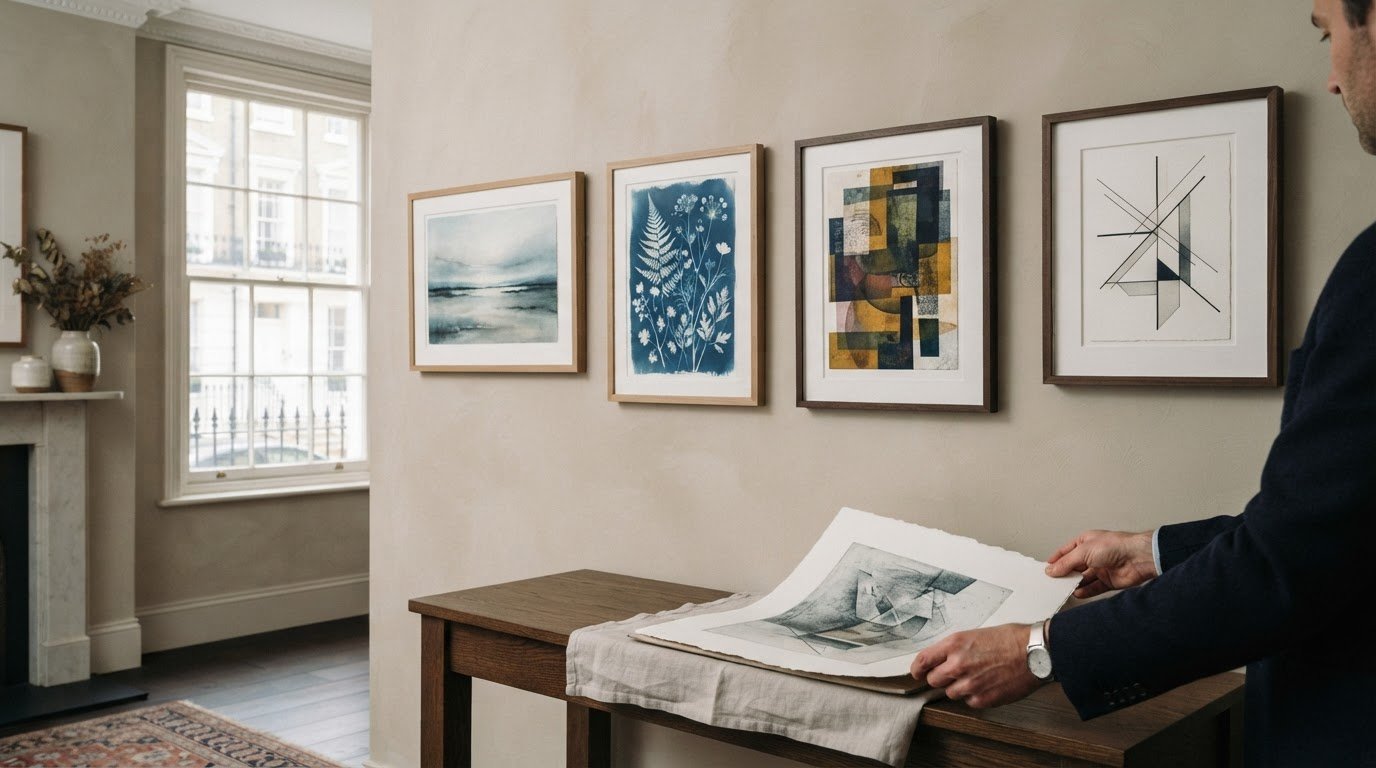
A limited edition isn’t automatically a sound investment. Collecting limited edition prints as an investment can be a more accessible way to own an artist’s work, and a smaller edition may appeal to collectors. But rarity alone doesn’t ensure a rise in value. Weigh the artist’s appeal, edition details and the print’s long-term relevance.
It’s understandable to be drawn to a work you love while wondering whether it could also hold value. This guide explains how limited-edition prints compare with unique artworks, what affects their collectibility and investment potential, and why edition size is only part of the picture. It also considers affordability and long-term value, helping you judge a print not only by its prospects, but by whether you’ll still be glad to live with it years from now.
Key Takeaways
- Consider prints as a more accessible way to collect art, while remembering that affordability alone doesn’t make a work a sound investment.
- Look beyond edition size: an artist’s appeal, buyer interest and the print’s quality all help shape its collectibility.
- Let personal connection guide your choices, and think about whether you’ll value the work over the long term.
- Understand how limited and open editions differ from unique artworks before deciding what kind of piece belongs in your collection.
1. Affordability and diversification through prints
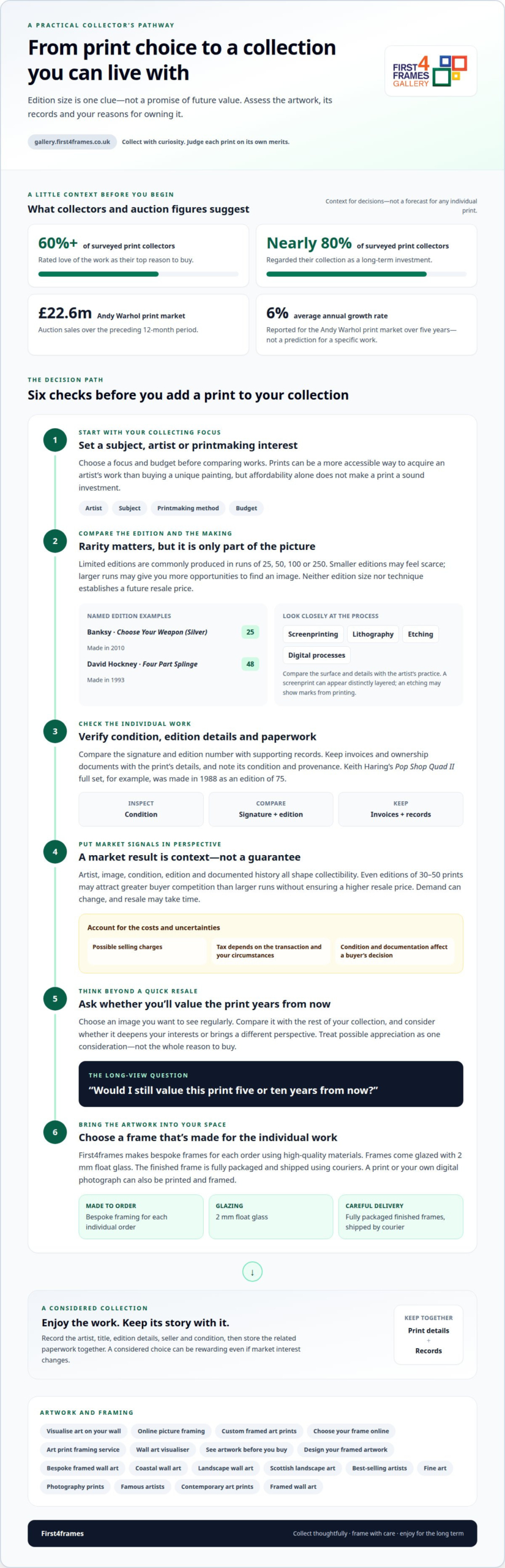
Prints can give collectors a way to acquire an artist’s work without buying a unique painting. Limited editions are commonly produced in runs of 25, 50, 100 or 250 copies. A smaller edition can feel scarce, while a larger run may offer more opportunities to find a particular image. The edition size helps you compare works, but it doesn’t establish a future resale price.
Technique also shapes what you’re buying. Limited-edition prints may be made using screenprinting, lithography, etching or high-quality digital processes. These methods produce different surfaces and details, so compare the image closely with the artist’s practice. A screenprint, for example, can have a distinctly layered appearance; an etching may reveal marks from the printing process. Choose a work for its qualities, not just its format.
Named examples show how editions differ. Banksy’s Choose Your Weapon (Silver) was made in 2010 as an edition of 25. David Hockney’s Four Part Splinge was made in 1993 as an edition of 48. These figures describe each work’s edition, not a guarantee of affordability or investment performance. Compare the artist, image, condition and edition together before deciding.
In the UK, auction purchases may include a buyer’s premium, while fees for private sales depend on the agreement. Tax on a later gain depends on the transaction and the collector’s circumstances. When estimating net proceeds, include possible selling charges and tax rather than comparing a resale figure with the original purchase price alone.
For diversification, consider how each print would sit alongside the rest of your collection. For example, a collector focused on landscape art might add a print by another artist or choose a different technique. This broadens the collection across subjects and creative approaches without assuming every work will rise in value. Set a budget, compare specific editions and prioritise pieces you’ll enjoy owning. That keeps affordability tied to a clear collecting plan, not the hope of a quick return.
2. Collectible value and investment potential
Recent UK auction results vary by print, condition, provenance and bidding. The Andy Warhol print market recorded £22.6 million in auction sales over the preceding 12-month period, with an average annual growth rate of 6% over five years. These figures provide market context, not a price prediction for an individual work.
To assess authenticity, compare the signature and edition number with supporting paperwork. Keep invoices and ownership records alongside the print’s details. Keith Haring’s Pop Shop Quad II full set, for example, was made in 1988 as an edition of 75. Clear documentation helps a buyer understand what the work is and where it came from.
Screenprinting, lithography, etching and digital processes can all produce collectible prints. Technique alone doesn’t determine value; the artist, image, condition, edition and documented history also matter. Keith Haring and Jean-Michel Basquiat, for example, made limited-edition prints, but a famous name alone doesn’t establish future demand. Assess the individual work, not just its creator.
Resale can take time because finding a buyer depends on demand for that particular artist and image. There’s no fixed timetable. Condition and documentation also affect a buyer’s decision, so don’t plan around an immediate sale. Anyone collecting limited edition prints as an investment should consider how long they can comfortably hold a work.
Risks include changing demand, speculative buying, condition problems and false claims about signatures or edition numbers. Editions of 30-50 prints may attract greater buyer competition than larger runs, but that doesn’t ensure a higher resale price. Approach collecting limited edition prints as an investment with close attention to the specific artwork, its records and your reasons for buying.
Begin with a collecting focus, such as an artist, subject or printmaking method. Set a budget, compare the work’s documentation and record its condition and purchase details. Ask yourself whether you’d still value the print five or ten years later. To explore artists and styles as you shape your collection, browse the art print gallery.
3. Collector motivations and long-term investment
More than 60% of surveyed print collectors rated love of the work as their top reason to buy. That finding puts enjoyment at the centre of a durable collection, rather than treating each print as a short-term trade. Choose an image you want to see regularly, such as a coastal scene or bold abstract composition. Its place in your home also shapes its value.
Nearly 80% of surveyed print collectors regarded their collection as a long-term investment. That outlook suits patient ownership, where attention shifts from rapid resale to lasting relevance. Before buying, ask whether the artwork will still speak to you five or ten years from now. A print that fits your interests has meaning beyond a future sale.
A clear collecting focus can help turn individual purchases into a considered collection. For example, you might follow a particular subject, printmaking technique or period in an artist’s work. Compare each new piece with what you already own. Does it deepen that interest, introduce a different perspective or simply repeat an existing choice? This makes your selection more deliberate.
Keep a record for every print. Note the artist, title, edition details, purchase date, seller and condition, then store related paperwork together. These details help you understand what you own and provide useful context if you later review or sell the work. Consistent records also make it easier to compare new purchases with your original collecting aims.
Long-term ownership means paying attention to both the artwork and your reasons for choosing it. Revisit your collection periodically and consider whether each print still suits your tastes, space and collecting focus. A work that continues to engage you can remain rewarding even if market interest changes. Treat potential appreciation as one consideration, not the sole measure of a print’s worth.
4. How prints and editions differ from unique artworks as investments
A unique painting has no identical edition copies, while a print is part of a process that can produce multiple impressions. That difference affects scarcity, but doesn’t automatically determine market value. A print’s appeal still depends on its artist, image, condition, documentation and buyer demand. Compare these qualities before treating a print as equivalent to a one-off work.
A limited edition has a defined number of impressions. Once it sells out, no more prints can be made to that exact specification. An open edition, by contrast, can be reproduced without a set limit. This distinction can shape collectibility: a numbered edition offers a clearer boundary, while an open edition prioritises continued availability. Neither format guarantees future appreciation.
UK collectors can buy through established galleries, artists’ own sales channels and auction houses. For a specific print, favour a seller who provides a clear invoice and information about the artist, edition and provenance. Keep these records with the artwork. A signature or edition number matters most when it matches reliable documentation and the print’s known details.
Preservation affects a print’s condition, an important consideration for any future sale. Store unframed works flat in a clean, dry place, away from direct sunlight and damp. For display, choose a frame that fits the print properly and suitable glazing. Avoid placing framed art near heat or strong sunlight. Keep photographs, purchase records and condition notes together.
Insurance needs the same careful record-keeping. Retain purchase documents and current photographs, then review your home policy’s limits and requirements for valuable artwork. A print differs from a unique painting in scarcity, yet both need thoughtful care and clear ownership records. If you’re comparing editions and artists, explore the available art prints and consider which work suits your collection as well as your walls.
First4Frames Gallery: Ready-to-Hang Framed Art
First4Frames Gallery offers Ready-to-Hang Framed Art, Custom Picture Framing and Giclée Fine Art Prints. Its frames are handmade for each order, use high-quality materials and come glazed with 2 mm float glass. For a print you already own, bespoke framing helps create a considered finish; for a new piece, choose from fine art and contemporary art prints.
Explore coastal wall art, landscape wall art and Scottish landscape art, or look for photography prints and works by best-selling artists and famous artists. As you choose, think about how to visualise art on your wall and design your framed artwork to suit your room. A wall art visualiser may help you see artwork before you buy. Online picture framing can make it easier to choose your frame online and consider custom framed art prints, bespoke framed wall art and framed wall art. Explore the art print framing service through the gallery.
Let your next choice reflect your taste
A thoughtful approach to collecting limited edition prints as an investment starts with a personal collecting principle. Decide what you want your collection to express, whether that’s a connection to a place, a distinctive visual style or an artist’s evolving practice. Let that principle guide your next choice instead of reacting to a trend or buying simply because an edition seems scarce.
Give the artwork room to become part of your everyday life. Consider where you’d display it, what you want to notice each time you see it and how it might sit alongside pieces you already value. Investment potential can inform your decision, but it shouldn’t replace your own judgement or enjoyment. Market interest can change, so think carefully before treating any print as a financial plan.
Ready to find a work that feels right for your collection? Explore the First4Frames Gallery and discover artwork that could bring a fresh perspective to your space. Choose with care, collect with curiosity, and let the art continue to reward your attention.
Frequently Asked Questions
Is it Worth Buying Limited Edition Prints in 2026?
Yes, a limited edition print can be worthwhile if you value the artwork and understand the uncertainty of resale. Treat it as a collectible you’re happy to own, not a dependable source of profit. Before buying, compare the artist’s work, the print’s condition and its supporting records, then decide whether the piece fits your budget and collecting interests.
How do limited edition prints compare with other art investments?
Prints offer a different balance of access and scarcity from unique paintings: an edition contains multiple impressions, while a unique work has no edition counterparts. Unlike financial assets, a print doesn’t generate income simply by being held. Selling also depends on finding a buyer for that particular artist and image, so weigh the enjoyment of ownership alongside resale prospects.
What factors determine the value of a limited edition print?
Value reflects the artist’s reputation, demand for the image, edition details, condition and documented ownership. A print with intact margins and clear records may be easier for a buyer to assess than one with damage or gaps in its history. Compare the exact title and edition, not just similar works by the same artist, before judging its appeal.
Which printmaking techniques and artists tend to retain value?
No printmaking technique or artist is guaranteed to retain value. Value depends on the specific artist and image, condition, edition, documentation and buyer demand. Technique alone and a famous name aren’t enough.