
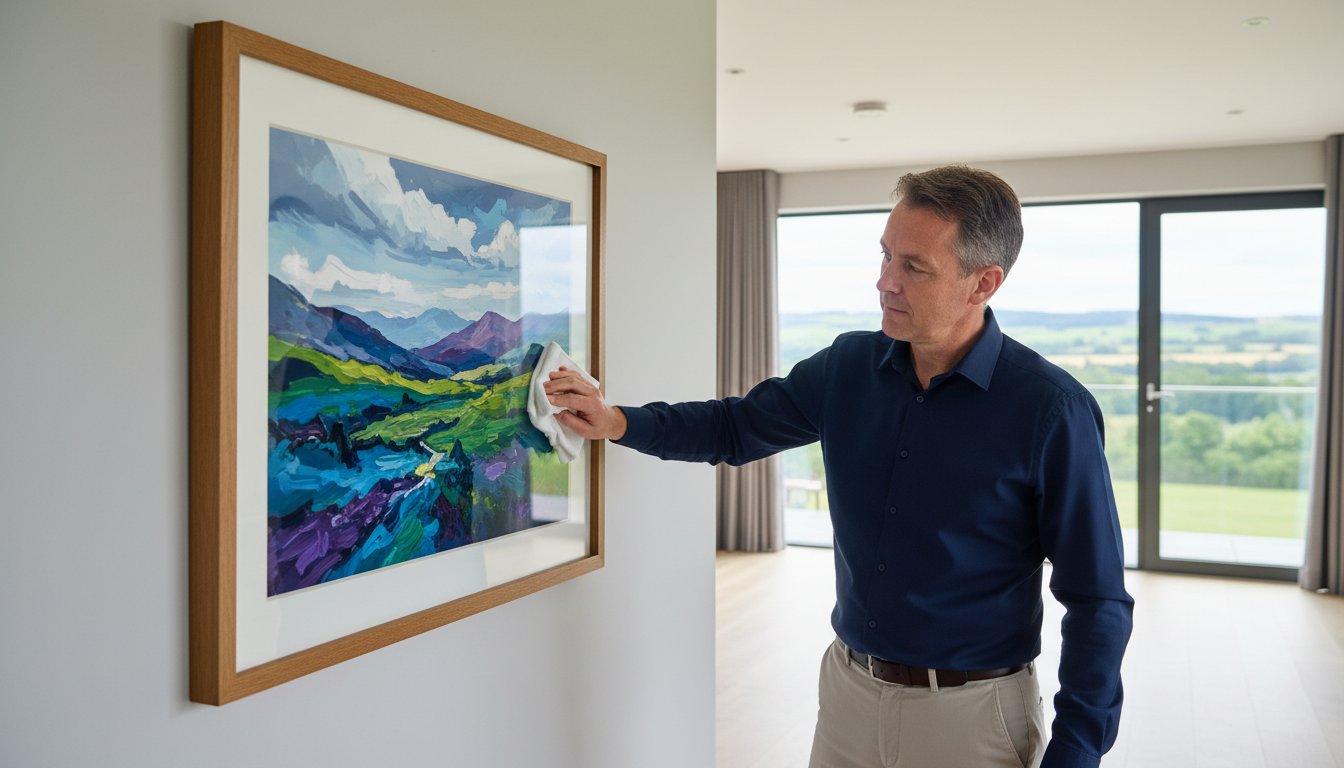
Last week, a collector at the First4frames gallery discovered a small ripple in their favorite landscape print, a common worry when a radiator is placed too close to a bespoke frame. You’ve likely felt that same flash of concern when the afternoon sun hits your wall, wondering how to care for framed artwork without accidentally causing damage with the wrong cleaning spray. It’s natural to want to protect the fine art prints that serve as the bridge between your room decor and your personal style.
We’ve spent over 20 years helping people preserve their treasures, earning a 5-star reputation for our professional framing service and craftsmanship. This guide shares the expert secrets to maintaining your prints and frames for a lifetime of enjoyment. You’ll walk away with a clear cleaning routine, the confidence to choose the perfect hanging spot, and the knowledge of when to bring a piece back to our workshop for professional attention. We’re here to ensure your journey of artistic discovery stays as vibrant as the day it began.
Key Takeaways
- Discover how to identify and manage environmental “danger zones” in your home to protect your fine art prints from fading and UV damage.
- Learn the professional “less is more” cleaning philosophy to safely maintain your bespoke frames and delicate artwork without the risk of moisture damage.
- Understand the vital role of conservation framing and how First4Frames uses acid-free mounts to prevent “mount burn” and long-term deterioration.
- Master the expert secrets of how to care for framed artwork to ensure the spectacular colours of artists like Jolomo and Jack Vettriano remain vibrant for a lifetime.
- Explore why professional framing acts as a protective bridge between your décor and your art, safeguarding both its emotional resonance and financial value.
Why Caring for Your Framed Artwork Matters for Longevity
Owning a piece from the First4Frames Gallery isn’t just about filling a gap on your wall. It’s about preserving a story and a specific moment in time. Whether it’s a vibrant, limited-edition landscape by one of our featured artists or a cherished personal photograph, understanding how to care for framed artwork ensures these treasures remain spectacular for generations. A frame isn’t just a border; it’s the bridge between your room décor and the artwork. It does the heavy lifting in the relationship, pulling the viewer into the picture while providing a necessary barrier against the harsh elements of a typical home environment.
Neglect leads to irreversible damage that can devalue your collection both emotionally and financially. Issues like foxing, which appears as unsightly brown spots caused by fungal growth, or acid burn from low-quality mounting materials can ruin a piece in less than 10 years. At First4Frames, our commitment to quality is a point of pride. This dedication is reflected in our 5-star customer reviews across major platforms, where clients frequently highlight our expertise and the lasting durability of our work. For those wanting to understand the complex science behind preservation, the Conservation and restoration of paintings offers a comprehensive look at how professionals maintain artistic integrity over centuries.
To better understand the fundamentals of keeping your art in top condition, watch this helpful video:
Protecting Your Artistic Investment
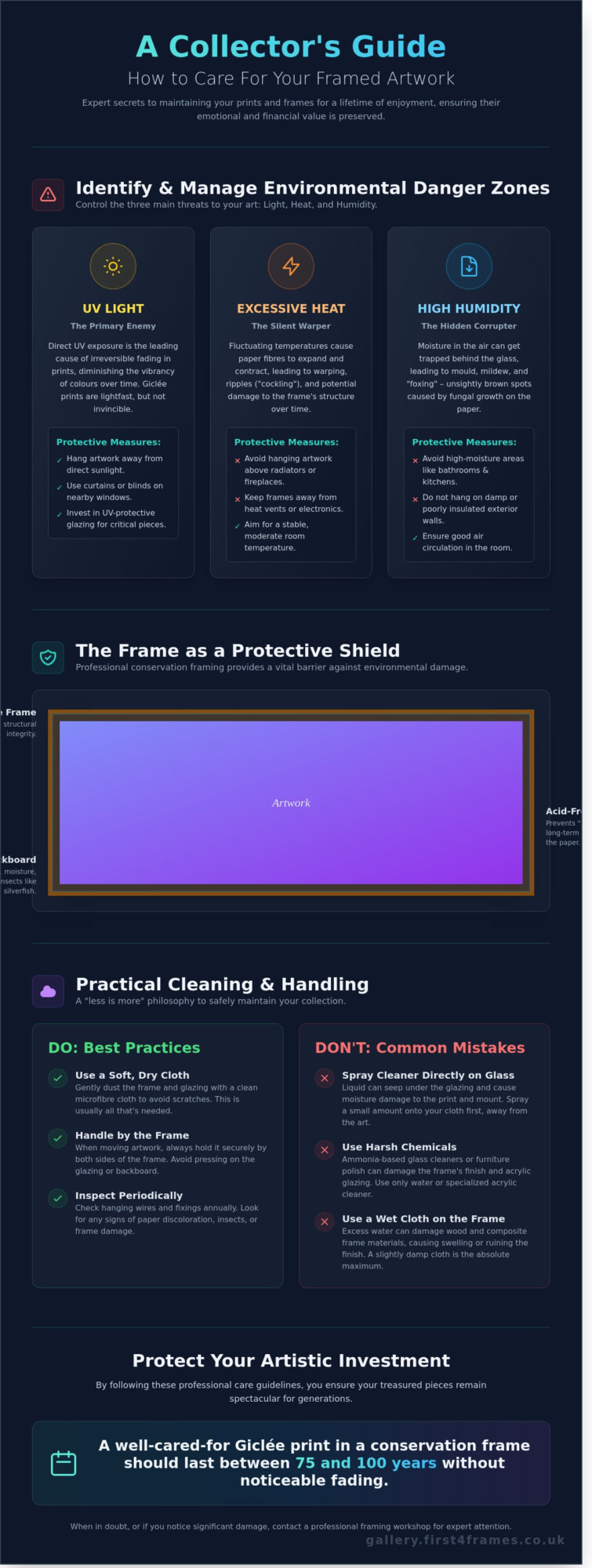
Giclée prints are the heart of the First4Frames Gallery collection. These prints offer incredible colour depth and detail, but they require specific care to maintain their brilliance. Unlike standard digital prints, Giclée uses pigment-based inks that are designed to be lightfast. However, they still need protection from direct UV exposure to prevent gradual fading. Our professional framing service provides a level of security that off-the-shelf options simply can’t match. While a cheap, mass-produced frame might look fine initially, our bespoke solutions use archival-grade, acid-free materials. When you treat your art with this level of professional respect, a well-cared-for piece should last between 75 and 100 years without any noticeable loss in quality.
The Frame as a Protective Shield
A frame serves a vital structural role beyond its aesthetic appeal. It prevents paper warping, often called cockling, which happens when paper fibres expand and contract due to changes in room humidity. Our print-and-frame service ensures every piece is fitted with a precision-cut mount. This isn’t just for visual breathing room. The mount creates a necessary 2mm air gap between the artwork and the glazing. Without this gap, condensation can trap moisture directly against the print surface, leading to mould or the ink sticking to the glass. Additionally, we use a sealed backboard system. This keeps out dust and tiny insects, such as silverfish, which are known to cause significant damage to paper-based art in just a few months if left unchecked.
Managing Environmental Factors: Light, Heat, and Humidity
The First4frames gallery features spectacular works from talented artists that are designed to be the centerpiece of your home. To keep these pieces looking as fresh as the day they left our workshop, you need to understand the unique “danger zones” found in many British houses. From drafty Victorian hallways to modern kitchens with high humidity, every room has its own microclimate. Learning how to care for framed artwork starts with identifying these environmental threats before they cause lasting damage.
We’ve spent over 20 years perfecting our craft, and our high customer ratings reflect our commitment to quality. We treat every piece as a bridge between your room décor and the artist’s vision. To maintain that bridge, you must control the three big variables: light, temperature, and moisture. These factors don’t just affect the surface; they can alter the structural integrity of the paper and the frame itself.
Shielding Prints from UV Light and Fading
UV light is the primary enemy of vibrant colours. It triggers a chemical reaction in the ink and paper, leading to irreversible bleaching. You shouldn’t hang art directly opposite a south-facing window, as this exposure can cause noticeable fading in as little as 24 months. According to the preventive conservation guidelines, light damage is cumulative and cannot be reversed once it occurs.
Our bespoke framing service addresses this by offering premium UV-protective glass. This specialized glazing filters out up to 99% of harmful rays, acting like a high-factor sunblock for your art. Be careful with artificial lighting too. Halogen bulbs are notorious “hotspots” that emit both heat and UV. We recommend switching to LED bulbs, which stay cool and provide a safe, beautiful glow for your collection. You can explore our latest arrivals and see how professional glazing enhances clarity on our online gallery.
Balancing Temperature in the British Home
Temperature fluctuations cause organic materials like paper and wood to “breathe.” When a room gets warm, the paper fibers expand; when it cools, they contract. Over time, this constant movement leads to “cockling,” which is that unsightly wavy appearance you sometimes see behind the glass. Following the “Radiator Rule” is essential: never hang artwork directly above a radiator or heat vent. The intense, dry heat can make the wooden frame shrink and the artwork become brittle.
External walls are another hidden risk because they often stay colder than the rest of the room. This temperature gap can cause moisture to condense inside the frame. To prevent this, we use small spacers or “bumpers” on the back of the frame. These create a 5mm gap that allows air to flow freely behind the piece. For high-risk areas like bathrooms or kitchens, our print-and-frame service often suggests using acrylic instead of glass. It’s more resistant to thermal shock and won’t trap condensation as easily as traditional glazing. This practical approach ensures your investment stays protected while looking perfect on your wall.
Practical Cleaning and Handling Techniques for Fine Art
Maintaining the pristine condition of your collection starts with understanding that how to care for framed artwork is as much about handling as it is about cleaning. At First4frames gallery, we’ve spent over 20 years perfecting the art of presentation. Before you touch a large piece, such as a 100cm wide landscape print, clear a flat, stable workspace. Laying the piece on a clean, soft towel prevents accidental scratches to the moulding. Always grip bespoke frames by the sides. Lifting from the top rail puts unnecessary stress on the joined corners, which can lead to structural failure over time.
Our expert team recommends a “less is more” philosophy. Dry cleaning is almost always superior to wet cleaning for fine art. Moisture is a primary enemy of paper-based art and can seep under the glazing to cause foxing or mould growth. We’ve earned our 4.9-star customer rating by ensuring every piece leaves our workshop in peak condition; keeping it that way requires a gentle touch and the right tools. Don’t rush the process, as most damage occurs during hasty cleaning sessions.
How to Clean Glazing Without Risking Damage
If your artwork features acrylic glazing, put away the paper towels. Paper is abrasive and creates microscopic scratches that dull the surface over time. Use a high-quality, clean microfibre cloth instead. Never spray glass cleaner directly onto the frame. Liquid can run down the glass and soak into the mount board, ruining the artwork. Spray a small amount of ammonia-free cleaner onto the cloth first. This protects the delicate bond between the frame and your fine art prints.
Safe Methods for Dusting Bespoke Frames
Intricate mouldings on gilt or painted frames require a delicate approach. A soft-bristled brush, like a 1-inch natural hair artist’s brush, is the best tool for removing dust from deep crevices. This prevents the buildup of grime that can become difficult to remove without damaging the finish. Check your hanging hardware every six months. Ensure that wires haven’t frayed and that D-rings remain tight. Our professional framing service uses premium steel components, but seasonal temperature shifts in UK homes can occasionally loosen screws.
Follow this simple seasonal maintenance checklist to ensure longevity:
- Spring: Dust the top edge of the frame where debris accumulates during winter.
- Summer: Check for any signs of insect ingress behind the glass or within the frame spacers.
- Autumn: Inspect the backing tape for peeling or gaps that might let in moisture.
- Winter: Verify that the artwork hasn’t been placed too close to active radiators or heat sources.
Learning how to care for framed artwork properly ensures that your investment remains a beautiful bridge between your room décor and the artist’s vision for decades. Whether you’re displaying a piece from our latest gallery collection or using our print-and-frame service for your own photography, these small steps preserve the spectacular quality of the work.
Understanding Conservation Framing Standards
Conservation framing is the gold standard we uphold at First4Frames. It’s the difference between a frame that merely looks good and one that preserves your investment for 75 years or more. When you’re learning how to care for framed artwork, understanding what happens inside the frame is vital. We treat every piece from our gallery with archival principles to prevent environmental decay and chemical damage. This professional approach ensures the frame acts as a protective cocoon for the art inside.
One critical element is the mounting process. We never use standard adhesive tapes or “pressure-sensitive” glues that can permanently bond to the paper. Instead, we utilize reversible hinging techniques. This allows the artwork to expand and contract naturally with temperature changes. If the art ever needs to be removed, these hinges can be safely detached without tearing the paper fibers or leaving sticky residues. We also offer various glazing options. While standard float glass is a common choice, we often recommend museum-grade acrylic for high-value pieces. This specialized glazing blocks 99% of harmful UV rays, preventing the colors in your favorite prints from fading over time.
Acid-Free Materials and pH Neutrality
The chemistry of your frame matters. Traditional wood-pulp paper contains lignin, an organic polymer that turns acidic over time. This leads to “mount burn,” which appears as unsightly brown stains on the edges of the artwork. Our bespoke framing service avoids this by using alkaline-buffered boards with a pH level of 8.5. These boards neutralize acidic gases and pollutants before they can reach the art. You can identify acid damage in older, non-professional frames by looking for yellowing paper or brittle edges. Our Falkirk workshop replaces these damaging materials with museum-quality alternatives to halt further deterioration.
The Professional Difference in Print-and-Frame Services
Our “one-stop-shop” model ensures your art is handled safely from the moment it’s printed. By combining Giclée printing with archival-quality framing, we guarantee a product that won’t fade or warp. Since we opened our doors in 2003, our Falkirk workshop has become a trusted choice for Scottish art lovers who demand excellence. We don’t just frame a picture; we build a bridge between your room décor and the artwork. Our 5-star customer ratings across review platforms reflect our dedication to this craft. When you choose a piece from our collection, you’re benefiting from twenty years of technical expertise and a genuine passion for fine art preservation.
Discover our latest collection of professionally preserved pieces and how to care for framed artwork in your own home.
Expert Care Tips for First4Frames Gallery Collections
At First4Frames, we believe a frame is more than just a border; it’s the vital bridge between your room décor and the artwork itself. Whether you’ve recently acquired a moody Jack Vettriano or a sun-drenched John Lowrie Morrison (Jolomo) piece from our Falkirk gallery, knowing how to care for framed artwork is the key to protecting your investment for decades. Our team has spent over twenty years perfecting the art of preservation, ensuring that every limited edition print remains as striking as the day it left our workshop.
Preserving the Vibrant Colours of Jolomo Prints
John Lowrie Morrison’s signature style relies on high-contrast, vibrant palettes that capture the raw energy of the Scottish Highlands. To keep these colours spectacular, we always recommend UV-protective glass. This specific barrier prevents bold pigments from fading when exposed to the changing Scottish light. We also focus on the “heavy lifting” for large-scale Jolomo works. This means using sturdy, high-quality wood frames that provide the structural integrity needed to prevent the paper from bowing or warping over time. Choosing a neutral or subtly complementary mount colour further enhances the landscape’s tones without distracting from the artist’s bold brushwork.
Why Professional Framing is the Best Insurance
While off-the-shelf options might seem convenient, professional framing is the only real insurance for your art. Our bespoke services are designed to pull you into the picture, using materials that actively protect the print’s texture and detail. This commitment to quality is why we maintain excellent customer ratings on major review platforms, where clients frequently praise our attention to detail and craftsmanship. If you have a cherished item at home, you can easily get a quote for our framing service to ensure it receives the same level of care as our gallery collections.
To keep your collection in peak condition, we recommend following these expert steps:
- Monitor the environment: Avoid hanging vibrant Scottish landscapes directly opposite large, south-facing windows.
- Check the seals: Every five to seven years, bring your artwork to our Falkirk gallery for a professional check-up to ensure no dust or moisture has breached the frame.
- Trust the experts: For limited edition prints with delicate textures, only use our professional print-and-frame service to guarantee acid-free mounting.
We pride ourselves on being a one-stop-shop for art lovers. If you’re unsure about the current state of your display, don’t wait for visible damage to appear. Visit us in Falkirk for a consultation. We’ll help you understand how to care for framed artwork while ensuring your Jack Vettriano or Jolomo pieces continue to tell their story for generations to come. Our passion for fine art is matched only by our dedication to the craftsmanship that protects it.
Preserving the Beauty of Your First4Frames Collection
Your fine art collection deserves a home where it can thrive for decades. By managing light exposure and maintaining stable humidity, you ensure that every vibrant detail of your Scottish fine art prints remains as spectacular as the day you brought them home. Master the basics of how to care for framed artwork to prevent irreversible damage from environmental stressors. Choosing high-quality conservation materials is the best way to safeguard your investment for the long term.
At First4Frames, we’ve spent over 20 years providing bespoke framing expertise in Falkirk. Our team specializes in conservation standards that act as a protective bridge between your room’s decor and the delicate art itself. We’re proud of our excellent customer ratings on review platforms, which reflect our commitment to craftsmanship and professional service. Whether you’re selecting a new piece from the First4frames gallery or need a bespoke solution for a cherished heirloom, our artisans are ready to assist.
Browse our Ready-to-Hang Gallery or book a Bespoke Framing consultation today
Let your walls tell a story that lasts a lifetime with pieces that stay as bright and inspiring as your very first discovery.
Frequently Asked Questions
Can I hang my framed artwork in a bathroom?
You shouldn’t hang delicate paper artwork in a bathroom because humidity levels often spike above 70 percent. This moisture causes the paper to warp and can lead to mould growth within 48 hours. If you want to display a piece from our gallery in a humid space, choose our print-and-frame service with an acrylic glaze to provide better protection against damp conditions.
How do I clean the glass on my picture frame without streaks?
To clean frame glass without streaks, apply a small amount of ammonia-free cleaner directly to a microfibre cloth. Never spray liquid onto the glass because it can seep under the edges and ruin the artwork. First 4 Frames recommends using a 50/50 distilled water and white vinegar solution. This simple mixture ensures your Giclée prints remain crystal clear and visible.
Why is my artwork starting to ripple inside the frame?
Artwork ripples, a process called cockling, when it reacts to changes in temperature and humidity. When you learn how to care for framed artwork, you’ll find that a 10 percent shift in room moisture can cause paper fibers to expand. Our professional framing service uses conservation mounting techniques to allow the art to breathe, which prevents this permanent distortion from occurring.
What is the best way to dust a bespoke wooden frame?
The best way to clean a bespoke wooden frame is by using a soft, dry brush or a dedicated ostrich feather duster. Avoid all liquid polishes or damp cloths, as moisture can penetrate the wood grain and cause the finish to swell. Since we’ve spent 20 years crafting premium frames, we know that a gentle, dry touch preserves the wood’s natural beauty for decades.
How can I tell if my frame uses acid-free materials?
You can tell if materials are acid-free by checking for a conservation or museum grade stamp on the mounting board. These materials maintain a pH level between 7.5 and 9.5, which prevents the yellowing seen in older, cheaper frames. Every piece of art we frame for our customers uses these high-quality materials to ensure your investment stays in perfect condition.
Is it safe to hang art directly above a radiator?
It’s not safe to hang art directly above a radiator because the rising heat will quickly dry out the frame and the paper. Temperatures exceeding 25 degrees Celsius can cause wooden joints to shrink and separate by several millimetres. To protect your collection, keep a distance of at least 1 metre from any active heat source or direct sunlight.
How often should I check the hanging wires on my heavy frames?
You should check the hanging wires and wall fixings on heavy frames at least once every 12 months. Wires can fray over time, especially when supporting pieces over 5kg. Our 4.9-star customer rating is built on providing secure, professional-grade hardware, but annual inspections are essential for total peace of mind. Regular checks prevent accidental falls and glass breakage.
What should I do if I see small insects behind the glass?
If you spot small insects like 1mm thunderflies behind the glass, you must take the frame to a professional for cleaning and resealing. These pests crawl through tiny gaps in the backing tape and can leave permanent stains on your artwork. Our workshop team can safely dismantle the frame, remove the insects, and apply a fresh, airtight seal to protect your prints.