
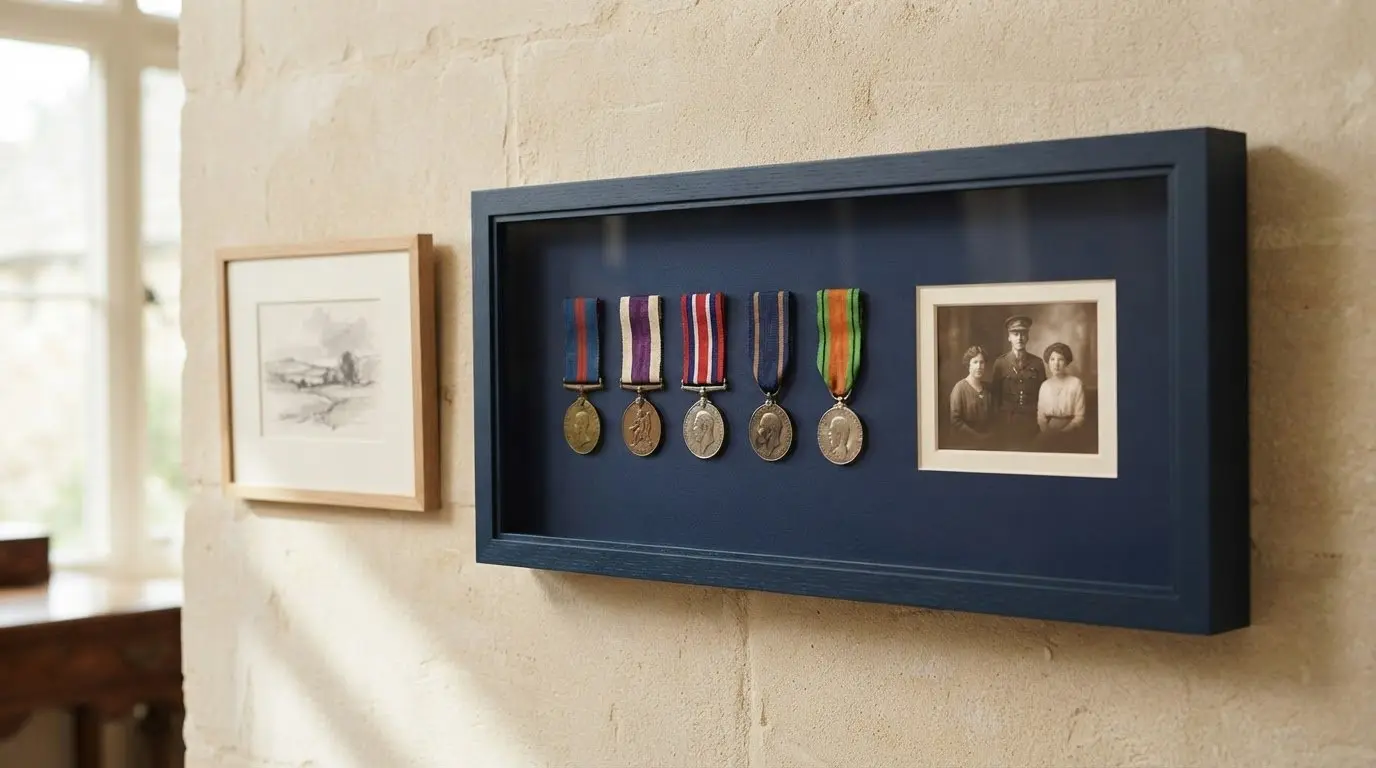
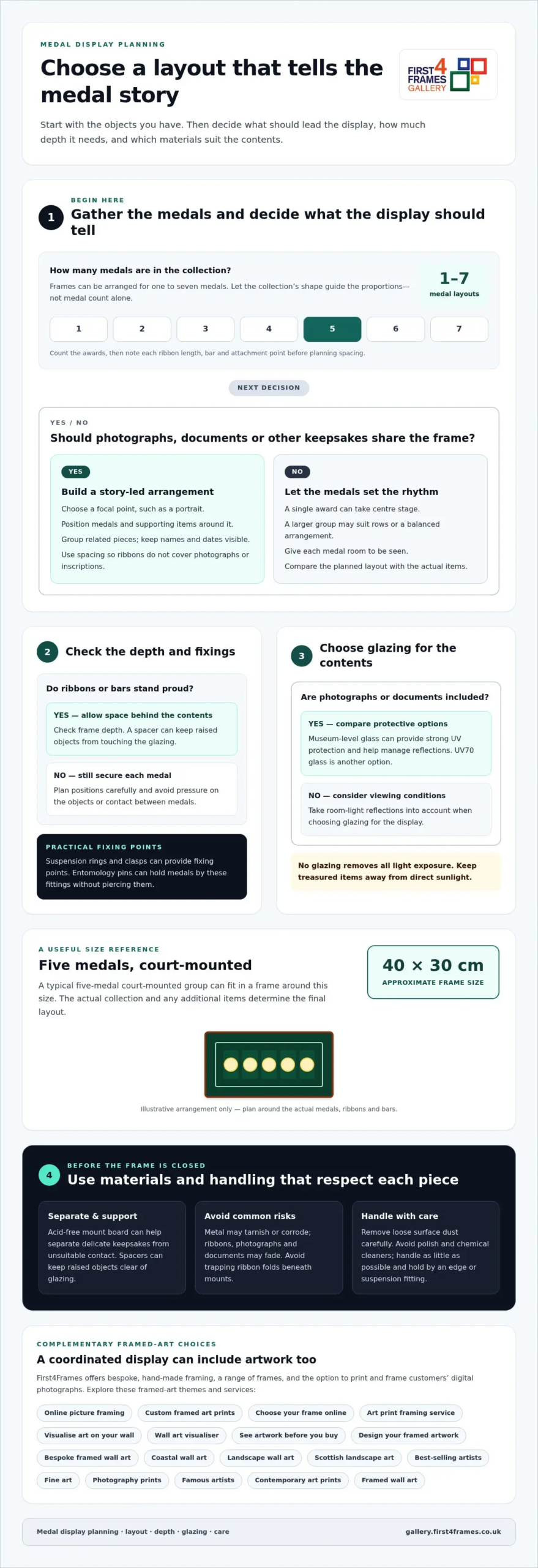
A medal display works best when its layout gives each award room and makes its story easy to follow. For framing a collection of medals in the UK, arrange the medals as a group and decide whether photographs, a certificate or other memorabilia should share the space; a typical five-medal court-mounted group can fit in a frame around 40 cm by 30 cm. The right format depends on the collection, not medal count alone.
It’s natural to want a display that honours the medals while protecting and presenting them thoughtfully. This guide explains how layouts can work for different collection sizes, First World War photographs and sports awards, and what to consider when choosing materials for conservation. You’ll also see how spacing, mounting and glazing can shape a display that feels balanced and keeps its personal story at the centre.
Key Takeaways
- Choose a layout around the number of medals and whether photographs or other keepsakes should share the display.
- Bring First World War photographs and medals together with considered spacing and mounting so the display tells a clear family story.
- Compare glazing and conservation materials to help protect treasured items and keep them easy to view.
- For sports awards, plan how medals, photographs, shirts or race numbers can form a balanced display; bespoke framing can help bring the pieces together.
Frames for one, two, three, four, five, six or seven medals
When framing a collection of medals in the UK, start by counting the awards and deciding what story the display should tell. A bespoke layout can accommodate ribbons, bars and other keepsakes while giving each item room to be seen.
Medal Capacity Options
Frames can be arranged for one to seven medals, with the collection’s shape guiding the proportions. A single award can take centre stage, while a larger group may suit rows or a balanced arrangement. Before choosing, lay out every medal and note its ribbon length, bar and attachment points. This makes it easier to plan spacing and avoid a crowded display.
Mounts and Frame Mouldings
A dark green window mount with gold frame moulding can give a medal display a traditional look. The mount creates a clear boundary around each item, while the moulding finishes the arrangement. Consider how the colours complement the medals and ribbons. Glazing affects the display’s appearance under room lighting, so take reflections into account when choosing the frame.
Handcrafted UK Medal Frames
Handcrafted frames made in the UK can be built around the medals’ dimensions and preferred arrangement. Look for a frame that leaves enough depth for ribbons and bars, with secure positioning that avoids pressure on the objects. Bespoke work can also accommodate an inscription or keepsake. For framing a collection of medals in the UK, compare the proposed layout with the actual items before finalising the design.
You can frame military medals at home using a suitable frame and mount, but professional framing can help with delicate pieces or complex layouts. Plan the placement around the shape of each ribbon and bar.
Framing costs depend on the frame, mount, glazing and layout, including any photographs or additional items. The time involved also varies according to the design, materials and fitting.
Framing a collection of First World War photographs and medals
A First World War display can bring medals, family photographs and documents together in a clear arrangement. Choose a focal point, such as a portrait, then position the medals and supporting items around it. This gives the eye a route through the story instead of giving every object equal prominence.
Plan the spacing around the shape of each object. Medals can sit beside or below photographs, while a certificate or service document can add context without dominating the display. A medal arrangement can also include meaningful memorabilia, such as a letter or military identification detail. Keep names and dates visible, and group related items together.
Suspension rings and clasps provide practical fixing points for medals. Entomology pins can hold medals by these fittings without piercing them, keeping the face and ribbon visible while helping each award sit neatly. Map the positions before framing, and check that overlapping ribbons won’t cover photographs or inscriptions.
Photograph dimensions influence the frame’s proportions. A 6×4-inch photograph can sit alongside medals, while a larger portrait may need more room and a different balance. Use the actual print dimensions when planning, and leave enough space for the mount to separate photographs from metal objects. Documents can be arranged as a panel, or placed beneath a portrait as a caption-like detail.
A 2024 example brought together photographs and medals belonging to Richard James Whalley. A gold-colour nameplate with details was added before glazing, giving the display a clear personal identification. For a family collection, a concise nameplate can help future viewers connect the objects with the person and their history.
Gather the medals, photographs and papers before settling the layout, then decide which item should lead the story. To explore artwork and visual choices that may help you plan a complementary display, browse the gallery of framed artwork.
UV protection and conservation materials
Choose the glazing and internal materials with the medals, ribbons and papers in mind. Each has different surfaces and sensitivities, so material choice is an important part of the design.
Glass and UV Protection
Museum-level glass can provide strong UV protection for framed photographs and documents, while also helping manage reflections. One First World War display used museum-level glass for both benefits. UV70 glass is another option; compare its stated protection with the needs of the contents and the display’s position. No glazing removes all light exposure, so avoid placing treasured items in direct sunlight.
Materials inside the frame matter too. A spacer can keep raised objects from touching the glazing, while acid-free mount board can help separate delicate keepsakes from unsuitable contact. These choices allow medals and paper items to sit at different depths rather than forcing everything onto the same flat plane. Check the depth of the medals and any attached bars before deciding on the frame construction.
Framing Risks to Medals
Pressure, unsuitable contact and environmental exposure can affect different parts of a collection. Metal may tarnish or corrode, while ribbons, photographs and documents may fade. Avoid trapping ribbon folds beneath mounts, and position medals securely so they don’t rub against one another. Review the full arrangement before closing the frame.
To prepare medals, carefully remove loose surface dust and avoid polish or chemical cleaners that could alter historic finishes. Handle each item as little as possible, with clean hands, and hold it by the edge or suspension fitting. Keep the medals in a dry place while planning the display, and don’t force one into a mount if this strains its ribbon.
The main risks when framing medals include changes to metal surfaces, fading of fabric or paper, and corrosion where moisture is present. Suitable spacing and materials help reduce contact damage, while careful placement limits exposure to harsh light. If a medal already has active corrosion or loose components, preserve its condition rather than cleaning or altering it before display.
Sports and achievement medal layouts
Sports displays can bring medals together with shirts, photographs or race numbers. Arrange the items to show the story of the achievement without crowding them together.
Arrange medals by event or achievement, and label the display with concise, accurate details. Keep each label close to its award without hiding ribbons or other items.
Arranging Medals in a Display
Make the medal the focal point, then arrange related items around it. For example, a rugby shirt and medal can be framed together with blue mount card and an oak picture frame. A marathon display might combine a shirt, medal and runner’s number. Place the largest item first, then balance the smaller pieces around it.
Photographs can add context to a sports display, while mount colours can connect the objects visually. Two Oceans marathon medals and photographs were framed with cream mounts and a 418 Grey frame. This example shows how a restrained mount can let varied items sit together without competing for attention.
Labelling Medal Displays
A label can identify the event, achievement or recipient, helping viewers understand the display at a glance. Keep the wording brief, and check names and event details before framing. A nameplate can sit beneath the medals or alongside supporting items, as long as it remains readable and doesn’t interrupt the arrangement.
Before choosing positions, gather the medal, any shirt or number, and the details to include. A marathon shirt, medal and runner’s number have been framed with a 441 white frame and double white and blue acid-free mounts. Another example pairs marathon medals with double mounts and a 418 natural wood frame. These layouts demonstrate how frame and mount choices can suit different collections.
For colour inspiration, explore framed artwork styles and note which tones complement your sports keepsakes. Then choose a layout that gives each medal, photograph and label a clear place.
First4Frames Gallery: Ready-to-Hang Framed Art
First4Frames Gallery offers Custom Picture Framing for personal displays and artwork. Its online picture framing choices let you choose your frame online and design your framed artwork around the room. To visualise art on your wall, compare colours and proportions; a wall art visualiser can help you picture the result. See artwork before you buy by exploring the gallery’s selection.
Ready-to-Hang Framed Art and Giclée Fine Art Prints offer finished options, including custom framed art prints. Browse fine art, contemporary art prints, photography prints, framed wall art and Scottish landscape art. Coastal wall art and landscape wall art can suggest different moods, while best-selling artists and famous artists offer further inspiration. An art print framing service can help bring a chosen image and frame together as bespoke framed wall art.
Explore the gallery to find a direction for your collection or home, and contact First4Frames Gallery to discuss your framing project.
Give Your Collection Its Next Chapter
A thoughtful approach to framing a collection of medals in the UK begins with deciding what story you want the display to tell. Choose the objects that matter most, consider where the finished piece will hang, and let those choices guide its design. A family portrait, a race-day photograph or a meaningful inscription can make the arrangement feel personal and complete.
When you’re ready to shape that idea, First4Frames Gallery offers Custom Picture Framing alongside Ready-to-Hang Framed Art and Giclée Fine Art Prints. These options suit different needs, from a tailored display to a finished artwork that complements the room. Share your preferred direction and explore the available artwork and framing choices at your own pace.
Explore framed artwork in the gallery and find inspiration for the space around your collection. Your medals carry a story worth bringing into view, and the right design can help it live on beautifully.
Frequently Asked Questions
What types of frames and mounts are suitable for displaying medals?
A deep box frame can provide space between medals and the glazing. Size the frame around the complete arrangement, including ribbons and labels, rather than measuring only the medal faces. A contrasting mount can help distinguish each item. If the display includes a photograph or certificate, plan its position before settling on the frame proportions.
How do you frame medals without damaging them?
Keep medals secure without applying adhesive directly to their surfaces or ribbons. First, arrange the items on a flat surface and decide where each award belongs. Check that hanging ribbons won’t pull against neighbouring pieces. A display containing a medal, clasp and bar needs enough depth and clearance to avoid pressure when the frame is closed. Keep original labels or notes separately if they can’t be included safely.
Should medals be mounted with UV-protective glass and acid-free materials?
UV-protective glazing and acid-free materials are sensible choices, especially when photographs or documents share the frame. Paper can be more vulnerable to light and unsuitable contact than metal, so consider the needs of every item. UV glazing doesn’t eliminate light exposure: position the display away from direct sunlight and use materials that keep its contents separated and supported.
How much does it cost to frame a collection of medals in the UK?
Bespoke framing costs vary according to the frame, mount, glazing and fitting involved.
Where can I find medal framing services in the UK, and how long do they take?
The framing showroom is in Derbyshire near the Peak District. Turnaround time varies with the design, materials and fitting involved.