
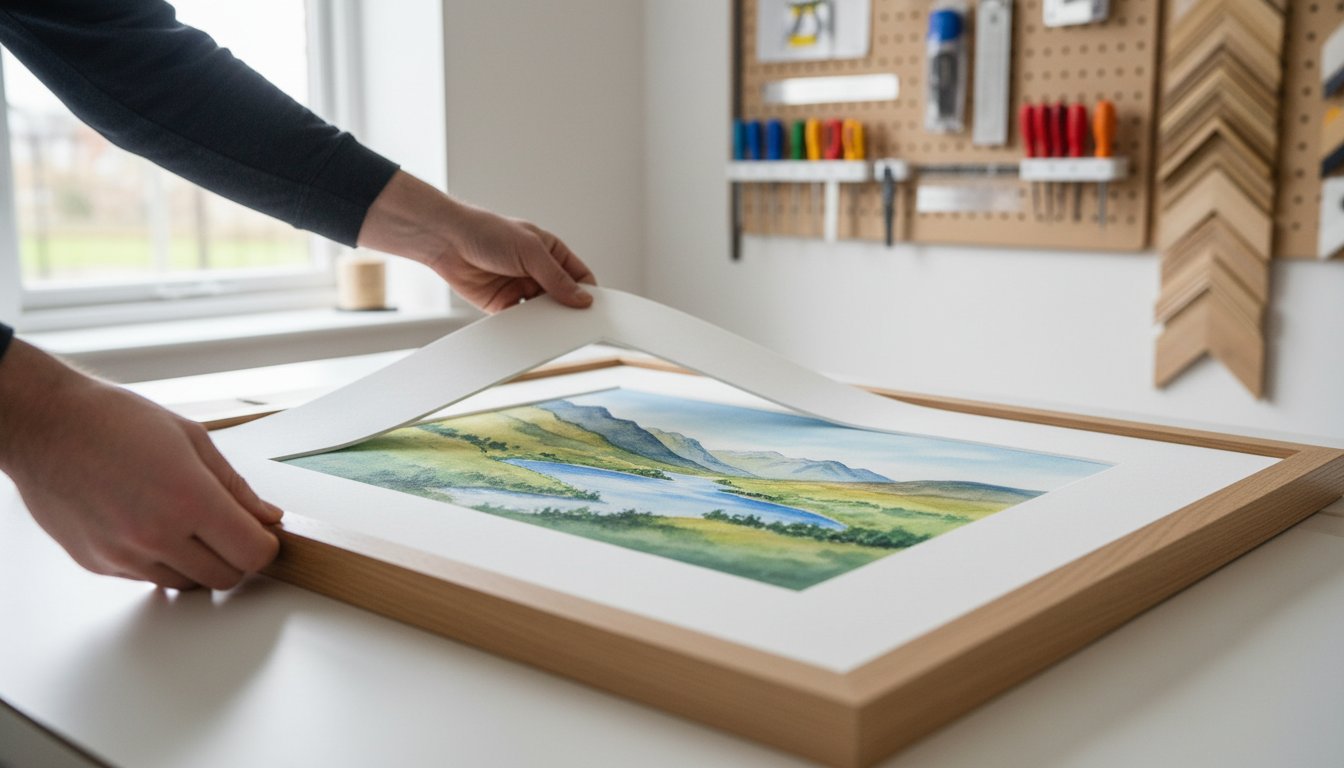
That beautiful print you’ve just bought, the family photograph you cherish, or the original artwork you invested in – they all deserve to be protected for a lifetime. But have you ever worried that over time, the vibrant colours might fade or the paper could turn a brittle yellow? It’s a common fear, especially when faced with confusing terms like ‘acid-free’ or ‘UV-filtering’. The secret to true, lasting preservation lies in understanding the immense value of professional archival framing materials. They are the essential guardians that stand between your treasured piece and the damaging effects of time.
This guide is here to give you complete confidence in protecting your art. We are passionate about craftsmanship, and we want to empower you to make the best choices. We’ll explain exactly what archival-grade components are, why they are a crucial investment for safeguarding both the sentimental and monetary value of your art, and how to discuss them knowledgeably with a professional framer. Consider this your journey to becoming an expert in preserving your own beautiful collection, ensuring each piece remains a spectacular centrepiece for generations to enjoy.
What is Archival Framing? Beyond Just a Pretty Border
Think of archival framing not just as a border for your art, but as a bespoke time capsule. Its purpose is to create a stable, protective environment that preserves your treasured piece in its original condition for generations. While an off-the-shelf frame might look the part, it often contains materials that can actively harm your artwork over time. The goal of professional archival framing is to defend against the main enemies of your art: acid, UV light, and humidity.
To see the craftsmanship involved, watch this helpful video from a professional workshop:
The Hidden Danger: Understanding Acid Burn and Fading
The most common threat comes from acid found in standard wood pulp-based paper and backing boards. Over time, this acid migrates into your artwork, causing the tell-tale yellowing and brittleness known as “acid burn.” This is why using premium acid-free matting is a cornerstone of archival framing. Similarly, UV light from the sun or even indoor lighting breaks down the pigments in ink and paint, causing irreversible fading. It’s the same process that makes a newspaper left on a windowsill turn yellow and fragile in just a few days.
Conservation vs. Museum Grade: What’s the Difference?
When selecting archival framing materials, you’ll often encounter two standards. Conservation Grade is an excellent standard designed to protect your art for many decades. It’s the perfect choice for fine art prints, original works, and limited editions. Museum Grade represents the highest possible standard of preservation, reserved for priceless, historically significant, or extremely fragile pieces. For most customers seeking beautiful, long-lasting protection for their art, Conservation Grade offers premium, reliable preservation you can trust.
The Anatomy of a Conservation Frame: A Layer-by-Layer Guide
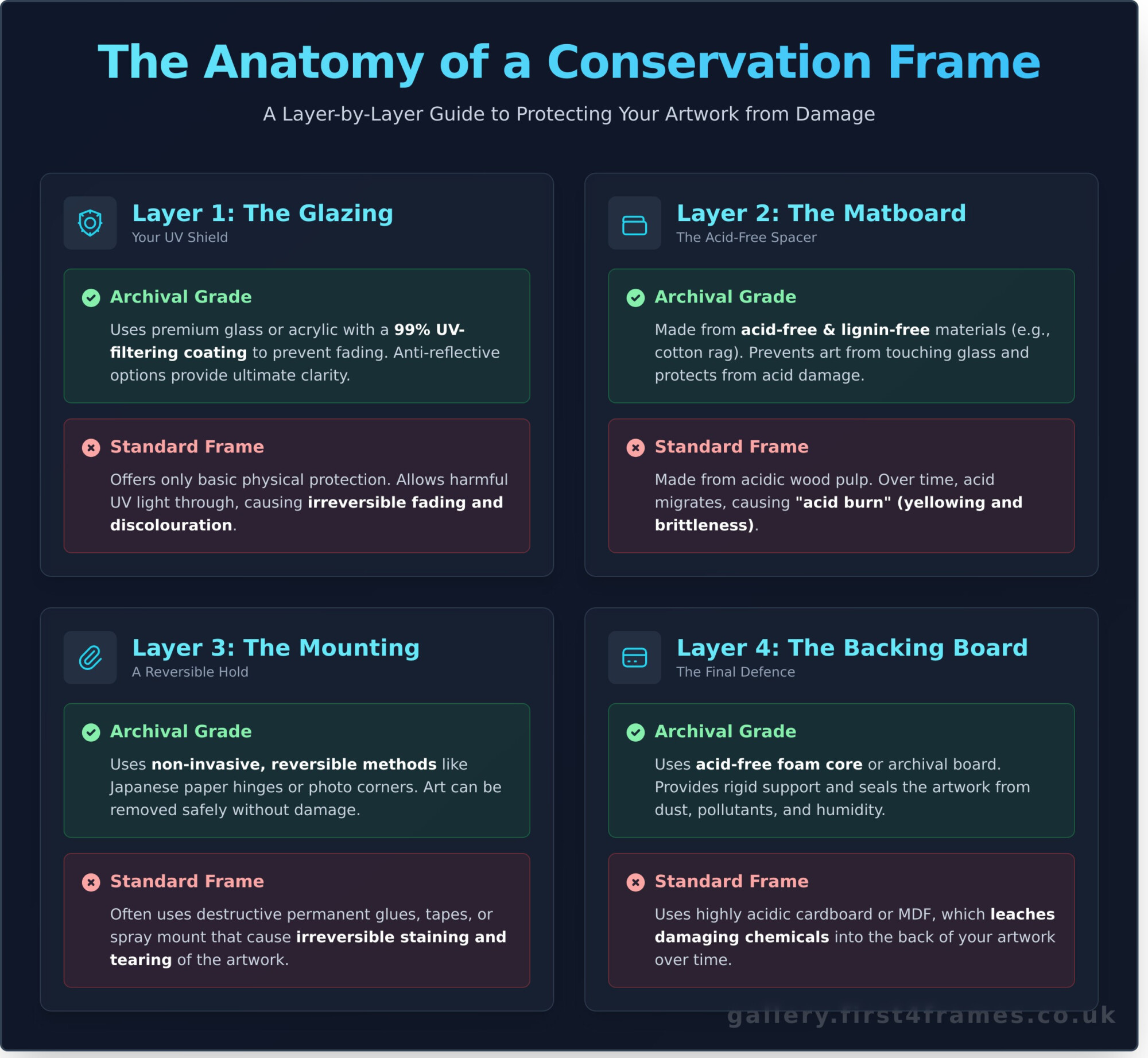
Think of a conservation frame as a bespoke, protective house built around your artwork. Every single component, from the window to the walls, must work together to shield it from environmental harm. To achieve true longevity, all the archival framing materials used in this ‘house’ must be of the highest quality, ensuring nothing acidic or damaging ever comes into contact with your piece.
This diagram shows an ‘exploded view’ of how these essential layers come together to create a safe and beautiful home for your art.
Layer 1: The Glazing (Your UV Shield)
While standard glass offers basic physical protection, conservation-grade glazing is the true shield. We use premium acrylic or glass with a 99% UV-filtering coating, which acts like a powerful sunscreen to prevent fading and discolouration caused by harmful light. For ultimate clarity, anti-reflective options are available, making it feel like there’s almost nothing between you and the art.
Layer 2: The Matboard (The Acid-Free Spacer)
The matboard is more than just a decorative border; it’s a crucial spacer that prevents the artwork from touching the glazing, where condensation could cause damage. A standard mat is made from wood pulp containing acid and lignin, which will yellow and ‘burn’ your art over time. For true preservation, you need an acid-free and lignin-free matboard, often made from alpha-cellulose or, for the highest museum-quality standard, 100% cotton rag. Following the Library of Congress Preservation Guidelines is key to selecting materials that guarantee your art’s safety.
Layer 3: The Mounting (A Reversible Hold)
How the art is held in place is critical. The golden rule is reversibility-the artwork should be removable from its mount without any damage. Destructive methods like permanent glues, tapes, or spray mount will cause irreversible staining and tearing. We use trusted, non-invasive techniques like Japanese paper hinges with wheat starch paste, which create a strong but fully reversible bond. For photographs, archival photo corners are another excellent, completely safe option.
Layer 4: The Backing Board (The Final Defence)
The final layer of defence is the backing board. It provides structural support and seals the frame package, protecting the artwork from dust, pollutants, and humidity from the rear. Standard cardboard or MDF is highly acidic and will leach damaging chemicals into your artwork. We only use premium, rigid archival framing materials like acid-free foam core or archival corrugated board to provide a stable and chemically inert final barrier for your piece.
When to Choose Archival Framing: A Practical Decision Guide
At First 4 Frames, we are passionate about beautiful, lasting presentation. However, we also believe in a practical approach. While we champion the highest standards of preservation, the truth is that not every single item requires full, museum-level archival framing. The decision is a personal one, resting on two simple but powerful factors: monetary value and sentimental value. Think of it not as an expense, but as a wise investment in the future of your most cherished items.
To help you decide on the right level of protection, we’ve created this straightforward guide.
Essential for High-Value & Irreplaceable Items
For certain pieces, using professional archival framing materials is non-negotiable. These are items where degradation doesn’t just mean fading, but a tangible loss of financial or historical value. If your item falls into one of these categories, conservation-grade framing is the only way to safeguard its integrity and worth for the future.
- Original Artwork: Paintings, drawings, and delicate watercolours that can be irreversibly damaged by acidic materials and UV light.
- Limited Edition Prints & Fine Art Photography: These pieces hold their value based on their pristine condition and limited availability.
- Historical Documents & Heirlooms: Antique letters, maps, and family documents that are, by their very nature, completely irreplaceable.
A Smart Investment for Sentimental Pieces
What is the value of a memory? Some of the most precious items we frame have little monetary worth but are emotionally priceless. For these, archival framing is an act of love-a commitment to preserving a moment, a memory, or a milestone for you and for generations to come.
- Important Family Photos: The wedding portrait or the first photo of a newborn that you want to pass down the family line.
- Children’s Artwork: That first perfect stick-figure family portrait you want to keep vibrant and protected forever.
- Diplomas, Certificates & Awards: Celebrate your proudest achievements and protect them from fading and discolouration over time.
When Standard Framing Might Be Sufficient
There are times when a simple, standard frame is the perfect choice. If a piece is temporary, easily replaceable, or part of a frequently changing display, a standard frame offers a cost-effective and attractive solution without the long-term preservation features you don’t need.
- Inexpensive, mass-produced posters or decorative prints.
- Temporary displays for a party, event, or season.
- Artwork in a child’s room that you expect to update every few years.
Every piece of art has its own story. If you have a special item and are unsure of the best way to protect and display it, we’re here to help. Ask our experts for framing advice.
A Framer’s Checklist: How to Ensure You’re Getting True Archival Quality
Stepping into a framer’s workshop should feel like a creative partnership. You are entrusting them with something precious, and a true craftsman will always be happy to discuss their process and the quality of their materials. Asking informed questions isn’t being difficult; it’s being a diligent custodian of your art. This checklist is designed to give you the confidence to discuss the specifics of archival framing materials and ensure your piece receives the beautiful, lasting protection it deserves.
Key Questions to Ask Your Framer
A professional framer will welcome your interest in their craft. To start the conversation, here are a few straightforward questions that reveal a great deal about a framer’s commitment to conservation standards:
- Are your matboards and backing boards acid-free and lignin-free? The correct answer is a simple “yes.” Both acid and lignin break down over time, releasing chemicals that cause yellowing and embrittlement of your artwork.
- What percentage of UV protection does your conservation glass or acrylic offer? Look for a figure of 97% or higher. Standard glass offers minimal protection from the fading effects of ultraviolet light.
- What method will you use to mount my artwork? The preferred archival method uses hinges or photo corners made from Japanese paper and reversible wheat starch paste, allowing the art to be safely removed later.
- Can you confirm that all tapes and adhesives used are fully archival? Standard tapes will stain and damage artwork over time. Only specialised, pH-neutral tapes should come anywhere near your piece.
Red Flags to Watch For
Just as important as the right answers are the warning signs that a framer might be cutting corners. Be cautious if you encounter any of the following:
- Vague answers or dismissal of your questions. A passionate professional will be eager to explain why they use specific materials. Evasiveness is a major red flag.
- Recommending dry mounting for original art. While suitable for posters, dry mounting is a permanent, heat-based adhesive process that can destroy the value of original art, limited edition prints, and photographs.
- A lack of glazing options. If a framer only offers standard glass and doesn’t stock or discuss conservation-grade UV-protective options, they are not prioritising preservation.
- Using the term ‘acid-neutral’ instead of ‘acid-free’. ‘Acid-neutral’ boards are often treated with chemicals to neutralise their inherent acidity, but this protection can break down. True ‘acid-free’ materials are made from pure, stable fibres like cotton from the start.
Your artwork is an investment of emotion and value. Ensuring it is framed with the correct techniques and premium archival framing materials is the final, crucial step in its journey. For inspiration and to see examples of bespoke, conservation-quality framing, we invite you to explore our online gallery.
Protect Your Passion: The Final Word on Archival Framing
Choosing a frame is about so much more than matching your décor; it’s a crucial decision for preserving the life and vibrancy of your cherished artwork. As we’ve explored, every component matters-from acid-free mount boards to UV-protective glazing-each one forming a shield against fading, discolouration, and environmental damage. Making an informed choice ensures your art tells its story for decades to come.
With over 20 years of professional framing experience, we are passionate about using only the highest quality, conservation-grade archival framing materials. Our team of specialists provides expert advice to help you make the perfect choice, ensuring your art remains as beautiful as the day you acquired it. We believe every piece deserves to be preserved with craftsmanship and care.
Ready to give your art the protection it deserves? Explore our bespoke framing service and protect your art with confidence. Let us help you create a lasting legacy for your most treasured pieces.
Frequently Asked Questions
Is archival framing significantly more expensive than standard framing?
While archival framing does represent a greater investment, the difference is often less than people imagine. You can typically expect to pay around 20-40% more than for a standard frame. For an average-sized piece, this might mean an additional £30-£70. Think of it not as a cost, but as insurance for your artwork. The premium materials and expert craftsmanship provide long-term protection against fading and damage, preserving the value and beauty of your piece for generations to come.
How long will my artwork be protected with archival framing?
When done correctly, archival framing is designed to protect your artwork for many decades, often a lifetime and beyond. The exact lifespan depends on environmental conditions, such as exposure to direct sunlight and humidity. However, the use of UV-protective glazing, acid-free mounts, and proper sealing techniques creates a stable micro-environment for the art. This robust defence significantly slows the ageing process and prevents the kind of damage seen in standard, acidic frames.
Can I just buy archival materials and frame something myself?
You can certainly purchase the individual components, but achieving a truly archival result requires skill and precision. The process involves more than just good materials; it requires careful handling of the art and a perfect seal to keep out dust, moisture, and pollutants. For a treasured or valuable piece, we always recommend a professional framer. Their expertise ensures the entire package is assembled correctly, offering the highest level of protection and a beautiful, bespoke finish for your art.
Does the wooden frame moulding itself need to be archival?
This is an excellent question. The wooden moulding itself does not typically need to be of archival quality. The crucial element is isolating the artwork from the wood, which can contain acids. This is achieved by using high-quality, acid-free mountboard and backing boards. These act as a protective barrier, ensuring that no part of the acidic wood or its finish ever comes into direct contact with your artwork, keeping it safe and secure within its beautiful housing.
Can an old, poorly framed picture be reframed using archival materials?
Absolutely! This is one of the best things you can do to preserve a piece with sentimental or monetary value. A professional framer can carefully remove the artwork from its old, damaging housing. We can then replace the acidic mount and backing with premium archival framing materials and fit UV-protective glazing. This process not only halts any ongoing damage but gives the artwork a fresh, beautifully presented new life, ready to be enjoyed for many more years.
What is the difference between ‘conservation grade’ and ‘museum grade’ materials?
Both offer fantastic protection, but there is a key difference. ‘Conservation grade’ is the standard for most high-quality framing, using purified wood pulp that is buffered to be acid-free and pH neutral. ‘Museum grade’ represents the highest possible standard, typically made from 100% cotton rag. It is naturally acid-free and is the choice for extremely valuable or historically important works. For most fine art prints and personal treasures, conservation grade provides more than enough protection.