
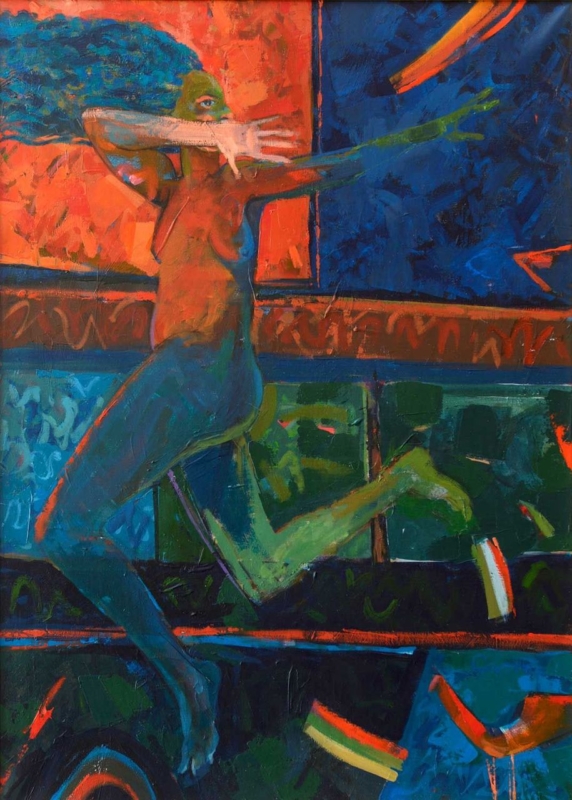
Well-placed abstract wall art can organise an open-plan room without adding a screen or changing the layout. Echo of the Unseen can mark a reading chair, dining area, or quiet end of a larger living space through colour and form. The artwork becomes a visual pause between activities.
Use abstract wall art to define one zone
Begin with function. Decide which part of the room needs identity, then centre the work on that furniture group rather than on the entire wall. This small change can make a dining table or reading chair feel intentional, even when it shares one uninterrupted space with the kitchen and sitting area.
- Choose the zone that currently feels least anchored.
- Repeat one colour from the artwork within that area only.
- Use the frame edge to give the composition a clear boundary.
- Leave enough wall around the piece to create a pause.
Echo of the Unseen has a portrait-oriented format, which can add height above a compact console or beside a lower chair. Avoid scattering several equally assertive objects around it. One lamp, textile, or ceramic note is often enough to connect the art to its zone.
First 4 Frames produces the Giclée print and bespoke frame in-house at its Falkirk workshop. Colour-managed production preserves the intended relationships between colours, while hand-finished framing helps the work create a precise edge in a visually busy room.
Read Tate’s introduction to abstract art for wider context. Then discover the work of Fred Carson or look at Echo of the Unseen itself.
As abstract wall art for open-plan living, Echo of the Unseen can create definition and breathing room without sacrificing flow.