Posted on

Standard Photo & Picture Sizes: The Complete UK Guide for Framing

That perfect holiday snapshot, the beautiful family portrait you treasure… only to have it returned from the printers with an awkward crop. Or perhaps you’re standing in a shop, baffled by the wall of frames, trying to decode the difference between a 10×8 and an A4. It’s a frustratingly common experience that can take the joy out of displaying your most precious memories. This confusion often comes down to a simple misunderstanding of standard photo picture sizes and how they relate to the shape of your original image.

At First 4 Frames, we believe that bringing your memories to life should be a joyful and straightforward process. That’s why we’ve created this complete UK guide. We’re here to demystify the numbers, explain the jargon, and give you the confidence to choose the perfect print and frame combination every time. You’ll learn how to avoid blurry results, match a photo to the right frame and mount for a professional finish, and turn your digital images into beautiful, perfectly presented works of art for your home. Say goodbye to wasted money and hello to flawlessly framed memories.

Understanding the Basics: Why Standard Sizes Exist

Have you ever printed a beautiful photograph, only to find it doesn’t quite fit the frame you bought? It’s a common frustration. This confusion often stems from the transition from traditional film to digital photography. Understanding why standard photo picture sizes were created, and how they relate to modern cameras, is the first step towards perfectly framing your cherished memories.

To help visualise these core concepts, the short video below offers a clear and practical explanation:

What is Aspect Ratio? (A Simple Guide)

Simply put, aspect ratio is the proportional shape of your image—the relationship between its width and height. Think of the difference between a wide, rectangular cinema screen (often 16:9) and a more traditional, squarer television screen (4:3). The shape is different, even if the size varies. For decades, 35mm film cameras used a 3:2 aspect ratio, which is why the classic 6×4 inch print became so popular. This legacy established many of the standard photographic print sizes we still use today. However, most modern smartphones and digital cameras capture images in a 4:3 ratio. This mismatch is why printing a phone picture as a 6×4 print often results in unwanted cropping, cutting off parts of your original shot.

Resolution Explained: Pixels and Print Quality

Resolution refers to the amount of detail packed into your photo, measured in pixels. A high-resolution image has millions of pixels, creating a sharp and clear picture. When it comes to printing, the most important metric is DPI (Dots Per Inch). For a premium, fine art quality print that looks crisp and professional, the industry standard is 300 DPI. A low-resolution image, like one saved from social media, might look fine on your screen but will appear blurry or “pixelated” when printed large. Always use the original, highest-quality file for printing to ensure your final framed piece looks spectacular, no matter which of the standard photo picture sizes you choose.

A Guide to Common Photo Print Sizes (Imperial Measurements)

Even in a metric world, when it comes to printing cherished memories, the UK still relies heavily on traditional imperial measurements. These are the standard photo picture sizes you’ll encounter most often, from online printing services to high street photo labs. Understanding these dimensions is the crucial first step to finding the perfect frame that will truly honour your image. Let’s explore the most popular options to help you on your journey.

Small & Standard Prints: 6×4″ and 7×5″

These are the foundational sizes for everyday photography, perfect for capturing and sharing life’s fleeting moments.

  • 6×4 inches (152 x 102mm): This is the undisputed champion of photo printing. The classic 6×4″ print is perfectly proportioned for filling photo albums and is the most cost-effective option for printing holiday snaps and family pictures in bulk. Its universal appeal makes it a household staple.
  • Framing Tip: To give a 6×4″ print a more premium, gallery-style feel, place it within a larger 8×6″ or A5 frame using a professional mount. The surrounding space draws the eye inward, making your photograph the true star of the show.
  • 7×5 inches (178 x 127mm): As a popular step-up, the 7×5″ print offers a little more presence. This extra space makes it ideal for small group shots or portraits where detail is important. It’s a beautiful size for freestanding desk or mantelpiece frames.
  • Framing Tip: A 7×5″ photo looks spectacular when housed in a 10×8″ frame with a mount. This classic combination provides a perfectly balanced border that adds a touch of elegance and importance to the image.

Medium & Large Prints: 8×6″, 10×8″, and 12×8″

When you have a photograph you truly love, these larger formats provide the impact it deserves, transforming a simple picture into a piece of personal art.

  • 8×6 inches (203 x 152mm): A wonderfully versatile size, an 8×6″ print is substantial enough for a wall display yet compact enough not to overwhelm a desk or shelf.
  • 10×8 inches (254 x 203mm): This is the go-to size for professional portraits and fine art prints. It commands attention without dominating a room and is a popular choice for creating a feature on a gallery wall.
  • 12×8 inches (305 x 203mm): This format maintains the classic 3:2 aspect ratio of most digital cameras, meaning your photo often won’t need cropping. This makes it perfect for preserving the full composition of beautiful landscapes and dynamic group photos.

Framing Tip: These impactful sizes are beautiful enough to be framed ‘full bleed’ (without a mount) for a bold, modern look. However, adding a mount will always provide a more traditional, professional finish, creating a visual bridge between the artwork and your décor. The choice depends entirely on your personal style and the statement you wish to make with your art. Understanding these common standard photo picture sizes is the key to confident framing.

Understanding Standard Paper Sizes (The ‘A’ Series)

While many of us are familiar with the dimensions of traditional photo prints, the world of art prints, posters, and official documents operates on a different system: the ‘A’ series. This international standard, used throughout the UK, is a beautifully logical system where each size is precisely half of the one before it. It starts with A0, and as the number increases, the paper size decreases—A1 is half of A0, A2 is half of A1, and so on.

It’s important to note that the ‘A’ series has a different aspect ratio (1:√2) compared to most digital camera sensors. This is a key reason why it’s treated differently from the standard photo picture sizes we discussed earlier. For home décor, the most popular and versatile sizes are typically A2, A3, A4, and A5.

A5, A4, and A3: The Most Common Choices

When curating art for your home, these three sizes offer exceptional flexibility and are perfect for creating stunning visual displays.

  • A5 (148 x 210mm): A charming and discreet size, ideal for small art prints, illustrated postcards, or for grouping together as part of a larger, eclectic gallery wall.
  • A4 (210 x 297mm): Instantly recognisable as the UK’s standard letter size, A4 is incredibly versatile. It’s the perfect canvas for everything from professional certificates to beautiful fine art prints that add a touch of sophistication to any space.
  • A3 (297 x 420mm): Double the size of A4, an A3 print makes a confident statement. It’s a popular choice for eye-catching posters and standalone art pieces that can serve as a room’s focal point.

These sizes provide a wonderful foundation for building a personal art collection that truly reflects your style. Browse our collection of fine art prints available in A-sizes.

Framing ‘A’ Size Prints

One of the great advantages of ‘A’ sizes is that corresponding off-the-shelf frames are widely available. However, to truly elevate your artwork, consider using a mount. Placing an A4 print inside a larger A3 frame with a window mount, for example, creates a professional, gallery-quality finish. This negative space draws the viewer’s eye directly to the artwork, giving it room to breathe and enhancing its visual impact.

A generous, crisp white mount acts as a perfect bridge between the art and the frame, adding depth and a touch of luxury. While standard frames are convenient, a professionally crafted bespoke frame ensures a flawless fit and allows you to perfectly match the frame’s style and colour to both the artwork and your interior décor.

From Print to Wall: How to Choose the Right Frame and Mount

You’ve chosen the perfect print, and now it’s time to display it. The most common mistake we see is buying a frame that’s the exact same size as the picture. An 8×10″ print in an 8×10″ frame feels cramped, with the artwork pressed right against the edge. To give your image the professional, gallery-quality finish it deserves, you need to introduce a crucial component: the picture mount.

Think of the mount as the bridge between your art and your decor. It provides visual breathing space and performs a vital protective role. The formula is simple:

Print Size + Mount Border = Frame Size

The Role of the Picture Mount

A picture mount, also known as a passe-partout, serves two essential functions. Visually, it creates a clean, neutral border that draws the viewer’s eye inward towards the artwork, preventing it from getting lost in the frame. Functionally, it creates a small air gap that stops the print from touching the glass. This is critical for long-term preservation, protecting your photograph or art from moisture, condensation, and the risk of sticking to the glazing over time.

Classic off-white or cream mounts are timeless choices, but you can also select a complementary colour to accentuate a specific tone in your picture. A standard mount border is typically between 2 and 3 inches, providing a balanced and elegant look.

Matching Print, Mount, and Frame: A Worked Example

Let’s put this into practice with one of the most popular standard photo picture sizes. Imagine you have a 10×8″ print.

  • Your Print Size: 10″ (height) x 8″ (width).
  • Your Desired Mount: A 2-inch border all the way around.
  • The Calculation: You add the mount border to each side. The final aperture (opening) size will be 14″ (10 + 2 + 2) by 12″ (8 + 2 + 2).
  • Your Frame Size: You now need a 14×12″ frame.

This simple calculation ensures your print is beautifully centred and professionally presented.

Off-the-Shelf vs. Bespoke Frames

Ready-made frames are a convenient option if your print and desired mount combination matches a common size. However, their selection of materials, styles, and dimensions is often limited. What happens when you have a panoramic photo, an oddly-sized print, or a specific vision for the final look?

This is where bespoke framing offers unparalleled freedom. With a custom-made frame, you are not limited by standard dimensions. You can choose the precise size, material, and finish to create a truly perfect match for your artwork and your home. It’s the ultimate way to ensure your cherished memories are presented with the premium craftsmanship they deserve. Let our experts create the perfect bespoke frame for your art.

Bringing Your Memories to Life: The Perfect Frame Awaits

Understanding the world of standard photo picture sizes is the first step to beautifully displaying your favourite moments. From classic imperial prints to versatile ‘A’ series paper, knowing your options empowers you to make a great choice. Remember that a well-chosen mount and frame do more than just protect your picture; they elevate it into a piece of art that complements your space perfectly.

Every picture tells a story, and every story deserves a beautiful frame. With over 20 years of professional framing experience, we combine expert craftsmanship with high-quality, conservation-grade materials to ensure your memories are preserved for a lifetime. With a huge selection of frame styles and mounts to choose from, we make the process simple and enjoyable.

Have a picture you love? Discover our bespoke framing service and let us help you create the perfect finishing touch for your cherished artwork.

Frequently Asked Questions

What is the most popular photo size in the UK?

The most popular and widely recognised photo size in the UK is 6×4 inches (15x10cm). This classic format is the standard for photo albums and for printing everyday snapshots. It offers a fantastic balance of detail and convenience. Another very common choice is 7×5 inches, which provides a slightly larger canvas for your cherished memories, making it a perfect size for freestanding frames on a desk or mantelpiece.

Should my frame be bigger than my picture?

Yes, your frame should be larger than your picture if you wish to include a mount. A mount (the card border between the picture and the frame) provides breathing space, drawing the viewer’s eye towards the artwork and preventing the image from touching the glass. It acts as a beautiful bridge between your art and the frame. If you prefer a full-bleed look without a mount, then the internal size of the frame should match your picture size exactly.

How do I know if my photo is high enough resolution to print large?

For premium, sharp prints, you should aim for a resolution of 300 Dots Per Inch (DPI). To check, find the pixel dimensions of your image file. For example, to print a high-quality 10×8 inch photo, your image should be at least 3000 x 2400 pixels (10 inches x 300 DPI and 8 inches x 300 DPI). Enlarging a small, low-resolution image will result in a blurry or pixelated print, so it’s always best to start with the highest quality file possible.

Is A4 the same as 12×8 inches?

While they are very similar in size, an A4 sheet is not the same as a 12×8 inch print. A4 paper measures 29.7 x 21 cm, which is approximately 11.7 x 8.3 inches. A 12×8 inch print is slightly longer and narrower. This small difference is crucial when buying a ready-made frame, as an A4 print will not fit perfectly in a 12×8 frame. This highlights the importance of knowing your exact dimensions when choosing from standard photo picture sizes.

Can you frame a picture that is not a standard size?

Absolutely! Many beautiful pieces of art, limited edition prints, or creatively cropped photographs don’t conform to standard photo picture sizes. This is where bespoke framing provides the perfect solution. A custom-made frame is crafted to the exact dimensions of your artwork, ensuring a flawless and professional finish that protects and enhances your unique picture. It’s the ideal way to give any piece the presentation it deserves.

What is the difference between a picture frame and a photo frame?

The terms are often used interchangeably, but there can be a subtle distinction. “Photo frames” typically refer to ready-made frames in common sizes like 6×4 or 7×5 inches, often designed with a backing stand for display on a table or shelf. “Picture frames” is a broader term that includes these, but also encompasses larger, custom-made, and more ornate frames intended for wall-hanging prints, original art, and posters, showcasing a higher level of craftsmanship.

Posted on

Custom Picture Framing UK: A Complete Guide to Bespoke Frames

A person wearing an apron uses a clamp on a wooden picture frame in a workshop, with shelves of frames, tools, and wood shavings visible in the background.

Have you ever held a piece of art, a cherished photograph, or a treasured print and felt that a standard, off-the-shelf frame simply wouldn’t do it justice? The world of bespoke framing can seem daunting—a confusing maze of mounts, glazing, and mouldings that feels both complicated and expensive. But the perfect frame does more than just protect your artwork; it’s the bridge between the piece and your home, enhancing its beauty and preserving its story for a lifetime.

Navigating the options for custom picture framing UK-wide doesn’t have to be overwhelming. This complete guide is your friendly, expert companion, created to give you confidence in the process. We’ll explore everything from premium materials and timeless styles to the professional craftsmanship that goes into every bespoke piece. Prepare to embark on a journey of artistic discovery and learn how to choose a spectacular frame that not only complements your art but turns it into a true centrepiece for years to come.

Why Choose Custom Framing Over Standard Off-the-Shelf Frames?

When you’ve found a piece of art you love, the frame should be more than just a border—it should be a bridge between the artwork and your space. While an off-the-shelf frame offers a quick solution, a bespoke frame is an investment in craftsmanship, preservation, and perfect presentation. It’s the difference between a standard suit and a tailored one; one fits, but the other is made exclusively for you, enhancing the value and beauty of what it holds.

To see the passion and precision that goes into bespoke framing, take a look at this short video:

The Perfect Fit: Beyond Standard Sizes

Art rarely conforms to standard A4 or A3 dimensions. A treasured family photograph, a vintage poster, or an original canvas all have unique sizes. Forcing them into a pre-made frame can lead to unsightly gaps or, worse, cropping and damaging the piece over time. A bespoke frame is crafted to the millimetre, ensuring the artwork sits perfectly within its mount and frame, creating a seamless and professional finish that feels intentional and harmonious.

Preservation and Protection for Your Artwork

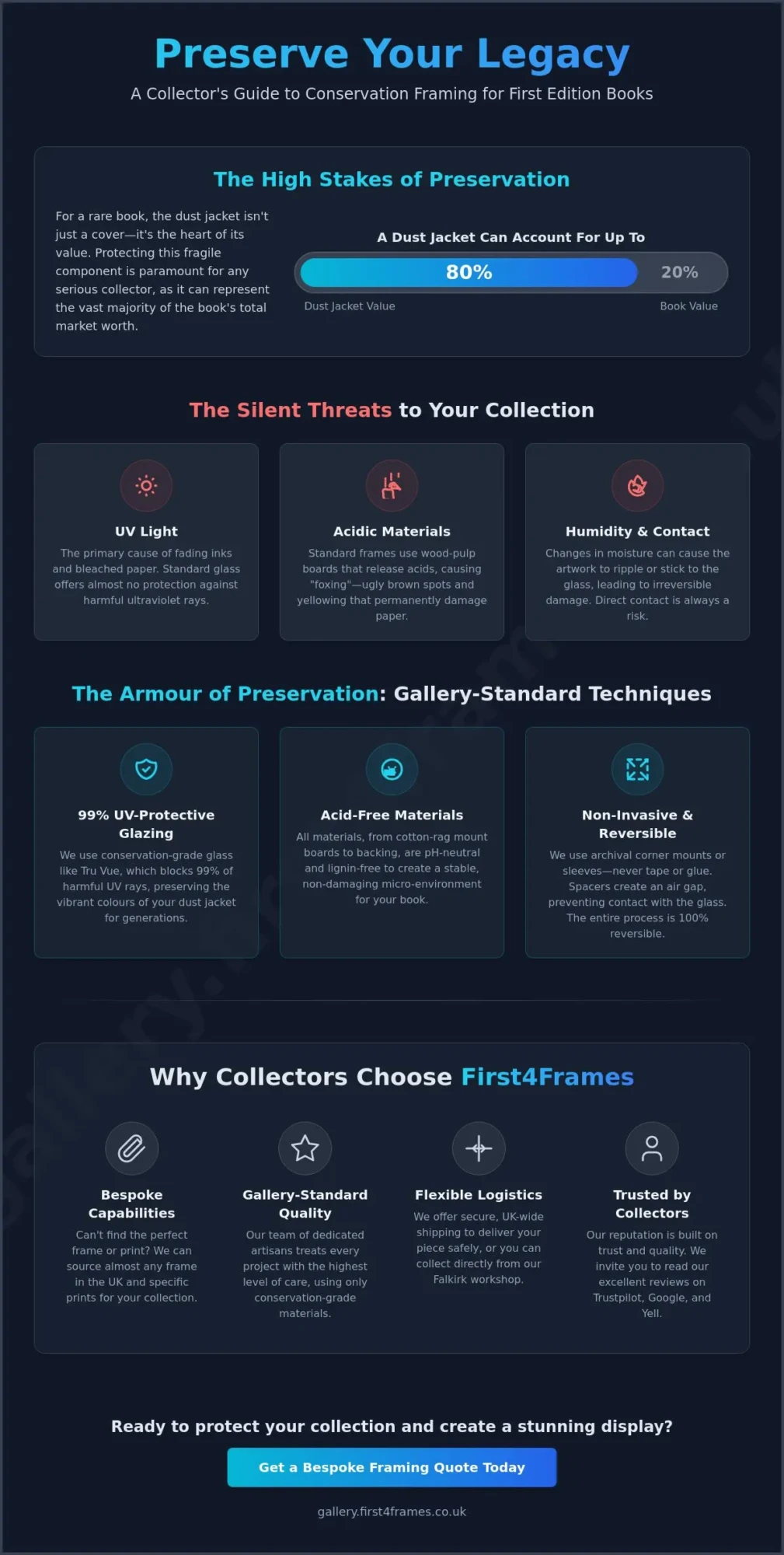
A beautiful frame does more than just look good; it acts as a guardian for your art. Our professional custom picture framing uk service uses conservation-grade materials to protect your piece from long-term damage. This includes acid-free mount boards to prevent yellowing, UV-protective glazing to stop colours from fading, and sealed backing to shield against dust and moisture. Understanding the different picture frame components is key to appreciating how each element contributes to longevity, unlike the acidic materials in cheap frames that can cause irreversible damage.

Unmatched Choice and Personalisation

Walk into any high-street shop and your choices are often limited to a few standard colours and styles. Custom framing opens up a world of creative possibilities. You can choose from hundreds of premium mouldings—from ornate and traditional to sleek and modern—in a spectrum of colours and finishes. A professional framer acts as your creative partner, guiding you to select the perfect mount colour and frame style that not only enhances the artwork but also perfectly complements your home’s decor, turning your picture into a truly personal statement piece.

The Anatomy of a Custom Frame: Key Components Explained

Stepping into the world of bespoke framing can feel complex, but understanding the core components is the key to creating your perfect piece. A professionally crafted frame is more than just its border; it’s a complete system designed to protect and enhance your artwork. Let’s break down the four essential parts that make up the best custom picture framing UK services offer, giving you the knowledge to make a truly informed decision.

Moulding: The Foundation of Your Frame

The moulding is the outer framework—the part you typically think of as ‘the frame.’ Crafted from premium materials like solid oak and ash for a classic, warm feel, or sleek aluminium for a modern look, its impact is significant. The profile (its shape and width) and finish (colour, grain, or texture) work together to create the frame’s distinct personality and act as the bridge between your art and your room’s décor.

Mounts (or Matting): Giving Your Artwork Space to Breathe

A mount (often called matting) is the elegant border between the moulding and your artwork. Its primary role is to provide visual space, drawing the eye inward, and to prevent the art from touching the glass, which can cause damage over time. From a simple single mount to a layered double mount or a contemporary float mount, the options are versatile. We insist on using conservation-grade, acid-free mountboard to prevent discolouration, a standard recommended by experts like the Victoria and Albert Museum’s conservation department to preserve your art for decades.

Glazing: The Protective Shield

Glazing is the clear, protective shield for your artwork. While standard glass is a popular choice, upgrading can make a spectacular difference. Consider these professional options:

  • Anti-Reflective Glass: Minimises glare for crystal-clear viewing in bright rooms.
  • UV-Protective Glass: Filters out up to 99% of harmful ultraviolet rays to prevent fading.
  • Acrylic (Perspex): A lightweight, shatter-resistant alternative ideal for very large frames or displays in high-traffic areas.

Backing Board and Fixings: The Unseen Essentials

Often overlooked, the backing board is the frame’s structural backbone, keeping everything secure and flat. A quality backing provides a rigid foundation, and we professionally seal the back of every frame to create a barrier against dust, moisture, and insects. Finally, sturdy, professional-grade hanging hardware is attached, ensuring your beautifully framed piece is ready to hang securely and will remain a cherished feature on your wall for years to come.

How to Choose the Right Frame Style for Your Art & Home

Choosing a bespoke frame is an art in itself. The perfect frame doesn’t just protect your piece; it enhances its beauty and seamlessly integrates it into your home. Think of the frame as the final, crucial brushstroke. To make the right choice with confidence, we recommend focusing on three key elements: the artwork, your room’s decor, and the frame material.

Let the Artwork Be Your Guide

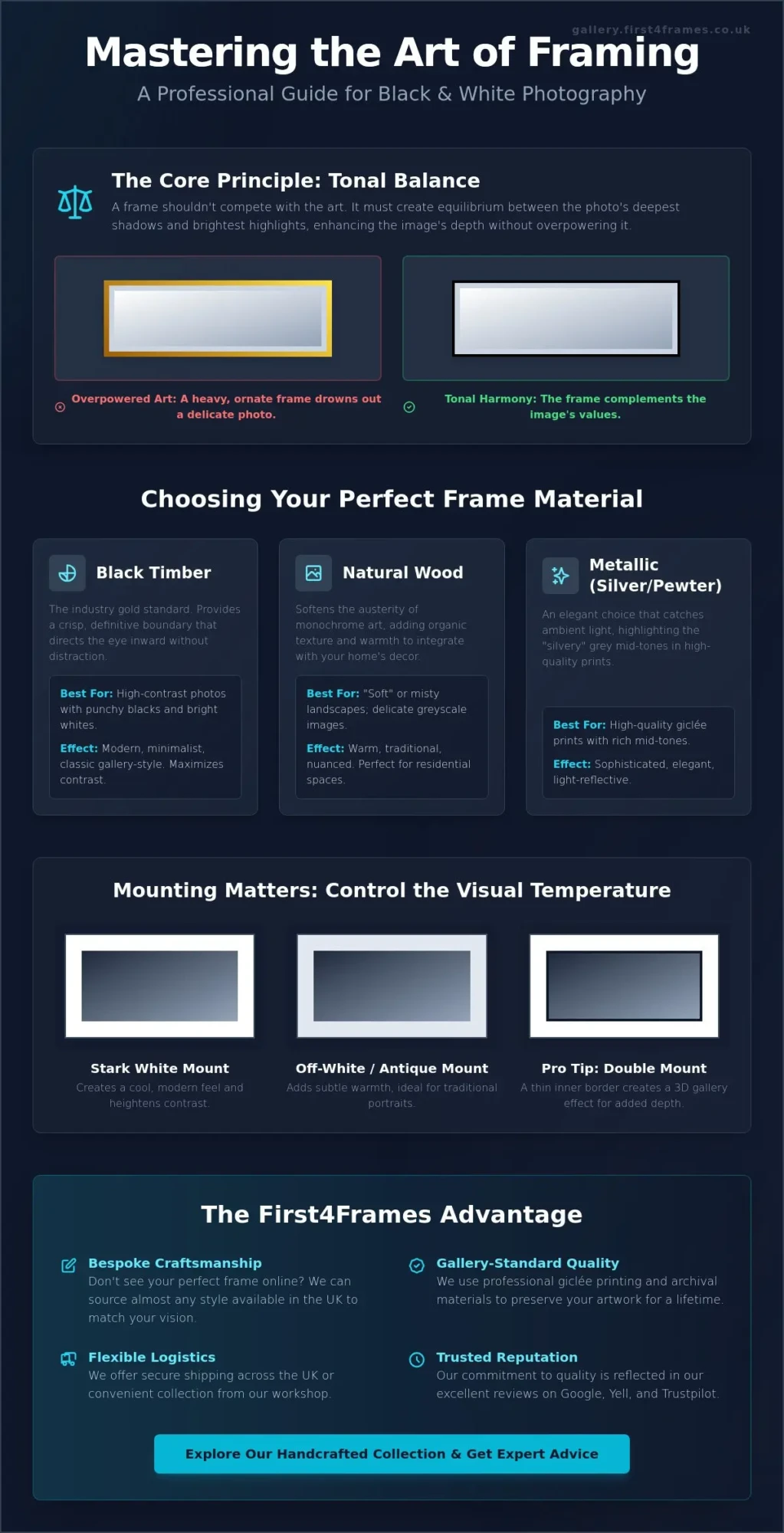
The most important rule is that the frame should serve the art, not overpower it. Your goal is to draw the eye inward. A piece with a strong, historical feel, like a classical oil painting, often looks spectacular in an ornate, gilded frame that matches its era. In contrast, a modern, abstract print or a sharp black-and-white photograph truly shines in a simple, slimline frame. For a beautifully cohesive look, consider pulling a subtle, secondary colour from the artwork to use for your mount board.

Coordinating with Your Interior Design

A great frame acts as a bridge, connecting the world within the picture to the room it inhabits. Consider your home’s existing style:

  • Minimalist Decor: Opt for clean lines. Thin black, white, or natural wood frames maintain a crisp, uncluttered aesthetic.
  • Traditional Homes: Look for frames with classic details and rich wood tones like oak or walnut that complement your furniture.
  • Eclectic Spaces: Don’t be afraid to mix and match! A collection of different frames can look stunning, especially if you create unity through a consistent mount colour or theme.

The expertise behind professional custom picture framing UK wide ensures you can find a style that perfectly ties your art and decor together.

Material Matters: Wood, Metal, and Finishes

The material of your frame sets the emotional tone. Natural wood frames, with their unique grain, bring a sense of warmth and organic texture to a room, making them ideal for family portraits and landscape paintings. Sleek metal frames in aluminium or steel offer a contemporary, industrial edge that works beautifully with modern prints and photography. Finishes add another layer of personality—a painted finish can introduce a playful pop of colour, while a hand-applied gold or silver leaf finish lends an air of timeless luxury.

Feeling inspired to find the perfect match? Browse our gallery for inspiration!

The Bespoke Framing Process: What to Expect Step-by-Step

Embarking on a custom framing journey can feel daunting, but it’s actually a simple and deeply rewarding creative partnership. We’ve refined our process to be clear, collaborative, and enjoyable from start to finish. Think of us as your expert guide, here to translate your vision into a beautifully finished piece. Here’s a look at the simple steps we’ll take together.

Step 1: Consultation and Design

Your journey begins when you bring your artwork to our workshop. This is more than just a drop-off; it’s a creative consultation. We’ll discuss your piece, the story behind it, the style of the room where it will hang, and your budget. Our experts will then guide you through a curated selection of mouldings, mount boards, and glazing options, offering professional advice to find the perfect combination that makes your art sing.

Step 2: Precise Measurement and Quoting

A flawless finish depends on absolute precision. Our framers will take meticulous measurements of your artwork to ensure every component is perfectly sized. Once we have finalised the design with you, we provide a clear, itemised quote in GBP (£). There are no hidden costs—just a straightforward price for the premium materials and craftsmanship your art deserves. If you’re planning ahead, you can learn more by reading our guide on how to measure your art for a custom frame.

Step 3: Craftsmanship in the Workshop

This is where the magic happens. Your chosen materials are taken into our workshop, where skilled artisans get to work. Each moulding is cut with precision, the corners are expertly joined, and every element is assembled by hand. This attention to detail and dedication to traditional techniques is what sets professional custom picture framing in the UK apart from mass-produced alternatives, ensuring a result that is both beautiful and built to last.

Step 4: Final Assembly and Collection

In the final stage, your artwork is carefully fitted into its new frame. We secure it with the chosen glazing and a protective backing board, sealing it from dust and environmental changes. A final, rigorous quality check ensures every detail is perfect. When you arrive for collection, your piece will be complete with all necessary fittings, polished, and ready to hang on your wall the moment you get home.

Ready to see what’s possible for your artwork? Find inspiration by exploring our online gallery.

Why Trust First4Frames with Your Bespoke Framing in the UK?

Choosing the right partner for your custom picture framing uk is about more than just finding a supplier; it’s about finding a passionate artisan who understands the value of your piece. At First4Frames, we combine decades of expertise with a genuine love for art to provide a service that is both professional and personal. We believe a beautiful frame is the final, crucial step in celebrating your artwork, and our mission is to make that process a joy from start to finish. Our reputation is built on three core principles: unparalleled expertise, exceptional quality, and dedicated customer service.

Over 20 Years of Passion and Expertise

Based in Falkirk, our team has been serving Scotland and the wider UK for over two decades. But we’re not just framers; we are artists, photographers, and art lovers ourselves. This deep-rooted passion informs every decision we make, from helping you select the perfect moulding to ensuring the final piece is flawlessly finished. We understand the story behind your art because we live and breathe creativity every day.

A Commitment to Quality Materials

A bespoke frame should protect and preserve your art for generations. That’s why we exclusively use high-quality, conservation-grade materials, from acid-free mount boards to UV-protective glazing. For those looking to print their images, our premium Giclée printing service ensures spectacular, colour-accurate results. We build every frame with the goal of creating a timeless piece that will last a lifetime, safeguarding your memories and investments.

Your One-Stop-Shop for Art and Framing

We simplify the process of bringing beautiful art into your home. As a gallery and a framer, we offer the unique convenience of being a true one-stop-shop. You can discover a new favourite piece from our curated collection and have it professionally framed all under one roof. Of course, we also pour the same care and attention into framing your own cherished items. Ready to create something special? Get in touch for a free, no-obligation framing consultation.

Your Masterpiece Deserves a Masterpiece Frame

As we’ve explored, a bespoke frame is far more than a border; it’s the bridge between your art and your home, offering unparalleled protection and a perfect aesthetic match that off-the-shelf options simply cannot provide. The journey of choosing the right mount, moulding, and glazing is a creative process that honours your cherished piece and ensures it can be admired for generations to come.

When seeking the highest quality custom picture framing uk, experience truly matters. With over 20 years of professional craftsmanship, the First4Frames team are your trusted partners. Based in Falkirk, our specialists in conservation framing and Giclée prints proudly serve clients across Scotland and the UK. We are passionate about bringing your vision to life with precision and care.

Ready to give your art the spectacular finish it deserves? Start your bespoke framing journey with us today! We look forward to creating something beautiful with you.

Frequently Asked Questions About Custom Picture Framing

How much does custom picture framing cost in the UK?

The cost of custom picture framing in the UK varies depending on your specific choices. Key factors include the size of your artwork, the type of frame moulding you select, the glazing (glass) option, and whether you require a mount. As a guide, a simple, smaller frame might start from around £45, while a larger, more ornate piece with premium anti-reflective glass could cost £150 or more. We provide a clear, itemised quote for every bespoke project.

How long does bespoke framing usually take?

Our standard turnaround time for bespoke framing is typically between 7 to 10 working days. This allows our skilled artisans to give your artwork the meticulous attention it deserves, from precise cutting to final assembly. If you require your frame for a specific date, please let us know when placing your order, and we will always do our best to accommodate your schedule. The quality of our craftsmanship is always our highest priority.

Can you frame my own artwork or just prints bought from your gallery?

Absolutely! We are passionate about framing all types of art, whether it’s a fine art print from our collection or a treasured piece of your own. We regularly frame original paintings, limited edition prints, family photographs, certificates, and even three-dimensional memorabilia. Our expertise ensures that whatever you bring to us will be beautifully presented and preserved, making us your one-stop-shop for all framing needs.

What is conservation framing and do I need it?

Conservation framing is a specialist method that uses archival-quality, acid-free materials to protect your artwork from environmental damage and fading over time. This includes using UV-protective glazing, acid-free mount boards, and reversible mounting techniques. We highly recommend conservation framing for any valuable, sentimental, or original artwork to ensure it remains in pristine condition for generations to come. It is the professional standard for preserving irreplaceable pieces.

What is the largest size you can frame?

Our workshop is fully equipped to handle a wide range of sizes, from miniature pieces to large-scale statement art. We can comfortably create bespoke frames up to approximately 180cm x 120cm. For projects that exceed these dimensions or have unique requirements, we encourage you to get in touch. We love a creative challenge and can often find a tailored solution for oversized pieces, providing expert custom picture framing uk wide for even the most ambitious projects.

Do you deliver framed artwork across the UK?

Yes, we offer a secure and fully insured delivery service for our framed artwork across the entire United Kingdom. Each piece is professionally packaged with the utmost care using specialist materials to ensure it arrives at your door in perfect condition. Whether you are in London, Edinburgh, or Cardiff, you can be confident that your beautifully framed art will be transported safely and reliably, ready for you to hang and enjoy.

Posted on

Image Printing and Framing: A Complete Guide to Wall-Ready Art

Have you ever captured a perfect photo or created a piece of digital art, only to feel lost in a sea of technical terms like Giclée, DPI, and archival paper? The journey from a digital file to a beautiful piece for your wall can feel daunting, filled with confusing choices and the fear of spending money on a print that quickly fades.

We believe the process of image printing and framing should be as joyful as the creative moment itself. It’s an act of transforming a memory or a vision into a tangible, lasting treasure. This complete guide is your trusted partner, designed to demystify the entire process from pixel to print and empower you to make confident, creative decisions for your artwork.

Embark on this journey with us, and you will learn how to confidently select the perfect fine art paper, choose a bespoke frame that both protects and enhances your work, and prepare your files for spectacular, professional results. Let’s turn your favourite images into beautifully crafted, wall-ready art that you can cherish for a lifetime.

Of course, every great piece of wall art begins with a spectacular image. Whether it’s a cherished family moment, a professional portrait, or the beautiful captures from a special day, the quality of the original photograph sets the stage for the final print. For those looking to create images worthy of such a beautiful display, you can find inspiration from wedding specialists like Boutique Weddings or discover Fotoreflection, a service specializing in modern family and entrepreneurial photography.

Step 1: Choosing the Right Printing Method for Your Image

The journey from a digital file on your screen to a beautiful piece of art on your wall begins with one crucial step: printing. But not all prints are created equal. Different methods offer vastly different results in colour accuracy, detail, and longevity, and understanding these options is the key to ensuring your final piece looks exactly as you envision. The right choice at this stage sets the foundation for a spectacular finished product, especially when considering the entire process of professional image printing and framing.

To better understand how different printing methods compare, watch this helpful video:

Giclée Printing: The Gold Standard for Fine Art

At the pinnacle of printing quality is the Giclée (pronounced “zhee-clay”) method. This is a premium inkjet process that uses pigment-based inks on archival-quality paper. The result is superior colour accuracy, an incredible depth of tone, and spectacular detail that captures every nuance of the original image. Renowned for its archival quality, a Giclée print can last for generations without fading, making it the definitive choice for fine art reproductions, illustrations, and professional photography.

Standard Photo Prints (C-Type) vs. Posters

While Giclée stands in a class of its own, it’s useful to know the alternatives. Standard photo prints, often called C-Type or Chromogenic prints, use a traditional chemical process common in photo labs. They offer good results for everyday snapshots. Posters, on the other hand, are typically printed on thinner, less durable paper with lower-quality inks. Both are fine for casual use or temporary displays, but they lack the lifespan and rich colour depth required for permanent, high-quality wall art.

The Importance of Paper: Matte, Lustre, and Fine Art Papers

The paper you print on dramatically affects the final look and feel of your image. It’s not just a background; it’s an integral part of the artwork itself. Here’s a quick guide:

  • Matte Paper: Offers a non-reflective, often textured finish that is ideal for a subtle, classic, and artistic feel.
  • Lustre or Satin Paper: Provides a slight sheen that makes colours pop with vibrancy without the high glare of a full gloss finish.
  • Archival Fine Art Papers: Crucially, using archival, acid-free papers prevents the print from yellowing over time. This commitment to quality materials is essential, from the ink and paper right through to the final picture frame that will house your beautiful artwork.

Step 2: The Art of Framing: Protecting and Enhancing Your Print

A beautiful Giclée print deserves a frame that does more than just hang it on the wall. Think of a frame as the final, crucial step in the artistic process. It does the heavy lifting, protecting your print from dust, damaging UV light, and everyday accidents. More importantly, the right frame acts as the perfect bridge between the art itself and your room’s décor, creating a harmonious and spectacular display.

Anatomy of a Bespoke Frame

Understanding the components of a premium frame helps you appreciate the craftsmanship involved. A professionally made frame consists of several key layers, each with a vital role:

  • Moulding: This is the outer profile, crafted from high-quality materials like solid wood or sleek metal. It defines the frame’s character and aesthetic.
  • Glazing: The clear protective layer. While standard glass is common, we recommend UV-protective or anti-reflective options to preserve the vibrant, archival colours of your Giclée print for a lifetime.
  • Mountboard: A high-quality, acid-free border that creates a visual space between the print and the glazing, preventing direct contact and adding a sense of depth and importance to the artwork.
  • Backing Board: The final layer, providing structural support and sealing the artwork against moisture and environmental pollutants.

How to Choose a Frame Style to Match Your Art

Selecting the right style is a personal choice, but a few principles can guide you. Consider the artwork’s personality—a modern abstract print often shines in a simple, clean-lined frame, while a traditional landscape may call for a natural wood finish. Your frame should also complement your interior design. For a deeper dive into the curatorial approach, the Getty Museum’s guide to framing offers fantastic insights into matching a frame to an artwork’s history. The goal is to find a frame that enhances the image without overpowering it.

Why Professional Framing Matters More Than You Think

While DIY framing kits are available, the difference a professional touch makes is undeniable. A craftsman ensures perfect alignment, a completely dust-free seal, and the structural integrity needed for larger pieces. We use conservation-grade, acid-free materials that prevent yellowing and preserve your print for decades. This commitment to quality is what separates a temporary display from a lasting investment. When you choose a complete image printing and framing service, you’re not just buying a product; you’re investing in a perfectly finished piece of art, ready to be treasured for years to come.

From Screen to Wall: The Custom Printing and Framing Process

Transforming a digital image into a spectacular piece of wall art is a journey of precision and passion. This professional process ensures every technical detail and aesthetic choice is perfect, from the initial file check to the final assembly. By working with a specialist who combines expertise in both printing and fine art framing, you are guaranteed a seamless experience and a beautiful final product that will stand the test of time.

Preparing Your Digital File for Printing

To achieve a flawless Giclée print, the digital file must be perfect. Getting this right is the foundation of high-quality image printing and framing. Here’s what matters most:

  • Resolution & DPI: For a sharp, crisp image, your file should ideally have a resolution of 300 Dots Per Inch (DPI) at the desired print size. This prevents any unwanted blurriness or pixelation.
  • Colour Space: We work with both sRGB and Adobe RGB colour profiles to ensure the colours you see on your calibrated screen are faithfully and vibrantly reproduced on paper.
  • File Type: A high-quality JPEG is excellent for most purposes, but for maximum detail, an uncompressed TIFF file is the professional choice as it preserves all of the original image data.

The Consultation and Selection Stage

This is where your creative vision truly comes to life. You’ll select the perfect print size and choose from our range of premium fine art papers, each offering a unique texture and finish. We help you virtually pair different bespoke frame and mount combinations with your art, offering expert advice on what styles will best complement both the image and your home décor. This collaborative step ensures every detail of your piece is finalised to your satisfaction.

Craftsmanship in Action: Printing and Assembly

Once the details are confirmed, our artisans get to work. Your image is printed using calibrated, professional-grade Giclée printers for unparalleled colour accuracy and longevity. The frame, mount, and glazing are then cut to precise dimensions. Finally, the print is carefully mounted and sealed within the frame, undergoing rigorous quality checks before it is perfectly prepared to hang on your wall.

This meticulous approach is what elevates a simple picture into a cherished masterpiece. Ready to start your own journey from screen to wall? Explore our gallery of beautiful prints.

Common Mistakes to Avoid in Image Printing and Framing

Investing in a beautiful Giclée print is just the first step. The final stage—the image printing and framing—is where your art truly comes to life. However, a few common pitfalls can lead to disappointing results, turning a potential masterpiece into a missed opportunity. Avoiding these mistakes not only saves you time, money, and frustration, but also ensures your investment is well-protected and looks fantastic for years to come. Let’s explore the key technical, aesthetic, and preservation errors to watch out for.

Technical and File Preparation Errors

The quality of your print is determined by the quality of your digital file. To ensure a spectacular result, steer clear of these common mistakes:

  • Using a low-resolution image: This is the most frequent error, leading to a blurry or pixelated print. Always start with the largest, highest-quality file you have for crisp, clean lines.
  • Ignoring colour management: What you see on your screen isn’t always what you’ll get. Without proper colour profiling, your final print’s colours can appear dull or inaccurate.
  • Over-sharpening the file: Too much digital sharpening creates an unnatural, harsh look and can introduce unwanted digital artefacts, detracting from the image’s beauty.

Aesthetic and Design Misjudgements

A frame should complement the artwork, not compete with it. It acts as the perfect bridge between your art and your decor. A poor aesthetic choice can disrupt this harmony:

  • An overpowering frame: A thick, ornate frame can easily overwhelm a delicate, minimalist piece. The frame should enhance, not dominate the artwork.
  • Clashing mount colours: A mount should provide visual breathing room. Choosing a colour that clashes with the art or your room’s palette is a common misstep.
  • Ignoring scale: A tiny framed print can get lost on a large, empty wall, while an oversized piece can make a small room feel cramped.

Preservation and Material Oversights

A Giclée print is an investment designed to last a lifetime, but only if protected with the right materials. Using cheap, low-quality materials can actively damage your art over time.

  • Using acidic materials: Standard, non-archival mounts and backing boards contain acids that will cause your beautiful print to yellow and degrade over the years.
  • Opting for standard glass: Regular glass offers no protection from harmful ultraviolet (UV) light, which is the primary cause of fading.
  • Hanging in direct sunlight: Even with UV-protective glass, positioning your art in constant, direct sunlight will accelerate damage and cause colours to fade.

Navigating the world of professional image printing and framing can feel complex, but getting it right is crucial. If you want to ensure your artwork is protected and presented with bespoke craftsmanship, our experts are here to help. Get a bespoke framing quote today.

Bring Your Vision to Life: The Art of Wall-Ready Masterpieces

Transforming a digital file into a breathtaking piece of art for your wall is a journey of careful choices. As we’ve seen, the key is to pair the right printing method with the perfect frame. A premium Giclée print ensures your image has spectacular colour fidelity and longevity, while a bespoke frame does more than just protect—it enhances the artwork, creating a seamless bridge to your room’s décor.

Navigating the world of image printing and framing doesn’t have to be complex. At First 4 Frames, we bring over 20 years of professional experience to every project. As Falkirk’s one-stop-shop for art, we combine our passion for craftsmanship with premium materials to create pieces you’ll cherish. Let our expertise guide you from screen to wall, hassle-free.

Are you ready to create something beautiful? Discover our collection of fine art prints and bespoke frames and start your artistic journey with a trusted partner today.

Frequently Asked Questions

What is the difference between a Giclée print and a standard poster?

The distinction lies in quality and longevity. A Giclée print is a fine art reproduction created using premium, archival-quality pigment-based inks and acid-free paper. This process produces spectacular colour accuracy and detail that can last for over 100 years without fading. In contrast, a standard poster is typically mass-produced using lower-quality dye-based inks and thinner paper, which can lead to fading and colour shifting in just a few years.

How do I know what resolution my digital image needs to be for a good quality print?

For the best results from any image printing and framing service, your digital file should ideally be 300 DPI (dots per inch) at the final print size. For example, a file for a 10×8 inch print should be 3000×2400 pixels. While we can work with lower resolutions, 300 DPI is the professional standard for ensuring your finished artwork is sharp, clear, and rich in detail, without any pixelation or blurriness.

Can you frame my own painting or photograph, not just a print I buy from you?

Absolutely. While we are passionate about our Giclée prints, our bespoke craftsmanship extends to your personal treasures. We are a one-stop-shop for all framing needs and would be delighted to professionally frame your own paintings, photographs, or memorabilia. Our experts will help you choose the perfect mount and frame combination to protect and beautifully display your unique piece, treating it with the utmost care and respect.

What does ‘archival quality’ or ‘acid-free’ mean in printing and framing?

‘Acid-free’ means the materials, such as the paper and mountboard, have a neutral pH. This is crucial as acid can cause paper to yellow and become brittle over time, damaging the artwork. ‘Archival quality’ is a broader term indicating that all components—from the pigment inks to the mounting materials—are designed for longevity and preservation, ensuring your beautiful artwork is protected from degradation and will not fade for many decades.

How long does the custom printing and framing process typically take?

Our complete image printing and framing process is a blend of precision and passion. From the moment you place your order, we get to work crafting your piece. Typically, your bespoke framed Giclée print will be ready for dispatch within 7-10 working days. We take great pride in our speedy, hassle-free service and will keep you updated, ensuring your beautiful new artwork arrives safely and promptly at your door.

Is UV-protective glass really necessary for my framed art?

While standard glass offers some protection, UV-protective glazing is highly recommended, especially for valuable or sentimental pieces. It blocks over 99% of harmful ultraviolet rays, which are the primary cause of fading and discolouration in artwork. Investing in UV-protective glass is the best way to preserve the vibrant colours and integrity of your print for a lifetime, making it an essential choice for any art displayed in a brightly lit room.

Posted on

Picture Frames: The Ultimate Guide to Choosing, Hanging, and Displaying Art

A person holds a framed abstract landscape artwork in a bright, modern living room with a sofa, coffee table, and several framed pictures on the wall in the background.

That spectacular print you’ve just bought, or the family photograph you cherish, deserves more than to be left leaning against a wall. But stepping into the world of picture frames can often feel overwhelming. With a sea of materials, colours, and styles to choose from, how do you find the one that doesn’t just hold your art, but truly elevates it? How do you create that seamless bridge between a beautiful piece and your room’s decor, instead of creating an awkward afterthought?

Consider this your friendly, expert guide. We believe that framing is an art in itself, and our passion is to make it accessible and enjoyable for everyone. In the following sections, we will demystify the entire process. You will learn how to confidently select the perfect frame that makes your art sing, master the simple, secure techniques for hanging it at the ideal height, and find professional inspiration for creating a stunning gallery wall that tells your unique story. Let’s turn those bare walls into a beautiful, personal gallery, together.

More Than a Border: Why the Right Picture Frame is Essential

A common mistake is to see a frame as a mere afterthought—a simple border to finish the job. In reality, a thoughtfully chosen frame does the heavy lifting, acting as the crucial bridge between your artwork and your room’s decor. It protects, enhances, and completes, transforming a simple photograph or print into a spectacular, finished piece ready for display. The right choice doesn’t just surround the art; it pulls you into the picture.

To see how these elements come together, this short video offers a great overview:

Protecting Your Prized Artwork

First and foremost, a frame’s primary role is preservation. To ensure your art stands the test of time, it is vital to use conservation-grade materials. This includes:

  • Acid-free mounts: These prevent the unsightly yellowing and deterioration that can occur when art is in direct contact with acidic materials.
  • Protective glazing: High-quality glass or acrylic acts as a shield against everyday threats like dust, moisture, and, most importantly, harmful UV light that causes colours to fade.

Enhancing the Visual Impact

A well-chosen frame guides the viewer’s eye, drawing attention directly to the artwork’s focal point. The colour and texture of the frame should complement the piece, echoing its tones without overpowering them. This role has evolved significantly throughout the history of picture frames, moving from purely functional to an art form in itself. By creating a distinct boundary, the frame gives the art a sense of depth and importance, elevating its presence on your wall.

Completing Your Interior Design

The best picture frames are a seamless extension of your home’s personality. A sleek, black frame can accentuate a modern, minimalist aesthetic, while a rustic oak frame might be the perfect fit for a country-style living room. You can use frames to introduce a subtle accent colour or a new texture, such as brushed metal or natural wood grain. Using a consistent style across a gallery wall or throughout a room creates a cohesive, professionally curated look that ties your entire space together.

A Guide to Picture Frame Materials and Styles

Choosing the perfect frame is about more than just a border; it’s about creating a beautiful bridge between your artwork and your living space. The material of a frame dramatically affects its look, feel, and durability, while its style can elevate a simple print into a masterpiece. Key factors like the frame’s width (known as its profile) and its finish—from matte to high gloss—all play a vital role. Understanding the main categories of picture frames is the first step to making a choice you’ll love for years to come.

Classic and Versatile: Wood Frames

For a touch of warmth and timeless elegance, nothing compares to wood. It’s a wonderfully versatile material that brings a natural, organic feel to any room. Each type of wood offers a unique character, from the rich, pronounced grain of Oak to the subtle, lighter tones of Ash and the rustic charm of Pine. Finishes range from natural stains that celebrate the grain to a spectrum of painted colours, offering a bespoke solution for any interior palette. Wood frames are the perfect choice for traditional art, family photographs, and creating a cosy, inviting atmosphere.

Modern and Minimalist: Metal Frames

Sleek, sharp, and effortlessly contemporary, metal frames are prized for their strength and clean lines. Typically crafted from high-grade aluminium, they allow for exceptionally slim profiles that let the artwork take centre stage. This minimalist approach is perfect for modern interiors. Popular finishes include:

  • Matte Black or White for a crisp, graphic look.
  • Brushed Silver or Gold for a touch of sophisticated shimmer.
  • Polished Chrome for a high-impact, industrial feel.

Metal frames are an ideal partner for contemporary art, posters, and black and white photography, complementing minimalist and industrial décor schemes perfectly.

Statement Pieces: Ornate and Decorative Frames

When you want to create a truly dramatic focal point, an ornate frame is the answer. Styles inspired by Baroque, Rococo, or Victorian design feature intricate carvings, gilded finishes, and sweeping, decorative details. These frames are works of art in themselves, best used to enhance traditional oil paintings or to give a single, special piece pride of place. To prevent an ornate frame from overwhelming the art, select a piece with a simple composition or ensure the frame’s tones are echoed within the artwork itself, creating a harmonious and spectacular display.

How to Select the Perfect Frame for Your Art and Home

Choosing a frame is an art in itself. The goal is to find a partner for your artwork—a frame that enhances and elevates the piece without competing for attention. It’s a beautiful balance between the art, the frame, and the room it will call home. Considering the scale of the piece, the style of your decor, and the professional finish a mount can provide will transform a simple print or photo into a bespoke centrepiece. And remember, with over two decades of experience, we’re always here to offer a professional opinion.

Rule #1: Let the Artwork Guide You

Your art should always be the star of the show. The frame’s style should harmonise with the era and mood of the piece—a classic oil painting often suits an ornate, traditional frame, while modern photography shines in a minimalist design. For colour, look for a neutral tone within the artwork to pull into the frame. Finally, a mount board provides essential ‘breathing space’, creating a clean visual pause that draws the viewer’s eye directly to the image.

Rule #2: Consider Your Room’s Decor

The perfect frame acts as a bridge between your artwork and your interior. Take cues from the existing finishes in your room. Do you have warm oak furniture, brushed chrome light fittings, or a specific wall colour you want to complement? Choosing picture frames that echo these materials and tones creates a seamless, curated feel. You can either create harmony by matching styles or introduce a deliberate, stylish contrast for a bolder statement.

Rule #3: Get the Proportions Right

Scale and proportion are key to achieving a polished look. Generally, larger pieces of art can handle wider, more substantial frames that give them weight and presence on the wall. In contrast, smaller, more delicate works are often best served by thin, simple frames that don’t overwhelm them. The mount is also a powerful tool here; a wider mount can make a small piece feel more significant and important. Visualising the final result is the best way to make a confident choice. Explore our gallery for inspiration!

The Art of the Hang: How to Display Picture Frames Like a Pro

A beautifully framed picture deserves to be displayed with care. The final step, hanging your art, can feel daunting, but it’s where the magic truly happens. The most common mistake is hanging art too high, but with a few professional tips and the right tools, you can position your picture frames perfectly every time, creating a display that feels balanced and intentional.

Your Essential Toolkit

Gathering your tools beforehand makes the process smooth and simple. For most jobs, you will only need the basics:

  • Tape Measure: For accurate measurements.
  • Spirit Level: To ensure a perfectly straight finish.
  • Pencil: For marking the wall lightly.
  • Hammer: To secure your fixings.

Your wall type dictates the fixing. For solid masonry walls, a drill and rawl plug are best. For modern plasterboard walls, specialist hooks are designed to grip the board securely. Always check the weight rating on the hook’s packaging to ensure it can support your frame. For larger pieces, we always recommend using two fixing points for stability.

Understanding your wall’s condition is just as important as the right fixing. If you’re ever in doubt about the structural health of your property, particularly concerning issues like damp that could affect both walls and artwork, you can check out South Surveyors for a professional assessment.

The 57-Inch Rule: Finding the Perfect Height

Ever wonder how galleries achieve such a harmonious look? They use the 57-inch (or 145 cm) rule. This industry standard dictates that the centre of a piece of art should be positioned 57 inches from the floor, which represents the average human eye level. This creates an immediate and comfortable connection with the artwork. When hanging above furniture like a sofa or console table, simply adapt the rule by aiming for a gap of 6-8 inches between the bottom of the frame and the top of the furniture.

A Simple Step-by-Step Hanging Method

Follow these simple steps for a professional result every time:

  1. Mark Your Centre: Measure 57 inches (145 cm) from the floor and make a light pencil mark on the wall. This is the central point for your artwork.
  2. Measure Your Frame: On the back of your frame, measure the distance from the top edge down to the hanging wire or fixing point (when pulled taut).
  3. Find Your Hook Point: On the wall, measure up from your 57-inch mark by half of your frame’s total height. From that new spot, measure back down by the distance you found in step 2. This is precisely where your nail or hook goes.
  4. Hang and Level: Install your hook, hang your frame, and place your spirit level on top to make final adjustments until it’s perfectly straight.

With your beautiful picture frames now perfectly placed, you can stand back and admire the result. If you’re ready to find your next masterpiece, we invite you to explore our curated gallery.

Beyond the Single Frame: How to Arrange a Collection

A single, beautifully framed piece is a statement, but a collection of frames is a story. Arranging multiple picture frames on a wall is your chance to create a personal gallery that reflects your taste and memories. Before you pick up a hammer, save yourself time and misplaced holes by planning your layout on the floor first. The secret to a professional, polished look lies in two simple rules: build your arrangement around a larger ‘anchor’ piece and maintain consistent spacing between every frame.

The Structured Grid: A Formal Approach

For a clean, contemporary, and symmetrical display, the structured grid is a timeless choice. This approach uses identical frames, perfectly aligned to create a sense of order and calm. It is especially effective for displaying a series of related photographs or a matched set of fine art prints. To ensure perfect alignment, create paper templates for each frame and use painter’s tape to position them on the wall. This allows you to adjust the layout until it’s just right before making any permanent marks.

The Eclectic Salon Wall: A Creative Display

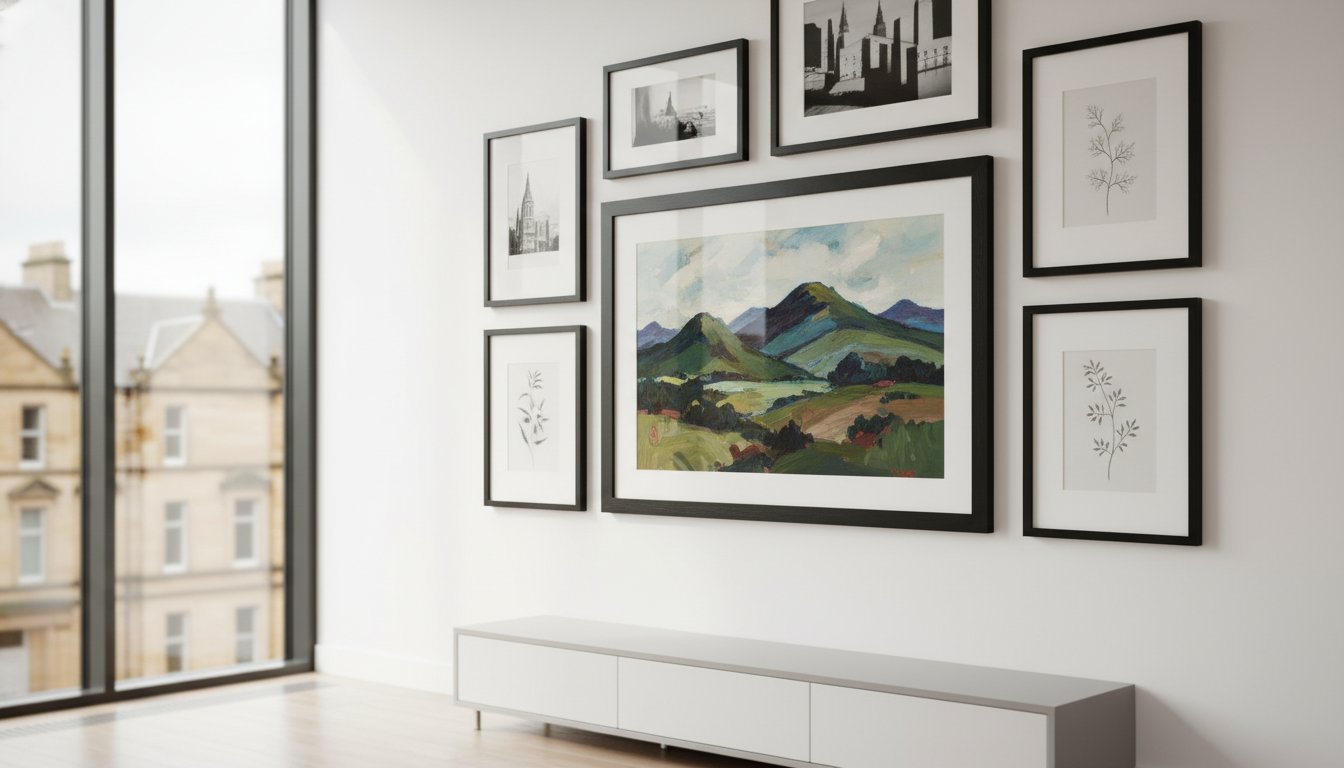
Embrace your inner curator with a salon-style wall. This creative display involves mixing different frame sizes, styles, materials, and orientations to build a rich, visual tapestry. The key to avoiding chaos is to start by placing your largest or most impactful piece slightly off-centre. From there, work outwards, balancing smaller pieces around it. You can unify the collection with a common element, such as a consistent colour in the artwork or a single finish for all the frames.

The Picture Ledge: Flexible and Stylish

A picture ledge offers a wonderfully versatile way to display your art without the commitment of multiple wall hooks. This simple shelf allows you to effortlessly rotate and update your collection. Create visual depth by layering frames of different heights and sizes, placing smaller ones in front of larger ones. This method is ideal for renters or anyone who loves to frequently refresh their decor. This flexible approach is also perfect for commercial spaces that need regular updates. Need help with a large project? Learn about our commercial services.

Bringing Your Vision to Life with the Perfect Frame

As we’ve explored, the right frame is far more than a simple border—it’s the bridge that connects your art to your personal style and the soul of your home. From understanding materials and styles to mastering the art of the gallery wall, you now have the tools to display your cherished pieces with the confidence of a professional.

Finding the perfect picture frames is the final, crucial step in your creative journey. At First 4 Frames, we bring over 20 years of expert framing experience from our Falkirk workshop to every project. As your one-stop-shop for fine art prints and professional framing, we use only the highest quality, conservation-grade materials to protect and showcase what you love. Need the perfect frame? Discover our bespoke framing service.

Your walls are a canvas for your story. Now go and tell it beautifully.

Frequently Asked Questions

What is the best way to clean a picture frame and the glass?

For the frame itself, a soft, dry microfibre cloth is usually sufficient to remove dust. For the glazing, spray a small amount of glass cleaner onto your cloth, not directly onto the surface. This prevents liquid from seeping under the glass and damaging your artwork. Gently wipe the glass or acrylic in a circular motion for a beautiful, streak-free finish that lets your art shine through.

How do I hang a picture frame without using nails?

For a simple, damage-free solution, adhesive strips like Command Strips are a superb choice for lighter frames. Always check the weight limit on the packaging to ensure they can support your piece. For a more traditional and versatile option, consider installing a picture rail. This allows you to hang and easily rearrange your art using adjustable hooks and wires, all without creating new holes in your walls.

What is a picture frame mount (or mat) and do I need one?

A mount, also known as a mat, is the card border that sits between your artwork and the frame. It serves two key purposes. Aesthetically, it creates visual space, drawing the eye inward and giving the piece a professional, gallery-quality finish. Practically, it separates the art from the glazing, protecting it from condensation. While not always essential, a mount is highly recommended to both protect and elevate your artwork.

Should I choose glass or acrylic (Perspex) for my frame?

The choice depends on your priorities. Traditional glass offers excellent clarity and is more scratch-resistant, but it is heavier and can shatter. Premium acrylic, or Perspex, is a fantastic modern alternative. It’s lightweight, shatter-resistant—making it ideal for large frames or homes with children—and often provides superior UV protection to prevent your artwork from fading. Both offer a spectacular view; the decision rests on safety, weight, and location.

How can I tell what size frame I need for my picture?

First, carefully measure the exact height and width of your picture. Standard picture frames are sold based on the artwork size they are designed to hold, so an A4 photo will fit an A4 frame. If you plan to use a mount, you will need a larger frame. For example, an A4 print with a 5cm mount border would require a frame with an internal dimension of approximately 30cm x 39cm. Always measure your art first for a perfect fit.

Is it worth paying for bespoke framing for a simple photo?

While an off-the-shelf frame suits standard prints, bespoke framing is an investment in preservation and perfect presentation. For a cherished photo, professional framing ensures it is protected by conservation-grade materials that prevent fading and damage. It also offers limitless creative control, allowing you to choose the perfect mount and frame style to complement both the photo and your home, turning a simple snapshot into a treasured piece of art.

Posted on 2 Comments

Custom Picture Framing: The Ultimate Guide to Showcasing Your Art

A person assembles a wooden picture frame on a workbench, surrounded by tools and supplies, with various frame samples and a colorful abstract painting visible in the background.

Discover everything you need to know about custom picture framing, from choosing the right materials to designing the perfect look for your cherished artwork.

A beautiful piece of art, a treasured photograph, or a hard-earned certificate deserves more than a standard, off-the-shelf frame. Custom picture framing is a craft that elevates, protects, and personalises your most important items, transforming them into stunning displays.

However, the process can feel daunting. You might worry about choosing the wrong style, getting confused by terms like ‘glazing’ and ‘mounts’, or feel concerned about the cost. This guide is here to demystify the world of bespoke framing, giving you the confidence to showcase your art perfectly.

Why Choose Custom Framing Over Off-the-Shelf?

While a ready-made frame might seem like a quick and easy solution, it rarely does justice to your artwork. A bespoke frame is an investment in presentation and preservation. It goes beyond standard sizes for a perfect, gallery-quality fit, plays a crucial role in your art’s longevity, and offers limitless design possibilities that elevate both the artwork and your interior decor.

The Perfect Fit: Tailored to Your Artwork

Ready-made frames force your art to fit their standard dimensions, often resulting in awkward gaps or the need to crop a precious image. Custom framing is made to measure, ensuring the final piece is perfectly balanced.

  • Eliminate awkward gaps or cropping from standard-size frames.
  • Accommodate unique dimensions, from panoramic prints to small, delicate sketches.
  • Ensure the frame proportions are perfectly balanced with the artwork, enhancing its visual impact.

Preservation and Protection for a Lifetime

Artwork is vulnerable to damage from its environment. Professional custom framing uses conservation-grade materials to protect your pieces for decades to come, safeguarding both their sentimental and monetary value.

  • Acid-free materials are used for mounts and backing boards to prevent the yellowing and deterioration that standard materials cause over time.
  • UV-protective glazing can be chosen to shield your art from the harmful effects of sunlight, preventing fading and discoloration.
  • Proper sealing of the frame package protects against dust, humidity changes, and even insects.

Unmatched Quality and Aesthetic Choice

Off-the-shelf frames offer a limited selection of styles and low-quality materials. With custom framing, the possibilities are virtually endless, allowing you to create a look that is truly unique.

  • Access a vast selection of high-quality wood and metal mouldings, from simple and modern to ornate and traditional.
  • Choose from hundreds of mount colours and textures to perfectly complement or contrast with your art.
  • Benefit from the expert craftsmanship of a professional framer for a durable, flawless finish that will last a lifetime.

The Anatomy of a Custom Frame: Key Components Explained

Understanding the language of framing helps you communicate your vision and make confident decisions. Here’s a simple breakdown of the essential parts that make up a custom frame.

Moulding: The Foundation of Your Frame

The moulding is the outer framework that defines the frame’s overall style. It’s the first thing people notice and is key to tying the artwork into your room’s decor.

  • Materials: Common choices include wood (like oak, ash, or pine) for a classic, warm feel, and aluminium for a sleek, modern look.
  • Profile: This refers to the shape and width of the moulding. It can be flat, curved, ornate, or simple.
  • Finish: Mouldings come in a huge range of finishes, from natural wood grain and painted colours to metallic or gilded effects.

Glazing: The Protective Shield

More than just a piece of glass, the glazing is a transparent shield that protects your art from physical damage, dust, and UV light.

  • Standard Glass: A cost-effective option that provides good clarity.
  • Anti-Reflective Glass: Specially coated to reduce glare and reflections, offering a crystal-clear view of the artwork.
  • UV-Filtering Glass: Essential for valuable or sentimental pieces, this glass blocks up to 99% of harmful UV rays to prevent fading.
  • Acrylic (Perspex): A lightweight, shatter-resistant alternative to glass, making it a safer choice for large frames or pieces hung in high-traffic areas.

Mount (or Mat): Giving Your Art Space to Breathe

A mount is the decorative cardboard border that sits between the artwork and the frame. It serves both an aesthetic and a protective purpose.

  • Visual Space: A mount creates a "breathing space" around the art, drawing the viewer’s eye inward and preventing the composition from feeling cramped.
  • Protection: Crucially, it prevents the artwork from pressing directly against the glazing, which can lead to moisture transfer and damage over time.
  • Design: Mounts can be single, double, or even multi-layered to create depth and add accent colours. It’s vital to choose a conservation-grade, acid-free mount board to prevent damage.

Backing Board and Fixings: The Unseen Support

The back of the frame is just as important as the front. The backing board provides structural rigidity and a final layer of protection from dust and moisture. Like the mount, it should always be acid-free. Finally, professional hanging hardware is securely fitted to ensure your artwork hangs safely on the wall for years to come.

How to Choose the Right Frame for Your Artwork and Décor

The goal of a frame is to complement the artwork, not overpower it. This requires a thoughtful approach that considers the art itself, your interior style, and a few key design principles.

Let the Artwork Be Your Guide

The art should always be the starting point for your design choices.

  • Match the Style: Consider the period and style of the art. A modern, abstract Giclée print often looks best in a simple, clean-lined frame, while a traditional oil painting might call for a more ornate, classic moulding.
  • Pick Out Accent Colours: Look for subtle colours within the artwork that you can echo in the mount or frame. This creates a cohesive, harmonious look.
  • Consider the Medium: A delicate watercolour may benefit from a wider mount and a slim frame, while a bold canvas might not need a mount at all and could be suited to a "floater" frame.

Complementing Your Interior Style

Think about where the piece will hang and choose a frame that connects it to the room’s decor.
A cohesive aesthetic ties together all elements, from the art on the walls to the finish on your kitchen cabinets. For inspiration on how professional refinishing can elevate other parts of your home, click here.

  • Minimalist/Scandinavian: Opt for thin frames in light woods like oak or ash, or simple black or white profiles.
  • Traditional/Classic: Rich, dark woods, ornate gilded frames, or mouldings with decorative details work beautifully in these settings.
  • Industrial/Modern: Sleek black or grey metal frames or bold, flat-profile wooden frames are excellent choices.

Common Mistakes to Avoid

  • Overpowering the Art: Choosing a frame that is too wide, ornate, or brightly coloured can distract from the artwork itself.
  • A Distracting Mount Colour: The mount should complement the art, not compete with it. A neutral off-white is often a safe and elegant choice.
  • Forgetting the Wall Colour: Consider how the frame and mount colours will look against the wall where the piece will be displayed.

Feeling unsure? Our experts have over 20 years of experience in creating the perfect frame design.
Get a free consultation with our framing experts.

The Custom Framing Process: From Consultation to Collection

We believe the journey to getting the perfect custom frame should be simple, enjoyable, and collaborative. Here’s a clear, step-by-step overview of what you can expect when you bring your art to us in our Falkirk workshop.

Step 1: The Initial Consultation

This is where we get to know you and your artwork. We’ll discuss your vision, your personal style, and where the piece will be displayed. You can bring your piece to us, and we’ll take precise measurements and assess its condition, allowing us to provide professional recommendations on the best styles and preservation materials.

Step 2: Design and Material Selection

This is the creative part. We’ll lay your artwork out with a wide range of moulding and mount board samples, allowing you to see exactly how different combinations work together. We’ll help you finalise your choice of glazing and other components, and once you’re completely happy with the design, we’ll provide a detailed, no-obligation quote.

Step 3: The Handcrafted Build

Once you give us the go-ahead, our skilled framers get to work in our workshop. This is where true craftsmanship comes into play.

  • Mouldings and mounts are precisely cut to the millimetre.
  • The frame is carefully joined, glued, and pinned for a strong, seamless corner.
  • Your artwork is expertly mounted using conservation-safe techniques.
  • Finally, the glazing is cleaned and the piece is fitted, sealed, and finished with secure hanging hardware.

See Our Craftsmanship in Action

Take a look inside our workshop to see how we combine traditional skills with modern technology to create beautiful, lasting frames.

https://www.youtube.com/watch?v=F9mz0ZCkXQw

Beyond Prints: What Else Can You Custom Frame?

Custom picture framing isn’t just for pictures. Specialised techniques like box framing allow us to preserve and display a huge variety of treasured objects and memorabilia, turning them into unique works of art.

Sports Memorabilia Framing

Create a stunning tribute to your favourite team or athlete. We can frame football shirts, medals, signed photos, and other memorabilia using techniques that protect delicate fabric and preserve valuable signatures.

Textiles and Needlework

Showcase the incredible texture and detail of your textile art. We use proper mounting methods to frame embroidery, cross-stitch, tapestries, and even silk scarves without causing stretching or damage.

3D Object and Box Framing

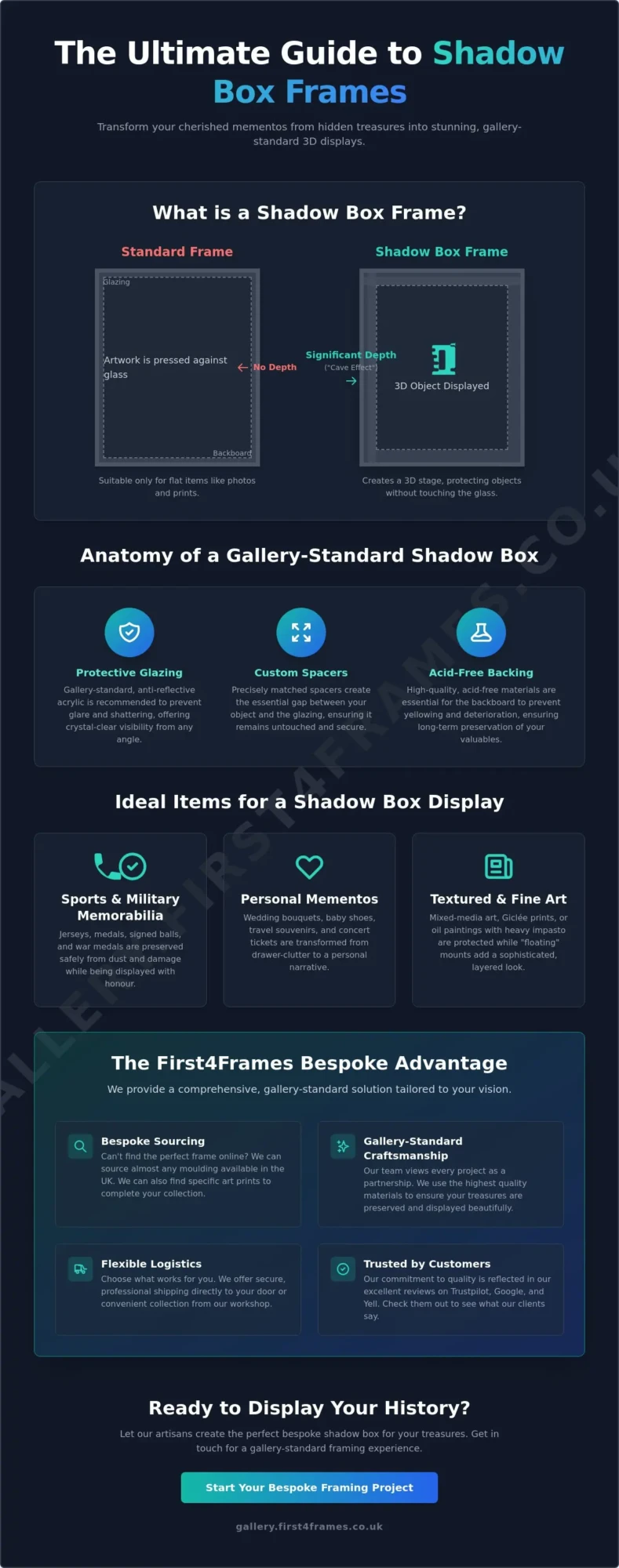
A deep-rebate or "box frame" is perfect for preserving and displaying three-dimensional items. We can create beautiful shadow box displays for family heirlooms, travel souvenirs, collectibles, and military medals, mounting them securely for a dramatic, museum-style presentation.


Ready to Showcase Your Art?

Let our passion for art and craftsmanship bring your vision to life. Whether you have a family photo, a fine art print, or a prized piece of memorabilia, we can create the perfect bespoke frame.

  • Over 20 years of professional framing experience
  • Based in Falkirk, serving clients across Scotland and the UK
  • We use only the best conservation-grade materials

Explore our bespoke framing services and get a quote today.


Frequently Asked Questions

How long does custom picture framing usually take?
Typically, the process takes around 7-14 days, depending on the complexity of the project and the availability of materials. We will always provide you with an estimated completion time when you place your order.

Can you frame an item that I already own?
Absolutely. We specialise in framing items that are special to our clients, whether it’s a piece of art you’ve purchased elsewhere, a family photograph, or a 3D object. Just bring it into our gallery for a consultation.

How much does custom picture framing cost?
The cost varies widely depending on the size of the artwork, the materials chosen (moulding, glazing, mount), and the complexity of the work. We offer options to suit various budgets and provide a detailed, no-obligation quote before any work begins.

What is ‘conservation framing’ and do I need it?
Conservation framing uses archival, acid-free materials and UV-protective glazing to protect your artwork from environmental damage and fading. We recommend it for any piece that is valuable, irreplaceable, or has sentimental importance.

How should I clean and care for my custom framed artwork?
Never spray cleaning fluid directly onto the glazing. Instead, spray a small amount onto a soft, lint-free cloth and gently wipe the surface. Keep the artwork out of direct sunlight and away from areas of high humidity, like bathrooms.

Can you help if I don’t know what kind of frame I want?
Of course! That’s what we’re here for. Our experts will guide you through the options, offering professional advice based on your artwork, your decor, and your personal taste to help you find the perfect design.

Posted on

Printing & Framing for The Place Hotel, Edinburgh

Framed Print In Hotel Corridor beside a door

Introduction

When it comes to adding a touch of elegance and personalization to any space, printing and framing solutions are top-tier choices. At The Place Hotel in Edinburgh, this concept was taken to a new level. Collaborating with the hotel’s design team, First4frames delivered a bespoke solution that transformed a corridor into an artful passage. Let’s dive into how this project unfolded and the magic that printing and framing can bring to any environment.

The Vision of The Place Hotel

Collaborating with the Design Team

The Place Hotel’s design team already had a vision in mind. They wanted to use images captured by a local photographer, Paul Stewart, which perfectly encapsulated the essence of Edinburgh. First4frames stepped in to turn this vision into reality.

Selecting the Perfect Prints

The chosen images were printed on high-quality lustre photo paper using pigmented inks to ensure longevity. This meticulous choice ensured that the photographs would remain vibrant and eye-catching for years to come.

The Printing Process

High-Quality Lustre Photo Paper

Lustre photo paper was selected for its excellent colour saturation and subtle texture. This paper type strikes a balance between matte and glossy finishes, reducing glare while maintaining sharpness and detail.

Pigmented Inks for Longevity

Using pigmented inks was a deliberate choice to enhance the prints’ lifespan. These inks are known for their resistance to fading, ensuring that the photographs maintain their original beauty over time.

Dry Mounting for Perfection

To keep the photographs flat within the frames, each print was dry mounted onto a board. This process eliminates any chance of wrinkles or creases, ensuring a smooth and pristine presentation.

Creating the Frames

Cutting Custom Mounts

Each frame was unique, tailored to the specific position and size required within the hotel. Custom mounts were cut to suit the dimensions of each print, adding an extra layer of sophistication to the display.

Crafting Unique Frames

The frames were crafted from selected moulding materials that matched the aesthetic of The Place Hotel. By using consistent moulding and mounts, all frames shared a cohesive look, enhancing the corridor’s overall visual harmony.

733A2469

Fitting and Security

Ready-to-Hang Frames

Every print was meticulously fitted into its respective frame, ensuring a snug and secure fit. This attention to detail guaranteed that the framed prints were ready to be hung as soon as they arrived at the hotel.

Security Fixings

To prevent any unauthorized movement or removal of the frames, First4frames supplied security fixings. These fixings are crucial in a public space like a hotel, where maintaining the integrity of the display is essential.

Delivery and Installation

Swift Completion

The entire project, from printing to framing and delivery, was completed within a few days. This swift turnaround ensured minimal disruption to the hotel’s operations.

Professional Installation

Upon delivery, the frames were professionally installed along the corridor. The result was a stunning transformation that added character and charm to the space, enhancing guests’ experience as they walked through.

The Impact of Custom Printing and Framing

Elevating Aesthetics

Custom printing and framing significantly elevate the aesthetics of any space. At The Place Hotel, the framed photographs not only added visual appeal but also told a story of Edinburgh’s rich culture and heritage.

Personalization

By using photographs from a local photographer, the hotel personalized its décor, making it more relatable and unique for guests. This personal touch sets The Place Hotel apart from generic hotel interiors.

Durability and Maintenance

The use of high-quality materials and professional techniques ensures that the framed prints will remain in excellent condition with minimal maintenance required. This durability is a testament to the quality of work done by First4frames.

Why Choose Custom Printing and Framing?

Uniqueness and Creativity

Custom printing and framing allow for a level of creativity and uniqueness that mass-produced artwork cannot match. Each piece can be tailored to fit the specific style and needs of a space.

Quality and Detail

Attention to detail in the printing and framing process ensures that the final product is of the highest quality. This focus on quality can significantly enhance the perceived value of the space.

Versatility

Whether for a hotel, office, or home, custom frames can be designed to fit any environment. This versatility makes custom printing and framing a preferred choice for various settings.

Conclusion

The printing and framing project at The Place Hotel, Edinburgh, is a prime example of how custom solutions can transform a space. With high-quality prints, meticulous framing, and professional installation, First4frames delivered an outcome that exceeded expectations. The corridor now not only serves as a passage but as a gallery, showcasing the beauty of Edinburgh through the lens of a local artist.

FAQs

1. Why is lustre photo paper preferred for high-quality prints?

Lustre photo paper is preferred because it balances between matte and glossy finishes, reducing glare while maintaining sharpness and detail.

2. How do pigmented inks enhance the longevity of prints?

Pigmented inks are resistant to fading, ensuring that prints remain vibrant and intact for a longer period compared to dye-based inks.

3. What is dry mounting, and why is it used?

Dry mounting involves adhering a print to a board to keep it flat and wrinkle-free. This method ensures a smooth and professional appearance.

4. Why are security fixings important in public spaces?

Security fixings prevent unauthorized movement or removal of frames, maintaining the integrity of the display in public spaces like hotels.

5. Can custom printing and framing be used in residential spaces?

Yes, custom printing and framing are versatile solutions that can enhance the aesthetics of residential spaces, providing personalized and unique décor.

Posted on

Day Dream of New York: A Captivating Artwork by Lesley Anne Derks

A vibrant painting of a busy urban street scene with colorful storefronts, pedestrians, and taxis, likely depicting a bustling city intersection. By Lesley Anne Derks

Art has a unique ability to transport us to different places and evoke emotions that transcend the ordinary. Lesley Anne Derks, a renowned contemporary artist, excels at creating pieces that capture the essence of vibrant cities and serene moments. One of her most captivating works is “Day Dream of New York.” This article delves into the intricacies of this artwork, explores the artist’s background, and provides a comprehensive analysis of the painting.

The Artist: Lesley Anne Derks

Lesley Anne Derks is a celebrated artist known for her mesmerizing cityscapes and ethereal use of light and colour. Born in Scotland, she developed a passion for art at an early age and pursued her studies in Fine Art at the Glasgow School of Art. Her work is characterized by its dreamy quality and meticulous attention to detail, often blurring the lines between reality and imagination.

Derks’ journey into the art world was marked by a relentless pursuit of capturing the beauty and essence of urban landscapes. She has exhibited her work in numerous galleries across the UK and internationally, gaining recognition for her unique style and ability to evoke emotion through her paintings.

Day Dream of New York: An Overview

Day Dream of New York” is a stunning representation of the bustling cityscape of New York. Derks was inspired by the city’s vibrant energy, iconic landmarks, and the juxtaposition of its architectural grandeur against the tranquillity of its parks and rivers.

Derks uses a combination of acrylic and oil paints to create her masterpieces. In “Day Dream of New York,” she employs a mix of bold brushstrokes and delicate layering to bring the city to life. The painting features a rich palette of blues, yellows, and greys, capturing the varying moods of the city from dawn to dusk.

The composition of “Day Dream of New York” is both dynamic and balanced. Derks strategically places iconic structures like the Empire State Building and the Brooklyn Bridge within the frame, guiding the viewer’s eye through the bustling streets and serene waters of the city. Her style is a blend of realism and abstraction, creating a dreamlike quality that invites viewers to get lost in the scene.

Analysing Day Dream of New York

Colour plays a pivotal role in Derks’ work. In “Day Dream of New York,” she uses a vibrant palette to reflect the city’s energy and diversity. The interplay of light and shadow adds depth to the painting, making the cityscape come alive.

Derks’ masterful use of light is evident in this piece. She captures the way sunlight filters through skyscrapers and reflects off the Hudson River, creating a sense of movement and fluidity. This technique adds a layer of realism to the otherwise fantastical depiction of New York.

The painting evokes a sense of nostalgia and wonder. For those who have visited New York, it brings back memories of the city’s sights and sounds. For others, it serves as an invitation to explore the city’s beauty and vibrancy.

The Significance of Day Dream of New York

“Day Dream of New York” is more than just a painting; it’s a cultural representation of one of the world’s most iconic cities. Derks captures the essence of New York, from its towering skyscrapers to its bustling streets, making it a timeless piece of art.

Derks’ work has influenced many contemporary artists. Her ability to blend realism with a dreamlike quality has set a new standard in cityscape art. “Day Dream of New York” stands as a testament to her talent and vision.

Lesley Anne Derks’ Other Notable Works

One of Derks’ most famous series is the “City Lights Series,” which features various cityscapes from around the world. Each piece in the series captures the unique energy and atmosphere of the city it portrays.

In the “Nightfall Collection,” Derks explores the beauty of cities under the cover of night. These paintings are characterized by their use of dark hues and the interplay of artificial lights, creating a striking contrast and mood.

The Artistic Process of Lesley Anne Derks

Derks draws inspiration from her travels and experiences. She often visits the cities she paints, taking photographs and making sketches to capture their essence. This firsthand experience allows her to infuse her work with authenticity and emotion.

Before starting a painting, Derks meticulously plans her composition. She creates detailed sketches and experiments with different colour palettes to achieve the desired effect. This planning stage is crucial in ensuring that the final piece reflects her vision.

The actual painting process involves multiple layers of paint and careful refinement. Derks starts with broad brushstrokes to establish the basic structure and gradually adds details to bring the scene to life. Her attention to detail and patience result in the stunning realism seen in her work.

Appreciating Day Dream of New York

Day Dream of New York” is a versatile piece that can be displayed in various settings. Whether in a living room, office, or gallery, it adds a touch of elegance and sophistication. Its vibrant colours and dynamic composition make it a focal point in any space.

For art collectors, “Day Dream of New York” is a valuable addition. Its cultural significance and the reputation of Lesley Anne Derks make it a sought-after piece. Collectors appreciate the blend of realism and fantasy, as well as the emotional depth of the painting.

Conclusion

Lesley Anne Derks’ “Day Dream of New York” is a masterpiece that encapsulates the essence of one of the world’s most iconic cities. Through her expert use of colour, light, and composition, Derks transports viewers into a dreamlike version of New York, inviting them to experience its beauty and energy. This painting, like much of her work, stands as a testament to her talent and vision, making it a cherished piece for art lovers and collectors alike.

FAQs

What medium does Lesley Anne Derks use in her paintings?

Lesley Anne Derks primarily uses acrylic and oil paints to create her artworks. This combination allows her to achieve the vibrant colours and detailed textures seen in her pieces.

Where can I view more of Lesley Anne Derks’ work?

You can view more of her work on the First4Frames website and various art galleries that feature her exhibitions. Additionally, her pieces are often showcased in art fairs and exhibitions globally.

How can I purchase “Day Dream of New York”?

“Day Dream of New York” can be purchased through the First4Frames website or by contacting galleries that represent Lesley Anne Derks. It is advisable to reach out directly for availability and pricing.

What inspires Lesley Anne Derks’ cityscapes?

Lesley Anne Derks draws inspiration from her travels, experiences, and the unique energy of each city she visits. Her cityscapes are a blend of her observations and her imaginative interpretations of urban life.

Does Lesley Anne Derks take commissions?

Yes, Lesley Anne Derks does take commissions. Interested parties can contact her through her official website or her representing galleries to discuss specific requirements and availability.

Posted on

Magical Glenfinnan

A colorful, vibrant painting depicting a whimsical landscape with a train crossing a bridge, surrounded by mountains, a castle, and a variety of fantastical elements.Magical Glenfinnan. By Rob Hain

Introduction

When you think of Glenfinnan, what comes to mind? Perhaps it’s the iconic viaduct, famously featured in the Harry Potter films, or the stunning Scottish Highlands that seem almost otherworldly. Now, imagine capturing all that magic on canvas. This is precisely what renowned artist Rob Hain has achieved with his captivating piece, Magical Glenfinnan” In this article, we’ll explore this beautiful artwork, delve into the life and inspiration of the artist, and appreciate the artistry that brings Glenfinnan to life.


A Brief Overview of Glenfinnan

Glenfinnan is more than just a picturesque spot in the Scottish Highlands; it’s a place steeped in history and natural beauty. Nestled at the head of Loch Shiel, Glenfinnan is famous for its monument commemorating Bonnie Prince Charlie and its breathtaking landscapes.

Historical Significance

The Glenfinnan Monument marks the spot where Prince Charles Edward Stuart, known as Bonnie Prince Charlie, raised his standard in 1745, leading to the Jacobite uprising. This historical event is a crucial part of Scottish history, making Glenfinnan a site of pilgrimage for many.

Natural Beauty

Surrounded by mountains and lochs, Glenfinnan’s scenery is nothing short of mesmerizing. The iconic Glenfinnan Viaduct, made even more famous by the Harry Potter movies, adds a touch of modern magic to this historic site.


Rob Hain: The Master Behind the Magic

Who is Rob Hain?

Rob Hain is a celebrated artist known for his unique style that blends whimsical elements with detailed landscapes. His ability to capture the essence of a place while adding his imaginative touch has made his work highly sought after.

Early Life and Inspiration

Born in 1952 in Dorset, England, Rob Hain developed a passion for art at a young age. His move to Scotland later in life provided him with endless inspiration, from the rolling hills of the Borders to the rugged beauty of the Highlands.

Artistic Style

Hain’s artwork is characterized by vibrant colours, intricate details, and a whimsical approach. He often incorporates elements of storytelling, making his paintings not just visual treats but narratives that draw viewers in.


Unveiling “Magical Glenfinnan”

Upon first glance, “Magical Glenfinnan” strikes you with its vivid colours and enchanting atmosphere. The artwork beautifully captures the Glenfinnan Viaduct, surrounded by lush greenery and the serene waters of Loch Shiel.

The Composition

The composition of the painting is meticulously balanced. The viaduct, a central element, guides the viewer’s eye through the scene, while the surrounding mountains and loch provide a harmonious backdrop.

Attention to Detail

Hain’s attention to detail is evident in every brushstroke. From the tiny, blooming flowers in the foreground to the intricate stonework of the viaduct, each element is rendered with care and precision.

Use of Colour

The use of colour in “Magical Glenfinnan” is both bold and harmonious. Hain employs a rich palette that brings the scene to life, evoking the magical aura of Glenfinnan.


The Story Within the Art

Capturing the Magic

Rob Hain doesn’t just paint a scene; he captures its spirit. In “Magical Glenfinnan,” he portrays the area’s historical significance and natural beauty, inviting viewers to step into a world where history and magic intertwine.

Symbolism and Themes

The painting is rich with symbolism. The viaduct, for instance, represents a bridge between the past and the present, while the vibrant landscape speaks to the timeless beauty of nature.

Viewer Engagement

Hain’s work encourages viewers to find their narratives within the painting. Are you a traveller on the viaduct, a historian at the monument, or simply an admirer of the breathtaking scenery?


The Impact of “Magical Glenfinnan”

Reception by Art Enthusiasts

“Magical Glenfinnan” has been met with widespread acclaim. Art enthusiasts appreciate its blend of historical reverence and imaginative flair, making it a standout piece in Hain’s collection.

Influence on Contemporary Art

Hain’s ability to merge traditional landscape painting with a modern, whimsical approach has influenced many contemporary artists. His work is a testament to the enduring appeal of storytelling through art.


Conclusion

Rob Hain’s Magical Glenfinnan” is more than just a painting; it’s an invitation to explore the rich history and enchanting beauty of Glenfinnan. Through his unique style and masterful technique, Hain has created a piece that captivates and inspires. Whether you’re an art lover, a history buff, or simply someone who appreciates the beauty of nature, “Magical Glenfinnan” is sure to leave a lasting impression.


FAQs

Q1: What inspired Rob Hain to create “Magical Glenfinnan”?

A: Rob Hain was inspired by the rich history and stunning natural beauty of Glenfinnan, aiming to capture its magic and significance in his unique artistic style.

Q2: Where can I view Rob Hain’s artwork?

A: Rob Hain’s artwork can be viewed and purchased online at various galleries, including First4Frames.

Q3: What makes Rob Hain’s art unique?

A: Hain’s art is unique due to his blend of vibrant colours, intricate details, and a whimsical approach that often incorporates storytelling elements.

Q4: How does “Magical Glenfinnan” reflect Scottish history?

A: The painting reflects Scottish history by featuring the Glenfinnan Viaduct and the surrounding landscape, which are significant historical landmarks.

Q5: Can I purchase a print of “Magical Glenfinnan”?

A: Yes, prints of “Magical Glenfinnan” are available for purchase online, including at First4Frames.

Posted on

Stirling Bridge & Wallace Monument Print by Raymond Murray

A vibrant painting depicting a stone bridge over a river with a church and trees in a hilly landscape under a blue sky with clouds. By Raymond Murray

Introduction

Have you ever come across a piece of artwork that instantly transports you to another place and time? That’s the magic of Raymond Murray’s “Stirling Bridge & Wallace Monument Print.” This stunning piece encapsulates the rich history and breathtaking scenery of Scotland, making it a must-have for any art lover or history enthusiast. Let’s delve into the details of this captivating artwork and learn more about the talented artist behind it.

The Artwork: Stirling Bridge & Wallace Monument Print

Capturing Scottish History

Raymond Murray’s “Stirling Bridge & Wallace Monument Print” is more than just a beautiful depiction of a landscape; it’s a window into Scotland’s storied past. The print showcases two iconic landmarks: Stirling Bridge and the Wallace Monument. These sites are deeply intertwined with the legacy of William Wallace, one of Scotland’s greatest heroes.

The Scene

The artwork presents a panoramic view of Stirling Bridge with the Wallace Monument majestically perched on Abbey Craig in the background. The artist’s use of colour and light brings the scene to life, highlighting the lush greenery and the serene waters of the River Forth.

Historical Significance

Stirling Bridge was the site of the famous Battle of Stirling Bridge in 1297, where William Wallace and Andrew Moray led Scottish forces to a decisive victory against the English army. The Wallace Monument, completed in 1869, commemorates Wallace’s bravery and dedication to Scotland’s freedom. Together, these landmarks symbolize Scotland’s resilience and pride.

Raymond Murray: The Artist Behind the Masterpiece

A Passion for Scottish Landscapes

Raymond Murray is a renowned artist known for his ability to capture the essence of Scotland’s natural beauty and historical landmarks. His work often features iconic Scottish scenes, from rugged coastlines to ancient castles.

Artistic Style

Murray’s style is characterized by his meticulous attention to detail and his use of vibrant colours. His paintings are not only visually stunning but also evoke a sense of place and history. Each brushstroke is deliberate, contributing to the overall harmony and balance of the composition.

Inspiration and Techniques

Drawing inspiration from Scotland’s rich history and diverse landscapes, Murray often visits the locations he paints, immersing himself in their atmosphere. This firsthand experience allows him to accurately portray the mood and lighting of each scene. He combines traditional painting techniques with a modern touch, resulting in timeless pieces that resonate with viewers.

The Impact of “Stirling Bridge & Wallace Monument Print

A Tribute to Scottish Heritage

This artwork serves as a tribute to Scotland’s enduring spirit and historical significance. It reminds viewers of the sacrifices made by figures like William Wallace and the importance of preserving our heritage.

Perfect for Home Decor

Beyond its historical significance, “Stirling Bridge & Wallace Monument Print” is a striking addition to any home or office. Its vibrant colours and detailed depiction of a serene landscape create a focal point that can complement various interior styles.

Collectors’ Item

For art collectors, this print is a valuable addition to any collection. Murray’s reputation and the subject matter make it a sought-after piece that will likely appreciate over time.

Understanding the Art: Breaking Down the Elements

Composition and Layout

The composition of the artwork is carefully crafted to guide the viewer’s eye across the scene. The bridge leads into the distance, drawing attention to the towering Wallace Monument. This layout creates a sense of depth and perspective.

Colour Palette

Murray uses a rich colour palette to enhance the natural beauty of the scene. The greens of the landscape contrast with the blues of the river and sky, while the monument stands out with its stone hues.

Light and Shadow

The play of light and shadow in the print adds realism and dimension. The way the sunlight hits the monument, and the bridge creates a dynamic and lifelike effect, making the scene feel almost tangible.

Displaying and Caring for the Print

Framing Options

To protect and enhance the beauty of the print, consider professional framing. Choose a frame that complements the colours and style of the artwork, ensuring it stands out while fitting seamlessly into your decor.

Placement Tips

Hang the print in a well-lit area but avoid direct sunlight to prevent fading. It can serve as a focal point in a living room, study, or hallway, sparking conversations and admiration from guests.

Maintenance

Regular dusting with a soft cloth will keep the print looking its best. If needed, consult a professional for cleaning and maintenance to ensure its longevity.

Conclusion

Raymond Murray’s “Stirling Bridge & Wallace Monument Print” is a masterpiece that captures the essence of Scotland’s history and natural beauty. Whether you’re a history buff, an art enthusiast, or simply someone who appreciates fine craftsmanship, this print is a worthy addition to your collection. It serves as a reminder of Scotland’s enduring legacy and the timeless appeal of its landscapes.

FAQs

Q1: Who is Raymond Murray?

A1: Raymond Murray is a renowned Scottish artist known for his detailed and vibrant depictions of Scotland’s landscapes and historical landmarks.

Q2: What is the significance of Stirling Bridge and the Wallace Monument?

A2: Stirling Bridge was the site of a major Scottish victory in 1297, and the Wallace Monument commemorates the heroism of William Wallace, a key figure in Scotland’s fight for independence.

Q3: How should I care for my “Stirling Bridge & Wallace Monument Print”?

A3: To care for the print, dust it regularly with a soft cloth, avoid direct sunlight, and consider professional framing and maintenance for long-term preservation.

Q4: Why is this print a good addition to my home decor?

A4: The print’s vibrant colours and historical significance make it a striking focal point that can enhance the aesthetic of any room while sparking conversations about Scotland’s heritage.

Q5: Is “Stirling Bridge & Wallace Monument Print” a good investment for art collectors?

A5: Yes, due to Raymond Murray’s reputation and the print’s historical subject matter, it is a valuable addition that is likely to appreciate over time.

Posted on

The Kelpies at Night: A Captivating Artwork by Peter McDermott

The image shows two large, illuminated horse head sculptures near a body of water titled 'The Kelpies' by Andy Scott. By Peter McDermott

The world of art is filled with mesmerizing pieces that capture the essence of nature, human emotions, and architectural marvels. One such captivating artwork is The Kelpies at Night” by the renowned artist Peter McDermott. This article delves into the enchanting details of this artwork, explores the inspiration behind it, and provides insights into the artist’s background and creative journey.

Introduction

Art has the power to transport us to different worlds, evoke deep emotions, and inspire our imagination. “The Kelpies at Night” by Peter McDermott is one such piece that captures the mystical beauty of Scotland’s iconic sculptures, the Kelpies, under the serene cover of night.

About the Artist: Peter McDermott

Peter McDermott is a celebrated artist known for his evocative and detailed depictions of landscapes and landmarks. His works often reflect his deep connection to his Scottish roots, showcasing the natural and cultural heritage of the region. With a career spanning several decades, McDermott has established himself as a master of capturing the essence of his subjects through his unique artistic style.

Inspiration Behind The Kelpies at Night

Peter McDermott drew inspiration from the majestic Kelpies, 30-meter-high horse-head sculptures located in The Helix, a parkland area in Falkirk, Scotland. These sculptures, created by Andy Scott, symbolize the power and endurance of the Clydesdale horses that played a vital role in Scotland’s industrial history. McDermott’s interpretation of the Kelpies at night adds a layer of mystique and tranquillity to these imposing figures.

The Kelpies: A Brief Overview

The Kelpies are a testament to Scotland’s rich industrial past and its deep connection with mythical folklore. These steel structures, completed in October 2013, attract thousands of visitors each year. The Kelpies are part of a larger project to regenerate the area, highlighting the significance of these sculptures in both cultural and economic terms.

The Kelpies at Night: An Artistic Description

“The Kelpies at Night presents a stunning visual of the sculptures bathed in the soft glow of moonlight. McDermott skilfully captures the interplay of light and shadow, bringing the Kelpies to life against the backdrop of a star-studded sky. The artwork portrays a sense of calm and majesty, inviting viewers to appreciate the intricate details and the ethereal beauty of these monumental structures.

The Colour Palette and Technique

McDermott employs a rich colour palette to create a contrast between the dark night sky and the illuminated Kelpies. The use of blues, silvers, and subtle hints of purple enhances the dreamlike quality of the scene. His technique of layering and blending colours adds depth and dimension, making the Kelpies appear almost three-dimensional.

Symbolism in The Kelpies at Night

The artwork is laden with symbolism. The Kelpies themselves represent strength and resilience, while the night setting evokes a sense of mystery and contemplation. McDermott’s choice to depict the Kelpies at night could symbolize the hidden depths and untold stories of Scotland’s history and heritage.

Impact and Reception

“The Kelpies at Night” has been widely acclaimed for its artistic brilliance and emotional depth. Art enthusiasts and critics alike have praised McDermott’s ability to capture the spirit of the Kelpies in such a unique and compelling way. The artwork has also garnered significant attention on social media, further cementing its status as a modern masterpiece.

Where to View The Kelpies at Night

The original piece of The Kelpies at Night” is part of a private collection, but high-quality prints are available for purchase at various galleries, including First4Frames. These prints allow art lovers to bring a piece of McDermott’s enchanting vision into their own homes.

Purchasing The Kelpies at Night

Interested buyers can purchase prints of “The Kelpies at Night” through online galleries such as First4Frames. These prints come in various sizes and formats, ensuring that there is an option to suit every space and budget.

Peter McDermott’s Artistic Style

Peter McDermott’s artistic style is characterized by meticulous attention to detail, a vibrant colour palette, and a deep sense of place. His works often evoke a strong emotional response, drawing viewers into the scenes he creates and encouraging them to explore the stories behind them.

Other Notable Works by Peter McDermott

In addition to “The Kelpies at Night,” McDermott has produced a number of other notable works, including:

  • “Edinburgh Castle at Sunset”
  • “The Old Man of Storr”
  • “Glencoe in Winter” Each of these pieces showcases his ability to capture the beauty and spirit of Scotland’s landscapes and landmarks.

The Influence of Scottish Heritage

McDermott’s art is deeply influenced by his Scottish heritage. He often draws on the country’s rich history, folklore, and natural beauty to inform his work. This connection to his roots is evident in the authenticity and passion that permeate each piece.

Art as a Reflection of Culture

Art serves as a powerful reflection of culture, offering insights into the values, beliefs, and experiences of a society. McDermott’s work, including “The Kelpies at Night,” provides a window into Scotland’s cultural landscape, celebrating its past while also capturing its contemporary spirit.

Conclusion

“The Kelpies at Night” by Peter McDermott is a mesmerizing tribute to one of Scotland’s most iconic landmarks. Through his masterful use of colour, light, and detail, McDermott brings the Kelpies to life in a way that is both captivating and evocative. This artwork is a testament to the enduring power of Scotland’s heritage and the artist’s remarkable talent.

FAQs

  1. Who created The Kelpies sculptures?
    1. The Kelpies were created by Scottish sculptor Andy Scott.
  2. What do the Kelpies represent?
    1. The Kelpies represent the power and endurance of the Clydesdale horses that played a crucial role in Scotland’s industrial history.
  3. Where can I purchase prints of The Kelpies at Night?
    1. Prints of “The Kelpies at Night” can be purchased through online galleries such as First4Frames.
  4. What is the significance of depicting the Kelpies at night?
    1. Depicting the Kelpies at night adds a layer of mystique and tranquillity, highlighting their ethereal beauty and the hidden depths of Scotland’s history.
  5. How does Peter McDermott’s heritage influence his artwork?
    1. McDermott’s Scottish heritage deeply influences his work, as he draws on the country’s rich history, folklore, and natural beauty to inform his art.