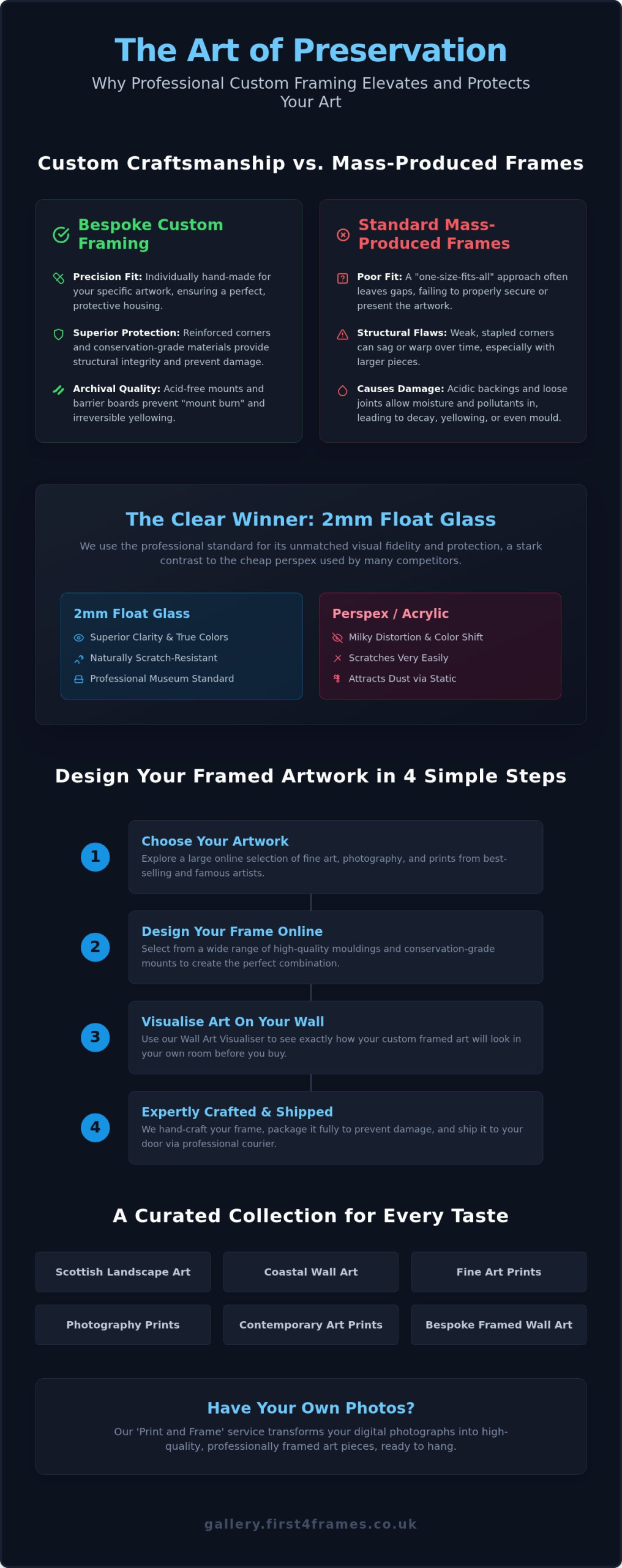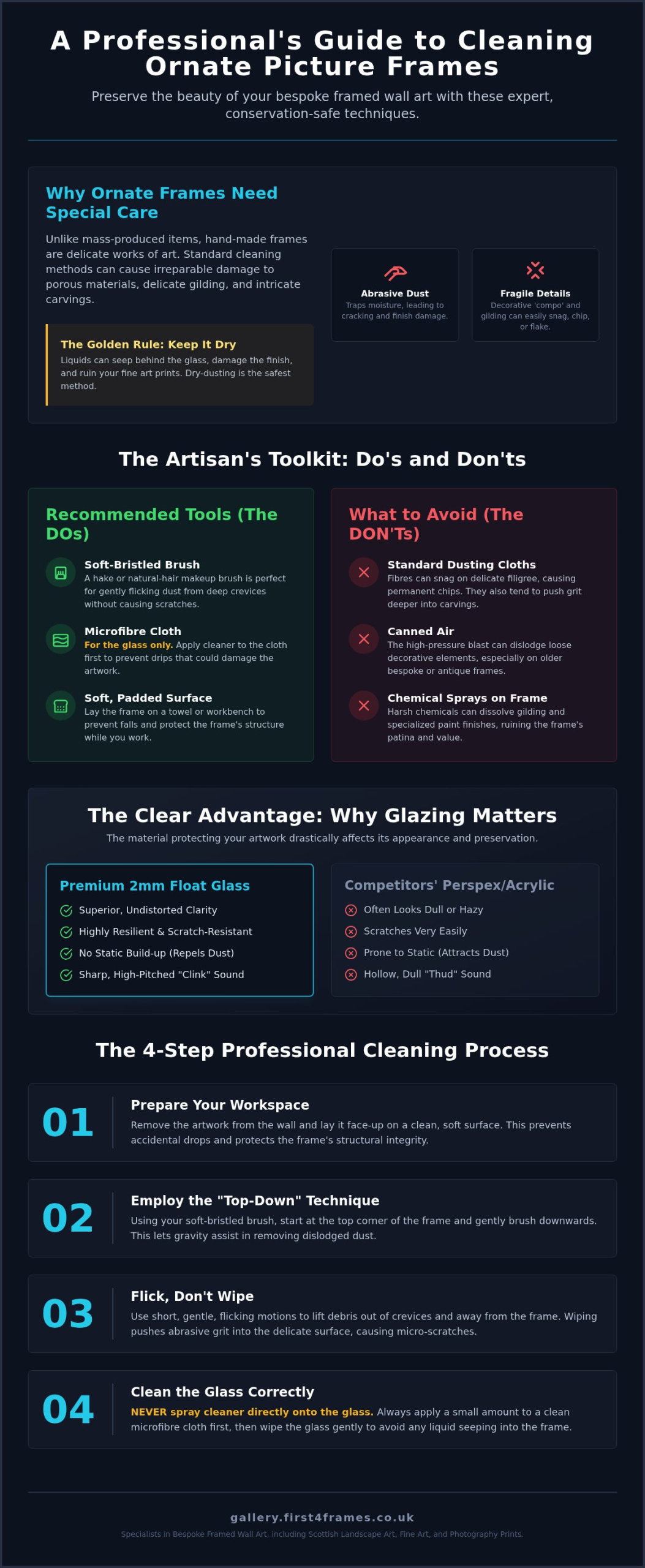

Leadership rarely rejects workplace art because they dislike inspiring surroundings; they reject proposals that treat visual culture as a frivolous aesthetic luxury. You already know that sterile, blank walls drain energy and make justifying the office commute harder for hybrid teams, but asking finance leaders for creative budgets without hard data often invites an immediate veto. Mastering how to present an office art proposal to management requires shifting the entire conversation away from subjective personal taste toward measurable commercial performance, employee well-being, and brand reputation.
This guide shows you exactly how to build an executive-ready business case that links curated workplace visuals to proven productivity gains and staff retention. You’ll discover practical ways to answer tough boardroom questions about commercial framing durability and logistics, translate aesthetic upgrades into clear commercial value, and use digital wall preview tools to secure budget sign-off with confidence.
Key Takeaways
- Discover how to link curated workplace visuals directly to tangible commercial metrics, from employee retention to measurable focus and productivity gains.
- Master how to present an office art proposal to management using a structured five-step framework and digital preview tools that secure confident boardroom approval.
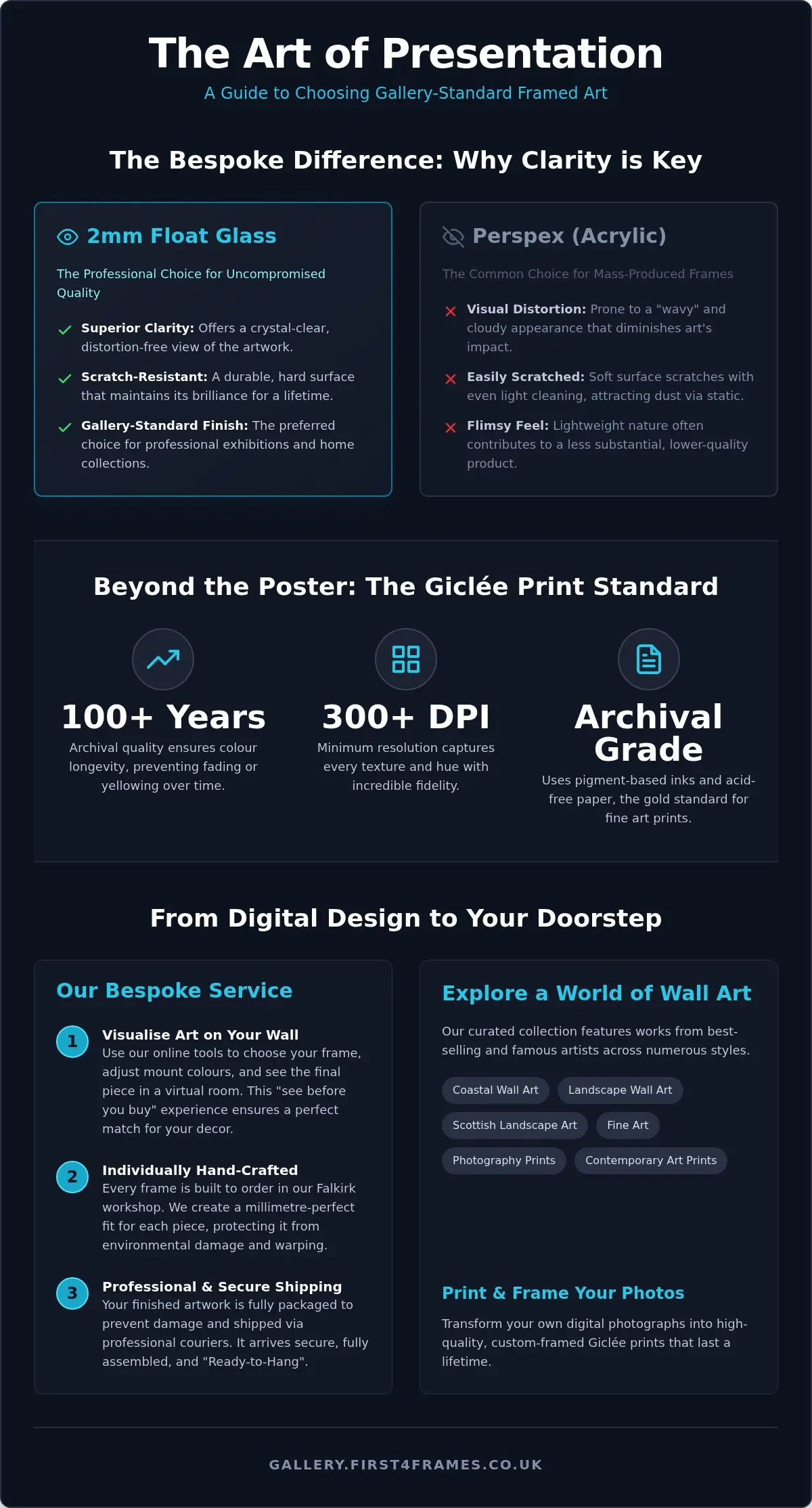
- Neutralise executive pushback regarding long-term maintenance by specifying individually crafted frames, archival Giclée prints, and scratch-resistant 2mm float glass over cheap perspex.
- Eliminate operational friction by implementing phased departmental procurement plans and partnering with dedicated UK framing specialists for secure, ready-to-hang delivery.
Building the Business Case: Aligning Workplace Art with Corporate ROI
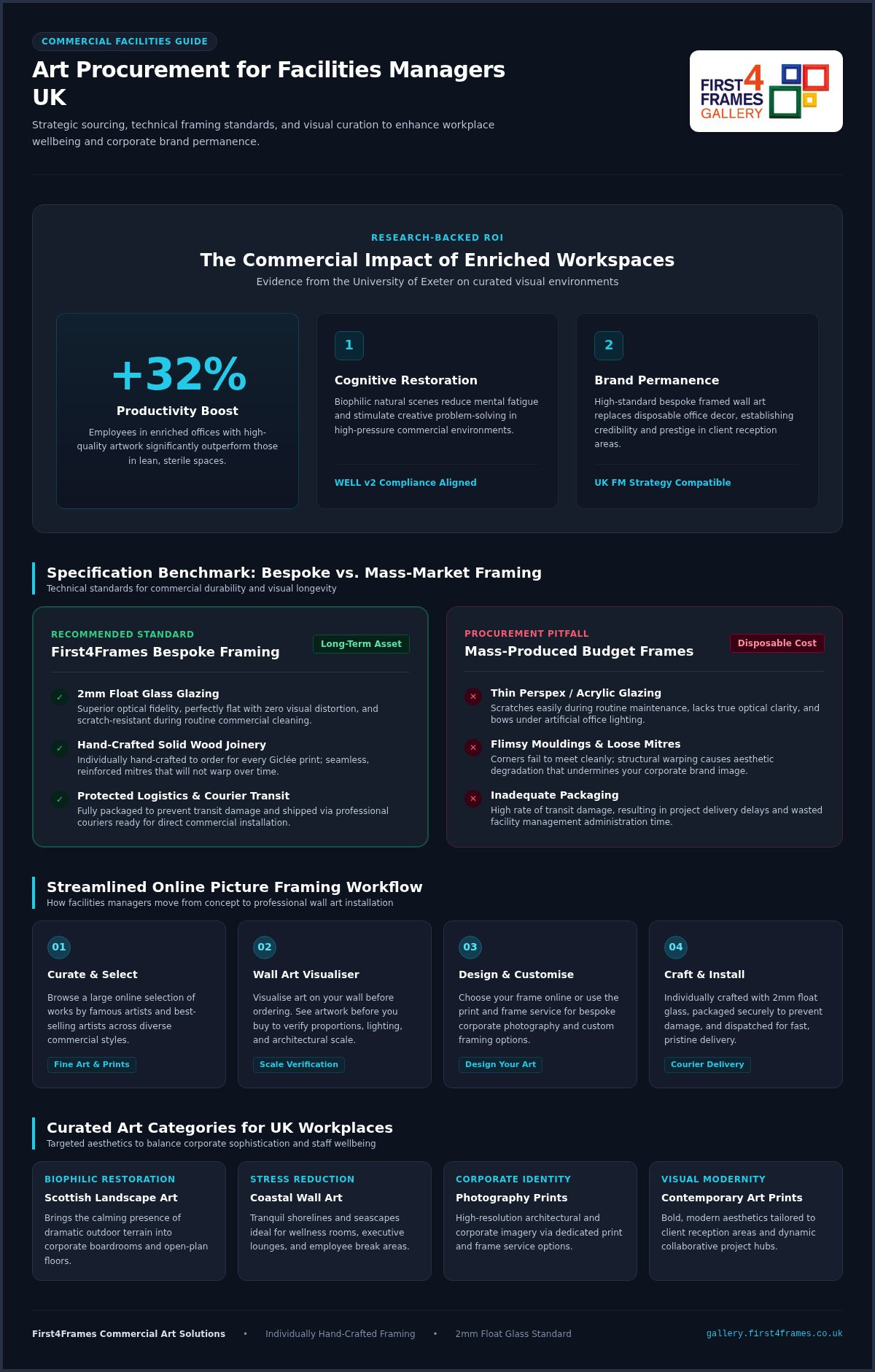
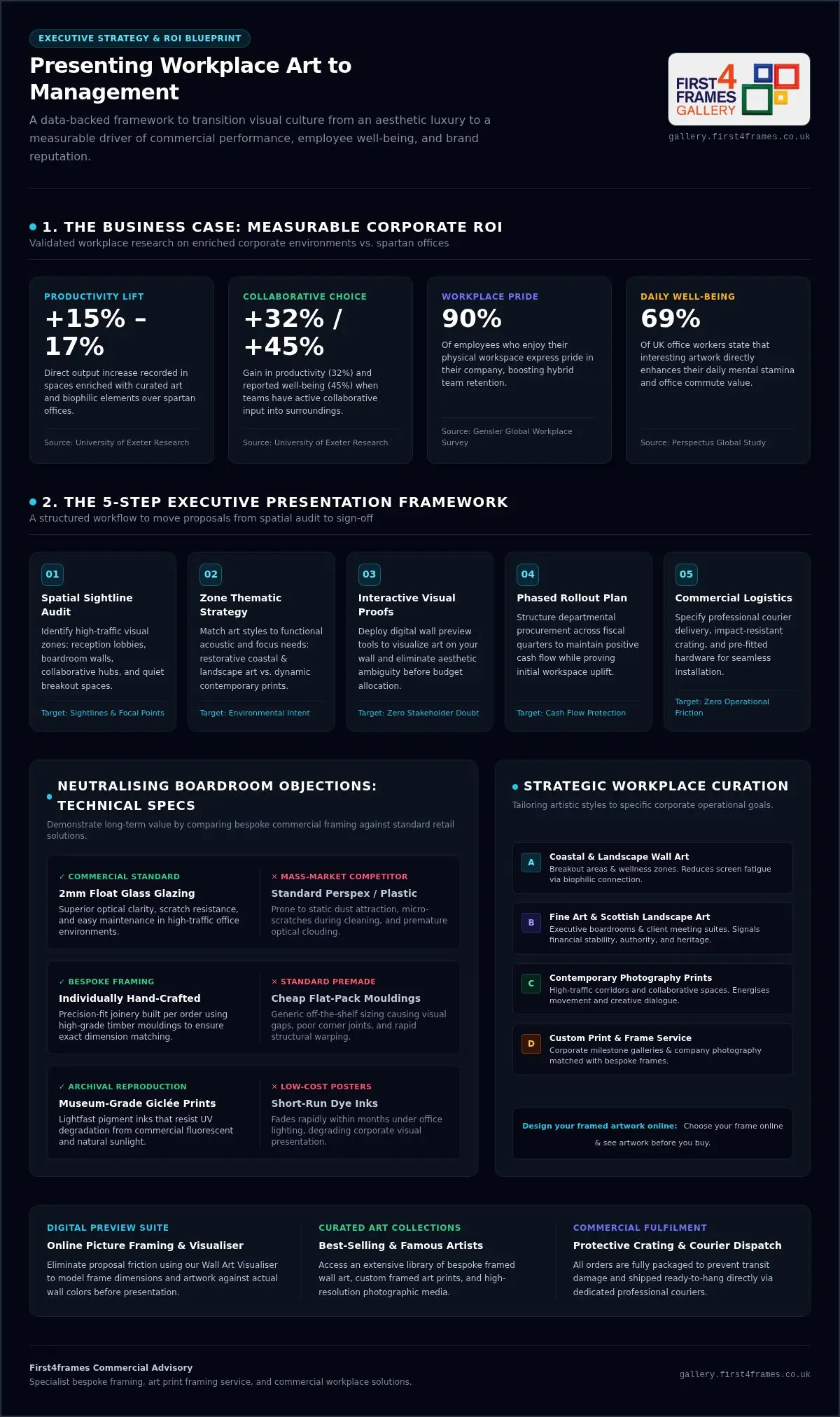
To win executive backing, you must reposition workplace visuals from an optional cosmetic expense into an active performance driver. Boardrooms evaluate capital outlays through commercial returns; understanding environmental psychology principles lets you demonstrate that enriched environments directly enhance operational output. Research from the University of Exeter reveals that employees working in spaces enriched with art and greenery are 15% to 17% more productive than those in spartan offices. When teams have collaborative input into their surroundings, productivity gains jump up to 32% alongside a 45% lift in reported well-being.
To better understand how to tailor creative proposals directly to senior leadership priorities, watch this practical guide:
Applying this commercial framing is essential when deciding how to present an office art proposal to management. According to the Gensler Global Workplace Survey, 90% of employees who enjoy their physical workspace feel proud of their company, making curated visual surroundings a tangible retention asset for hybrid teams.
Translating Visual Assets into Measurable Workplace Wellbeing
Restorative environments directly combat mental exhaustion. Incorporating biophilic themes such as coastal wall art and landscape wall art provides indirect nature connections that reduce screen fatigue. A Perspectus Global study found that 69% of UK office workers report interesting artwork directly enhances their daily well-being, turning blank communal corridors into energising spaces that justify the daily commute.
Reinforcing Corporate Identity and Client-Facing Credibility
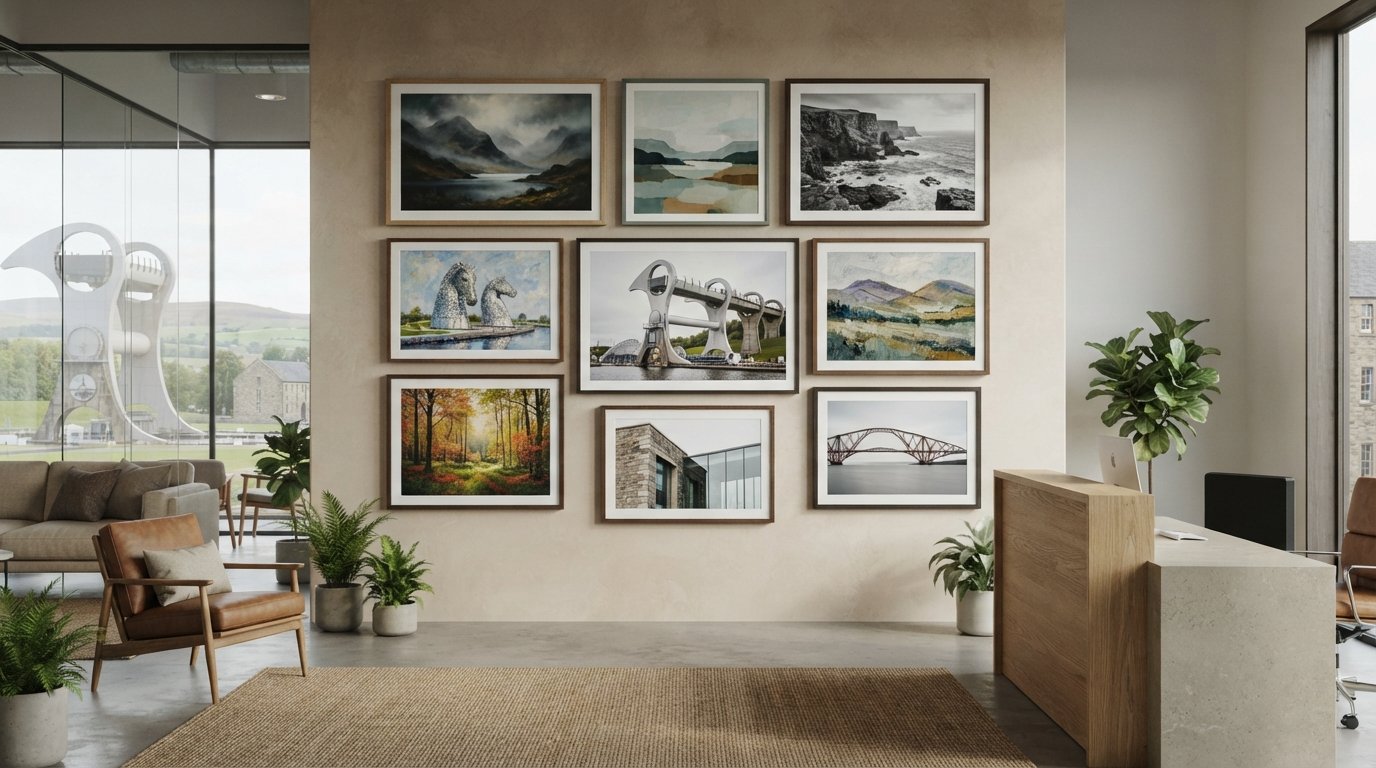
Curated visuals establish silent authority during critical commercial negotiations. Introducing museum-grade fine art and contemporary art prints into client meeting rooms signals stability, creative ambition, and financial health. In regional offices, featuring authentic Scottish landscape art grounds corporate spaces in local heritage while elevating brand prestige through bespoke framed wall art.
How to Structure Your Proposal: The 5-Step Executive Presentation Framework
Transforming workplace walls into commercial assets requires a logical submission that leadership can review without ambiguity. Deciding how to present an office art proposal to management comes down to structuring your pitch around business clarity rather than abstract tastes. By highlighting proven productivity gains in art-enriched offices, this structured framework presents management with an accountable, boardroom-ready plan:
- Step 1: Conduct a Spatial Sightline Audit: Identify high-traffic focal areas, from reception desks to primary meeting rooms.
- Step 2: Establish Zone-Specific Themes: Match imagery styles directly to each department’s acoustic and focus requirements.
- Step 3: Generate Interactive Visual Proofs: Deploy digital tools to eliminate stakeholder doubt before purchasing.
- Step 4: Formulate a Modular Rollout: Structure procurement in phases across quarters to protect operating cash flow.
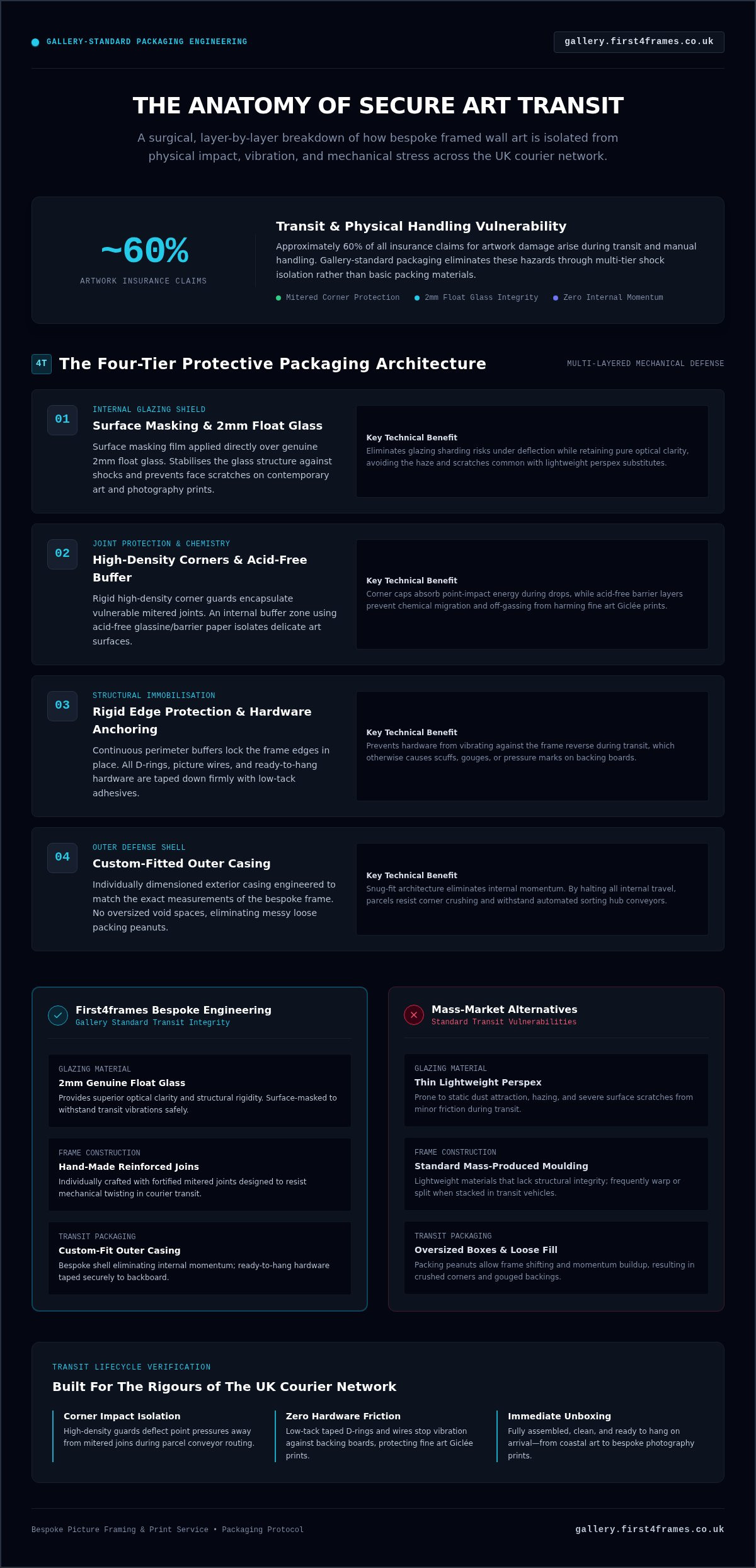
- Step 5: Define Commercial Logistics: Specify professional courier dispatch, protective crating, and ready-to-hang delivery.
Conducting the Spatial Audit and Thematic Selection
Map your floor plan to separate deep-focus areas from collaborative hubs. High-energy corridors benefit from contemporary photography prints, while pairing calming coastal wall art with breakout areas creates restorative spaces that foster relaxed dialogue. If you need inspiration on balancing aesthetics with workplace functionality, explore our resource for sourcing fine art across different commercial environments.
Visualising Layouts and Demonstrating Proof of Concept
Abstract descriptions cause budget hesitation. Instead, use an intuitive digital tool to visualise art on your wall before submitting final figures to the finance director. An interactive wall art visualiser allows the executive team to see artwork before you buy, reviewing scale and moulding choices on their own meeting room walls. When you need to preview finishes or browse diverse styles, you can explore curated fine art selections to present custom framed art prints directly inside your proposal slides.
Overcoming Executive Objections: Durability, Glass Quality, and Budget Allocation
Executive hesitation usually boils down to two sharp questions: will these pieces degrade in eighteen months, and why shouldn’t the company buy cheap frames off the shelf? Knowing how to present an office art proposal to management means dismantling these objections before they stall your project. Demonstrating how art in the office boosts staff productivity justifies initial spend, but proving physical longevity protects the budget. Phasing rollout milestones across quarterly schedules also neutralises cash-flow anxiety.
The Glazing Factor: Why 2mm Float Glass Outperforms Standard Perspex
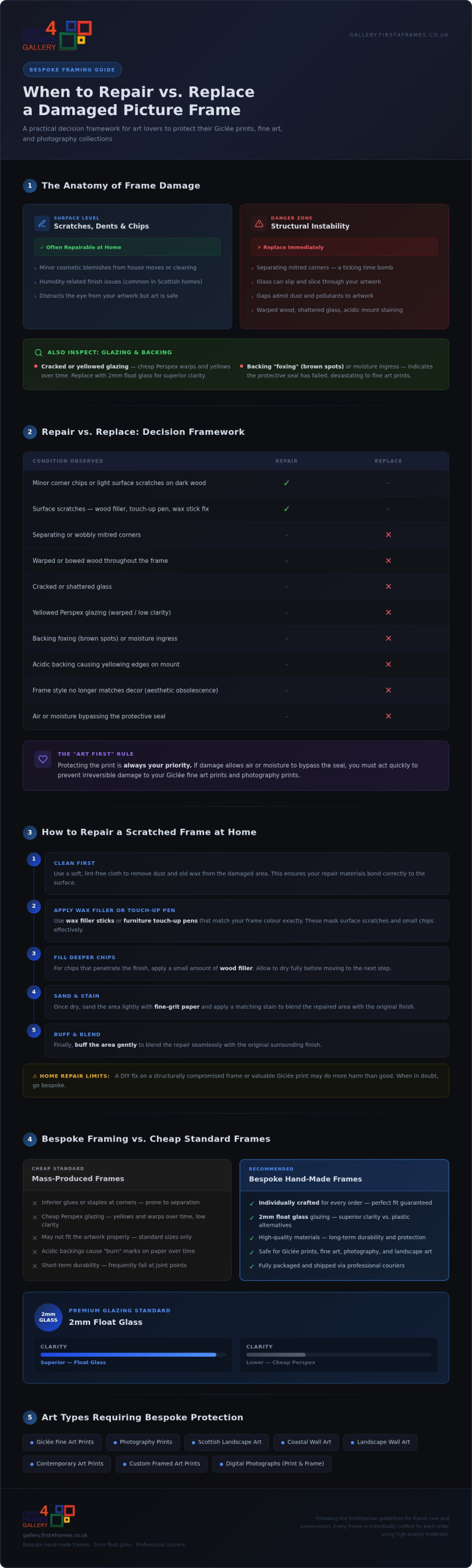
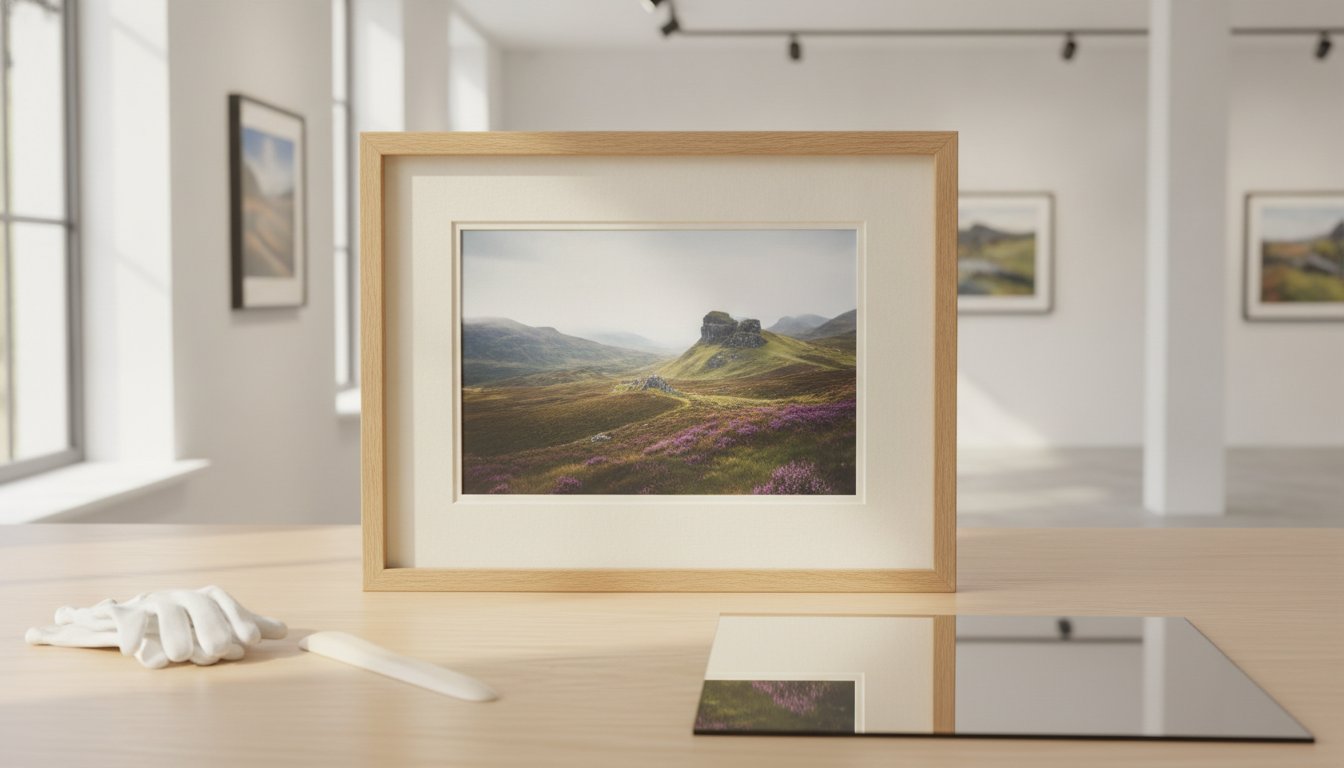
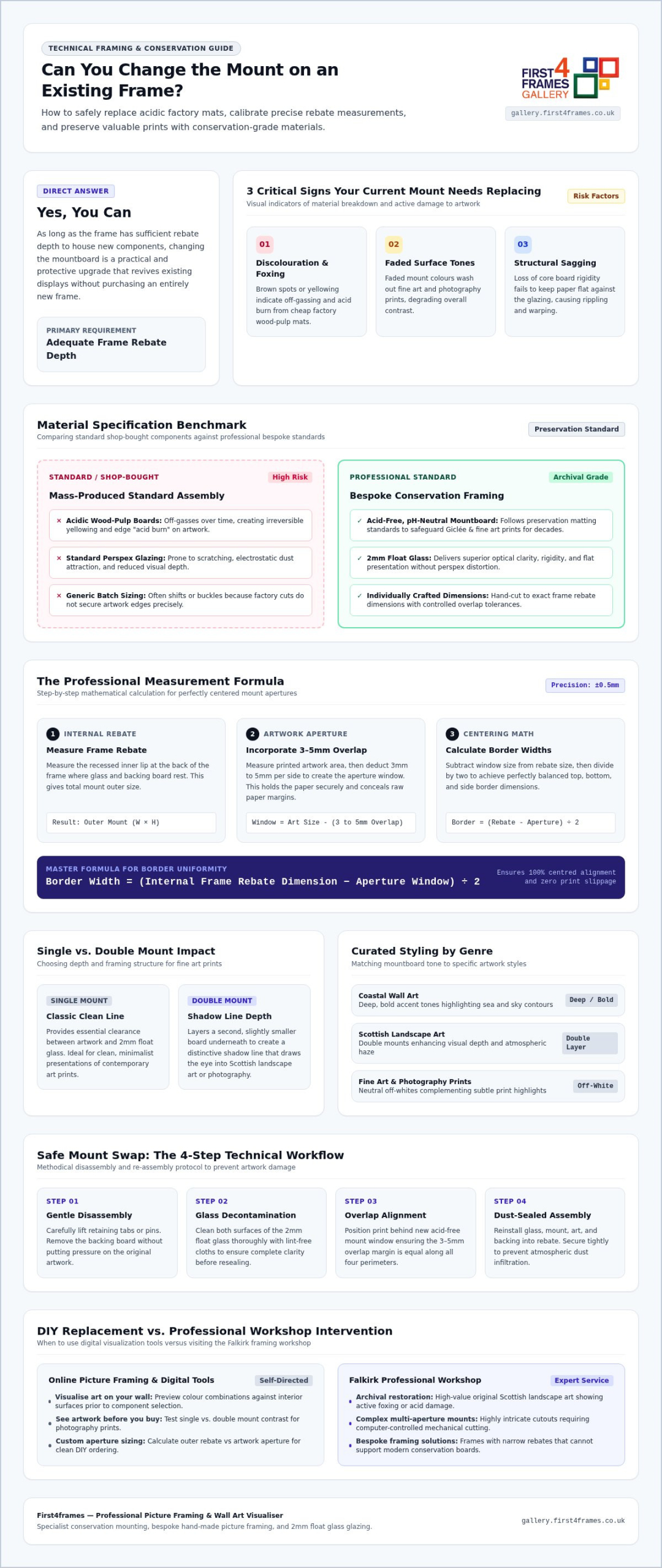
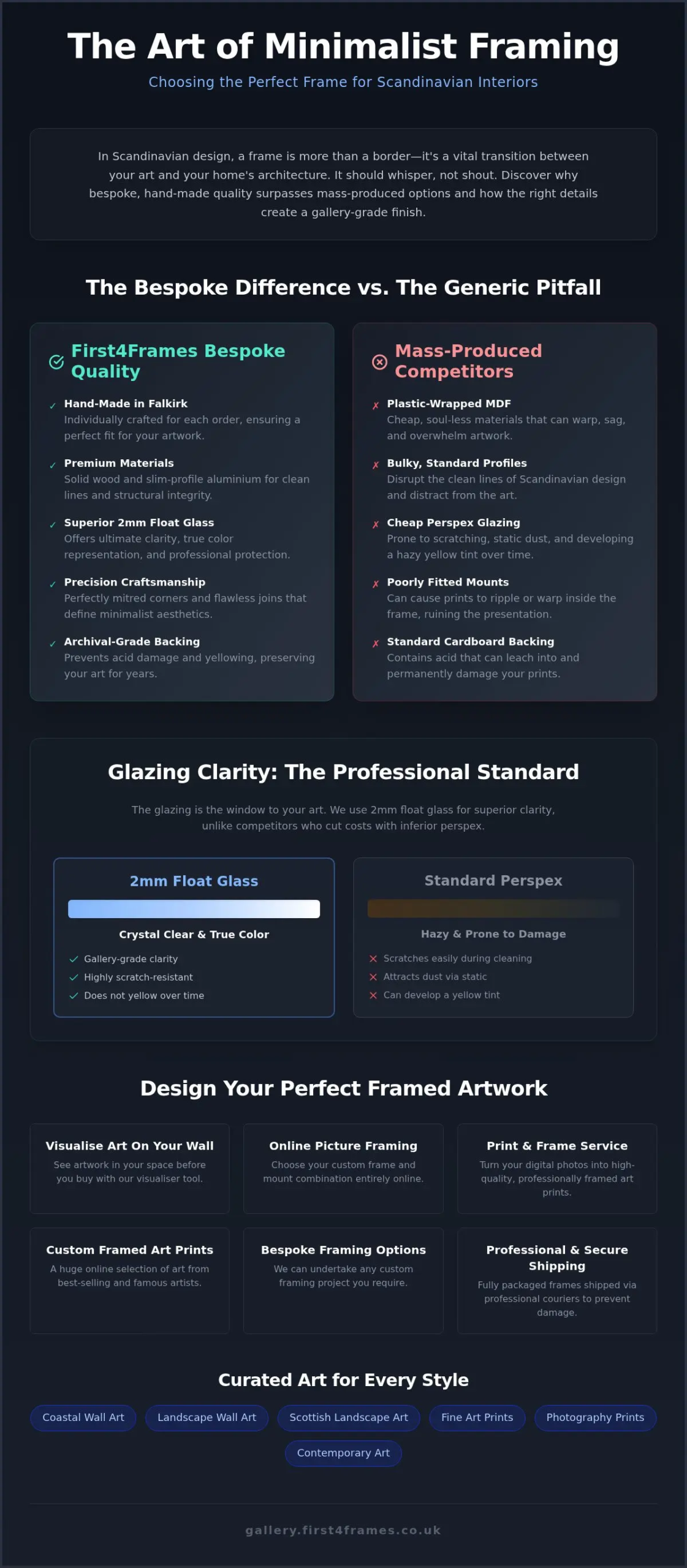
Facilities managers care deeply about maintenance lifecycles. Mass-market suppliers rely on cheap perspex, which bows across wider apertures, attracts static dust, and clouds from routine chemical cleaning. Specifying genuine 2mm float glass guarantees distortion-free optical clarity and superior scratch resistance that withstands daily office upkeep. Review our expert guide on custom picture framing to understand how commercial glazing preserves visual assets over decades.
Safeguarding Company Capital with Archival Framing Standards
Unlike off-the-shelf retail frames that warp under commercial climate control, individually crafted timber mouldings seal archival Giclée fine art prints against light exposure and humidity shifts. Choosing ready-to-hang framed art eliminates expensive on-site handyman coordination, ensuring seamless transitions from parcel arrival to wall mounting. Read our guide on selecting picture frames to evaluate structural build criteria. To finalise your hardware specifications and budget tiers, browse our full commercial gallery collection for contract-grade finishes.
Executing the Rollout: Procurement, Secure Logistics, and Seamless Installation
A bulletproof operational plan eliminates the logistical anxiety that often stalls boardroom sign-off. When resolving how to present an office art proposal to management, demonstrating that procurement and hanging won’t disrupt daily office operations is essential. Partnering with commercial artwork curation specialists provides single-point accountability. This replaces disparate framing shops and unvetted handlers with a dependable, end-to-end UK manufacturing workflow.
Selecting Works from Established and Contemporary Artists
Balancing visual tone across different business zones builds broader executive consensus. Curate statement fine art pieces alongside recognisable works from famous artists and best-selling artists in client hubs, while using atmospheric photography prints to enliven transition corridors. For corporate brand culture, an integrated print and frame service allows you to turn high-resolution digital event photography and brand milestones into sharp, archival gallery displays.
Streamlining Board Sign-Off and Ordering with Digital Tools
Modern digital ordering removes friction from the final purchasing sign-off. Utilizing online picture framing workflows allows teams to choose your frame online, test proportions, and design your framed artwork to fit corporate brand standards before committing funds. You can explore curated artwork collections at First4Frames Gallery to finalise your proposal deck with exact specifications. Finished orders of bespoke framed wall art arrive fully packaged in protective transit materials and shipped via professional couriers. This reliable art print framing service ensures every frame arrives in ready-to-hang condition, enabling effortless handover to facilities personnel.
Secure Boardroom Approval and Elevate Your Workplace
Presenting a compelling case to leadership isn’t about defending artistic taste; it’s about validating commercial value. When you master how to present an office art proposal to management, you transform bare partition walls into measurable investments in staff well-being, retention, and corporate prestige. By pairing performance metrics with durable specifications, such as genuine 2mm float glass glazing over cloudy perspex, you neutralise operational doubt before the board votes.
Backed by over two decades of bespoke framing expertise in Falkirk, Scotland, our workshop builds individually crafted displays designed to endure. Every piece arrives fully packaged for secure UK-wide courier delivery, eliminating installation headaches for facilities teams. Take the next step: explore our curated collections and visualise ready-to-hang art at First4Frames Gallery today. You’ll give your leadership team an executive-ready vision they can sign off with complete confidence.
Frequently Asked Questions
Why should executive management invest in professional office art instead of leaving walls bare?
Bare walls foster an uninspiring, transactional atmosphere that discourages hybrid staff from returning to the workplace. Professional office art actively boosts cognitive engagement, softens harsh commercial architecture, and signals stability to visiting clients. Investing in bespoke framed wall art creates a sense of collective identity, directly aligning physical workspace quality with talent retention while demonstrating to leadership that visual standards reflect commercial ambition.
How do I estimate an office art proposal budget without knowing exact framing costs upfront?
Build your initial expenditure forecast around modular spatial zones rather than individual piece pricing. When structuring how to present an office art proposal to management, group locations into tiers, such as client-facing boardrooms, collaborative breakout hubs, and functional corridors. Partnering with a dedicated commercial framing specialist allows you to request phased project estimates based on confirmed wall dimensions, keeping preliminary forecasts realistic before presenting to leadership.
What is the advantage of 2mm float glass over perspex acrylic for commercial office framing?
Genuine 2mm float glass delivers superior optical clarity, staying perfectly flat across the artwork without the bowing or wave distortion common to perspex acrylic. In commercial offices, standard perspex attracts static dust and clouds quickly under abrasive daily cleaning sprays. Float glass resists routine maintenance scratches, maintains true colour rendition over decades, and ensures contract art installations retain their professional, hand-crafted appeal without requiring frequent reglazing.
How can our proposal demonstrate what the framed artwork will look like before buying?
Digital visualisation tools bridge the gap between design concepts and boardroom approval. By uploading actual photographs of your company’s boardrooms or reception areas into an interactive wall art visualiser, you can test specific moulding profiles, mount widths, and print dimensions directly in situ. This enables management to see artwork before you buy, eliminating aesthetic guesswork and giving stakeholders clear visual proof of concept before signing off purchase orders.
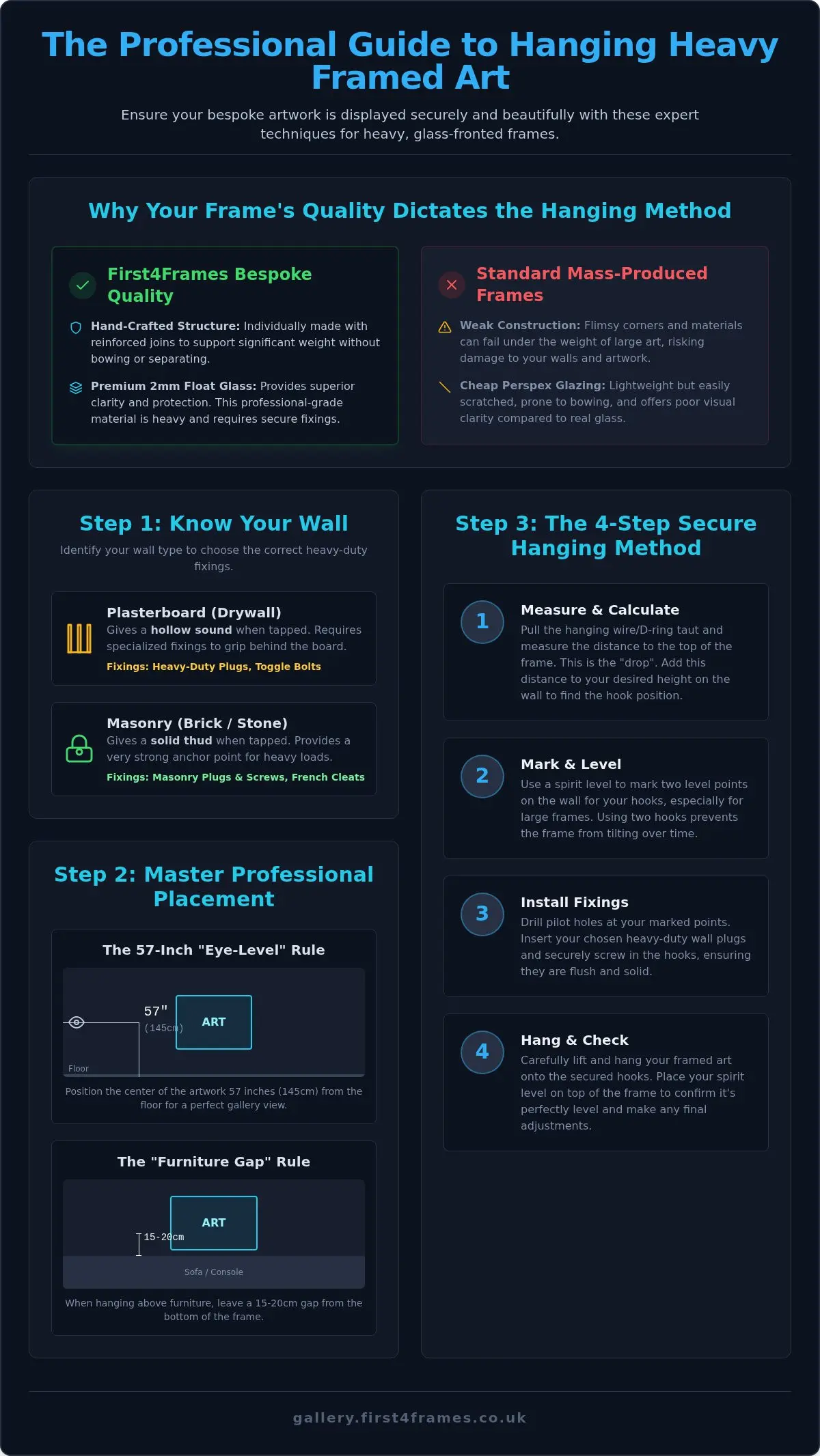
How does ready-to-hang framed art minimize commercial installation downtime and disruption?
Specifying ready-to-hang framed art ensures pieces arrive completely assembled with pre-fitted heavy-duty hardware, individually tailored mouldings, and secure backing. Facilities teams avoid sourcing brackets, measuring glass, or hiring specialised joiners during standard business hours. When learning how to present an office art proposal to management, highlighting that deliveries arrive safely packaged via professional couriers reassures directors that installation requires minimal internal labour and causes zero disruption to active operations.