

Your ornate picture frame is less of a border and more of a sculpture. Treating it like a common bookshelf is a recipe for heartbreak, especially when cleaning dust from ornate picture frames requires such a delicate touch. It’s frustrating to watch a grey film settle into those deep, hand-carved crevices. It’s even more terrifying to think about snagging a fragile decorative leaf or accidentally dissolving the gilding with the wrong chemical spray. You’ve invested in bespoke beauty, and you want to keep it that way.
We understand that a hand-made frame is a vital part of the creative process. This guide will teach you the professional techniques for safely removing debris, ensuring you can maintain that museum-quality glow without risking the integrity of the piece. You’ll learn which specialized tools the experts use and why high-quality components, like our signature 2mm float glass, provide the superior clarity and protection your Scottish landscape art or fine art prints deserve. We’ll walk you through a gentle, step-by-step process to restore the vibrancy of your home’s most precious displays with absolute confidence.
Key Takeaways
- Learn why standard dusting cloths can damage delicate plaster mouldings and how to identify the porous materials often found in bespoke frames.
- Discover the essential artisan toolkit for cleaning dust from ornate picture frames, including why soft-bristled brushes are safer than cloths and how 2mm float glass offers superior clarity over cheap perspex.
- Master the professional “top-down” brushing technique to remove trapped debris from deep crevices without scratching the finish or redistributing dust.
- Understand how premium materials and strategic placement away from heat sources protect your Scottish landscape art and fine art prints from long-term damage.
Why Ornate Frames Require a Specialized Cleaning Approach
Bespoke framed wall art represents a significant investment in your home’s aesthetic environment. Unlike cheap, mass-produced alternatives that use standard sizes and flimsy plastic, a hand-made frame is a unique piece of craftsmanship. Because of this, cleaning dust from ornate picture frames requires a gentle touch rooted in the principles of conservation and restoration of painting frames. Standard household cleaning methods can easily ruin these delicate structures.
To see the difference between routine maintenance and deep cleaning, watch this helpful guide:
Ornate mouldings often use “compo,” a blend of resin, oil, and plaster that is surprisingly porous. Standard household dust is actually quite abrasive under a microscope. When left to sit, it traps moisture against the frame’s finish, which eventually leads to unsightly cracking. It’s vital to remember the golden rule: keep it dry. Liquids can seep behind the 2mm float glass we use for superior clarity, potentially reaching and ruining your Giclée fine art prints. High-quality bespoke framing is actually easier to maintain long-term because the superior materials used are more resilient than flimsy, standard alternatives.
The Anatomy of an Ornate Frame
Most ornate frames feature delicate finishes like gold leaf, silver leaf, or specialized paints. These layers are incredibly thin. The deep, intricate crevices found in high-end Scottish landscape art or landscape wall art frames act as natural dust traps. If you use a standard cloth, you risk snagging these decorative elements or simply pushing the grit deeper into the detail. This is why a specialized approach is non-negotiable for preserving your fine art collection.
The Artisan Toolkit: What You Need for Delicate Dusting
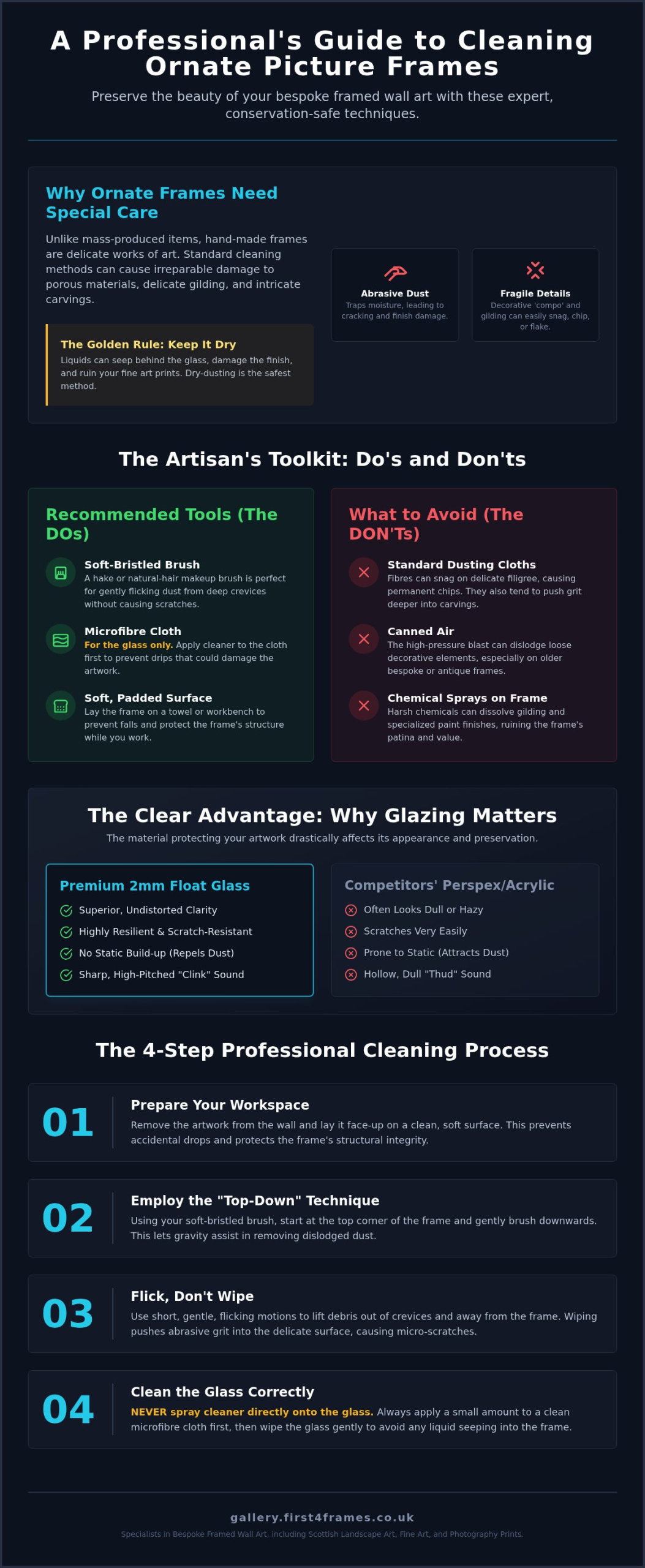
You wouldn’t use a scouring pad on a fine painting, so don’t use a standard household rag on your frame. For cleaning dust from ornate picture frames, the most important tool in your arsenal is a soft-bristled brush. A hake brush or a clean, natural-hair makeup brush allows you to reach into deep carvings without the friction that causes damage. Following expert guidance on caring for frames, we recommend “dry-brushing” to flick dust away rather than wiping it into the surface. This technique prevents abrasive grit from scratching the delicate finish of your investment.
Avoid using canned air. While it seems convenient, the high-pressure blast can dislodge loose decorative “compo” or gilding flakes on older, bespoke pieces. Keep your microfibre cloths strictly for the glazing. Using them on the frame itself often leads to snagging on delicate filigree, which can cause permanent chips in the ornate detail.
Why 2mm Float Glass Matters
The soul of a piece of bespoke framed wall art from First4Frames Gallery is its clarity. We exclusively use 2mm float glass because it offers a crisp, undistorted view that cheap perspex can’t match. Perspex often looks dull and is highly prone to static, which actually attracts more dust. To identify your glazing, gently tap the surface with a fingernail; glass has a sharp, high-pitched “clink,” whereas perspex sounds like a hollow, dull thud.
Glass requires specific care. While it’s more resilient than acrylic, you should still apply any glass cleaner to the cloth first, never directly to the surface. This prevents liquid from running down into the frame’s rebate where it could damage the artwork. Because our frames are individually crafted and fully packaged for professional couriers, you start with a pristine surface that stays vibrant for much longer than standard off-the-shelf options.
Step-by-Step: How to Clean Dust from Ornate Picture Frames
Before you begin cleaning dust from ornate picture frames, proper preparation is essential. Remove the artwork from the wall and lay it face-up on a clean, soft towel or a dedicated padded workbench. This prevents accidental drops and protects the structural integrity of the piece. Working while the frame is still hanging is risky; gravity often pulls loosened debris into the lower crevices where it becomes harder to remove. By placing the frame on a flat, stable surface, you can safely access every intricate angle of your bespoke framed wall art.
Use your soft brush to work from the top of the frame downwards. This ensures that any loosened particles fall onto uncleaned areas rather than settling back into finished sections. For deeper grime in contemporary art prints frames, a dry cotton swab is excellent for precision. As seen in this conservation case study, professional conservators utilize incredibly targeted methods to lift surface dirt without introducing harmful moisture. Use light, circular motions to coax the dust out of the intricate geometry without applying pressure.
Dealing with Stubborn Grime in Crevices
Gold and silver leaf finishes are exceptionally thin and fragile. Use a “dry-wipe” method with a clean, dry swab for these areas. Avoid even a hint of water or chemical cleaners, as they can cause the leaf to lift, flake, or tarnish. This meticulous level of care ensures that your investment in Scottish landscape art remains vibrant and protected for decades to come.
Cleaning the Glazing Safely
When maintaining the 2mm float glass on your custom framed art prints, never spray liquid directly onto the surface. This causes “wicking,” where the cleaner seeps under the frame’s lip and permanently stains the mount or the print itself. Dampen a microfibre cloth first, then wipe gently. If your current glazing lacks the clarity you desire, you can explore our photo printing and framing online service to upgrade to premium components.
Finally, adopt a wall art visualiser mindset. Move a bright light across the frame at different angles to check for missed spots or streaks. Once satisfied, your artwork is ready to return to its place of honor. To find your next masterpiece, choose your frame online from our extensive curated collection.
Preventing Dust and Preserving Your Bespoke Framing
Prevention is the best way to reduce the frequency of cleaning dust from ornate picture frames. Strategic placement is your first line of defense. Avoid hanging your Coastal wall art or Scottish landscape art directly above radiators or on damp exterior walls. Fluctuating heat causes wood to contract and expand, which leads to cracks in delicate plaster mouldings. Dampness can cause “blooming,” a cloudy white haze that develops under the glazing. For more expert advice on perfect placement, read The Ultimate Guide to Choosing and Displaying Art.
High-quality materials naturally resist the elements better than mass-produced alternatives. Bespoke framed wall art from a professional shop uses seasoned wood and 2mm float glass. This glass is superior to the cheap perspex used by many online competitors because it doesn’t carry a heavy static charge. Perspex acts like a magnet for airborne particles, whereas 2mm float glass stays clearer for longer. This ensures your photography prints and contemporary art prints maintain their museum-quality fidelity with minimal intervention.
Choosing Low-Maintenance Frames Online
When you use an online picture framing service, you can design your framed artwork to fit your specific lifestyle. If you prefer a lower-maintenance home, you might choose a frame with slightly shallower carvings. Our wall art visualiser allows you to see artwork before you buy. This tool helps you visualise art on your wall and decide if a particular ornate style balances beauty with your cleaning routine.
Sometimes, cleaning dust from ornate picture frames isn’t enough. If you notice the gilding is actively flaking or the underlying “compo” is crumbling, stop immediately. These are signs that the frame requires professional restoration rather than a simple clean. Preserving works by famous artists or best-selling artists requires knowing when to put the brush down to protect the artwork’s long-term value.
Protect Your Artistic Investment with Confidence
Maintaining the long-term vibrancy of your collection is a rewarding part of art ownership. By mastering the delicate process of cleaning dust from ornate picture frames, you ensure that the intricate details of your mouldings remain as sharp as the day they left our workshop. You now have the artisan knowledge to choose the right tools and care for your premium glazing without the risks associated with standard household cleaning or abrasive rags.
Every piece of bespoke framed wall art we create is individually hand-made in our UK workshop and shipped via professional courier with full protective packaging. We remain committed to using 2mm float glass for superior clarity, ensuring your Scottish landscape art or contemporary art prints look their absolute best. Design your own bespoke framed artwork today with First4Frames Gallery and enjoy the peace of mind that comes with professional-grade materials. Your home is a gallery; let’s keep it shining.
Frequently Asked Questions
Can I use a vacuum cleaner with a brush attachment on my ornate frame?
Avoid using a vacuum cleaner on your bespoke frames. The powerful suction can easily dislodge fragile decorative elements or loose flakes of gilding. Even with a soft brush attachment, the mechanical pressure is often too aggressive for hand-made mouldings. Stick to the dry-brushing technique using a hake brush. This ensures you are cleaning dust from ornate picture frames safely without risking structural damage to the intricate carvings.
What is the best way to clean the glass on a bespoke framed art print?
Use a clean microfibre cloth and a high-quality glass cleaner. Always spray the liquid onto the cloth rather than the surface to prevent moisture from seeping into the frame rebate. Our frames feature 2mm float glass, which provides superior clarity compared to the dull perspex used by many competitors. This premium glazing is more resilient to static, helping your custom framed art prints stay vibrant and dust-free for longer.
How do I know if my frame is too delicate to clean at home?
Inspect the surface for active flaking, deep cracks, or crumbling plaster before you begin. If the decorative “compo” feels loose or if the frame joints seem unstable, it is best to consult a professional. Cleaning dust from ornate picture frames that are already failing can accelerate the damage. We recommend a cautious approach for historic pieces to preserve the long-term value of your Scottish landscape art and fine art prints.
Will water damage the gold finish on my picture frame?
Yes, water is a major threat to traditional gold and silver leaf finishes. These materials are often applied using water-based size, meaning moisture can literally dissolve the bond and cause the leaf to lift. Dampness also leads to tarnishing and unsightly spots on the metal surface. Always use a dry brush for the mouldings. This preserves the hand-made quality of your bespoke framed wall art without introducing harmful liquids.
How often should I dust my framed wall art to prevent buildup?
Aim for a light dusting every two to four weeks to prevent heavy accumulation. Frequent maintenance is much safer than an annual deep clean because it prevents abrasive grit from bonding with the frame’s finish. If you have positioned your art prints away from radiators or damp walls, the buildup will be significantly slower. Regular care ensures your photography prints and contemporary art prints remain a stunning focal point in your home.