You don’t need to spend a lot to build a meaningful print collection. To learn how to start an affordable art collection, begin with work you genuinely enjoy, set a budget you can stick to and keep any certificate of authenticity or purchase documents you receive. These records can help preserve information about a print’s origins if you later sell or donate it.
Signed limited-edition prints can feel special because they belong to a defined print run, but edition size and a signature don’t determine whether a work deserves a place on your wall. An open-edition print can be just as personal. The right choice is the one that suits your taste and budget.
This guide will help you choose affordable prints, understand edition numbers and decide which paperwork to keep. You’ll also find practical ways to build a collection gradually, care for works on paper and consider framing, so each piece can become part of your home and your story.
Key Takeaways
- Set a comfortable budget and choose prints for the connection you feel with the artwork, not just their potential future value.
- Learn how open and limited editions differ, and what an edition number can tell you about a print.
- Explore local galleries, open studios and degree shows to discover artists whose work could make your collection personal.
- Keep certificates of authenticity and purchase records with the artwork, especially for signed limited-edition prints.
What is the difference between a limited edition and an open edition print?
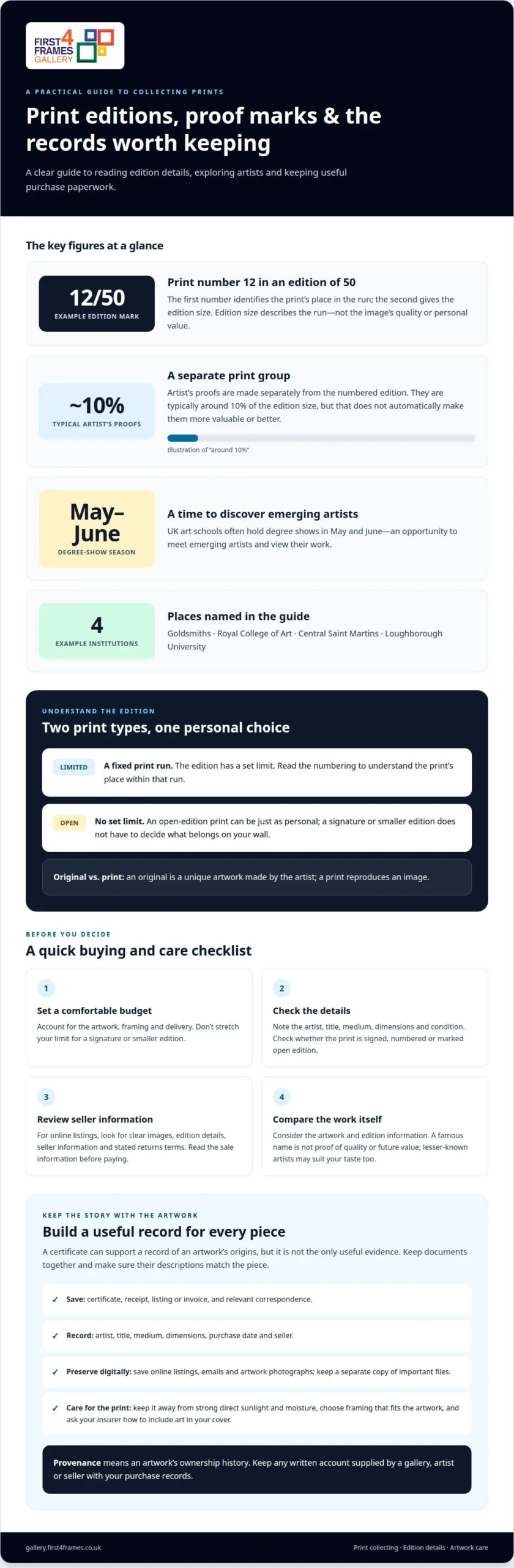
- Know what you’re buying. An original is a unique artwork made by the artist; a print reproduces an image. A limited edition has a fixed print run, while an open edition has no set limit. For anyone learning how to start an affordable art collection, this distinction helps compare options without assuming one type is automatically better.
- Read the edition marking. A number such as 12/50 means the print is number twelve in an edition of fifty. Edition size describes the run, not the quality or personal value of the image. Ask what a listing’s numbering means if it’s unclear.
- Set a firm budget. Decide what you can comfortably spend before browsing, and account for framing and delivery as well as the artwork. Prints and editions can offer a more accessible route than original works, but don’t stretch your limit for a signature or smaller edition.
- Explore local galleries and art while travelling. Visit a nearby gallery to view a print in person and learn about its artist and edition. Artwork bought during a trip can become a memento of that place. Keep its receipt and any details supplied about the work.
- Consider prints by major artists. A larger-run print by a famous artist may be more accessible because more copies are produced. Compare the edition information and the work itself rather than treating a well-known name as proof of quality or future value. Contemporary art by lesser-known artists may also suit your taste.
- Assess online marketplaces. Look for clear images, named artists, edition details, seller information and stated returns terms. For UK purchases, the total may include applicable taxes, delivery or buyer fees; terms and consumer rights can depend on whether you buy from a trader or private seller. Read the sale information before paying.
- Plan for care and framing. Keep prints away from strong direct sunlight and moisture. Choose framing that fits the artwork, retain purchase records and ask your insurer how to include art in your cover. These practical steps support a collection as it grows.
A thoughtful approach to how to start an affordable art collection means weighing the print, seller and full purchase terms together before you decide.
Do I need a certificate of authenticity for an inexpensive print?
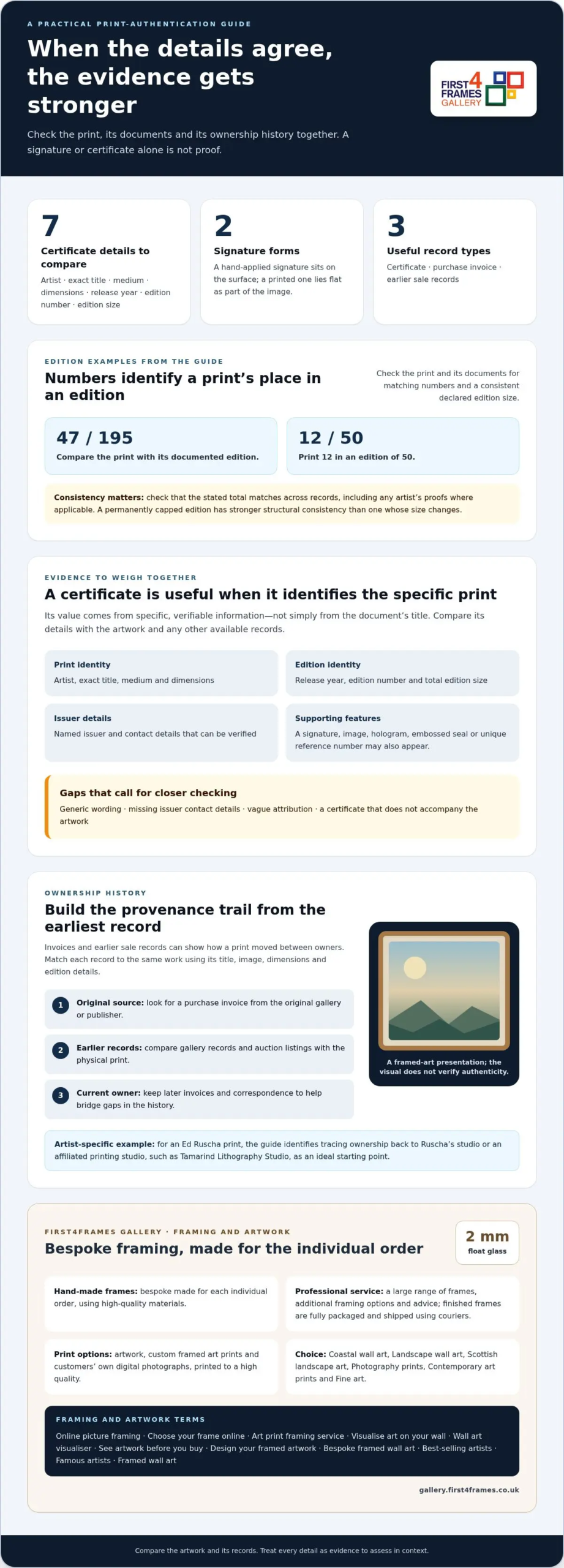
A certificate isn’t the only evidence of an inexpensive print’s origins. If one comes with the artwork, keep it with your receipt and any details identifying the artist, edition and seller.
- Check the artwork’s details. Before buying, note the artist’s name, title, medium, dimensions and condition. For a print, check whether it’s signed, numbered or marked as open edition. These details help distinguish one piece from another and make your purchase records more useful.
- Explore styles, not just famous names. Search for subjects, colours or techniques you enjoy, such as abstract landscapes or botanical works on paper. This can introduce you to an emerging artist whose pieces suit your home, without making reputation or current trends your only guide.
- Visit open studios and graduate shows. UK art schools often hold degree shows in May and June, giving visitors a chance to meet emerging artists and view their work. Graduate exhibitions at Goldsmiths, the Royal College of Art, Central Saint Martins and Loughborough University are useful places to discover new artwork.
- Understand print marks. An artist’s proof is a print made separately from the numbered edition; it isn’t automatically more valuable or better. Artist’s proofs are typically around 10% of the edition size. A blindstamp is an embossed mark pressed into the paper, which may identify an artist, publisher or print workshop.
- Keep a simple record. Store the certificate, receipt and any written description together, noting the purchase date and seller. If a print has no certificate, retain the information supplied with it instead. This record can help explain the artwork’s provenance if you later sell or donate it. Browse prints by artists to explore different styles as you shape your collection.
Keeping certificates of authenticity
To reduce the risk of scams or overpaying, compare the artwork’s details, condition and price with similar works before buying. Ask for a clear description of its provenance, meaning its ownership history, and keep the seller’s written account with your purchase records.
- Keep each document with its artwork. Store the certificate, receipt, listing or invoice, and any correspondence together. Record the artist, title, medium, dimensions, purchase date and seller. For a painting, note any condition details included in the sale description.
- Read what the certificate actually says. A certificate may identify the artist, title, medium, edition or date. Check that its description matches the piece you bought. Treat it as supporting documentation, not a substitute for a clear purchase record or the artwork itself.
- Build a provenance trail. Keep earlier ownership information supplied by a gallery, artist or seller. For contemporary art, an exhibition history or gallery invoice can add useful context. If you later donate or sell a work, this paperwork helps explain its origins to the next owner.
- Preserve digital records. Save online listings, emails and photographs of the artwork in a folder named with the artist and title. Keep a separate copy of important files. This gives you a record if a marketplace listing disappears or your printed paperwork becomes separated from the piece.
- Compare before committing. Review works by the same artist with similar medium, size, edition and condition. At auctions, account for the stated sale terms and any charges shown before bidding. A low opening bid alone doesn’t establish an artwork’s fair value.
- Store paper documents carefully. Keep certificates and receipts flat, dry and away from direct sunlight. Place them separately from the artwork to avoid accidental marks or damage. For works on paper, retain any notes about framing or condition alongside the record, not against the print.
Collecting signed limited-edition prints
- Choose the image before the signature. A signature can add interest, but it doesn’t make a print meaningful by itself. Start with the subject, technique and colours you want to live with. A collection built around personal taste can include contrasting styles rather than following one narrow theme.
- Read the edition information closely. Check the edition size, print medium and whether the artist signed the print. Ask whether the signature appears directly on the sheet or within the printed image. Those details describe the specific work; they don’t guarantee future demand or value.
- Look at how the print was made. Techniques give prints different qualities. Bruce McLean’s Monica’s Walnut Sponge Cake is a 66 x 68 cm hand-painted silkscreen with collaged elements and glazes. Tracey Emin’s So I Left You is a 31 x 36 cm etching. Compare the medium and scale with your available display space.
- Buy for enjoyment, not investment alone. The future value of affordable art over ten years is highly uncertain. A limited edition may be more accessible than an original, but rarity doesn’t promise appreciation. Consider whether you would still value the print if its resale price never increased.
- Protect the work on paper. Prints can be fragile, so keep them away from direct light. Plan suitable framing and careful display before choosing where the artwork will hang. A well-considered presentation lets the print remain the focus while helping you enjoy it in your space.
- Make each purchase part of a considered collection. Compare the print’s subject, medium and edition details with works you already own. Choose quality and connection over accumulating pieces quickly. Explore Giclée fine art prints to discover artwork that could bring a new style or story into your collection.
First4Frames Gallery
First4Frames Gallery helps you shape a collection around the images and styles you enjoy. Explore Giclée Fine Art Prints and Ready-to-Hang Framed Art, from contemporary art prints to artwork inspired by coastal wall art, landscape wall art and Scottish landscape art. Whether you’re drawn to famous artists, best-selling artists or a distinctive new find, let your own taste lead.
Visualise art on your wall before choosing a piece, or use a wall art visualiser as a planning aid. For photography prints or other artwork you already own, Custom Picture Framing can help you design your framed artwork. Browse online picture framing options and choose your frame online to create custom framed art prints or bespoke framed wall art. An art print framing service can bring a considered finish to a piece, helping you see artwork before you buy it framed.
For ideas to begin or add to your collection, explore First4Frames Gallery’s selection of framed wall art and prints. Contact First4Frames Gallery for guidance with your choices.
Give your collection room to grow
Let your next print reflect how you want a room to feel. A single image can be the starting point for a personal collection, leaving room for new artists, subjects and styles to find their place over time. There’s no need to settle on a grand theme before you begin.
If you’re considering how to start an affordable art collection, make your next step simple: choose one piece you’d be glad to see every day. First4Frames Gallery brings together Giclée Fine Art Prints, Ready-to-Hang Framed Art and Custom Picture Framing, so you can explore artwork or consider a finish for a print you already own.
Contact First4Frames Gallery for print advice as you explore what could suit your space and collection.
Follow your curiosity, take your time and let each chosen work tell its own story.
Frequently Asked Questions
How is budget collecting different from art investing?
Budget collecting prioritises the pleasure and meaning you find in a work; art investing focuses on potential financial returns. Before buying, decide which purpose matters most to you. If you’re collecting for enjoyment, a print can earn its place through the memories, colours or ideas it brings to your home, regardless of its resale prospects.
How much money do I need to start collecting art?
There’s no fixed minimum: you can start with an amount that fits your finances. Set a limit before browsing, then consider the full cost of owning and displaying a piece, including framing and delivery where applicable. Starting with one work lets you discover what you enjoy before deciding whether to add more.
Need help investing in art?
First decide whether you want investment guidance or help choosing art for your home. First4Frames Gallery sells Giclée Fine Art Prints and offers Ready-to-Hang Framed Art and Custom Picture Framing, but these are not investment-advisory services. If financial returns are your main aim, research the risks independently and don’t rely on a print’s signature or edition size as a promise of future value.
Will the art I buy on a budget go up in value?
It might, but appreciation isn’t predictable. The future value of budget art over ten years is highly uncertain, and a famous name or limited edition doesn’t guarantee a higher resale price. Buy only what you can afford to keep and enjoy. Treat any future increase as a possibility, not the reason for your purchase.
How much does it cost to start an art collection in the UK?
The total depends on what you buy and how you choose to display it. An unframed print has different associated costs from an original painting or a ready-to-hang piece. Include framing, delivery and any auction charges listed in the sale terms when planning. A clear spending limit helps you compare the full outlay, not just the artwork.
Where can beginners buy affordable original art in the UK?
Look at local art fairs, open studios and galleries that show work by emerging artists. Buying directly from an artist can also give you the chance to hear how a piece was made and what inspired it. Ask for a receipt and a written description of the artwork, then keep them with your collection records.