
Posted on

How to Hang a Heavy Picture Frame Safely and Securely

That beautiful, substantial piece of art is ready to transform your room, but the thought of it crashing down can be daunting. The confusion over wall plugs, screws, and stud finders is often enough to leave your masterpiece leaning against the wall for weeks. But it doesn’t have to be that way. Knowing how to hang a heavy picture frame safely is the key to turning that anxiety into a feeling of pure accomplishment.

At First4Frames Gallery, we believe the final step of displaying your art should be as joyful as choosing it. That’s why we’ve poured our twenty years of craftsmanship and expertise into this definitive guide. We’ll walk you through everything, step-by-step: from identifying your wall type and finding a stud (and what to do when you can’t), to selecting the perfect, premium fixings. Get ready to hang your treasured piece securely, perfectly level, and with the pride of a job beautifully done.

Before You Begin: Assess Your Frame and Wall

Before you pick up a hammer, the journey to displaying your beautiful artwork begins with a simple, crucial assessment. Understanding the challenge-the exact weight of your frame and the type of wall you’re working with-is the secret to a secure, professional, and lasting result. Guesswork can lead to damaged walls or a fallen frame. This initial preparation is the most important part of learning how to hang a heavy picture frame safely and with confidence.

For a visual guide on the fundamentals, this video provides an excellent overview:

How to Weigh Your Picture Frame Accurately

The substantial materials used in a premium picture frame, from solid wood to high-quality glazing, contribute significantly to its overall weight. Never estimate this figure. For an accurate measurement, use a standard bathroom scale. First, weigh yourself and note the number. Then, carefully pick up the frame and weigh yourself again. The difference between these two figures is the precise weight of your artwork. Be sure to write this down, as you’ll need it when selecting the correct hanging hardware.

Identifying Your Wall Type: The Knock Test and Beyond

The type of wall you have is the single most critical factor in choosing the right fixings. The simplest way to start is with the ‘knock test’. Give the wall a firm rap with your knuckle and listen to the sound:

  • Plasterboard (Drywall): Produces a hollow sound. This is the most common internal wall type in modern UK homes.
  • Masonry (Brick or Concrete): You’ll hear a solid, dull thud. These are typically external or load-bearing walls.
  • Plaster & Lath: Common in older properties, this can sound uneven and slightly hollow between the wooden laths.

If you’re still unsure, drill a small test hole in an area that will be covered by the frame. The dust produced-fine and white for plasterboard, reddish or grey and gritty for masonry-will reveal its composition.

Gathering Your Essential Tools

Having the right tools on hand makes the job smoother and safer. Before you start, gather the following essentials:

  • Tape measure
  • Pencil
  • Spirit level
  • Stud finder (essential for plasterboard walls)
  • Drill with the correct drill bits for your wall type
  • Safety goggles, especially when drilling into masonry

Choosing the Right Hardware: A Framer’s Guide

The bridge between your beautiful artwork and the wall is the hardware, and choosing correctly is the most critical step. The golden rule is simple: the hardware’s maximum weight rating must always comfortably exceed your frame’s actual weight. Beyond that, the choice of fixing is determined entirely by your wall material. Forget standard picture hooks or small nails; for a premium, heavy frame, they are simply not up to the task. Getting this right is central to learning how to hang a heavy picture frame safely and securely for years of enjoyment.

For Plasterboard (Drywall) Walls

Most modern UK homes feature plasterboard walls. Your best and most secure option is to locate a vertical wooden stud behind the plasterboard and drive a heavy-duty screw directly into it. If a stud isn’t conveniently located, your next choice is a specialised plasterboard anchor. These clever fixings, like toggle bolts, expand behind the board to distribute the weight over a wider surface area, preventing them from pulling out. For a detailed look at various methods, wikiHow’s solutions for hanging heavy pictures offer a great overview.

Anchor Type Typical Weight Limit (per fixing)
Strap Toggles 20kg – 45kg
Toggle Bolts 15kg – 25kg
Heavy-Duty Self-Drill Anchors 10kg – 20kg

Always check the manufacturer’s specific weight rating on the packaging before purchase.

For Masonry (Brick or Concrete) Walls

Hanging on solid masonry provides an exceptionally strong fixing point. This requires a power drill fitted with a masonry drill bit and suitable wall plugs (often called rawl plugs). The process is straightforward: drill a hole to the specified depth, gently tap the wall plug in until it’s flush with the wall, and then drive your screw into the plug. The plug expands to create a tight, secure grip. The key to success is ensuring your drill bit, wall plug, and screw are all correctly matched in size-this information is usually found on the plug’s packaging.

Picture Wire vs. D-Rings: The Professional’s Choice

For a truly professional finish on a heavy piece, we always advise against using a single strand of picture wire. Over time, wire can stretch, fray, or even snap under significant weight. It also creates a single pivot point, causing the frame to tilt forward from the wall and easily become crooked. Instead, we recommend attaching two D-rings to the back of the frame, about a quarter of the way down from the top. Hang these on two separate, securely fixed wall hooks. This method distributes the load perfectly, keeps your beautiful frame level, and ensures it sits flush and stable against the wall.

The Step-by-Step Hanging Process

With your wall assessed and your premium hardware chosen, you’ve reached the final, rewarding stage. This methodical approach demystifies how to hang a heavy picture frame, turning a daunting task into a simple display of craftsmanship. Remember the carpenter’s golden rule: measure twice, drill once. We strongly recommend asking a friend or family member for a second pair of hands to help lift and position the frame safely.

Following these steps will ensure your beautiful artwork is not only secure but also perfectly positioned to become the focal point of your room.

Step 1: Determine the Perfect Position

Finding the right height is crucial for the artwork’s impact. A general rule used in galleries is to hang art so its centre is at eye level, which is typically around 57-60 inches (145-152cm) from the floor. Once you’ve found your ideal spot:

  • Use a pencil to make a very light mark on the wall where the top centre of the frame will be.
  • Turn the frame over and measure the distance from the top edge down to the hanging points (the centre of the D-rings).
  • Transfer this measurement down from your top-edge mark on the wall. This new mark (or two marks, for two D-rings) is where you will drill.

Step 2: Install Your Wall Fixings

Precision here is key to a level finish. Use your spirit level to ensure your two drilling marks are perfectly horizontal. Now, carefully drill your pilot holes and insert the appropriate wall plugs for your wall type. Screw in your fixings, leaving them protruding just enough for the D-rings to slot onto securely-about 1cm is usually perfect. Give them a gentle tug to ensure they are solid and don’t wobble.

Step 3: Hang and Level Your Artwork

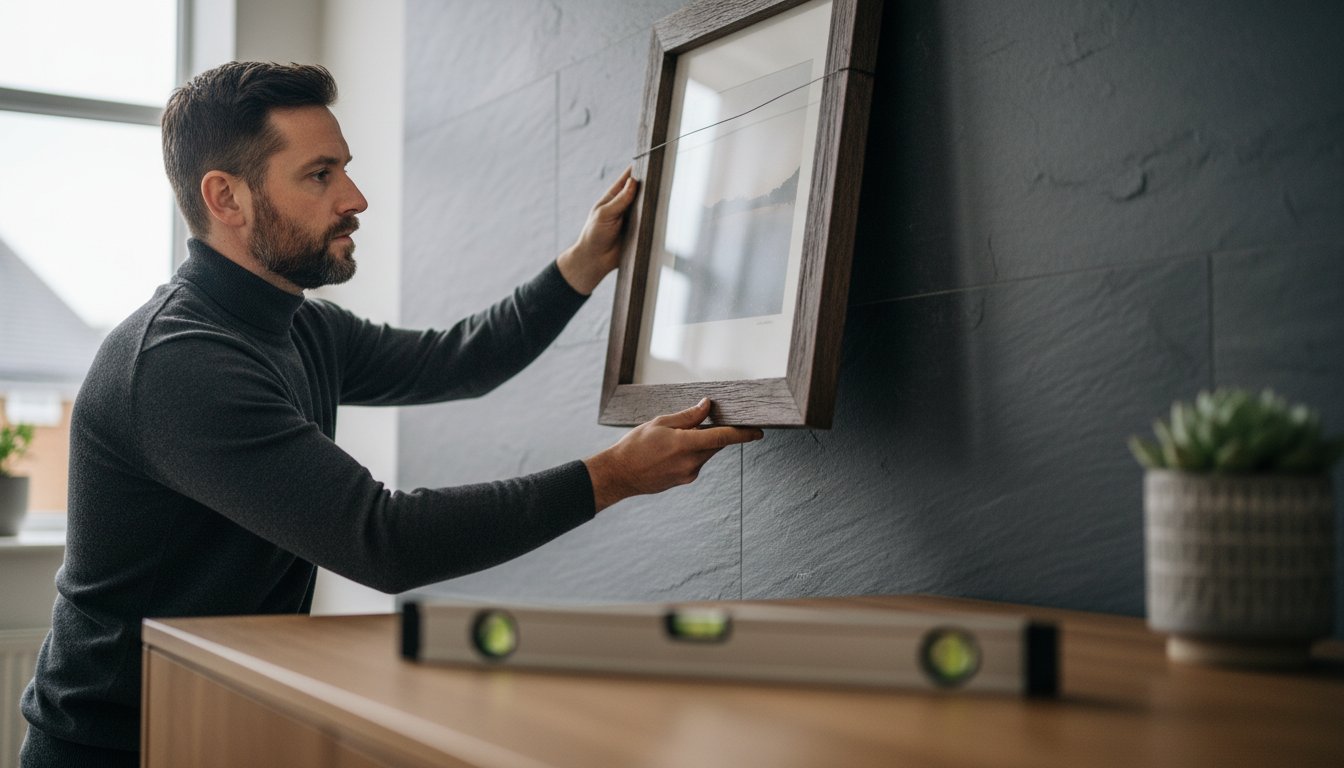
With your helper, carefully lift your artwork. Gently guide the D-rings or hanging wire onto the screw heads. Once the frame is resting on the fixings, place your spirit level on the top edge. Nudge the frame left or right until the bubble is perfectly centred. For a final professional touch, add small felt pads to the bottom corners of the frame to protect your wall and help the art hang straight.

With your masterpiece now beautifully displayed, perhaps it’s time to find its perfect companion? Explore our gallery of premium framed art.

Common Mistakes to Avoid When Hanging Heavy Art

You’ve chosen a beautiful piece of art and a premium, bespoke frame. The final step is getting it on the wall, but this is where the real craftsmanship of the display comes in. When you’re learning how to hang a heavy picture frame, avoiding common errors is just as important as knowing the right steps. Even a small miscalculation can lead to a fallen frame or unsightly damage to your walls. By learning from these frequent pitfalls, you can ensure your spectacular artwork remains secure and perfectly displayed for years to come.

Using a Single Nail or the Wrong Hook

It can be tempting to use a single nail for a quick fix, but this is a critical mistake for heavy art. A single fixing point creates a pivot, allowing the frame to shift easily, and it concentrates all the stress on one small area of your wall. Furthermore, standard picture hooks found in most kits are simply not rated for significant weight and can fail unexpectedly. For true peace of mind, always use at least two fixing points and ensure your hooks or screws are specifically rated to support well over the weight of your frame.

Ignoring Wall Studs

Behind your plasterboard walls lies a sturdy timber frame made of vertical supports called studs. A wall stud is by far the strongest anchor point available, offering a secure foundation that plasterboard alone cannot match. Failing to check for a stud is a major missed opportunity for maximum security. A simple electronic stud finder, often costing less than £20, is an invaluable tool that removes all guesswork. Locating a stud provides a rock-solid installation you can trust.

Skipping the Spirit Level

Hanging a picture ‘by eye’ is a gamble that rarely pays off. Our eyes can be deceiving, and what looks straight from one angle might appear crooked from another. A slanted frame can make an entire room feel off-balance, distracting from the beauty of the art it’s meant to showcase. For a professional finish, use a spirit level twice: first when marking your drill holes, and again when you place the frame on the wall for final adjustments.

These expert tips will help you hang your art with the confidence of a professional. Taking that little bit of extra care is the final touch that honours both the artwork and your home. Feeling overwhelmed by the details? To make the process completely hassle-free, explore our beautiful collection of ready-to-hang art, delivered with the perfect, professionally-selected fixings for a flawless display right out of the box.

Hang Your Masterpiece with Confidence

Hanging a substantial piece of art doesn’t have to be daunting. By carefully assessing your wall, choosing the right heavy-duty fixings, and following a precise, measured approach, you now have the expertise for how to hang a heavy picture frame safely and securely. This ensures your treasured artwork not only looks spectacular but also remains firmly on your wall for years to come.

Of course, the journey to a beautiful wall begins with the perfect piece. With over 20 years of professional framing experience, we understand the importance of quality craftsmanship. Our bespoke service uses only high-quality materials for both frames and fixings, ensuring your art is perfectly presented. If you’d rather start with art that’s designed to impress and is ready for display, we invite you to browse our gallery of beautiful, professionally framed art, ready to hang.

With the right knowledge and the perfect piece, you’re ready to transform your space. Happy hanging!

Frequently Asked Questions

How much weight can a plasterboard wall hold without a stud?

A standard screw directly into plasterboard may only hold 1-2 kg. However, with the correct heavy-duty fixing, its capacity increases significantly. A high-quality hollow wall anchor or a toggle bolt can typically support between 10 kg and 25 kg. It is essential to check the manufacturer’s specified weight limit on the fixing’s packaging to ensure your beautiful artwork is hung securely and with complete confidence.

What is the best height to hang a large picture frame?

As a professional guide, we recommend hanging artwork so its centre point is at average eye level, which is between 145 cm and 152 cm from the floor. This creates a balanced and comfortable viewing experience in most rooms. For a truly spectacular, oversized piece, you may adjust this based on your ceiling height and surrounding furniture, ensuring the art becomes a perfect focal point that elevates your space.

Can I use adhesive hooks or strips for a heavy frame?

While adhesive hooks are excellent for very light, temporary displays, we strongly advise against using them for any substantial or valuable frame. The adhesive can degrade over time due to environmental changes, posing a significant risk to your artwork, frame, and wall. For any piece with weight, a secure mechanical fixing, such as a screw with an appropriate wall plug, is the only way to guarantee a safe and lasting installation.

How do I hang a heavy mirror? Is it the same process?

The process for hanging a heavy mirror is very similar, as both demand robust and reliable support. The main difference is that a heavy mirror often requires two fixing points or a specialist French cleat system to distribute the weight evenly and prevent it from shifting. The skills for how to hang a heavy picture frame are a great starting point, but always use fixings rated well above the mirror’s actual weight for total security.

What should I do if my wall starts to crack around the hook?

If you see any cracks forming around the hook, you must take the picture frame down immediately and with great care. This is a critical sign that the current fixing is failing under the load and is not suitable for the frame’s weight or the wall type. You will need to repair the small area with filler before re-hanging the piece using a much stronger, more appropriate fixing, like a toggle bolt.

Do I need a professional to hang a very heavy piece of art?

For exceptionally heavy (over 25 kg), valuable, or awkwardly shaped art, hiring a professional picture hanger is a wise investment. They possess the specialist equipment, experience, and insurance to ensure a perfect and secure installation. The cost, often starting around £50-£75, provides complete peace of mind that your premium artwork is handled with the expert craftsmanship and care it truly deserves.
Posted on

How to Create a Statement Wall With Art: A Step-by-Step Guide

That large, empty wall in your home holds so much potential, yet the idea of transforming it can feel more daunting than inspiring. You want a beautiful focal point, but where do you begin? The fear of choosing the wrong size, the overwhelming number of art styles, and the potential cost of a large, professionally framed piece can leave you feeling completely stuck. We believe that expressing your personal style through art should be a joy, not a source of anxiety. That’s why we’ve created this guide on how to create a statement wall with art.

Consider this your friendly, expert roadmap. We’ll demystify the entire process with clear, practical steps, turning confusion into confidence. You will learn how to select spectacular artwork that truly resonates with you, determine the perfect scale for your space, and even hang your chosen piece securely and professionally. By the end of this guide, you’ll have all the knowledge you need to create a stunning statement wall that elevates your décor and beautifully reflects who you are.

Step 1: Planning Your Statement Wall – The Foundation of Great Design

Before you even think about browsing for beautiful art, the most crucial step is planning. A statement wall is more than just a collection of pictures; it’s a deliberate and powerful design choice that acts as the anchor for your entire room. Unlike a gallery wall, which tells a story through many smaller pieces, a statement wall uses a single large-scale piece of art or a tightly curated diptych to create one spectacular, undeniable focal point. Getting this foundation right is the key to learning how to create a statement wall with art that truly transforms your space.

For a visual spark of inspiration on how an accent wall can transform a space, take a look at this creative process:

Choosing the Right Wall

The perfect canvas is often hiding in plain sight. Selecting the right wall is about identifying the most logical and high-impact location in your room. A little observation will quickly reveal the best spot to showcase your chosen masterpiece. Here’s what to look for:

  • Natural Focal Points: Look to the wall your sofa rests against, the space above your bed’s headboard, or the main wall in your dining area. These are areas where the eye naturally gravitates.
  • First Impressions: Consider the first wall you see upon entering the room. Using this space creates immediate impact and sets the tone for your home instantly.
  • A Clear Canvas: Ideally, choose a solid, uninterrupted wall. Avoid surfaces broken up by too many doors, windows, or awkward architectural features that might compete with your artwork.
  • The Play of Light: Assess how natural and artificial light hits the wall throughout the day. A well-lit spot will bring your art to life, while a dark corner might cause it to recede into the shadows.

Defining Your Room’s Style and Mood

Your statement art should feel like a natural extension of your home’s personality, not an afterthought. It’s the bridge between your existing décor and a new, elevated aesthetic. Take a moment to identify your style. Are you surrounded by the clean lines of modern design, the warm textures of bohemian style, or the timeless elegance of traditional interiors? Your art should echo this language.

Next, decide on the feeling you want to create. Do you envision a calm, serene sanctuary perfect for unwinding after a long day? Or a vibrant, energetic space that sparks conversation? A tranquil abstract landscape can soothe, while a bold, colourful piece can invigorate. Use your current colour scheme as a guide, choosing art with complementary colours for harmony or a contrasting hue for a dramatic pop.

Step 2: Selecting the Perfect Artwork – The Heart of Your Statement

Now for the most personal and exciting part of the journey. The artwork you choose is the soul of your statement wall; it sets the tone, tells a story, and infuses the room with your unique personality. This step is central to learning how to create a statement wall with art that truly resonates. The key is to select a piece you genuinely love and connect with, something that will bring you joy every single day.

You can approach this in two spectacular ways: with one singular, show-stopping piece or a curated series that works together in harmony.

One Large Piece vs. A Diptych or Triptych

A single, oversized artwork delivers maximum impact, creating an undeniable focal point that commands attention. It’s a confident and powerful choice, perfect for anchoring a room’s entire design scheme. Alternatively, a diptych (two panels) or a triptych (three panels) tells a more expansive story. This approach is ideal for wider walls, creating a beautiful sense of rhythm and visual flow that guides the eye across the space, piece by piece.

Matching Art Style to Your Interior

The style of your chosen art has a profound effect on the atmosphere of your room. Consider how different styles can complement your existing décor:

  • Abstract Art: Perfect for modern and contemporary spaces, adding a dynamic burst of colour, energy, and form.
  • Landscape or Seascape Photography: Introduces a calming, natural feel, creating a serene escape within your home.
  • Bold Graphic Prints or Pop Art: An excellent choice for an eclectic, vibrant room that isn’t afraid to showcase personality.
  • Figurative or Portrait Pieces: Lends a classic, soulful, and timeless touch, adding depth and a sense of human connection.

Working with Colour

Colour is your most powerful tool for creating a cohesive look. You can use your artwork to either blend seamlessly with your space or introduce a daring new element.

  • Pull from existing décor: Choose a piece with colours that echo your cushions, a rug, or other accessories. This creates a beautifully balanced and harmonious feel.
  • Introduce an accent colour: Use your art to bring in a bold, new shade. A splash of vibrant yellow or deep navy can completely transform a neutral room.
  • Embrace monochrome: The timeless impact of black and white art is undeniable. It adds sophistication and drama to any setting, working effortlessly with any colour scheme.

Ultimately, the best artwork is a reflection of you. Trust your instincts and choose a piece that speaks to you on a personal level. This is the secret to a statement wall that not only looks spectacular but also feels authentically yours.

Step 3: Mastering Scale and Proportion – Getting the Size Just Right

Welcome to the step that separates an amateur display from a professional, gallery-worthy installation. Choosing the perfect piece of art is a joy, but getting the size wrong is the single most common mistake we see. It can make a beautiful piece feel lost on a large wall or overwhelm a small space. Understanding the core principles of scale, proportion, and negative space is fundamental to learning how to create a statement wall with art that feels balanced and intentional.

Before you commit, here’s a professional tip: use painter’s tape to outline the dimensions of your potential artwork on the wall. This simple trick allows you to live with the size for a day or two, ensuring it feels perfect before you make a single mark.

The Rules of Sizing Art Over Furniture

Hanging art above a sofa, headboard, or console table creates a beautiful, cohesive anchor point. To get it right, follow these trusted interior design rules:

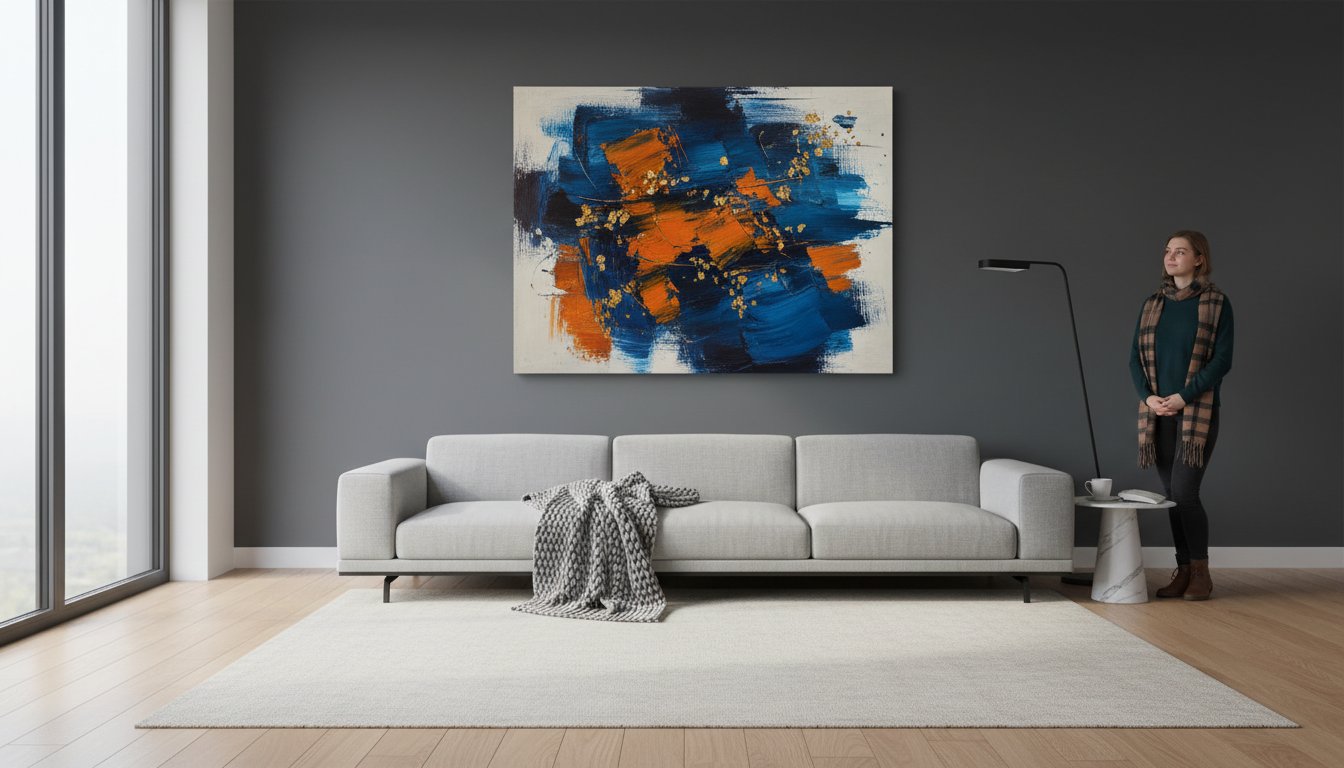
  • Width: Your artwork (or the total width of a gallery collection) should be approximately 2/3 to 3/4 the width of the furniture it hangs above.
  • Height: Hang the bottom of the frame 6-8 inches (15-20 cm) above the back of the sofa or headboard. This connects the two pieces visually without leaving an awkward gap.

These simple guidelines apply to any key piece of furniture, from a fireplace mantel to a sideboard in your dining room, creating a harmonious relationship between your decor and your art.

Calculating Size for a Blank Wall

An empty wall is a blank canvas filled with potential. To ensure your art makes the spectacular impact it deserves, aim for the artwork to occupy roughly 50-60% of the available wall space. Simply measure the wall’s width and height (the area you wish to fill) and multiply each by 0.60 to find your ideal art dimensions. And don’t forget to account for the width of our beautiful bespoke frames in your final calculations!

The Importance of Negative Space

In the world of design, the space around an object is just as important as the object itself. This is ‘negative space’-the breathing room that allows your artwork to shine. Too little space can make a room feel cluttered and chaotic. By giving your statement piece proper spacing, you ensure it remains the undisputed focal point, drawing the eye and inviting admiration without competing for attention.

Step 4: The Power of the Frame – How to Elevate Your Statement Piece

A common mistake is to treat the frame as an afterthought. In reality, it’s one of the most powerful tools at your disposal when learning how to create a statement wall with art. A premium, well-chosen frame is far more than a simple border; it’s the essential bridge connecting your chosen artwork to your room’s décor. The right frame completes the piece, enhances its colours, and seamlessly integrates it into your space, turning a beautiful print into a spectacular focal point.

Achieving a professional finish comes down to the details of craftsmanship, from the material to the mount. Here’s what to consider.

Choosing a Frame Style

The style of frame can dramatically alter the character of your art. Consider the overall aesthetic you wish to achieve when making your selection. Each style brings a unique personality to the artwork and the wall itself.

  • Simple, thin frames in black, white, or natural wood offer a clean, modern look that lets the artwork speak for itself.
  • Ornate, decorative frames with intricate details are perfect for traditional or maximalist interiors, adding a layer of texture and grandeur.
  • Floating frames create the illusion that a canvas is suspended, providing a contemporary, gallery-like feel ideal for modern art.

Selecting Frame Materials and Colours

The material and colour of your frame are key to creating a cohesive look. The right choice will harmonise with your existing interior design elements, making the art feel like a natural part of the room.

  • Match materials like wood or metal to other finishes in the room, such as furniture, light fittings, or door handles.
  • A classic black frame provides a sharp, graphic contrast that grounds the artwork and makes colours pop.
  • A metallic frame in gold, silver, or bronze adds a touch of luxury and reflects light beautifully, warming up the space.

To Mount or Not to Mount?

A mount (also known as a mat board) is the card border that sits between the art and the frame. It provides visual breathing room, drawing the eye inward. A generous mount can make a smaller piece of art appear larger and more significant. Alternatively, full-bleed framing (with no mount) creates a bold, immediate impact, perfect for large, immersive pieces. This choice is fundamental to the final presentation.

Ultimately, the perfect frame ensures your art is presented to its full potential. Professional, bespoke framing guarantees a flawless finish, protecting your art and showcasing it with the premium craftsmanship it deserves. Need the perfect frame to complete your vision? Explore our bespoke framing services.

Step 5: Hanging Your Masterpiece – A Practical Guide to Installation

The moment has arrived. Your planning, selection, and curation are complete, and now it’s time to bring your vision to life. This final step is where your beautiful artwork officially transforms your space. With a little care and the right tools, you can ensure your art is hung safely, securely, and with professional precision. Remember the golden rule of all DIY: measure twice, drill once.

Essential Tools for Hanging Art

Gathering the right equipment beforehand makes the process smooth and hassle-free. For a perfect finish, you will need:

  • A quality tape measure
  • A pencil for marking
  • A spirit level (an app on your phone can work in a pinch!)
  • A drill and/or hammer

The wall fixing is crucial. For standard plasterboard walls and lighter pieces, a simple picture hook and nail may suffice. For heavier art or solid brick walls, you’ll need a drill, a wall plug (like a Rawlplug), and a screw to provide a secure anchor. Always choose a fixing rated to hold more than the weight of your artwork.

The Correct Hanging Height

To achieve a balanced, gallery-style look, the general rule is to hang art so its centre point is at eye level. For most people, this is between 57-60 inches (145-152 cm) from the floor. Measure the height of your framed art, divide by two to find the centre, and then measure from the top of the frame to the hanging wire or hook. This will tell you exactly where to place your nail or screw on the wall to get that perfect eye-level centre.

Tips for Heavy or Oversized Art

A spectacular, oversized piece is a cornerstone of learning how to create a statement wall with art, but it requires extra care. For stability and to distribute weight evenly, always use two fixing points on the wall, corresponding with two D-rings on the back of the frame. Use heavy-duty wall anchors and screws designed for significant weight. For exceptionally large, heavy, or valuable pieces, we always recommend considering a professional installation service for complete peace of mind.

With your masterpiece perfectly hung, all that’s left is to step back and admire your work. If you’re ready to find the next spectacular piece for your collection, feel free to explore our gallery of beautiful, professionally framed prints.

Your Statement Wall Awaits: Bringing It All Together

You now have the complete blueprint for transforming any room. We’ve explored how the success of your project lies in thoughtful planning, selecting the perfect artwork, and the crucial role that scale and framing play. Mastering these steps is the secret to understanding how to create a statement wall with art that truly reflects your personal style and elevates your entire space.

The next step is the most exciting: finding that one spectacular piece to build your vision around. At First4Frames Gallery, we make this journey of discovery simple. As your one-stop-shop for art, we offer premium quality Giclée prints from talented artists, all backed by over 20 years of bespoke framing experience. We handle the craftsmanship so you can focus on the creativity.

Ready to discover your masterpiece? Find the perfect centrepiece for your statement wall in our gallery. Your walls are a canvas for your story-go ahead and make a statement that is beautifully, uniquely yours.

Frequently Asked Questions

What’s the difference between a statement wall and a gallery wall?

A statement wall is all about singular impact. It features one large, spectacular piece of art designed to be the room’s primary focal point, instantly drawing the eye. In contrast, a gallery wall is a curated collection of multiple, often smaller, artworks arranged together. While a gallery wall tells a story through its collection, a statement wall makes its bold impression with a single, powerful voice. Both are beautiful ways to express your personal style.

How much should I expect to spend on a piece of statement art?

The cost can vary significantly, but you can find beautiful, high-quality pieces for a range of budgets. A large, premium Giclée print from an emerging artist might range from £150 to £400, including a bespoke frame. Original paintings or limited editions from more established artists will command a higher price, often starting from £800 and rising into the thousands. It’s an investment in a piece you’ll love for years to come.

Can I create a statement wall if I’m renting my home?

Absolutely! Instead of nails, use high-quality, damage-free picture hanging strips, ensuring you check the weight limit for your chosen artwork. Many modern UK tenancy agreements are becoming more flexible, but it’s always wise to check first. Alternatively, you can lean a large, professionally framed piece against the wall from a console table or the floor for a chic, contemporary look without making a single mark on the walls.

What are the most common mistakes to avoid when creating a statement wall?

A common mistake when learning how to create a statement wall with art is choosing a piece that’s too small for the wall; it gets lost rather than making an impact. Another error is hanging the art too high. The centre of the artwork should be at eye level, roughly 145cm from the floor. Finally, neglecting lighting can leave your beautiful new piece in the shadows. Ensure it’s well-lit to truly bring it to life.

Should the statement art match my sofa or other furniture?

Your art should complement your decor, not necessarily match it perfectly. Think of it as a conversation. The artwork can pick up an accent colour from your sofa or cushions to create a cohesive feel. Alternatively, a bold, contrasting piece can add a spectacular pop of energy. The frame itself acts as a beautiful bridge between your room and the artwork, helping to tie everything together harmoniously, whatever your chosen style.

How do I light my new statement wall to make the art stand out?

Proper lighting is essential to showcase your art. The best option is dedicated, directional lighting. A track light system with adjustable heads allows you to aim light directly onto the canvas. Alternatively, a single picture light mounted above the frame provides focused, intimate illumination that adds a touch of gallery-like sophistication. Even a well-placed floor lamp angled towards the art can make a significant difference, highlighting its colours and textures beautifully.