
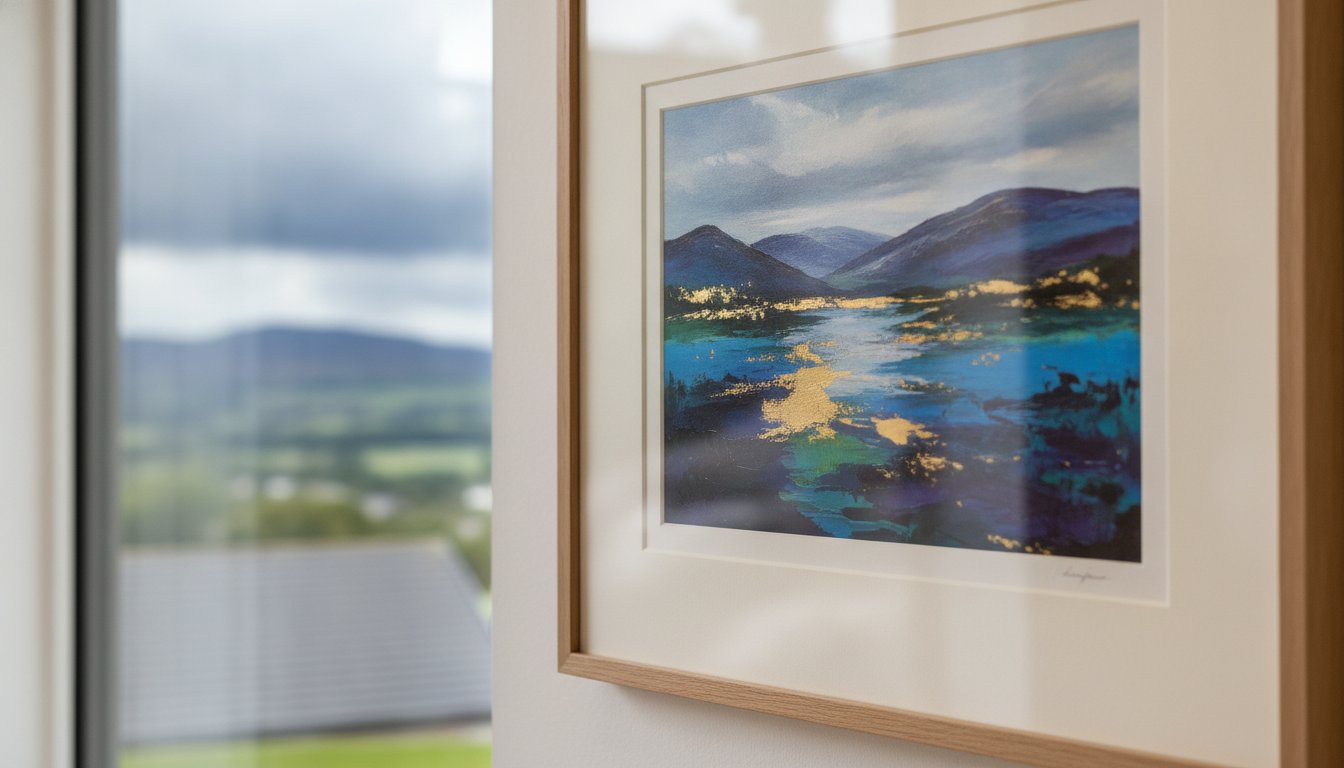
That standard piece of cardboard sitting behind your print feels solid enough, but it could be a ticking time bomb for your artwork. Many people assume that as long as a frame looks good on the outside, the internal components don’t matter. However, understanding what happens if you use the wrong frame backing is the difference between a lifetime of enjoyment and watching a sentimental landscape wall art piece slowly turn yellow. Cheap, mass-produced frames often rely on high-acid materials that leach chemicals into your art, a process that is often irreversible once the damage is done.
It’s natural to feel overwhelmed by technical jargon like ‘pH-neutral’ or ‘lignin-free’, especially when you just want to protect a beautiful Scottish landscape art print. You deserve to feel confident that your investment is safe. In this guide, we’ll demystify these terms and show you how First4Frames Gallery uses premium components, such as 2mm float glass and conservation-grade backing, to provide a chemical shield. You’ll learn how to identify acid burn and how to use tools like a wall art visualiser to design your framed artwork with total peace of mind. By choosing bespoke framed wall art or custom framed art prints crafted with care, you can ensure your favourite pieces remain as vibrant as the day they were printed.
Key Takeaways
- Understand how professional frame backing acts as a vital chemical and structural shield, protecting your art from wall moisture and environmental pollutants.
- Discover exactly what happens if you use the wrong frame backing, including irreversible acid migration that causes yellowing and the development of destructive foxing.
- Learn the difference between standard MDF and archival barrier boards to ensure you choose the correct level of protection for your specific type of artwork.
- Explore why bespoke, hand-made frames featuring 2mm float glass offer superior clarity and preservation compared to mass-produced alternatives using perspex.
- Gain confidence in using a wall art visualiser to design your framed artwork, knowing every component is selected to ensure the longevity of your collection.
The Hidden Role of Frame Backing: More Than Just a Cover
When you choose your frame online, it’s easy to focus on the beautiful wood or the perfect mount. However, the backing is the unsung hero of the entire assembly. It’s the final layer that provides structural support and environmental protection. While some might think it’s just a way to hold the art in place, professional framing treats it as a critical shield. If you’ve ever wondered what happens if you use the wrong frame backing, the answer often involves a silent decay that starts from the back and works its way forward.
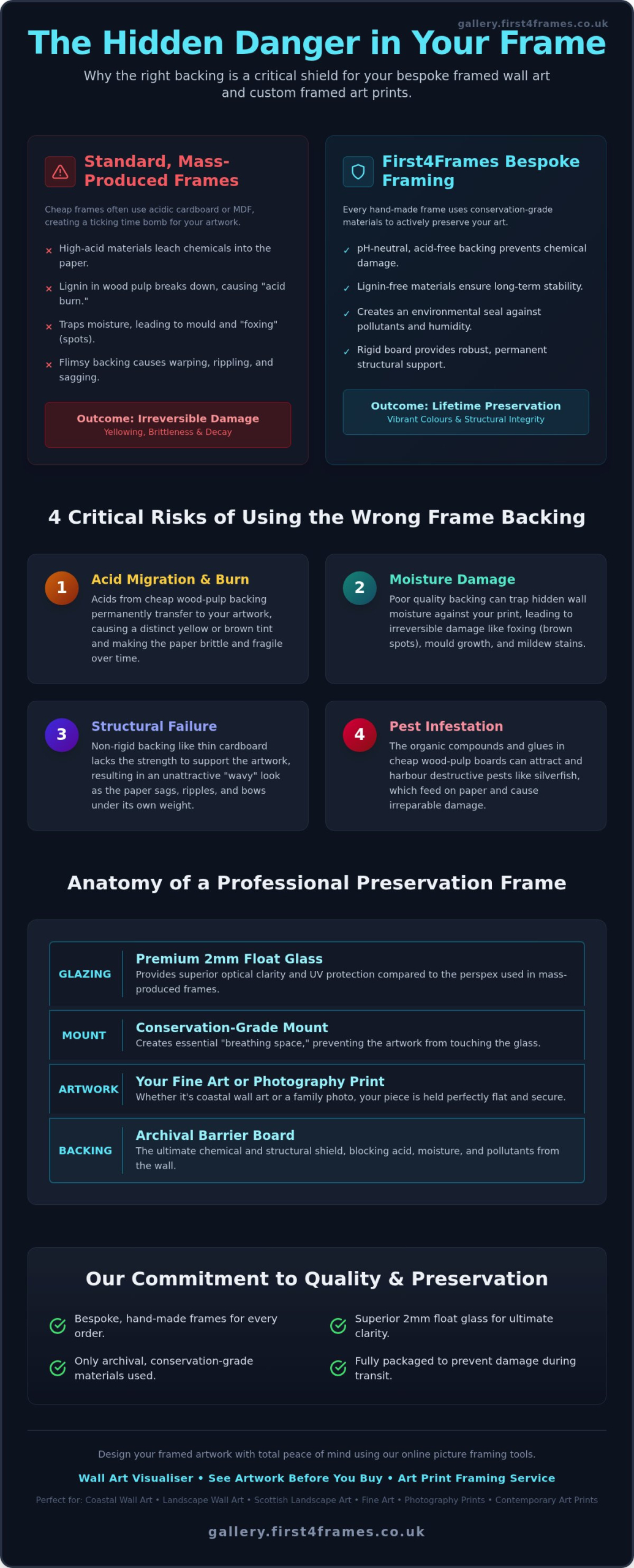
Think of your frame as a protective sandwich. Our bespoke, hand-made frames use 2mm float glass to provide superior clarity at the front, while the mount creates essential breathing space. The backing seals the unit, creating a stable micro-environment. A ‘pretty’ frame with poor backing is essentially a ticking time bomb. Without a proper barrier, your artwork is vulnerable to the very wall it hangs on. Walls often hold hidden moisture or transmit cold temperatures directly onto the paper, leading to long-term chemical damage.
Structural Integrity and Support
A high-quality backing ensures your art stays perfectly flat. Over time, gravity and humidity can cause paper to sag or bow if it isn’t supported by a rigid, professional-grade board. In our bespoke framed wall art, we ensure the backing maintains a consistent focal plane. This prevents the “wavy” look often seen in cheap, mass-produced frames where the backing is little more than thin cardboard that lacks the strength to resist warping or bending under its own weight.
The Environmental Shield
The rear of the frame is a common entry point for dust, insects, and atmospheric pollutants. A professional backing board acts as a physical filter and regulates minor humidity shifts within the frame. This level of protection is consistent with the standard practices found in the conservation and restoration of painting frames. By creating this seal, we protect your contemporary art prints or photography prints from the invisible threats lurking in the air. Understanding what happens if you use the wrong frame backing helps you see that it’s much more than a simple cover; it’s a dedicated partner in the preservation of your most cherished pieces.
4 Critical Risks of Using the Wrong Frame Backing
Choosing a frame is an exciting part of the creative process, but the internal materials matter just as much as the external aesthetic. If you’ve ever wondered what happens if you use the wrong frame backing, the reality is a series of chemical and physical threats. Unlike our bespoke, hand-made frames, many budget options use standard acidic cardboard that acts as a catalyst for decay. This is especially dangerous for high-quality items like Scottish landscape art or coastal wall art, where paper integrity is paramount.
- Acid Migration: The slow transfer of acids from the backing into your art.
- Moisture Trapping: Non-breathable materials that cause foxing or mould.
- Mechanical Damage: Physical rippling caused by poor structural support.
- Pest Infestation: Cheap wood-pulp boards that attract insects like silverfish.
Understanding Acid Burn and Yellowing
The primary danger in cheap backing boards is lignin. This organic polymer, found in wood-pulp cardboard, breaks down over time and releases acidic gases. This leads to ‘acid burn’, where your fine art prints develop a distinct yellow or brown tint and become brittle. The Canadian Conservation Institute framing guide highlights how these environmental fluctuations and poor materials can lead to physical damage. If you notice a dark line around the edge of your mount, your backing is likely ‘burning’ your artwork. Our online picture framing service prevents this by using only archival-grade materials.
The Danger of Warping and Rippling
Humidity is a constant threat to paper. When you use a backing that doesn’t breathe or expands at a different rate than the frame, your art may begin to ripple or ‘cockle’. This mechanical stress is common in contemporary art prints that aren’t properly supported. Bespoke framed wall art is designed with specific tolerances to allow the art to breathe, ensuring it stays flat and vibrant behind our high-clarity 2mm float glass. Before you commit, you can use our wall art visualiser to see artwork before you buy and ensure your design includes the protection it deserves. It’s a simple way to plan your collection and ensure your photography prints are preserved for years to come.
Choosing the Right Materials: MDF vs. Acid-Free vs. Barrier Boards
Selecting the correct material is about matching the protection to the value of your piece. While we previously explored the chemical dangers, the solution lies in a layered defense. Different materials serve different roles within the frame assembly. Understanding what happens if you use the wrong frame backing helps you appreciate why professional material selection is so nuanced. It’s not just about the back; it’s about the entire assembly working together to shield your art.
- MDF and Hardboard: These provide excellent structural strength for larger frames but aren’t archival. They must be used with a barrier layer to prevent acid transfer.
- Foam Board (CFC-free): Lightweight and perfectly flat, this is a professional staple. Ensure you’re using the archival version for long-term safety.
- Barrier Boards: This is the essential ‘shield’ layer. It sits directly behind the art to block chemical migration from less stable outer layers.
- Corrugated Plastic: Often used in humid environments, this waterproof material won’t warp or hold moisture like paper-based boards.
When you choose your frame online, consider the environment where the piece will hang. If you ignore the specific needs of the art, what happens if you use the wrong frame backing is a slow loss of both sentimental and financial value.
When to Use Conservation-Grade Backing
Original watercolours, limited editions, and Giclée prints demand conservation-grade materials. These items are often printed on high-quality papers that are incredibly sensitive to their surroundings. Using pH-neutral materials is essential for preserving Scottish landscape art or delicate contemporary art prints. This level of care ensures that the ‘white’ of the paper remains crisp and the colours stay true to the artist’s original vision for decades.
The DIY Trap: Why Cardboard is Never the Answer
It’s tempting to use a recycled shipping box for a quick DIY project, but this is a significant risk. Recycled cardboard contains a cocktail of hidden chemicals and glues that accelerate the decay of your art. Cheap, mass-produced frames often hide these low-grade materials behind a thin sheet of paper to save costs. Our bespoke framed wall art contrasts this by using individually crafted components for every order. You can design your framed artwork with confidence, knowing we never cut corners on the materials that keep your art safe.
Total Protection: The First4Frames Gallery Approach to Bespoke Framing
At First4Frames Gallery, we believe that the soul of a frame lies in its invisible details. While we have discussed the chemical risks of inferior materials, our workshop focuses on providing a complete archival solution. Understanding what happens if you use the wrong frame backing has led our artisans to reject standard components in favour of individually crafted, preservation-grade materials for every order. This bespoke approach ensures that your artwork isn’t just displayed, but truly protected within a stable micro-environment that prevents the slow decay associated with mass-produced alternatives.
A cornerstone of our quality is the use of 2mm float glass. Unlike the thin perspex found in many high-street alternatives, float glass offers superior clarity and structural rigidity. When paired with our professional backing boards, it creates a secure seal that safeguards your photography prints from the moment they’re mounted. To ensure this perfection reaches you, every frame is fully packaged and shipped via professional couriers. This careful logistical process prevents damage during the journey from our workshop to your wall.
Visualise and Design Your Perfect Frame Online
Our Online picture framing tool makes it easy to protect your collection from the comfort of your home. You can use our wall art visualiser to see artwork before you buy, allowing you to design your framed artwork with total confidence. This art print framing service is designed to be straightforward and inspiring, whether you’re framing a new landscape wall art piece or a cherished family portrait you’ve printed through our “print and frame” service.
Expert Advice for Your Custom Project
Our Falkirk-based team brings years of experience to every custom project. We understand that Scottish landscape art requires different considerations than contemporary art prints or heavy oils. If you have unique requirements or a high-value piece, we invite you to contact us. We can advise on the specific barrier boards needed to avoid what happens if you use the wrong frame backing, ensuring your art remains a legacy for future generations.
Protect Your Art for a Lifetime
By moving beyond the surface of your frame, you’ve taken the first step in ensuring your collection stands the test of time. Understanding what happens if you use the wrong frame backing transforms framing from a simple aesthetic choice into a long-term investment in your art’s survival. Whether it’s a coastal wall art piece or a rare fine art print, the right internal components act as a silent guardian against the elements, preventing the slow chemical decay that ruins so many unprotected works.
At First4Frames Gallery, we combine this technical expertise with a passion for traditional craftsmanship. Every frame is hand-made in our UK workshop, featuring 2mm float glass for unmatched clarity and protection. We’re proud to be trusted by artists across Scotland to preserve their most meaningful work with the care it deserves. You can design your bespoke framed artwork with professional protection today through our online gallery. Let’s work together to make sure your art remains a beautiful and vibrant part of your environment for generations to come.
Frequently Asked Questions
Can I use regular cardboard as a frame backing?
No, you should never use regular cardboard for anything other than temporary decorative items. Standard cardboard contains lignin and recycled chemicals that release acidic gases over time. This is exactly what happens if you use the wrong frame backing; the acids leach into the paper, causing irreversible yellowing and brittleness. For valuable Scottish landscape art or fine art, always opt for professional, pH-neutral materials that won’t decay.
What is the best material for the back of a picture frame?
The best material depends on the level of protection needed, but archival-grade foam board or conservation barrier board are the professional standards. These materials are chemically stable and provide a flat, rigid support system for your art. Our bespoke framed wall art uses high-quality, preservation-grade components that act as a shield against the environment. For moisture-prone areas, corrugated plastic is an excellent choice as it won’t warp or hold dampness.
How do I know if my frame backing is acidic?
You can often identify acidic backing by looking for visual cues like ‘mat burn’, which appears as a dark brown or yellow line on the edges of your artwork. If the backing board itself is brown and brittle, it’s likely a high-lignin wood-pulp material. Professional framers also use pH testing pens to check for acidity. If you’re unsure what happens if you use the wrong frame backing, these visual warnings are your first sign that the art is in danger.
What is a barrier board in framing?
A barrier board is a thin, chemically inert layer placed directly between the artwork and the structural backing board. Its primary job is to block the migration of acids and pollutants from the outer frame layers to the art itself. This is a critical component in custom framed art prints, as it creates a purified micro-environment. It ensures that even if the outer frame is wood, the art remains untouched by harmful chemicals.
How often should I replace my frame backing?
You should inspect your framing every five to ten years to ensure the materials are still performing their protective duties. If you notice any warping, foxing, or discolouration on the backing board, it’s time for a replacement. High-quality conservation framing can protect art for up to 20 years, but environmental factors like humidity can accelerate wear. Regularly checking your frames ensures your photography prints and contemporary art prints stay in gallery condition for a lifetime.