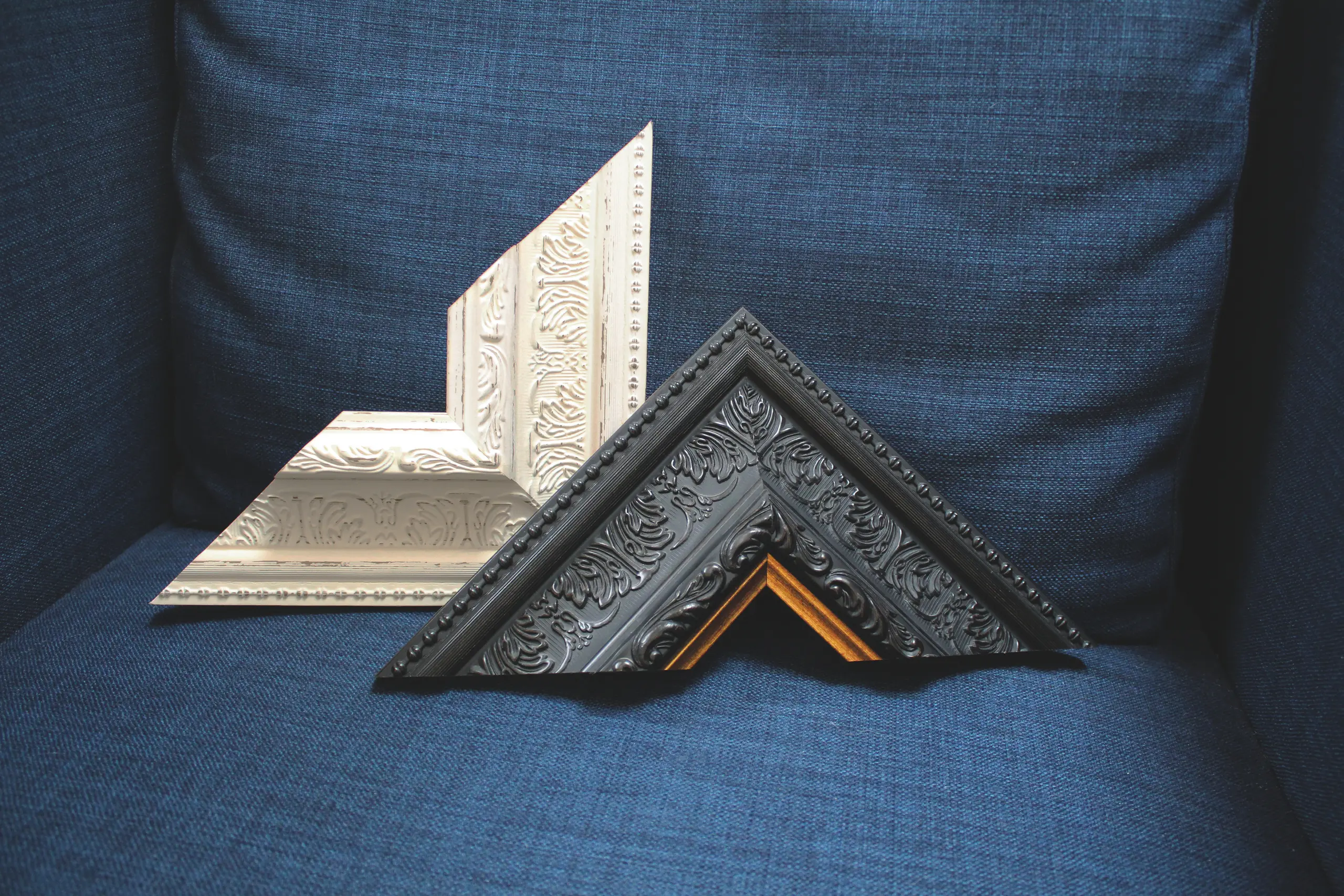
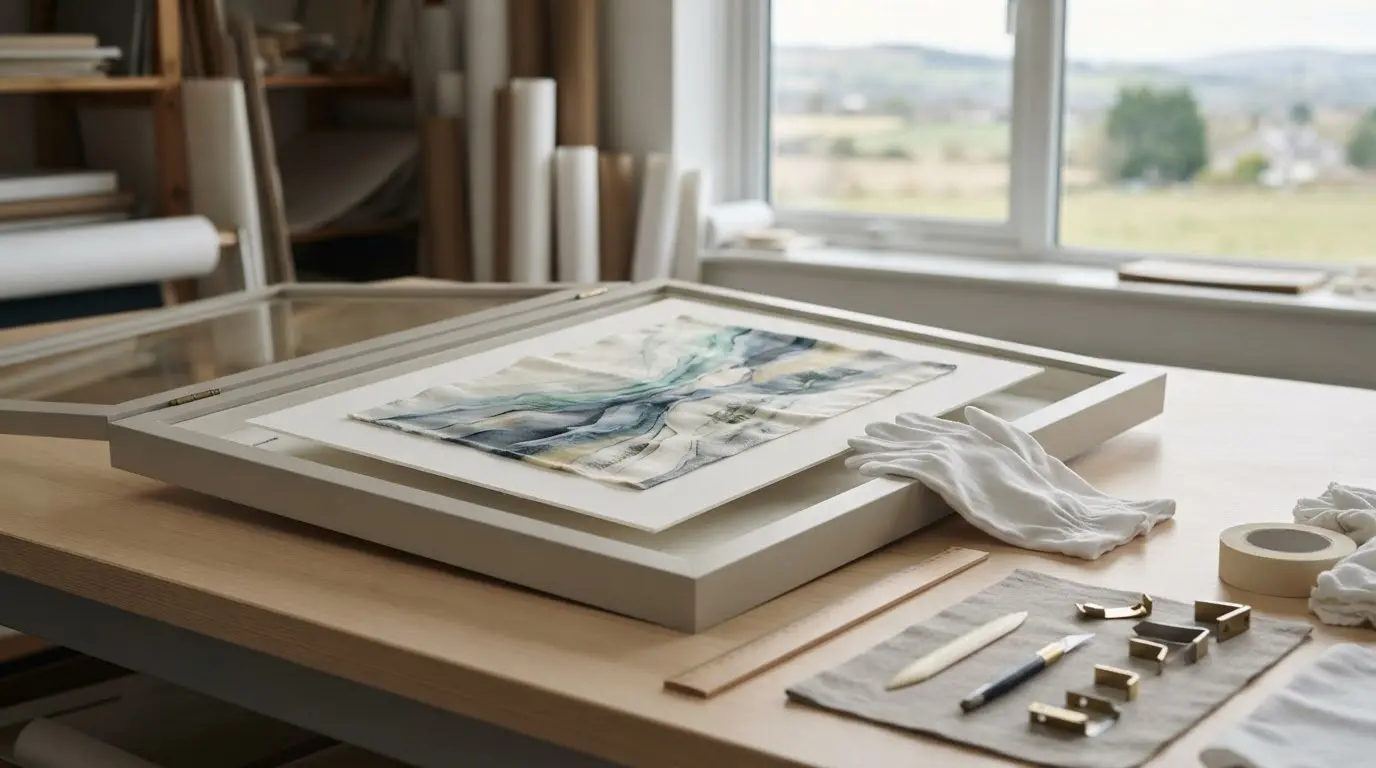
A silk painting needs to be treated as a textile before it’s treated as a picture. If you’re wondering how to frame a silk painting without pulling the fabric unevenly or letting glazing press against its surface, start by considering how the silk is supported. A thoughtful presentation can also help the piece sit beautifully alongside other framed art in your home.
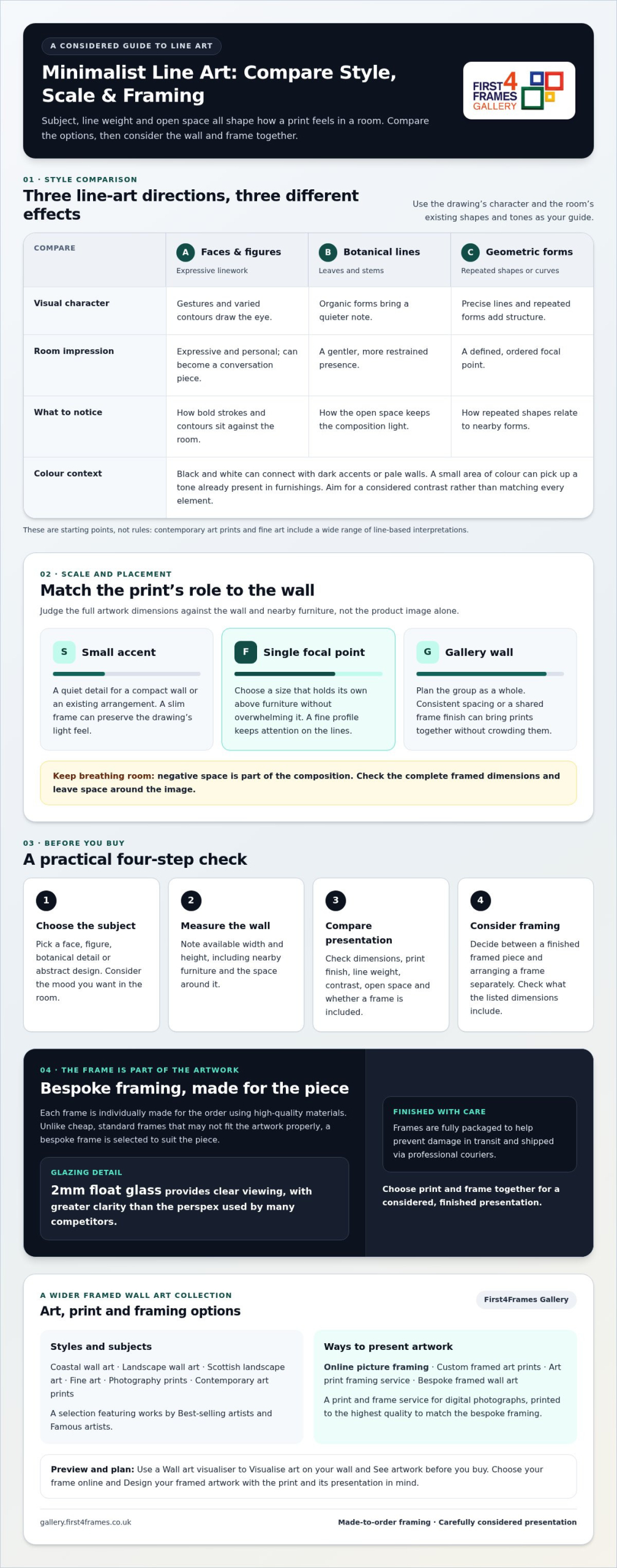
It’s natural to feel cautious: silk is delicate, and a frame that works for a paper print may not suit a textile. As you plan the display, consider the artwork’s colours, scale and surroundings, whether you’re pairing it with Coastal wall art, Scottish landscape art, Fine art or Contemporary art prints. A Wall art visualiser can help you Visualise art on your wall before deciding on an arrangement.
This guide explains how to support and frame silk carefully, and when bespoke framing may be a sensible choice. If you’re exploring Online picture framing, comparing Custom framed art prints or looking to Choose your frame online, keep the artwork’s individual needs in mind. The same thoughtful approach can help you Design your framed artwork and find a place for Photography prints or Bespoke framed wall art, too.
Key Takeaways
- Think of silk as a delicate textile: plan how to support it without disturbing its painted surface.
- When considering how to frame a silk painting, choose a setup that holds the fabric evenly and keeps it clear of the glazing.
- Follow a careful sequence, beginning with clean hands and a clear work surface, then inspect the artwork before framing.
- If the piece needs an individually considered fit or presentation, bespoke framing offers another route. First4Frames Gallery professionally frames customer-supplied artwork in-house.
Why framing a silk painting calls for a textile-first approach
A silk painting may look like a flat picture, but its support behaves differently from paper. Silk is flexible, so it can shift, sag or crease if it isn’t supported evenly. The painted surface also needs space: pressure from a mount or contact with glazing can affect how the work sits and looks.
Textile-first framing means supporting the fabric evenly while keeping its painted surface undisturbed. That principle is central to how to frame a silk painting. The aim is to give the material a stable presentation without pulling it taut, trapping folds or allowing the glazing to rest against it.
What makes a silk painting different from a paper artwork?
Paper usually holds its shape as a sheet; silk can move with handling and gravity. A small fold may become more noticeable once the work is displayed, while uneven support can leave one area slack and another under tension. Touching the painted face may also leave handling marks. Handle the artwork gently, and don’t try to smooth, stretch or flatten it by force.
What should you consider before choosing a frame?
First, establish whether the silk is already mounted or remains loose. A mounted piece may have a support that affects the frame depth and how it can be presented. With loose silk, the support and fitting need particular thought so the fabric can sit evenly without being compressed.
Consider the painting’s overall size, visible condition and intended display position. A larger piece may need a different support approach from a small one, while the available wall space can help determine a suitable frame proportion and orientation. Plan for clearance between the silk and glazing, too: the painted surface shouldn’t rest against the glass.
If you notice existing creases, distortion, fragile areas or other condition concerns, pause rather than trying to correct them as part of a DIY framing project. A qualified textile conservator can assess the artwork before framing. Careful assessment helps you choose an approach that respects the piece instead of forcing it to fit a standard frame.
Choose suitable support, mount and glazing for a silk painting
Support, mount and glazing work together, but each has a different job. The support steadies the textile, the mount helps position it within the frame, and the glazing provides a front barrier. Base these decisions on the silk’s construction and condition, not a one-size-fits-all method. This is an important part of how to frame a silk painting without pulling or compressing it.
How should the silk be supported?
Aim for even, stable support that holds the artwork in position without stretching it excessively. The right attachment and tension method depends on whether the silk is loose, already mounted or has areas that need particular care. Don’t treat adhesives, pins or stitching through the artwork as universal solutions. Any of these may be unsuitable for a particular piece, so avoid choosing a method without considering the textile’s construction and condition. The American Institute for Conservation’s Textile Conservation Catalog offers further reference on textile conservation methods and material considerations.
Should glazing touch a silk painting?
Don’t assume the painted surface can safely rest against glass or acrylic. Contact may press against the textile, so consider a mount or frame spacing that creates a clear gap where appropriate. The amount of clearance and the framing arrangement should suit the artwork, not just the frame’s appearance.
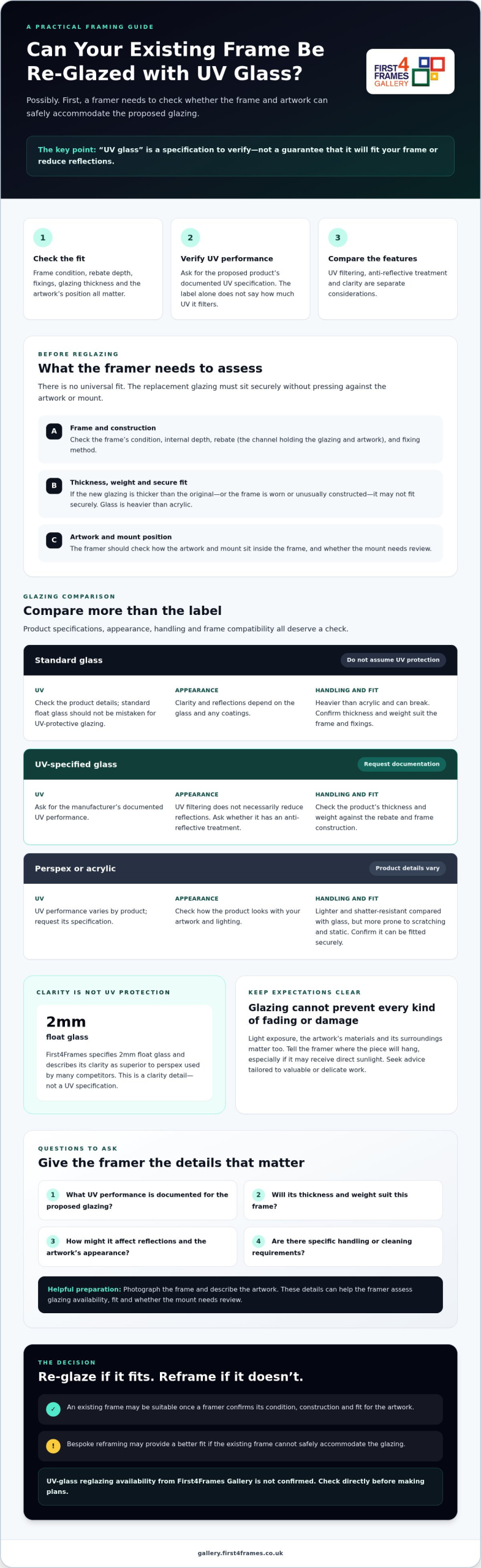
First4Frames Gallery uses float glass as standard. The glazing choice should still be considered alongside the silk’s support and the space needed between the artwork and the glass. Float glass is not specialist conservation glazing, and no UV-filtering or conservation properties are claimed for it. For more on framing options, read the custom picture framing guide. You can also browse framed artwork for presentation ideas.
How to frame a silk painting step by step
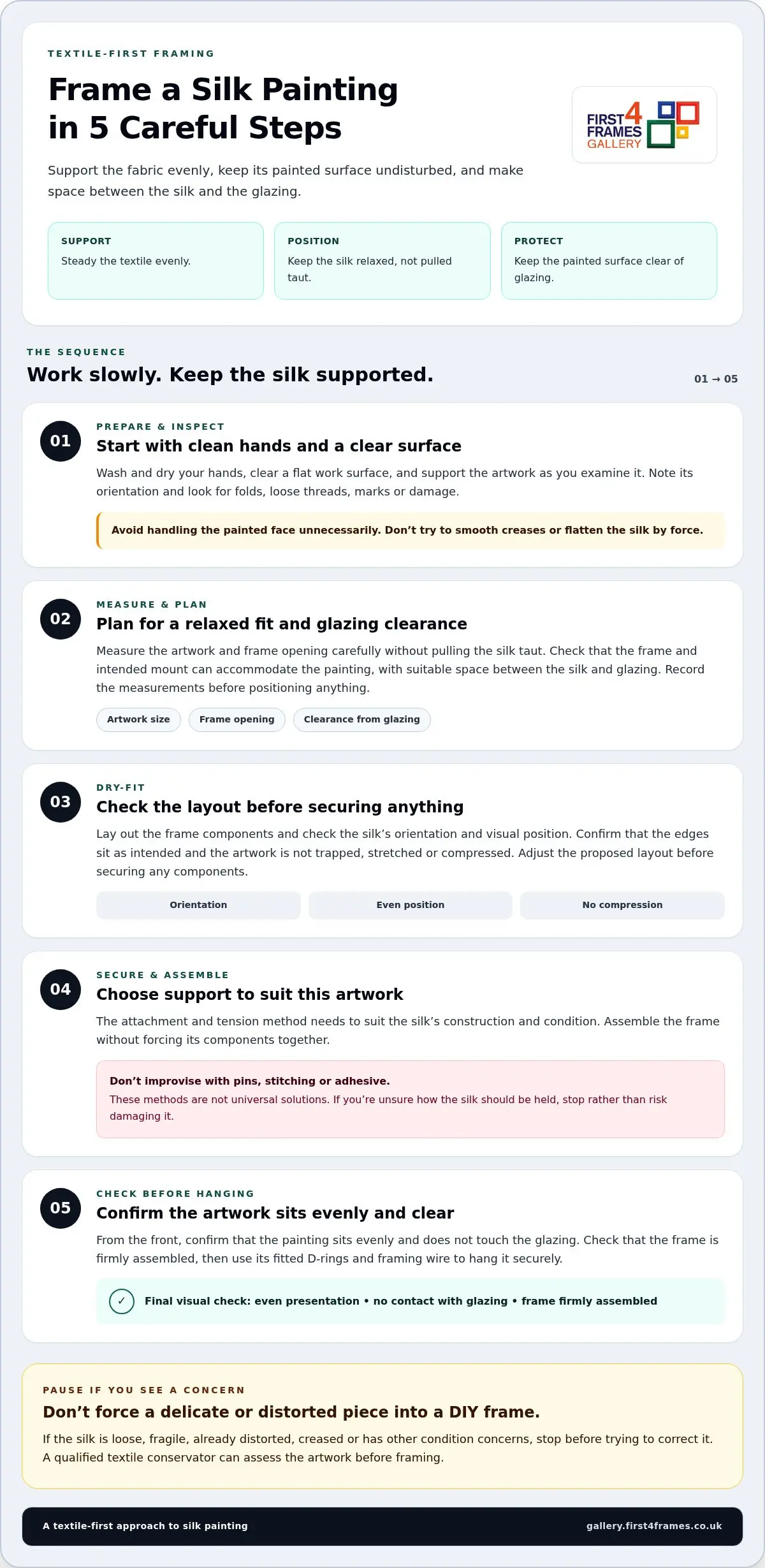
Work slowly and keep the silk supported throughout. If the fabric is loose, fragile or already distorted, don’t try to correct it by pulling or pressing. Pause before proceeding with a DIY frame.
- Prepare and inspect. Wash and dry your hands, clear a flat work surface, and support the artwork as you examine it. Look for folds, loose threads, marks or damage, and note the painting’s orientation. Avoid trying to smooth creases or handling the painted face unnecessarily.
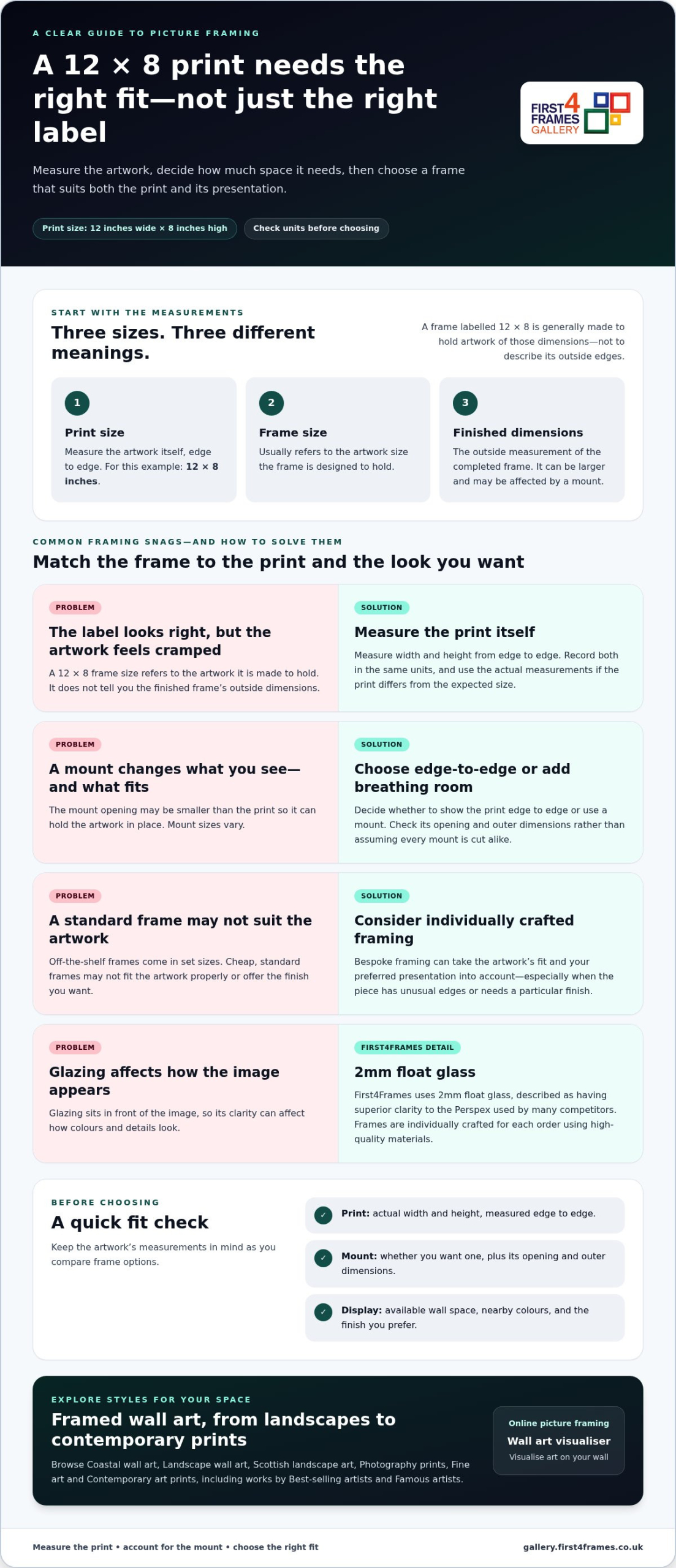
- Measure and plan. Measure the artwork and frame opening carefully, keeping the silk relaxed rather than pulling it taut. Check that the frame and intended mount can accommodate the painting and allow suitable clearance from the glazing. Record the measurements before positioning anything.
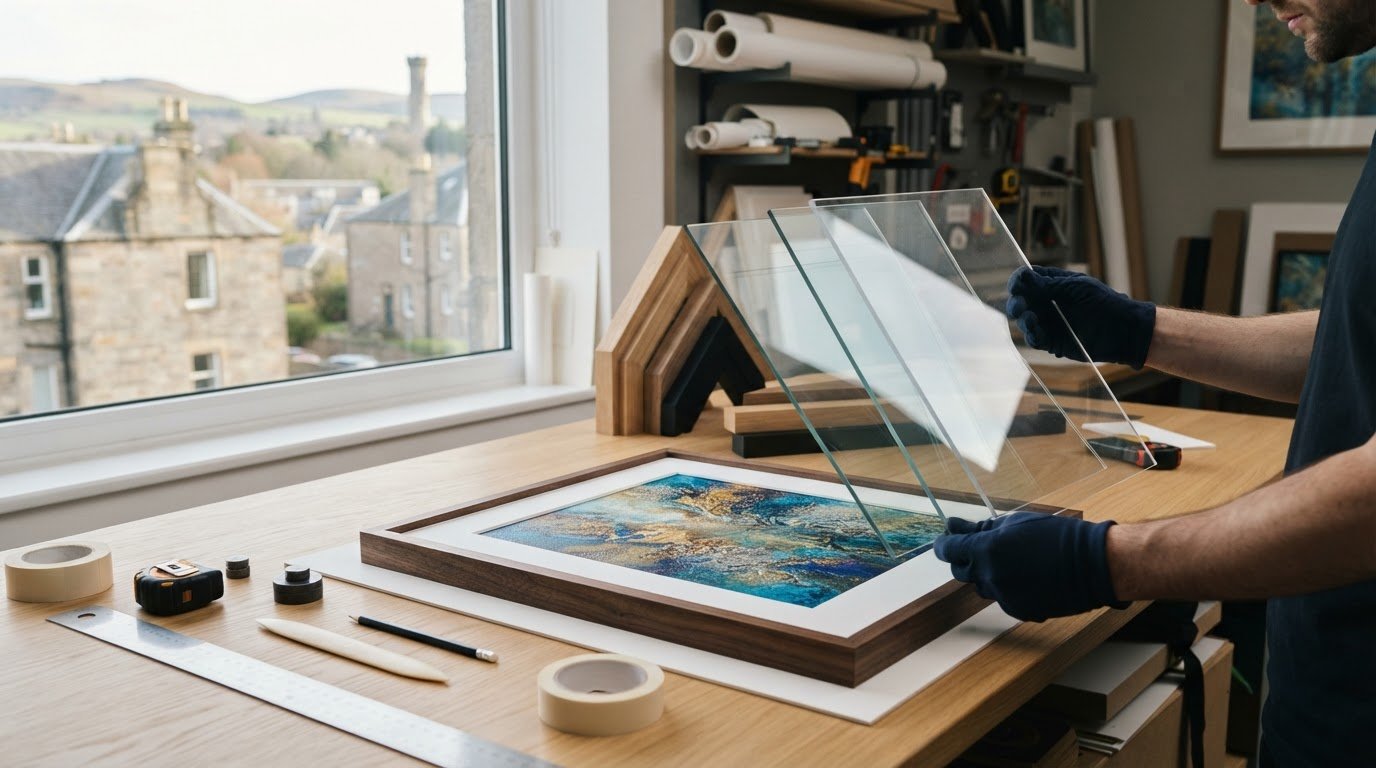
- Dry-fit before securing. Lay out the frame components and check the orientation and visual position of the silk. Confirm that the edges sit as intended and that the artwork isn’t trapped, stretched or compressed. Adjust the proposed layout before securing any components.
- Secure and assemble with care. Any attachment and tension method needs to suit the artwork’s construction and condition. Don’t improvise with pins, stitching or adhesive. If you’re unsure how the silk should be held, stop rather than risk damaging it. Assemble the frame without forcing its components together.
- Check before hanging. From the front, confirm that the painting sits evenly and doesn’t touch the glazing. Check that the frame is firmly assembled, then use its fitted D-rings and framing wire to hang it securely and verify that it sits straight.
In short: inspect, measure, dry-fit, secure appropriately, then check clearance and hanging alignment. These are the essential stages in how to frame a silk painting, but the right attachment method depends on the piece itself. For inspiration on framing and presentation, explore framed artwork.
When bespoke framing is the better route for a silk painting
A standard frame may not suit silk that is loose, unusually sized or already mounted in a way that affects how it fits. Bespoke framing is worth considering if the artwork needs a particular frame depth, a carefully chosen proportion or a presentation that works around its existing support. Unlike cheap, standard frames that may not fit the artwork properly, each First4Frames Gallery frame is individually crafted for the order using high-quality materials.
If you’re unsure how to frame a silk painting or feel uneasy handling the piece, a professionally framed, individually considered fit may be a more comfortable route. Address any condition concerns before framing.
What can a bespoke framer contribute?
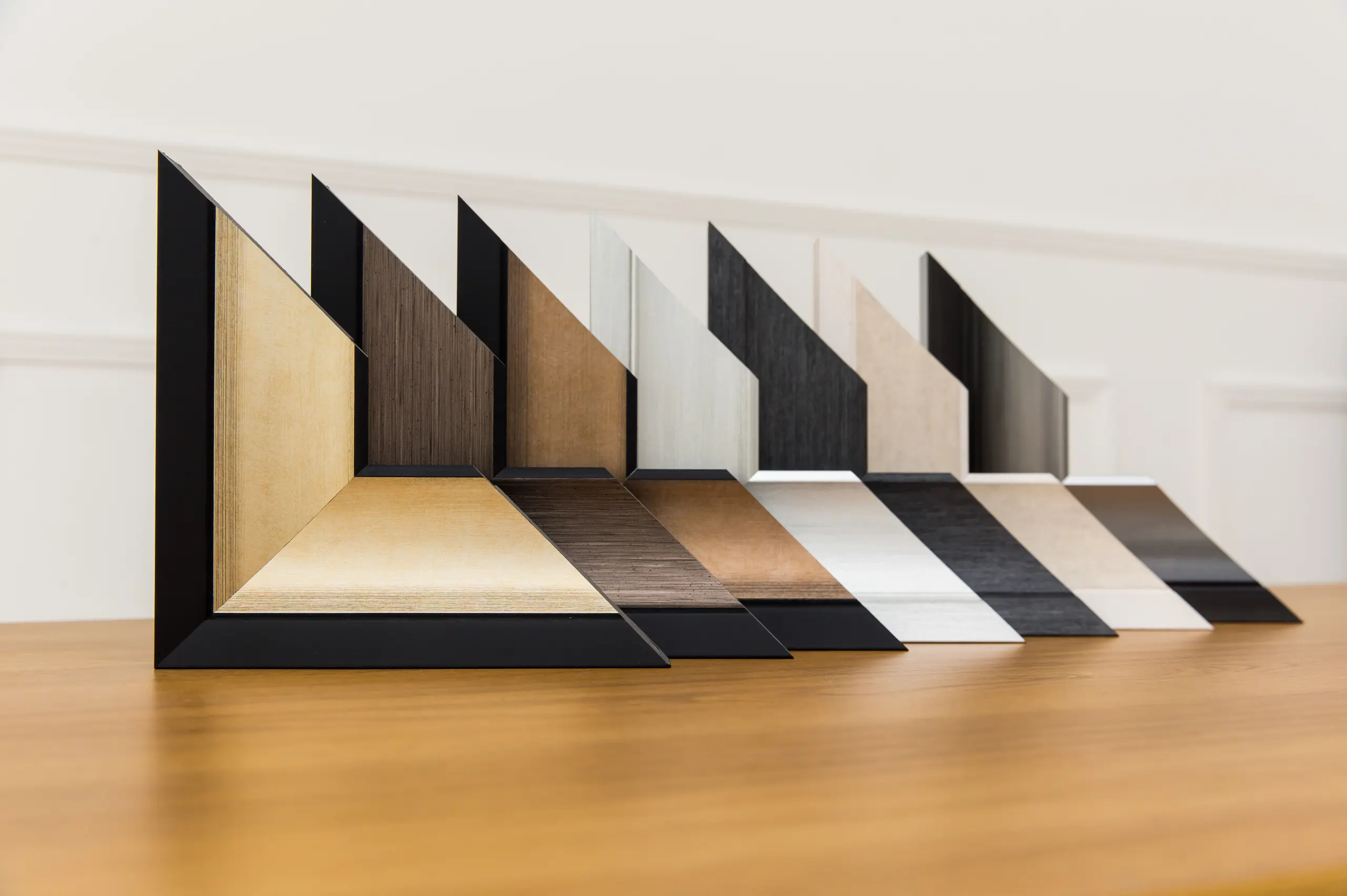
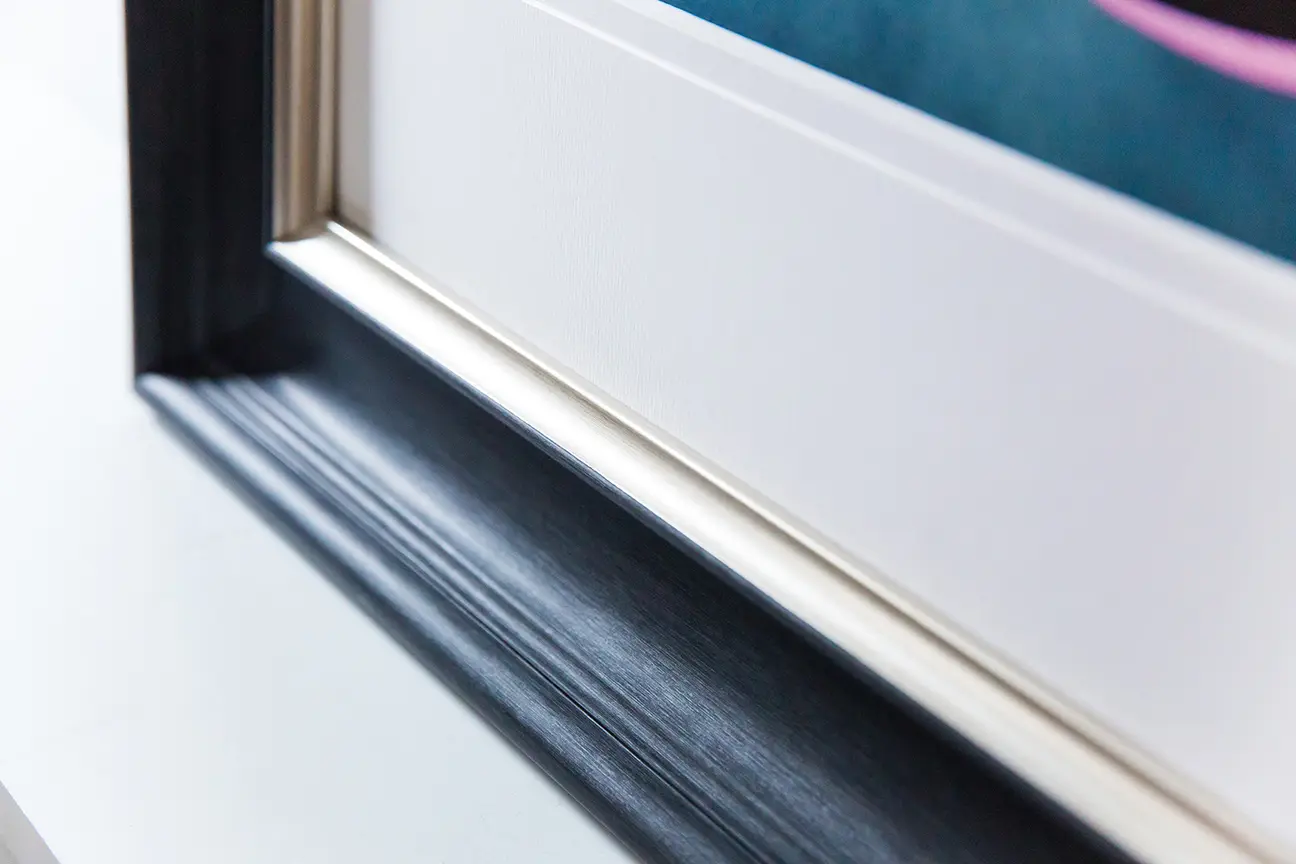
First4Frames Gallery professionally frames customer-supplied artwork in-house, with precision cutting and expert mounting. Customers can choose from extensive frame and mount selections on product pages, helping shape a finish that complements the artwork rather than overwhelming it. Frames use float glass as standard. Finished frames are prepared for display with D-rings and high-quality framing wire for straight wall mounting.
How to take the next step
Consider whether you’re comfortable assessing and handling the silk yourself. If it’s difficult to support evenly or you’re uncertain about its presentation, custom framing offers a professional alternative. First4Frames Gallery brings over 20 years of professional framing experience in Falkirk to customer-supplied pieces, with a wide choice of frame and mount options.
Explore frame styles and presentation ideas, then browse the gallery to find artwork that inspires your next display.
Give your silk painting a considered place to shine
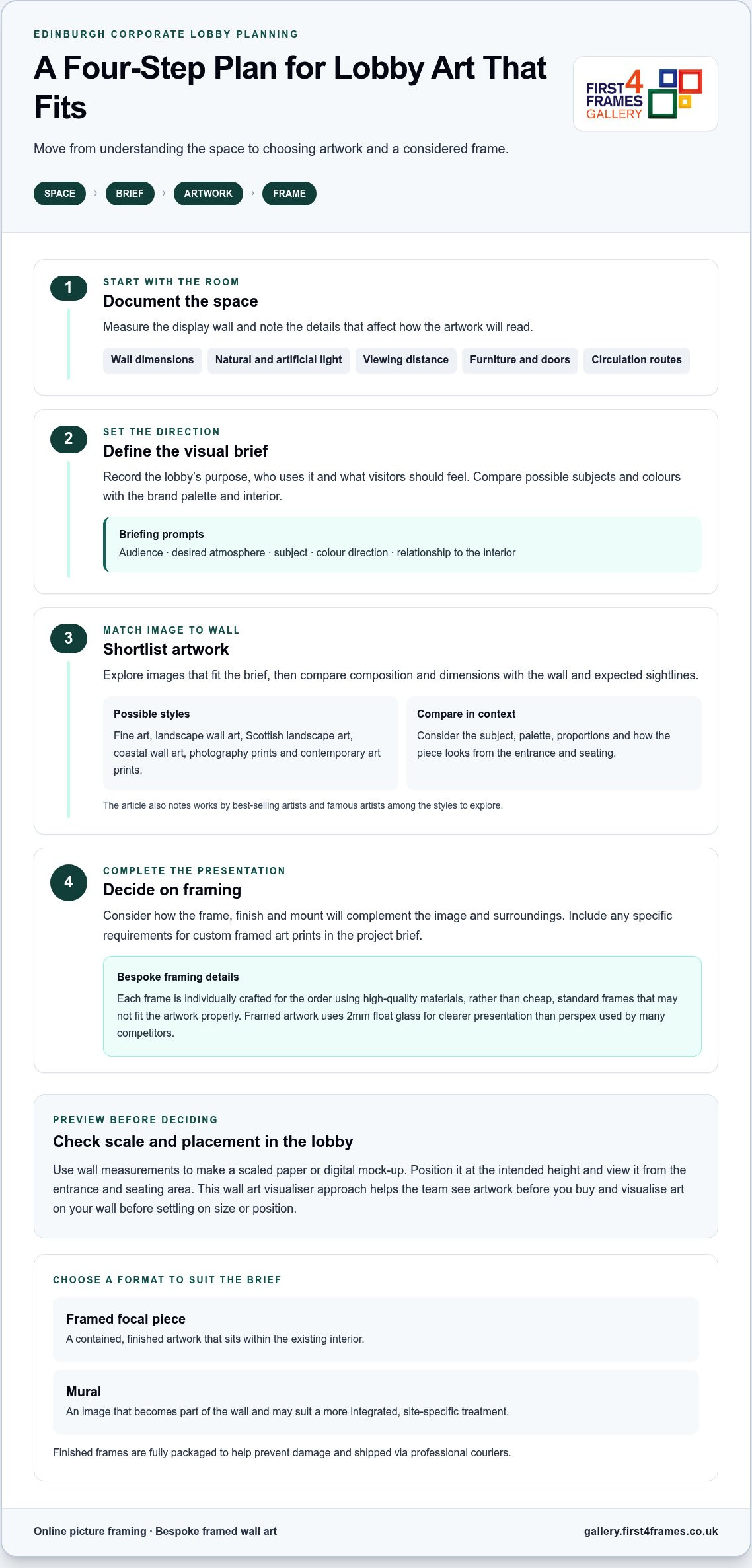
Choosing how to frame a silk painting is also a chance to think about how the artwork will live in your home. Consider the wall, the light in the room and the feeling you want the finished piece to bring to the space. A thoughtfully chosen frame can give the painting a clear visual setting without asking it to fit a standard format.
If you’re still weighing up a DIY approach, decide whether you feel comfortable handling and positioning the silk. Bespoke framing offers an alternative for artwork that needs an individual fit, with frame and mount options to shape its presentation. Let the painting guide the next decision, from a quiet, understated finish to a frame that makes it a focal point.
Explore framed artwork in the gallery for ideas and inspiration. Your silk painting deserves a setting that feels right for both the artwork and the room. Browse First4Frames Gallery’s framed artwork to plan your next display.
Frequently Asked Questions
Can you frame a silk painting without glass touching it?
Yes. A frame can be arranged so the silk is separated from the glazing, but suitable spacing depends on the artwork’s construction and condition. A painting with a raised or uneven surface, for example, may need a different arrangement from a flat, securely mounted piece. Don’t assume direct contact is safe. If the painted surface or its support seems fragile, pause and have the piece assessed before framing.
Should a silk painting be stretched before framing?
Not necessarily. Stretching isn’t right for every silk painting, and pulling the fabric too tightly may alter how it looks. The decision depends on the textile’s construction, condition and any support it already has. Avoid experimenting on valuable or delicate work, particularly if it has existing folds or distortion. If you’re uncertain, have the piece assessed before changing its tension.
Can I frame a silk painting myself?
Possibly, if the painting is securely mounted and a simple, sturdy frame suits its size. If you’re learning how to frame a silk painting, consider whether you can position it without handling the painted face or straining its support. Don’t use adhesives or fasteners through the painted silk. For delicate, valuable or unusually sized pieces, bespoke framing can offer a more considered fit.
What is the best frame for a silk painting?
There isn’t one frame that’s best for every silk painting. Choose a proportion and finish that complement the artwork’s dimensions and colours without crowding it, and consider how its condition and display setting affect the support and glazing arrangement. A narrow mount may suit a small work, while a larger piece may need a different visual balance. Pause before framing if the silk is fragile or damaged.
Can a picture framer frame artwork supplied by a customer?
Yes. First4Frames Gallery offers custom framing for customer-supplied artwork, with in-house precision cutting and expert mounting. Customers can select from frame and mount options to tailor the presentation to the piece. Because silk paintings vary in construction and condition, consider the framing approach individually rather than applying one mounting method to every artwork. Note the dimensions and current support when planning the frame.