
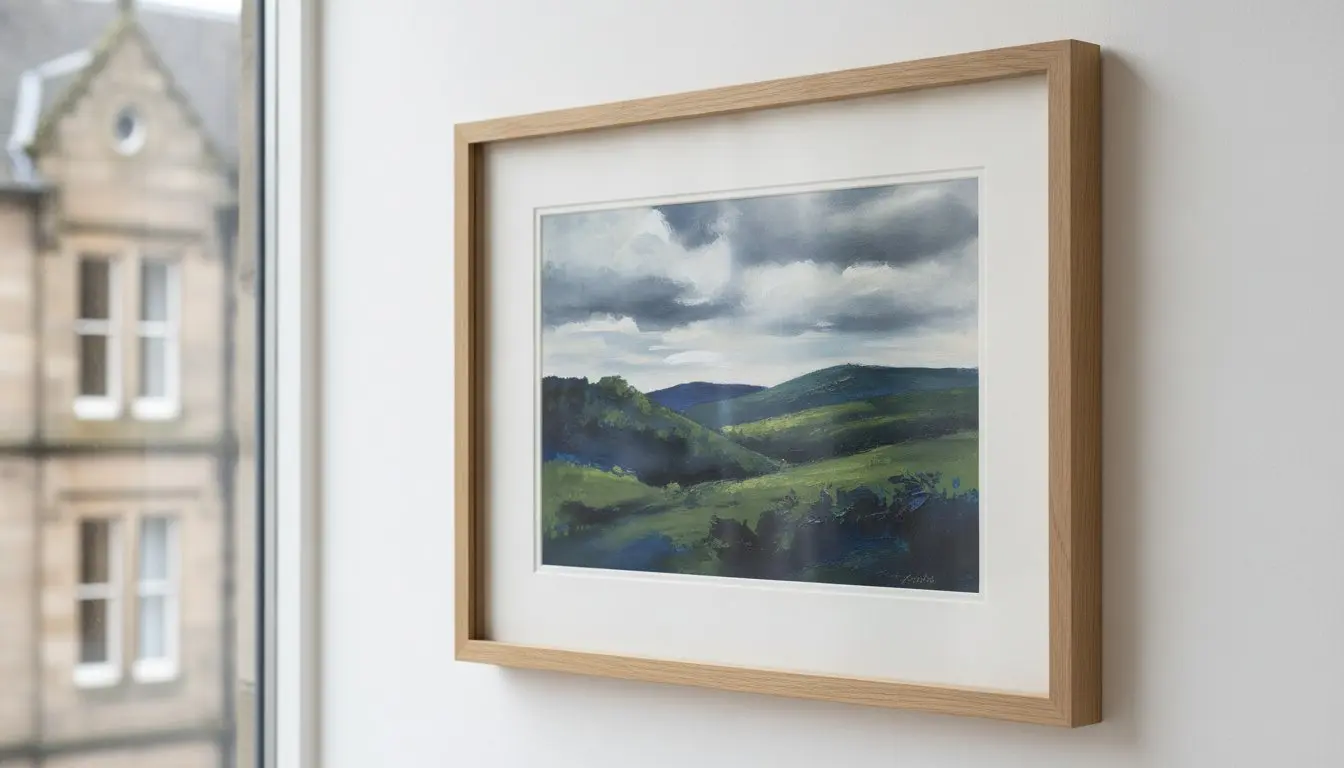
That roll of standard masking tape in your kitchen drawer is a ticking time bomb for your favorite prints. We know how frustrating it is to frame a beautiful piece of art only to see it yellow, stain, or buckle under the glass just a few years later. It’s a common worry for many collectors who find archival terminology confusing and fear their investment is being ruined by the wrong materials. At First4Frames Gallery, we believe every piece of art deserves the same level of care we put into our bespoke, hand-made frames, which is why we prioritize professional techniques over quick fixes.
In this guide, we’ll explain the use of PH70 tape for hanging (hinging) artwork within a frame to avoid acid contamination on the artwork from other tapes. Also hanging the artwork instead of taping all the way around the artwork allows the paper to breathe and move naturally with temperature changes. You’ll discover how this pH-neutral adhesive, paired with our superior 2mm float glass, which offers far better clarity than the cheap perspex used by many online galleries, ensures your art remains pristine and flat for a lifetime of display. We’ll walk you through the “hinge” method step-by-step so you can feel confident in choosing the best possible protection for your collection.
Key Takeaways
- Understand the use of PH70 tape for hanging (hinging) artwork within a frame to avoid acid contamination on the artwork from other tapes. Also hanging the artwork instead of taping all the way around the artwork is the best way to prevent permanent chemical staining.
- Learn how to stop unsightly buckling and ripples by allowing your paper art to breathe and move naturally with changes in room humidity.
- Master professional mounting techniques like the T-Hinge and Pendant Hinge to ensure your art stays securely in place without showing adhesives.
- Discover the visual difference that premium materials make, specifically our hand-made bespoke frames glazed with 2mm float glass for superior clarity.
- Gain the confidence to choose archival-grade framing solutions that protect your precious prints and photographs for a lifetime of display.
What is PH70 Tape and the Science of Acid-Free Hinging?
At First4Frames Gallery, we often encounter beautiful prints brought into our workshop that have been damaged by simple household tapes. We advocate for the use of PH70 tape for hanging (hinging) artwork within a frame to avoid acid contamination on the artwork from other tapes. Also hanging the artwork instead of taping all the way around the artwork is a fundamental practice in archival or conservation picture framing. This specialized tape is a high-tack, pH-neutral adhesive designed specifically to protect your investment. Unlike standard tapes that leach acidic chemicals into paper fibres, PH70 remains stable for decades and is designed with reversibility in mind, meaning it can be removed without tearing the delicate surface of your artwork.
To better understand how this professional mounting method works in practice, watch this helpful video:
pH-Neutral vs. Acid-Free: Clearing the Confusion
Many mass-market tapes claim to be “acid-free,” but at First4Frames Gallery, we look for deeper stability. A product might be acid-free at the time of manufacture yet become acidic as it ages and reacts with the environment. PH70 specifically maintains a neutral balance to prevent “acid migration,” where harmful chemicals travel from the adhesive into your art. We choose this material for our bespoke frames because it doesn’t yellow or degrade, ensuring the protection of your piece is as high-quality as the frame itself.
The Role of High-Tack Adhesives in Heavy Paper
Supporting the weight of a piece requires a tape with significant “grab.” This is especially true for heavy Giclée fine art prints or textured watercolour papers that have a bit of weight to them. PH70 provides a high-tack bond that is strong enough to hold heavy stocks securely, yet gentle enough to preserve the integrity of the paper fibres. This balance is a signature of professional craftsmanship, ensuring your art stays exactly where it should without any risk of slipping or damage over time.
The Buckling Problem: Why You Should Never Tape All Edges
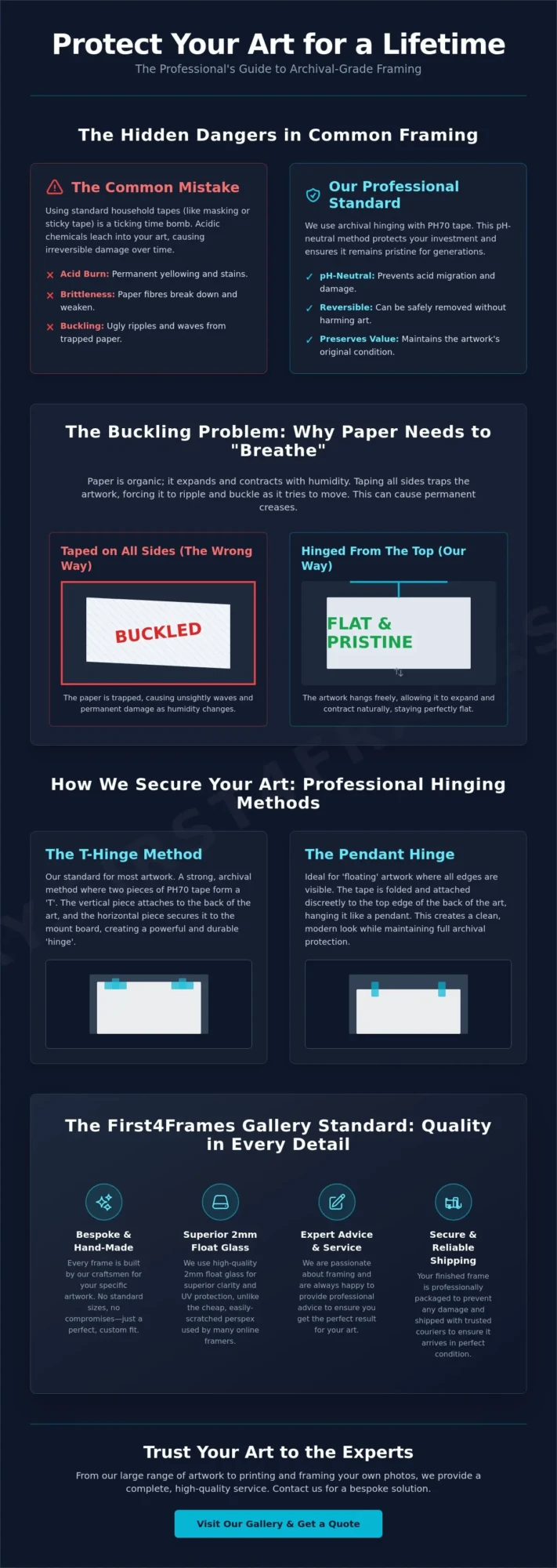
Paper is essentially a living material. Because it’s made of organic fibres, it reacts to the environment just like we do. It breathes. When moisture levels in the air rise, those fibres absorb water and expand. When the air dries out, they contract. If you tape a print firmly on all four sides, you’ve essentially locked it in a cage. As the paper tries to grow but finds no room, it has nowhere to go but up. This results in those unsightly waves and ripples known as buckling, which can eventually become permanent creases.
We advocate for the use of PH70 tape for hanging (hinging) artwork within a frame to avoid acid contamination on the artwork from other tapes. Also hanging the artwork instead of taping all the way around the artwork ensures the piece is suspended from the top edge only. This “hanging” philosophy allows the bottom and sides of the paper to move freely behind the mount. By giving the art room to grow and shrink, we prevent the paper from ever touching the frame edges or the glazing directly. This is vital for long-term preservation and maintains the crispness of the original piece.
Atmospheric Changes in the UK Home
Living in the UK, especially here in Scotland, presents unique challenges for art collectors. Our homes go through dramatic atmospheric shifts. On a damp day in Falkirk, humidity can spike, only to be sucked out of the air hours later when the central heating kicks in. This constant cycle is why a hinged mount is the best defence against the British climate. It acts as a shock absorber for the paper, preventing the physical stress that leads to distortion. Our bespoke, hand-made frames are designed to accommodate this natural movement, ensuring your art stays protected regardless of the weather outside.
Visual Integrity: Keeping the Print Flat
There’s a striking difference between a print that’s been “stuck down” and one that’s been professionally hinged. A stuck-down piece often looks flat and lifeless, or worse, shows tension points where the tape is pulling at the corners. By using gravity and a single-edge hinge, the artwork remains flush and elegant without looking forced. This professional presentation is enhanced by our use of 2mm float glass, which provides superior clarity compared to the dull perspex often found in mass-produced frames. If you’re looking for inspiration for your next project, feel free to browse our online gallery of framed art to see the results of true craftsmanship.
Professional Hinging Techniques: The T-Hinge and Pendant Methods
Applying the theory of archival preservation requires a steady hand and the right method. The use of PH70 tape for hanging (hinging) artwork within a frame to avoid acid contamination on the artwork from other tapes is a standard we uphold for every bespoke order. Also hanging the artwork instead of taping all the way around the artwork ensures that your piece is supported by gravity rather than being strangled by adhesive. Depending on how you want your art to look, we typically choose between two professional techniques.
The T-Hinge is our gold standard when the edges of the paper are hidden behind a mount. It provides a secure, invisible anchor. Conversely, the Pendant Hinge is the ideal choice for “floated” art, where the beautiful, deckled edges of the paper are part of the aesthetic. In both cases, we follow a precise process:
- We measure and mark the carrier board to ensure perfect alignment.
- A small strip of PH70 is applied to the top back edge of the art, usually overlapping by no more than 5mm.
- The artwork is positioned, and a second piece of tape is placed horizontally over the first strip to “lock” it to the carrier board.
Our expert craftsmen always place these hinges approximately 2 inches from the top corners. If you place them too close to the edge, the paper can “dog-ear” or curl outward as it reacts to humidity. By moving them slightly inward, we allow the corners to hang naturally and stay flat against the backing.
Mastering the T-Hinge for Bespoke Mounts
Creating the “crossbar” of the T is the most critical step. This horizontal strip must be longer than the vertical hinge to provide maximum support against the weight of the paper. This technique is essential for a clean finish, and it works best when paired with the right border. If you’re unsure about the look you want, check out our guide on Choosing the Perfect Mount for Bespoke Photo Frames for more inspiration.
When to Use More Than Two Hinges
For most standard prints, two hinges are perfect. However, large-format works or wide panoramic Scottish landscapes often require three or more. Distributing the weight across more points prevents the top edge of the fine art paper from sagging or tearing under its own mass. We take great care to calculate the weight of your specific piece to ensure the distribution is even and safe. If you have a particularly large project in mind, we’re always happy to give advice on the best mounting solution for your home.
The First4Frames Gallery Standard: Bespoke Protection from Tape to Glass
Our commitment to your art goes far beyond the selection of a beautiful moulding. At First4Frames Gallery in Falkirk, we treat every piece with the respect it deserves, ensuring that the internal environment of the frame is as high-quality as the exterior. The use of PH70 tape for hanging (hinging) artwork within a frame to avoid acid contamination on the artwork from other tapes. Also hanging the artwork instead of taping all the way around the artwork is a core part of our archival standard. This careful method is complemented by our acid-free backing boards, which we include as standard to prevent chemical migration from the rear of the frame.
Beyond the Tape: 2mm Float Glass vs. Perspex
While many online framing services rely on cheap perspex to save on shipping costs, we refuse to compromise on visual fidelity. We glaze our bespoke frames with 2mm float glass because it provides a perfectly rigid and clear surface that lets the true colours of your Giclée prints shine. Beyond clarity, glass offers a significant protective advantage for hinged art. Cheap plastics often generate static electricity, which can actually pull at the paper and cause your carefully placed hinges to fail or the art to shift. By using premium glass, we ensure your artwork remains still and secure.
Our Bespoke Process in Falkirk
Every frame we produce is hand-made for the specific individual order, ensuring a perfect fit that prevents shifting. We offer a large range of frames available online, but our capacity to undertake any other custom framing options means we can handle even the most unique requests. Our diverse services also include a specialized option to print and frame your own digital photographs to the highest quality, providing a complete, all-in-one preservation solution. We’re always happy to give advice, whether you visit our Falkirk Gallery or contact us online.
We understand that the journey from our workshop to your wall requires absolute care. Once your frame is finished, we fully package each piece to prevent any impact damage during transit. We ship using only reliable couriers, ensuring that the professional hinging and delicate glazing arrive in perfect condition, ready to hang and enjoy immediately.
Protect Your Precious Prints for Generations
Choosing the right mounting technique is the most important decision you’ll make for the longevity of your art. By prioritizing reversibility and allowing for natural paper movement, you’re preventing the permanent damage that comes from standard adhesives and restrictive taping. Our craftsmen have seen firsthand how the use of PH70 tape for hanging (hinging) artwork within a frame to avoid acid contamination on the artwork from other tapes. Also hanging the artwork instead of taping all the way around the artwork ensures your piece stays flat and vibrant, even as the seasons change.
Ready to give your art the perfect home? Explore our range of Bespoke Frames and Fine Art Prints and let our team create something special for you. We’re excited to help you transform your space with quality that lasts a lifetime.
Frequently Asked Questions
Can I use PH70 tape on the front of my artwork?
No, you should never apply PH70 or any other adhesive to the front of your artwork. This tape is designed specifically for the back edges to create a secure, invisible hinge. Applying tape to the image surface can cause permanent damage to the ink or paper fibres and will likely leave a visible mark if you ever try to remove it later.
How many hinges does a standard A3 print need?
Two hinges are usually sufficient for a standard A3 print. We typically place these about 2 inches from the top corners to provide a balanced hang. This setup supports the weight of high-quality Giclée paper while still allowing the bottom of the piece to move freely, preventing the buckling that occurs when art is restricted on all sides.
What happens if I use normal sellotape or masking tape for framing?
Using household tapes often leads to irreversible staining and chemical damage. These adhesives contain high levels of acid that leach into the paper over time, creating dark yellow marks. The use of PH70 tape for hanging (hinging) artwork within a frame to avoid acid contamination on the artwork from other tapes. Also hanging the artwork instead of taping all the way around the artwork is the professional standard we follow to ensure your art remains pristine for years.
Is PH70 tape permanent or can it be removed later?
PH70 is designed to be a reversible, archival solution. Unlike standard tapes that bond permanently and tear paper upon removal, PH70 is stable yet removable. This professional method of hanging the artwork instead of taping all the way around the artwork makes it much easier for a framer to detach the piece from its mount in the future without damaging the original print or its delicate paper fibres.
Does hinging work for heavy oil paintings or just paper prints?
Hinging is a technique reserved exclusively for works on paper. Oil paintings on canvas or wooden boards are far too heavy for tape and require mechanical fixings to stay secure within a frame. We use hinging for Giclée prints, watercolours, and digital photographs to protect their delicate edges while allowing the paper to breathe behind our 2mm float glass, which offers far better clarity than plastic alternatives.