
Posted on

A4 Frames: The Ultimate Guide to Choosing and Styling

You’re holding a precious photograph, a hard-earned certificate, or a beautiful new art print. Now comes the crucial next step: finding the perfect frame to display it. It’s easy to feel lost in a sea of options, worrying that the wrong choice will diminish your piece rather than enhance it. When searching for premium A4 frames, the sheer variety can be overwhelming, leaving you wondering which material is best, whether you need a mount, and how to avoid that cheap, mass-produced look. You know your picture deserves more than just a border; it deserves a partner that truly makes it shine.

This is where our passion for craftsmanship comes to the rescue. Consider this your definitive guide to selecting a spectacular A4 frame with complete confidence. We’ll embark on a journey together, exploring the finest materials, demystifying mounts, and revealing the secrets to styling your art like a professional. You will learn to spot true quality and discover how the perfect frame acts as a beautiful bridge between your artwork and your home’s decor. Let’s find the frame that does your art justice.

What is an A4 Frame? Dimensions and Common Uses Explained

When embarking on your journey to find the perfect frame, you will quickly discover that the A4 frame is the most popular and versatile choice in the UK. Its universal appeal lies in its perfect balance-large enough to make an impact, yet compact enough to fit comfortably in any space, from a bustling office to a cosy living room. It is the go-to standard for preserving and showcasing a huge variety of documents, photographs, and art prints, making it an essential part of any display.

To see just how simple it is to place your print into a standard frame, this short video provides a helpful guide:

The Official A4 Dimensions

Clarity is key in craftsmanship, so let’s define the precise size. An A4 frame is designed to hold an item that measures:

  • 210 x 297 millimetres
  • 8.3 x 11.7 inches

It’s important to remember that these dimensions refer to the size of the artwork, print, or document the frame will house-not the external dimensions of the frame itself. This size is instantly recognisable as it corresponds to the standard UK printer paper, a specification set by the ISO 216 international paper size standard. This universal recognition is what makes high-quality A4 frames so incredibly convenient and easy to shop for.

Popular Items to Display in A4 Frames

The beauty of the A4 size is its remarkable adaptability. It serves as the perfect vessel for a wide range of personal and professional items, bridging the gap between your treasured memories and your room’s décor. Common uses include:

  • Professional Achievements: Proudly display certificates, diplomas, business awards, and qualifications in an office or study.
  • Personal Memories: Frame family portraits, favourite holiday snaps, and cherished school pictures to bring warmth to your home.
  • Art and Creativity: Showcase beautiful art prints, original drawings, and vibrant digital illustrations.
  • Information and Signage: Use them for business notices, restaurant menus, event posters, and important instructions in a clean, professional manner.

While larger A3 frames are better suited for impactful posters and smaller A5 frames are ideal for postcards or individual photos, the A4 frame remains the undisputed champion of versatility, perfectly suited for life’s most important moments.

How to Choose the Right A4 Frame: A Guide to Materials and Styles

Choosing the perfect A4 frame is an art in itself. The right frame acts as a beautiful bridge between your artwork and your room’s decor, enhancing both without overpowering either. It’s about creating a harmonious relationship where the frame does the heavy lifting, pulling you into the picture. Prioritising quality, bespoke craftsmanship over mass-produced alternatives ensures your cherished print or photograph is given the spectacular presentation it truly deserves.

Classic Wood vs. Modern Metal: Which Material is Best?

The material of your frame sets the foundational tone. Wooden frames offer a timeless warmth and tradition. Available in a variety of beautiful finishes like rich oak, rustic pine, or classic painted black, they bring a natural, organic feel to any space. In contrast, metal frames, particularly sleek aluminium, provide a clean, contemporary look perfect for minimalist interiors. Consider the artwork itself: a classic portrait often suits a wooden frame, while a modern graphic print shines in metal. Both materials, when sourced for quality, offer excellent durability and a premium feel.

Matching Frame Style to Your Artwork and Interior

Beyond material, the frame’s style and colour are crucial. A minimalist frame with a thin profile allows the artwork to take centre stage, ideal for busy compositions. For certificates or traditional pieces, an ornate frame can add a sense of importance and grandeur. When it comes to colour, black offers striking contrast, white creates a clean, airy feel, and natural wood adds warmth. For a truly professional touch, consider the expert tips on choosing a frame from art specialists, who often suggest picking a secondary colour from within the artwork to create a cohesive look.

Finding the Perfect Finish

The final detail is the finish, which can dramatically alter the frame’s impact. A matte finish offers a subtle, non-reflective look that complements delicate or fine art prints. A glossy finish, however, can add a modern pop of energy and is easy to clean. For specific interior themes, a natural wood grain is the perfect partner for rustic or Scandinavian decor, while our bespoke painted finishes allow you to match your chosen a4 frames perfectly to your room’s unique colour scheme.

Elevate Your Display: The Importance of Mounts and Glazing

A beautiful frame is far more than just its border. It’s a complete system designed to both protect and enhance the piece within. The two most critical components doing this heavy lifting are the mount and the glazing. These elements are the true difference between a standard, off-the-shelf display and a premium, professionally finished piece that preserves your art and elevates your interior decor.

Why You Should Always Use a Mount

A professional mount, also known as a passe-partout, is an essential partner to your artwork. It creates a visual ‘breathing space’ that separates the image from the frame, drawing the viewer’s eye inward. Crucially, it also prevents the artwork from touching the glass, which can lead to damage from moisture and sticking over time. A mount is also a perfect solution for fitting a smaller picture elegantly into one of our standard A4 frames. For ultimate protection, always opt for a conservation-grade, acid-free mount to shield your prints from discolouration and deterioration.

Choosing the Right Glazing for Your A4 Frame

The glazing is your artwork’s transparent shield. Selecting the right type is vital for both clarity and preservation. Here are the most common options:

  • Standard Glass: A cost-effective and perfectly clear choice for most applications, though it can be prone to reflections in brightly lit rooms.
  • Acrylic (Plexiglass): Lighter and shatter-resistant, acrylic is a safer option for high-traffic areas, children’s rooms, or frames that require shipping.
  • Anti-Reflective Glass: This premium glazing is treated to minimise glare, ensuring your art can be viewed perfectly from any angle without distracting reflections.
  • UV-Protective Glazing: An absolute must for valuable or sentimental prints. This specialised glazing blocks up to 99% of harmful UV rays, preventing fading and preserving colour integrity for decades.

When to Choose a Bespoke A4 Frame

While ready-made frames are convenient, a bespoke service offers unmatched quality and customisation. Choose a bespoke frame when you need a specific mount size or colour not available off-the-shelf, or to guarantee that the highest quality, conservation-grade materials are used throughout. A bespoke frame delivers a perfect, professional finish that transforms the item being framed into a spectacular feature piece. When you’re considering a larger project, understanding how to create a gallery wall with perfectly matched frames can create a truly stunning impact. Ready to achieve that flawless finish? Get a quote for a bespoke A4 frame today.

Creative Ideas for Displaying Your A4 Frames

A beautifully framed print is a work of art in itself, but its true potential is unlocked by how you display it. Moving beyond a single, centrally-hung picture can transform your space, turning walls and surfaces into dynamic, personal showcases. The A4 size is perfectly suited for this creative journey, offering a versatile foundation for spectacular arrangements that reflect your unique style.

How to Create a Stunning A4 Gallery Wall

A gallery wall is a classic way to make a significant visual impact. Using a4 frames as a consistent element provides a wonderful sense of structure and cohesion, allowing the artwork within to truly shine. Whether you prefer a sleek, modern grid or a more eclectic, organic arrangement, here are a few professional tips to get started:

  • Create a Cohesive Grid: Use identical A4 frames, spaced evenly, for a clean and sophisticated look. This works beautifully for a series of related prints or photographs.
  • Mix and Match: For a more relaxed feel, combine different frame styles and finishes-such as black, white, and natural wood-while keeping the A4 size consistent.
  • Play with Scale: Anchor your gallery wall with a larger piece and surround it with a mix of A4 and smaller frames to create a dynamic, visually interesting composition.
  • Top Tip: Before picking up a hammer, arrange your frames on the floor. This allows you to perfect the layout and spacing until you’re completely happy with the balance.

Styling A4 Frames on Desks, Shelves, and Mantels

Not all art needs to hang on a wall. The A4 format is an ideal size for bringing personality to smaller spaces and surfaces throughout your home. A well-placed frame can add a layer of warmth and sophistication to a home office, living room, or bedroom.

  • The Perfect Desk Companion: An A4 frame makes a powerful statement piece on a desk, offering daily inspiration without overwhelming your workspace.
  • Relaxed Ledge Displays: Lean frames casually against the wall on picture ledges or bookshelves for an informal, modern aesthetic that’s easy to update.
  • Layer with Style: Create depth by layering an A4 print behind smaller framed photos, candles, or other cherished decorative objects on a mantelpiece.
  • Ensure a Solid Foundation: If displaying on a tabletop, ensure your frame has a sturdy, high-quality stand to keep it secure and perfectly positioned.

With their perfect balance of presence and versatility, A4 frames are the ultimate tool for creative expression in your home. Ready to find the perfect pieces to begin your display? Embark on a journey of artistic discovery in our gallery.

Find the Perfect Finish for Your Prized Pieces

As we’ve explored, the A4 frame is far more than just a border; it’s a powerful tool for expression. Understanding how materials shape the mood and how the right mount can elevate your art gives you the power to transform any print or photo into a spectacular focal point. The key is to see the frame not as an afterthought, but as an essential partner to the artwork it holds, bridging the gap between your piece and your decor.

When you’re ready to find that perfect partner, craftsmanship makes all the difference. Our expert artisans in Falkirk create beautiful, bespoke a4 frames using only premium, conservation-grade materials to protect and showcase what you love. With a wide selection of styles to match any decor, we are dedicated to helping you find the perfect finish.

Ready to bring your art to life? Explore our curated A4 frames and bespoke options and start your journey toward creating a display you’ll admire for years to come.

Frequently Asked Questions About A4 Frames

Can I put a smaller 6×4 or 7×5 photo into an A4 frame?

Absolutely! Placing a smaller 6×4 or 7×5 photo into an A4 frame is a perfect way to create a professional, gallery-style look. The key is to use a picture mount. A mount is a card border that sits inside the frame, beautifully showcasing your smaller image within the larger space. It not only centres your photo but also creates a visual gap between the image and the frame, drawing the eye and adding a touch of elegance.

What is the difference between an A4 photo frame and an A4 certificate frame?

The primary difference often lies in the design and presentation. An A4 certificate frame is typically more traditional and understated, with classic moulding profiles in black or dark wood, designed to complement the formal nature of a document. A photo frame, however, is available in a much wider array of styles, colours, and materials to match your decor. Photo frames are also more likely to include a picture mount to enhance the visual appeal of the artwork or photograph.

How do I correctly insert my document or photo into an A4 frame?

Inserting your piece is a simple process. First, place your frame face-down on a soft, clean surface to avoid scratches. Carefully turn the flexible tabs on the back and remove the backing board. Position your document or photo neatly against the mount or glazing. Finally, replace the backing board, ensure it is sitting flat, and secure the tabs back into place. Your beautiful new picture is now ready to be admired and displayed with pride.

Are your A4 frames supplied with everything I need to hang them?

Yes, all our A4 frames are delivered ready to hang for your convenience. Each frame is professionally fitted with the appropriate hanging hardware, such as sawtooth hangers or D-rings, suitable for either portrait or landscape orientation. While the frame is ready to go, please note that wall fixings like nails or screws are not included. This is because the ideal fixing depends entirely on the type of wall you have, from plasterboard to solid brick.

Do I need special wall fixings to hang a wooden A4 frame?

For most standard walls in UK homes, you will not need special fixings. A standard wooden A4 frame is relatively lightweight, and a simple picture hook or a sturdy nail angled downwards will provide sufficient support. If you are hanging on plasterboard, using a dedicated plasterboard hook can offer extra peace of mind and prevent any damage to your wall. Always assess your wall type before choosing the final fixing for your beautiful new frame.

How do I clean and care for my picture frame and glazing?

To keep your frame looking its best, regular dusting with a soft, dry microfibre cloth is recommended. For the glazing, spray a small amount of glass cleaner onto a clean cloth (never directly onto the glass) and wipe gently to avoid streaks. For the frame moulding itself, avoid harsh chemical cleaners. A slightly damp cloth can be used for stubborn marks on painted or solid wood frames, but be sure to dry it immediately to protect the premium finish.
Posted on

A3 Frame Size: The Complete Guide to Dimensions & Uses

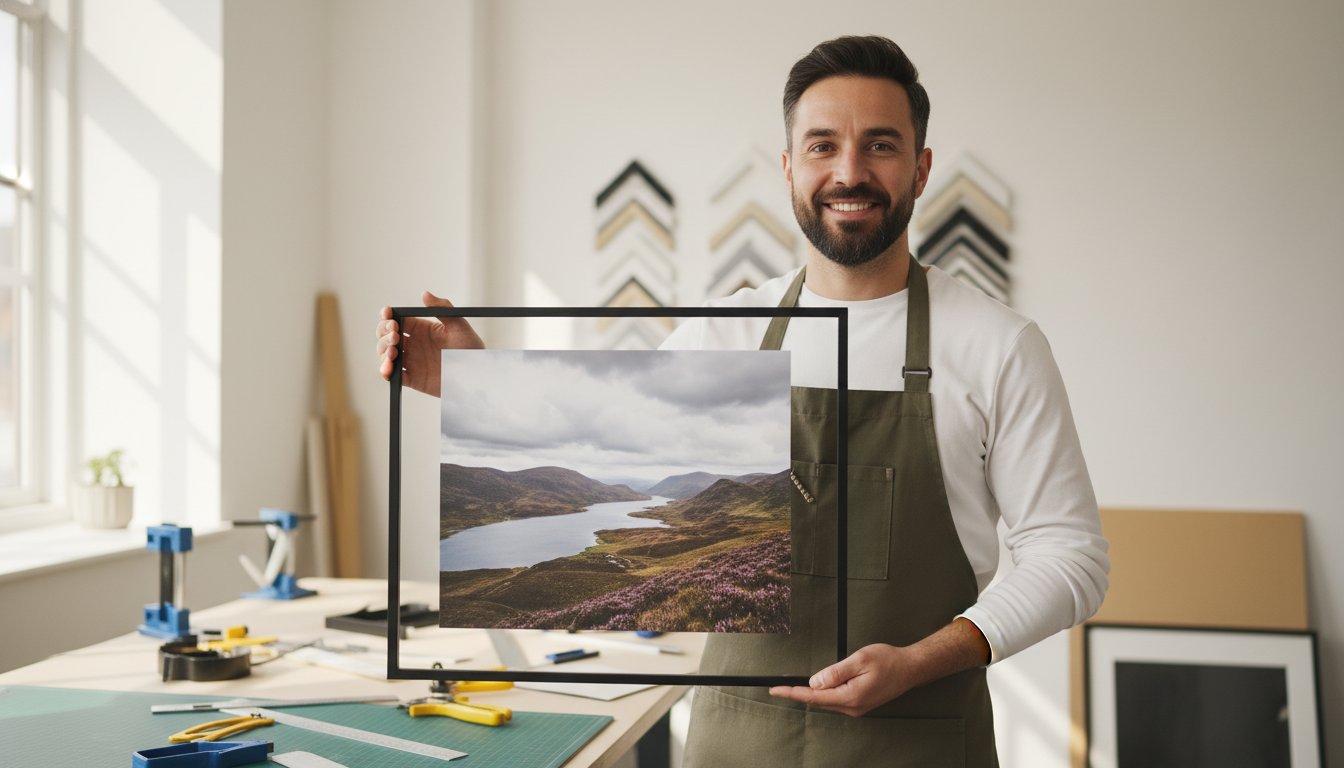
A smiling man wearing an apron holds a framed landscape photograph of a lake and hills in a well-lit workshop, with framing tools and frame samples visible in the background.

You’ve found a beautiful piece of A3 art, a spectacular photograph, or a poster that speaks to you. Now comes the crucial final step: finding its perfect home on your wall. But navigating the world of the a3 frame size can feel surprisingly complex. Do you measure in centimetres or inches? Will a mount enhance the image or overwhelm it? Choosing the right frame is an act of craftsmanship, and it’s easy to feel lost in the details when you want everything to be just right.

This guide is here to be your trusted professional partner. We will demystify the exact A3 dimensions in millimetres, centimetres, and inches, ensuring you can buy online or in-store with complete confidence. We’ll explore how to select the ideal style and material to complement your artwork, and help you decide if a mount will elevate your piece from lovely to truly stunning. Let’s find the perfect frame to act as the bridge between your art and your room, making your piece shine.

What Exactly is A3 Frame Size? The Essential Dimensions

Choosing the perfect frame begins with understanding its size. Put simply, an A3 frame is expertly crafted to hold a piece of A3 paper or a print of the same dimensions. This size is defined by the globally recognised ISO 216 international paper size standard, ensuring consistency whether you’re framing a professional photograph, a fine art print, or a treasured poster.

To help you visualise it, an A3 sheet is exactly twice the size of a standard A4 piece of office paper, making it a popular and impactful choice for wall art without overwhelming a room.

For a practical look at how to handle and place artwork into a frame, this video offers an excellent tutorial:

A3 Frame Dimensions in cm, mm, and inches

To ensure you have the precise measurements for your artwork, it’s helpful to know the dimensions in various units. An A3 print measures:

  • In centimetres: 29.7 cm x 42 cm
  • In millimetres: 297 mm x 420 mm
  • In inches: 11.7 x 16.5 inches

These are the exact dimensions your print should be to fit snugly and professionally within an A3 frame.

Artwork Size vs. Frame Size: A Crucial Distinction

One of the most important details to understand is that when you purchase an ‘A3 frame’, the measurement refers to the internal aperture-the ‘window’ that your A3 artwork will fit into perfectly. The overall external dimensions will always be larger, depending on the width of the frame’s border, often called the ‘moulding’ or ‘profile’. This is a crucial detail to consider when planning your gallery wall to ensure a perfect fit in your chosen space.

Portrait vs. Landscape Orientation for A3 Frames

The versatile a3 frame size is beautifully suited for displaying artwork in both portrait (vertical) and landscape (horizontal) orientations. Most high-quality frames, including those we craft, are supplied with flexible fittings on the backboard, allowing you to hang them either way with ease. We always recommend checking the orientation of your chosen artwork first to help you envision its perfect spot on your wall before making a final decision.

Common Uses for A3 Frames: What Fits Perfectly?

The A3 frame size is often considered the “Goldilocks” of framing-not too big, not too small, but just right. It’s a wonderfully versatile and popular mid-size option that makes a beautiful statement without overwhelming your space. Measuring 29.7 x 42 cm, it strikes the perfect balance between offering enough scale for visual impact and allowing the finer details of the artwork to be appreciated. For those interested in the precise standards behind these measurements, the University of Cambridge offers a technical overview of the A3 frame dimensions and the ISO 216 paper system.

Displaying Art Prints and Posters

A3 is the ideal canvas for the affordable art prints, limited edition graphics, and concert posters you love to collect. It’s large enough that the artwork commands attention and its details can be enjoyed from across the room. A single, beautifully framed A3 print can serve as a stunning focal point above a desk or console table, while also acting as the perfect centrepiece to build a dynamic gallery wall around.

Framing Larger Photographs and Collages

While smaller photos are charming, an A3 frame gives a truly special photograph the presence it deserves. This size is perfect for showcasing a spectacular landscape from your travels, a professional family portrait, or a cherished wedding photo. It also provides ample space to create a bespoke photo collage, weaving together multiple smaller moments into one impactful piece that tells a unique story.

Professional Use: Certificates, Diplomas, and Signage

Step into any professional office, and you’ll likely see A3 frames used to display important qualifications, diplomas, and industry awards. The generous size lends a sense of prestige and ensures the text is easily readable. This professional, polished look also makes the A3 frame size a superb choice for customer-facing signage in reception areas, cafes, and boutiques, clearly communicating information with a touch of class.

To Mount or Not to Mount? Elevating Your A3 Print

Once you’ve chosen your beautiful A3 print, the next decision is how to present it. While you can place it directly into an A3 frame, adding a picture mount is the secret to achieving a truly professional, gallery-quality finish. A mount, also known as a mat, does more than just fill space; it’s a crucial element that protects and enhances your artwork.

The right mount creates a visual ‘breathing space’ between the art and the frame, preventing the composition from feeling cramped. This clean border draws the viewer’s eye inward, focusing attention squarely on the print itself. It’s a simple addition that dramatically elevates the final look, making it a key consideration when selecting the perfect a3 frame size for your piece.

What is a Picture Mount and Why Use One?

A picture mount is a specially cut piece of acid-free cardboard that sits between your artwork and the frame’s glass. Its purpose is twofold: protection and presentation. By creating a small air gap, it prevents the print from making direct contact with the glass, which can cause damage from condensation over time. Aesthetically, it adds depth and structure, giving your print a polished, deliberate, and professional appearance.

How a Mount Affects Your Frame Size Choice

This is the most important rule to remember: if you use a mount with your A3 print, you will need a frame that is larger than A3. Forgetting this can lead to a frame that simply won’t fit.

Let’s use a practical example. An A3 print measures 297 x 420 mm, as defined by the ISO 216 international paper size standard. If you add a classic 50mm (5cm) mount border around it, the total mounted size becomes approximately 400 x 520 mm. This combination would then fit perfectly within a standard A2 frame (420 x 594 mm). Always measure your artwork and add the width of your desired mount border (times two) to determine the final dimensions you need. Getting this right is essential for your final a3 frame size calculation. Our bespoke framing service can create the perfect mount and frame combination, taking all the guesswork out of the process.

Choosing a Mount Colour and Style

The right mount colour can beautifully complement your artwork. Here are a few popular approaches:

  • Classic White: A crisp white or a softer off-white mount is a timeless choice that works with almost any artwork and interior style.
  • Complementary Colour: Selecting a mount colour that picks up on a subtle accent in your print can create a wonderfully cohesive and curated look.
  • Double Mounts: For added sophistication, a double mount uses two layers, with the inner layer providing a thin, contrasting border. This adds an incredible sense of depth to the finished piece.

Choosing the Right A3 Frame Style for Your Space

Once you’ve settled on the perfect a3 frame size for your print, the next step is a journey into style. A frame is much more than a simple border; it’s the crucial bridge connecting your artwork to your room’s décor. The right choice will elevate both the print and the space it inhabits. The material, colour, and profile width all play a vital role in creating a cohesive and beautiful final look that honours your art.

Frame Materials: Wood, Metal, and Modern Finishes

The material of your frame sets the foundational tone. Each offers a distinct personality to complement your art and interior style:

  • Wood Frames: Crafted from materials like oak or pine, wooden frames bring natural warmth and a timeless, traditional feel. They are perfect for classic art, family portraits, and rustic interiors.
  • Metal Frames: Typically made from sleek aluminium, these provide a sharp, contemporary look. Their minimalist appeal is ideal for modern photography, posters, and abstract art.
  • Polcore Frames: A fantastic and versatile alternative, Polcore is a modern composite material made from recycled polystyrene. It offers a smooth, clean finish and is available in a huge range of colours and styles, providing a premium look at an affordable price.

Matching Frame Colour to Your Artwork and Décor

Colour is your tool for creating harmony. The goal is to choose a shade that enhances the artwork without overpowering it. Consider these classic pairings:

  • Black or White: The ultimate versatile choice. A simple black or white frame allows the art to be the hero, suiting almost any print and décor style, from monochrome to vibrant colour.
  • Natural Wood Tones: These beautifully complement nature scenes, botanical prints, and art with a warm palette. The organic grain adds texture and depth.
  • Gold or Silver: For a touch of elegance, metallic frames are unmatched. They can elevate a formal certificate, a classical print, or a special photograph, adding a sophisticated finish.

Moulding Profile: From Simple & Modern to Ornate & Classic

The ‘moulding profile’ refers to the shape and width of the frame itself. This detail can dramatically alter the final impression. A thin, flat profile offers a clean, minimalist feel, perfect for a contemporary gallery wall where the art is the sole focus. Conversely, a wider or more ornate profile makes a bold, traditional statement. It draws the eye and can transform a simple print into a significant feature piece, adding a sense of grandeur and importance.

Considering the style of your art is paramount. A modern abstract piece will sing in a thin metal frame, while a classic watercolour may call for the warmth of oak. Whatever your vision, finding the perfect style for your a3 frame size is a rewarding final step in bringing your art to life. Browse our curated collections to find inspiration and the perfect frame for your space.

Ready-Made vs. Bespoke A3 Frames: Which is Right for You?

Once you’ve chosen your beautiful A3 print, the next crucial step is selecting the perfect frame. This often leads to a key decision: should you opt for a readily available off-the-shelf frame or invest in a bespoke creation? The answer depends entirely on your artwork, your budget, and the final look you want to achieve. Let’s explore both paths to help you make a confident choice for your space.

The Pros and Cons of Off-the-Shelf Frames

Ready-made frames are a popular choice, primarily for their convenience and affordability. You can find them in countless high street shops, often for under £20, making them a great option for framing simple posters, certificates, or children’s drawings. They are perfect for temporary displays or when you need a quick and easy solution for a standard a3 frame size.

However, this convenience comes with trade-offs. The range of styles, colours, and materials is often limited, and the quality can be inconsistent. Most standard frames use basic materials that lack the protective qualities needed for fine art, such as UV-filtering glass or acid-free mounts. This can leave your artwork vulnerable to fading and long-term damage from sunlight and acidic materials.

When to Invest in a Bespoke A3 Frame

A bespoke frame is more than just a border; it’s a vital part of the artwork’s presentation and preservation. It acts as the perfect bridge between your art and your room’s décor. Investing in a custom frame is the best choice when:

  • You are framing something valuable: For limited edition prints, original art, or irreplaceable photographs, a bespoke frame provides essential, conservation-grade protection to preserve its value and condition.
  • You want a perfect design match: With custom framing, you can select the precise moulding, colour, and mount to create a seamless, professional finish that perfectly complements both the artwork and your interior design.
  • Preservation is a priority: We use premium materials like acid-free conservation mount boards to prevent discolouration and UV-protective glazing to shield your art from 99% of harmful light.

Ultimately, a bespoke frame is an investment in the life and beauty of your art, ensuring your piece is not only displayed beautifully but is also protected for decades. If you have a special piece that deserves the finest presentation, professional craftsmanship is the answer. Get a quote for a bespoke A3 frame for your artwork.

Your Perfect A3 Frame: From Idea to Artwork

Mastering the versatile a3 frame size is about more than just dimensions; it’s about making a statement. We’ve explored how the right mount can elevate a simple print and how a carefully chosen style can transform your space. Whether you opt for a ready-made solution or a bespoke creation, the goal is always to perfectly complement your artwork and enhance your décor.

At First 4 Frames, we pour over 20 years of professional framing experience into every piece we create. Each frame is a testament to true craftsmanship, handcrafted with passion in our Falkirk workshop using only premium, locally-sourced materials. We believe the perfect frame is the bridge between your art and your home. Ready to find yours? Discover our collection of beautiful prints and bespoke A3 frames and let us help you turn your cherished piece into a spectacular centrepiece.

Frequently Asked Questions About A3 Frames

What are the exact dimensions of an A3 frame in cm?

An A3 frame is expertly crafted to hold a print measuring exactly 29.7 x 42 cm. While these are the internal dimensions your artwork will fit into, the frame’s overall external size will be larger. This depends on the width of the beautiful, handcrafted moulding you select. When you purchase an A3 frame, you can be confident the aperture is perfectly sized to provide a snug and secure home for your cherished piece.

Will an A3 print fit in a 30×40 cm frame?

An A3 print can technically fit inside a 30×40 cm frame, but it is not a perfect match. Since A3 paper measures 29.7 x 42 cm, the frame is slightly wider but 2 cm shorter. This means the top and bottom of your artwork will be cropped. This can work if the main subject is centred, but for a flawless presentation, we always recommend a frame specifically made for the A3 format or using a custom mount.

Is A3 a good size for a gallery wall?

Absolutely! A3 is a spectacular and versatile size for creating a gallery wall. It strikes the perfect balance, offering enough presence to act as a central focal point without overwhelming the other pieces. You can use a single A3 print as the anchor for your collection, surrounded by smaller A4 and A5 frames. Its scale allows it to shine on its own or harmonise beautifully within a larger, curated display, bringing your entire wall to life.

How much bigger should my frame be if I want to add a mount to my A3 print?

To give your A3 print a professional, gallery-quality finish, we suggest adding a mount with a border of 5-8 cm on all sides. For a classic 5 cm border, you would need a frame with an internal aperture of approximately 40 x 52 cm. This essential breathing room prevents the artwork from feeling cramped and beautifully draws the viewer’s eye inward, enhancing the visual impact of the art and completing its story.

Can I buy just an A3 frame for a picture I already own?

Yes, of course. We believe every piece of art deserves a perfect home, which is why we offer our premium frames for sale individually. If you have a treasured A3 print or photograph, selecting one of our standalone frames is a wonderful way to elevate it. Choosing the right a3 frame size and style is a key step, and our bespoke craftsmanship ensures your existing picture will be protected and displayed with the elegance it deserves.

What is the difference between an A3 and A4 frame?

The primary difference between an A3 and A4 frame is simply size. An A4 frame is designed to hold paper measuring 21 x 29.7 cm, which is standard for letters and certificates. An A3 frame holds paper that is exactly double that size, at 29.7 x 42 cm. This makes A4 ideal for smaller photos and documents, while the more substantial A3 format is perfect for art prints, posters, and photographs you wish to turn into a true statement piece.

Posted on

Picture Frames: The Ultimate Guide to Choosing, Hanging, and Displaying Art

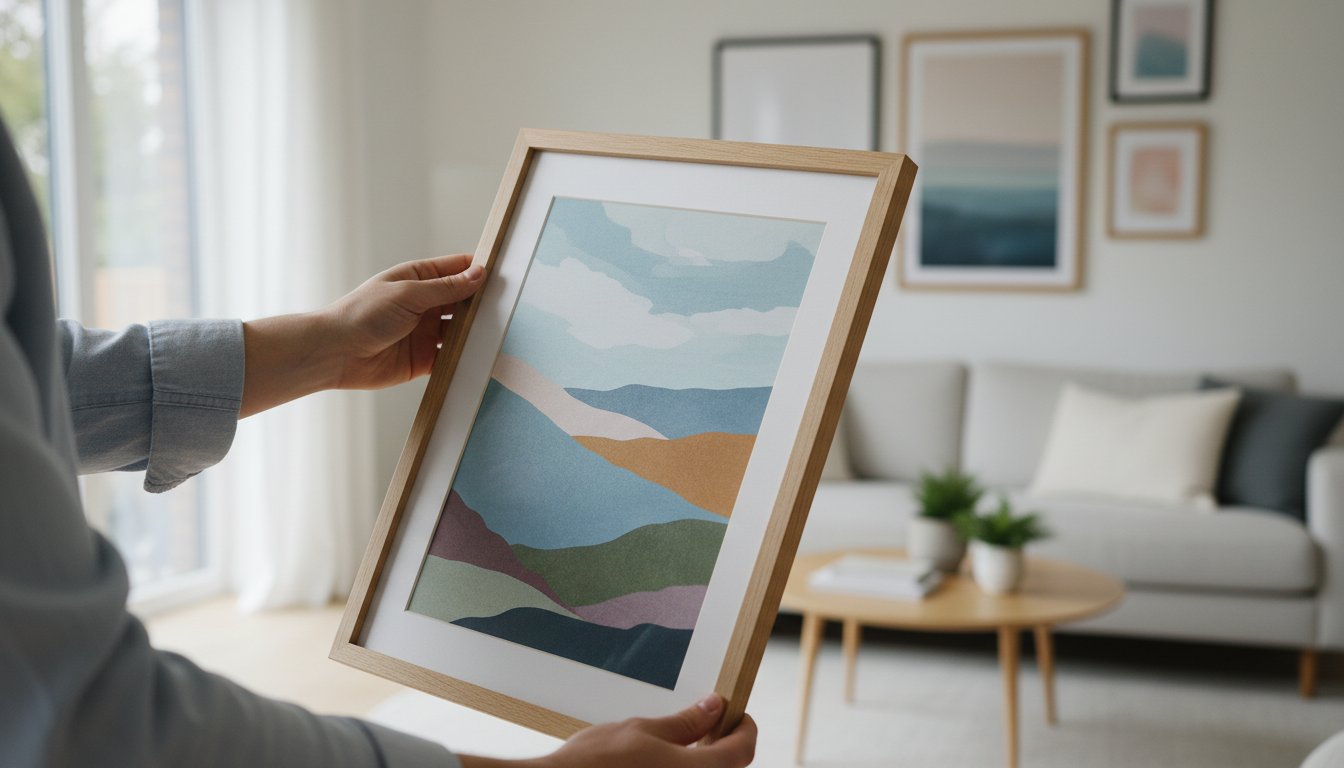
A person holds a framed abstract landscape artwork in a bright, modern living room with a sofa, coffee table, and several framed pictures on the wall in the background.

That spectacular print you’ve just bought, or the family photograph you cherish, deserves more than to be left leaning against a wall. But stepping into the world of picture frames can often feel overwhelming. With a sea of materials, colours, and styles to choose from, how do you find the one that doesn’t just hold your art, but truly elevates it? How do you create that seamless bridge between a beautiful piece and your room’s decor, instead of creating an awkward afterthought?

Consider this your friendly, expert guide. We believe that framing is an art in itself, and our passion is to make it accessible and enjoyable for everyone. In the following sections, we will demystify the entire process. You will learn how to confidently select the perfect frame that makes your art sing, master the simple, secure techniques for hanging it at the ideal height, and find professional inspiration for creating a stunning gallery wall that tells your unique story. Let’s turn those bare walls into a beautiful, personal gallery, together.

More Than a Border: Why the Right Picture Frame is Essential

A common mistake is to see a frame as a mere afterthought-a simple border to finish the job. In reality, a thoughtfully chosen frame does the heavy lifting, acting as the crucial bridge between your artwork and your room’s decor. It protects, enhances, and completes, transforming a simple photograph or print into a spectacular, finished piece ready for display. The right choice doesn’t just surround the art; it pulls you into the picture.

To see how these elements come together, this short video offers a great overview:

Protecting Your Prized Artwork

First and foremost, a frame’s primary role is preservation. To ensure your art stands the test of time, it is vital to use conservation-grade materials. This includes:

  • Acid-free mounts: These prevent the unsightly yellowing and deterioration that can occur when art is in direct contact with acidic materials.
  • Protective glazing: High-quality glass or acrylic acts as a shield against everyday threats like dust, moisture, and, most importantly, harmful UV light that causes colours to fade.

Enhancing the Visual Impact

A well-chosen frame guides the viewer’s eye, drawing attention directly to the artwork’s focal point. The colour and texture of the frame should complement the piece, echoing its tones without overpowering them. This role has evolved significantly throughout the history of picture frames, moving from purely functional to an art form in itself. By creating a distinct boundary, the frame gives the art a sense of depth and importance, elevating its presence on your wall.

Completing Your Interior Design

The best picture frames are a seamless extension of your home’s personality. A sleek, black frame can accentuate a modern, minimalist aesthetic, while a rustic oak frame might be the perfect fit for a country-style living room. You can use frames to introduce a subtle accent colour or a new texture, such as brushed metal or natural wood grain. Using a consistent style across a gallery wall or throughout a room creates a cohesive, professionally curated look that ties your entire space together.

A Guide to Picture Frame Materials and Styles

Choosing the perfect frame is about more than just a border; it’s about creating a beautiful bridge between your artwork and your living space. The material of a frame dramatically affects its look, feel, and durability, while its style can elevate a simple print into a masterpiece. Key factors like the frame’s width (known as its profile) and its finish-from matte to high gloss-all play a vital role. Understanding the main categories of picture frames is the first step to making a choice you’ll love for years to come.

Classic and Versatile: Wood Frames

For a touch of warmth and timeless elegance, nothing compares to wood. It’s a wonderfully versatile material that brings a natural, organic feel to any room. Each type of wood offers a unique character, from the rich, pronounced grain of Oak to the subtle, lighter tones of Ash and the rustic charm of Pine. Finishes range from natural stains that celebrate the grain to a spectrum of painted colours, offering a bespoke solution for any interior palette. Wood frames are the perfect choice for traditional art, family photographs, and creating a cosy, inviting atmosphere.

Modern and Minimalist: Metal Frames

Sleek, sharp, and effortlessly contemporary, metal frames are prized for their strength and clean lines. Typically crafted from high-grade aluminium, they allow for exceptionally slim profiles that let the artwork take centre stage. This minimalist approach is perfect for modern interiors. Popular finishes include:

  • Matte Black or White for a crisp, graphic look.
  • Brushed Silver or Gold for a touch of sophisticated shimmer.
  • Polished Chrome for a high-impact, industrial feel.

Metal frames are an ideal partner for contemporary art, posters, and black and white photography, complementing minimalist and industrial décor schemes perfectly.

Statement Pieces: Ornate and Decorative Frames

When you want to create a truly dramatic focal point, an ornate frame is the answer. Styles inspired by Baroque, Rococo, or Victorian design feature intricate carvings, gilded finishes, and sweeping, decorative details. These frames are works of art in themselves, best used to enhance traditional oil paintings or to give a single, special piece pride of place. To prevent an ornate frame from overwhelming the art, select a piece with a simple composition or ensure the frame’s tones are echoed within the artwork itself, creating a harmonious and spectacular display.

How to Select the Perfect Frame for Your Art and Home

Choosing a frame is an art in itself. The goal is to find a partner for your artwork-a frame that enhances and elevates the piece without competing for attention. It’s a beautiful balance between the art, the frame, and the room it will call home. Considering the scale of the piece, the style of your decor, and the professional finish a mount can provide will transform a simple print or photo into a bespoke centrepiece. And remember, with over two decades of experience, we’re always here to offer a professional opinion.

Rule #1: Let the Artwork Guide You

Your art should always be the star of the show. The frame’s style should harmonise with the era and mood of the piece-a classic oil painting often suits an ornate, traditional frame, while modern photography shines in a minimalist design. For colour, look for a neutral tone within the artwork to pull into the frame. Finally, a mount board provides essential ‘breathing space’, creating a clean visual pause that draws the viewer’s eye directly to the image.

Rule #2: Consider Your Room’s Decor

The perfect frame acts as a bridge between your artwork and your interior. Take cues from the existing finishes in your room. Do you have warm oak furniture, brushed chrome light fittings, or a specific wall colour you want to complement? Choosing picture frames that echo these materials and tones creates a seamless, curated feel. You can either create harmony by matching styles or introduce a deliberate, stylish contrast for a bolder statement.

Rule #3: Get the Proportions Right

Scale and proportion are key to achieving a polished look. Generally, larger pieces of art can handle wider, more substantial frames that give them weight and presence on the wall. In contrast, smaller, more delicate works are often best served by thin, simple frames that don’t overwhelm them. The mount is also a powerful tool here; a wider mount can make a small piece feel more significant and important. Visualising the final result is the best way to make a confident choice. Explore our gallery for inspiration!

The Art of the Hang: How to Display Picture Frames Like a Pro

A beautifully framed picture deserves to be displayed with care. The final step, hanging your art, can feel daunting, but it’s where the magic truly happens. The most common mistake is hanging art too high, but with a few professional tips and the right tools, you can position your picture frames perfectly every time, creating a display that feels balanced and intentional.

Your Essential Toolkit

Gathering your tools beforehand makes the process smooth and simple. For most jobs, you will only need the basics:

  • Tape Measure: For accurate measurements.
  • Spirit Level: To ensure a perfectly straight finish.
  • Pencil: For marking the wall lightly.
  • Hammer: To secure your fixings.

Your wall type dictates the fixing. For solid masonry walls, a drill and rawl plug are best. For modern plasterboard walls, specialist hooks are designed to grip the board securely. Always check the weight rating on the hook’s packaging to ensure it can support your frame. For larger pieces, we always recommend using two fixing points for stability.

Understanding your wall’s condition is just as important as the right fixing. If you’re ever in doubt about the structural health of your property, particularly concerning issues like damp that could affect both walls and artwork, you can check out South Surveyors for a professional assessment.

The 57-Inch Rule: Finding the Perfect Height

Ever wonder how galleries achieve such a harmonious look? They use the 57-inch (or 145 cm) rule. This industry standard dictates that the centre of a piece of art should be positioned 57 inches from the floor, which represents the average human eye level. This creates an immediate and comfortable connection with the artwork. When hanging above furniture like a sofa or console table, simply adapt the rule by aiming for a gap of 6-8 inches between the bottom of the frame and the top of the furniture.

A Simple Step-by-Step Hanging Method

Follow these simple steps for a professional result every time:

  1. Mark Your Centre: Measure 57 inches (145 cm) from the floor and make a light pencil mark on the wall. This is the central point for your artwork.
  2. Measure Your Frame: On the back of your frame, measure the distance from the top edge down to the hanging wire or fixing point (when pulled taut).
  3. Find Your Hook Point: On the wall, measure up from your 57-inch mark by half of your frame’s total height. From that new spot, measure back down by the distance you found in step 2. This is precisely where your nail or hook goes.
  4. Hang and Level: Install your hook, hang your frame, and place your spirit level on top to make final adjustments until it’s perfectly straight.

With your beautiful picture frames now perfectly placed, you can stand back and admire the result. If you’re ready to find your next masterpiece, we invite you to explore our curated gallery.

Beyond the Single Frame: How to Arrange a Collection

A single, beautifully framed piece is a statement, but a collection of frames is a story. Arranging multiple picture frames on a wall is your chance to create a personal gallery that reflects your taste and memories. Before you pick up a hammer, save yourself time and misplaced holes by planning your layout on the floor first. The secret to a professional, polished look lies in two simple rules: build your arrangement around a larger ‘anchor’ piece and maintain consistent spacing between every frame.

The Structured Grid: A Formal Approach

For a clean, contemporary, and symmetrical display, the structured grid is a timeless choice. This approach uses identical frames, perfectly aligned to create a sense of order and calm. It is especially effective for displaying a series of related photographs or a matched set of fine art prints. To ensure perfect alignment, create paper templates for each frame and use painter’s tape to position them on the wall. This allows you to adjust the layout until it’s just right before making any permanent marks.

The Eclectic Salon Wall: A Creative Display

Embrace your inner curator with a salon-style wall. This creative display involves mixing different frame sizes, styles, materials, and orientations to build a rich, visual tapestry. The key to avoiding chaos is to start by placing your largest or most impactful piece slightly off-centre. From there, work outwards, balancing smaller pieces around it. You can unify the collection with a common element, such as a consistent colour in the artwork or a single finish for all the frames.

The Picture Ledge: Flexible and Stylish

A picture ledge offers a wonderfully versatile way to display your art without the commitment of multiple wall hooks. This simple shelf allows you to effortlessly rotate and update your collection. Create visual depth by layering frames of different heights and sizes, placing smaller ones in front of larger ones. This method is ideal for renters or anyone who loves to frequently refresh their decor. This flexible approach is also perfect for commercial spaces that need regular updates. Need help with a large project? Learn about our commercial services.

Bringing Your Vision to Life with the Perfect Frame

As we’ve explored, the right frame is far more than a simple border-it’s the bridge that connects your art to your personal style and the soul of your home. From understanding materials and styles to mastering the art of the gallery wall, you now have the tools to display your cherished pieces with the confidence of a professional.

Finding the perfect picture frames is the final, crucial step in your creative journey. At First 4 Frames, we bring over 20 years of expert framing experience from our Falkirk workshop to every project. As your one-stop-shop for fine art prints and professional framing, we use only the highest quality, conservation-grade materials to protect and showcase what you love. Need the perfect frame? Discover our bespoke framing service.

Your walls are a canvas for your story. Now go and tell it beautifully.

Frequently Asked Questions

What is the best way to clean a picture frame and the glass?

For the frame itself, a soft, dry microfibre cloth is usually sufficient to remove dust. For the glazing, spray a small amount of glass cleaner onto your cloth, not directly onto the surface. This prevents liquid from seeping under the glass and damaging your artwork. Gently wipe the glass or acrylic in a circular motion for a beautiful, streak-free finish that lets your art shine through.

How do I hang a picture frame without using nails?

For a simple, damage-free solution, adhesive strips like Command Strips are a superb choice for lighter frames. Always check the weight limit on the packaging to ensure they can support your piece. For a more traditional and versatile option, consider installing a picture rail. This allows you to hang and easily rearrange your art using adjustable hooks and wires, all without creating new holes in your walls.

What is a picture frame mount (or mat) and do I need one?

A mount, also known as a mat, is the card border that sits between your artwork and the frame. It serves two key purposes. Aesthetically, it creates visual space, drawing the eye inward and giving the piece a professional, gallery-quality finish. Practically, it separates the art from the glazing, protecting it from condensation. While not always essential, a mount is highly recommended to both protect and elevate your artwork.

Should I choose glass or acrylic (Perspex) for my frame?

The choice depends on your priorities. Traditional glass offers excellent clarity and is more scratch-resistant, but it is heavier and can shatter. Premium acrylic, or Perspex, is a fantastic modern alternative. It’s lightweight, shatter-resistant-making it ideal for large frames or homes with children-and often provides superior UV protection to prevent your artwork from fading. Both offer a spectacular view; the decision rests on safety, weight, and location.

How can I tell what size frame I need for my picture?

First, carefully measure the exact height and width of your picture. Standard picture frames are sold based on the artwork size they are designed to hold, so an A4 photo will fit an A4 frame. If you plan to use a mount, you will need a larger frame. For example, an A4 print with a 5cm mount border would require a frame with an internal dimension of approximately 30cm x 39cm. Always measure your art first for a perfect fit.

Is it worth paying for bespoke framing for a simple photo?

While an off-the-shelf frame suits standard prints, bespoke framing is an investment in preservation and perfect presentation. For a cherished photo, professional framing ensures it is protected by conservation-grade materials that prevent fading and damage. It also offers limitless creative control, allowing you to choose the perfect mount and frame style to complement both the photo and your home, turning a simple snapshot into a treasured piece of art.