Posted on

How to Arrange Art Around a TV and Mark Hanging Points

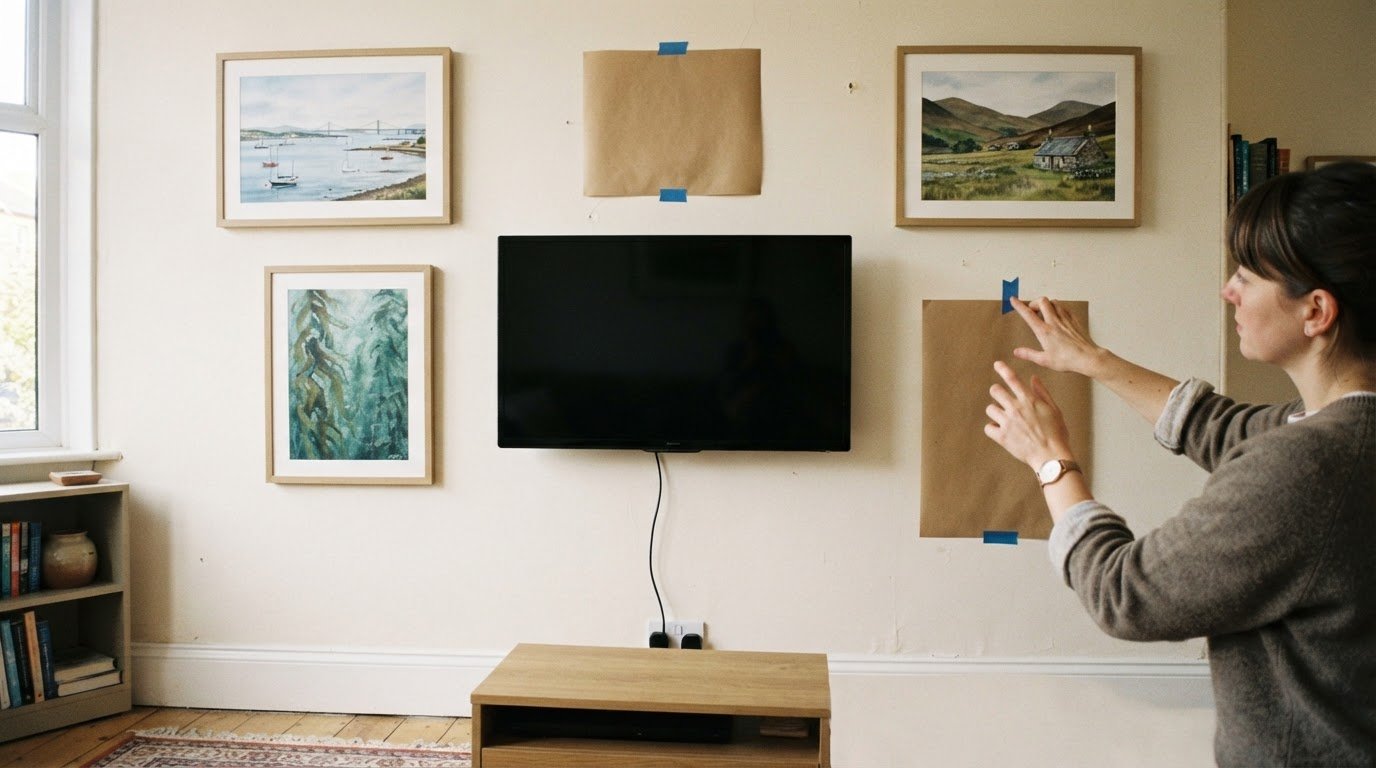
A homeowner marks a hanging point for framed Scottish prints arranged around a TV, leaving its cable accessible.

A TV doesn’t have to be the only focal point on your living-room wall. To work out how to create a gallery wall around a TV, place the largest frames near it, build the arrangement outwards and leave a 4-6-inch buffer around the screen. Visible cables can stay accessible by shaping the layout around them rather than trying to hide them behind artwork.

It’s understandable to worry that frames and cables will make a wall feel cluttered. A balanced layout can help the TV sit naturally among the room’s other details. This guide explains how to create a gallery wall around a TV, from choosing artwork and a layout to testing positions with paper templates and marking hanging points with painter’s tape. You’ll also learn how to adapt the arrangement for a smaller room, balance the display and leave space for cables, so you can plan before making holes in the wall.

Key Takeaways

  • Keep visible cables accessible by planning the arrangement around them, with framed art, shelves and decorative objects working together.
  • For a calmer display, consider using 5-7 frames and arrange pieces around the TV rather than placing them only above it.
  • Test the composition on the floor first, balancing smaller pieces higher up and larger artwork lower down.
  • Use painter’s tape to transfer a frame’s hanging-point spacing to the wall before making holes.

Yes. Arrange art and objects around the screen while keeping visible cables accessible. Leave a 4-6-inch buffer around the TV, then plan the display to work with the wall’s practical details.

  1. Combine Art, Shelves, and Decorative Objects

    Start with larger framed pieces, then add a shelf or smaller objects where they won’t obstruct the screen or cables. Keep the cable route visible and accessible instead of trapping it behind a frame or shelf. For example, place a shelf to one side of the TV, with a small vase or ornament balancing framed art on the other. This gives each element its own place without crowding the screen.

    If you display personal photos on a Samsung Frame TV, choose surrounding pictures or objects that complement the images on screen. The digital display can become part of the collection, while physical frames add depth.

  2. Choose a Unifying Palette or Frame Style

    Choose a shared colour or frame finish to bring different artworks together. Matching frames create a streamlined look; mixing wood, metal or colours can also feel considered when a tone is repeated. For example, echo a colour in a landscape print with a nearby decorative object. Keep the TV’s dark screen in mind, and avoid so many competing finishes that the artwork loses visual balance.

    Choose images with a related mood, subject, or palette to make the collection feel cohesive. Browse the artwork gallery for ideas such as landscapes, then consider how each print will sit beside the television.

  3. Test Placement with Paper Templates

    Cut paper to match each frame’s outer dimensions and label each template with its artwork. Arrange the templates around the TV, moving them until larger pieces anchor the layout and smaller ones fill the gaps. Keep the cable path clear and leave breathing room around the screen. Step back and view the plan from the main seating area before settling on positions.

    Use the templates to compare different frame sizes without lifting or shifting the artwork. If the arrangement feels crowded, move a template outward or remove an object, then review the balance.

Planning the wall layout and overall arrangement

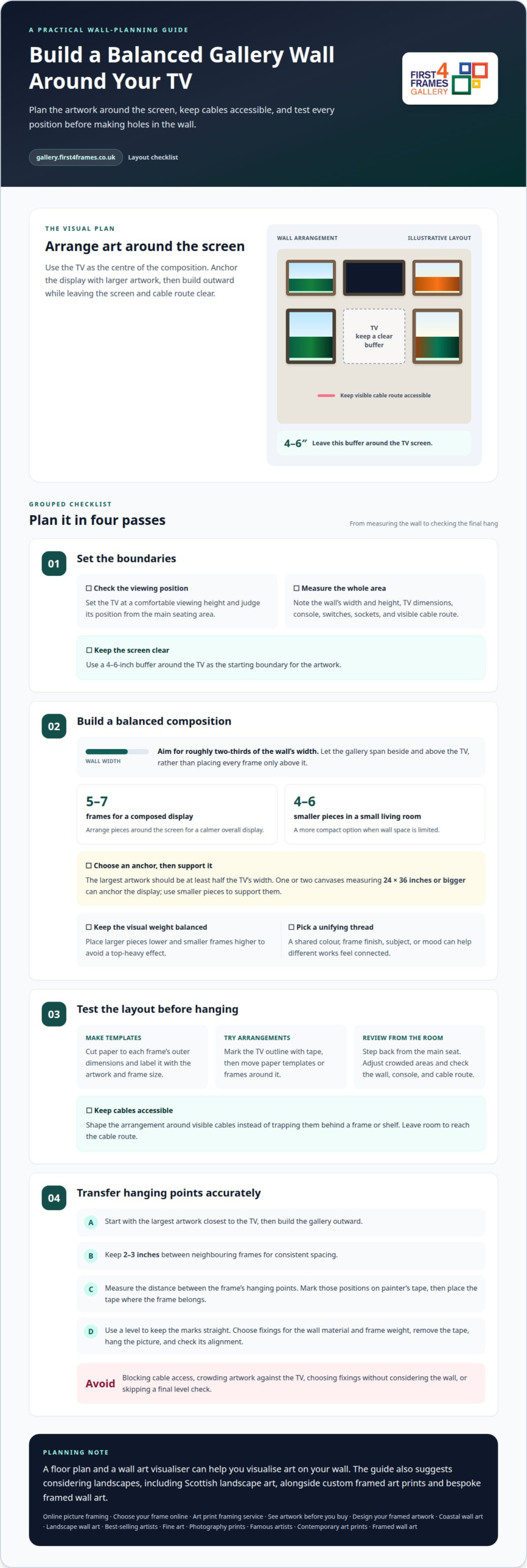
  1. Set the TV at a comfortable viewing height before arranging art. Check its position from the main seating area, where seated eye level helps you judge the screen’s placement. Measure the wall’s width and height, including the TV console, and note any switches or sockets. Leave a 4-6-inch buffer around the screen, then use that clear space as the layout’s starting boundary.
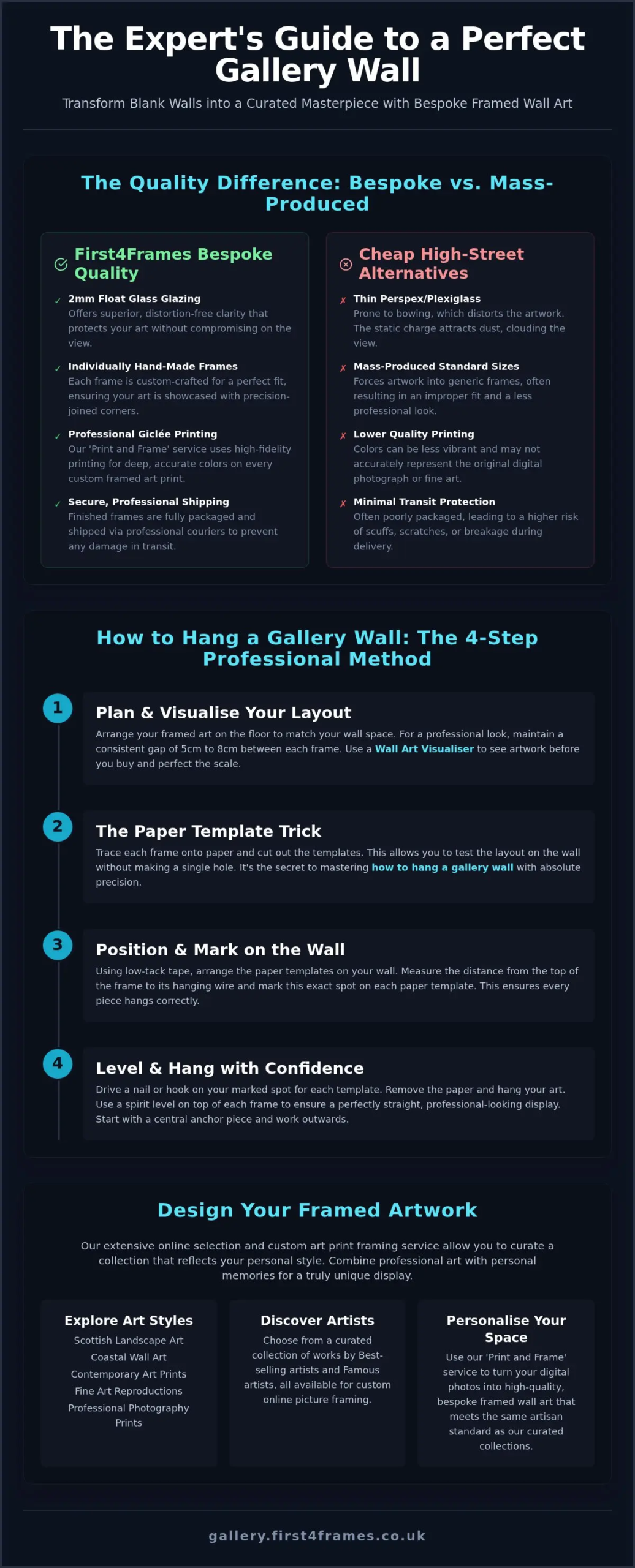
  2. Plan the composition around the TV, rather than placing every frame above it. A gallery wall can span roughly two-thirds of the wall’s width, with art beside and above the screen. Aim for 5-7 frames for a composed display, or 4-6 smaller pieces in a small living room. A symmetrical arrangement can make the TV and console feel connected, while an asymmetrical layout may suit a varied collection.
  3. Choose a visual anchor before adding supporting pieces. The largest artwork should be at least half the TV’s width, so it holds visual weight beside the screen. One or two canvases measuring 24×36 inches or bigger can anchor the display, with smaller frames supporting them. A Scottish landscape art print, for example, could set the palette for custom framed art prints nearby. Keep larger pieces lower and smaller frames higher to avoid a top-heavy effect.
  4. Test the layout on the floor before hanging anything. Mark the TV’s outline with tape, then arrange paper templates or frames around it. Step back and compare the composition with the wall and console. A wall art visualiser can help you see how art might look on your wall, while a floor plan lets you move pieces by hand. Consider how bespoke framed wall art will balance with the room’s furnishings before choosing positions.

For an online picture framing plan, browse the artwork gallery and consider how each piece might fit your TV-wall arrangement.
How to Arrange Art Around a TV and Mark Hanging Points

Using painter’s tape to mark hanging points

Before marking the wall, measure its width and height, the TV’s dimensions and the screen’s height above the floor. Note the console’s dimensions and visible cable route too. These details show where artwork can fit without blocking access.

For plasterboard, brick or plaster walls, choose fixings to suit both the wall material and the frame’s weight. Heavier pieces may need wall anchors and screws, while lighter frames can use a sturdy nail. Common mistakes include choosing fixings without considering the wall, crowding artwork against the TV and skipping a final level check.

  1. Dry-run the arrangement with paper templates before making holes. Label each template with its picture and frame dimensions, then place them around the TV. Check the composition from the main seat and adjust any template that clashes with the console or cable route.
  2. Start with the largest artwork closest to the TV, then build the gallery outward. Keep 2-3 inches between neighbouring frames for consistent spacing. Use the same gap around smaller pictures, and step back after placing each template to spot uneven clusters.
  3. Measure the distance between the frame’s hanging points, then mark those positions on painter’s tape. Place the tape on the wall where the frame belongs, using a level to keep the marks straight. This transfers the frame’s actual fixing points without estimating from its outer edges.
  4. Hammer a nail or drill for a screw through the marked points in the tape, then remove the tape before hanging the picture. Match the fixing to the wall and frame weight. Once the frame is hung, check its alignment with a level and adjust it before moving on to the next piece.

Keep the TV’s dimensions and wall measurements beside your layout as you work. This simple reference helps prevent a common mistake: planning attractive spacing on paper that doesn’t fit the actual wall.

  1. Use artwork to give a broad living-room wall more presence. A 55-65-inch TV is usually too small to anchor a large wall on its own, so the surrounding space can feel bare. A considered arrangement gives the screen visual company and makes it part of a wider display. For example, place prints around the TV to connect its position with the rest of the room.
  2. Make the wall feel intentional, even when the television is off. The dark screen can dominate a living room, but framed artwork nearby adds colour, subject matter and detail. Choose pieces that reflect what you enjoy, such as a landscape that recalls a favourite place or a striking contemporary print. The display can then feel personal, rather than centred only on a device.
  3. Use the gallery to connect separate elements in the room. Artwork can link the TV wall, furniture and other details without requiring everything to match. For example, a print featuring a colour already found in a rug can help the two areas feel connected. Choose images for their meaning as well as their appearance, so the arrangement adds character to everyday viewing.
  4. Let the display evolve as your tastes change. A gallery wall can bring together different subjects, such as a favourite landscape, an abstract composition and a meaningful print, while the TV remains in place. Start with pieces you genuinely want to live with, then leave room for a future addition. Explore artwork for your living room to find prints that could give the screen a more considered setting.

First4Frames Gallery can help bring a planned TV-wall arrangement together with Ready-to-Hang Framed Art. Choose a print and frame to suit your palette, or use Custom Picture Framing for artwork that needs a bespoke fit. Frames are handmade for each order using high-quality materials, with 2 mm float glass glazing.

For a more personal display, Giclée Fine Art Prints offer another way to select artwork for your wall. Consider how each image’s colours and frame will sit beside the television before choosing pieces for your arrangement.

If you’d like guidance on framed art for your layout, contact First4Frames Gallery.

Let Your TV Wall Reflect Your Style

To create a gallery wall around a TV, treat the screen as part of the living space, not as an obstacle to decorating. Begin with artwork that feels meaningful to you, then let its colours and character guide future choices. Your display can grow over time, bringing together pieces that reflect places, memories and subjects you love.

Before choosing your next print, picture how it might sit alongside the room’s existing textures and furnishings. A considered addition can refresh the wall without replacing the entire arrangement. Follow your own taste and let the collection take shape at a comfortable pace.

Explore artwork for your TV wall and find a piece to inspire your next design choice. Your living room can become a more personal space, one artwork at a time.

Frequently Asked Questions

How much space should be between the TV and the artwork?

Leave a 4-6-inch buffer between the TV and the nearest frame, measuring from the screen’s edge to the frame’s outer edge. This gives the display breathing room and keeps artwork from feeling pressed against the screen. If the TV sits above a console, consider that furniture’s outline too, so the nearest pictures don’t appear squeezed between the screen and the console.

Is a gallery wall around the TV a good idea in a small living room?

Yes, a gallery wall can suit a small living room when its scale matches the available wall space. Try 4-6 smaller pieces rather than filling every gap with oversized frames. A compact arrangement can add personality without overwhelming the TV or seating area. Keep the composition focused, and choose artwork that works together so the eye can move naturally between each piece.

Should the frames match my TV?

Frames don’t have to match the TV exactly. A consistent finish, such as black frames echoing a dark screen, can create a unified look, while wood or metal frames add contrast. For a mixed collection, repeat one colour or material across several pieces. This shared detail helps different frames feel intentional beside the screen.

What size art works best around a TV?

Choose artwork in proportion to both the TV and the wall. The largest piece should be at least half the TV’s width to hold visual weight beside the screen. One or two canvases measuring 24×36 inches or bigger can anchor the arrangement, with smaller pictures supporting them. In a tighter space, use smaller works so the composition stays balanced.

How much space should you leave between a TV and framed pictures?

Keep the closest framed picture 4-6 inches from the TV’s edge, measuring to the outside of the frame rather than the artwork inside. That distinction matters with wide frames, which can reduce the visible gap. Use the same measurement on both sides if you want a symmetrical arrangement, or adjust each side to suit the wall’s shape and nearby furnishings.

How to hide TV cables within a gallery wall

Keep the cable route accessible by arranging artwork and shelves around it, rather than trapping cables behind them.
Posted on

How to Arrange Frames on a Narrow Wall in Rows or Stacks

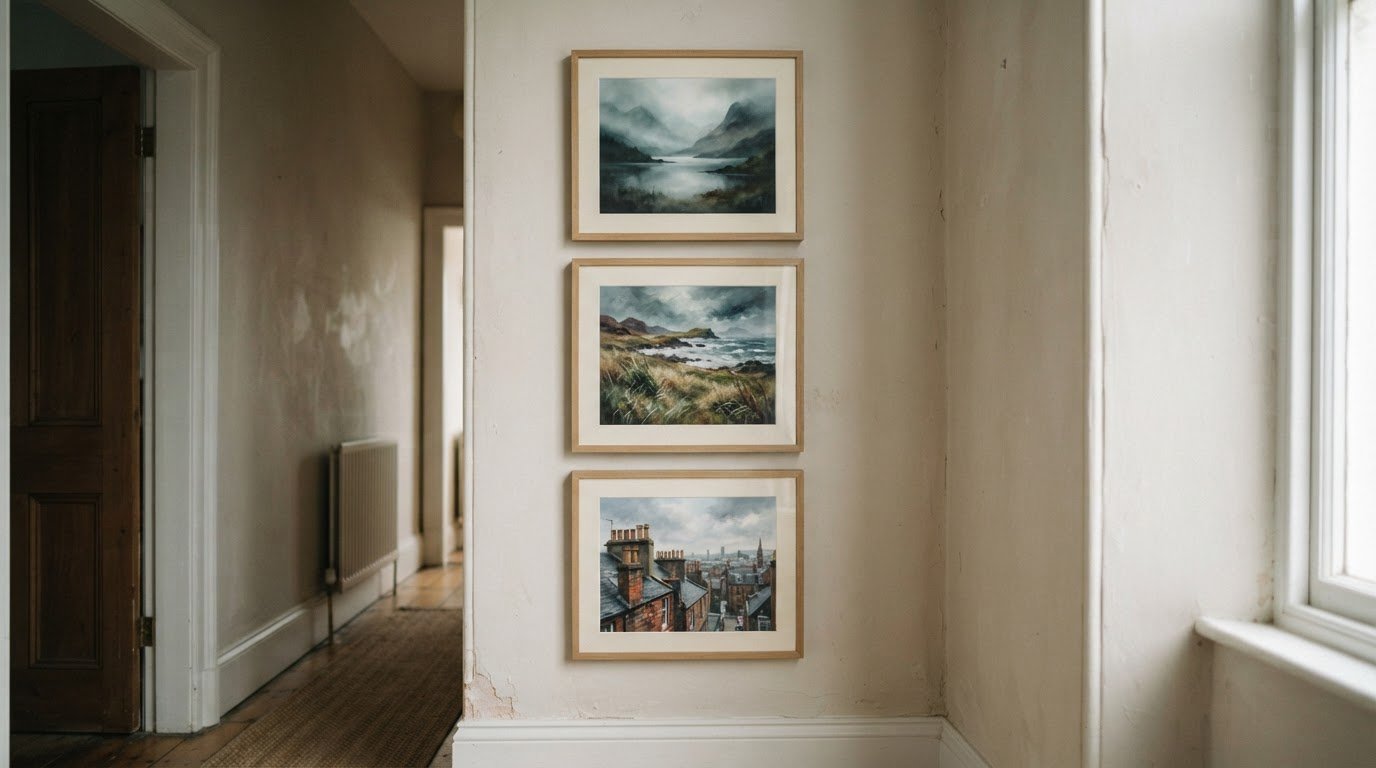
Three Scottish art Giclée prints in oak frames stacked on a narrow hallway wall

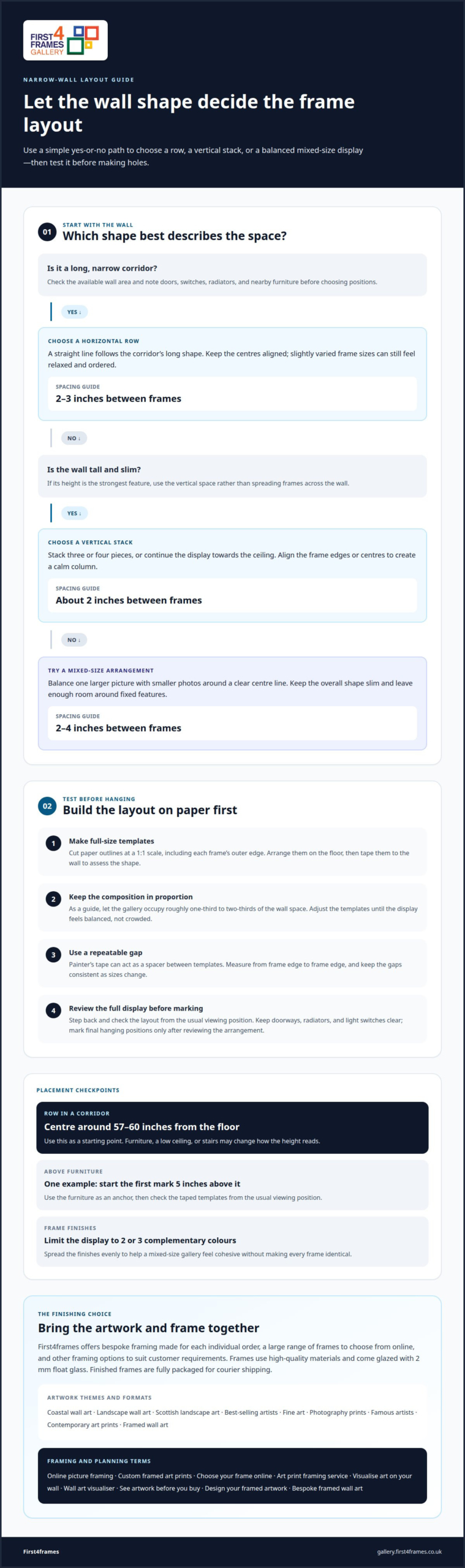
The best way to arrange frames on a narrow wall is usually a vertical stack in a tall, slim space, or a single horizontal row in a narrow corridor. A vertical display can hold three or four pieces, or continue towards the ceiling. Leave about 2 inches between frames in a stack, or 2 to 3 inches in a row.

A narrow wall can be tricky to fill without making it feel crowded, so plan the layout before making holes. Place full-size paper templates where you want each frame, then adjust the spacing and alignment until the composition feels balanced.

This guide shows you how to map out a layout, choose between a row, a mixed-size arrangement and a vertical stack, and keep the gaps intentional. You’ll also learn how to make a small wall feel considered rather than squeezed, giving your chosen art room to make an impression.

Key Takeaways

  • Match the layout to the wall’s proportions: a row can suit a corridor, while a vertical arrangement makes use of a tall, narrow space.
  • Use painter’s tape to keep gaps consistent when arranging frames of different sizes.
  • Test how a mixed-size composition looks before settling on the positions and balance of each piece.
  • Explore bespoke framing when you want artwork and frame choices to work together as a finished display.

Plan the composition before marking the wall. Full-size paper templates let you test frame placement, height and spacing while leaving the wall untouched.

  1. Match the layout to the wall

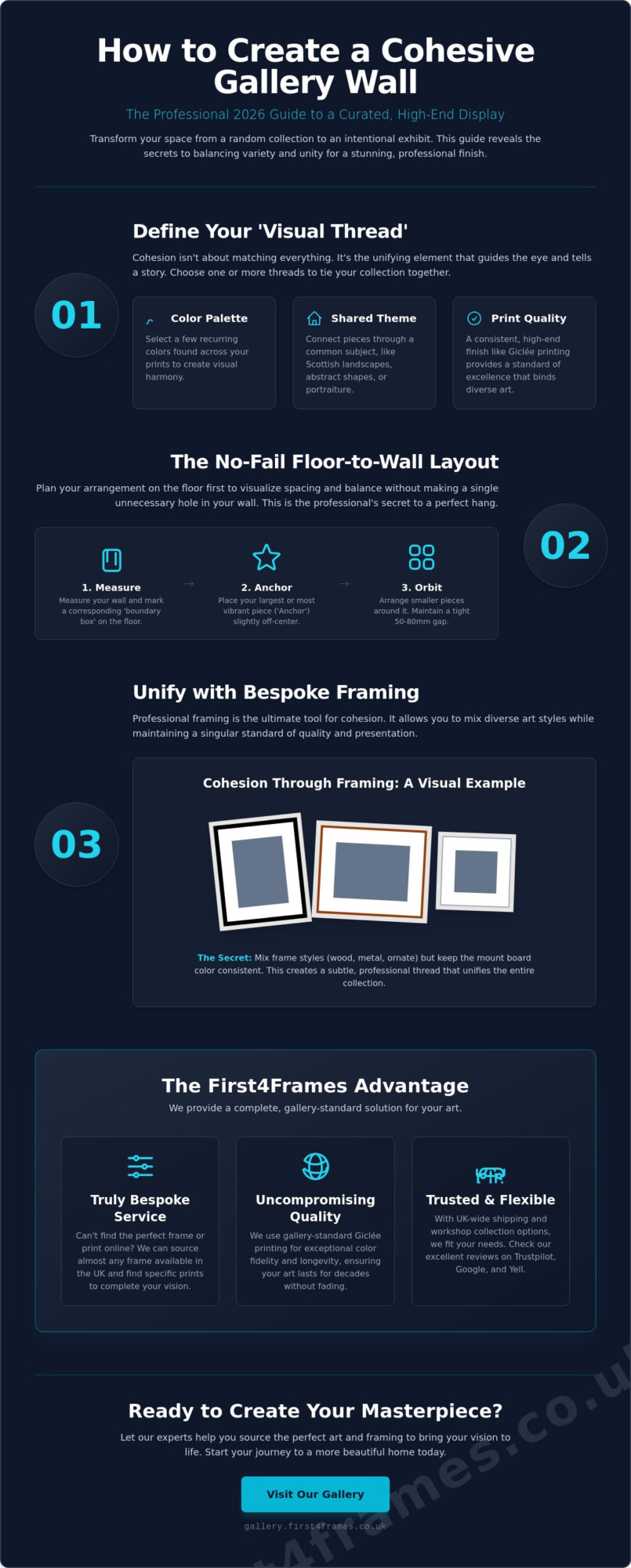
    Measure the available wall area, then sketch a layout that follows its proportions. A narrow wall usually suits a vertical arrangement or a slim row better than a broad, sprawling grid. As a guide, let the gallery wall occupy roughly one-third to two-thirds of the wall space. Cut paper templates at a 1:1 scale, arrange them on the floor, then tape them up to assess the overall shape.

  2. Select frame sizes, styles, and colours

    Choose frame sizes to suit the pictures you want to display, then use paper outlines to compare their visual weight. For example, place one larger picture beside smaller photos and check that the arrangement fits the wall’s width. Limit frame finishes to two or three complementary colours, spread evenly across the display. This gives a mixed-size gallery wall cohesion without making every frame identical.

  3. Choose the gallery wall height

    Mark the intended centre of the arrangement and consider how it relates to nearby furniture and the room’s sightlines. Above a sofa, console table or dresser, use the furniture as an anchor rather than placing frames too high. One example for a gallery wall above furniture is to make the first mark 5 inches above it. Tape up the templates and check their height from the usual viewing position.

  4. Decide how many frames to hang

    Choose a frame count that fills the planned shape without crowding its edges. A 3-by-3 grid gives you an example with 9 frames, while fewer, larger pictures can create a calmer display on a slim wall. Trace each outline, including its frame edge, and move the templates until the overall placement feels balanced. Use a pencil to mark the final positions only after reviewing the full arrangement.

A straight row keeps artwork aligned along a narrow hallway without making the passage feel crowded. Plan its direction in relation to how the corridor connects with adjoining rooms.

  1. Plan a single-row corridor display

    Arrange frames in a horizontal line to suit the long, narrow shape of a corridor. Leave 2 to 3 inches between pieces, then use a laser level to keep the line straight. For a relaxed feel, vary the frame sizes slightly while keeping their centres aligned. Before settling the placement, look from both ends of the hallway and check that the prints don’t interrupt doors or switches.

  2. Adapt the display to hallways and stairs

    Follow the natural movement through the space. In a level hallway, keep the row horizontal; beside a staircase, arrange the artwork to rise with the steps. Use paper outlines to see how the display looks from both the landing and the foot of the stairs. If the hallway opens towards a living room, consider how the artwork and colours relate to that room.

  3. Position the gallery at eye level

    Centre a horizontal row around 57-60 inches from the floor, then stand back to assess its height. That measurement gives you a starting point, not a reason to ignore the room: a low ceiling, nearby furniture or a staircase can change how the placement reads. Check the display while walking through the corridor, since the artwork should feel comfortable from the usual viewing path.

  4. Connect adjoining spaces with a shared colour, subject or frame finish rather than matching every piece. For example, a coastal print in the hallway can echo a colour in the living room without repeating the same image. If you prefer a looser gallery, vary frame sizes and let the arrangement follow the available wall shape, while keeping its overall direction clear. Browse artwork for a hallway display to consider which prints suit your route through the home.

How to Arrange Frames on a Narrow Wall in Rows or Stacks

What is the best way to arrange different sized picture frames?

On a narrow wall, use a vertical stack or a slim row, then balance frame sizes around a clear centre line. Leave 2 to 4 inches between frames, adjusting the composition to suit the wall.

Treat a doorway, radiator or light switch as a boundary. Arrange frames beside or above it, leaving access clear and avoiding a cramped display.

  1. Mark frame spacing with painter’s tape

    Cut painter’s tape to the gap you want and place it between the paper frame templates. This creates a repeatable guide as you adjust the display’s visual rhythm. For example, use the same tape width between each pair of frames, even where sizes change. Step back to check the spacing from across the room before marking hanging positions.

  2. Set spacing for a vertical display

    Stack frames from the bottom upwards, keeping their edges or centre line aligned. For a vertical display of three photo frames, leave about 2 inches between each frame. If sizes vary, align the centres to create a calm column, or align one edge for a more structured look. Place the paper templates first, then check that the top and bottom pieces fit the available wall height.

  3. Keep gaps consistent and even

    Measure between the outer edges of each frame, not between the pictures inside them. A gap of 2 to 4 inches usually works well; keep it consistent across horizontal and vertical spaces. In a relaxed arrangement, even spacing still helps different sizes feel connected. Use a ruler or a tape spacer at every gap, then view the display from your usual position to spot uneven distances.

  4. Arrange frames around fixed features

    Mark the outline of a doorway, radiator or light switch on your layout before placing frames. Treat it as a boundary, then group pictures to one side or arrange them evenly above it. Keep the gallery’s visual centre clear of switches, and don’t let a frame overlap the doorway’s edge. Test the layout with paper templates to make sure the display feels deliberate.

Vertical frame stacks for tall, narrow walls

For a tall, narrow wall, a vertical stack usually uses the space more effectively than a horizontal row. A stack can hold 3 or 4 pieces, or continue towards the ceiling.

  1. Build a vertical frame stack

    Measure the usable wall space from the furniture or skirting board to the ceiling, then map the stack with paper templates. Place the largest picture near the centre, balancing it with smaller pieces above or below. Keep the column’s centre line consistent and check that the top frame doesn’t look isolated near the ceiling. View the full stack from the doorway before planning the hanging points.

  2. Choose between a vertical stack and a row

    Match the layout to the wall’s shape and the surrounding space. Choose a vertical stack for a tall, slim area, such as the wall beside a doorway. A single row suits a long hallway where the wall extends sideways. If the wall has enough height and width for either option, compare paper outlines and choose the arrangement that leaves the clearest visual space.

  3. Measure each frame’s outer dimensions and hanging point before marking the wall. The frame edges determine the space the full stack needs, while the hanging hardware determines where each fixing sits. Transfer both measurements to the templates so the frame edges, not the fixings, are evenly spaced. This prevents a straight centre line from concealing uneven gaps.
  4. Let the artwork guide the order of the pieces. For example, a portrait photograph can anchor the centre, while smaller landscape prints lead the eye upwards or downwards. Keep frame finishes consistent if the subjects vary, or use a shared colour to connect different styles. Before hanging, step back and check that the stack reads as one composition rather than separate pictures competing for attention.

Explore artwork for a vertical display and consider how each image will relate to its neighbours before choosing the final order.

First4Frames Gallery offers Ready-to-Hang Framed Art, Custom Picture Framing and Giclée Fine Art Prints. Explore online picture framing to choose your frame online and create custom framed art prints or bespoke framed wall art. Consider how fine art, contemporary art prints, coastal wall art, landscape wall art or Scottish landscape art might suit your display.

As you browse, consider the artwork and framing together. Whether you’re drawn to well-known artists, popular artists or photography prints, picture the art on your wall before you buy. A wall art visualiser can help you plan the arrangement, while professional framing can bring your chosen pieces together as ready-to-hang wall art.

Visit First4Frames Gallery online to explore the artwork and framing options.

Let your wall tell a story

A narrow wall can be more than a space to fill. Treat it as a small composition with a clear point of view: choose artwork that reflects a mood, memory or subject you want to live with. Finding the best way to arrange frames on a narrow wall starts with deciding what you want the space to express, then choosing pieces that feel connected without competing for attention.

Before hanging anything, consider how the display will look with the room’s colours and furnishings. A quiet series of prints can create a gentle rhythm in a hallway, while a striking central image can give a slim wall a confident focal point. Choose pieces that feel personal and give the finished arrangement room to become part of your home.

Explore the artwork and framing options at First4Frames Gallery to find pieces that suit your space and style. Browse the gallery and take the next step towards a display that feels distinctly yours.

Frequently Asked Questions

How do you space multiple frames on a wall?

Measure the gap between each frame’s outer edges, using the same reference point throughout. In a mixed-size display, compare the spaces between frames rather than between the picture contents, since mounts can make those gaps look different. Lay out paper shapes first and view them from the room entrance to spot any frame that feels detached from the group.

Should all frames on a gallery wall be the same colour?

No. Frames can have different finishes if the overall display still feels connected. Create a visual link by repeating one finish on the largest pieces or matching frame tones to colours in the artwork. For example, black frames can anchor a few lighter wood frames. Spread each finish across the arrangement instead of clustering matching frames in one corner.

What if my frames have 2 hooks, one on each side, instead of one in the centre?

Measure between the hooks and transfer that distance to the wall, keeping the frame’s centre aligned with your planned position. For hooks 12 inches apart, mark the fixing points 6 inches either side of the centre. Check both marks with a level before hanging, so the frame sits straight and its weight rests evenly on both fixings.

What frame layouts work best on a narrow wall?

The best way to arrange frames on a narrow wall is to match the layout to its shape: choose a vertical stack for a tall, slim space or a single row along a corridor. A mixed-size arrangement can also work if its overall outline stays narrow, such as one larger picture beside smaller pieces. Account for nearby doors and switches when mapping the usable space.

How much spacing should there be between picture frames?

A gap of 2 to 4 inches between frame edges is a useful starting point for many displays. Keep the distance consistent across the arrangement, including between larger and smaller frames. If the artwork has wide mounts, judge the frame edges rather than the visible image area. A paper spacer cut to your preferred gap makes repeated measurements easier.

How high should picture frames be hung in the UK?

For a horizontal row, centre the arrangement around 57-60 inches from the floor, then assess it from the usual viewing position. For the best way to arrange frames on a narrow wall, measure to the centre of the complete display, not the top edge of the first frame. In a stairwell, test the height with paper templates first.

Posted on

Square Art Prints for UK Walls: Sizes, Prices and Ordering

Square Art Prints for UK Walls: Sizes, Prices and Ordering

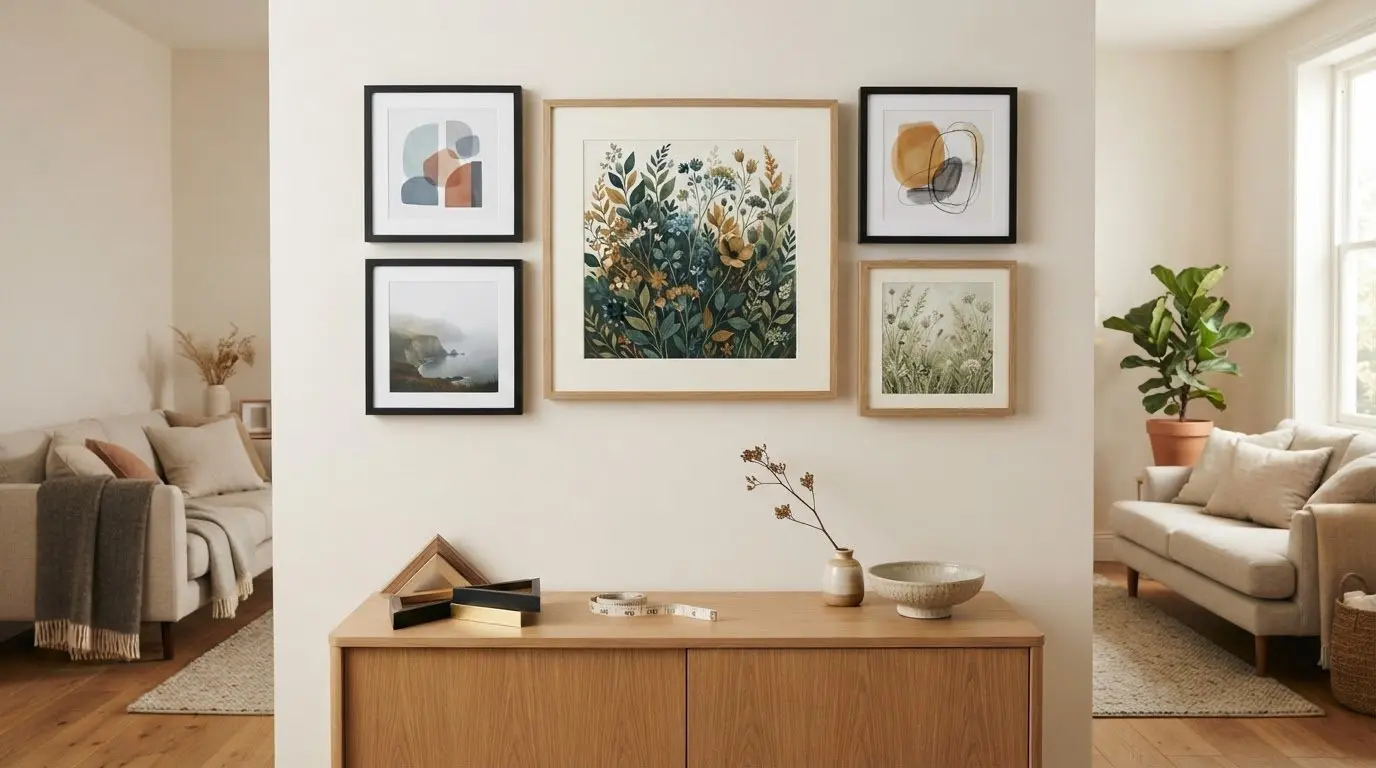
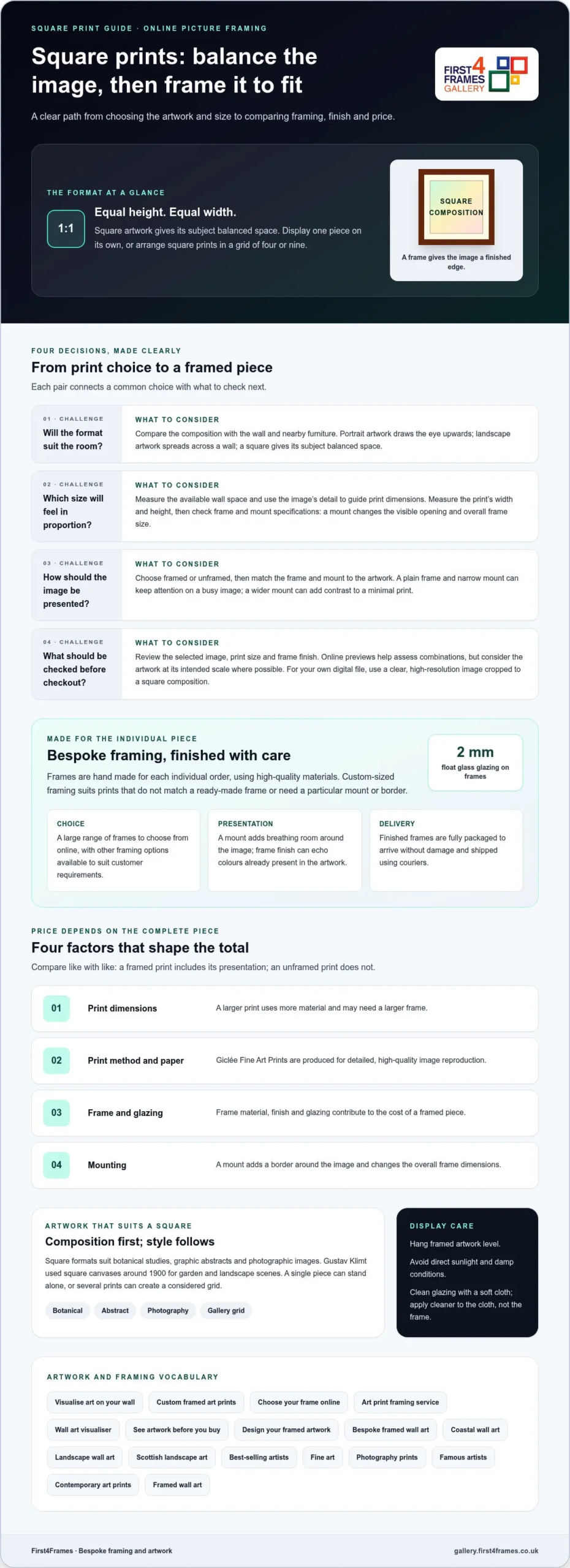
A square print can feel balanced on its own or as part of a group: its height and width are equal, creating a 1:1 ratio. Portrait prints draw the eye upwards, while landscape prints spread across a wall. Framing a square art print lets its composition take centre stage, whether it’s displayed alone or arranged with three or eight others in a grid.

Portrait and landscape formats may feel familiar, but a square can bring a calm, contemporary rhythm to a room. Choosing frames for square art prints starts with matching the print and frame to your wall and the artwork. This guide explains how square prints compare with other formats, how to choose a size and order online, and what affects the price of a framed print. You’ll also find ideas for making one piece a focal point or creating a considered gallery wall.

Key Takeaways

  • Compare the artwork’s composition with your wall space to decide whether a square format will suit the room.
  • Choose a print size and frame finish that work together, then follow the online ordering steps to create your framed piece.
  • Understand how print choice, framing and presentation affect the overall price before you decide what to buy.
  • Use placement, scale and surrounding décor to give square artwork a clear focal point, with bespoke framing available to complete the look.

Square prints compared with portrait and landscape formats

A square print has equal height and width, creating a 1:1 format. Portrait artwork is taller than it is wide, while landscape artwork is wider than it is tall. That difference changes how each image uses wall space: a portrait can emphasise a person or tall building, while a landscape suits a broad coastline. A square composition, such as a close-up botanical study, gives its subject balanced space.

Square wall art can be printed on paper or canvas, then displayed unframed or in a frame. A mount, the border between image and frame, adds breathing room and can make a small print feel more considered. For a contemporary finish, choose a simple frame that supports the artwork; a natural or dark finish can also echo colours already present in the image. A square format works alone or in a grid of four or nine prints.

Square-format poster styles range from graphic abstracts to botanical illustrations and photographic images. Gustav Klimt turned to square canvases around 1900 for garden and landscape scenes, showing how the shape can suit subjects beyond geometric designs. A square poster of a single flower, for example, places the bloom centrally, while a bold abstract can use the equal sides to create a beautiful, orderly composition.

Choose a frame and mount to suit the print’s colours, detail and visual weight. For a busy image, a plain frame and narrow mount keep attention on the artwork. For a minimal print, a wider mount can add contrast.

For a square print, measure its width and height, then choose a frame that fits. A mount changes the visible opening and increases the frame’s overall dimensions, so check the frame and mount specifications against the print measurements.

Yes, custom-sized framing can be made for square art prints in the UK. It suits prints whose measurements don’t match a ready-made frame, or artwork that needs a particular mount or border.

Hang framed artwork level and avoid placing it in direct sunlight or damp conditions, which can affect artwork over time. Clean the glazing with a soft cloth, applying cleaner to the cloth rather than spraying the frame.

Creating and ordering square wall art online

Ordering square wall art online begins with the image, then moves to size, finish and framing. Square prints are available framed or unframed, so decide whether you want a ready-to-display piece or prefer to arrange framing separately. An abstract design, botanical study or photograph each has different details to consider before choosing its final presentation.

Consider the image’s colours and subject alongside the room where it will hang. A botanical print with fine leaf detail may suit a quiet frame, while a high-contrast abstract can carry a stronger finish. Measure the available wall space and consider nearby furniture so the print feels in proportion, rather than choosing based on how it looks on screen alone.

  1. Select the artwork. Compare the composition and colour palette with the wall and furnishings.
  2. Choose a size. Use the available space and the image’s detail to guide the print dimensions.
  3. Decide on framing. A framed print can arrive professionally finished in a choice of frame finishes and ready to hang.
  4. Review the order. Check the selected image, size and finish before completing checkout.

Online previews help you assess how options work together, but consider the artwork at its intended scale where possible. A small screen can make a delicate botanical image appear bolder or hide fine details. If you’re ordering a print from your own digital file, use a clear, high-resolution image and crop it to a square composition before selecting the print size.

Keep the key choices together when ordering: the image, print dimensions, frame finish and delivery address. For a gallery wall, repeating a frame finish across several square pieces creates a connected arrangement. For a single focal print, let the image’s colours or subject guide your frame choice.

Explore the online artwork gallery to compare subjects and styles before settling on a square print.

Square Art Prints for UK Walls: Sizes, Prices and Ordering

The price of a square print depends on what you’re buying: the print alone, a canvas, or a framed piece. Framing, print size, materials and the selected artwork all shape the total. A gallery listing may show an unframed print separately from a ready-to-hang option, so compare like with like before choosing.

Start by separating the artwork cost from its presentation. An unframed paper print doesn’t include a frame or glazing; a framed version brings those choices into the purchase. Canvas is another format, with its own presentation and finish. For example, compare the same abstract image as paper and canvas, then check whether either option includes framing.

Next, look at the factors that change the final price:

  • Print dimensions: a larger print uses more material and may need a larger frame.
  • Print method and paper: Giclée Fine Art Prints are produced for detailed, high-quality image reproduction.
  • Frame and glazing: the frame material, finish and glazing contribute to a framed piece’s cost.
  • Mounting: a mount adds a border around the image and changes the overall frame dimensions.

For a useful comparison, note the artwork, print size, frame and mount options in each listing. Compare like with like: a framed print includes its presentation, while an unframed print does not. Check the product details so you know what the selected option includes before ordering.

For a personal budget, decide which elements matter most. Choose the image first, then weigh paper or canvas against framing and mount options. A minimal print may need little visual framing, while detailed artwork can benefit from a mount that separates the image from its frame. These choices explain price differences without assuming that square prints share one fixed rate.

Compare the complete item rather than the headline figure. Check what arrives, whether the print is framed, and which finish you selected. That makes it easier to choose a square artwork that suits both your wall and your budget.

Square artwork as a focal point

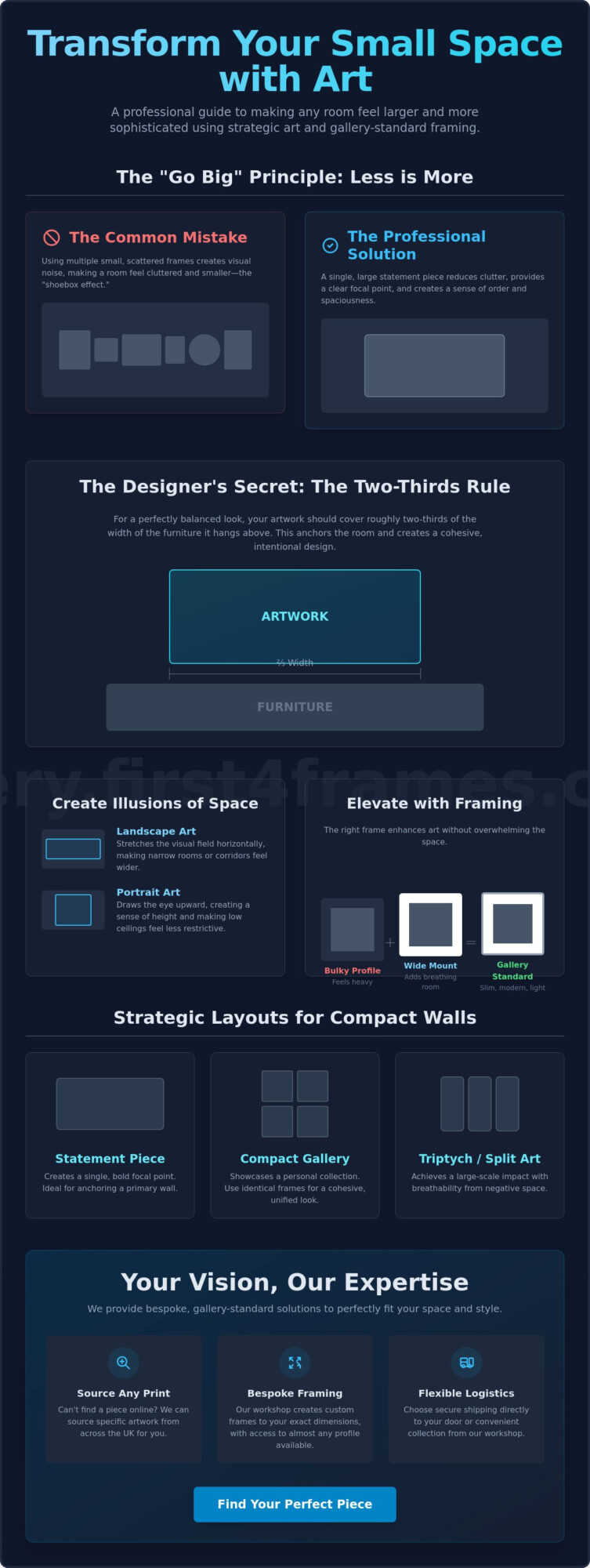
Choose a square print as the room’s visual anchor, then arrange nearby objects around its colours or subject. A vivid abstract can draw attention above a console, while a calm botanical print can bring focus to a quiet corner. Because the square has equal sides, a centred composition can feel balanced rather than directional.

Identify the artwork’s strongest feature and give it room to stand out. For a close-up flower, keep surrounding décor simple so the petals remain prominent. For a detailed city scene, leave clear wall around the frame to distinguish its smaller elements. This breathing space helps the print stand apart from shelves, lamps and other framed pieces.

The frame also shapes the focal point. A simple finish keeps attention on a colourful image, while a darker frame can define a pale print against a light wall. A mount creates a border between the artwork and frame, helping separate a busy composition from nearby décor. Choose a finish that relates to the room without matching every object exactly.

Use these steps to plan the display:

  • Pick the wall: choose a spot that’s visible from the room’s main seating or entrance.
  • Check the surroundings: consider furniture edges, shelves and nearby wall art.
  • Balance the composition: use the print’s dominant colours to guide cushions, ceramics or other accents.
  • Review the framing: make sure the frame supports the artwork instead of competing with it.

A polished look comes from thoughtful coordination, not extra decoration. Pair a framed coastal print with restrained blue accents, for example, or let a bold geometric image provide the room’s main colour statement. Keep neighbouring pieces visually lighter so the square artwork remains the first thing the eye notices.

Browse square artwork and print styles to find an image that can anchor your wall arrangement.

First4Frames Gallery brings square artwork and its frame together through Ready-to-Hang Framed Art and Custom Picture Framing. Choose from Giclée Fine Art Prints, or have a print framed to suit your chosen image and space. Each frame is handmade to order from high-quality materials, with 2 mm float glass glazing.

This is a practical next step when a standard frame doesn’t fit your print, or when you want the finished piece ready to display. Select a frame that complements the artwork, then consider how its finish will work with your room. Commercial clients can also explore Commercial Artwork Curation for artwork suited to their spaces.

For help choosing a framing option, contact First4Frames Gallery or visit the online gallery.

Choose the piece that makes your wall feel complete

The best artwork is the piece you’ll enjoy living with every day. Before choosing a square print, picture the mood you want in the room: a quiet landscape can soften a reading corner, while a vivid abstract can bring energy to a plain wall. Let that feeling guide your choice of image and presentation.

Thoughtful framing of square art prints means treating the frame as part of the artwork, not an afterthought. If you’re framing square art prints, consider how the frame’s finish will complement the image and room. First4Frames Gallery offers Ready-to-Hang Framed Art, Custom Picture Framing and Giclée Fine Art Prints, giving you options for a finished piece or a presentation tailored to your chosen image.

Take the next step by browsing artwork and considering which image belongs in your space. Explore the gallery and find your square artwork. A well-chosen print can give your room a personal focal point and make the wall feel distinctly yours.

Frequently Asked Questions

What makes square art prints different from portrait or landscape prints?

A square print has equal width and height, unlike a portrait print, which is taller, or a landscape print, which is wider. This balanced shape suits centred subjects, such as a single flower or a close-up still life. Before choosing a square crop, check the image’s edges: a tight crop may remove details that make the subject feel complete.

Where can I buy framed square art prints in the UK?

You can buy framed square art prints from UK galleries that sell artwork with framing. First4Frames Gallery offers framed art and Giclée Fine Art Prints, with professional in-house framing. For framing square art prints you already own, Custom Picture Framing can help create a presentation around the print. Compare the artwork and framing details on the product page before placing an order.

What sizes are square art prints commonly available in?

Square print sizes vary between artworks and sellers, so check the dimensions shown for each piece. Confirm that the width and height are equal, then measure your intended wall area to see how the print will sit alongside furniture or other artwork. If you’re planning a group display, map each print’s dimensions on paper before deciding on spacing.

How much do square art prints and framing cost in the UK?

The cost of framing square art prints depends on the selected artwork, print dimensions and framing details. Check whether the listed product is framed and review its frame and mount options before comparing prices. First4Frames Gallery includes framing in the price of its framed prints, with float glass as standard. The current product listing gives the relevant price for that artwork and selection.

What are the differences between framed and unframed square art prints?

A framed print arrives presented within a frame, while an unframed print leaves you to arrange its display separately. First4Frames Gallery’s ready-to-hang framed prints include float glass, D-rings and high-quality framing wire. An unframed print may suit someone who already has a frame or wants to plan a different display. Check the listing to see which presentation is included.

Posted on

Minimalist Frames: A Guide to Scandi Wall Art

Minimalist Frames: A Guide to Scandi Wall Art

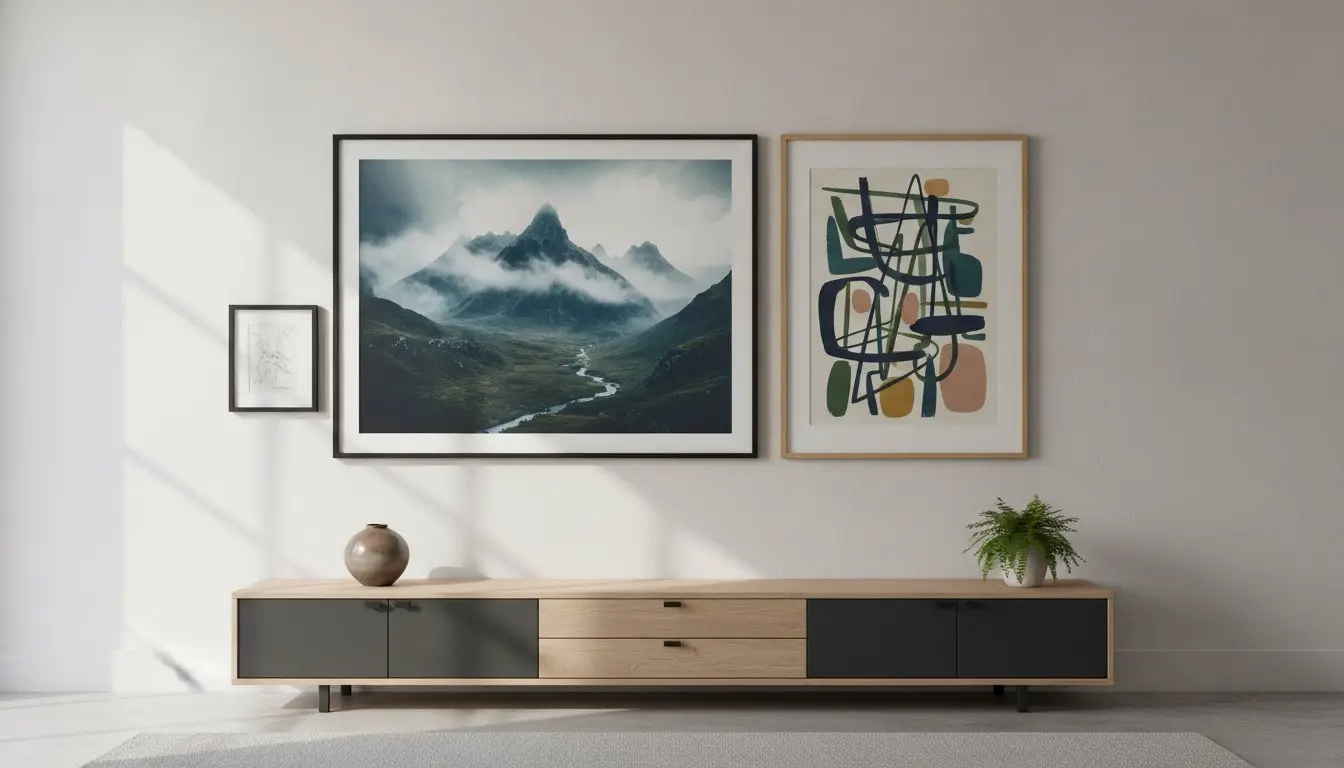
The most understated design choices are often the hardest to get right. You might think a simple border is easy to find, but searching for the right minimalist frames for scandinavian interiors often leads to a cycle of disappointment. It’s frustrating when a beautiful print is let down by a bulky frame or cheap, yellowing perspex that lacks clarity. We believe your space should feel like a professionally staged sanctuary where every element serves a purpose. This guide will help you discover how to select the perfect minimalist frames that embody the “less is more” Scandinavian philosophy while ensuring gallery-grade protection for your artwork. We’ll show you why bespoke, hand-made quality from our Falkirk workshop surpasses off-the-shelf options. You’ll learn about the superior clarity of 2mm float glass and how our “Visualise art on your wall” tool can help you create a cohesive gallery wall. From Scottish landscape art to contemporary photography prints, it’s time to give your art the professional finish it deserves.

Key Takeaways

  • Learn how the Scandinavian “less is more” philosophy uses frames as a vital transition between your artwork and your home’s architecture.
  • Discover why choosing minimalist frames for scandinavian interiors requires a focus on slim-profile aluminium or solid wood to avoid the bulky look of standard frames.
  • Understand the technical advantage of 2mm float glass, which offers superior clarity and prevents the yellowing or warping often found with cheap perspex competitors.
  • Explore how to turn your personal digital photos into professionally staged art prints using a bespoke, hand-made service from our Falkirk workshop.

Understanding the Role of Minimalist Frames in Scandinavian Design

Scandinavian design is rooted in the concepts of balance, functionality, and a seamless connection to nature. When you select minimalist frames for scandinavian interiors, you aren’t just choosing a border. You’re selecting a vital transition between the artwork and the architecture of your home. A frame should never shout; it should whisper, allowing the art to breathe while anchoring it to the wall. Standard, bulky frames often disrupt the clean lines that define Nordic spaces, which is why bespoke framed wall art is essential for achieving the perfect proportions. You can even visualise art on your wall using our online tools to ensure the fit is seamless before you commit.

The Aesthetic Principles: Hygge and Lagom

True Scandi style balances two core ideas: Lagom, meaning “just enough,” and Hygge, which represents cozy warmth. Our minimalist frames embody Lagom by providing structural support without visual clutter. By using natural materials like solid wood, we also introduce Hygge into your living space. This creates a serene atmosphere where your gallery wall feels intentional rather than crowded. It’s about finding that sweet spot where the craftsmanship is evident but the aesthetic remains understated.

Why Generic Frames Fail the Scandi Test

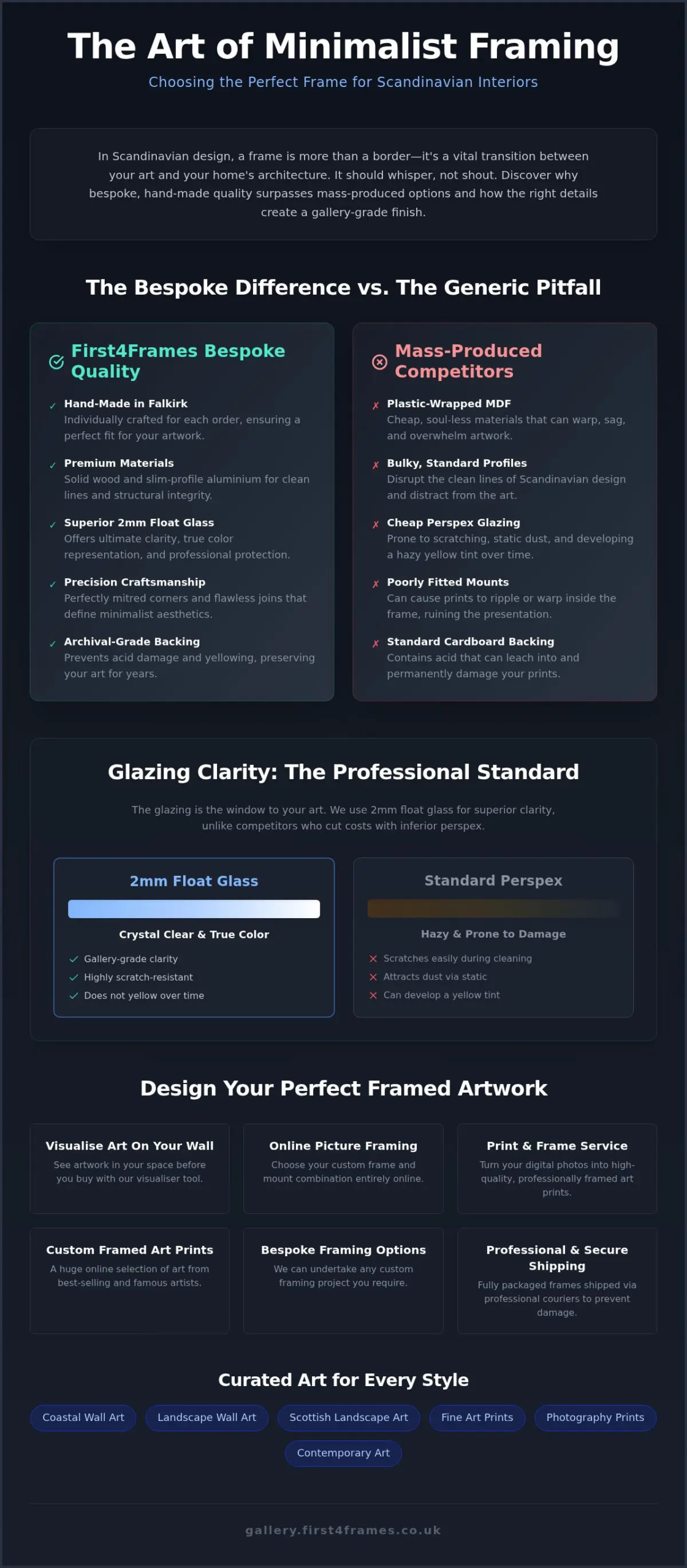
Most mass-produced frames are made from plastic-wrapped MDF. These soul-less products often sag over time or feature chunky profiles that overwhelm delicate prints. Unlike these cheap alternatives, every frame from our Falkirk workshop is individually crafted to order. We avoid the common pitfalls of generic framing, such as:

  • Bulky profiles that distract the eye from the artwork.
  • Poorly fitted mounts that cause prints to ripple or warp.
  • Low-grade glazing that lacks clarity and yellows over time.

While competitors rely on thin perspex, we use 2mm float glass to ensure your art remains the focal point. This provides superior clarity, protecting your investment with a display that looks as professional as a gallery exhibition. Our hand-made approach ensures that your frame isn’t just a commodity, but a dedicated partner to the art it holds.

Essential Elements of a Quality Minimalist Picture Frame

Choosing minimalist frames for scandinavian interiors requires a discerning eye for material quality. While mass-market retailers often rely on plastic-wrapped MDF, these materials lack the structural integrity needed for a truly refined look. We prioritise solid wood and slim-profile aluminium, which provide the strength required to maintain clean lines without adding unnecessary bulk. These high-quality materials ensure your frame won’t warp or sag, even when holding larger prints.

Glazing Clarity: 2mm Float Glass vs. Perspex

The glazing is the window to your art. We define 2mm float glass as the professional standard for clarity and fidelity, ensuring your print’s colours remain true to the artist’s original vision. Many competitors use perspex to save on shipping costs, but this comes at a price for the customer. Perspex naturally attracts dust through static electricity and scratches easily during routine cleaning. Over time, it can even develop a hazy, yellowish tint that dulls your artwork. By using real glass, we guarantee a high-clarity display that stands the test of time.

Slim Profiles and Clean Joins

A minimalist frame lives or dies by its corners. Our bespoke, hand-made frames feature perfectly mitred joins that are individually checked at our Falkirk workshop. This precision allows for incredibly slim profiles that still feel substantial. You might also consider a “shadow box” mount, which adds a sophisticated sense of depth without increasing the frame’s external footprint. This technique is particularly effective for contemporary art prints that need room to breathe. Before choosing your style, you can browse our full selection of frames online to find the perfect match for your space.

Finally, don’t overlook what’s behind the art. Scandinavian homes are often flooded with natural light, which is beautiful but can be damaging. We use archival-grade backing materials to prevent the “yellowing” and acid damage that occurs with standard cardboard inserts. This ensures your investment stays as pristine as the day it was framed.

Minimalist Frames: A Guide to Scandi Wall Art

How to Match Minimalist Frames to Your Interior Palette

Selecting the right finish for minimalist frames for scandinavian interiors depends on the specific mood you want to create. Light oak and natural wood frames are perfect for adding organic warmth to “Cool Scandi” palettes dominated by greys and muted blues. These materials connect your art to the natural world, a core tenet of Nordic design. If you prefer a truly seamless look, matte white frames act as a “disappearing” border, making your walls feel airy and expansive. For those leaning into a “Modern Scandi” vibe, custom framed art prints in thin black profiles provide a sophisticated anchor. You can explore bespoke options to see how different finishes transform a room.

Choosing a Frame for Coastal and Landscape Wall Art

Scottish landscape art prints and coastal scenes rely on natural light and soft textures. These pieces benefit from neutral, slim-profile frames that don’t compete with the horizon line or the intricate details of the high-quality Giclée print. To ensure the frame matches your specific wall colour and furniture, use our Wall art visualiser to see artwork before you buy. This tool removes the guesswork, allowing you to design your framed artwork with total confidence. Our professional couriers then ensure your hand-made piece arrives in perfect condition, fully packaged for safety. If you’d like to understand exactly how framed pictures are packaged for shipping, our gallery-standard guide explains every step of the protective process.

The Power of the Mount (Matting)

A professional mount is the secret to making contemporary art prints feel like gallery acquisitions. We recommend using oversized white mounts to create “breathing room” around the image. This technique draws the eye inward and elevates the piece without adding unnecessary bulk. When choosing a mount colour, aim for a shade that complements the lightest tones in the art rather than trying to match the wall exactly. This creates a subtle layer of depth that enhances the 2mm float glass’s clarity. Unlike the flat look of cheap frames with plastic glazing, our hand-made approach in Falkirk ensures every layer of your display is perfectly aligned. Browse our full collection of framed wall art to find your perfect match.

First4Frames: Your Partner in Bespoke Scandinavian Framing

Creating a serene, Nordic-inspired home requires a partner who understands the nuances of artisan craftsmanship. At First4Frames Gallery, we provide a comprehensive art print framing service that prioritises quality over mass production. Every one of our minimalist frames for scandinavian interiors is individually hand-crafted in our Falkirk workshop. We don’t believe in the “one size fits all” approach of mass-market retailers who use cheap materials. Instead, First4Frames Gallery offers bespoke framing that respects the integrity of your artwork, ensuring a perfect fit every time. Our “print and frame” service also allows you to turn your own digital photography into professional wall art, printed to the highest Giclée standards.

Visualise Art on Your Wall Before You Buy

Choosing the right proportions for a minimalist space can be daunting. Our wall art visualiser removes this anxiety by allowing you to see exactly how a frame will look in your home. This online picture framing tool lets you experiment with different wood finishes and mount sizes, ensuring your bespoke framed wall art fits your room’s architecture. You can design your framed artwork and choose your frame online with total confidence, knowing the final product will match your vision.

From Scottish Landscapes to Contemporary Art

Our First4Frames Gallery features a curated collection of works by best-selling and famous artists. Whether you’re searching for evocative Scottish landscape art, serene coastal wall art, or bold contemporary art prints, our selection provides the perfect starting point for your gallery wall. We pair these fine art prints with our signature 2mm float glass, offering a level of clarity that cheap perspex simply cannot match.

Once your order is hand-crafted, we ensure it arrives in pristine condition. All finished frames are fully packaged in protective materials to prevent damage and shipped via professional couriers across the UK. To learn more about our gallery-standard approach to packaging framed pictures for shipping, we’ve outlined the full four-tier protective process in detail. It’s time to stop settling for standard frames that lack soul. Choose your frame online today and experience the difference of true UK-made quality from First4Frames Gallery.

Elevate Your Home with Professional Minimalist Framing

Creating a serene, Nordic-inspired sanctuary is about more than just choosing the right furniture. It’s about the uncompromising quality of the final touches. By selecting the right minimalist frames for scandinavian interiors, you ensure that your artwork doesn’t just hang on a wall; it becomes an essential part of your home’s architecture. We’ve explored how the right materials and professional 2mm float glass provide a level of clarity that cheap perspex simply can’t match. Every piece we create is individually hand-crafted in our Falkirk workshop, ensuring a bespoke fit for your most cherished prints. We then use professional courier shipping with full protective packaging to deliver your art safely to your door. Whether you’re staging a commercial property or curating your own gallery wall, we’re here to help you achieve a flawless, high-clarity display. Design your bespoke framed wall art today at First4Frames and bring a professional, hand-made finish to your living space.

Frequently Asked Questions

What is the best frame colour for a Scandinavian-style living room?

Natural wood and light oak are the premier choices for adding organic warmth to your space. These finishes perfectly complement the neutral palettes found in Nordic design. Alternatively, matte white frames offer a seamless look on light walls, while thin black profiles provide a sophisticated anchor. We recommend choosing a finish that mirrors other wood elements in your room to maintain a cohesive and balanced atmosphere.

Why should I choose 2mm float glass over perspex for my frames?

You should choose 2mm float glass because it provides superior clarity and colour fidelity. Unlike the cheap perspex used by many competitors, real glass doesn’t attract dust through static or scratch during routine cleaning. It remains perfectly flat over time, ensuring your art doesn’t warp or distort. This professional standard is essential for protecting the high-quality Giclée prints we produce in our Falkirk workshop.

Can I get a custom-sized minimalist frame for a non-standard art print?

We specialise in creating bespoke frames for any unique dimensions you require. Every frame is individually hand-crafted in the UK to match the specific proportions of your artwork. This ensures your non-standard prints fit perfectly without the awkward gaps often seen in standard, store-bought frames. Our online design tools make it easy to specify your exact measurements and select high-quality materials for a professional finish.

How do I create a Scandinavian gallery wall without it looking cluttered?

Focus on the principle of Lagom by using consistent spacing and a limited colour palette for your frames. Using oversized white mounts creates essential breathing room around your contemporary art prints, preventing the wall from feeling cluttered. We suggest sticking to two or three frame finishes at most. You can use our wall art visualiser to plan your layout and see the artwork before you buy.

Is it better to print my own photos or use a professional print and frame service?

A professional print and frame service is the best way to ensure gallery-grade results for your digital photography. We use premium Giclée printing techniques that provide deeper colours and better longevity than standard home printers. By choosing a professional partner, you guarantee that the print quality matches the hand-made excellence of your minimalist frames for scandinavian interiors. This all-in-one solution ensures your art is perfectly protected.

Posted on

Gallery Wall Ideas 2026: The Designer’s Guide to Bespoke Displays

Gallery Wall Ideas 2026: The Designer’s Guide to Bespoke Displays

A professional gallery wall is defined by the quality of its craftsmanship rather than the number of frames on the surface. It’s natural to feel overwhelmed by the technical side of hanging art, especially when you’re worried about damaging your plaster or choosing the wrong style for your Scottish landscape art or photography prints. Finding the right gallery wall ideas shouldn’t feel like a gamble with your home’s interior.

You can move from uncertainty to total confidence by focusing on bespoke framed wall art that’s individually crafted for your specific space. This guide explores how to use our wall art visualiser to see artwork before you buy, ensuring your custom framed art prints arrive safely via courier. We’ll also explain why 2mm float glass is the gold standard for clarity, providing a superior finish that mass-produced perspex simply can’t match. From digital files to finished displays, our art print framing service makes it easy to choose your frame online and design your framed artwork with the expertise of a dedicated artisan.

Key Takeaways

  • Discover professional gallery wall ideas that blend Scottish landscape art with contemporary styles to create a curated, designer-level display.
  • Use a wall art visualiser to see artwork before you buy, allowing you to design your framed artwork with total confidence in the layout.
  • Understand the importance of using 2mm float glass and individually crafted frames to ensure the longevity and clarity of your bespoke framed wall art.
  • Simplify the process from digital file to finished product with a high-quality art print framing service that includes professional courier shipping.

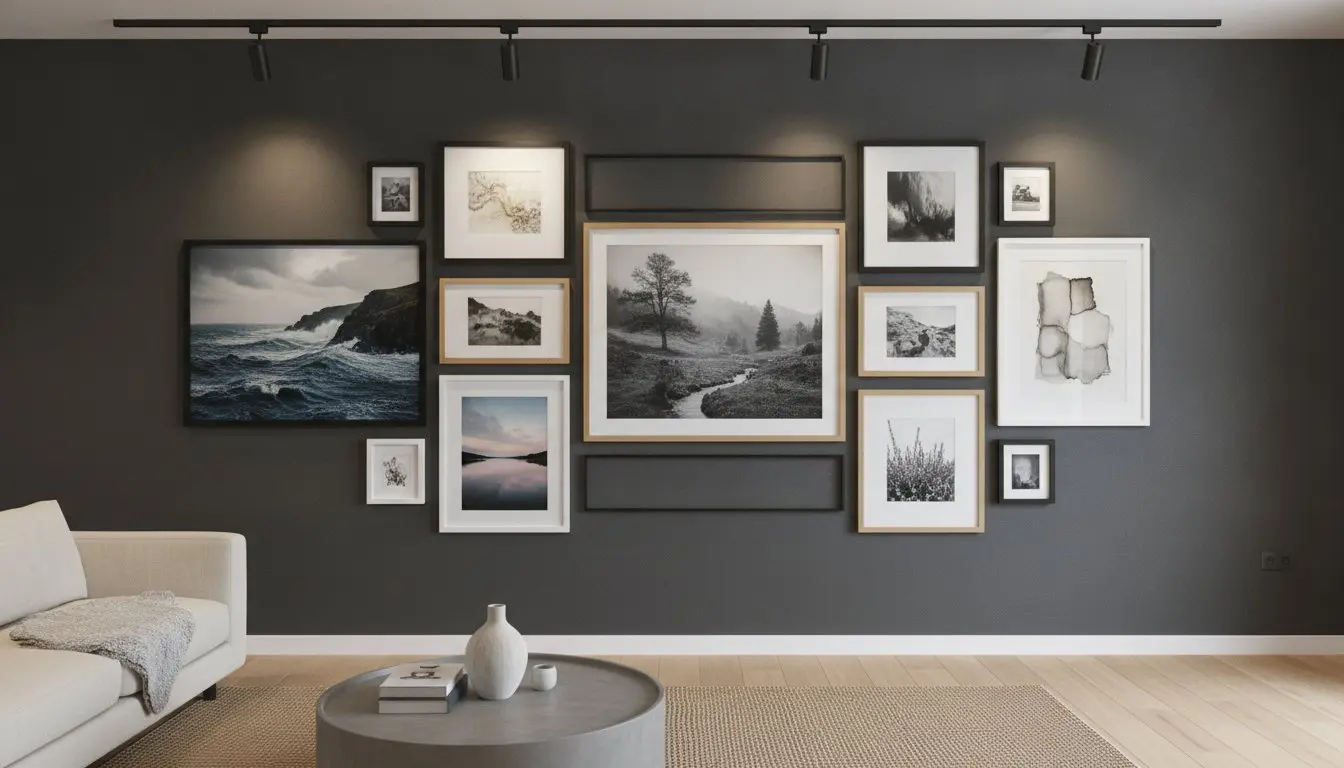
Curation is the bridge between a house and a home. When exploring gallery wall ideas, your starting point should be a theme that resonates with your personal narrative. Instead of generic posters, consider the depth of bespoke framed wall art that tells a story of heritage or travel. Choosing high-quality pieces ensures your display feels intentional rather than cluttered. Explore our full collection of framed wall art to find professional pieces that perfectly fit your unique vision.

The Power of Scottish Landscape and Coastal Themes

Mixing Fine Art and Photography

Modern gallery wall ideas often draw inspiration from the historical salon-style hang. You can achieve an eclectic look by mixing Giclée fine art prints with high-resolution photography prints. This creates a narrative that balances contemporary art prints with works by famous artists. Our art print framing service ensures your digital files match the fidelity of professional fine art. Every piece uses 2mm float glass for superior clarity compared to cheap perspex alternatives, arriving fully packaged via professional courier to prevent any damage.

Planning Your Layout: How to Visualise Art on Your Wall

Planning is where your gallery wall ideas take shape. It’s about more than just hammers and nails; it’s about spatial harmony. Success begins long before the first nail hits the plaster. You should first determine your focal point. Will your largest piece sit centrally, or will it be offset to create a dynamic flow? Maintaining consistent spacing of 5-8cm is essential for a professional look. This precision signals that your display was curated with intent rather than assembled by chance.

Using an Online Picture Framing Tool

Modern technology has simplified the design process. Our online picture framing and art print framing service lets you design your framed artwork digitally. You can choose your frame online to see exactly how different mouldings affect the art’s impact. Use our wall art visualiser to see artwork before you buy, ensuring the proportions complement your existing furniture. This digital approach helps you master The Art of Curating your space without the guesswork of manual templates. You’ll gain total confidence in the scale and style of your bespoke framed wall art before it even leaves our workshop.

Standard Sizes vs. Bespoke Arrangements

Symmetry often requires consistency. If you’re aiming for a precise grid layout, following standard photo picture sizes provides a reliable framework. However, a “salon-style” hang thrives on varied dimensions. We individually craft every frame for each order, allowing you to mix custom framed art prints with standard dimensions seamlessly. Every piece features 2mm float glass for superior clarity, far outperforming the dull finish of cheap perspex. Once your design is finalised, your finished frames are fully packaged and shipped via professional couriers to ensure they arrive in perfect condition. You can start to visualise art on your wall today using our interactive design tools.

Gallery Wall Ideas 2026: The Designer’s Guide to Bespoke Displays

The Bespoke Difference: Why Professional Framing Elevates the Display

Materials Matter: Glass vs. Perspex

The choice of glazing is often overlooked, yet it’s critical for visual fidelity. We use 2mm float glass as our standard because it offers superior clarity and art protection. Many online competitors use cheap perspex or acrylic to save on shipping costs. This often results in a “wavy” reflection that distracts from the artwork’s finer details. Perspex also attracts static and scratches easily during cleaning. In contrast, 2mm float glass provides a stable, crystal-clear window into your Scottish landscape art or contemporary art prints. It ensures colors remain true to the original Giclée print without the distortion of plastic alternatives.

Expert Craftsmanship in Falkirk

Working with a dedicated art frame shop near me means your collection receives the care of an artisan rather than a factory line. Our Falkirk-based team handles every component with traditional skill, ensuring your display meets designer-level standards. Once crafted, finished frames are fully packaged in heavy-duty protective materials to prevent any transit damage. We then ship via professional couriers directly to your door. This comprehensive process guarantees that your curated collection arrives in pristine condition, ready to be hung immediately. Ready to start? Browse our collection of bespoke framed art to find your perfect match.

The final stage of your project is where your gallery wall ideas truly come alive. Transforming a digital file into a piece of bespoke framed wall art requires technical precision and a deep commitment to material quality. Whether you’re showcasing Scottish landscape art or family memories, the printing must match the calibre of the framing. This ensures a cohesive look that feels like a curated exhibition rather than a random collection of snapshots.

The Print and Frame Service for Digital Photos

We provide a seamless way to print and frame photos online. First4Frames Gallery uses Giclée fine art printing to achieve colour fidelity that standard photo labs simply can’t replicate. This high-resolution approach ensures your digital photographs are gallery-ready for large-scale display, maintaining sharp detail even in expansive formats. Every print is carefully mounted within an individually crafted frame, ensuring your art is protected and presented perfectly from the moment it arrives.

Safe Delivery and Final Installation

Logistics should never be a source of anxiety. We understand that glass-fronted frames are delicate, which is why First4Frames Gallery never settles for standard postal services. We ship via professional couriers experienced in handling fragile items. Every piece is encased in full packaging to prevent transit damage and keep the 2mm float glass pristine during its journey. Once your order arrives, follow this checklist for a secure installation:

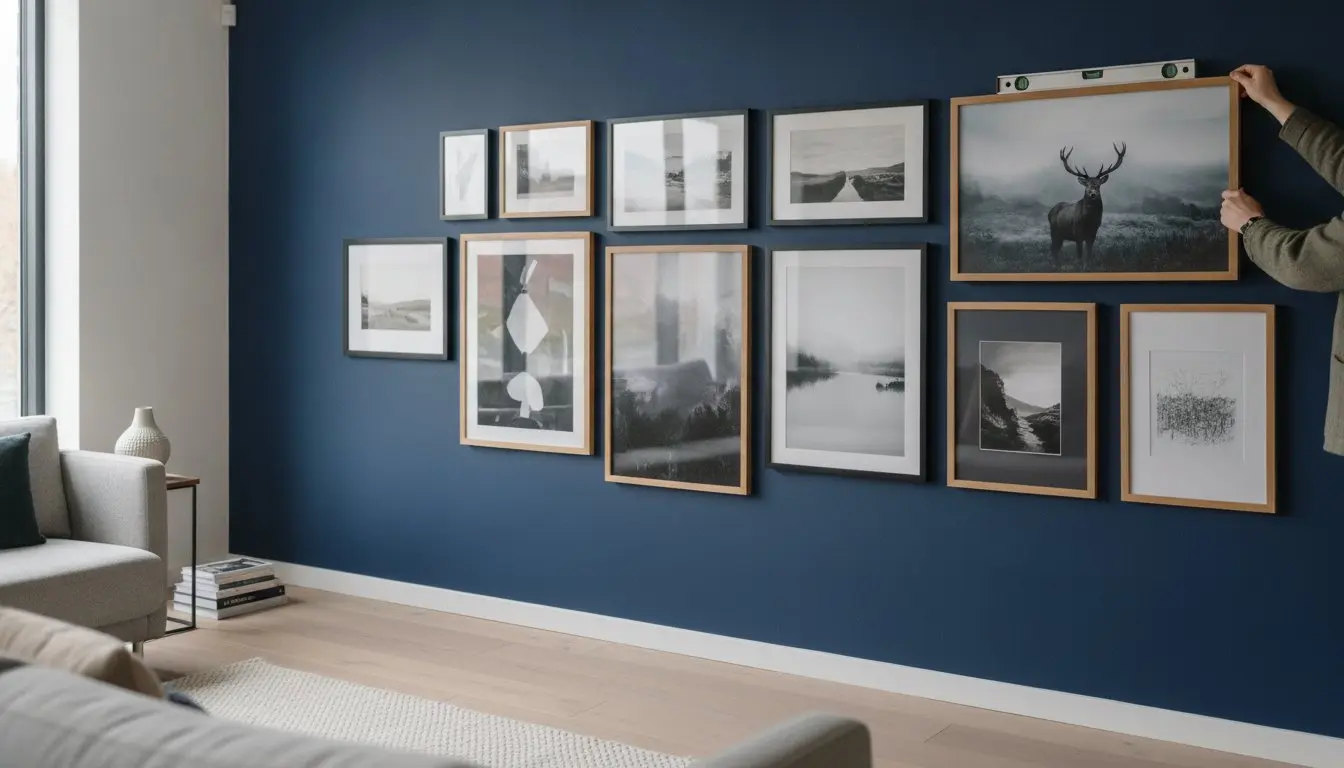
  • Use a spirit level to ensure every piece is perfectly horizontal.
  • Verify that your wall hooks are rated for the weight of bespoke wood frames.
  • Double-check 5-8cm spacing to maintain the professional flow you planned.
  • Handle the frames by the edges to avoid leaving prints on the glass.

By following these steps, you ensure your investment in quality materials is matched by a secure and level display. Your wall is now ready to be enjoyed for years to come.

Creating a designer-level display is entirely achievable when you prioritise craftsmanship over convenience. We’ve explored how a curated selection of Scottish landscape art or contemporary prints can tell your unique story. By moving beyond cheap, standard frames and embracing individually crafted bespoke options, you ensure your art is both protected and perfectly presented. The clarity of premium 2mm float glass is essential for a professional finish, providing a level of fidelity that plastic alternatives simply can’t match.

Whether you’re starting with a blank canvas or using our “print and frame” service for your own photography, the process should be inspiring and stress-free. Our Giclée quality printing and hand-made frames arrive fully packaged via professional courier, ensuring your vision reaches your home in pristine condition. It’s time to bring your gallery wall ideas to life with a display that reflects your passion for quality. Browse our full gallery and start building your wall today. We’re here to help you enhance your environment with frames as special as the art they hold.

Frequently Asked Questions

How far apart should I hang pictures in a gallery wall?

You should aim for a consistent spacing of 5-8cm between your frames to maintain a professional, curated look. This gap provides enough breathing room to let individual pieces of Scottish landscape art shine without the display feeling disjointed. Consistent spacing signals designer-level intent; it prevents the cluttered appearance often found with unevenly hung, mass-produced frames that don’t quite fit the artwork properly.

Can I mix different frame colours and styles in one display?

Mixing different frame styles and colours is a fantastic way to achieve an eclectic, “collected over time” aesthetic. You might pair ornate traditional mouldings with sleek modern finishes for your contemporary art prints. The key is to find a common thread, such as a shared colour palette within the artwork. Our service allows you to choose your frame online for each piece, ensuring every bespoke selection complements the whole.

Is glass better than perspex for a gallery wall?

Yes, 2mm float glass is the gold standard for gallery wall ideas because it offers superior clarity compared to perspex. Cheap acrylic often creates a wavy distortion and attracts dust through static. Our individually crafted frames use professional-grade float glass to ensure your fine art and photography prints are viewed with perfect fidelity. This premium component protects your investment while providing a high-end finish that plastic alternatives simply can’t match.

How do I choose the right size art for a large wall?

For large walls, follow the “Statement and Satellites” rule by choosing one central anchor piece that’s 30-40% larger than the surrounding works. This creates a natural focal point for your landscape wall art. You can design your framed artwork to fill approximately two-thirds of the available wall space. Using a tool to visualise art on your wall helps you confirm these proportions before placing a custom order.

What is the best way to plan a gallery wall without making holes?

The most efficient way to plan your layout without damaging your walls is to use a digital wall art visualiser. This technology lets you see artwork before you buy, allowing you to experiment with different arrangements of bespoke framed wall art in your actual room. This ensures your final arrangement is perfect before we ship your fully packaged frames via professional courier for a secure and level installation.

Posted on

Choosing the Perfect Wall Art: A UK Buyer’s Guide

Choosing the Perfect Wall Art: A UK Buyer’s Guide

Why settle for a home that looks like a carbon copy of a high-street showroom when your walls could tell a story of authentic craftsmanship? You’ve likely felt the disappointment of ordering wall art only to receive a flimsy frame with blurry plastic glazing that dulls the image. It’s a common frustration to find that mass-produced pieces often lack the soul and longevity your living space deserves. We believe your home should be a gallery of your own making, filled with pieces that evoke emotion every time you walk into the room.

This guide will help you transform your environment with premium Scottish wall art and bespoke framing that outlasts generic alternatives. You’ll discover the unmatched clarity of 2mm float glass and the vibrant, fade-resistant beauty of professional Giclée prints. We will walk you through selecting the right frames for your style, ensuring your art arrives safely and ready to hang. By the end, you’ll know exactly how to use our visualisation tools to choose a piece that fits your home perfectly and reflects your personal style with absolute precision.

Key Takeaways

  • Identify the ideal artistic style for your space, whether you’re drawn to the tranquility of coastal landscapes or the striking impact of contemporary art prints.
  • Learn why bespoke framing and 2mm float glass provide superior clarity and protection for your wall art compared to standard, mass-produced frames.
  • Gain expert tips on strategic placement, from anchoring a room with a single statement piece to curating a cohesive gallery wall of photography and fine art.
  • Discover how to transform your digital memories into professional-grade decor using a streamlined, custom print and frame service.

Understanding Wall Art Styles: From Coastal to Contemporary

Selecting the right piece of wall art is about more than filling an empty space; it’s a vital part of the art and science of enhancing an interior. A well-chosen framed piece acts as a focal point, drawing the eye and setting the mood for the entire room. Whether you’re looking for the calming influence of coastal wall art or the striking impact of contemporary art prints, the goal is to create a home that feels personal and curated. We believe every frame should be a deliberate choice that reflects your unique taste and the character of your living space.

Quality is the foundation of any lasting investment. We specialise in Giclée fine art prints, a professional standard that guarantees exceptional colour fidelity and longevity. Unlike standard prints that can lose their vibrancy within a few years, Giclée prints use archival inks to ensure your artwork remains as vivid as the day it was framed. To help you make the perfect choice, our “Visualise art on your wall” tool allows you to see exactly how a piece will look in your room. This removes the uncertainty of online shopping; you can test different sizes and styles against your actual furniture and wall colours before you buy.

Scottish Landscape Art: A Timeless Choice

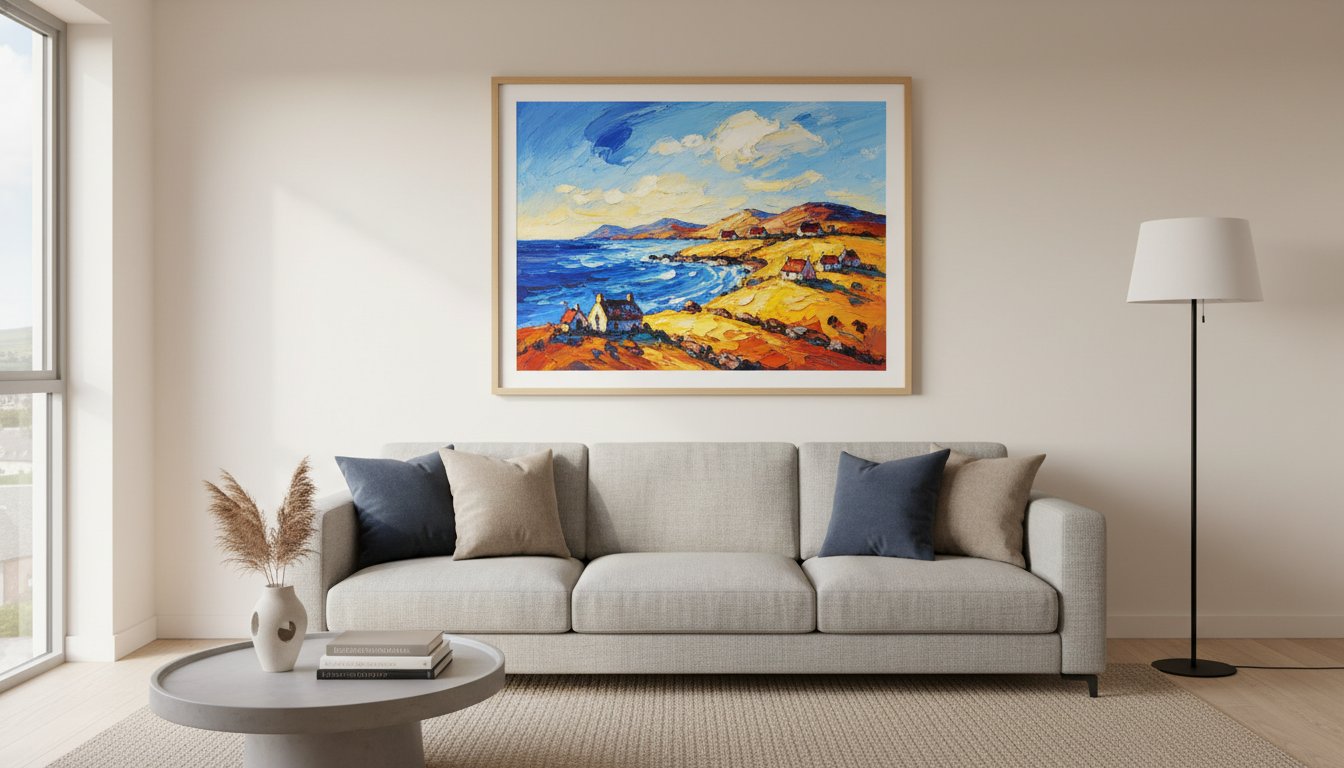
Scottish scenes hold a special place in the hearts of UK homeowners. The unique, shifting light of the Highlands and the rugged beauty of the islands offer a timeless appeal that works beautifully in both modern apartments and traditional cottages. Our online gallery showcases best-selling Scottish artists who capture these vistas with incredible soul. From dramatic mountain ranges to serene lochs, these landscapes bring a breath of fresh air into your home, acting as a constant connection to the natural world. Each piece is individually crafted in our Falkirk workshop, ensuring the frame perfectly complements the art’s natural textures and tones.

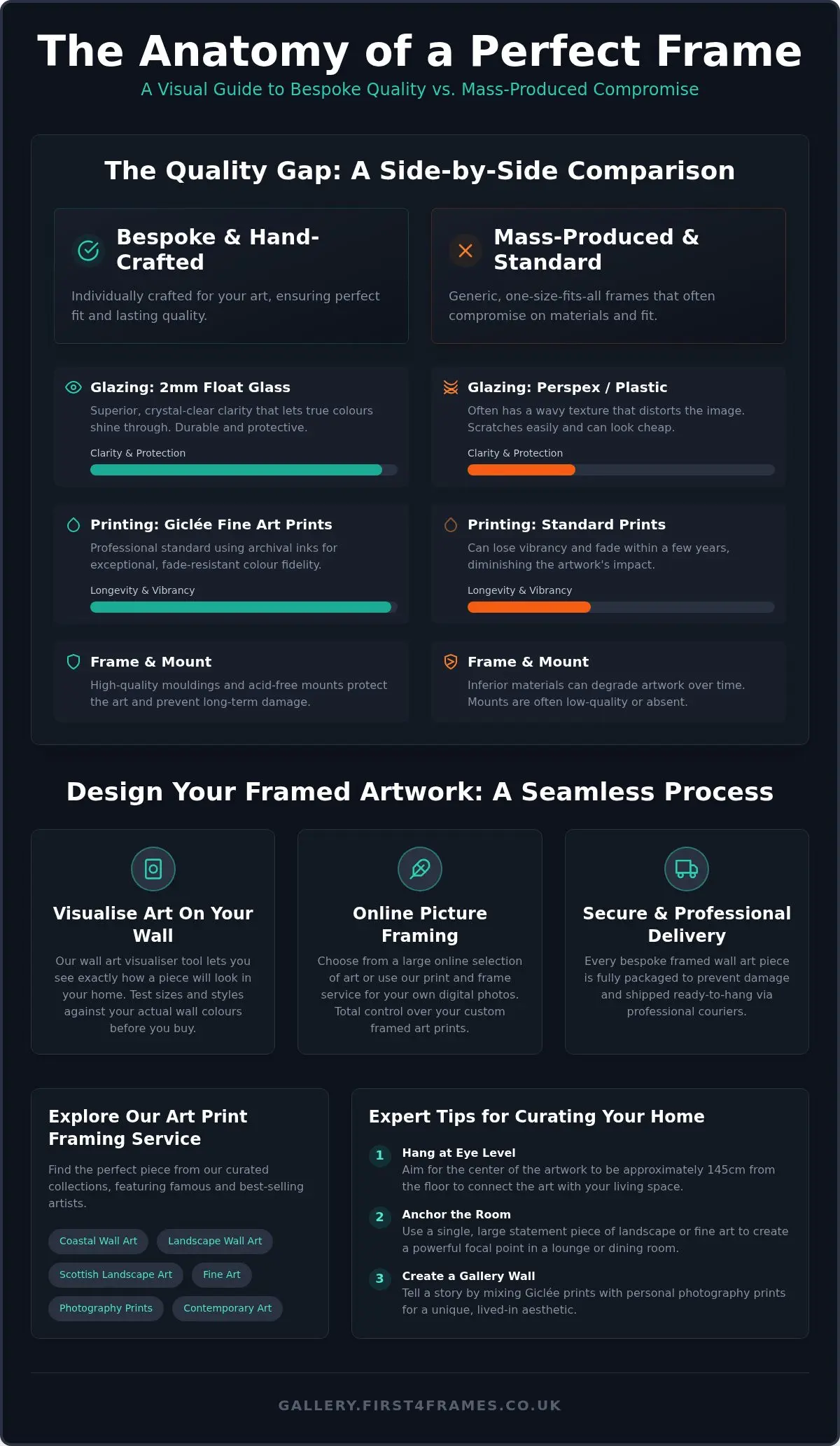
The Quality Gap: Bespoke Framing vs. Mass-Produced Options

Standard off-the-shelf frames often fail to do justice to high-quality wall art. While they might seem like a bargain, these mass-produced options frequently use inferior materials that can degrade your artwork over time. Choosing a bespoke, hand-crafted frame is about more than just aesthetics; it’s a commitment to preservation. Investing in quality pieces provides a personalized wellness boost by ensuring your environment remains inspiring and beautiful for decades. Our artisans individually craft every frame in our workshop, providing a structural integrity that factory-line alternatives simply cannot match.

Why Glazing Matters: 2mm Float Glass vs. Perspex

Many retailers use perspex or thin plastic glazing to reduce shipping costs and prevent breakage. However, these materials often have a wavy texture that distorts the image and scratches with the slightest touch. We use 2mm float glass for superior clarity. It offers a perfectly flat, crystal-clear surface that allows the true colours of your prints to shine through. This professional-grade glass isn’t just about looks; it’s a durable barrier that protects your investment from dust and environmental damage.

Custom Framed Art Prints: Design Your Own Look

Designing your own look online gives you total control over how the finished piece interacts with your decor. You can select from a range of high-quality mouldings and acid-free mounts to elevate the aesthetic of your bespoke photo frames. Mounts are essential because they create a visual breathing space around the art and prevent the print from touching the glass, which is vital for long-term preservation. If you’re ready to start your collection, you can browse our curated range of wall art to find a style that resonates with your home.

Choosing the Perfect Wall Art: A UK Buyer’s Guide

Curating Your Home: Where to Place Your Framed Art

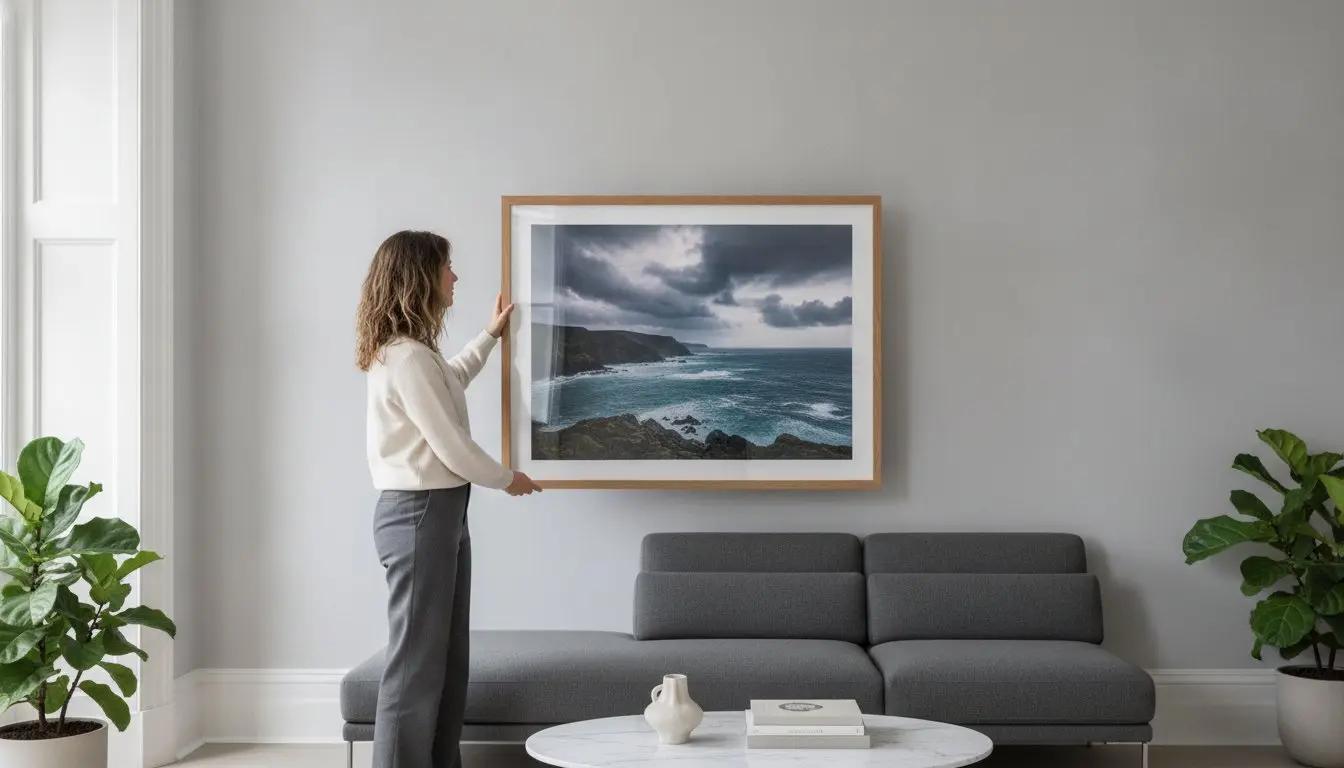
Placement defines the room’s energy. A large landscape art piece can serve as a powerful anchor in a minimalist lounge. It commands attention and provides a window to another world. For more eclectic spaces, creating a gallery wall allows you to tell a broader story. Try mixing high-fidelity Giclée fine art prints with your own photography prints to add a personal touch. This blend of professional craftsmanship and personal memories creates a unique aesthetic that feels lived-in and meaningful. It’s about creating a conversation between the different elements of your decor.

Office Wall Art Solutions

The right artwork isn’t just for the home; it’s a vital tool for the workplace. A well-curated office environment can boost employee productivity and create a more welcoming atmosphere for clients. Our Commercial Artwork Curation service helps businesses select pieces that align with their brand identity and professional values. Whether you need calming botanical prints for a waiting room or bold contemporary pieces for a boardroom, we provide a comprehensive solution that handles everything from selection to framing. Explore our full range of Ready-to-Hang Framed Art to find the perfect focal point for your next project.

The Seamless Process: From Online Selection to Ready-to-Hang

Acquiring high-quality wall art for your home should be an inspiring experience, not a logistical headache. Our art print framing service is designed to bridge the gap between digital discovery and a physical masterpiece on your wall. Whether you’re selecting a piece from our curated gallery or using our “print and frame” service to immortalise a personal photograph, the workflow is intuitive. We treat your digital files with the same respect as a fine art original, using high-fidelity Giclée techniques to bring out every detail before it’s hand-finished by our expert team.

Safety during transit is our top priority. While many competitors rely on standard postal services that risk glass breakage, we use professional courier shipping with full protective packaging. We understand the fragility of 2mm float glass and bespoke frames; that’s why we use custom-engineered boxes and multi-layered cushioning. This rigorous standard ensures your artwork arrives in pristine condition, ready to be displayed immediately without the worry of damage or defects.

Ordering Your Bespoke Framed Wall Art Online

Using our Online picture framing tool is straightforward. First, upload your digital file or select an artist’s print from our collection. Next, customise your dimensions and choose a moulding that complements your interior. Finally, select your mount and glazing options before placing your order. This simplified formula removes the complexity of custom framing, making professional standards accessible from your living room.

Before you finalise your purchase, run through this quick checklist to ensure perfection:

  • Size: Have you used our visualiser tool to confirm the scale fits your specific wall space?
  • Frame Style: Does the moulding colour match your existing furniture or the room’s accent tones?
  • Glass Type: Have you opted for 2mm float glass to ensure maximum clarity and scratch resistance?

Once your order is placed, our Falkirk-based artisans get to work, hand-crafting your piece with the precision and care that only a dedicated framing specialist can provide. You’ll receive tracking updates so you know exactly when your new focal point will arrive.

Transform Your Living Space with Artisan Craftsmanship

Every order is hand-made in our Falkirk workshop and arrives via secure UK-wide courier delivery to ensure it reaches you in perfect condition. Whether you’re refreshing a single room or curating a professional office, our team is here to help you achieve a flawless finish. You don’t have to settle for the ordinary when expert framing is just a few clicks away. Start Designing Your Bespoke Framed Wall Art Today and bring a touch of Scottish artistry into your home.

Frequently Asked Questions

What is the difference between Giclée prints and standard photo prints?

Giclée prints use archival inks and high-quality paper for superior longevity and colour fidelity. Unlike standard prints that often fade within a few years, Giclée technology ensures your wall art remains vibrant for decades. This process allows for a wider colour gamut; it captures the subtle nuances of the original artwork with professional precision and depth that cheaper alternatives cannot replicate.

Why should I choose 2mm float glass instead of perspex for my wall art?

You should choose 2mm float glass because it provides significantly better clarity and scratch resistance than perspex. While plastic alternatives often distort the image with a wavy surface, float glass is perfectly flat. This ensures that every detail of your artwork is visible without the dullness or static typical of acrylic glazing. It’s a professional choice for those who value visual perfection.

How do I choose the right frame size for my wall?

You should choose a frame size that occupies roughly two-thirds to three-quarters of the available wall space for a balanced look. If you’re hanging a piece above a sofa or sideboard, the frame should be slightly narrower than the furniture below it. Use our online visualiser tool to see how different dimensions interact with your specific room layout before you buy.

Can I have my own digital photos printed and framed professionally?

Yes, you can use our professional “print and frame” service to transform your digital memories into high-quality wall art. Simply upload your high-resolution file to our online tool; then select your preferred moulding and mount. Our Falkirk workshop team ensures your personal photography receives the same artisan care and professional finish as our most popular fine art collections.

Is it safe to order framed art with glass through the post?

It’s completely safe to order framed art when you use a specialist service that prioritises protective packaging. We use custom-engineered boxes and multi-layered cushioning specifically designed for fragile glass and heavy frames. Every order is shipped via a professional courier partner to ensure your ready-to-hang piece arrives in pristine condition at your UK address without any risk of breakage.

Posted on

How to Hang a Gallery Wall: Professional Display Guide

How to Hang a Gallery Wall: Professional Display Guide

Have you ever stared at a blank wall, hammer in hand, only to put it back in the drawer because you’re terrified of making a permanent mistake? You aren’t alone. Many people find that learning how to hang a gallery wall feels like a high-stakes puzzle where one wrong move leaves your home’s plaster looking like Swiss cheese. It’s frustrating when inconsistent spacing makes a beautiful collection of Scottish landscape art or fine art look cluttered rather than curated.

We understand that your art is an investment in your home’s personality. Whether you’re displaying contemporary art prints or cherished photography prints, the secret to a professional finish lies in the harmony between meticulous planning and high-quality materials. This guide promises to transform your uncertainty into confidence. We will walk you through our expert method for precision hanging, explain why choosing bespoke framed wall art with 2mm float glass is essential for clarity, and show you how to use our wall art visualiser to design your framed artwork before the first nail ever touches the wall.

Key Takeaways

  • Learn how to use a wall art visualiser to see artwork before you buy, allowing you to trial layouts without making a single mark on your wall.
  • Discover why bespoke framed wall art using 2mm float glass provides the professional clarity and protection that cheap perspex alternatives simply cannot match.
  • Master how to hang a gallery wall with precision by starting from a central anchor piece and using professional tools like a spirit level for a perfectly balanced display.
  • Explore how to use a professional print and frame service to combine diverse styles, from Scottish landscape art to contemporary photography prints, into a cohesive narrative.

Planning Your Layout: How to Visualise Art on Your Wall

Planning is the bridge to a masterpiece. Before you pick up a hammer, you need to identify the narrative of your wall. Are you celebrating heritage with Scottish landscape art, or creating a modern vibe with contemporary art prints? The most successful displays often mix media, pairing landscape wall art with personal photography prints. This layered approach draws inspiration from the history of salon-style hanging, where diverse works were displayed together to create a rich visual experience. Knowing how to hang a gallery wall begins with this conceptual phase.

To visualise art on your wall without making holes, use the “floor layout” method. Clear a space on the carpet equal to your wall size and arrange your pieces there. For a professional finish, keep your spacing consistent. Most experts recommend a gap of 5cm to 8cm between frames. This creates breathing room so each piece of bespoke framed wall art can shine. If you’re still choosing pieces, use our wall art visualiser to see artwork before you buy and ensure the scale is correct for your room.

Choosing a Gallery Wall Theme

Your theme dictates the frames you’ll need. You might use our art print framing service to design your framed artwork to match a specific palette, perhaps using minimalist black for fine art or ornate wood for traditional pieces. Unlike mass-produced alternatives, our frames are individually crafted to ensure a perfect fit for your custom framed art prints. This bespoke approach ensures your display looks like a curated collection rather than a random assortment.

The Paper Template Trick

Once you’ve finalised your floor layout, trace each frame onto brown paper and cut it out. Tape these templates to your wall using low-tack masking tape. Mark the exact nail point on the paper by measuring the distance from the top of the frame to the hanging wire. This simple step is the most reliable way to master how to hang a gallery wall with absolute precision while protecting your home’s plaster.

Selecting Quality: Bespoke Framed Art Prints vs. Cheap Alternatives

The longevity of your display depends on the materials protecting it. While many high-street retailers use cheap perspex, we prioritise 2mm float glass for our bespoke framed wall art. Perspex often carries a static charge that attracts dust and can bow, distorting your view. In contrast, float glass offers superior clarity and remains perfectly flat. This ensures your fine art looks exactly as the artist intended, which is vital when learning how to hang a gallery wall that truly captures the eye.

Mass-produced frames are built to standard sizes, often forcing artwork to fit a generic mount. Our frames are individually crafted for each order. This hand-made approach means every corner is joined with precision. These sturdy frames hang flush against the wall, making it much easier to learn how to hang a gallery wall. After assembly, frames from First4Frames Gallery are fully packaged and shipped via professional couriers to ensure they arrive in pristine condition.

We use Giclée printing for all our custom framed art prints to ensure deep colour fidelity. Our extensive collection includes works by Best-selling artists and Famous artists, all under the general category of framed wall art. You can choose your frame online to see how different mouldings complement your photography prints before they are professionally printed and assembled.

The Print and Frame Advantage

Our photo printing and framing online service ensures digital memories receive artisan treatment. This art print framing service provides expert online picture framing that matches your files with the perfect mount. It’s a seamless way to integrate personal moments with professional landscape wall art, ensuring every piece meets the same professional standard.

Focusing on Scottish Art

Showcase regional beauty by choosing to browse our Scottish Art Gallery. You’ll find coastal wall art and highland scenes from local landscape masters. These pieces bring a sense of place to your home when presented in hand-made frames that reflect the rugged beauty of the landscape. Understanding the best way to display these vistas ensures they become your home’s focal point.

How to Hang a Gallery Wall: Professional Display Guide

With your layout finalised, it’s time to translate that plan to the wall. You’ll need a spirit level, hammer, measuring tape, and a sharp pencil. Precision is the difference between a cluttered space and a professional display. Start with your anchor piece, which is usually the largest or most central work. A professional standard in the UK is hanging the centre of this piece at roughly 145cm from the floor. This mimics eye-level placement in major galleries, creating a comfortable viewing experience for everyone in the room.

Once the anchor is secure, work outwards to maintain balance. Use your spirit level on every single frame. Even a tiny tilt can disrupt the visual harmony of the entire collection. As you add your contemporary art prints or fine art, keep a consistent gap of 5cm to 8cm between each frame. This disciplined approach is the most effective way to master how to hang a gallery wall while ensuring your display looks intentional and curated. Check each piece twice for security before moving to the next.

Secure Hanging Techniques

The safety of your art depends on choosing the correct fixings for your specific wall type. For plasterboard, always use dedicated hollow wall anchors; for brick, a standard wall plug and screw provide the best grip. While many mass-produced frames come with flimsy clips, bespoke framed wall art from First4Frames Gallery is individually crafted to be sturdy and arrives ready-to-hang. This saves you the frustration of sourcing extra hardware and ensures your collection stays level for years.

Using a Wall Art Visualiser

If you’re still deciding on the final look, our wall art visualiser allows you to see artwork before you buy. You can choose your frame online and experiment with different moulding colours to match your room’s specific palette. It’s a brilliant way to design your framed artwork with total confidence, ensuring the final result is exactly as you imagined before you even pick up the hammer. Understanding how to hang a gallery wall becomes much simpler when you have already seen the finished result digitally.

Once you’ve mastered how to hang a gallery wall, consistent maintenance preserves your investment. Our 2mm float glass provides superior clarity but requires gentle care to stay pristine. Use a microfibre cloth and a non-abrasive cleaner. Don’t spray directly onto the glass; spray the cloth first to prevent moisture from seeping into the mount. For coastal wall art, this protection is crucial against salt air and humidity, ensuring your fine art remains untarnished over time.

A gallery wall is a living entity that should grow with you. You can easily swap out contemporary art prints or photography prints while keeping your hand-made bespoke frames. This flexibility allows your display to evolve with your tastes or seasonal changes. If you decide to expand your collection, return to our wall art visualiser to ensure new pieces fit the existing narrative. Knowing how to hang a gallery wall is a skill that makes adding new landscape wall art a simple, rewarding process.

Logistics and Delivery Care

We take immense pride in our craftsmanship, and that care extends to the logistical journey. Every piece of bespoke framed wall art is fully packaged in multiple protective layers to prevent any transit damage. We ship via professional couriers to ensure your custom framed art prints arrive in perfect condition. This reliable service means your artwork is ready to be displayed the moment it reaches your door.

Commercial and Large Scale Displays

For property developers or business owners in Central Scotland, we offer expert artwork curation for larger projects. Whether you need Scottish landscape art for a reception or fine art for a new showroom, we provide comprehensive solutions. Please contact our Falkirk Gallery for bespoke orders to discuss your specific requirements with our artisan team.

Transforming a blank wall into a professional gallery is a journey from inspiration to precision. You now have the tools to plan your layout effectively and the knowledge of why premium materials matter. The secret to how to hang a gallery wall lies in the synergy between careful measurement and the superior clarity of 2mm float glass. By choosing hand-made frames crafted right here in the UK, you ensure your artwork is protected and displayed with the respect it deserves.

Our frames aren’t mass-produced. Every piece is individually created for your specific order and delivered via professional couriers to guarantee it arrives in perfect condition. Whether you’re showcasing Scottish landscapes or personal memories, your home deserves a curated look that lasts. Don’t let a blank wall hold you back any longer. It’s time to bring your creative vision to life with confidence and artisan quality.

Design your bespoke framed wall art online today and start building a display that truly inspires.

Frequently Asked Questions

How much space should I leave between frames on a gallery wall?

You should aim for a gap of 5cm to 8cm between your frames. This consistent spacing is the secret to a professional look that avoids a cluttered feel. When you know how to hang a gallery wall, using a simple spacer block made of wood or card ensures every gap remains identical across the whole collection. This creates a clean, intentional aesthetic that lets each individual piece of art breathe.

Can I mix different frame colours and styles in one display?

You can absolutely mix different frame colours and styles to create an eclectic, curated display. Pairing ornate traditional frames with minimalist bespoke framed wall art adds depth and personality to your room. To maintain harmony, try to use a consistent mount colour or a shared palette. Our online picture framing tool allows you to experiment with these combinations to ensure your chosen frames complement your contemporary art prints perfectly.

What is the best height to hang a gallery wall?

The best height for a gallery wall is eye level, which is roughly 145cm from the floor to the centre of the display. This standard is used by professional galleries across the UK to ensure optimal viewing. When figuring out how to hang a gallery wall, always measure to the midpoint of your central anchor piece. This provides a balanced foundation that makes the rest of the arrangement feel grounded and comfortable.

Should I use nails or command strips for bespoke frames?

We recommend using nails or dedicated wall anchors rather than adhesive strips for our bespoke frames. Because we use 2mm float glass for superior clarity, our frames have a professional weight that requires secure support. Adhesive strips often struggle with high-quality materials and can fail over time. Proper fixings ensure your custom framed art prints stay level and safe, protecting your investment from accidental falls.

How do I choose the right art for a large statement wall?

Start by selecting a large, impactful piece of Scottish landscape art or fine art as your primary focal point. A statement wall needs a central anchor to prevent it from looking fragmented. Use our wall art visualiser to test different scales against your room’s dimensions. Once your main piece is chosen, you can surround it with smaller photography prints or contemporary art prints to build a rich, cohesive narrative.

Posted on

Art for a Small Apartment: The Ultimate Guide to Scaling and Framing

Art for a Small Apartment: The Ultimate Guide to Scaling and Framing

You might think that choosing tiny art for a small apartment is the only way to avoid a cluttered look, but the opposite is often true. It’s a common fear that a bold frame will make a room feel closed in or that awkward wall dimensions will forever limit your creative vision. We know how frustrating it is to stare at a cramped corner and wonder if a professional gallery look is even possible in a compact home.

This guide will show you how to transform your living space using strategic art sizing and high-quality framing techniques. You’ll learn how to use bespoke dimensions to create the illusion of architectural depth and make your rooms feel significantly larger. We’ll walk you through designer-led curation and professional scaling secrets, giving you the confidence to choose the perfect pieces that turn a small flat into a sophisticated, curated sanctuary.

Key Takeaways

  • Learn why “going big” with a single statement piece often works better than multiple small frames to reduce visual clutter.
  • Discover how to use the “two-thirds rule” to perfectly balance art for a small apartment with your furniture and wall dimensions.
  • Understand how slim frame profiles and wide mounts can elevate your artwork to gallery standards without overwhelming a compact room.
  • Find out how to source specific prints and bespoke framing materials that aren’t listed online through a dedicated workshop service.
  • Explore how vibrant colour palettes from Scottish artists like Jolomo and Janet McCrorie can create a sense of light and space in any flat.

Scaling Art for Small Apartments: Why ‘Going Big’ Often Wins

Many people assume that a compact room requires miniature decor, but this often leads to a cluttered, fragmented look. In reality, choosing art for a small apartment usually requires a “go big” mentality to create a sense of order. A single, large-scale piece reduces visual noise and gives the eye a clear place to rest. Visual noise is the sensory overload caused by too many competing patterns, objects, or small frames that prevent the eye from finding a restful focal point.

To anchor your room effectively, we recommend following the two-thirds rule. This means your artwork should cover roughly 2/3 of the width of the furniture it sits above, such as a sofa or a dining table. This creates a balanced look that aligns with fundamental design principles, ensuring your home feels cohesive and intentionally designed rather than accidental. If you can’t find the right size online, the First4Frames Gallery workshop can source specific prints and create bespoke frames to fit your exact wall dimensions.

To better understand how these concepts work in a real-world setting, watch this helpful studio makeover:

The Illusion of Space and Proportion

Landscape-oriented prints are a brilliant tool for “widening” narrow rooms or tight corridors. By stretching the visual field horizontally, they trick the brain into perceiving more expanse. On the other hand, vertical art is perfect for flats with low ceilings. It draws the eye upward, creating a sense of height and making the room feel far less restrictive. Using these professional scaling secrets helps turn art for a small apartment into a strategic architectural feature.

Avoiding the ‘Shoebox’ Effect

Tiny, scattered frames often make walls feel cluttered and smaller, a phenomenon we call the “shoebox” effect. The secret to avoiding this is embracing negative space. By leaving enough “breathing room” around a statement frame, you allow the artwork to shine without crowding the walls. At First4Frames Gallery, our custom picture framing services allow you to choose slim, modern profiles that provide structural support without adding unnecessary bulk to your living space.

Choosing the right layout is essential for balancing space and style within a limited footprint. While a single statement piece creates a bold focal point, a compact gallery wall allows you to showcase a personal collection without overwhelming the room. The key is intent. In studio apartments, art serves as a powerful zoning tool. You can hang a vibrant piece to anchor a dining nook and use more muted tones to define a dedicated workspace. This visual separation helps break up a single room into functional zones without the need for bulky physical dividers.

Consistency is your best friend when selecting art for a small apartment. To prevent a diverse collection from looking messy, use identical framing styles across different pieces. This creates a unified, professional look that feels like a deliberate gallery installation. When planning your arrangement, it’s helpful to refer to standard photo and picture sizes to ensure your frames sit comfortably within your available wall space. If you find a print you love elsewhere, remember that First4Frames Gallery can source almost any specific artwork or frame available in the UK to complete your vision.

The Compact Gallery Wall

For narrow hallways or small alcoves, a grid layout is a sophisticated choice. By aligning frames in a perfect square or rectangular formation, you create a clean, architectural feel that expands the space. This is an excellent way to mix high-quality Giclée prints with personal photography. Using professional mounts in a consistent colour will bridge the gap between different media, making the entire display feel cohesive. You can browse the First4Frames Gallery Ready-to-Hang collection to find pieces that fit this structured style.

Triptychs and Split Artworks

Splitting a single large image into three panels, known as a triptych, is a clever designer secret for small walls. This approach provides breathability by introducing small gaps of negative space between the frames. It allows you to enjoy large-scale imagery without the heavy feeling of one massive frame. For the best results, keep the spacing between panels consistent, usually between two to three inches. This ensures the eye still perceives the image as a single, flowing narrative while the wall remains light and airy.

Art for a Small Apartment: The Ultimate Guide to Scaling and Framing

The Power of Bespoke Framing in Compact Spaces

Frame choice is often an afterthought, but it acts as vital visual architecture when selecting art for a small apartment. A heavy, ornate frame can easily make a small room feel claustrophobic by crowding the walls. Instead, choosing slim, modern profiles provides a clean, professional finish that doesn’t eat into your precious living space. If you don’t see the perfect profile on our website, don’t worry. First4Frames Gallery can source almost any frame available in the UK through our workshop, ensuring your art fits your interior style perfectly.

The secret to a high-end look often lies in the mount. Using a wider mount can make a smaller piece of art feel much more significant, giving it a gallery-standard presence without the need for a massive print. Beyond aesthetics, professional framing is a practical necessity for apartment living. A high-quality frame from First4Frames Gallery protects your Giclée prints from the fluctuating humidity often found in smaller flats, ensuring your investment stays pristine for years. We take great pride in our workmanship, and you can see our dedication to quality by checking our reviews on Trustpilot, Google, and Yell.

Creating Depth Without Bulk

Shadow box frames are a brilliant tool for adding three-dimensional interest without needing extra floor space. They create a sense of depth that draws the eye into the artwork rather than just onto the surface. Additionally, high-quality glazing plays a crucial role in compact living. It helps reflect light around the room, which can make a dark corner feel significantly brighter and more open.

Bespoke Sourcing for Awkward Nooks

Modern apartments often feature unusual alcoves or narrow wall strips where off-the-shelf frames simply won’t fit. Trying to force a standard size into an awkward gap usually highlights the room’s limitations. We encourage you to contact us for custom sizing that fits your exact wall dimensions. Whether you require shipping to your door or prefer workshop collection in Falkirk, First4Frames Gallery offers a flexible, all-in-one solution for your home. Browse our bespoke framing options to see how we can elevate your space.

Curating Your Collection: Sourcing Art and Framing in the UK

Sourcing the right art for a small apartment doesn’t have to be limited by what you see in a standard catalogue. We pride ourselves on being a versatile partner for your creative journey. If you’ve seen a specific print elsewhere or have a particular artist in mind, we can often source it for you. This bespoke service applies even if the artwork isn’t currently featured on our website. Our goal is to ensure you never have to settle for “close enough” when it comes to your home’s aesthetic.

To bring a sense of light and space into a compact flat, consider the vibrant works of Scottish artists like Jolomo or Janet McCrorie. Their mastery of colour and dynamic brushstrokes can transform a dull wall into a window to the highlands or a lively coastal scene, effectively “opening up” your room. We understand that trust is paramount when handling fine art. We encourage you to check our reviews on Trustpilot, Google, and Yell to see why customers across the country rely on us for gallery-standard results. Once your piece is ready, you can choose between secure UK-wide shipping or convenient workshop collection in Falkirk.

From Digital Image to Wall Art

Sometimes the most meaningful art for a small apartment comes from your own lens. By using our service for image printing and framing online, you can elevate phone photos into professional decor. We carefully check every digital file for resolution and quality. This ensures that even large-scale prints maintain their clarity, colour fidelity, and professional impact once they reach your wall.

The First4Frames Quality Guarantee

Our commitment to traditional craftsmanship ensures that every frame is more than just a border; it’s a protective shield. Understanding why art in the frame matters is an investment in your home’s long-term beauty. We use expert preservation techniques to safeguard your collection. This dedication to quality ensures your chosen pieces remain essential, vibrant components of your living environment for many years to come.

Transform Your Compact Living Space Today

You now have the professional secrets to turn a limited footprint into a sophisticated, curated sanctuary. By embracing the “go big” paradox and utilizing the two-thirds rule, you can anchor your rooms with absolute confidence. Remember that bespoke framing is more than a border; it’s visual architecture that respects your home’s unique dimensions and protects your investment. Whether you choose vibrant Giclée prints from renowned Scottish artists like Jolomo or source a specific frame from across the UK, every choice should serve your vision of a more open, intentional home.

First4frames is your dedicated partner in this journey, offering the flexibility of secure nationwide shipping or workshop collection in Falkirk. Our commitment to traditional craftsmanship ensures your art for a small apartment meets the highest gallery standards. We invite you to check our reviews on Trustpilot, Google, and Yell to see the pride we take in every project. It’s time to stop viewing your walls as a limitation and start seeing them as a canvas for high-end, professional style.

Browse our Ready-to-Hang Framed Art Gallery and discover how the perfect frame can elevate your environment today.

Frequently Asked Questions

What is the best size of art for a small apartment living room?

The best size for your living room art is typically determined by the furniture it sits above, following the two-thirds rule. This means the frame should cover approximately 60% to 75% of the width of your sofa or sideboard. Choosing art for a small apartment that matches these proportions ensures the piece anchors the room without looking like an afterthought or a tiny, lost object on a vast wall.

Can I use large art in a studio apartment without it looking cluttered?

How do I choose a frame colour for a small, dark room?

In a small, dark room, you should opt for light-coloured frames or reflective metallic finishes to bounce light around the space. White, pale oak, or silver profiles are excellent choices because they don’t add “weight” to the walls. If you have a specific colour scheme in mind, we can source bespoke frame finishes from across the UK to ensure your choice perfectly complements your lighting conditions and existing decor.

Is it better to hang art vertically or horizontally in a small flat?

The orientation depends on the architectural challenge you want to solve. Hang art vertically to draw the eye upward and make low ceilings feel significantly higher. Conversely, horizontal or landscape-oriented prints are better for narrow rooms because they stretch the visual field and make walls feel wider. Using these directional tricks helps you manipulate the perceived proportions of your home to create a more spacious atmosphere.

How do I hang art in a rental apartment without damaging the walls?

High-quality adhesive strips are the most common solution for lightweight frames in rentals, though you should always check the weight limits before hanging. For heavier bespoke pieces, consider leaning your framed art on a sturdy sideboard or a mantelpiece instead of mounting it directly. This “leaning” technique is a popular designer trend that adds a relaxed, gallery-standard feel to your home without requiring any permanent alterations to the walls.

Posted on

Choosing a Frame for a Black and White Photo: The Professional Gallery Guide

Choosing a Frame for a Black and White Photo: The Professional Gallery Guide

Have you ever stood before a striking monochrome print, only to feel paralyzed by the fear that the wrong choice might make it look dated or “cheap”? It’s a common dilemma for art lovers who understand that a photograph’s soul resides in its delicate interplay of shadows and highlights. You likely know that the wrong mount colour, such as a stark white that clashes with creamy highlights, can disrupt the entire visual narrative and leave the piece feeling unfinished. When you’re choosing a frame for a black and white photo, you aren’t just picking a border; you’re defining how the light within the image interacts with your environment.

At First4Frames Gallery, we believe every piece of art deserves a dedicated partner in its presentation. In this guide, you’ll discover how to select the perfect frame to enhance the timeless elegance of your photography with expert gallery-standard tips. We’ll explore the subtle science of tonal balance, material selection, and the professional strategies used by curators to create high-end displays. By the end, you’ll have the confidence to move from creative inspiration to a stunning, ready-to-hang reality that preserves your work for a lifetime.

Key Takeaways

  • Understand how to balance light and dark values to ensure your frame complements the specific tonal range of monochrome photography.
  • Master the art of choosing a frame for a black and white photo by identifying when to use classic black timber or elegant metallic finishes.
  • Learn the “Uniformity Rule” for creating professional gallery walls that look cohesive and high-end in both homes and commercial offices.
  • Discover the benefits of bespoke framing, including our ability to source almost any frame style available in the UK to match your vision.
  • Find out how professional giclée printing and expert craftsmanship work together to preserve your most cherished memories for a lifetime.

Why Choosing a Frame for a Black and White Photo Requires a Unique Strategy

Black and white photography is a study in the silent interplay of light and shadow rather than the vibrancy of hues. When you’re choosing a frame for a black and white photo, you are essentially managing values; the varying degrees of lightness and darkness that give a monochrome image its depth. A successful selection creates tonal balance, which is the equilibrium between the photo’s deepest shadows and the physical finish of the frame. Without this balance, the frame can easily compete with the artwork instead of complementing it.

To better understand how these visual elements work together, watch this helpful video:

You have two primary paths to explore: the stark, modern “Gallery Look” or the softer, traditional “Classic Look.” The gallery style typically uses a thin black frame with a wide white mount to maximize contrast. A traditional approach might use natural woods to add organic texture. Having a deeper understanding picture frame materials prevents the #1 mistake of using a frame that is too “heavy” for a delicate, high-key photo. If the profile is too bulky or ornate, it can quickly drown out the subtle, airy details of your image.

Understanding Tonal Range and Contrast

Your photo’s specific tonal range should dictate its surround. High-contrast photos with punchy blacks and bright whites benefit from bold, minimalist black timber that echoes the intensity of the shot. If your artwork features “soft” or misty landscapes, natural wood tones often provide a more nuanced feel that respects the delicate grey scale.

At First4Frames Gallery, we specialize in these bespoke nuances. Whether you need shipping across the UK or prefer to collect from our workshop, we treat every print with an artisan’s care. You can use our guide on Standard Photo & Picture Sizes to start planning your perfect layout today. Our reputation for quality is reflected in our consistent reviews on Google and Yell, where customers highlight our dedication to professional standards.

Selecting the Best Materials: Black, White, or Natural Wood?

The material you select acts as the final punctuation mark for your image. While we previously discussed tonal balance, the physical texture of the frame is what grounds the piece in your room. When choosing a frame for a black and white photo, a thin black timber profile is often considered the industry gold standard. It provides a crisp, definitive boundary that directs the eye inward, ensuring the subject remains the focal point. This minimalist approach is a staple in professional galleries because it complements almost any monochrome aesthetic without causing a distraction.

However, don’t overlook the elegance of metallic finishes. Silver and pewter frames are particularly effective for black and white prints as they catch the light and highlight the “silvery” grey mid-tones often found in high-quality giclée prints. If you’re decorating a residential space, natural wood or Scandi-style frames can soften the inherent austerity of monochrome art, making it feel more integrated with your home’s furniture. At First4Frames Gallery, we pride ourselves on our logistical flexibility. If you have a specific vision that isn’t listed on our website, we can source almost any frame available in the UK to ensure your project is perfect. You can view our handcrafted collection to explore these textures in more detail.

The Crucial Role of the Mount (Matting)

The mount serves as more than just a spacer; it’s a temperature control for your artwork. A stark white mount creates a modern, cool feel that heightens contrast. In contrast, an antique or off-white mount adds a subtle warmth that suits traditional portraits. For a truly professional touch, consider the “double mount” technique. By adding a thin black inner border, you create a 3D gallery effect that adds physical depth to the presentation.

Giclée Prints and Archival Materials

Choosing a Frame for a Black and White Photo: The Professional Gallery Guide

Monochrome photography is a sophisticated choice for corporate and commercial environments. It provides a neutral yet striking aesthetic that doesn’t clash with existing brand colors or office furniture. When you’re choosing a frame for a black and white photo in these professional settings, consistency is your most valuable asset. A well-planned series of images can transform a sterile corridor into a narrative journey that reflects your company’s heritage or values.

The “Uniformity Rule” is a secret weapon for any professional gallery wall. This rule dictates that you should use identical frame profiles and mount widths for every piece in the display. This creates a rhythmic, cohesive theme that guides the viewer’s eye across the entire collection rather than forcing them to stop and adjust to each individual piece. It’s the hallmark of a gallery-standard finish. To ensure your large-scale project meets these high standards, we encourage you to check our reviews on Trustpilot, Google, and Yell. Our reputation for quality is something we take great pride in maintaining.

Sizing your art correctly involves more than just measuring the print. You must balance the frame width with the physical dimensions of the room. A slim, 15mm frame might suit a small, intimate study, but a large foyer or boardroom requires a bolder profile to hold its own against the architecture. If the frame is too thin for a large wall, the artwork will look lost and “cheap,” which is a common pain point for many decorators. Explore our professional commercial artwork curation services to find the right scale for your space.

Staging for Property and Offices

Property stagers often rely on monochromatic art because it appeals to the widest possible audience. It feels expensive and intentional without being polarizing to potential buyers or clients. First4frames assists commercial clients across Central Scotland with expert curation and bulk framing services. We understand the need for logistical flexibility, which is why we offer both reliable shipping and convenient workshop collection. Whether you’re staging a single show home or outfitting an entire office block, our bespoke capabilities ensure every frame is a perfect match for your vision.

The First4Frames Advantage: Bespoke Craftsmanship and Flexibility

Selecting the right components for your art shouldn’t be limited by what you see in a standard dropdown menu. At First4frames, we operate with a “bespoke if not listed” policy. This means if you have a very specific vision for choosing a frame for a black and white photo that isn’t featured on our website, we can source almost any frame available in the UK to match your requirements. We’re dedicated partners in your creative process, ensuring that the final product is as unique as the photograph itself.

Our commitment to your vision extends beyond the timber and glass. If you’re searching for a specific fine art print that we don’t currently host in our online collection, our team can often source it for you. We bridge the gap between inspiration and acquisition, offering a seamless journey from the first spark of an idea to the moment your art is ready to hang. To see the breadth of our work, you can visit the First4Frames Gallery for inspiration.

Logistical flexibility is a cornerstone of our service. We understand that some clients prefer the personal touch of a workshop collection in Falkirk, while others require the convenience of secure, professional shipping across the UK. Whichever you choose, your artwork is handled with the same artisan care and precision that defines our brand. We treat every order as a priority, ensuring your pieces arrive in gallery-ready condition.

Gallery-Standard Quality You Can Trust

Our giclée prints and handcrafted frames offer a level of fidelity and longevity that high-street alternatives simply cannot match. We use archival materials to ensure your monochrome photography remains a timeless centerpiece. We encourage you to read our customer reviews on Google and Yell to see our commitment to excellence. These testimonials reflect our deep pride in workmanship and our status as a trusted professional partner for both private collectors and commercial clients.

How to Get Started with Your Custom Order

Starting your project is a straightforward, three-step process designed for your convenience:

  • Choose your print: Select from our curated collection or ask us to source a specific piece for you.
  • Select your bespoke frame: Pick a style online or consult with us for a custom UK-sourced option.
  • Decide on delivery: Opt for secure shipping or visit us for a workshop collection.

If you have any questions or need expert guidance on choosing a frame for a black and white photo, please Contact Us for a personalized framing consultation. We are here to help you preserve your most cherished images with the professional, high-end finish they deserve.

Transform Your Space with Professional Framing

Mastering the art of choosing a frame for a black and white photo allows you to bridge the gap between a simple print and a gallery-standard masterpiece. By focusing on tonal balance and selecting archival materials, you ensure your photography remains as striking decades from now as it is today. Whether you opt for a minimalist black timber or a warm natural wood, the right frame acts as a silent partner to your creative vision.

At First4frames, we take immense pride in our craftsmanship. Our artisans can source almost any bespoke frame available in the UK to meet your specific needs. We invite you to check our 5-star reviews on Trustpilot and Google to see why we’re a trusted partner for artists and collectors alike. You can choose the convenience of secure national shipping or visit us for a workshop collection in Falkirk to see our quality first-hand.

Ready to give your monochrome prints the presentation they deserve? Browse our Ready-to-Hang Gallery or Start Your Bespoke Order Today. We look forward to helping you preserve your most cherished memories with expertise and care.

Frequently Asked Questions

What is the best frame colour for a black and white photo?

A thin black timber frame is widely considered the best choice for a professional gallery look. It provides a sharp boundary that draws the eye into the image’s tonal details. If your photo has many silver or grey mid-tones, a pewter or silver metallic frame can also be an excellent choice to highlight those specific values. This approach ensures the frame acts as a bridge between the art and the wall.

Should I use a mount (mat) for my black and white photography?

You should definitely use a mount to achieve a high-end finish and protect your artwork. A mount creates essential breathing space between the image and the frame while ensuring the print doesn’t touch the glass. When you are choosing a frame for a black and white photo, selecting an acid-free mount is vital for long-term preservation. This prevents the yellowing often seen with cheaper, high-street alternatives.

Can I use a coloured frame for a black and white photo?

You can certainly use a coloured frame if you want to create a specific mood or match your room’s existing decor. While monochrome frames are traditional, a bold primary colour or a deep jewel tone can provide a striking contrast to the grey-scale image. If you have a specific colour in mind that isn’t on our site, we can source almost any frame available in the UK to suit your vision.

How do I choose the right size frame for my monochrome print?

You choose the right size by balancing the print’s dimensions with the scale of your wall and the room’s architecture. Larger rooms generally require wider frame profiles to ensure the art doesn’t look insignificant on the wall. For smaller prints, using a wide mount in a slim frame is a popular gallery technique that adds physical presence and importance without overwhelming the delicate subject matter of the photograph.

Does First4Frames offer bespoke framing for non-standard sizes?

First4frames specializes in bespoke framing for any non-standard size or unique project requirement. Our bespoke if not listed policy ensures that even the most unusual dimensions can be accommodated with precision craftsmanship. You can check our 5-star reviews on Google and Yell before choosing a frame for a black and white photo, then opt for secure UK shipping or workshop collection in Falkirk. We handle every custom order with an artisan’s care.

Posted on

How to Create a Cohesive Gallery Wall: The Professional Designer’s Guide for 2026

How to Create a Cohesive Gallery Wall: The Professional Designer’s Guide for 2026
Focus Keyphrase: how to create a cohesive gallery wall

A truly professional gallery wall isn’t defined by perfectly matching frames; it’s defined by a curated thread of quality that ties diverse pieces together. If you’ve ever stared at a pile of prints wondering how to create a cohesive gallery wall without turning your home into a cluttered mess, you’re not alone. Many homeowners struggle with the fear of making permanent mistakes or finding that their collection looks accidental rather than curated. At First4Frames Gallery, we believe your walls should be an everyday exhibit of your personality.

In this 2026 guide, we’ll share our expert framework for selecting art and utilizing bespoke framing to ensure your collection feels intentional. You’ll learn how to mix different styles with confidence and discover why professional craftsmanship is the secret to a high-end finish. Whether you need a specific print, a custom frame not listed on our site, or flexible UK shipping and workshop collection options, we provide a seamless solution. We encourage you to check our reviews on Trustpilot, Google, and Yell to see why we’re a trusted partner for creating stunning, professional displays.

Key Takeaways

  • Define a clear “Visual Thread” to balance variety and unity, ensuring your collection guides the eye across the room.
  • Learn the professional floor-to-wall layout method to visualize your display and place your “Anchor Piece” without making unnecessary holes.
  • Discover how to create a cohesive gallery wall by using consistent mount colours and bespoke framing to unify diverse artistic styles.
  • Understand the advantage of sourcing rare prints and custom frame designs that aren’t available in standard shops to reflect your personal story.

Cohesion is often misunderstood as a synonym for “matching,” but in professional design, it’s actually the delicate balance between variety and unity. When you’re figuring out how to create a cohesive gallery wall, you’re looking for a way to guide the viewer’s eye across several pieces without any single item feeling like an outlier. This is achieved through a “Visual Thread,” a recurring element that ties the collection together. It’s the silent narrator of your wall’s story.

This concept isn’t new. It draws inspiration from historical Salon-style hanging, where diverse works were displayed from floor to ceiling to create a rich, immersive experience. Today, that thread might be a specific colour palette, a shared theme, or a consistent level of print quality. High-fidelity Giclée prints are particularly effective here, as their professional finish provides a standard of excellence that binds different subjects together.

To better understand how these elements come together in a real space, watch this helpful guide:

Cohesion vs. Uniformity: Why You Don’t Need Matching Frames

A common mistake is thinking every frame must be identical. While a “grid” layout relies on uniform frames for a clinical look, a “salon” display thrives on character. Bespoke framing is a vital tool when learning how to create a cohesive gallery wall because it allows you to mix textures while keeping a singular quality standard. If you have a specific vision, First4frames can source almost any frame available in the UK. This ensures your collection remains professional, even with diverse materials. For more advice on curating your collection, explore our resource on Art in the Frame.

The Role of Scottish Fine Art in Modern Curation

Using vibrant Scottish landscapes from artists like Jolomo or the whimsical illustrations of Matylda Konecka can provide a powerful thematic anchor for your wall. We can source specific prints for you even if they aren’t currently on our website. To ensure these pieces last for decades, we use Giclée printing, which is the gold standard for gallery-wall longevity and colour fidelity. Whether you choose to have your art shipped directly or prefer workshop collection, our team ensures every piece meets the standards our customers rave about in our Google and Trustpilot reviews.

The No-Fail Layout Strategy: From Floor to Wall

Planning a display shouldn’t happen directly on the wall. First, measure your available wall space. Mark a corresponding “boundary box” on your floor using masking tape to mirror that area. This allows you to shuffle pieces without leaving a single mark. It’s essential to account for the outer dimensions of your frames, not just the art itself. If you’re unsure about dimensions, our guide on Standard Photo & Picture Sizes provides the exact UK measurements you’ll need for planning.

Once your box is set, place your “Anchor Piece” first. This is typically your largest or most vibrant work. Position it slightly off-centre to avoid a rigid, clinical look. From there, work outwards, maintaining a consistent gap between frames. While some suggest 3 inches, we recommend a tighter 50mm to 80mm gap to keep the collection feeling like a single unit. This spacing helps when learning how to create a cohesive gallery wall that feels intentional.

The ‘Anchor and Orbit’ Method

Your anchor piece sets the emotional tone. It acts as the sun while smaller works “orbit” around it. To keep the flow dynamic, balance horizontal and vertical orientations across the box. If one side feels heavy, swap a landscape print for a portrait one. For more inspiration on balancing these elements, check out these 7 must-know rules for a perfect gallery wall.

Testing Your Display Without the Drill

Before reaching for the hammer, trace each frame onto brown paper and tape the templates to your wall. This is the ultimate way to refine how to create a cohesive gallery wall. Follow the “145cm rule” by ensuring the central point of the entire arrangement sits at eye level, roughly 145cm from the floor. If a specific frame size is missing from your layout, remember that First4frames can source almost any frame available in the UK to fill that gap. Whether you choose workshop collection or home shipping, we make the process effortless. You can view our curated gallery to see how professional layouting transforms a space.

How to Create a Cohesive Gallery Wall: The Professional Designer’s Guide for 2026

Creating Unity Through Professional Bespoke Framing

Many homeowners believe that buying a stack of identical, mass-produced frames is the only way to achieve a uniform look. However, true professional curation uses bespoke framing to elevate individual pieces while maintaining a “Gallery Standard” across the entire wall. This is a secret weapon when learning how to create a cohesive gallery wall. By choosing custom options, you ensure that even a simple postcard or a high-end Giclée print receives the same level of care and visual weight.

The mount is often the most overlooked element of a display. Using a consistent mount colour, such as a soft off-white or a classic cream, acts as a visual bridge between varying art styles. It provides a clean border that separates the art from the frame, allowing the eye to rest and focus on the work itself. For more structural advice on balance and layout, you might find these 5 foolproof tips for creating a gallery wall helpful. If you’re looking for frame style inspiration, our Gallery showcases how different textures and finishes can live together harmoniously.

Don’t be afraid to mix frame textures. Pairing sleek, modern woods with more ornate metallics can create a sophisticated, “collected” look that feels intentional rather than accidental. The key is to maintain a high standard of production across all pieces so the quality itself becomes the unifying factor.

Choosing the Right Frame for Scottish Art

When framing Scottish art, consider the specific light of the piece. A moody Highland landscape might benefit from a deep, textured wood frame that echoes the rugged terrain. Conversely, a vibrant Glasgow cityscape could pop against a clean, contemporary metallic finish. If you have a specific vision in mind, First4Frames can source almost any frame available in the UK to match your decor perfectly.

Preservation and Quality: The First4Frames Standard

Professional craftsmanship isn’t just about aesthetics; it’s about preservation. Off-the-shelf frames often use acidic materials that can yellow or damage your art over time. Our bespoke frames use high-quality materials designed for longevity, ensuring your collection stays as fresh as the day it was hung. We take immense pride in our workmanship. We encourage you to check our Trustpilot, Google, and Yell reviews to see why our customers trust us as their dedicated partner. To begin your project, explore our custom picture framing services today.

Once you’ve mastered the layout and selected your bespoke frames, the final stage is the physical assembly. At First4Frames, we provide a “Ready-to-Hang” advantage that simplifies the process of how to create a cohesive gallery wall. Instead of juggling loose prints and separate frames from different suppliers, you receive your artwork already professionally paired and secured. This ensures your Giclée prints and custom mounts are perfectly aligned and protected before they ever reach your home.

Finding the right art is often the biggest hurdle. If you’re searching for a specific print that isn’t currently featured on our website, let us know. We can often source particular works for our customers, acting as your personal art scout. For our UK clients, we offer logistical flexibility that fits your lifestyle. You can choose safe, insured shipping to your doorstep or opt for personal collection at our Falkirk workshop. This commitment to service is why we encourage you to read our customer feedback on Google, Yell, and Trustpilot.

Safety is a vital part of professional execution. Before you begin hanging, verify the weight of each frame. Large bespoke pieces with glass can be heavy, so it’s essential to use the correct wall fixings for your specific wall type, whether it’s plasterboard or masonry. A secure display is a professional display that stands the test of time.

Commercial and Large-Scale Curation

Your journey toward a stunning home display begins with a single piece. We invite you to explore our selection of Scottish artist prints to find the anchor piece that sets your room’s emotional tone. Whether you’re looking for a specific theme or need a frame sourced from across the UK, we’re your dedicated partner in craftsmanship. Contact the First4Frames team today for a bespoke framing consultation and let’s bring your vision to life.

Transform Your Space with Professional Curation

Creating a beautiful display is about more than just hanging pictures; it’s about telling your unique story through a curated visual thread. By now, you understand how to create a cohesive gallery wall using the anchor and orbit layout and the unifying power of bespoke mounts. These professional techniques remove the guesswork, ensuring your collection looks intentional and sophisticated rather than cluttered.

At First4frames, we’re here to help you execute your vision with precision. Whether you need a specific artist’s print sourced or a custom frame from across the UK, we provide the craftsmanship your home deserves. We invite you to check our 5-star reviews on Trustpilot, Google, and Yell to see why we’re the trusted partner for art lovers nationwide. You can choose secure UK-wide shipping or visit us for a workshop collection in Falkirk.

Ready to turn your empty wall into an everyday exhibit? Explore our Ready-to-Hang Scottish Art Collection and find the perfect pieces to start your display. Your home is a canvas, and we can’t wait to help you fill it with art that inspires you every day.

Frequently Asked Questions

How do I choose a colour palette for my gallery wall?

You should choose a colour palette by identifying two or three core tones found in your largest anchor piece or your room’s existing soft furnishings. This creates a natural harmony that guides the eye across the display. When learning how to create a cohesive gallery wall, you can also use neutral mounts to bridge pieces with slightly clashing backgrounds. This method ensures your display feels like a deliberate part of your interior design.

Can I mix black and white photos with colourful paintings?

You can certainly mix black and white photography with vibrant paintings to create a dynamic, eclectic look. The key to success is using a visual thread, such as consistent bespoke framing or a shared subject matter. For instance, pairing monochrome street scenes with colourful urban landscapes works well. We can source almost any frame available in the UK to help you find a style that unifies these different media perfectly.

What is the best height to hang a gallery wall?

The best height to hang a gallery wall is at eye level, which is generally considered to be 145cm from the floor to the centre of the arrangement. This gallery standard ensures the art is comfortable to view for most people. If you’re hanging art above a sofa or sideboard, aim for a gap of 15cm to 20cm above the furniture to maintain a balanced relationship between the pieces and your decor.

How do I make a gallery wall look professional on a budget?

You can achieve a professional look on a budget by investing in high-quality Giclée fine art prints and professional mounting rather than expensive original canvases. A well-cut, acid-free mount in a consistent colour instantly elevates a simple print to a gallery-standard statement. This is a vital step in how to create a cohesive gallery wall without overspending. Our ready-to-hang options provide a cost-effective way to receive professionally paired art and frames.

Does First4Frames ship framed art across the UK?

Yes, we offer secure UK-wide shipping for all our framed art and bespoke orders. We take pride in our protective packaging to ensure your display arrives in perfect condition. Alternatively, customers can choose to collect their orders directly from our Falkirk workshop. We invite you to read our 5-star reviews on Trustpilot, Google, and Yell to see why we’re a trusted partner for art lovers throughout the country.