
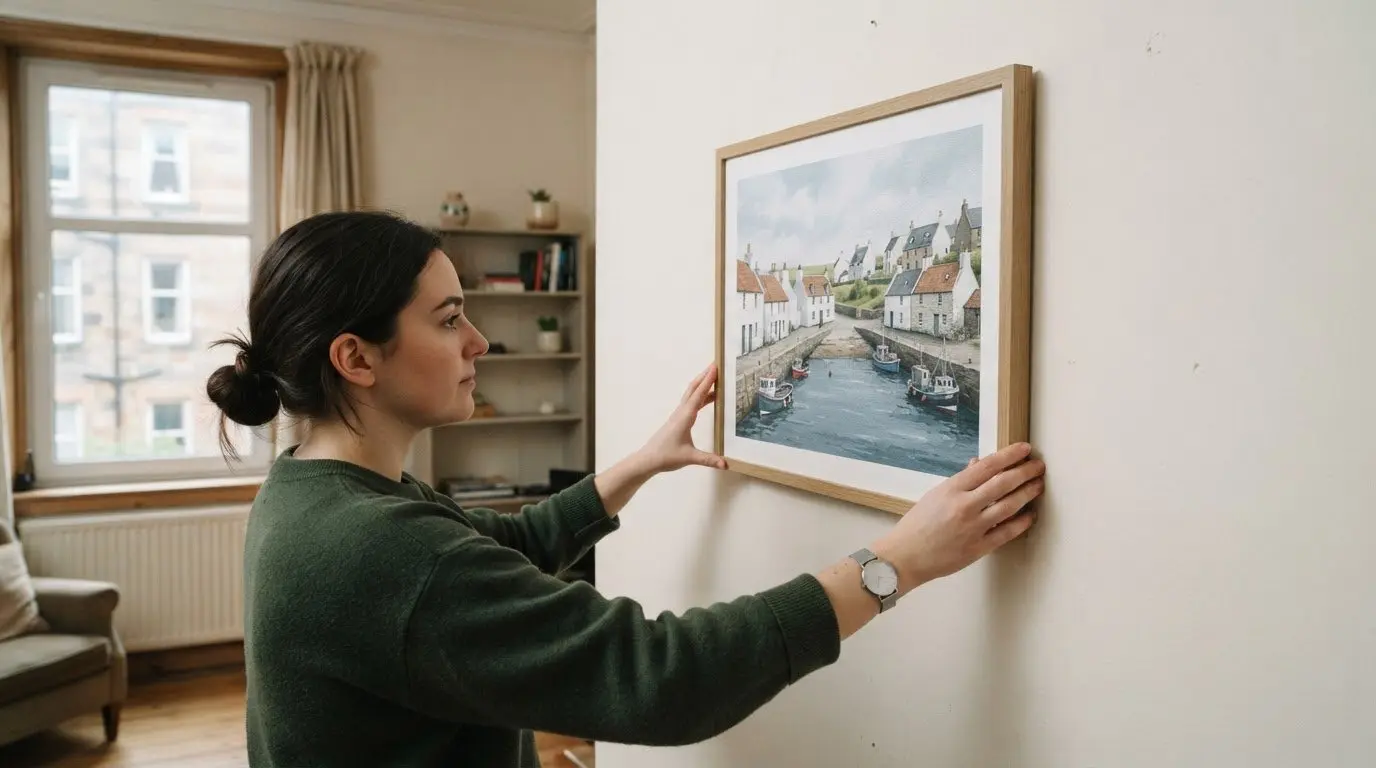
Can you make a rented flat feel like home without risking wall damage? Damage-free picture hanging for rented flats starts with one simple check: read your tenancy agreement, and ask your landlord or letting agent for written permission if the rules are unclear. What’s allowed depends on your agreement, so don’t assume removable hooks are automatically permitted.
It’s understandable to want your favourite prints and photographs on display rather than tucked away until you move. Choosing a hanging method that suits both the wall and the frame can help you make the space your own while avoiding unwanted marks.
This guide covers four practical points: what your tenancy agreement says, how to ask for permission, how to match hangers to picture weight, and what to do if wall hanging isn’t allowed. You’ll have a clearer plan for displaying art while respecting your tenancy.
Key Takeaways
- Start with your tenancy agreement; if the rules aren’t clear, get your landlord or letting agent’s permission in writing.
- Removable adhesive strips may suit lighter pictures on smooth, clean walls, but prepare the surface and follow the product instructions.
- Match the hanger to the complete framed picture’s weight and the wall surface to reduce the risk of it coming loose.
- If wall hanging isn’t permitted or a picture is too heavy, consider displaying it on an easel or leaning it securely instead.
1. Can tenants hang pictures?
You can hang pictures if your tenancy agreement permits it or your landlord agrees. Check the agreement first; if the wording is unclear, ask the landlord or letting agent for written consent. They may set conditions, such as limiting the number of pictures or requiring repairs when you leave. A careful approach to damage-free picture hanging for rented flats starts with understanding those terms.
Command Strips and other removable adhesive strips attach frames without nails, while adhesive hooks support pictures from a hook. Both have weight limits, so compare the stated capacity with the complete framed picture. Tension systems and picture-hanging systems let you rearrange decorations without making new wall holes. In period properties, rail hooks and cords can suspend artwork from an existing picture rail.
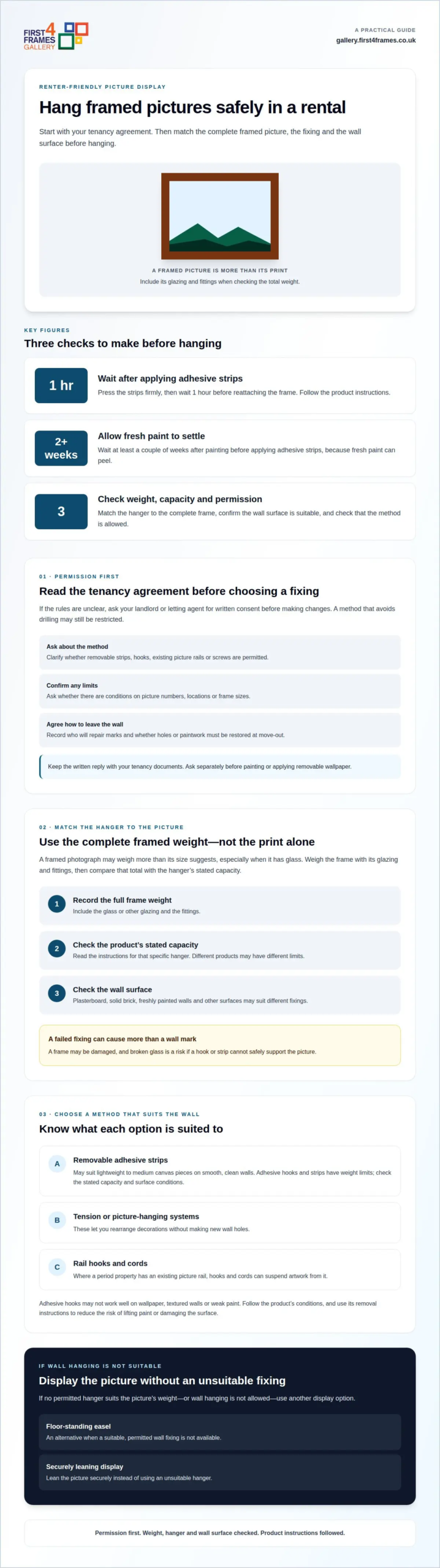
Apply strips to a smooth, clean wall. Wipe away dust with a dry cloth, press the strips firmly, then wait 1 hour before reattaching the frame. After painting, wait at least a couple of weeks before applying adhesive strips, because fresh paint can peel. Follow the product’s removal instructions to reduce the risk of lifting paint or damaging the surface.
Adhesive hooks may not work well on wallpaper, textured walls or weak paint. Removable strips are described as suitable for lightweight to medium canvas pieces on smooth, clean walls. In humid rooms, follow the product’s stated conditions. Weak paint may lift during removal, and a failed hook can damage a frame or break its glass. These checks are central to damage-free picture hanging for rented flats.
There’s no single UK price range for hanging products: costs depend on the product type, pack contents and stated weight capacity. To find existing hanging points, inspect the upper wall for a narrow picture rail, then look for hooks or cords. Check your tenancy agreement before using any fitting.
2. Getting landlord or letting-agent permission
Read your tenancy agreement before planning a picture wall or choosing frames. If it doesn’t clearly allow picture hanging, send the landlord or letting agent a written request before making changes. Ask specifically about adhesive strips, hooks, picture rails or screws. A method that avoids drilling may still be restricted by the agreement.
Make your request easy to answer. Describe the room, the hanging method and the artwork you want to display. Say whether the pictures are lightweight or framed, and explain how you’ll remove the fittings. If you’re planning a gallery wall, include its proposed location and layout. Clear details help the landlord respond to the specific change, rather than a broad request to decorate.
- Ask which hanging methods are permitted, including removable strips or existing rails.
- Clarify whether there’s a limit on picture numbers, locations or frame sizes.
- Agree who will repair any marks and how the wall should be left at move-out.
Keep the reply with your tenancy documents. Written consent records the agreed method and any conditions, such as filling holes or restoring paintwork. Landlords and tenants can also agree that you’ll repair picture-hanging damage or that repair costs may come from the deposit. Put those responsibilities in writing instead of relying on a verbal conversation.
Ask separately before painting or applying removable wallpaper. Both can affect the wall finish, and permission to hang pictures doesn’t automatically cover other decorating. If the landlord approves a particular colour or asks you to restore the original finish, record that condition before starting. Once you know what’s allowed, explore artwork for your display and plan a layout that fits the permission you received.
3. Choosing hangers based on picture weight
Start with the complete framed picture, not just the print or canvas. Weigh the frame with its glazing and fittings, then compare the total with the hanger’s stated capacity. A framed photograph may weigh more than its size suggests, especially if it has glass. Choosing a hanger by appearance alone can leave the picture under-supported.
Check the package instructions for the specific product and its permitted load. Command hooks support a limited amount of weight, so match the stated capacity to your frame. Adhesive picture strips and hooks also need to suit the wall surface. Don’t assume that different products, even from the same brand, have identical limits.
The wall matters too. UK rental flats may have plasterboard, solid brick or freshly painted surfaces. Identify the surface before choosing a fixing, because a method suitable for one wall may not suit another. Removable strips are described as suitable for lightweight to medium canvas pieces on smooth, clean walls. They aren’t a universal choice for every frame or surface.
A heavier statement picture needs a suitable hanging point. Picture hooks may work where tiny pin-sized marks are allowed by the tenancy agreement. If drilling or marks aren’t permitted, don’t use a hanger that can’t safely support the frame. A picture that pulls a hook from the wall can damage the surface; a failed adhesive hook may also damage the frame or break its glass.
For a large or glazed frame, use this simple check before hanging:
- Record the complete frame’s weight, including its glass and fittings.
- Check the hanger’s stated capacity and permitted wall surfaces.
- Confirm that the fixing method is allowed in your rental agreement.
If no permitted hanger suits the picture’s weight, choose another display option, such as a floor-standing easel. A lighter frame may also be more practical in living spaces where wall fixings are restricted. Match the frame, wall and permitted fixing rather than risking damage with an unsuitable hanger.
4. Picture hanging in rented homes
Renting can still feel personal, even when wall fixings are restricted. Map out the room before hanging pictures: measure the wall, note furniture positions and mark proposed frame locations lightly with a pencil. A tape measure helps you avoid unnecessary holes and keep a group of frames aligned. Check the wall surface too, since rental homes can have plasterboard, solid brick or freshly painted walls.
Above a sofa, aim for artwork around 60–70% of the sofa’s width, then leave about 20–25 cm between its back and the artwork’s lower edge. A 1–2 cm tilt can look noticeable above furniture, so use a level and step back to assess the arrangement. For a gallery wall, lay out different frame sizes on the floor first. This lets you refine the composition before making any permitted fixings.
If your agreement forbids hanging, or the frame exceeds the hanger’s capacity, use a freestanding alternative. Lean a framed print securely on a shelf, display it on an easel, or place it on the floor away from walkways. These options let you change your living space without adding wall holes. Removable wallpaper can also create a backdrop, but seek permission first because it may mark or lift paint when removed.
- Keep existing picture hooks or rail cords in place if they’re suitable and permitted.
- Choose a small number of appropriate fixings rather than making repeated holes while adjusting frames.
- Agree how any marks will be repaired before moving out.
A small number of nail holes may count as normal wear and tear in UK rentals. Excessive holes may lead to a charge, depending on the damage. Landlords and tenants can agree to complete repairs at the end of the tenancy or take repair costs from the deposit. Keep the arrangement in writing.
Once you’ve planned a suitable display, browse artwork for your home and choose pieces that work with your room and permitted hanging options.
First4Frames Gallery: Ready-to-Hang Framed Art
First4Frames Gallery offers Ready-to-Hang Framed Art, Custom Picture Framing and Giclée Fine Art Prints. Its handmade frames are made to order with high-quality materials and 2 mm float glass. For online picture framing, choose your frame online and create custom framed art prints or bespoke framed wall art to suit your space.
Explore different tastes, from coastal wall art and landscape wall art to Scottish landscape art, photography prints and contemporary art prints. Whether you’re drawn to fine art, famous artists or best-selling artists, consider the style and finished frame weight alongside your permitted hanging method. An art print framing service can help bring the image and frame together. A wall art visualiser may help you visualise art on your wall and see artwork before you buy; use it to design your framed artwork with your room in mind.
For advice on choosing artwork or framing, contact First4Frames Gallery.
Make your rented flat feel like yours
A considered display can bring character to a room without making decorating feel permanent. Treat damage-free picture hanging for rented flats as part of choosing artwork: consider where a piece will sit, how it works with your furniture and which frame suits the space. Your display can reflect your taste while respecting the limits of your home.
When you’re ready to choose something for your walls, explore artwork that suits your room and style. First4Frames Gallery offers framed art, custom framing and Giclée prints, giving you different ways to bring a piece together. For advice on selecting artwork or framing, contact First4Frames Gallery.
Start with a piece you love, then find the right place for it in your home.
Frequently Asked Questions
Can tenants hang pictures?
Yes, if your tenancy agreement permits it or your landlord agrees. Some agreements restrict all picture hanging, while others allow it if you repair any damage when you leave. If the wording is unclear, ask the landlord or letting agent for written consent before choosing a fixing. Keep the reply with your tenancy documents, especially if it sets conditions about repairs or permitted methods.
Can I hang wall art in a UK rental without drilling?
Yes. Removable adhesive strips, adhesive hooks and existing picture rails can provide alternatives to drilling, subject to your agreement and the wall surface. In period properties, rail hooks and cords can suspend artwork from an existing rail. If no permitted method suits the frame, display it on an easel or another stable freestanding support.
Can I put pictures up in a rented house?
You can put pictures up if your agreement allows the method or your landlord consents. Permission may come with conditions, such as limiting the number of pictures or repairing holes before you move out. If you’re planning several frames, describe the display and fixing method in your request. This gives the landlord a clear basis for agreeing to the arrangement.
Can you decorate while renting?
Yes, but ask your landlord before making decorative changes, particularly painting or applying removable wallpaper. They may approve a colour scheme or ask you to restore the original finish before you leave. Get any conditions in writing, including who handles repairs. For lower-impact changes, consider personalising the room with cushions, curtains, plants or furniture you can take with you.
How can a picture hanging system help?
A picture-hanging system can let you hang and move artwork without making new holes for each arrangement. If your rental has an existing picture rail, hooks and cords can support frames from it. Before using a system, make sure it’s allowed under your agreement and suitable for the frame’s weight. It can be useful when you want to rearrange a gallery wall.
How do you personalise a rental property?
Bring in details you can take with you, such as cushions, curtains, houseplants and artwork displayed on an easel or stable furniture. Upcycling a freestanding piece can also give a room a more individual feel without altering the property. For a cohesive display, choose artwork and soft furnishings that share a colour or theme, then arrange them around the room’s existing features.