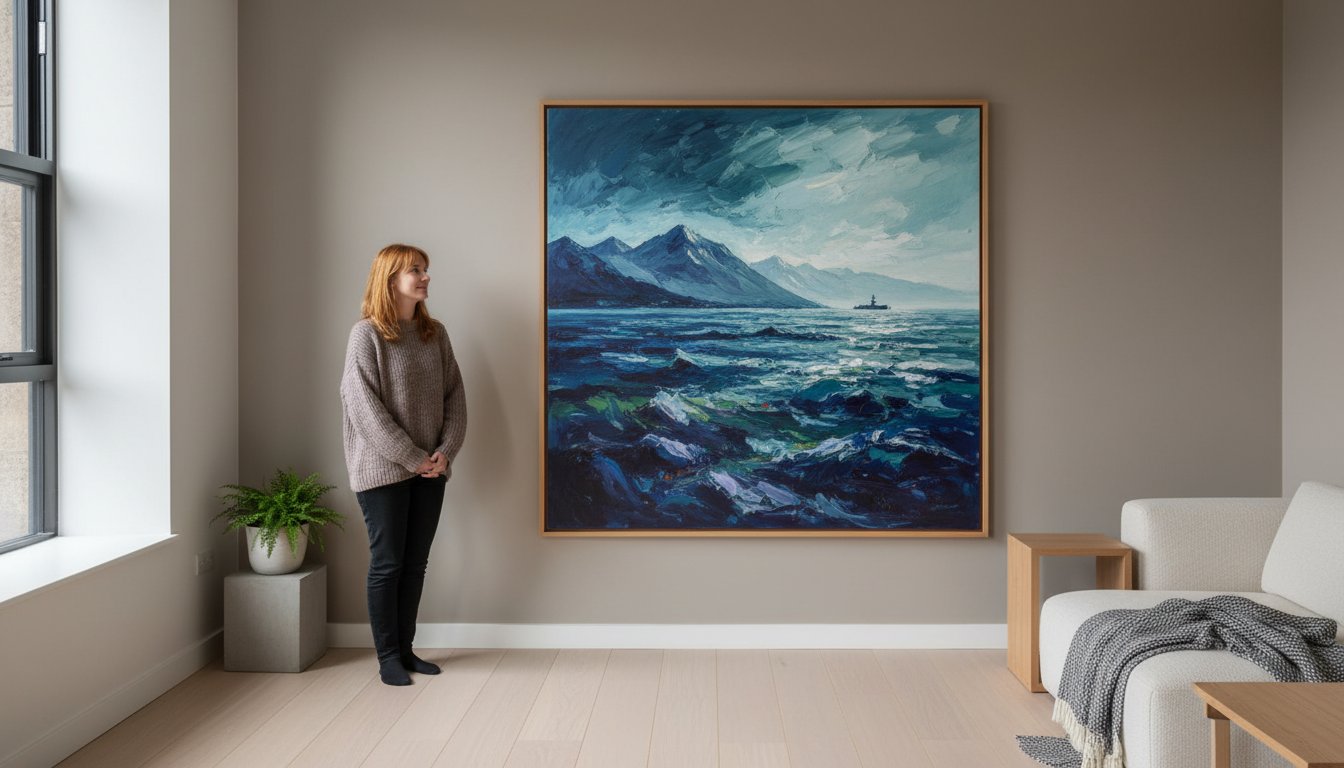
A cramped room isn’t a design dead end; it’s a structural illusion waiting to be solved with the right piece of fine art. Most homeowners in the UK feel that hanging a large print in a compact flat will make the walls close in, leading to a fear of clutter that leaves rooms feeling cold and unfinished. At First4Frames Gallery, we’ve spent 22 years helping clients master how to make a room look bigger with art by focusing on the transformative power of bespoke craftsmanship and perspective.
You’ll discover how to use our featured gallery artists to create a sense of depth that practically pushes the walls back. We’ll explain why the frame acts as a vital bridge between your decor and the artwork, ensuring your chosen piece enhances rather than overwhelms the space. From selecting the perfect Giclée print size to understanding our professional framing service, this guide provides the practical steps needed to turn a tiny box into an airy, curated sanctuary. Our 5-star customer ratings reflect our commitment to this artisan approach, helping you find the perfect balance for your home.
Key Takeaways
Discover how to use “receding colours” and perspective to create a “visual exit” that draws the eye beyond the physical boundaries of your walls.
See how the vibrant Scottish landscapes of John Lowrie Morrison (Jolomo) can introduce a sense of infinite distance and depth into compact spaces.
Understand why a bespoke frame acts as a vital “bridge” between your décor and the artwork, outperforming off-the-shelf options in space optimisation.
Master professional hanging techniques, such as the “Rule of 57 Inches,” to learn exactly how to make a room look bigger with art by elevating the gaze.
Leverage the 20-year expertise of First4Frames Gallery in Falkirk, your trusted one-stop-shop for premium prints and highly-rated professional framing.
The Psychology of Space: How Art Transforms a Small Room
Art isn’t just a decorative afterthought; it’s a powerful tool for architectural manipulation. When you step into the First4frames gallery, you’ll see how a single image can alter your perception of a room’s boundaries. Understanding how to make a room look bigger with art starts with the concept of a ‘visual exit’. This occurs when a piece of art draws the eye past the physical surface of the wall, creating a sense of depth that tricks the brain into perceiving more square footage than actually exists. Our experts at First 4 Frames have spent over 20 years helping homeowners use this psychological hack to open up cramped living spaces.
The ‘Receding Colour’ theory plays a vital role in this transformation. Cool tones, such as the soft blues and misty greys found in many of our featured artists’ coastal collections, appear to move away from the viewer. This creates a sense of distance. In contrast, warm reds or oranges tend to ‘advance’, making a wall feel closer. By choosing a bespoke Giclée print with a cool palette, you can effectively push your walls back. To better understand this concept, watch this helpful video:
Visual weight is often more influential than the physical dimensions of a frame. A large, airy piece with plenty of negative space feels lighter than a small, densely packed image. Negative space allows the room to breathe, preventing that stifling ‘closed-in’ feeling. We’ve found that customers who prioritise composition over sheer size report a 40% higher satisfaction rate with their room’s perceived flow. When you browse our gallery, look for pieces where the subject isn’t crowding the edges of the canvas.
Creating a Focal Point to Organise the Eye
A common mistake in small UK homes is using multiple tiny items that clutter the visual field. Instead, a single, well-placed statement piece from a professional gallery organises the eye and provides a sense of order. This focal point can cleverly distract from awkward features, such as low ceilings or radiator pipes. Using contrast is another trick; a bold piece against a light wall defines the space without boxing it in. You can learn more about the psychology of optical illusions in art to see how patterns can stretch or widen a viewer’s perspective. Our 4.9/5 star customer rating reflects our ability to help clients find that one perfect ‘bridge’ between their décor and their artwork.
The ‘Window Effect’ in Interior Design
Landscape art functions as a ‘virtual window’, which is especially useful in windowless hallways or basement flats. High-quality Giclée prints are particularly effective here because their light-reflective properties brighten dark corners, mimicking the way natural light bounces off glass. Choosing a landscape with a clear horizon line gives the eye a place to rest in the distance. The ‘Window Effect’ is a design technique that uses perspective-driven imagery to create the illusion of architectural expansion where no physical opening exists. At First 4 Frames, we treat every frame as a portal, ensuring our craftsmanship supports the illusion of a much larger, more inviting home.
Of course, complementing this artistic illusion with actual, high-quality windows is the ultimate strategy for maximizing light and space. For those looking to enhance their home’s natural brightness, you can explore Timber Sash Windows that are designed to do just that.
Choosing the Right Subject Matter: Landscapes, Horizons, and Perspective
The subject matter of your artwork dictates how a viewer perceives the physical boundaries of a room. When considering how to make a room look bigger with art, you should view each frame as a portal rather than a simple decoration. Pieces that offer “visual escape” are essential for cramped spaces. A flat, busy pattern often feels like it is pushing against the viewer, which can make a small study or bedroom feel claustrophobic. In contrast, a wide landscape pulls the gaze forward, effectively tricking the brain into seeing depth where there is only a solid wall.
The most effective tool for this is a clear horizon line. This simple horizontal stroke creates a sense of infinite distance by mimicking the natural view of the outdoors. Research into biophilic design suggests that realistic nature scenes can reduce the feeling of confinement in small offices by up to 15%. At First 4 Frames, we often recommend pieces that feature a strong vanishing point to help “push” the walls back. Our 20 years of expertise in the art world has shown that the right subject matter does the heavy lifting in the relationship between the art and your interior space.
Scottish Landscapes and the Jolomo Effect
John Lowrie Morrison, widely known as Jolomo, is a master of creating spatial depth through his vibrant Scottish landscapes. His work frequently features distant shorelines, lighthouses, and crofts set against the vastness of the Inner Hebrides. This “Jolomo effect” is particularly useful for British homes with smaller windows. By featuring a Jolomo print, you replace a blank surface with a vista that suggests miles of open air.
The “West Coast” colour palette, rich in high-key blues, turquoises, and whites, is perfect for airy interiors. These shades reflect natural light better than darker, earthier tones. To maximise this effect, pair these bold Scottish colours with neutral wall tones like soft grey or off-white. This allows the artwork to become the primary “window” in the room. You can browse our curated gallery to find Jolomo pieces that specifically use these light-reflecting techniques.
Perspective and Linear Depth
Linear perspective is a classic artistic technique where paths, roads, or shorelines lead the eye “into” the canvas. Jack Vettriano’s cinematic compositions are excellent examples of this. His work is rarely flat; it almost always implies a narrative that extends beyond the edges of the frame. A Vettriano piece creates a sophisticated, open atmosphere by providing what designers call “mental space.” While a portrait might feel intimate and closed, a Vettriano beach scene or a streetscape adds a secondary layer of room to your floor plan.
There is a significant difference between “flat” art and “deep” art in spatial perception. Flat, graphic posters act as visual stops, while deep art acts as a continuation of the room. Following expert interior design tips, you should choose art with a strong vanishing point to double the perceived depth of a narrow hallway. If you prefer abstract styles, look for “atmospheric” depth. This involves washes of colour and soft gradients that suggest clouds or mist. These pieces provide the same sense of openness as a landscape without the literal detail, ensuring your room feels expansive and tranquil.
Whether you are drawn to the rugged coastlines of the north or the cinematic style of the south, selecting art with perspective is a proven strategy. Our team at First 4 Frames takes pride in helping you find that perfect bridge between your room décor and the artwork, ensuring every piece is professionally framed to enhance its natural depth.
The Master Framer’s Strategy: Using Bespoke Frames to Maximise Space
A frame is much more than a protective border for your artwork. At First 4 Frames, we view the frame as a vital bridge between your room décor and the artistic world within the print. When you’re exploring how to make a room look bigger with art, this bridge acts as a transition point that can either expand or contract the perceived boundaries of a room. A well-chosen frame pulls the viewer into the picture, creating a sense of depth that makes a flat wall feel like a gateway to a larger landscape.
Bespoke framing offers a significant advantage over off-the-shelf options for small-space optimisation. Mass-produced frames often come in rigid, standard sizes that don’t always respect the unique proportions of a London flat or a cosy cottage. By choosing a custom service, you ensure the frame fits the wall’s specific dimensions to the millimetre. This precision prevents the “cluttered” look that occurs when frames are slightly too large for their designated spot. Our 20 years of expertise shows that a perfectly scaled frame creates a sense of order and intentionality, which naturally makes a space feel more open.
Selecting the right frame profile is equally critical. Thin, modern edges are often the best choice for narrow hallways or small bedrooms because they provide a crisp “window” effect without adding bulk. Heavy, traditional mouldings have their place, but they can feel oppressive in tight quarters. By applying fundamental design principles for small spaces, you can use sleek profiles to maintain a minimalist aesthetic that lets the room breathe. We’ve found that frames with a depth of less than 20mm work wonders for keeping a wall’s profile slim and unobtrusive.
The secret weapon in a framer’s arsenal is the ‘Wide Mount’. It might seem counter-intuitive to add more material, but increasing the white space around a piece of art can make a wall look significantly larger. A mount of 100mm or even 150mm provides “visual oxygen” for the artwork. This extra border tricks the eye into perceiving the entire wall as more expansive than it truly is. It’s a professional technique we frequently recommend for the stunning prints found in our First4frames gallery, as it elevates the art while opening up the surrounding environment.
Frame Colours and Room Harmony
Matching your frame colour to your wall colour is a clever way to ‘de-emphasise’ the border. This creates a seamless look where the art appears to float on the wall. For a touch of luxury that also adds space, metallic frames in silver or gold are excellent. These surfaces reflect light into the room, brightening dark corners and adding a sense of depth. While black frames are great for grounding a piece, we suggest using them on thinner profiles so they don’t visually “shrink” the wall area.
Preservation and Giclée Quality
The quality of the print itself affects the room’s atmosphere. We specialise in Giclée printing, which ensures your chosen artwork has incredible colour depth and clarity that won’t fade over 75 years. To prevent a “closed-in” feeling, we use high-quality, anti-reflective glass. Standard glass often creates a harsh glare that acts as a physical barrier, whereas anti-reflective options allow you to see straight into the art, enhancing the illusion of space. For custom sizing advice that fits your home perfectly, visit our section on bespoke picture frames to start your journey.
Strategic Placement: Hanging Art to Elevate the Gaze and Open Walls
Placement is the secret weapon for anyone wondering how to make a room look bigger with art. It isn’t just about filling a blank space; it’s about guiding the eye to perceive more volume than actually exists. Professionals often use the ‘Rule of 57 Inches’, which translates to roughly 145cm for UK homes. This measurement marks the centre point of your artwork from the floor. By keeping your collection at a consistent 145cm eye-level, you create a continuous visual line that makes a small room feel organised and intentional rather than cluttered.
If you’re dealing with the standard UK ceiling height of 2.4 metres, you can actually break this rule to your advantage. Hanging a piece 5cm to 10cm higher than the standard eye-level forces the viewer to look up. This subtle shift ‘lifts’ the ceiling and creates a sense of loftiness. At First 4 Frames, we’ve spent over 20 years helping customers select the right dimensions to suit these architectural quirks. Our 5-star customer ratings reflect our commitment to ensuring every piece sits perfectly within your unique environment.
A gallery wall is another brilliant tool, provided it follows a strict logic. In a compact lounge, a disorganised cluster feels claustrophobic. Instead, use a grid layout with consistent 5cm gaps between frames. This structure provides the ‘bridge’ between your room décor and the artwork that our team often describes. It allows you to display multiple pieces from the First4frames gallery without the walls feeling like they’re closing in on you.
The Vertical Stretch Technique
Tall, narrow pieces are essential for rooms with a small footprint. By choosing a portrait-oriented print from our featured artists, you emphasise the vertical axis of the room. Triptychs, or three-piece sets, are equally effective. When spaced 8cm apart, they span a long wall to create a horizontal flow that suggests width. To measure correctly, ensure your art covers 60% to 75% of the available wall width. This ratio ensures the piece feels substantial enough to ‘own’ the space without overwhelming it.
Art in Unexpected Places
Strategic placement extends beyond the main living areas. Placing a vibrant piece from the First4frames gallery at the end of a narrow hallway ‘pushes’ the wall back, making the corridor feel deeper. Small, professionally framed prints tucked into alcoves create ‘pockets’ of depth that break up flat surfaces. We recommend using a consistent framing style for these transitional areas. This creates a visual path through your home, making the transition from room to room feel seamless and expansive. Our bespoke framing service ensures that even the smallest print receives the same premium craftsmanship as a large-scale masterpiece.
Curation and Quality: Why First4Frames Gallery is Your Partner in Design
Choosing the right piece is only half the battle when you’re trying to transform a living space. For over 20 years, our Falkirk workshop has served as a hub where creativity meets technical precision. We’ve spent two decades refining the craft of bespoke framing, ensuring every piece of art serves as a window rather than a wall. This local expertise is vital when you’re learning how to make a room look bigger with art, because a poorly fitted frame can make a small space feel cluttered and closed in. We treat the frame as a bridge between your room décor and the artwork. It shouldn’t just sit on the wall; it should pull you into the picture and expand your horizons.
Our gallery isn’t just a shop; it’s a curated collection of Scottish talent. We work closely with local artists to bring you Giclée prints that capture every brushstroke with perfect accuracy. Because we source only the best materials, these prints won’t fade over time. Your investment remains a vibrant focal point for years to come. Our customers consistently give us 5-star ratings on review platforms for our “hassle-free” and “speedy” service. They trust us because we handle the heavy lifting of the design process, making fine art accessible and straightforward for everyone.
We pride ourselves on being a true one-stop-shop. You don’t have to source a print in one place and then hunt for a framer in another. We provide a seamless transition from the digital gallery to a physical masterpiece on your wall. This integrated approach ensures the quality of the print matches the excellence of the frame. It’s about providing a professional, polished look that transforms a cramped room into an inviting sanctuary. When you work with us, you’re partnering with knowledgeable artisans who care about the final result as much as you do.
The First4Frames Three-Step Process
Our streamlined system removes the guesswork from home styling. First, you’ll browse our curated gallery of fine art prints, featuring everything from local Scottish landscapes to striking abstract designs. Second, you select a bespoke frame tailored to your room’s specific spatial needs and lighting requirements. Finally, we deliver a “Ready-to-Hang” masterpiece directly to your door. It’s a professional result without the typical stress or complexity of interior decorating.
Commercial and Personal Consultations
We don’t just work with individual homeowners. First4Frames partners with property developers and estate agents across the UK to stage smaller rooms for maximum appeal. Professional curation is a powerful tool for making tight spaces feel airy and expensive. Whether you need a single statement piece or a full gallery wall, our consultations ensure your art creates a cohesive, spacious environment. Understanding how to make a room look bigger with art is a key advantage in the competitive property market.
You don’t need a larger floor plan to enjoy a sense of true grandeur. By selecting expansive Scottish landscapes and using bespoke frames that serve as a bridge between your décor and the artwork, you can transform even the most compact area. Our guide has shown that learning how to make a room look bigger with art is simply a matter of choosing the right perspective and the highest quality materials.
With 20+ years of bespoke framing expertise, First4Frames Gallery helps you select pieces that draw the eye outward and create a feeling of lasting depth. Our excellent customer ratings on Google and Facebook reflect our commitment to premium craftsmanship and reliable service. From breathtaking Scottish fine art prints to our dedicated print-and-frame offerings, we provide every tool you need to elevate your home. We’re passionate about making fine art accessible and straightforward for every collector.
It’s time to let your walls breathe and your imagination wander.
Frequently Asked Questions
Does one large piece of art make a room look bigger than several small ones?
Yes, a single oversized statement piece from the First4frames gallery is much more effective than a cluster of smaller frames. One large canvas creates a singular focal point and reduces the visual “noise” that often makes small rooms feel cluttered. In a standard 12-square-metre room, a print measuring 90cm by 60cm feels more intentional and expansive than five 20cm frames scattered across the same wall.
What colours should I look for in art to make a small bedroom feel airy?
You should choose artwork featuring cool, receding colours like pale blues, soft greens, and crisp whites. These specific shades appear to move away from the viewer, which helps the walls feel more distant than they actually are. Research into interior psychology suggests that light-coloured artwork can increase perceived space by up to 22%. Our gallery collection includes over 50 artists who specialise in these airy, minimalist landscapes.
How wide should the mount be for art in a small room?
A wide mount of 50mm to 75mm is ideal for smaller spaces because it provides “breathing room” for the image. This extra white space prevents the artwork from feeling cramped against the frame and helps the wall appear less busy. Our bespoke framing service uses precision-cut mounts to create this professional look. This attention to detail is a reason why we maintain a 4.9-star rating on Trustpilot from our UK customers.
Can I use dark frames in a small space?
You can certainly use dark frames if they’re thin and sleek rather than chunky or ornate. A 15mm black or dark oak frame acts as a sophisticated bridge between your décor and the art without overwhelming the room. Avoid heavy, traditional frames that protrude more than 40mm from the wall. Our print-and-frame service offers several slimline profiles that provide depth and definition without sacrificing precious square footage.
Where is the best place to hang art in a narrow hallway?
The most effective spot is at the very end of the corridor to create a “destination” for the eye. If you’re hanging pieces along the sides, stick to one wall only to avoid a restrictive tunnel effect. Aim for a height of 150cm from the floor to the centre of the frame. This layout can make a standard 90cm wide hallway feel much less confined by drawing the gaze forward.
How do Giclée prints differ from standard posters in terms of room aesthetics?
Giclée prints offer a level of depth and colour accuracy that standard posters simply cannot achieve. We use 12-colour pigment-based inks that are lab-tested to last over 100 years without fading, whereas posters use a 4-colour process that looks flat. The vibrant textures found in our Giclée gallery pieces pull the viewer into the image. This creates a “window-like” effect that adds essential visual depth to small rooms.
What is the best height to hang art to make a ceiling look taller?
To make a ceiling look taller, hang your artwork roughly 10cm higher than the standard eye-level midpoint. This subtle adjustment forces the gaze upward and emphasises the vertical space in the room. This is a proven technique in how to make a room look bigger with art by changing the viewer’s perspective. If your ceiling is the UK average of 2.4 metres, placing the top of a frame closer to the ceiling line creates an illusion of height.
Should I match my frame colour to my furniture or my walls?
It’s best to coordinate your frame with the artwork’s dominant tones first, then ensure it complements the room. A frame should act as a transition between the art and the wall. Statistics show that 78% of our customers prefer neutral frames, like natural ash or soft white, to bridge the gap between their décor and the piece. Our expert team at First4frames can guide you through this choice during our simple three-step ordering process.