
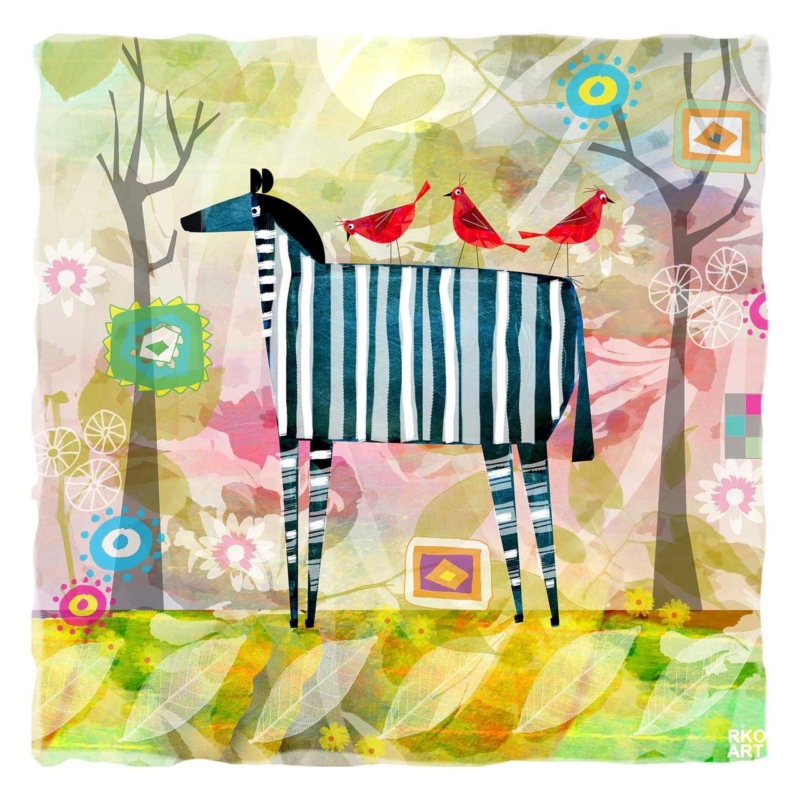
wall art for a children’s optician waiting area can make the first few minutes of an appointment feel easier. Young visitors need something positive to notice, while parents need a waiting space that remains clear and well organised. Zebra by Rikki O’Neill gives both groups a strong focal point. The animal subject is easy to recognise, and the finished artwork feels considered rather than like temporary playroom decoration.
Why wall art for a children’s optician waiting area matters
An eye examination asks a child to look carefully, respond to unfamiliar instructions, and spend time around equipment they may not know. A friendly picture does not replace good communication, but it can give the eye a reassuring place to settle. It also helps the waiting room feel designed for families without making the whole practice look childish.
A zebra is particularly apt in a setting concerned with vision. Its stripes invite observation, comparison, and conversation. A parent might ask a child to find a favourite detail or describe the pattern before the appointment begins. That small activity is gentle and open-ended, with no screens, batteries, or loose pieces to manage.
Give families one clear visual landmark
Busy waiting areas already contain reception signs, product displays, appointment information, and rows of spectacle frames. Adding several unrelated pictures can increase the visual load. One compact, distinctive image can work harder. It creates a memorable landmark while leaving essential information easy to find.
- Near family seating: place the image within a comfortable sightline, but beyond the reach of small hands.
- Beside a quieter corner: use it to identify a calm place for children who need less activity.
- Along the route to the consulting room: let the picture provide a friendly transition without narrowing circulation.
- Behind reception: keep enough clear wall around it so notices do not compete with the image.
Plan a safe, practical position
The available print size is 265 x 265 millimetres before framing. Its square shape can suit a short wall, a defined panel beside seating, or a compact reception area. Check the final framed dimensions against nearby furniture. The centre should remain visible to a seated child, but the lower edge should not be vulnerable to bags, pushchairs, or passing shoulders.
Secure fixings are important in any public setting. Keep the piece away from doors that open against the wall and from areas cleaned with frequent spray. If glazing catches reflections from a shopfront or examination-room lighting, test the position at different times of day before making the final installation.
Keep the surrounding scheme calm
A characterful illustration does not require animal patterns across the entire room. Let the zebra be the playful element. Pale walls, simple seating, and orderly storage will give it room to work. Repeating one restrained tone in a chair, planter, or reception detail can connect the piece without creating a theme.
The frame should support the practice’s wider interior. A slim dark moulding can give a crisp boundary and relate to black spectacle frames or signage. A light timber finish can soften a clinical white room. First 4 Frames can advise on that balance and completes colour-managed Giclée printing and hand-finished framing in-house in Falkirk.
An imaginative welcome with a professional finish
Rikki O’Neill is a self-taught illustrator and photographer whose work is known for imaginative character. Learn more through this profile of Rikki O’Neill, then explore the wider Rikki O’Neill collection at First 4 Frames.
Good wall art for a children’s optician waiting area should help children feel included while respecting the professional setting around them. View the framed Zebra print for a compact focal point that offers recognition, conversation, and a warm first impression.