
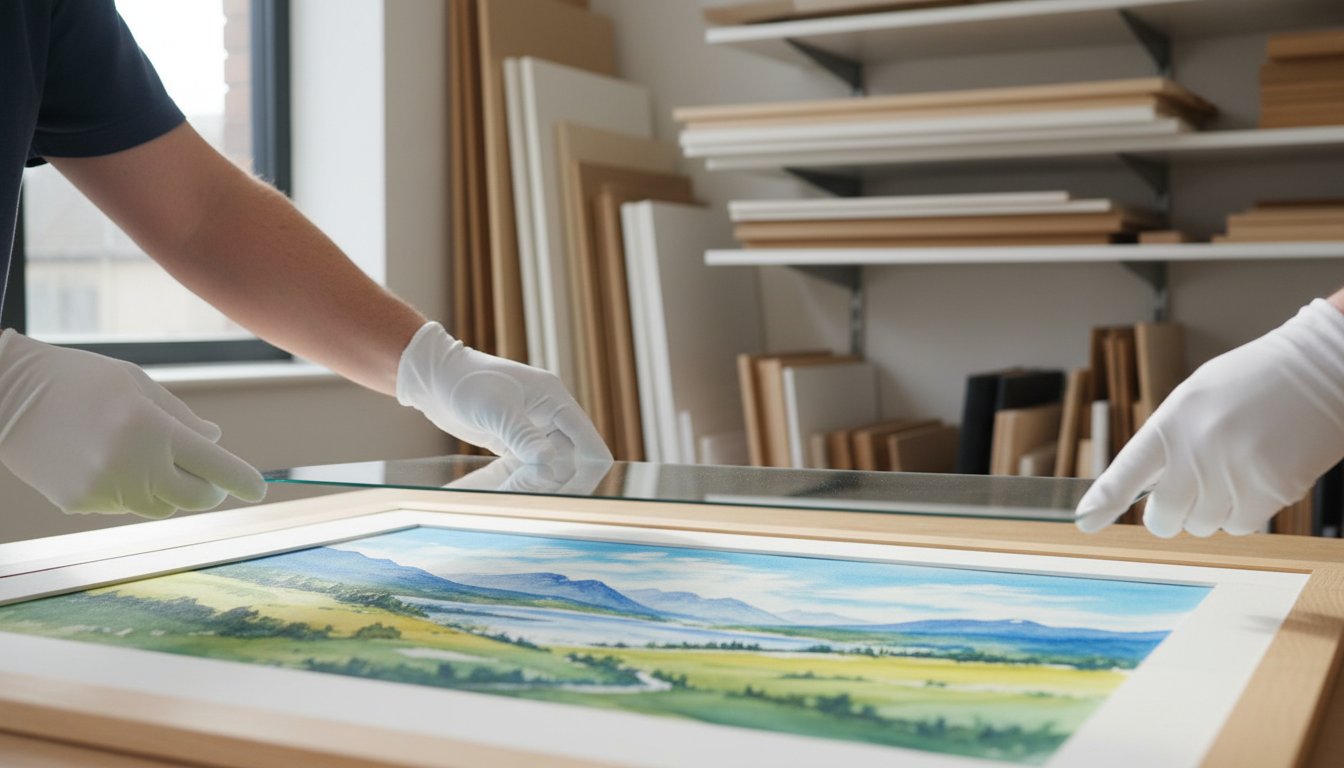
That incredible feeling of finding a piece of art you truly love is unmatched. But with that joy comes a crucial question: how do you ensure its beauty lasts a lifetime, safe from the hidden dangers of light and damaging materials? The world of custom framing can feel intimidating, filled with technical terms like ‘acid-free’ and ‘UV glass’ that can leave you feeling uncertain. This is precisely why understanding what is museum quality framing is so important. It’s more than just a beautiful border; it’s a bespoke promise of preservation, creating a safe, archival home for your treasured artwork.
In this guide, we will pull back the curtain on the craft of professional conservation framing. We’ll walk you through the essential components-from premium glazing to archival mounting boards-that separate a standard frame from one built to last. By the end, you’ll not only have a clear definition but also the confidence to speak with a framer, ask the right questions, and feel complete peace of mind that your art is perfectly protected for generations to come.
Beyond the Buzzword: What ‘Museum Quality Framing’ Really Means
You’ve likely heard the term ‘museum quality framing’ used to describe premium picture frames. But beyond the marketing gloss, what is museum quality framing, really? In short, it’s not a style, but a rigorous set of standards and techniques dedicated to the long-term preservation of your art. Its primary goal is to protect a piece from irreversible environmental damage caused by light, humidity, and airborne pollutants.
While the term can sometimes be used loosely, true museum framing is about craftsmanship that creates a safe, stable, and chemically inert environment for your artwork. It’s a promise that the beautiful piece you invest in today will remain just as vibrant for generations to come.
To see these principles in action, this video offers a fantastic overview:
The Core Principle: Preservation Over Decoration
Standard framing often prioritises aesthetics, focusing on how the frame complements the room’s decor. Museum framing, however, puts preservation first. Think of it as the difference between a stylish high-street jacket and a technical arctic parka. One looks fantastic for the season, while the other is engineered with premium materials to protect you from the harshest conditions. A museum-grade frame is that parka; its job is to do the heavy lifting, protecting what’s inside for decades, not just a few years.
Conservation vs. Museum Level: Is There a Difference?
In the framing world, you’ll often hear ‘conservation’ and ‘museum’ used interchangeably, and for good reason. Both are dedicated to preservation. ‘Museum Level’ is simply the highest possible standard within conservation framing. Both methods exclusively use materials that are chemically stable and acid-free, from the backing board to archival matting materials, to prevent yellowing and decay. Crucially, every step is fully reversible, meaning the artwork can be removed from the frame in the future in its original, untouched condition.
The 4 Pillars of Museum Quality Framing: Materials Matter
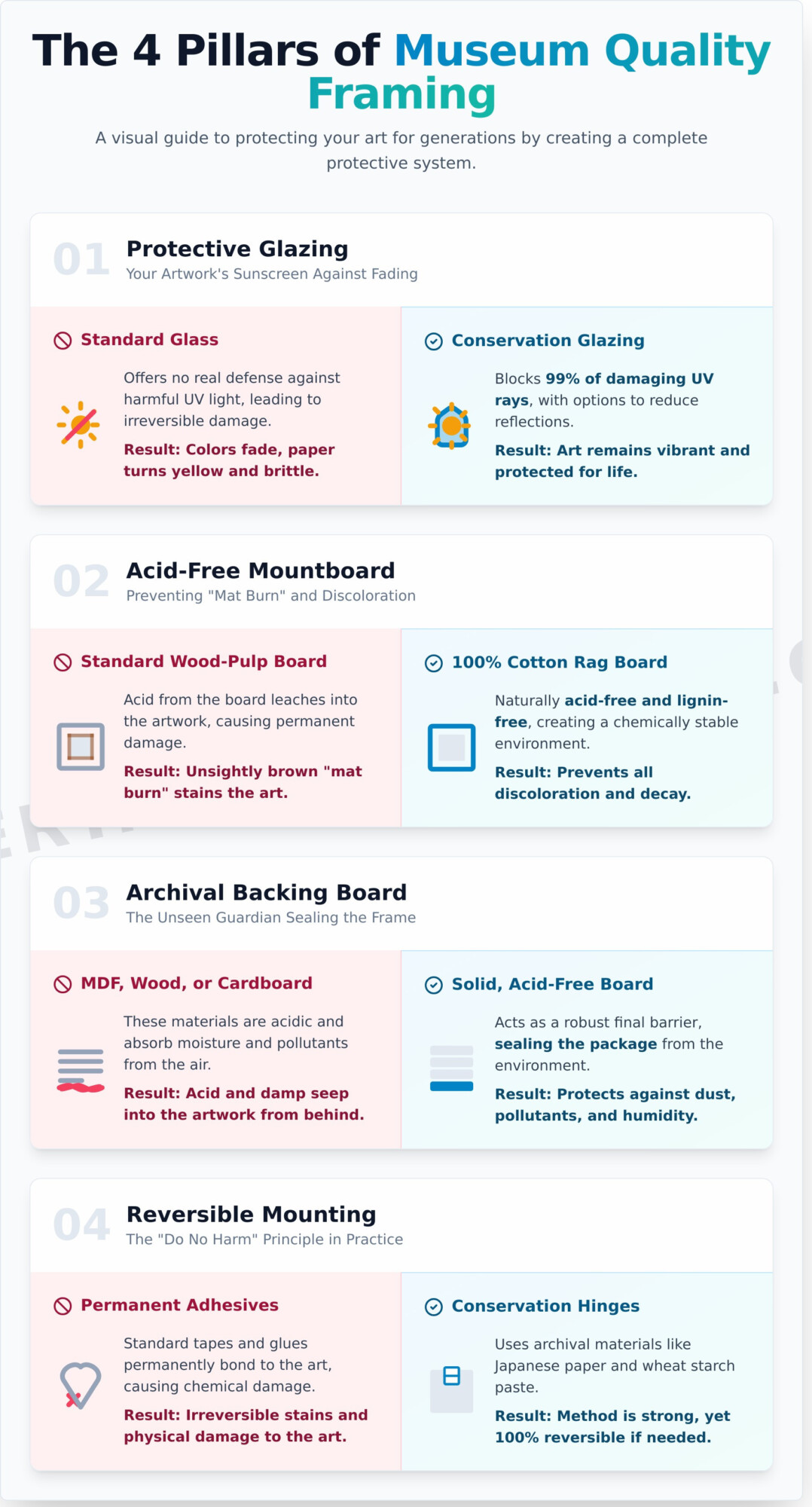
So, what is museum quality framing at its core? It’s not about a single expensive material, but a complete protective system. Think of it as four pillars working in harmony to create a safe, stable environment for your artwork. Each component plays a critical role, and compromising on even one can undo the good work of the others. Let’s explore these four essential pillars and why the right materials are the foundation of true, lasting preservation.
Pillar 1: Protective Glazing (Your Artwork’s Sunscreen)
Standard picture frame glass is like sunglasses without UV protection-it looks the part but offers no real defence. Harmful UV light is one of the biggest threats to your art, causing vibrant colours to fade and paper to become yellow and brittle over time. We use glazing like Conservation Clear®, which blocks 99% of damaging UV rays. For ultimate clarity, options like Museum Glass® offer the same protection while also minimising reflections, making it feel like there’s nothing between you and the art.
Pillar 2: Acid-Free Mountboard & Matting (Preventing Mat Burn)
Have you ever seen an old picture with a brown, discoloured line around the edge of the image? That’s ‘mat burn’. It’s caused by acid from standard wood-pulp mountboards leaching into the artwork, causing permanent damage. To prevent this, we use only museum-grade mountboards made from 100% cotton rag. This material is naturally acid-free and lignin-free. As detailed in the National Park Service’s guide to caring for paper objects, using archival-quality materials is non-negotiable for preservation. While colours and textures are important for aesthetics, the archival quality of the board is always our first priority.
Pillar 3: Archival Backing Board (The Unseen Guardian)
The backing board is the final layer of defence, sealing the frame from behind. Common materials like MDF, wood, or standard cardboard are disastrous for artwork, as they contain acids and chemicals that can seep into your piece over time, while also absorbing moisture from the air. A museum-quality frame is finished with a solid, acid-free backing board that acts as a barrier against dust, pollutants, and humidity changes, completing the protective sandwich that keeps your art safe.
Pillar 4: Reversible Mounting Techniques (Doing No Harm)
How the artwork is secured within the frame is just as important as the materials surrounding it. Your precious art should never be permanently glued or stuck down with standard tape. These adhesives can cause irreversible stains and damage. We follow the principle of “do no harm” by using conservation-grade mounting techniques, such as attaching the art with Japanese paper “hinges” and acid-free wheat starch paste. This process is strong yet fully reversible, meaning the art can be safely removed from the frame years from now without a trace.
The Framer’s Craft: Techniques That Complete the Protection
Having the finest materials is only half the battle. The true artistry and protective power of museum quality framing comes to life during the assembly process. Even premium conservation-grade materials can fail if not handled with expert precision. This is where decades of professional craftsmanship make all the difference, transforming a collection of high-quality components into a seamless, protective environment for your artwork. The answer to what is museum quality framing lies as much in the framer’s hands as it does in the materials they use, a principle central to the Fine Art Trade Guild framing standards.
Creating a Sealed Environment
A crucial step in professional framing is to create a sealed “package” that isolates your artwork from the outside world. A skilled framer meticulously seals the back of the frame, typically where the backing board meets the frame itself. Using specialised, acid-free framing tape, they create an airtight barrier. This simple but vital technique prevents dust, humidity, insects, and airborne pollutants from creeping into the frame over time, ensuring the micro-environment inside remains stable and clean for decades.
Using Spacers: Why Art Shouldn’t Touch the Glass
One of the golden rules of art preservation is that the surface of the artwork should never touch the glazing (the glass or acrylic). Direct contact creates a risk of condensation transfer, which can lead to mould, mildew, or foxing. In humid conditions, the artwork can even physically adhere to the glass, causing irreversible damage upon separation. To prevent this, a professional framer uses spacers. Often, the window mount provides the necessary air gap, but for images framed “full-bleed” to the edge, hidden plastic or wood spacers are fitted inside the frame’s rebate to create that essential breathing room.
Is Museum Quality Framing Right for Your Artwork?
After exploring the premium materials and meticulous craftsmanship involved, the crucial question remains: is this level of protection the right choice for your piece? Understanding what is museum quality framing is one thing; deciding to invest in it is another. This is not about spending more, but about investing wisely in the future of your artwork.
To help you decide, we’ve created a simple framework based on value-both monetary and sentimental.
When to Invest in Museum-Level Protection
This premium level of protection is an act of preservation, ideal for pieces you truly cherish or see as a long-term asset. We strongly recommend it for:
- Original Artwork & Limited Edition Prints: Pieces like Giclée prints, original paintings, or signed photographs have inherent value that is worth protecting from fading and degradation.
- Items of High Sentimental Value: A faded wedding photograph or a brittle family letter is irreplaceable. Archival framing preserves these precious memories for the next generation.
- Valuable Memorabilia: Signed sports jerseys, historical documents, or concert tickets can be damaged by the acids in standard materials. Museum framing safeguards their condition and value.
- Art as an Heirloom: If you intend for a piece to be passed down through your family, conservation framing is the only way to ensure it survives in pristine condition.
What Might Not Need Museum Framing?
Our passion for art includes providing honest advice. Not every piece requires this level of investment. Standard framing is often perfectly suitable for:
- Decorative or Open-Edition Prints: If a poster or print is easily and inexpensively replaceable, archival protection may not be necessary.
- Children’s Art: For those wonderful creations you plan to rotate and display seasonally, a simple, safe frame is a great choice.
- Short-Term Displays: If you’re framing something for a temporary event or a non-critical environment, you may not need long-term conservation features.
The Long-Term Value of Proper Preservation
Think of museum quality framing not as a cost, but as an insurance policy for your art. An investment of a few hundred pounds in a bespoke, archival frame today can prevent thousands in potential restoration fees caused by UV damage or acid burn years from now. It’s the most effective way to protect your artwork’s integrity and financial worth.
Your artwork tells a story. Our job is to ensure that story can be told for generations. Have a special piece you’d like to protect forever? Talk to our experts about bespoke framing.
Your Art’s Legacy Starts with the Right Frame
As we’ve explored, museum quality framing is far more than an elegant border for your wall. It is a complete preservation system, built on the essential pillars of archival materials-from UV-filtering glazing to acid-free mount boards-and assembled with meticulous, professional techniques. This approach actively safeguards your artwork from the irreversible damage caused by light, acid, and environmental factors, ensuring its vibrancy and integrity remain for decades to come.
Ultimately, understanding what is museum quality framing is the first step toward becoming the true custodian of your art. At our Falkirk workshop, we combine a passion for art with artisan craftsmanship. With over 20 years of bespoke framing experience, we use only the highest quality conservation and museum-grade materials to give every piece the protection it deserves.
Protect your treasured art for generations. Get a bespoke framing quote from our experts. We look forward to helping you create the perfect, protective home for your masterpiece.
Frequently Asked Questions
How much more expensive is museum framing than standard framing?
While prices vary based on size and materials, you can generally expect museum quality framing to cost two to four times more than a standard option. This reflects the premium, archival materials used, such as 99% UV-protective glazing, acid-free mount boards, and conservation-grade backing. This investment is a crucial part of our bespoke craftsmanship, ensuring your precious artwork is protected against fading and degradation for the long term, making it a worthwhile cost for valuable pieces.
Can you upgrade an existing frame to be museum quality?
Absolutely. If you love your current frame moulding but want to enhance its protective qualities, we can perform a professional “re-fit.” This involves carefully replacing the existing components with archival materials. We can swap out standard glass for UV-protective glazing and replace acidic mount boards and backing with 100% acid-free, conservation-grade alternatives. This effectively upgrades your frame to meet museum standards, preserving the art within while keeping the look you love.
How long will museum quality framing protect my art?
When properly cared for, museum quality framing is designed to protect your art for a lifetime, and often for future generations. The archival materials dramatically slow the aging process by shielding the artwork from UV light, pollutants, and acid damage. While no method can stop time completely, this level of professional framing ensures your piece remains vibrant and beautifully preserved for many decades, far surpassing the protection offered by standard, off-the-shelf frames.
Does UV-protective glass look different from normal glass?
Modern UV-protective glazing is remarkably clear and, in many cases, offers a better viewing experience than standard glass. Premium options, often called “museum glass” or acrylic, feature anti-reflective coatings that reduce glare and make the glazing seem almost invisible. There is no yellow or distracting tint. This technology provides an uncompromised, crystal-clear view of your artwork’s true colours and details while blocking up to 99% of harmful ultraviolet rays.
What is ‘mat burn’ and how can I spot it on old pictures?
Mat burn is the brownish or yellowish discolouration that appears on artwork where it touches an acidic mount board. You can spot it as a dark, burned-looking line on the paper that perfectly follows the bevelled edge of the old mat. This damage is caused by acid leaching from the wood pulp in standard boards over time. Preventing this is a key part of the answer to what is museum quality framing, as we only use 100% acid-free, archival mount boards.
Are the frame materials (the wood or metal) also archival?
Yes, the frame moulding itself is an integral part of a complete archival package. We source only the best materials, using stable, high-quality woods with inert finishes or durable metals like aluminium for our bespoke frames. This ensures the structure is not only beautiful and strong but also chemically stable. A premium moulding will not degrade or release any harmful gases that could damage your artwork, completing the 360-degree protective enclosure your piece deserves.