
The best frames for rented flats balance appearance, weight and practical hanging needs. Frame costs depend on size, materials and finish, so think about the artwork before you choose. Online picture framing can offer choices for custom framed art prints, while an art print framing service can help bring a finished look together. Choose your frame online with the picture’s colours and proportions in mind, and design your framed artwork to suit the room.
No-drill fittings can help you display pictures while limiting marks on walls, but the right option depends on the frame and wall surface. Plan how you’ll fit and remove each piece, and consider whether you can reuse the fitting after moving. A frame that complements your artwork can make a rental feel personal without dominating the space.
From coastal wall art and landscape wall art to Scottish landscape art, artwork can set the mood of a room. Explore contemporary art prints, fine art, photography prints and work by famous artists or best-selling artists. Ideas such as “Visualise art on your wall”, “See artwork before you buy” and a “Wall art visualiser” can guide your choices; bespoke framed wall art and framed wall art can bring the finished arrangement into focus.
Key Takeaways
- Match a no-drill fitting to the surface and frame, so it sits securely and suits your rented home.
- Plan installation and removal with care to help minimise marks and make frames easier to reuse after a move.
- Choose artwork and decor that make a room feel personal while keeping a cohesive look across different properties.
- Explore bespoke framing or ready-to-hang art when you want a considered finish tailored to your artwork.
1. How different no-drill fittings attach
In UK rental homes, whether you can use nails or screws depends on your tenancy agreement and your landlord’s permission. Don’t assume a small picture hook is automatically allowed. Ask before making holes, especially in painted plaster or wallpaper, where repairs may affect your deposit. When choosing a frame, consider its weight and the fixing method together.
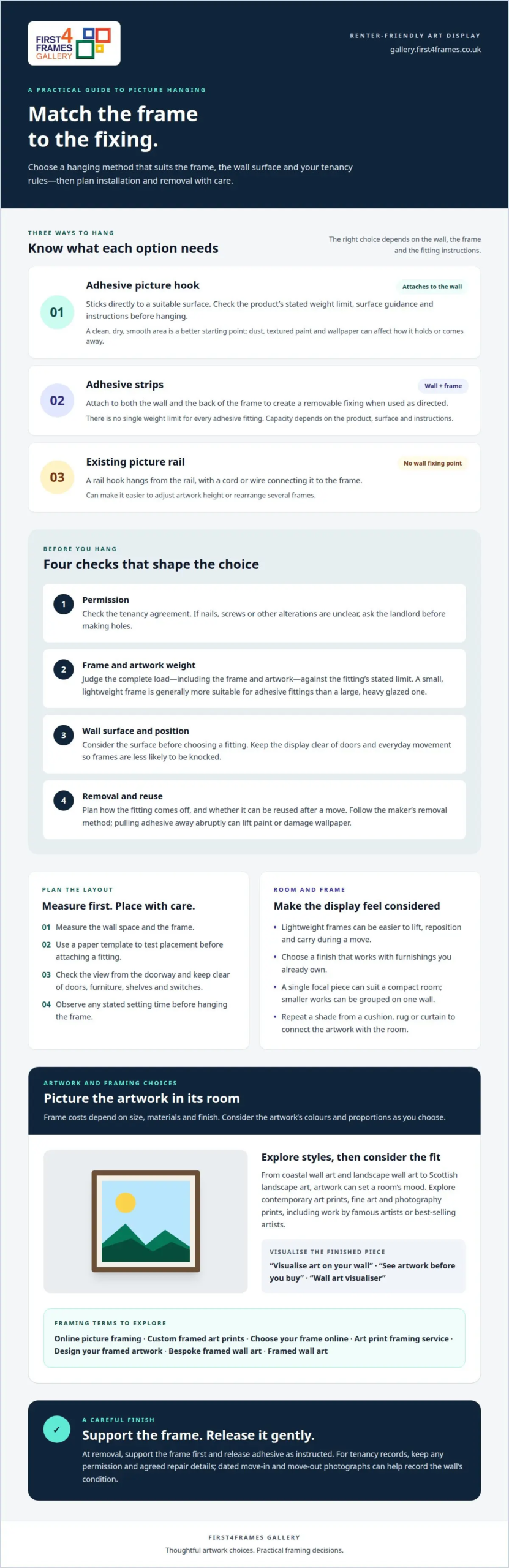
Adhesive picture hooks stick directly to suitable wall surfaces. Adhesive strips attach to both the wall and the back of a frame, creating a removable fixing when used as directed. There isn’t one weight limit for every adhesive fitting: capacity depends on the product, surface and instructions. Check the stated limit and include the frame and artwork when judging the load. A small, lightweight frame is generally more suitable than a large, heavy glazed one.
For adhesive fittings, start with a clean, dry, smooth area. Dust, textured paint and wallpaper can affect how well a fitting holds or comes away. Follow the product instructions for applying the adhesive and allowing it to set before hanging anything. Keep the frame level, and avoid placing a valuable print above a bed or other furniture until the fixing is secure.
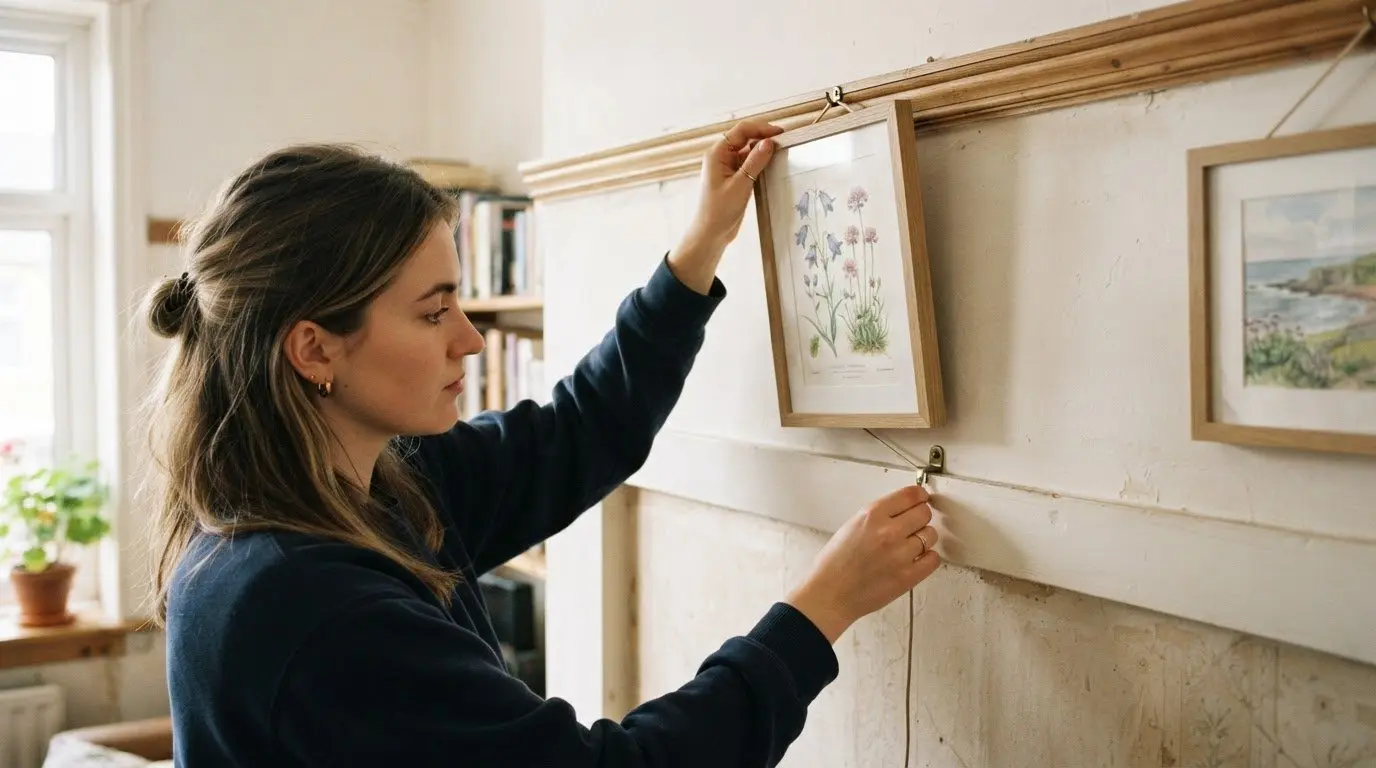
Picture rails offer another no-drill option if the room already has one. A rail hook hangs from the existing rail, while a cord or wire connects the hook to the frame. This keeps the fixing point off the wall and can make it easier to adjust the artwork’s height. It’s useful when changing a room layout or arranging several frames.
The best frames for rented flats suit both the artwork and the fixing. A compact, lighter frame may work better with an adhesive fitting, while a heavier frame may suit an existing picture rail. Before hanging, match the fixing to the wall and frame, then follow its instructions. Keep the display clear of doors and everyday movement so frames aren’t knocked out of place.
2. Installation and removal advice
A UK tenancy agreement may set out rules for hanging pictures, including whether nails, screws or other alterations are allowed. Look for clauses about fixtures, wall damage and the property’s condition when you leave. If the wording is unclear, get your landlord’s permission before making holes. Keep their response with your tenancy records.
Plan the position before attaching anything. Measure the wall space and frame, then mark the intended top edge lightly with a pencil. In a narrow hallway, check that the frame won’t catch bags or clothes passing by. In a bedroom, keep the arrangement clear of doors and furniture. A paper template cut to the frame’s size can help you test placement without repeatedly moving a fitting.
For adhesive hooks or strips, follow the product instructions closely. Prepare the wall as directed, attach the fitting in the correct position, and observe any stated setting time before hanging the frame. Don’t exceed the fitting’s weight limit. At removal, support the frame first, then release the adhesive as instructed. Pulling a strip away abruptly can lift paint or damage wallpaper.
A landlord’s deduction for picture-hole repairs depends on the tenancy terms and evidence of the property’s condition. Keep dated move-in photographs and, before leaving, take clear pictures of the same walls. If you were permitted to hang pictures, retain that permission and any agreed repair details. Don’t assume every hole automatically results in a charge, or that every repair cost can automatically be deducted.
Before moving out, remove frames carefully and inspect each fixing point in good light. Follow the adhesive maker’s removal method; don’t scrape or repaint without checking what your agreement requires. If a mark remains, record it and deal with it in line with the agreed move-out condition. Choosing artwork that suits your wall space can also make future rearranging easier. Browse the artwork gallery for pieces to plan around your rooms.
3. Interior furnishings and decor
For a rental, favour lightweight frames with simple profiles that suit removable fittings. They’re easier to lift, reposition and carry during a move than bulky, heavy designs. A slim black frame can define a print above a desk, while a pale wood finish can complement neutral furniture. Choose a finish that works with pieces you already own, rather than matching only one room.
In a studio or compact flat, choose a frame size that suits the available wall space and nearby furniture. A single focal piece above a sofa can help a narrow room feel open. For several smaller works, arrange them together on one wall rather than spreading them across every surface. Leave clear space around doors, shelves and switches so the layout feels considered, not cluttered.
Before buying, measure the wall area and the frame itself. Use paper templates to test a gallery layout, then step back from the doorway and check the balance. A portrait print can draw the eye upwards beside a bookcase; a landscape can sit neatly above a low cabinet. These examples help you judge proportions before choosing a final arrangement.
Colour can connect framed art with soft furnishings without making every item identical. Repeat a shade from a cushion, rug or curtain in the artwork or frame finish. In a bedroom with patterned bedding, a quieter print can create visual rest. Remember that the Furniture and Furnishings (Fire) (Safety) Regulations apply to upholstered furniture supplied with a let, including fabric and upholstered bed frames, headboards and mattresses.
Think about delivery and lifting as well as appearance, especially in a flat with narrow stairs or limited storage. A lighter frame is simpler to carry between rooms and pack when moving. Prefer a layout that can adapt if a sofa, desk or bed changes position. A carefully chosen print can add character without a crowded wall or oversized frame.
4. Standardising frames across multiple properties
A shared frame scheme can make apartments feel connected without making every room look identical. Start with a repeatable base, such as slim black frames in hallways and pale wood in living areas. Then vary the artwork to suit each property’s character. This approach gives tenants a familiar visual thread while letting coastal prints or local landscapes reflect their surroundings.
Choose a small set of frame finishes and shapes that work across different wall colours. A simple rectangular profile can suit a spacious lounge or a compact bedroom. Keeping the profile consistent matters more than forcing identical artwork into every flat. For example, pair a landscape print above a sofa with a portrait piece in a narrow entrance, using the same finish.
Record the scheme in a simple property guide. Note each room’s wall colour, frame finish, artwork position and fixing method. Add photographs showing how the arrangement sits beside furniture, such as an upholstered headboard or dining table. These records help maintain the look when artwork is moved, replaced or transferred between properties.
For a rental portfolio, consider how the tenancy may change between occupants. Choose designs that feel welcoming to a broad range of tastes, then add character through artwork rather than highly personal decor. A calm landscape in a living room and a more vivid print in a home office can share a frame style while creating different moods. Keep the scheme flexible enough for varied room sizes.
Consistency also helps with planning purchases and replacements. A clear record of the frame finish and artwork dimensions makes it easier to match a piece when a room changes or a frame needs replacing. Keep spare wall space in mind, rather than filling every available area. For ideas that suit different interiors, explore framed artwork styles and consider how each piece could work within your property scheme.
First4Frames Gallery
First4Frames Gallery helps renters choose artwork and framing to suit their space. Its Ready-to-Hang Framed Art, Custom Picture Framing and Giclée Fine Art Prints offer different ways to create a considered look. Each frame is handmade to order for the individual piece, using high-quality materials.
Frames are glazed with 2 mm float glass. If you’re choosing artwork or framing for a rented flat, contact First4Frames Gallery to discuss a piece that suits your home.
Make your next space feel like yours
A move can bring a fresh opportunity to shape a room around the artwork you love. Choose pieces with a place in mind, and let their colours and character guide the rest of your decor. The best frames for rented flats are the ones that suit the art, the room and the way you want to display them, while fitting your plans for future moves.
When you’re ready to select a piece, First4Frames Gallery offers Ready-to-Hang Framed Art, Custom Picture Framing and Giclée Fine Art Prints. These options can help you find artwork and framing that feel right for your home, whether you’re choosing a finished piece or shaping a look around a particular print.
Explore framed artwork and find your next piece. Let your walls tell a story that can travel with you, and make your rented home feel unmistakably personal.
Frequently Asked Questions
Cost: Are They More Expensive?
Not necessarily. The cost depends on the frame’s dimensions, materials, glazing and whether artwork is included. A simple frame for a small print involves different choices from a bespoke frame made for a larger piece. Compare what each option includes, such as a mount or finished artwork, rather than judging by the frame alone. There isn’t one cost that applies to every frame.
What are the best damage-free ways to hang frames in a rental?
For the least wall impact, display a frame on a stable shelf, mantelpiece or freestanding picture easel. Keep it level and away from edges where a bag or door could knock it. If you want a wall display, choose a removable fitting suited to the frame and surface, then follow its instructions. Your tenancy agreement may also set limits on wall changes.
How can you hang heavy frames safely without drilling?
Use an existing picture rail with a hook and hanging cord rated for the frame’s full weight. If the rail or hook rating is unclear, don’t hang a heavy frame from it. Adhesive fittings aren’t a safe substitute unless their stated capacity covers the complete framed piece and the wall surface is suitable. Without a reliable rail, choose a lighter display or a stable floor-standing option.
Where can I buy affordable picture frames in the UK, and what do they cost?
You can buy frames from UK galleries and online framing businesses. First4Frames Gallery offers Ready-to-Hang Framed Art, Custom Picture Framing and Giclée Fine Art Prints. The cost varies with the artwork, frame dimensions and materials chosen, so consider what the finished piece includes before comparing options. A frame for an existing print may involve different choices from a framed print bought as one piece.