
Posted on

Picture Framing Supplies UK: The Ultimate Guide for Artists & DIYers

Have you ever held a piece of art, a cherished photograph, or your own creative work and felt that mix of pride and slight panic? You know it deserves a beautiful, bespoke frame, but navigating the vast world of picture framing supplies uk can be daunting. Which mount will complement the colours? What glazing offers the best protection? And are you investing in the right tools, or risking a costly mistake with your treasured piece?

Embark on your framing journey with confidence. This guide is your trusted partner, created to demystify the entire process. We’ll provide a clear checklist of every tool and material you need, from premium mount boards to conservation-grade tapes. You’ll learn to distinguish quality craftsmanship, achieve a professional-looking result, and ensure your artwork is protected for years to come. We’ll also help you understand when to embrace the rewarding DIY challenge and when to call in a professional for that perfect, lasting finish.

The Anatomy of a Frame: Core Supplies You’ll Need

A beautifully finished picture frame is a work of craftsmanship, a sum of carefully chosen parts working in harmony to protect and present your art. Each layer, from the visible moulding to the hidden backing board, plays a crucial role in both the final look and the long-term preservation of your piece. Understanding The Anatomy of a Picture Frame is the first step towards making informed choices when sourcing your materials. This foundational checklist will guide you through the essential components for any project.

To see how these components come together, this short video provides a helpful overview:

Before you begin, it’s important to distinguish between standard decorative framing and ‘conservation framing’. While standard framing focuses primarily on aesthetics, conservation framing uses archival-quality, acid-free materials to protect valuable or sentimental artwork from environmental damage. Choosing the right picture framing supplies uk retailers offer is key to achieving the level of protection your artwork deserves.

Frame Moulding: The Foundation of Your Design

The moulding is the structural and decorative border of your frame. The material and profile you choose set the tone for the entire piece.

  • Materials: Wood offers timeless warmth and versatility, aluminium provides a sleek, modern finish, and Polcore (a recycled polystyrene) is a durable and cost-effective alternative that beautifully mimics wood.
  • Profiles: Common styles include flat, contemporary profiles; curved ‘scoop’ profiles that draw the eye inward; ornate, traditional designs; and ‘floater’ frames for canvas art.
  • Sizing: Ensure the moulding width is proportional to your artwork-a delicate print needs a slender frame, while a large canvas demands a more substantial one. You can buy moulding in lengths to cut yourself or use a chop service for precise, mitred corners.

Glazing: Protecting Your Artwork

Glazing is the clear protective layer covering your art. Its primary job is to shield the piece from dust, moisture, and damaging light. The main options include standard glass, which is clear and scratch-resistant but heavy, and acrylic (often known by the brand name Perspex), which is lightweight, shatter-resistant, and an excellent choice for large frames or pieces that will be shipped. For precious artwork, always opt for glazing with at least 99% UV-filtering properties to prevent fading caused by sunlight.

Mountboard and Backing Board: Presentation and Preservation

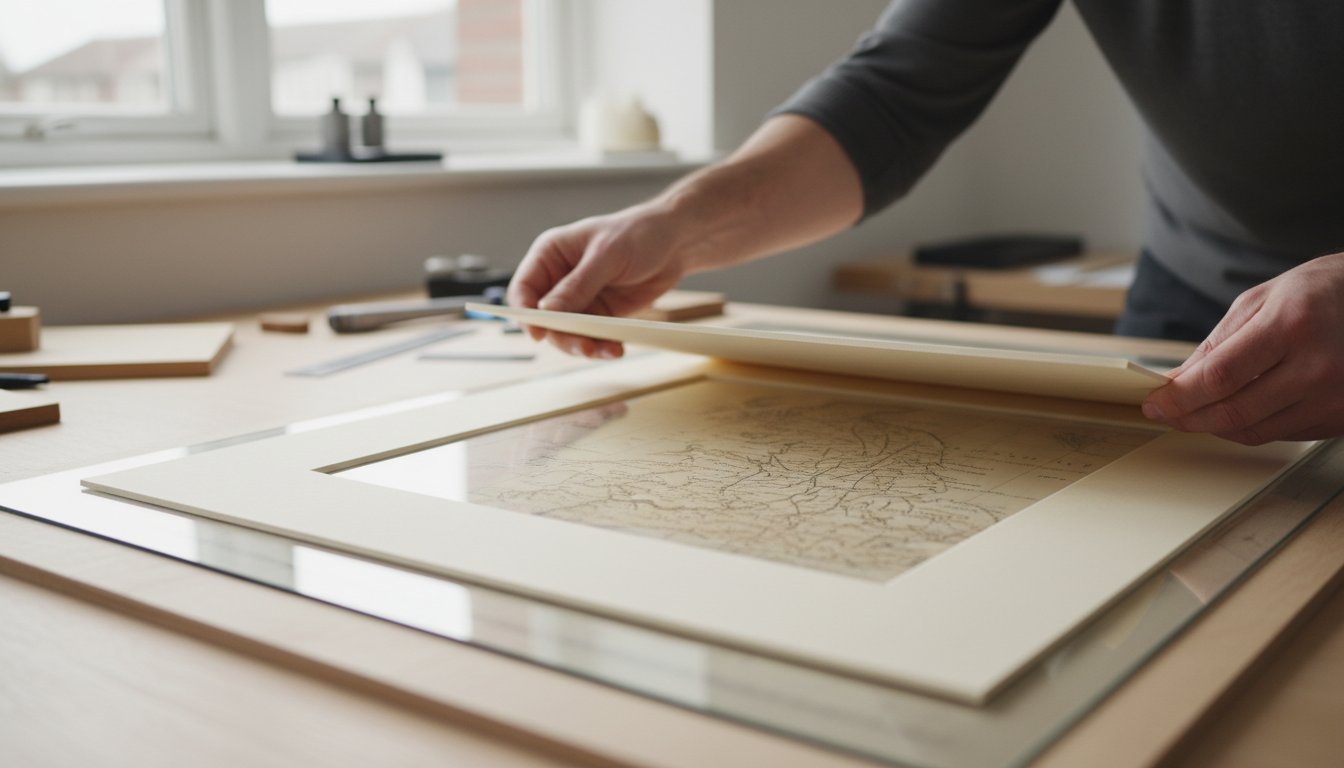
The window mount (or mat) serves two purposes: it provides a visual border that draws the eye to the artwork and creates a crucial air gap between the art and the glazing. It’s vital to choose between a standard, decorative mountboard and an acid-free, conservation-grade board. Standard boards contain acids that can ‘burn’ and discolour your artwork over time, whereas conservation boards are archival quality. Finally, the backing board provides structural support and seals the frame ‘sandwich’, protecting it from behind.

Essential Tools for the DIY Framer’s Toolkit

While premium materials are the heart of a beautiful frame, the right tools are the skilled hands that bring it all together. Achieving those crisp, professional-looking corners and clean lines isn’t about luck; it’s about precision. Investing in a basic toolkit is the single most important step you can take to elevate your DIY framing from a hobby to true craftsmanship. To get started, it’s helpful to understand the Essential Tools for the DIY Framer and how they function. We’ve broken them down into three key stages: cutting, joining, and finishing.

Cutting and Sizing Equipment

Precision starts here. To create a perfect frame, every component must be sized with complete accuracy. A tiny error at this stage can compromise the entire project.

  • Mitre Saws or Guillotines: These are essential for cutting your moulding to a perfect 45-degree angle. A sharp, accurate cut is non-negotiable for seamless, gap-free corners.
  • Mat/Mount Cutters: A specialised cutter is the secret to achieving that clean, bevelled edge on your window mount, adding depth and a truly professional finish to the artwork.
  • Glass/Acrylic Cutters: A simple scoring tool allows you to cleanly and safely size your glazing to fit the frame dimensions perfectly.

Joining and Assembly Tools

Once your pieces are cut, you need the right equipment to join them securely. While professional framers use heavy-duty underpinners that drive V-nails into the corners for an instant bond, there are excellent, more accessible alternatives for the home workshop.

  • Frame or Band Clamps: An essential for the DIY framer, these tools hold the four corners of your frame tightly and squarely together while the wood glue dries, ensuring a strong, permanent bond.
  • Point Drivers or Tab Guns: This handy tool fires flexible or rigid points into the back of the frame, holding your artwork ‘sandwich’ (glazing, mount, artwork, and backing board) securely in place.

Finishing and Hanging Hardware

The final touches are what separate a good frame from a great one. Sealing the back and adding the right hardware ensures your artwork is protected and ready for beautiful display. When searching for these specific picture framing supplies UK retailers offer a wide variety to suit any project.

  • Framing Tape: Use this to seal the gap between the frame and the backing board. This creates a crucial barrier against dust, moisture, and even insects.
  • Hanging System: Choose from D-rings and picture wire for a traditional gallery hang, or a simple sawtooth hanger for smaller, lighter frames.
  • Felt Bumpers: Stick these small pads on the bottom corners to protect your wall from scuffs and allow air to circulate evenly behind the frame.

DIY vs. Professional Framing: A Cost and Quality Comparison

One of the biggest decisions you’ll face is whether to do it yourself or entrust your artwork to an expert. There’s an undeniable satisfaction in a successful DIY project, but it’s a craft that requires precision and patience. This comparison isn’t just about the initial price tag; it’s about understanding the true cost, the time involved, and matching the right approach to the value of the piece you’re framing.

The True Cost of DIY Framing

Venturing into DIY framing can be incredibly rewarding. However, before you start buying picture framing supplies UK, it’s crucial to understand the full investment. Beyond the frame moulding and mount board, you’ll need specialised tools for a quality finish. A common mistake is underestimating the cost of wastage from mis-measured mounts or poorly cut corners. For a simple poster or a child’s drawing, the DIY route can be a fun and cost-effective choice. For anything more, the costs quickly add up.

Item / Service Typical DIY Investment Typical Professional Cost (One-off)
Decent Mount Cutter £80 – £150+ Included in service
Mitre Saw / Guillotine £100 – £300+ Included in service
Tools (Glass cutter, tabs, etc.) £40 – £60 Included in service
Total Initial Tool Cost £220 – £510+ £0
Bespoke A3 Frame Service (Plus materials & time) £60 – £100

The Value of a Professional Framing Service

When you commission a professional framer, you’re not just buying a product; you’re investing in years of expertise and a guaranteed result. Professionals use specialist equipment that ensures perfectly joined corners, flawless, dust-free mounting, and structural integrity. They provide access to an extensive range of premium mouldings and conservation-grade materials designed to protect your art. These experts follow best practices, often guided by standards from the Fine Art Trade Guild, to shield your piece from UV light and environmental damage, preserving it for a lifetime. The result is a spectacular, gallery-quality finish that elevates your art and your home. See how affordable professional quality can be. Get a Bespoke Framing Quote.

Checklist: When to Choose a Professional

Still unsure which path to take? Here’s a quick checklist to help you decide when calling in an expert is the wisest choice for your art:

  • The artwork is valuable, an original, or has significant sentimental importance.
  • You are framing a large, oversized, or unusually shaped piece that requires specialist handling.
  • You need guaranteed conservation-grade, archival framing to protect your art for decades to come.
  • You want a flawless, premium finish that looks perfectly at home in a gallery, your office, or living space.

Sourcing High-Quality Picture Framing Supplies in the UK

Once you understand the essential components, the next step is finding them. The quality of your materials is not just a detail; it’s the very foundation of a beautiful, long-lasting frame. The right components act as the perfect bridge between your artwork and your decor, so choosing your source wisely is paramount to achieving a professional finish.

Where to Look for Materials

Your search for picture framing supplies UK will lead you to several types of vendors, each catering to different needs. For the widest selection of professional-grade mouldings, conservation boards, and specialist glazing, online suppliers dedicated to the framing industry are your best resource. For those just starting out or working on less critical projects, large high-street art retailers offer a good range of hobbyist and student-grade materials. And for the true artisan, local timber merchants can provide raw, unfinished wood to create bespoke mouldings from scratch.

What to Look for in a Supplier

A reliable supplier is more than just a shop; they are a partner in your creative process. When evaluating where to buy, look for these key indicators of quality and service:

  • Conservation-Grade Options: A reputable supplier will clearly label and offer a wide range of acid-free mountboards, backing boards, and UV-filtering glass or acrylic to ensure your artwork is protected from fading and degradation.
  • Helpful Services: Many online specialists offer a ‘chop service’, which provides moulding cut precisely to your required lengths with perfect mitre cuts. This saves you time and the need for specialised equipment.
  • Verified Reviews: Check customer feedback regarding the quality of the materials, the accuracy of their descriptions, and the care they take in packaging items for shipping to prevent damage.

The Professional Alternative: Let Us Source for You

While the DIY route is rewarding, it can also be a path of trial and error. Sourcing premium materials, ensuring compatibility, and achieving a flawless finish requires expertise. This is where our passion and experience come in. As professional framers, we have access to exclusive, trade-only suppliers and a deep understanding of which materials will best protect and enhance your specific piece of art.

We take the guesswork out of the equation, selecting only the finest mouldings, archival boards, and crystal-clear glazing for every project. We believe your art deserves nothing less than perfection. We source only the best materials for our frames. Discover Our Craftsmanship.

Your Masterpiece Deserves the Perfect Frame

Whether you’re an artist or a dedicated DIYer, framing your own work is a uniquely rewarding journey. This guide has equipped you with the essentials, from understanding the anatomy of a frame to sourcing the best picture framing supplies uk has to offer. The right materials and tools are the foundation of a project you can be proud of for years to come.

But for those pieces that demand an expert touch, or when you simply want a guaranteed, museum-quality result, nothing compares to professional craftsmanship. With over 20 years of experience, our Falkirk-based team at First4Frames Gallery uses only premium, conservation-grade materials to create stunning bespoke frames for art lovers across the UK.

Ready for a flawless finish? Let our experts create the perfect bespoke frame for your art. Get Your Quote Today and give your masterpiece the celebration it deserves.

Frequently Asked Questions

Is it cheaper to frame a picture yourself in the UK?

Framing a picture yourself can certainly be more cost-effective, particularly if you plan to frame multiple pieces. While there’s an initial investment in tools, the cost of materials for a single frame is often significantly lower than a bespoke framing service. For example, materials for a standard A4 frame could cost around £15-£25, whereas a professional service might start from £40. For those passionate about craftsmanship, the savings and satisfaction are well worth it.

What are the most essential supplies for a beginner picture framer?

To begin your framing journey, you’ll need a few essential tools to ensure a professional finish. We recommend starting with a quality mount cutter for crisp, clean bevels, a sturdy mitre box and saw for accurate corner cuts, and a reliable measuring tape. Wood glue for joining corners and a point driver to secure your artwork in the frame are also fundamental. These core items form the perfect foundation for your new craft, allowing you to create beautiful, bespoke frames at home.

What is conservation framing and why is it important?

Conservation framing is a premium method designed to protect and preserve your artwork for generations. It uses archival-quality, acid-free materials, including mountboards, backing boards, and tapes, to prevent yellowing and degradation. Crucially, it often incorporates special glazing that blocks up to 99% of harmful UV light, which is the primary cause of fading. This level of craftsmanship is essential for valuable or sentimental pieces, ensuring their beauty remains spectacular for years to come.

How do I choose the right size mount for my picture?

Choosing the right mount is about creating visual balance and drawing the eye towards the artwork. A good rule of thumb is to make the mount borders at least 1.5 times the width of your frame moulding, with a typical minimum of 50-65mm (2-2.5 inches). For a more traditional or dramatic effect, consider a ‘weighted’ bottom border, making it slightly deeper than the top and sides. This simple technique prevents the artwork from looking like it’s visually ‘slipping’ down.

Can I buy professional-grade frame moulding online?

Absolutely. The internet has made it incredibly easy to access a spectacular range of professional-grade materials. Many specialist retailers now offer the same high-quality frame mouldings used by bespoke framers directly to the public. When searching for picture framing supplies uk online, you can find everything from solid oak and ash to ornate Polcore and sleek aluminium profiles. This allows you to achieve a truly premium, gallery-quality finish for your projects right from your own workshop.

What’s the best way to seal the back of a picture frame?

Sealing the back of your frame provides a final, professional touch and, more importantly, protects your artwork from dust, humidity, and insects. The best method is to use a quality self-adhesive framing tape, such as brown Kraft tape. Simply apply the tape neatly over the gap where the backing board meets the frame moulding, ensuring you press it down firmly for a secure seal. This simple step elevates your work from homemade to beautifully handcrafted and ensures its longevity.
Posted on

Picture Framing Supplies UK: The Ultimate Guide for Artists & DIYers

Have you ever held a piece of art, a cherished photograph, or your own creative work and felt that mix of pride and slight panic? You know it deserves a beautiful, bespoke frame, but navigating the vast world of picture framing supplies uk can be daunting. Which mount will complement the colours? What glazing offers the best protection? And are you investing in the right tools, or risking a costly mistake with your treasured piece?

Embark on your framing journey with confidence. This guide is your trusted partner, created to demystify the entire process. We’ll provide a clear checklist of every tool and material you need, from premium mount boards to conservation-grade tapes. You’ll learn to distinguish quality craftsmanship, achieve a professional-looking result, and ensure your artwork is protected for years to come. We’ll also help you understand when to embrace the rewarding DIY challenge and when to call in a professional for that perfect, lasting finish.

The Anatomy of a Frame: Core Supplies You’ll Need

A beautifully finished picture frame is a work of craftsmanship, a sum of carefully chosen parts working in harmony to protect and present your art. Each layer, from the visible moulding to the hidden backing board, plays a crucial role in both the final look and the long-term preservation of your piece. Understanding The Anatomy of a Picture Frame is the first step towards making informed choices when sourcing your materials. This foundational checklist will guide you through the essential components for any project.

To see how these components come together, this short video provides a helpful overview:

Before you begin, it’s important to distinguish between standard decorative framing and ‘conservation framing’. While standard framing focuses primarily on aesthetics, conservation framing uses archival-quality, acid-free materials to protect valuable or sentimental artwork from environmental damage. Choosing the right picture framing supplies uk retailers offer is key to achieving the level of protection your artwork deserves.

Frame Moulding: The Foundation of Your Design

The moulding is the structural and decorative border of your frame. The material and profile you choose set the tone for the entire piece.

  • Materials: Wood offers timeless warmth and versatility, aluminium provides a sleek, modern finish, and Polcore (a recycled polystyrene) is a durable and cost-effective alternative that beautifully mimics wood.
  • Profiles: Common styles include flat, contemporary profiles; curved ‘scoop’ profiles that draw the eye inward; ornate, traditional designs; and ‘floater’ frames for canvas art.
  • Sizing: Ensure the moulding width is proportional to your artwork-a delicate print needs a slender frame, while a large canvas demands a more substantial one. You can buy moulding in lengths to cut yourself or use a chop service for precise, mitred corners.

Glazing: Protecting Your Artwork

Glazing is the clear protective layer covering your art. Its primary job is to shield the piece from dust, moisture, and damaging light. The main options include standard glass, which is clear and scratch-resistant but heavy, and acrylic (often known by the brand name Perspex), which is lightweight, shatter-resistant, and an excellent choice for large frames or pieces that will be shipped. For precious artwork, always opt for glazing with at least 99% UV-filtering properties to prevent fading caused by sunlight.

Mountboard and Backing Board: Presentation and Preservation

The window mount (or mat) serves two purposes: it provides a visual border that draws the eye to the artwork and creates a crucial air gap between the art and the glazing. It’s vital to choose between a standard, decorative mountboard and an acid-free, conservation-grade board. Standard boards contain acids that can ‘burn’ and discolour your artwork over time, whereas conservation boards are archival quality. Finally, the backing board provides structural support and seals the frame ‘sandwich’, protecting it from behind.

Essential Tools for the DIY Framer’s Toolkit

While premium materials are the heart of a beautiful frame, the right tools are the skilled hands that bring it all together. Achieving those crisp, professional-looking corners and clean lines isn’t about luck; it’s about precision. Investing in a basic toolkit is the single most important step you can take to elevate your DIY framing from a hobby to true craftsmanship. To get started, it’s helpful to understand the Essential Tools for the DIY Framer and how they function. We’ve broken them down into three key stages: cutting, joining, and finishing.

Cutting and Sizing Equipment

Precision starts here. To create a perfect frame, every component must be sized with complete accuracy. A tiny error at this stage can compromise the entire project.

  • Mitre Saws or Guillotines: These are essential for cutting your moulding to a perfect 45-degree angle. A sharp, accurate cut is non-negotiable for seamless, gap-free corners.
  • Mat/Mount Cutters: A specialised cutter is the secret to achieving that clean, bevelled edge on your window mount, adding depth and a truly professional finish to the artwork.
  • Glass/Acrylic Cutters: A simple scoring tool allows you to cleanly and safely size your glazing to fit the frame dimensions perfectly.

Joining and Assembly Tools

Once your pieces are cut, you need the right equipment to join them securely. While professional framers use heavy-duty underpinners that drive V-nails into the corners for an instant bond, there are excellent, more accessible alternatives for the home workshop.

  • Frame or Band Clamps: An essential for the DIY framer, these tools hold the four corners of your frame tightly and squarely together while the wood glue dries, ensuring a strong, permanent bond.
  • Point Drivers or Tab Guns: This handy tool fires flexible or rigid points into the back of the frame, holding your artwork ‘sandwich’ (glazing, mount, artwork, and backing board) securely in place.

Finishing and Hanging Hardware

The final touches are what separate a good frame from a great one. Sealing the back and adding the right hardware ensures your artwork is protected and ready for beautiful display. When searching for these specific picture framing supplies UK retailers offer a wide variety to suit any project.

  • Framing Tape: Use this to seal the gap between the frame and the backing board. This creates a crucial barrier against dust, moisture, and even insects.
  • Hanging System: Choose from D-rings and picture wire for a traditional gallery hang, or a simple sawtooth hanger for smaller, lighter frames.
  • Felt Bumpers: Stick these small pads on the bottom corners to protect your wall from scuffs and allow air to circulate evenly behind the frame.

DIY vs. Professional Framing: A Cost and Quality Comparison

One of the biggest decisions you’ll face is whether to do it yourself or entrust your artwork to an expert. There’s an undeniable satisfaction in a successful DIY project, but it’s a craft that requires precision and patience. This comparison isn’t just about the initial price tag; it’s about understanding the true cost, the time involved, and matching the right approach to the value of the piece you’re framing.

The True Cost of DIY Framing

Venturing into DIY framing can be incredibly rewarding. However, before you start buying picture framing supplies UK, it’s crucial to understand the full investment. Beyond the frame moulding and mount board, you’ll need specialised tools for a quality finish. A common mistake is underestimating the cost of wastage from mis-measured mounts or poorly cut corners. For a simple poster or a child’s drawing, the DIY route can be a fun and cost-effective choice. For anything more, the costs quickly add up.

Item / Service Typical DIY Investment Typical Professional Cost (One-off)
Decent Mount Cutter £80 – £150+ Included in service
Mitre Saw / Guillotine £100 – £300+ Included in service
Tools (Glass cutter, tabs, etc.) £40 – £60 Included in service
Total Initial Tool Cost £220 – £510+ £0
Bespoke A3 Frame Service (Plus materials & time) £60 – £100

The Value of a Professional Framing Service

When you commission a professional framer, you’re not just buying a product; you’re investing in years of expertise and a guaranteed result. Professionals use specialist equipment that ensures perfectly joined corners, flawless, dust-free mounting, and structural integrity. They provide access to an extensive range of premium mouldings and conservation-grade materials designed to protect your art. These experts follow best practices, often guided by standards from the Fine Art Trade Guild, to shield your piece from UV light and environmental damage, preserving it for a lifetime. The result is a spectacular, gallery-quality finish that elevates your art and your home. See how affordable professional quality can be. Get a Bespoke Framing Quote.

Checklist: When to Choose a Professional

Still unsure which path to take? Here’s a quick checklist to help you decide when calling in an expert is the wisest choice for your art:

  • The artwork is valuable, an original, or has significant sentimental importance.
  • You are framing a large, oversized, or unusually shaped piece that requires specialist handling.
  • You need guaranteed conservation-grade, archival framing to protect your art for decades to come.
  • You want a flawless, premium finish that looks perfectly at home in a gallery, your office, or living space.

Sourcing High-Quality Picture Framing Supplies in the UK

Once you understand the essential components, the next step is finding them. The quality of your materials is not just a detail; it’s the very foundation of a beautiful, long-lasting frame. The right components act as the perfect bridge between your artwork and your decor, so choosing your source wisely is paramount to achieving a professional finish.

Where to Look for Materials

Your search for picture framing supplies UK will lead you to several types of vendors, each catering to different needs. For the widest selection of professional-grade mouldings, conservation boards, and specialist glazing, online suppliers dedicated to the framing industry are your best resource. For those just starting out or working on less critical projects, large high-street art retailers offer a good range of hobbyist and student-grade materials. And for the true artisan, local timber merchants can provide raw, unfinished wood to create bespoke mouldings from scratch.

What to Look for in a Supplier

A reliable supplier is more than just a shop; they are a partner in your creative process. When evaluating where to buy, look for these key indicators of quality and service:

  • Conservation-Grade Options: A reputable supplier will clearly label and offer a wide range of acid-free mountboards, backing boards, and UV-filtering glass or acrylic to ensure your artwork is protected from fading and degradation.
  • Helpful Services: Many online specialists offer a ‘chop service’, which provides moulding cut precisely to your required lengths with perfect mitre cuts. This saves you time and the need for specialised equipment.
  • Verified Reviews: Check customer feedback regarding the quality of the materials, the accuracy of their descriptions, and the care they take in packaging items for shipping to prevent damage.

The Professional Alternative: Let Us Source for You

While the DIY route is rewarding, it can also be a path of trial and error. Sourcing premium materials, ensuring compatibility, and achieving a flawless finish requires expertise. This is where our passion and experience come in. As professional framers, we have access to exclusive, trade-only suppliers and a deep understanding of which materials will best protect and enhance your specific piece of art.

We take the guesswork out of the equation, selecting only the finest mouldings, archival boards, and crystal-clear glazing for every project. We believe your art deserves nothing less than perfection. We source only the best materials for our frames. Discover Our Craftsmanship.

Your Masterpiece Deserves the Perfect Frame

Whether you’re an artist or a dedicated DIYer, framing your own work is a uniquely rewarding journey. This guide has equipped you with the essentials, from understanding the anatomy of a frame to sourcing the best picture framing supplies uk has to offer. The right materials and tools are the foundation of a project you can be proud of for years to come.

But for those pieces that demand an expert touch, or when you simply want a guaranteed, museum-quality result, nothing compares to professional craftsmanship. With over 20 years of experience, our Falkirk-based team at First4Frames Gallery uses only premium, conservation-grade materials to create stunning bespoke frames for art lovers across the UK.

Ready for a flawless finish? Let our experts create the perfect bespoke frame for your art. Get Your Quote Today and give your masterpiece the celebration it deserves.

Frequently Asked Questions

Is it cheaper to frame a picture yourself in the UK?

Framing a picture yourself can certainly be more cost-effective, particularly if you plan to frame multiple pieces. While there’s an initial investment in tools, the cost of materials for a single frame is often significantly lower than a bespoke framing service. For example, materials for a standard A4 frame could cost around £15-£25, whereas a professional service might start from £40. For those passionate about craftsmanship, the savings and satisfaction are well worth it.

What are the most essential supplies for a beginner picture framer?

To begin your framing journey, you’ll need a few essential tools to ensure a professional finish. We recommend starting with a quality mount cutter for crisp, clean bevels, a sturdy mitre box and saw for accurate corner cuts, and a reliable measuring tape. Wood glue for joining corners and a point driver to secure your artwork in the frame are also fundamental. These core items form the perfect foundation for your new craft, allowing you to create beautiful, bespoke frames at home.

What is conservation framing and why is it important?

Conservation framing is a premium method designed to protect and preserve your artwork for generations. It uses archival-quality, acid-free materials, including mountboards, backing boards, and tapes, to prevent yellowing and degradation. Crucially, it often incorporates special glazing that blocks up to 99% of harmful UV light, which is the primary cause of fading. This level of craftsmanship is essential for valuable or sentimental pieces, ensuring their beauty remains spectacular for years to come.

How do I choose the right size mount for my picture?

Choosing the right mount is about creating visual balance and drawing the eye towards the artwork. A good rule of thumb is to make the mount borders at least 1.5 times the width of your frame moulding, with a typical minimum of 50-65mm (2-2.5 inches). For a more traditional or dramatic effect, consider a ‘weighted’ bottom border, making it slightly deeper than the top and sides. This simple technique prevents the artwork from looking like it’s visually ‘slipping’ down.

Can I buy professional-grade frame moulding online?

Absolutely. The internet has made it incredibly easy to access a spectacular range of professional-grade materials. Many specialist retailers now offer the same high-quality frame mouldings used by bespoke framers directly to the public. When searching for picture framing supplies uk online, you can find everything from solid oak and ash to ornate Polcore and sleek aluminium profiles. This allows you to achieve a truly premium, gallery-quality finish for your projects right from your own workshop.

What’s the best way to seal the back of a picture frame?

Sealing the back of your frame provides a final, professional touch and, more importantly, protects your artwork from dust, humidity, and insects. The best method is to use a quality self-adhesive framing tape, such as brown Kraft tape. Simply apply the tape neatly over the gap where the backing board meets the frame moulding, ensuring you press it down firmly for a secure seal. This simple step elevates your work from homemade to beautifully handcrafted and ensures its longevity.

Posted on

Framing Antique Maps & Documents: A Complete Preservation Guide

That beautiful antique map or fragile family document holds a piece of history in its very fibres. You know it deserves to be displayed with pride, not hidden away, but the thought of getting it wrong can be daunting. What if you cause irreparable damage? The world of ‘archival mounts’ and ‘UV-protective glass’ can feel like a foreign language, and the potential cost of professional work is a genuine worry. But the art of framing antique maps and documents is a craft built on care and precision, and it’s more accessible than you might think.

This complete guide is your trusted partner on this preservation journey. We’ll demystify the entire process, translating the technical jargon into simple, clear choices. You will learn how to select the perfect bespoke frame that honours your heirloom and the premium materials that will safeguard its monetary and sentimental value for generations. By the end, you’ll have the confidence to protect your investment and transform your precious item into a spectacular display, ensuring its story can be enjoyed for many years to come.

Why Professional Framing is Crucial for Antique Maps & Documents

An antique map or document is more than just a beautiful decoration; it’s a tangible piece of history. The paper, ink, and colours have survived for generations, but they are incredibly fragile. Entrusting such a treasure to a standard, off-the-shelf frame can unfortunately do more harm than good, which is why professional, bespoke framing is not a luxury-it’s an essential act of preservation.

To see why the right materials and techniques are so important, this short video offers some excellent tips:

The Hidden Dangers of DIY & Standard Frames

The biggest threat to your antique item often comes from the very materials meant to display it. Standard frames frequently contain silent destroyers that cause irreversible damage over time. These include:

  • Acidic Materials: Low-quality mount boards and backings can leach acid into the paper, causing the tell-tale brown staining known as ‘mat burn’ and overall yellowing.
  • Damaging Adhesives: Standard tapes and glues become brittle, stain the paper, and are often impossible to remove without tearing the delicate fibres of the document.
  • UV Radiation: Without specialist UV-protective glazing, sunlight will cause the vibrant inks and delicate paper of your map to fade and degrade rapidly.
  • Trapped Moisture: An improperly sealed frame can trap humidity, creating the perfect environment for mould growth and ‘foxing’-those unsightly brown spots.

What is Conservation Framing?

Conservation framing is the professional standard for protecting valuable and fragile items. It’s a specialised approach, rooted in the established principles of document conservation, where every material and technique is chosen with preservation as the primary goal. This meticulous process ensures that everything touching your artwork is acid-free and archival-grade. Crucially, all methods used are completely reversible, meaning your map can be safely removed from its frame in the future, in the exact same condition it went in.

Protecting Your Investment and Your History

Proper framing of antique maps and documents is a direct investment in their future. For a collector, it maintains or even increases the item’s monetary value, ensuring a piece worth hundreds or thousands of pounds isn’t devalued by preventable damage. For a family, it preserves a priceless heirloom, safeguarding a piece of your personal history for your children and grandchildren to cherish. Ultimately, a bespoke conservation frame does more than just decorate a wall; it honours the item’s story and presents it with the care and respect it deserves.

The Anatomy of a Conservation Frame: Key Materials Explained

Choosing a frame is about more than aesthetics; it’s about creating a safe, stable environment for your treasured piece. Understanding the anatomy of a professional conservation frame empowers you to make informed choices. Each component, from the glass to the backing board, plays a vital role. We’ll break down the technical terms into simple concepts, so you know exactly what to ask your framer to ensure your history is preserved for generations.

Glazing: Your Shield Against Damaging Light

The glazing is your map’s first line of defence against the environment. While standard glass offers basic physical protection, it does little to stop the invisible threat of ultraviolet (UV) light, which causes fading and paper degradation. For any valuable document, you should consider:

  • UV-Filtering Glass: This specialist glass blocks up to 99% of harmful UV rays, acting as a crucial sunscreen for your map.
  • Anti-Reflective Glass: For crystal-clear viewing without distracting reflections, this option offers superb clarity, making you feel closer to the artwork.
  • Acrylic (Perspex): A lightweight and shatterproof alternative to glass, UV-filtering acrylic is ideal for very large frames or pieces displayed in high-traffic areas or children’s rooms.

Mounts & Backing Boards: The Acid-Free Barrier

The materials that touch your map are critically important. Standard mount board contains acid and lignin, which can leach into the paper over time, causing yellowing and brittleness. When framing antique maps and documents, insist on acid-free and lignin-free materials. The window mount (or mat) not only provides a beautiful visual border but also creates a vital air gap, preventing the map from touching the glazing. For ultimate protection, nothing surpasses 100% cotton rag museum board. This is the gold standard and a cornerstone of the best practices for framing antique maps, ensuring no harmful chemicals compromise your piece. Remember, the backing board is just as crucial as the front mount.

Mounting Techniques: How the Map is Held in Place

Never allow an antique document to be permanently glued or dry mounted. This causes irreversible damage and destroys its value. Professional conservation framing relies on the principle of reversibility-any process used should be completely undoable without harming the document. The two most trusted methods are:

  • Japanese Paper Hinges: Small tabs of high-quality, acid-free Japanese paper are attached to the back of the map with a purified, pH-neutral wheat starch paste. These hinges are strong yet easily removable with a touch of water.
  • Photo Corners: Archival-quality polyester corners can be used to securely hold the document in place without applying any adhesive to the map itself.

Design & Aesthetics: Choosing a Frame to Honour Your Antique Map

The perfect frame does more than just protect your antique map; it acts as a bridge between the historical world captured on paper and the decor of your room. The goal is to choose a frame that enhances the map’s character and story without overpowering it. This is a delicate balance between honouring the document’s origins and complementing your personal style. When framing antique maps and documents, every detail matters-from the colour of the ink to the texture of the paper.

At First 4 Frames, our passionate experts are here to guide you through this creative process, ensuring the final piece feels both authentic and perfectly at home on your wall.

Matching the Frame Style to the Map’s Era

A frame should feel historically appropriate. For older, more traditional maps from the 17th or 18th centuries, classic dark woods like walnut and mahogany, or frames with an ornate, gilded finish, often work beautifully. In contrast, simpler documents from the 20th century, such as vintage Ordnance Survey maps, are better suited to clean-lined oak or minimalist black frames. We generally advise avoiding overly modern or artificially distressed finishes, as they can clash with the genuine age of your piece.

The Role of the Window Mount in Presentation

The window mount (or mat board) is a crucial element that creates visual space between the map and the frame. Its colour and size significantly impact the final presentation.

  • Colour: We recommend using conservation-grade, acid-free mounts in off-white or cream tones. These soft colours complement the aged patina of old paper far better than a stark, brilliant white.
  • Width: A generous mount width gives the map “breathing room,” drawing the eye inward and lending the piece a more significant, gallery-quality feel.
  • Depth: For added sophistication, consider a double or even triple mount. This layering technique can be used to pick out a subtle colour from the map, adding depth and a truly bespoke finish.

Float Mounting: Showcasing the Entire Document

Float mounting is a beautiful technique where the map is positioned on a raised, hidden platform so it appears to “float” above the backing board, casting a soft shadow. This method is ideal for maps and documents with unique deckled, uneven, or interesting edges that you want to keep visible. It celebrates the entire document as a physical object, creating a stunning sense of depth and turning your piece into a true focal point. Explore our gallery for framing inspiration.

Preparing Your Document For Framing: A Simple Checklist

Your treasured map or document is a piece of history, and its journey into a beautiful bespoke frame deserves the utmost care. Proper handling before you even visit our workshop is essential to preserve its integrity and value. Following these simple steps ensures your item arrives safely, ready for the final step in its preservation. The most important rule? When in doubt, handle it as little as possible and never attempt repairs on your own.

Handling and Storing Your Antique Document

The delicate nature of old paper means that even the natural oils on your skin can cause damage over time. To protect your document before bringing it in for framing, always follow these guidelines:

  • Handle with care: Always use clean, dry hands to handle the item, preferably by the edges. For very fragile or valuable pieces, wearing clean cotton gloves is the safest option.
  • Store it flat: Never fold or roll an antique document. Store it flat, ideally between two sheets of acid-free paper or in an archival-quality folder. This prevents permanent creases and stress on the paper fibres.
  • Control the environment: Keep your document away from direct sunlight, high humidity, and extreme temperature changes, as these conditions can accelerate deterioration, cause fading, and encourage mould growth.

To Clean or Not To Clean?

The temptation to clean a dusty or stained document can be strong, but this is where caution is paramount. Aggressive cleaning can cause irreversible damage. Never use erasers, water, or any household cleaning fluids on old paper. If there is light surface dust, you can gently sweep it away with a very soft, clean artist’s brush. For any significant tears, stains, or foxing, we strongly recommend consulting a professional paper conservator. Please note that while we are experts in conservation framing, we do not offer restoration services.

Transporting Your Item Safely to the Framer

Getting your piece to our workshop safely is the final and most critical step. The process of framing antique maps and documents requires the item to be in the best possible condition. To avoid any mishaps on the way, place the document flat on a rigid, clean board (like foam core or heavy card) that is larger than the item itself. Place another sheet of acid-free paper on top to protect the surface from scuffing. Carry the entire package flat, ensuring it cannot bend or fold. This simple preparation makes all the difference in preserving your history for generations to come.

Once your piece is safely prepared, you can begin to imagine its future. We invite you to explore our gallery to see how our premium craftsmanship can create the perfect home for your document.

Our Bespoke Framing Process: A Partnership in Preservation

An antique map or document is more than just paper and ink; it’s a tangible piece of history. We believe the process of preserving it should be a partnership-a collaborative journey to a perfect result. At First4Frames, we combine decades of bespoke craftsmanship with proven conservation best practices. We treat every piece with the reverence it deserves, ensuring it is protected and beautifully presented for generations to come.

Here’s what you can expect when you entrust us with the specialist task of framing antique maps and documents.

Step 1: The Personal Consultation

Your journey begins when you bring your treasured item to our Falkirk gallery. During this initial, no-obligation consultation, we will carefully assess its condition-noting its age, fragility, and any unique characteristics. Most importantly, we listen to your vision. We want to understand how you see the piece fitting into your home, allowing us to provide expert advice tailored to both your style and the document’s preservation needs.

Step 2: Designing Your Perfect Frame

This is where your vision truly comes to life. We will guide you through our extensive collection of premium mouldings, from classic hardwoods to ornate traditional styles. You can explore our wide range of archival-quality mount colours and discuss the best glazing options, including UV-protective glass to prevent fading. We ensure complete transparency by providing a detailed, itemised quote before any work begins, so you can make your decision with confidence.

Step 3: Expert Craftsmanship in Our Workshop

Once you are happy with the design, our skilled framers get to work in our on-site workshop. Every frame is meticulously constructed by hand using only conservation-grade, acid-free materials that will not damage your document over time. Your piece is handled with the utmost care throughout the entire process, employing reversible techniques that protect its integrity and value. The result is a spectacular, professionally framed piece of history, ready to be admired for a lifetime.

A Frame for the Ages: Preserving Your Past

Your antique map or document is more than just paper and ink; it’s a tangible connection to history. As we’ve seen, professional framing is not merely about decoration-it is the single most important step you can take to preserve its integrity and beauty for future generations. From UV-protective glazing to acid-free mounting, every component of a conservation frame works together to create a safe and stable environment. The true art of framing antique maps and documents lies in this perfect marriage of protective science and bespoke craftsmanship.

Choosing the right partner for this crucial task is essential. With over 20 years of bespoke framing experience, our passionate, Falkirk-based team is dedicated to this craft. We use only the best conservation-grade materials and offer friendly, expert advice to guide you through every decision, ensuring the final result both protects and beautifully complements your treasured piece.

Your history is worth protecting. Let us help you display it with the care and respect it deserves. Protect your history. Get a bespoke framing quote from our experts.

Frequently Asked Questions About Framing Antique Maps

How much does it cost to frame an antique map?

The cost of bespoke framing is unique to each project. Prices depend on the map’s size, your choice of frame moulding, the mount, and the type of glazing selected. As a guide, a smaller, simple frame might start from around £80, while a larger map with a premium wood frame and museum glass could be £300 or more. We provide a transparent, no-obligation quote upfront, ensuring you find the perfect solution for your piece and your budget.

Can you frame a document that is folded or creased?

Absolutely. We have extensive experience with delicate and time-worn pieces. Our skilled framers use specialised conservation techniques to carefully relax and flatten creases without causing stress to the paper fibres. Using reversible, acid-free mounting methods, we can securely present your map, ensuring its history is preserved beautifully. This careful approach is central to our process for framing antique maps and documents, giving you complete peace of mind that your treasured item is in expert hands.

How long does the bespoke framing process take?

Our passion is craftsmanship, and quality takes a little time. For most bespoke framing projects, our typical turnaround time is between 10 to 14 working days from when we receive your artwork. If your project requires specially sourced materials or is particularly complex, it may take a little longer. We believe in clear communication and will always provide you with an estimated completion date and keep you updated throughout the creative process, ensuring a smooth and hassle-free experience.

What is the difference between museum glass and standard glass?

Choosing the right glass is vital for preserving your antique map. Standard glass offers basic protection from dust but can have a noticeable glare and provides minimal defence against fading. Museum glass, however, is the ultimate choice for conservation. It blocks up to 99% of harmful UV rays to prevent fading and features an anti-reflective coating for crystal-clear viewing. It’s a worthwhile investment to protect your precious piece of history and enjoy it without distraction.

Is it better to use a wood or metal frame for an antique print?

Both wood and metal frames can be spectacular choices, and the decision often comes down to personal taste and your interior décor. Traditional wood frames, with their natural warmth and classic profiles, beautifully complement the historical character of an antique map. Sleek metal frames can offer a striking, contemporary contrast that makes the map a modern focal point. Whichever you choose, we ensure all materials are of conservation quality to protect your print for generations to come.

Can I take my map out of the frame later if I need to?

Yes, and this is a key principle of our professional conservation framing. We use fully reversible methods, meaning your map or document can be safely removed from its frame in the future without any damage. We employ techniques such as using acid-free materials and Japanese paper hinges, which don’t use permanent adhesives on the artwork itself. This ensures the integrity and value of your antique piece is maintained, whether it’s in the frame or out.

Do you offer framing services for the whole of the UK?

We are delighted to offer our bespoke framing services to clients across the entire UK. We have a simple and secure process for this, using a trusted, fully insured courier service to handle your precious artwork with the utmost care. Simply package your map securely and send it to our workshop. Once our craftspeople have worked their magic, we will send your beautifully framed piece straight back to your door, ready to hang and admire. It’s a truly hassle-free service.

Posted on

Framing Antique Maps & Documents: A Complete Preservation Guide

That beautiful antique map or fragile family document holds a piece of history in its very fibres. You know it deserves to be displayed with pride, not hidden away, but the thought of getting it wrong can be daunting. What if you cause irreparable damage? The world of ‘archival mounts’ and ‘UV-protective glass’ can feel like a foreign language, and the potential cost of professional work is a genuine worry. But the art of framing antique maps and documents is a craft built on care and precision, and it’s more accessible than you might think.

This complete guide is your trusted partner on this preservation journey. We’ll demystify the entire process, translating the technical jargon into simple, clear choices. You will learn how to select the perfect bespoke frame that honours your heirloom and the premium materials that will safeguard its monetary and sentimental value for generations. By the end, you’ll have the confidence to protect your investment and transform your precious item into a spectacular display, ensuring its story can be enjoyed for many years to come.

Why Professional Framing is Crucial for Antique Maps & Documents

An antique map or document is more than just a beautiful decoration; it’s a tangible piece of history. The paper, ink, and colours have survived for generations, but they are incredibly fragile. Entrusting such a treasure to a standard, off-the-shelf frame can unfortunately do more harm than good, which is why professional, bespoke framing is not a luxury-it’s an essential act of preservation.

To see why the right materials and techniques are so important, this short video offers some excellent tips:

The Hidden Dangers of DIY & Standard Frames

The biggest threat to your antique item often comes from the very materials meant to display it. Standard frames frequently contain silent destroyers that cause irreversible damage over time. These include:

  • Acidic Materials: Low-quality mount boards and backings can leach acid into the paper, causing the tell-tale brown staining known as ‘mat burn’ and overall yellowing.
  • Damaging Adhesives: Standard tapes and glues become brittle, stain the paper, and are often impossible to remove without tearing the delicate fibres of the document.
  • UV Radiation: Without specialist UV-protective glazing, sunlight will cause the vibrant inks and delicate paper of your map to fade and degrade rapidly.
  • Trapped Moisture: An improperly sealed frame can trap humidity, creating the perfect environment for mould growth and ‘foxing’-those unsightly brown spots.

What is Conservation Framing?

Conservation framing is the professional standard for protecting valuable and fragile items. It’s a specialised approach, rooted in the established principles of document conservation, where every material and technique is chosen with preservation as the primary goal. This meticulous process ensures that everything touching your artwork is acid-free and archival-grade. Crucially, all methods used are completely reversible, meaning your map can be safely removed from its frame in the future, in the exact same condition it went in.

Protecting Your Investment and Your History

Proper framing of antique maps and documents is a direct investment in their future. For a collector, it maintains or even increases the item’s monetary value, ensuring a piece worth hundreds or thousands of pounds isn’t devalued by preventable damage. For a family, it preserves a priceless heirloom, safeguarding a piece of your personal history for your children and grandchildren to cherish. Ultimately, a bespoke conservation frame does more than just decorate a wall; it honours the item’s story and presents it with the care and respect it deserves.

The Anatomy of a Conservation Frame: Key Materials Explained

Choosing a frame is about more than aesthetics; it’s about creating a safe, stable environment for your treasured piece. Understanding the anatomy of a professional conservation frame empowers you to make informed choices. Each component, from the glass to the backing board, plays a vital role. We’ll break down the technical terms into simple concepts, so you know exactly what to ask your framer to ensure your history is preserved for generations.

Glazing: Your Shield Against Damaging Light

The glazing is your map’s first line of defence against the environment. While standard glass offers basic physical protection, it does little to stop the invisible threat of ultraviolet (UV) light, which causes fading and paper degradation. For any valuable document, you should consider:

  • UV-Filtering Glass: This specialist glass blocks up to 99% of harmful UV rays, acting as a crucial sunscreen for your map.
  • Anti-Reflective Glass: For crystal-clear viewing without distracting reflections, this option offers superb clarity, making you feel closer to the artwork.
  • Acrylic (Perspex): A lightweight and shatterproof alternative to glass, UV-filtering acrylic is ideal for very large frames or pieces displayed in high-traffic areas or children’s rooms.

Mounts & Backing Boards: The Acid-Free Barrier

The materials that touch your map are critically important. Standard mount board contains acid and lignin, which can leach into the paper over time, causing yellowing and brittleness. When framing antique maps and documents, insist on acid-free and lignin-free materials. The window mount (or mat) not only provides a beautiful visual border but also creates a vital air gap, preventing the map from touching the glazing. For ultimate protection, nothing surpasses 100% cotton rag museum board. This is the gold standard and a cornerstone of the best practices for framing antique maps, ensuring no harmful chemicals compromise your piece. Remember, the backing board is just as crucial as the front mount.

Mounting Techniques: How the Map is Held in Place

Never allow an antique document to be permanently glued or dry mounted. This causes irreversible damage and destroys its value. Professional conservation framing relies on the principle of reversibility-any process used should be completely undoable without harming the document. The two most trusted methods are:

  • Japanese Paper Hinges: Small tabs of high-quality, acid-free Japanese paper are attached to the back of the map with a purified, pH-neutral wheat starch paste. These hinges are strong yet easily removable with a touch of water.
  • Photo Corners: Archival-quality polyester corners can be used to securely hold the document in place without applying any adhesive to the map itself.

Design & Aesthetics: Choosing a Frame to Honour Your Antique Map

The perfect frame does more than just protect your antique map; it acts as a bridge between the historical world captured on paper and the decor of your room. The goal is to choose a frame that enhances the map’s character and story without overpowering it. This is a delicate balance between honouring the document’s origins and complementing your personal style. When framing antique maps and documents, every detail matters-from the colour of the ink to the texture of the paper.

At First 4 Frames, our passionate experts are here to guide you through this creative process, ensuring the final piece feels both authentic and perfectly at home on your wall.

Matching the Frame Style to the Map’s Era

A frame should feel historically appropriate. For older, more traditional maps from the 17th or 18th centuries, classic dark woods like walnut and mahogany, or frames with an ornate, gilded finish, often work beautifully. In contrast, simpler documents from the 20th century, such as vintage Ordnance Survey maps, are better suited to clean-lined oak or minimalist black frames. We generally advise avoiding overly modern or artificially distressed finishes, as they can clash with the genuine age of your piece.

The Role of the Window Mount in Presentation

The window mount (or mat board) is a crucial element that creates visual space between the map and the frame. Its colour and size significantly impact the final presentation.

  • Colour: We recommend using conservation-grade, acid-free mounts in off-white or cream tones. These soft colours complement the aged patina of old paper far better than a stark, brilliant white.
  • Width: A generous mount width gives the map “breathing room,” drawing the eye inward and lending the piece a more significant, gallery-quality feel.
  • Depth: For added sophistication, consider a double or even triple mount. This layering technique can be used to pick out a subtle colour from the map, adding depth and a truly bespoke finish.

Float Mounting: Showcasing the Entire Document

Float mounting is a beautiful technique where the map is positioned on a raised, hidden platform so it appears to “float” above the backing board, casting a soft shadow. This method is ideal for maps and documents with unique deckled, uneven, or interesting edges that you want to keep visible. It celebrates the entire document as a physical object, creating a stunning sense of depth and turning your piece into a true focal point. Explore our gallery for framing inspiration.

Preparing Your Document For Framing: A Simple Checklist

Your treasured map or document is a piece of history, and its journey into a beautiful bespoke frame deserves the utmost care. Proper handling before you even visit our workshop is essential to preserve its integrity and value. Following these simple steps ensures your item arrives safely, ready for the final step in its preservation. The most important rule? When in doubt, handle it as little as possible and never attempt repairs on your own.

Handling and Storing Your Antique Document

The delicate nature of old paper means that even the natural oils on your skin can cause damage over time. To protect your document before bringing it in for framing, always follow these guidelines:

  • Handle with care: Always use clean, dry hands to handle the item, preferably by the edges. For very fragile or valuable pieces, wearing clean cotton gloves is the safest option.
  • Store it flat: Never fold or roll an antique document. Store it flat, ideally between two sheets of acid-free paper or in an archival-quality folder. This prevents permanent creases and stress on the paper fibres.
  • Control the environment: Keep your document away from direct sunlight, high humidity, and extreme temperature changes, as these conditions can accelerate deterioration, cause fading, and encourage mould growth.

To Clean or Not To Clean?

The temptation to clean a dusty or stained document can be strong, but this is where caution is paramount. Aggressive cleaning can cause irreversible damage. Never use erasers, water, or any household cleaning fluids on old paper. If there is light surface dust, you can gently sweep it away with a very soft, clean artist’s brush. For any significant tears, stains, or foxing, we strongly recommend consulting a professional paper conservator. Please note that while we are experts in conservation framing, we do not offer restoration services.

Transporting Your Item Safely to the Framer

Getting your piece to our workshop safely is the final and most critical step. The process of framing antique maps and documents requires the item to be in the best possible condition. To avoid any mishaps on the way, place the document flat on a rigid, clean board (like foam core or heavy card) that is larger than the item itself. Place another sheet of acid-free paper on top to protect the surface from scuffing. Carry the entire package flat, ensuring it cannot bend or fold. This simple preparation makes all the difference in preserving your history for generations to come.

Once your piece is safely prepared, you can begin to imagine its future. We invite you to explore our gallery to see how our premium craftsmanship can create the perfect home for your document.

Our Bespoke Framing Process: A Partnership in Preservation

An antique map or document is more than just paper and ink; it’s a tangible piece of history. We believe the process of preserving it should be a partnership-a collaborative journey to a perfect result. At First4Frames, we combine decades of bespoke craftsmanship with proven conservation best practices. We treat every piece with the reverence it deserves, ensuring it is protected and beautifully presented for generations to come.

Here’s what you can expect when you entrust us with the specialist task of framing antique maps and documents.

Step 1: The Personal Consultation

Your journey begins when you bring your treasured item to our Falkirk gallery. During this initial, no-obligation consultation, we will carefully assess its condition-noting its age, fragility, and any unique characteristics. Most importantly, we listen to your vision. We want to understand how you see the piece fitting into your home, allowing us to provide expert advice tailored to both your style and the document’s preservation needs.

Step 2: Designing Your Perfect Frame

This is where your vision truly comes to life. We will guide you through our extensive collection of premium mouldings, from classic hardwoods to ornate traditional styles. You can explore our wide range of archival-quality mount colours and discuss the best glazing options, including UV-protective glass to prevent fading. We ensure complete transparency by providing a detailed, itemised quote before any work begins, so you can make your decision with confidence.

Step 3: Expert Craftsmanship in Our Workshop

Once you are happy with the design, our skilled framers get to work in our on-site workshop. Every frame is meticulously constructed by hand using only conservation-grade, acid-free materials that will not damage your document over time. Your piece is handled with the utmost care throughout the entire process, employing reversible techniques that protect its integrity and value. The result is a spectacular, professionally framed piece of history, ready to be admired for a lifetime.

A Frame for the Ages: Preserving Your Past

Your antique map or document is more than just paper and ink; it’s a tangible connection to history. As we’ve seen, professional framing is not merely about decoration-it is the single most important step you can take to preserve its integrity and beauty for future generations. From UV-protective glazing to acid-free mounting, every component of a conservation frame works together to create a safe and stable environment. The true art of framing antique maps and documents lies in this perfect marriage of protective science and bespoke craftsmanship.

Choosing the right partner for this crucial task is essential. With over 20 years of bespoke framing experience, our passionate, Falkirk-based team is dedicated to this craft. We use only the best conservation-grade materials and offer friendly, expert advice to guide you through every decision, ensuring the final result both protects and beautifully complements your treasured piece.

Your history is worth protecting. Let us help you display it with the care and respect it deserves. Protect your history. Get a bespoke framing quote from our experts.

Frequently Asked Questions About Framing Antique Maps

How much does it cost to frame an antique map?

The cost of bespoke framing is unique to each project. Prices depend on the map’s size, your choice of frame moulding, the mount, and the type of glazing selected. As a guide, a smaller, simple frame might start from around £80, while a larger map with a premium wood frame and museum glass could be £300 or more. We provide a transparent, no-obligation quote upfront, ensuring you find the perfect solution for your piece and your budget.

Can you frame a document that is folded or creased?

Absolutely. We have extensive experience with delicate and time-worn pieces. Our skilled framers use specialised conservation techniques to carefully relax and flatten creases without causing stress to the paper fibres. Using reversible, acid-free mounting methods, we can securely present your map, ensuring its history is preserved beautifully. This careful approach is central to our process for framing antique maps and documents, giving you complete peace of mind that your treasured item is in expert hands.

How long does the bespoke framing process take?

Our passion is craftsmanship, and quality takes a little time. For most bespoke framing projects, our typical turnaround time is between 10 to 14 working days from when we receive your artwork. If your project requires specially sourced materials or is particularly complex, it may take a little longer. We believe in clear communication and will always provide you with an estimated completion date and keep you updated throughout the creative process, ensuring a smooth and hassle-free experience.

What is the difference between museum glass and standard glass?

Choosing the right glass is vital for preserving your antique map. Standard glass offers basic protection from dust but can have a noticeable glare and provides minimal defence against fading. Museum glass, however, is the ultimate choice for conservation. It blocks up to 99% of harmful UV rays to prevent fading and features an anti-reflective coating for crystal-clear viewing. It’s a worthwhile investment to protect your precious piece of history and enjoy it without distraction.

Is it better to use a wood or metal frame for an antique print?

Both wood and metal frames can be spectacular choices, and the decision often comes down to personal taste and your interior décor. Traditional wood frames, with their natural warmth and classic profiles, beautifully complement the historical character of an antique map. Sleek metal frames can offer a striking, contemporary contrast that makes the map a modern focal point. Whichever you choose, we ensure all materials are of conservation quality to protect your print for generations to come.

Can I take my map out of the frame later if I need to?

Yes, and this is a key principle of our professional conservation framing. We use fully reversible methods, meaning your map or document can be safely removed from its frame in the future without any damage. We employ techniques such as using acid-free materials and Japanese paper hinges, which don’t use permanent adhesives on the artwork itself. This ensures the integrity and value of your antique piece is maintained, whether it’s in the frame or out.

Do you offer framing services for the whole of the UK?

We are delighted to offer our bespoke framing services to clients across the entire UK. We have a simple and secure process for this, using a trusted, fully insured courier service to handle your precious artwork with the utmost care. Simply package your map securely and send it to our workshop. Once our craftspeople have worked their magic, we will send your beautifully framed piece straight back to your door, ready to hang and admire. It’s a truly hassle-free service.

Posted on

Framing Antique Maps & Documents: A Complete Preservation Guide

That beautiful antique map or fragile family document holds a piece of history in its very fibres. You know it deserves to be displayed with pride, not hidden away, but the thought of getting it wrong can be daunting. What if you cause irreparable damage? The world of ‘archival mounts’ and ‘UV-protective glass’ can feel like a foreign language, and the potential cost of professional work is a genuine worry. But the art of framing antique maps and documents is a craft built on care and precision, and it’s more accessible than you might think.

This complete guide is your trusted partner on this preservation journey. We’ll demystify the entire process, translating the technical jargon into simple, clear choices. You will learn how to select the perfect bespoke frame that honours your heirloom and the premium materials that will safeguard its monetary and sentimental value for generations. By the end, you’ll have the confidence to protect your investment and transform your precious item into a spectacular display, ensuring its story can be enjoyed for many years to come.

Why Professional Framing is Crucial for Antique Maps & Documents

An antique map or document is more than just a beautiful decoration; it’s a tangible piece of history. The paper, ink, and colours have survived for generations, but they are incredibly fragile. Entrusting such a treasure to a standard, off-the-shelf frame can unfortunately do more harm than good, which is why professional, bespoke framing is not a luxury-it’s an essential act of preservation.

To see why the right materials and techniques are so important, this short video offers some excellent tips:

The Hidden Dangers of DIY & Standard Frames

The biggest threat to your antique item often comes from the very materials meant to display it. Standard frames frequently contain silent destroyers that cause irreversible damage over time. These include:

  • Acidic Materials: Low-quality mount boards and backings can leach acid into the paper, causing the tell-tale brown staining known as ‘mat burn’ and overall yellowing.
  • Damaging Adhesives: Standard tapes and glues become brittle, stain the paper, and are often impossible to remove without tearing the delicate fibres of the document.
  • UV Radiation: Without specialist UV-protective glazing, sunlight will cause the vibrant inks and delicate paper of your map to fade and degrade rapidly.
  • Trapped Moisture: An improperly sealed frame can trap humidity, creating the perfect environment for mould growth and ‘foxing’-those unsightly brown spots.

What is Conservation Framing?

Conservation framing is the professional standard for protecting valuable and fragile items. It’s a specialised approach, rooted in the established principles of document conservation, where every material and technique is chosen with preservation as the primary goal. This meticulous process ensures that everything touching your artwork is acid-free and archival-grade. Crucially, all methods used are completely reversible, meaning your map can be safely removed from its frame in the future, in the exact same condition it went in.

Protecting Your Investment and Your History

Proper framing of antique maps and documents is a direct investment in their future. For a collector, it maintains or even increases the item’s monetary value, ensuring a piece worth hundreds or thousands of pounds isn’t devalued by preventable damage. For a family, it preserves a priceless heirloom, safeguarding a piece of your personal history for your children and grandchildren to cherish. Ultimately, a bespoke conservation frame does more than just decorate a wall; it honours the item’s story and presents it with the care and respect it deserves.

The Anatomy of a Conservation Frame: Key Materials Explained

Choosing a frame is about more than aesthetics; it’s about creating a safe, stable environment for your treasured piece. Understanding the anatomy of a professional conservation frame empowers you to make informed choices. Each component, from the glass to the backing board, plays a vital role. We’ll break down the technical terms into simple concepts, so you know exactly what to ask your framer to ensure your history is preserved for generations.

Glazing: Your Shield Against Damaging Light

The glazing is your map’s first line of defence against the environment. While standard glass offers basic physical protection, it does little to stop the invisible threat of ultraviolet (UV) light, which causes fading and paper degradation. For any valuable document, you should consider:

  • UV-Filtering Glass: This specialist glass blocks up to 99% of harmful UV rays, acting as a crucial sunscreen for your map.
  • Anti-Reflective Glass: For crystal-clear viewing without distracting reflections, this option offers superb clarity, making you feel closer to the artwork.
  • Acrylic (Perspex): A lightweight and shatterproof alternative to glass, UV-filtering acrylic is ideal for very large frames or pieces displayed in high-traffic areas or children’s rooms.

Mounts & Backing Boards: The Acid-Free Barrier

The materials that touch your map are critically important. Standard mount board contains acid and lignin, which can leach into the paper over time, causing yellowing and brittleness. When framing antique maps and documents, insist on acid-free and lignin-free materials. The window mount (or mat) not only provides a beautiful visual border but also creates a vital air gap, preventing the map from touching the glazing. For ultimate protection, nothing surpasses 100% cotton rag museum board. This is the gold standard and a cornerstone of the best practices for framing antique maps, ensuring no harmful chemicals compromise your piece. Remember, the backing board is just as crucial as the front mount.

Mounting Techniques: How the Map is Held in Place

Never allow an antique document to be permanently glued or dry mounted. This causes irreversible damage and destroys its value. Professional conservation framing relies on the principle of reversibility-any process used should be completely undoable without harming the document. The two most trusted methods are:

  • Japanese Paper Hinges: Small tabs of high-quality, acid-free Japanese paper are attached to the back of the map with a purified, pH-neutral wheat starch paste. These hinges are strong yet easily removable with a touch of water.
  • Photo Corners: Archival-quality polyester corners can be used to securely hold the document in place without applying any adhesive to the map itself.

Design & Aesthetics: Choosing a Frame to Honour Your Antique Map

The perfect frame does more than just protect your antique map; it acts as a bridge between the historical world captured on paper and the decor of your room. The goal is to choose a frame that enhances the map’s character and story without overpowering it. This is a delicate balance between honouring the document’s origins and complementing your personal style. When framing antique maps and documents, every detail matters-from the colour of the ink to the texture of the paper.

At First 4 Frames, our passionate experts are here to guide you through this creative process, ensuring the final piece feels both authentic and perfectly at home on your wall.

Matching the Frame Style to the Map’s Era

A frame should feel historically appropriate. For older, more traditional maps from the 17th or 18th centuries, classic dark woods like walnut and mahogany, or frames with an ornate, gilded finish, often work beautifully. In contrast, simpler documents from the 20th century, such as vintage Ordnance Survey maps, are better suited to clean-lined oak or minimalist black frames. We generally advise avoiding overly modern or artificially distressed finishes, as they can clash with the genuine age of your piece.

The Role of the Window Mount in Presentation

The window mount (or mat board) is a crucial element that creates visual space between the map and the frame. Its colour and size significantly impact the final presentation.

  • Colour: We recommend using conservation-grade, acid-free mounts in off-white or cream tones. These soft colours complement the aged patina of old paper far better than a stark, brilliant white.
  • Width: A generous mount width gives the map “breathing room,” drawing the eye inward and lending the piece a more significant, gallery-quality feel.
  • Depth: For added sophistication, consider a double or even triple mount. This layering technique can be used to pick out a subtle colour from the map, adding depth and a truly bespoke finish.

Float Mounting: Showcasing the Entire Document

Float mounting is a beautiful technique where the map is positioned on a raised, hidden platform so it appears to “float” above the backing board, casting a soft shadow. This method is ideal for maps and documents with unique deckled, uneven, or interesting edges that you want to keep visible. It celebrates the entire document as a physical object, creating a stunning sense of depth and turning your piece into a true focal point. Explore our gallery for framing inspiration.

Preparing Your Document For Framing: A Simple Checklist

Your treasured map or document is a piece of history, and its journey into a beautiful bespoke frame deserves the utmost care. Proper handling before you even visit our workshop is essential to preserve its integrity and value. Following these simple steps ensures your item arrives safely, ready for the final step in its preservation. The most important rule? When in doubt, handle it as little as possible and never attempt repairs on your own.

Handling and Storing Your Antique Document

The delicate nature of old paper means that even the natural oils on your skin can cause damage over time. To protect your document before bringing it in for framing, always follow these guidelines:

  • Handle with care: Always use clean, dry hands to handle the item, preferably by the edges. For very fragile or valuable pieces, wearing clean cotton gloves is the safest option.
  • Store it flat: Never fold or roll an antique document. Store it flat, ideally between two sheets of acid-free paper or in an archival-quality folder. This prevents permanent creases and stress on the paper fibres.
  • Control the environment: Keep your document away from direct sunlight, high humidity, and extreme temperature changes, as these conditions can accelerate deterioration, cause fading, and encourage mould growth.

To Clean or Not To Clean?

The temptation to clean a dusty or stained document can be strong, but this is where caution is paramount. Aggressive cleaning can cause irreversible damage. Never use erasers, water, or any household cleaning fluids on old paper. If there is light surface dust, you can gently sweep it away with a very soft, clean artist’s brush. For any significant tears, stains, or foxing, we strongly recommend consulting a professional paper conservator. Please note that while we are experts in conservation framing, we do not offer restoration services.

Transporting Your Item Safely to the Framer

Getting your piece to our workshop safely is the final and most critical step. The process of framing antique maps and documents requires the item to be in the best possible condition. To avoid any mishaps on the way, place the document flat on a rigid, clean board (like foam core or heavy card) that is larger than the item itself. Place another sheet of acid-free paper on top to protect the surface from scuffing. Carry the entire package flat, ensuring it cannot bend or fold. This simple preparation makes all the difference in preserving your history for generations to come.

Once your piece is safely prepared, you can begin to imagine its future. We invite you to explore our gallery to see how our premium craftsmanship can create the perfect home for your document.

Our Bespoke Framing Process: A Partnership in Preservation

An antique map or document is more than just paper and ink; it’s a tangible piece of history. We believe the process of preserving it should be a partnership-a collaborative journey to a perfect result. At First4Frames, we combine decades of bespoke craftsmanship with proven conservation best practices. We treat every piece with the reverence it deserves, ensuring it is protected and beautifully presented for generations to come.

Here’s what you can expect when you entrust us with the specialist task of framing antique maps and documents.

Step 1: The Personal Consultation

Your journey begins when you bring your treasured item to our Falkirk gallery. During this initial, no-obligation consultation, we will carefully assess its condition-noting its age, fragility, and any unique characteristics. Most importantly, we listen to your vision. We want to understand how you see the piece fitting into your home, allowing us to provide expert advice tailored to both your style and the document’s preservation needs.

Step 2: Designing Your Perfect Frame

This is where your vision truly comes to life. We will guide you through our extensive collection of premium mouldings, from classic hardwoods to ornate traditional styles. You can explore our wide range of archival-quality mount colours and discuss the best glazing options, including UV-protective glass to prevent fading. We ensure complete transparency by providing a detailed, itemised quote before any work begins, so you can make your decision with confidence.

Step 3: Expert Craftsmanship in Our Workshop

Once you are happy with the design, our skilled framers get to work in our on-site workshop. Every frame is meticulously constructed by hand using only conservation-grade, acid-free materials that will not damage your document over time. Your piece is handled with the utmost care throughout the entire process, employing reversible techniques that protect its integrity and value. The result is a spectacular, professionally framed piece of history, ready to be admired for a lifetime.

A Frame for the Ages: Preserving Your Past

Your antique map or document is more than just paper and ink; it’s a tangible connection to history. As we’ve seen, professional framing is not merely about decoration-it is the single most important step you can take to preserve its integrity and beauty for future generations. From UV-protective glazing to acid-free mounting, every component of a conservation frame works together to create a safe and stable environment. The true art of framing antique maps and documents lies in this perfect marriage of protective science and bespoke craftsmanship.

Choosing the right partner for this crucial task is essential. With over 20 years of bespoke framing experience, our passionate, Falkirk-based team is dedicated to this craft. We use only the best conservation-grade materials and offer friendly, expert advice to guide you through every decision, ensuring the final result both protects and beautifully complements your treasured piece.

Your history is worth protecting. Let us help you display it with the care and respect it deserves. Protect your history. Get a bespoke framing quote from our experts.

Frequently Asked Questions About Framing Antique Maps

How much does it cost to frame an antique map?

The cost of bespoke framing is unique to each project. Prices depend on the map’s size, your choice of frame moulding, the mount, and the type of glazing selected. As a guide, a smaller, simple frame might start from around £80, while a larger map with a premium wood frame and museum glass could be £300 or more. We provide a transparent, no-obligation quote upfront, ensuring you find the perfect solution for your piece and your budget.

Can you frame a document that is folded or creased?

Absolutely. We have extensive experience with delicate and time-worn pieces. Our skilled framers use specialised conservation techniques to carefully relax and flatten creases without causing stress to the paper fibres. Using reversible, acid-free mounting methods, we can securely present your map, ensuring its history is preserved beautifully. This careful approach is central to our process for framing antique maps and documents, giving you complete peace of mind that your treasured item is in expert hands.

How long does the bespoke framing process take?

Our passion is craftsmanship, and quality takes a little time. For most bespoke framing projects, our typical turnaround time is between 10 to 14 working days from when we receive your artwork. If your project requires specially sourced materials or is particularly complex, it may take a little longer. We believe in clear communication and will always provide you with an estimated completion date and keep you updated throughout the creative process, ensuring a smooth and hassle-free experience.

What is the difference between museum glass and standard glass?

Choosing the right glass is vital for preserving your antique map. Standard glass offers basic protection from dust but can have a noticeable glare and provides minimal defence against fading. Museum glass, however, is the ultimate choice for conservation. It blocks up to 99% of harmful UV rays to prevent fading and features an anti-reflective coating for crystal-clear viewing. It’s a worthwhile investment to protect your precious piece of history and enjoy it without distraction.

Is it better to use a wood or metal frame for an antique print?

Both wood and metal frames can be spectacular choices, and the decision often comes down to personal taste and your interior décor. Traditional wood frames, with their natural warmth and classic profiles, beautifully complement the historical character of an antique map. Sleek metal frames can offer a striking, contemporary contrast that makes the map a modern focal point. Whichever you choose, we ensure all materials are of conservation quality to protect your print for generations to come.

Can I take my map out of the frame later if I need to?

Yes, and this is a key principle of our professional conservation framing. We use fully reversible methods, meaning your map or document can be safely removed from its frame in the future without any damage. We employ techniques such as using acid-free materials and Japanese paper hinges, which don’t use permanent adhesives on the artwork itself. This ensures the integrity and value of your antique piece is maintained, whether it’s in the frame or out.

Do you offer framing services for the whole of the UK?

We are delighted to offer our bespoke framing services to clients across the entire UK. We have a simple and secure process for this, using a trusted, fully insured courier service to handle your precious artwork with the utmost care. Simply package your map securely and send it to our workshop. Once our craftspeople have worked their magic, we will send your beautifully framed piece straight back to your door, ready to hang and admire. It’s a truly hassle-free service.

Posted on

Framing Antique Maps & Documents: A Complete Preservation Guide

That beautiful antique map or fragile family document holds a piece of history in its very fibres. You know it deserves to be displayed with pride, not hidden away, but the thought of getting it wrong can be daunting. What if you cause irreparable damage? The world of ‘archival mounts’ and ‘UV-protective glass’ can feel like a foreign language, and the potential cost of professional work is a genuine worry. But the art of framing antique maps and documents is a craft built on care and precision, and it’s more accessible than you might think.

This complete guide is your trusted partner on this preservation journey. We’ll demystify the entire process, translating the technical jargon into simple, clear choices. You will learn how to select the perfect bespoke frame that honours your heirloom and the premium materials that will safeguard its monetary and sentimental value for generations. By the end, you’ll have the confidence to protect your investment and transform your precious item into a spectacular display, ensuring its story can be enjoyed for many years to come.

Why Professional Framing is Crucial for Antique Maps & Documents

An antique map or document is more than just a beautiful decoration; it’s a tangible piece of history. The paper, ink, and colours have survived for generations, but they are incredibly fragile. Entrusting such a treasure to a standard, off-the-shelf frame can unfortunately do more harm than good, which is why professional, bespoke framing is not a luxury-it’s an essential act of preservation.

To see why the right materials and techniques are so important, this short video offers some excellent tips:

The Hidden Dangers of DIY & Standard Frames

The biggest threat to your antique item often comes from the very materials meant to display it. Standard frames frequently contain silent destroyers that cause irreversible damage over time. These include:

  • Acidic Materials: Low-quality mount boards and backings can leach acid into the paper, causing the tell-tale brown staining known as ‘mat burn’ and overall yellowing.
  • Damaging Adhesives: Standard tapes and glues become brittle, stain the paper, and are often impossible to remove without tearing the delicate fibres of the document.
  • UV Radiation: Without specialist UV-protective glazing, sunlight will cause the vibrant inks and delicate paper of your map to fade and degrade rapidly.
  • Trapped Moisture: An improperly sealed frame can trap humidity, creating the perfect environment for mould growth and ‘foxing’-those unsightly brown spots.

What is Conservation Framing?

Conservation framing is the professional standard for protecting valuable and fragile items. It’s a specialised approach, rooted in the established principles of document conservation, where every material and technique is chosen with preservation as the primary goal. This meticulous process ensures that everything touching your artwork is acid-free and archival-grade. Crucially, all methods used are completely reversible, meaning your map can be safely removed from its frame in the future, in the exact same condition it went in.

Protecting Your Investment and Your History

Proper framing of antique maps and documents is a direct investment in their future. For a collector, it maintains or even increases the item’s monetary value, ensuring a piece worth hundreds or thousands of pounds isn’t devalued by preventable damage. For a family, it preserves a priceless heirloom, safeguarding a piece of your personal history for your children and grandchildren to cherish. Ultimately, a bespoke conservation frame does more than just decorate a wall; it honours the item’s story and presents it with the care and respect it deserves.

The Anatomy of a Conservation Frame: Key Materials Explained

Choosing a frame is about more than aesthetics; it’s about creating a safe, stable environment for your treasured piece. Understanding the anatomy of a professional conservation frame empowers you to make informed choices. Each component, from the glass to the backing board, plays a vital role. We’ll break down the technical terms into simple concepts, so you know exactly what to ask your framer to ensure your history is preserved for generations.

Glazing: Your Shield Against Damaging Light

The glazing is your map’s first line of defence against the environment. While standard glass offers basic physical protection, it does little to stop the invisible threat of ultraviolet (UV) light, which causes fading and paper degradation. For any valuable document, you should consider:

  • UV-Filtering Glass: This specialist glass blocks up to 99% of harmful UV rays, acting as a crucial sunscreen for your map.
  • Anti-Reflective Glass: For crystal-clear viewing without distracting reflections, this option offers superb clarity, making you feel closer to the artwork.
  • Acrylic (Perspex): A lightweight and shatterproof alternative to glass, UV-filtering acrylic is ideal for very large frames or pieces displayed in high-traffic areas or children’s rooms.

Mounts & Backing Boards: The Acid-Free Barrier

The materials that touch your map are critically important. Standard mount board contains acid and lignin, which can leach into the paper over time, causing yellowing and brittleness. When framing antique maps and documents, insist on acid-free and lignin-free materials. The window mount (or mat) not only provides a beautiful visual border but also creates a vital air gap, preventing the map from touching the glazing. For ultimate protection, nothing surpasses 100% cotton rag museum board. This is the gold standard and a cornerstone of the best practices for framing antique maps, ensuring no harmful chemicals compromise your piece. Remember, the backing board is just as crucial as the front mount.

Mounting Techniques: How the Map is Held in Place

Never allow an antique document to be permanently glued or dry mounted. This causes irreversible damage and destroys its value. Professional conservation framing relies on the principle of reversibility-any process used should be completely undoable without harming the document. The two most trusted methods are:

  • Japanese Paper Hinges: Small tabs of high-quality, acid-free Japanese paper are attached to the back of the map with a purified, pH-neutral wheat starch paste. These hinges are strong yet easily removable with a touch of water.
  • Photo Corners: Archival-quality polyester corners can be used to securely hold the document in place without applying any adhesive to the map itself.

Design & Aesthetics: Choosing a Frame to Honour Your Antique Map

The perfect frame does more than just protect your antique map; it acts as a bridge between the historical world captured on paper and the decor of your room. The goal is to choose a frame that enhances the map’s character and story without overpowering it. This is a delicate balance between honouring the document’s origins and complementing your personal style. When framing antique maps and documents, every detail matters-from the colour of the ink to the texture of the paper.

At First 4 Frames, our passionate experts are here to guide you through this creative process, ensuring the final piece feels both authentic and perfectly at home on your wall.

Matching the Frame Style to the Map’s Era

A frame should feel historically appropriate. For older, more traditional maps from the 17th or 18th centuries, classic dark woods like walnut and mahogany, or frames with an ornate, gilded finish, often work beautifully. In contrast, simpler documents from the 20th century, such as vintage Ordnance Survey maps, are better suited to clean-lined oak or minimalist black frames. We generally advise avoiding overly modern or artificially distressed finishes, as they can clash with the genuine age of your piece.

The Role of the Window Mount in Presentation

The window mount (or mat board) is a crucial element that creates visual space between the map and the frame. Its colour and size significantly impact the final presentation.

  • Colour: We recommend using conservation-grade, acid-free mounts in off-white or cream tones. These soft colours complement the aged patina of old paper far better than a stark, brilliant white.
  • Width: A generous mount width gives the map “breathing room,” drawing the eye inward and lending the piece a more significant, gallery-quality feel.
  • Depth: For added sophistication, consider a double or even triple mount. This layering technique can be used to pick out a subtle colour from the map, adding depth and a truly bespoke finish.

Float Mounting: Showcasing the Entire Document

Float mounting is a beautiful technique where the map is positioned on a raised, hidden platform so it appears to “float” above the backing board, casting a soft shadow. This method is ideal for maps and documents with unique deckled, uneven, or interesting edges that you want to keep visible. It celebrates the entire document as a physical object, creating a stunning sense of depth and turning your piece into a true focal point. Explore our gallery for framing inspiration.

Preparing Your Document For Framing: A Simple Checklist

Your treasured map or document is a piece of history, and its journey into a beautiful bespoke frame deserves the utmost care. Proper handling before you even visit our workshop is essential to preserve its integrity and value. Following these simple steps ensures your item arrives safely, ready for the final step in its preservation. The most important rule? When in doubt, handle it as little as possible and never attempt repairs on your own.

Handling and Storing Your Antique Document

The delicate nature of old paper means that even the natural oils on your skin can cause damage over time. To protect your document before bringing it in for framing, always follow these guidelines:

  • Handle with care: Always use clean, dry hands to handle the item, preferably by the edges. For very fragile or valuable pieces, wearing clean cotton gloves is the safest option.
  • Store it flat: Never fold or roll an antique document. Store it flat, ideally between two sheets of acid-free paper or in an archival-quality folder. This prevents permanent creases and stress on the paper fibres.
  • Control the environment: Keep your document away from direct sunlight, high humidity, and extreme temperature changes, as these conditions can accelerate deterioration, cause fading, and encourage mould growth.

To Clean or Not To Clean?

The temptation to clean a dusty or stained document can be strong, but this is where caution is paramount. Aggressive cleaning can cause irreversible damage. Never use erasers, water, or any household cleaning fluids on old paper. If there is light surface dust, you can gently sweep it away with a very soft, clean artist’s brush. For any significant tears, stains, or foxing, we strongly recommend consulting a professional paper conservator. Please note that while we are experts in conservation framing, we do not offer restoration services.

Transporting Your Item Safely to the Framer

Getting your piece to our workshop safely is the final and most critical step. The process of framing antique maps and documents requires the item to be in the best possible condition. To avoid any mishaps on the way, place the document flat on a rigid, clean board (like foam core or heavy card) that is larger than the item itself. Place another sheet of acid-free paper on top to protect the surface from scuffing. Carry the entire package flat, ensuring it cannot bend or fold. This simple preparation makes all the difference in preserving your history for generations to come.

Once your piece is safely prepared, you can begin to imagine its future. We invite you to explore our gallery to see how our premium craftsmanship can create the perfect home for your document.

Our Bespoke Framing Process: A Partnership in Preservation

An antique map or document is more than just paper and ink; it’s a tangible piece of history. We believe the process of preserving it should be a partnership-a collaborative journey to a perfect result. At First4Frames, we combine decades of bespoke craftsmanship with proven conservation best practices. We treat every piece with the reverence it deserves, ensuring it is protected and beautifully presented for generations to come.

Here’s what you can expect when you entrust us with the specialist task of framing antique maps and documents.

Step 1: The Personal Consultation

Your journey begins when you bring your treasured item to our Falkirk gallery. During this initial, no-obligation consultation, we will carefully assess its condition-noting its age, fragility, and any unique characteristics. Most importantly, we listen to your vision. We want to understand how you see the piece fitting into your home, allowing us to provide expert advice tailored to both your style and the document’s preservation needs.

Step 2: Designing Your Perfect Frame

This is where your vision truly comes to life. We will guide you through our extensive collection of premium mouldings, from classic hardwoods to ornate traditional styles. You can explore our wide range of archival-quality mount colours and discuss the best glazing options, including UV-protective glass to prevent fading. We ensure complete transparency by providing a detailed, itemised quote before any work begins, so you can make your decision with confidence.

Step 3: Expert Craftsmanship in Our Workshop

Once you are happy with the design, our skilled framers get to work in our on-site workshop. Every frame is meticulously constructed by hand using only conservation-grade, acid-free materials that will not damage your document over time. Your piece is handled with the utmost care throughout the entire process, employing reversible techniques that protect its integrity and value. The result is a spectacular, professionally framed piece of history, ready to be admired for a lifetime.

A Frame for the Ages: Preserving Your Past

Your antique map or document is more than just paper and ink; it’s a tangible connection to history. As we’ve seen, professional framing is not merely about decoration-it is the single most important step you can take to preserve its integrity and beauty for future generations. From UV-protective glazing to acid-free mounting, every component of a conservation frame works together to create a safe and stable environment. The true art of framing antique maps and documents lies in this perfect marriage of protective science and bespoke craftsmanship.

Choosing the right partner for this crucial task is essential. With over 20 years of bespoke framing experience, our passionate, Falkirk-based team is dedicated to this craft. We use only the best conservation-grade materials and offer friendly, expert advice to guide you through every decision, ensuring the final result both protects and beautifully complements your treasured piece.

Your history is worth protecting. Let us help you display it with the care and respect it deserves. Protect your history. Get a bespoke framing quote from our experts.

Frequently Asked Questions About Framing Antique Maps

How much does it cost to frame an antique map?

The cost of bespoke framing is unique to each project. Prices depend on the map’s size, your choice of frame moulding, the mount, and the type of glazing selected. As a guide, a smaller, simple frame might start from around £80, while a larger map with a premium wood frame and museum glass could be £300 or more. We provide a transparent, no-obligation quote upfront, ensuring you find the perfect solution for your piece and your budget.

Can you frame a document that is folded or creased?

Absolutely. We have extensive experience with delicate and time-worn pieces. Our skilled framers use specialised conservation techniques to carefully relax and flatten creases without causing stress to the paper fibres. Using reversible, acid-free mounting methods, we can securely present your map, ensuring its history is preserved beautifully. This careful approach is central to our process for framing antique maps and documents, giving you complete peace of mind that your treasured item is in expert hands.

How long does the bespoke framing process take?

Our passion is craftsmanship, and quality takes a little time. For most bespoke framing projects, our typical turnaround time is between 10 to 14 working days from when we receive your artwork. If your project requires specially sourced materials or is particularly complex, it may take a little longer. We believe in clear communication and will always provide you with an estimated completion date and keep you updated throughout the creative process, ensuring a smooth and hassle-free experience.

What is the difference between museum glass and standard glass?

Choosing the right glass is vital for preserving your antique map. Standard glass offers basic protection from dust but can have a noticeable glare and provides minimal defence against fading. Museum glass, however, is the ultimate choice for conservation. It blocks up to 99% of harmful UV rays to prevent fading and features an anti-reflective coating for crystal-clear viewing. It’s a worthwhile investment to protect your precious piece of history and enjoy it without distraction.

Is it better to use a wood or metal frame for an antique print?

Both wood and metal frames can be spectacular choices, and the decision often comes down to personal taste and your interior décor. Traditional wood frames, with their natural warmth and classic profiles, beautifully complement the historical character of an antique map. Sleek metal frames can offer a striking, contemporary contrast that makes the map a modern focal point. Whichever you choose, we ensure all materials are of conservation quality to protect your print for generations to come.

Can I take my map out of the frame later if I need to?

Yes, and this is a key principle of our professional conservation framing. We use fully reversible methods, meaning your map or document can be safely removed from its frame in the future without any damage. We employ techniques such as using acid-free materials and Japanese paper hinges, which don’t use permanent adhesives on the artwork itself. This ensures the integrity and value of your antique piece is maintained, whether it’s in the frame or out.

Do you offer framing services for the whole of the UK?

We are delighted to offer our bespoke framing services to clients across the entire UK. We have a simple and secure process for this, using a trusted, fully insured courier service to handle your precious artwork with the utmost care. Simply package your map securely and send it to our workshop. Once our craftspeople have worked their magic, we will send your beautifully framed piece straight back to your door, ready to hang and admire. It’s a truly hassle-free service.

Posted on

Framing Antique Maps & Documents: A Complete Preservation Guide

That beautiful antique map or fragile family document holds a piece of history in its very fibres. You know it deserves to be displayed with pride, not hidden away, but the thought of getting it wrong can be daunting. What if you cause irreparable damage? The world of ‘archival mounts’ and ‘UV-protective glass’ can feel like a foreign language, and the potential cost of professional work is a genuine worry. But the art of framing antique maps and documents is a craft built on care and precision, and it’s more accessible than you might think.

This complete guide is your trusted partner on this preservation journey. We’ll demystify the entire process, translating the technical jargon into simple, clear choices. You will learn how to select the perfect bespoke frame that honours your heirloom and the premium materials that will safeguard its monetary and sentimental value for generations. By the end, you’ll have the confidence to protect your investment and transform your precious item into a spectacular display, ensuring its story can be enjoyed for many years to come.

Why Professional Framing is Crucial for Antique Maps & Documents

An antique map or document is more than just a beautiful decoration; it’s a tangible piece of history. The paper, ink, and colours have survived for generations, but they are incredibly fragile. Entrusting such a treasure to a standard, off-the-shelf frame can unfortunately do more harm than good, which is why professional, bespoke framing is not a luxury-it’s an essential act of preservation.

To see why the right materials and techniques are so important, this short video offers some excellent tips:

The Hidden Dangers of DIY & Standard Frames

The biggest threat to your antique item often comes from the very materials meant to display it. Standard frames frequently contain silent destroyers that cause irreversible damage over time. These include:

  • Acidic Materials: Low-quality mount boards and backings can leach acid into the paper, causing the tell-tale brown staining known as ‘mat burn’ and overall yellowing.
  • Damaging Adhesives: Standard tapes and glues become brittle, stain the paper, and are often impossible to remove without tearing the delicate fibres of the document.
  • UV Radiation: Without specialist UV-protective glazing, sunlight will cause the vibrant inks and delicate paper of your map to fade and degrade rapidly.
  • Trapped Moisture: An improperly sealed frame can trap humidity, creating the perfect environment for mould growth and ‘foxing’-those unsightly brown spots.

What is Conservation Framing?

Conservation framing is the professional standard for protecting valuable and fragile items. It’s a specialised approach, rooted in the established principles of document conservation, where every material and technique is chosen with preservation as the primary goal. This meticulous process ensures that everything touching your artwork is acid-free and archival-grade. Crucially, all methods used are completely reversible, meaning your map can be safely removed from its frame in the future, in the exact same condition it went in.

Protecting Your Investment and Your History

Proper framing of antique maps and documents is a direct investment in their future. For a collector, it maintains or even increases the item’s monetary value, ensuring a piece worth hundreds or thousands of pounds isn’t devalued by preventable damage. For a family, it preserves a priceless heirloom, safeguarding a piece of your personal history for your children and grandchildren to cherish. Ultimately, a bespoke conservation frame does more than just decorate a wall; it honours the item’s story and presents it with the care and respect it deserves.

The Anatomy of a Conservation Frame: Key Materials Explained

Choosing a frame is about more than aesthetics; it’s about creating a safe, stable environment for your treasured piece. Understanding the anatomy of a professional conservation frame empowers you to make informed choices. Each component, from the glass to the backing board, plays a vital role. We’ll break down the technical terms into simple concepts, so you know exactly what to ask your framer to ensure your history is preserved for generations.

Glazing: Your Shield Against Damaging Light

The glazing is your map’s first line of defence against the environment. While standard glass offers basic physical protection, it does little to stop the invisible threat of ultraviolet (UV) light, which causes fading and paper degradation. For any valuable document, you should consider:

  • UV-Filtering Glass: This specialist glass blocks up to 99% of harmful UV rays, acting as a crucial sunscreen for your map.
  • Anti-Reflective Glass: For crystal-clear viewing without distracting reflections, this option offers superb clarity, making you feel closer to the artwork.
  • Acrylic (Perspex): A lightweight and shatterproof alternative to glass, UV-filtering acrylic is ideal for very large frames or pieces displayed in high-traffic areas or children’s rooms.

Mounts & Backing Boards: The Acid-Free Barrier

The materials that touch your map are critically important. Standard mount board contains acid and lignin, which can leach into the paper over time, causing yellowing and brittleness. When framing antique maps and documents, insist on acid-free and lignin-free materials. The window mount (or mat) not only provides a beautiful visual border but also creates a vital air gap, preventing the map from touching the glazing. For ultimate protection, nothing surpasses 100% cotton rag museum board. This is the gold standard and a cornerstone of the best practices for framing antique maps, ensuring no harmful chemicals compromise your piece. Remember, the backing board is just as crucial as the front mount.

Mounting Techniques: How the Map is Held in Place

Never allow an antique document to be permanently glued or dry mounted. This causes irreversible damage and destroys its value. Professional conservation framing relies on the principle of reversibility-any process used should be completely undoable without harming the document. The two most trusted methods are:

  • Japanese Paper Hinges: Small tabs of high-quality, acid-free Japanese paper are attached to the back of the map with a purified, pH-neutral wheat starch paste. These hinges are strong yet easily removable with a touch of water.
  • Photo Corners: Archival-quality polyester corners can be used to securely hold the document in place without applying any adhesive to the map itself.

Design & Aesthetics: Choosing a Frame to Honour Your Antique Map

The perfect frame does more than just protect your antique map; it acts as a bridge between the historical world captured on paper and the decor of your room. The goal is to choose a frame that enhances the map’s character and story without overpowering it. This is a delicate balance between honouring the document’s origins and complementing your personal style. When framing antique maps and documents, every detail matters-from the colour of the ink to the texture of the paper.

At First 4 Frames, our passionate experts are here to guide you through this creative process, ensuring the final piece feels both authentic and perfectly at home on your wall.

Matching the Frame Style to the Map’s Era

A frame should feel historically appropriate. For older, more traditional maps from the 17th or 18th centuries, classic dark woods like walnut and mahogany, or frames with an ornate, gilded finish, often work beautifully. In contrast, simpler documents from the 20th century, such as vintage Ordnance Survey maps, are better suited to clean-lined oak or minimalist black frames. We generally advise avoiding overly modern or artificially distressed finishes, as they can clash with the genuine age of your piece.

The Role of the Window Mount in Presentation

The window mount (or mat board) is a crucial element that creates visual space between the map and the frame. Its colour and size significantly impact the final presentation.

  • Colour: We recommend using conservation-grade, acid-free mounts in off-white or cream tones. These soft colours complement the aged patina of old paper far better than a stark, brilliant white.
  • Width: A generous mount width gives the map “breathing room,” drawing the eye inward and lending the piece a more significant, gallery-quality feel.
  • Depth: For added sophistication, consider a double or even triple mount. This layering technique can be used to pick out a subtle colour from the map, adding depth and a truly bespoke finish.

Float Mounting: Showcasing the Entire Document

Float mounting is a beautiful technique where the map is positioned on a raised, hidden platform so it appears to “float” above the backing board, casting a soft shadow. This method is ideal for maps and documents with unique deckled, uneven, or interesting edges that you want to keep visible. It celebrates the entire document as a physical object, creating a stunning sense of depth and turning your piece into a true focal point. Explore our gallery for framing inspiration.

Preparing Your Document For Framing: A Simple Checklist

Your treasured map or document is a piece of history, and its journey into a beautiful bespoke frame deserves the utmost care. Proper handling before you even visit our workshop is essential to preserve its integrity and value. Following these simple steps ensures your item arrives safely, ready for the final step in its preservation. The most important rule? When in doubt, handle it as little as possible and never attempt repairs on your own.

Handling and Storing Your Antique Document

The delicate nature of old paper means that even the natural oils on your skin can cause damage over time. To protect your document before bringing it in for framing, always follow these guidelines:

  • Handle with care: Always use clean, dry hands to handle the item, preferably by the edges. For very fragile or valuable pieces, wearing clean cotton gloves is the safest option.
  • Store it flat: Never fold or roll an antique document. Store it flat, ideally between two sheets of acid-free paper or in an archival-quality folder. This prevents permanent creases and stress on the paper fibres.
  • Control the environment: Keep your document away from direct sunlight, high humidity, and extreme temperature changes, as these conditions can accelerate deterioration, cause fading, and encourage mould growth.

To Clean or Not To Clean?

The temptation to clean a dusty or stained document can be strong, but this is where caution is paramount. Aggressive cleaning can cause irreversible damage. Never use erasers, water, or any household cleaning fluids on old paper. If there is light surface dust, you can gently sweep it away with a very soft, clean artist’s brush. For any significant tears, stains, or foxing, we strongly recommend consulting a professional paper conservator. Please note that while we are experts in conservation framing, we do not offer restoration services.

Transporting Your Item Safely to the Framer

Getting your piece to our workshop safely is the final and most critical step. The process of framing antique maps and documents requires the item to be in the best possible condition. To avoid any mishaps on the way, place the document flat on a rigid, clean board (like foam core or heavy card) that is larger than the item itself. Place another sheet of acid-free paper on top to protect the surface from scuffing. Carry the entire package flat, ensuring it cannot bend or fold. This simple preparation makes all the difference in preserving your history for generations to come.

Once your piece is safely prepared, you can begin to imagine its future. We invite you to explore our gallery to see how our premium craftsmanship can create the perfect home for your document.

Our Bespoke Framing Process: A Partnership in Preservation

An antique map or document is more than just paper and ink; it’s a tangible piece of history. We believe the process of preserving it should be a partnership-a collaborative journey to a perfect result. At First4Frames, we combine decades of bespoke craftsmanship with proven conservation best practices. We treat every piece with the reverence it deserves, ensuring it is protected and beautifully presented for generations to come.

Here’s what you can expect when you entrust us with the specialist task of framing antique maps and documents.

Step 1: The Personal Consultation

Your journey begins when you bring your treasured item to our Falkirk gallery. During this initial, no-obligation consultation, we will carefully assess its condition-noting its age, fragility, and any unique characteristics. Most importantly, we listen to your vision. We want to understand how you see the piece fitting into your home, allowing us to provide expert advice tailored to both your style and the document’s preservation needs.

Step 2: Designing Your Perfect Frame

This is where your vision truly comes to life. We will guide you through our extensive collection of premium mouldings, from classic hardwoods to ornate traditional styles. You can explore our wide range of archival-quality mount colours and discuss the best glazing options, including UV-protective glass to prevent fading. We ensure complete transparency by providing a detailed, itemised quote before any work begins, so you can make your decision with confidence.

Step 3: Expert Craftsmanship in Our Workshop

Once you are happy with the design, our skilled framers get to work in our on-site workshop. Every frame is meticulously constructed by hand using only conservation-grade, acid-free materials that will not damage your document over time. Your piece is handled with the utmost care throughout the entire process, employing reversible techniques that protect its integrity and value. The result is a spectacular, professionally framed piece of history, ready to be admired for a lifetime.

A Frame for the Ages: Preserving Your Past

Your antique map or document is more than just paper and ink; it’s a tangible connection to history. As we’ve seen, professional framing is not merely about decoration-it is the single most important step you can take to preserve its integrity and beauty for future generations. From UV-protective glazing to acid-free mounting, every component of a conservation frame works together to create a safe and stable environment. The true art of framing antique maps and documents lies in this perfect marriage of protective science and bespoke craftsmanship.

Choosing the right partner for this crucial task is essential. With over 20 years of bespoke framing experience, our passionate, Falkirk-based team is dedicated to this craft. We use only the best conservation-grade materials and offer friendly, expert advice to guide you through every decision, ensuring the final result both protects and beautifully complements your treasured piece.

Your history is worth protecting. Let us help you display it with the care and respect it deserves. Protect your history. Get a bespoke framing quote from our experts.

Frequently Asked Questions About Framing Antique Maps

How much does it cost to frame an antique map?

The cost of bespoke framing is unique to each project. Prices depend on the map’s size, your choice of frame moulding, the mount, and the type of glazing selected. As a guide, a smaller, simple frame might start from around £80, while a larger map with a premium wood frame and museum glass could be £300 or more. We provide a transparent, no-obligation quote upfront, ensuring you find the perfect solution for your piece and your budget.

Can you frame a document that is folded or creased?

Absolutely. We have extensive experience with delicate and time-worn pieces. Our skilled framers use specialised conservation techniques to carefully relax and flatten creases without causing stress to the paper fibres. Using reversible, acid-free mounting methods, we can securely present your map, ensuring its history is preserved beautifully. This careful approach is central to our process for framing antique maps and documents, giving you complete peace of mind that your treasured item is in expert hands.

How long does the bespoke framing process take?

Our passion is craftsmanship, and quality takes a little time. For most bespoke framing projects, our typical turnaround time is between 10 to 14 working days from when we receive your artwork. If your project requires specially sourced materials or is particularly complex, it may take a little longer. We believe in clear communication and will always provide you with an estimated completion date and keep you updated throughout the creative process, ensuring a smooth and hassle-free experience.

What is the difference between museum glass and standard glass?

Choosing the right glass is vital for preserving your antique map. Standard glass offers basic protection from dust but can have a noticeable glare and provides minimal defence against fading. Museum glass, however, is the ultimate choice for conservation. It blocks up to 99% of harmful UV rays to prevent fading and features an anti-reflective coating for crystal-clear viewing. It’s a worthwhile investment to protect your precious piece of history and enjoy it without distraction.

Is it better to use a wood or metal frame for an antique print?

Both wood and metal frames can be spectacular choices, and the decision often comes down to personal taste and your interior décor. Traditional wood frames, with their natural warmth and classic profiles, beautifully complement the historical character of an antique map. Sleek metal frames can offer a striking, contemporary contrast that makes the map a modern focal point. Whichever you choose, we ensure all materials are of conservation quality to protect your print for generations to come.

Can I take my map out of the frame later if I need to?

Yes, and this is a key principle of our professional conservation framing. We use fully reversible methods, meaning your map or document can be safely removed from its frame in the future without any damage. We employ techniques such as using acid-free materials and Japanese paper hinges, which don’t use permanent adhesives on the artwork itself. This ensures the integrity and value of your antique piece is maintained, whether it’s in the frame or out.

Do you offer framing services for the whole of the UK?

We are delighted to offer our bespoke framing services to clients across the entire UK. We have a simple and secure process for this, using a trusted, fully insured courier service to handle your precious artwork with the utmost care. Simply package your map securely and send it to our workshop. Once our craftspeople have worked their magic, we will send your beautifully framed piece straight back to your door, ready to hang and admire. It’s a truly hassle-free service.

Posted on

Framing Antique Maps & Documents: A Complete Preservation Guide

That beautiful antique map or fragile family document holds a piece of history in its very fibres. You know it deserves to be displayed with pride, not hidden away, but the thought of getting it wrong can be daunting. What if you cause irreparable damage? The world of ‘archival mounts’ and ‘UV-protective glass’ can feel like a foreign language, and the potential cost of professional work is a genuine worry. But the art of framing antique maps and documents is a craft built on care and precision, and it’s more accessible than you might think.

This complete guide is your trusted partner on this preservation journey. We’ll demystify the entire process, translating the technical jargon into simple, clear choices. You will learn how to select the perfect bespoke frame that honours your heirloom and the premium materials that will safeguard its monetary and sentimental value for generations. By the end, you’ll have the confidence to protect your investment and transform your precious item into a spectacular display, ensuring its story can be enjoyed for many years to come.

Why Professional Framing is Crucial for Antique Maps & Documents

An antique map or document is more than just a beautiful decoration; it’s a tangible piece of history. The paper, ink, and colours have survived for generations, but they are incredibly fragile. Entrusting such a treasure to a standard, off-the-shelf frame can unfortunately do more harm than good, which is why professional, bespoke framing is not a luxury-it’s an essential act of preservation.

To see why the right materials and techniques are so important, this short video offers some excellent tips:

The Hidden Dangers of DIY & Standard Frames

The biggest threat to your antique item often comes from the very materials meant to display it. Standard frames frequently contain silent destroyers that cause irreversible damage over time. These include:

  • Acidic Materials: Low-quality mount boards and backings can leach acid into the paper, causing the tell-tale brown staining known as ‘mat burn’ and overall yellowing.
  • Damaging Adhesives: Standard tapes and glues become brittle, stain the paper, and are often impossible to remove without tearing the delicate fibres of the document.
  • UV Radiation: Without specialist UV-protective glazing, sunlight will cause the vibrant inks and delicate paper of your map to fade and degrade rapidly.
  • Trapped Moisture: An improperly sealed frame can trap humidity, creating the perfect environment for mould growth and ‘foxing’-those unsightly brown spots.

What is Conservation Framing?

Conservation framing is the professional standard for protecting valuable and fragile items. It’s a specialised approach, rooted in the established principles of document conservation, where every material and technique is chosen with preservation as the primary goal. This meticulous process ensures that everything touching your artwork is acid-free and archival-grade. Crucially, all methods used are completely reversible, meaning your map can be safely removed from its frame in the future, in the exact same condition it went in.

Protecting Your Investment and Your History

Proper framing of antique maps and documents is a direct investment in their future. For a collector, it maintains or even increases the item’s monetary value, ensuring a piece worth hundreds or thousands of pounds isn’t devalued by preventable damage. For a family, it preserves a priceless heirloom, safeguarding a piece of your personal history for your children and grandchildren to cherish. Ultimately, a bespoke conservation frame does more than just decorate a wall; it honours the item’s story and presents it with the care and respect it deserves.

The Anatomy of a Conservation Frame: Key Materials Explained

Choosing a frame is about more than aesthetics; it’s about creating a safe, stable environment for your treasured piece. Understanding the anatomy of a professional conservation frame empowers you to make informed choices. Each component, from the glass to the backing board, plays a vital role. We’ll break down the technical terms into simple concepts, so you know exactly what to ask your framer to ensure your history is preserved for generations.

Glazing: Your Shield Against Damaging Light

The glazing is your map’s first line of defence against the environment. While standard glass offers basic physical protection, it does little to stop the invisible threat of ultraviolet (UV) light, which causes fading and paper degradation. For any valuable document, you should consider:

  • UV-Filtering Glass: This specialist glass blocks up to 99% of harmful UV rays, acting as a crucial sunscreen for your map.
  • Anti-Reflective Glass: For crystal-clear viewing without distracting reflections, this option offers superb clarity, making you feel closer to the artwork.
  • Acrylic (Perspex): A lightweight and shatterproof alternative to glass, UV-filtering acrylic is ideal for very large frames or pieces displayed in high-traffic areas or children’s rooms.

Mounts & Backing Boards: The Acid-Free Barrier

The materials that touch your map are critically important. Standard mount board contains acid and lignin, which can leach into the paper over time, causing yellowing and brittleness. When framing antique maps and documents, insist on acid-free and lignin-free materials. The window mount (or mat) not only provides a beautiful visual border but also creates a vital air gap, preventing the map from touching the glazing. For ultimate protection, nothing surpasses 100% cotton rag museum board. This is the gold standard and a cornerstone of the best practices for framing antique maps, ensuring no harmful chemicals compromise your piece. Remember, the backing board is just as crucial as the front mount.

Mounting Techniques: How the Map is Held in Place

Never allow an antique document to be permanently glued or dry mounted. This causes irreversible damage and destroys its value. Professional conservation framing relies on the principle of reversibility-any process used should be completely undoable without harming the document. The two most trusted methods are:

  • Japanese Paper Hinges: Small tabs of high-quality, acid-free Japanese paper are attached to the back of the map with a purified, pH-neutral wheat starch paste. These hinges are strong yet easily removable with a touch of water.
  • Photo Corners: Archival-quality polyester corners can be used to securely hold the document in place without applying any adhesive to the map itself.

Design & Aesthetics: Choosing a Frame to Honour Your Antique Map

The perfect frame does more than just protect your antique map; it acts as a bridge between the historical world captured on paper and the decor of your room. The goal is to choose a frame that enhances the map’s character and story without overpowering it. This is a delicate balance between honouring the document’s origins and complementing your personal style. When framing antique maps and documents, every detail matters-from the colour of the ink to the texture of the paper.

At First 4 Frames, our passionate experts are here to guide you through this creative process, ensuring the final piece feels both authentic and perfectly at home on your wall.

Matching the Frame Style to the Map’s Era

A frame should feel historically appropriate. For older, more traditional maps from the 17th or 18th centuries, classic dark woods like walnut and mahogany, or frames with an ornate, gilded finish, often work beautifully. In contrast, simpler documents from the 20th century, such as vintage Ordnance Survey maps, are better suited to clean-lined oak or minimalist black frames. We generally advise avoiding overly modern or artificially distressed finishes, as they can clash with the genuine age of your piece.

The Role of the Window Mount in Presentation

The window mount (or mat board) is a crucial element that creates visual space between the map and the frame. Its colour and size significantly impact the final presentation.

  • Colour: We recommend using conservation-grade, acid-free mounts in off-white or cream tones. These soft colours complement the aged patina of old paper far better than a stark, brilliant white.
  • Width: A generous mount width gives the map “breathing room,” drawing the eye inward and lending the piece a more significant, gallery-quality feel.
  • Depth: For added sophistication, consider a double or even triple mount. This layering technique can be used to pick out a subtle colour from the map, adding depth and a truly bespoke finish.

Float Mounting: Showcasing the Entire Document

Float mounting is a beautiful technique where the map is positioned on a raised, hidden platform so it appears to “float” above the backing board, casting a soft shadow. This method is ideal for maps and documents with unique deckled, uneven, or interesting edges that you want to keep visible. It celebrates the entire document as a physical object, creating a stunning sense of depth and turning your piece into a true focal point. Explore our gallery for framing inspiration.

Preparing Your Document For Framing: A Simple Checklist

Your treasured map or document is a piece of history, and its journey into a beautiful bespoke frame deserves the utmost care. Proper handling before you even visit our workshop is essential to preserve its integrity and value. Following these simple steps ensures your item arrives safely, ready for the final step in its preservation. The most important rule? When in doubt, handle it as little as possible and never attempt repairs on your own.

Handling and Storing Your Antique Document

The delicate nature of old paper means that even the natural oils on your skin can cause damage over time. To protect your document before bringing it in for framing, always follow these guidelines:

  • Handle with care: Always use clean, dry hands to handle the item, preferably by the edges. For very fragile or valuable pieces, wearing clean cotton gloves is the safest option.
  • Store it flat: Never fold or roll an antique document. Store it flat, ideally between two sheets of acid-free paper or in an archival-quality folder. This prevents permanent creases and stress on the paper fibres.
  • Control the environment: Keep your document away from direct sunlight, high humidity, and extreme temperature changes, as these conditions can accelerate deterioration, cause fading, and encourage mould growth.

To Clean or Not To Clean?

The temptation to clean a dusty or stained document can be strong, but this is where caution is paramount. Aggressive cleaning can cause irreversible damage. Never use erasers, water, or any household cleaning fluids on old paper. If there is light surface dust, you can gently sweep it away with a very soft, clean artist’s brush. For any significant tears, stains, or foxing, we strongly recommend consulting a professional paper conservator. Please note that while we are experts in conservation framing, we do not offer restoration services.

Transporting Your Item Safely to the Framer

Getting your piece to our workshop safely is the final and most critical step. The process of framing antique maps and documents requires the item to be in the best possible condition. To avoid any mishaps on the way, place the document flat on a rigid, clean board (like foam core or heavy card) that is larger than the item itself. Place another sheet of acid-free paper on top to protect the surface from scuffing. Carry the entire package flat, ensuring it cannot bend or fold. This simple preparation makes all the difference in preserving your history for generations to come.

Once your piece is safely prepared, you can begin to imagine its future. We invite you to explore our gallery to see how our premium craftsmanship can create the perfect home for your document.

Our Bespoke Framing Process: A Partnership in Preservation

An antique map or document is more than just paper and ink; it’s a tangible piece of history. We believe the process of preserving it should be a partnership-a collaborative journey to a perfect result. At First4Frames, we combine decades of bespoke craftsmanship with proven conservation best practices. We treat every piece with the reverence it deserves, ensuring it is protected and beautifully presented for generations to come.

Here’s what you can expect when you entrust us with the specialist task of framing antique maps and documents.

Step 1: The Personal Consultation

Your journey begins when you bring your treasured item to our Falkirk gallery. During this initial, no-obligation consultation, we will carefully assess its condition-noting its age, fragility, and any unique characteristics. Most importantly, we listen to your vision. We want to understand how you see the piece fitting into your home, allowing us to provide expert advice tailored to both your style and the document’s preservation needs.

Step 2: Designing Your Perfect Frame

This is where your vision truly comes to life. We will guide you through our extensive collection of premium mouldings, from classic hardwoods to ornate traditional styles. You can explore our wide range of archival-quality mount colours and discuss the best glazing options, including UV-protective glass to prevent fading. We ensure complete transparency by providing a detailed, itemised quote before any work begins, so you can make your decision with confidence.

Step 3: Expert Craftsmanship in Our Workshop

Once you are happy with the design, our skilled framers get to work in our on-site workshop. Every frame is meticulously constructed by hand using only conservation-grade, acid-free materials that will not damage your document over time. Your piece is handled with the utmost care throughout the entire process, employing reversible techniques that protect its integrity and value. The result is a spectacular, professionally framed piece of history, ready to be admired for a lifetime.

A Frame for the Ages: Preserving Your Past

Your antique map or document is more than just paper and ink; it’s a tangible connection to history. As we’ve seen, professional framing is not merely about decoration-it is the single most important step you can take to preserve its integrity and beauty for future generations. From UV-protective glazing to acid-free mounting, every component of a conservation frame works together to create a safe and stable environment. The true art of framing antique maps and documents lies in this perfect marriage of protective science and bespoke craftsmanship.

Choosing the right partner for this crucial task is essential. With over 20 years of bespoke framing experience, our passionate, Falkirk-based team is dedicated to this craft. We use only the best conservation-grade materials and offer friendly, expert advice to guide you through every decision, ensuring the final result both protects and beautifully complements your treasured piece.

Your history is worth protecting. Let us help you display it with the care and respect it deserves. Protect your history. Get a bespoke framing quote from our experts.

Frequently Asked Questions About Framing Antique Maps

How much does it cost to frame an antique map?

The cost of bespoke framing is unique to each project. Prices depend on the map’s size, your choice of frame moulding, the mount, and the type of glazing selected. As a guide, a smaller, simple frame might start from around £80, while a larger map with a premium wood frame and museum glass could be £300 or more. We provide a transparent, no-obligation quote upfront, ensuring you find the perfect solution for your piece and your budget.

Can you frame a document that is folded or creased?

Absolutely. We have extensive experience with delicate and time-worn pieces. Our skilled framers use specialised conservation techniques to carefully relax and flatten creases without causing stress to the paper fibres. Using reversible, acid-free mounting methods, we can securely present your map, ensuring its history is preserved beautifully. This careful approach is central to our process for framing antique maps and documents, giving you complete peace of mind that your treasured item is in expert hands.

How long does the bespoke framing process take?

Our passion is craftsmanship, and quality takes a little time. For most bespoke framing projects, our typical turnaround time is between 10 to 14 working days from when we receive your artwork. If your project requires specially sourced materials or is particularly complex, it may take a little longer. We believe in clear communication and will always provide you with an estimated completion date and keep you updated throughout the creative process, ensuring a smooth and hassle-free experience.

What is the difference between museum glass and standard glass?

Choosing the right glass is vital for preserving your antique map. Standard glass offers basic protection from dust but can have a noticeable glare and provides minimal defence against fading. Museum glass, however, is the ultimate choice for conservation. It blocks up to 99% of harmful UV rays to prevent fading and features an anti-reflective coating for crystal-clear viewing. It’s a worthwhile investment to protect your precious piece of history and enjoy it without distraction.

Is it better to use a wood or metal frame for an antique print?

Both wood and metal frames can be spectacular choices, and the decision often comes down to personal taste and your interior décor. Traditional wood frames, with their natural warmth and classic profiles, beautifully complement the historical character of an antique map. Sleek metal frames can offer a striking, contemporary contrast that makes the map a modern focal point. Whichever you choose, we ensure all materials are of conservation quality to protect your print for generations to come.

Can I take my map out of the frame later if I need to?

Yes, and this is a key principle of our professional conservation framing. We use fully reversible methods, meaning your map or document can be safely removed from its frame in the future without any damage. We employ techniques such as using acid-free materials and Japanese paper hinges, which don’t use permanent adhesives on the artwork itself. This ensures the integrity and value of your antique piece is maintained, whether it’s in the frame or out.

Do you offer framing services for the whole of the UK?

We are delighted to offer our bespoke framing services to clients across the entire UK. We have a simple and secure process for this, using a trusted, fully insured courier service to handle your precious artwork with the utmost care. Simply package your map securely and send it to our workshop. Once our craftspeople have worked their magic, we will send your beautifully framed piece straight back to your door, ready to hang and admire. It’s a truly hassle-free service.

Posted on

Framing Antique Maps & Documents: A Complete Preservation Guide

That beautiful antique map or fragile family document holds a piece of history in its very fibres. You know it deserves to be displayed with pride, not hidden away, but the thought of getting it wrong can be daunting. What if you cause irreparable damage? The world of ‘archival mounts’ and ‘UV-protective glass’ can feel like a foreign language, and the potential cost of professional work is a genuine worry. But the art of framing antique maps and documents is a craft built on care and precision, and it’s more accessible than you might think.

This complete guide is your trusted partner on this preservation journey. We’ll demystify the entire process, translating the technical jargon into simple, clear choices. You will learn how to select the perfect bespoke frame that honours your heirloom and the premium materials that will safeguard its monetary and sentimental value for generations. By the end, you’ll have the confidence to protect your investment and transform your precious item into a spectacular display, ensuring its story can be enjoyed for many years to come.

Why Professional Framing is Crucial for Antique Maps & Documents

An antique map or document is more than just a beautiful decoration; it’s a tangible piece of history. The paper, ink, and colours have survived for generations, but they are incredibly fragile. Entrusting such a treasure to a standard, off-the-shelf frame can unfortunately do more harm than good, which is why professional, bespoke framing is not a luxury-it’s an essential act of preservation.

To see why the right materials and techniques are so important, this short video offers some excellent tips:

The Hidden Dangers of DIY & Standard Frames

The biggest threat to your antique item often comes from the very materials meant to display it. Standard frames frequently contain silent destroyers that cause irreversible damage over time. These include:

  • Acidic Materials: Low-quality mount boards and backings can leach acid into the paper, causing the tell-tale brown staining known as ‘mat burn’ and overall yellowing.
  • Damaging Adhesives: Standard tapes and glues become brittle, stain the paper, and are often impossible to remove without tearing the delicate fibres of the document.
  • UV Radiation: Without specialist UV-protective glazing, sunlight will cause the vibrant inks and delicate paper of your map to fade and degrade rapidly.
  • Trapped Moisture: An improperly sealed frame can trap humidity, creating the perfect environment for mould growth and ‘foxing’-those unsightly brown spots.

What is Conservation Framing?

Conservation framing is the professional standard for protecting valuable and fragile items. It’s a specialised approach, rooted in the established principles of document conservation, where every material and technique is chosen with preservation as the primary goal. This meticulous process ensures that everything touching your artwork is acid-free and archival-grade. Crucially, all methods used are completely reversible, meaning your map can be safely removed from its frame in the future, in the exact same condition it went in.

Protecting Your Investment and Your History

Proper framing of antique maps and documents is a direct investment in their future. For a collector, it maintains or even increases the item’s monetary value, ensuring a piece worth hundreds or thousands of pounds isn’t devalued by preventable damage. For a family, it preserves a priceless heirloom, safeguarding a piece of your personal history for your children and grandchildren to cherish. Ultimately, a bespoke conservation frame does more than just decorate a wall; it honours the item’s story and presents it with the care and respect it deserves.

The Anatomy of a Conservation Frame: Key Materials Explained

Choosing a frame is about more than aesthetics; it’s about creating a safe, stable environment for your treasured piece. Understanding the anatomy of a professional conservation frame empowers you to make informed choices. Each component, from the glass to the backing board, plays a vital role. We’ll break down the technical terms into simple concepts, so you know exactly what to ask your framer to ensure your history is preserved for generations.

Glazing: Your Shield Against Damaging Light

The glazing is your map’s first line of defence against the environment. While standard glass offers basic physical protection, it does little to stop the invisible threat of ultraviolet (UV) light, which causes fading and paper degradation. For any valuable document, you should consider:

  • UV-Filtering Glass: This specialist glass blocks up to 99% of harmful UV rays, acting as a crucial sunscreen for your map.
  • Anti-Reflective Glass: For crystal-clear viewing without distracting reflections, this option offers superb clarity, making you feel closer to the artwork.
  • Acrylic (Perspex): A lightweight and shatterproof alternative to glass, UV-filtering acrylic is ideal for very large frames or pieces displayed in high-traffic areas or children’s rooms.

Mounts & Backing Boards: The Acid-Free Barrier

The materials that touch your map are critically important. Standard mount board contains acid and lignin, which can leach into the paper over time, causing yellowing and brittleness. When framing antique maps and documents, insist on acid-free and lignin-free materials. The window mount (or mat) not only provides a beautiful visual border but also creates a vital air gap, preventing the map from touching the glazing. For ultimate protection, nothing surpasses 100% cotton rag museum board. This is the gold standard and a cornerstone of the best practices for framing antique maps, ensuring no harmful chemicals compromise your piece. Remember, the backing board is just as crucial as the front mount.

Mounting Techniques: How the Map is Held in Place

Never allow an antique document to be permanently glued or dry mounted. This causes irreversible damage and destroys its value. Professional conservation framing relies on the principle of reversibility-any process used should be completely undoable without harming the document. The two most trusted methods are:

  • Japanese Paper Hinges: Small tabs of high-quality, acid-free Japanese paper are attached to the back of the map with a purified, pH-neutral wheat starch paste. These hinges are strong yet easily removable with a touch of water.
  • Photo Corners: Archival-quality polyester corners can be used to securely hold the document in place without applying any adhesive to the map itself.

Design & Aesthetics: Choosing a Frame to Honour Your Antique Map

The perfect frame does more than just protect your antique map; it acts as a bridge between the historical world captured on paper and the decor of your room. The goal is to choose a frame that enhances the map’s character and story without overpowering it. This is a delicate balance between honouring the document’s origins and complementing your personal style. When framing antique maps and documents, every detail matters-from the colour of the ink to the texture of the paper.

At First 4 Frames, our passionate experts are here to guide you through this creative process, ensuring the final piece feels both authentic and perfectly at home on your wall.

Matching the Frame Style to the Map’s Era

A frame should feel historically appropriate. For older, more traditional maps from the 17th or 18th centuries, classic dark woods like walnut and mahogany, or frames with an ornate, gilded finish, often work beautifully. In contrast, simpler documents from the 20th century, such as vintage Ordnance Survey maps, are better suited to clean-lined oak or minimalist black frames. We generally advise avoiding overly modern or artificially distressed finishes, as they can clash with the genuine age of your piece.

The Role of the Window Mount in Presentation

The window mount (or mat board) is a crucial element that creates visual space between the map and the frame. Its colour and size significantly impact the final presentation.

  • Colour: We recommend using conservation-grade, acid-free mounts in off-white or cream tones. These soft colours complement the aged patina of old paper far better than a stark, brilliant white.
  • Width: A generous mount width gives the map “breathing room,” drawing the eye inward and lending the piece a more significant, gallery-quality feel.
  • Depth: For added sophistication, consider a double or even triple mount. This layering technique can be used to pick out a subtle colour from the map, adding depth and a truly bespoke finish.

Float Mounting: Showcasing the Entire Document

Float mounting is a beautiful technique where the map is positioned on a raised, hidden platform so it appears to “float” above the backing board, casting a soft shadow. This method is ideal for maps and documents with unique deckled, uneven, or interesting edges that you want to keep visible. It celebrates the entire document as a physical object, creating a stunning sense of depth and turning your piece into a true focal point. Explore our gallery for framing inspiration.

Preparing Your Document For Framing: A Simple Checklist

Your treasured map or document is a piece of history, and its journey into a beautiful bespoke frame deserves the utmost care. Proper handling before you even visit our workshop is essential to preserve its integrity and value. Following these simple steps ensures your item arrives safely, ready for the final step in its preservation. The most important rule? When in doubt, handle it as little as possible and never attempt repairs on your own.

Handling and Storing Your Antique Document

The delicate nature of old paper means that even the natural oils on your skin can cause damage over time. To protect your document before bringing it in for framing, always follow these guidelines:

  • Handle with care: Always use clean, dry hands to handle the item, preferably by the edges. For very fragile or valuable pieces, wearing clean cotton gloves is the safest option.
  • Store it flat: Never fold or roll an antique document. Store it flat, ideally between two sheets of acid-free paper or in an archival-quality folder. This prevents permanent creases and stress on the paper fibres.
  • Control the environment: Keep your document away from direct sunlight, high humidity, and extreme temperature changes, as these conditions can accelerate deterioration, cause fading, and encourage mould growth.

To Clean or Not To Clean?

The temptation to clean a dusty or stained document can be strong, but this is where caution is paramount. Aggressive cleaning can cause irreversible damage. Never use erasers, water, or any household cleaning fluids on old paper. If there is light surface dust, you can gently sweep it away with a very soft, clean artist’s brush. For any significant tears, stains, or foxing, we strongly recommend consulting a professional paper conservator. Please note that while we are experts in conservation framing, we do not offer restoration services.

Transporting Your Item Safely to the Framer

Getting your piece to our workshop safely is the final and most critical step. The process of framing antique maps and documents requires the item to be in the best possible condition. To avoid any mishaps on the way, place the document flat on a rigid, clean board (like foam core or heavy card) that is larger than the item itself. Place another sheet of acid-free paper on top to protect the surface from scuffing. Carry the entire package flat, ensuring it cannot bend or fold. This simple preparation makes all the difference in preserving your history for generations to come.

Once your piece is safely prepared, you can begin to imagine its future. We invite you to explore our gallery to see how our premium craftsmanship can create the perfect home for your document.

Our Bespoke Framing Process: A Partnership in Preservation

An antique map or document is more than just paper and ink; it’s a tangible piece of history. We believe the process of preserving it should be a partnership-a collaborative journey to a perfect result. At First4Frames, we combine decades of bespoke craftsmanship with proven conservation best practices. We treat every piece with the reverence it deserves, ensuring it is protected and beautifully presented for generations to come.

Here’s what you can expect when you entrust us with the specialist task of framing antique maps and documents.

Step 1: The Personal Consultation

Your journey begins when you bring your treasured item to our Falkirk gallery. During this initial, no-obligation consultation, we will carefully assess its condition-noting its age, fragility, and any unique characteristics. Most importantly, we listen to your vision. We want to understand how you see the piece fitting into your home, allowing us to provide expert advice tailored to both your style and the document’s preservation needs.

Step 2: Designing Your Perfect Frame

This is where your vision truly comes to life. We will guide you through our extensive collection of premium mouldings, from classic hardwoods to ornate traditional styles. You can explore our wide range of archival-quality mount colours and discuss the best glazing options, including UV-protective glass to prevent fading. We ensure complete transparency by providing a detailed, itemised quote before any work begins, so you can make your decision with confidence.

Step 3: Expert Craftsmanship in Our Workshop

Once you are happy with the design, our skilled framers get to work in our on-site workshop. Every frame is meticulously constructed by hand using only conservation-grade, acid-free materials that will not damage your document over time. Your piece is handled with the utmost care throughout the entire process, employing reversible techniques that protect its integrity and value. The result is a spectacular, professionally framed piece of history, ready to be admired for a lifetime.

A Frame for the Ages: Preserving Your Past

Your antique map or document is more than just paper and ink; it’s a tangible connection to history. As we’ve seen, professional framing is not merely about decoration-it is the single most important step you can take to preserve its integrity and beauty for future generations. From UV-protective glazing to acid-free mounting, every component of a conservation frame works together to create a safe and stable environment. The true art of framing antique maps and documents lies in this perfect marriage of protective science and bespoke craftsmanship.

Choosing the right partner for this crucial task is essential. With over 20 years of bespoke framing experience, our passionate, Falkirk-based team is dedicated to this craft. We use only the best conservation-grade materials and offer friendly, expert advice to guide you through every decision, ensuring the final result both protects and beautifully complements your treasured piece.

Your history is worth protecting. Let us help you display it with the care and respect it deserves. Protect your history. Get a bespoke framing quote from our experts.

Frequently Asked Questions About Framing Antique Maps

How much does it cost to frame an antique map?

The cost of bespoke framing is unique to each project. Prices depend on the map’s size, your choice of frame moulding, the mount, and the type of glazing selected. As a guide, a smaller, simple frame might start from around £80, while a larger map with a premium wood frame and museum glass could be £300 or more. We provide a transparent, no-obligation quote upfront, ensuring you find the perfect solution for your piece and your budget.

Can you frame a document that is folded or creased?

Absolutely. We have extensive experience with delicate and time-worn pieces. Our skilled framers use specialised conservation techniques to carefully relax and flatten creases without causing stress to the paper fibres. Using reversible, acid-free mounting methods, we can securely present your map, ensuring its history is preserved beautifully. This careful approach is central to our process for framing antique maps and documents, giving you complete peace of mind that your treasured item is in expert hands.

How long does the bespoke framing process take?

Our passion is craftsmanship, and quality takes a little time. For most bespoke framing projects, our typical turnaround time is between 10 to 14 working days from when we receive your artwork. If your project requires specially sourced materials or is particularly complex, it may take a little longer. We believe in clear communication and will always provide you with an estimated completion date and keep you updated throughout the creative process, ensuring a smooth and hassle-free experience.

What is the difference between museum glass and standard glass?

Choosing the right glass is vital for preserving your antique map. Standard glass offers basic protection from dust but can have a noticeable glare and provides minimal defence against fading. Museum glass, however, is the ultimate choice for conservation. It blocks up to 99% of harmful UV rays to prevent fading and features an anti-reflective coating for crystal-clear viewing. It’s a worthwhile investment to protect your precious piece of history and enjoy it without distraction.

Is it better to use a wood or metal frame for an antique print?

Both wood and metal frames can be spectacular choices, and the decision often comes down to personal taste and your interior décor. Traditional wood frames, with their natural warmth and classic profiles, beautifully complement the historical character of an antique map. Sleek metal frames can offer a striking, contemporary contrast that makes the map a modern focal point. Whichever you choose, we ensure all materials are of conservation quality to protect your print for generations to come.

Can I take my map out of the frame later if I need to?

Yes, and this is a key principle of our professional conservation framing. We use fully reversible methods, meaning your map or document can be safely removed from its frame in the future without any damage. We employ techniques such as using acid-free materials and Japanese paper hinges, which don’t use permanent adhesives on the artwork itself. This ensures the integrity and value of your antique piece is maintained, whether it’s in the frame or out.

Do you offer framing services for the whole of the UK?

We are delighted to offer our bespoke framing services to clients across the entire UK. We have a simple and secure process for this, using a trusted, fully insured courier service to handle your precious artwork with the utmost care. Simply package your map securely and send it to our workshop. Once our craftspeople have worked their magic, we will send your beautifully framed piece straight back to your door, ready to hang and admire. It’s a truly hassle-free service.

Posted on

Framing Antique Maps & Documents: A Complete Preservation Guide

That beautiful antique map or fragile family document holds a piece of history in its very fibres. You know it deserves to be displayed with pride, not hidden away, but the thought of getting it wrong can be daunting. What if you cause irreparable damage? The world of ‘archival mounts’ and ‘UV-protective glass’ can feel like a foreign language, and the potential cost of professional work is a genuine worry. But the art of framing antique maps and documents is a craft built on care and precision, and it’s more accessible than you might think.

This complete guide is your trusted partner on this preservation journey. We’ll demystify the entire process, translating the technical jargon into simple, clear choices. You will learn how to select the perfect bespoke frame that honours your heirloom and the premium materials that will safeguard its monetary and sentimental value for generations. By the end, you’ll have the confidence to protect your investment and transform your precious item into a spectacular display, ensuring its story can be enjoyed for many years to come.

Why Professional Framing is Crucial for Antique Maps & Documents

An antique map or document is more than just a beautiful decoration; it’s a tangible piece of history. The paper, ink, and colours have survived for generations, but they are incredibly fragile. Entrusting such a treasure to a standard, off-the-shelf frame can unfortunately do more harm than good, which is why professional, bespoke framing is not a luxury-it’s an essential act of preservation.

To see why the right materials and techniques are so important, this short video offers some excellent tips:

The Hidden Dangers of DIY & Standard Frames

The biggest threat to your antique item often comes from the very materials meant to display it. Standard frames frequently contain silent destroyers that cause irreversible damage over time. These include:

  • Acidic Materials: Low-quality mount boards and backings can leach acid into the paper, causing the tell-tale brown staining known as ‘mat burn’ and overall yellowing.
  • Damaging Adhesives: Standard tapes and glues become brittle, stain the paper, and are often impossible to remove without tearing the delicate fibres of the document.
  • UV Radiation: Without specialist UV-protective glazing, sunlight will cause the vibrant inks and delicate paper of your map to fade and degrade rapidly.
  • Trapped Moisture: An improperly sealed frame can trap humidity, creating the perfect environment for mould growth and ‘foxing’-those unsightly brown spots.

What is Conservation Framing?

Conservation framing is the professional standard for protecting valuable and fragile items. It’s a specialised approach, rooted in the established principles of document conservation, where every material and technique is chosen with preservation as the primary goal. This meticulous process ensures that everything touching your artwork is acid-free and archival-grade. Crucially, all methods used are completely reversible, meaning your map can be safely removed from its frame in the future, in the exact same condition it went in.

Protecting Your Investment and Your History

Proper framing of antique maps and documents is a direct investment in their future. For a collector, it maintains or even increases the item’s monetary value, ensuring a piece worth hundreds or thousands of pounds isn’t devalued by preventable damage. For a family, it preserves a priceless heirloom, safeguarding a piece of your personal history for your children and grandchildren to cherish. Ultimately, a bespoke conservation frame does more than just decorate a wall; it honours the item’s story and presents it with the care and respect it deserves.

The Anatomy of a Conservation Frame: Key Materials Explained

Choosing a frame is about more than aesthetics; it’s about creating a safe, stable environment for your treasured piece. Understanding the anatomy of a professional conservation frame empowers you to make informed choices. Each component, from the glass to the backing board, plays a vital role. We’ll break down the technical terms into simple concepts, so you know exactly what to ask your framer to ensure your history is preserved for generations.

Glazing: Your Shield Against Damaging Light

The glazing is your map’s first line of defence against the environment. While standard glass offers basic physical protection, it does little to stop the invisible threat of ultraviolet (UV) light, which causes fading and paper degradation. For any valuable document, you should consider:

  • UV-Filtering Glass: This specialist glass blocks up to 99% of harmful UV rays, acting as a crucial sunscreen for your map.
  • Anti-Reflective Glass: For crystal-clear viewing without distracting reflections, this option offers superb clarity, making you feel closer to the artwork.
  • Acrylic (Perspex): A lightweight and shatterproof alternative to glass, UV-filtering acrylic is ideal for very large frames or pieces displayed in high-traffic areas or children’s rooms.

Mounts & Backing Boards: The Acid-Free Barrier

The materials that touch your map are critically important. Standard mount board contains acid and lignin, which can leach into the paper over time, causing yellowing and brittleness. When framing antique maps and documents, insist on acid-free and lignin-free materials. The window mount (or mat) not only provides a beautiful visual border but also creates a vital air gap, preventing the map from touching the glazing. For ultimate protection, nothing surpasses 100% cotton rag museum board. This is the gold standard and a cornerstone of the best practices for framing antique maps, ensuring no harmful chemicals compromise your piece. Remember, the backing board is just as crucial as the front mount.

Mounting Techniques: How the Map is Held in Place

Never allow an antique document to be permanently glued or dry mounted. This causes irreversible damage and destroys its value. Professional conservation framing relies on the principle of reversibility-any process used should be completely undoable without harming the document. The two most trusted methods are:

  • Japanese Paper Hinges: Small tabs of high-quality, acid-free Japanese paper are attached to the back of the map with a purified, pH-neutral wheat starch paste. These hinges are strong yet easily removable with a touch of water.
  • Photo Corners: Archival-quality polyester corners can be used to securely hold the document in place without applying any adhesive to the map itself.

Design & Aesthetics: Choosing a Frame to Honour Your Antique Map

The perfect frame does more than just protect your antique map; it acts as a bridge between the historical world captured on paper and the decor of your room. The goal is to choose a frame that enhances the map’s character and story without overpowering it. This is a delicate balance between honouring the document’s origins and complementing your personal style. When framing antique maps and documents, every detail matters-from the colour of the ink to the texture of the paper.

At First 4 Frames, our passionate experts are here to guide you through this creative process, ensuring the final piece feels both authentic and perfectly at home on your wall.

Matching the Frame Style to the Map’s Era

A frame should feel historically appropriate. For older, more traditional maps from the 17th or 18th centuries, classic dark woods like walnut and mahogany, or frames with an ornate, gilded finish, often work beautifully. In contrast, simpler documents from the 20th century, such as vintage Ordnance Survey maps, are better suited to clean-lined oak or minimalist black frames. We generally advise avoiding overly modern or artificially distressed finishes, as they can clash with the genuine age of your piece.

The Role of the Window Mount in Presentation

The window mount (or mat board) is a crucial element that creates visual space between the map and the frame. Its colour and size significantly impact the final presentation.

  • Colour: We recommend using conservation-grade, acid-free mounts in off-white or cream tones. These soft colours complement the aged patina of old paper far better than a stark, brilliant white.
  • Width: A generous mount width gives the map “breathing room,” drawing the eye inward and lending the piece a more significant, gallery-quality feel.
  • Depth: For added sophistication, consider a double or even triple mount. This layering technique can be used to pick out a subtle colour from the map, adding depth and a truly bespoke finish.

Float Mounting: Showcasing the Entire Document

Float mounting is a beautiful technique where the map is positioned on a raised, hidden platform so it appears to “float” above the backing board, casting a soft shadow. This method is ideal for maps and documents with unique deckled, uneven, or interesting edges that you want to keep visible. It celebrates the entire document as a physical object, creating a stunning sense of depth and turning your piece into a true focal point. Explore our gallery for framing inspiration.

Preparing Your Document For Framing: A Simple Checklist

Your treasured map or document is a piece of history, and its journey into a beautiful bespoke frame deserves the utmost care. Proper handling before you even visit our workshop is essential to preserve its integrity and value. Following these simple steps ensures your item arrives safely, ready for the final step in its preservation. The most important rule? When in doubt, handle it as little as possible and never attempt repairs on your own.

Handling and Storing Your Antique Document

The delicate nature of old paper means that even the natural oils on your skin can cause damage over time. To protect your document before bringing it in for framing, always follow these guidelines:

  • Handle with care: Always use clean, dry hands to handle the item, preferably by the edges. For very fragile or valuable pieces, wearing clean cotton gloves is the safest option.
  • Store it flat: Never fold or roll an antique document. Store it flat, ideally between two sheets of acid-free paper or in an archival-quality folder. This prevents permanent creases and stress on the paper fibres.
  • Control the environment: Keep your document away from direct sunlight, high humidity, and extreme temperature changes, as these conditions can accelerate deterioration, cause fading, and encourage mould growth.

To Clean or Not To Clean?

The temptation to clean a dusty or stained document can be strong, but this is where caution is paramount. Aggressive cleaning can cause irreversible damage. Never use erasers, water, or any household cleaning fluids on old paper. If there is light surface dust, you can gently sweep it away with a very soft, clean artist’s brush. For any significant tears, stains, or foxing, we strongly recommend consulting a professional paper conservator. Please note that while we are experts in conservation framing, we do not offer restoration services.

Transporting Your Item Safely to the Framer

Getting your piece to our workshop safely is the final and most critical step. The process of framing antique maps and documents requires the item to be in the best possible condition. To avoid any mishaps on the way, place the document flat on a rigid, clean board (like foam core or heavy card) that is larger than the item itself. Place another sheet of acid-free paper on top to protect the surface from scuffing. Carry the entire package flat, ensuring it cannot bend or fold. This simple preparation makes all the difference in preserving your history for generations to come.

Once your piece is safely prepared, you can begin to imagine its future. We invite you to explore our gallery to see how our premium craftsmanship can create the perfect home for your document.

Our Bespoke Framing Process: A Partnership in Preservation

An antique map or document is more than just paper and ink; it’s a tangible piece of history. We believe the process of preserving it should be a partnership-a collaborative journey to a perfect result. At First4Frames, we combine decades of bespoke craftsmanship with proven conservation best practices. We treat every piece with the reverence it deserves, ensuring it is protected and beautifully presented for generations to come.

Here’s what you can expect when you entrust us with the specialist task of framing antique maps and documents.

Step 1: The Personal Consultation

Your journey begins when you bring your treasured item to our Falkirk gallery. During this initial, no-obligation consultation, we will carefully assess its condition-noting its age, fragility, and any unique characteristics. Most importantly, we listen to your vision. We want to understand how you see the piece fitting into your home, allowing us to provide expert advice tailored to both your style and the document’s preservation needs.

Step 2: Designing Your Perfect Frame

This is where your vision truly comes to life. We will guide you through our extensive collection of premium mouldings, from classic hardwoods to ornate traditional styles. You can explore our wide range of archival-quality mount colours and discuss the best glazing options, including UV-protective glass to prevent fading. We ensure complete transparency by providing a detailed, itemised quote before any work begins, so you can make your decision with confidence.

Step 3: Expert Craftsmanship in Our Workshop

Once you are happy with the design, our skilled framers get to work in our on-site workshop. Every frame is meticulously constructed by hand using only conservation-grade, acid-free materials that will not damage your document over time. Your piece is handled with the utmost care throughout the entire process, employing reversible techniques that protect its integrity and value. The result is a spectacular, professionally framed piece of history, ready to be admired for a lifetime.

A Frame for the Ages: Preserving Your Past

Your antique map or document is more than just paper and ink; it’s a tangible connection to history. As we’ve seen, professional framing is not merely about decoration-it is the single most important step you can take to preserve its integrity and beauty for future generations. From UV-protective glazing to acid-free mounting, every component of a conservation frame works together to create a safe and stable environment. The true art of framing antique maps and documents lies in this perfect marriage of protective science and bespoke craftsmanship.

Choosing the right partner for this crucial task is essential. With over 20 years of bespoke framing experience, our passionate, Falkirk-based team is dedicated to this craft. We use only the best conservation-grade materials and offer friendly, expert advice to guide you through every decision, ensuring the final result both protects and beautifully complements your treasured piece.

Your history is worth protecting. Let us help you display it with the care and respect it deserves. Protect your history. Get a bespoke framing quote from our experts.

Frequently Asked Questions About Framing Antique Maps

How much does it cost to frame an antique map?

The cost of bespoke framing is unique to each project. Prices depend on the map’s size, your choice of frame moulding, the mount, and the type of glazing selected. As a guide, a smaller, simple frame might start from around £80, while a larger map with a premium wood frame and museum glass could be £300 or more. We provide a transparent, no-obligation quote upfront, ensuring you find the perfect solution for your piece and your budget.

Can you frame a document that is folded or creased?

Absolutely. We have extensive experience with delicate and time-worn pieces. Our skilled framers use specialised conservation techniques to carefully relax and flatten creases without causing stress to the paper fibres. Using reversible, acid-free mounting methods, we can securely present your map, ensuring its history is preserved beautifully. This careful approach is central to our process for framing antique maps and documents, giving you complete peace of mind that your treasured item is in expert hands.

How long does the bespoke framing process take?

Our passion is craftsmanship, and quality takes a little time. For most bespoke framing projects, our typical turnaround time is between 10 to 14 working days from when we receive your artwork. If your project requires specially sourced materials or is particularly complex, it may take a little longer. We believe in clear communication and will always provide you with an estimated completion date and keep you updated throughout the creative process, ensuring a smooth and hassle-free experience.

What is the difference between museum glass and standard glass?

Choosing the right glass is vital for preserving your antique map. Standard glass offers basic protection from dust but can have a noticeable glare and provides minimal defence against fading. Museum glass, however, is the ultimate choice for conservation. It blocks up to 99% of harmful UV rays to prevent fading and features an anti-reflective coating for crystal-clear viewing. It’s a worthwhile investment to protect your precious piece of history and enjoy it without distraction.

Is it better to use a wood or metal frame for an antique print?

Both wood and metal frames can be spectacular choices, and the decision often comes down to personal taste and your interior décor. Traditional wood frames, with their natural warmth and classic profiles, beautifully complement the historical character of an antique map. Sleek metal frames can offer a striking, contemporary contrast that makes the map a modern focal point. Whichever you choose, we ensure all materials are of conservation quality to protect your print for generations to come.

Can I take my map out of the frame later if I need to?

Yes, and this is a key principle of our professional conservation framing. We use fully reversible methods, meaning your map or document can be safely removed from its frame in the future without any damage. We employ techniques such as using acid-free materials and Japanese paper hinges, which don’t use permanent adhesives on the artwork itself. This ensures the integrity and value of your antique piece is maintained, whether it’s in the frame or out.

Do you offer framing services for the whole of the UK?

We are delighted to offer our bespoke framing services to clients across the entire UK. We have a simple and secure process for this, using a trusted, fully insured courier service to handle your precious artwork with the utmost care. Simply package your map securely and send it to our workshop. Once our craftspeople have worked their magic, we will send your beautifully framed piece straight back to your door, ready to hang and admire. It’s a truly hassle-free service.