Posted on

Framing a Newspaper Clipping: The Ultimate Preservation Guide

Framing a Newspaper Clipping: The Ultimate Preservation Guide

On a Tuesday in October 2023, a client arrived at our workshop with a 40 year old clipping that was literally crumbling at the edges. It’s a heartbreaking sight, but newsprint is naturally acidic and wasn’t built to survive more than a few days. You probably have a similar piece of history tucked in a drawer, and you’re rightfully worried that using standard glass and board will only speed up the yellowing process.

We believe your memories deserve the same professional respect as the fine art pieces by artists like Nicky Belton or Stephen Farnan found at gallery.first4frames.co.uk. This guide will show you that framing a newspaper clipping using museum-grade techniques is the best way to stop the rot. With our 20 years of experience and a 4.9 star rating on Trustpilot, we’ve helped thousands of people turn fragile paper into a spectacular, ready-to-hang legacy.

You’ll learn how to choose acid-free mounts and UV-protective glass to ensure your clipping stays pristine for decades. We’ll also explain when to use our bespoke services at www.first4frames.co.uk or our print and frame options at www.prints.first4frames.co.uk. From selecting the perfect snippet to creating a professional aesthetic that matches your home, this is your complete roadmap to preservation.

Key Takeaways

  • Understand the science of conservation framing to prevent acidic newsprint from yellowing and degrading over time.
  • Master the professional techniques for framing a newspaper clipping, including the importance of “breathing room” and proper handling.
  • Discover why UV-protective Museum glass is the essential choice to protect delicate ink from fading and environmental damage.
  • Learn how to create a stunning “History Wall” by pairing your sentimental clippings with iconic Scottish art from Jolomo or Jack Vettriano.
  • Trust our 20 years of bespoke craftsmanship in Falkirk to provide a premium, hassle-free service backed by excellent Google and Trustpilot ratings.

The Science of Preservation: Why Newspaper Clippings Need Special Care

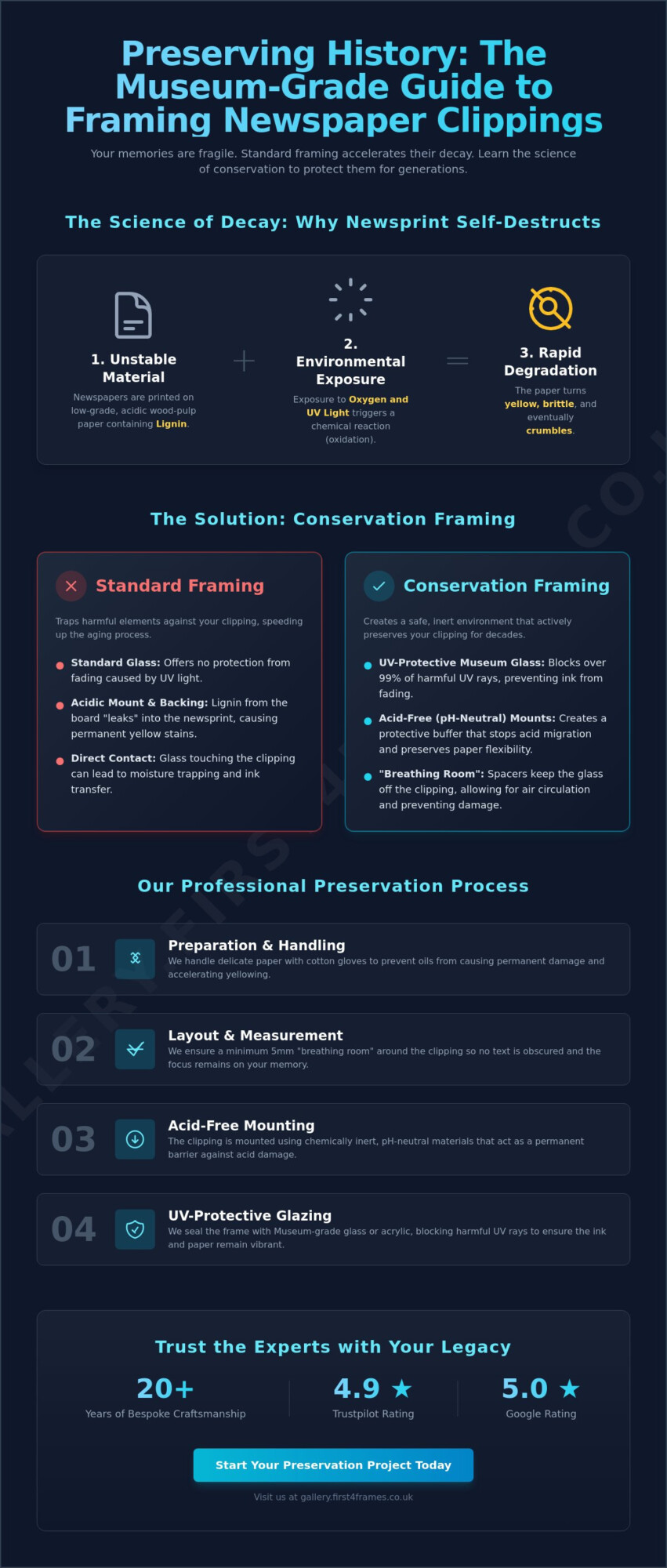
Framing a newspaper clipping isn’t just about aesthetics; it’s a rescue mission for a fragile piece of history. Most newspapers are printed on low-grade wood-pulp paper designed for a single day of reading. This material contains lignin, a natural organic polymer that turns into acid as it ages. Lignin is the same substance that makes trees strong, but in paper, it’s a ticking time bomb. When you leave a clipping exposed to light and air, it undergoes a “self-destruction” mechanism where oxygen triggers rapid oxidation, causing the paper to turn yellow and eventually become so brittle it crumbles at a touch.

Understanding The science of preservation helps us protect these fleeting moments. At First 4 Frames, we specialise in “Conservation Framing.” This involves using materials that are chemically inert and won’t react with your artwork. The frame itself does the heavy lifting, acting as a structural shield that guards against humidity and UV damage. Our 20 years of experience and excellent Google and Trustpilot ratings reflect our commitment to providing this professional level of care for every personal milestone.

To better understand the best ways to handle these delicate items, watch this helpful video:

Acidic Newsprint vs. Fine Art Paper

There’s a vast difference between the paper used for your morning news and the Giclée prints found in our gallery. While our fine art collections use pH-neutral, archival-grade papers, newsprint is inherently unstable. It requires an external “buffer” to prevent acid migration, where the acids in the paper leak out and damage surrounding materials like the mount or backing board. Acid-free mounting is the primary defense against brittleness. By using these specialist materials, we ensure your clipping remains flexible and vibrant for decades to come.

To Cut or Not to Cut? Choosing Your Layout

Deciding on a layout is a balance between space and historical context. Framing a single clipping creates a clean, minimalist look, while keeping the entire front page preserves the atmosphere of the day the news broke. When you’re framing a newspaper clipping for a long-term display, you might find the article is double-sided. You don’t have to lose that hidden content; we can create bespoke double-sided frames or provide high-quality scans via www.first4frames.co.uk to display both sections side-by-side. We always recommend keeping the masthead, as the newspaper name and date provide the essential context that makes the piece meaningful for future generations.

How to Frame a Newspaper Clipping: A Step-by-Step Guide

Framing a newspaper clipping requires a delicate touch and a bit of scientific foresight. Newsprint is essentially wood pulp filled with lignin, which turns acidic and brittle over time. If you don’t take the right steps, that headline from 1994 or your local 2023 feature will eventually crumble. At First 4 Frames, we’ve spent over 20 years perfecting the art of preservation, ensuring your memories stay as crisp as the day they were printed.

Step 1: Preparation
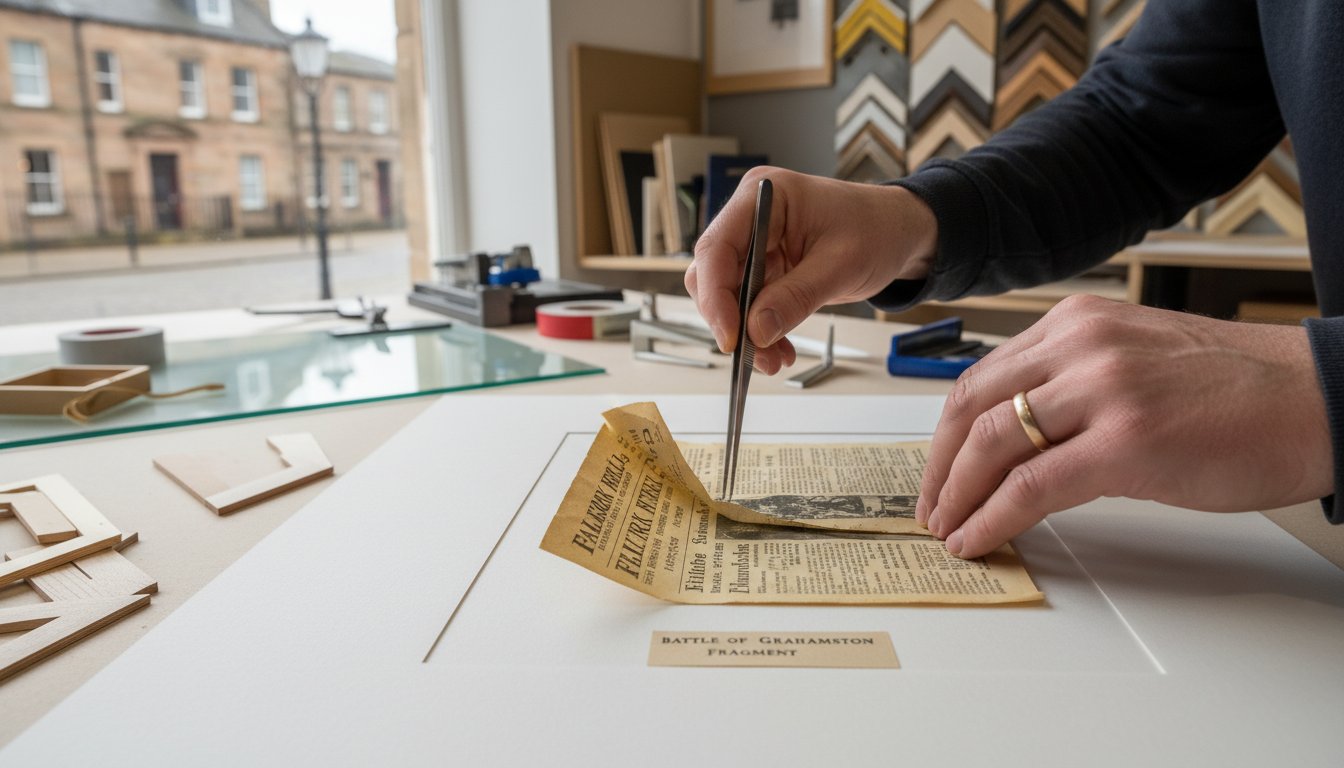
Always handle the clipping with clean, dry hands. Better yet, wear white cotton gloves. The natural oils and salts on your skin are the enemies of old paper; they cause permanent smudging and accelerate yellowing. Lay your clipping on a clean, flat surface away from direct sunlight while you prepare your materials.

Step 2: Measuring
Precision is key. When framing a newspaper clipping, don’t crowd the text. Leave at least a 5mm “breathing room” around the edges of the print. This ensures the mount overlay doesn’t obscure any important details or the date of the publication. It also provides a visual “rest” for the eye, making the article stand out.

Step 3: Deacidification
This is the secret to longevity. Use a professional deacidification spray to neutralise the acid within the paper fibres. It’s a simple process, but you must verify the spray on a tiny, non-essential corner first to ensure the ink doesn’t bleed. This National Archives guide to preserving clippings provides excellent depth on why chemical stabilisation is a non-negotiable step for archival quality.

Step 4: Mounting
Never use standard Sellotape, masking tape, or glue sticks. These adhesives are acidic and will leave permanent brown stains. Instead, use acid-free T-hinges or archival photo corners. These methods are reversible, meaning you can remove the clipping in the future without damaging it.

Step 5: Sealing
Once the clipping is mounted, seal the back of the frame with professional framing tape. This creates a barrier against dust and the fluctuating humidity of the UK climate. A proper seal prevents moisture from getting trapped behind the glass, which could otherwise lead to mould growth.

Selecting the Perfect Mount and Border

A “double mount” is a fantastic way to add depth and a professional “gallery” feel to your piece. It involves using two layers of mount board, with the bottom layer showing just a few millimetres of a contrasting colour. When choosing colours, look for tones that complement the off-white or slight grey of aged newsprint rather than a stark, bright white. You can refer to our guide on standard photo and picture sizes to help determine the best border proportions for your specific frame size. This professional touch is exactly what helps our customers achieve the high-quality results seen in our 5-star Google and Trustpilot reviews.

The “Invisible” Art of Hinge Mounting

To keep the paper flat without sticking it down entirely, use Japanese tissue or acid-free reversible tapes. This technique allows the paper to “float” within the frame. Because newsprint expands and contracts with temperature changes, a floating mount prevents the paper from buckling or rippling over time. It’s a technique we use frequently for the delicate works found in our online art gallery, ensuring every piece remains in pristine condition for decades.

Framing a Newspaper Clipping: The Ultimate Preservation Guide

Choosing the Right Frame and Glass for Longevity

Newsprint is one of the most fragile mediums in the world of collectibles. Because it’s produced quickly and cheaply, the high acid content causes it to yellow and become brittle within years if left unprotected. When you’re framing a newspaper clipping, your choice of materials isn’t just about aesthetics; it’s a rescue mission for a piece of history. The frame acts as a structural sanctuary, while the glass serves as a filter against environmental decay.

We view the frame as the essential bridge between your room decor and the historical clipping. It needs to complement your furniture while respecting the era of the paper. For larger full-page spreads, structural integrity is vital. Solid wood or premium metals provide the necessary support to prevent the glass from bowing or the paper from slipping. At First 4 Frames, we bring over twenty years of artisan experience to every project, ensuring your memories are handled with professional care that has earned us top ratings on Google and Trustpilot.

UV Protection: The Non-Negotiable Element

UV rays are the primary cause of fading in newspaper ink. While standard glass might look clear, it’s a silent threat to your memorabilia. Standard glass typically allows up to 50% of harmful UV rays to pass through, which can turn a vibrant headline into a ghostly grey image in just a few summers. For true longevity, we follow archival framing recommendations that prioritise conservation-grade glazing.

  • Standard Glass: Budget-friendly but offers minimal protection.
  • Non-Reflective Glass: Etched to reduce glare, though it can slightly dull the sharpness of small newsprint.
  • Art Glass / Museum Glass: This is the gold standard for clarity and protection. It provides up to 99% UV filtration, making the glass virtually invisible while blocking the light that destroys wood-pulp paper.

Bespoke Frame Styles for Memorabilia

The style of your frame should reflect the “soul” of the clipping. If you’re framing a newspaper clipping from a 1920s archive, a traditional dark wood grain or a distressed gold leaf frame adds a sense of heritage. Conversely, modern headlines or sports victories often look best in sleek black or brushed silver frames, creating a high-energy “press room” aesthetic.

If your clipping is part of a larger collection or includes a thick supplement, you might require our bespoke framing services for custom-depth box frames. This ensures the paper never touches the glass, preventing moisture traps. Whether you are looking for a simple border or a complex multi-aperture mount for several clippings, our team treats your personal history with the same reverence we show the fine art by Keith Drury or Terry Bradley found in our online gallery. For those who need to scan, restore, and then frame a digital copy of a fragile original, our photo printing and framing service provides a seamless, high-quality solution.

Creative Display Ideas: Integrating Clippings into Your Home

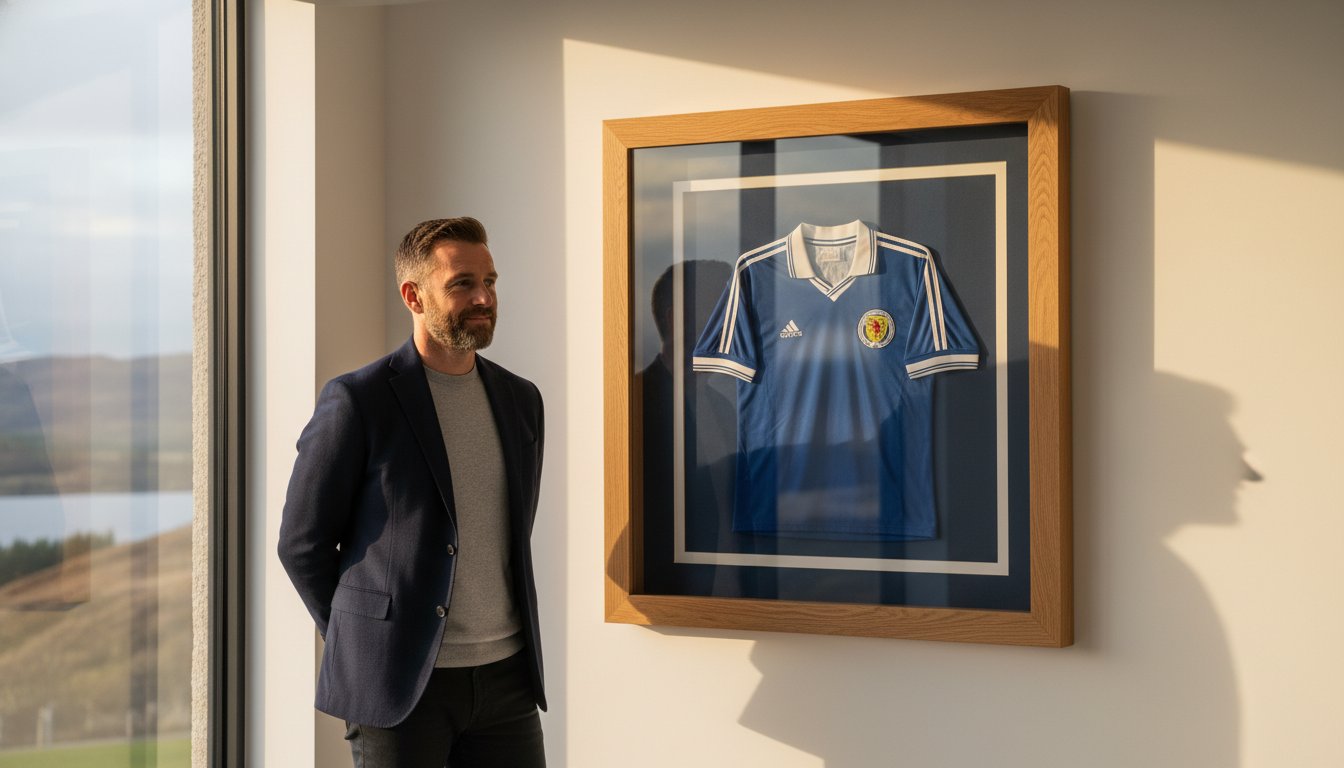
Framing a newspaper clipping transforms a fragile piece of paper into a permanent part of your home’s narrative. To create a truly personal History Wall, try mixing these clippings with family photographs. This approach grounds the news in reality, showing how global or local events directly touched your life. It’s about more than just the paper; it’s about the memory it represents.

You can elevate the aesthetic by pairing news print with vibrant Scottish art. The bold, expressive landscapes of Jolomo or the iconic, cinematic prints of Jack Vettriano provide a stunning visual contrast to the monochromatic text of a newspaper. This creates a bridge between your room’s decor and the historical archive, making the display feel intentional rather than cluttered.

Placement is vital for longevity. Don’t hang your frames near radiators or in direct sunlight. UV rays and fluctuating temperatures are the primary causes of yellowing and brittleness. For absolute peace of mind, many of our customers choose to frame a high-quality digital scan. This allows you to display the story proudly while the original remains safely archived in an acid-free environment.

The Gallery Wall Concept

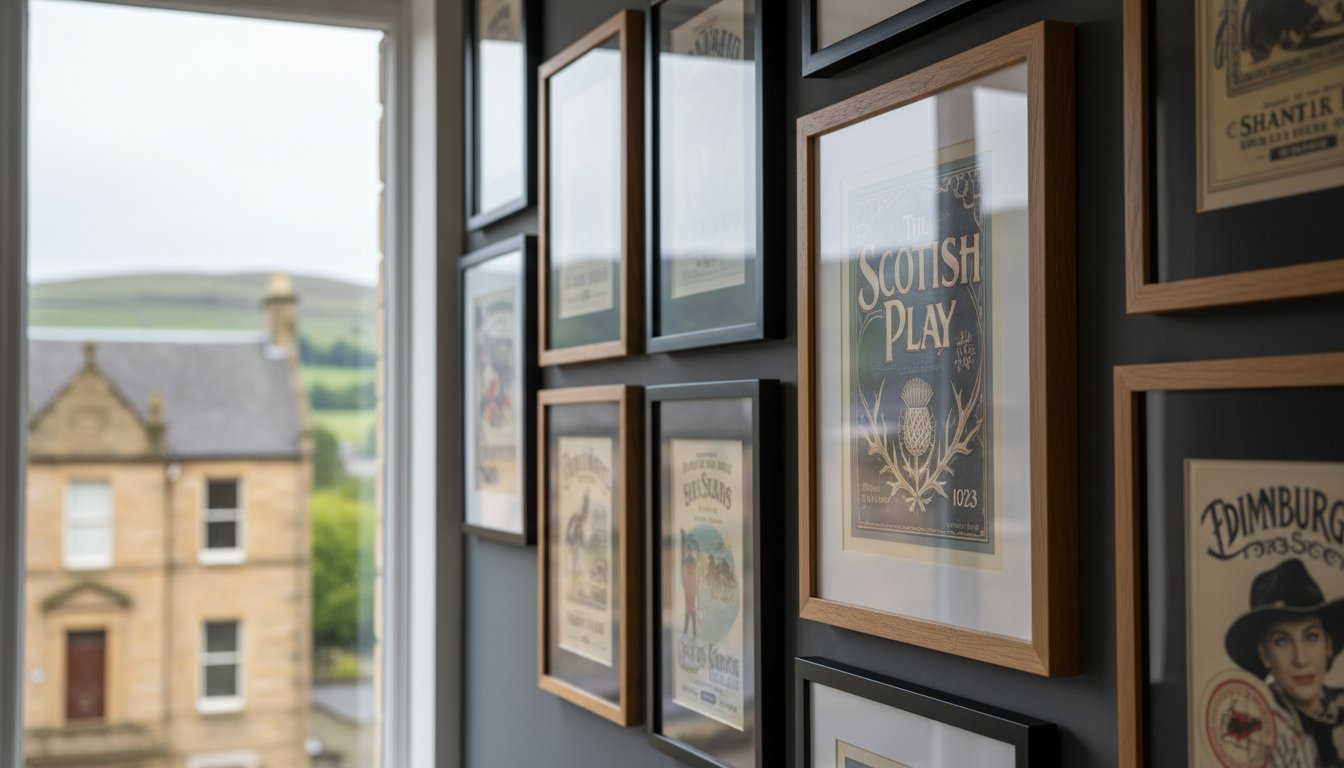
Balancing text-heavy clippings with vibrant art requires a thoughtful layout. Our Ultimate Guide to Choosing and Hanging Art offers detailed advice on creating a cohesive flow. Using consistent frame colours, like sleek black or warm oak, unifies disparate media types. It makes a 1950s news snippet feel right at home next to a contemporary print. This consistency ensures the eye moves smoothly across the collection.

Commercial and Office Staging

For businesses, “In the News” features in reception areas build immediate authority. When framing a newspaper clipping for a commercial space, think about the narrative you want to project. Displaying a timeline of clippings tells a brand story that dates back decades. At First4Frames, we offer commercial curation services to help UK offices select the right mounts and frames. With our excellent Trustpilot and Google ratings, we’ve helped hundreds of companies turn their milestones into professional displays that inspire trust.

Explore our curated collection of fine art prints to find the perfect companion for your framed clippings.

We’ve spent over 20 years perfecting our craft in Falkirk and across Scotland. Our team understands that framing a newspaper clipping isn’t just about the paper; it’s about preserving a moment in history. We’ve earned excellent ratings on Google and Trustpilot because we treat every piece of memorabilia with the respect it deserves. Whether it’s a local headline or a national feature, we provide a “one-stop-shop” experience. We can print, mount, and frame your digital clippings too, ensuring a seamless process from start to finish. We’d love for you to visit our Falkirk gallery to see our craftsmanship and artistic passion firsthand.

Why a Professional Framer is Worth the Investment

DIY methods often lead to yellowing or damage because newsprint is naturally acidic and fragile. We use specialized tools like vacuum presses and precision mount cutters to ensure your items stay flat and protected. You’ll get peace of mind with our “hassle-free, bespoke, speedy service” that keeps your precious memories safe. If you have unique memorabilia or a specific vision in mind, visit our contact page for a custom quote. Professional framing a newspaper clipping ensures the paper doesn’t deteriorate, keeping the story alive for decades. Our expert team handles the technical side so you can simply enjoy the final result.

  • Access to archival-quality mounts that prevent acid migration.
  • Precision cutting for a perfect fit, regardless of the clipping’s size.
  • Expert advice on UV-protective glass to stop ink from fading.

A Cohesive Brand for All Your Art Needs

Our business connects three specialized services to cover every artistic requirement. While our Gallery showcases stunning works from talented artists and fine art prints, our bespoke framing site handles custom physical items. For those who prefer digital convenience, our Online Print & Frame service makes ordering from home simple. We source only the best materials so your memories will not fade over time.

A frame acts as the bridge between your room décor and the artwork, doing the heavy lifting to pull the viewer into the picture. Whether you are inspired by the local Scottish landscapes in our gallery or want to preserve a personal milestone, we’re here to help. We invite you to embark on your own journey of artistic discovery with us. From the first step of browsing our collection to the final step of hanging your professionally framed piece, we ensure a premium experience. Trust our two decades of expertise to turn your newspaper clippings into beautiful, lasting displays.

Give Your Memories the Professional Protection They Deserve

Preserving history requires more than just a basic frame. Successful framing a newspaper clipping relies on acid-free materials and UV-filtering glass to prevent acidic newsprint from yellowing. These technical choices act as a bridge between your decor and the story on the page, ensuring your milestone stays crisp for decades. Our team brings over 20 years of artisan experience to every project, a track record that’s earned us top-rated reviews on both Google and Trustpilot.

While we provide bespoke preservation at our main site for customers in Falkirk and across the UK, you can also browse spectacular fine art at our gallery. For digital files, our print and frame site offers a dedicated service for high-quality reproductions. We’re passionate about sourcing the best materials to treat your memorabilia with the same care we give to professional gallery collections. It’s time to take those clippings out of the drawer and display them with pride. We look forward to helping you transform your keepsakes into a beautiful focal point for your home.

Get a Bespoke Quote for Your Memorabilia Framing

Frequently Asked Questions

Will my newspaper clipping turn yellow inside the frame?

Your newspaper clipping will turn yellow and brittle if it’s exposed to standard acidic mounting boards or direct UV light. Because newsprint contains lignin, it naturally degrades and discolours when it reacts with oxygen and light. To prevent this, our experts at First4Frames use 100% acid-free mount boards and UV-protective glass. This creates a safe environment that acts as a bridge between the delicate paper and the external elements, preserving your memories for decades.

Can I frame a whole newspaper page or just the clipping?

You can frame a whole newspaper page or a specific clipping depending on the story you want to tell. Framing a full page preserves the historical context and surrounding headlines from that specific date, which is perfect for major events. If you’re focusing on a family announcement or a specific artist featured in our gallery, a bespoke frame for the clipping is often more impactful. We offer custom sizes for both options at our workshop to ensure a perfect fit.

What is the best type of glass for framing a newspaper clipping?

UV-protective glass is the best choice for framing a newspaper clipping because it blocks up to 99% of harmful ultraviolet rays. Standard glass allows light to bleach the ink and accelerate the yellowing of the paper. We recommend high-clarity museum glass, which reduces reflections and ensures your piece looks spectacular. This professional standard is why we maintain an excellent rating on Google and Trustpilot from customers who trust us with their precious archives.

Should I laminate my newspaper clipping before framing it?

You shouldn’t laminate a newspaper clipping before framing it under any circumstances. Lamination uses heat and adhesives that permanently bond to the paper, making the process impossible to reverse and often destroying the item’s long-term value. Instead, use the “print and frame” service at prints.first4frames.co.uk to create a high-quality Giclée copy. This allows you to display a perfect version that won’t fade while you keep the original safely stored in archival conditions.

How do I mount a newspaper clipping without using glue?

Mount your clipping using archival-safe T-hinges or acid-free photo corners instead of standard glue or tape. These methods ensure no sticky residues touch the paper, allowing the newsprint to expand and contract naturally with temperature changes. Our craftsmen have over 20 years of experience using these non-invasive techniques. This careful approach is a hallmark of our bespoke service, ensuring your items remain in their original condition without any permanent damage.

Is it better to frame the original clipping or a digital copy?

Framing a digital copy is often better for long-term display because newsprint is inherently unstable and fragile. By scanning the original and using our professional Giclée printing service, you get an identical copy that’s resistant to fading. You can find beautiful examples of how high-quality prints look by browsing the artists in our online gallery. If the original has deep sentimental value, we recommend professional framing with conservation-grade materials to slow down the natural decay process.

How much does it cost to professionally frame a newspaper article?

Professional framing costs in the UK typically start from £40 for small items and can increase depending on your choice of bespoke materials. The final price depends on the specific frame style, the type of protective glass, and the complexity of the mount. For an accurate quote on framing a newspaper clipping, you can visit our main site at first4frames.co.uk. Our transparent pricing and expert craftsmanship ensure you receive premium value for your investment.

Can First4Frames frame 3D objects along with the clipping?

Yes, First4Frames can frame 3D objects like medals, coins, or badges alongside your clipping using a deep shadow box frame. This creates a spectacular three-dimensional display that pulls you into the story of the artwork or event. Whether it’s a sports report paired with a winner’s medal or a concert review with a ticket stub, our artisans create a professional layout. This bespoke service makes us a trusted one-stop-shop for all your complex framing needs.

Posted on

Framing Antique Maps & Documents: A Complete Preservation Guide

That beautiful antique map or fragile family document holds a piece of history in its very fibres. You know it deserves to be displayed with pride, not hidden away, but the thought of getting it wrong can be daunting. What if you cause irreparable damage? The world of ‘archival mounts’ and ‘UV-protective glass’ can feel like a foreign language, and the potential cost of professional work is a genuine worry. But the art of framing antique maps and documents is a craft built on care and precision, and it’s more accessible than you might think.

This complete guide is your trusted partner on this preservation journey. We’ll demystify the entire process, translating the technical jargon into simple, clear choices. You will learn how to select the perfect bespoke frame that honours your heirloom and the premium materials that will safeguard its monetary and sentimental value for generations. By the end, you’ll have the confidence to protect your investment and transform your precious item into a spectacular display, ensuring its story can be enjoyed for many years to come.

Why Professional Framing is Crucial for Antique Maps & Documents

An antique map or document is more than just a beautiful decoration; it’s a tangible piece of history. The paper, ink, and colours have survived for generations, but they are incredibly fragile. Entrusting such a treasure to a standard, off-the-shelf frame can unfortunately do more harm than good, which is why professional, bespoke framing is not a luxury-it’s an essential act of preservation.

To see why the right materials and techniques are so important, this short video offers some excellent tips:

The Hidden Dangers of DIY & Standard Frames

The biggest threat to your antique item often comes from the very materials meant to display it. Standard frames frequently contain silent destroyers that cause irreversible damage over time. These include:

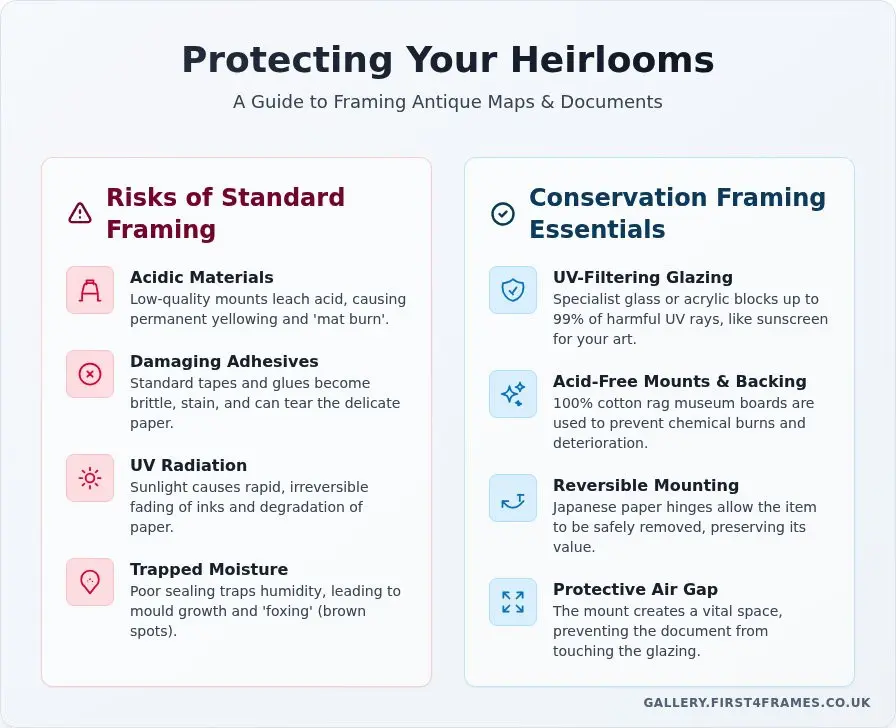
  • Acidic Materials: Low-quality mount boards and backings can leach acid into the paper, causing the tell-tale brown staining known as ‘mat burn’ and overall yellowing.
  • Damaging Adhesives: Standard tapes and glues become brittle, stain the paper, and are often impossible to remove without tearing the delicate fibres of the document.
  • UV Radiation: Without specialist UV-protective glazing, sunlight will cause the vibrant inks and delicate paper of your map to fade and degrade rapidly.
  • Trapped Moisture: An improperly sealed frame can trap humidity, creating the perfect environment for mould growth and ‘foxing’-those unsightly brown spots.

What is Conservation Framing?

Conservation framing is the professional standard for protecting valuable and fragile items. It’s a specialised approach, rooted in the established principles of document conservation, where every material and technique is chosen with preservation as the primary goal. This meticulous process ensures that everything touching your artwork is acid-free and archival-grade. Crucially, all methods used are completely reversible, meaning your map can be safely removed from its frame in the future, in the exact same condition it went in.

Protecting Your Investment and Your History

Proper framing of antique maps and documents is a direct investment in their future. For a collector, it maintains or even increases the item’s monetary value, ensuring a piece worth hundreds or thousands of pounds isn’t devalued by preventable damage. For a family, it preserves a priceless heirloom, safeguarding a piece of your personal history for your children and grandchildren to cherish. Ultimately, a bespoke conservation frame does more than just decorate a wall; it honours the item’s story and presents it with the care and respect it deserves.

The Anatomy of a Conservation Frame: Key Materials Explained

Choosing a frame is about more than aesthetics; it’s about creating a safe, stable environment for your treasured piece. Understanding the anatomy of a professional conservation frame empowers you to make informed choices. Each component, from the glass to the backing board, plays a vital role. We’ll break down the technical terms into simple concepts, so you know exactly what to ask your framer to ensure your history is preserved for generations.

Glazing: Your Shield Against Damaging Light

The glazing is your map’s first line of defence against the environment. While standard glass offers basic physical protection, it does little to stop the invisible threat of ultraviolet (UV) light, which causes fading and paper degradation. For any valuable document, you should consider:

  • UV-Filtering Glass: This specialist glass blocks up to 99% of harmful UV rays, acting as a crucial sunscreen for your map.
  • Anti-Reflective Glass: For crystal-clear viewing without distracting reflections, this option offers superb clarity, making you feel closer to the artwork.
  • Acrylic (Perspex): A lightweight and shatterproof alternative to glass, UV-filtering acrylic is ideal for very large frames or pieces displayed in high-traffic areas or children’s rooms.

Mounts & Backing Boards: The Acid-Free Barrier

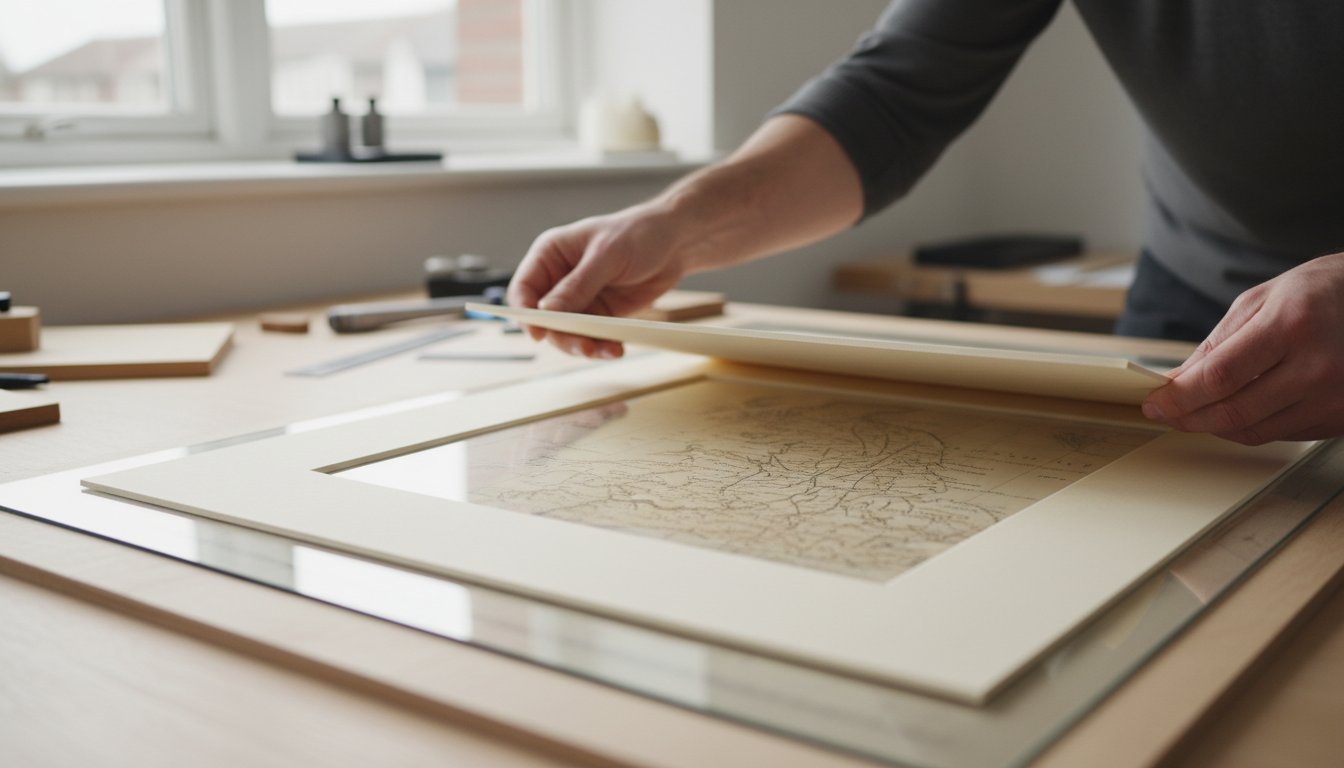
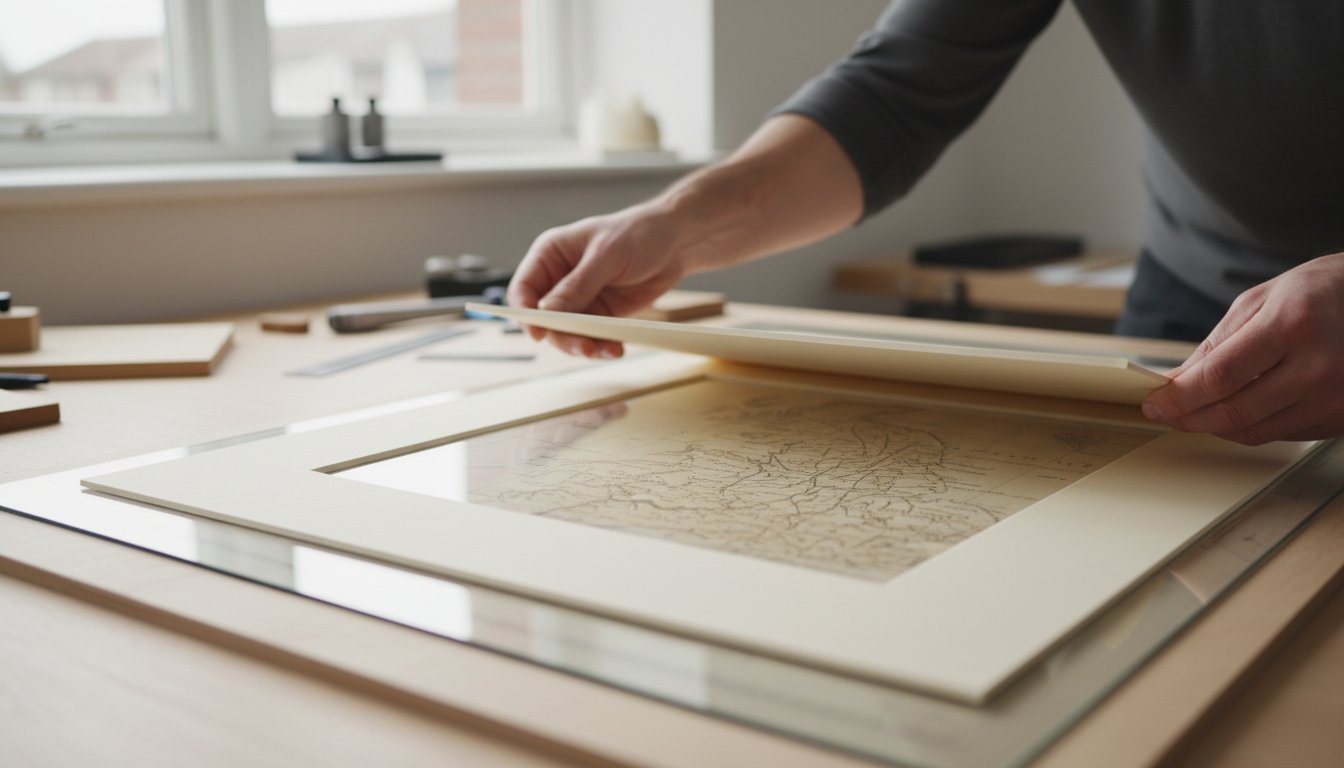
The materials that touch your map are critically important. Standard mount board contains acid and lignin, which can leach into the paper over time, causing yellowing and brittleness. When framing antique maps and documents, insist on acid-free and lignin-free materials. The window mount (or mat) not only provides a beautiful visual border but also creates a vital air gap, preventing the map from touching the glazing. For ultimate protection, nothing surpasses 100% cotton rag museum board. This is the gold standard and a cornerstone of the best practices for framing antique maps, ensuring no harmful chemicals compromise your piece. Remember, the backing board is just as crucial as the front mount.

Mounting Techniques: How the Map is Held in Place

Never allow an antique document to be permanently glued or dry mounted. This causes irreversible damage and destroys its value. Professional conservation framing relies on the principle of reversibility-any process used should be completely undoable without harming the document. The two most trusted methods are:

  • Japanese Paper Hinges: Small tabs of high-quality, acid-free Japanese paper are attached to the back of the map with a purified, pH-neutral wheat starch paste. These hinges are strong yet easily removable with a touch of water.
  • Photo Corners: Archival-quality polyester corners can be used to securely hold the document in place without applying any adhesive to the map itself.

Design & Aesthetics: Choosing a Frame to Honour Your Antique Map

The perfect frame does more than just protect your antique map; it acts as a bridge between the historical world captured on paper and the decor of your room. The goal is to choose a frame that enhances the map’s character and story without overpowering it. This is a delicate balance between honouring the document’s origins and complementing your personal style. When framing antique maps and documents, every detail matters-from the colour of the ink to the texture of the paper.

At First 4 Frames, our passionate experts are here to guide you through this creative process, ensuring the final piece feels both authentic and perfectly at home on your wall.

Matching the Frame Style to the Map’s Era

A frame should feel historically appropriate. For older, more traditional maps from the 17th or 18th centuries, classic dark woods like walnut and mahogany, or frames with an ornate, gilded finish, often work beautifully. In contrast, simpler documents from the 20th century, such as vintage Ordnance Survey maps, are better suited to clean-lined oak or minimalist black frames. We generally advise avoiding overly modern or artificially distressed finishes, as they can clash with the genuine age of your piece.

The Role of the Window Mount in Presentation

The window mount (or mat board) is a crucial element that creates visual space between the map and the frame. Its colour and size significantly impact the final presentation.

  • Colour: We recommend using conservation-grade, acid-free mounts in off-white or cream tones. These soft colours complement the aged patina of old paper far better than a stark, brilliant white.
  • Width: A generous mount width gives the map “breathing room,” drawing the eye inward and lending the piece a more significant, gallery-quality feel.
  • Depth: For added sophistication, consider a double or even triple mount. This layering technique can be used to pick out a subtle colour from the map, adding depth and a truly bespoke finish.

Float Mounting: Showcasing the Entire Document

Float mounting is a beautiful technique where the map is positioned on a raised, hidden platform so it appears to “float” above the backing board, casting a soft shadow. This method is ideal for maps and documents with unique deckled, uneven, or interesting edges that you want to keep visible. It celebrates the entire document as a physical object, creating a stunning sense of depth and turning your piece into a true focal point. Explore our gallery for framing inspiration.

Preparing Your Document For Framing: A Simple Checklist

Your treasured map or document is a piece of history, and its journey into a beautiful bespoke frame deserves the utmost care. Proper handling before you even visit our workshop is essential to preserve its integrity and value. Following these simple steps ensures your item arrives safely, ready for the final step in its preservation. The most important rule? When in doubt, handle it as little as possible and never attempt repairs on your own.

Handling and Storing Your Antique Document

The delicate nature of old paper means that even the natural oils on your skin can cause damage over time. To protect your document before bringing it in for framing, always follow these guidelines:

  • Handle with care: Always use clean, dry hands to handle the item, preferably by the edges. For very fragile or valuable pieces, wearing clean cotton gloves is the safest option.
  • Store it flat: Never fold or roll an antique document. Store it flat, ideally between two sheets of acid-free paper or in an archival-quality folder. This prevents permanent creases and stress on the paper fibres.
  • Control the environment: Keep your document away from direct sunlight, high humidity, and extreme temperature changes, as these conditions can accelerate deterioration, cause fading, and encourage mould growth.

To Clean or Not To Clean?

The temptation to clean a dusty or stained document can be strong, but this is where caution is paramount. Aggressive cleaning can cause irreversible damage. Never use erasers, water, or any household cleaning fluids on old paper. If there is light surface dust, you can gently sweep it away with a very soft, clean artist’s brush. For any significant tears, stains, or foxing, we strongly recommend consulting a professional paper conservator. Please note that while we are experts in conservation framing, we do not offer restoration services.

Transporting Your Item Safely to the Framer

Getting your piece to our workshop safely is the final and most critical step. The process of framing antique maps and documents requires the item to be in the best possible condition. To avoid any mishaps on the way, place the document flat on a rigid, clean board (like foam core or heavy card) that is larger than the item itself. Place another sheet of acid-free paper on top to protect the surface from scuffing. Carry the entire package flat, ensuring it cannot bend or fold. This simple preparation makes all the difference in preserving your history for generations to come.

Once your piece is safely prepared, you can begin to imagine its future. We invite you to explore our gallery to see how our premium craftsmanship can create the perfect home for your document.

Our Bespoke Framing Process: A Partnership in Preservation

An antique map or document is more than just paper and ink; it’s a tangible piece of history. We believe the process of preserving it should be a partnership-a collaborative journey to a perfect result. At First4Frames, we combine decades of bespoke craftsmanship with proven conservation best practices. We treat every piece with the reverence it deserves, ensuring it is protected and beautifully presented for generations to come.

Here’s what you can expect when you entrust us with the specialist task of framing antique maps and documents.

Step 1: The Personal Consultation

Your journey begins when you bring your treasured item to our Falkirk gallery. During this initial, no-obligation consultation, we will carefully assess its condition-noting its age, fragility, and any unique characteristics. Most importantly, we listen to your vision. We want to understand how you see the piece fitting into your home, allowing us to provide expert advice tailored to both your style and the document’s preservation needs.

Step 2: Designing Your Perfect Frame

This is where your vision truly comes to life. We will guide you through our extensive collection of premium mouldings, from classic hardwoods to ornate traditional styles. You can explore our wide range of archival-quality mount colours and discuss the best glazing options, including UV-protective glass to prevent fading. We ensure complete transparency by providing a detailed, itemised quote before any work begins, so you can make your decision with confidence.

Step 3: Expert Craftsmanship in Our Workshop

Once you are happy with the design, our skilled framers get to work in our on-site workshop. Every frame is meticulously constructed by hand using only conservation-grade, acid-free materials that will not damage your document over time. Your piece is handled with the utmost care throughout the entire process, employing reversible techniques that protect its integrity and value. The result is a spectacular, professionally framed piece of history, ready to be admired for a lifetime.

A Frame for the Ages: Preserving Your Past

Your antique map or document is more than just paper and ink; it’s a tangible connection to history. As we’ve seen, professional framing is not merely about decoration-it is the single most important step you can take to preserve its integrity and beauty for future generations. From UV-protective glazing to acid-free mounting, every component of a conservation frame works together to create a safe and stable environment. The true art of framing antique maps and documents lies in this perfect marriage of protective science and bespoke craftsmanship.

Choosing the right partner for this crucial task is essential. With over 20 years of bespoke framing experience, our passionate, Falkirk-based team is dedicated to this craft. We use only the best conservation-grade materials and offer friendly, expert advice to guide you through every decision, ensuring the final result both protects and beautifully complements your treasured piece.

Your history is worth protecting. Let us help you display it with the care and respect it deserves. Protect your history. Get a bespoke framing quote from our experts.

Frequently Asked Questions About Framing Antique Maps

How much does it cost to frame an antique map?

The cost of bespoke framing is unique to each project. Prices depend on the map’s size, your choice of frame moulding, the mount, and the type of glazing selected. As a guide, a smaller, simple frame might start from around £80, while a larger map with a premium wood frame and museum glass could be £300 or more. We provide a transparent, no-obligation quote upfront, ensuring you find the perfect solution for your piece and your budget.

Can you frame a document that is folded or creased?

Absolutely. We have extensive experience with delicate and time-worn pieces. Our skilled framers use specialised conservation techniques to carefully relax and flatten creases without causing stress to the paper fibres. Using reversible, acid-free mounting methods, we can securely present your map, ensuring its history is preserved beautifully. This careful approach is central to our process for framing antique maps and documents, giving you complete peace of mind that your treasured item is in expert hands.

How long does the bespoke framing process take?

Our passion is craftsmanship, and quality takes a little time. For most bespoke framing projects, our typical turnaround time is between 10 to 14 working days from when we receive your artwork. If your project requires specially sourced materials or is particularly complex, it may take a little longer. We believe in clear communication and will always provide you with an estimated completion date and keep you updated throughout the creative process, ensuring a smooth and hassle-free experience.

What is the difference between museum glass and standard glass?

Choosing the right glass is vital for preserving your antique map. Standard glass offers basic protection from dust but can have a noticeable glare and provides minimal defence against fading. Museum glass, however, is the ultimate choice for conservation. It blocks up to 99% of harmful UV rays to prevent fading and features an anti-reflective coating for crystal-clear viewing. It’s a worthwhile investment to protect your precious piece of history and enjoy it without distraction.

Is it better to use a wood or metal frame for an antique print?

Both wood and metal frames can be spectacular choices, and the decision often comes down to personal taste and your interior décor. Traditional wood frames, with their natural warmth and classic profiles, beautifully complement the historical character of an antique map. Sleek metal frames can offer a striking, contemporary contrast that makes the map a modern focal point. Whichever you choose, we ensure all materials are of conservation quality to protect your print for generations to come.

Can I take my map out of the frame later if I need to?

Yes, and this is a key principle of our professional conservation framing. We use fully reversible methods, meaning your map or document can be safely removed from its frame in the future without any damage. We employ techniques such as using acid-free materials and Japanese paper hinges, which don’t use permanent adhesives on the artwork itself. This ensures the integrity and value of your antique piece is maintained, whether it’s in the frame or out.

Do you offer framing services for the whole of the UK?

We are delighted to offer our bespoke framing services to clients across the entire UK. We have a simple and secure process for this, using a trusted, fully insured courier service to handle your precious artwork with the utmost care. Simply package your map securely and send it to our workshop. Once our craftspeople have worked their magic, we will send your beautifully framed piece straight back to your door, ready to hang and admire. It’s a truly hassle-free service.

Posted on

Framing Antique Maps & Documents: A Complete Preservation Guide

Framing Antique Maps & Documents: A Complete Preservation Guide

That beautiful antique map or fragile family document holds a piece of history in its very fibres. You know it deserves to be displayed with pride, not hidden away, but the thought of getting it wrong can be daunting. What if you cause irreparable damage? The world of ‘archival mounts’ and ‘UV-protective glass’ can feel like a foreign language, and the potential cost of professional work is a genuine worry. But the art of framing antique maps and documents is a craft built on care and precision, and it’s more accessible than you might think.

This complete guide is your trusted partner on this preservation journey. We’ll demystify the entire process, translating the technical jargon into simple, clear choices. You will learn how to select the perfect bespoke frame that honours your heirloom and the premium materials that will safeguard its monetary and sentimental value for generations. By the end, you’ll have the confidence to protect your investment and transform your precious item into a spectacular display, ensuring its story can be enjoyed for many years to come.

Why Professional Framing is Crucial for Antique Maps & Documents

An antique map or document is more than just a beautiful decoration; it’s a tangible piece of history. The paper, ink, and colours have survived for generations, but they are incredibly fragile. Entrusting such a treasure to a standard, off-the-shelf frame can unfortunately do more harm than good, which is why professional, bespoke framing is not a luxury-it’s an essential act of preservation.

To see why the right materials and techniques are so important, this short video offers some excellent tips:

The Hidden Dangers of DIY & Standard Frames

The biggest threat to your antique item often comes from the very materials meant to display it. Standard frames frequently contain silent destroyers that cause irreversible damage over time. These include:

  • Acidic Materials: Low-quality mount boards and backings can leach acid into the paper, causing the tell-tale brown staining known as ‘mat burn’ and overall yellowing.
  • Damaging Adhesives: Standard tapes and glues become brittle, stain the paper, and are often impossible to remove without tearing the delicate fibres of the document.
  • UV Radiation: Without specialist UV-protective glazing, sunlight will cause the vibrant inks and delicate paper of your map to fade and degrade rapidly.
  • Trapped Moisture: An improperly sealed frame can trap humidity, creating the perfect environment for mould growth and ‘foxing’-those unsightly brown spots.

What is Conservation Framing?

Conservation framing is the professional standard for protecting valuable and fragile items. It’s a specialised approach, rooted in the established principles of document conservation, where every material and technique is chosen with preservation as the primary goal. This meticulous process ensures that everything touching your artwork is acid-free and archival-grade. Crucially, all methods used are completely reversible, meaning your map can be safely removed from its frame in the future, in the exact same condition it went in.

Protecting Your Investment and Your History

Proper framing of antique maps and documents is a direct investment in their future. For a collector, it maintains or even increases the item’s monetary value, ensuring a piece worth hundreds or thousands of pounds isn’t devalued by preventable damage. For a family, it preserves a priceless heirloom, safeguarding a piece of your personal history for your children and grandchildren to cherish. Ultimately, a bespoke conservation frame does more than just decorate a wall; it honours the item’s story and presents it with the care and respect it deserves.

The Anatomy of a Conservation Frame: Key Materials Explained

Choosing a frame is about more than aesthetics; it’s about creating a safe, stable environment for your treasured piece. Understanding the anatomy of a professional conservation frame empowers you to make informed choices. Each component, from the glass to the backing board, plays a vital role. We’ll break down the technical terms into simple concepts, so you know exactly what to ask your framer to ensure your history is preserved for generations.

Glazing: Your Shield Against Damaging Light

The glazing is your map’s first line of defence against the environment. While standard glass offers basic physical protection, it does little to stop the invisible threat of ultraviolet (UV) light, which causes fading and paper degradation. For any valuable document, you should consider:

  • UV-Filtering Glass: This specialist glass blocks up to 99% of harmful UV rays, acting as a crucial sunscreen for your map.
  • Anti-Reflective Glass: For crystal-clear viewing without distracting reflections, this option offers superb clarity, making you feel closer to the artwork.
  • Acrylic (Perspex): A lightweight and shatterproof alternative to glass, UV-filtering acrylic is ideal for very large frames or pieces displayed in high-traffic areas or children’s rooms.

Mounts & Backing Boards: The Acid-Free Barrier

The materials that touch your map are critically important. Standard mount board contains acid and lignin, which can leach into the paper over time, causing yellowing and brittleness. When framing antique maps and documents, insist on acid-free and lignin-free materials. The window mount (or mat) not only provides a beautiful visual border but also creates a vital air gap, preventing the map from touching the glazing. For ultimate protection, nothing surpasses 100% cotton rag museum board. This is the gold standard and a cornerstone of the best practices for framing antique maps, ensuring no harmful chemicals compromise your piece. Remember, the backing board is just as crucial as the front mount.

Mounting Techniques: How the Map is Held in Place

Never allow an antique document to be permanently glued or dry mounted. This causes irreversible damage and destroys its value. Professional conservation framing relies on the principle of reversibility-any process used should be completely undoable without harming the document. The two most trusted methods are:

  • Japanese Paper Hinges: Small tabs of high-quality, acid-free Japanese paper are attached to the back of the map with a purified, pH-neutral wheat starch paste. These hinges are strong yet easily removable with a touch of water.
  • Photo Corners: Archival-quality polyester corners can be used to securely hold the document in place without applying any adhesive to the map itself.

Design & Aesthetics: Choosing a Frame to Honour Your Antique Map

The perfect frame does more than just protect your antique map; it acts as a bridge between the historical world captured on paper and the decor of your room. The goal is to choose a frame that enhances the map’s character and story without overpowering it. This is a delicate balance between honouring the document’s origins and complementing your personal style. When framing antique maps and documents, every detail matters-from the colour of the ink to the texture of the paper.

At First 4 Frames, our passionate experts are here to guide you through this creative process, ensuring the final piece feels both authentic and perfectly at home on your wall.

Matching the Frame Style to the Map’s Era

A frame should feel historically appropriate. For older, more traditional maps from the 17th or 18th centuries, classic dark woods like walnut and mahogany, or frames with an ornate, gilded finish, often work beautifully. In contrast, simpler documents from the 20th century, such as vintage Ordnance Survey maps, are better suited to clean-lined oak or minimalist black frames. We generally advise avoiding overly modern or artificially distressed finishes, as they can clash with the genuine age of your piece.

The Role of the Window Mount in Presentation

The window mount (or mat board) is a crucial element that creates visual space between the map and the frame. Its colour and size significantly impact the final presentation.

  • Colour: We recommend using conservation-grade, acid-free mounts in off-white or cream tones. These soft colours complement the aged patina of old paper far better than a stark, brilliant white.
  • Width: A generous mount width gives the map “breathing room,” drawing the eye inward and lending the piece a more significant, gallery-quality feel.
  • Depth: For added sophistication, consider a double or even triple mount. This layering technique can be used to pick out a subtle colour from the map, adding depth and a truly bespoke finish.

Float Mounting: Showcasing the Entire Document

Float mounting is a beautiful technique where the map is positioned on a raised, hidden platform so it appears to “float” above the backing board, casting a soft shadow. This method is ideal for maps and documents with unique deckled, uneven, or interesting edges that you want to keep visible. It celebrates the entire document as a physical object, creating a stunning sense of depth and turning your piece into a true focal point. Explore our gallery for framing inspiration.

Framing Antique Maps & Documents: A Complete Preservation Guide

Preparing Your Document For Framing: A Simple Checklist

Your treasured map or document is a piece of history, and its journey into a beautiful bespoke frame deserves the utmost care. Proper handling before you even visit our workshop is essential to preserve its integrity and value. Following these simple steps ensures your item arrives safely, ready for the final step in its preservation. The most important rule? When in doubt, handle it as little as possible and never attempt repairs on your own.

Handling and Storing Your Antique Document

The delicate nature of old paper means that even the natural oils on your skin can cause damage over time. To protect your document before bringing it in for framing, always follow these guidelines:

  • Handle with care: Always use clean, dry hands to handle the item, preferably by the edges. For very fragile or valuable pieces, wearing clean cotton gloves is the safest option.
  • Store it flat: Never fold or roll an antique document. Store it flat, ideally between two sheets of acid-free paper or in an archival-quality folder. This prevents permanent creases and stress on the paper fibres.
  • Control the environment: Keep your document away from direct sunlight, high humidity, and extreme temperature changes, as these conditions can accelerate deterioration, cause fading, and encourage mould growth.

To Clean or Not To Clean?

The temptation to clean a dusty or stained document can be strong, but this is where caution is paramount. Aggressive cleaning can cause irreversible damage. Never use erasers, water, or any household cleaning fluids on old paper. If there is light surface dust, you can gently sweep it away with a very soft, clean artist’s brush. For any significant tears, stains, or foxing, we strongly recommend consulting a professional paper conservator. Please note that while we are experts in conservation framing, we do not offer restoration services.

Transporting Your Item Safely to the Framer

Getting your piece to our workshop safely is the final and most critical step. The process of framing antique maps and documents requires the item to be in the best possible condition. To avoid any mishaps on the way, place the document flat on a rigid, clean board (like foam core or heavy card) that is larger than the item itself. Place another sheet of acid-free paper on top to protect the surface from scuffing. Carry the entire package flat, ensuring it cannot bend or fold. This simple preparation makes all the difference in preserving your history for generations to come.

Once your piece is safely prepared, you can begin to imagine its future. We invite you to explore our gallery to see how our premium craftsmanship can create the perfect home for your document.

Our Bespoke Framing Process: A Partnership in Preservation

An antique map or document is more than just paper and ink; it’s a tangible piece of history. We believe the process of preserving it should be a partnership-a collaborative journey to a perfect result. At First4Frames, we combine decades of bespoke craftsmanship with proven conservation best practices. We treat every piece with the reverence it deserves, ensuring it is protected and beautifully presented for generations to come.

Here’s what you can expect when you entrust us with the specialist task of framing antique maps and documents.

Step 1: The Personal Consultation

Your journey begins when you bring your treasured item to our Falkirk gallery. During this initial, no-obligation consultation, we will carefully assess its condition-noting its age, fragility, and any unique characteristics. Most importantly, we listen to your vision. We want to understand how you see the piece fitting into your home, allowing us to provide expert advice tailored to both your style and the document’s preservation needs.

Step 2: Designing Your Perfect Frame

This is where your vision truly comes to life. We will guide you through our extensive collection of premium mouldings, from classic hardwoods to ornate traditional styles. You can explore our wide range of archival-quality mount colours and discuss the best glazing options, including UV-protective glass to prevent fading. We ensure complete transparency by providing a detailed, itemised quote before any work begins, so you can make your decision with confidence.

Step 3: Expert Craftsmanship in Our Workshop

Once you are happy with the design, our skilled framers get to work in our on-site workshop. Every frame is meticulously constructed by hand using only conservation-grade, acid-free materials that will not damage your document over time. Your piece is handled with the utmost care throughout the entire process, employing reversible techniques that protect its integrity and value. The result is a spectacular, professionally framed piece of history, ready to be admired for a lifetime.

A Frame for the Ages: Preserving Your Past

Your antique map or document is more than just paper and ink; it’s a tangible connection to history. As we’ve seen, professional framing is not merely about decoration-it is the single most important step you can take to preserve its integrity and beauty for future generations. From UV-protective glazing to acid-free mounting, every component of a conservation frame works together to create a safe and stable environment. The true art of framing antique maps and documents lies in this perfect marriage of protective science and bespoke craftsmanship.

Choosing the right partner for this crucial task is essential. With over 20 years of bespoke framing experience, our passionate, Falkirk-based team is dedicated to this craft. We use only the best conservation-grade materials and offer friendly, expert advice to guide you through every decision, ensuring the final result both protects and beautifully complements your treasured piece.

Your history is worth protecting. Let us help you display it with the care and respect it deserves. Protect your history. Get a bespoke framing quote from our experts.

Frequently Asked Questions About Framing Antique Maps

How much does it cost to frame an antique map?

The cost of bespoke framing is unique to each project. Prices depend on the map’s size, your choice of frame moulding, the mount, and the type of glazing selected. As a guide, a smaller, simple frame might start from around £80, while a larger map with a premium wood frame and museum glass could be £300 or more. We provide a transparent, no-obligation quote upfront, ensuring you find the perfect solution for your piece and your budget.

Can you frame a document that is folded or creased?

Absolutely. We have extensive experience with delicate and time-worn pieces. Our skilled framers use specialised conservation techniques to carefully relax and flatten creases without causing stress to the paper fibres. Using reversible, acid-free mounting methods, we can securely present your map, ensuring its history is preserved beautifully. This careful approach is central to our process for framing antique maps and documents, giving you complete peace of mind that your treasured item is in expert hands.

How long does the bespoke framing process take?

Our passion is craftsmanship, and quality takes a little time. For most bespoke framing projects, our typical turnaround time is between 10 to 14 working days from when we receive your artwork. If your project requires specially sourced materials or is particularly complex, it may take a little longer. We believe in clear communication and will always provide you with an estimated completion date and keep you updated throughout the creative process, ensuring a smooth and hassle-free experience.

What is the difference between museum glass and standard glass?

Choosing the right glass is vital for preserving your antique map. Standard glass offers basic protection from dust but can have a noticeable glare and provides minimal defence against fading. Museum glass, however, is the ultimate choice for conservation. It blocks up to 99% of harmful UV rays to prevent fading and features an anti-reflective coating for crystal-clear viewing. It’s a worthwhile investment to protect your precious piece of history and enjoy it without distraction.

Is it better to use a wood or metal frame for an antique print?

Both wood and metal frames can be spectacular choices, and the decision often comes down to personal taste and your interior décor. Traditional wood frames, with their natural warmth and classic profiles, beautifully complement the historical character of an antique map. Sleek metal frames can offer a striking, contemporary contrast that makes the map a modern focal point. Whichever you choose, we ensure all materials are of conservation quality to protect your print for generations to come.

Can I take my map out of the frame later if I need to?

Yes, and this is a key principle of our professional conservation framing. We use fully reversible methods, meaning your map or document can be safely removed from its frame in the future without any damage. We employ techniques such as using acid-free materials and Japanese paper hinges, which don’t use permanent adhesives on the artwork itself. This ensures the integrity and value of your antique piece is maintained, whether it’s in the frame or out.

Do you offer framing services for the whole of the UK?

We are delighted to offer our bespoke framing services to clients across the entire UK. We have a simple and secure process for this, using a trusted, fully insured courier service to handle your precious artwork with the utmost care. Simply package your map securely and send it to our workshop. Once our craftspeople have worked their magic, we will send your beautifully framed piece straight back to your door, ready to hang and admire. It’s a truly hassle-free service.