
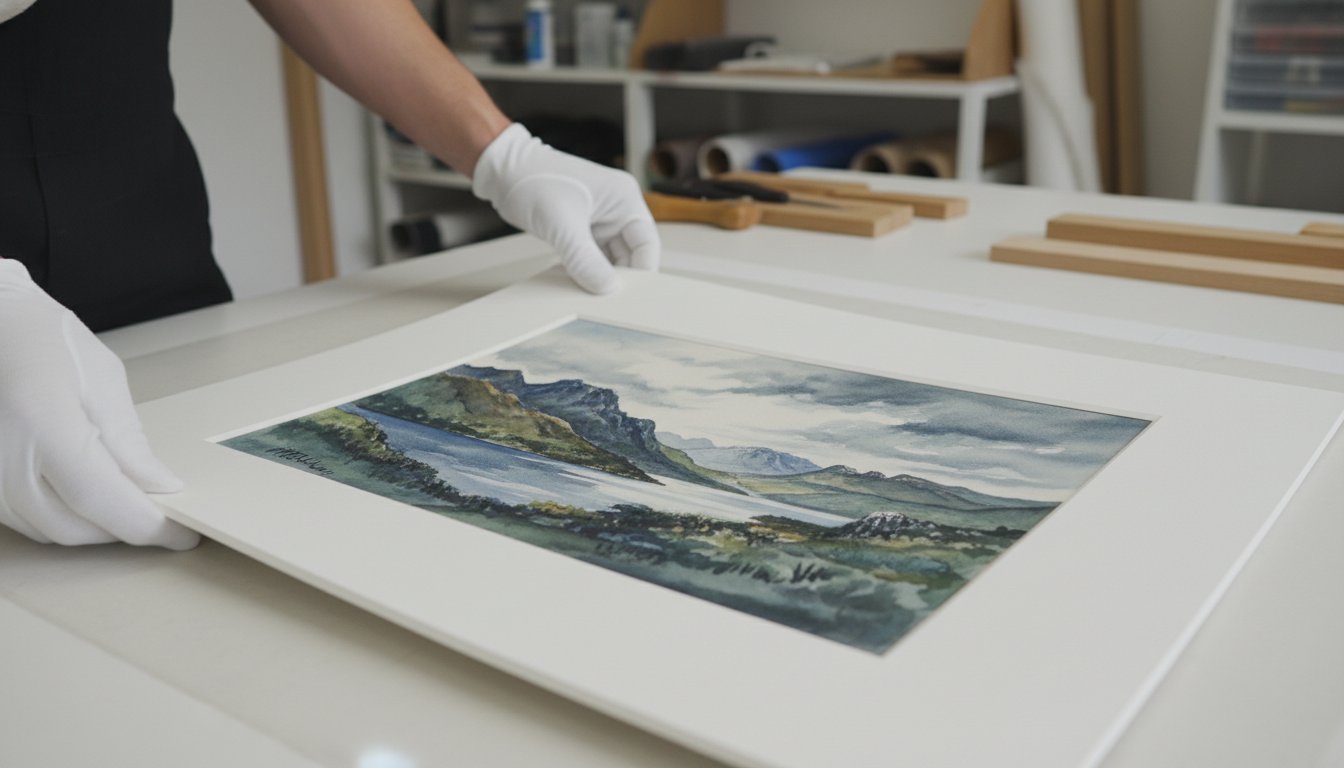
That beautiful watercolour from your travels, the delicate antique print you inherited-each holds a story you want to preserve forever. But behind a standard frame, a silent threat can cause cherished colours to fade and paper to turn brittle and yellow. This is where the true craftsmanship of conservation framing for delicate art provides an essential shield. It’s more than just a beautiful border; it’s a bespoke preservation system designed to safeguard your irreplaceable pieces for the long term, ensuring they are protected for generations to come.
Feeling confused by terms like ‘archival’ or wondering if the extra cost is justified? You’re not alone. In this complete preservation guide, we demystify the entire process. We’ll walk you through the premium, acid-free materials and specialist techniques that protect your art from damage and decay. By the end, you will understand the value of professional conservation and feel confident in choosing the perfect, permanent protection to keep your artwork as vibrant as the day you first fell in love with it.
What is Conservation Framing (and Why Delicate Art Needs It Most)?
When you choose a frame for a treasured piece of art, you’re doing more than just selecting a beautiful border. You are appointing a guardian for that piece. A standard frame might look the part, but true preservation goes much deeper. This is where conservation framing comes in-a bespoke approach that uses specialised materials and techniques to actively protect your art from the environmental factors that cause fading, discolouration, and decay.
The ultimate goal is to preserve your artwork in its original, pristine state for generations to come. It’s a science and an art form dedicated to creating a safe, stable micro-environment for irreplaceable items, whether they hold immense financial or sentimental value. To see these principles in action, the video below offers a great visual explanation.
Defining ‘Delicate Art’: What Needs Extra Protection?
While any artwork benefits from proper framing, some pieces are particularly vulnerable to damage over time. The professional practice of conservation framing for delicate art is essential for items that are inherently fragile or irreplaceable. This includes:
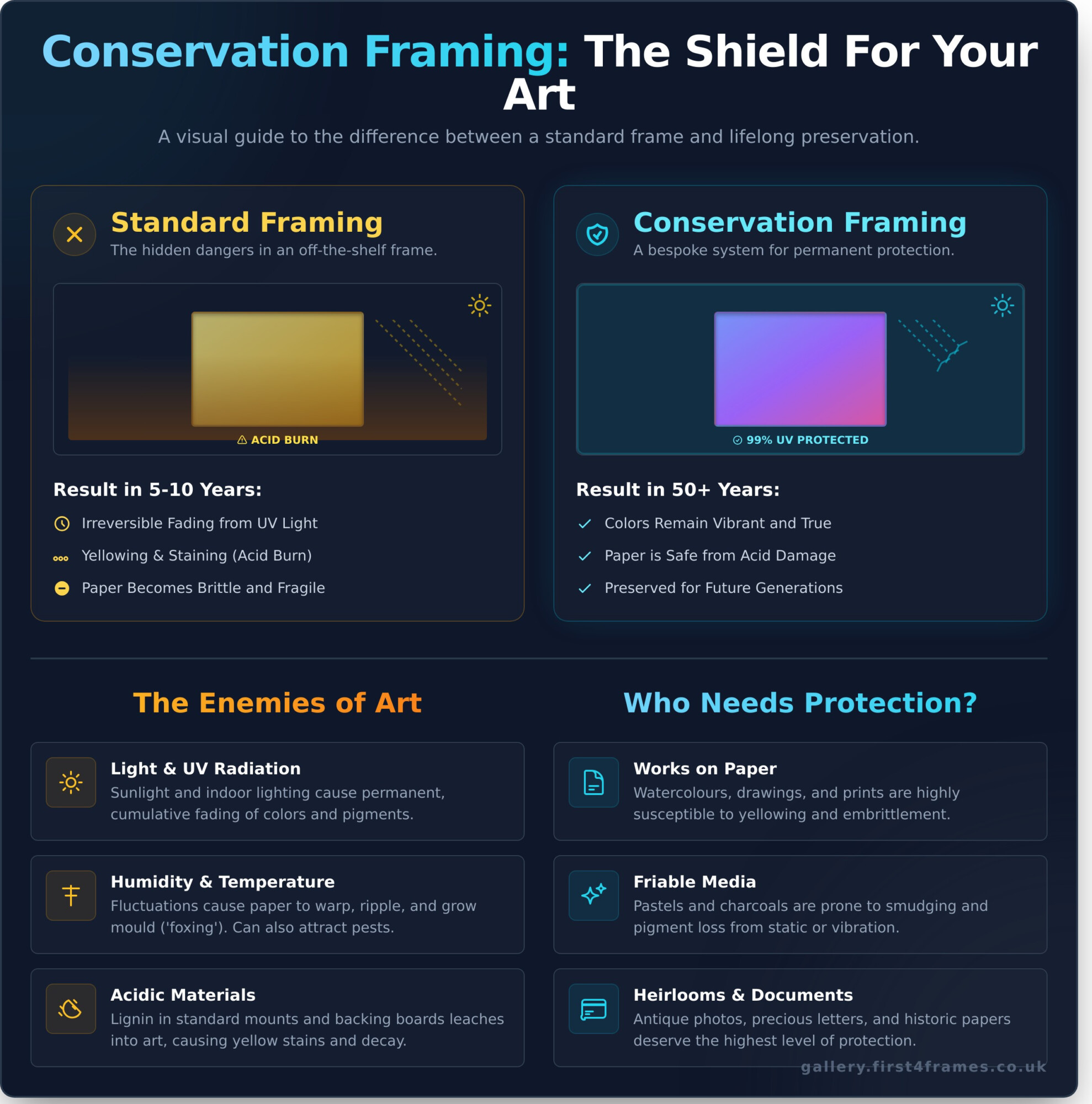
- Works on paper: Watercolours, drawings, and fine art prints can easily yellow or become brittle when exposed to acid and light.
- Friable media: Pastels and charcoals are prone to smudging and pigment loss from vibration or static electricity.
- Heirloom items: Antique photographs, precious letters, and historic documents contain memories that deserve the highest level of protection.
- Unique textiles: Needlework, silks, and antique fabrics can be damaged by moisture, pests, and acidic materials.
Standard vs. Conservation Framing: A Quick Comparison
The difference between a standard, off-the-shelf frame and a conservation-grade one is what happens to your art in 5, 10, or 50 years. Standard frames often use backing boards and mounts made from wood pulp, which contains acid that leaches into the artwork, causing permanent yellowing. In contrast, conservation framing uses 100% acid-free, archival matting and backing boards. Furthermore, standard glass offers little to no protection from ultraviolet (UV) light, a primary cause of fading. Conservation glazing, however, blocks up to 99% of harmful UV rays, keeping colours as vibrant as the day they were created.
The Enemies of Art: Identifying Risks to Your Delicate Pieces
Your home is a sanctuary for you, but it can be a surprisingly hazardous place for your treasured artwork. Everyday elements, often unseen, are constantly at work, posing a significant threat to delicate pieces like watercolours, prints, and photographs. Over time, these forces can cause irreversible fading, discolouration, and physical decay. Understanding these enemies is the first step towards true preservation, highlighting why professional conservation framing for delicate art is not a luxury, but a necessity. A bespoke conservation frame acts as a premium shield, meticulously designed to protect your art from these hidden dangers for generations to come.
The Invisible Damage of Light
Light is perhaps the most relentless enemy of art. The ultraviolet (UV) radiation in sunlight is the primary cause of fading, breaking down the chemical bonds in pigments and paper. But it’s not just the sun; common household fluorescent and halogen lights also emit damaging UV rays that contribute to the slow bleaching of your artwork. This damage is cumulative and tragically permanent-once colours have faded, they cannot be restored. This is why a piece can lose its vibrancy even when not placed in a direct sunbeam, as reflected light still carries harmful UV radiation.
Humidity, Temperature, and Pests
The atmosphere in your home is in constant flux, and your art feels every change. Shifting humidity levels cause paper to expand and contract, leading to unsightly rippling and warping within the frame. Consistently high moisture creates a perfect breeding ground for mould and mildew, which appear as small brown or black spots known as ‘foxing’. Extreme temperature swings can make paper, canvas, and inks brittle and prone to cracking. A poorly sealed frame also offers an open invitation to tiny pests like thunderbugs or silverfish, who can get trapped behind the glass and cause significant damage.
The Hidden Threat: Acidic Materials
One of the most insidious threats comes from within a standard, off-the-shelf frame itself. Many mount boards and backing papers are made from wood pulp that contains an acidic compound called lignin. Over years, this acid ‘leaches’ out of the materials and into your artwork, causing the tell-tale yellow or brown stains often called ‘acid burn’. This is a core issue addressed by professional conservation framing for art on paper, which mandates the use of 100% acid-free, archival-quality materials. This acid not only discolours but actively breaks down the paper fibres, leaving your precious art weak, brittle, and fragile.
The Pillars of Protection: Anatomy of a Conservation Frame
A common misconception is that a frame is just a decorative border. In reality, professional conservation framing for delicate art creates a complete, sealed package of protective materials. Think of it less as a simple holder and more as a bespoke preservation system. Each component has a specific job, working in harmony to shield your artwork from the elements that cause fading and decay. These premium materials all meet the high standards set by organisations like the Fine Art Trade Guild, ensuring your art receives the best possible care. Let’s break down the four key elements that form this protective shield.
UV-Filtering Glazing: Your Art’s Sunscreen
The first line of defence is specialist glass or acrylic designed to block up to 99% of harmful ultraviolet (UV) rays-the primary cause of fading. Your choice of glazing impacts both protection and viewing clarity.
- Conservation Clear Glass: The industry standard, offering excellent UV filtering for most situations.
- Museum Glass: The ultimate choice, combining 99% UV protection with incredible anti-reflective properties for a crystal-clear view of your art.
- Conservation Acrylic (Perspex): A lighter and shatter-resistant alternative, perfect for very large pieces or artwork that may be shipped or hung in high-traffic areas.
Acid-Free Mountboard: A Safe Barrier
The mountboard, often called a mat, does more than just create a beautiful visual border. Its most critical function is to create a small air gap, preventing the artwork from touching the glazing where condensation could form. Conservation-grade mountboards are made from 100% cotton rag or purified alpha-cellulose. They are completely acid-free and lignin-free, which stops the yellowing and “acid burn” that can permanently damage delicate paper over time.
Archival Backing and Mounting
How the artwork is secured within the frame is crucial. Instead of using damaging glues or tapes, we “hinge” the art to the acid-free mountboard using a special Japanese paper and reversible wheat-starch paste. This method, detailed in the professional NEDCC guide to matting and framing, allows the paper to naturally expand and contract with temperature and humidity changes, preventing buckling. The package is completed with a sturdy, acid-free backing board that offers structural support and protects the art from behind.
Sealing the Package for Final Protection
The final, vital step in conservation framing for delicate art is to seal the entire “sandwich” of glazing, mount, artwork, and backing board. A special framing tape is applied around the edges, creating a barrier that prevents dust, airborne pollutants, moisture, and even insects from entering the frame. This step creates a stable micro-environment for the artwork, slowing the effects of ageing. It’s a hallmark of true conservation craftsmanship and a detail often overlooked in standard, ready-made frames.
Framing Specific Types of Delicate Art: Tailored Techniques
When it comes to conservation framing for delicate art, a bespoke approach is not just a luxury-it’s a necessity. Different artistic media have unique vulnerabilities and requirements for both preservation and presentation. A professional framer’s expertise lies in adapting their techniques to the specific piece, ensuring its physical safety and aesthetic integrity for years to come. From the paper’s absorbency to the fragility of surface pigments, every detail informs the framing process.
Works on Paper: Watercolours, Prints, and Drawings
Art on paper is particularly susceptible to environmental damage. To secure it safely within the frame, we use non-invasive, museum-standard methods. The key is reversibility-nothing should be done that cannot be undone without harming the artwork. Best practices include:
- Using ‘T-Hinges’: The artwork is attached to the mountboard using small, acid-free paper hinges and a conservation-grade wheat paste. This allows the paper to expand and contract naturally with changes in humidity.
- Avoiding Permanent Adhesives: Valuable paper art should never be permanently glued or dry-mounted, as this can cause irreversible damage and significantly devalue the piece.
- Creating Space: A high-quality, acid-free mountboard is essential. It creates a crucial air gap, preventing the paper from making direct contact with the glazing, which could lead to moisture transfer and mould growth.
Remember, premium Giclée prints are created with archival inks and paper, and they deserve the same level of professional care as an original watercolour or drawing.
Pastels, Charcoals, and Friable Media
Artwork created with pastels, charcoal, or other ‘friable’ (powdery) media presents a unique challenge: the pigment rests loosely on the surface and can be easily smudged or dislodged. The primary goal here is to prevent anything from touching the delicate surface. To achieve this, a framer will use spacers or a deep-bevel mount to create extra depth within the frame. This “safe zone” ensures the dusty media cannot transfer onto the inside of the glazing, keeping both the artwork and the view of it perfectly clean. Gentle and precise handling is, of course, absolutely paramount throughout the entire process.
Textiles and Needlework
Unlike paper, textiles require careful structural support to prevent gravity from causing sagging, stretching, and distortion over time. The best practice is to meticulously stitch the fabric onto a supportive, acid-free backing board. This method provides even tension across the entire piece without introducing harmful chemicals. Glues and adhesives are never used, as they can seep into the fibres, causing permanent stains and brittleness. For textiles, UV-filtering glazing is especially vital, as the organic and synthetic dyes used in threads are often highly susceptible to fading when exposed to light.
A trusted professional understands these nuances, ensuring your treasured piece is perfectly preserved and presented. You can see examples of our meticulous framing work in our online gallery.
Finding a Professional Framer You Can Trust
You’ve invested in beautiful art; the final step is entrusting it to a skilled professional. Choosing the right framer is just as critical as selecting the correct materials for the job. You aren’t just looking for a service; you’re seeking a partner in preservation. A passionate, experienced framer acts as a consultant, guiding you through the options to find the perfect bespoke solution that both protects and enhances your piece.
What to Look For in a Framing Studio
A true professional’s dedication is evident in their work and environment. Look for a clean, organised workshop and a welcoming consultation area. Ask to see a portfolio, paying close attention to work on items similar to yours. Membership in a respected professional body, like the UK’s Fine Art Trade Guild, is a strong indicator of commitment to high standards. Most importantly, a good framer will be happy to explain their process and material choices, demonstrating their expertise.
Key Questions to Ask Before You Commit
Don’t be afraid to ask detailed questions to ensure you’re confident in their approach. A trustworthy framer will welcome your interest. Here are a few key things to ask:
- Do you use fully reversible mounting techniques? This ensures the art can be returned to its original state without damage.
- Can you show me the specific conservation-grade materials you’ll use? They should be able to present the acid-free mountboard and backing.
- What type of UV-filtering glazing do you recommend for my piece and why? Their answer will show an understanding of your art’s specific needs.
- Can you provide a detailed, itemised quote? Transparency in pricing is a hallmark of a professional service.
Why Expertise Matters for Your Artwork
Ultimately, expertise is what separates an adequate frame from a truly protective one. An experienced framer understands the unique properties of different media-from the fragility of a watercolour wash to the delicate surface of a pastel. They can spot potential issues before they arise and engineer a frame that is not only beautiful but structurally sound for decades to come. This level of craftsmanship is the cornerstone of true conservation framing for delicate art.
Trust our 20+ years of expertise with your delicate art. We’re here to help you preserve your treasures for a lifetime.
Your Masterpiece Deserves a Masterful Defence
Your delicate artwork is more than just an image; it’s an irreplaceable piece of history, emotion, and craftsmanship. As we’ve explored, threats from UV light, humidity, and acidic materials can cause irreversible damage. The solution is not just a frame, but a complete protective system-a thoughtful combination of archival materials, from UV-filtering glazing to acid-free mounts, that work in harmony to preserve its beauty for generations.
Choosing the right partner for this crucial task is paramount. This is the very essence of professional conservation framing for delicate art. At First 4 Frames, we bring over 20 years of bespoke framing experience to every project. We use museum-quality, archival materials as standard and proudly uphold the rigorous conservation standards of the Fine Art Trade Guild, ensuring your piece is not just displayed, but truly protected.
Don’t leave the future of your art to chance. Become the custodian of its legacy and ensure its story can be shared for years to come. Protect your irreplaceable art. Get a bespoke conservation framing quote today.
Frequently Asked Questions About Conservation Framing
How much more does conservation framing cost compared to standard framing?
As a worthwhile investment in your art’s future, conservation framing typically costs more than standard options due to the premium, specialised materials used. Depending on the size of your piece and the specific choices you make, you can expect to invest anywhere from £40 to over £150 more than a basic frame. This price difference covers essential protective elements like UV-filtering glazing and acid-free, museum-grade mounts, which are vital for long-term preservation.
Can conservation framing reverse damage that has already occurred?
Unfortunately, conservation framing is a preventative measure, not a restorative one. It cannot reverse existing damage such as fading, discolouration, or ‘mat burn’ caused by acidic materials. However, its primary purpose is to halt further deterioration in its tracks. By creating a stable, protective environment, it effectively shields your artwork from the elements that cause harm, preserving it in its current state for decades to come. For existing damage, we recommend consulting a professional art restorer.
How long will the protection from a conservation frame last?
When crafted with professional care and premium materials, the protective benefits of a conservation frame are designed for the long haul. The UV-filtering properties of the glazing and the archival quality of the mounts and backing boards will safeguard your art for many decades, often 20 years or more. To maximise this lifespan, we always advise displaying your framed art away from direct sunlight and sources of extreme humidity, ensuring the beautiful piece remains protected for a generation.
Is ‘acid-free’ the same as ‘archival’ or ‘museum-quality’?
While these terms are related, they are not interchangeable. ‘Acid-free’ is the minimum standard, meaning the material has a neutral pH at the time of manufacture. However, ‘archival’ or ‘museum-quality’ represents a higher grade of preservation. These materials, such as 100% cotton rag matboards, are not only acid-free but also lignin-free. Lignin is a compound in wood pulp that can break down and produce acid over time, so its absence ensures the ultimate long-term protection for your art.
Do I really need conservation framing for a modern art print?
Absolutely. Even the highest quality modern prints, including fine art Giclée prints, are vulnerable to damage from UV light and environmental pollutants. The inks can fade and the paper can yellow if not properly protected. Opting for conservation framing for delicate art, including contemporary prints, is the best way to protect your investment. It ensures the colours remain vibrant and the paper stays pristine, allowing you to enjoy the spectacular piece exactly as the artist intended for years to come.
How should I clean the glass and frame without damaging the art?
Proper cleaning is simple and ensures no harm comes to your treasured artwork. Never spray cleaning fluid directly onto the glass, as it can seep under the edge of the frame and damage the mount or the art itself. Instead, lightly spray an ammonia-free glass cleaner onto a soft, lint-free microfibre cloth. Gently wipe the glass with the damp cloth. For the frame itself, a quick wipe with a separate dry, soft cloth is usually all that is needed to remove dust.