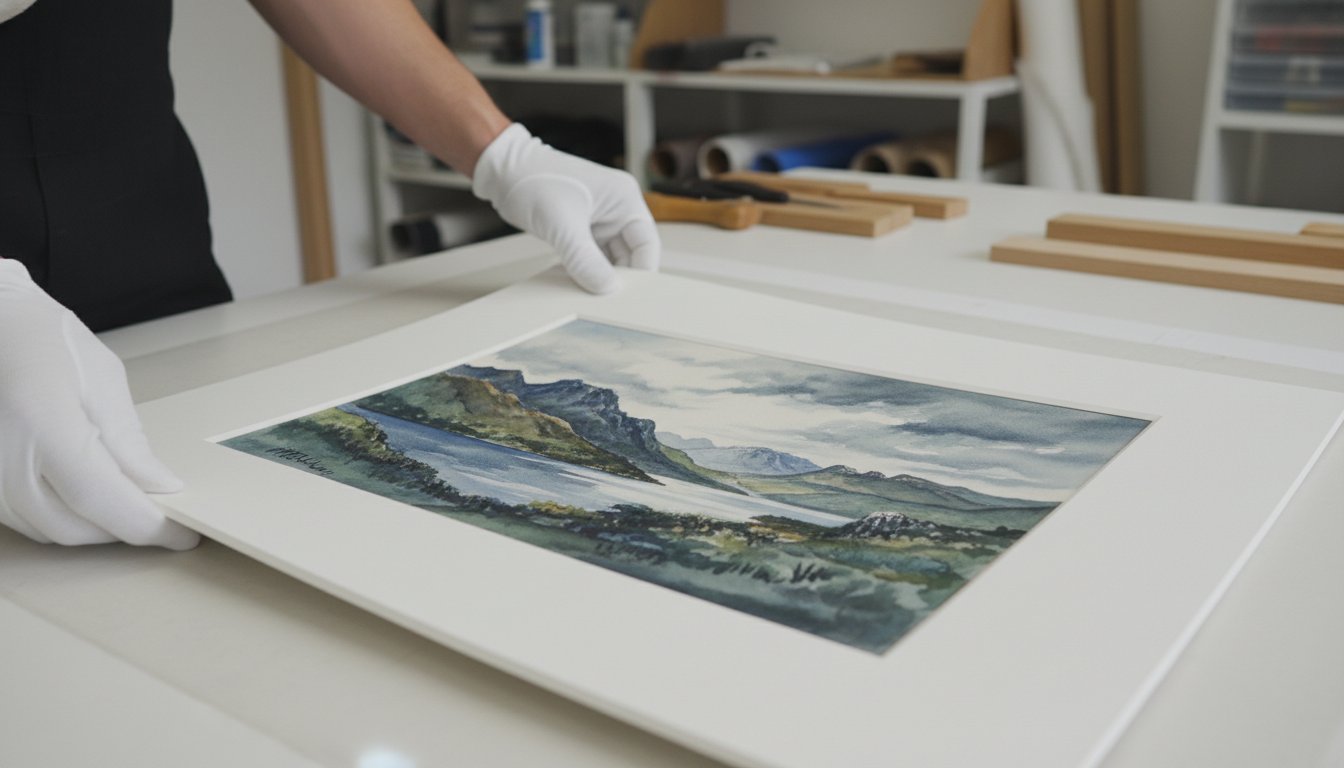
A standard shop-bought frame can begin irreversibly damaging your artwork in as little as 730 days. When you invest in a piece by a featured artist at the First4Frames Gallery, you are likely thinking about framing to pass down through generations rather than a temporary fix. It’s a common frustration for collectors who find their cherished heirlooms yellowing because of cheap, acidic materials. You deserve a display that acts as a bridge between your décor and the art, rather than a hidden source of decay.
With over 20 years of expertise, we believe that protecting your collection should be a rewarding and simple experience. This guide will show you how our professional conservation framing ensures your art remains in pristine condition for centuries. Whether you’re using our bespoke framing service for an original or choosing a convenient print-and-frame option for a new Giclée, you’ll discover the museum-grade materials required for total protection. We’re going to explore the essential steps that turn a beautiful print into a protected legacy.
Key Takeaways
- Identify the “slow burn” of acidic materials and environmental enemies like UV light that cause standard shop-bought frames to damage your artwork over time.
- Discover the science of archival framing to pass down through generations, ensuring your family heirlooms are protected by chemically stable, reversible materials.
- Navigate the differences between Commended, Conservation, and Museum-grade standards to select the perfect level of protection for your specific piece.
- Explore how bespoke craftsmanship at First4Frames preserves a wide range of items, from vibrant Jolomo Giclée prints to precious family medals.
- Learn our hassle-free, three-step process for creating a lasting legacy with expert framing services trusted by customers for over twenty years.
Why Standard Frames Fade: The Importance of Framing to Pass Down Through Generations
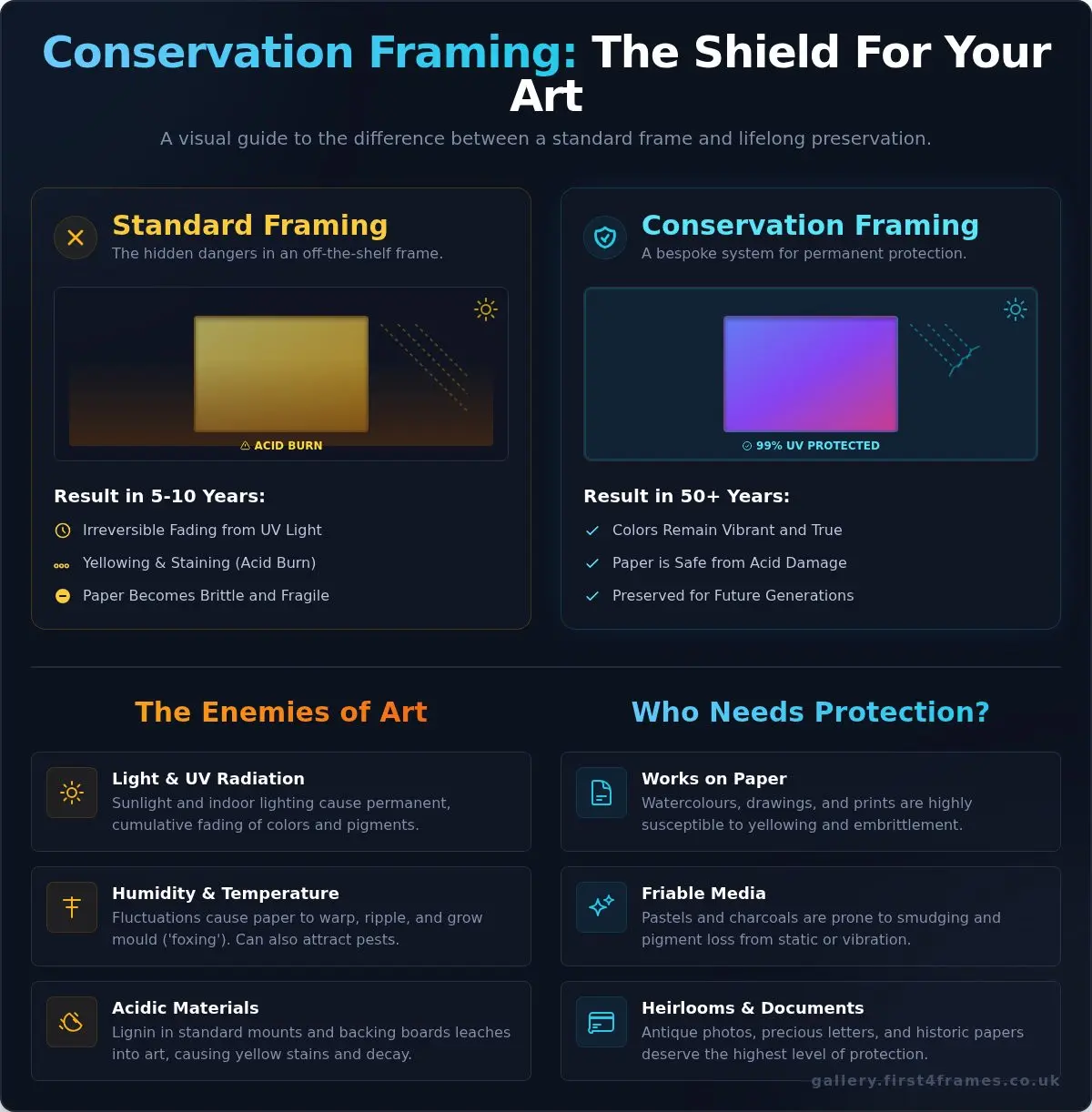
When you fall in love with a piece from the First4frames gallery, you aren’t just buying a print; you’re acquiring a piece of heritage. Placing a beautiful Giclée print by one of our featured artists into a standard, mass-produced frame can be a costly mistake. Most shop-bought frames act as a ticking clock for your artwork because they often harbour acidic components that trigger a “slow burn” effect. This chemical reaction gradually destroys the paper fibres of a cherished print or original painting, leading to irreversible damage. Choosing framing to pass down through generations isn’t just about aesthetics; it’s about creating a protective time capsule for the next century.
A frame serves as a vital bridge between your room décor and the artwork. It does the heavy lifting in the relationship, pulling you into the picture while keeping external threats at bay. Longevity depends on defeating three main enemies: UV light, fluctuating humidity, and acid migration. Without professional intervention, these factors will degrade your investment until the vibrant colours of the original work are nothing but a memory. We believe every piece of art deserves a home that protects its soul as much as its surface.
The Hidden Dangers of Non-Archival Materials
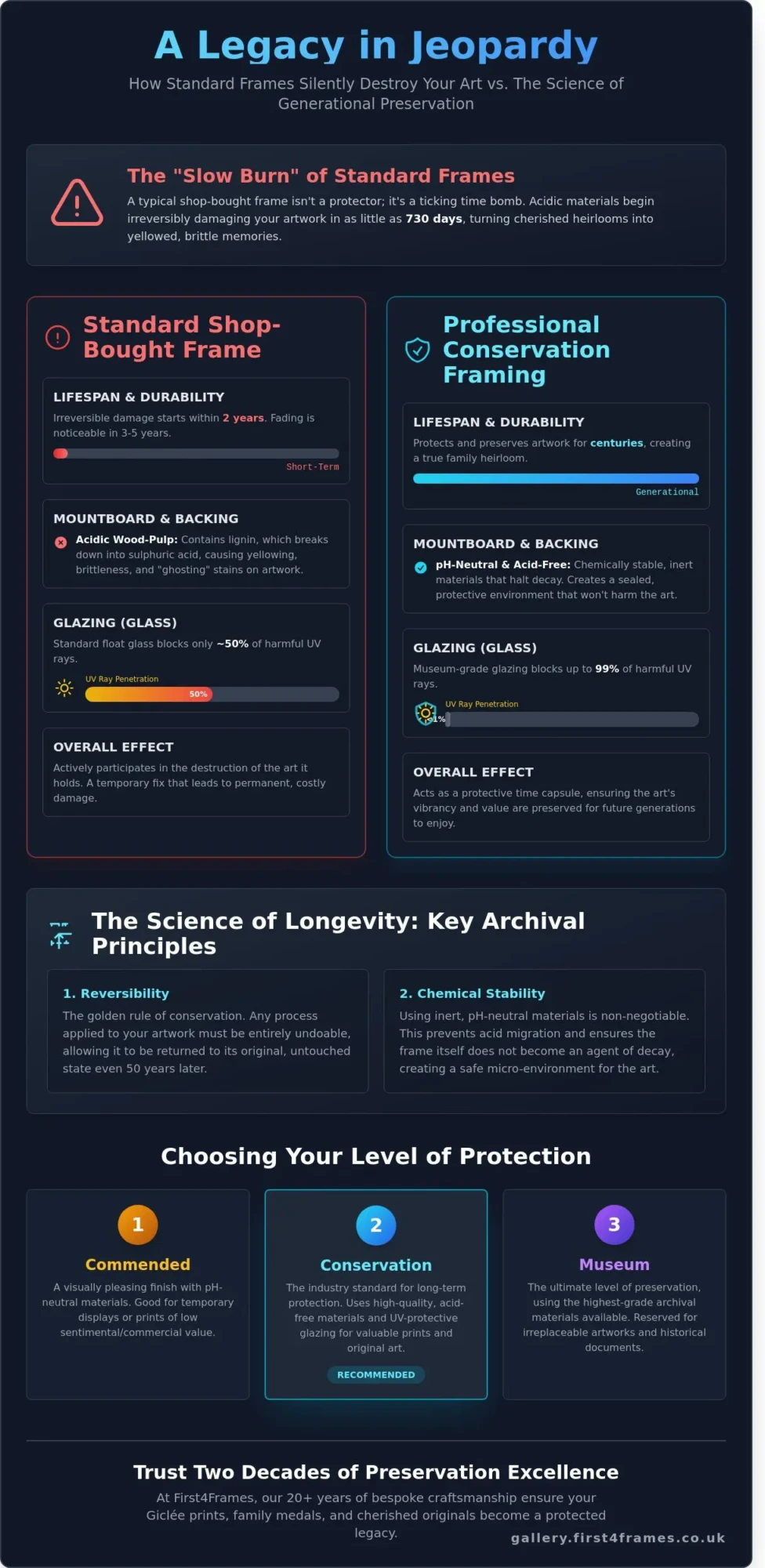
Cheap frames often use mountboards made from wood-pulp paper containing lignin. Over time, lignin produces sulphuric acid, which turns paper yellow and brittle. You’ll often see “ghosting,” where a dark, permanent stain appears on the artwork where it once touched the mount. Standard 2mm float glass is another silent killer. It allows up to 50% of harmful UV rays to pass through, causing pigments to bleach and fade within just 3 to 5 years of display in a sunlit room. These materials don’t just fail to protect; they actively participate in the destruction of the art they hold.
The First4Frames Philosophy: Excellence in Preservation
At First4Frames, we’ve spent 20 years perfecting the art of bespoke preservation in our Falkirk workshop. We don’t just sell frames; we provide a professional sanctuary for the fine art we showcase. Our team treats every piece with the same passion we have for our featured artists’ work, ensuring that framing to pass down through generations is a reality for every customer. This dedication to quality is why we maintain such excellent customer ratings across major review platforms. When you choose our professional framing service, you’re trusting two decades of craftsmanship to ensure your artwork stands the test of time and remains a spectacular focal point in your home.
The Science of Longevity: Understanding Archival and Conservation Framing
Archival framing isn’t just about choosing a pretty border. It’s a scientific method that uses chemically stable, inert materials to halt the natural decay of paper and pigments. At First 4 Frames, we’ve spent 22 years mastering these techniques to ensure your art survives the test of time. The most vital principle we follow is reversibility. This rule dictates that any process applied to your artwork must be entirely undoable. If a professional cannot return the piece to its original, untouched state in 50 years, it doesn’t meet the standard for framing to pass down through generations.
Our “one-stop-shop” model means we source and control every premium material that touches your art. This is especially important for Giclée prints from the First4Frames gallery. These prints use pigment-based inks designed to last between 100 and 200 years; however, they remain sensitive to atmospheric pollutants and moisture. We handle these pieces with specific archival protocols, ensuring the frame acts as a sealed, protective environment rather than just a decorative edge.
UV-Protective Glass: The Sunscreen for Your Art
Sunlight is the primary enemy of fine art. Standard glass typically only blocks about 45% of harmful UV rays, which leads to irreversible fading and brittle paper within a decade. We provide 99% UV-filtering glass to stop this degradation at the source. While standard non-reflective glass can sometimes dull the image, museum-grade acrylic offers 99% protection with near-invisible clarity, allowing the vibrant colours of your print to shine. UV-protective glass is a non-negotiable requirement for any artwork intended to be a family heirloom.
pH-Neutral and Acid-Free Mounts
Many people confuse “acid-free” with “archival” quality. Standard acid-free boards are often wood-based pulps treated with chemicals to neutralise acidity, but these can become acidic again over time. We prefer archival cotton rag, which is naturally pH-neutral and won’t cause the “mount burn” or yellowing often seen in older frames. These mounts create a vital 2mm air gap between the glass and the print. This gap prevents condensation from trapped moisture, which otherwise causes the paper to stick to the glass or develop mould spots. Choosing the right mount texture also helps organise the visual focus, drawing the eye into the spectacular details of our curated gallery collection. By using these stable materials, you ensure your framing to pass down through generations remains a pristine window into the past.
Standard vs. Museum Grade: Choosing the Right Protection Level
Selecting a frame isn’t just about matching your living room decor; it’s a decision about the life expectancy of your artwork. The Fine Art Trade Guild identifies four primary levels of framing: Budget, Commended, Conservation, and Museum. Budget framing often uses high-acid wood pulp boards that can cause visible yellowing on paper within 24 to 60 months. Commended framing offers better aesthetics but lacks the chemical stability required for long term preservation. When you’re looking for framing to pass down through generations, the professional tiers are where the real work happens.
The frame does the heavy lifting in your relationship with your art. It acts as a protective cocoon, shielding the piece from humidity, pollutants, and light damage. While a budget frame might cost £20, the cost of loss is 100% of the item’s value if acid burn or UV fading ruins the piece. Investing in professional standards ensures your artwork remains a financial asset rather than a fading memory.
- Budget: Best for temporary displays or replaceable posters.
- Commended: Good for non-archival items you want to look professional.
- Conservation: The minimum standard for original art and limited editions.
- Museum: The ultimate protection for items of high historical or financial value.
When to Invest in Conservation Grade
You should choose Conservation grade for any item with deep sentimental or historical significance. This includes original paintings and the limited edition Giclée prints featured in the First4Frames gallery. We use alpha-cellulose mount boards and 99% UV-protective glass to stop the “sunburn” effect that bleaches colours. To better understand the investment required for this level of protection, you can explore our guide on How Much Does Bespoke Framing Cost?
The Museum Grade Standard
Museum framing is the pinnacle of our craft at First4Frames. We use 100% cotton rag boards, which are naturally pH neutral and won’t degrade over time. This level of framing to pass down through generations ensures that an “identical copy” of a masterpiece remains visually perfect for 100 years or more. By using specialist anti-reflection glazing and reversible mounting techniques, we ensure your heirloom is preserved exactly as it was the day it was framed. We source only the best archival materials to maintain our reputation as a trusted professional for UK collectors.
From Giclée Prints to Family Medals: What Deserves Generational Framing?
Our First4frames gallery showcases the vibrant energy of acclaimed Scottish artists like Jolomo, whose work captures the rugged beauty of the Hebrides. When you invest in a piece of fine art, you’re beginning a story that spans decades. However, archival quality isn’t reserved solely for gallery acquisitions. Your own personal treasures, from a grandfather’s service medals to an original sketch, deserve professional framing to pass down through generations. A bespoke frame acts as a bridge between your home décor and the item itself. It pulls you into the picture and creates an emotional experience that standard shop-bought frames simply can’t replicate. With over twenty years of expertise, we understand that a frame should do the heavy lifting, protecting the soul of the piece while making it shine.
This principle extends to the modern heirlooms we create today. For families looking to capture those precious early moments that will be treasured for a lifetime, professional photography is essential. As an example of the beautiful portraits worth preserving, you can explore Newborn Session options.
Preserving Fine Art and Giclée Prints
High quality Giclée prints from our gallery are a brilliant starting point for any collection. These aren’t standard digital copies; they use pigment-based inks on acid-free archival paper to ensure the image remains vivid for 85 years or more. This interaction between premium inks and pH-neutral paper prevents the yellowing and brittle texture seen in cheaper prints. If you’re curious about the technical side of this process, you can read our guide on What Are Giclée Prints? to see why they’re the gold standard for modern art preservation.
Memorabilia and 3D Objects
Framing isn’t limited to flat paper. We specialise in box frame techniques for 3D objects such as medals, coins, or antique jewellery. It’s vital that these items don’t touch the glass. When an object sits directly against the glazing, condensation can form, leading to moisture damage or mould growth within months. We use deep spacers to create a protective pocket of air, ensuring your framing to pass down through generations remains pristine. Check out our Memorabilia Framing Guide for more on how we secure these delicate heirlooms using reversible, non-invasive methods.
The concept of preserving quality craftsmanship extends to all kinds of heirlooms, including fine leather goods which are often passed down. The longevity of such items starts with high-quality materials, often sourced from specialist trade suppliers like primehidetrade.co.uk.
Choosing professional framing means trusting your history to artisans who value craftsmanship. Our 4.9-star customer rating reflects our commitment to providing a reliable, high-quality service for every customer. Whether it’s a new Jolomo print or a century-old medal, we ensure it’s protected for the future. Explore our gallery collection to find a piece of Scottish art worth preserving today.
Preservation Excellence at First4Frames Gallery: Crafting Your Family Legacy
Creating a piece of history shouldn’t feel like a chore. At First4Frames Gallery, we’ve distilled over 20 years of expertise into a simple three-step journey. First, you Browse our extensive range of premium mouldings and acid-free mounts. Next, you Select the archival components that best highlight your artwork’s unique character. Finally, you Order with total confidence. Our Falkirk team handles the rest, providing a bespoke and speedy service that ensures your treasures are ready for display without the usual stress.
The Bridge Between Room Décor and Heritage
A well-chosen frame does the heavy lifting in any room. It acts as a vital bridge between your modern interior design and the rich history of your artwork. Our frames are far more than decorative borders; they are engineered protectors of your most cherished memories. We specialise in framing to pass down through generations, using museum-grade materials that prevent yellowing and UV damage.
Working with a trusted professional who understands the nuances of Scottish art ensures your heirloom receives the respect it deserves. Since 2004, we’ve helped thousands of clients turn fragile paper into lasting legacies. Whether you’re displaying a contemporary masterpiece or a century-old map, our frames pull you into the picture while keeping the elements out. We source only the best materials to ensure your art remains as spectacular as the day it was first created.
Visit Us in Falkirk or Order Online
You can find our gallery on Grahams Road in Falkirk, where we offer one-to-one consultations for your most complex bespoke projects. If you’re further afield, our online one-stop-shop simplifies the process for customers across the UK. We take immense pride in our 5-star customer ratings, which reflect our commitment to craftsmanship and reliability.
- Expert Consultations: Visit us at Grahams Road for professional advice on archival materials.
- UK-Wide Shipping: Our print-and-frame service brings gallery quality to your doorstep.
- Quality Guaranteed: We use only premium components designed for longevity.
Don’t leave your history to chance in a standard shop-bought frame. Investing in quality ensures your favourite memories remain vibrant for your children and grandchildren to enjoy. Start your journey of artistic discovery today by visiting our gallery or browsing our collection online. Your family’s story deserves a professional finish that stands the test of time.
Preserve Your Artistic Legacy for Future Centuries
Your most cherished pieces, from the spectacular Scottish fine art in our collection to delicate Giclée prints, deserve better than standard materials that yellow and become brittle over time. Choosing museum-grade protection ensures your items remain as striking as the day they were created. We’ve spent over 20 years perfecting the art of framing to pass down through generations, acting as a professional bridge between your home décor and the artwork itself. At First4Frames Gallery, we don’t just provide a service; we act as knowledgeable artisans for your most valuable memories. Our excellent customer ratings on Google and Trustpilot reflect our deep commitment to quality and craftsmanship. Whether you’re displaying a contemporary Giclée acquisition or a historic family medal, our specialists treat every project with the reverence it deserves. It’s an investment in your family history that pays dividends in beauty and preservation for years to come.
Protect your legacy with our Bespoke Framing Service
Let’s work together to ensure your story remains as vivid as the day it was first captured.
Frequently Asked Questions
What is the difference between acid-free and archival framing?
Acid-free materials have a neutral pH level at the time of manufacture, whereas archival materials are chemically stable and designed to remain so for over 100 years. Our bespoke framing service uses alpha-cellulose or cotton rag boards that don’t degrade into harmful acids over time. This level of protection is essential when you’re investing in framing to pass down through generations to ensure the artwork doesn’t yellow or become brittle.
How long will a conservation-framed print last compared to a standard frame?
A conservation-framed print can last over 100 years in typical home conditions, while a standard frame often shows signs of “mount burn” or discolouration within 12 to 15 years. We use 1,100 micron thick conservation boards to create a protective environment for every piece. This ensures the vibrant colours of a Giclée print from the First4frames gallery remain as spectacular as the day you first hung it on your wall.
Can UV glass really stop my art from fading if it’s in a sunny room?
UV-protective glass blocks up to 99% of harmful ultraviolet rays, which significantly slows the fading process even in bright UK sitting rooms. While no glazing can stop 100% of light damage, museum-grade glass prevents the rapid bleaching often seen with standard 2mm float glass. Our 20 years of expertise shows that high-quality glazing is the single best investment you can make for your artwork’s longevity.
Is archival framing worth the extra cost for sentimental items?
Spending an additional £45 to £90 on archival materials is a sensible investment to protect irreplaceable family memories from chemical decay. Standard shop-bought materials contain lignin which eventually turns paper brown and crumbly. By choosing our professional framing service, you’re securing a piece of your history, a fact reflected in our consistently high customer ratings for quality and trust.
What happens if I use a standard shop-bought frame for an old photograph?
Using a standard shop-bought frame often leads to permanent damage because the backing boards are usually made from acidic wood pulp. Within 7 to 10 years, these acids migrate into your photograph, causing irreversible staining and brown spots known as foxing. We often see beautiful old photos ruined by cheap materials, which is why we recommend our bespoke service for anything you value. This principle is equally important for new photographic heirlooms; for example, the delightful cake smash portraits found at momentsinbloom.com.au also deserve professional preservation to become treasured family keepsakes.
Can I change the frame later without damaging the artwork?
You can safely change your frame at any time if the artwork was originally mounted using reversible conservation techniques. We use T-hinges and acid-free Japanese paper tapes that allow the art to be removed without leaving sticky residue or causing tears. This flexibility is a core part of the premium craftsmanship we provide at First 4 Frames, ensuring your art stays safe during any future decor changes.
Does professional framing increase the resale value of my art?
Professional archival framing can increase the resale value of a piece by 20% or more by proving the artwork has been kept in a museum-quality environment. Collectors and galleries prioritise pieces that have been protected from environmental pollutants and UV light. It demonstrates that you’ve invested in framing to pass down through generations, maintaining the work’s physical integrity and its spectacular visual appeal.
What materials should I look for to ensure my framing is museum-grade?
You should look for 100% cotton rag matboards, acid-free barrier papers, and UV-filtering glazing to meet true museum standards. These materials are naturally lignin-free and provide the highest level of protection available in the UK framing market. At First 4 Frames, we source only these premium materials to ensure every project meets the rigorous standards our customers expect from a trusted artisan.