

A beautifully framed print can still be difficult to enjoy when bright reflections compete with the image. Choosing non-reflective frames for office lighting involves more than the frame itself: glazing, light direction and artwork placement all play a part. Glazing terms can also be confusing when you’re comparing options for a professional-looking display.
First4Frames Gallery individually crafts each frame using high-quality materials. Its framing service uses 2mm float glass, which it describes as clearer than perspex. That should not be mistaken for non-reflective glazing. If reflections are a concern, check directly with your framer which specialist glazing choices are available before ordering.
This guide explains what causes reflections and how glazing, lighting and placement can work together to make office artwork easier to see. Learn how anti-glare and anti-reflective glazing differ, what to consider when choosing framed wall art, and which questions to ask before commissioning custom picture framing.
Key Takeaways
- Check how windows, overhead lights and viewing angles affect the display, then assess the lighting around the wall you’re considering.
- Compare glazing choices when considering non-reflective frames for office lighting. Clear 2mm float glass is not necessarily glazing designed to reduce reflections.
- Use a practical order of checks: inspect the lighting, identify viewing angles, choose artwork, confirm framing options, then settle on placement.
- Explore bespoke framing and commercial artwork curation for an office display. First4Frames individually crafts each frame using high-quality materials.
Why office lighting creates reflections on framed artwork
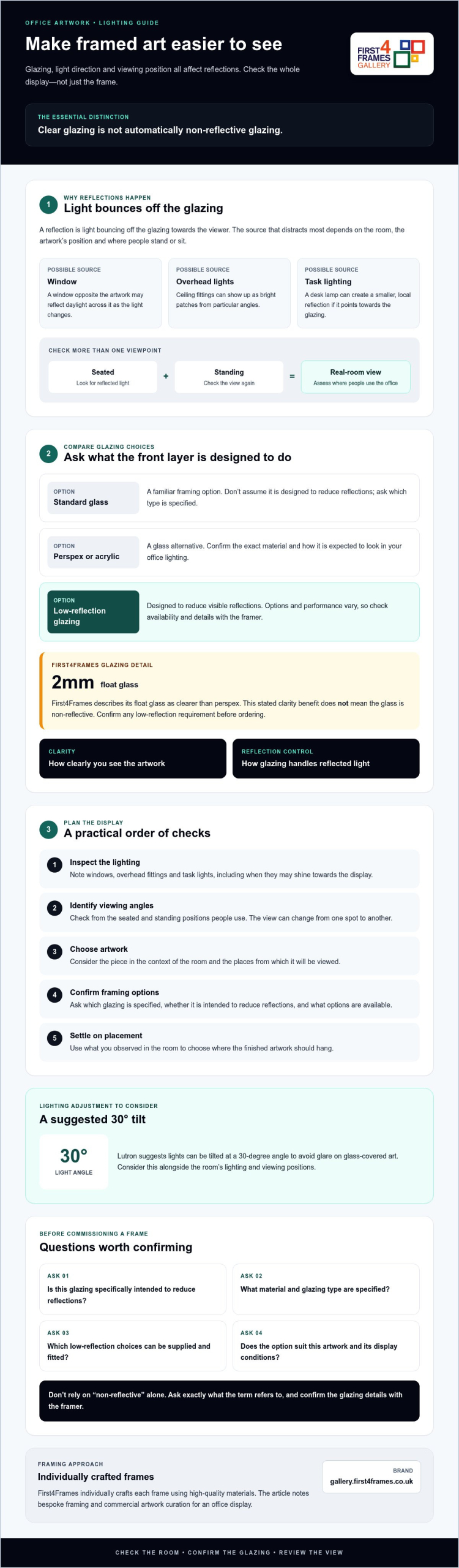
A reflection is light bouncing off the glazing towards the viewer, not a feature of the frame itself. A window opposite the artwork may reflect across it as daylight changes. Ceiling lights can appear as bright patches, while a desk lamp may cause a smaller, local reflection. The most distracting source depends on the room and the artwork’s position.
Viewing angle matters too. A framed print may look clear from one spot and mirror a light source from another. Check it from the seated and standing positions people typically use in the office. For an overview of picture framing glass or acrylic, see the different glazing materials used in framing.
This short video demonstrates acrylic described as non-glare:
Which office lights and positions create the most glare?
Assess the artwork in the lighting conditions it will actually face. A window opposite the frame may reflect daylight directly, while overhead fittings can show up from particular angles. Task lighting can cause glare if it points towards the glazing. No single light source always dominates, so check from the usual seated and standing positions before deciding where the piece should hang.
Does a non-reflective frame mean non-reflective glass?
The frame surrounds and supports the artwork; glazing is the transparent front layer. The phrase “non-reflective frame” may refer loosely to the glazing or the finished display, so ask the seller exactly what it means and which glazing is specified. The frame shapes the presentation; the glazing determines how its surface handles light. First4Frames specifies 2mm float glass and describes it as clearer than perspex, but does not describe it as non-reflective. Confirm any low-reflection requirement before ordering.
Compare glazing choices for clearer framed art in an office
Glazing affects how clearly artwork can be seen and how reflections appear, but these are separate considerations. When choosing non-reflective frames for office lighting, compare the glazing itself rather than assuming the frame material controls glare.
| Glazing choice | What to consider |
|---|---|
| Standard glass | A familiar framing option, but don’t assume it’s designed to reduce reflections. Ask what type is specified. |
| Perspex or acrylic | A glass alternative. Confirm the exact material and how it is expected to look in your office lighting. |
| Low-reflection glazing | Designed to reduce visible reflections, but options and performance vary. Check availability and details with the framer. |
First4Frames specifies 2mm float glass and describes its clarity as superior to perspex. That stated clarity benefit doesn’t mean the glass is non-reflective. Clarity describes how clearly you see the artwork; reflection control describes how glazing handles reflected light. Availability depends on the framer.
What should you ask about anti-reflective glazing?
Ask whether the quoted glazing is specifically intended to reduce reflections, how the provider describes its performance, and whether it suits your artwork and display conditions. Confirm which options can be supplied and fitted, and ask for any relevant care guidance. Don’t rely on “non-reflective” alone; find out exactly what the term refers to.
How do clarity and reflection control differ?
Glazing can offer a clear view without being designed to minimise reflections. Consider both needs, then ask the framer to explain the available choices. Lighting placement may also help: Lutron suggests lights can be tilted at a 30-degree angle to avoid glare on glass-covered art.
To find artwork for your office, browse the framed artwork gallery, then confirm your glazing requirements directly before ordering.
How to choose and position framed artwork under office lighting
A practical plan helps you choose artwork that suits the office and stays visible from the places people use most. Before ordering non-reflective frames for office lighting, work through these steps:
- Inspect the lighting. Note windows, overhead fittings and task lights, including when they’re likely to shine towards the display.
- Identify viewing angles. Check sightlines from desks, meeting areas and circulation routes, from both seated and standing positions.
- Choose the artwork. Consider the room’s purpose, existing colours and the atmosphere you want the art to create.
- Confirm framing options. Ask the framer about suitable frame and glazing choices before placing your order.
How should you assess artwork placement before ordering?
Use a temporary paper outline or hold a sample print against the wall in a few possible positions. This helps you visualise the scale and placement before you buy. A wall art visualiser may also help if you have access to one, but don’t assume it’s provided by the seller. Check sightlines from desks and meeting areas. If reflections distract from the image, try moving the planned position or adjusting nearby lighting.
Which artwork styles suit a professional office?
Choose imagery that supports the space without overwhelming it. Coastal wall art can suggest an open, restful mood; landscape wall art offers a broad range of natural scenes, while Scottish landscape art brings a more specific sense of place. Fine art, photography prints and contemporary art prints offer further options. If considering work by best-selling artists or famous artists, compare the image, scale and palette with the room before choosing a frame.
For broader frame-selection advice, consult Picture Frames: The Ultimate Guide. To explore artwork options for your office, browse the framed art gallery.
Choose bespoke framed wall art for a polished office finish
A well-chosen frame brings artwork into the room’s design, while suitable glazing and placement help keep it comfortable to view. First4Frames individually crafts each frame to order using high-quality materials. Bespoke framing lets you discuss how the frame should present the artwork and fit the space. Businesses planning a coordinated display can also consider commercial artwork curation.
First4Frames offers a selection of frames and artwork online. Choose a frame, then plan the finished piece around the print, office palette and intended position. If reflections are a concern, ask which glazing options are available rather than assuming a bespoke frame includes non-reflective glass.
What can an office ask a bespoke framer to tailor?
Discuss the artwork’s size and presentation, frame selection and any glazing requirements. First4Frames specifies 2mm float glass and describes its clarity as superior to perspex; this doesn’t mean it has anti-reflective performance. Confirm any low-reflection requirement directly with the framing service. These choices can help shape custom framed art prints through an art print framing service, creating bespoke framed wall art suited to the workplace.
How can businesses source office artwork and framed photographs?
Commercial artwork curation can help businesses furnish office spaces. First4Frames offers bespoke framing for prints, fine art, paintings and photographs. Businesses can discuss the artwork and framing requirements for their space, including the glazing and presentation they have in mind.
Explore framed wall art for your office and consider how each piece will work with its lighting, position and frame.
Make your office artwork clear and considered
Choosing non-reflective frames for office lighting means looking beyond the frame: glazing, light direction and viewing position all influence how easily artwork can be seen. Check the display from everyday desk and meeting-room sightlines, and confirm exactly what a framer means by “non-reflective” before ordering.
First4Frames individually crafts each frame to order using high-quality materials. Its framing uses 2mm float glass, described as clearer than perspex, but that clarity should not be mistaken for verified anti-reflective performance. Ask about glazing requirements directly. Businesses can also consider commercial artwork curation for a cohesive office display.
Thoughtful artwork choices and bespoke framing can help create a polished space that feels welcoming and reflects your workplace. Explore framed wall art for your office and find pieces to help bring your vision to life.
Frequently Asked Questions
Are non-reflective frames the same as anti-reflective glass?
No. “Non-reflective frame” doesn’t necessarily mean the frame includes anti-reflective glass. The frame is the structure surrounding the artwork, while glazing is the transparent front layer. Sellers may use the phrase informally, so ask what glazing is included and whether it’s specifically intended to reduce reflections. Don’t assume ordinary glass or a particular frame finish will control glare.
Does 2mm float glass stop reflections from office lights?
No. First4Frames specifies 2mm float glass and describes its clarity as superior to perspex, but clarity and reflection reduction are different qualities. Float glass can still show reflections from office lights, depending partly on light direction and viewing angle. Ask the framer whether lower-reflection glazing is available for your chosen artwork and frame before ordering.
How can I reduce glare on framed pictures in an office?
Start by checking the artwork from the places people usually sit or stand. Reflections can change with the sightline, so view the piece from desks and meeting areas, then try adjusting its position or nearby lighting. Before ordering non-reflective frames for office lighting, ask the framer about glazing options. The best approach depends on your room, windows, light sources and viewing angles.
Is perspex clearer than glass for picture framing?
Not necessarily. Performance depends on the specific glazing and your priorities. First4Frames describes its 2mm float glass as clearer than perspex, but this doesn’t establish that every type of glass is clearer than every acrylic. Ask the framer to explain the materials available and compare how they suit your artwork, office lighting and handling needs.
Can I order custom framed art prints for an office?
Yes. First4Frames offers bespoke picture framing, fine art prints and commercial artwork curation, so businesses can discuss artwork and framing requirements for their space. Frames are individually crafted for each order using high-quality materials. Confirm glazing choices directly, especially if reducing reflections under office lighting is important to your project.