Posted on

Non-Reflective Office Lighting Frames: Buying Guide

Non-Reflective Office Lighting Frames: Buying Guide

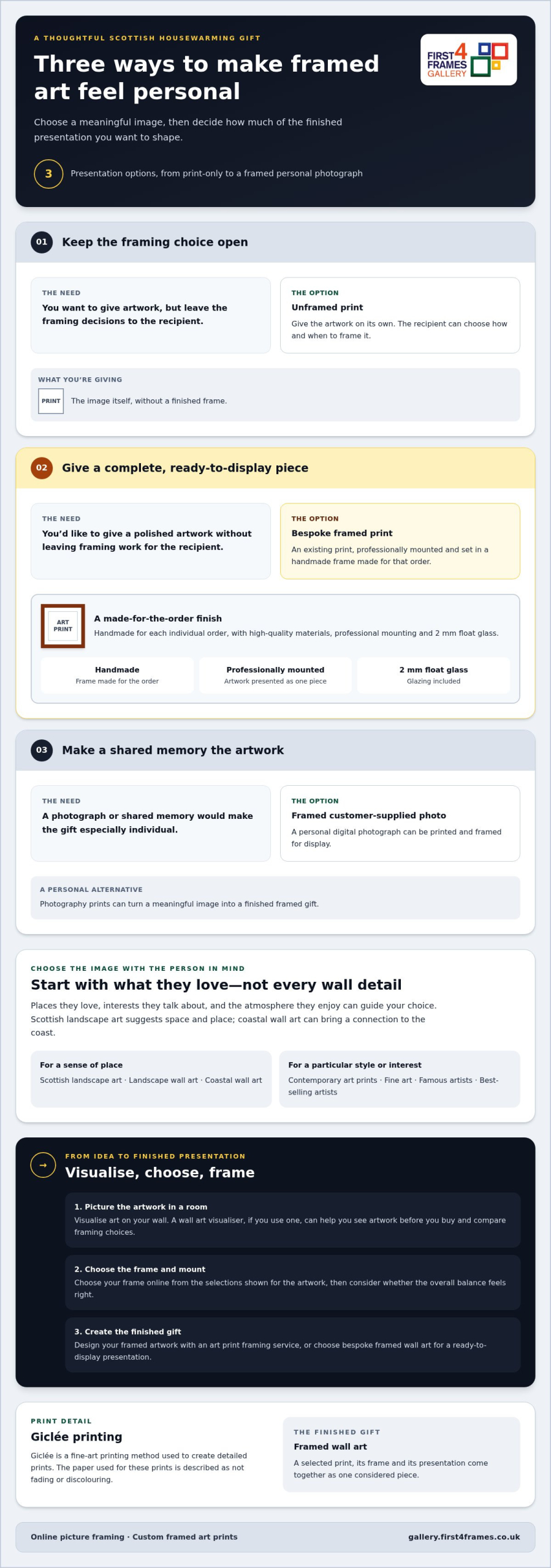
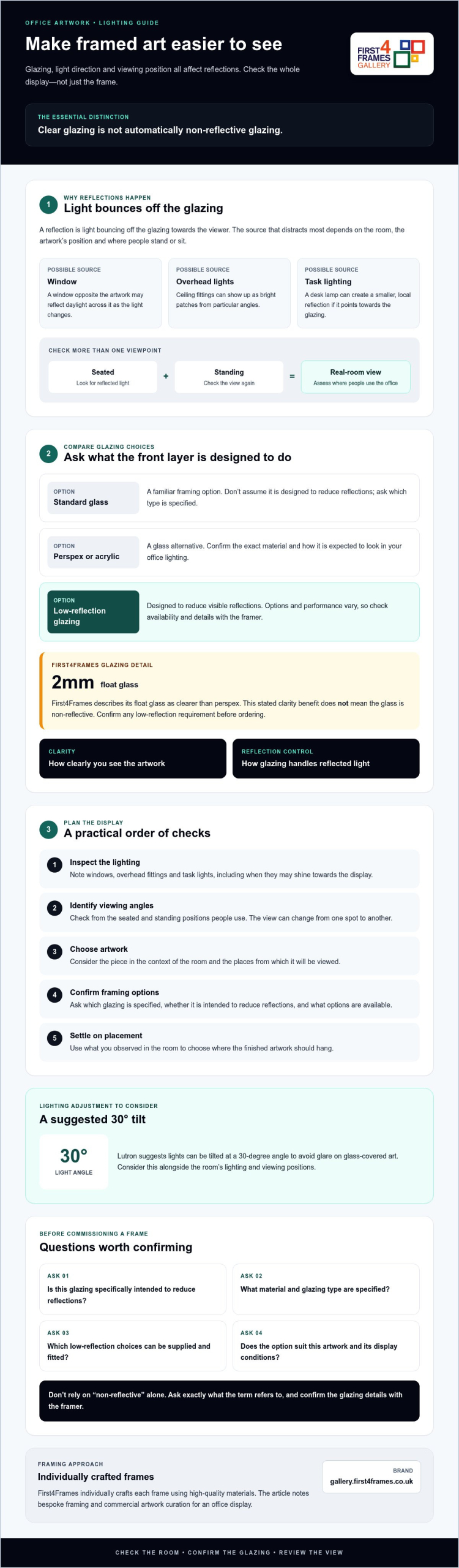
A beautifully framed print can still be difficult to enjoy when bright reflections compete with the image. Choosing non-reflective frames for office lighting involves more than the frame itself: glazing, light direction and artwork placement all play a part. Glazing terms can also be confusing when you’re comparing options for a professional-looking display.

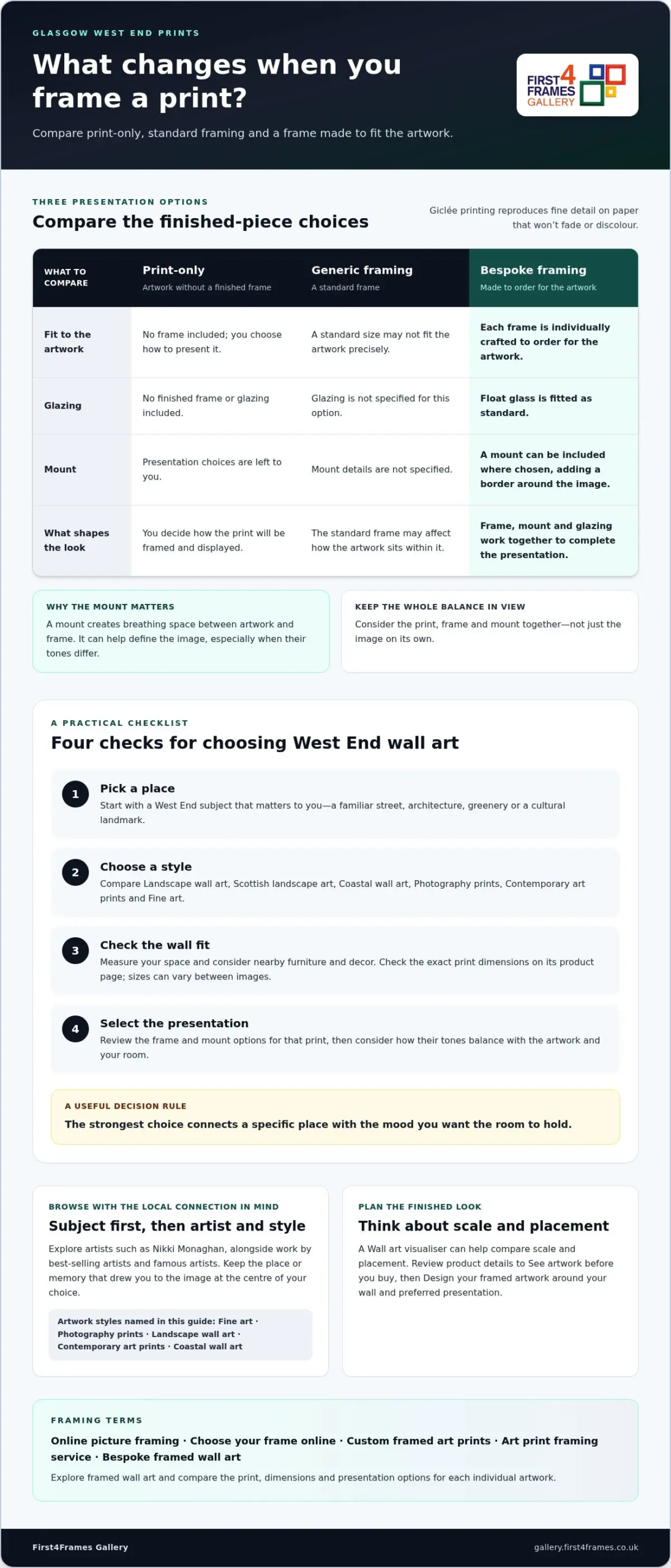
First4Frames Gallery individually crafts each frame using high-quality materials. Its framing service uses 2mm float glass, which it describes as clearer than perspex. That should not be mistaken for non-reflective glazing. If reflections are a concern, check directly with your framer which specialist glazing choices are available before ordering.

This guide explains what causes reflections and how glazing, lighting and placement can work together to make office artwork easier to see. Learn how anti-glare and anti-reflective glazing differ, what to consider when choosing framed wall art, and which questions to ask before commissioning custom picture framing.

Key Takeaways

  • Check how windows, overhead lights and viewing angles affect the display, then assess the lighting around the wall you’re considering.
  • Compare glazing choices when considering non-reflective frames for office lighting. Clear 2mm float glass is not necessarily glazing designed to reduce reflections.
  • Use a practical order of checks: inspect the lighting, identify viewing angles, choose artwork, confirm framing options, then settle on placement.
  • Explore bespoke framing and commercial artwork curation for an office display. First4Frames individually crafts each frame using high-quality materials.

Why office lighting creates reflections on framed artwork

A reflection is light bouncing off the glazing towards the viewer, not a feature of the frame itself. A window opposite the artwork may reflect across it as daylight changes. Ceiling lights can appear as bright patches, while a desk lamp may cause a smaller, local reflection. The most distracting source depends on the room and the artwork’s position.

Viewing angle matters too. A framed print may look clear from one spot and mirror a light source from another. Check it from the seated and standing positions people typically use in the office. For an overview of picture framing glass or acrylic, see the different glazing materials used in framing.

This short video demonstrates acrylic described as non-glare:

Which office lights and positions create the most glare?

Assess the artwork in the lighting conditions it will actually face. A window opposite the frame may reflect daylight directly, while overhead fittings can show up from particular angles. Task lighting can cause glare if it points towards the glazing. No single light source always dominates, so check from the usual seated and standing positions before deciding where the piece should hang.

Does a non-reflective frame mean non-reflective glass?

The frame surrounds and supports the artwork; glazing is the transparent front layer. The phrase “non-reflective frame” may refer loosely to the glazing or the finished display, so ask the seller exactly what it means and which glazing is specified. The frame shapes the presentation; the glazing determines how its surface handles light. First4Frames specifies 2mm float glass and describes it as clearer than perspex, but does not describe it as non-reflective. Confirm any low-reflection requirement before ordering.

Compare glazing choices for clearer framed art in an office

Glazing affects how clearly artwork can be seen and how reflections appear, but these are separate considerations. When choosing non-reflective frames for office lighting, compare the glazing itself rather than assuming the frame material controls glare.

Glazing choice What to consider
Standard glass A familiar framing option, but don’t assume it’s designed to reduce reflections. Ask what type is specified.
Perspex or acrylic A glass alternative. Confirm the exact material and how it is expected to look in your office lighting.
Low-reflection glazing Designed to reduce visible reflections, but options and performance vary. Check availability and details with the framer.

First4Frames specifies 2mm float glass and describes its clarity as superior to perspex. That stated clarity benefit doesn’t mean the glass is non-reflective. Clarity describes how clearly you see the artwork; reflection control describes how glazing handles reflected light. Availability depends on the framer.

What should you ask about anti-reflective glazing?

Ask whether the quoted glazing is specifically intended to reduce reflections, how the provider describes its performance, and whether it suits your artwork and display conditions. Confirm which options can be supplied and fitted, and ask for any relevant care guidance. Don’t rely on “non-reflective” alone; find out exactly what the term refers to.

How do clarity and reflection control differ?

Glazing can offer a clear view without being designed to minimise reflections. Consider both needs, then ask the framer to explain the available choices. Lighting placement may also help: Lutron suggests lights can be tilted at a 30-degree angle to avoid glare on glass-covered art.

To find artwork for your office, browse the framed artwork gallery, then confirm your glazing requirements directly before ordering.

Non-Reflective Office Lighting Frames: Buying Guide

How to choose and position framed artwork under office lighting

A practical plan helps you choose artwork that suits the office and stays visible from the places people use most. Before ordering non-reflective frames for office lighting, work through these steps:

  • Inspect the lighting. Note windows, overhead fittings and task lights, including when they’re likely to shine towards the display.
  • Identify viewing angles. Check sightlines from desks, meeting areas and circulation routes, from both seated and standing positions.
  • Choose the artwork. Consider the room’s purpose, existing colours and the atmosphere you want the art to create.
  • Confirm framing options. Ask the framer about suitable frame and glazing choices before placing your order.

How should you assess artwork placement before ordering?

Use a temporary paper outline or hold a sample print against the wall in a few possible positions. This helps you visualise the scale and placement before you buy. A wall art visualiser may also help if you have access to one, but don’t assume it’s provided by the seller. Check sightlines from desks and meeting areas. If reflections distract from the image, try moving the planned position or adjusting nearby lighting.

Which artwork styles suit a professional office?

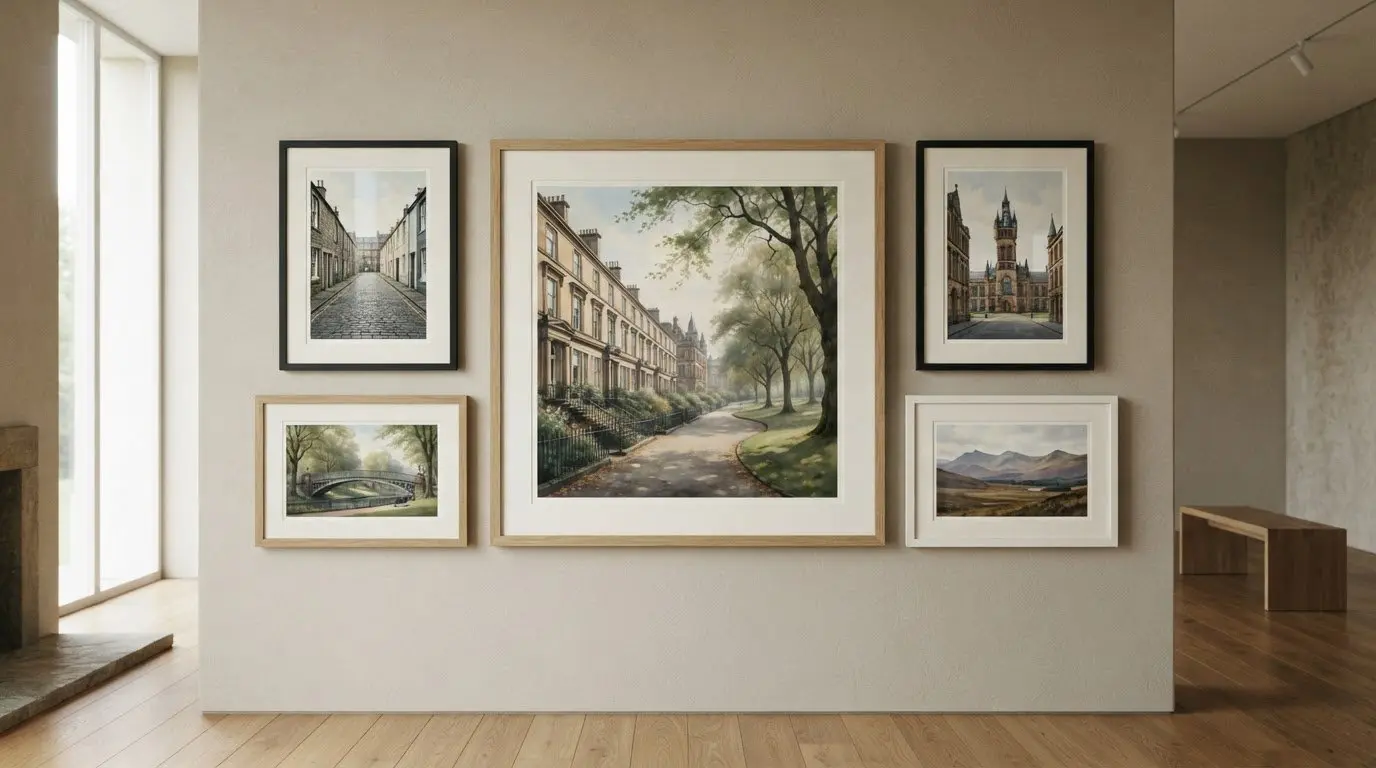
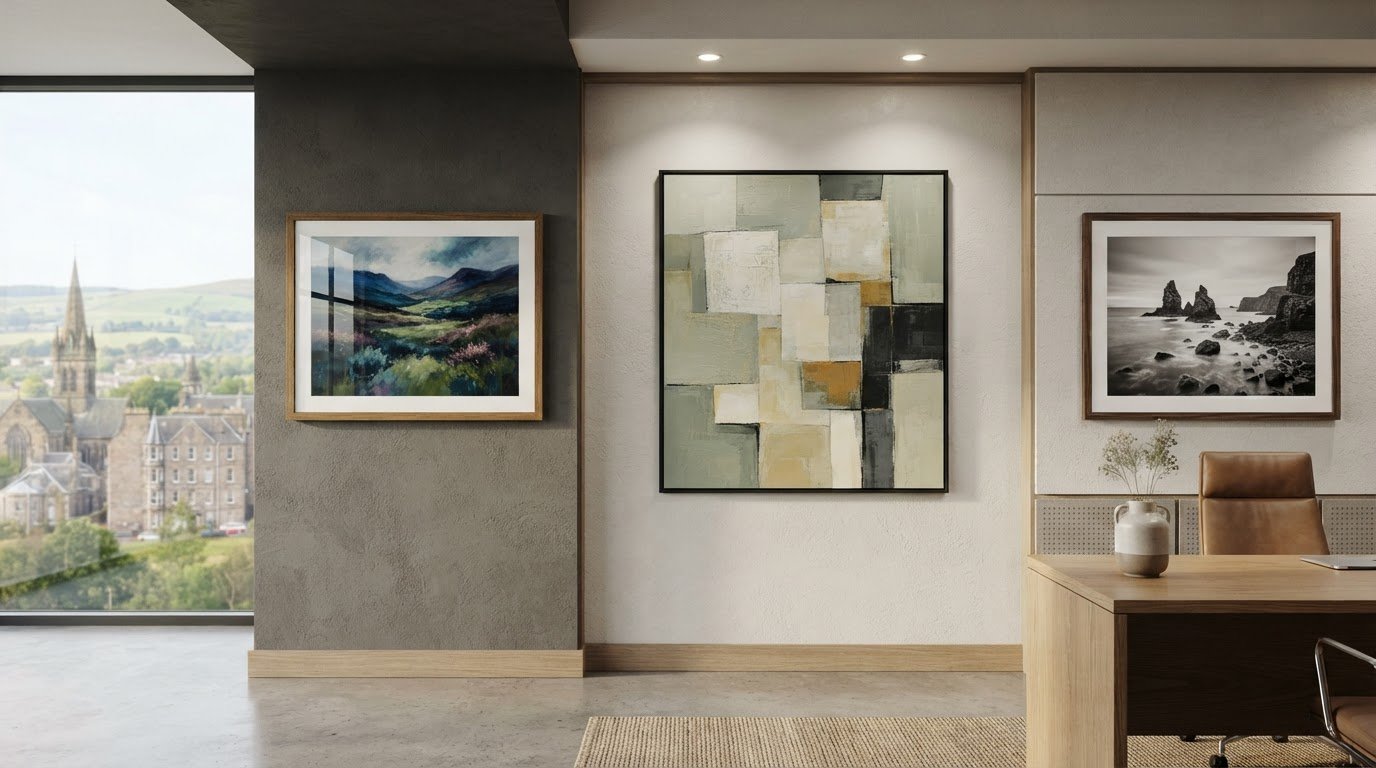
Choose imagery that supports the space without overwhelming it. Coastal wall art can suggest an open, restful mood; landscape wall art offers a broad range of natural scenes, while Scottish landscape art brings a more specific sense of place. Fine art, photography prints and contemporary art prints offer further options. If considering work by best-selling artists or famous artists, compare the image, scale and palette with the room before choosing a frame.

For broader frame-selection advice, consult Picture Frames: The Ultimate Guide. To explore artwork options for your office, browse the framed art gallery.

Choose bespoke framed wall art for a polished office finish

A well-chosen frame brings artwork into the room’s design, while suitable glazing and placement help keep it comfortable to view. First4Frames individually crafts each frame to order using high-quality materials. Bespoke framing lets you discuss how the frame should present the artwork and fit the space. Businesses planning a coordinated display can also consider commercial artwork curation.

First4Frames offers a selection of frames and artwork online. Choose a frame, then plan the finished piece around the print, office palette and intended position. If reflections are a concern, ask which glazing options are available rather than assuming a bespoke frame includes non-reflective glass.

What can an office ask a bespoke framer to tailor?

Discuss the artwork’s size and presentation, frame selection and any glazing requirements. First4Frames specifies 2mm float glass and describes its clarity as superior to perspex; this doesn’t mean it has anti-reflective performance. Confirm any low-reflection requirement directly with the framing service. These choices can help shape custom framed art prints through an art print framing service, creating bespoke framed wall art suited to the workplace.

How can businesses source office artwork and framed photographs?

Commercial artwork curation can help businesses furnish office spaces. First4Frames offers bespoke framing for prints, fine art, paintings and photographs. Businesses can discuss the artwork and framing requirements for their space, including the glazing and presentation they have in mind.

Explore framed wall art for your office and consider how each piece will work with its lighting, position and frame.

Make your office artwork clear and considered

Choosing non-reflective frames for office lighting means looking beyond the frame: glazing, light direction and viewing position all influence how easily artwork can be seen. Check the display from everyday desk and meeting-room sightlines, and confirm exactly what a framer means by “non-reflective” before ordering.

First4Frames individually crafts each frame to order using high-quality materials. Its framing uses 2mm float glass, described as clearer than perspex, but that clarity should not be mistaken for verified anti-reflective performance. Ask about glazing requirements directly. Businesses can also consider commercial artwork curation for a cohesive office display.

Thoughtful artwork choices and bespoke framing can help create a polished space that feels welcoming and reflects your workplace. Explore framed wall art for your office and find pieces to help bring your vision to life.

Frequently Asked Questions

Are non-reflective frames the same as anti-reflective glass?

No. “Non-reflective frame” doesn’t necessarily mean the frame includes anti-reflective glass. The frame is the structure surrounding the artwork, while glazing is the transparent front layer. Sellers may use the phrase informally, so ask what glazing is included and whether it’s specifically intended to reduce reflections. Don’t assume ordinary glass or a particular frame finish will control glare.

Does 2mm float glass stop reflections from office lights?

No. First4Frames specifies 2mm float glass and describes its clarity as superior to perspex, but clarity and reflection reduction are different qualities. Float glass can still show reflections from office lights, depending partly on light direction and viewing angle. Ask the framer whether lower-reflection glazing is available for your chosen artwork and frame before ordering.

How can I reduce glare on framed pictures in an office?

Start by checking the artwork from the places people usually sit or stand. Reflections can change with the sightline, so view the piece from desks and meeting areas, then try adjusting its position or nearby lighting. Before ordering non-reflective frames for office lighting, ask the framer about glazing options. The best approach depends on your room, windows, light sources and viewing angles.

Is perspex clearer than glass for picture framing?

Not necessarily. Performance depends on the specific glazing and your priorities. First4Frames describes its 2mm float glass as clearer than perspex, but this doesn’t establish that every type of glass is clearer than every acrylic. Ask the framer to explain the materials available and compare how they suit your artwork, office lighting and handling needs.

Can I order custom framed art prints for an office?

Yes. First4Frames offers bespoke picture framing, fine art prints and commercial artwork curation, so businesses can discuss artwork and framing requirements for their space. Frames are individually crafted for each order using high-quality materials. Confirm glazing choices directly, especially if reducing reflections under office lighting is important to your project.

Posted on

Adjusting the Hanging Hardware on a Frame: Step-by-Step Guide

Adjusting the Hanging Hardware on a Frame: Step-by-Step Guide

What if the reason your picture hangs crooked has nothing to do with your wall hooks? You can measure meticulously, but if hanging wire has slackened or factory brackets are misaligned, your artwork will inevitably tilt forward or drift off-centre. Learning the craft of adjusting the hanging hardware on a frame is the true secret to keeping any piece sitting securely and beautifully flush against the wall.

We know how frustrating it feels when a treasured print refuses to hang straight, especially when cheap fittings threaten to split delicate moulding or fail under the weight of authentic glass. In this guide, you will discover how to safely reposition D-rings, balance wire tension, and calculate proper weight support for your favourite pieces. Here is our practical, step-by-step walkthrough to achieving a secure, perfectly level finish every single time.

Key Takeaways

  • Understand the mechanics of D-rings, heavy-duty strap hangers, and wire tension to protect your walls and eliminate frame drift.
  • Master adjusting the hanging hardware on a frame using the proven one-third measurement rule to keep your artwork balanced and completely flush.
  • Safely calculate weight distribution for substantial timber profiles glazed with authentic 2mm float glass rather than lightweight synthetic alternatives.
  • Discover when to save time by choosing bespoke, ready-to-hang wall art fitted with workshop-grade hardware tailored specifically to your piece.

Identifying Frame Hardware: D-Rings, Wire, and Brackets Explained

Every well-crafted display relies entirely on what sits hidden behind the moulding. Before adjusting the hanging hardware on a frame, you need to understand the mechanical role each fitting plays. Proper selection protects your plasterwork, maintains level lines, and ensures your artwork hangs safely for years. As professional framers know, accurate hardware placement prevents tilt and structural frame joint separation entirely. Investing time in fitting the right components to your bespoke picture frames safeguards both your walls and your art.

Common Hardware Types and Their Ideal Weight Capacities

Different frame profiles and glazing weights demand specific load-rated fittings:

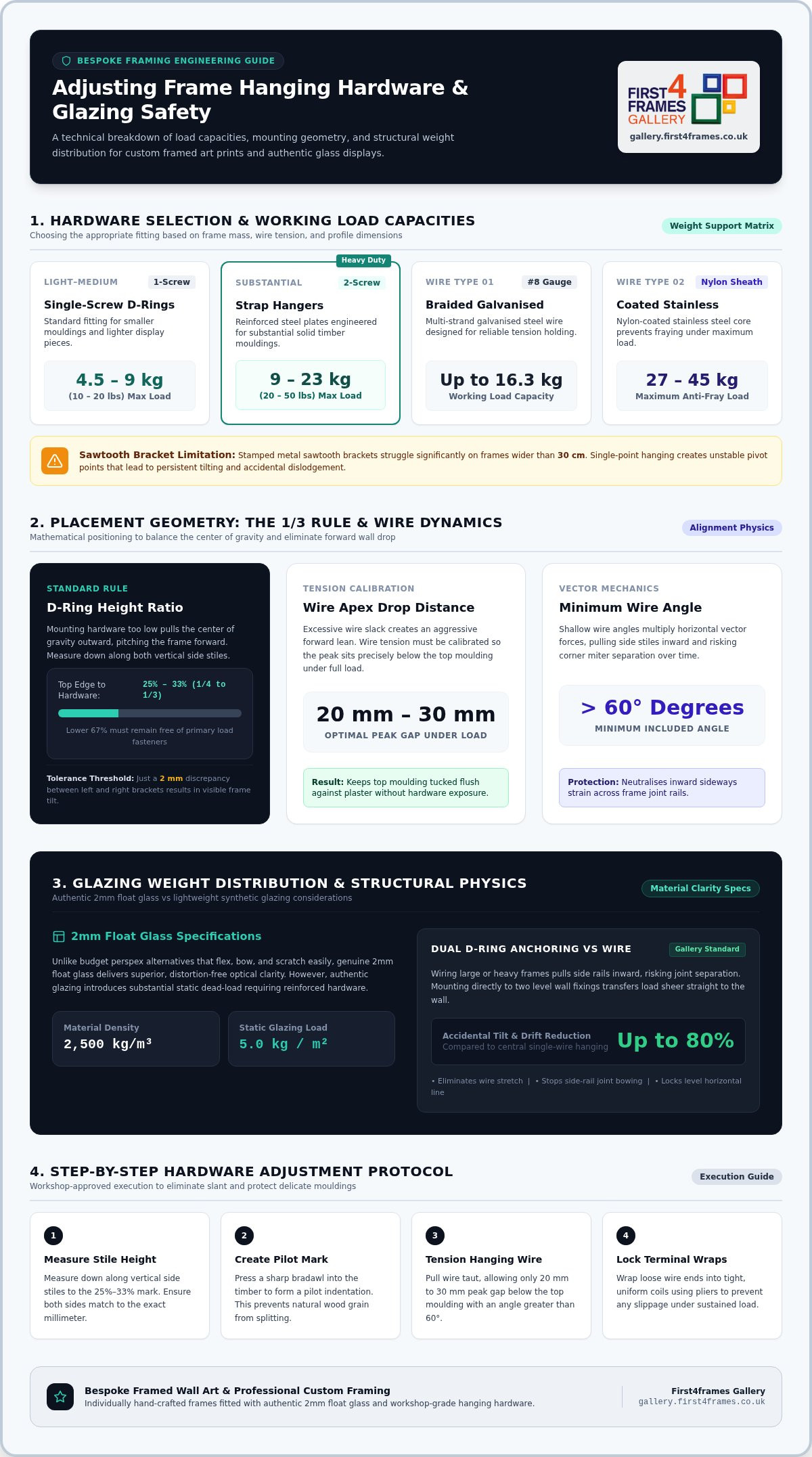
  • Single-screw D-rings: Rated for small to medium pieces weighing up to 4.5-9 kg (10-20 lbs).
  • Two-screw heavy-duty strap hangers: Ideal for substantial wooden mouldings, safely bearing 9-23 kg (20-50 lbs).
  • Braided vs. plastic-coated steel wire: Braided galvanised wire supports working loads up to 16.3 kg (#8 gauge), while nylon-coated stainless steel supports 27-45 kg without fraying.
  • Sawtooth brackets: Stamped metal brackets struggle on pieces wider than 30 cm, as single-point hanging causes unstable pivot points.

Why Flimsy Factory Hardware Causes Hanging Problems

Budget off-the-shelf mouldings often rely on pressed tin loops or tiny nails tapped into soft composite backing. Over time, downward tension forces these weak fasteners loose, risking wall gouges or catastrophic falls. Misaligned factory brackets also guarantee persistent tilting, as even a two-millimetre height discrepancy produces a noticeably crooked picture. For lasting stability, adjusting the hanging hardware on a frame by replacing flimsy factory fixings with solid, screw-anchored steel D-rings is essential.

Step-by-Step Guide to Adjusting the Hanging Hardware on a Frame

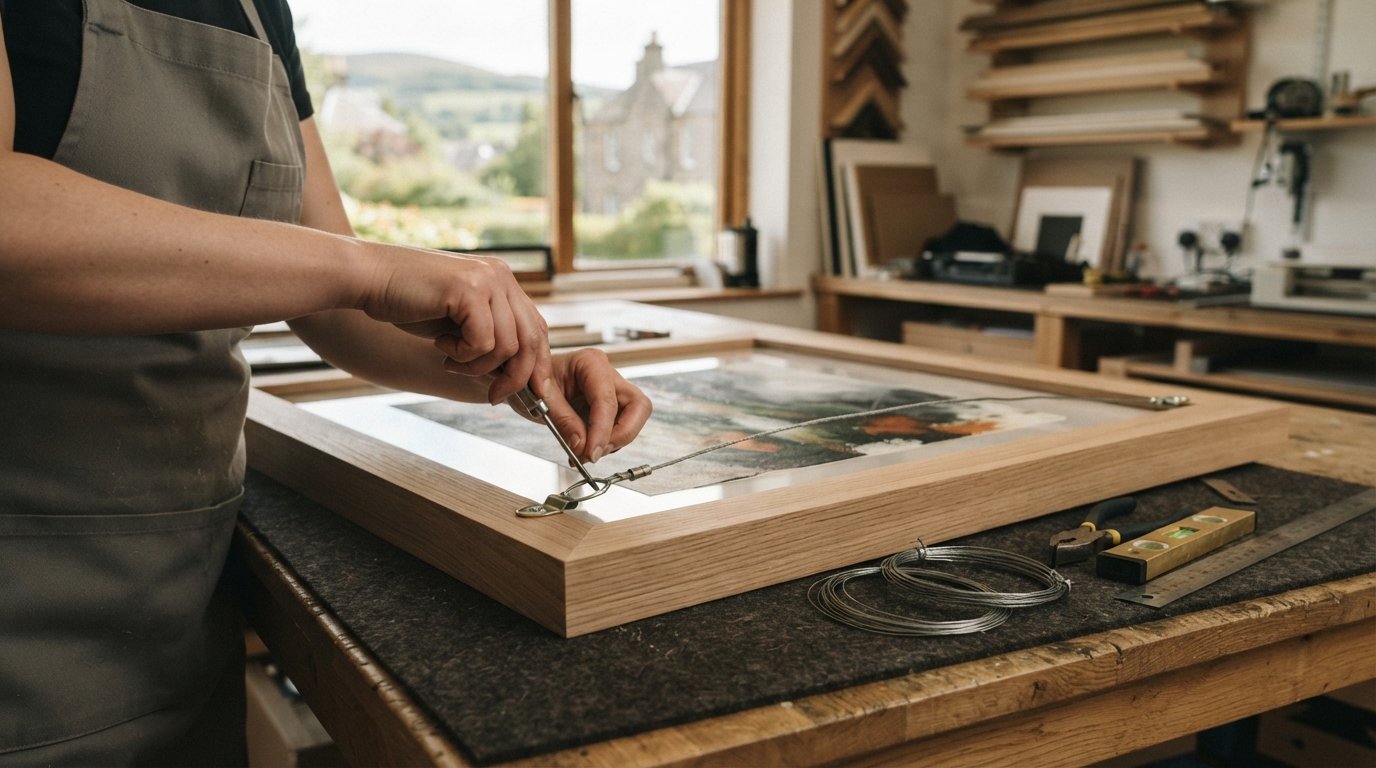
When adjusting the hanging hardware on a frame, you don’t need a full carpentry workshop. A steel tape measure, a sharp bradawl, and a precision screwdriver are plenty. Most hanging frustrations come down to uneven anchor points or excessive wire slack rather than poor wall fixings. By adjusting the hanging hardware on a frame directly, you can restore perfect alignment without drilling unnecessary holes in your plaster.

Repositioning D-Rings to Eliminate Slanted Artwork

Measure down along both vertical side stiles, placing your D-rings between one-quarter and one-third (25% to 33%) of the distance from the top edge. Hardware placed lower pulls the centre of gravity outwards, creating an unsightly forward drop. Once your marks match to the nearest millimetre, press a bradawl into the timber to form a pilot indentation. This simple step prevents the wood grain from splitting as you drive the screws home securely.

Shortening and Tensioning Hanging Wire to Stop Forward Tilt

Loose hanging wire is the main reason framed pictures lean away from the wall. To correct this issue:

  • Unwind the terminal wraps carefully without kinking the inner steel strands.
  • Pull the wire taut, leaving just enough slack so the peak sits 20 mm to 30 mm below the top moulding under tension.
  • Maintain an included wire angle greater than 60 degrees to prevent inward sideways strain on the frame rails.
  • Secure the loose ends with tight, uniform wraps using pliers so the wire cannot slip under load.

If you prefer ready-balanced artwork without the workshop tinkering, browse our curated bespoke framed wall art collection for pieces crafted to hang flush right out of the box.

Adjusting the Hanging Hardware on a Frame: Step-by-Step Guide

Securing Heavy Frames: Weight Distribution and Glazing Safety

Solid timber mouldings and archival backing create significant structural mass, especially when paired with authentic glazing. Unlike budget perspex that flexes and scratches easily, premium 2mm float glass delivers distortion-free optical clarity. However, with a density of 2,500 kg/m³ (5.0 kg per square metre), real glass adds considerable static load. When adjusting the hanging hardware on a frame carrying genuine glass, proper weight distribution becomes non-negotiable.

Hanging Directly from D-Rings Versus Using Cross Wires

Wiring wide or heavy frames pulls the side rails inward, risking joint separation over time. Gallery testing shows mounting directly onto two level wall fixings via D-rings reduces accidental drift and tilt by up to 80% compared to a single central wire loop. By resting the frame directly onto two wall anchors, you eliminate wire stretch and keep the load sheer against the wall. For comprehensive display guidance, explore our expert insights on custom picture framing to safeguard your display.

Protecting Float Glass and Frame Mouldings During Adjustments

Never carry out hardware adjustments while a frame rests on a bare floor or hard table. Place a soft, folded woollen blanket on your workbench before laying the frame face down. This cushions the moulding profile and relieves uneven pressure points that could otherwise fracture the 2mm float glass. Double-check screw lengths before adjusting the hanging hardware on a frame to ensure fasteners never penetrate through to the front rebate.

Ready to upgrade your home with professionally mounted art? Explore our bespoke framed art collection to find pieces balanced and fitted for effortless hanging.

Eliminate Hanging Headaches with Professional Ready-to-Hang Framing

While mastering DIY adjustments solves immediate problems, true display perfection begins at the craft bench. Cheap, mass-produced store frames rely on standard dimensions and flimsy stamped brackets that often pull away from soft synthetic mouldings. In contrast, choosing hand-made bespoke framed wall art ensures your display arrives precisely weighted, balanced, and ready to hang on your wall immediately. You skip the delicate hassle of adjusting the hanging hardware on a frame entirely.

Why Bespoke Custom Framing Offers Superior Balance and Longevity

Every bespoke piece from First4Frames Gallery is individually crafted to order in our Falkirk workshop. Rather than relying on generic fixings, we calculate the exact centre of gravity for each piece, fitting heavy-duty D-rings paired with crystal-clear 2mm float glass. Reinforced timber corner joints prevent bowing, whilst multi-layer bespoke packaging ensures professional UK couriers deliver your finished artwork completely pristine and ready for mounting.

Design Your Display Online with Digital Wall Visualisers

Curating your home gallery should feel inspiring, not intimidating. Through modern online picture framing tools, you can:

  • Use an interactive wall art visualiser to visualise art on your wall before ordering.
  • See artwork before you buy to verify scale, frame widths, and mount colours.
  • Choose your frame online and design your framed artwork alongside fine art photography prints or contemporary art prints.
  • Select custom framed art prints celebrating coastal wall art, landscape wall art, and evocative Scottish landscape art from famous artists and best-selling artists.

Whether you require a full art print framing service, want to upload personal digital pictures through our print and frame workflow, or need custom dimensions, professional framing bypasses tricky hardware woes. Explore our curated selection of bespoke ready-to-hang art to display your collection with effortless confidence.

Transform Your Walls with Perfectly Balanced Framed Art

Taking time to get your fittings right transforms how your collection looks in your home. By mastering adjusting the hanging hardware on a frame, you’ll correct forward tilt, balance wire tension, and safely anchor heavy timber mouldings. Whether you reposition D-rings or switch to direct dual-point wall fixings, precision alignment keeps your favourite pieces hanging level and flush.

If you want to avoid workshop guesswork entirely, choosing expertly hand-crafted framing makes all the difference. Every bespoke frame from our Falkirk workshop is built to order with individually fitted hardware and glazed with crystal-clear 2mm float glass rather than cheap perspex. Arriving in multi-layer protective packaging via professional UK couriers, your artwork is ready to mount with total confidence. Find perfectly balanced, ready-to-hang framed art today and give your living space the striking display it deserves.

Frequently Asked Questions

How do I stop a picture frame from tilting forward from the wall?

Shorten your picture hanging wire and reposition your mounting hardware higher up the frame rails. When wire has too much slack or D-rings sit below the upper third, gravity pulls the top forward. Tighten the steel wire so it deflects only 20 mm to 30 mm beneath the top moulding, or mount directly to hooks. Adding small felt pads to the lower corners also keeps the frame perfectly flush.

Where should D-rings be placed on the back of a picture frame?

Position D-rings precisely one-quarter to one-third of the total frame height down from the top edge. Measuring along both side stiles within this range creates an ideal centre of gravity. If placed too low, the artwork tilts away from the wall; placed too high, the hanging hooks become visible. For flawless balance, measure accurately to the millimetre before adjusting the hanging hardware on a frame.

Can you adjust hardware on a frame without removing it from the wall?

No, you should always take the frame down from the wall before attempting hardware adjustments. Trying to tighten screws or reposition brackets while the piece is suspended risks gouging your plaster or dropping the frame. Lay the piece face down on a soft, padded blanket instead. This workshop precaution protects delicate mouldings and authentic glazing, such as 2mm float glass, from unexpected pressure cracks or scratches.

Why is my picture frame still crooked when the wall hooks are level?

A crooked frame despite level wall fixings almost always indicates misaligned brackets or uneven wire knots on the frame itself. Even a two-millimetre discrepancy between left and right D-rings produces a noticeable tilt. When adjusting the hanging hardware on a frame, use a steel ruler to ensure both fittings sit at identical heights from the top edge, and verify that the hanging wire hasn’t slipped on one side.

Is it better to hang a heavy frame using picture wire or D-rings directly?

Direct hanging from two D-rings is far superior and safer for heavy or oversized frames. Stringing heavy glass-glazed artwork with wire exerts intense inward tension on side rails, which can pull timber corner joints apart over time. Resting D-rings directly onto two level wall anchors distributes static weight evenly, prevents wire stretch, and reduces accidental tilting by up to 80% compared to single-point hanging.

Posted on

Elevate Your Space with Timeless Black & White Wall Art

Elevate Your Space with Timeless Black & White Wall Art

What if your home decor could command the same quiet authority as a professional gallery? Most homeowners agree that a striking piece of Black and White Wall Art should be a room’s soul; yet many settle for mass-produced prints protected by cheap, glare-heavy perspex. It’s frustrating when a beautiful Scottish landscape or contemporary art print arrives in a frame that doesn’t fit correctly or begins to fade within months. At First4Frames Gallery, we believe your art deserves better than standard retail compromises.

In this article, you’ll discover how to achieve a gallery-grade look using our bespoke framed wall art service. We’ll explain why we insist on using premium 2mm float glass for superior clarity and how our giclée art print framing service ensures your investment lasts for decades. You’ll learn how to choose your frame online and use our wall art visualiser to see artwork before you buy. From custom framed art prints to our professional online picture framing process, elevating your home is now a simple and inspiring journey.

Key Takeaways

  • Discover how Black and White Wall Art creates a timeless focal point that adapts to any interior, from traditional Scottish landscapes to contemporary minimalist designs.
  • Learn why premium 2mm float glass and archival Giclée prints are superior to cheap perspex alternatives for maintaining long-term art clarity.
  • Understand the importance of bespoke framing, where every piece is individually handcrafted to ensure the perfect proportion and fit for your specific artwork.
  • Explore how to use a wall art visualiser to see artwork before you buy, allowing you to design your framed artwork with complete confidence.

Why Black and White Wall Art Remains the Ultimate Interior Choice

To better understand the visual impact of these textures and tones, watch this helpful video:

Choosing Monochrome photography or fine art prints isn’t just about the image; it’s about the presentation. To achieve a true gallery effect, your art needs more than a standard retail frame. A genuine piece of Bespoke Framed Wall Art is individually crafted for your specific order using professional-grade materials. While mass-produced frames often use cheap perspex that creates a milky glare, First4Frames Gallery uses 2mm float glass. This premium component ensures absolute clarity, allowing the deep blacks and subtle greys of your print to shine through without distortion.

Monochrome Themes: From Coastal to Scottish Landscapes

There’s a unique power in seeing Scottish landscape art stripped of its colour. In monochrome, the rugged textures of the Highlands and the dramatic shadows of the glens take centre stage. This style of landscape wall art creates a timeless atmosphere that feels both historic and modern. It’s a popular choice for those who want to bring a sense of heritage into their space without the visual weight of a traditional oil painting.

Similarly, coastal wall art in black and white captures the raw movement of the sea. Without the distraction of blue water, you focus on the foam of the waves and the grit of the sand. Whether you’re browsing contemporary art prints or photography prints from best-selling artists, choosing a bespoke finish ensures your art fits your wall dimensions perfectly. You can use our wall art visualiser to see artwork before you buy, ensuring your chosen piece commands the room exactly as you intended.

Beyond the Poster: Why Giclée Prints and 2mm Float Glass Matter

Many high-street retailers sell what they call stylish prints, but these are often basic digital posters on thin paper that lacks texture. Giclée printing is a high-resolution inkjet process using archival inks for museum-quality results. This method ensures your Black and White Wall Art retains its deep tonal range and intricate details for decades without fading. When you invest in fine art, the quality of the paper and ink determines whether the piece feels like a temporary decoration or a permanent part of your home.

Professional presentation requires more than just a high-quality print. It demands museum-quality framing standards to truly elevate the piece into a focal point. While competitors often use cheap, lightweight materials to save on costs, First4Frames Gallery focuses on the structural integrity of every order. Using archival-grade materials ensures that contemporary art prints or photography prints don’t yellow or warp as the seasons change.

Glass vs. Perspex: The Professional Verdict

A common pitfall in the framing industry is the use of perspex or acrylic glazing. While it’s cheaper and lighter to ship, it often distorts the sharp contrast essential for monochrome art. Perspex attracts static, which pulls dust toward your art, and it scratches with even light cleaning. We use 2mm float glass because it provides superior visual fidelity. This ensures the crisp whites and velvety blacks of your Scottish landscape art remain perfectly clear from every angle without the milky haze often seen on plastic covers.

High-quality components do more than look good; they protect your investment. Unlike mass-produced frames that might not fit the artwork properly, our individually crafted frames provide a secure, tailored environment. This precision prevents moisture from damaging the fine art paper and keeps the mount perfectly aligned. Whether you are choosing works by famous artists or using our “print and frame” service for your own photos, the result is a gallery-grade product designed to last. You can explore our full range of designs and see how professional materials transform fine art in our online gallery.

Elevate Your Space with Timeless Black & White Wall Art

Selecting the Perfect Bespoke Frame for Your B&W Art

Framing is more than just a border; it’s a structural extension of the art itself. When choosing Black and White Wall Art for timeless black and white interior design, the choice of frame material and profile is critical. Unlike mass-produced alternatives from big-box retailers, a Bespoke framed wall art piece is individually crafted. This ensures the frame fits the artwork perfectly, making our Custom framed art prints far superior to off-the-shelf options that often leave unsightly gaps or overlap the image incorrectly.

Craftsmanship matters. Every frame we produce is hand-made in our workshop in Central Scotland. This local approach contrasts sharply with imported, mass-market frames that often use flimsy joins and imitation wood. By choosing a UK-made product, you’re investing in a frame that won’t warp or separate at the corners over time. To understand how dimensions work for your specific space, you can consult our guide on bespoke photo frames.

Contemporary vs. Traditional Framing Styles

For sleek Contemporary art prints, a thin, minimalist black or white frame often works best. It keeps the focus on the artwork’s clean lines without adding unnecessary bulk. Conversely, dramatic Photography prints or Scottish landscape art may benefit from a deeper, textured frame. These profiles add architectural weight to a room, making the piece feel more substantial and grounded.

Proportion is the silent hero of a great display. Bespoke framing allows you to customise the mount width to match the scale of your Black and White Wall Art. A wide mount can make a small print feel like a grand statement piece, while a narrow mount keeps larger works from feeling overwhelming. Don’t settle for one-size-fits-all solutions when you can browse our curated collection of bespoke frames to find your perfect fit.

How to Design and Visualise Your Framed Artwork Online

Creating a bespoke display of Black and White Wall Art shouldn’t be a guessing game. Our Online picture framing platform is built to make the design process as seamless as the final product. You can Choose your frame online by browsing our extensive collection of materials and profiles. Once you’ve selected a style, our Wall art visualiser allows you to see exactly how the piece will look in a room setting. This “See artwork before you buy” feature removes the common anxiety about whether a frame size or mount width will suit your specific wall dimensions.

When you Design your framed artwork through our site, you’re not just ordering a product; you’re partnering with a workshop that values precision. We understand that it’s difficult to judge scale from a small screen. That’s why our interactive tools are designed to provide a realistic preview of your Custom framed art prints. Whether you’re selecting works by best-selling artists or framing your own memories, the goal is to provide total confidence before you reach the checkout.

From Digital File to Finished Masterpiece

If you have your own monochrome photography, our print and frame service turns your digital files into gallery-standard decor. Simply upload your image to our secure portal to begin. To ensure the best results with our large format Giclée printing, check that your files are high resolution. This allows us to maintain the crisp detail and deep contrast that defines high-quality Black and White Wall Art.

Logistics are the final piece of our professional service. We don’t believe in cutting corners when it comes to delivery. Every piece of Bespoke framed wall art is fully packaged in protective materials to prevent damage to the frame or the 2mm float glass. We ship all orders via professional couriers across the UK, ensuring your artwork arrives in perfect condition. This comprehensive Art print framing service combines the ease of modern technology with the reliability of traditional British craftsmanship.

Transform Your Home with Professional Artistry

Choosing the right Black and White Wall Art is about more than just picking a beautiful image. It’s about ensuring that the final piece reflects the quality and care you’ve put into your home decor. By opting for archival Giclée prints and our signature 2mm float glass, you’re choosing clarity and longevity over the temporary look of mass-market alternatives. Every frame we produce is hand-crafted in our Falkirk workshop; this ensures a bespoke fit and a level of detail that standard, off-the-shelf frames simply cannot match.

We’ve made the journey from inspiration to installation as straightforward as possible. Use our online tools to visualise your art on your wall and explore our vast collection of contemporary and traditional styles. Once your design is complete, we provide professional courier shipping with secure packaging to ensure your masterpiece arrives in perfect condition. We’re ready to help you turn your creative vision into a stunning reality that lasts for years to come.

Start designing your bespoke black and white wall art today at First4Frames and see how professional craftsmanship can truly elevate your space.

Frequently Asked Questions

What is the best frame colour for black and white wall art?

Black, white, or natural wood are the most effective choices for monochrome pieces. A black frame creates a classic, seamless look that extends the dark tones of the image, while a white frame offers a crisp, modern contrast. For a warmer aesthetic, natural oak can soften the starkness of the palette. You can use our wall art visualiser to test different colours against your specific decor before you buy.

Is perspex or glass better for framing fine art prints?

Real 2mm float glass is superior to perspex for framing fine art because it offers better clarity and scratch resistance. Perspex often creates a milky distortion and attracts static dust which can damage the print over time. Our Black and White Wall Art uses professional float glass as standard to ensure absolute fidelity. This allows the deep blacks and bright whites to be seen without the distracting glare associated with plastic covers.

Can I turn my own colour photos into black and white framed art?

You can certainly transform your colour photos into monochrome art through our specialised print and frame service. When you upload your digital file, you can select Black and White Wall Art as your preferred style. We use high-resolution Giclée printing to ensure your personal memories look just as professional as works by famous artists. It’s a simple way to design your framed artwork using your own unique photography.

How do I choose the right size frame for a black and white print?

The ideal frame size is determined by both the artwork’s dimensions and the scale of your wall. For a gallery-style statement, choose a frame that allows for a generous mount, typically adding several inches to each side of the print. Our online picture framing tools help you visualise art on your wall to ensure the proportions are correct. This prevents the common mistake of choosing a frame that feels too small for the room’s dimensions.

Why should I choose bespoke framing over ready-made high-street frames?

Bespoke framing provides a precision fit and professional-grade materials that mass-produced frames lack. Ready-made frames often use standard sizes that don’t fit the artwork correctly, leading to overlapping or unsightly gaps. Every piece we make is individually crafted in our workshop using premium 2mm float glass and high-quality wood. This ensures your custom framed art prints are protected from warping while providing a professional, gallery-grade finish that lasts for decades.