Have you ever browsed for beautiful art online, only to be stopped by the term ‘Giclée’? You see a higher price tag and wonder if it’s truly worth the investment, or if the stunning colours you love will fade over time like a standard poster. You’re not alone in asking what is a giclée print and whether it’s simply a fancy marketing buzzword. It’s a question that stands between many art lovers and a piece they truly adore, creating uncertainty where there should be excitement.
Here at First 4 Frames, we believe in the power of craftsmanship and clarity. This guide is your trusted resource, designed to demystify the world of fine art printing. We will explore the premium materials and precise techniques that define a Giclée, explain why its incredible longevity makes it a worthwhile investment for your home, and give you the confidence to choose a spectacular piece of art that will bring you joy for decades to come. Let’s embark on this journey of discovery together.
Key Takeaways
Get a clear answer to what is a giclée print and understand why this fine art process is the gold standard for artists and collectors.
Discover how specialised technology and archival-quality materials combine to create prints with spectacular colour accuracy and depth.
Understand the factors that contribute to a Giclée’s value, from the premium inks and paper to the craftsmanship required for a perfect finish.
Learn simple, effective care techniques to protect your art investment and ensure its beautiful, vibrant colours last for a lifetime.
Demystifying the Term: What Exactly is a Giclée Print?
So, what is a giclée print? In simple terms, a Giclée (pronounced “zhee-clay”) is a premium, gallery-quality art print created using a specialised, high-resolution inkjet printing process. It’s not a type of art, but rather a superior method of reproduction that captures the artist’s original work with breathtaking accuracy. The term itself was coined in the early 1990s to distinguish these beautiful, archival prints from everyday posters. It was a way for artists and galleries to signify a level of quality and craftsmanship that stood far above the rest. You can explore the full history of the term on Giclée on Wikipedia.
To see the difference this process makes, this short video offers a great visual explanation:
The Three Core Components of Quality
A print can only be called a true Giclée if it meets three exacting standards. This trifecta of quality ensures your artwork is not just a copy, but a lasting piece of art in its own right.
High-Resolution Digital File: It all begins with a flawless source. The original artwork is scanned or photographed to create a digital file with a resolution of at least 300 Dots Per Inch (DPI), ensuring every brushstroke and subtle detail is captured with perfect clarity.
Archival Pigment Inks: Unlike standard dye-based inks that can fade quickly, Giclée prints use up to 12 different pigment-based inks. These inks are lightfast and designed to resist fading for over 100 years, keeping your art as vibrant as the day it was printed.
Archival Substrate: The print is made on museum-grade, acid-free paper or canvas. This premium material prevents the yellowing and degradation that occurs with lower-quality papers, preserving the integrity of the print for generations.
Giclée vs. A Standard Poster: A World of Difference
While both might hang on a wall, a Giclée print and a standard poster are in completely different leagues. Think of it as the difference between fine dining and fast food. Here’s why a Giclée is a true investment in art:
Longevity: A Giclée is an archival piece designed to last a lifetime. A typical poster may start to fade and yellow within just a few years.
Colour: The advanced ink system of a Giclée printer produces a much wider range of colours, resulting in spectacular vibrancy and faithful reproduction of the original artwork.
Detail: Thanks to the high-resolution printing process, a Giclée captures every nuance and texture, creating a print with incredible depth and sharpness.
Feel: The weight and texture of the fine art paper or canvas provide a tangible sense of quality and luxury that a thin, glossy poster simply cannot match.
The Giclée Printing Process: Where Technology Meets Artistry
Creating a giclée print is far more than simply pressing ‘print’. It is a meticulous, multi-stage process where state-of-the-art technology is guided by the skilled hand of a print master. This fusion of precision engineering and human artistry is what separates a standard print from a spectacular piece of fine art. The goal is always the same: to produce a reproduction so faithful to the original that it captures its every nuance and emotion. Understanding this sophisticated workflow is central to answering the question, what is a giclée print?
Step 1: The Perfect Digital Capture
Everything begins with a flawless digital file. The original artwork is professionally scanned or photographed using ultra-high-resolution equipment to create a master digital copy. This isn’t a simple snapshot; it’s a painstaking process of colour correction and proofing, where the digital file is meticulously adjusted to match the tones, depth, and texture of the original source. This critical first step ensures every brushstroke, pencil mark, and subtle detail is preserved for the final print.
Just as a perfect digital file is the foundation for a stunning print, a professionally designed website is essential for artists to showcase their work to a global audience. This digital gallery needs to reflect the quality of the art itself. For example, an expert web design agency Cork can help artists translate their physical portfolio into a compelling online experience, ensuring their work is presented with the same fidelity online as it is in a Giclée print.
Step 2: The Printer and Inks
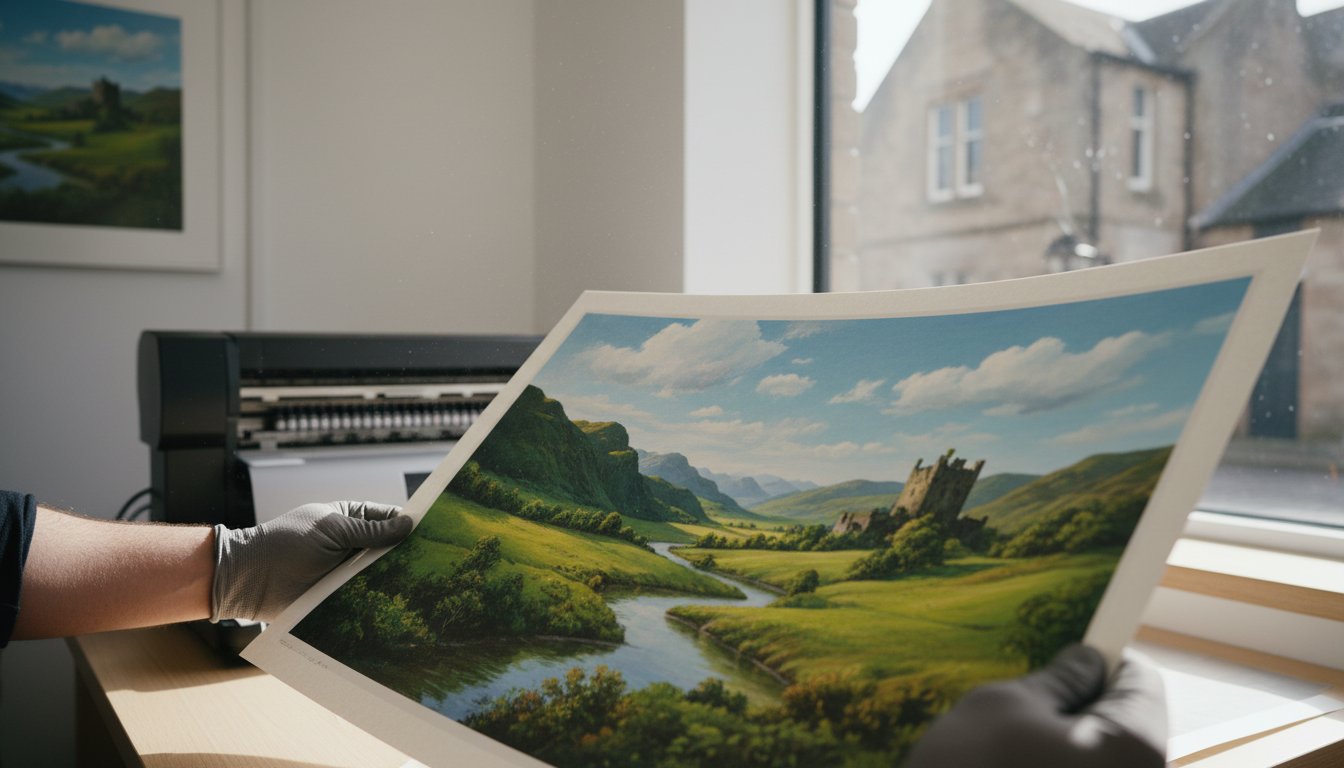
Giclée prints are created using professional, large-format inkjet printers that use between 8 and 12 different colour ink cartridges. This extensive palette allows for a much wider colour gamut, resulting in incredibly vibrant and accurate colours. These printers spray microscopic droplets of ink onto the paper with astonishing detail. Crucially, they use premium, light-fast pigment-based inks. Unlike standard dye-based inks which soak into the paper and can fade quickly, pigment inks bond with the surface, ensuring exceptional durability and archival quality for generations.
Step 3: Choosing the Right Paper
The surface a piece is printed on is just as important as the ink itself. The choice of paper, or substrate, plays a huge role in the final look and feel of the artwork. At a professional print studio, you will find a curated selection of premium, acid-free archival papers, including:
Matte Paper: A smooth, non-reflective surface perfect for detailed illustrations and photography.
Watercolour or Textured Paper: Mimics the feel of traditional art paper, adding depth and character.
Gloss or Satin Finishes: Enhance vibrancy and contrast, ideal for bold, colourful pieces.
Canvas: Offers a classic, painterly texture for reproductions of original paintings.
Each type is chosen to complement the specific artwork, completing the bridge between the artist’s original vision and your final, beautiful print.
Is a Giclée Print a Good Investment? Understanding Its Value
When you first see the price of a Giclée print, you might wonder why it costs more than a standard poster. The answer lies in its value as a piece of fine art. A Giclée is not a mass-produced decoration; it’s a premium reproduction crafted to last, bridging the gap perfectly between a disposable poster and a one-of-a-kind original painting. This makes exceptional art accessible to a much wider audience.
This principle of making art accessible extends beyond wall prints. For many, art is also a way to celebrate cultural passions. For instance, fans of music can find unique, wearable art that expresses their identity. Stores like The Jazz House offer apparel with artistic designs centered around specific genres, allowing enthusiasts to make art a part of their personal style.
The higher cost directly reflects the superior quality of its components. This includes:
Archival Materials: Acid-free, museum-grade paper and pigment-based inks are used to prevent fading and yellowing, ensuring the colours remain vibrant for over 100 years.
Advanced Technology: High-resolution inkjet printers capable of producing millions of colours are required, resulting in a print with stunning depth and accuracy.
Skilled Labour: Creating a perfect Giclée requires a master printmaker who can colour-match and calibrate the equipment to honour the artist’s original vision.
Limited Edition vs. Open Edition Prints
The investment potential of a Giclée can also depend on its edition type. A limited edition means only a fixed number of prints will ever be created. This scarcity, often combined with the artist’s signature and a unique number (e.g., 5/100), can significantly increase its value over time. An open edition, however, can be reproduced indefinitely, making it more affordable but less of a financial investment.
The Value of Longevity
Think of a Giclée print not as a simple purchase, but as an investment in art that will last a lifetime. A cheap £15 poster might look good for a year or two before it fades, but a £100 Giclée print will bring you joy for decades. When you consider its lifespan, the cost-per-year is remarkably low. It’s a piece of art that can be cherished, moved from home to home, and even passed down through generations as a family heirloom.
How to Spot a Genuine Giclée Print
When you’re trying to understand what is a giclée print in practice, quality is the key differentiator. A reputable gallery or printmaker will always be transparent about their process. Look for clear details on the paper and ink types used. The print itself should have a rich, velvety colour depth with smooth tonal transitions, and you should not be able to see any dots from the printing process with the naked eye. It’s this commitment to quality that defines a true Giclée.
How to Care For and Display Your Giclée Print for a Lifetime
Owning a beautiful giclée print is an investment in lasting art. These spectacular prints are crafted using archival materials designed to endure for generations, but their impressive longevity depends on proper care and display. Protecting your artwork from common environmental factors is simple, and it ensures the vibrant colours and exquisite details remain as stunning as the day you received them.
Handling and Placement Best Practices
Before your print is framed, it’s at its most vulnerable. The most significant threats are improper handling, moisture, and the number one enemy of any print: direct sunlight. To preserve its pristine condition, follow these simple guidelines:
Handle with care: Always hold your print by the edges to avoid transferring natural oils from your fingers onto the paper surface. For best results, use clean cotton gloves.
Keep it protected: Leave the print in its original protective sleeve or tube until the moment it’s ready for framing.
Choose your spot wisely: UV rays from direct sunlight will cause even the finest archival inks to fade over time. Hang your artwork on a wall that does not receive hours of direct sun, and keep it away from sources of moisture and heat, such as kitchens, bathrooms, or above radiators.
Why Professional Framing is Essential for Giclée Prints
While careful placement helps, professional framing is the ultimate form of protection. It is far more than a decorative border; it’s a purpose-built shield that preserves the quality of your artwork. Once you understand what is a giclée print and the archival technology behind it, you’ll appreciate why premium framing materials are so crucial. A professional frame provides:
UV-Protective Glazing: High-quality acrylic or glass can block up to 99% of harmful UV rays, acting as a permanent sunscreen for your art.
Acid-Free Mounts and Backing: Conservation-grade, acid-free materials prevent yellowing and stop chemicals from leaching into the paper over the years.
Proper Sealing: A well-sealed frame creates a stable micro-environment, keeping out dust, humidity, and insects that can cause irreversible damage.
The Final Touch: A Bespoke Frame
A bespoke frame is the perfect finishing touch, elevating your print from a picture into a true centrepiece. Tailored to the exact dimensions and aesthetic of your artwork, a custom frame acts as the perfect bridge between the art and your home’s décor. It is the single best way to honour the craftsmanship of your print and protect your long-term investment in fine art.
We hope this guide has demystified the world of fine art printing. You now understand that a Giclée is far more than just a print; it’s a testament to exceptional quality, longevity, and artistic fidelity. By knowing what is a giclée print, you can confidently invest in art that retains its spectacular colour and detail for generations to come.
Ready to bring this lasting beauty into your own space? At First 4 Frames, we pour our passion and expertise into every piece. Our prints are produced with archival-quality inks on museum-grade paper, showcasing a curated collection of talented Scottish artists. Each one is then expertly mounted and framed in our Falkirk workshop to create a true masterpiece for your wall. Discover the perfect ready-to-hang Giclée print for your home in our gallery and start your artistic journey today.
Frequently Asked Questions About Giclée Prints
How do you pronounce ‘Giclée’ correctly?
This is a common question! ‘Giclée’ is a French term, and the correct pronunciation is “zhee-klay”. The first part, ‘gi’, sounds like the ‘s’ in ‘measure’ or ‘pleasure’. The second part, ‘clée’, rhymes with ‘clay’. It’s a beautiful word that reflects the elegance and premium quality of the fine art printing process it describes, a technique we are passionate about here at First 4 Frames.
Are all inkjet prints considered Giclée prints?
No, this is a key distinction. While a Giclée print is made using an inkjet printer, not all inkjet prints meet the high standards of a Giclée. To qualify, the print must be created using specific archival-grade pigment-based inks on acid-free, archival quality paper or canvas. A standard home or office inkjet print uses dye-based inks and regular paper, which lack the colour accuracy, detail, and exceptional longevity of a true Giclée.
Can you tell the difference between a Giclée print and an original painting?
From a normal viewing distance, it can be remarkably difficult. A professionally produced Giclée captures the original artwork’s colour, detail, and tone with spectacular precision. The main difference becomes apparent upon very close inspection. An original painting often has a physical texture from brushstrokes or the artist’s materials, whereas the surface of a Giclée print is perfectly uniform and flat. It’s a near-perfect copy of the visual image.
How long will a Giclée print last without fading?
The longevity of Giclée prints is one of their most impressive qualities. When produced with archival pigment inks on high-quality, acid-free paper, a Giclée print can last for 100 to 200 years without any significant fading. To ensure this long lifespan, we always recommend displaying your artwork away from direct sunlight and protecting it behind UV-filtered glass as part of a bespoke frame. This protects your beautiful investment for generations.
Is it safe to clean the surface of a Giclée print?
Great care must be taken when cleaning a Giclée print. The surface, especially on fine art matte paper, is delicate and can be easily scuffed, scratched, or damaged by moisture. We strongly advise against using any liquid cleaners or rough cloths. If you need to remove dust, use a very soft, dry, clean brush (like one used for camera lenses) with the lightest possible touch. The best protection is always a professional frame with glazing.
What’s the difference between a Giclée and a lithograph?
The key difference is the technology used. Lithography is a traditional printmaking method that uses a printing plate-originally a stone, now often metal-to transfer an inked image onto paper. In contrast, understanding what is a giclée print involves a modern digital process. It uses a high-resolution inkjet printer to spray microscopic dots of archival ink directly onto the paper or canvas. This plateless method allows for superior colour fidelity and detail, creating a flawless fine art reproduction.
That empty space on your wall is calling for something beautiful, but the journey to finding the perfect piece can feel daunting. You want more than just a poster, but the world of art terminology, framing choices, and sizing can be overwhelming. What truly makes a print ‘fine art,’ and how can you be sure the piece you choose will look just as spectacular in your home for years to come, without fading? It’s the difference between a simple decoration and a timeless investment in your home’s personality.
Embark on a journey of artistic discovery with us. This guide is here to be your trusted partner, demystifying the process of selecting beautiful, long-lasting art with confidence. We’ll explore the exceptional quality behind professionally crafted Framed Fine Art prints and show you how to choose the perfect size, style, and bespoke frame to elevate your space. By the end, you’ll have all the knowledge you need to select a piece you’ll love for a lifetime, transforming your house into a home that truly reflects you.
Key Takeaways
Learn to distinguish a high-quality, long-lasting fine art print from a standard poster to ensure your art stands the test of time.
Discover how the right frame is more than just a border; it’s a crucial element that complements both the artwork and your room’s décor.
Understand the key principles for selecting Framed Fineart prints that not only match your personal style but also represent a worthwhile investment in your home.
Find out why opting for a professionally curated and framed piece removes the guesswork, guaranteeing a beautiful, high-quality result you’ll love for years.
What Exactly Is a Framed Fine Art Print?
When you invest in a framed fine art print, you’re acquiring more than just a picture for your wall. You’re bringing home a piece of art created with exceptional care, designed to last a lifetime. Unlike mass-produced posters that can fade and discolour, a fine art print is a high-quality reproduction of an original artwork, crafted using superior materials and techniques. It’s a perfect marriage of two key components: the spectacular quality of the print itself and the bespoke craftsmanship of the frame that houses it.
To see how this process comes to life, this video shows the care taken in mounting a beautiful print:
Beyond the Poster: The ‘Fine Art’ Print Difference
The distinction lies in the dedication to quality. A true fine art print begins with the printing process itself, a craft with a rich history. To understand the technical skill involved, it’s helpful to know What is Printmaking? in its broader context. We use the most advanced modern method, Giclée printing, which employs archival-quality inks. These specialised inks are designed to resist fading for decades, ensuring your art remains as vibrant as the day you bought it. This is paired with premium, acid-free paper that won’t yellow over time, preserving the print’s integrity and detail for generations.
The Power of Giclée Printing Explained
So, what exactly is Giclée (pronounced ‘zhee-clay’)? The term describes an advanced inkjet printing process where microscopic droplets of ink are sprayed onto high-quality paper. This method is the gold standard for artists, galleries, and museums for several reasons:
Incredible Detail: It captures every nuance and subtle tone of the original artwork.
Rich Colour Accuracy: The colour gamut is far wider than standard printing, resulting in deep, vibrant, and accurate colours.
Exceptional Longevity: When combined with archival paper, Giclée prints can last for over 100 years without significant fading.
The Frame’s Critical Role: More Than Just a Border
The print is only half of the story. A professionally chosen frame does more than just hang on a wall; it acts as the essential bridge between the artwork and your room’s decor. Its first duty is protection, shielding the delicate print from dust, moisture, and accidental damage. But beyond that, the right frame elevates the art, enhancing its colours and drawing your eye to the heart of the image. A thoughtfully crafted frame completes the piece, turning a beautiful print into one of the spectacular Framed Fineart prints that truly transforms a space.
The Art of the Frame: Choosing the Perfect Style for Your Print
A frame is far more than just a border; it’s the final brushstroke that completes a masterpiece. It acts as a bridge between your room’s décor and the artwork itself, enhancing the piece and protecting it for years to come. While the perfect choice is deeply personal, it’s a decision guided by a few key principles of design and craftsmanship. Understanding the core components-the frame material, the mount, and the glazing-is the first step. But don’t feel overwhelmed; our bespoke service is designed to make this process simple and inspiring, ensuring your Framed Fineart prints look spectacular.
Matching Frame to Art: Key Design Principles
The golden rule of framing is to complement, not compete. The frame should always serve the artwork. For a bold, contemporary abstract, a slim, minimalist black or white frame allows the colours to command attention. Conversely, a classic landscape or a traditional portrait might feel more at home in a warm, natural wood frame that echoes its organic mood. Consider the artwork’s dominant colours and choose a frame that either picks up a subtle accent colour or provides a beautiful, neutral contrast.
This is particularly true for personal commissions. For example, the award-winning work from portrait specialists like Wow Photography can be transformed into a timeless family heirloom with the right classic frame, preserving a moment in stunning detail.
Frame Materials & Finishes Explained
The material and finish of your frame define its character. Each option offers a distinct aesthetic, allowing you to tailor the final look to both the art and your interior style. Our curated selection focuses on premium quality and timeless appeal:
Natural Woods: Options like solid oak bring warmth, texture, and a touch of nature indoors. They are exceptionally versatile, suiting everything from botanical prints to rustic landscapes.
Sleek Metals: Aluminium frames offer a clean, contemporary, and industrial-chic look. Their slim profile is perfect for modern photography and graphic art.
Classic Finishes: You can never go wrong with the essentials. A simple black, crisp white, or elegant silver frame provides a gallery-quality finish that works with almost any piece of art and décor.
Mounts and Glazing: The Professional Finishing Touches
The details that truly elevate Framed Fineart prints are the professional finishing touches. A mount (also known as a mat) is the paper border between the frame and the print. Its purpose is twofold: it creates visual space, giving the artwork “breathing room” and drawing the viewer’s eye inward, and it prevents the print from touching the glass. To ensure longevity, we use only acid-free, conservation-grade mounts to prevent discolouration. Similarly, the glazing is your print’s shield. For a deeper understanding of archival methods, this conservation framing guide offers expert advice. Opting for glazing with UV protection is a worthy investment, safeguarding your art from fading and keeping its colours vibrant for a lifetime.
How to Select and Style Framed Art in Your Home
A beautiful piece of art is more than just an object; it’s a vital part of your home’s story. The right print, framed with professional care, can transform a room from a simple space into a personal sanctuary. Choosing art is an exciting journey, and styling it correctly ensures it becomes a spectacular and integrated feature of your décor, pulling the whole room together.
Choosing Art by Room: Living Room, Bedroom, and Beyond
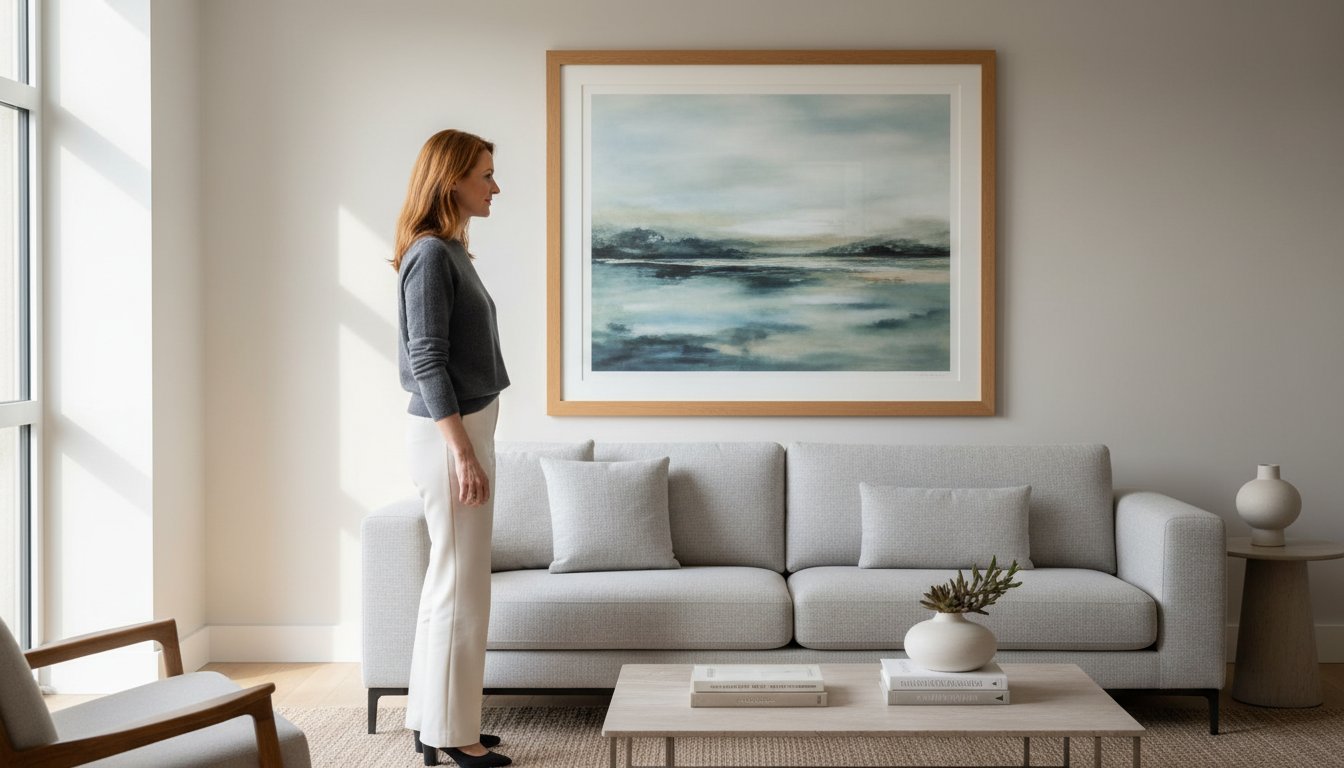
The function and feel of a room should guide your art choices. For social spaces like living rooms and entryways, consider a bold, statement piece that sparks conversation and sets an immediate tone. In bedrooms and private areas, opt for calming, serene artwork. Abstract landscapes or soft botanicals can create a tranquil atmosphere that promotes rest. For smaller nooks like kitchens, bathrooms, or a home office, a collection of smaller prints can add a touch of personality without overwhelming the space.
Getting the Proportions Right: Size and Scale
Achieving a balanced, professional look is all about proportion. A common mistake is hanging art that is too small for the wall, leaving it looking lost. To ensure your art feels perfectly placed, follow a few simple interior design guidelines:
Above Furniture: When hanging a piece over a sofa or headboard, choose art that is roughly two-thirds the width of the furniture below it. This creates a pleasing visual connection.
At Eye Level: Hang your art so its centre is at average eye level, which is typically 145-152cm (57-60 inches) from the floor. This is the standard for galleries and ensures comfortable viewing.
Visual Weight: A large, dark piece has more ‘visual weight’ and can anchor a room, while a collection of smaller, lighter pieces feels more airy and dynamic.
Creating a Cohesive Look: From Single Pieces to Gallery Walls
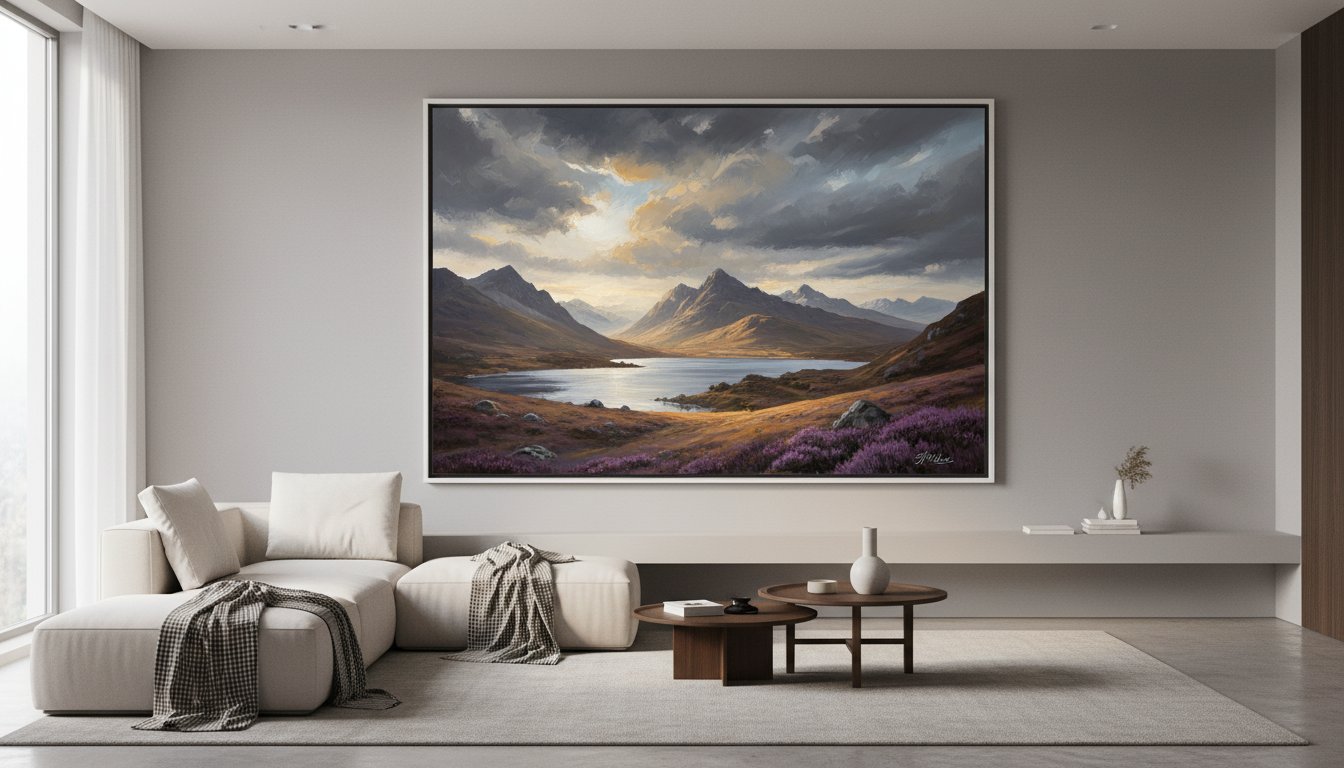
A single, oversized framed print can act as a powerful focal point, anchoring a room’s entire design scheme. It’s a simple yet dramatic way to make a confident impact. Alternatively, a gallery wall allows you to tell a more complex story with multiple pieces. For a cohesive display, start with a theme-perhaps a colour palette, a subject like travel, or a specific artistic style. Plan your layout on the floor first, mixing sizes and orientations for visual interest. Using consistent frame styles or colours is a brilliant way to unify a diverse collection of Framed Fineart prints. Need inspiration to get started? Explore our curated gallery walls.
Investing in Quality: Why a Professionally Framed Print is Worth It
While the initial cost of a professionally framed print might seem higher than off-the-shelf alternatives, it’s essential to view it not as a purchase, but as an investment. You are investing in the longevity of the art, the character of your home, and the value of true craftsmanship. A high-quality piece is designed to bring you joy for decades, making its long-term value far greater than that of disposable decor which may need replacing in just a few years.
Longevity and Durability: Art That Lasts a Lifetime
Our commitment to quality begins with the print itself. We use archival-grade Giclée printing on acid-free papers, ensuring the colours remain vibrant and true for a lifetime, without fading or yellowing. Professional framing then acts as a suit of armour for your art, protecting it from environmental threats. Unlike cheaper frames, our bespoke service includes:
Sealed Backing: To prevent dust and moisture from damaging the print.
Acid-Free Mounts: To ensure no discolouration seeps into the paper over time.
Sturdy Construction: To prevent warping and ensure the frame remains secure.
This level of protection means your art remains as beautiful as the day you bought it, a stark contrast to mass-produced items that quickly degrade.
The ‘Ready-to-Hang’ Advantage: Convenience and Perfection
Choosing one of our Framed Fineart prints eliminates the time, cost, and hassle of finding a separate professional framer. There’s no need to worry about measuring mounts, choosing the right materials, or risking damage during a DIY attempt. Your artwork arrives at your door perfectly finished, sealed, and ready to hang. We guarantee a flawless, gallery-quality presentation every time, allowing you to enjoy your new art immediately.
Supporting Artists and British Craftsmanship
When you invest in a piece from us, you are making a meaningful choice. Each purchase directly supports the talented artists we collaborate with, enabling them to continue their creative work. Furthermore, every frame is hand-built in our UK workshop by skilled craftspeople with years of experience. This celebrates local expertise and provides you with a thoughtfully made product, far removed from the impersonal nature of mass-produced decor. It’s a purchase you can feel truly good about, connecting you to a community of creators and artisans.
Ready to find a piece that will last a lifetime? Explore our gallery and discover the perfect work of art for your home.
The First4Frames Difference: Your One-Stop-Shop for Framed Art
Throughout this guide, we’ve explored the journey of selecting and preserving beautiful artwork. From understanding Giclée quality to choosing the perfect frame, the goal is to find a piece that truly resonates with you and your space. At First4Frames, we bring all these essential elements together under one roof, simplifying the entire process for you. We are not just a gallery or a framer; we are your dedicated partner in art.
Based in the heart of Scotland, we combine our passion for art with decades of craftsmanship to offer a unique, seamless experience. We believe that everyone deserves to own beautiful, professionally finished art without the hassle.
A Curated Collection of Fine Art Prints
Finding the right art can be a time-consuming search. Our gallery eliminates the guesswork by featuring a thoughtfully curated collection from a diverse range of talented artists, with a special focus on creators from Scotland and across the UK. This careful selection ensures every piece meets our high standards for quality and artistic merit, allowing you to discover spectacular works you won’t find anywhere else.
Bespoke Craftsmanship from Our Falkirk Workshop
A premium print deserves an exceptional frame. Unlike mass-produced alternatives, all our Framed Fineart prints are handcrafted to order by our experienced team in our Falkirk workshop. With over 20 years of bespoke framing expertise, we use high-quality, conservation-grade materials-sourced locally where possible-to protect and elevate your chosen artwork, ensuring it remains a stunning centrepiece for decades to come.
A Simple, Hassle-Free Process to Your Perfect Artwork
We believe acquiring beautiful art should be a joy, not a chore. Our customer-focused process is designed for absolute simplicity, letting you find and customise your perfect piece in just a few clicks:
Step 1: Browse our curated gallery and discover art you love.
Step 2: Choose from our selection of premium, handcrafted frames to find the perfect match.
Step 3: Place your order, and we’ll handle the rest, delivering your ready-to-hang artwork directly to your door.
Choosing art for your home is a deeply personal journey. As we’ve explored, the perfect Framed Fineart prints are a beautiful combination of a stunning image and a frame that acts as a bridge to your décor. Investing in professional quality ensures your chosen art doesn’t just hang on a wall, but truly elevates your space, becoming a cherished part of your story for years to come.
At First4Frames, we pour over 20 years of bespoke framing experience into every single piece. Hand-crafted with passion in our Falkirk workshop, our frames are designed to perfectly showcase our curated collection of leading Scottish and UK artists. We are your one-stop-shop for quality, craftsmanship, and spectacular art that will bring your home to life.
What is the difference between a fine art print and a poster?
The key difference lies in quality and longevity. A poster is typically mass-produced on thinner paper with inks that can fade. A fine art print, often a Giclée print, is created using premium, archival-quality paper and pigment-based inks. This professional process ensures spectacular colour accuracy and durability, so the artwork’s beauty will not fade over time. It’s an investment in true craftsmanship that will last for generations.
How do I clean and care for my framed fine art print?
To keep your artwork pristine, dust the frame gently with a soft, dry cloth. For the glazing, lightly spray glass cleaner onto a microfibre cloth (never directly onto the surface) and wipe carefully. Most importantly, hang your art away from direct sunlight and areas of high humidity, like bathrooms, to protect it from damage. This simple care will preserve the beauty of your professionally framed piece for years to come.
Can you frame a print or photograph that I already own?
Absolutely. We offer a full bespoke framing service to help you display your personal treasures. With over twenty years of experience, we can guide you through our selection of premium, handcrafted frames and mounts to find the perfect complement for your piece. Get in touch with our friendly team, and we will provide a hassle-free service to professionally frame the art you already love and own.
How long will it take to receive my ready-to-hang framed art?
Each piece is made to order with meticulous craftsmanship. Our standard delivery time within the UK is typically 7-10 working days from when you place your order. Once your beautiful artwork is professionally framed, packed, and ready, we will dispatch it via a trusted courier. You will receive a notification with tracking details, so you’ll know exactly when to expect your new art to arrive at your door.
Are the colours I see on my screen accurate to the final print?
We work hard to ensure the images on our website are as true to life as possible. However, all screens are calibrated differently, so minor colour variations can occur. You can be confident that our Giclée printing process produces a near-identical copy of the original artwork. Your final framed fine art print will have the rich, deep, and accurate colours intended by the artist, creating a spectacular finish for your wall.
What is the best way to hang a heavy framed print securely?
For larger or heavier framed fine art prints, we always recommend using two fixing points on the wall for stability and security. For solid masonry walls, use wall plugs and screws. For plasterboard, be sure to use appropriate heavy-duty fixings designed for hollow walls. Always check that your chosen hooks and fixings are rated to hold the weight of your artwork. This ensures your beautiful piece remains safely and perfectly in place.
There’s a special magic in discovering an artist whose work truly speaks to you. Perhaps you’ve been captivated by the breathtaking Scottish landscapes of Joseph Maxwell Stuart, feeling a connection to his dramatic skies and serene lochs, yet found yourself wondering about the man behind the canvas. You might recognise the name, but feel uncertain about what defines his unique style, or which of his beautiful paintings would be the perfect fit for your own home.
Choosing art shouldn’t be daunting; it should be a joyful journey. This guide is designed to be your companion, introducing you to the life and inspirations of this remarkable artist. We will explore the key themes and techniques that make his work so spectacular, giving you the confidence to not only appreciate his craft but to select a premium, professionally framed print. Prepare to connect with the art you love and find the perfect piece to bring the wild beauty of Scotland into your space.
Who is Joseph Maxwell Stuart? The Man Behind the Brush
Joseph Maxwell Stuart is one of Scotland’s most celebrated contemporary painters, renowned for his spectacular and atmospheric depictions of Scottish landscapes and cityscapes. Born in 1956, his passion for art was evident from a young age, leading him down a path of dedicated study and practice that would shape a remarkable career. His work masterfully captures the unique light and mood of his surroundings, from the dramatic coastlines of the Highlands to the historic streets of Edinburgh.
To see the artist at work and hear about his process, watch this insightful video:
Early Life and Artistic Education
The foundation of Stuart’s exceptional craftsmanship was built at two of the UK’s most prestigious art institutions. He began his formal training at the Ruskin School of Drawing in Oxford, where he honed his fundamental skills and developed a deep appreciation for classical techniques. Following this, he pursued a degree in Fine Art at the Edinburgh College of Art. This period was crucial in refining his artistic voice, allowing him to experiment and immerse himself in a city that would become a recurring subject in his beautiful work.
Developing a Unique Vision
Now based in the Scottish Borders, Joseph Maxwell Stuart finds endless inspiration in the rugged, ever-changing scenery right on his doorstep. A core element of his artistic practice is painting en plein air, or directly outdoors. This method allows him to respond immediately to the fleeting effects of natural light and weather, infusing his paintings with a sense of energy and authenticity. By working directly from nature, he captures not just a visual representation, but the very essence and atmosphere of a place, a skill that has defined his transition from a promising student to a highly respected professional artist.
The Artistic Style of Joseph Maxwell Stuart: Capturing Light and Atmosphere
The work of Joseph Maxwell Stuart is a masterclass in capturing fleeting moments. His style is deeply rooted in the traditions of Scottish Impressionism, focusing on the evocative power of light and atmosphere rather than minute, photographic detail. With every brushstroke, he invites the viewer to feel the crisp air, see the shifting light on the water, or sense the energy of a city street. His paintings are not just depictions of a place; they are invitations into a moment, filled with mood, drama, and a profound connection to the landscape.
Mastery of Light and Colour
Light is the central character in Stuart’s work. He masterfully manipulates his palette to render different times of day and seasons with spectacular effect. In a piece like ‘Afternoon Light, Iona’, warm golden hues convey the gentle decline of the day, while the crisp, low light in ‘Autumn Sunshine, River Tay’ evokes a distinct seasonal chill. His colour choices shift dramatically with his location; his iconic Scottish scenes are dominated by earthy greens, deep loch-side blues, and heather purples, whereas his Venetian works explode with terracotta, brilliant aquamarine, and sun-bleached whites.
Technique: Oils vs. Watercolours
Stuart’s versatility is evident in his command of both oil and watercolour, choosing the medium that best serves his subject.
Oils: His oil paintings possess a rich, tactile quality. He often applies paint with confident, visible brushstrokes, building up layers to create texture and a profound sense of depth, giving his dramatic landscapes a feeling of weight and permanence.
Watercolours: In contrast, his watercolours are defined by their fluidity and light. He allows pigments to bleed and blend on the paper, using its natural white to represent the brightest highlights. This technique is perfect for capturing the transient, misty atmosphere of a Scottish morning or a rain-slicked Edinburgh street.
‘En Plein Air’ – Painting in the Open
A key element of Stuart’s practice is painting ‘en plein air’, or in the open. This challenging method requires an artist to work quickly to capture the scene before the light changes. While his foundational drawing skills were honed at prestigious institutions like the Ruskin School of Art, Stuart was deeply inspired by the Impressionists’ commitment to this direct approach. Painting outdoors infuses his work with an unmistakable energy and authenticity, resulting in a fresh, immediate quality that simply cannot be replicated in a studio.
Key Themes and Inspirations: From the Royal Mile to Venetian Canals
The body of work by Joseph Maxwell Stuart is a spectacular journey through the places he holds dear. From the historic closes of his native Edinburgh to the sun-drenched canals of Venice, his paintings are united by a profound ability to capture the unique spirit and light of a location. He finds beauty in both iconic vistas and quiet, overlooked corners, inviting the viewer to see the world through his appreciative eyes.
The Heart of Scotland: Edinburgh Cityscapes
Edinburgh is undeniably the artist’s most enduring muse. Stuart masterfully depicts the city’s dramatic architecture and atmospheric charm, from the bustling Royal Mile to the tranquil elegance of Stockbridge and Dean Village. In works like ‘After the Rain, Royal Mile’, he transforms a familiar scene into something magical, using wet cobblestones to reflect the ancient stone and moody sky. His cityscapes capture a perfect balance between the city’s grandeur and its intimate, everyday moments.
Coastal Charm: North Berwick and the Scottish Seaside
In contrast to his urban scenes, Stuart’s coastal paintings are filled with a bright, breezy optimism. He frequently turns his attention to North Berwick and other seaside towns, capturing the crisp light and open space of the Scottish coast. Pieces such as ‘A Fine Day North Berwick’ and ‘Across the Bay’ are celebrated for their fresh palettes and tranquil compositions, depicting charming harbours, sweeping beaches, and calm seas. These works evoke the simple joy of a day spent by the water.
A Contrast in Colour: The Allure of Venice
Venice offers a vibrant counterpoint to the more muted tones of Stuart’s Scottish work. The Italian city is a recurring source of inspiration, allowing him to explore a different quality of light and a richer, warmer colour palette. His Venetian paintings are alive with sunlit canals, terracotta roofs, and the brilliant blue of the lagoon. He expertly captures the city’s bustling energy and romantic decay, showcasing his versatility as an artist who is equally at home in dramatically different environments.
Whether you are drawn to the historic streets of Scotland or the vibrant waterways of Italy, the diverse collection of Joseph Maxwell Stuart offers something truly special. Explore our full gallery to find the perfect fine art print for your home.
Owning a Joseph Maxwell Stuart: A Guide to Prints and Framing
The evocative cityscapes and tranquil coastal scenes of Joseph Maxwell Stuart have the power to transform a space, turning a simple wall into a window of artistic discovery. Bringing one of his pieces into your home or office is more than just decoration; it’s an investment in daily inspiration. This guide will help you select the perfect print and frame, making the journey from admirer to owner a simple and rewarding one.
Why Choose a Giclée Print?
To truly honour the detail and depth of the original artwork, we exclusively use Giclée printing. This is a premium, fine art digital printing process that uses archival-quality inks on acid-free paper. The result is a spectacular reproduction with unparalleled colour accuracy and longevity. A Giclée print captures every subtle nuance of the artist’s work and is guaranteed not to fade over time, ensuring your art remains as vibrant as the day you bought it.
Choosing the Perfect Frame for His Style
A frame is the bridge between the artwork and your décor, and for an artist like Joseph Maxwell Stuart, less is often more. His compositions are rich with atmosphere, so a frame should complement, not compete. We recommend simple, elegant mouldings to let the art speak for itself:
Natural Woods: An oak or ash frame adds warmth and texture that pairs beautifully with his coastal scenes.
Soft Whites & Greys: These create a clean, contemporary look, perfect for his modern cityscapes.
Classic Black: A timeless choice that adds a touch of sophistication and definition.
The versatility of Stuart’s work allows it to enhance any room. A large, dynamic cityscape can serve as a stunning focal point above a sofa in a living room or inspire creativity in a study. His serene coastal paintings are perfect for creating a calm, restorative atmosphere in a bedroom or hallway. For a more personal touch, consider grouping several smaller prints together to create a cohesive gallery wall that tells a story. The key is to choose a piece that resonates with you and the mood you wish to create.
Your Journey with Joseph Maxwell Stuart’s Art Begins Here
From the rain-slicked cobbles of the Royal Mile to the shimmering light on a Venetian canal, the art of Joseph Maxwell Stuart is a masterclass in capturing atmosphere. We’ve explored the man behind the brush and his unique ability to translate a moment’s feeling onto canvas with expressive strokes and a masterful command of light. His work is both deeply personal and universally appealing, transforming any space with its unique energy and narrative depth.
Bringing this spectacular art into your home is a seamless experience. As your one-stop-shop for beautiful Scottish art, we offer premium Giclée prints to ensure the lasting colour and quality of Stuart’s vision. With over 20 years of bespoke framing expertise, we professionally craft the perfect bridge between the artwork and your décor. Let us do the heavy lifting, so you can simply enjoy the view.
Joseph Maxwell Stuart honed his craft at the prestigious Edinburgh College of Art. This formal training is evident in his masterful control of the watercolour medium and his deep understanding of light, form, and composition. His education provided the strong foundation upon which he built his celebrated career, allowing him to capture the essence of the Scottish landscape with such profound skill and emotion, making his work instantly recognisable and deeply cherished.
What is Joseph Maxwell Stuart’s most famous subject?
While his portfolio is diverse, Joseph Maxwell Stuart is most famous for his spectacular depictions of Scottish wildlife, particularly the majestic stag. These powerful and evocative paintings capture the untamed spirit of the Highlands. His work masterfully portrays these noble creatures in their natural, atmospheric landscapes, from misty glens to snow-dusted mountainsides. This focus has made his stag portraits iconic and highly sought-after by collectors across the United Kingdom.
Does Joseph Maxwell Stuart paint in oils or watercolours?
Joseph Maxwell Stuart works primarily in watercolours, a medium he has truly mastered. This choice allows him to beautifully capture the fleeting light and unique atmosphere of the Scottish wilderness. Watercolour lends his work a wonderful translucency and fluidity, perfect for depicting misty mornings, dramatic skies, and the soft textures of an animal’s coat. The medium’s challenging nature makes his consistent and breathtaking results a testament to his exceptional skill as an artist.
Are the prints sold by First4Frames high quality?
Absolutely. We are passionate about quality and craftsmanship, and our prints reflect that commitment. Each piece is a fine art Giclée print, created using archival-quality inks on premium, heavyweight art paper. This meticulous process ensures a perfect, identical copy of the original artwork with spectacular colour accuracy and detail. Our prints are designed for longevity, meaning their beautiful, vibrant colours will not fade over time, allowing you to cherish your art for years to come.
How should I frame a Joseph Maxwell Stuart print?
To complement the natural themes in his work, we recommend a simple, high-quality frame. A natural oak or a soft, muted black or white frame works beautifully, acting as a bridge between the artwork and your décor without overpowering the piece. Including a mount is also essential; it provides visual space, drawing your eye into the image and giving the artwork room to breathe. Our bespoke framing service can help you find the perfect combination to protect and enhance your print.
Is Joseph Maxwell Stuart’s work a good art investment?
While the art market can be unpredictable, the work of Joseph Maxwell Stuart has an enduring appeal that makes it a popular choice for collectors. His originals can command prices well into the thousands of pounds (£). For many, a high-quality, professionally framed Giclée print offers a wonderful and accessible way to invest in a piece of timeless beauty for your home. It’s an investment in daily enjoyment and a connection to the spectacular art of a celebrated Scottish painter.