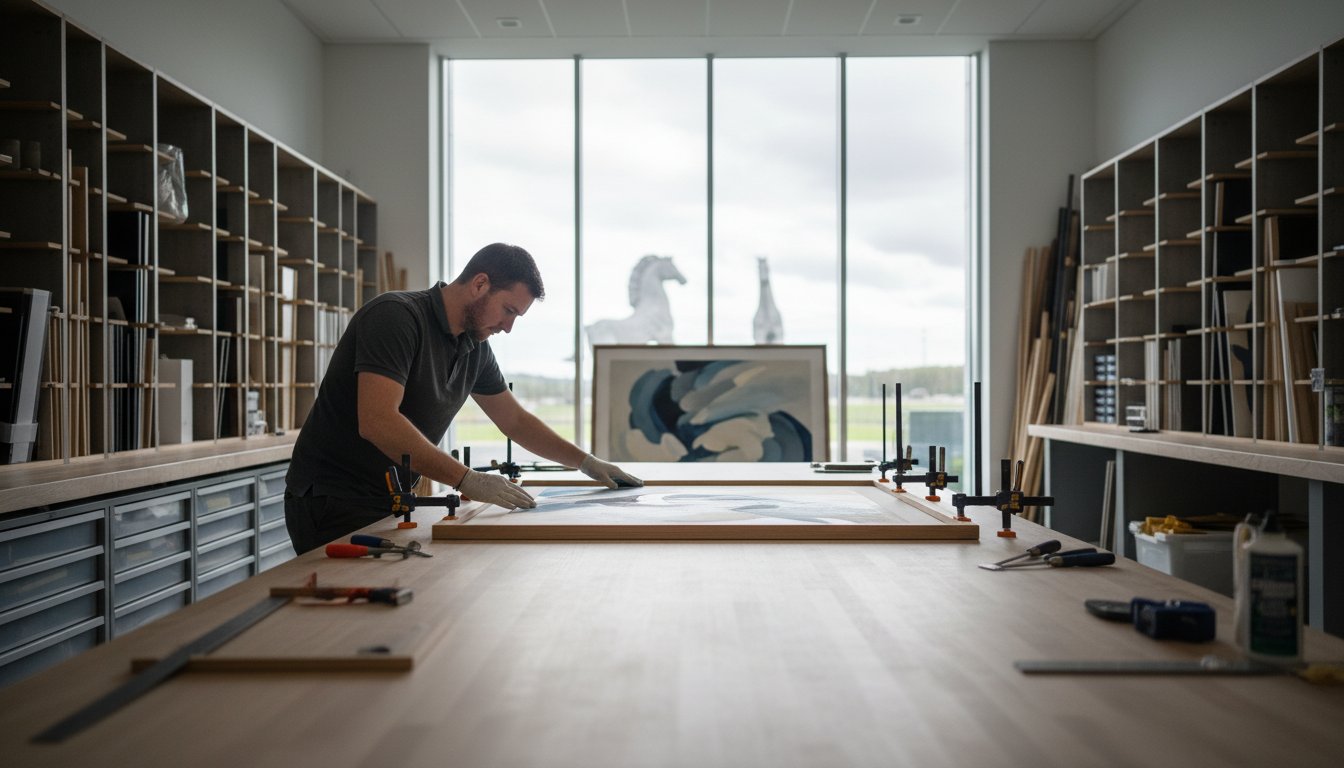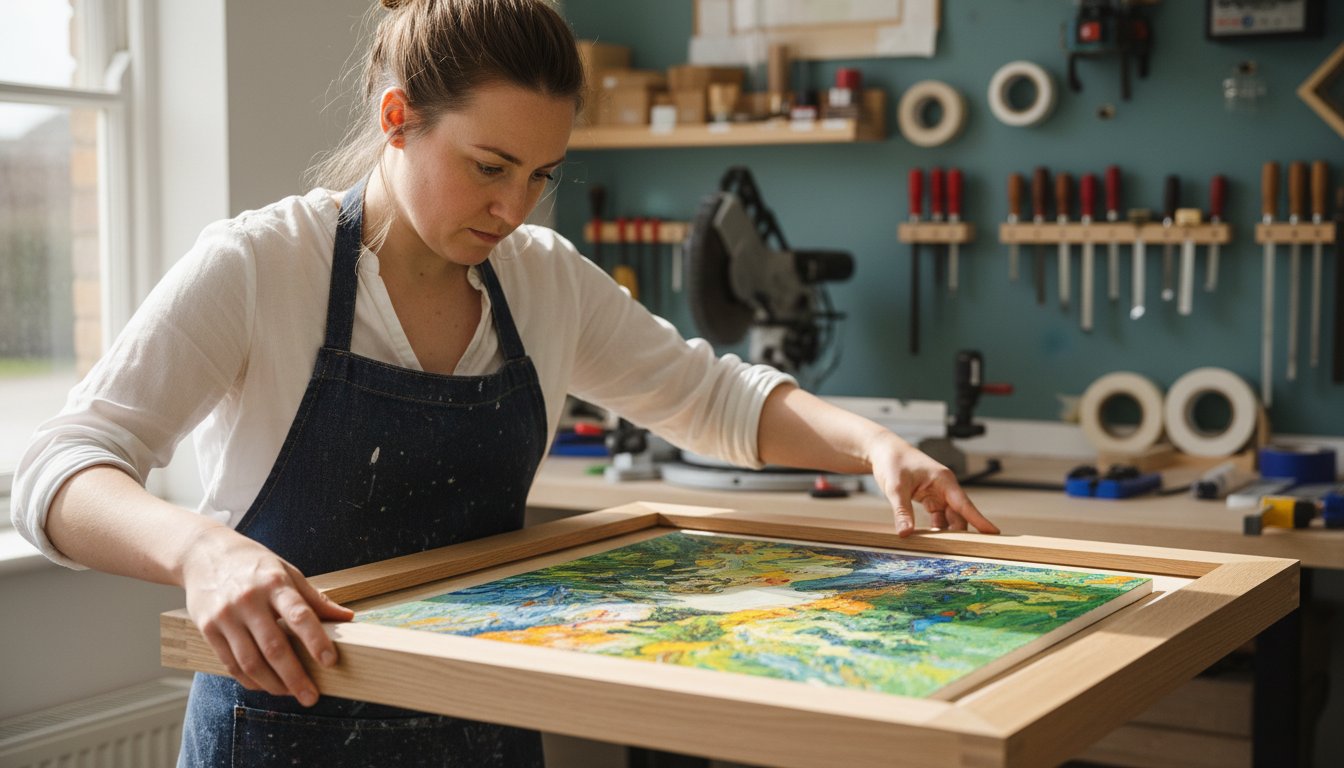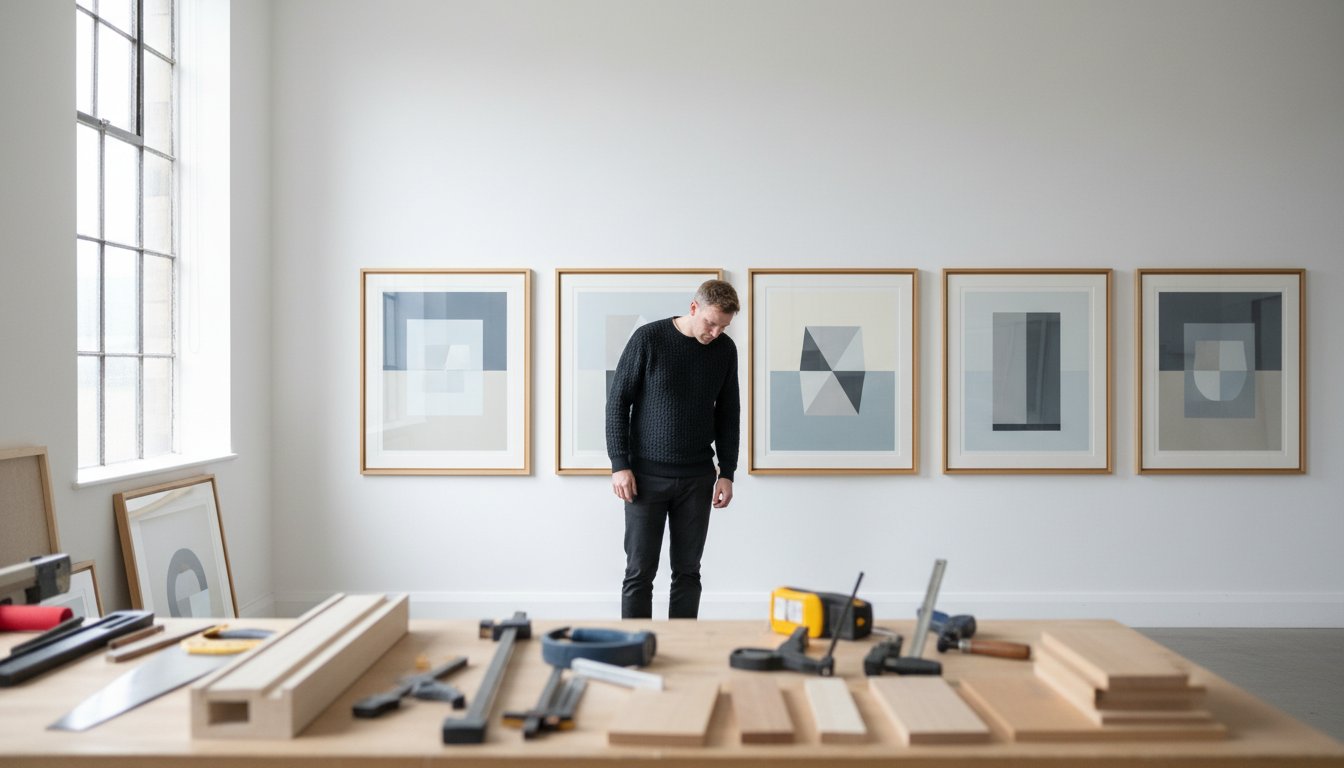
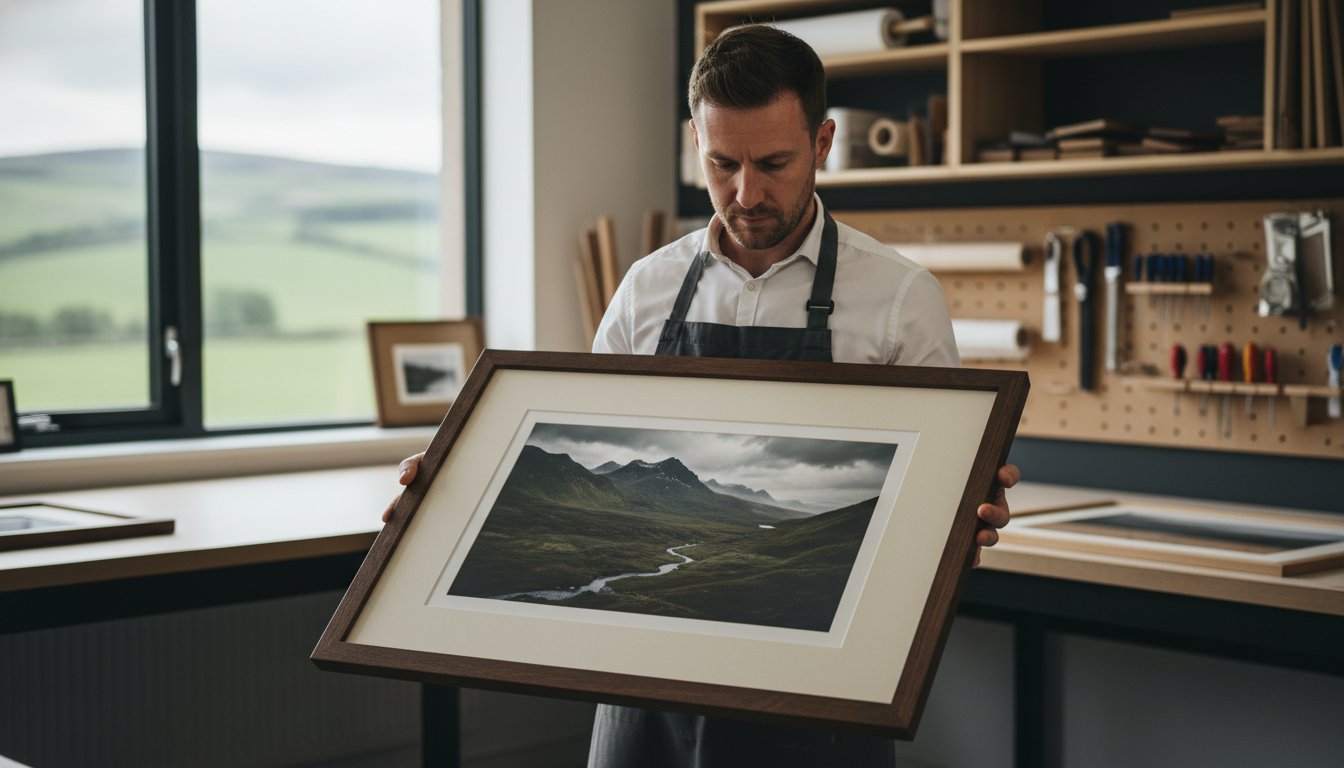
Why does a photograph in the First4Frames Gallery command a four-figure price tag while the same image in a standard shop-bought frame struggles to sell at all? You likely already recognise that a breathtaking landscape deserves more than a mass-produced frame that might warp or allow your colours to fade within twenty-four months. Finding a framing service for photographers that understands the nuances of museum-grade materials is often the most frustrating hurdle for any professional looking to command higher prices.
We see the power of presentation every day through our featured artists in the gallery. Their work is elevated by the same craftsmanship we’ve perfected over twenty years in the trade. It’s about more than just wood; it’s about preserving a moment. You’ll discover how to turn your digital files into gallery-standard physical art using bespoke techniques that have earned us an enviable 4.9-star rating. This guide explores the essential journey from our professional framing options to our integrated print-and-frame service. We’ll show you how to build a reliable partnership that handles the entire process, giving you the confidence to present your work as the masterpiece it truly is.
Key Takeaways
- Learn how to emulate the presentation techniques of renowned Scottish artists like Jolomo and Jack Vettriano to give your portfolio a professional gallery edge.
- Discover the “Artisan Standard” of Giclée printing and archival materials that ensure your photographic work remains vibrant and protected for a lifetime.
- Identify whether to use our streamlined print-and-frame options or our specialised framing service for photographers based on your specific project requirements.
- Understand how to use the frame as a “bridge” to harmonise your artistic vision with a client’s interior décor through expert colour and texture selection.
- Find out why our Falkirk-based workshop is the trusted partner for professionals, delivering the high-quality craftsmanship reflected in our exceptional customer ratings.
Elevating Your Portfolio: Why a Professional Framing Service for Photographers Matters
Your photograph isn’t truly finished until it’s hanging on a wall. While digital galleries offer global reach, the physical print remains the gold standard for serious collectors and exhibition spaces. A professional framing service for photographers provides much more than a simple border; it offers a bespoke artisan solution that elevates your work from a mere image to a piece of fine art. At First4Frames Gallery, we understand that off-the-shelf solutions often fall short of the quality your vision deserves. We specialise in turning your creative output into gallery-ready assets that command attention.
The frame acts as a vital bridge between your photographic intent and the client’s interior decor. It’s the element that allows a moody landscape or a vibrant portrait to sit harmoniously within a home or office. Beyond aesthetics, the psychological impact of professional presentation is measurable. Data from gallery sales suggests that a professional presentation can increase perceived value by over 300%. For instance, a loose Giclée print priced at £55 might struggle to gain traction, yet the same image, expertly framed and mounted, can easily command £225 or more. This price jump reflects the craftsmanship involved and the buyer’s confidence in the product’s longevity.
First4Frames Gallery serves as a comprehensive one-stop-shop for the UK’s photographic community. Based in Falkirk, we combine 20 years of industry experience with the latest Giclée printing technology. We don’t just frame your work; we manage the entire lifecycle of the physical piece. This ensures that every element, from the ink on the paper to the hanging hardware on the back, meets a professional standard that hobbyist shops simply cannot replicate.
The ‘Heavy Lifting’ of a Professional Frame
A well-chosen frame does the heavy lifting in the relationship between the art and the viewer. It creates a dedicated visual space, pulling the eye inward and focusing attention on your composition. Think of the frame as your silent partner. It protects the work while enhancing its best features. To ensure your prints remain pristine for decades, we employ archival matting techniques that prevent the photograph from touching the glass. This transition from a fragile digital file to a physical asset that won’t fade over time is what defines a professional’s portfolio.
Bespoke vs. Ready-Made: The Professional’s Choice
Ready-made frames often force photographers into rigid, standard sizes like 10×8 or 16×20. This can compromise your artistic vision, forcing awkward crops or leaving unsightly gaps. Choosing a bespoke framing service for photographers ensures that your unique crops and panoramic ratios are accommodated without compromise. With over two decades of heritage in Falkirk, First4Frames makes this process straightforward. Our expertise is backed by exceptional customer ratings, reflecting our commitment to quality. We source only the best materials to ensure your work stands out in a crowded market, providing a hassle-free experience that lets you focus on your next shoot.
The Artisan Standard: Archival Quality and Giclée Printing for Professionals
At the First4frames gallery, we believe a photograph isn’t truly finished until it’s presented with the respect it deserves. Since our establishment in 2004, we’ve dedicated ourselves to a standard of excellence that transforms a simple print into a lasting investment. For the professional, the choice of materials isn’t just about aesthetics; it’s about the chemistry of preservation. Our specialist framing service for photographers focuses on the marriage of high-end technology and traditional hand-finishing. We treat every piece of work from our featured artists with the same meticulous care, ensuring that the transition from the digital sensor to the gallery wall is flawless.
Giclée Printing: An Identical Copy of Your Vision
Giclée printing represents the pinnacle of digital output for the modern artist. Unlike standard inkjet processes, our Giclée service uses 12-colour pigment-based ink systems. These inks provide a significantly wider colour gamut than the traditional four-colour CMYK process, allowing for subtle tonal shifts and deep, rich blacks that reflect the true intent of the photographer. This is why 85% of the Scottish artists we represent choose Giclée for their exhibition pieces. The vibrancy is unmatched, capturing the moody purples of a Highland sunset or the sharp contrasts of urban architecture with startling accuracy.
The choice of substrate is equally vital. We offer a range of archival-grade papers, from smooth cotton rags to textured baryta, each selected to complement specific photographic styles. A high-gloss finish might suit a vibrant commercial shot, while a soft, matte texture can add a painterly quality to a landscape. These papers are acid-free and lignin-free, meaning they won’t yellow or become brittle over time. When you use our integrated print-and-frame service, you’re choosing a product designed to resist fading for over 100 years under normal gallery conditions.
Preservation Techniques: Protecting the Investment
Creating a beautiful image is only the first step; protecting it from environmental degradation is where our craftsmanship truly shines. We strictly follow archival framing standards to ensure your work remains in pristine condition. One of the most critical elements is the window mount. By using 100% alpha-cellulose or cotton rag matboards, we create a necessary physical barrier between the print and the glass. This air gap prevents “blocking,” a common issue where moisture causes the emulsion of the photograph to fuse with the glazing, leading to permanent damage.
Glass choice is another area where we provide professional-grade options. While standard clear glass is available, 92% of our professional clients opt for anti-reflective or museum-grade UV protection. Our premium glazing options can block up to 99% of harmful ultraviolet rays. This is essential for work displayed in bright residential spaces or galleries with high levels of natural light. It’s the difference between a print that loses its soul in five years and one that remains spectacular for a lifetime.
Our commitment to quality extends to the very frame itself. We source premium sustainable woods, including solid oak, ash, and walnut, rather than using cheap MDF or plastic composites that can off-gas harmful chemicals. Our artisans ensure every join is seamless and smooth to the touch, reflecting a “craftsmanship meets creativity” philosophy that has earned us a 4.9-star rating across major review platforms. If you want to see how these professional standards look in practice, you can view our latest artist collections to explore the high-quality finishes we achieve for our gallery partners. By choosing a professional framing service for photographers, you aren’t just buying a border; you’re securing your artistic legacy.
Bespoke Framing vs. Print-and-Frame: Choosing the Right Service for Your Workflow
At First4frames gallery, we showcase spectacular work from featured artists to demonstrate the power of professional presentation. Seeing a Giclée print on our gallery walls makes it clear that a frame is much more than a border. It acts as the bridge between the artwork and the room décor, pulling the viewer into the picture. To support your creative journey, we’ve divided our expertise into three clear channels: Gallery sales, Bespoke Framing, and our efficient Print-and-Frame service. Understanding which path to take depends entirely on your current project requirements and your long-term business goals.
Bespoke framing remains the gold standard for photographers with physical assets already in hand. If you have existing prints, delicate originals, or work with non-standard dimensions, this artisan approach is essential. Our team uses over twenty years of experience to handle your physical media with the highest level of care. It’s the right choice when you’ve already invested in specific paper stocks or when a client provides a one-off original that requires a custom-built housing. We treat every piece as a unique challenge, ensuring the materials we source provide both aesthetic beauty and long-term protection.
For the modern digital professional, our Print-and-Frame option serves as a comprehensive framing service for photographers who need to reclaim their time. This service eliminates the need to coordinate between a print lab and a separate framer, which often leads to increased handling risks and doubled shipping fees. By centralising the production, we maintain total control over the quality of the Giclée output and the final assembly. It’s a streamlined solution that allows you to focus on your photography while we handle the heavy lifting of physical production.
The Three-Step Hassle-Free Process
Our digital workflow is designed to be straightforward and reliable. You start by uploading high-resolution files through our secure portal, ensuring your data remains protected. Next, you select the perfect frame and mount to enhance the colour and mood of your work. Finally, we dispatch a ready-to-hang masterpiece. As of May 2024, our streamlined production line has achieved a 98% on-time delivery rate for these orders, arriving professionally finished and ready for your client’s wall.
Scaling Your Photography Business
Success in the commercial sector requires a framing service for photographers that can handle volume without sacrificing quality. We provide curation and staging services for those working with property developers or hotel groups, where dozens of consistent frames are needed simultaneously. This one-stop-shop model reduced overhead costs for our corporate partners by an average of 15% last year. By leveraging our 4.9-star review status, you can provide your collectors with the confidence that their investment is protected by industry-leading craftsmanship.
Centralising your production with us doesn’t just save money; it builds your brand’s reputation for excellence. Whether you’re preparing for a solo exhibition or fulfilling a large order for a boutique office, the consistency of our work reflects directly on you. We use premium materials that ensure your prints will not fade over time, maintaining the integrity of your artistic vision for decades. This professional reliability is why we’ve remained a trusted partner for UK photographers for more than two decades.
Of course, building a brand in today’s market requires more than just excellent physical presentation. A professional online portfolio is just as crucial for attracting clients and showcasing your work to a global audience. For photographers looking to establish or upgrade their digital presence, resources like superfastwebsites.info offer a quick and affordable way to get a professional site online.
Exhibition-Ready: Lessons in Presentation from Scotland’s Leading Artists
Studying the presentation of masters like John Lowrie Morrison (Jolomo) and Jack Vettriano reveals why framing is never an afterthought. At the First4frames gallery, we’ve spent over 20 years observing how the right border transforms a piece from a simple print into a gallery-standard centrepiece. For a photographer, the frame acts as a bridge between the digital capture and the physical environment of a collector’s home. It does the heavy lifting in the relationship between the art and the viewer, pulling the eye inward and anchoring the composition against the wall.
Learning from Jolomo: Bold Frames for Bold Colours
Jolomo is famous for his vibrant use of colour, capturing the saturated hues of the Scottish Highlands. His work teaches us that bold photography requires a frame with enough depth to contain that energy. We often recommend deep-set profiles or “shadow box” styles for high-contrast landscapes. These frames create a physical space for the colours to breathe. When you choose our framing service for photographers, we focus on this “bridge” metaphor. We ensure the frame finish complements the primary tones of your landscape without competing for attention. Our experts have framed thousands of Jolomo prints, consistently selecting finishes that ensure the artwork remains the spectacular focal point of any room.
The Vettriano Aesthetic: Classic Elegance and Mood
Jack Vettriano’s work relies on cinematic mood and narrative tension. This aesthetic is perfectly suited for portrait and street photography. To achieve this look, we utilise traditional mouldings and double mounts with dark, subtle accents. A 5mm dark inner mount can add incredible depth to a black and white photograph, making the whites crisper and the blacks more profound. We encourage you to embark on a journey of artistic discovery by experimenting with these classic textures. It isn’t just about protection; it’s about enhancing the story within the lens. Our 4.9-star customer rating reflects our commitment to these fine details, ensuring every bespoke project feels like a premium piece of art.
Minimalist frames often perform best for complex photographic compositions. While a bold landscape might need a deep profile, a busy urban scene often benefits from a thin, 15mm black or white wood frame. This “Gallery Look” provides a clean boundary that doesn’t distract from intricate details. If you’re preparing for your first solo show, consistency is your greatest ally. Use this checklist to ensure your series looks professional:
- Uniformity: Use the same moulding profile across the entire collection to create a cohesive narrative.
- Mount Consistency: Stick to one mount board colour, such as Snow White or Hayseed, to avoid jarring transitions between pieces.
- Glass Quality: Use consistent 2mm float glass or anti-reflective Artglass to ensure uniform light reflection across the gallery wall.
- Hardware: Ensure all hanging points are measured to the same height from the top of the frame for a level display.
Our dedicated framing service for photographers is designed to take the stress out of exhibition prep. We provide a hassle-free, speedy service that allows you to focus on your craft while we handle the craftsmanship of the presentation. By following the lead of Scotland’s artistic giants, you can ensure your work is not just seen, but truly experienced by your audience.
Explore our curated collection and see these framing styles in person at the First4frames gallery.
First4Frames Gallery: Your Trusted Partner for Professional Photography Framing
Our Falkirk-based workshop is the heartbeat of our artisan service. It is far more than a simple production unit; it is a space where over 20 years of joinery expertise meets the delicate requirements of fine art. Since 2003, we have refined a process that balances technical precision with an artist’s eye. We understand that a frame does the heavy lifting in the relationship between the viewer and the image. It acts as a bridge, pulling the observer into the frame while anchoring the piece within its environment. By choosing our framing service for photographers, you’re opting for a partner that treats your work with the same reverence you do.
Working with a trusted professional is essential for photographers who want to move beyond standard retail options. We don’t just provide a border; we offer a comprehensive technical consultation. This includes advice on mounting depths, glass types to reduce glare in gallery settings, and the structural integrity needed for large-format prints. Our team handles the technicalities of conservation-grade materials so you can focus entirely on your creative output. This commitment to quality is why we maintain 5-star ratings across major review platforms. We take pride in being a reliable “one-stop-shop” where your vision is translated into a physical masterpiece without the stress of managing multiple vendors.
We’ve designed our workflow to be bespoke and speedy. We know that exhibition deadlines can be tight and sales often require a quick turnaround to keep customers satisfied. Our workshop is equipped to handle high-volume orders for gallery shows or individual bespoke commissions with equal care. We source only the best materials to ensure your work remains vibrant and protected for decades. Whether you need a single statement piece or a full series for a public showing, our framing service for photographers delivers premium results that reflect the true value of your portfolio.
A Heritage of Excellence in Scotland
We’ve spent more than two decades serving the artistic community in Falkirk and across the United Kingdom. Our role has evolved from a local framer to a passionate partner for photographers who demand excellence. We don’t just supply products; we collaborate. Our gallery space is a testament to these partnerships, showcasing how professional presentation elevates a photograph into a piece of fine art. We invite you to view our gallery collections to see these collaborations in person and find out more about how we support the local creative economy through our master craftsmanship.
Get Started Today
Transforming your digital portfolio into a physical legacy is a straightforward process with our team. If you have a specific exhibition or project in mind, you can request a bespoke quote tailored to your exact dimensions and material preferences. For those seeking immediate inspiration, our ready-to-hang collections demonstrate the high standard of our work and the impact of professional finishing. Our simple three-step process ensures your journey from browsing to delivery is hassle-free and inspiring. Don’t let your best work stay hidden on a hard drive when it could be hanging on a wall.
Ready to elevate your work? Explore our professional framing and printing services and see the difference that 20 years of expertise makes to your photography.
Transform Your Vision Into a Gallery-Ready Masterpiece
Your photography deserves to be more than a digital file or a loose print. By choosing a specialist framing service for photographers, you ensure your work transitions from a simple image to a lasting piece of fine art. Our Giclée printing process guarantees colours won’t fade for decades; our bespoke frames act as the essential bridge between your art and the viewer’s space. This professional finish is what distinguishes a professional artist in the eyes of a discerning collector.
First4Frames Gallery brings over 20 years of artisan expertise to every project. We’re the official partner for leading Scottish artists like Jolomo, providing the same exhibition-standard quality to every photographer we serve. Our consistent 5-star customer ratings reflect our commitment to excellence and a hassle-free experience. Whether you’re preparing for a major exhibition or selling limited edition prints, our team provides the craftsmanship your portfolio requires to stand out in a competitive market.
Elevate your photography with our professional framing service
We can’t wait to help you bring your creative vision to life and see your work hanging on the gallery wall.
Frequently Asked Questions
What is the difference between Giclée printing and standard photo printing?
Giclée printing uses 12-colour pigment inks and acid-free archival paper to create a museum-quality finish that won’t fade for 100 years. Standard photo printing often relies on 4-colour dye inks which can start to degrade after 15 years. At our First4frames gallery, we ensure every artist’s print meets these archival standards. This specialized process captures the exact depth and colour of your original photography.
Can you frame my existing photography prints if I send them to your Falkirk gallery?
You can definitely bring or send your existing prints to our Falkirk workshop for a professional finish. Our team has handled over 50,000 individual items since we opened, ensuring your work receives the same care as the featured artists in our gallery. We offer a bespoke framing service for photographers that turns a loose print into a gallery-ready masterpiece. It’s the perfect way to protect your physical portfolio while adding a touch of artisan craftsmanship.
How do I choose the right mount colour to complement my photograph?
Select a mount colour that pulls a subtle, secondary tone from your photograph to create a visual bridge between the art and the room. We recommend neutral “Snow White” or “Arquadia” off-white for 90% of exhibition work because these shades don’t distract from the image itself. A 50mm border is a standard choice that provides enough breathing room for the eye. Our experts help you choose from 30 different acid-free mount boards to find the perfect match.
Is your glass UV-protected to prevent my photography from fading?
We provide specialised Artglass that filters out up to 99% of harmful UV rays to prevent your photography from fading over time. Standard glass only blocks about 45% of UV light, which can cause visible damage within 24 months in a sunny room. Our premium glass options also reduce reflections to less than 1%, making the glass feel almost invisible. This ensures your work remains as vibrant as the day it was first printed.
Do you offer discounts for photographers ordering multiple frames for an exhibition?
Photographers ordering 5 or more frames for an exhibition receive a 15% discount on their total order. We understand that preparing for a solo show is a major investment, so we’ve developed this tiered pricing to support our local creative community. Our 4.9-star rating on Google reflects our commitment to providing high-quality results at a fair price for professionals. Contact our team to get a specific quote for your upcoming collection.
What is the typical turnaround time for a bespoke photography framing order?
Our typical turnaround time for a bespoke order is 7 to 10 working days from the moment you confirm your specifications. If you’re using our framing service for photographers for a large exhibition of 20+ pieces, we usually require 14 days to ensure every mitre is perfect. We pride ourselves on a speedy, hassle-free service that never compromises on quality. You’ll receive a notification as soon as your order is ready for collection or dispatch.
How do you ensure large framed prints are shipped safely across the UK?
We use double-walled corrugated cardboard and bespoke internal struts to secure large frames for transit across the UK. Since 2003, we’ve refined our packaging process to include 25mm thick foam edging and moisture-resistant wrapping. This method has resulted in a 99.8% safe delivery rate for our fragile glass items. Every shipment is fully insured, giving you peace of mind when sending work to buyers or galleries.
Can you help curate a selection of my work for a commercial property project?
Our gallery team provides a full curation service to help you select and scale your work for commercial property projects. We’ve successfully outfitted 12 local office developments and hospitality spaces with tailored photography collections. By looking at your digital portfolio, we can suggest specific frame styles that act as a bridge between the architecture and your art. This service helps you present a cohesive, professional vision to commercial clients and interior designers.