Posted on

12 x 8 Picture Frames: How to Choose the Right Fit

12 x 8 Picture Frames: How to Choose the Right Fit

A 12 x 8 picture frame can look right but still leave your print cramped or poorly centred if you have not checked the measurements. A 12 x 8 print measures 12 inches by 8 inches, and a frame labelled 12 x 8 is generally designed to hold artwork of those dimensions.

Once you have measured the print, decide whether to show it edge to edge or add a mount. A mount’s opening is usually smaller than the artwork, allowing it to hold the print in place. This guide explains how to check dimensions, account for a mount and choose between a ready-to-hang frame and bespoke picture framing. At First4Frames Gallery, every frame is individually crafted for each order using high-quality materials, including 2mm float glass. Whether you are framing a photograph or choosing framed art, the right measurements and finish help give your picture the space and care it deserves.

Key Takeaways

  • For picture framing, 12 x 8 usually refers to the artwork’s dimensions in inches. Check the units before choosing a frame.
  • Measure the print, then account for any mount. Its opening and the finished frame dimensions can vary.
  • Compare standard frames with individually crafted options to find a suitable fit and finish for your artwork.
  • Explore framed wall art online and picture how your choice will look in your space before deciding.

What Does 12 x 8 Mean for a Picture Frame?

Search results can use the same numbers for very different things, from picture frames to garden sheds. The units make all the difference. For picture framing, 12 x 8 usually describes artwork measuring 12 inches wide by 8 inches high. It does not mean the finished frame will measure 12 by 8 inches on the outside.

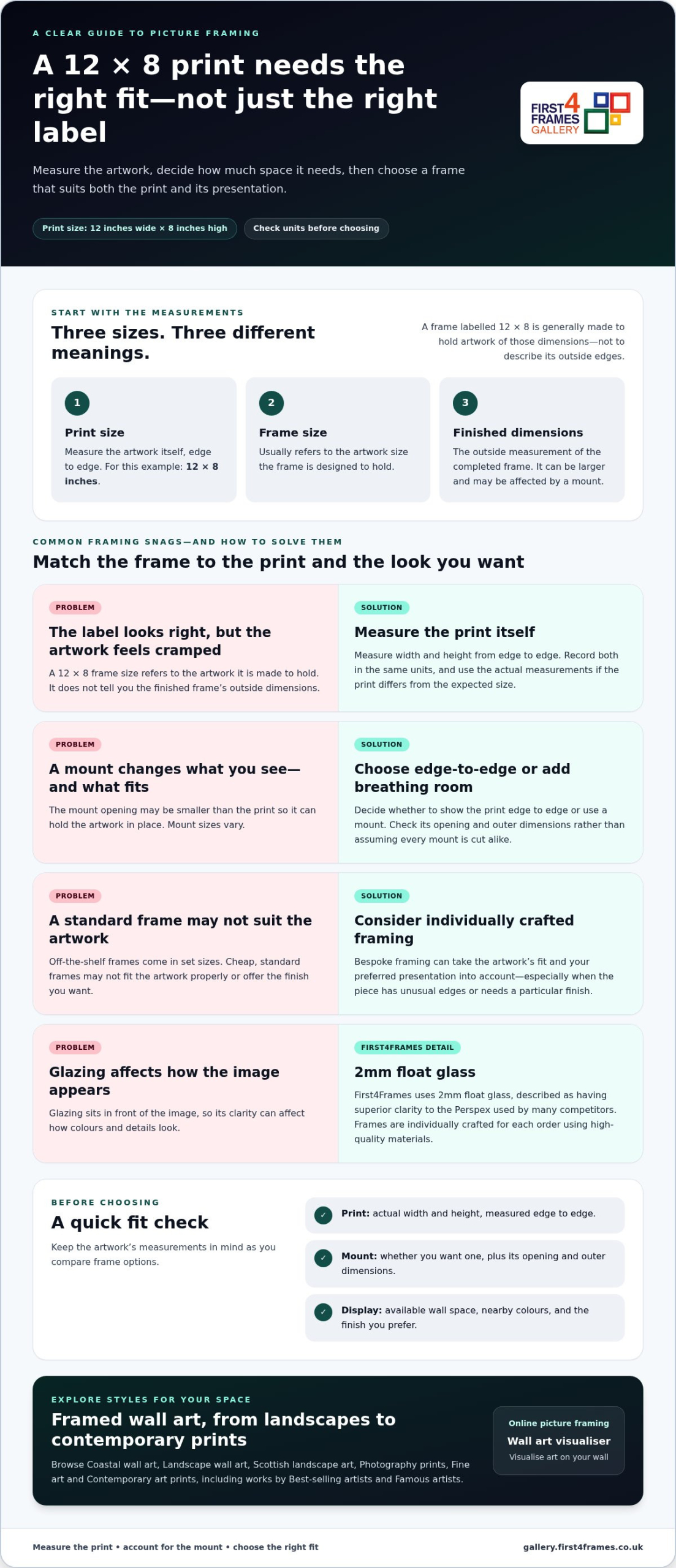
Print size is the artwork’s edge-to-edge measurement. Frame size usually refers to the artwork size the frame is designed to hold. Finished framed dimensions are the outside measurements of the completed frame. These can be larger and may also be affected by a mount.

For a visual guide to common dimensions, explore standard photo and picture sizes. You can also read about standard photographic print sizes and how print dimensions are commonly described.

This video offers a practical look at framing an 8 x 12 print:

How to Measure a 12 x 8 Print

Measure the artwork itself from edge to edge, not the outer edge of the paper, a border you plan to trim, or an existing frame. Record the width and height in the same units, and note which measurement is which. Consistent units make it easier to compare your print with frame details. If the print differs slightly from the expected size, use its actual measurements when choosing a frame.

Why Search Results May Show 12 x 8 Feet

A shed listing may use 12 x 8 to describe a footprint of 12 feet by 8 feet. That is a garden structure’s floor area, not a picture dimension. For a frame, the same numbers usually refer to inches. Check the product category and stated units before buying, particularly when search results show sheds and picture frames side by side. A quick unit check helps you choose a frame for your artwork rather than a garden plot.

How to Choose a Frame for 12 x 8 Artwork

Use these steps to match the frame to your print and the way you want it to look on the wall:

  • Measure: Check the artwork’s width and height, including any border you want to keep visible. Compare those measurements with the frame’s stated picture size.
  • Decide on a mount: A mount adds space around the image. Its opening may be smaller than the print so it can hold the edges in place. Check the stated opening and outer dimensions, as mount sizes vary.
  • Choose a frame: A standard frame can be convenient when its intended artwork size suits your print. Cheap, standard frames may not fit the artwork properly or offer the finish you want. A bespoke frame, individually crafted for your order, can be made with the artwork’s fit and your preferred presentation in mind.
  • Consider the display: Measure the wall space and consider nearby colours. Decide whether you want the artwork to stand out or sit comfortably within the room.

The print size describes the artwork, the mount opening determines how much of it is visible, and the external frame size is the overall measurement of the finished piece. A 12 x 8 print with a mount will not necessarily suit a frame whose external dimensions are 12 x 8.

Should You Add a Mount to a 12 x 8 Picture?

A mount can give artwork breathing room and create a considered transition between image and frame. Its opening affects both the visible area and how the print is held, so do not assume every mount is cut to the same size. If colour is part of your decision, read this guide to choosing a mount colour. For broader guidance on caring for paper, see the Library of Congress’s paper preservation advice.

When Bespoke Framing Makes Sense

Custom framing is useful when your artwork has unusual edges, needs a particular finish or calls for a specific presentation. First4Frames Gallery crafts each frame individually for the order, with the artwork’s fit and your display preferences in mind. Once you know what matters most, explore framed artwork for inspiration.
12 x 8 Picture Frames: How to Choose the Right Fit

What Quality Details Matter in a 12 x 8 Framed Picture?

A ready-made frame is convenient when its dimensions and finish suit your print. However, standard off-the-shelf frames are made to set sizes, leaving less flexibility over fit and presentation. First4Frames frames are individually crafted for each order using high-quality materials. Instead of relying on a cheap, one-size-fits-all frame that may not suit the artwork, you can choose a finish designed around the piece.

Float Glass and Perspex: What Is the Difference?

First4Frames uses 2mm float glass for clear, traditional glazing with superior clarity to the Perspex used by many competitors. Glazing sits in front of the image, so its clarity can affect how colours and details appear. The frame’s tone and profile matter too: they can complement the artwork or create a more defined border. Together, the glazing and frame shape the presentation without changing the artwork itself.

Choosing Artwork That Suits Your Space

Choose an image that feels at home in the room, then consider how its colours and subject will work with your décor. Framed wall art includes many styles and subjects, from Coastal wall art and Landscape wall art to Scottish landscape art, Photography prints, Fine art and Contemporary art prints. You can also explore works by Best-selling artists and Famous artists.

For a tailored presentation, explore the framing options and consider how the frame can support the artwork’s character. Browse framed wall art to find a piece that feels right for your space.

How to Choose and Order 12 x 8 Framed Wall Art Online

Online picture framing brings artwork and framing choices together in one place. Start by browsing framed wall art, then select a piece or framing option that suits your space. For a 12 x 8 print, keep the artwork’s measurements in mind as you choose a frame. Decide too whether you want a mount to add space around the image.

From Online Picture Framing to Ready-to-Hang Art

Explore the gallery’s artwork and frame options, then choose a style that complements the image and your room. A wall art visualiser can help you visualise art on your wall and see artwork before you buy. Choose your frame online and design your framed artwork around the look you want, whether you are selecting custom framed art prints or bespoke framed wall art. Ready-to-hang framed art gives you a simple way to go from choosing a piece to displaying it. For inspiration, browse framed artwork and discover the available choices.

Printing and Framing a Digital Photograph

Have a digital photograph you would like to display? First4Frames’ print and frame service brings the image and frame together as one considered piece. Your photograph is printed to the highest quality to complement the bespoke framing. Explore online photo printing and framing to turn your photograph into wall art.

Each frame is individually crafted for its order, then fully packaged to help prevent damage in transit and shipped via professional couriers. This careful process makes online ordering a straightforward way to bring a framed image from selection to your home.

Find the Right Frame for Your Artwork

Choosing a 12 x 8 frame starts with measuring the print and checking whether the stated frame size refers to the artwork or the finished piece. If you add a mount, its opening affects how much of the image shows and the space around it. Consider the look you want as well as the fit.

For a finish made with care, First4Frames frames are individually crafted for each order using high-quality materials. The 2mm float glass glazing gives a clear view of the artwork. Finished frames are fully packaged to help prevent damage and shipped via professional couriers, so your chosen piece can make its journey from gallery to home.

Ready to find artwork that feels at home in your space? Browse framed artwork and find a piece for your space. Explore the choices, picture your favourite on the wall and choose a frame that lets it shine.

Frequently Asked Questions

Is 12 x 8 the right frame size for a 12 x 8 inch print?

Usually, yes. A frame labelled 12 x 8 is generally intended to hold artwork measuring 12 inches by 8 inches. Check whether the listing gives the size of the print it fits or the frame’s external dimensions. If you plan to add a mount, make sure the frame can accommodate the artwork and mount together. The mount changes the visible opening and the overall fit.

What does 12 x 8 mean when buying a picture frame?

For picture framing, 12 x 8 usually means the artwork measures 12 inches wide by 8 inches high. The same numbers can describe other products in different units, so check the product category and measurement units. For example, a shed listed as 12 x 8 may be measured in feet. Frame listings generally use the artwork dimensions, not the outside measurement of the finished frame.

Can I put a 12 x 8 print in a larger frame?

Yes. A larger frame can display a smaller print with a mount, creating space around the artwork and a different presentation. Check that the frame’s internal dimensions can accommodate the print and mount, and remember that mount openings vary. If you want a specific border or fit, custom framing can be tailored to the print and the look you have in mind.

How do I choose a frame for a 12 x 8 photograph?

Measure the photograph edge to edge, then choose a frame designed for those dimensions or a larger one with a suitable mount. Consider whether you want the image displayed edge to edge or surrounded by a border, and how the frame’s finish will work with the photograph and room. First4Frames Gallery crafts each frame for the order using high-quality materials.

Is glass or Perspex better for a 12 x 8 picture frame?

It depends on your priorities, but First4Frames Gallery uses 2mm float glass for clear, traditional glazing. Its clarity is superior to Perspex, which is used by many competitors. Glazing affects how the artwork appears behind the frame, so consider the visual finish you prefer and the setting where the picture will be displayed. The glazing is part of creating a frame that suits the artwork.
Posted on

Standard Photo & Picture Sizes: The Complete UK Guide for Framing

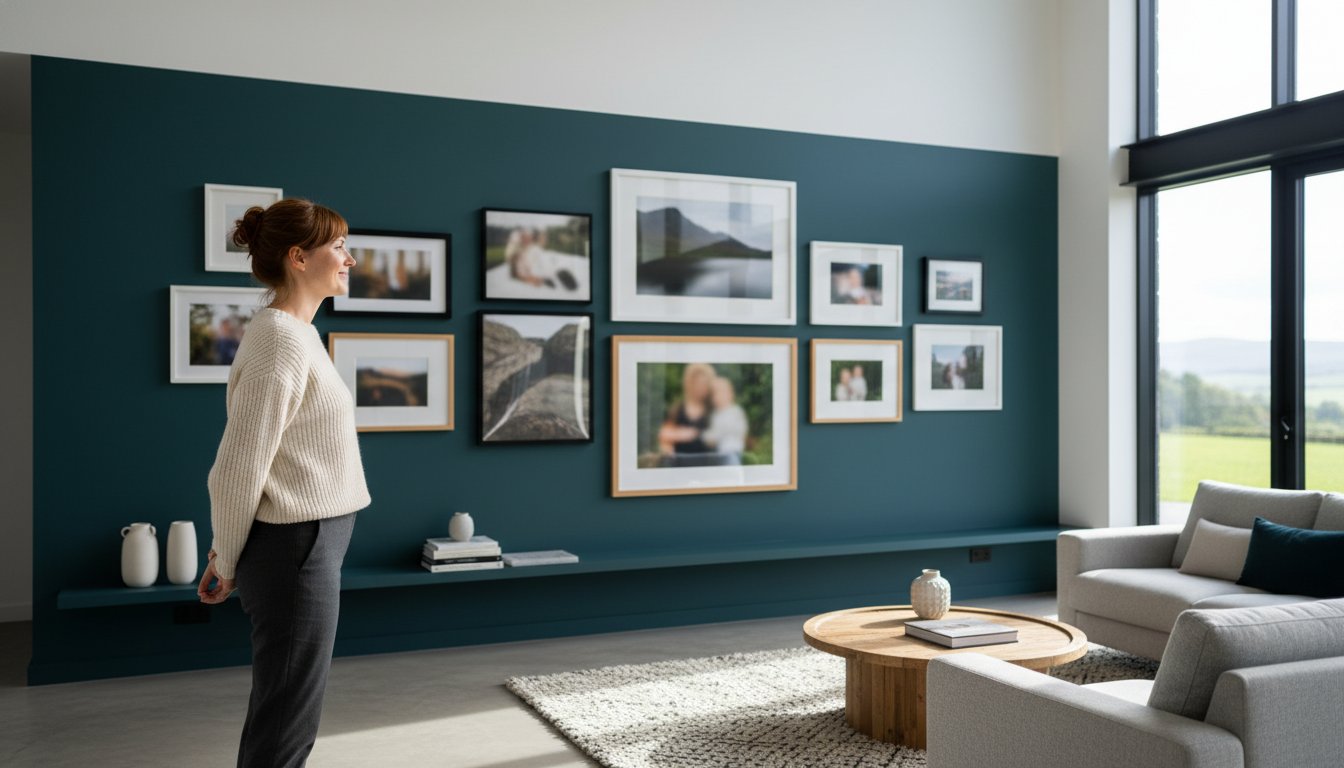
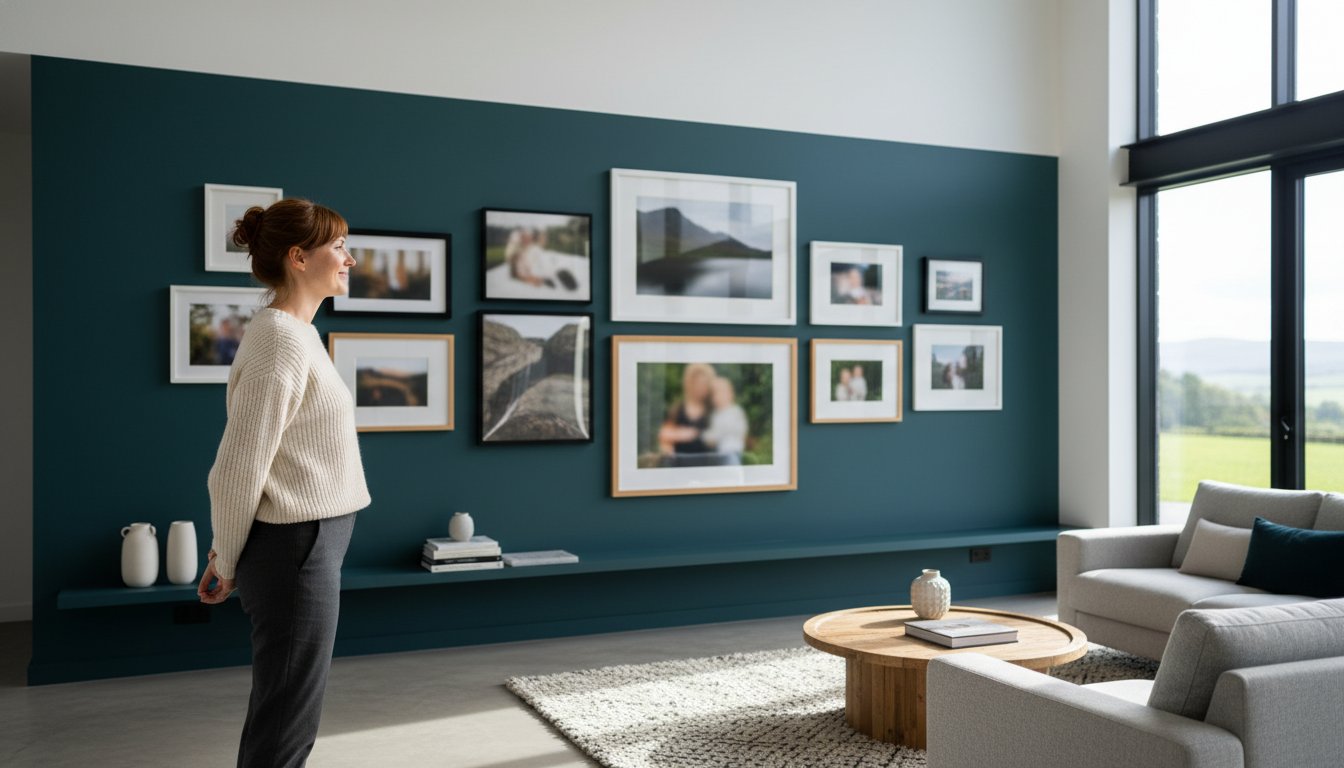
A woman stands in a modern living room, looking at a gallery wall of framed photos on a teal accent wall. The room features a light sofa, round wooden coffee table, and large windows with views of greenery outside.

That perfect holiday snapshot, the beautiful family portrait you treasure… only to have it returned from the printers with an awkward crop. Or perhaps you’re standing in a shop, baffled by the wall of frames, trying to decode the difference between a 10×8 and an A4. It’s a frustratingly common experience that can take the joy out of displaying your most precious memories. This confusion often comes down to a simple misunderstanding of standard photo picture sizes and how they relate to the shape of your original image.

At First 4 Frames, we believe that bringing your memories to life should be a joyful and straightforward process. That’s why we’ve created this complete UK guide. We’re here to demystify the numbers, explain the jargon, and give you the confidence to choose the perfect print and frame combination every time. You’ll learn how to avoid blurry results, match a photo to the right frame and mount for a professional finish, and turn your digital images into beautiful, perfectly presented works of art for your home. Say goodbye to wasted money and hello to flawlessly framed memories.

Understanding the Basics: Why Standard Sizes Exist

Have you ever printed a beautiful photograph, only to find it doesn’t quite fit the frame you bought? It’s a common frustration. This confusion often stems from the transition from traditional film to digital photography. Understanding why standard photo picture sizes were created, and how they relate to modern cameras, is the first step towards perfectly framing your cherished memories.

To help visualise these core concepts, the short video below offers a clear and practical explanation:

What is Aspect Ratio? (A Simple Guide)

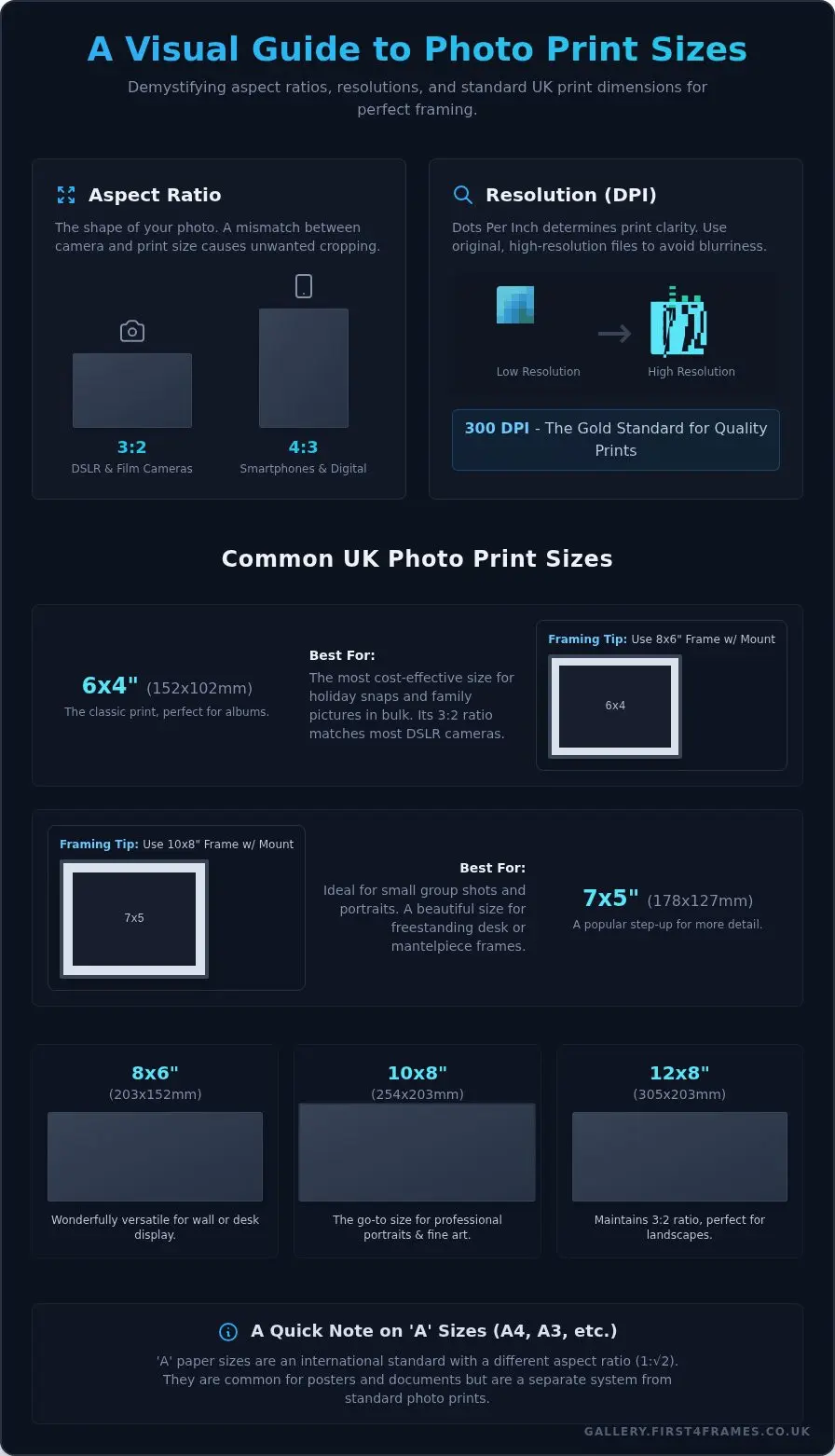
Simply put, aspect ratio is the proportional shape of your image-the relationship between its width and height. Think of the difference between a wide, rectangular cinema screen (often 16:9) and a more traditional, squarer television screen (4:3). The shape is different, even if the size varies. For decades, 35mm film cameras used a 3:2 aspect ratio, which is why the classic 6×4 inch print became so popular. This legacy established many of the standard photographic print sizes we still use today. However, most modern smartphones and digital cameras capture images in a 4:3 ratio. This mismatch is why printing a phone picture as a 6×4 print often results in unwanted cropping, cutting off parts of your original shot.

Resolution Explained: Pixels and Print Quality

Resolution refers to the amount of detail packed into your photo, measured in pixels. A high-resolution image has millions of pixels, creating a sharp and clear picture. When it comes to printing, the most important metric is DPI (Dots Per Inch). For a premium, fine art quality print that looks crisp and professional, the industry standard is 300 DPI. A low-resolution image, like one saved from social media, might look fine on your screen but will appear blurry or “pixelated” when printed large. Always use the original, highest-quality file for printing to ensure your final framed piece looks spectacular, no matter which of the standard photo picture sizes you choose.

A Guide to Common Photo Print Sizes (Imperial Measurements)

Even in a metric world, when it comes to printing cherished memories, the UK still relies heavily on traditional imperial measurements. These are the standard photo picture sizes you’ll encounter most often, from online printing services to high street photo labs. Understanding these dimensions is the crucial first step to finding the perfect frame that will truly honour your image. Let’s explore the most popular options to help you on your journey.

Small & Standard Prints: 6×4″ and 7×5″

These are the foundational sizes for everyday photography, perfect for capturing and sharing life’s fleeting moments.

  • 6×4 inches (152 x 102mm): This is the undisputed champion of photo printing. The classic 6×4″ print is perfectly proportioned for filling photo albums and is the most cost-effective option for printing holiday snaps and family pictures in bulk. Its universal appeal makes it a household staple.
  • Framing Tip: To give a 6×4″ print a more premium, gallery-style feel, place it within a larger 8×6″ or A5 frame using a professional mount. The surrounding space draws the eye inward, making your photograph the true star of the show.
  • 7×5 inches (178 x 127mm): As a popular step-up, the 7×5″ print offers a little more presence. This extra space makes it ideal for small group shots or portraits where detail is important. It’s a beautiful size for freestanding desk or mantelpiece frames.
  • Framing Tip: A 7×5″ photo looks spectacular when housed in a 10×8″ frame with a mount. This classic combination provides a perfectly balanced border that adds a touch of elegance and importance to the image.

Medium & Large Prints: 8×6″, 10×8″, and 12×8″

When you have a photograph you truly love, these larger formats provide the impact it deserves, transforming a simple picture into a piece of personal art.

  • 8×6 inches (203 x 152mm): A wonderfully versatile size, an 8×6″ print is substantial enough for a wall display yet compact enough not to overwhelm a desk or shelf.
  • 10×8 inches (254 x 203mm): This is the go-to size for professional portraits and fine art prints. It commands attention without dominating a room and is a popular choice for creating a feature on a gallery wall.
  • 12×8 inches (305 x 203mm): This format maintains the classic 3:2 aspect ratio of most digital cameras, meaning your photo often won’t need cropping. This makes it perfect for preserving the full composition of beautiful landscapes and dynamic group photos.

Framing Tip: These impactful sizes are beautiful enough to be framed ‘full bleed’ (without a mount) for a bold, modern look. However, adding a mount will always provide a more traditional, professional finish, creating a visual bridge between the artwork and your décor. The choice depends entirely on your personal style and the statement you wish to make with your art. Understanding these common standard photo picture sizes is the key to confident framing.

Understanding Standard Paper Sizes (The ‘A’ Series)

While many of us are familiar with the dimensions of traditional photo prints, the world of art prints, posters, and official documents operates on a different system: the ‘A’ series. This international standard, used throughout the UK, is a beautifully logical system where each size is precisely half of the one before it. It starts with A0, and as the number increases, the paper size decreases-A1 is half of A0, A2 is half of A1, and so on.

It’s important to note that the ‘A’ series has a different aspect ratio (1:√2) compared to most digital camera sensors. This is a key reason why it’s treated differently from the standard photo picture sizes we discussed earlier. For home décor, the most popular and versatile sizes are typically A2, A3, A4, and A5.

A5, A4, and A3: The Most Common Choices

When curating art for your home, these three sizes offer exceptional flexibility and are perfect for creating stunning visual displays.

  • A5 (148 x 210mm): A charming and discreet size, ideal for small art prints, illustrated postcards, or for grouping together as part of a larger, eclectic gallery wall.
  • A4 (210 x 297mm): Instantly recognisable as the UK’s standard letter size, A4 is incredibly versatile. It’s the perfect canvas for everything from professional certificates to beautiful fine art prints that add a touch of sophistication to any space.
  • A3 (297 x 420mm): Double the size of A4, an A3 print makes a confident statement. It’s a popular choice for eye-catching posters and standalone art pieces that can serve as a room’s focal point.

These sizes provide a wonderful foundation for building a personal art collection that truly reflects your style. Browse our collection of fine art prints available in A-sizes.

Framing ‘A’ Size Prints

One of the great advantages of ‘A’ sizes is that corresponding off-the-shelf frames are widely available. However, to truly elevate your artwork, consider using a mount. Placing an A4 print inside a larger A3 frame with a window mount, for example, creates a professional, gallery-quality finish. This negative space draws the viewer’s eye directly to the artwork, giving it room to breathe and enhancing its visual impact.

A generous, crisp white mount acts as a perfect bridge between the art and the frame, adding depth and a touch of luxury. While standard frames are convenient, a professionally crafted bespoke frame ensures a flawless fit and allows you to perfectly match the frame’s style and colour to both the artwork and your interior décor.

From Print to Wall: How to Choose the Right Frame and Mount

You’ve chosen the perfect print, and now it’s time to display it. The most common mistake we see is buying a frame that’s the exact same size as the picture. An 8×10″ print in an 8×10″ frame feels cramped, with the artwork pressed right against the edge. To give your image the professional, gallery-quality finish it deserves, you need to introduce a crucial component: the picture mount.

Think of the mount as the bridge between your art and your decor. It provides visual breathing space and performs a vital protective role. The formula is simple:

Print Size + Mount Border = Frame Size

The Role of the Picture Mount

A picture mount, also known as a passe-partout, serves two essential functions. Visually, it creates a clean, neutral border that draws the viewer’s eye inward towards the artwork, preventing it from getting lost in the frame. Functionally, it creates a small air gap that stops the print from touching the glass. This is critical for long-term preservation, protecting your photograph or art from moisture, condensation, and the risk of sticking to the glazing over time.

Classic off-white or cream mounts are timeless choices, but you can also select a complementary colour to accentuate a specific tone in your picture. A standard mount border is typically between 2 and 3 inches, providing a balanced and elegant look.

Matching Print, Mount, and Frame: A Worked Example

Let’s put this into practice with one of the most popular standard photo picture sizes. Imagine you have a 10×8″ print.

  • Your Print Size: 10″ (height) x 8″ (width).
  • Your Desired Mount: A 2-inch border all the way around.
  • The Calculation: You add the mount border to each side. The final aperture (opening) size will be 14″ (10 + 2 + 2) by 12″ (8 + 2 + 2).
  • Your Frame Size: You now need a 14×12″ frame.

This simple calculation ensures your print is beautifully centred and professionally presented.

Off-the-Shelf vs. Bespoke Frames

Ready-made frames are a convenient option if your print and desired mount combination matches a common size. However, their selection of materials, styles, and dimensions is often limited. What happens when you have a panoramic photo, an oddly-sized print, or a specific vision for the final look?

This is where bespoke framing offers unparalleled freedom. With a custom-made frame, you are not limited by standard dimensions. You can choose the precise size, material, and finish to create a truly perfect match for your artwork and your home. It’s the ultimate way to ensure your cherished memories are presented with the premium craftsmanship they deserve. Let our experts create the perfect bespoke frame for your art.

Bringing Your Memories to Life: The Perfect Frame Awaits

Understanding the world of standard photo picture sizes is the first step to beautifully displaying your favourite moments. From classic imperial prints to versatile ‘A’ series paper, knowing your options empowers you to make a great choice. Remember that a well-chosen mount and frame do more than just protect your picture; they elevate it into a piece of art that complements your space perfectly.

Every picture tells a story, and every story deserves a beautiful frame. With over 20 years of professional framing experience, we combine expert craftsmanship with high-quality, conservation-grade materials to ensure your memories are preserved for a lifetime. With a huge selection of frame styles and mounts to choose from, we make the process simple and enjoyable.

Have a picture you love? Discover our bespoke framing service and let us help you create the perfect finishing touch for your cherished artwork.

Frequently Asked Questions

What is the most popular photo size in the UK?

The most popular and widely recognised photo size in the UK is 6×4 inches (15x10cm). This classic format is the standard for photo albums and for printing everyday snapshots. It offers a fantastic balance of detail and convenience. Another very common choice is 7×5 inches, which provides a slightly larger canvas for your cherished memories, making it a perfect size for freestanding frames on a desk or mantelpiece.

Should my frame be bigger than my picture?

Yes, your frame should be larger than your picture if you wish to include a mount. A mount (the card border between the picture and the frame) provides breathing space, drawing the viewer’s eye towards the artwork and preventing the image from touching the glass. It acts as a beautiful bridge between your art and the frame. If you prefer a full-bleed look without a mount, then the internal size of the frame should match your picture size exactly.

How do I know if my photo is high enough resolution to print large?

For premium, sharp prints, you should aim for a resolution of 300 Dots Per Inch (DPI). To check, find the pixel dimensions of your image file. For example, to print a high-quality 10×8 inch photo, your image should be at least 3000 x 2400 pixels (10 inches x 300 DPI and 8 inches x 300 DPI). Enlarging a small, low-resolution image will result in a blurry or pixelated print, so it’s always best to start with the highest quality file possible.

Is A4 the same as 12×8 inches?

While they are very similar in size, an A4 sheet is not the same as a 12×8 inch print. A4 paper measures 29.7 x 21 cm, which is approximately 11.7 x 8.3 inches. A 12×8 inch print is slightly longer and narrower. This small difference is crucial when buying a ready-made frame, as an A4 print will not fit perfectly in a 12×8 frame. This highlights the importance of knowing your exact dimensions when choosing from standard photo picture sizes.

Can you frame a picture that is not a standard size?

Absolutely! Many beautiful pieces of art, limited edition prints, or creatively cropped photographs don’t conform to standard photo picture sizes. This is where bespoke framing provides the perfect solution. A custom-made frame is crafted to the exact dimensions of your artwork, ensuring a flawless and professional finish that protects and enhances your unique picture. It’s the ideal way to give any piece the presentation it deserves.

What is the difference between a picture frame and a photo frame?

The terms are often used interchangeably, but there can be a subtle distinction. “Photo frames” typically refer to ready-made frames in common sizes like 6×4 or 7×5 inches, often designed with a backing stand for display on a table or shelf. “Picture frames” is a broader term that includes these, but also encompasses larger, custom-made, and more ornate frames intended for wall-hanging prints, original art, and posters, showcasing a higher level of craftsmanship.

Posted on

Standard Photo & Picture Sizes: The Complete UK Guide for Framing

Standard Photo & Picture Sizes: The Complete UK Guide for Framing

That perfect holiday snapshot, the beautiful family portrait you treasure… only to have it returned from the printers with an awkward crop. Or perhaps you’re standing in a shop, baffled by the wall of frames, trying to decode the difference between a 10×8 and an A4. It’s a frustratingly common experience that can take the joy out of displaying your most precious memories. This confusion often comes down to a simple misunderstanding of standard photo picture sizes and how they relate to the shape of your original image.

At First 4 Frames, we believe that bringing your memories to life should be a joyful and straightforward process. That’s why we’ve created this complete UK guide. We’re here to demystify the numbers, explain the jargon, and give you the confidence to choose the perfect print and frame combination every time. You’ll learn how to avoid blurry results, match a photo to the right frame and mount for a professional finish, and turn your digital images into beautiful, perfectly presented works of art for your home. Say goodbye to wasted money and hello to flawlessly framed memories.

Understanding the Basics: Why Standard Sizes Exist

Have you ever printed a beautiful photograph, only to find it doesn’t quite fit the frame you bought? It’s a common frustration. This confusion often stems from the transition from traditional film to digital photography. Understanding why standard photo picture sizes were created, and how they relate to modern cameras, is the first step towards perfectly framing your cherished memories.

To help visualise these core concepts, the short video below offers a clear and practical explanation:

What is Aspect Ratio? (A Simple Guide)

Simply put, aspect ratio is the proportional shape of your image-the relationship between its width and height. Think of the difference between a wide, rectangular cinema screen (often 16:9) and a more traditional, squarer television screen (4:3). The shape is different, even if the size varies. For decades, 35mm film cameras used a 3:2 aspect ratio, which is why the classic 6×4 inch print became so popular. This legacy established many of the standard photographic print sizes we still use today. However, most modern smartphones and digital cameras capture images in a 4:3 ratio. This mismatch is why printing a phone picture as a 6×4 print often results in unwanted cropping, cutting off parts of your original shot.

Resolution Explained: Pixels and Print Quality

Resolution refers to the amount of detail packed into your photo, measured in pixels. A high-resolution image has millions of pixels, creating a sharp and clear picture. When it comes to printing, the most important metric is DPI (Dots Per Inch). For a premium, fine art quality print that looks crisp and professional, the industry standard is 300 DPI. A low-resolution image, like one saved from social media, might look fine on your screen but will appear blurry or “pixelated” when printed large. Always use the original, highest-quality file for printing to ensure your final framed piece looks spectacular, no matter which of the standard photo picture sizes you choose.

A Guide to Common Photo Print Sizes (Imperial Measurements)

Even in a metric world, when it comes to printing cherished memories, the UK still relies heavily on traditional imperial measurements. These are the standard photo picture sizes you’ll encounter most often, from online printing services to high street photo labs. Understanding these dimensions is the crucial first step to finding the perfect frame that will truly honour your image. Let’s explore the most popular options to help you on your journey.

Small & Standard Prints: 6×4″ and 7×5″

These are the foundational sizes for everyday photography, perfect for capturing and sharing life’s fleeting moments.

  • 6×4 inches (152 x 102mm): This is the undisputed champion of photo printing. The classic 6×4″ print is perfectly proportioned for filling photo albums and is the most cost-effective option for printing holiday snaps and family pictures in bulk. Its universal appeal makes it a household staple.
  • Framing Tip: To give a 6×4″ print a more premium, gallery-style feel, place it within a larger 8×6″ or A5 frame using a professional mount. The surrounding space draws the eye inward, making your photograph the true star of the show.
  • 7×5 inches (178 x 127mm): As a popular step-up, the 7×5″ print offers a little more presence. This extra space makes it ideal for small group shots or portraits where detail is important. It’s a beautiful size for freestanding desk or mantelpiece frames.
  • Framing Tip: A 7×5″ photo looks spectacular when housed in a 10×8″ frame with a mount. This classic combination provides a perfectly balanced border that adds a touch of elegance and importance to the image.

Medium & Large Prints: 8×6″, 10×8″, and 12×8″

When you have a photograph you truly love, these larger formats provide the impact it deserves, transforming a simple picture into a piece of personal art.

  • 8×6 inches (203 x 152mm): A wonderfully versatile size, an 8×6″ print is substantial enough for a wall display yet compact enough not to overwhelm a desk or shelf.
  • 10×8 inches (254 x 203mm): This is the go-to size for professional portraits and fine art prints. It commands attention without dominating a room and is a popular choice for creating a feature on a gallery wall.
  • 12×8 inches (305 x 203mm): This format maintains the classic 3:2 aspect ratio of most digital cameras, meaning your photo often won’t need cropping. This makes it perfect for preserving the full composition of beautiful landscapes and dynamic group photos.

Framing Tip: These impactful sizes are beautiful enough to be framed ‘full bleed’ (without a mount) for a bold, modern look. However, adding a mount will always provide a more traditional, professional finish, creating a visual bridge between the artwork and your décor. The choice depends entirely on your personal style and the statement you wish to make with your art. Understanding these common standard photo picture sizes is the key to confident framing.

Understanding Standard Paper Sizes (The ‘A’ Series)

While many of us are familiar with the dimensions of traditional photo prints, the world of art prints, posters, and official documents operates on a different system: the ‘A’ series. This international standard, used throughout the UK, is a beautifully logical system where each size is precisely half of the one before it. It starts with A0, and as the number increases, the paper size decreases-A1 is half of A0, A2 is half of A1, and so on.

It’s important to note that the ‘A’ series has a different aspect ratio (1:√2) compared to most digital camera sensors. This is a key reason why it’s treated differently from the standard photo picture sizes we discussed earlier. For home décor, the most popular and versatile sizes are typically A2, A3, A4, and A5.

A5, A4, and A3: The Most Common Choices

When curating art for your home, these three sizes offer exceptional flexibility and are perfect for creating stunning visual displays.

  • A5 (148 x 210mm): A charming and discreet size, ideal for small art prints, illustrated postcards, or for grouping together as part of a larger, eclectic gallery wall.
  • A4 (210 x 297mm): Instantly recognisable as the UK’s standard letter size, A4 is incredibly versatile. It’s the perfect canvas for everything from professional certificates to beautiful fine art prints that add a touch of sophistication to any space.
  • A3 (297 x 420mm): Double the size of A4, an A3 print makes a confident statement. It’s a popular choice for eye-catching posters and standalone art pieces that can serve as a room’s focal point.

These sizes provide a wonderful foundation for building a personal art collection that truly reflects your style. Browse our collection of fine art prints available in A-sizes.

Framing ‘A’ Size Prints

One of the great advantages of ‘A’ sizes is that corresponding off-the-shelf frames are widely available. However, to truly elevate your artwork, consider using a mount. Placing an A4 print inside a larger A3 frame with a window mount, for example, creates a professional, gallery-quality finish. This negative space draws the viewer’s eye directly to the artwork, giving it room to breathe and enhancing its visual impact.

A generous, crisp white mount acts as a perfect bridge between the art and the frame, adding depth and a touch of luxury. While standard frames are convenient, a professionally crafted bespoke frame ensures a flawless fit and allows you to perfectly match the frame’s style and colour to both the artwork and your interior décor. If you’re looking to go beyond standard prints and explore sourcing and displaying fine art, our complete guide to art in the frame covers everything from exclusive Giclée prints to bespoke framing options for every style.

Standard Photo & Picture Sizes: The Complete UK Guide for Framing

From Print to Wall: How to Choose the Right Frame and Mount

You’ve chosen the perfect print, and now it’s time to display it. The most common mistake we see is buying a frame that’s the exact same size as the picture. An 8×10″ print in an 8×10″ frame feels cramped, with the artwork pressed right against the edge. To give your image the professional, gallery-quality finish it deserves, you need to introduce a crucial component: the picture mount.

Think of the mount as the bridge between your art and your decor. It provides visual breathing space and performs a vital protective role. The formula is simple:

Print Size + Mount Border = Frame Size

The Role of the Picture Mount

A picture mount, also known as a passe-partout, serves two essential functions. Visually, it creates a clean, neutral border that draws the viewer’s eye inward towards the artwork, preventing it from getting lost in the frame. Functionally, it creates a small air gap that stops the print from touching the glass. This is critical for long-term preservation, protecting your photograph or art from moisture, condensation, and the risk of sticking to the glazing over time.

Classic off-white or cream mounts are timeless choices, but you can also select a complementary colour to accentuate a specific tone in your picture. A standard mount border is typically between 2 and 3 inches, providing a balanced and elegant look.

Matching Print, Mount, and Frame: A Worked Example

Let’s put this into practice with one of the most popular standard photo picture sizes. Imagine you have a 10×8″ print.

  • Your Print Size: 10″ (height) x 8″ (width).
  • Your Desired Mount: A 2-inch border all the way around.
  • The Calculation: You add the mount border to each side. The final aperture (opening) size will be 14″ (10 + 2 + 2) by 12″ (8 + 2 + 2).
  • Your Frame Size: You now need a 14×12″ frame.

This simple calculation ensures your print is beautifully centred and professionally presented.

Off-the-Shelf vs. Bespoke Frames

Ready-made frames are a convenient option if your print and desired mount combination matches a common size. However, their selection of materials, styles, and dimensions is often limited. What happens when you have a panoramic photo, an oddly-sized print, or a specific vision for the final look? When evaluating your options, it’s worth knowing what to look for in terms of quality and craftsmanship — our guide to choosing the best art frame shops near me provides a useful quality checklist to help you make the right decision.

This is where bespoke framing offers unparalleled freedom. With a custom-made frame, you are not limited by standard dimensions. You can choose the precise size, material, and finish to create a truly perfect match for your artwork and your home. It’s the ultimate way to ensure your cherished memories are presented with the premium craftsmanship they deserve. Let our experts create the perfect bespoke frame for your art.

Bringing Your Memories to Life: The Perfect Frame Awaits

Understanding the world of standard photo picture sizes is the first step to beautifully displaying your favourite moments. From classic imperial prints to versatile ‘A’ series paper, knowing your options empowers you to make a great choice. Remember that a well-chosen mount and frame do more than just protect your picture; they elevate it into a piece of art that complements your space perfectly.

Every picture tells a story, and every story deserves a beautiful frame. With over 20 years of professional framing experience, we combine expert craftsmanship with high-quality, conservation-grade materials to ensure your memories are preserved for a lifetime. With a huge selection of frame styles and mounts to choose from, we make the process simple and enjoyable.

Have a picture you love? Discover our bespoke framing service and let us help you create the perfect finishing touch for your cherished artwork.

Frequently Asked Questions

What is the most popular photo size in the UK?

The most popular and widely recognised photo size in the UK is 6×4 inches (15x10cm). This classic format is the standard for photo albums and for printing everyday snapshots. It offers a fantastic balance of detail and convenience. Another very common choice is 7×5 inches, which provides a slightly larger canvas for your cherished memories, making it a perfect size for freestanding frames on a desk or mantelpiece.

Should my frame be bigger than my picture?

Yes, your frame should be larger than your picture if you wish to include a mount. A mount (the card border between the picture and the frame) provides breathing space, drawing the viewer’s eye towards the artwork and preventing the image from touching the glass. It acts as a beautiful bridge between your art and the frame. If you prefer a full-bleed look without a mount, then the internal size of the frame should match your picture size exactly.

How do I know if my photo is high enough resolution to print large?

For premium, sharp prints, you should aim for a resolution of 300 Dots Per Inch (DPI). To check, find the pixel dimensions of your image file. For example, to print a high-quality 10×8 inch photo, your image should be at least 3000 x 2400 pixels (10 inches x 300 DPI and 8 inches x 300 DPI). Enlarging a small, low-resolution image will result in a blurry or pixelated print, so it’s always best to start with the highest quality file possible.

Is A4 the same as 12×8 inches?

While they are very similar in size, an A4 sheet is not the same as a 12×8 inch print. A4 paper measures 29.7 x 21 cm, which is approximately 11.7 x 8.3 inches. A 12×8 inch print is slightly longer and narrower. This small difference is crucial when buying a ready-made frame, as an A4 print will not fit perfectly in a 12×8 frame. This highlights the importance of knowing your exact dimensions when choosing from standard photo picture sizes.

Can you frame a picture that is not a standard size?

Absolutely! Many beautiful pieces of art, limited edition prints, or creatively cropped photographs don’t conform to standard photo picture sizes. This is where bespoke framing provides the perfect solution. A custom-made frame is crafted to the exact dimensions of your artwork, ensuring a flawless and professional finish that protects and enhances your unique picture. It’s the ideal way to give any piece the presentation it deserves.

What is the difference between a picture frame and a photo frame?

The terms are often used interchangeably, but there can be a subtle distinction. “Photo frames” typically refer to ready-made frames in common sizes like 6×4 or 7×5 inches, often designed with a backing stand for display on a table or shelf. “Picture frames” is a broader term that includes these, but also encompasses larger, custom-made, and more ornate frames intended for wall-hanging prints, original art, and posters, showcasing a higher level of craftsmanship.