
Posted on

Hand-finished or factory-finished frames: finishing time and work

Hand-finished or factory-finished frames: finishing time and work

A frame’s finish affects its appearance and production time. In the hand-finished vs factory-finished frames comparison, standard hand-finished profiles typically require 2-6 weeks, while highly customised designs typically require 6-12 weeks. Factory-finished profiles can simplify production and coordination.

Choosing a frame also shapes how you experience the artwork. Explore fine art, photography prints, contemporary art prints and work by famous or best-selling artists. Themes such as coastal wall art, landscape wall art and Scottish landscape art can help set the mood of a room.

With Online picture framing, you can Choose your frame online and Design your framed artwork around the image. Consider Custom framed art prints, an Art print framing service or Bespoke framed wall art as you compare finishes. Whether you use a Wall art visualiser to Visualise art on your wall or prefer to See artwork before you buy in person, the guide ahead explains how finish, materials, labour and production stages influence your choice of Framed wall art.

Key Takeaways

  • Choose a factory finish when a simpler, quicker production route suits your priorities; consider hand-finishing for more individual surface detail.
  • Compare the materials and finishing steps involved to understand what shapes the work and upfront cost.
  • Follow the frame-making stages to see where preparation, applied finishes and final assembly contribute to the finished piece.
  • Match the frame’s appearance and finish to the artwork, then explore bespoke framing when you want a more tailored fit.

Time and labour required for finishing

Factory-finished mouldings arrive with their surface treatment already applied, so frame production can begin with a ready-finished profile. Using prefinished profiles and readily available mouldings shortens lead times and simplifies coordination. This route suits projects where a consistent finish and a more straightforward production sequence matter more than individually applied surface effects.

Hand-finishing adds separate stages, and each affects the calendar differently. Surface preparation and base coats take 2-7 days, including conditioning. Multiple hand-applied finish layers, with drying and curing, take 1-3 weeks, depending on technique. Final burnishing, patina and sealing take 3-7 days. These are stages of the process, not a single continuous stretch of hands-on labour: drying and curing add elapsed time between applications.

For planning, standard hand-finished frame profiles typically require 2-6 weeks. Highly customised frames, including designs with unique metallic or aged finishes, typically require 6-12 weeks. The finish itself helps determine the workload. A straightforward painted surface involves different steps from a layered effect that needs careful application, drying and detailed finishing. More individual treatments therefore take longer to complete.

  • Factory-finished: a prefinished profile streamlines the finishing stage and production coordination.
  • Hand-finished: preparation, applied layers and final detailing each add work and elapsed time.
  • Highly customised: unique metallic or aged effects usually extend the production window.

When scheduling an artisanal finish alongside international shipping, a contingency window equal to 10 to 20 % of estimated production time is recommended. That allowance helps account for the additional planning involved. For a UK project, the useful comparison is not simply which frame is faster: it is whether the finish’s production sequence suits the artwork, the desired appearance and the deadline. A standard profile can make coordination simpler; a bespoke surface requires more stages and patient, careful work.

Upfront cost and finishing materials

The frame profile is only one part of the decision. The finish affects the materials and hands-on work involved. Compare what each finish entails rather than treating factory-applied and hand-applied surfaces as equivalent.

Upfront Cost

A factory-finished profile arrives with its surface treatment complete, which can simplify the work required before assembly. A hand-finished frame involves additional preparation and finishing, so its cost may reflect the materials and skilled labour. The difference depends on the design, not simply the label “hand-finished”. When comparing options, consider the profile, finish, number of applied layers and any detailed effects.

A simple painted surface and a carefully built-up patina involve different processes. A bespoke effect can require extra stages and precise application, affecting the work involved. Consider whether the artwork would benefit from an individual finish that complements its colours, or whether a ready-finished profile gives you the look you want.

Finishing Materials

Material choices shape both appearance and finishing process. Options can include stain and wax, antique gold, shabby chic, verdigris and crackle glazing. Each creates a different character: stain lets the wood’s appearance remain part of the design, while metallic or aged effects add more pronounced surface detail. The chosen effect determines the materials and application steps involved.

For a useful comparison, separate the frame profile from its surface treatment. A factory finish offers a prepared surface; a hand-applied finish can involve materials such as paint, wax or metallic detailing. Consider the intended appearance and how the layers create it. This helps you decide whether the added craft and materials suit the artwork’s style.

Artwork can guide the decision: a restrained finish may let a fine art print take centre stage, while an aged or metallic detail can echo tones within the image. Explore artwork and framed styles to consider which visual direction feels right before settling on a finish.

Hand-finished or factory-finished frames: finishing time and work

Hand-finished frame production stages

A hand-finished frame takes shape through a sequence of surface and assembly stages. Each step builds on the last, from preparing the frame to protecting the artwork behind it.

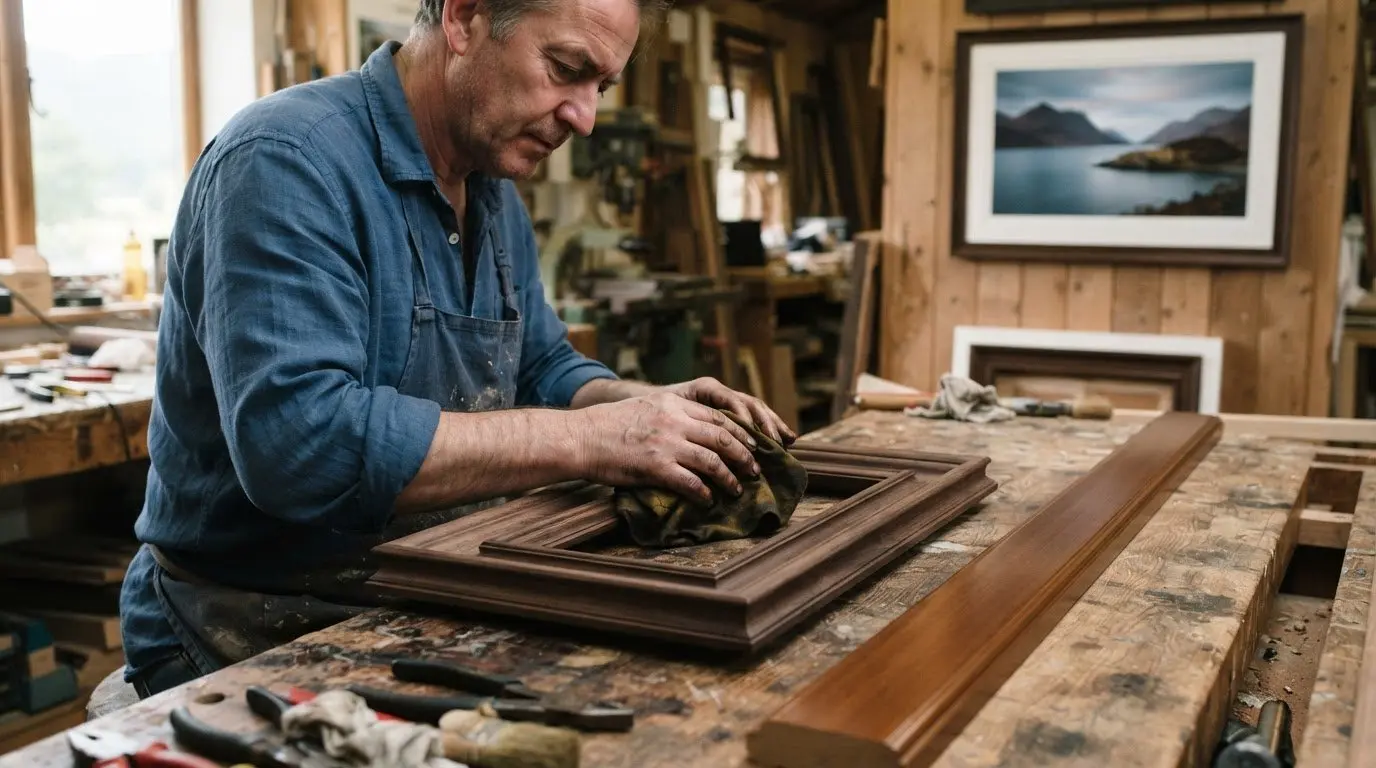
  1. Prepare the frame. Once the wooden frame has been made, its surface is prepared for the chosen treatment. Gesso can be applied to create a base before painting. This foundation helps create a consistent surface for a flat colour or a more specific finish.
  2. Apply the chosen finish. Paint may provide a clean, even colour, while layered techniques create more individual effects. A frame designed to echo gold in an artwork, for example, needs its finish planned around those tones. Matching the frame to the image makes the relationship feel considered rather than incidental.
  3. Build and cure layers. Where the design uses multiple applications, each layer needs to be applied with care and allowed to dry or cure before the next stage. That sequence helps preserve the intended appearance. A painted frame with metallic detailing, for instance, combines distinct surface treatments rather than one single coat.
  4. Complete the frame. After finishing, the frame moves to final assembly, glazing and cushioning for shipping. These stages take 3-7 days. Assembly brings the components together, glazing protects the artwork, and cushioning prepares the finished piece for transport.

Examples show how a finish can be planned around the artwork. Frames made for Ollie Tuck’s Bumble artworks used different colours, sometimes matching gold to the background. Some dark grey examples had a gesso base and gilded edges; others combined paint, wax and metallic gold paint. These details call for decisions about colour and application order.

A one-off frame reflecting the harlequin pattern of a wedding invitation is another example. The pattern guides the design, while preparation, surface treatment and assembly bring it to life. Bespoke effects add purposeful stages: the artwork or invitation informs the finish, and the finish shapes how the frame is built and completed.

Hand-finished vs Factory-finished Frame Quality & Look

Neither finish guarantees better quality on its own. A hand-finished surface allows colour and detail to be tailored to an artwork, while a factory finish generally gives profiles a more uniform appearance. The useful comparison is how well the finish suits the image and how carefully the frame is made.

Consider a cool-toned Scottish landscape print. A subdued frame can support its atmosphere without distracting from the scene. Hand-finishing can create a specific colour or character; a factory-finished profile can also suit the print if its ready-made appearance complements the artwork. The right choice depends on the visual relationship, not the production label.

Look beyond the front surface. Clean corners, tidy joins and an even finish all contribute to the frame’s presentation. Check how its proportions relate to the artwork, too. A frame that overwhelms a delicate image or looks undersized beside a bold composition can distract, even if the finish looks neat.

  • Surface character: Hand-applied treatments can create individual variation; factory finishes tend towards a consistent look.
  • Design fit: Compare the frame’s colour and profile with the artwork’s palette, scale and mood.
  • Construction: Examine corners, joins and edges alongside the visible finish.

For a series of prints, a consistent factory finish can help the pieces feel coordinated. For an artwork with distinctive colours, a tailored hand finish can connect the frame more closely to its subject. Neither approach is automatically more durable: material quality, preparation and application all matter. Judge the complete frame, not just its surface.

Explore framed artwork and print styles to see how different frame profiles change the presentation of an image.

First4Frames Gallery helps you match a frame’s finish and profile to the artwork it will hold. Its frames are handmade to order using high-quality materials, with 2 mm float glass fitted as standard. Custom Picture Framing gives you a bespoke option, while Ready-to-Hang Framed Art and Giclée Fine Art Prints offer other ways to bring art into your space.

Use the differences in this guide to decide what matters most: an individual finish, a consistent look or a frame tailored to your artwork. The frame should support the image and feel at home in its setting.

For help choosing a framing option for your artwork, contact First4Frames Gallery.

Choose a frame that brings your artwork together

The best choice is the one that gives your artwork the presence you want. Choosing between hand-finished and factory-finished frames is easier when you picture the finished piece in its intended setting. Decide whether the frame should quietly support the image or add distinctive character.

First4Frames Gallery brings together Ready-to-Hang Framed Art, Custom Picture Framing and Giclée Fine Art Prints, helping you consider artwork and framing as parts of one design. Whether you’re selecting a print or shaping a more personal look, let the image guide the frame rather than choosing a finish in isolation.

Take the next step by exploring the available artwork and framing possibilities. Explore framed art and print options, then choose a direction that feels right for your space. The right frame can give a favourite image a place to belong, and your next design decision can start with the artwork you love.

Frequently Asked Questions

What does hand-finished mean for frames?

The terms describe how the visible surface is completed, not the frame’s shape or how the artwork is mounted. The practical difference is the opportunity to choose a finish that relates closely to the image. Consider whether the frame should echo a colour in the artwork or create a deliberate contrast, then assess the overall balance.

How do the prices of hand-finished and factory-finished frames compare in the UK?

There is no single price comparison that applies to every frame in the UK. For a like-for-like assessment, compare frames with the same dimensions, profile and glazing, and similar finish complexity. Check that the quoted amount covers the complete framed piece, not just the visible frame profile. Differences in specification can make apparently similar options difficult to compare directly.

What materials and finishing techniques are used for each type of frame?

Materials and treatment depend on the frame design, so the finish label alone does not describe the full specification. Compare the surface’s colour, sheen and texture, and consider how they sit beside the artwork. A sample under the room’s lighting may look different from a small online image, so keep the intended setting in mind.

How long does it take to make or finish each type of frame?

Factory-finished profiles generally allow production to proceed without waiting for an individual surface treatment, while custom finishing can add time. If the frame is needed for a move, exhibition or room refresh, plan backwards from when it must be in place. Allow time for the complete order and delivery, not just the finishing stage.

Can hand-finished frames be customised or repaired more easily?

Customisation is easiest to plan while the frame is being made, so its appearance can be considered alongside the artwork. Repair is different: matching an existing surface may be difficult, especially if it has aged or developed individual variation. A hand-finished label alone does not make repair easier; the damage and the possibility of recreating the original appearance both matter.

What should buyers check when comparing frame finishes and warranties?

Compare the finish’s materials and applied layers, how its colour and profile suit the artwork, and the frame’s corners, joins and edges. Check the finish and construction quality; no warranty details are provided.

Posted on

Hand-Finished Picture Frames UK: A Guide to True Craftsmanship

Hand-Finished Picture Frames UK: A Guide to True Craftsmanship

Have you ever stood before a beautifully framed piece of art and wondered what sets it apart? The choice can feel overwhelming, especially when deciding how to best protect and display a piece you love. You might question if the higher price tag is justified, or what ‘hand-finished’ really means. When searching for hand finished picture frames uk, you’re not just looking for a border; you’re seeking a bridge between your art and your home, a piece of craftsmanship that enhances the story on the wall.

This guide is here to demystify the entire process. We will pull back the curtain on the meticulous techniques that define a truly bespoke frame, from selecting the perfect sustainable wood to applying the final, delicate layer of wax or paint. Embark on this journey with us to discover the immense value and artistry involved, and feel confident in choosing a spectacular, premium frame that will protect and celebrate your artwork for a lifetime.

Key Takeaways

  • Understand the true artistry that separates a genuinely hand-finished frame from a mass-produced alternative.
  • Learn how to select the perfect wood and finish to create a beautiful, harmonious bridge between your art and your decor.
  • Discover why a bespoke frame is a lifelong investment in preserving and enhancing your art, not just an expense.
  • Follow a clear guide to confidently commission the best hand finished picture frames UK artisans have to offer for your masterpiece.

What Truly Defines a ‘Hand-Finished’ Picture Frame?

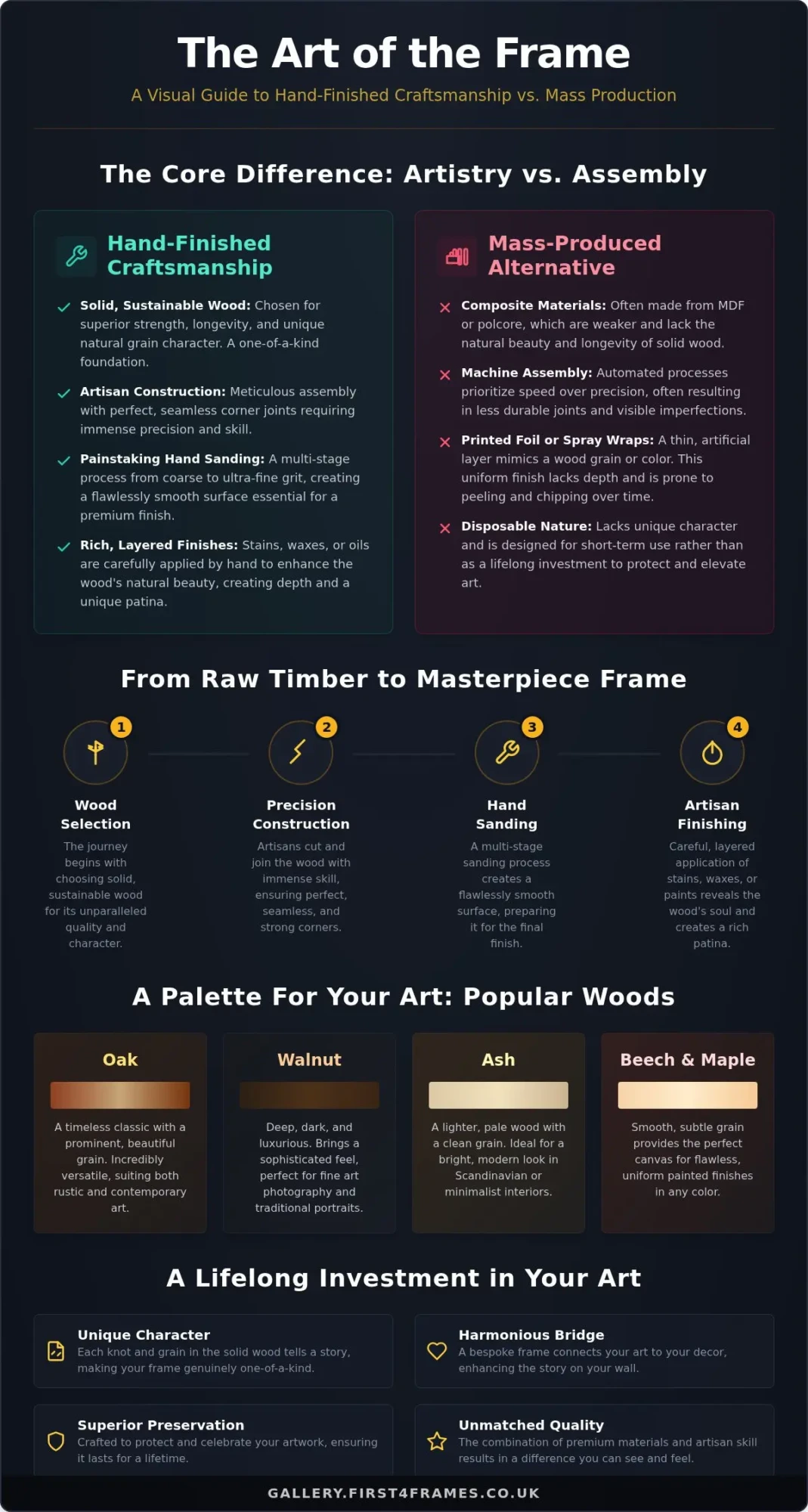
In a world of mass production, the term ‘hand-finished’ signifies a profound difference-a commitment to artistry over assembly. A truly hand-finished frame isn’t just put together by a person; it’s meticulously crafted, with every stage receiving the care and attention of a skilled artisan. It’s the very opposite of a disposable, factory-made item, offering a unique character that elevates the artwork it holds.

To see the level of precision involved in creating a frame from scratch, this video offers a fantastic look into the process:

This dedication to craftsmanship is what sets premium hand finished picture frames uk apart. The journey from raw timber to a beautiful, gallery-ready frame involves a series of deliberate, skilled actions that simply cannot be replicated by a machine. It’s a difference you can both see and feel.

The Material Difference: Solid Wood vs. Composite

It all begins with the foundation. We use solid, sustainable wood, chosen for its superior strength, longevity, and unique character. Unlike MDF or polcore-composite materials often wrapped in a printed foil that can peel or chip over time-solid wood possesses a natural grain. Each knot and whorl tells a story, ensuring your frame is genuinely a one-of-a-kind piece.

Construction & Craftsmanship: The Artisan’s Touch

The artisan’s touch is most evident in the construction. Achieving perfect, seamless corner joints requires immense precision and skill. After assembly, the frame undergoes a multi-stage sanding process entirely by hand, moving from a coarse to an ultra-fine grit. This painstaking preparation creates a flawlessly smooth surface, which is essential for achieving a premium, lasting finish.

The Finish Itself: More Than Just a Coat of Paint

Finally, the finish is where the frame’s soul is revealed. This isn’t a quick, uniform spray of paint. Hand-finishing involves carefully applying stains, waxes, or oils to enhance the wood’s natural beauty. This hands-on approach, a continuation of a long craft tradition (you can learn more about the history of picture frames and their evolution), builds colour in layers, creating a depth and richness that factory processes can’t match. The result is a frame with a unique patina and a warm, inviting character.

Exploring Wood Types & Finishes: A Palette for Your Art

The soul of a truly beautiful frame lies in its material. The choice of wood and its finish is not just a detail; it’s a crucial decision that defines the relationship between the art, the frame, and your space. Think of it as the artist’s final brushstroke. When you invest in the quality craftsmanship behind our hand finished picture frames uk, you are choosing a piece of bespoke furniture for your art, designed to protect and elevate it for years to come.

A Guide to Popular Frame Woods

Each timber possesses a unique character and grain, offering a different personality to frame your picture. We source only the best sustainable woods, with a few favourites standing out for their beauty and versatility:

  • Oak: A timeless classic. Known for its prominent, beautiful grain, oak is incredibly versatile, suiting everything from rustic to contemporary settings.
  • Walnut: Deep, dark, and luxurious. Walnut brings a sophisticated and premium feel, perfect for fine art photography and traditional portraits.
  • Ash: A lighter, pale wood with a clean grain. Ash is ideal for creating a bright, modern look that complements Scandinavian or minimalist interiors.
  • Beech & Maple: With their smooth, subtle grain, these woods provide the perfect canvas for painted finishes, allowing for a flawless, uniform colour.

Common Finishing Techniques Explained

The finish is where our artisans apply their expertise, a skill honed through dedication to the craft. This is the stage that transforms raw timber into a masterpiece, a process celebrated by institutions like The King’s Foundation through its traditional craftsmanship training programmes. Each technique imparts a distinct character:

This same dedication to heritage skills can be seen in other specialized craft sectors. For example, Mary Collings Church Furnishings has been applying traditional manufacturing techniques to ecclesiastical items for over half a century, showcasing the versatility and timeless appeal of expert woodworking.

  • Staining: Enhances the wood’s natural beauty, deepening its colour while allowing the inherent grain to remain the star of the show.
  • Waxing & Oiling: A traditional method that provides a soft, natural lustre. This finish protects the wood and gives it a tactile, warm feel.
  • Hand Painting: Offers limitless possibilities. From a solid, opaque colour matched to your decor to a gently distressed finish for a vintage feel.
  • Gilding: The application of gold or silver leaf for a spectacular, traditional look that adds a touch of opulence and grandeur.

Matching the Frame to Your Artwork

A great frame should never compete with the art; it should complete it. It acts as a bridge, seamlessly connecting the artwork to your room’s decor. Here are a few guiding principles:

  • Use warm, rich woods like Oak or Walnut to complement the tones in traditional oil paintings or classic prints.
  • Choose clean, simple profiles in Ash or a painted finish for modern photography, abstract art, and graphic prints.
  • Consider the dominant colours in your art. A frame’s stain or paint colour can be chosen to pick out and enhance a subtle hue within the piece.

Feeling unsure? Our passion is helping you find that perfect match. Need advice? Talk to our framing experts for a personal consultation.

The Process: From Raw Timber to Masterpiece Frame

Ever wondered what transforms a simple piece of wood into a frame worthy of your most treasured art? It’s a journey of skill, patience, and meticulous attention to detail. This isn’t an automated assembly line; it’s a hands-on process where every decision matters. The dedication required reflects a standard of quality championed by organisations like the Guild of Master Craftsmen, which recognises the UK’s finest artisans. Let’s step into the workshop and see how it’s done.

Step 1: Selecting and Milling the Timber

It all begins with the wood. We carefully select beautiful, sustainable timbers like Ash, Oak, or Beech, ensuring each piece has the right character and strength. This raw timber is then milled in our workshop, where it’s cut and shaped into specific frame profiles. A master framer pays close attention to the wood’s grain, planning the cuts so the pattern flows seamlessly and consistently around the finished frame, creating a sense of natural harmony.

Step 2: Perfecting the Corners and Construction

The hallmark of a quality frame is its corners. Each length of the profile is cut to a precise 45-degree angle. These mitred corners are then joined using professional-grade wood glue and secured with v-nails shot into the back. The frame is placed in clamps to dry, ensuring a bond that is stronger than the wood itself. This robust structure is then carefully sanded, creating a perfectly smooth, raw canvas ready for the final, transformative stage.

Step 3: The Finishing Touch

This is where true artistry comes to the fore. Whether it’s a rich stain, a delicate wax, or a bespoke paint colour, the finish is applied by hand in multiple thin layers. Between each coat, the surface is ‘cut back’-lightly sanded-to remove any imperfections and achieve a flawless, deep lustre. This patient process is what distinguishes the best hand finished picture frames uk artisans offer. After a final buff and a rigorous quality inspection, the frame is ready for glazing and fitting, a true masterpiece built to last a lifetime.

Hand-Finished Picture Frames UK: A Guide to True Craftsmanship

Why Invest in a Hand-Finished Frame? The Lifelong Benefits

When you see the price difference between a mass-produced frame and a hand-finished one, it’s natural to ask: is it truly worth it? The answer is a resounding yes. Viewing a hand-finished frame not as an expense, but as a long-term investment, reveals its profound value. This investment is built on three essential pillars: unmatched durability, superior protection for your art, and a unique aesthetic that elevates your space.

Unmatched Durability and Longevity

Unlike factory-made frames often constructed from composite materials, our hand finished picture frames UK artisans use premium solid wood. This robust foundation is naturally resistant to warping and environmental shifts common in British homes. The meticulous, hand-applied finishes-whether wax, stain, or paint-do more than create a beautiful surface; they seal and protect the timber, ensuring it lasts for decades. This is a frame built to become an heirloom, protecting and presenting your art for generations to come.

Superior Protection for Your Artwork

A beautiful frame is only half the story; its primary role is to preserve what’s inside. A hand-finished frame provides the perfect housing for conservation-grade materials that offer unparalleled protection. This includes:

  • Acid-Free Mounts: Preventing the yellowing and discolouration known as ‘mat burn’ that can permanently damage your artwork over time.
  • UV-Protective Glazing: A crucial shield against the harmful effects of sunlight, which can cause colours to fade dramatically.
  • Structural Integrity: The sturdy, expertly joined corners of a handmade frame offer far greater physical protection against accidental knocks and falls.

Pairing your art with these materials ensures it remains as vibrant as the day it was created.

A Unique Aesthetic Statement

Perhaps the most compelling benefit is the sheer beauty and individuality of a hand-finished frame. Because each piece of wood is unique and every finish is applied by a skilled craftsperson, no two frames are ever exactly alike. This allows you to create a truly bespoke piece that perfectly complements your artwork and your home’s décor. The frame ceases to be a simple border; it becomes the essential bridge between your room and the artwork, enhancing its story and drawing the viewer in. It’s an integral part of the art, a testament to quality craftsmanship that elevates the perceived value of the piece it holds. Discover the transformative effect for yourself in our online gallery.

How to Commission Your Hand-Finished Frame in the UK

Embarking on a bespoke framing project is an exciting journey. It’s a creative partnership between you and a skilled artisan, designed to create a final piece that is much more than the sum of its parts. Finding the right partner is the first and most crucial step to ensuring your artwork is presented perfectly.

What to Look For in a Framer

When searching for a specialist in hand finished picture frames uk-wide, it’s important to look beyond a simple price list. A truly professional framer will be proud to share their craft. Look for these key indicators of quality:

  • A Rich Portfolio: Ask to see examples of their previous hand-finished work. This demonstrates their skill, consistency, and stylistic range.
  • Material Transparency: Inquire about their wood sourcing and sustainability practices. Premium, responsibly sourced timber is the foundation of a lasting frame.
  • A Proper Consultation: A bespoke service should involve a real conversation. Avoid framers who rely solely on an online form; a true consultation allows for nuance and expert guidance tailored to your specific piece.

The Consultation Process: Bringing Your Vision to Life

The consultation is where your vision and the framer’s expertise meet. This collaborative discussion is designed to explore every detail. We will discuss your artwork, your interior design style, and the specific room where the piece will be hung to ensure the frame acts as a perfect bridge between the art and its environment. You’ll be able to view and feel wood samples, explore different finish options, and receive professional guidance on crucial elements like mount proportions and specialist glazing that protects your art from UV damage.

Why Choose First4Frames Gallery for Your Project

At First4Frames Gallery, we believe that exceptional framing is born from passion and experience. With decades of expertise rooted in Scottish craftsmanship, we offer a complete bespoke service, guiding you from the initial idea to the final, beautiful delivery. We source only the best, sustainable materials to ensure your frame is not only spectacular today but remains a treasured part of your home for generations.

We are dedicated to making the process of commissioning beautiful, hand finished picture frames uk a simple and inspiring experience. Let us help you do justice to your art.

Start your bespoke framing journey with us today.

Elevate Your Art with True British Craftsmanship

A hand-finished frame is far more than a simple border; it is a bespoke piece of craftsmanship designed to be the perfect bridge between your art and your space. As we’ve explored, the journey from raw, sustainable timber to a finished masterpiece involves immense skill, precision, and a deep appreciation for detail. This commitment ensures your artwork is not just protected, but beautifully enhanced for a lifetime of enjoyment.

Choosing from the exceptional hand finished picture frames uk artisans create is an investment in quality and heritage. At First4Frames, we pour over 20 years of framing expertise into every piece we craft. Based in Falkirk and serving the entire UK, our passion is pairing your art with the perfect, sustainably sourced frame it deserves.

Ready to give your art the spectacular finish it warrants? Discover the art of bespoke, hand-finished framing with First4Frames.

Frequently Asked Questions

How much more does a hand-finished frame cost than a standard one?

A hand-finished frame is an investment in true craftsmanship. While a standard, off-the-shelf frame might cost £20-£50, a hand-finished equivalent typically starts from £75-£95 and can increase with size and complexity. The price for the premium hand finished picture frames uk customers choose reflects the many hours of skilled work, premium materials, and the unique, multi-layered finish that cannot be replicated by a machine. It’s a bespoke piece designed to last a lifetime.

How long does it take to have a hand-finished picture frame made?

Patience is key to perfection. The creation of a hand-finished frame is a meticulous process involving consultation, precise construction, and the careful application of multiple layers of finish, each requiring time to cure. Typically, you can expect a lead time of 2-4 weeks from confirming your order to completion. This ensures every detail is perfect and the finish is durable, beautiful, and exactly as you envisioned, making the wait worthwhile for a truly artisanal product.

Can you create a custom finish to match my furniture or decor?

Absolutely. This is one of the greatest advantages of choosing a hand-finished frame. We can create a completely custom finish to achieve perfect harmony with your interior. Whether you provide a paint colour code, a fabric swatch, or a photograph of your furniture, our artisans can expertly mix pigments and apply techniques to create a frame that seamlessly integrates with your existing decor. It’s the ultimate way to create a cohesive and professionally styled look in your home.

What is the difference between ‘bespoke’ and ‘hand-finished’?

These terms describe two different aspects of customisation, though they often go together. ‘Bespoke’ refers to the size and dimensions of the frame; it is made-to-measure to fit your artwork perfectly, rather than being a standard size. ‘Hand-finished’ refers to the surface treatment-the colour, texture, and protective layers are all applied by a skilled craftsperson by hand. A frame can be one or the other, but our finest work is often both for a truly unique result.

Where do you source the wood for your frames?

We believe a spectacular frame begins with exceptional materials. We source our solid woods, such as Oak, Ash, and Beech, from reputable timber merchants in the UK and Europe who are committed to sustainable forestry. By prioritising suppliers with FSC (Forest Stewardship Council) certification, we ensure our beautiful frames are not only built to last but are also created with environmental responsibility at their core, honouring both the art and its natural origins.

Can I get a hand-finished frame for a canvas painting?

Of course. We create stunning hand finished picture frames uk artists and collectors adore for canvas paintings. The most popular style is the ‘floater’ or ‘tray’ frame, where the canvas appears to levitate within the frame with a small gap around the edges. This contemporary style respects the artwork’s integrity by showing its sides. We can hand-finish these floater frames in any colour or style to perfectly complement your painting and its surroundings.