That beautiful print, treasured family photograph, or one-of-a-kind piece of art deserves to be the star of the show, not left in a tube because it won’t fit a standard-sized frame. If you’ve ever felt the frustration of odd dimensions, or felt overwhelmed by the thought of choosing mounts, materials, and glazing, you’re not alone. The world of custom size picture frames can seem complex and expensive, but achieving a perfect, professional finish is more accessible than you might think.
A bespoke frame is the ultimate choice for your art; it’s the bridge that connects the piece to your room’s décor and protects your cherished item for a lifetime. In this guide, we’ll embark on a journey to find the perfect fit. We will demystify the process, showing you how to measure with confidence and select the ideal materials-from the wood of the frame to the type of glass-to create a spectacular result you’ll be proud to hang on your wall.
Key Takeaways
- Discover why a standard ‘close enough’ frame can diminish your art, while a custom fit provides the perfect, professional presentation it deserves.
- Understand the three key components of any frame-moulding, mount, and glazing-and how to combine them to perfectly complement your piece.
- Ordering custom size picture frames online is a simple and straightforward process, and our guide breaks it down into three easy-to-follow steps.
- Get inspired with creative ideas for framing more than just prints, from treasured family heirlooms to unique three-dimensional objects.
Why Choose a Custom Size Frame Over a Standard One?
You’ve found a piece of art you love-a beautiful print, a cherished family photograph, or an original painting. The next step is framing, but this is where many people are forced to compromise. Settling for a standard, off-the-shelf frame often means accepting a ‘close enough’ fit that ultimately does a disservice to the artwork inside. Whether it’s an oddly-sized concert poster or a panoramic photograph, standard frames simply don’t cater to the unique. A frame is far more than just a border; to understand what is a picture frame is to see it as a structural and aesthetic bridge connecting the art to your space.
To see how a thoughtful choice can transform your art, take a look at this helpful video:
The Aesthetic Advantage: Perfect Proportions
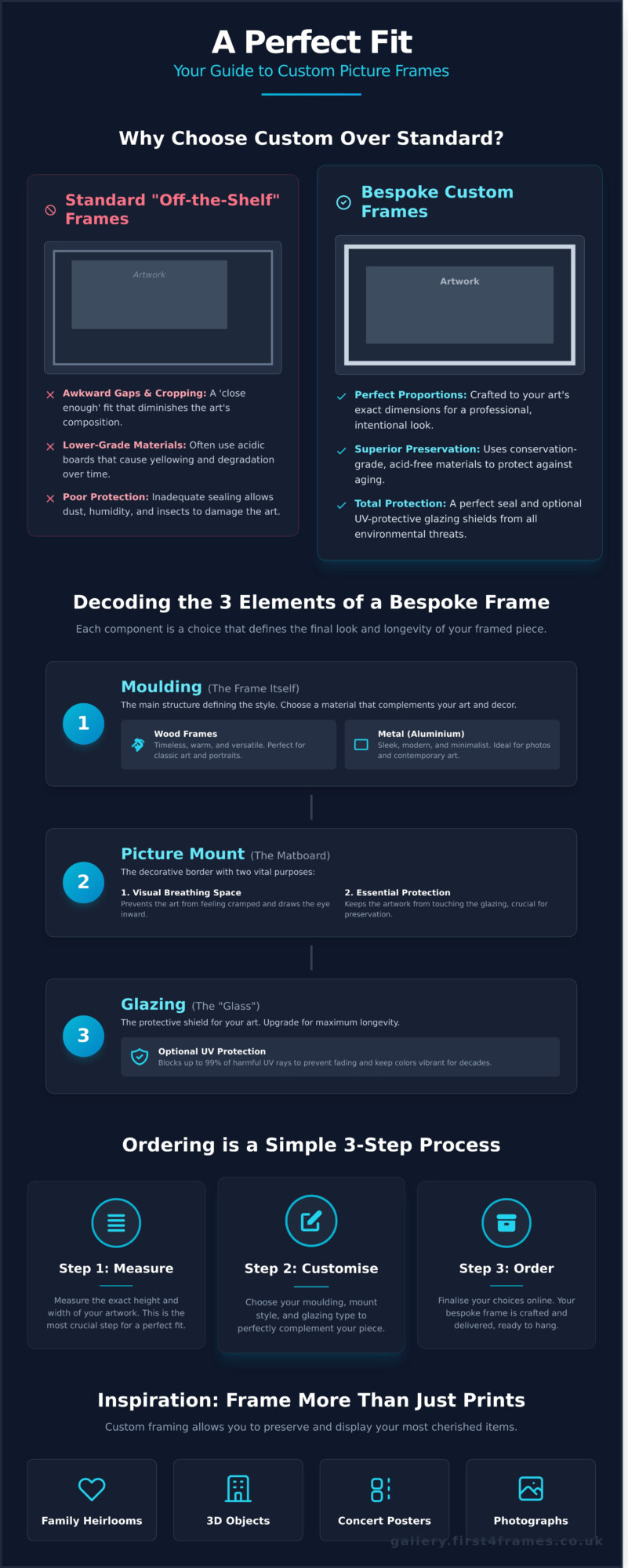
A bespoke frame is crafted to the exact dimensions of your artwork, ensuring perfect, harmonious proportions. This tailored approach eliminates the awkward gaps or forced cropping that occur with standard sizes, allowing the artist’s original composition to shine. This makes the entire presentation look more intentional and professional, as if the frame and art were always meant to be together. Furthermore, the mount can be precisely sized to give the image vital breathing room, drawing the eye inward. With custom size picture frames, you also gain complete control over the style, finish, and colour, creating a spectacular, seamless connection between the artwork and your home décor.
Superior Protection and Longevity
Beyond aesthetics, a custom frame is a crucial investment in preserving your treasured piece for a lifetime. Unlike many mass-produced options that use lower-grade materials, professional custom framing prioritises conservation. These aren’t just fancy terms; they are the industry standard for museum-quality preservation, safeguarding your art’s colour and integrity. Key benefits include:
- Conservation-Grade Materials: We use acid-free mounts and backing boards to prevent the yellowing and degradation that can ruin artwork over time.
- A Perfect Seal: A properly sealed backing creates a robust barrier against environmental threats like dust, humidity, and even insects.
- UV-Protective Glazing: You have the option to choose glazing that shields your art from up to 99% of harmful UV rays, preventing fading and ensuring vibrant colours for decades.
This perfect, secure fit also prevents the artwork from slipping or warping inside the frame, ensuring it remains pristine for years to come. It’s the professional standard for a reason.
Decoding the Elements of a Bespoke Frame: A Beginner’s Guide
Creating the perfect frame is a journey of craftsmanship, where three core components come together to protect and enhance your artwork. Think of a premium frame not just as a border, but as a carefully constructed bridge between your art and your room’s decor. Understanding the role of the moulding, mount, and glazing is the first step in moving beyond a basic holder to a truly spectacular, personalised display. Each choice contributes to the final look of your custom size picture frames, ensuring the result is a perfect fit in every sense.
Choosing Your Frame Moulding
The moulding is the main structure of your frame, defining its character and style. Your choice should complement both your artwork and your interior design. We source only the best materials to offer beautiful, lasting options:
- Wood Frames: Timeless, warm, and wonderfully versatile. Natural grains from woods like oak, ash, and pine bring an organic, classic feel to any piece, from family portraits to fine art prints.
- Metal Frames (Aluminium): Sleek, modern, and minimalist. The clean lines and slim profiles of metal are perfect for contemporary photography, posters, and abstract art.
Consider the moulding’s profile (its width and depth) in relation to the art’s size. A wide, substantial profile can give a large piece the presence it deserves, while a delicate profile is better suited to smaller works. The key is to find a balance that draws the eye inward, not one that overwhelms the art itself.
The Importance of the Picture Mount
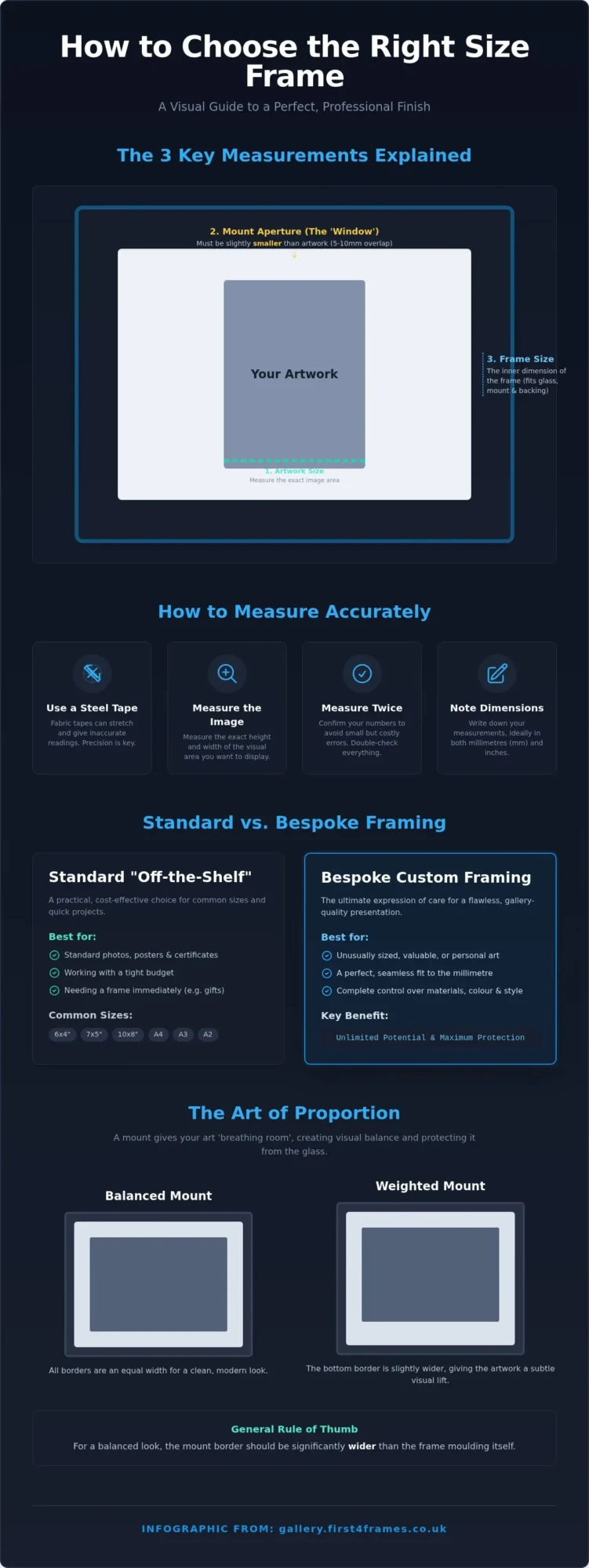
A picture mount (also known as a matboard) is the decorative card border that sits between the moulding and your artwork. It serves two vital purposes: it provides visual breathing space, preventing the art from feeling cramped, and it keeps the artwork from touching the glazing, which is crucial for preservation. You can choose a single mount for a clean, classic look or a double mount to introduce a second accent colour for added depth and a professional finish. While neutral whites are a popular choice, a coloured mount can be used to pick out a subtle shade in the artwork, tying the whole piece together beautifully. For lasting quality, always opt for a conservation-grade, acid-free mount to prevent discolouration and protect your print for years to come.
Selecting the Right Glazing (The ‘Glass’)
Glazing is the clear, protective front of your frame. While it might seem like a simple choice, the right glazing makes a significant difference to both the viewing experience and the longevity of your art. Here are the most common options for custom size picture frames:
- Standard Float Glass: A high-quality, clear, and budget-friendly option suitable for most framing projects.
- Acrylic/Perspex: Significantly lighter and more shatter-resistant than glass, making it the safest choice for very large frames, public spaces, or children’s rooms.
- Anti-Reflective Glass: Offers crystal-clear viewing by minimising glare and reflections, ensuring your artwork can be seen perfectly from any angle.
- UV-Filtering Glass: Essential for preserving valuable or original artwork. This specialist glazing blocks up to 99% of harmful UV rays that cause colours to fade over time.
How to Order Your Custom Size Frame: A Simple 3-Step Process
Ordering custom size picture frames online shouldn’t be complicated. We believe the journey to protecting and showcasing your art should be as enjoyable as the art itself. This simple, three-step guide demystifies the process, turning what can seem daunting into a creative and rewarding experience. With precise measurements and a clear vision for your style, you’re just a few clicks away from the perfect, professional finish for your piece.
Step 1: Measure Your Artwork Accurately
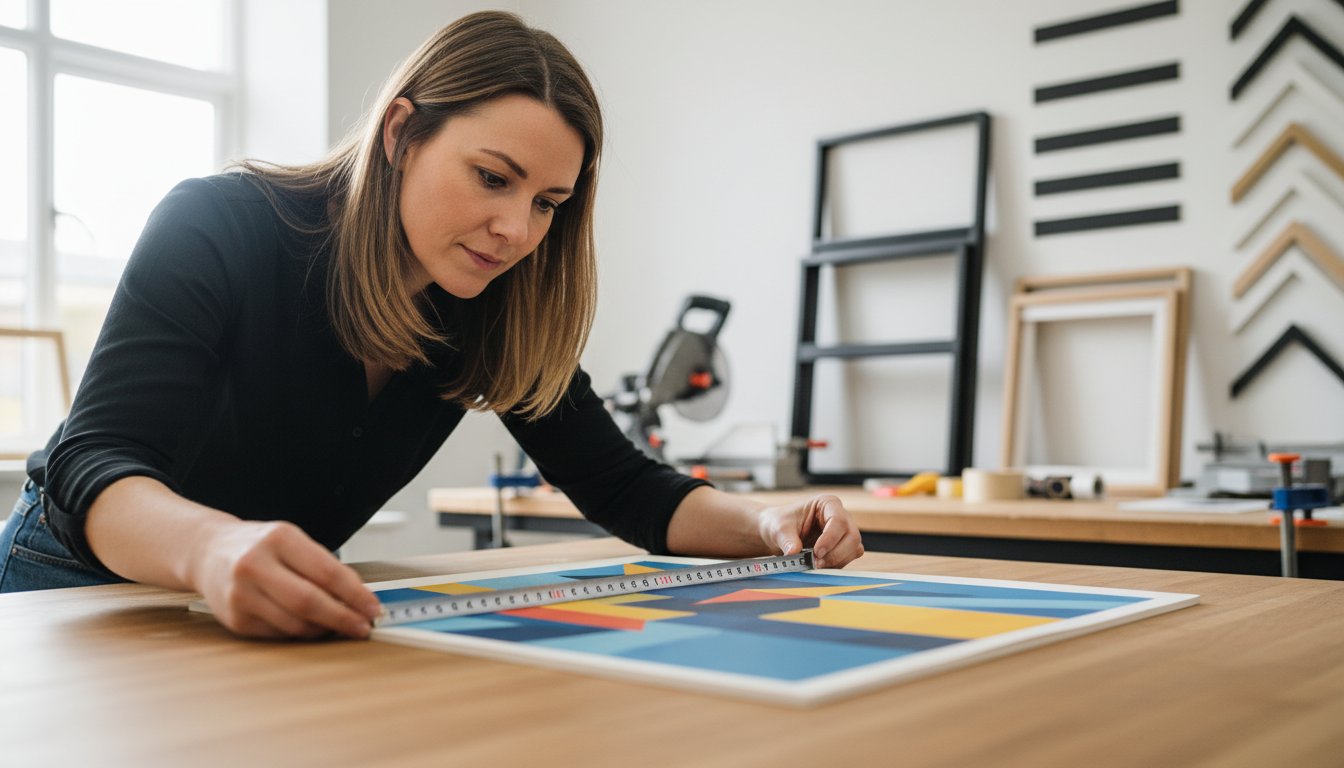
Precision is the foundation of a perfectly fitting frame. Before you begin designing, take a moment to measure your piece with care. This ensures your frame is crafted to the exact millimetre, providing a professional, gallery-quality fit. For best results, follow these simple guidelines:
- Use a steel tape measure for the most reliable reading; fabric tape measures can stretch and lead to inaccuracies.
- Measure the exact height and width of the artwork itself, not including any existing border or mount you wish to replace.
- Double-check your numbers before entering them into our online designer. A quick second look can save a lot of trouble!
- Note the depth if you are framing a 3D object like a medal or piece of memorabilia, as this will require a deeper box frame.
Step 2: Choose Your Style and Materials
This is where your vision truly comes to life. Our intuitive online visualiser is your digital workshop, allowing you to experiment with hundreds of combinations to find the one that makes your art sing. A great frame acts as a bridge between your piece and your room’s decor, tying everything together beautifully. Consider the key elements that make up your custom frame:
- Frame Moulding: Explore different styles, from sleek modern profiles to ornate traditional designs. Think about the colours and textures in both your artwork and your living space.
- Mount Combination: A mount (or passe-partout) gives your artwork essential breathing space. Decide on the ideal width and select from our extensive range of colours to create stunning contrast or subtle harmony.
- Glazing Choice: Select the right “glass” for your needs. We offer high-quality acrylic for excellent clarity and safety, as well as premium anti-reflective and UV-protective options for precious pieces or frames hung in direct sunlight.
Step 3: Finalise and Place Your Order
Before you complete your purchase, take a final moment to review your creation. Our summary page will show you a preview of your design along with all your chosen specifications, from the exact dimensions to the materials. Your frame will arrive ready to hang, complete with a sturdy backing board and all the necessary hanging hardware.
If you have any last-minute questions or need a bit of expert advice, our passionate team of craftspeople is always here to help. We are dedicated to ensuring your finished frame is nothing short of perfect.
Ready to create something beautiful? Design your perfect custom frame today!
Beyond Prints: Inspirational Ideas for Custom Framing
A frame is more than a border; it’s a stage for your most cherished memories. While we often think of framing photos and art prints, custom size picture frames open up a world of creative possibilities for unique objects and keepsakes. With a little imagination, you can transform these items into spectacular wall art, creating a display that is deeply personal and truly one-of-a-kind.
Framing Textiles and Memorabilia
Think of that treasured football shirt from a memorable match, a set of military medals, or a delicate piece of embroidery passed down through generations. These items tell a story and deserve to be displayed with pride, not hidden away in a drawer. A custom box frame is the perfect solution, creating the necessary depth to house three-dimensional objects. Our professional mounting techniques ensure your memorabilia is held securely without causing damage, using acid-free materials to preserve its integrity for years to come. We can help you create a beautiful 3D display for items such as:
- Sports shirts and medals
- Concert tickets and programmes
- Embroideries, tapestries, and fabric art
- Baby’s first shoes or christening gowns
Showcasing Oversized Art and Posters
A large-format art print or a vintage concert poster can be a spectacular focal point in a living room or hallway, but finding a standard frame that fits is often impossible. This is where custom size picture frames are not just a luxury, but a necessity. They ensure a perfect, gallery-quality fit for your non-standard pieces, providing the essential support and aesthetic finish they demand.
For heavier items, choosing a sturdy, premium moulding is crucial for structural integrity. We also recommend options like lightweight acrylic glazing, which offers a safer, shatter-resistant alternative to glass with the added benefit of UV protection to prevent fading. A professionally crafted frame doesn’t just fit your art; it elevates it, turning a simple poster into a significant piece of décor.
Feeling inspired? Explore our online gallery to see what’s possible with bespoke craftsmanship.
The First4Frames Difference: Craftsmanship from Falkirk
Choosing the right frame is essential, but the expertise of the framer truly makes the difference. At First4Frames Gallery, we believe that exceptional framing is an art form in itself. From our workshop right here in Falkirk, we combine precision technology with time-honoured, hands-on craftsmanship to create something truly special for your artwork. Every single frame is hand-built to order by our dedicated team, who are as passionate about art as you are.
We see a frame as the crucial bridge between your art and your space. It shouldn’t just border the piece; it should enhance it. This philosophy drives every cut, join, and finish that leaves our workshop, ensuring your art is given the beautiful presentation it deserves.
Our Commitment to Quality Materials
A spectacular frame begins with superior materials. We are uncompromising in our commitment to quality, ensuring your art is both beautifully displayed and properly protected for years to come. This attention to detail is at the core of what we do.
- Premium Mouldings: We source high-quality, sustainable wood and sleek, durable metal mouldings to provide a perfect foundation for any style.
- Conservation-Grade Mounts: All our mounts are acid-free and meet conservation standards, preventing damage and discolouration to your precious artwork over time.
- Specialist Glazing: We offer a complete range of glazing options, from crystal-clear standard acrylic to anti-reflective and 99% UV-protective glass for ultimate preservation.
- Flawless Finish: Our meticulous attention to detail is evident in every perfectly joined corner and smooth, immaculate finish.
Expert Advice from Passionate Framers
With over 20 years of experience, we are more than just framers; we are your partners in presentation. We understand that choosing the right combination of moulding, mount, and glazing for your custom size picture frames can feel overwhelming. That’s why our knowledgeable team is here to guide you, ensuring your final frame not only fits perfectly but also elevates the piece within. Serving art lovers across Scotland and the entire UK, we bring our expertise to every single project.
Ready to find the perfect frame for your piece? Contact our friendly team for a framing consultation.
Bring Your Vision to Life with the Perfect Frame
As we’ve explored, choosing a custom frame over a standard size is a transformative decision for your art. It’s about more than just fitting an unusual dimension; it’s about elevating your artwork, complementing your décor, and preserving your memories with precision and personal style. From decoding the elements of a bespoke frame to our simple three-step ordering process, you now have the knowledge to create the perfect showcase for any piece.
At First4Frames, this is our passion. With over 20 years of professional framing experience, every one of our custom size picture frames is hand-built with care in our Falkirk workshop. We are a trusted partner for artists and galleries across Scotland because we pour our expertise and dedication into every single project, ensuring a flawless, beautiful finish for your treasured items.
Your masterpiece is waiting for its final touch. If you’re ready to give your art the bespoke home it deserves, our team is here to help. Start designing your custom size frame with our experts today. We look forward to helping you create something truly spectacular.
Frequently Asked Questions
How much more expensive is a custom size frame compared to a standard one?
The cost of a bespoke frame is determined by the specific materials and dimensions you choose, rather than a flat “custom” fee. While a very large or ornate custom frame might cost more than a small, mass-produced one, you may find our prices are surprisingly competitive. For example, a simple 30x40cm custom wood frame could be around £35, offering a perfect, handcrafted fit for a similar price to a premium off-the-shelf option, ensuring spectacular results for your artwork.
What happens if I measure my artwork incorrectly?
We craft each frame to the precise dimensions you provide, so it’s crucial to measure carefully. We recommend measuring your artwork twice for accuracy! As our custom frames are made-to-order, they are non-returnable if incorrect measurements are supplied. If you’re unsure how to measure, please consult our measuring guide or contact our friendly team for advice before placing your order. We are passionate about helping you achieve the perfect fit for your piece.
How long does it take to make and deliver a custom picture frame?
Our commitment to craftsmanship means we take great care with every order. Typically, your bespoke frame will be handcrafted in our workshop within 5-7 working days. Once it’s ready and has passed our quality checks, we securely package it and dispatch it via a trusted courier. You can usually expect delivery within 2-3 days after dispatch. We’ll keep you informed throughout the process, from our workshop to your wall, ensuring a hassle-free experience.
Can you frame something that is very large or heavy?
Absolutely. We have over twenty years of experience framing a wide variety of pieces, including large and heavy items. We use robust materials and reinforced construction techniques to ensure the frame is both beautiful and structurally sound. For exceptionally large or heavy artwork, we recommend contacting us directly to discuss the specifics. This allows our expert team to advise on the best frame profile, glazing, and hanging system to safely and spectacularly display your art.
What is a ‘box frame’ and when would I need one?
A box frame, or a ‘deep rebate’ frame, is a wonderful way to display three-dimensional objects. It features a spacer between the glazing and the backing board, creating depth. This is perfect for framing items like sports memorabilia, medals, textiles, or any artwork with a textured surface. The space prevents the object from being pressed against the glass, protecting it while creating a stunning, museum-quality display that truly draws you into the piece.
Do your custom frames come ready to hang?
Yes, every one of our custom size picture frames arrives fully assembled and ready to hang on your wall. We fit the appropriate hanging hardware for the size and weight of your frame, typically a cord or sawtooth hangers, so you can display your art immediately. Our goal is to provide a hassle-free, complete service, making it simple for you to transform your space with professionally framed art. All you need is a hook on the wall!