
Posted on

How Mount Board Grades and Alkaline Buffers Affect pH

How Mount Board Grades and Alkaline Buffers Affect pH

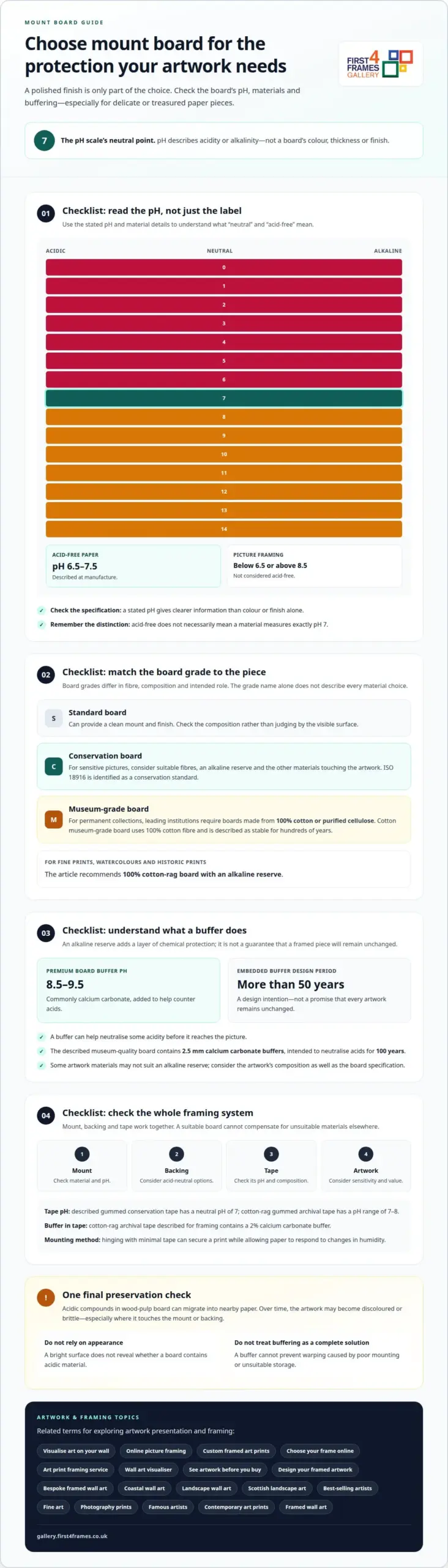
A mount can look beautifully finished while the board behind it affects how the artwork is preserved. Understanding what pH-neutral mount board means starts with the pH scale: it runs from 0, acidic, to 14, alkaline, with 7 as neutral. A board’s acid-free description concerns its chemical properties, not its colour or appearance.

It’s understandable to focus first on a mount’s shade, width and finish, since these shape how the artwork looks on the wall. But the board’s grade matters too, especially for fine art, photographs and prints you want to keep in good condition.

This guide explains how standard, conservation and museum-grade boards differ, and what an alkaline buffer does. You’ll learn why a buffered board can help counter acidity and which qualities to consider when choosing mount board for a particular piece.

Key Takeaways

  • Learn what pH-neutral and acid-free labels tell you about mount board, and why they matter when framing artwork.
  • Compare standard, conservation and museum-grade boards to match the level of protection to your piece.
  • Understand how an alkaline buffer helps counter acidity and why that can matter for long-term preservation.
  • Choose mount board with both the artwork’s preservation needs and the finished frame’s appearance in mind.

What is Mount Board?

Mount board frames a piece of artwork and separates it from the glazing. Its pH and composition matter because acidic materials can affect paper over time.

PH-Neutral and Acid-Free Board

pH-neutral mount board has a pH close to 7, the neutral point on the scale from 0 to 14. Acid-free paper is described as having a pH between 6.5 and 7.5 when manufactured. This matters in framing because the mount and backing board sit close to the artwork. For valuable or delicate pieces, choosing acid-free materials can reduce exposure to acidity.

Acid Migration from Wood-Pulp Boards

Acid migration occurs when acidic compounds in wood-pulp board move into nearby paper. The artwork may then become discoloured or brittle, particularly where it touches the mount or backing. A bright surface doesn’t reveal whether the board contains acidic material. That’s why composition matters as much as appearance, especially for fine art prints and photographs kept framed for years.

Checking Genuine pH Neutrality

To assess a board, look beyond a general “archival” description and check its stated pH and material. A pH specification gives a clearer indication than colour or finish alone. Acid-free conservation tape also matters: described gummed conservation tape has a neutral pH of 7, while cotton rag gummed archival tape has a pH range of 7-8. Framing materials work together, not in isolation.

Neutral pH Range and Archival Suitability

A pH of 7 is neutral, while paper materials below 6.5 or above 8.5 are not considered acid-free for picture framing. pH-neutral mount board can support archival framing and conservation, but the label alone does not establish the board’s full suitability. Conservation mount board or foam core board is typically used for acid-neutral backing. Consider the artwork’s sensitivity and the materials touching it, including the mount, backing board and tape, when choosing protection for expensive or treasured pieces.

Museum, conservation and standard board grades

Board grades differ in fibre, composition and intended role in framing. Standard board can provide a clean mount and finish, while conservation and museum grades focus more closely on preserving sensitive pictures. The grade name alone doesn’t describe every material choice. Cotton content, purified cellulose and an alkaline reserve each indicate something about how a board is made and how it supports the artwork.

For permanent collections, leading institutions require boards made from 100% cotton or purified cellulose. Cotton museum-grade mount board uses 100% cotton fibre and is described as stable for hundreds of years. For fine prints, watercolours and historic prints, 100% cotton-rag board with an alkaline reserve is recommended. ISO 18916 is identified as a conservation standard, giving a useful reference point when considering materials for more sensitive pieces.

Conservation mounting means selecting materials and methods with the artwork’s preservation in mind, rather than focusing only on the visible finish. A conservation-quality board may combine suitable fibres with calcium carbonate, which acts as an alkaline reserve. The described museum-quality board contains 2.5mm calcium carbonate buffers, intended to neutralise acids for 100 years. That specification distinguishes its buffering provision from a board chosen mainly for colour or surface appearance.

Choose between grades according to the picture’s material and value, its intended display, and the framing materials around it. A decorative print may have different preservation needs from a historic watercolour, so the same board choice won’t suit every piece. The mount, backing and finish should work together without drawing attention away from the artwork. To explore pictures that may call for considered framing, browse the artwork gallery.

Alkaline buffers in mount board

An alkaline buffer is an added alkaline material, commonly calcium carbonate, that helps counter acids affecting a board. Premium mount boards use calcium carbonate buffers with a pH of 8.5-9.5. This reserve can help protect paper as acidic compounds develop or migrate within the framing sandwich. It adds a layer of chemical protection, rather than changing the artwork’s visible colour or finish.

The buffer’s role is to neutralise some acidity before it reaches the picture. This matters because paper can become yellow or brittle as it ages, and acidic materials nearby can contribute to deterioration. Buffered boards are designed to provide a reserve over time; premium boards’ embedded buffers are designed to last more than 50 years. That design period is not a promise that every framed piece will remain unchanged.

Buffering is not a substitute for choosing suitable materials throughout the frame. For example, acidic adhesive or tape can still introduce unwanted compounds near the artwork. Cotton rag archival tape described for framing contains a 2% calcium carbonate buffer, showing that buffering can also be part of an attachment material. Hinging with minimal tape can secure a print while allowing paper to respond to changes in humidity.

Some materials may not suit an alkaline reserve, so the artwork’s composition matters alongside the board specification. A buffer can help protect many paper-based pieces, but it cannot prevent warping caused by poor mounting or unsuitable storage. Framers consider the paper, mount, backing and adhesive as a system. This joined-up approach helps the board support preservation without treating one buffer as a complete solution.
How Mount Board Grades and Alkaline Buffers Affect pH

Meaning of pH-neutral mount board

Understanding what pH-neutral mount board means starts with separating chemical properties from appearance. The pH scale runs from 0, acidic, to 14, alkaline, with 7 neutral. The term describes the board’s acidity or alkalinity, not its colour, thickness or finish. “Acid-free” is related, but doesn’t necessarily mean the material measures exactly 7.

That distinction matters because acid-free paper can have a pH between 6.5 and 7.5 when manufactured. A buffered board may be alkaline rather than exactly neutral, with an alkaline reserve intended to counter acids. So a board’s pH reading and its buffering provision describe different things. For example, an artwork framed with buffered board has a reserve against acidity, not a guarantee against every cause of deterioration.

Think of pH neutrality as one part of a framing decision, not a complete preservation label. The board sits close to the artwork, while the mount, backing, tape and adhesive also shape the materials surrounding it. A neutral mount cannot make acidic tape suitable, just as a conservation-grade description alone doesn’t identify every frame component. For a delicate print, the complete combination of materials matters.

The practical takeaway is to match the board’s properties to the artwork and its intended display. A treasured watercolour, for example, may call for more considered material choices than a decorative print. The weight of the piece also affects how it is supported, but weight and pH describe separate needs: one concerns physical support, the other chemical conditions. Consider both when planning a custom frame, then browse artwork for framing with its display setting in mind.

First4Frames Gallery helps turn mount-board knowledge into considered framing choices. Its handmade, bespoke Custom Picture Framing lets you choose a frame to complement your artwork and display. For online picture framing, choose your frame online and design your framed artwork around its colours and setting, whether you’re planning custom framed art prints or bespoke framed wall art.

Browse fine art prints to see artwork before you buy, and consider how framed wall art will look in your space. Ready-to-Hang Framed Art and Giclée Fine Art Prints offer different ways to bring artwork into your home. For help with your framing needs, contact First4Frames Gallery.

Choose a frame that feels right for your artwork

Knowing what pH-neutral mount board means gives you a useful starting point. Next, consider how the finished piece should look in your space: the artwork’s colours, the room’s character and whether you want a quiet, refined finish or a more striking frame. Preservation and presentation can work together, giving a treasured piece a place to be enjoyed every day.

First4Frames Gallery offers Ready-to-Hang Framed Art, Custom Picture Framing and Giclée Fine Art Prints, so you can explore different routes for presenting artwork. The right option depends on whether you already have a piece to frame or are choosing art for a particular wall. Take time to picture the finished result, then explore framed art and print options as you plan your next display. A thoughtful frame can help your artwork feel at home.

Frequently Asked Questions

What is acid migration and how does it affect artwork?

Acid migration is the movement of acidic compounds from one framing material into nearby paper. It can occur where artwork touches an acidic mount, backing board or tape. For example, wood-pulp board may transfer acidity to a print, contributing to discolouration or brittleness over time. Keeping acidic materials away from the artwork helps reduce this risk, particularly for delicate paper pieces.

What does pH-neutral mount board mean?

Understanding what pH-neutral mount board means starts with its position on the pH scale: neutral is 7, between acidic and alkaline. The term describes the board’s chemical character, rather than its colour or thickness. For a framed piece, this helps you consider whether the mount may introduce acidity near the artwork. It’s one part of choosing materials that suit the paper and its intended display.

What materials are pH-neutral mount boards made from?

Mount boards can use different paper fibres, including cotton or purified cellulose in museum-grade options. Standard wood-pulp boards are another category, and their composition may include acidic compounds that matter in close contact with artwork. Material names therefore add useful detail to a pH description. For example, cotton-rag board identifies its fibre source, while a pH reading describes its chemical character.

What is the difference between pH-neutral and acid-free mount board?

pH-neutral describes a material with a neutral reading, while acid-free indicates that it is made without harmful acidity under the stated conditions. These terms overlap, but they aren’t identical: acid-free paper can measure between 6.5 and 7.5 when manufactured. A board with an alkaline reserve may also be described as acid-free. Check both the pH information and the material description when comparing boards.

Does pH-neutral mount board contain an alkaline buffer, and what does that mean?

Not necessarily. “pH-neutral” describes a pH property, while an alkaline buffer is an added reserve, commonly calcium carbonate, intended to counter acids. A board may be neutral without that reserve. For a paper print exposed to acidic compounds from nearby materials, buffering provides an additional protective measure. The board’s description should distinguish its pH from whether it contains a buffer.

How does pH-neutral mount board compare with conservation-grade and museum-grade board?

pH-neutral describes a chemical property; conservation-grade and museum-grade describe broader material choices for preservation. Museum-grade boards may use cotton fibre or purified cellulose, while conservation options can include a buffered reserve. These grades are relevant for delicate watercolours, historic prints or works intended for long-term care. For a less sensitive decorative print, the desired level of preservation and presentation can guide your choice.
Posted on

Acid-Free Mount Boards: The Ultimate Guide to Preserving Your Artwork

Acid-Free Mount Boards: The Ultimate Guide to Preserving Your Artwork

That cherished family photograph, that spectacular print you fell in love with… what if the very frame meant to protect it is causing silent, irreversible damage? It’s a common fear, and the culprit is often an invisible threat: acid, leaching from standard materials and causing those dreaded yellow stains and faded colours. This is where the true craftsmanship of preservation comes into play, and it starts with a crucial, yet often overlooked, component: using premium acid-free mount boards for framing.

But what does ‘acid-free’ really mean, and is ‘conservation grade’ truly worth the investment? We understand these technical terms can feel daunting when you simply want to create a beautiful, long-lasting display for your home. In this guide, we’ll demystify the world of professional framing. We will show you exactly why these materials are essential for protecting your art’s colour, quality, and value, giving you the confidence to ensure your treasured pieces are preserved perfectly for generations to come.

What is a Mount Board and Why Does ‘Acid-Free’ Matter?

A picture mount, often called a mat or passe-partout, is far more than just a decorative border. It performs two crucial jobs in professionally framed art. Aesthetically, it creates a beautiful visual space between the artwork and the frame, preventing the piece from feeling cramped and drawing your eye inward. Functionally, it serves as a vital spacer, keeping the artwork from touching the glazing (the glass or acrylic). This separation is essential to prevent moisture buildup, mould growth, and the artwork physically sticking to the glass over time. For a deeper dive into its purpose, Wikipedia offers a comprehensive explanation of what a mount board is and its history. However, the material your mount is made from is the most critical factor in long-term preservation.

To better understand the critical difference these materials can make, this short video offers a clear visual guide:

Lurking within standard, budget-friendly mount boards is a hidden enemy to your art: acid. Most low-cost boards are made from wood pulp, which contains a natural compound that slowly degrades your precious pictures. This process causes permanent, irreversible damage known as ‘acid burn’, a sad fate for any cherished photograph or print. This is why investing in professional, acid-free mount boards for framing is not a luxury, but a necessity for true preservation craftsmanship.

The Science of Acid Damage in Framing

The primary culprit is a substance called lignin, a natural polymer that holds wood fibres together. Over time, and especially when exposed to light and humidity, lignin breaks down and releases acid. This acid then migrates from the mount board and backing paper directly into your artwork, causing the paper fibres to weaken and discolour from the inside out. This creates the tell-tale yellowing and staining that permanently ruins the original piece.

Spotting the Signs of Acid Burn on Old Pictures

You have likely seen acid burn without realising it. The most common sign is the bevelled edge of the mount turning a distinct yellow or dark brown. On the artwork itself, you may see a brownish stain that mirrors the shape of the mount window. The paper may also become incredibly brittle and fragile to the touch. Sadly, once this damage occurs, it cannot be undone, highlighting the importance of using the correct conservation materials from the very beginning.

The Different Levels of Mount Board Quality Explained

When it comes to framing, it’s a common misconception that all mount boards are created equal. In reality, the material touching your artwork plays a crucial role in its long-term preservation. The Fine Art Trade Guild recognises several quality levels, but for preserving your art, three main tiers matter. Choosing the right one is the first step in providing the perfect home for your picture, ensuring it’s protected for years to come.

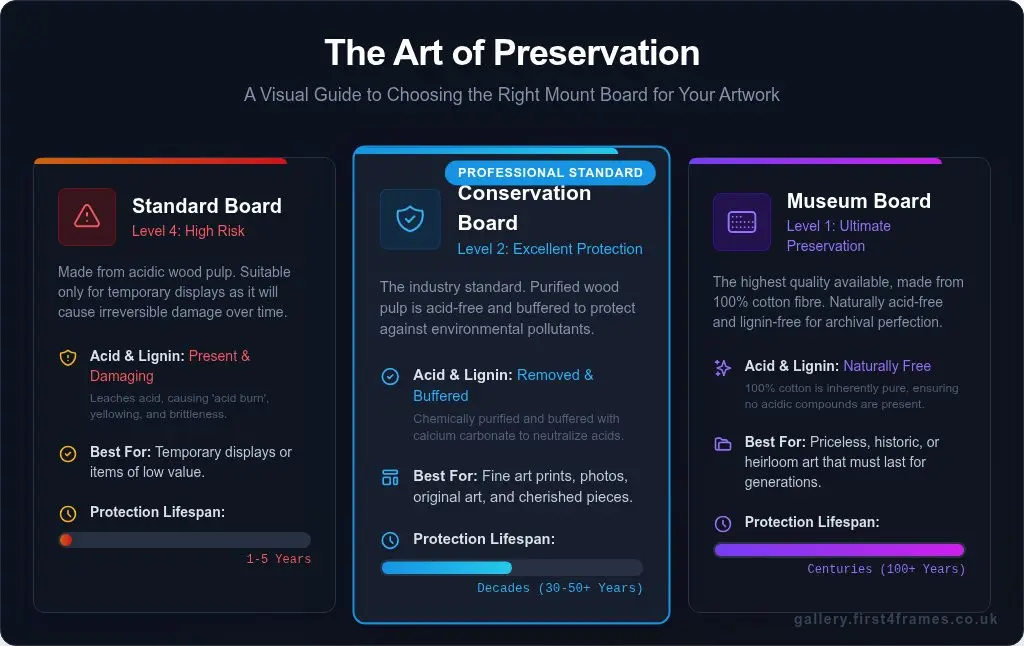
Standard Mount Board (Level 4)

Often found in inexpensive, ready-made frames, standard mount board is made from wood pulp that contains acidic compounds like lignin. While it looks fine initially, this acid will leach into your artwork over time, causing the board to yellow and your art to suffer from discolouration and embrittlement. This type of board is only suitable for temporary displays or items of little sentimental or monetary value.

Conservation Mount Board (Level 2)

This is the professional standard for most bespoke framing and a fantastic investment for your cherished pieces. Conservation boards are made from wood pulp that has been chemically purified to remove all acid and lignin. They are also buffered with an alkaline substance, like calcium carbonate, to maintain a pH of 7.5-9.5. This buffer neutralises any future acid attacks from the environment, protecting your artwork for decades. This approach is consistent with the Library of Congress preservation guidelines for archival materials.

Museum Mount Board (Level 1)

Representing the pinnacle of preservation, museum mount board is crafted from 100% cotton fibre. Cotton is naturally lignin-free and acid-free, making it the purest material available. This is the quality used by museums, galleries, and serious collectors to protect priceless or historically significant works. When you need to ensure your artwork lasts for centuries, premium acid-free mount boards for framing at museum level offer the ultimate peace of mind.

Feature Standard Board Conservation Board Museum Board
Material Wood Pulp Purified Wood Pulp 100% Cotton Fibre
Acid & Lignin Present (damaging) Removed & Buffered Naturally Free
Protection Lifespan 1-5 years Decades (30-50+ years) Centuries (100+ years)
Best For Temporary Displays Fine art prints, photos, original art Valuable, historic, or heirloom art

Ultimately, the right choice depends on the value-both sentimental and financial-of your artwork. By understanding these tiers, you can confidently select the perfect mount board to protect your art beautifully for a lifetime.

How to Choose the Right Acid-Free Mount for Your Artwork

Understanding the science behind acid-free materials is the first step. Now, let’s move on to the art of selection. Choosing the right mount board is a beautiful balance between protecting your piece for a lifetime and enhancing its visual appeal. This practical guide will help you select the perfect stage for your artwork to shine.

Consider the Artwork’s Value

The level of preservation you need is directly linked to the value-both monetary and sentimental-of your artwork. Not all acid-free mount boards for framing are created equal, so match the grade to the piece.

  • Original Art & Limited Editions: For any piece that is an investment or one-of-a-kind, always opt for Conservation Grade. It provides the necessary protection to preserve its condition and value.
  • Family Heirlooms & Sentimental Photos: These items are irreplaceable. They deserve the same high level of care as fine art to prevent fading and deterioration, ensuring they can be passed down through generations.
  • Historically Important or Highly Valuable Pieces: For the ultimate in preservation, Museum Grade is the only choice. This isn’t just a recommendation; it’s a critical step to prevent irreversible damage, a fact underlined by leading art conservation experts who stress the importance of archival materials.

Choosing Colours and Textures

The mount is the bridge between your artwork and your room’s décor, and its colour can make or break the final presentation. The classic advice is to choose a neutral, off-white tone that won’t compete with the art. Alternatively, selecting a subtle secondary colour from within the piece itself can beautifully tie everything together.

Consider a double mount to add depth and a sophisticated finish. This technique uses two layers of board, allowing you to introduce a slim border of a complementary accent colour that makes the artwork pop. Finally, don’t forget texture; from perfectly smooth to subtly textured surfaces, the finish of the board can add another layer of bespoke detail.

What to Ask Your Professional Framer

A professional framer is your partner in preservation and presentation. To ensure you receive the quality your artwork deserves, don’t be afraid to ask specific questions. A trustworthy framer will be happy to share their expertise.

Key questions include:

  • Do you use conservation-grade, acid-free mount boards as standard?
  • What level of framing does the Fine Art Trade Guild recommend for this particular piece?
  • What mount width and proportions will best balance the artwork visually?

Getting these details right is part of the craftsmanship of bespoke framing. Our experts at First4Frames can guide you through every choice, ensuring your final piece is both perfectly protected and beautifully presented.

Acid-Free Mount Boards: The Ultimate Guide to Preserving Your Artwork

Beyond the Mount: Creating a Fully Archival Framing Package

Choosing premium acid-free mount boards for framing is a fantastic first step in preserving your artwork, but it’s just one piece of the puzzle. A truly professional, archival frame is a complete preservation system, where every component works in harmony to protect your art from harm. It’s this holistic approach that separates a decorative frame from a genuine conservation-grade solution, ensuring your cherished piece remains as vibrant as the day it was created.

Acid-Free Backing Boards and Tapes

The backing board sits directly behind your artwork, making its composition critical. Standard MDF or cardboard backings are highly acidic and will leach damaging chemicals into your art over time, causing yellowing and brittleness. A professional framer will always use a conservation-grade, acid-free backing to create a safe, stable environment. For added protection against moisture from walls, an archival barrier board can be included. Likewise, the tapes used to secure the art are crucial. Common household tapes will fail and leave a sticky, acidic residue, whereas specialised acid-free hinging tapes hold the art securely while being completely reversible and safe for the paper.

The Role of UV-Protective Glazing

Beyond chemical damage, the single biggest threat to your artwork is light. Ultraviolet (UV) rays, present in both sunlight and artificial light, break down pigments and cause irreversible fading. The glazing-the glass or acrylic at the front-is your primary shield against this threat.

  • Standard Glass: Blocks approximately 45% of UV rays, offering minimal protection.
  • Conservation Clear Glass/Acrylic: A professional standard that blocks over 99% of harmful UV rays.
  • Museum Glass: Offers the ultimate protection, blocking over 99% of UV rays while having incredible anti-reflective properties for crystal-clear viewing.

When you combine high-quality acid-free mount boards for framing with archival backing, proper tapes, and UV-protective glazing, you create a complete fortress for your art. This professional approach is the difference between a frame that simply looks good and one that actively preserves your investment for generations to come. It’s this commitment to craftsmanship that defines every piece you’ll find in our online gallery.

Why Professional Framing is a Worthy Investment

Throughout this guide, we’ve explored the crucial role that archival materials play in protecting your cherished artwork. From preventing yellow stains to stopping irreversible chemical damage, the choice of mount board is more than just a decorative decision-it’s an act of preservation. This is where professional framing elevates itself from a simple service to a vital investment in your art’s future.

When you choose expert framing, you’re not just buying a border for your art. You are investing in:

  • Longevity: Protection against fading, discolouration, and chemical damage from acidic materials.
  • Value Preservation: Safeguarding both the financial and sentimental worth of your piece for years to come.
  • Superior Aesthetics: A bespoke design that perfectly complements your artwork and your home’s decor.
  • Peace of Mind: The confidence that comes from knowing your art is protected by expert craftsmanship.

Long-Term Value vs. Short-Term Cost

A budget off-the-shelf frame may seem like a bargain, but it’s often a false economy. These frames are typically constructed with acidic backings and low-quality mounts that can leach harmful chemicals, causing that familiar yellow “burn” on your artwork. In a few short years, you may find yourself not only replacing the frame but facing the heartbreaking reality of a ruined print or photograph. Think of professional framing as insurance for your art. By using premium acid-free mount boards for framing and conservation techniques, a bespoke frame is built to last a lifetime, ensuring your art remains as vibrant as the day you first saw it.

The First4Frames Commitment to Quality

At First4Frames, we believe exceptional care should be the standard. Our commitment to quality means we exclusively use conservation-grade, acid-free materials for every project we undertake. With over 20 years of experience, our team combines technical precision with an artist’s eye, ensuring every frame not only protects but also enhances the artwork within. We treat every piece with the respect it deserves, providing a hassle-free service that delivers a perfectly finished result, ready to hang and admire for decades to come.

Don’t leave the future of your artwork to chance. Protect your art for generations and get a bespoke framing quote today.

Your Artwork’s Future: Secured with Professional Framing

As we’ve explored, the mount board plays a monumental role in the life of your artwork. It’s far more than a decorative border; it is the first line of defence against acid damage and environmental harm that can cause irreversible fading and discolouration. Understanding the difference between standard, conservation, and museum-grade boards empowers you to make an informed choice, safeguarding your piece for generations to come.

Making the right choice is the first step, but for true peace of mind, a professional touch makes all the difference. Using the correct acid-free mount boards for framing is a non-negotiable part of a complete archival package. At First 4 Frames, we bring over 20 years of expertise to every project, adhering to strict Fine Art Trade Guild standards and using premium, conservation-grade materials as our benchmark for quality and longevity.

Let our passionate team create a beautiful, bespoke frame that not only enhances your art but protects its legacy. Explore our bespoke framing services and protect your art today.

Frequently Asked Questions

How can I tell if my current picture mount is acid-free?

The most telling sign of an acidic mount is discolouration over time. Examine the bevelled edge that touches your artwork. If this edge has yellowed or turned brown, it is a clear indication of “acid burn” from a low-quality board. For a definitive answer, a professional framer can perform a pH test. At First 4 Frames, we use only premium, conservation-grade materials to ensure your beautiful artwork is perfectly preserved for years to come.

How long does an acid-free mount board last?

A high-quality, conservation-grade acid-free mount board is designed for exceptional longevity. Under normal home conditions, away from direct sunlight and excessive humidity, it can easily last for many decades, often for the entire lifetime of the artwork it protects. This is a stark contrast to standard acidic boards, which can show signs of degradation and yellowing in as little as five years, compromising the piece they are meant to display.

Is ‘pH neutral’ the same as ‘acid-free’?

While related, they are not quite the same. ‘pH neutral’ means the board has a pH of 7.0 when it is manufactured, but it can absorb acidic pollutants from the atmosphere over time. A true ‘acid-free’ or ‘archival’ board is also buffered, typically with calcium carbonate. This alkaline buffer actively neutralises acids that the board may absorb in the future, offering far superior, long-term protection for your fine art. For genuine preservation, always choose buffered acid-free.

Can I buy acid-free mount boards and frame my art myself?

Absolutely! You can purchase acid-free mount boards for framing and assemble the piece yourself if you have the right tools. However, achieving a clean, professional bevelled edge requires a specialised mount cutter and considerable precision to avoid costly mistakes. For a guaranteed perfect finish that truly elevates your artwork, we recommend our bespoke framing service. We handle the craftsmanship so you can simply enjoy the spectacular result without the hassle.

What is the difference between a white core and a cream core mount board?

The difference is purely aesthetic and refers to the colour of the board’s central layer, which is visible in the bevelled cut around your image. A white core provides a crisp, bright white line, lending a clean and contemporary feel to the artwork. A cream core offers a softer, slightly off-white bevel for a more traditional or warmer appearance. The most important factor is ensuring that, regardless of the core colour, the board itself is of archival, acid-free quality.

Does a black mount board also need to be acid-free?

Yes, it is essential. The colour of the mount board’s surface is just a thin decorative paper; the real danger to your art lies within the core material beneath it. An acidic core, regardless of its surface colour, will still release harmful acids over time. These can migrate into your artwork and cause irreversible damage and discolouration. Whether you choose black, white, or any other colour, always ensure it is specified as being conservation-grade and acid-free throughout.

What is the best way to clean the glass on my framed artwork without damaging the mount?

To clean the glass safely, never spray cleaner directly onto the surface. Liquid can easily seep under the edge of the frame and come into contact with the mount board and artwork, causing moisture damage. Instead, lightly spray a small amount of ammonia-free glass cleaner onto a soft, lint-free microfibre cloth. Then, gently wipe the glass, taking care to stay away from the frame edges. This simple method keeps your picture looking pristine without risking harm.