
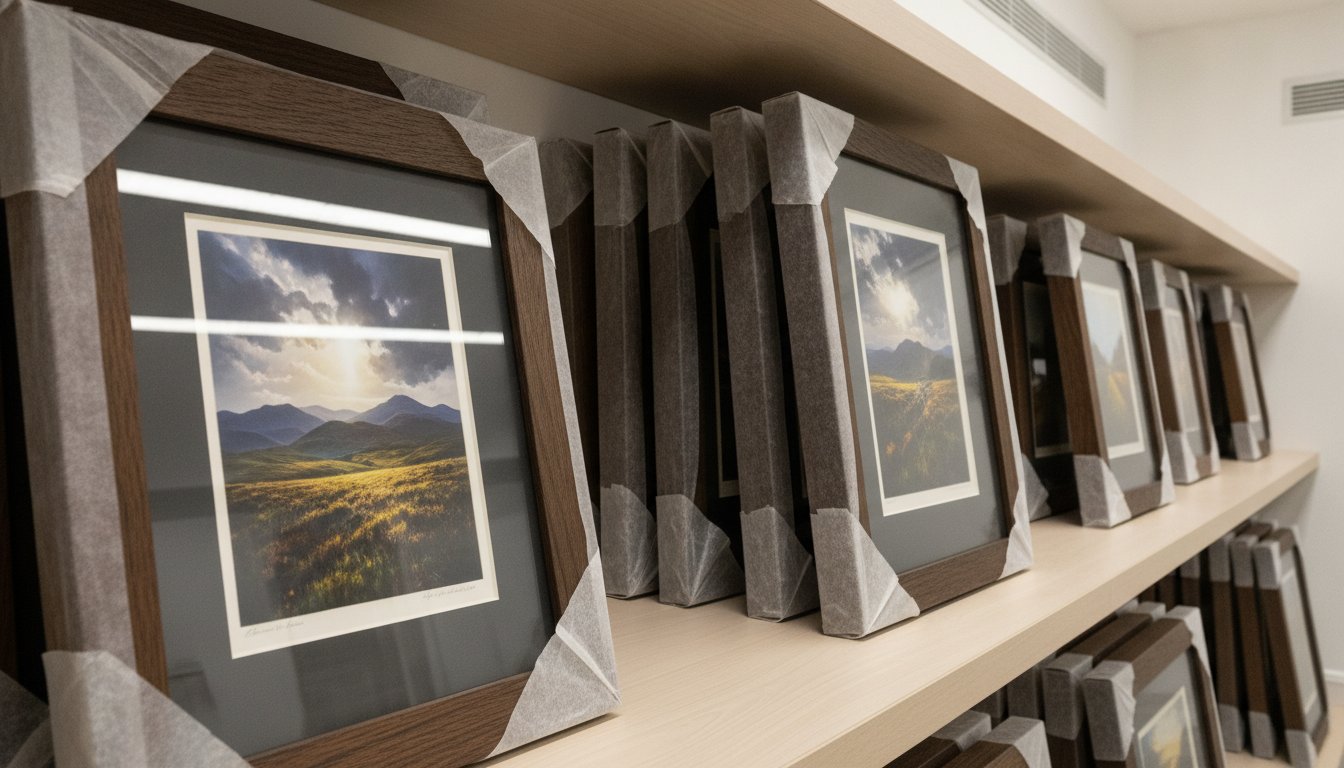
What if the family portrait or limited edition landscape print you tucked away for safekeeping is actually deteriorating right now? Without the right precautions, moisture and acidic materials can quietly ruin your collection. Finding the best way to store framed pictures long-term isn’t just about finding a spare corner in the attic; it’s about understanding how to shield your investment from the elements.
At First4Frames Gallery, we understand the anxiety of moving or downsizing, from the fear of shattered glass to the appearance of “foxing” on a cherished print. You’ve likely used a tool to visualise art on your wall to ensure pieces look perfect. In this guide, we’ll share professional secrets to preservation, explaining why bespoke framed wall art stands up better to time than cheap, standard frames.
You’ll discover a checklist of archival packing materials and learn why we insist on 2mm float glass for superior clarity and protection compared to perspex. We’ll also explain how to choose storage environments that meet ISO standards for climate control. By the end, you’ll have the confidence to pack your art so it remains gallery-fresh for years to come.
Key Takeaways
- Understand the “Big Three” environmental threats—humidity, UV light, and acid migration—to ensure your collection remains in gallery-fresh condition.
- Master the best way to store framed pictures long-term by always wrapping your art in acid-free glassine or tissue paper before adding protective outer layers.
- Learn why storing frames vertically like books on a shelf is the only safe way to prevent glass breakage and pressure damage over several years.
- Discover how bespoke framed wall art, crafted with 2mm float glass, provides superior clarity and a tighter seal against dust compared to standard off-the-shelf options.
- Gain the confidence to curate your collection using a wall art visualiser, knowing your stored pieces are protected by professional-grade packing and storage techniques.
The Science of Preservation: Why Proper Storage Matters for Framed Art
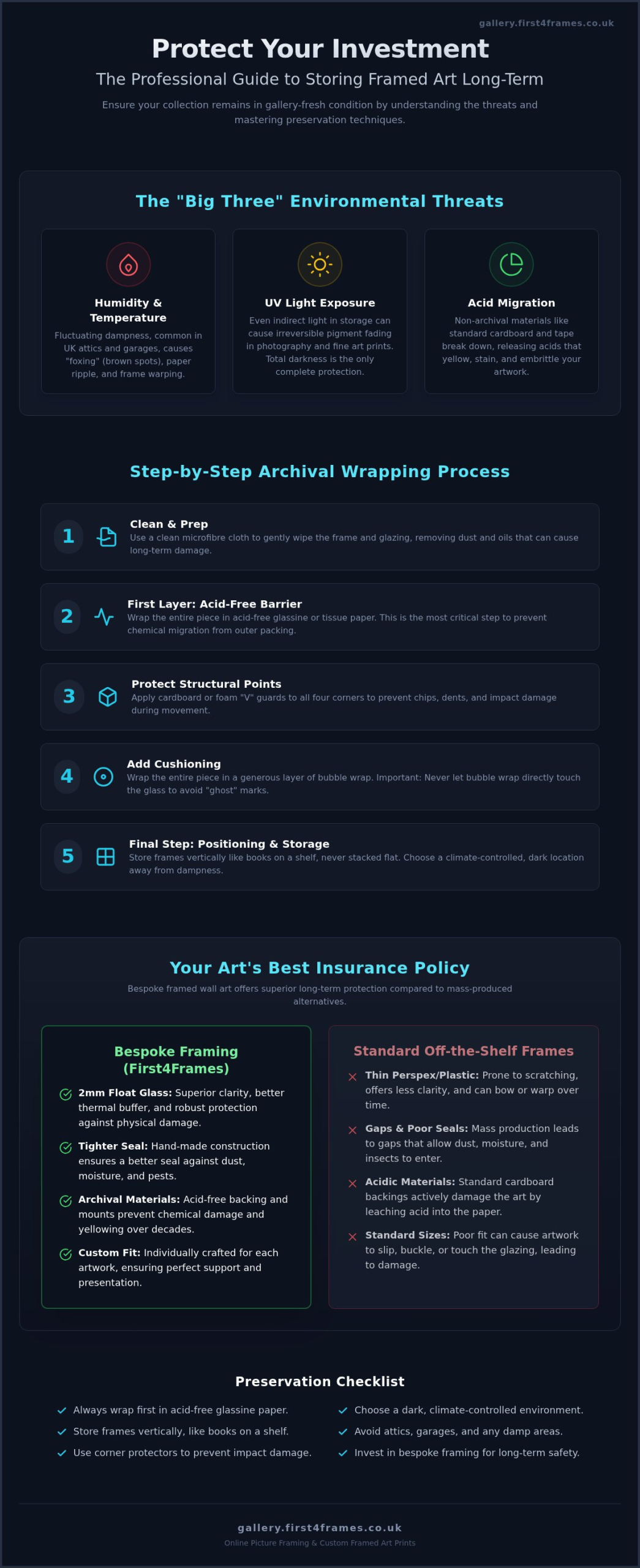
The best way to store framed pictures long-term involves protecting the chemical and physical integrity of both the artwork and the frame itself. Preservation isn’t just about avoiding a broken corner; it’s about stopping invisible reactions that can destroy your investment. The Science of Preservation identifies the “Big Three” threats to art: fluctuating humidity, UV light exposure, and acid migration. When these factors combine, they can turn a vibrant piece of bespoke framed wall art into a faded, brittle shadow of its former self.
At First4Frames, we use 2mm float glass in our hand-made frames because it provides a more stable micro-environment than cheap plastic or thin Perspex. This professional-grade glass acts as a thermal buffer, slowing down the rate at which temperature changes reach the paper. Foxing is the term for reddish-brown spots caused by fungal growth in humid conditions. High-quality glazing and sealed frame backings are your first line of defence against this common storage tragedy.
Humidity and Temperature: The Invisible Enemies
UK homes present unique challenges, particularly with dampness. UK garages and uninsulated attics are the worst places for your custom framed art prints. These spaces act like thermal rollercoasters. As the temperature spikes and drops, bespoke wood frames expand and contract, which can eventually warp the mitred joins. In damp environments, a dangerous micro-climate forms behind the glass. This trapped moisture can cause the paper to ripple or stick to the glazing, making it nearly impossible to remove without damage.
Light Exposure and UV Damage
You might assume that putting art in a box or a dark cupboard means it’s safe from light. However, even indirect UV rays can seep into poorly sealed storage areas and cause permanent pigment fading in Giclée prints. Whether you’re storing Scottish landscape art, photography prints, or contemporary art prints, light remains a constant threat. Storing your art in total darkness is the only way to halt light-based deterioration completely. This ensures that when you finally decide to hang your piece again, the colours remain as vivid as the day you first chose your frame online.
Step-by-Step: Preparing and Wrapping Your Frames for the Long Haul
Preparing your collection for a hiatus requires a meticulous approach to keep it looking gallery-fresh. The best way to store framed pictures long-term begins with a gentle but thorough cleaning. Use a clean microfibre cloth to remove dust and skin oils from the frame and the 2mm float glass. These oils can attract pests or lead to permanent staining if left for years. Following Smithsonian conservation guidelines, your first layer of protection must always be acid-free. Use glassine paper or acid-free tissue to create a barrier that prevents chemical migration between the artwork and the outer packing materials.
Once the primary layer is secure, focus on the structural points. Apply cardboard or foam “V” guards to each corner to prevent chipping or denting. For the final seal, wrap the entire piece in heavy-duty brown paper followed by a generous layer of bubble wrap. Unlike some competitors who suggest wrapping glass directly in plastic, we advise against this. Bubble wrap can leave permanent “ghost” marks on the glazing if applied directly. If you want to ensure your pieces are built to last, you can design your framed artwork with preservation in mind from the very start with First4Frames Gallery.
The Essential Packing Material Checklist
Choosing the right supplies is vital for the health of your art. Glassine is superior to plastic wrap because it allows natural wood frames to breathe, preventing moisture buildup. Ensure you use professional-grade tape, but never let the adhesive touch the frame or the glass. For extra security, create a “sandwich” by placing a sheet of stiff cardboard on both the front and back of the frame before the final wrap. This adds a critical layer of puncture protection against accidental bumps in the storage unit.
Securing Your Artwork for Transport
Moving your art to its new home is the final hurdle. At First4Frames Gallery, we use courier-grade packaging standards to ensure our bespoke framed wall art arrives in perfect condition. When packing your own boxes, use clear labels such as “Fragile,” “Glass,” and “This Side Up.” If you feel unsure about the process, you can contact our Falkirk gallery for professional packing advice. Taking these extra steps now ensures your Scottish landscape art or photography prints remain pristine for the day they finally return to your walls.
Choosing the Right Environment: Positioning and Climate Control
The Golden Rule of art preservation is simple: always store your framed pictures vertically. Think of your collection like books on a library shelf rather than a stack of magazines. Stacking frames flat is a common mistake that leads to shattered glass and “mount-burn” over time. The weight of the top frames puts immense pressure on the bottom piece, which can cause the glazing to crack or the artwork to fuse with the mount. The best way to store framed pictures long-term is to ensure each frame stands on its own edge, supported by its neighbours without bearing their full weight.
Moisture is another silent threat that often creeps up from below. Never place your wrapped art directly on a concrete floor. Concrete is porous and wicks moisture, which can seep through your packaging and rot the bottom of a bespoke wood frame. Use wooden pallets or simple blocks to elevate your collection at least a few inches off the ground. For total peace of mind, place a digital hygrometer in your storage space to track humidity levels. Keeping a close eye on these numbers helps you act before moisture damage begins.
Vertical Storage Physics
Storing art vertically distributes the weight of the 2mm float glass evenly across the rebate of the frame. This prevents the glass from shifting or bowing, which is a frequent issue with thin Perspex used by some competitors. Use small “spacers” like pieces of acid-free cardboard between stored frames to prevent them from scratching each other. You can consult our guide to standard photo and picture sizes to help plan your storage layout efficiently. If you find your collection is growing too large for your home, you can use our wall art visualiser to decide which pieces deserve a spot on the wall and which should go into storage.
Ideal Climate Conditions for Art
Your art thrives in the same conditions you do. Aim for a “Comfort Zone” of 18-21°C and 40-50% relative humidity. A spare bedroom or a climate-controlled unit is always superior to a damp shed or a drafty basement. Finding a stable environment is the best way to store framed pictures long-term without risking the integrity of the materials. These stable environments protect delicate Giclée prints, Scottish landscape art, and photography prints from the cycle of expansion and contraction. To keep pests at bay, place cedar blocks near your storage area. Cedar is a natural, gentle deterrent that won’t leave the harsh chemical smell associated with traditional mothballs.
Why Bespoke Framing is Your Art’s Best Insurance Policy
While previous sections focused on external care, the internal quality of a frame is your first line of defence. Bespoke framed wall art from First4Frames Gallery acts as a protective cocoon for your investment. Unlike mass-produced frames that often have loose joins or gaps, our individually crafted frames feature tight seals and conservation-grade mounts that block dust and insects. These high-quality components ensure that even after years in storage, your fine art remains pristine and free from the environmental damage that plagues cheaper, off-the-shelf alternatives.
The choice of glazing is critical for structural integrity. We insist on 2mm float glass because it provides superior clarity compared to the thin perspex used by many competitors. Perspex is prone to bowing and can attract static dust that settles on the print surface during long-term storage. Our frames use stronger joins that won’t fail under their own weight while standing vertically. By choosing a professional Art print framing service, you ensure the print stays flat and protected for decades without the risk of sagging or slipping inside the mount.
Choosing Quality Before You Store
Before you commit a piece to a storage box, use our online picture framing tool to design your framed artwork with conservation materials. Our wall art visualiser allows you to see artwork before you buy, ensuring your investment in Landscape wall art or Coastal wall art is truly worth the preservation effort. This preparation step ensures that your custom framed art prints are assembled with the precision needed to survive a long hiatus. When you choose your frame online with First4Frames Gallery, you’re opting for a product that’s built for longevity from the very first day.
The First4Frames Gallery Difference
Every piece is hand-made in our Falkirk workshop, combining traditional Scottish craftsmanship with modern technology. Our print and frame service pairs high-fidelity digital photography prints with bespoke framing for a seamless finish. From Scottish landscape art and Contemporary art prints to works by Best-selling artists and Famous artists, we provide a comprehensive solution for all your framed wall art needs. Explore our full gallery of Scottish landscape art to find stunning pieces that are crafted to last a lifetime.
Preserve Your Collection for Future Generations
By mastering the best way to store framed pictures long-term, you ensure that your Scottish landscape art or family photography prints remain as vibrant as the day they were first framed. Remember to keep your pieces vertical, maintain a stable climate, and always use acid-free materials for that first layer of protection. These simple steps prevent the heartbreak of foxing or glass damage, keeping your artwork gallery-fresh while it waits for its next moment in the spotlight.
High-quality preservation starts with the frame itself. Our bespoke frames are hand-made in our Falkirk workshop using premium 2mm float glass for superior clarity. We use expert preservation techniques for all Giclée prints to ensure they stand the test of time. Whether you’re moving house or simply rotating your collection, you can trust that professional craftsmanship provides the ultimate protection from the inside out.
Design your bespoke framed wall art today and ensure it lasts a lifetime. Your cherished memories deserve a home that’s built to last, providing peace of mind every time you pack them away or hang them back on your wall.
Frequently Asked Questions
Can I store framed pictures in bubble wrap for several years?
You shouldn’t use bubble wrap as the primary layer against your frame for long periods. Over several years, the plastic can trap moisture or leave circular “ghost marks” on the 2mm float glass that are difficult to remove. Always wrap your bespoke framed wall art in acid-free glassine paper or tissue first. Once the piece is shielded by a breathable, pH-neutral layer, you can safely use bubble wrap on the outside to provide essential impact protection.
Is it better to store framed art flat or standing up?
It’s always better to store framed art standing up, positioned like books on a library shelf. Stacking frames flat puts immense pressure on the glazing of the bottom pieces, which frequently leads to shattered glass or mount-burn. This vertical orientation is the best way to store framed pictures long-term because it distributes the weight of the frame and glass evenly across the joins, preventing the wood from warping or the mitres from failing.
How do I prevent my picture frames from getting mouldy in storage?
You prevent mould by controlling the humidity of your environment and ensuring your art isn’t in direct contact with cold surfaces. Avoid storing your collection in damp areas like UK basements or uninsulated attics where moisture levels can spike. Elevate your frames off the floor using wooden pallets to stop dampness from wicking up through concrete. Using a simple digital hygrometer helps you monitor the space to ensure humidity stays within a safe range.
What is the best temperature for storing fine art prints?
The ideal temperature for storing fine art prints is a stable room temperature between 18°C and 21°C. Consistency is vital for preservation, so you should avoid spaces that suffer from extreme heat cycles. Rapid temperature changes cause the natural wood in bespoke frames to expand and contract, which can eventually loosen the structural joins. A climate-controlled unit or a spare bedroom provides the stable environment needed to keep your prints in gallery-fresh condition.
Do I need to take the art out of the frame before storing it long-term?
You don’t need to remove your artwork if it’s already housed in a professional bespoke frame. High-quality framing uses conservation-grade mounts and tight seals that actually protect the print from dust and insects during its time in storage. Unlike cheap, standard frames that may use acidic materials, our bespoke framed wall art is designed to preserve the piece. Taking the art out often increases the risk of accidental tearing or oil transfer from your fingertips.