
Posted on

Framing Antique Maps & Documents: A Complete Preservation Guide

That beautiful antique map or fragile family document holds a piece of history in its very fibres. You know it deserves to be displayed with pride, not hidden away, but the thought of getting it wrong can be daunting. What if you cause irreparable damage? The world of ‘archival mounts’ and ‘UV-protective glass’ can feel like a foreign language, and the potential cost of professional work is a genuine worry. But the art of framing antique maps and documents is a craft built on care and precision, and it’s more accessible than you might think.

This complete guide is your trusted partner on this preservation journey. We’ll demystify the entire process, translating the technical jargon into simple, clear choices. You will learn how to select the perfect bespoke frame that honours your heirloom and the premium materials that will safeguard its monetary and sentimental value for generations. By the end, you’ll have the confidence to protect your investment and transform your precious item into a spectacular display, ensuring its story can be enjoyed for many years to come.

Why Professional Framing is Crucial for Antique Maps & Documents

An antique map or document is more than just a beautiful decoration; it’s a tangible piece of history. The paper, ink, and colours have survived for generations, but they are incredibly fragile. Entrusting such a treasure to a standard, off-the-shelf frame can unfortunately do more harm than good, which is why professional, bespoke framing is not a luxury-it’s an essential act of preservation.

To see why the right materials and techniques are so important, this short video offers some excellent tips:

The Hidden Dangers of DIY & Standard Frames

The biggest threat to your antique item often comes from the very materials meant to display it. Standard frames frequently contain silent destroyers that cause irreversible damage over time. These include:

  • Acidic Materials: Low-quality mount boards and backings can leach acid into the paper, causing the tell-tale brown staining known as ‘mat burn’ and overall yellowing.
  • Damaging Adhesives: Standard tapes and glues become brittle, stain the paper, and are often impossible to remove without tearing the delicate fibres of the document.
  • UV Radiation: Without specialist UV-protective glazing, sunlight will cause the vibrant inks and delicate paper of your map to fade and degrade rapidly.
  • Trapped Moisture: An improperly sealed frame can trap humidity, creating the perfect environment for mould growth and ‘foxing’-those unsightly brown spots.

What is Conservation Framing?

Conservation framing is the professional standard for protecting valuable and fragile items. It’s a specialised approach, rooted in the established principles of document conservation, where every material and technique is chosen with preservation as the primary goal. This meticulous process ensures that everything touching your artwork is acid-free and archival-grade. Crucially, all methods used are completely reversible, meaning your map can be safely removed from its frame in the future, in the exact same condition it went in.

Protecting Your Investment and Your History

Proper framing of antique maps and documents is a direct investment in their future. For a collector, it maintains or even increases the item’s monetary value, ensuring a piece worth hundreds or thousands of pounds isn’t devalued by preventable damage. For a family, it preserves a priceless heirloom, safeguarding a piece of your personal history for your children and grandchildren to cherish. Ultimately, a bespoke conservation frame does more than just decorate a wall; it honours the item’s story and presents it with the care and respect it deserves.

The Anatomy of a Conservation Frame: Key Materials Explained

Choosing a frame is about more than aesthetics; it’s about creating a safe, stable environment for your treasured piece. Understanding the anatomy of a professional conservation frame empowers you to make informed choices. Each component, from the glass to the backing board, plays a vital role. We’ll break down the technical terms into simple concepts, so you know exactly what to ask your framer to ensure your history is preserved for generations.

Glazing: Your Shield Against Damaging Light

The glazing is your map’s first line of defence against the environment. While standard glass offers basic physical protection, it does little to stop the invisible threat of ultraviolet (UV) light, which causes fading and paper degradation. For any valuable document, you should consider:

  • UV-Filtering Glass: This specialist glass blocks up to 99% of harmful UV rays, acting as a crucial sunscreen for your map.
  • Anti-Reflective Glass: For crystal-clear viewing without distracting reflections, this option offers superb clarity, making you feel closer to the artwork.
  • Acrylic (Perspex): A lightweight and shatterproof alternative to glass, UV-filtering acrylic is ideal for very large frames or pieces displayed in high-traffic areas or children’s rooms.

Mounts & Backing Boards: The Acid-Free Barrier

The materials that touch your map are critically important. Standard mount board contains acid and lignin, which can leach into the paper over time, causing yellowing and brittleness. When framing antique maps and documents, insist on acid-free and lignin-free materials. The window mount (or mat) not only provides a beautiful visual border but also creates a vital air gap, preventing the map from touching the glazing. For ultimate protection, nothing surpasses 100% cotton rag museum board. This is the gold standard and a cornerstone of the best practices for framing antique maps, ensuring no harmful chemicals compromise your piece. Remember, the backing board is just as crucial as the front mount.

Mounting Techniques: How the Map is Held in Place

Never allow an antique document to be permanently glued or dry mounted. This causes irreversible damage and destroys its value. Professional conservation framing relies on the principle of reversibility-any process used should be completely undoable without harming the document. The two most trusted methods are:

  • Japanese Paper Hinges: Small tabs of high-quality, acid-free Japanese paper are attached to the back of the map with a purified, pH-neutral wheat starch paste. These hinges are strong yet easily removable with a touch of water.
  • Photo Corners: Archival-quality polyester corners can be used to securely hold the document in place without applying any adhesive to the map itself.

Design & Aesthetics: Choosing a Frame to Honour Your Antique Map

The perfect frame does more than just protect your antique map; it acts as a bridge between the historical world captured on paper and the decor of your room. The goal is to choose a frame that enhances the map’s character and story without overpowering it. This is a delicate balance between honouring the document’s origins and complementing your personal style. When framing antique maps and documents, every detail matters-from the colour of the ink to the texture of the paper.

At First 4 Frames, our passionate experts are here to guide you through this creative process, ensuring the final piece feels both authentic and perfectly at home on your wall.

Matching the Frame Style to the Map’s Era

A frame should feel historically appropriate. For older, more traditional maps from the 17th or 18th centuries, classic dark woods like walnut and mahogany, or frames with an ornate, gilded finish, often work beautifully. In contrast, simpler documents from the 20th century, such as vintage Ordnance Survey maps, are better suited to clean-lined oak or minimalist black frames. We generally advise avoiding overly modern or artificially distressed finishes, as they can clash with the genuine age of your piece.

The Role of the Window Mount in Presentation

The window mount (or mat board) is a crucial element that creates visual space between the map and the frame. Its colour and size significantly impact the final presentation.

  • Colour: We recommend using conservation-grade, acid-free mounts in off-white or cream tones. These soft colours complement the aged patina of old paper far better than a stark, brilliant white.
  • Width: A generous mount width gives the map “breathing room,” drawing the eye inward and lending the piece a more significant, gallery-quality feel.
  • Depth: For added sophistication, consider a double or even triple mount. This layering technique can be used to pick out a subtle colour from the map, adding depth and a truly bespoke finish.

Float Mounting: Showcasing the Entire Document

Float mounting is a beautiful technique where the map is positioned on a raised, hidden platform so it appears to “float” above the backing board, casting a soft shadow. This method is ideal for maps and documents with unique deckled, uneven, or interesting edges that you want to keep visible. It celebrates the entire document as a physical object, creating a stunning sense of depth and turning your piece into a true focal point. Explore our gallery for framing inspiration.

Preparing Your Document For Framing: A Simple Checklist

Your treasured map or document is a piece of history, and its journey into a beautiful bespoke frame deserves the utmost care. Proper handling before you even visit our workshop is essential to preserve its integrity and value. Following these simple steps ensures your item arrives safely, ready for the final step in its preservation. The most important rule? When in doubt, handle it as little as possible and never attempt repairs on your own.

Handling and Storing Your Antique Document

The delicate nature of old paper means that even the natural oils on your skin can cause damage over time. To protect your document before bringing it in for framing, always follow these guidelines:

  • Handle with care: Always use clean, dry hands to handle the item, preferably by the edges. For very fragile or valuable pieces, wearing clean cotton gloves is the safest option.
  • Store it flat: Never fold or roll an antique document. Store it flat, ideally between two sheets of acid-free paper or in an archival-quality folder. This prevents permanent creases and stress on the paper fibres.
  • Control the environment: Keep your document away from direct sunlight, high humidity, and extreme temperature changes, as these conditions can accelerate deterioration, cause fading, and encourage mould growth.

To Clean or Not To Clean?

The temptation to clean a dusty or stained document can be strong, but this is where caution is paramount. Aggressive cleaning can cause irreversible damage. Never use erasers, water, or any household cleaning fluids on old paper. If there is light surface dust, you can gently sweep it away with a very soft, clean artist’s brush. For any significant tears, stains, or foxing, we strongly recommend consulting a professional paper conservator. Please note that while we are experts in conservation framing, we do not offer restoration services.

Transporting Your Item Safely to the Framer

Getting your piece to our workshop safely is the final and most critical step. The process of framing antique maps and documents requires the item to be in the best possible condition. To avoid any mishaps on the way, place the document flat on a rigid, clean board (like foam core or heavy card) that is larger than the item itself. Place another sheet of acid-free paper on top to protect the surface from scuffing. Carry the entire package flat, ensuring it cannot bend or fold. This simple preparation makes all the difference in preserving your history for generations to come.

Once your piece is safely prepared, you can begin to imagine its future. We invite you to explore our gallery to see how our premium craftsmanship can create the perfect home for your document.

Our Bespoke Framing Process: A Partnership in Preservation

An antique map or document is more than just paper and ink; it’s a tangible piece of history. We believe the process of preserving it should be a partnership-a collaborative journey to a perfect result. At First4Frames, we combine decades of bespoke craftsmanship with proven conservation best practices. We treat every piece with the reverence it deserves, ensuring it is protected and beautifully presented for generations to come.

Here’s what you can expect when you entrust us with the specialist task of framing antique maps and documents.

Step 1: The Personal Consultation

Your journey begins when you bring your treasured item to our Falkirk gallery. During this initial, no-obligation consultation, we will carefully assess its condition-noting its age, fragility, and any unique characteristics. Most importantly, we listen to your vision. We want to understand how you see the piece fitting into your home, allowing us to provide expert advice tailored to both your style and the document’s preservation needs.

Step 2: Designing Your Perfect Frame

This is where your vision truly comes to life. We will guide you through our extensive collection of premium mouldings, from classic hardwoods to ornate traditional styles. You can explore our wide range of archival-quality mount colours and discuss the best glazing options, including UV-protective glass to prevent fading. We ensure complete transparency by providing a detailed, itemised quote before any work begins, so you can make your decision with confidence.

Step 3: Expert Craftsmanship in Our Workshop

Once you are happy with the design, our skilled framers get to work in our on-site workshop. Every frame is meticulously constructed by hand using only conservation-grade, acid-free materials that will not damage your document over time. Your piece is handled with the utmost care throughout the entire process, employing reversible techniques that protect its integrity and value. The result is a spectacular, professionally framed piece of history, ready to be admired for a lifetime.

A Frame for the Ages: Preserving Your Past

Your antique map or document is more than just paper and ink; it’s a tangible connection to history. As we’ve seen, professional framing is not merely about decoration-it is the single most important step you can take to preserve its integrity and beauty for future generations. From UV-protective glazing to acid-free mounting, every component of a conservation frame works together to create a safe and stable environment. The true art of framing antique maps and documents lies in this perfect marriage of protective science and bespoke craftsmanship.

Choosing the right partner for this crucial task is essential. With over 20 years of bespoke framing experience, our passionate, Falkirk-based team is dedicated to this craft. We use only the best conservation-grade materials and offer friendly, expert advice to guide you through every decision, ensuring the final result both protects and beautifully complements your treasured piece.

Your history is worth protecting. Let us help you display it with the care and respect it deserves. Protect your history. Get a bespoke framing quote from our experts.

Frequently Asked Questions About Framing Antique Maps

How much does it cost to frame an antique map?

The cost of bespoke framing is unique to each project. Prices depend on the map’s size, your choice of frame moulding, the mount, and the type of glazing selected. As a guide, a smaller, simple frame might start from around £80, while a larger map with a premium wood frame and museum glass could be £300 or more. We provide a transparent, no-obligation quote upfront, ensuring you find the perfect solution for your piece and your budget.

Can you frame a document that is folded or creased?

Absolutely. We have extensive experience with delicate and time-worn pieces. Our skilled framers use specialised conservation techniques to carefully relax and flatten creases without causing stress to the paper fibres. Using reversible, acid-free mounting methods, we can securely present your map, ensuring its history is preserved beautifully. This careful approach is central to our process for framing antique maps and documents, giving you complete peace of mind that your treasured item is in expert hands.

How long does the bespoke framing process take?

Our passion is craftsmanship, and quality takes a little time. For most bespoke framing projects, our typical turnaround time is between 10 to 14 working days from when we receive your artwork. If your project requires specially sourced materials or is particularly complex, it may take a little longer. We believe in clear communication and will always provide you with an estimated completion date and keep you updated throughout the creative process, ensuring a smooth and hassle-free experience.

What is the difference between museum glass and standard glass?

Choosing the right glass is vital for preserving your antique map. Standard glass offers basic protection from dust but can have a noticeable glare and provides minimal defence against fading. Museum glass, however, is the ultimate choice for conservation. It blocks up to 99% of harmful UV rays to prevent fading and features an anti-reflective coating for crystal-clear viewing. It’s a worthwhile investment to protect your precious piece of history and enjoy it without distraction.

Is it better to use a wood or metal frame for an antique print?

Both wood and metal frames can be spectacular choices, and the decision often comes down to personal taste and your interior décor. Traditional wood frames, with their natural warmth and classic profiles, beautifully complement the historical character of an antique map. Sleek metal frames can offer a striking, contemporary contrast that makes the map a modern focal point. Whichever you choose, we ensure all materials are of conservation quality to protect your print for generations to come.

Can I take my map out of the frame later if I need to?

Yes, and this is a key principle of our professional conservation framing. We use fully reversible methods, meaning your map or document can be safely removed from its frame in the future without any damage. We employ techniques such as using acid-free materials and Japanese paper hinges, which don’t use permanent adhesives on the artwork itself. This ensures the integrity and value of your antique piece is maintained, whether it’s in the frame or out.

Do you offer framing services for the whole of the UK?

We are delighted to offer our bespoke framing services to clients across the entire UK. We have a simple and secure process for this, using a trusted, fully insured courier service to handle your precious artwork with the utmost care. Simply package your map securely and send it to our workshop. Once our craftspeople have worked their magic, we will send your beautifully framed piece straight back to your door, ready to hang and admire. It’s a truly hassle-free service.
Posted on

Framing Antique Maps & Documents: A Complete Preservation Guide

That beautiful antique map or fragile family document holds a piece of history in its very fibres. You know it deserves to be displayed with pride, not hidden away, but the thought of getting it wrong can be daunting. What if you cause irreparable damage? The world of ‘archival mounts’ and ‘UV-protective glass’ can feel like a foreign language, and the potential cost of professional work is a genuine worry. But the art of framing antique maps and documents is a craft built on care and precision, and it’s more accessible than you might think.

This complete guide is your trusted partner on this preservation journey. We’ll demystify the entire process, translating the technical jargon into simple, clear choices. You will learn how to select the perfect bespoke frame that honours your heirloom and the premium materials that will safeguard its monetary and sentimental value for generations. By the end, you’ll have the confidence to protect your investment and transform your precious item into a spectacular display, ensuring its story can be enjoyed for many years to come.

Why Professional Framing is Crucial for Antique Maps & Documents

An antique map or document is more than just a beautiful decoration; it’s a tangible piece of history. The paper, ink, and colours have survived for generations, but they are incredibly fragile. Entrusting such a treasure to a standard, off-the-shelf frame can unfortunately do more harm than good, which is why professional, bespoke framing is not a luxury-it’s an essential act of preservation.

To see why the right materials and techniques are so important, this short video offers some excellent tips:

The Hidden Dangers of DIY & Standard Frames

The biggest threat to your antique item often comes from the very materials meant to display it. Standard frames frequently contain silent destroyers that cause irreversible damage over time. These include:

  • Acidic Materials: Low-quality mount boards and backings can leach acid into the paper, causing the tell-tale brown staining known as ‘mat burn’ and overall yellowing.
  • Damaging Adhesives: Standard tapes and glues become brittle, stain the paper, and are often impossible to remove without tearing the delicate fibres of the document.
  • UV Radiation: Without specialist UV-protective glazing, sunlight will cause the vibrant inks and delicate paper of your map to fade and degrade rapidly.
  • Trapped Moisture: An improperly sealed frame can trap humidity, creating the perfect environment for mould growth and ‘foxing’-those unsightly brown spots.

What is Conservation Framing?

Conservation framing is the professional standard for protecting valuable and fragile items. It’s a specialised approach, rooted in the established principles of document conservation, where every material and technique is chosen with preservation as the primary goal. This meticulous process ensures that everything touching your artwork is acid-free and archival-grade. Crucially, all methods used are completely reversible, meaning your map can be safely removed from its frame in the future, in the exact same condition it went in.

Protecting Your Investment and Your History

Proper framing of antique maps and documents is a direct investment in their future. For a collector, it maintains or even increases the item’s monetary value, ensuring a piece worth hundreds or thousands of pounds isn’t devalued by preventable damage. For a family, it preserves a priceless heirloom, safeguarding a piece of your personal history for your children and grandchildren to cherish. Ultimately, a bespoke conservation frame does more than just decorate a wall; it honours the item’s story and presents it with the care and respect it deserves.

The Anatomy of a Conservation Frame: Key Materials Explained

Choosing a frame is about more than aesthetics; it’s about creating a safe, stable environment for your treasured piece. Understanding the anatomy of a professional conservation frame empowers you to make informed choices. Each component, from the glass to the backing board, plays a vital role. We’ll break down the technical terms into simple concepts, so you know exactly what to ask your framer to ensure your history is preserved for generations.

Glazing: Your Shield Against Damaging Light

The glazing is your map’s first line of defence against the environment. While standard glass offers basic physical protection, it does little to stop the invisible threat of ultraviolet (UV) light, which causes fading and paper degradation. For any valuable document, you should consider:

  • UV-Filtering Glass: This specialist glass blocks up to 99% of harmful UV rays, acting as a crucial sunscreen for your map.
  • Anti-Reflective Glass: For crystal-clear viewing without distracting reflections, this option offers superb clarity, making you feel closer to the artwork.
  • Acrylic (Perspex): A lightweight and shatterproof alternative to glass, UV-filtering acrylic is ideal for very large frames or pieces displayed in high-traffic areas or children’s rooms.

Mounts & Backing Boards: The Acid-Free Barrier

The materials that touch your map are critically important. Standard mount board contains acid and lignin, which can leach into the paper over time, causing yellowing and brittleness. When framing antique maps and documents, insist on acid-free and lignin-free materials. The window mount (or mat) not only provides a beautiful visual border but also creates a vital air gap, preventing the map from touching the glazing. For ultimate protection, nothing surpasses 100% cotton rag museum board. This is the gold standard and a cornerstone of the best practices for framing antique maps, ensuring no harmful chemicals compromise your piece. Remember, the backing board is just as crucial as the front mount.

Mounting Techniques: How the Map is Held in Place

Never allow an antique document to be permanently glued or dry mounted. This causes irreversible damage and destroys its value. Professional conservation framing relies on the principle of reversibility-any process used should be completely undoable without harming the document. The two most trusted methods are:

  • Japanese Paper Hinges: Small tabs of high-quality, acid-free Japanese paper are attached to the back of the map with a purified, pH-neutral wheat starch paste. These hinges are strong yet easily removable with a touch of water.
  • Photo Corners: Archival-quality polyester corners can be used to securely hold the document in place without applying any adhesive to the map itself.

Design & Aesthetics: Choosing a Frame to Honour Your Antique Map

The perfect frame does more than just protect your antique map; it acts as a bridge between the historical world captured on paper and the decor of your room. The goal is to choose a frame that enhances the map’s character and story without overpowering it. This is a delicate balance between honouring the document’s origins and complementing your personal style. When framing antique maps and documents, every detail matters-from the colour of the ink to the texture of the paper.

At First 4 Frames, our passionate experts are here to guide you through this creative process, ensuring the final piece feels both authentic and perfectly at home on your wall.

Matching the Frame Style to the Map’s Era

A frame should feel historically appropriate. For older, more traditional maps from the 17th or 18th centuries, classic dark woods like walnut and mahogany, or frames with an ornate, gilded finish, often work beautifully. In contrast, simpler documents from the 20th century, such as vintage Ordnance Survey maps, are better suited to clean-lined oak or minimalist black frames. We generally advise avoiding overly modern or artificially distressed finishes, as they can clash with the genuine age of your piece.

The Role of the Window Mount in Presentation

The window mount (or mat board) is a crucial element that creates visual space between the map and the frame. Its colour and size significantly impact the final presentation.

  • Colour: We recommend using conservation-grade, acid-free mounts in off-white or cream tones. These soft colours complement the aged patina of old paper far better than a stark, brilliant white.
  • Width: A generous mount width gives the map “breathing room,” drawing the eye inward and lending the piece a more significant, gallery-quality feel.
  • Depth: For added sophistication, consider a double or even triple mount. This layering technique can be used to pick out a subtle colour from the map, adding depth and a truly bespoke finish.

Float Mounting: Showcasing the Entire Document

Float mounting is a beautiful technique where the map is positioned on a raised, hidden platform so it appears to “float” above the backing board, casting a soft shadow. This method is ideal for maps and documents with unique deckled, uneven, or interesting edges that you want to keep visible. It celebrates the entire document as a physical object, creating a stunning sense of depth and turning your piece into a true focal point. Explore our gallery for framing inspiration.

Preparing Your Document For Framing: A Simple Checklist

Your treasured map or document is a piece of history, and its journey into a beautiful bespoke frame deserves the utmost care. Proper handling before you even visit our workshop is essential to preserve its integrity and value. Following these simple steps ensures your item arrives safely, ready for the final step in its preservation. The most important rule? When in doubt, handle it as little as possible and never attempt repairs on your own.

Handling and Storing Your Antique Document

The delicate nature of old paper means that even the natural oils on your skin can cause damage over time. To protect your document before bringing it in for framing, always follow these guidelines:

  • Handle with care: Always use clean, dry hands to handle the item, preferably by the edges. For very fragile or valuable pieces, wearing clean cotton gloves is the safest option.
  • Store it flat: Never fold or roll an antique document. Store it flat, ideally between two sheets of acid-free paper or in an archival-quality folder. This prevents permanent creases and stress on the paper fibres.
  • Control the environment: Keep your document away from direct sunlight, high humidity, and extreme temperature changes, as these conditions can accelerate deterioration, cause fading, and encourage mould growth.

To Clean or Not To Clean?

The temptation to clean a dusty or stained document can be strong, but this is where caution is paramount. Aggressive cleaning can cause irreversible damage. Never use erasers, water, or any household cleaning fluids on old paper. If there is light surface dust, you can gently sweep it away with a very soft, clean artist’s brush. For any significant tears, stains, or foxing, we strongly recommend consulting a professional paper conservator. Please note that while we are experts in conservation framing, we do not offer restoration services.

Transporting Your Item Safely to the Framer

Getting your piece to our workshop safely is the final and most critical step. The process of framing antique maps and documents requires the item to be in the best possible condition. To avoid any mishaps on the way, place the document flat on a rigid, clean board (like foam core or heavy card) that is larger than the item itself. Place another sheet of acid-free paper on top to protect the surface from scuffing. Carry the entire package flat, ensuring it cannot bend or fold. This simple preparation makes all the difference in preserving your history for generations to come.

Once your piece is safely prepared, you can begin to imagine its future. We invite you to explore our gallery to see how our premium craftsmanship can create the perfect home for your document.

Our Bespoke Framing Process: A Partnership in Preservation

An antique map or document is more than just paper and ink; it’s a tangible piece of history. We believe the process of preserving it should be a partnership-a collaborative journey to a perfect result. At First4Frames, we combine decades of bespoke craftsmanship with proven conservation best practices. We treat every piece with the reverence it deserves, ensuring it is protected and beautifully presented for generations to come.

Here’s what you can expect when you entrust us with the specialist task of framing antique maps and documents.

Step 1: The Personal Consultation

Your journey begins when you bring your treasured item to our Falkirk gallery. During this initial, no-obligation consultation, we will carefully assess its condition-noting its age, fragility, and any unique characteristics. Most importantly, we listen to your vision. We want to understand how you see the piece fitting into your home, allowing us to provide expert advice tailored to both your style and the document’s preservation needs.

Step 2: Designing Your Perfect Frame

This is where your vision truly comes to life. We will guide you through our extensive collection of premium mouldings, from classic hardwoods to ornate traditional styles. You can explore our wide range of archival-quality mount colours and discuss the best glazing options, including UV-protective glass to prevent fading. We ensure complete transparency by providing a detailed, itemised quote before any work begins, so you can make your decision with confidence.

Step 3: Expert Craftsmanship in Our Workshop

Once you are happy with the design, our skilled framers get to work in our on-site workshop. Every frame is meticulously constructed by hand using only conservation-grade, acid-free materials that will not damage your document over time. Your piece is handled with the utmost care throughout the entire process, employing reversible techniques that protect its integrity and value. The result is a spectacular, professionally framed piece of history, ready to be admired for a lifetime.

A Frame for the Ages: Preserving Your Past

Your antique map or document is more than just paper and ink; it’s a tangible connection to history. As we’ve seen, professional framing is not merely about decoration-it is the single most important step you can take to preserve its integrity and beauty for future generations. From UV-protective glazing to acid-free mounting, every component of a conservation frame works together to create a safe and stable environment. The true art of framing antique maps and documents lies in this perfect marriage of protective science and bespoke craftsmanship.

Choosing the right partner for this crucial task is essential. With over 20 years of bespoke framing experience, our passionate, Falkirk-based team is dedicated to this craft. We use only the best conservation-grade materials and offer friendly, expert advice to guide you through every decision, ensuring the final result both protects and beautifully complements your treasured piece.

Your history is worth protecting. Let us help you display it with the care and respect it deserves. Protect your history. Get a bespoke framing quote from our experts.

Frequently Asked Questions About Framing Antique Maps

How much does it cost to frame an antique map?

The cost of bespoke framing is unique to each project. Prices depend on the map’s size, your choice of frame moulding, the mount, and the type of glazing selected. As a guide, a smaller, simple frame might start from around £80, while a larger map with a premium wood frame and museum glass could be £300 or more. We provide a transparent, no-obligation quote upfront, ensuring you find the perfect solution for your piece and your budget.

Can you frame a document that is folded or creased?

Absolutely. We have extensive experience with delicate and time-worn pieces. Our skilled framers use specialised conservation techniques to carefully relax and flatten creases without causing stress to the paper fibres. Using reversible, acid-free mounting methods, we can securely present your map, ensuring its history is preserved beautifully. This careful approach is central to our process for framing antique maps and documents, giving you complete peace of mind that your treasured item is in expert hands.

How long does the bespoke framing process take?

Our passion is craftsmanship, and quality takes a little time. For most bespoke framing projects, our typical turnaround time is between 10 to 14 working days from when we receive your artwork. If your project requires specially sourced materials or is particularly complex, it may take a little longer. We believe in clear communication and will always provide you with an estimated completion date and keep you updated throughout the creative process, ensuring a smooth and hassle-free experience.

What is the difference between museum glass and standard glass?

Choosing the right glass is vital for preserving your antique map. Standard glass offers basic protection from dust but can have a noticeable glare and provides minimal defence against fading. Museum glass, however, is the ultimate choice for conservation. It blocks up to 99% of harmful UV rays to prevent fading and features an anti-reflective coating for crystal-clear viewing. It’s a worthwhile investment to protect your precious piece of history and enjoy it without distraction.

Is it better to use a wood or metal frame for an antique print?

Both wood and metal frames can be spectacular choices, and the decision often comes down to personal taste and your interior décor. Traditional wood frames, with their natural warmth and classic profiles, beautifully complement the historical character of an antique map. Sleek metal frames can offer a striking, contemporary contrast that makes the map a modern focal point. Whichever you choose, we ensure all materials are of conservation quality to protect your print for generations to come.

Can I take my map out of the frame later if I need to?

Yes, and this is a key principle of our professional conservation framing. We use fully reversible methods, meaning your map or document can be safely removed from its frame in the future without any damage. We employ techniques such as using acid-free materials and Japanese paper hinges, which don’t use permanent adhesives on the artwork itself. This ensures the integrity and value of your antique piece is maintained, whether it’s in the frame or out.

Do you offer framing services for the whole of the UK?

We are delighted to offer our bespoke framing services to clients across the entire UK. We have a simple and secure process for this, using a trusted, fully insured courier service to handle your precious artwork with the utmost care. Simply package your map securely and send it to our workshop. Once our craftspeople have worked their magic, we will send your beautifully framed piece straight back to your door, ready to hang and admire. It’s a truly hassle-free service.
Posted on

Framing Antique Maps & Documents: A Complete Preservation Guide

That beautiful antique map or fragile family document holds a piece of history in its very fibres. You know it deserves to be displayed with pride, not hidden away, but the thought of getting it wrong can be daunting. What if you cause irreparable damage? The world of ‘archival mounts’ and ‘UV-protective glass’ can feel like a foreign language, and the potential cost of professional work is a genuine worry. But the art of framing antique maps and documents is a craft built on care and precision, and it’s more accessible than you might think.

This complete guide is your trusted partner on this preservation journey. We’ll demystify the entire process, translating the technical jargon into simple, clear choices. You will learn how to select the perfect bespoke frame that honours your heirloom and the premium materials that will safeguard its monetary and sentimental value for generations. By the end, you’ll have the confidence to protect your investment and transform your precious item into a spectacular display, ensuring its story can be enjoyed for many years to come.

Why Professional Framing is Crucial for Antique Maps & Documents

An antique map or document is more than just a beautiful decoration; it’s a tangible piece of history. The paper, ink, and colours have survived for generations, but they are incredibly fragile. Entrusting such a treasure to a standard, off-the-shelf frame can unfortunately do more harm than good, which is why professional, bespoke framing is not a luxury-it’s an essential act of preservation.

To see why the right materials and techniques are so important, this short video offers some excellent tips:

The Hidden Dangers of DIY & Standard Frames

The biggest threat to your antique item often comes from the very materials meant to display it. Standard frames frequently contain silent destroyers that cause irreversible damage over time. These include:

  • Acidic Materials: Low-quality mount boards and backings can leach acid into the paper, causing the tell-tale brown staining known as ‘mat burn’ and overall yellowing.
  • Damaging Adhesives: Standard tapes and glues become brittle, stain the paper, and are often impossible to remove without tearing the delicate fibres of the document.
  • UV Radiation: Without specialist UV-protective glazing, sunlight will cause the vibrant inks and delicate paper of your map to fade and degrade rapidly.
  • Trapped Moisture: An improperly sealed frame can trap humidity, creating the perfect environment for mould growth and ‘foxing’-those unsightly brown spots.

What is Conservation Framing?

Conservation framing is the professional standard for protecting valuable and fragile items. It’s a specialised approach, rooted in the established principles of document conservation, where every material and technique is chosen with preservation as the primary goal. This meticulous process ensures that everything touching your artwork is acid-free and archival-grade. Crucially, all methods used are completely reversible, meaning your map can be safely removed from its frame in the future, in the exact same condition it went in.

Protecting Your Investment and Your History

Proper framing of antique maps and documents is a direct investment in their future. For a collector, it maintains or even increases the item’s monetary value, ensuring a piece worth hundreds or thousands of pounds isn’t devalued by preventable damage. For a family, it preserves a priceless heirloom, safeguarding a piece of your personal history for your children and grandchildren to cherish. Ultimately, a bespoke conservation frame does more than just decorate a wall; it honours the item’s story and presents it with the care and respect it deserves.

The Anatomy of a Conservation Frame: Key Materials Explained

Choosing a frame is about more than aesthetics; it’s about creating a safe, stable environment for your treasured piece. Understanding the anatomy of a professional conservation frame empowers you to make informed choices. Each component, from the glass to the backing board, plays a vital role. We’ll break down the technical terms into simple concepts, so you know exactly what to ask your framer to ensure your history is preserved for generations.

Glazing: Your Shield Against Damaging Light

The glazing is your map’s first line of defence against the environment. While standard glass offers basic physical protection, it does little to stop the invisible threat of ultraviolet (UV) light, which causes fading and paper degradation. For any valuable document, you should consider:

  • UV-Filtering Glass: This specialist glass blocks up to 99% of harmful UV rays, acting as a crucial sunscreen for your map.
  • Anti-Reflective Glass: For crystal-clear viewing without distracting reflections, this option offers superb clarity, making you feel closer to the artwork.
  • Acrylic (Perspex): A lightweight and shatterproof alternative to glass, UV-filtering acrylic is ideal for very large frames or pieces displayed in high-traffic areas or children’s rooms.

Mounts & Backing Boards: The Acid-Free Barrier

The materials that touch your map are critically important. Standard mount board contains acid and lignin, which can leach into the paper over time, causing yellowing and brittleness. When framing antique maps and documents, insist on acid-free and lignin-free materials. The window mount (or mat) not only provides a beautiful visual border but also creates a vital air gap, preventing the map from touching the glazing. For ultimate protection, nothing surpasses 100% cotton rag museum board. This is the gold standard and a cornerstone of the best practices for framing antique maps, ensuring no harmful chemicals compromise your piece. Remember, the backing board is just as crucial as the front mount.

Mounting Techniques: How the Map is Held in Place

Never allow an antique document to be permanently glued or dry mounted. This causes irreversible damage and destroys its value. Professional conservation framing relies on the principle of reversibility-any process used should be completely undoable without harming the document. The two most trusted methods are:

  • Japanese Paper Hinges: Small tabs of high-quality, acid-free Japanese paper are attached to the back of the map with a purified, pH-neutral wheat starch paste. These hinges are strong yet easily removable with a touch of water.
  • Photo Corners: Archival-quality polyester corners can be used to securely hold the document in place without applying any adhesive to the map itself.

Design & Aesthetics: Choosing a Frame to Honour Your Antique Map

The perfect frame does more than just protect your antique map; it acts as a bridge between the historical world captured on paper and the decor of your room. The goal is to choose a frame that enhances the map’s character and story without overpowering it. This is a delicate balance between honouring the document’s origins and complementing your personal style. When framing antique maps and documents, every detail matters-from the colour of the ink to the texture of the paper.

At First 4 Frames, our passionate experts are here to guide you through this creative process, ensuring the final piece feels both authentic and perfectly at home on your wall.

Matching the Frame Style to the Map’s Era

A frame should feel historically appropriate. For older, more traditional maps from the 17th or 18th centuries, classic dark woods like walnut and mahogany, or frames with an ornate, gilded finish, often work beautifully. In contrast, simpler documents from the 20th century, such as vintage Ordnance Survey maps, are better suited to clean-lined oak or minimalist black frames. We generally advise avoiding overly modern or artificially distressed finishes, as they can clash with the genuine age of your piece.

The Role of the Window Mount in Presentation

The window mount (or mat board) is a crucial element that creates visual space between the map and the frame. Its colour and size significantly impact the final presentation.

  • Colour: We recommend using conservation-grade, acid-free mounts in off-white or cream tones. These soft colours complement the aged patina of old paper far better than a stark, brilliant white.
  • Width: A generous mount width gives the map “breathing room,” drawing the eye inward and lending the piece a more significant, gallery-quality feel.
  • Depth: For added sophistication, consider a double or even triple mount. This layering technique can be used to pick out a subtle colour from the map, adding depth and a truly bespoke finish.

Float Mounting: Showcasing the Entire Document

Float mounting is a beautiful technique where the map is positioned on a raised, hidden platform so it appears to “float” above the backing board, casting a soft shadow. This method is ideal for maps and documents with unique deckled, uneven, or interesting edges that you want to keep visible. It celebrates the entire document as a physical object, creating a stunning sense of depth and turning your piece into a true focal point. Explore our gallery for framing inspiration.

Preparing Your Document For Framing: A Simple Checklist

Your treasured map or document is a piece of history, and its journey into a beautiful bespoke frame deserves the utmost care. Proper handling before you even visit our workshop is essential to preserve its integrity and value. Following these simple steps ensures your item arrives safely, ready for the final step in its preservation. The most important rule? When in doubt, handle it as little as possible and never attempt repairs on your own.

Handling and Storing Your Antique Document

The delicate nature of old paper means that even the natural oils on your skin can cause damage over time. To protect your document before bringing it in for framing, always follow these guidelines:

  • Handle with care: Always use clean, dry hands to handle the item, preferably by the edges. For very fragile or valuable pieces, wearing clean cotton gloves is the safest option.
  • Store it flat: Never fold or roll an antique document. Store it flat, ideally between two sheets of acid-free paper or in an archival-quality folder. This prevents permanent creases and stress on the paper fibres.
  • Control the environment: Keep your document away from direct sunlight, high humidity, and extreme temperature changes, as these conditions can accelerate deterioration, cause fading, and encourage mould growth.

To Clean or Not To Clean?

The temptation to clean a dusty or stained document can be strong, but this is where caution is paramount. Aggressive cleaning can cause irreversible damage. Never use erasers, water, or any household cleaning fluids on old paper. If there is light surface dust, you can gently sweep it away with a very soft, clean artist’s brush. For any significant tears, stains, or foxing, we strongly recommend consulting a professional paper conservator. Please note that while we are experts in conservation framing, we do not offer restoration services.

Transporting Your Item Safely to the Framer

Getting your piece to our workshop safely is the final and most critical step. The process of framing antique maps and documents requires the item to be in the best possible condition. To avoid any mishaps on the way, place the document flat on a rigid, clean board (like foam core or heavy card) that is larger than the item itself. Place another sheet of acid-free paper on top to protect the surface from scuffing. Carry the entire package flat, ensuring it cannot bend or fold. This simple preparation makes all the difference in preserving your history for generations to come.

Once your piece is safely prepared, you can begin to imagine its future. We invite you to explore our gallery to see how our premium craftsmanship can create the perfect home for your document.

Our Bespoke Framing Process: A Partnership in Preservation

An antique map or document is more than just paper and ink; it’s a tangible piece of history. We believe the process of preserving it should be a partnership-a collaborative journey to a perfect result. At First4Frames, we combine decades of bespoke craftsmanship with proven conservation best practices. We treat every piece with the reverence it deserves, ensuring it is protected and beautifully presented for generations to come.

Here’s what you can expect when you entrust us with the specialist task of framing antique maps and documents.

Step 1: The Personal Consultation

Your journey begins when you bring your treasured item to our Falkirk gallery. During this initial, no-obligation consultation, we will carefully assess its condition-noting its age, fragility, and any unique characteristics. Most importantly, we listen to your vision. We want to understand how you see the piece fitting into your home, allowing us to provide expert advice tailored to both your style and the document’s preservation needs.

Step 2: Designing Your Perfect Frame

This is where your vision truly comes to life. We will guide you through our extensive collection of premium mouldings, from classic hardwoods to ornate traditional styles. You can explore our wide range of archival-quality mount colours and discuss the best glazing options, including UV-protective glass to prevent fading. We ensure complete transparency by providing a detailed, itemised quote before any work begins, so you can make your decision with confidence.

Step 3: Expert Craftsmanship in Our Workshop

Once you are happy with the design, our skilled framers get to work in our on-site workshop. Every frame is meticulously constructed by hand using only conservation-grade, acid-free materials that will not damage your document over time. Your piece is handled with the utmost care throughout the entire process, employing reversible techniques that protect its integrity and value. The result is a spectacular, professionally framed piece of history, ready to be admired for a lifetime.

A Frame for the Ages: Preserving Your Past

Your antique map or document is more than just paper and ink; it’s a tangible connection to history. As we’ve seen, professional framing is not merely about decoration-it is the single most important step you can take to preserve its integrity and beauty for future generations. From UV-protective glazing to acid-free mounting, every component of a conservation frame works together to create a safe and stable environment. The true art of framing antique maps and documents lies in this perfect marriage of protective science and bespoke craftsmanship.

Choosing the right partner for this crucial task is essential. With over 20 years of bespoke framing experience, our passionate, Falkirk-based team is dedicated to this craft. We use only the best conservation-grade materials and offer friendly, expert advice to guide you through every decision, ensuring the final result both protects and beautifully complements your treasured piece.

Your history is worth protecting. Let us help you display it with the care and respect it deserves. Protect your history. Get a bespoke framing quote from our experts.

Frequently Asked Questions About Framing Antique Maps

How much does it cost to frame an antique map?

The cost of bespoke framing is unique to each project. Prices depend on the map’s size, your choice of frame moulding, the mount, and the type of glazing selected. As a guide, a smaller, simple frame might start from around £80, while a larger map with a premium wood frame and museum glass could be £300 or more. We provide a transparent, no-obligation quote upfront, ensuring you find the perfect solution for your piece and your budget.

Can you frame a document that is folded or creased?

Absolutely. We have extensive experience with delicate and time-worn pieces. Our skilled framers use specialised conservation techniques to carefully relax and flatten creases without causing stress to the paper fibres. Using reversible, acid-free mounting methods, we can securely present your map, ensuring its history is preserved beautifully. This careful approach is central to our process for framing antique maps and documents, giving you complete peace of mind that your treasured item is in expert hands.

How long does the bespoke framing process take?

Our passion is craftsmanship, and quality takes a little time. For most bespoke framing projects, our typical turnaround time is between 10 to 14 working days from when we receive your artwork. If your project requires specially sourced materials or is particularly complex, it may take a little longer. We believe in clear communication and will always provide you with an estimated completion date and keep you updated throughout the creative process, ensuring a smooth and hassle-free experience.

What is the difference between museum glass and standard glass?

Choosing the right glass is vital for preserving your antique map. Standard glass offers basic protection from dust but can have a noticeable glare and provides minimal defence against fading. Museum glass, however, is the ultimate choice for conservation. It blocks up to 99% of harmful UV rays to prevent fading and features an anti-reflective coating for crystal-clear viewing. It’s a worthwhile investment to protect your precious piece of history and enjoy it without distraction.

Is it better to use a wood or metal frame for an antique print?

Both wood and metal frames can be spectacular choices, and the decision often comes down to personal taste and your interior décor. Traditional wood frames, with their natural warmth and classic profiles, beautifully complement the historical character of an antique map. Sleek metal frames can offer a striking, contemporary contrast that makes the map a modern focal point. Whichever you choose, we ensure all materials are of conservation quality to protect your print for generations to come.

Can I take my map out of the frame later if I need to?

Yes, and this is a key principle of our professional conservation framing. We use fully reversible methods, meaning your map or document can be safely removed from its frame in the future without any damage. We employ techniques such as using acid-free materials and Japanese paper hinges, which don’t use permanent adhesives on the artwork itself. This ensures the integrity and value of your antique piece is maintained, whether it’s in the frame or out.

Do you offer framing services for the whole of the UK?

We are delighted to offer our bespoke framing services to clients across the entire UK. We have a simple and secure process for this, using a trusted, fully insured courier service to handle your precious artwork with the utmost care. Simply package your map securely and send it to our workshop. Once our craftspeople have worked their magic, we will send your beautifully framed piece straight back to your door, ready to hang and admire. It’s a truly hassle-free service.
Posted on

Hand-Finished Picture Frames UK: A Guide to True Craftsmanship

Have you ever stood before a beautifully framed piece of art and wondered what sets it apart? The choice can feel overwhelming, especially when deciding how to best protect and display a piece you love. You might question if the higher price tag is justified, or what ‘hand-finished’ really means. When searching for hand finished picture frames uk, you’re not just looking for a border; you’re seeking a bridge between your art and your home, a piece of craftsmanship that enhances the story on the wall.

This guide is here to demystify the entire process. We will pull back the curtain on the meticulous techniques that define a truly bespoke frame, from selecting the perfect sustainable wood to applying the final, delicate layer of wax or paint. Embark on this journey with us to discover the immense value and artistry involved, and feel confident in choosing a spectacular, premium frame that will protect and celebrate your artwork for a lifetime.

Key Takeaways

  • Understand the true artistry that separates a genuinely hand-finished frame from a mass-produced alternative.
  • Learn how to select the perfect wood and finish to create a beautiful, harmonious bridge between your art and your decor.
  • Discover why a bespoke frame is a lifelong investment in preserving and enhancing your art, not just an expense.
  • Follow a clear guide to confidently commission the best hand finished picture frames UK artisans have to offer for your masterpiece.

What Truly Defines a ‘Hand-Finished’ Picture Frame?

In a world of mass production, the term ‘hand-finished’ signifies a profound difference-a commitment to artistry over assembly. A truly hand-finished frame isn’t just put together by a person; it’s meticulously crafted, with every stage receiving the care and attention of a skilled artisan. It’s the very opposite of a disposable, factory-made item, offering a unique character that elevates the artwork it holds.

To see the level of precision involved in creating a frame from scratch, this video offers a fantastic look into the process:

This dedication to craftsmanship is what sets premium hand finished picture frames uk apart. The journey from raw timber to a beautiful, gallery-ready frame involves a series of deliberate, skilled actions that simply cannot be replicated by a machine. It’s a difference you can both see and feel.

The Material Difference: Solid Wood vs. Composite

It all begins with the foundation. We use solid, sustainable wood, chosen for its superior strength, longevity, and unique character. Unlike MDF or polcore-composite materials often wrapped in a printed foil that can peel or chip over time-solid wood possesses a natural grain. Each knot and whorl tells a story, ensuring your frame is genuinely a one-of-a-kind piece.

Construction & Craftsmanship: The Artisan’s Touch

The artisan’s touch is most evident in the construction. Achieving perfect, seamless corner joints requires immense precision and skill. After assembly, the frame undergoes a multi-stage sanding process entirely by hand, moving from a coarse to an ultra-fine grit. This painstaking preparation creates a flawlessly smooth surface, which is essential for achieving a premium, lasting finish.

The Finish Itself: More Than Just a Coat of Paint

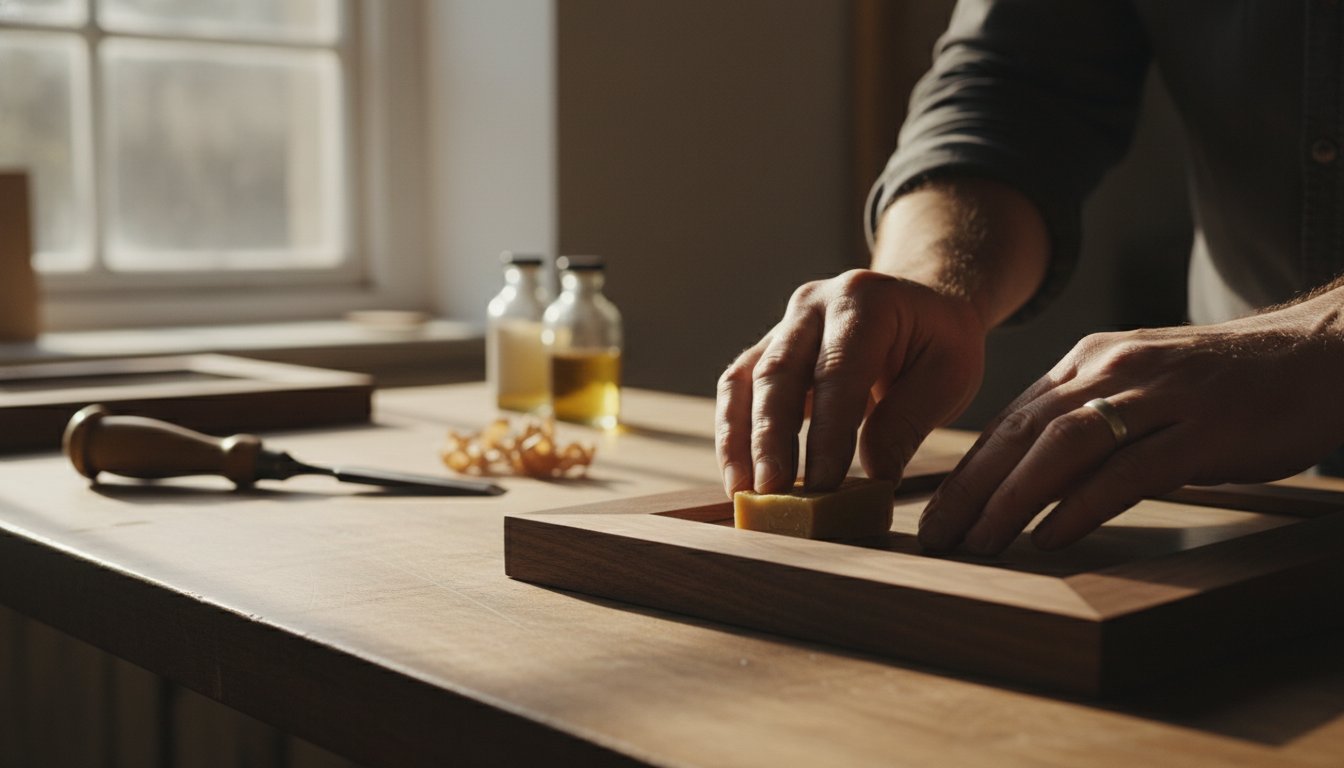
Finally, the finish is where the frame’s soul is revealed. This isn’t a quick, uniform spray of paint. Hand-finishing involves carefully applying stains, waxes, or oils to enhance the wood’s natural beauty. This hands-on approach, a continuation of a long craft tradition (you can learn more about the history of picture frames and their evolution), builds colour in layers, creating a depth and richness that factory processes can’t match. The result is a frame with a unique patina and a warm, inviting character.

Exploring Wood Types & Finishes: A Palette for Your Art

The soul of a truly beautiful frame lies in its material. The choice of wood and its finish is not just a detail; it’s a crucial decision that defines the relationship between the art, the frame, and your space. Think of it as the artist’s final brushstroke. When you invest in the quality craftsmanship behind our hand finished picture frames uk, you are choosing a piece of bespoke furniture for your art, designed to protect and elevate it for years to come.

A Guide to Popular Frame Woods

Each timber possesses a unique character and grain, offering a different personality to frame your picture. We source only the best sustainable woods, with a few favourites standing out for their beauty and versatility:

  • Oak: A timeless classic. Known for its prominent, beautiful grain, oak is incredibly versatile, suiting everything from rustic to contemporary settings.
  • Walnut: Deep, dark, and luxurious. Walnut brings a sophisticated and premium feel, perfect for fine art photography and traditional portraits.
  • Ash: A lighter, pale wood with a clean grain. Ash is ideal for creating a bright, modern look that complements Scandinavian or minimalist interiors.
  • Beech & Maple: With their smooth, subtle grain, these woods provide the perfect canvas for painted finishes, allowing for a flawless, uniform colour.

Common Finishing Techniques Explained

The finish is where our artisans apply their expertise, a skill honed through dedication to the craft. This is the stage that transforms raw timber into a masterpiece, a process celebrated by institutions like The King’s Foundation through its traditional craftsmanship training programmes. Each technique imparts a distinct character:

This same dedication to heritage skills can be seen in other specialized craft sectors. For example, Mary Collings Church Furnishings has been applying traditional manufacturing techniques to ecclesiastical items for over half a century, showcasing the versatility and timeless appeal of expert woodworking.

  • Staining: Enhances the wood’s natural beauty, deepening its colour while allowing the inherent grain to remain the star of the show.
  • Waxing & Oiling: A traditional method that provides a soft, natural lustre. This finish protects the wood and gives it a tactile, warm feel.
  • Hand Painting: Offers limitless possibilities. From a solid, opaque colour matched to your decor to a gently distressed finish for a vintage feel.
  • Gilding: The application of gold or silver leaf for a spectacular, traditional look that adds a touch of opulence and grandeur.

Matching the Frame to Your Artwork

A great frame should never compete with the art; it should complete it. It acts as a bridge, seamlessly connecting the artwork to your room’s decor. Here are a few guiding principles:

  • Use warm, rich woods like Oak or Walnut to complement the tones in traditional oil paintings or classic prints.
  • Choose clean, simple profiles in Ash or a painted finish for modern photography, abstract art, and graphic prints.
  • Consider the dominant colours in your art. A frame’s stain or paint colour can be chosen to pick out and enhance a subtle hue within the piece.

Feeling unsure? Our passion is helping you find that perfect match. Need advice? Talk to our framing experts for a personal consultation.

The Process: From Raw Timber to Masterpiece Frame

Ever wondered what transforms a simple piece of wood into a frame worthy of your most treasured art? It’s a journey of skill, patience, and meticulous attention to detail. This isn’t an automated assembly line; it’s a hands-on process where every decision matters. The dedication required reflects a standard of quality championed by organisations like the Guild of Master Craftsmen, which recognises the UK’s finest artisans. Let’s step into the workshop and see how it’s done.

Step 1: Selecting and Milling the Timber

It all begins with the wood. We carefully select beautiful, sustainable timbers like Ash, Oak, or Beech, ensuring each piece has the right character and strength. This raw timber is then milled in our workshop, where it’s cut and shaped into specific frame profiles. A master framer pays close attention to the wood’s grain, planning the cuts so the pattern flows seamlessly and consistently around the finished frame, creating a sense of natural harmony.

Step 2: Perfecting the Corners and Construction

The hallmark of a quality frame is its corners. Each length of the profile is cut to a precise 45-degree angle. These mitred corners are then joined using professional-grade wood glue and secured with v-nails shot into the back. The frame is placed in clamps to dry, ensuring a bond that is stronger than the wood itself. This robust structure is then carefully sanded, creating a perfectly smooth, raw canvas ready for the final, transformative stage.

Step 3: The Finishing Touch

This is where true artistry comes to the fore. Whether it’s a rich stain, a delicate wax, or a bespoke paint colour, the finish is applied by hand in multiple thin layers. Between each coat, the surface is ‘cut back’-lightly sanded-to remove any imperfections and achieve a flawless, deep lustre. This patient process is what distinguishes the best hand finished picture frames uk artisans offer. After a final buff and a rigorous quality inspection, the frame is ready for glazing and fitting, a true masterpiece built to last a lifetime.

Why Invest in a Hand-Finished Frame? The Lifelong Benefits

When you see the price difference between a mass-produced frame and a hand-finished one, it’s natural to ask: is it truly worth it? The answer is a resounding yes. Viewing a hand-finished frame not as an expense, but as a long-term investment, reveals its profound value. This investment is built on three essential pillars: unmatched durability, superior protection for your art, and a unique aesthetic that elevates your space.

Unmatched Durability and Longevity

Unlike factory-made frames often constructed from composite materials, our hand finished picture frames UK artisans use premium solid wood. This robust foundation is naturally resistant to warping and environmental shifts common in British homes. The meticulous, hand-applied finishes-whether wax, stain, or paint-do more than create a beautiful surface; they seal and protect the timber, ensuring it lasts for decades. This is a frame built to become an heirloom, protecting and presenting your art for generations to come.

Superior Protection for Your Artwork

A beautiful frame is only half the story; its primary role is to preserve what’s inside. A hand-finished frame provides the perfect housing for conservation-grade materials that offer unparalleled protection. This includes:

  • Acid-Free Mounts: Preventing the yellowing and discolouration known as ‘mat burn’ that can permanently damage your artwork over time.
  • UV-Protective Glazing: A crucial shield against the harmful effects of sunlight, which can cause colours to fade dramatically.
  • Structural Integrity: The sturdy, expertly joined corners of a handmade frame offer far greater physical protection against accidental knocks and falls.

Pairing your art with these materials ensures it remains as vibrant as the day it was created.

A Unique Aesthetic Statement

Perhaps the most compelling benefit is the sheer beauty and individuality of a hand-finished frame. Because each piece of wood is unique and every finish is applied by a skilled craftsperson, no two frames are ever exactly alike. This allows you to create a truly bespoke piece that perfectly complements your artwork and your home’s décor. The frame ceases to be a simple border; it becomes the essential bridge between your room and the artwork, enhancing its story and drawing the viewer in. It’s an integral part of the art, a testament to quality craftsmanship that elevates the perceived value of the piece it holds. Discover the transformative effect for yourself in our online gallery.

How to Commission Your Hand-Finished Frame in the UK

Embarking on a bespoke framing project is an exciting journey. It’s a creative partnership between you and a skilled artisan, designed to create a final piece that is much more than the sum of its parts. Finding the right partner is the first and most crucial step to ensuring your artwork is presented perfectly.

What to Look For in a Framer

When searching for a specialist in hand finished picture frames uk-wide, it’s important to look beyond a simple price list. A truly professional framer will be proud to share their craft. Look for these key indicators of quality:

  • A Rich Portfolio: Ask to see examples of their previous hand-finished work. This demonstrates their skill, consistency, and stylistic range.
  • Material Transparency: Inquire about their wood sourcing and sustainability practices. Premium, responsibly sourced timber is the foundation of a lasting frame.
  • A Proper Consultation: A bespoke service should involve a real conversation. Avoid framers who rely solely on an online form; a true consultation allows for nuance and expert guidance tailored to your specific piece.

The Consultation Process: Bringing Your Vision to Life

The consultation is where your vision and the framer’s expertise meet. This collaborative discussion is designed to explore every detail. We will discuss your artwork, your interior design style, and the specific room where the piece will be hung to ensure the frame acts as a perfect bridge between the art and its environment. You’ll be able to view and feel wood samples, explore different finish options, and receive professional guidance on crucial elements like mount proportions and specialist glazing that protects your art from UV damage.

Why Choose First4Frames Gallery for Your Project

At First4Frames Gallery, we believe that exceptional framing is born from passion and experience. With decades of expertise rooted in Scottish craftsmanship, we offer a complete bespoke service, guiding you from the initial idea to the final, beautiful delivery. We source only the best, sustainable materials to ensure your frame is not only spectacular today but remains a treasured part of your home for generations.

We are dedicated to making the process of commissioning beautiful, hand finished picture frames uk a simple and inspiring experience. Let us help you do justice to your art.

Start your bespoke framing journey with us today.

Elevate Your Art with True British Craftsmanship

A hand-finished frame is far more than a simple border; it is a bespoke piece of craftsmanship designed to be the perfect bridge between your art and your space. As we’ve explored, the journey from raw, sustainable timber to a finished masterpiece involves immense skill, precision, and a deep appreciation for detail. This commitment ensures your artwork is not just protected, but beautifully enhanced for a lifetime of enjoyment.

Choosing from the exceptional hand finished picture frames uk artisans create is an investment in quality and heritage. At First4Frames, we pour over 20 years of framing expertise into every piece we craft. Based in Falkirk and serving the entire UK, our passion is pairing your art with the perfect, sustainably sourced frame it deserves.

Ready to give your art the spectacular finish it warrants? Discover the art of bespoke, hand-finished framing with First4Frames.

Frequently Asked Questions

How much more does a hand-finished frame cost than a standard one?

A hand-finished frame is an investment in true craftsmanship. While a standard, off-the-shelf frame might cost £20-£50, a hand-finished equivalent typically starts from £75-£95 and can increase with size and complexity. The price for the premium hand finished picture frames uk customers choose reflects the many hours of skilled work, premium materials, and the unique, multi-layered finish that cannot be replicated by a machine. It’s a bespoke piece designed to last a lifetime.

How long does it take to have a hand-finished picture frame made?

Patience is key to perfection. The creation of a hand-finished frame is a meticulous process involving consultation, precise construction, and the careful application of multiple layers of finish, each requiring time to cure. Typically, you can expect a lead time of 2-4 weeks from confirming your order to completion. This ensures every detail is perfect and the finish is durable, beautiful, and exactly as you envisioned, making the wait worthwhile for a truly artisanal product.

Can you create a custom finish to match my furniture or decor?

Absolutely. This is one of the greatest advantages of choosing a hand-finished frame. We can create a completely custom finish to achieve perfect harmony with your interior. Whether you provide a paint colour code, a fabric swatch, or a photograph of your furniture, our artisans can expertly mix pigments and apply techniques to create a frame that seamlessly integrates with your existing decor. It’s the ultimate way to create a cohesive and professionally styled look in your home.

What is the difference between ‘bespoke’ and ‘hand-finished’?

These terms describe two different aspects of customisation, though they often go together. ‘Bespoke’ refers to the size and dimensions of the frame; it is made-to-measure to fit your artwork perfectly, rather than being a standard size. ‘Hand-finished’ refers to the surface treatment-the colour, texture, and protective layers are all applied by a skilled craftsperson by hand. A frame can be one or the other, but our finest work is often both for a truly unique result.

Where do you source the wood for your frames?

We believe a spectacular frame begins with exceptional materials. We source our solid woods, such as Oak, Ash, and Beech, from reputable timber merchants in the UK and Europe who are committed to sustainable forestry. By prioritising suppliers with FSC (Forest Stewardship Council) certification, we ensure our beautiful frames are not only built to last but are also created with environmental responsibility at their core, honouring both the art and its natural origins.

Can I get a hand-finished frame for a canvas painting?

Of course. We create stunning hand finished picture frames uk artists and collectors adore for canvas paintings. The most popular style is the ‘floater’ or ‘tray’ frame, where the canvas appears to levitate within the frame with a small gap around the edges. This contemporary style respects the artwork’s integrity by showing its sides. We can hand-finish these floater frames in any colour or style to perfectly complement your painting and its surroundings.

Posted on

Custom Circle and Oval Frames: A Complete Guide

When you picture a framed piece of art, your mind likely defaults to a classic rectangle. But what if your artwork is calling for something different, something with softer lines and a more unique character? Perhaps you’ve dismissed the idea, worried that a round frame might look dated or that the process would be too complicated and costly. The truth is, the right frame is the perfect bridge between your art and your decor, and premium custom circle and oval frames offer a spectacular way to make a truly personal statement.

At First4Frames Gallery, we are passionate about beautiful, bespoke craftsmanship. In this complete guide, we’ll demystify the entire journey, from concept to creation. We will explore the stunning aesthetic benefits of curved frames, guide you through the available materials and finishes, and show you exactly how to measure your piece with confidence. Prepare to discover how to commission the perfect frame that will transform your art into an extraordinary centrepiece for your home.

Key Takeaways

  • Learn how the curved lines of a circular or oval frame can soften your interior design and create a captivating focal point.
  • Discover the key customisation options, from wood types to unique finishes, to ensure your frame perfectly complements your artwork.
  • Our step-by-step guide demystifies the process, showing you how simple it is to commission beautiful custom circle and oval frames.
  • Gain confidence with practical tips on hanging, styling, and budgeting for your unique frame to ensure it looks stunning in your space.

Why Choose a Circle or Oval Frame? Thinking Beyond the Rectangle

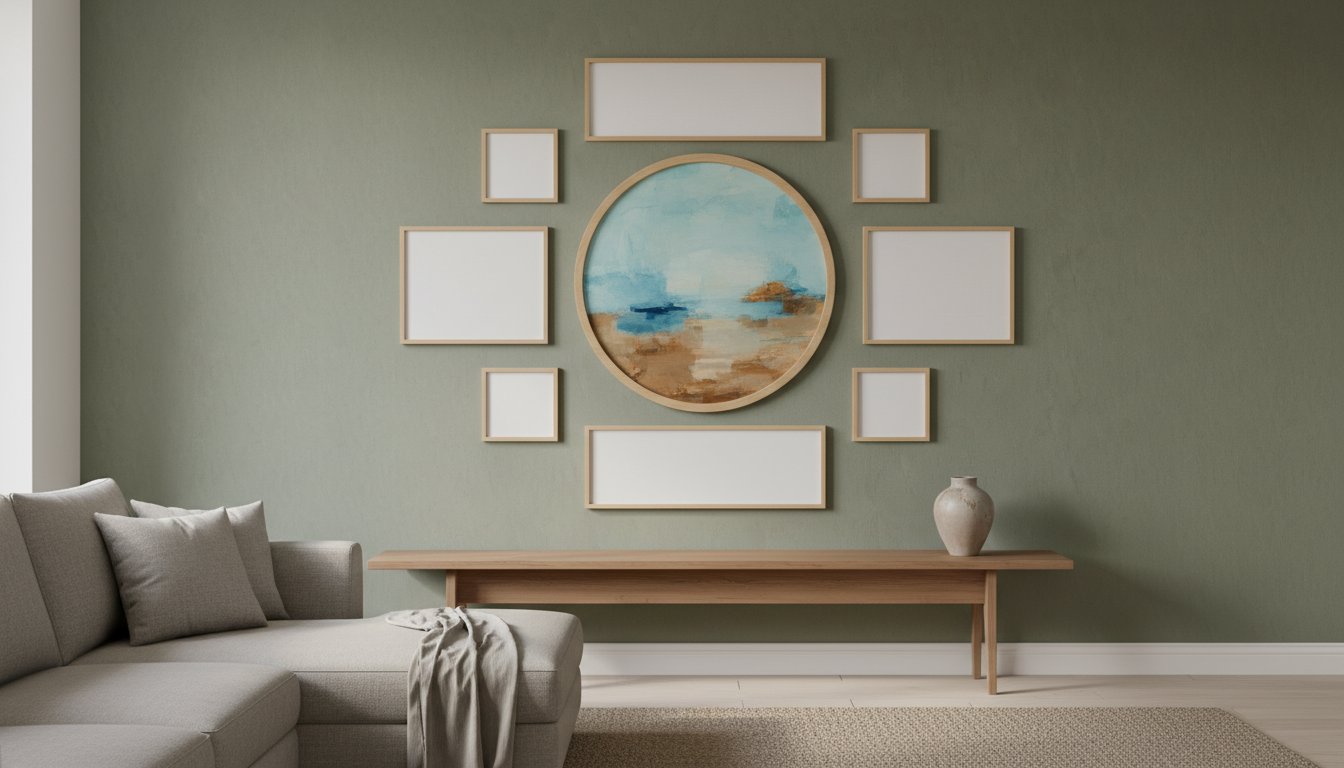
In a world dominated by straight lines and sharp corners-from our walls and windows to our furniture-introducing a curve can be a breath of fresh air. A frame is the essential bridge between your artwork and your décor, and choosing a non-rectangular shape is a powerful design statement. Opting for bespoke custom circle and oval frames allows you to soften a room’s aesthetic, create an undeniable focal point, and add a touch of timeless elegance that a standard frame simply cannot match.

To see the beautiful craftsmanship involved in creating these unique shapes, take a look at the video below:

The Unique Aesthetic: Creating Softness and Focus

A round or oval frame immediately breaks the visual monotony of a space. Its gentle, continuous lines draw the eye inward, naturally guiding the viewer’s attention directly to the heart of the artwork. This effect makes it perfect for highlighting a specific subject. Whether you are aiming for a vintage, classic, or even a whimsical feel, the curved silhouette provides a sense of intimacy and charm that makes the piece feel special and distinct.

A Nod to Tradition: From Victorian Portraits to Modern Heirlooms

Oval frames have a rich history, most notably gaining popularity in the 18th and 19th centuries for portraiture and mirrors. This classic shape carries an inherent sense of elegance and nostalgia, instantly elevating a piece to feel like a cherished heirloom. While the history of Picture frame shapes is diverse, the oval has remained a symbol of sophistication. Today, these traditional forms are being reimagined in modern interiors, creating a beautiful contrast between classic and contemporary styles.

What Artworks Shine in a Curved Frame?

While any piece can be enhanced with the right frame, some artworks are particularly well-suited to a curved presentation. Our custom circle and oval frames provide the perfect showcase for:

  • Portraits and Silhouettes: The shape naturally complements the curves of the human face and form, creating a classic and focused presentation.
  • Botanical Prints & Delicate Illustrations: The soft edges of the frame enhance the organic and graceful nature of floral and natural subjects.
  • Single-Subject Compositions: Artwork with a clear central focus, from a single animal to an abstract shape, is beautifully contained and highlighted within a circle or oval.
  • Creative Displays: Think beyond prints! These frames are perfect for showcasing antique mirrors, intricate embroidery, or treasured family memorabilia.

A Guide to Customisation: Materials, Styles, and Finishes

Creating the perfect bespoke frame is a journey of artistic discovery, where every choice contributes to the final masterpiece. A frame is more than just a border; it is the bridge between your art and your interior, a carefully crafted combination of three key elements: the wood, the finish, and the profile. Understanding these components empowers you to design a piece that not only protects your art but elevates it, turning a simple picture into a spectacular focal point.

Choosing the Right Wood: From Classic Oak to Sleek Walnut

The foundation of any premium frame is the wood itself. Each species brings a unique character and grain, setting the stage for the final look. The beauty of creating custom circle and oval frames is that the continuous curve of the wood is always on display.

  • Classic Oak & Ash: For a timeless, natural aesthetic, the prominent grain of Oak or Ash brings texture and an organic feel, perfect for both traditional and contemporary settings.
  • Elegant Walnut & Cherry: These hardwoods offer a richer, more formal feel with their deep, warm tones and subtle grain, adding a touch of sophisticated elegance.
  • Versatile Tulipwood: As a premium paint-grade wood, Tulipwood provides a flawless, smooth surface, making it the perfect canvas for any custom colour you can imagine.

Finishes That Define the Mood: Natural, Painted, or Gilded

The finish is where your frame’s personality truly comes to life. It can be used to create harmony with your artwork or a stunning contrast that demands attention. We offer a finish to suit every piece and every home.

  • Natural & Stained: A clear wax or a carefully selected stain celebrates the wood’s inherent beauty, allowing the natural grain to remain the star of the show.
  • Custom-Painted: From subtle neutrals to bold, dramatic hues, a painted finish offers limitless possibilities. We can match any colour to seamlessly integrate the frame with your decor.
  • Gilded & Ornate: For a touch of classic luxury, a gilded finish in gold or silver leaf provides a truly opulent look, ideal for traditional portraits, mirrors, and fine art.

Understanding Frame Profiles: From Simple Curves to Ornate Details

A frame’s profile is its cross-sectional shape-the contours and curves that give it depth and character. This detail has a powerful impact on how the artwork is viewed. The concept of using a frame to draw attention to a subject has deep roots, with the ancient origins of picture frames found in Romano-Egyptian mummy portraits, demonstrating a long history of this beautiful craft.

  • Minimalist Profiles: Simple, gently rounded profiles offer a clean, contemporary aesthetic that allows the artwork to take centre stage without distraction.
  • Decorative & ‘Scooped’ Profiles: More traditional profiles often feature a ‘scoop’-a concave curve that draws the viewer’s eye inward, directly towards the art. These add a wonderful sense of depth and detail to custom circle and oval frames.

The Bespoke Process: How Your Custom Frame is Made

Embarking on a bespoke framing journey might seem complex, but our process is designed to be a simple, collaborative, and rewarding experience. We believe that creating the perfect frame is a partnership between your vision and our expertise. From the initial measurement to the final polish, we guide you at every stage, ensuring you feel confident and inspired as we bring your unique frame to life.

Step 1: Consultation and Measuring Your Artwork

The journey begins with the essentials: understanding your art and your space. We’ll guide you on how to measure your piece accurately-for a circle, we need the diameter at its widest point; for an oval, both the height and width. This is more than just a measurement; it’s a conversation. We discuss your vision, the artwork’s character, and where it will be displayed to ensure the final frame is a perfect complement to your home.

Step 2: Design, Material, and Glazing Selection

This is where your creativity truly shines. Together, we explore our extensive collection of premium materials to find the ideal wood, profile, and finish that acts as the perfect bridge between your art and your décor. We also help you select the right glazing to protect and enhance your piece:

  • Standard Glass: For a clear, classic finish.
  • Anti-Reflective Glass: To minimise glare and maximise clarity.
  • UV-Protective Glass: To safeguard your artwork from fading over time.

We’ll also consider mounts and other finishing touches for a truly professional result.

Step 3: The Craftsmanship in Our Falkirk Workshop

Once the design is finalised, our skilled artisans in our Falkirk workshop begin their meticulous work. Crafting seamless custom circle and oval frames requires a unique blend of traditional techniques and modern precision. Every curve is expertly shaped and every joint is flawlessly finished, transforming high-quality, conservation-grade materials into a frame that is both beautiful and built to last. This is where our passion for craftsmanship truly comes to life.

Step 4: Final Fitting and Finishing Touches

The final step is where your artwork and its new frame become one. We handle your piece with the utmost care, fitting it securely within its new bespoke home. A final, rigorous quality check ensures every detail is perfect, from the smooth finish to the secure backing. Your unique, ready-to-hang masterpiece is then carefully prepared for you to cherish for years to come.

Ready to start your project? Contact our experts today.

Practical Advice for Displaying Your Round and Oval Frames

Once you’ve commissioned your perfect bespoke frame, the final, exciting step is displaying it with the confidence it deserves. A uniquely shaped frame can transform a space, but it often comes with questions about cost, hanging, and styling. Here is our expert advice to ensure your beautiful new frame looks its absolute best.

What Influences the Cost of a Custom Shaped Frame?

The artisan craftsmanship required for custom circle and oval frames is more intricate than for standard rectangular ones. Bending and joining wood into a perfect curve is a highly skilled process. The final price is influenced by several key factors:

  • Size: A larger diameter requires more premium materials and labour.
  • Wood Choice: Hardwoods like oak will differ in cost from softer woods or custom-painted finishes.
  • Profile Complexity: An ornate, detailed moulding is more complex to shape than a simple, minimalist one.

We encourage you to view your frame not as a simple accessory, but as a long-term investment in protecting and elevating a piece of art you love.

Tips for Securely Hanging Your Frame

Due to their shape, round and oval frames hang best with specific fittings. We recommend using two D-rings attached to the back of the frame, roughly at the ’10-to-2′ clock positions. A strong picture cord is then strung between them, allowing the frame to hang securely from a single, well-anchored wall hook. This method prevents the frame from tilting or spinning. For maximum visual impact, hang your piece at eye level (around 57 inches from the floor) or use it to create a focal point above a piece of furniture like a console table or headboard.

Creating a Cohesive Look: Mixing Shapes on a Gallery Wall

A circular or oval frame can be a spectacular anchor for a gallery wall, breaking up the monotony of straight lines. To create a balanced and harmonious display, let your shaped frame be the hero. Place it centrally or slightly off-centre and build your arrangement of rectangular frames around it. Tie the collection together by using a consistent element-such as a similar frame material, colour palette, or artistic theme-to create a visual bridge between the different pieces. A cohesive look feels intentional and professionally curated.

For more beautiful examples and inspiration, we invite you to view our gallery.

Bring Your Vision to Life with Bespoke Framing

Choosing a frame is about more than just protection; it’s about presentation and personality. As we’ve seen, circular and oval frames offer a wonderfully elegant alternative to sharp corners, creating a softer, more focused viewing experience. By understanding the bespoke process and the rich variety of materials and finishes available, you are perfectly equipped to commission a piece that truly complements your art and your home.

At First 4 Frames, our passion is bringing these unique visions to life. With over 20 years of bespoke framing experience, we combine time-honoured techniques with premium, conservation-grade materials. Every one of our custom circle and oval frames is meticulously hand-crafted in our Scottish workshop, ensuring a spectacular, lasting finish for your treasured artwork.

Are you ready to create a stunning focal point for your space? Discuss your unique framing project with our Falkirk-based experts. We look forward to helping you create a future heirloom.

Frequently Asked Questions

Are custom oval and circle frames more expensive than rectangular ones?

Due to the intricate craftsmanship involved, custom circle and oval frames are typically priced higher than standard rectangular styles. The process requires specialised techniques and precision cutting, which results in more material waste. However, this investment ensures you receive a truly unique, handcrafted piece that provides a spectacular display for your art, making it a worthwhile centrepiece for any room.

How do I correctly measure my round or oval artwork for a frame?

Measuring for your bespoke frame is a simple, precise process. For circular artwork, measure the diameter-the widest distance from edge to edge, passing through the centre. For an oval piece, you will need two measurements: the height at its tallest point and the width at its widest point. We always recommend measuring twice to ensure perfect accuracy before placing your order so our artisans can craft a frame that fits flawlessly.

What is the typical turnaround time for a bespoke shaped frame?

Our passion is craftsmanship, and perfection takes a little time. The typical turnaround for a bespoke circular or oval frame is between 7 to 10 working days from order confirmation to dispatch. This allows our expert framers to give your piece the dedicated attention it deserves, ensuring every detail is finished to our premium standards before it begins its journey to you. We believe the spectacular result is always worth the wait.

Can you put a mount inside a circular or oval frame?

Absolutely! A professionally cut mount can be a beautiful addition. It creates a visual space between the artwork and the frame, drawing the viewer’s eye inward and adding a layer of depth and sophistication. We create bespoke mounts to perfectly follow the curve of your frame, providing a seamless and elegant border for your piece. It’s the perfect way to elevate your art and give it a professional, gallery-quality finish.

What kind of art looks best in a round frame?

The soft, continuous lines of a round frame are incredibly versatile. They are particularly stunning for portraits, creating an intimate, focused feel reminiscent of classical miniatures. Botanical illustrations, detailed still life scenes, and even abstract pieces with circular motifs look spectacular. Ultimately, these unique frames offer a beautiful way to break from tradition and turn any piece into an unforgettable focal point in your home.

Do you offer different types of glass for custom frames?

Yes, we offer a selection of premium glazing options to protect and enhance your artwork. Our standard offering is a high-quality 2mm float glass, perfect for most environments. For rooms with significant light, we recommend our anti-reflective glass to minimise glare and improve clarity. To preserve your fine art for a lifetime, our UV-protective glass is the ideal choice, blocking harmful rays that can cause fading over time.

Posted on

L.S. Lowry: The Man Who Painted Britain’s Industrial Soul

When you hear the name L.S. Lowry, what comes to mind? For many, it’s the iconic ‘matchstick men’ scurrying against a backdrop of towering chimneys and industrial smog. But to see only that is to miss the profound story and incredible craftsmanship captured on his canvases. The world of Lowry is far richer and more complex than it first appears, filled with a quiet beauty, subtle humour, and a deep empathy for the working-class life he observed so keenly every day.

Embark on a journey of artistic discovery with us as we look beyond the familiar figures. In this guide, we’ll uncover the man behind the easel, explore the unique artistic style that made him a household name, and delve into the powerful stories behind his most famous works. By the end, you’ll see the industrial soul of Britain through the eyes of one of its most beloved artists and gain a new, confident appreciation for the depth in every brushstroke.

Key Takeaways

  • Uncover the complex personal life of the man behind the famous “matchstick men,” from his demanding mother to his secret double life.
  • Discover the surprising depth and emotion Lowry achieved by using a deliberately limited palette of just five core colours.
  • Explore the stories behind his most iconic works, learning to read the details in both his bustling crowd scenes and his solitary landscapes.
  • Understand how he revolutionised British art by transforming industrial cityscapes into powerful and celebrated subjects.

Who Was L.S. Lowry? The Man Behind the Matchstick Men

Often celebrated for his ‘matchstick men’, L.S. Lowry was far more than a simple painter of industrial scenes. He was a complex, private man who led a remarkable double life. For over four decades, he was a full-time rent collector by day and a dedicated artist by night, meticulously crafting a unique and beautiful vision of Northern England that was entirely his own. This daily routine gave him an unfiltered view of working-class life, which became the soul of his spectacular work.

To truly appreciate the artist, it helps to understand the man. This short film offers a wonderful insight into his life and work:

A Stretford Childhood and a Difficult Relationship

Born in Stretford, Manchester, in 1887, Laurence Stephen Lowry grew up in a conventional Victorian middle-class home. His life was profoundly shaped by his mother, Elizabeth, a talented but frustrated woman who was openly critical of her son. Her constant disapproval, though painful, paradoxically strengthened his resolve to prove his worth through his art. This challenging upbringing cemented his lifelong attachment to the industrial landscapes he grew up in, which he felt a deep and personal need to capture on canvas.

The Rent Collector’s Secret Life

For more than 40 years, Lowry worked for the Pall Mall Property Company, walking the industrial streets of Manchester as a rent collector. Far from being a burden, this job was the very source of his inspiration. It gave him a street-level view of the crowds, factories, and quiet moments of daily existence. This unique dual existence is a central theme in L.S. Lowry’s life and career, keeping him grounded and intimately connected to his subjects, whom he would often sketch on his rounds.

Art School and Early Influences

Despite his distinctive style, Lowry was not an untrained ‘naïve’ painter. He dedicated years to evening classes at the Manchester School of Art and later the Salford Royal Technical College. A key influence was his tutor, the French Impressionist painter Adolphe Valette, whose dark, atmospheric depictions of Manchester’s smog-filled streets clearly left their mark. While Lowry ultimately forged his own path, this formal training provided the professional craftsmanship and technical foundation for his revolutionary artistic vision.

Decoding Lowry’s Unique Artistic Style

L. S. Lowry’s work is instantly recognisable, yet its apparent simplicity hides a deep and complex artistic vision. He developed a unique visual language to document the industrial North of England, turning everyday scenes into beautiful, compelling works of fine art. His genius lies not just in what he painted, but in how he saw the world-a world of constant movement, shared experience, and quiet dignity.

The Famous Five-Colour Palette

Lowry famously claimed to use a highly restricted palette to achieve his signature look. This deliberate limitation was a mark of his artistic mastery, creating a muted yet incredibly powerful atmosphere. His core colours were:

  • Flake White
  • Ivory Black
  • Vermilion Red
  • Prussian Blue
  • Yellow Ochre

His stark white backgrounds were never empty; they were carefully prepared canvases that gave his scenes a timeless, almost dreamlike quality. This limited palette forces the viewer to look past colour and focus on the incredible detail in his composition, form, and the ballet of human movement.

Industrial Landscapes as Theatre

For Lowry, the mills, factories, and terraced houses were not grim, oppressive structures. Instead, he saw them as a grand stage-a backdrop for the theatre of everyday life. Often painting from a combination of memory and imagination, he would compose his scenes meticulously. By frequently using a low viewpoint and a panoramic perspective, he pulls you directly into the bustling street. You don’t just observe the scene; you feel like a part of the crowd, experiencing the energy of the industrial world he so beautifully captured.

More Than Just ‘Matchstick Men’

The term ‘matchstick men’ is a popular but overly simplistic description of Lowry’s figures. Each stylised person is a carefully observed individual, captured in a fleeting moment of their daily life. Lowry was a constant observer, filling sketchbooks with drawings of people he saw on the street, noting their posture, their gait, and their interactions. Leading institutions help us appreciate the depth of L.S. Lowry’s artistic style, revealing that these are not anonymous figures but characters in a larger narrative. Together, they tell the collective story of a resilient and vibrant community.

A Journey Through Lowry’s Most Iconic Paintings

To truly understand L.S. Lowry, we must look closely at his key works. These paintings are more than just snapshots of industrial Britain; they are profound stories about community, labour, and the quiet moments in between. Each piece captures a different facet of his artistic vision, from the bustling energy of crowds to the poignant beauty of solitude. You can explore a spectacular collection of Lowry’s most iconic paintings at Art UK, which holds many of the originals. Here, we delve into three masterpieces that define his remarkable career.

Going to the Match (1953)

This spectacular painting captures the electric atmosphere of crowds converging on a football ground. It’s a perfect portrayal of a shared community ritual, a weekend escape from the grind of the mills that dominate the skyline. The contrast between the tiny, almost anonymous figures and the massive industrial architecture is striking. Its cultural importance was cemented when it was purchased for The Lowry gallery for a record-breaking £8.1 million, ensuring it remains a public treasure.

Coming from the Mill (1930)

A classic scene from the artist, this piece depicts the relentless flow of workers leaving a factory at the end of their shift. There is a powerful sense of rhythmic, unending movement as the tide of humanity pours out from the factory gates. This painting masterfully captures the daily rhythm of industrial life, showing how the environment shaped the lives of its inhabitants. It stands as a powerful statement on the relationship between people and the industrial world they built.

Man Lying on a Wall (1957)

In stark contrast to his busy crowd scenes, this enigmatic painting offers a moment of quiet contemplation. It explores themes of leisure, observation, and perhaps a touch of loneliness, focusing on a single figure set against a sparse industrial landscape. This piece beautifully demonstrates the artist’s versatility and his deep interest in individual human experiences, not just the masses. It reminds us that even within the sprawling industrial world, there were moments of solitary stillness.

These three paintings showcase the incredible depth and variety of this celebrated artist’s work. To bring the unique atmosphere of a Lowry into your own home, explore our collection of professionally framed prints at gallery.first4frames.co.uk.

The Enduring Legacy of a British Master

Since his death in 1976, L.S. Lowry’s reputation has soared, cementing his position as one of Britain’s most cherished artists. He possessed a unique genius for finding profound beauty and humanity in the industrial landscapes of Northern England. By transforming the smokestacks, mills, and bustling crowds-scenes once dismissed as unworthy subjects-into powerful works of art, he created a new visual language. Today, his work continues to influence artists, musicians, and filmmakers, and his original paintings are some of the most sought-after in British art.

From Outsider to National Treasure

For decades, Lowry was considered an outsider by the London art establishment. Yet his distinctive style and unwavering focus on the lives of ordinary people eventually captured the nation’s heart. He became a beloved public figure, famous not only for his art but also for his humble character, famously turning down at least five state honours, including a knighthood. The ultimate tribute came in 2000 with the opening of The Lowry, a spectacular theatre and gallery complex in his beloved Salford, forever celebrating his unique contribution to modern art.

Collecting Lowry: Prints and Originals

While an original Lowry painting can command millions of pounds at auction, owning a piece of his artistic vision is more accessible than ever. High-quality fine art prints offer a fantastic way for enthusiasts to connect with his work. It’s important to distinguish between different types:

  • Original Works: The one-of-a-kind paintings and drawings created by the artist himself.
  • Signed Limited-Edition Prints: Collectible prints approved and signed by Lowry, produced in a fixed number.
  • Giclée Reproductions: Premium, modern prints that use advanced technology to create a stunningly faithful copy of an original artwork, capturing its colour and texture with incredible precision.

A beautiful, professionally framed Giclée print allows the soul of Lowry’s world to resonate in any room, bridging the gap between history and home. It is a perfect way to celebrate the legacy of this truly unique British master.

Ready to bring this artistic heritage into your home? Find the perfect framed Lowry print for your space in our collection.

L.S. Lowry: A Legacy for Your Walls

L.S. Lowry did more than just paint industrial landscapes; he chronicled the soul of a nation in transition. Far from being simple “matchstick men,” his figures populate scenes of profound depth, capturing both the bustling energy and the quiet isolation of early 20th-century life. The enduring power of Lowry lies in his unique ability to find beauty and humanity amidst the smoke and stone, leaving a legacy that continues to fascinate and move us today.

Now, you can invite that same powerful spirit into your own space. Our premium Giclée prints capture every subtle texture and colour of his iconic works. Each piece is then given a bespoke, handcrafted frame from our Falkirk workshop, creating a beautiful bridge between his world and yours. Our passionate team of experts is always here to help you choose the perfect piece to complement your home.

Bring the spirit of L.S. Lowry into your home. Explore our collection of framed prints.

Embark on your own journey of artistic discovery and find a masterpiece that will inspire for years to come.

Frequently Asked Questions About L.S. Lowry

Was L.S. Lowry a self-taught or ‘Sunday’ painter?

This is a common misconception. While L.S. Lowry did paint in his spare time alongside a full-time job as a rent collector, he was far from self-taught. He undertook formal art training for years, studying at the Manchester School of Art and the Salford Royal Technical College. The term ‘Sunday painter’ often downplays his immense dedication and the professional training that underpinned his unique and celebrated style, which he honed over decades of disciplined work.

Why did L.S. Lowry only paint industrial scenes?

While famous for his industrial landscapes, Lowry’s body of work is more diverse than many realise. He also painted haunting seascapes and compelling portraits. However, he was deeply moved by the urban environment of Pendlebury and Salford, seeing a unique beauty and drama in the mills, chimneys, and crowds. He felt a powerful connection to this world and dedicated himself to capturing the soul of the industrial North, making it his most iconic and defining subject.

What are ‘matchstick men’ and why did Lowry paint them that way?

The term ‘matchstick men’ refers to the stylised, elongated human figures that populate Lowry’s industrial scenes. He painted them this way intentionally, not due to a lack of skill. Lowry was not interested in painting specific individuals but in capturing the collective experience and movement of the urban crowd. These simple, anonymous figures represent the mass of humanity, conveying a sense of both community and isolation within the vast industrial landscape without distracting from the overall composition.

How much is an original L.S. Lowry painting worth?

The value of an original L.S. Lowry work varies enormously, depending on the size, medium, and subject. Minor drawings or sketches can be acquired for several thousand pounds. However, his classic oil paintings of industrial scenes command significant prices at auction. Major works have sold for millions, with “The Football Match” famously fetching over £5.6 million. The market remains strong, reflecting his status as one of Britain’s most beloved modern artists.

Where can I see L.S. Lowry’s paintings in person?

For the ultimate experience, The Lowry in Salford Quays is a must-visit, as it holds the world’s largest public collection of his paintings and drawings. You can also find significant works at Manchester Art Gallery and the Tate Britain in London. Many regional galleries across the UK, such as the Sunderland Museum and Winter Gardens, also hold at least one Lowry painting in their permanent collections, so it’s always worth checking with your local museum.

What is the best way to frame a Lowry print?

A Lowry print deserves a frame that enhances its unique atmosphere without overpowering it. We recommend a simple, high-quality moulding in a classic black, a deep wood tone, or even a soft, off-white to complement the limited colour palette. A generous mount is essential; it provides breathing space and draws your eye into the detail of the scene. The perfect frame acts as a bridge between the artwork and your room, completing the piece beautifully.

Posted on

Unique Art Prints for Sale UK: Your Guide to Finding Original Wall Art

Your home is a reflection of you, so why settle for wall art that feels impersonal and mass-produced? The search for unique art prints for sale UK can often feel overwhelming, leaving you tired of seeing the same generic posters and unsure what makes a piece truly special. You want art with a story, something that expresses your style, but the thought of finding a print and then facing the hassle of framing it can be daunting.

This guide is your passport to a world beyond the ordinary. We’ll embark on a journey of artistic discovery, showing you exactly how to find spectacular pieces from independent UK artists that resonate with your soul. We’ll demystify what makes a print a premium, fine art piece and reveal how you can support small businesses while receiving a beautiful, professionally framed work of art, ready to hang straight from the box. Get ready to transform your space with art that is genuinely, beautifully you.

Key Takeaways

  • Understand the key differences between a mass-market poster and a fine art print to ensure you’re investing in quality and longevity.
  • Discover the best online galleries and independent artist platforms to find truly unique art prints for sale uk that you won’t see on the high street.
  • Develop a simple strategy for selecting the perfect piece by considering the mood, colour palette, and story you want to bring to your space.
  • Learn why a bespoke, professional frame is the essential final step to protect your investment and elevate your print into a spectacular centrepiece.

What Truly Makes an Art Print ‘Unique’?

When searching for unique art prints for sale uk, it’s easy to think ‘unique’ simply means a design you haven’t seen before. But true uniqueness goes much deeper. It’s a blend of exceptional quality, genuine rarity, and the compelling story behind the image. A fine art print is not just a picture; it’s a piece of craftsmanship designed to last a lifetime, offering a far richer experience than a mass-market poster.

Understanding the key factors that elevate a print from ordinary to extraordinary is the first step in building a beautiful and meaningful collection. To see some spectacular examples, take a look at this short video:

Limited Edition vs. Open Edition Prints

One of the clearest indicators of a print’s exclusivity is its edition type. A limited edition means only a fixed number of prints will ever be created. This scarcity inherently increases its value and desirability. These prints are often hand-signed and numbered by the artist and may come with a Certificate of Authenticity. In contrast, open edition prints can be reproduced indefinitely, making them more common and affordable. Choosing a limited edition piece gives you a more exclusive connection to the artist and their work.

The Superior Quality of Giclée Printing

The physical quality of a print is paramount to its beauty and longevity. Giclée (pronounced ‘zhee-clay’) is a premium, fine art digital printing process using specialist inkjet printers. Unlike standard posters, Giclée prints use archival-quality inks on acid-free papers, ensuring they resist fading for decades. This advanced method captures the original artwork’s colour and detail with stunning accuracy, and a core part of understanding printmaking techniques in the modern art world is recognising this commitment to quality.

The Story Behind the Artist

Truly unique art is infused with the passion and perspective of its creator. Many of the most interesting pieces come from independent, emerging, or local UK artists. When you buy their work, you aren’t just acquiring a beautiful object; you are supporting a creative journey and owning a piece of their story. Look for artists with a distinct point of view or a powerful connection to a place or theme. This narrative adds a profound layer of meaning that transforms the art on your wall into a conversation starter.

Where to Find Unique Art Prints in the UK (Online & Offline)

When searching for truly unique art prints for sale uk, the most spectacular finds are rarely on the high street. To discover art that resonates with your personal style, you need to explore the spaces where independent creativity thrives. The journey can take you from curated online galleries to the artist’s own studio. Understanding the difference between these avenues will help you find the perfect piece for your home while supporting the UK’s vibrant art scene.

Curated Online Art Galleries

Unlike vast, open marketplaces, a curated online gallery acts as your expert guide. We hand-pick artists and prints, ensuring every piece meets a high standard of quality and artistic merit. This approach guarantees exceptional craftsmanship and provides a deeper connection to the work through detailed artist biographies and artwork descriptions. The greatest advantage is the complete, hassle-free solution: many galleries, including ourselves, offer bespoke, integrated framing services, turning your chosen print into a professionally finished piece that is ready to hang and admire. Explore our gallery of curated prints from UK artists to see the difference.

Directly from Artist Websites & Collectives

Purchasing directly from an artist’s website or an artist-run collective offers a wonderful, direct connection to the creator. You know your support goes straight to them, and collectives often feature an exciting variety of styles in one place. The main consideration here is that the print arrives unframed, leaving you to manage the final, crucial step. While this can be a rewarding process, it requires a careful eye to ensure the frame acts as a bridge between the art and your decor. For those taking this path, this simple guide to framing art provides excellent foundational knowledge.

Local Art Fairs and Studio Sales

For a truly immersive experience, nothing beats visiting local art fairs, markets, and open studio events. This is your chance to meet the artists in person, discuss their process, and see the true texture and colour of their work up close. It’s a fantastic way to discover emerging talent within your local community and find a piece with a personal story. Keep in mind that availability is often limited to the event, making this a more serendipitous, but highly rewarding, way to hunt for art.

How to Choose the Perfect Unique Print for Your Space

Choosing art is a deeply personal journey, an opportunity to express your personality and bring a room to life. While the most important rule is to select something you truly love, a few practical guidelines can help you find that perfect piece. Think about the atmosphere you want to cultivate-is it calm and serene, or vibrant and energetic? The right artwork can be the final, beautiful touch that completes your vision.

Matching Art to Your Interior Style

A beautiful print should feel like a natural extension of your home’s character. Consider how a piece will interact with your existing decor, not just by matching colours, but by complementing the room’s overall energy. When browsing the diverse range of unique art prints for sale UK artists have to offer, keep these ideas in mind:

  • For minimalist spaces: Clean abstract prints, simple line art, or monochrome photography can enhance a sense of calm and order.
  • For traditional homes: Classic landscapes, botanical illustrations, or elegant still life prints add a timeless sense of grace and sophistication.
  • For neutral rooms: A bold, colourful abstract or a spectacular graphic print can become a stunning focal point, injecting personality and dynamism into the space.

Getting the Scale and Size Right

The right size artwork can make or break its impact. Before you fall in love with a print, take a moment to measure the wall space you intend to fill. A common mistake is choosing a piece that’s too small for the wall, leaving it looking lost. A large, bespoke statement piece works wonders above a sofa or bed, anchoring the room. For a vast, empty wall, consider creating a dynamic gallery wall or choosing a diptych (two panels) or triptych (three panels) to create a cohesive, expansive display. Conversely, a small, perfectly framed print can have a huge impact in a cosy reading nook, hallway, or above a small console table.

Building a Cohesive Art Collection

Your art collection is a story that you tell over time. You don’t need a huge budget to start; you just need a vision. You can build a collection around a specific theme (like coastal scenes), a colour palette, or a favourite artist. For an engaging gallery wall, mix different sizes, orientations, and even frame styles. Don’t feel pressured for everything to match perfectly; an eclectic mix often has more character. To learn more about what makes a print a valuable addition to your home, it’s helpful to understand what art collectors need to know about edition sizes and print types. Ultimately, your collection should be a reflection of you. Ready for some inspiration? Explore our gallery of unique art prints to find your next piece.

The Finishing Touch: Why Professional Framing Elevates Your Unique Print

A frame is so much more than a border; it’s the final, transformative touch that turns a beautiful print into a spectacular piece of art for your home. Think of it as the essential bridge between the artwork and your room’s décor, seamlessly connecting the two to create a harmonious and polished look. When you invest in one of the many beautiful and unique art prints for sale in the UK, professional framing does the heavy lifting, ensuring your chosen piece is protected, enhanced, and presented at its absolute best.

Protecting Your Investment

Beyond aesthetics, a high-quality frame is a vital shield for your art. You want your print to last a lifetime, and our professional framing process ensures just that. By using premium materials and expert techniques, we preserve the integrity and beauty of your artwork for decades.

  • Acid-Free Mounts: We use conservation-grade, acid-free mount boards to prevent the yellowing and discolouration that can damage paper over time.
  • UV-Protective Glazing: Our glazing options can shield your print from the harmful effects of sunlight, preventing fading and preserving the artist’s original, vibrant colours.
  • Sealed for Protection: A professionally sealed frame back protects your artwork from dust, humidity, and even insects, keeping it in pristine condition.

Enhancing the Visual Impact

The right frame doesn’t just contain the art-it enhances it. A carefully chosen mount and frame colour can draw out subtle tones in the artwork, making the entire piece ‘pop’ from the wall. The style of the frame itself, whether sleek and modern or rustic and traditional, reinforces the artwork’s own aesthetic. This creates vital breathing room, separating the image from its surroundings and giving it the focus and prestige it truly deserves. Bespoke framing ensures the proportions are perfect, creating the ideal visual partner for your print.

The ‘Ready-to-Hang’ Advantage

Choosing a framed print means avoiding the time and hassle of finding a separate, trusted framer. It’s the simplest and most reliable way to get art from our gallery onto your wall. Our expert team ensures every print is mounted perfectly, free from any ripples or wrinkles that can occur with DIY framing. Your finished piece arrives securely packaged and ready to hang immediately, allowing you to enjoy your new art the moment it arrives. All our prints are available with bespoke, ready-to-hang frames, offering a complete, gallery-quality solution.

Your Journey to a More Beautiful Home Starts Here

Finding the perfect piece of art is a personal journey. As we’ve explored, a truly unique print tells a story, reflects your personality, and connects you to the artist. It’s more than just decoration; it’s a statement. And when you add the crucial finishing touch of professional framing, that statement becomes a timeless centrepiece for your home, ready to be cherished for years to come.

Your search for unique art prints for sale uk doesn’t have to be overwhelming. At First4Frames Gallery, we bridge the gap between talented independent artists and your desire for a beautiful home. We combine our passion for art with over 20 years of professional framing experience to bring you a truly special collection. Every piece is a premium Giclée print on archival quality paper, ensuring its spectacular beauty lasts a lifetime.

We are proud to present a curated selection of works from independent Scottish and UK artists, ready to be transformed into your perfect framed artwork. Ready to find the one? Browse our collection of unique, framable art prints from UK artists and discover the perfect piece to elevate your space.

Frequently Asked Questions

What is the difference between an art print and a poster?

The key difference lies in quality and longevity. A fine art print, especially a Giclée print, is created using archival-quality inks on premium, acid-free paper. This ensures spectacular colour accuracy and permanence, lasting for generations. Posters are typically mass-produced using standard inks on thinner paper, making them more susceptible to fading and discolouration over time. An art print is a piece of craftsmanship designed to endure.

Are limited edition art prints a good investment?

Limited edition prints can be an excellent investment. Because only a certain number are produced, their scarcity can increase their value, particularly as the artist’s reputation grows. While appreciation is never guaranteed, they hold their value far better than open-edition prints. More importantly, they offer a wonderful and accessible way to begin collecting beautiful art from artists you admire, bringing unique character to your home.

How can I be sure the colours of the print will look the same as on my screen?

We use professionally colour-calibrated monitors and printers to ensure our prints are a faithful and vibrant representation of the original artwork. However, please be aware that every screen displays colour slightly differently due to individual brightness and contrast settings. You can trust that the physical print will have a richness and textural depth that a backlit digital screen simply cannot replicate, bringing the artwork to life in your space.

How much should I expect to pay for a unique, high-quality art print in the UK?

Prices for high-quality, unique art prints for sale in the UK can vary based on size, artist, and edition type. For a premium Giclée print from an independent artist, you might expect to pay between £40 and £150 for an unframed piece. A bespoke, professionally crafted frame is an additional investment that protects the artwork and perfectly bridges it with your room’s décor, reflecting the quality of the art within.

What is the best way to care for my framed art print?

To ensure your beautiful art print lasts a lifetime, hang it out of direct, prolonged sunlight, as UV rays can cause colours to fade. It is also best to avoid rooms with high humidity, such as bathrooms. To clean, simply dust the frame and glazing gently with a soft, dry microfibre cloth. Avoid spraying cleaning products directly onto the surface, as moisture can seep behind the glass and damage the print.

Can I get a unique print of my own photo or artwork?

Yes, absolutely. We offer a bespoke printing service to turn your personal photographs or digital artwork into stunning, gallery-quality pieces. By providing a high-resolution digital file, you can work with our team to select the perfect fine art paper and a beautiful custom frame. It’s a simple, three-step process to transform your own creative vision or cherished memory into a professionally finished work of art for your walls.

Posted on

Framing Antique Maps & Documents: A Complete Preservation Guide

That beautiful antique map or fragile family document holds a piece of history in its very fibres. You know it deserves to be displayed with pride, not hidden away, but the thought of getting it wrong can be daunting. What if you cause irreparable damage? The world of ‘archival mounts’ and ‘UV-protective glass’ can feel like a foreign language, and the potential cost of professional work is a genuine worry. But the art of framing antique maps and documents is a craft built on care and precision, and it’s more accessible than you might think.

This complete guide is your trusted partner on this preservation journey. We’ll demystify the entire process, translating the technical jargon into simple, clear choices. You will learn how to select the perfect bespoke frame that honours your heirloom and the premium materials that will safeguard its monetary and sentimental value for generations. By the end, you’ll have the confidence to protect your investment and transform your precious item into a spectacular display, ensuring its story can be enjoyed for many years to come.

Why Professional Framing is Crucial for Antique Maps & Documents

An antique map or document is more than just a beautiful decoration; it’s a tangible piece of history. The paper, ink, and colours have survived for generations, but they are incredibly fragile. Entrusting such a treasure to a standard, off-the-shelf frame can unfortunately do more harm than good, which is why professional, bespoke framing is not a luxury-it’s an essential act of preservation.

To see why the right materials and techniques are so important, this short video offers some excellent tips:

The Hidden Dangers of DIY & Standard Frames

The biggest threat to your antique item often comes from the very materials meant to display it. Standard frames frequently contain silent destroyers that cause irreversible damage over time. These include:

  • Acidic Materials: Low-quality mount boards and backings can leach acid into the paper, causing the tell-tale brown staining known as ‘mat burn’ and overall yellowing.
  • Damaging Adhesives: Standard tapes and glues become brittle, stain the paper, and are often impossible to remove without tearing the delicate fibres of the document.
  • UV Radiation: Without specialist UV-protective glazing, sunlight will cause the vibrant inks and delicate paper of your map to fade and degrade rapidly.
  • Trapped Moisture: An improperly sealed frame can trap humidity, creating the perfect environment for mould growth and ‘foxing’-those unsightly brown spots.

What is Conservation Framing?

Conservation framing is the professional standard for protecting valuable and fragile items. It’s a specialised approach, rooted in the established principles of document conservation, where every material and technique is chosen with preservation as the primary goal. This meticulous process ensures that everything touching your artwork is acid-free and archival-grade. Crucially, all methods used are completely reversible, meaning your map can be safely removed from its frame in the future, in the exact same condition it went in.

Protecting Your Investment and Your History

Proper framing of antique maps and documents is a direct investment in their future. For a collector, it maintains or even increases the item’s monetary value, ensuring a piece worth hundreds or thousands of pounds isn’t devalued by preventable damage. For a family, it preserves a priceless heirloom, safeguarding a piece of your personal history for your children and grandchildren to cherish. Ultimately, a bespoke conservation frame does more than just decorate a wall; it honours the item’s story and presents it with the care and respect it deserves.

The Anatomy of a Conservation Frame: Key Materials Explained

Choosing a frame is about more than aesthetics; it’s about creating a safe, stable environment for your treasured piece. Understanding the anatomy of a professional conservation frame empowers you to make informed choices. Each component, from the glass to the backing board, plays a vital role. We’ll break down the technical terms into simple concepts, so you know exactly what to ask your framer to ensure your history is preserved for generations.

Glazing: Your Shield Against Damaging Light

The glazing is your map’s first line of defence against the environment. While standard glass offers basic physical protection, it does little to stop the invisible threat of ultraviolet (UV) light, which causes fading and paper degradation. For any valuable document, you should consider:

  • UV-Filtering Glass: This specialist glass blocks up to 99% of harmful UV rays, acting as a crucial sunscreen for your map.
  • Anti-Reflective Glass: For crystal-clear viewing without distracting reflections, this option offers superb clarity, making you feel closer to the artwork.
  • Acrylic (Perspex): A lightweight and shatterproof alternative to glass, UV-filtering acrylic is ideal for very large frames or pieces displayed in high-traffic areas or children’s rooms.

Mounts & Backing Boards: The Acid-Free Barrier

The materials that touch your map are critically important. Standard mount board contains acid and lignin, which can leach into the paper over time, causing yellowing and brittleness. When framing antique maps and documents, insist on acid-free and lignin-free materials. The window mount (or mat) not only provides a beautiful visual border but also creates a vital air gap, preventing the map from touching the glazing. For ultimate protection, nothing surpasses 100% cotton rag museum board. This is the gold standard and a cornerstone of the best practices for framing antique maps, ensuring no harmful chemicals compromise your piece. Remember, the backing board is just as crucial as the front mount.

Mounting Techniques: How the Map is Held in Place

Never allow an antique document to be permanently glued or dry mounted. This causes irreversible damage and destroys its value. Professional conservation framing relies on the principle of reversibility-any process used should be completely undoable without harming the document. The two most trusted methods are:

  • Japanese Paper Hinges: Small tabs of high-quality, acid-free Japanese paper are attached to the back of the map with a purified, pH-neutral wheat starch paste. These hinges are strong yet easily removable with a touch of water.
  • Photo Corners: Archival-quality polyester corners can be used to securely hold the document in place without applying any adhesive to the map itself.

Design & Aesthetics: Choosing a Frame to Honour Your Antique Map

The perfect frame does more than just protect your antique map; it acts as a bridge between the historical world captured on paper and the decor of your room. The goal is to choose a frame that enhances the map’s character and story without overpowering it. This is a delicate balance between honouring the document’s origins and complementing your personal style. When framing antique maps and documents, every detail matters-from the colour of the ink to the texture of the paper.

At First 4 Frames, our passionate experts are here to guide you through this creative process, ensuring the final piece feels both authentic and perfectly at home on your wall.

Matching the Frame Style to the Map’s Era

A frame should feel historically appropriate. For older, more traditional maps from the 17th or 18th centuries, classic dark woods like walnut and mahogany, or frames with an ornate, gilded finish, often work beautifully. In contrast, simpler documents from the 20th century, such as vintage Ordnance Survey maps, are better suited to clean-lined oak or minimalist black frames. We generally advise avoiding overly modern or artificially distressed finishes, as they can clash with the genuine age of your piece.

The Role of the Window Mount in Presentation

The window mount (or mat board) is a crucial element that creates visual space between the map and the frame. Its colour and size significantly impact the final presentation.

  • Colour: We recommend using conservation-grade, acid-free mounts in off-white or cream tones. These soft colours complement the aged patina of old paper far better than a stark, brilliant white.
  • Width: A generous mount width gives the map “breathing room,” drawing the eye inward and lending the piece a more significant, gallery-quality feel.
  • Depth: For added sophistication, consider a double or even triple mount. This layering technique can be used to pick out a subtle colour from the map, adding depth and a truly bespoke finish.

Float Mounting: Showcasing the Entire Document

Float mounting is a beautiful technique where the map is positioned on a raised, hidden platform so it appears to “float” above the backing board, casting a soft shadow. This method is ideal for maps and documents with unique deckled, uneven, or interesting edges that you want to keep visible. It celebrates the entire document as a physical object, creating a stunning sense of depth and turning your piece into a true focal point. Explore our gallery for framing inspiration.

Preparing Your Document For Framing: A Simple Checklist

Your treasured map or document is a piece of history, and its journey into a beautiful bespoke frame deserves the utmost care. Proper handling before you even visit our workshop is essential to preserve its integrity and value. Following these simple steps ensures your item arrives safely, ready for the final step in its preservation. The most important rule? When in doubt, handle it as little as possible and never attempt repairs on your own.

Handling and Storing Your Antique Document

The delicate nature of old paper means that even the natural oils on your skin can cause damage over time. To protect your document before bringing it in for framing, always follow these guidelines:

  • Handle with care: Always use clean, dry hands to handle the item, preferably by the edges. For very fragile or valuable pieces, wearing clean cotton gloves is the safest option.
  • Store it flat: Never fold or roll an antique document. Store it flat, ideally between two sheets of acid-free paper or in an archival-quality folder. This prevents permanent creases and stress on the paper fibres.
  • Control the environment: Keep your document away from direct sunlight, high humidity, and extreme temperature changes, as these conditions can accelerate deterioration, cause fading, and encourage mould growth.

To Clean or Not To Clean?

The temptation to clean a dusty or stained document can be strong, but this is where caution is paramount. Aggressive cleaning can cause irreversible damage. Never use erasers, water, or any household cleaning fluids on old paper. If there is light surface dust, you can gently sweep it away with a very soft, clean artist’s brush. For any significant tears, stains, or foxing, we strongly recommend consulting a professional paper conservator. Please note that while we are experts in conservation framing, we do not offer restoration services.

Transporting Your Item Safely to the Framer

Getting your piece to our workshop safely is the final and most critical step. The process of framing antique maps and documents requires the item to be in the best possible condition. To avoid any mishaps on the way, place the document flat on a rigid, clean board (like foam core or heavy card) that is larger than the item itself. Place another sheet of acid-free paper on top to protect the surface from scuffing. Carry the entire package flat, ensuring it cannot bend or fold. This simple preparation makes all the difference in preserving your history for generations to come.

Once your piece is safely prepared, you can begin to imagine its future. We invite you to explore our gallery to see how our premium craftsmanship can create the perfect home for your document.

Our Bespoke Framing Process: A Partnership in Preservation

An antique map or document is more than just paper and ink; it’s a tangible piece of history. We believe the process of preserving it should be a partnership-a collaborative journey to a perfect result. At First4Frames, we combine decades of bespoke craftsmanship with proven conservation best practices. We treat every piece with the reverence it deserves, ensuring it is protected and beautifully presented for generations to come.

Here’s what you can expect when you entrust us with the specialist task of framing antique maps and documents.

Step 1: The Personal Consultation

Your journey begins when you bring your treasured item to our Falkirk gallery. During this initial, no-obligation consultation, we will carefully assess its condition-noting its age, fragility, and any unique characteristics. Most importantly, we listen to your vision. We want to understand how you see the piece fitting into your home, allowing us to provide expert advice tailored to both your style and the document’s preservation needs.

Step 2: Designing Your Perfect Frame

This is where your vision truly comes to life. We will guide you through our extensive collection of premium mouldings, from classic hardwoods to ornate traditional styles. You can explore our wide range of archival-quality mount colours and discuss the best glazing options, including UV-protective glass to prevent fading. We ensure complete transparency by providing a detailed, itemised quote before any work begins, so you can make your decision with confidence.

Step 3: Expert Craftsmanship in Our Workshop

Once you are happy with the design, our skilled framers get to work in our on-site workshop. Every frame is meticulously constructed by hand using only conservation-grade, acid-free materials that will not damage your document over time. Your piece is handled with the utmost care throughout the entire process, employing reversible techniques that protect its integrity and value. The result is a spectacular, professionally framed piece of history, ready to be admired for a lifetime.

A Frame for the Ages: Preserving Your Past

Your antique map or document is more than just paper and ink; it’s a tangible connection to history. As we’ve seen, professional framing is not merely about decoration-it is the single most important step you can take to preserve its integrity and beauty for future generations. From UV-protective glazing to acid-free mounting, every component of a conservation frame works together to create a safe and stable environment. The true art of framing antique maps and documents lies in this perfect marriage of protective science and bespoke craftsmanship.

Choosing the right partner for this crucial task is essential. With over 20 years of bespoke framing experience, our passionate, Falkirk-based team is dedicated to this craft. We use only the best conservation-grade materials and offer friendly, expert advice to guide you through every decision, ensuring the final result both protects and beautifully complements your treasured piece.

Your history is worth protecting. Let us help you display it with the care and respect it deserves. Protect your history. Get a bespoke framing quote from our experts.

Frequently Asked Questions About Framing Antique Maps

How much does it cost to frame an antique map?

The cost of bespoke framing is unique to each project. Prices depend on the map’s size, your choice of frame moulding, the mount, and the type of glazing selected. As a guide, a smaller, simple frame might start from around £80, while a larger map with a premium wood frame and museum glass could be £300 or more. We provide a transparent, no-obligation quote upfront, ensuring you find the perfect solution for your piece and your budget.

Can you frame a document that is folded or creased?

Absolutely. We have extensive experience with delicate and time-worn pieces. Our skilled framers use specialised conservation techniques to carefully relax and flatten creases without causing stress to the paper fibres. Using reversible, acid-free mounting methods, we can securely present your map, ensuring its history is preserved beautifully. This careful approach is central to our process for framing antique maps and documents, giving you complete peace of mind that your treasured item is in expert hands.

How long does the bespoke framing process take?

Our passion is craftsmanship, and quality takes a little time. For most bespoke framing projects, our typical turnaround time is between 10 to 14 working days from when we receive your artwork. If your project requires specially sourced materials or is particularly complex, it may take a little longer. We believe in clear communication and will always provide you with an estimated completion date and keep you updated throughout the creative process, ensuring a smooth and hassle-free experience.

What is the difference between museum glass and standard glass?

Choosing the right glass is vital for preserving your antique map. Standard glass offers basic protection from dust but can have a noticeable glare and provides minimal defence against fading. Museum glass, however, is the ultimate choice for conservation. It blocks up to 99% of harmful UV rays to prevent fading and features an anti-reflective coating for crystal-clear viewing. It’s a worthwhile investment to protect your precious piece of history and enjoy it without distraction.

Is it better to use a wood or metal frame for an antique print?

Both wood and metal frames can be spectacular choices, and the decision often comes down to personal taste and your interior décor. Traditional wood frames, with their natural warmth and classic profiles, beautifully complement the historical character of an antique map. Sleek metal frames can offer a striking, contemporary contrast that makes the map a modern focal point. Whichever you choose, we ensure all materials are of conservation quality to protect your print for generations to come.

Can I take my map out of the frame later if I need to?

Yes, and this is a key principle of our professional conservation framing. We use fully reversible methods, meaning your map or document can be safely removed from its frame in the future without any damage. We employ techniques such as using acid-free materials and Japanese paper hinges, which don’t use permanent adhesives on the artwork itself. This ensures the integrity and value of your antique piece is maintained, whether it’s in the frame or out.

Do you offer framing services for the whole of the UK?

We are delighted to offer our bespoke framing services to clients across the entire UK. We have a simple and secure process for this, using a trusted, fully insured courier service to handle your precious artwork with the utmost care. Simply package your map securely and send it to our workshop. Once our craftspeople have worked their magic, we will send your beautifully framed piece straight back to your door, ready to hang and admire. It’s a truly hassle-free service.

Posted on

Framing Antique Maps & Documents: A Complete Preservation Guide

That beautiful antique map or fragile family document holds a piece of history in its very fibres. You know it deserves to be displayed with pride, not hidden away, but the thought of getting it wrong can be daunting. What if you cause irreparable damage? The world of ‘archival mounts’ and ‘UV-protective glass’ can feel like a foreign language, and the potential cost of professional work is a genuine worry. But the art of framing antique maps and documents is a craft built on care and precision, and it’s more accessible than you might think.

This complete guide is your trusted partner on this preservation journey. We’ll demystify the entire process, translating the technical jargon into simple, clear choices. You will learn how to select the perfect bespoke frame that honours your heirloom and the premium materials that will safeguard its monetary and sentimental value for generations. By the end, you’ll have the confidence to protect your investment and transform your precious item into a spectacular display, ensuring its story can be enjoyed for many years to come.

Why Professional Framing is Crucial for Antique Maps & Documents

An antique map or document is more than just a beautiful decoration; it’s a tangible piece of history. The paper, ink, and colours have survived for generations, but they are incredibly fragile. Entrusting such a treasure to a standard, off-the-shelf frame can unfortunately do more harm than good, which is why professional, bespoke framing is not a luxury-it’s an essential act of preservation.

To see why the right materials and techniques are so important, this short video offers some excellent tips:

The Hidden Dangers of DIY & Standard Frames

The biggest threat to your antique item often comes from the very materials meant to display it. Standard frames frequently contain silent destroyers that cause irreversible damage over time. These include:

  • Acidic Materials: Low-quality mount boards and backings can leach acid into the paper, causing the tell-tale brown staining known as ‘mat burn’ and overall yellowing.
  • Damaging Adhesives: Standard tapes and glues become brittle, stain the paper, and are often impossible to remove without tearing the delicate fibres of the document.
  • UV Radiation: Without specialist UV-protective glazing, sunlight will cause the vibrant inks and delicate paper of your map to fade and degrade rapidly.
  • Trapped Moisture: An improperly sealed frame can trap humidity, creating the perfect environment for mould growth and ‘foxing’-those unsightly brown spots.

What is Conservation Framing?

Conservation framing is the professional standard for protecting valuable and fragile items. It’s a specialised approach, rooted in the established principles of document conservation, where every material and technique is chosen with preservation as the primary goal. This meticulous process ensures that everything touching your artwork is acid-free and archival-grade. Crucially, all methods used are completely reversible, meaning your map can be safely removed from its frame in the future, in the exact same condition it went in.

Protecting Your Investment and Your History

Proper framing of antique maps and documents is a direct investment in their future. For a collector, it maintains or even increases the item’s monetary value, ensuring a piece worth hundreds or thousands of pounds isn’t devalued by preventable damage. For a family, it preserves a priceless heirloom, safeguarding a piece of your personal history for your children and grandchildren to cherish. Ultimately, a bespoke conservation frame does more than just decorate a wall; it honours the item’s story and presents it with the care and respect it deserves.

The Anatomy of a Conservation Frame: Key Materials Explained

Choosing a frame is about more than aesthetics; it’s about creating a safe, stable environment for your treasured piece. Understanding the anatomy of a professional conservation frame empowers you to make informed choices. Each component, from the glass to the backing board, plays a vital role. We’ll break down the technical terms into simple concepts, so you know exactly what to ask your framer to ensure your history is preserved for generations.

Glazing: Your Shield Against Damaging Light

The glazing is your map’s first line of defence against the environment. While standard glass offers basic physical protection, it does little to stop the invisible threat of ultraviolet (UV) light, which causes fading and paper degradation. For any valuable document, you should consider:

  • UV-Filtering Glass: This specialist glass blocks up to 99% of harmful UV rays, acting as a crucial sunscreen for your map.
  • Anti-Reflective Glass: For crystal-clear viewing without distracting reflections, this option offers superb clarity, making you feel closer to the artwork.
  • Acrylic (Perspex): A lightweight and shatterproof alternative to glass, UV-filtering acrylic is ideal for very large frames or pieces displayed in high-traffic areas or children’s rooms.

Mounts & Backing Boards: The Acid-Free Barrier

The materials that touch your map are critically important. Standard mount board contains acid and lignin, which can leach into the paper over time, causing yellowing and brittleness. When framing antique maps and documents, insist on acid-free and lignin-free materials. The window mount (or mat) not only provides a beautiful visual border but also creates a vital air gap, preventing the map from touching the glazing. For ultimate protection, nothing surpasses 100% cotton rag museum board. This is the gold standard and a cornerstone of the best practices for framing antique maps, ensuring no harmful chemicals compromise your piece. Remember, the backing board is just as crucial as the front mount.

Mounting Techniques: How the Map is Held in Place

Never allow an antique document to be permanently glued or dry mounted. This causes irreversible damage and destroys its value. Professional conservation framing relies on the principle of reversibility-any process used should be completely undoable without harming the document. The two most trusted methods are:

  • Japanese Paper Hinges: Small tabs of high-quality, acid-free Japanese paper are attached to the back of the map with a purified, pH-neutral wheat starch paste. These hinges are strong yet easily removable with a touch of water.
  • Photo Corners: Archival-quality polyester corners can be used to securely hold the document in place without applying any adhesive to the map itself.

Design & Aesthetics: Choosing a Frame to Honour Your Antique Map

The perfect frame does more than just protect your antique map; it acts as a bridge between the historical world captured on paper and the decor of your room. The goal is to choose a frame that enhances the map’s character and story without overpowering it. This is a delicate balance between honouring the document’s origins and complementing your personal style. When framing antique maps and documents, every detail matters-from the colour of the ink to the texture of the paper.

At First 4 Frames, our passionate experts are here to guide you through this creative process, ensuring the final piece feels both authentic and perfectly at home on your wall.

Matching the Frame Style to the Map’s Era

A frame should feel historically appropriate. For older, more traditional maps from the 17th or 18th centuries, classic dark woods like walnut and mahogany, or frames with an ornate, gilded finish, often work beautifully. In contrast, simpler documents from the 20th century, such as vintage Ordnance Survey maps, are better suited to clean-lined oak or minimalist black frames. We generally advise avoiding overly modern or artificially distressed finishes, as they can clash with the genuine age of your piece.

The Role of the Window Mount in Presentation

The window mount (or mat board) is a crucial element that creates visual space between the map and the frame. Its colour and size significantly impact the final presentation.

  • Colour: We recommend using conservation-grade, acid-free mounts in off-white or cream tones. These soft colours complement the aged patina of old paper far better than a stark, brilliant white.
  • Width: A generous mount width gives the map “breathing room,” drawing the eye inward and lending the piece a more significant, gallery-quality feel.
  • Depth: For added sophistication, consider a double or even triple mount. This layering technique can be used to pick out a subtle colour from the map, adding depth and a truly bespoke finish.

Float Mounting: Showcasing the Entire Document

Float mounting is a beautiful technique where the map is positioned on a raised, hidden platform so it appears to “float” above the backing board, casting a soft shadow. This method is ideal for maps and documents with unique deckled, uneven, or interesting edges that you want to keep visible. It celebrates the entire document as a physical object, creating a stunning sense of depth and turning your piece into a true focal point. Explore our gallery for framing inspiration.

Preparing Your Document For Framing: A Simple Checklist

Your treasured map or document is a piece of history, and its journey into a beautiful bespoke frame deserves the utmost care. Proper handling before you even visit our workshop is essential to preserve its integrity and value. Following these simple steps ensures your item arrives safely, ready for the final step in its preservation. The most important rule? When in doubt, handle it as little as possible and never attempt repairs on your own.

Handling and Storing Your Antique Document

The delicate nature of old paper means that even the natural oils on your skin can cause damage over time. To protect your document before bringing it in for framing, always follow these guidelines:

  • Handle with care: Always use clean, dry hands to handle the item, preferably by the edges. For very fragile or valuable pieces, wearing clean cotton gloves is the safest option.
  • Store it flat: Never fold or roll an antique document. Store it flat, ideally between two sheets of acid-free paper or in an archival-quality folder. This prevents permanent creases and stress on the paper fibres.
  • Control the environment: Keep your document away from direct sunlight, high humidity, and extreme temperature changes, as these conditions can accelerate deterioration, cause fading, and encourage mould growth.

To Clean or Not To Clean?

The temptation to clean a dusty or stained document can be strong, but this is where caution is paramount. Aggressive cleaning can cause irreversible damage. Never use erasers, water, or any household cleaning fluids on old paper. If there is light surface dust, you can gently sweep it away with a very soft, clean artist’s brush. For any significant tears, stains, or foxing, we strongly recommend consulting a professional paper conservator. Please note that while we are experts in conservation framing, we do not offer restoration services.

Transporting Your Item Safely to the Framer

Getting your piece to our workshop safely is the final and most critical step. The process of framing antique maps and documents requires the item to be in the best possible condition. To avoid any mishaps on the way, place the document flat on a rigid, clean board (like foam core or heavy card) that is larger than the item itself. Place another sheet of acid-free paper on top to protect the surface from scuffing. Carry the entire package flat, ensuring it cannot bend or fold. This simple preparation makes all the difference in preserving your history for generations to come.

Once your piece is safely prepared, you can begin to imagine its future. We invite you to explore our gallery to see how our premium craftsmanship can create the perfect home for your document.

Our Bespoke Framing Process: A Partnership in Preservation

An antique map or document is more than just paper and ink; it’s a tangible piece of history. We believe the process of preserving it should be a partnership-a collaborative journey to a perfect result. At First4Frames, we combine decades of bespoke craftsmanship with proven conservation best practices. We treat every piece with the reverence it deserves, ensuring it is protected and beautifully presented for generations to come.

Here’s what you can expect when you entrust us with the specialist task of framing antique maps and documents.

Step 1: The Personal Consultation

Your journey begins when you bring your treasured item to our Falkirk gallery. During this initial, no-obligation consultation, we will carefully assess its condition-noting its age, fragility, and any unique characteristics. Most importantly, we listen to your vision. We want to understand how you see the piece fitting into your home, allowing us to provide expert advice tailored to both your style and the document’s preservation needs.

Step 2: Designing Your Perfect Frame

This is where your vision truly comes to life. We will guide you through our extensive collection of premium mouldings, from classic hardwoods to ornate traditional styles. You can explore our wide range of archival-quality mount colours and discuss the best glazing options, including UV-protective glass to prevent fading. We ensure complete transparency by providing a detailed, itemised quote before any work begins, so you can make your decision with confidence.

Step 3: Expert Craftsmanship in Our Workshop

Once you are happy with the design, our skilled framers get to work in our on-site workshop. Every frame is meticulously constructed by hand using only conservation-grade, acid-free materials that will not damage your document over time. Your piece is handled with the utmost care throughout the entire process, employing reversible techniques that protect its integrity and value. The result is a spectacular, professionally framed piece of history, ready to be admired for a lifetime.

A Frame for the Ages: Preserving Your Past

Your antique map or document is more than just paper and ink; it’s a tangible connection to history. As we’ve seen, professional framing is not merely about decoration-it is the single most important step you can take to preserve its integrity and beauty for future generations. From UV-protective glazing to acid-free mounting, every component of a conservation frame works together to create a safe and stable environment. The true art of framing antique maps and documents lies in this perfect marriage of protective science and bespoke craftsmanship.

Choosing the right partner for this crucial task is essential. With over 20 years of bespoke framing experience, our passionate, Falkirk-based team is dedicated to this craft. We use only the best conservation-grade materials and offer friendly, expert advice to guide you through every decision, ensuring the final result both protects and beautifully complements your treasured piece.

Your history is worth protecting. Let us help you display it with the care and respect it deserves. Protect your history. Get a bespoke framing quote from our experts.

Frequently Asked Questions About Framing Antique Maps

How much does it cost to frame an antique map?

The cost of bespoke framing is unique to each project. Prices depend on the map’s size, your choice of frame moulding, the mount, and the type of glazing selected. As a guide, a smaller, simple frame might start from around £80, while a larger map with a premium wood frame and museum glass could be £300 or more. We provide a transparent, no-obligation quote upfront, ensuring you find the perfect solution for your piece and your budget.

Can you frame a document that is folded or creased?

Absolutely. We have extensive experience with delicate and time-worn pieces. Our skilled framers use specialised conservation techniques to carefully relax and flatten creases without causing stress to the paper fibres. Using reversible, acid-free mounting methods, we can securely present your map, ensuring its history is preserved beautifully. This careful approach is central to our process for framing antique maps and documents, giving you complete peace of mind that your treasured item is in expert hands.

How long does the bespoke framing process take?

Our passion is craftsmanship, and quality takes a little time. For most bespoke framing projects, our typical turnaround time is between 10 to 14 working days from when we receive your artwork. If your project requires specially sourced materials or is particularly complex, it may take a little longer. We believe in clear communication and will always provide you with an estimated completion date and keep you updated throughout the creative process, ensuring a smooth and hassle-free experience.

What is the difference between museum glass and standard glass?

Choosing the right glass is vital for preserving your antique map. Standard glass offers basic protection from dust but can have a noticeable glare and provides minimal defence against fading. Museum glass, however, is the ultimate choice for conservation. It blocks up to 99% of harmful UV rays to prevent fading and features an anti-reflective coating for crystal-clear viewing. It’s a worthwhile investment to protect your precious piece of history and enjoy it without distraction.

Is it better to use a wood or metal frame for an antique print?

Both wood and metal frames can be spectacular choices, and the decision often comes down to personal taste and your interior décor. Traditional wood frames, with their natural warmth and classic profiles, beautifully complement the historical character of an antique map. Sleek metal frames can offer a striking, contemporary contrast that makes the map a modern focal point. Whichever you choose, we ensure all materials are of conservation quality to protect your print for generations to come.

Can I take my map out of the frame later if I need to?

Yes, and this is a key principle of our professional conservation framing. We use fully reversible methods, meaning your map or document can be safely removed from its frame in the future without any damage. We employ techniques such as using acid-free materials and Japanese paper hinges, which don’t use permanent adhesives on the artwork itself. This ensures the integrity and value of your antique piece is maintained, whether it’s in the frame or out.

Do you offer framing services for the whole of the UK?

We are delighted to offer our bespoke framing services to clients across the entire UK. We have a simple and secure process for this, using a trusted, fully insured courier service to handle your precious artwork with the utmost care. Simply package your map securely and send it to our workshop. Once our craftspeople have worked their magic, we will send your beautifully framed piece straight back to your door, ready to hang and admire. It’s a truly hassle-free service.

Posted on

Framing Antique Maps & Documents: A Complete Preservation Guide

That beautiful antique map or fragile family document holds a piece of history in its very fibres. You know it deserves to be displayed with pride, not hidden away, but the thought of getting it wrong can be daunting. What if you cause irreparable damage? The world of ‘archival mounts’ and ‘UV-protective glass’ can feel like a foreign language, and the potential cost of professional work is a genuine worry. But the art of framing antique maps and documents is a craft built on care and precision, and it’s more accessible than you might think.

This complete guide is your trusted partner on this preservation journey. We’ll demystify the entire process, translating the technical jargon into simple, clear choices. You will learn how to select the perfect bespoke frame that honours your heirloom and the premium materials that will safeguard its monetary and sentimental value for generations. By the end, you’ll have the confidence to protect your investment and transform your precious item into a spectacular display, ensuring its story can be enjoyed for many years to come.

Why Professional Framing is Crucial for Antique Maps & Documents

An antique map or document is more than just a beautiful decoration; it’s a tangible piece of history. The paper, ink, and colours have survived for generations, but they are incredibly fragile. Entrusting such a treasure to a standard, off-the-shelf frame can unfortunately do more harm than good, which is why professional, bespoke framing is not a luxury-it’s an essential act of preservation.

To see why the right materials and techniques are so important, this short video offers some excellent tips:

The Hidden Dangers of DIY & Standard Frames

The biggest threat to your antique item often comes from the very materials meant to display it. Standard frames frequently contain silent destroyers that cause irreversible damage over time. These include:

  • Acidic Materials: Low-quality mount boards and backings can leach acid into the paper, causing the tell-tale brown staining known as ‘mat burn’ and overall yellowing.
  • Damaging Adhesives: Standard tapes and glues become brittle, stain the paper, and are often impossible to remove without tearing the delicate fibres of the document.
  • UV Radiation: Without specialist UV-protective glazing, sunlight will cause the vibrant inks and delicate paper of your map to fade and degrade rapidly.
  • Trapped Moisture: An improperly sealed frame can trap humidity, creating the perfect environment for mould growth and ‘foxing’-those unsightly brown spots.

What is Conservation Framing?

Conservation framing is the professional standard for protecting valuable and fragile items. It’s a specialised approach, rooted in the established principles of document conservation, where every material and technique is chosen with preservation as the primary goal. This meticulous process ensures that everything touching your artwork is acid-free and archival-grade. Crucially, all methods used are completely reversible, meaning your map can be safely removed from its frame in the future, in the exact same condition it went in.

Protecting Your Investment and Your History

Proper framing of antique maps and documents is a direct investment in their future. For a collector, it maintains or even increases the item’s monetary value, ensuring a piece worth hundreds or thousands of pounds isn’t devalued by preventable damage. For a family, it preserves a priceless heirloom, safeguarding a piece of your personal history for your children and grandchildren to cherish. Ultimately, a bespoke conservation frame does more than just decorate a wall; it honours the item’s story and presents it with the care and respect it deserves.

The Anatomy of a Conservation Frame: Key Materials Explained

Choosing a frame is about more than aesthetics; it’s about creating a safe, stable environment for your treasured piece. Understanding the anatomy of a professional conservation frame empowers you to make informed choices. Each component, from the glass to the backing board, plays a vital role. We’ll break down the technical terms into simple concepts, so you know exactly what to ask your framer to ensure your history is preserved for generations.

Glazing: Your Shield Against Damaging Light

The glazing is your map’s first line of defence against the environment. While standard glass offers basic physical protection, it does little to stop the invisible threat of ultraviolet (UV) light, which causes fading and paper degradation. For any valuable document, you should consider:

  • UV-Filtering Glass: This specialist glass blocks up to 99% of harmful UV rays, acting as a crucial sunscreen for your map.
  • Anti-Reflective Glass: For crystal-clear viewing without distracting reflections, this option offers superb clarity, making you feel closer to the artwork.
  • Acrylic (Perspex): A lightweight and shatterproof alternative to glass, UV-filtering acrylic is ideal for very large frames or pieces displayed in high-traffic areas or children’s rooms.

Mounts & Backing Boards: The Acid-Free Barrier

The materials that touch your map are critically important. Standard mount board contains acid and lignin, which can leach into the paper over time, causing yellowing and brittleness. When framing antique maps and documents, insist on acid-free and lignin-free materials. The window mount (or mat) not only provides a beautiful visual border but also creates a vital air gap, preventing the map from touching the glazing. For ultimate protection, nothing surpasses 100% cotton rag museum board. This is the gold standard and a cornerstone of the best practices for framing antique maps, ensuring no harmful chemicals compromise your piece. Remember, the backing board is just as crucial as the front mount.

Mounting Techniques: How the Map is Held in Place

Never allow an antique document to be permanently glued or dry mounted. This causes irreversible damage and destroys its value. Professional conservation framing relies on the principle of reversibility-any process used should be completely undoable without harming the document. The two most trusted methods are:

  • Japanese Paper Hinges: Small tabs of high-quality, acid-free Japanese paper are attached to the back of the map with a purified, pH-neutral wheat starch paste. These hinges are strong yet easily removable with a touch of water.
  • Photo Corners: Archival-quality polyester corners can be used to securely hold the document in place without applying any adhesive to the map itself.

Design & Aesthetics: Choosing a Frame to Honour Your Antique Map

The perfect frame does more than just protect your antique map; it acts as a bridge between the historical world captured on paper and the decor of your room. The goal is to choose a frame that enhances the map’s character and story without overpowering it. This is a delicate balance between honouring the document’s origins and complementing your personal style. When framing antique maps and documents, every detail matters-from the colour of the ink to the texture of the paper.

At First 4 Frames, our passionate experts are here to guide you through this creative process, ensuring the final piece feels both authentic and perfectly at home on your wall.

Matching the Frame Style to the Map’s Era

A frame should feel historically appropriate. For older, more traditional maps from the 17th or 18th centuries, classic dark woods like walnut and mahogany, or frames with an ornate, gilded finish, often work beautifully. In contrast, simpler documents from the 20th century, such as vintage Ordnance Survey maps, are better suited to clean-lined oak or minimalist black frames. We generally advise avoiding overly modern or artificially distressed finishes, as they can clash with the genuine age of your piece.

The Role of the Window Mount in Presentation

The window mount (or mat board) is a crucial element that creates visual space between the map and the frame. Its colour and size significantly impact the final presentation.

  • Colour: We recommend using conservation-grade, acid-free mounts in off-white or cream tones. These soft colours complement the aged patina of old paper far better than a stark, brilliant white.
  • Width: A generous mount width gives the map “breathing room,” drawing the eye inward and lending the piece a more significant, gallery-quality feel.
  • Depth: For added sophistication, consider a double or even triple mount. This layering technique can be used to pick out a subtle colour from the map, adding depth and a truly bespoke finish.

Float Mounting: Showcasing the Entire Document

Float mounting is a beautiful technique where the map is positioned on a raised, hidden platform so it appears to “float” above the backing board, casting a soft shadow. This method is ideal for maps and documents with unique deckled, uneven, or interesting edges that you want to keep visible. It celebrates the entire document as a physical object, creating a stunning sense of depth and turning your piece into a true focal point. Explore our gallery for framing inspiration.

Preparing Your Document For Framing: A Simple Checklist

Your treasured map or document is a piece of history, and its journey into a beautiful bespoke frame deserves the utmost care. Proper handling before you even visit our workshop is essential to preserve its integrity and value. Following these simple steps ensures your item arrives safely, ready for the final step in its preservation. The most important rule? When in doubt, handle it as little as possible and never attempt repairs on your own.

Handling and Storing Your Antique Document

The delicate nature of old paper means that even the natural oils on your skin can cause damage over time. To protect your document before bringing it in for framing, always follow these guidelines:

  • Handle with care: Always use clean, dry hands to handle the item, preferably by the edges. For very fragile or valuable pieces, wearing clean cotton gloves is the safest option.
  • Store it flat: Never fold or roll an antique document. Store it flat, ideally between two sheets of acid-free paper or in an archival-quality folder. This prevents permanent creases and stress on the paper fibres.
  • Control the environment: Keep your document away from direct sunlight, high humidity, and extreme temperature changes, as these conditions can accelerate deterioration, cause fading, and encourage mould growth.

To Clean or Not To Clean?

The temptation to clean a dusty or stained document can be strong, but this is where caution is paramount. Aggressive cleaning can cause irreversible damage. Never use erasers, water, or any household cleaning fluids on old paper. If there is light surface dust, you can gently sweep it away with a very soft, clean artist’s brush. For any significant tears, stains, or foxing, we strongly recommend consulting a professional paper conservator. Please note that while we are experts in conservation framing, we do not offer restoration services.

Transporting Your Item Safely to the Framer

Getting your piece to our workshop safely is the final and most critical step. The process of framing antique maps and documents requires the item to be in the best possible condition. To avoid any mishaps on the way, place the document flat on a rigid, clean board (like foam core or heavy card) that is larger than the item itself. Place another sheet of acid-free paper on top to protect the surface from scuffing. Carry the entire package flat, ensuring it cannot bend or fold. This simple preparation makes all the difference in preserving your history for generations to come.

Once your piece is safely prepared, you can begin to imagine its future. We invite you to explore our gallery to see how our premium craftsmanship can create the perfect home for your document.

Our Bespoke Framing Process: A Partnership in Preservation

An antique map or document is more than just paper and ink; it’s a tangible piece of history. We believe the process of preserving it should be a partnership-a collaborative journey to a perfect result. At First4Frames, we combine decades of bespoke craftsmanship with proven conservation best practices. We treat every piece with the reverence it deserves, ensuring it is protected and beautifully presented for generations to come.

Here’s what you can expect when you entrust us with the specialist task of framing antique maps and documents.

Step 1: The Personal Consultation

Your journey begins when you bring your treasured item to our Falkirk gallery. During this initial, no-obligation consultation, we will carefully assess its condition-noting its age, fragility, and any unique characteristics. Most importantly, we listen to your vision. We want to understand how you see the piece fitting into your home, allowing us to provide expert advice tailored to both your style and the document’s preservation needs.

Step 2: Designing Your Perfect Frame

This is where your vision truly comes to life. We will guide you through our extensive collection of premium mouldings, from classic hardwoods to ornate traditional styles. You can explore our wide range of archival-quality mount colours and discuss the best glazing options, including UV-protective glass to prevent fading. We ensure complete transparency by providing a detailed, itemised quote before any work begins, so you can make your decision with confidence.

Step 3: Expert Craftsmanship in Our Workshop

Once you are happy with the design, our skilled framers get to work in our on-site workshop. Every frame is meticulously constructed by hand using only conservation-grade, acid-free materials that will not damage your document over time. Your piece is handled with the utmost care throughout the entire process, employing reversible techniques that protect its integrity and value. The result is a spectacular, professionally framed piece of history, ready to be admired for a lifetime.

A Frame for the Ages: Preserving Your Past

Your antique map or document is more than just paper and ink; it’s a tangible connection to history. As we’ve seen, professional framing is not merely about decoration-it is the single most important step you can take to preserve its integrity and beauty for future generations. From UV-protective glazing to acid-free mounting, every component of a conservation frame works together to create a safe and stable environment. The true art of framing antique maps and documents lies in this perfect marriage of protective science and bespoke craftsmanship.

Choosing the right partner for this crucial task is essential. With over 20 years of bespoke framing experience, our passionate, Falkirk-based team is dedicated to this craft. We use only the best conservation-grade materials and offer friendly, expert advice to guide you through every decision, ensuring the final result both protects and beautifully complements your treasured piece.

Your history is worth protecting. Let us help you display it with the care and respect it deserves. Protect your history. Get a bespoke framing quote from our experts.

Frequently Asked Questions About Framing Antique Maps

How much does it cost to frame an antique map?

The cost of bespoke framing is unique to each project. Prices depend on the map’s size, your choice of frame moulding, the mount, and the type of glazing selected. As a guide, a smaller, simple frame might start from around £80, while a larger map with a premium wood frame and museum glass could be £300 or more. We provide a transparent, no-obligation quote upfront, ensuring you find the perfect solution for your piece and your budget.

Can you frame a document that is folded or creased?

Absolutely. We have extensive experience with delicate and time-worn pieces. Our skilled framers use specialised conservation techniques to carefully relax and flatten creases without causing stress to the paper fibres. Using reversible, acid-free mounting methods, we can securely present your map, ensuring its history is preserved beautifully. This careful approach is central to our process for framing antique maps and documents, giving you complete peace of mind that your treasured item is in expert hands.

How long does the bespoke framing process take?

Our passion is craftsmanship, and quality takes a little time. For most bespoke framing projects, our typical turnaround time is between 10 to 14 working days from when we receive your artwork. If your project requires specially sourced materials or is particularly complex, it may take a little longer. We believe in clear communication and will always provide you with an estimated completion date and keep you updated throughout the creative process, ensuring a smooth and hassle-free experience.

What is the difference between museum glass and standard glass?

Choosing the right glass is vital for preserving your antique map. Standard glass offers basic protection from dust but can have a noticeable glare and provides minimal defence against fading. Museum glass, however, is the ultimate choice for conservation. It blocks up to 99% of harmful UV rays to prevent fading and features an anti-reflective coating for crystal-clear viewing. It’s a worthwhile investment to protect your precious piece of history and enjoy it without distraction.

Is it better to use a wood or metal frame for an antique print?

Both wood and metal frames can be spectacular choices, and the decision often comes down to personal taste and your interior décor. Traditional wood frames, with their natural warmth and classic profiles, beautifully complement the historical character of an antique map. Sleek metal frames can offer a striking, contemporary contrast that makes the map a modern focal point. Whichever you choose, we ensure all materials are of conservation quality to protect your print for generations to come.

Can I take my map out of the frame later if I need to?

Yes, and this is a key principle of our professional conservation framing. We use fully reversible methods, meaning your map or document can be safely removed from its frame in the future without any damage. We employ techniques such as using acid-free materials and Japanese paper hinges, which don’t use permanent adhesives on the artwork itself. This ensures the integrity and value of your antique piece is maintained, whether it’s in the frame or out.

Do you offer framing services for the whole of the UK?

We are delighted to offer our bespoke framing services to clients across the entire UK. We have a simple and secure process for this, using a trusted, fully insured courier service to handle your precious artwork with the utmost care. Simply package your map securely and send it to our workshop. Once our craftspeople have worked their magic, we will send your beautifully framed piece straight back to your door, ready to hang and admire. It’s a truly hassle-free service.