
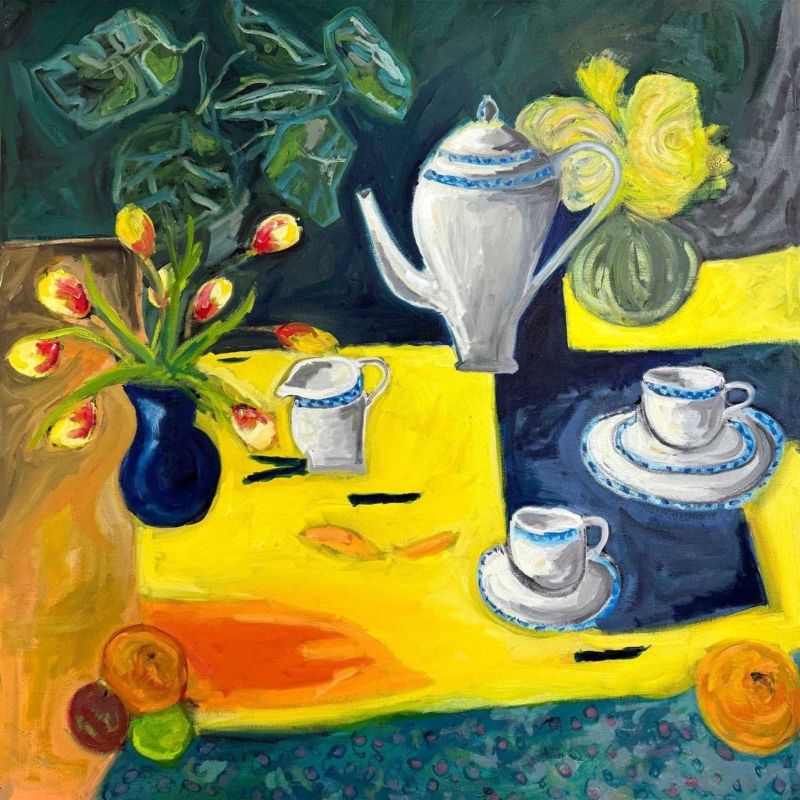
music wall art should answer a specific need in the room or for the buyer. Take Five is a useful example because its rhythmic title and square format can give a listening space identity without covering the walls in sleeve reproductions or printed lyrics.
Arrange music wall art around listening, not equipment
Set the speakers and main chair first. Good listening positions rarely match the geometric centre of a wall, so artwork should respond to the complete arrangement. Keep it clear of speaker tops, cable routes and shelving that may grow as a collection changes.
Compact 265 mm square
Use it near a reading chair, headphone station or short record cabinet where it can be seen closely.
Flexible 500 mm square
Test it above a medium console or between equipment zones, including the full framed outline.
Bold 800 mm square
Reserve it for a broad wall with enough distance and no conflict with tall speakers or acoustic panels.
Let records and instruments remain useful objects rather than turning them into a forced backdrop. One artwork with a suggestive title creates a looser connection to music. It leaves room for changing tastes and does not make the space look like a themed bar.
- Check reflections under evening listening light.
- Keep turntable lids and cabinet doors clear of the frame.
- Use one size template at a time.
- Leave visual separation from acoustic treatment.
Give an energetic square a quiet boundary
A music room already contains strong shapes and detailed equipment. Controlled Giclée output and a precisely made frame give Take Five its own visual boundary. First 4 Frames completes the work in-house, so scale and presentation can be considered together.
For recordings, stories and wider context from Britain’s jazz heritage, explore the National Jazz Archive. You can also browse the David Short collection or see the exact framed product.
Music wall art should support the pleasure of the room rather than compete with it. Take Five can set a visual rhythm while measured placement keeps the listening chair, speakers and record collection at the centre of use.