That sweeping, empty wall alongside your staircase holds so much promise, yet it can be a source of genuine hesitation. The fear of a misplaced nail, the puzzle of achieving perfect balance on an incline, or the challenge of curating a collection that feels both personal and polished can often lead to creative paralysis. But what if you could transform that daunting space into a spectacular ascent of art and memories? This professional guide is designed to show you exactly how to build a gallery wall on a staircase with the confidence and flair of a seasoned curator.
Drawing on our passion for premium craftsmanship and fine art, we will walk you through the entire creative process. From selecting beautiful, professionally framed pieces from our First4Frames Gallery to mastering a layout that works with sloped walls, we’ll demystify the angles and measurements. By the end, you’ll have all the expertise you need to create a perfectly balanced, bespoke gallery that not only provides a ‘wow-factor’ entrance but tells your unique story with every step you take.
Key Takeaways
Learn the professional ‘stair line’ rule to measure and plan your layout, ensuring every piece is hung at the perfect eye-level for a flawless ascent.
Discover how to curate a cohesive, gallery-quality collection by building a theme around spectacular Scottish artists, available from the First4Frames Gallery.
Master our step-by-step instructions on how to build a gallery wall on a staircase, using simple paper templates to design your layout without making a single mistake.
Understand how to achieve a premium finish with bespoke framing, and see how our simple, hassle-free process makes it easy to bring your vision to life.
Why the Staircase is the Ultimate Canvas for Your Art Collection
Often overlooked, the staircase is one of the most dynamic, high-traffic areas in any home. It’s more than just a functional space; it’s a transitional gallery that connects floors and sets the decorative tone. As interior trends for 2026 lean towards ‘maximalist’ hallways and curated ascents, there has never been a better time to transform this blank canvas. Learning how to build a gallery wall on a staircase allows you to infuse your home with personality, creating a spectacular visual journey from the moment someone steps inside.
For a visual guide on getting started, this video offers some excellent practical tips:
Embarking on this project is made simple with the First4Frames Gallery, your one-stop-shop for beautiful fine art and bespoke framing. We believe the perfect frame acts as a ‘bridge’ between your chosen artwork and your home’s decor. It’s an essential element that harmonises the piece with its surroundings, ensuring it complements your existing interior design principles and creates a cohesive, professionally curated look.
First4Frames: Over 20 Years of Craftsmanship
Based in Falkirk and serving the entire UK, First4Frames brings over two decades of passion and expertise to every project. Our excellent customer ratings reflect our commitment to a hassle-free, speedy service and the use of only premium materials. This dedication is crucial for preserving the spectacular quality of our Giclée prints. Professional framing not only enhances the artwork’s beauty but also protects your investment, ensuring its vibrant colours will not fade over time.
The Emotional Connection of a Staircase Gallery
A well-curated staircase gallery does more than just decorate a wall; it tells a story. As you move between floors, the art ‘pulls you into the picture’, creating an immersive journey of discovery for family and guests. This powerful emotional connection can also be used to stage and finish commercial or residential properties, adding a layer of sophistication and narrative that makes a space truly memorable. It transforms a simple ascent into a meaningful experience.
The ‘Stair Line’ Rule: Measuring and Planning Your Layout
A staircase isn’t a flat wall; it’s a journey. This dynamic space requires a different approach to design, where careful planning is the secret to a spectacular result. This is where we move from inspiration to action, using a simple professional rule to ensure your gallery flows beautifully with the architecture of your home. The key to understanding how to build a gallery wall on a staircase is to work with the angle, not against it.
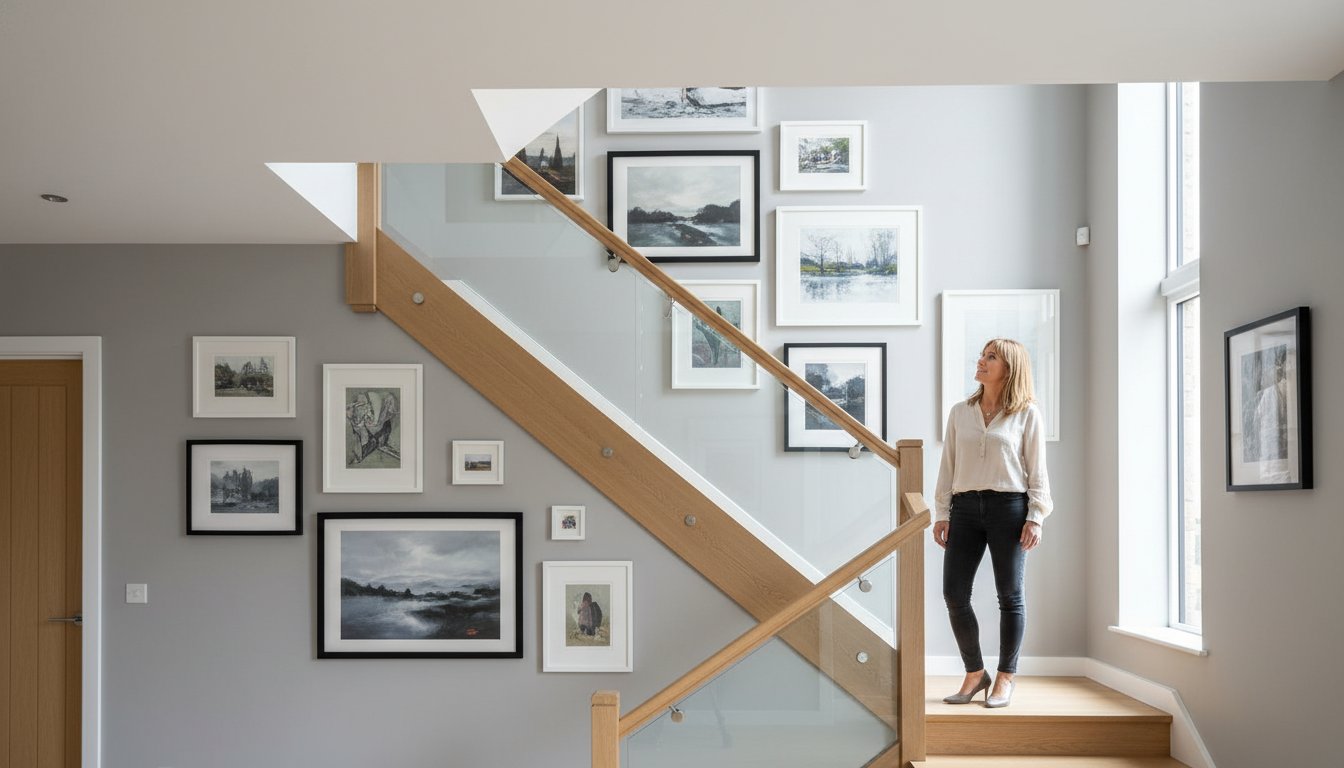
Forget a standard horizontal eye-level. On stairs, your viewpoint is constantly changing. The professional approach is to create an ‘imaginary stair line’-a diagonal guide that mirrors the ascent of your steps. A trusted rule of thumb is to measure 145cm to 155cm up from the nose of each step. The centre of your artwork, or the central line of your entire arrangement, should follow this guide. This creates a display that is perfectly viewed whether you are going up or down.
Consider the natural pause points, like a landing or a turn in the stairs. These are perfect spots for a larger, statement piece from our gallery to act as a focal point. Also, be mindful of high-traffic ‘knock zones’ and handrails. Ensure your frames are placed high enough to avoid being knocked by shoulders or bags-a practical consideration for preserving your beautiful art and our premium frames.
Measuring for Success
To find your ‘stair line’, use a pencil to lightly mark the wall at 150cm above every third or fourth step, then connect these dots with painter’s tape. Your largest pieces should anchor the display, positioned centrally along this line. When ordering our bespoke picture frames, measure your artwork precisely. Remember to account for the mount and the width of the frame profile itself to ensure a perfect, professional fit. For a more detailed walkthrough, many design guides on how to create a gallery wall offer excellent visual tips for this stage.
Visualizing the Ascent
Before a single nail is hammered, map out your entire vision. Use paper cutouts or painter’s tape to represent each frame, allowing you to experiment with spacing and composition. This step is crucial for creating a flawless layout without regret. Consider the visual weight; placing darker or larger frames towards the bottom can create a grounded feel, but a balanced mix often feels more dynamic and personal.
We believe in making the process a pleasure, which is why we break it down into three simple steps:
Browse: Embark on a journey of discovery through the First4Frames gallery to select fine art prints that tell your story.
Measure: Apply the ‘stair line’ rule and use paper templates to perfect your layout on the wall.
Order: With your plan in place, confidently order your prints and the premium, bespoke frames that will bring them to life.
Curating Your Collection: Featuring Scottish Artists and Bespoke Frames
A random assortment of pictures can quickly look cluttered. A curated theme, however, transforms your staircase into a professional exhibition. Choosing a cohesive style or artist is a fundamental step when you’re learning how to build a gallery wall on a staircase. Our online gallery provides the perfect starting point, featuring spectacular works from renowned Scottish artists that bring a sense of place and purpose to your collection.
Bring a vibrant splash of the Scottish Highlands to your hallway with the electrifying colours of John Lowrie Morrison (Jolomo), whose landscapes are full of life and energy. For a more sophisticated and cinematic mood, consider the iconic appeal of Jack Vettriano prints. His evocative, narrative scenes add a layer of mystery and elegance to your daily ascent.
The true magic happens when you mix these professional prints with your own personal photographs. A stunning print of a Scottish loch can sit beautifully next to a cherished family holiday photo. For more creative inspiration on blending different pieces, you can find a wealth of staircase gallery wall ideas that explore this very concept. This personal touch is key to creating a gallery that truly reflects you.
Imagine capturing the vibrant energy from a unique trip; for example, you could explore Reykjavik Pub Crawl and turn those memories into captivating photos that tell a story of fun and adventure right in your home.
The Power of Giclée Prints
Giclée prints are far more than just copies; they are museum-quality reproductions perfect for home galleries. Using archival inks on premium fine art paper, this process creates a print that is virtually identical to the original and is guaranteed not to fade over time. When you select a piece from our gallery, you are investing in lasting quality, which can then be perfectly protected with our bespoke framing service, a testament to our excellent customer ratings.
Selecting the Right Frame Style
The frame is the essential bridge connecting your artwork to your home’s decor. Our bespoke picture framing service lets you choose the perfect finish-from warm woods that echo your banister to sleek metals for a modern touch. Using a mount (the border inside the frame) also creates valuable breathing space, giving each piece distinction while maintaining a cohesive look. This attention to detail is central to how to build a gallery wall on a staircase with a flawless, professional finish.
Step-by-Step Execution: From Paper Templates to the Final Hammer
With your collection curated and your layout planned, it’s time to bring your vision to life. This is the most rewarding stage, where careful preparation transforms into a spectacular, personal feature in your home. The key to a flawless installation is precision and patience, ensuring every piece hangs perfectly and securely.
The Template Method
Before you even think about reaching for a hammer, embrace the power of paper. Trace each of your frames onto brown paper or newspaper and cut them out. Using painter’s tape, arrange these templates on the wall, starting from the bottom step and working your way up. This risk-free approach is fundamental to learning how to build a gallery wall on a staircase, as it allows you to visualise the flow and make adjustments without creating unnecessary holes. Pay close attention to spacing-aim for a consistent 5-8cm gap between each frame to create a cohesive, balanced look.
Hanging and Safety
Working on stairs requires a focus on safety. Always use a sturdy, appropriate ladder, ideally with a levelling tool, and have someone assist you. When it comes to hanging, the weight and quality of your frames dictate the hardware. The premium, bespoke frames that protect beautiful fine art prints from our gallery require more than a simple nail; they demand professional-grade hooks to ensure they remain secure for years to come.
This is where the First4Frames ‘one-stop-shop’ advantage truly shines. When you select a stunning piece from artists like Dan Hobday or Bella Pieroni, it arrives not just as a print, but as a perfectly, professionally framed work of art, complete with the correct high-quality hanging hardware. This removes all the guesswork, allowing you to hang with confidence. For final adjustments, use a spirit level on top of each frame and a small piece of Blu Tack behind the bottom corners to prevent shifting and keep everything perfectly aligned.
Elevating Your Display with First4Frames Bespoke Services
You’ve planned your layout and chosen your pieces; now it’s time for the final, transformative step. A professionally crafted frame is the heavy lifter in your room’s relationship with art-it’s the bridge between your décor and the image, creating a spectacular, cohesive finish. At First4Frames, we make this process seamless with our three core services: our Gallery featuring curated Scottish art, our bespoke Framing service for your own treasures, and our convenient Print-and-Frame option.
Bringing your vision to life is a simple, hassle-free experience with our trusted three-step process. First, browse our extensive collection of frames and art. Second, customise your selection with the perfect mount and finish. Finally, place your order and let our expert artisans handle the rest, delivering a gallery-ready piece directly to your door.
Custom Framing for Your Own Treasures
The most personal gallery walls feature your own memories-photographs, heirlooms, or children’s drawings. Our bespoke framing service is designed to preserve these irreplaceable items. We source only the finest materials, from conservation-grade mounts to premium wood mouldings, ensuring your art is protected and beautifully presented. Unlike a standard shop-bought frame, a bespoke piece is a work of craftsmanship, built to perfectly complement your art and last a lifetime.
Commercial and Large-Scale Projects
For property developers, interior designers, and estate agents, a well-curated gallery wall can transform a space from a house into a home. We offer expert curation services, helping you finish commercial and residential properties with high-quality Scottish art that adds character and value. If you’re looking for guidance on how to build a gallery wall on a staircase for a show home or a large-scale project, contact us for a bespoke quote and discover how we can help you make a lasting impression.
For designers looking at other high-impact updates, revitalizing kitchen and bathroom cabinetry is another key strategy. Even if you’re not in Colorado, the work of specialists like Cabinet Painting Denver provides a great example of how this can elevate a property’s appeal.
Embark on a journey of artistic discovery with a team passionate about quality and craftsmanship. We invite you to visit our Falkirk gallery to see our work first-hand or browse our curated collections online to find the perfect piece for your home.
Bring Your Staircase Gallery to Life
You are now equipped with the professional techniques to transform your home’s most-travelled path into a stunning visual journey. By mastering the crucial ‘stair line’ rule for a flawless layout and using paper templates for precision, you have the blueprint for success. Curating a personal collection, perhaps with beautiful pieces from Scottish artists, is the final creative touch that makes the space uniquely yours.
This guide has shown that knowing how to build a gallery wall on a staircase is about more than just hanging frames-it’s about telling your story. At First4Frames, we live and breathe this passion. With over 20 years of bespoke framing expertise, backed by excellent customer ratings on Google and Facebook, we are specialists in providing premium, professionally framed art from iconic Scottish artists like Jolomo and Vettriano.
A good rule of thumb is to hang your artwork so the centre of each piece is approximately 150-160cm (about 5 feet) vertically up from the stair tread directly below it. This ensures the art remains at a comfortable eye level as you move up or down the stairs. For a large statement piece from our gallery on a landing, centre it at a standard eye level of 145cm from the floor for maximum impact.
Should all the frames on a staircase gallery wall match?
Not at all! A mix of different frame styles, colours, and materials can create a wonderfully personal and eclectic look. The key is to find a unifying element, such as a consistent colour within the artwork or a common mat colour, to tie everything together. Alternatively, a matched set of frames, created with our bespoke framing service, offers a more formal, cohesive, and beautifully polished aesthetic for your collection.
Where do I start hanging a gallery wall on a staircase?
Always begin with your largest or most important piece of art, often called the “anchor piece.” This might be a spectacular print from the First4Frames gallery that you want to be the focal point. Place this piece in a central location, perhaps over a landing or in the middle of the longest wall section. From there, you can build the rest of your arrangement outwards, balancing smaller frames around it to create a harmonious flow.
How do I calculate the angle of the stairs for my gallery wall?
You don’t need complex maths to find the perfect angle. The simplest method is to use a long piece of string and some painter’s tape. Secure the string at the bottom of your wall and stretch it to the top, running it parallel to the slope of your banister or the nosing of the steps. This string creates the ideal guideline. You can then align the centres of your frames along this line for a professional, stepped layout.
Can I mix large and small frames on a staircase?
Absolutely! A dynamic gallery wall thrives on variety. Mixing large statement pieces with smaller, more intimate frames creates visual interest and rhythm, preventing the display from looking flat or monotonous. Imagine pairing a large, vibrant artwork from our gallery with smaller family photos you’ve had framed through our print-and-frame service. This contrast adds depth and tells a richer, more personal story on your walls, which is essential when learning how to build a gallery wall on a staircase.
How do I prevent frames from being knocked off the wall in a narrow staircase?
In a high-traffic area like a narrow staircase, security is paramount. We recommend using two D-rings and hooks for each frame rather than a single hook, as this prevents it from shifting or tilting. For extra stability, place a small amount of museum putty or a reusable adhesive tack at the bottom corners of the frame. This ensures your beautiful, professionally framed pieces stay securely and perfectly in place, protecting your investment.
What is the best type of glass for staircase art to avoid glare?
If your staircase receives a lot of natural light or is brightly lit, anti-reflective glass is a worthwhile investment. This premium glazing minimises reflections and glare, ensuring the artwork’s true colours and intricate details are perfectly visible from any angle. At First 4 Frames, our bespoke framing service offers specialist glazing options, because we believe the quality of the glass is just as important as the craftsmanship of the frame itself.
Is it better to buy ready-to-hang art or get custom framing for a gallery wall?
This truly depends on your creative vision. Our ready-to-hang art from the First4Frames gallery offers a convenient, expertly curated solution where the frame is already perfectly matched to the artwork. Custom framing, on the other hand, gives you complete control to create a truly bespoke look for your own photos or prints. Our print-and-frame service provides the best of both, combining beautiful art with a custom frame in one simple, hassle-free process.
You have a beautiful piece of art, a stretched canvas that deserves a place of honour on your wall. Yet that final, crucial step-framing-can feel daunting. The fear of damaging your painting, the confusing terminology of floater frames and stretcher bars, and the big question of DIY versus professional can leave your masterpiece leaning against a wall instead of being proudly displayed. We believe that learning how to frame a canvas painting should be an exciting and rewarding part of your artistic journey, not a source of stress.
This complete guide is designed to give you clarity and confidence. We’ll walk you through simple and satisfying DIY methods and help you understand when the premium craftsmanship of a professional is the right choice. You will discover the best frame styles to complement your art, acting as the perfect bridge between the canvas and your home décor. Let’s embark on this final step together and ensure your artwork is protected, enhanced, and ready to be admired for years to come.
Key Takeaways
The first step to a perfectly framed picture is identifying your canvas type to determine the right framing approach.
Explore the simple steps for how to frame a canvas painting at home, and learn which types of art are best suited for a DIY project.
Understand when to invest in a bespoke framer to ensure expert preservation and a flawless finish for valuable or sentimental art.
Discover how to choose the perfect frame style that enhances your artwork and acts as a beautiful bridge to your room’s decor.
First Steps: Understanding Your Canvas and Frame Options
Embarking on the journey of framing your art is a rewarding process that honours the piece and prepares it for display. The first, most crucial step in learning how to frame a canvas painting is to understand the artwork itself. The type of canvas you have dictates the entire approach, from the style of frame you choose to the hardware you’ll need. A beautiful frame acts as the perfect bridge between your art and your room’s décor, so getting these foundational details right is key to a spectacular, professional finish.
To help you get started, this video provides an excellent visual guide on preparing a canvas for framing:
Stretched Canvas vs. Canvas Board: What’s the Difference?
Most original paintings are created on stretched canvas, which is canvas fabric stretched over a wooden support frame called stretcher bars. This gives the artwork depth and dimension. A canvas board, by contrast, is a thin, rigid panel, making it flatter and often easier to fit into standard frames. It is vital to identify which you have, as the framing techniques are very different. Crucially, never cut a finished painting off its stretcher bars to make it fit a frame; this will ruin the artwork’s tension and value.
To Glass or Not to Glass? The Great Canvas Debate
Unlike paper prints, oil and acrylic paintings are rarely framed behind glass. The paint itself is durable, and artists typically apply a layer of varnish to protect the surface from dust, UV light, and environmental damage. Glass can introduce unwanted glare and, more seriously, trap moisture between its surface and the canvas, which can lead to mould and irreparable damage. Exceptions are sometimes made for delicate media like pastels on canvas or for pieces requiring extra protection in high-traffic areas.
Key Frame Styles for Canvas Paintings
The modern picture frame offers a beautiful array of styles designed specifically for canvas art. Your choice will dramatically influence the final presentation. Here are the most popular options:
Floater Frames: This contemporary, gallery-style frame creates the illusion that your canvas is “floating.” The artwork is mounted from behind, leaving a small, elegant gap between the canvas edge and the inside of the frame, showcasing the entire painting, including the sides.
Traditional Frames: A classic choice where the canvas is set into the frame from the back, much like a standard photograph. The frame’s lip (or rabbet) covers the very outer edge of the canvas, creating a timeless and defined border.
Tray Frames: Also known as cap frames, these are a simple and clean option where the canvas sits snugly inside a “tray.” The front of the canvas is often flush with the frame’s edge, offering a minimalist finish that doesn’t distract from the art.
The DIY Approach: How to Frame a Canvas at Home
Framing a canvas yourself can be an incredibly satisfying project, adding a personal touch to your finished piece. This approach is best suited for inexpensive prints, personal art projects, or practice pieces where the stakes are low. For those keen to learn how to frame a canvas painting at home, we will guide you through the simplest and most common method: using a ready-made, open-back frame. While building a bespoke frame from scratch is a beautiful craft, it requires advanced woodworking skills and specialised tools, putting it beyond the scope of a simple home project.
Essential Tools and Materials You’ll Need
Before you begin, gather your supplies to ensure a smooth process. Working on a soft, clean surface, like a blanket-covered table, is essential to protect your artwork and the frame from scratches. Here’s what you’ll need:
Measuring tape
Pencil
Screwdriver (usually a small Phillips head)
Offset clips (also known as Z-clips)
Two D-rings
Picture-hanging wire
Offset clips are the key to this process. These small, Z-shaped metal brackets are designed to bridge the gap between the back of the canvas stretcher bar and the frame’s recess, holding your art securely in place. They come in various depths, so be sure to choose a size that matches the depth of your canvas.
Step-by-Step: Securing Your Canvas in a Frame
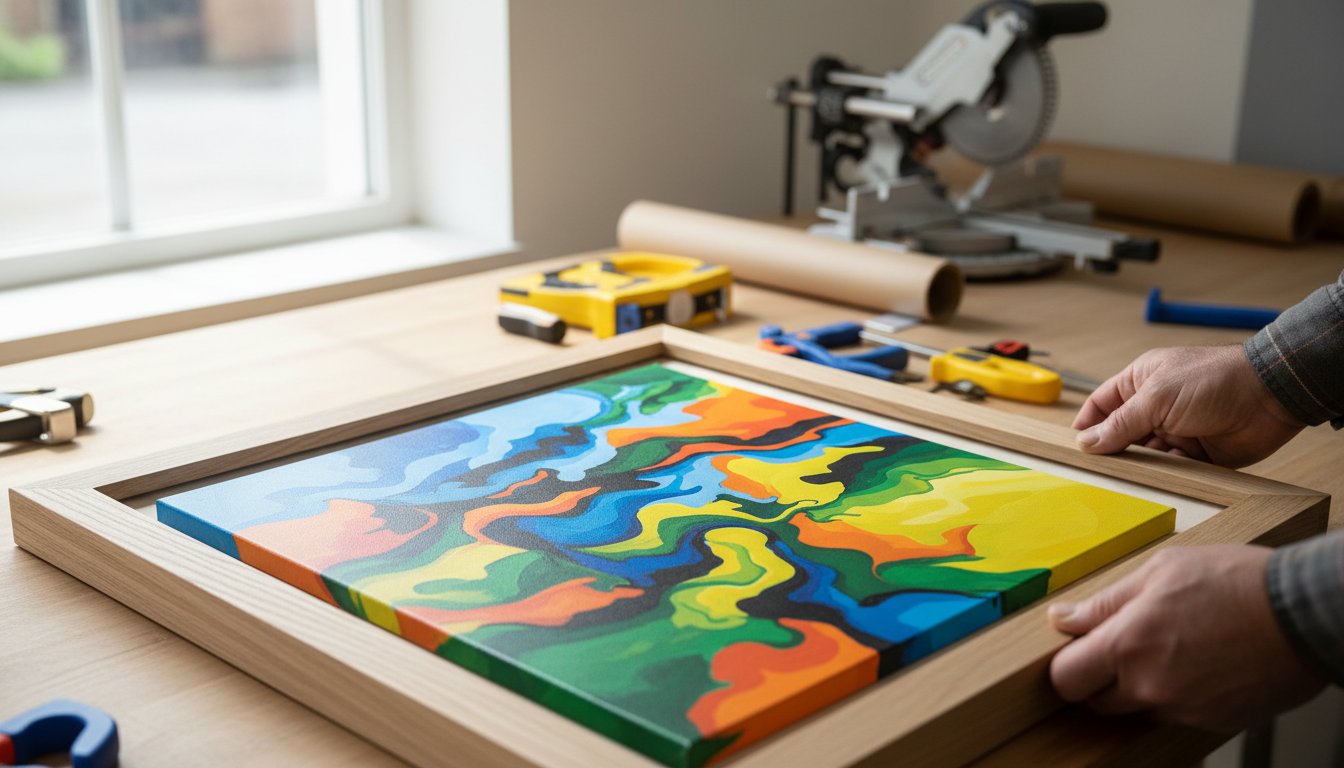
With your tools ready, you can begin. Step one: Measure your canvas. Carefully measure the height, width, and, most importantly, the depth of your canvas. These dimensions are critical for selecting the right frame. Step two: Purchase your frame. Look for an open-back frame that is slightly larger than your canvas, allowing for a small gap (around 5mm) on all sides. Selecting a style that complements your artwork is crucial; for expert guidance, this guide on How to Choose the Best Frame is an excellent resource. Step three: Position and secure the canvas. Gently place your artwork face-down into the frame. Centre it carefully and use offset clips to attach the stretcher bars to the frame, screwing them in at regular intervals. Step four: Attach hanging hardware. Measure about one-third of the way down from the top of the frame on both sides, and screw in your D-rings. Thread the picture wire between them, leaving a little slack, and twist to secure.
The Risks of DIY: When to Think Twice
While the DIY method for how to frame a canvas painting is rewarding, it’s not without risks. A slip of the screwdriver can easily scratch the frame or, worse, damage the artwork. Incorrect measurements can result in a poorly fitting canvas that looks unprofessional and may even fall out. For any artwork that is valuable, sentimental, or irreplaceable, we always recommend seeking a professional framer. Professionals use conservation-grade materials and techniques that protect your art from long-term damage caused by dust, humidity, and light-a level of protection that is difficult to achieve at home.
The Professional Touch: Why Choose a Bespoke Framer
While learning how to frame a canvas painting yourself can be a rewarding project, certain pieces of art demand a level of precision and care that only a professional can provide. For original artwork, valuable prints, or pieces with deep sentimental value, entrusting them to a bespoke framer is an investment in their beauty and longevity. A custom frame is more than a border; it’s a bridge between your art and your space, built with premium materials and unparalleled craftsmanship.
Expert Guidance and Flawless Craftsmanship
A professional framer brings years of experience in both art handling and interior design. They act as your personal consultant, guiding you through an extensive collection of mouldings, mounts, and finishes to find the perfect style that enhances your painting without overpowering it. Using precision tools, they ensure every cut is clean and every join is seamless, delivering a gallery-quality finish that is simply unattainable with DIY methods.
Protecting Your Investment with Conservation Framing
A beautiful frame should also be a protective one. Professional framers use conservation-grade techniques to shield your art from damage over time. This is crucial for preserving both the financial and sentimental value of your investment. Key conservation methods include:
This focus on professional-grade protection isn’t unique to the art world; it’s a common practice for preserving any high-value item. For example, car enthusiasts often seek out specialists like Surrey Detailing to apply protective coatings that safeguard their vehicle’s finish and long-term value.
Acid-free materials: Using acid-free mount boards and backing prevents the yellowing and decay that can be caused by standard materials.
UV-protective glazing: Specialist glass or acrylic can be used to filter out up to 99% of harmful ultraviolet rays, preventing colours from fading.
Proper sealing: The frame is expertly sealed to protect the canvas from dust, humidity changes, and even insects.
The journey to a perfectly framed piece is a collaborative and enjoyable experience. It begins with a consultation where you discuss your artwork, your personal style, and the decor of the room where it will hang. An expert then carefully measures your canvas to ensure a flawless fit. You’ll explore a curated selection of beautiful frame mouldings before the framer begins the meticulous work of building a custom frame, tailored exactly to your artwork.
Ready to give your canvas the spectacular finish it deserves? Let our experts help you find the perfect frame. Explore our bespoke framing service.
Choosing the Perfect Frame Style to Complement Your Artwork
Once you’ve mastered the technical steps, the final, creative stage of learning how to frame a canvas painting is selecting a style that elevates both the art and your space. Think of the frame as the perfect bridge between your painting and your room’s decor. A truly great frame enhances the artwork, drawing the eye inward without ever overpowering the piece itself. The key is to consider the painting’s own character-is it modern, traditional, or abstract?-and harmonise it with the colours and textures of your home.
Floater Frames: The Modern Gallery Look
For a clean, contemporary finish, the floater frame is a spectacular choice. This style creates the illusion that your canvas is ‘floating’ within the frame, with a subtle shadow gap between the edge of the artwork and the frame profile. It is the perfect partner for modern and abstract paintings, as it allows the entire piece, including the painted sides of the canvas, to remain visible. This minimalist approach honours the artwork in its complete form, offering a sharp, professional gallery aesthetic.
Traditional Frames: Timeless Elegance
Traditional frames offer a sense of timeless elegance and are defined by a ‘rabbet’-a small lip that neatly covers the outer edge of the canvas. The possibilities are vast, from simple, warm wood profiles to ornate, gilded designs that echo classical craftsmanship. These frames are ideally suited for landscapes, portraits, and traditional still life paintings. When choosing, consider the era and mood of the artwork to create a pairing that feels both authentic and beautiful.
Matching the Frame to Your Interior Design
The final consideration is how the frame will integrate into your home. A beautiful frame choice connects the art to its surroundings, creating a cohesive and polished look. Here are a few guiding principles:
For a minimalist or Scandinavian interior, a simple black, white, or natural wood frame with clean lines maintains a sense of calm and order.
In a traditional or country-style home, a more ornate or dark wood frame can add warmth and character, complementing other antique or classic pieces.
Consider matching the frame’s colour or material to other accent elements in your room, such as metal light fittings, wooden furniture, or a colour from a patterned cushion.
Don’t be afraid to create a bold contrast. A sleek, modern frame can provide a stunning update for a traditional painting, just as an ornate frame can be an unexpected, dramatic touch for a piece of abstract art.
For inspiration on how different bespoke frame styles can transform a piece of art, we invite you to explore our online gallery.
The Perfect Frame: Your Artwork’s Final Flourish
Whether you choose the hands-on satisfaction of a DIY project or the unparalleled expertise of a professional, the perfect frame is what transforms a canvas into a true masterpiece for your wall. As we’ve explored, knowing how to frame a canvas painting is about more than just the mechanics; it’s an art form in itself, requiring a careful balance of style, colour, and preservation to truly honour the piece within.
For treasured artworks that deserve a flawless, lasting presentation, our bespoke service provides the ultimate solution. With over 20 years of professional framing experience, we use only the finest conservation-grade materials to protect and enhance your art. Trusted by artists and collectors across Scotland and the UK, our passionate artisans are dedicated to creating the perfect frame for your piece. Have a painting you need framed? Get a bespoke framing quote from our experts today and let’s create something beautiful together.
Frequently Asked Questions
Can you put a stretched canvas into a standard picture frame?
Generally, a standard picture frame is not suitable for a stretched canvas. These frames have a shallow recess (or rabbet) designed for a thin print, mount, and backing board. A canvas on stretcher bars is much deeper and simply won’t fit. You need a purpose-built canvas frame or a floater frame, both of which are specifically designed to accommodate the depth of a canvas and provide a beautiful, professional finish without damaging the artwork.
How much does it cost to have a canvas painting professionally framed?
The cost for professional canvas framing in the UK varies based on the artwork’s size and your choice of frame. For a small to medium-sized painting, you can typically expect to pay between £60 and £150. For larger pieces or bespoke frames crafted from premium woods, the cost could be £200 or more. The complexity of the frame style, such as a floater frame, and the finish you select will also influence the final price for this expert service.
Do you need to put glass over an oil or acrylic painting on canvas?
It is not recommended to put glass over oil or acrylic paintings. These paints are cured to be durable and are typically protected with a layer of varnish, which allows the painting to “breathe” with changes in humidity. Placing glass over the surface can trap moisture, potentially leading to damage, or cause the paint to stick to the glass. It also creates glare, which detracts from the rich texture and spectacular colours of the original artwork.
What is a floater frame and why is it used for canvases?
A floater frame is a modern style where the canvas is set into the frame with a small, uniform gap, creating the illusion that the artwork is floating within it. This design is perfect for canvases because it doesn’t cover the front edge of the painting. It allows the entire piece, including the painted sides, to be visible. This offers a clean, contemporary, and gallery-quality presentation that truly honours the artwork and the artist’s full intention.
How do you attach a canvas painting to a frame securely?
A key step in knowing how to frame a canvas painting is using the correct hardware for a secure fit. For a typical canvas frame, you use offset clips. These are small, Z-shaped brackets that screw into the back of the frame and overlap onto the stretcher bars, holding the canvas firmly. For a floater frame, the canvas is usually attached from the rear, with screws passing through the frame’s back support directly into the wooden stretcher bars.
Should the frame be wider or thinner than the canvas?
The choice between a wider or thinner frame is a matter of aesthetic balance and personal taste. A wide, substantial frame can add presence and a traditional feel, making a bold statement that complements the artwork. In contrast, a thin, minimalist frame provides a modern, subtle border that keeps the focus entirely on the art itself. Consider the style of the painting and your room’s decor to find the perfect bridge between the art and its new home.
From the vibrant splash of a first finger painting to a painstakingly drawn family portrait, your child’s creativity is a spectacular thing. But as the pile of paper grows, so can the clutter-and the quiet guilt of not knowing what to do with it all. What if you could celebrate every creation without turning your home into a classroom? The solution lies in finding beautiful framing children’s artwork ideas that transform these precious masterpieces into cherished parts of your home’s story, preserving their magic for years to come.
In this guide, we’ll help you embark on that journey. We are sharing nine inspiring and practical ways to frame and display your child’s art, turning fridge-door displays into stunning, bespoke décor. From simple, budget-friendly DIY projects to premium, professionally framed options that create a true gallery wall, you’ll discover the perfect method to honour your little artist’s work, make them feel immensely proud, and seamlessly integrate their creativity into your stylish home.
Why Framing Transforms Your Child’s Art (And Your Home)
Every parent knows the colourful chaos of the refrigerator door-a vibrant, ever-changing gallery of drawings, paintings, and school projects held up by a fleet of magnets. While charming, this temporary display can feel cluttered. Choosing to frame your child’s masterpieces is one of the most impactful framing children’s artwork ideas because it does more than just decorate a wall; it celebrates the artist and preserves a precious moment in time.
For a little inspiration on how framing can elevate your child’s creations, take a look at this lovely video:
From Refrigerator Art to a Lasting Legacy
There is a profound psychological difference between a magnet and a frame. A magnet holds a drawing in place; a frame gives it a place of honour. This simple act sends a powerful message to your child: ‘Your work is important, and we value your creativity.’ It elevates a simple piece of paper into a work of art, showing them you take their creative expression seriously and are proud to make it a permanent part of your home.
Building Confidence Through Curation
Involving your child in choosing which pieces to frame creates a wonderful sense of pride and ownership. When they see their drawing professionally mounted and displayed on the wall, it validates their creative hobby and boosts their self-esteem immeasurably. This process turns their artistic exploration into a celebrated family activity, creating positive memories around their passion and encouraging them to continue creating with confidence.
Integrating Kids’ Art Seamlessly into Your Decor
A common concern is that children’s art will create a cluttered, ‘classroom’ feel. This is where the magic of a bespoke frame comes in. A well-chosen frame provides structure and definition, acting as a bridge between the playful energy of the artwork and your sophisticated home decor. By understanding what is a picture frame and its function, you can select materials and colours that tie the vibrant hues of their art directly into your room’s palette, creating a look that is both personal and polished.
9 Creative Ideas for Framing and Displaying Children’s Artwork
That ever-growing pile of paintings and drawings is a testament to your child’s boundless imagination. But how do you display it without overwhelming your home? The key is to treat their creations with the care of fine art. From a single, spectacular piece to a dynamic gallery wall, here are some of our favourite framing children’s artwork ideas to help you celebrate their creative journey and turn those precious papers into beautiful, lasting memories.
1. The Single Statement Piece
For a truly powerful impact, select one masterpiece that holds special significance-perhaps their first family portrait or a painting you both adore. By placing it in a premium, oversized mount within a quality frame, you elevate the artwork, giving it the importance it deserves. This approach turns a simple drawing into a treasured heirloom and a stunning focal point for any room.
2. The Cohesive Gallery Wall
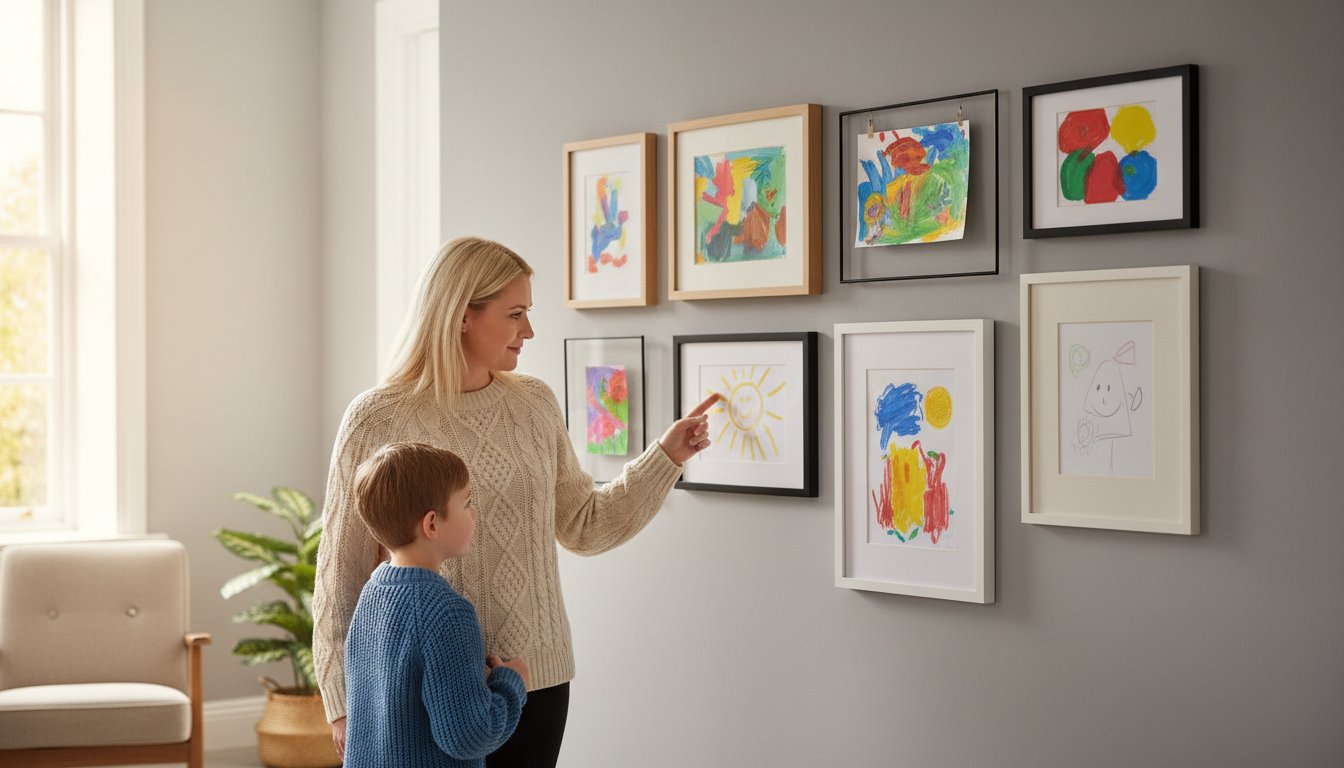
A gallery wall is a classic way to showcase a collection of your child’s art. The secret to a polished, unified look is consistency. By using identical frames and mounts, you create a harmonious display that lets the artwork shine. You can arrange the frames in a neat, symmetrical grid for a formal feel or create a more playful, asymmetrical layout. For more inspiration, Forbes offers some excellent tips on creative ways to arrange artwork, helping you design the perfect composition for your space.
3. The Rotational Art Gallery
If you have a prolific young artist at home, a rotational gallery is the perfect solution. Use front-opening frames that allow you to store multiple pieces and easily swap the front-facing one. This keeps your display fresh and exciting, allowing you to celebrate their latest creations without clutter. It’s a wonderful way to show your child that you value their ongoing artistic development.
4. The Themed Collection
Add a thoughtful, curated touch to your display by grouping artworks together by a common element. You could create a collection based on:
A specific theme: A series of animal drawings or outer space paintings.
A colour palette: Group all their blue-toned masterpieces together.
An artistic ‘phase’: Celebrate their “dinosaur period” or “rainbow phase” in one spectacular display.
This approach tells a beautiful story about their interests and creative evolution.
5. Beyond Paper: The 3D Box Frame
Some of the most cherished creations aren’t flat. From clay sculptures and pasta necklaces to tiny handprints in plaster, these 3D objects deserve a special place. A box frame, or shadow box, is the perfect way to protect and display these delicate items. The depth of the frame turns memorable crafts into beautifully preserved objects of art that you can cherish for years to come. Have a special object to frame? Explore our bespoke box framing service.
Another wonderful way to preserve and share their art is to take it beyond the wall entirely. By digitising a favourite drawing, you can have it printed on items like t-shirts, hoodies, or tote bags. This turns their creation into a wearable masterpiece or a unique gift for family members. For professional-quality results, specialist printers like RAW Merch can transform their art into custom apparel that celebrates their talent in a fun, practical way.
Choosing the Perfect Frame: A Simple Guide for Parents
Choosing a frame can feel like the hardest part, but it’s where the real magic happens. A well-chosen frame acts as a bridge between your child’s masterpiece and your home décor, transforming a simple drawing into a treasured display. This simple guide will demystify the key components, giving you the confidence to explore different framing children’s artwork ideas and find the perfect match for their creations.
Frame Materials & Colours: Wood, Metal, and More
The frame itself sets the overall tone. While the options are endless, a few simple guidelines can help you make a spectacular choice. The goal is to complement the art, not overpower it. Consider these simple rules of thumb:
Classic Black or White: These are your go-to options. They create a clean, gallery-like feel that allows the vibrant colours of your child’s art to take centre stage.
Natural Wood: A beautiful oak or pine frame adds warmth and a softer, more organic touch, perfect for nature scenes or family portraits drawn in crayon.
A Pop of Colour: For a playful look, choose a frame that picks out a secondary colour from the artwork. A bright yellow frame for a drawing of a sunflower can look simply perfect.
The Magic of Mounts (Matting)
A mount (the card border inside the frame) is a small detail that delivers a huge impact. It’s not just for decoration; it provides a crucial breathing space between the artwork and the glass, preventing potential damage from condensation. A crisp, white mount adds a professional finish and can make a small A5 drawing feel much more significant and intentional on your wall.
Choosing the Right Glass (Glazing)
The final piece of the puzzle is the glazing. While it might seem like a minor detail, the right glass protects and enhances the view. For most situations where you plan to rotate pieces regularly, standard glass is perfectly suitable. However, for a truly special piece you want to preserve for decades, consider upgrading to a premium UV-protective glass to prevent colours from fading. In a bright, sun-lit room, anti-reflective glass is a fantastic option to minimise glare and keep the focus on the art.
With these elements in mind, you can confidently select a frame that honours your child’s creativity. Whether you’re creating a DIY gallery wall or opting for a bespoke, professionally framed piece, these small choices will make all the difference. To see how these components come together, why not browse our online gallery for inspiration?
DIY vs. Professional Framing: When to Choose Each
Your home is likely filled with a wonderful, ever-growing collection of your child’s creations. While every piece is precious, not every doodle needs a museum-quality frame. Deciding between a DIY approach and a professional service comes down to the artwork itself and your long-term vision for it. Exploring different framing children’s artwork ideas helps you find the perfect balance between celebrating every piece and preserving the true masterpieces.
When DIY Framing is the Perfect Choice
For the joyful, prolific output of a young artist, DIY framing is a fantastic and practical solution. It’s the ideal choice for creating a dynamic, rotational gallery wall that can be updated as new favourites are made. This approach is perfect for:
Standard Sizes: Artwork on A4 or A3 paper fits perfectly into affordable, off-the-shelf frames from high-street shops.
Rotational Galleries: If you love to frequently swap out artwork in a playroom or kitchen, inexpensive frames make it easy and cost-effective.
Speed and Budget: It’s the quickest and most budget-friendly way to get those beautiful pictures out of a folder and onto the wall for everyone to admire.
When to Invest in Professional Bespoke Framing
Some pieces of art are more than just a drawing; they are milestones. These are the treasures you’ll want to look at in twenty years with the same fondness you feel today. Investing in professional, bespoke framing elevates these special creations into lasting family heirlooms. Consider it for:
Unique Creations: For artwork on non-standard paper sizes, circular canvases, or collages with unusual shapes that a ready-made frame simply won’t accommodate.
Preservation: To protect a truly special piece-like a first family portrait or a prize-winning painting-with archival, acid-free mounts and UV-protective glass that prevent fading and degradation.
3D Artwork: For those wonderful creations with depth, like pasta necklaces or clay models, a custom-built box frame provides protection and a stunning display.
A Flawless Finish: When you want a gallery-quality result that honours the art with perfect corners, premium materials, and professional craftsmanship that will last a lifetime.
What to Expect from a Professional Framer
Working with a professional framer is a partnership. It’s not just about buying a product; it’s about accessing expertise to make the perfect choice. A trusted framer provides expert advice on the ideal combination of frame style, mount colour, and glass type to make your child’s art truly shine. You gain access to a much wider selection of beautiful, high-quality materials and can be assured of precision craftsmanship for a spectacular result every time. Talk to our experts about framing your child’s masterpiece today.
Transforming Crayons into Keepsakes
Your child’s artwork is a fleeting, precious snapshot of their imagination. As we’ve explored, the right frame does more than just protect a drawing; it elevates it into a cherished piece of family history, turning a simple piece of paper into a beautiful focal point in your home. From creating a dynamic gallery wall to choosing a single, spectacular statement frame, these framing children’s artwork ideas are designed to help you celebrate their creativity in a way that lasts a lifetime.
For those extra-special masterpieces, professional framing provides a truly perfect finish. With over 20 years of framing expertise, our passionate team offers bespoke craftsmanship using high-quality, conservation-grade materials to preserve their art for years to come. Ready to turn those precious drawings into timeless art? Explore our bespoke framing services. Let’s give their creativity the beautiful showcase it deserves.
Frequently Asked Questions
How much does it cost to professionally frame a child’s drawing?
The cost for professionally framing children’s artwork can vary. For a standard A4-sized piece with a quality mount and a simple, beautiful wooden frame, you can expect prices to start from around £35 to £50. The final cost depends on the size of the artwork, the frame material you choose, and whether you opt for premium options like anti-reflective or UV-protective glazing. A bespoke service ensures a perfect, long-lasting finish that truly honours their creation.
What’s the best way to store the artwork that I’m not currently displaying?
To preserve your child’s masterpieces for the future, proper storage is essential. We recommend placing each piece between sheets of acid-free tissue paper to prevent colours from bleeding. Store them flat in an archival-quality portfolio or box, which protects them from light, dust, and moisture. Avoid attics or basements where temperature and humidity fluctuate, as this can cause paper to yellow or degrade over time. A cool, dark cupboard is an ideal spot.
Should I use frames with or without glass for kids’ art?
We always recommend using glazing to protect the artwork from dust, fading, and accidental splashes. However, for a child’s room or a high-traffic area, traditional glass can be a safety concern. A fantastic alternative is acrylic glazing (also known as perspex or safety glass). It’s lightweight, shatter-resistant, and offers the same level of clarity and protection, giving you peace of mind without compromising on the professional, polished look of a beautifully framed piece.
How can I make a gallery wall of kids’ art look stylish and not cluttered?
Creating a stylish gallery wall is one of our favourite framing children’s artwork ideas. The key to a cohesive look is consistency. Choose frames of the same colour and style, even if they are different sizes. Use a generous mount (the card border inside the frame) to give each piece breathing room and a more elevated, gallery-like feel. Plan your layout on the floor first, ensuring even spacing between each frame for a balanced, intentional, and clutter-free display.
Can you frame things that aren’t flat, like a clay handprint or a painted rock?
Absolutely! Three-dimensional treasures require a special type of frame called a shadow box or a deep rebate frame. These frames have a greater depth between the glazing and the backing board, creating space to house bulkier items securely. They are perfect for showcasing everything from clay models and painted rocks to baby’s first shoes or sports medals. Our bespoke craftsmanship ensures we can create the perfect enclosure to protect and display your most cherished objects.
What’s the best type of frame for a nursery or child’s bedroom?
Safety and durability are paramount when choosing a frame for a child’s room. We recommend lightweight wood or high-quality composite frames with soft, rounded corners over sharp, metallic ones. Most importantly, ensure the frame is fitted with shatter-resistant acrylic glazing instead of glass. Finally, make sure the frame is securely fixed to the wall using appropriate hardware to prevent it from being accidentally knocked down, ensuring their room remains a safe and inspiring space.