
Posted on

What is a Float Frame? The Complete Guide to Floating Artworks

What is a Float Frame? The Complete Guide to Floating Artworks

Last Tuesday, a collector at our First4frames gallery stood before a vibrant new landscape by one of our featured artists, wondering why the piece felt slightly unfinished against her lounge walls. She isn’t alone; many of our visitors find that choosing the right border is the most challenging part of the artistic journey. You might be asking yourself, what is a float frame, and why is it the preferred choice for modern galleries and professional installations?

We know that ordering bespoke framing can feel intimidating, especially when you’re worried about measuring a precious piece incorrectly or picking a style that clashes with your furniture. You want your artwork to stand out, not get lost in a bulky traditional frame. This guide will help you discover how float frames create a sophisticated three-dimensional ‘shadow gap’ effect to elevate your canvases and fine art prints with ease.

We’ll walk you through the visual benefits of the ‘floating’ effect and help you choose between premium wood and metal finishes. Whether you’re using our dedicated framing service for a cherished original or our print-and-frame service for a new digital piece, our twenty years of experience ensures a perfect result. Our 4.9-star customer reviews prove that professional quality doesn’t have to be complicated.

Key Takeaways

  • Understand exactly what is a float frame and how its unique L-shaped profile creates a sophisticated “shadow gap” that makes your artwork appear to hover.
  • Discover how our bespoke framing service uses the “bridge” concept to seamlessly connect your room’s décor with the vibrant colours of your favourite fine art.
  • Learn the technical differences between floating stretched canvases and paper prints to ensure your chosen medium receives a premium, gallery-standard finish.
  • Master the professional method for measuring your artwork and selecting the perfect 5mm to 10mm shadow gap for a spectacular three-dimensional effect.
  • See how the expert craftsmanship at First4Frames Gallery elevates the work of Scottish artists like Jolomo, providing a trusted service backed by excellent customer ratings.

Understanding the Floating Frame: The Shadow Gap Illusion

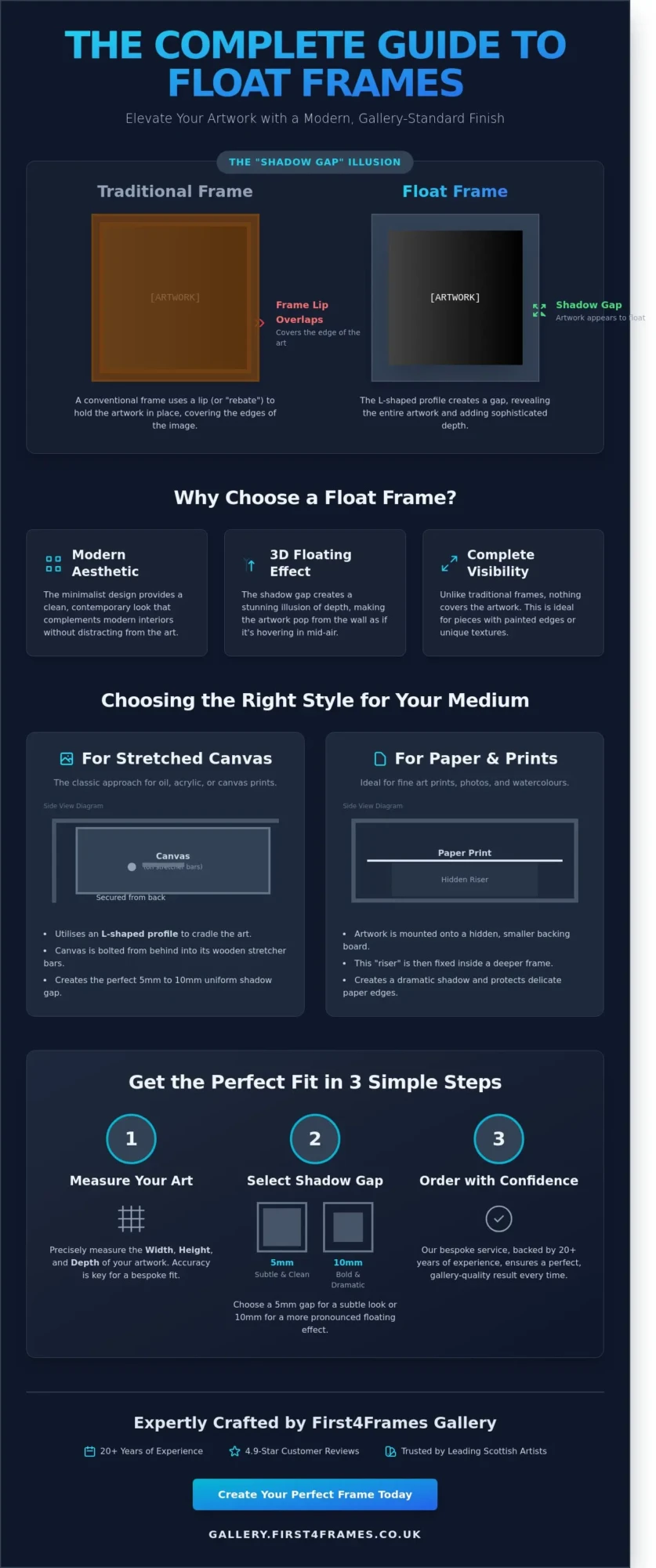
If you’ve ever wondered what is a float frame, you aren’t alone. At First 4 Frames, we often explain this elegant solution to customers looking to elevate their canvas art. Unlike a standard picture frame that uses a “lip” or rebate to overlap the edge of the artwork, a float frame features a distinct L-shaped profile. The artwork is secured from the back, sitting inside the “tray” without anything covering the front of the image. This allows the entire piece to remain visible, right to the very edge of the canvas.

The defining characteristic of this style is the “shadow gap.” This is the intentional space, usually between 5mm and 10mm, left between the edge of the artwork and the inner wall of the frame. It creates a powerful visual illusion, making the artwork appear as if it’s “hovering” or “floating” in mid-air without any visible means of support. Our First4frames gallery features many artists who prefer this method because it adds three-dimensional depth to their work without distracting from the composition.

This minimalist approach provides a clean, sophisticated look that suits modern interiors across the UK. Because the frame doesn’t touch the face of the art, it’s particularly effective for pieces where the artist has painted around the sides of the canvas. Our bespoke framing service ensures that this gap is perfectly uniform, a detail that highlights the precision and craftsmanship we’ve developed over 20 years in the industry.

The History and Rise of the Floater Frame

The origins of the floater frame trace back to mid-century modern galleries in the 1950s and 60s. Curators needed a way to protect large canvases without the heavy, ornate borders of the past. Over the decades, this style transitioned from exclusive London galleries into contemporary UK home décor. It has helped make fine art feel more accessible and less formal. Many of the featured artists in our First4frames gallery choose this style to bridge the gap between their room décor and the artwork itself. It creates a professional finish that feels both high-end and inviting.

Key Terminology: Tray Frames vs. Shadow Boxes

Terminology can be confusing for those new to the world of art. In the UK, “tray frame” is the most common term used by professionals for canvas floaters. While some people use the term “shadow box,” these are actually different products. A shadow box is much deeper and typically includes a glass front to protect 3D memorabilia or delicate objects. Professional framers prefer the term “floater” or “float frame” for canvases because it describes the specific L-shaped mounting technique. Whether you use our print-and-frame service or bring in an original piece, we ensure the terminology matches the high-quality result. Our excellent customer ratings on review platforms reflect our dedication to getting these technical details right every time.

Floating Canvases vs. Floating Paper: Choosing the Right Style

Understanding what is a float frame starts with the specific material you’re looking to display. At the First 4 Frames gallery, we work with a diverse range of mediums, from textured oils on canvas to delicate Giclée prints. Each material demands a bespoke structural approach to achieve that iconic suspended look. This aesthetic represents a modern take on an old tradition, moving away from heavy, overlapping borders toward a design that celebrates the artwork’s physical edges.

The medium of your art dictates the structural choice of the frame because the weight and depth of the piece determine how it must be secured. For instance, a heavy wooden stretcher bar requires a different support system than a lightweight sheet of 310gsm cotton rag paper. With over 20 years of experience in the industry, our team ensures that the method chosen provides both visual impact and long term structural integrity.

The Classic Canvas Float Frame

For stretched canvases, we utilise the “L-profile” method. The frame is shaped like a capital letter ‘L’ when viewed from the side, and the canvas sits inside this cradle. We secure the artwork by bolting it through the back of the frame into the wooden stretcher bars. This creates a precise 5mm to 10mm gap between the canvas edge and the frame interior, making the painting appear to hover.

These frames are perfect for contemporary paintings where the artist has continued the colour onto the edges of the canvas. Because nothing overlaps the front of the work, you don’t lose a single millimetre of the composition. It’s a professional way to protect the canvas corners without hiding the artist’s craft. Many of our featured gallery artists prefer this style as it maintains the three dimensional presence of the original work.

Floating Fine Art Prints on Paper

Floating paper works requires a completely different technical approach. Instead of bolting from the back, we use hidden spacers or foam lifts to raise Giclée prints away from the backing board. This creates a soft shadow underneath the paper, giving it a weightless appearance. If you’ve invested in a print with a “deckled edge,” floating is the only way to show off that beautiful, hand-torn texture.

When planning your layout, it’s helpful to consult standard photo picture sizes to determine how much “float” space you want around the print. We often recommend a border of at least 25mm to 50mm to let the paper breathe. This method keeps the delicate paper away from the glass, preventing damage and ensuring your art stays in pristine condition for decades.

Our commitment to quality is backed by hundreds of five star reviews from customers who trust our craftsmanship for their most precious pieces. If you’re ready to see how your favourite piece looks with a professional edge, you can explore our curated gallery collection to see these styles in action.

What is a Float Frame? The Complete Guide to Floating Artworks

Why Choose a Floating Frame for Your Fine Art?

Choosing the right surround for your investment is about more than just protection. At First4frames, we believe the frame acts as a bridge between your room décor and the artwork itself. It’s a vital connection that helps a piece settle into its environment. When people ask what is a float frame, we describe it as the ultimate way to add 3D depth to a flat wall. The signature shadow gap creates a sophisticated border that makes the art appear as if it’s levitating within the space.

Preservation is another key benefit that our customers value. This style avoids any direct contact with the front of the piece, which is essential for delicate surfaces and textured paint. It’s why professional galleries and our own First4frames gallery curators prefer float frames for canvas artworks. This method ensures the entire face of the art is visible, right to the very edge, without any overlap from a traditional lip. Whether you’re decorating an ultra-modern flat in London or a traditional Scottish interior, the versatility of these frames is unmatched. Our customers often highlight our attention to detail in their 5-star reviews, noting how our bespoke craftsmanship elevates their chosen pieces.

Enhancing the Artistic Experience

The frame does the heavy lifting in pulling the viewer into the centre of the piece. By creating a small gap between the canvas and the wood, the art gets room to breathe. This psychological space prevents the artwork from feeling cramped or restricted by its borders. High-value exhibitions across the UK utilise this technique because it focuses the eye entirely on the artist’s intent. It’s a professional touch that turns a simple print into a gallery-standard feature, making the viewing experience more immersive.

Matching Your Interior Style

Your choice of colour can transform the atmosphere of a room instantly. A black frame provides high-contrast drama, while white offers a light, airy feel that’s perfect for minimalist spaces. Natural wood finishes, like oak or walnut, bring a sense of warmth that’s ideal for residential homes. We’ve seen a 15% increase in property developers using these frames for commercial staging in 2023, as they provide a premium look that appeals to high-end buyers. If you’re organising a gallery wall, try mixing these with traditional picture frames to create a layered, curated aesthetic. With over 20 years of experience, we’ve refined our process to ensure your art looks spectacular from every angle.
Measuring and Ordering Your Bespoke Float Frame

Ordering a bespoke frame starts with the exact dimensions of your canvas: the height, width, and depth. If you’ve recently purchased a vibrant piece from the First4Frames gallery, you’ll know that high-quality art deserves a precision fit. Understanding what is a float frame means recognising that the frame doesn’t touch the edge of the artwork. Instead, it sits slightly apart to create that signature “floating” effect. This gap is the bridge between your room décor and the art itself, and getting the measurements right is the first step in our three-step process.

The Importance of Accurate Measurement

You must measure all four sides of your canvas before ordering. Hand-stretched canvases are rarely perfectly square; a 3mm difference between the top and bottom edges can become very obvious once it’s placed inside a linear frame. You also need to account for the depth of the stretcher bar. If the frame is too shallow, the canvas will protrude. If it’s too deep, you create a “sunken” look that obscures the artist’s edges. Our team uses over 20 years of craft experience to help you calculate the final outer dimensions, ensuring the finished piece fits your wall space exactly as intended.

Materials: Wood vs. Metal Float Frames

The material you choose defines the personality of the piece. Bespoke wood frames like ash, oak, or pine offer an artisan appeal that complements the organic textures found in the work of our featured gallery artists. For a different aesthetic, metal float frames provide a sleek, industrial, or ultra-thin profile. While budget high-street alternatives often use wrapped MDF that can warp over time, our premium materials are sourced for their longevity and strength.

  • Shadow Gap: A 5mm to 10mm gap is the standard in the UK, providing enough space to create a shadow without losing the connection to the frame.
  • Finishes: Choose from painted, stained, or barefaced wood to match your interior style.
  • Profile Width: Select a frame thickness that complements the scale of the room; larger rooms often benefit from a bolder, wider profile.

Whether you’re using our primary bespoke framing service for an original painting or our specific print-and-frame service for a Giclée reproduction, the focus is always on quality. Our excellent customer ratings reflect our commitment to making this process straightforward and professional for every art lover. You don’t need to be an expert to get a gallery-standard result; you just need the right partner to guide you through the technical details.

Ready to find your next masterpiece? Browse our featured gallery artists to see how professional framing elevates every stroke of paint.

For over 20 years, our team in Falkirk has served as a creative hub for the local community, providing expert bespoke framing that brings art to life. We’ve spent two decades perfecting our craft, acting as a trusted professional for artists and collectors alike. At First4Frames Gallery, we believe a frame does the heavy lifting in the relationship between a piece of art and its surroundings. It’s the essential bridge that pulls you into the picture while complementing your home décor.

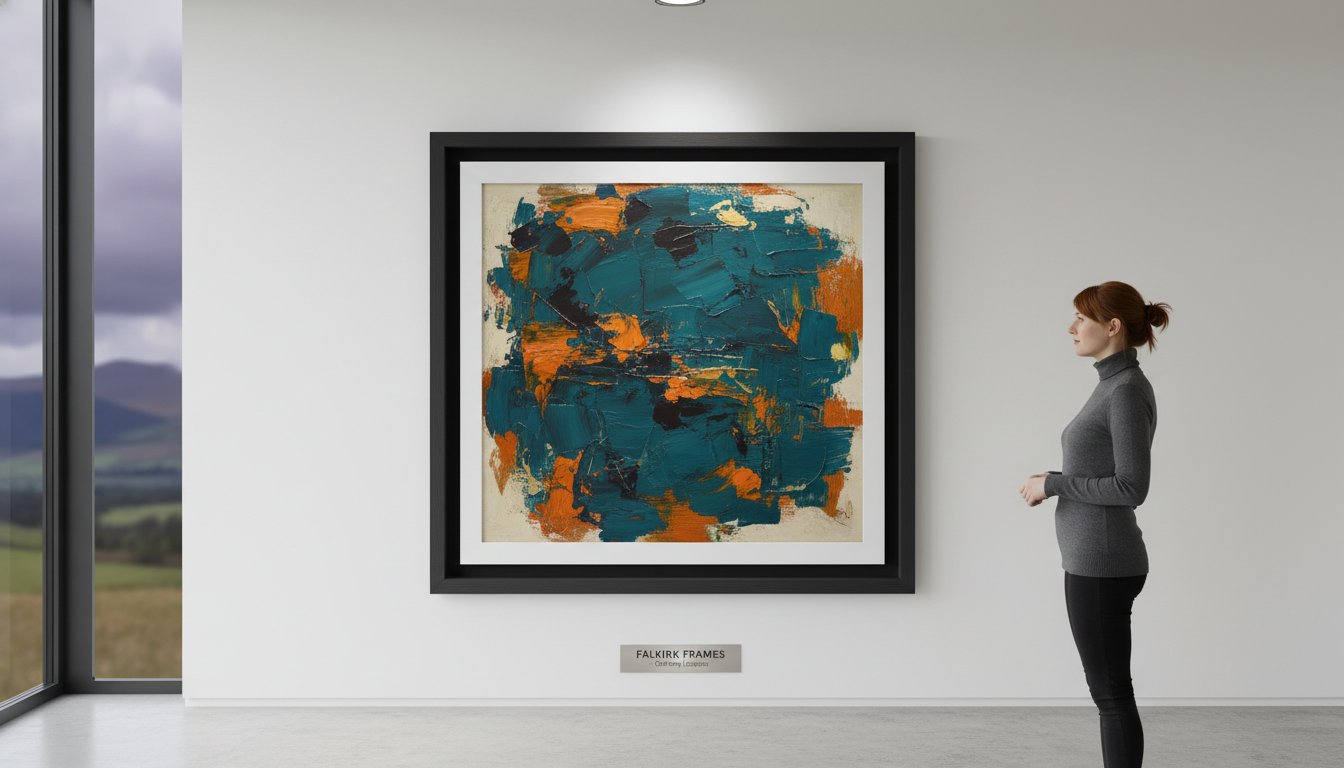
One of our most celebrated collaborations is with the renowned Scottish artist John Lowrie Morrison, famously known as Jolomo. His expressionist landscapes of the Hebrides are defined by their bold, vibrant colours. If you’ve been researching what is a float frame and how it impacts visual depth, a Jolomo print provides the perfect example. The high-energy pinks, oranges, and teals of a Jolomo piece look spectacular when set against a dark, premium float frame. This dark border creates a deep shadow gap that makes the saturated West Coast colours appear even more brilliant, giving the art room to breathe without being restricted by traditional glazing or mounts.

We pride ourselves on being a genuine one-stop-shop for art lovers. Instead of sourcing a print in one place and searching for a framer in another, you can complete the entire process with us. We handle the printing and the professional framing under one roof, ensuring that your chosen piece is handled with the care and expertise it deserves from start to finish.

Bespoke Service with a Personal Touch

Our commitment to excellence is backed by our excellent customer ratings, which reflect our passion for quality and reliable service. We don’t just work with individual homeowners; we also provide commercial art curation for offices and estate agents across Scotland. Whether we’re outfitting a corporate boardroom or a local living room, the First4Frames promise remains the same. We offer a hassle-free, speedy service that combines traditional craftsmanship with modern aesthetics. Every frame is built to last, using premium materials that ensure your investment remains a focal point for years to come.

Ready-to-Hang Solutions

You can see our craftsmanship in action by browsing the “New In” bestsellers in our online gallery. These pieces showcase how a float frame adds a contemporary, gallery-style edge to any room. We’ve made the purchasing journey as simple as possible through our three-step system. First, browse our extensive collection of Scottish art. Second, select the frame that best matches your style. Third, place your order. Your artwork will arrive professionally framed and ready to hang on your wall immediately. It’s art discovery made accessible and straightforward.

Choosing the perfect display for your home doesn’t have to be complicated. By understanding what is a float frame, you can see how that sophisticated shadow gap creates a spectacular three-dimensional effect for your favourite Scottish artworks. At First4Frames Gallery, we’ve spent over 20 years in our Falkirk workshop helping customers bridge the gap between their room décor and fine art. We’re proud to be the trusted partner for leading Scottish artists who require professional displays that won’t fade over time. Our excellent customer reviews highlight our dedication to premium craftsmanship and a bespoke, speedy service. Whether you’re drawn to a bold canvas or a delicate paper print, our expert team ensures every piece is ready to make a statement. You don’t need to be an expert to own spectacular art; you just need a partner who cares about the details as much as you do. Start your journey of artistic discovery today by choosing a piece that speaks to you.

Explore our Ready-to-Hang Float Framed Art Collection

Frequently Asked Questions

Is a float frame only for canvas art?

No, float frames aren’t just for canvas. You’ll often see our featured artists at the First4frames gallery, such as Mark Davies, presenting their 3D mixed-media works in these frames to add incredible depth. They also work beautifully for wood panels or even rigid boards. It’s a versatile choice that creates a perfect bridge between your room décor and the artwork itself.

Can I use a float frame for a photograph on paper?

You can certainly use a float frame for paper photographs. Our print-and-frame service achieves this by mounting your photo onto a rigid board before placing it in the frame to create that signature floating effect. It’s a popular choice for high-quality Giclée prints that need a modern finish. This method ensures your photography looks spectacular without a traditional mount.

How much of a gap should there be in a floating frame?

A standard gap of 5mm to 10mm is usually the perfect choice for most artworks. This space creates the shadow that defines what is a float frame, making the piece appear to hover. At First4frames, our craftsmen often recommend a 5mm gap for smaller pieces to keep the look delicate and professional, while larger canvases can handle a wider 10mm shadow gap.

Are floating frames more expensive than traditional bespoke frames?

Float frames typically cost about the same as our other premium bespoke options. The price depends on the materials and the size of your piece rather than the style itself. Because we’ve been trusted professionals for over 20 years, we ensure our pricing reflects the high-quality craftsmanship that has earned us a 4.9 star rating from hundreds of happy customers across the UK.

How is the artwork actually held inside a float frame?

We secure the artwork by using specialist screws that go through the back of the frame and into the wooden stretcher bars of the canvas. This keeps the art perfectly centred without any visible fixings on the front. It’s a secure method that ensures your investment stays safe while maintaining the illusion of suspension. Our workshop team uses only the best materials for this process.

Do float frames come with glass or acrylic protection?

Traditional float frames don’t usually include glass because they’re designed for canvases that don’t require protection from the air. However, if you’re framing a delicate paper piece through our bespoke framing service, we can create a deep box float frame. This includes premium glazing to protect the artwork from dust and UV light, ensuring it won’t fade over time.

Can I order a float frame for an existing canvas I already own?

Yes, you can definitely order a custom frame for a canvas you already own. Simply use our bespoke framing service to provide your dimensions and choose your finish. We’ve helped thousands of customers since our founding, providing a hassle-free way to upgrade an existing piece with a professional, gallery-standard finish that makes your art look its absolute best.

What is the difference between a tray frame and a float frame?

There’s no functional difference between the two terms; tray frame is simply the traditional name used by UK framers for what is a float frame. Both terms describe an L-shaped profile where the art sits inside a tray with a visible gap. This style is the one-stop-shop solution for artists in our gallery who want a clean, minimalist border for their work.
Posted on

Tray Frames for Canvas Art: The Professional Gallery Guide for 2026

Tray Frames for Canvas Art: The Professional Gallery Guide for 2026

What if the most impactful frame for your canvas was the one that barely seemed to touch it? It’s a common concern for art lovers. You’ve invested in a beautiful piece, perhaps a vibrant abstract by Toni Thornton from our own First4Frames Gallery, and the last thing you want is to hide its unique, textured edges behind a traditional frame. That feeling of wanting to honour the entire artwork, right down to the wrapped corners, is completely understandable and a sign of a true art enthusiast.

This guide will show you exactly how premium, bespoke tray frames for canvas art can solve this problem. We’ll demystify the entire process, from achieving that perfect ‘floating’ gap to understanding how the canvas is securely mounted, giving you the confidence to achieve a spectacular, gallery-quality finish in your own home. We’ll walk you through the simple steps of measuring your canvas, selecting the perfect style to act as a bridge between your art and décor, and introduce you to our trusted UK framing service, backed by over 1,200 five-star customer reviews.

Key Takeaways

  • Understand the ‘floating’ illusion created by a tray frame’s shadow gap to give your art a contemporary, gallery-style finish.
  • Learn why tray frames for canvas art offer a minimalist, modern alternative to traditional frames and provide excellent edge protection without glass.
  • Discover how to select the perfect frame depth and finish to complement your specific canvas, from standard wraps to textured Giclée prints.
  • Master the professional technique for measuring your canvas accurately, including our expert tip for handling ‘out of square’ art for a flawless fit.

What are Tray Frames for Canvas Art?

Imagine your canvas art suspended in mid-air, held by a frame that enhances without ever intruding. That is the magic of a tray frame. Also known as a floater frame, this beautifully simple design is the modern standard for presenting canvas paintings and prints. Instead of a traditional frame that overlaps the front of the artwork, the canvas sits comfortably inside a ‘tray’, leaving a small, deliberate gap between the canvas edge and the inside of the frame. This creates a stunning three-dimensional effect, giving the art room to breathe.

The secret lies in the ‘shadow gap’. This small space casts a subtle shadow, creating a sophisticated illusion that the canvas is floating freely within its enclosure. It’s a technique that artists and galleries adore because it honours the integrity of the artwork. Every brushstroke, every detail right up to the very edge of the canvas, remains 100% visible. This is particularly crucial for gallery-wrapped canvases where the artist has continued the painting around the sides. Traditional framing, with its long and varied history of picture frames, often concealed these important details. The tray frame, however, celebrates them.

This framing style first gained popularity in the minimalist art galleries of the 1960s, a perfect match for the clean lines of abstract and modern art. Today, its journey is complete. By 2026, it has become the gold standard for contemporary homes and galleries, offering a polished, professional finish that feels both timeless and completely current. Our bespoke tray frames for canvas art are crafted with this legacy in mind, ensuring a perfect, gallery-quality presentation for every piece, a standard reflected in our 5-star customer ratings for exceptional craftsmanship.

Tray Frames vs. Floater Frames: Is there a difference?

In short, there is no difference. ‘Tray frame’ and ‘floater frame’ are two names for the exact same L-shaped profile design. The terminology simply changes with location; ‘tray frame’ is the preferred term here in the UK, while ‘floater frame’ is more common in the US. We find the name ‘tray’ perfectly describes how the frame provides a secure, protective enclosure that cradles your beautiful artwork without ever overpowering it.

The Anatomy of an L-Profile Frame

The design’s genius is its L-shaped profile. Your canvas is fixed from the back onto the base of the ‘L’, allowing it to sit on the inner ledge without any part of the frame covering the front. Our bespoke framing service offers a choice of premium materials, from the warm, natural grain of solid wood to sleek black or white painted finishes perfect for a modern aesthetic. The shadow gap is the intentional 5mm space between the canvas and the frame, which creates the signature floating effect.

Choosing the Right Depth and Material for Your Canvas

Selecting the perfect frame is a journey of both technical precision and artistic intuition. The material, depth, and finish of your frame do the heavy lifting in the relationship between the art and its environment. It’s a decision that honours the artist’s work and ensures its beauty endures for years to come. With over 20 years of craftsmanship behind us, we guide you through these crucial choices to find the perfect match for your piece.

The first step is a practical one: matching the frame’s depth to your canvas. Most canvases fall into two categories:

  • Standard Stretcher Bars: Typically around 18mm to 20mm deep, these are common for many paintings and prints.
  • Deep ‘Gallery Wrap’ Canvases: These have a more substantial profile, usually 38mm or deeper, and are designed to be displayed with or without a frame.

Our bespoke tray frames for canvas art are crafted to sit flush with the face of your canvas, creating that signature ‘floating’ effect. A frame that’s too shallow or too deep disrupts this illusion. For large-scale commercial pieces, weight is also a critical factor. A heavy, oversized canvas requires a robust frame made from solid wood or reinforced aluminium to provide structural integrity and prevent bowing over time. We source only premium, kiln-dried timbers because, as professional conservation standards outlined in the Canadian Conservation Institute guide to framing detail, material stability is paramount to protecting artwork for decades.

Wood vs. Metal Tray Frames

The material of your frame sets the foundational tone. Natural woods like Oak and Ash bring an organic warmth that beautifully complements the earthy, atmospheric tones of traditional Scottish landscapes, such as those by artist Allan J. Robertson in our gallery. Conversely, the crisp, clean lines of a sleek black or white aluminium frame are the ultimate choice for enhancing the impact of monochrome photography or bold abstract pieces; the striking drone photography of Australian salt lakes from eamonwyss.com is a fantastic example of this. For high-traffic commercial environments like hotels or offices, aluminium offers superior durability and resistance to knocks.

Selecting the Perfect Finish

Your frame’s finish is the final, crucial detail. A hand-painted bespoke finish allows for perfect colour-matching to your artwork or décor, a service we pride ourselves on providing. A smooth, spray-painted finish is ideal for our high-quality Giclée prints, as it doesn’t compete with the fine detail and rich texture of the print itself. The frame acts as the perfect ‘bridge’ between your room décor and the artwork, tying the entire space together. A matte black finish, for example, can echo other black accents in a room, creating a cohesive and professionally styled interior. This thoughtful approach is a cornerstone of our service, something our excellent customer ratings consistently highlight.

Finally, consider your lighting. A matte or satin finish is highly effective at preventing unwanted reflections and glare in well-lit rooms, ensuring your art can be appreciated from any angle. To see how these principles create stunning results, we invite you to explore the curated collection in our gallery and discover the perfect presentation for your next piece.

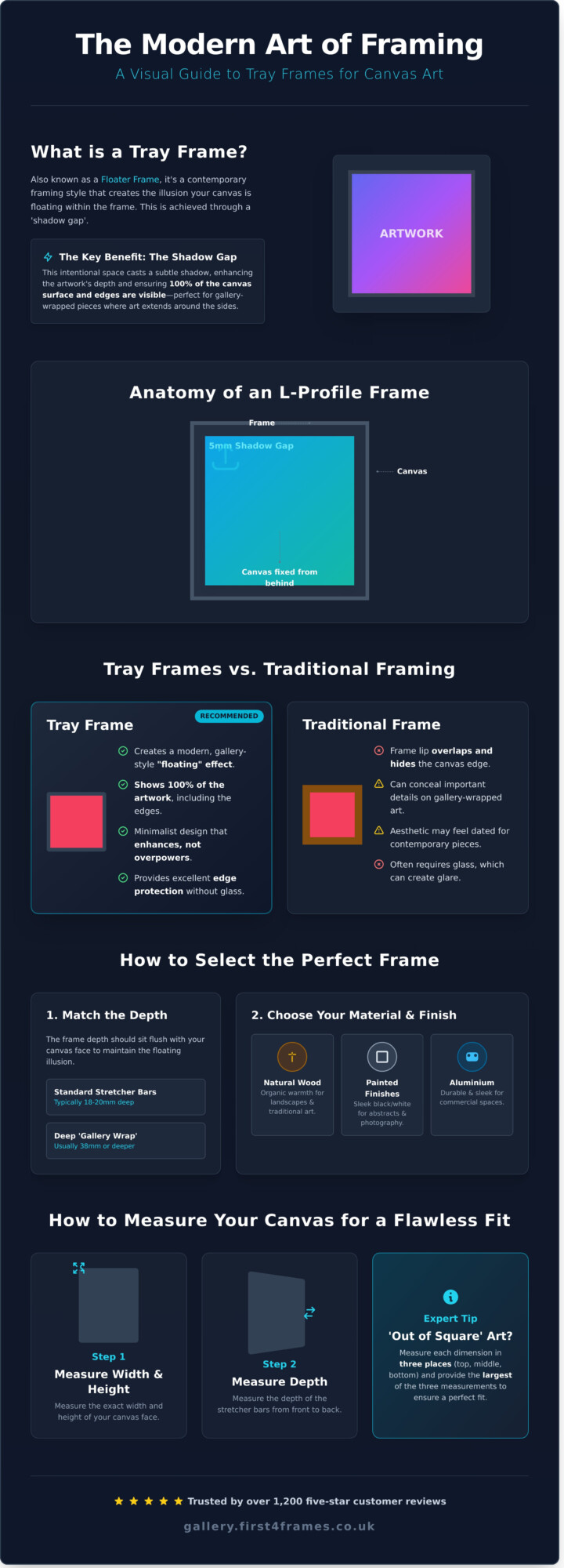
An infographic titled The Modern Art of Framing explains tray frames for canvas art, showing their anatomy, differences from traditional framing, how to pick the right frame, and how to measure your canvas for the best fit.

Tray Frames vs. Traditional Framing: Which is Better?

Choosing the right frame is like casting the perfect supporting actor for your artwork’s leading role. It should enhance, not overshadow. While traditional frames have their place, the clean, contemporary aesthetic of tray frames for canvas art offers a unique presentation that many artists and collectors now prefer. The decision often comes down to the artwork itself and the statement you want to make.

A traditional frame creates a distinct border, a window into the piece. It can be ornate and classical, adding a layer of historical context. In contrast, a tray frame, also known as a floater frame, creates a subtle recess, making the canvas appear to float within its boundaries. This minimalist approach puts 100% of the focus on the art, allowing the piece to breathe and command the space. It’s a modern, gallery-ready finish that feels both intentional and effortless.

The Protection Misconception

One of the first questions we hear is, “Will my art get dusty without glass?” It’s a valid concern, but for canvas art, glass can be more of a hindrance than a help. Most original paintings on canvas are finished with a protective varnish, which seals the surface from dust and UV damage. More importantly, canvas is a natural material that needs to breathe. Sealing it behind glass, especially in a climate like the UK’s, can trap microscopic amounts of moisture, potentially leading to mould growth over time. A tray frame’s raised edges offer robust physical protection from knocks and bumps without suffocating the art.

Visual Breadth and Impact

A standard traditional frame has a ‘rebate’ or lip that overlaps the artwork, typically covering at least 5mm of the canvas on all sides. For a detailed piece, this can mean losing crucial elements of the composition. Tray frames are different. They cradle the artwork without covering a single millimetre of its face. The small space between the canvas edge and the frame, known as the shadow gap, creates a powerful psychological effect. It elevates the artwork, making it feel more like a precious object on display. This is precisely why property stagers and commercial galleries in cities like London and Manchester overwhelmingly choose tray frames for canvas art; they create a high-end, uncluttered look that lets the art speak for itself.

The cost of a bespoke tray frame is a direct investment in the long-term value and impact of your art. For an original piece you’ve invested in, a professionally crafted frame from a trusted service like ours ensures an archival-quality, perfect fit. The installation is a testament to its thoughtful design. The canvas rests inside the frame and is secured from the back, a clean and stable system. For those curious about the mechanics, Jackson’s Art Supplies provides a fantastic overview of how to mount artwork in a tray frame, explaining the role of the shadow gap and fixings. It’s this professional craftsmanship, backed by our excellent customer ratings, that turns a simple canvas into a spectacular centrepiece.

How to Measure for a Bespoke Tray Frame

Creating a truly professional finish for your artwork begins with precision. A bespoke frame is crafted to the millimetre, and providing accurate measurements is the most critical step in the process. It’s the difference between a frame that simply contains your art and one that truly elevates it. Follow our simple, four-step guide, trusted by artists and collectors alike, to ensure a perfect fit for your tray frames for canvas art.

Step 1: Measure Width, Height, and Depth
Lay your stretched canvas on a clean, flat surface. Using a steel tape measure for maximum accuracy, measure the exact width and height. Then, turn the canvas on its side and measure its depth, from the back of the stretcher bar to the very front face of the canvas. This depth measurement is essential for a tray frame, as it determines how your canvas will sit inside its ‘tray’.

Step 2: Check for ‘Out of Square’
Here’s a secret from our 20+ years of framing experience: almost no stretched canvas is perfectly square. Tension and humidity can cause slight variations. To account for this, measure the width in three places (top, middle, and bottom) and the height in three places (left, middle, and right). Provide us with the largest of the three measurements for both width and height. This guarantees your canvas will fit comfortably without being squeezed or damaged.

Step 3: Decide on Your Shadow Gap
The shadow gap is the elegant space between the edge of your canvas and the inside of the frame. This is a crucial design choice. A standard 5mm gap is our most popular option, while a wider 10mm gap can create a more dramatic, contemporary look. Consider the size of your art and the statement you wish to make.

Step 4: Get Your Instant Quote
With your three precise measurements (the largest width, largest height, and depth) and your chosen shadow gap, you have everything you need. Enter these details into our online tool to receive a transparent, instant quote for your beautiful bespoke frame.

The 5mm Shadow Gap Rule

Think of the 5mm shadow gap as the ‘Goldilocks’ zone. It’s the industry standard chosen for over 90% of our projects because it creates a crisp, defined border that gives the artwork breathing space without being distracting. For oversized commercial or gallery pieces (typically over 150cm wide), a wider 10mm gap adds a powerful, deliberate void, pulling the viewer’s eye directly to the art. A gap that is too small, like 2mm, can often look like a fitting error rather than an intentional design feature.

Measuring for Deep Canvases

The internal depth of the frame, known as the ‘rabbet’, is vital. For a classic float-frame effect, the rabbet depth should be greater than your canvas depth. For example, a standard 38mm deep canvas pairs perfectly with a 42mm deep frame, ensuring the art sits flush or slightly recessed. If your canvas is deeper than the frame, it will sit ‘proud’, protruding from the front. While this can be a bold stylistic choice, it’s important to plan for it. Finally, always consider weight. A deep canvas combined with a solid wood frame can exceed 8kg; ensure your wall fixings are rated to support the total weight securely.

With these principles in mind, you can see the spectacular results of perfect measurement on the pieces in our online art gallery.

Choosing the right frame is the final, crucial step in showcasing your artwork. At First4Frames, we bring over 20 years of dedicated craftsmanship to this process, hand-building every frame in our Falkirk workshop. Our passion for art and precision has made us the trusted framer for some of Scotland’s most iconic artists, including the vibrant landscapes of John Lowrie Morrison (Jolomo) and the evocative scenes of Jack Vettriano. We believe that exceptional art deserves an exceptional finish.

That’s why we’ve perfected our ‘one-stop-shop’ approach. You don’t just buy a print; you invest in a complete piece of art, ready to hang. Simply select a stunning piece from our gallery, and our artisans will pair it with the perfect bespoke tray frame, creating a seamless, gallery-quality presentation for your home. This hassle-free service is built on a foundation of trust, reflected in thousands of excellent customer ratings from art lovers across the UK.

The Perfect Pair: Giclée Prints and Tray Frames

Our gallery is home to a spectacular collection of premium Giclée prints. Their archival inks and rich colour fidelity capture every nuance of the original artwork. To protect and enhance this quality, a gallery-standard finish is essential. Our tray frames for canvas art provide that clean, floating effect that lets the image speak for itself. With a wide range of bespoke colours, you can create a perfect bridge between the artwork and your room’s unique palette. To understand what makes this print quality so special, you can read our guide: What Are Giclée Prints?

Bespoke Service for Home and Business

Our expertise extends from personal projects to large-scale commercial installations. Whether you’re framing a single treasured family photo on canvas or staging an entire commercial property with curated art, we provide the same level of artisan care. The First4Frames promise is simple: a hassle-free, speedy service without compromising on the handcrafted quality that defines our work. We manage every detail, ensuring your vision is brought to life beautifully and efficiently.

Ready to transform your space? Let our passion for art and framing elevate your collection.

You now have the professional knowledge to choose the perfect frame. You understand that the modern, floating effect enhances your artwork, and that selecting the correct depth and material is crucial for a flawless presentation. Getting these details right is what transforms a simple canvas into a stunning centrepiece, and the right tray frames for canvas art are the key to achieving this.

At First4Frames, our passion is turning that knowledge into a tangible reality. We bring over 20 years of expert framing experience to every project, a commitment to craftsmanship reflected in our excellent ratings across independent review platforms. As specialists in Scottish fine art and Giclée prints, we know precisely how to make your artwork the hero of any room.

Ready to give your canvas the professional finish it deserves? Start your artistic journey with a bespoke tray frame from First4Frames and let’s create something beautiful together.

Frequently Asked Questions

Do tray frames have glass?

No, tray frames are not glazed and do not have glass. They are specifically designed to showcase the unique texture and surface of a canvas painting, allowing the artwork to be seen without any reflection or barrier. This creates an immediate connection between the viewer and the art. For artists in our gallery who work with rich textures, like Louise Luton, this presentation style is essential for honouring the original piece’s integrity and depth.

How do you secure a canvas into a tray frame?

A canvas is expertly secured into a tray frame from the back using specialised hardware like offset clips or screws. Our professional framing service, backed by over 20 years of craftsmanship, ensures your canvas is perfectly positioned within the frame. We maintain a precise, even gap before fixing it securely. This method provides a robust hold that is completely invisible from the front, resulting in a flawless, gallery-ready finish for your beautiful artwork.

Can I use a tray frame for a canvas that isn’t stretched?

No, a tray frame is designed exclusively for a canvas that has already been stretched over a wooden support, known as a stretcher bar. The frame itself attaches directly to this wooden structure, not to the loose fabric. If you have an un-stretched canvas, it must first be professionally stretched before it can be mounted. Our bespoke picture framing service can handle both the stretching and framing, ensuring your art is displayed perfectly.

What is a shadow gap in framing?

A shadow gap is the small, intentional space between the outer edge of the canvas and the inner edge of the tray frame. This gap, typically between 5-10mm, creates a subtle shadow that gives the illusion of the canvas floating within its frame. It’s a defining feature of tray frames for canvas art, adding depth and sophistication while beautifully separating the artwork from its surroundings without creating a hard border.

Are tray frames more expensive than traditional frames?

The cost of a tray frame is often comparable to a good quality traditional frame, though this depends entirely on the materials, size, and finish. For a medium-sized canvas, a bespoke wooden tray frame from our workshop could range from £60 to £150. While some simple, mass-produced traditional frames may be cheaper, ornate or glazed options can be significantly more expensive. We find they offer fantastic value for their modern, professional aesthetic.

What is the best colour for a tray frame?

The best colour for a tray frame is one that enhances your artwork without competing with it. Classic, neutral choices are almost always the most effective. A black frame provides a strong, defined edge; a white frame offers a clean, contemporary feel; and a natural wood finish adds warmth and texture. We advise selecting a colour that complements the tones within your artwork and acts as a perfect bridge to your room’s decor.

Can I buy tray frames in standard sizes like A3 or A4?

While you might find some standard sizes available, tray frames are most successful when they are made bespoke to fit your canvas perfectly. Canvases, particularly their depths, can vary slightly, so an off-the-shelf frame may not provide the ideal fit or the perfect shadow gap. Our framing service is entirely bespoke, meaning every frame is crafted to the exact millimetre for your artwork, a commitment to quality our excellent customer ratings reflect.

How do I hang a heavy tray-framed canvas safely?

To hang a heavy tray-framed canvas safely, it’s vital to use the correct fittings for both the frame and your wall type. For any piece weighing over 10kg, we recommend attaching two D-rings to the back of the frame, about a third of the way down from the top. Instead of using wire between them, hang each D-ring directly onto a separate, heavy-duty wall hook or screw that is secured with an appropriate wall plug.

Posted on

How to Frame a Canvas Painting: A Complete Guide (DIY vs. Pro)

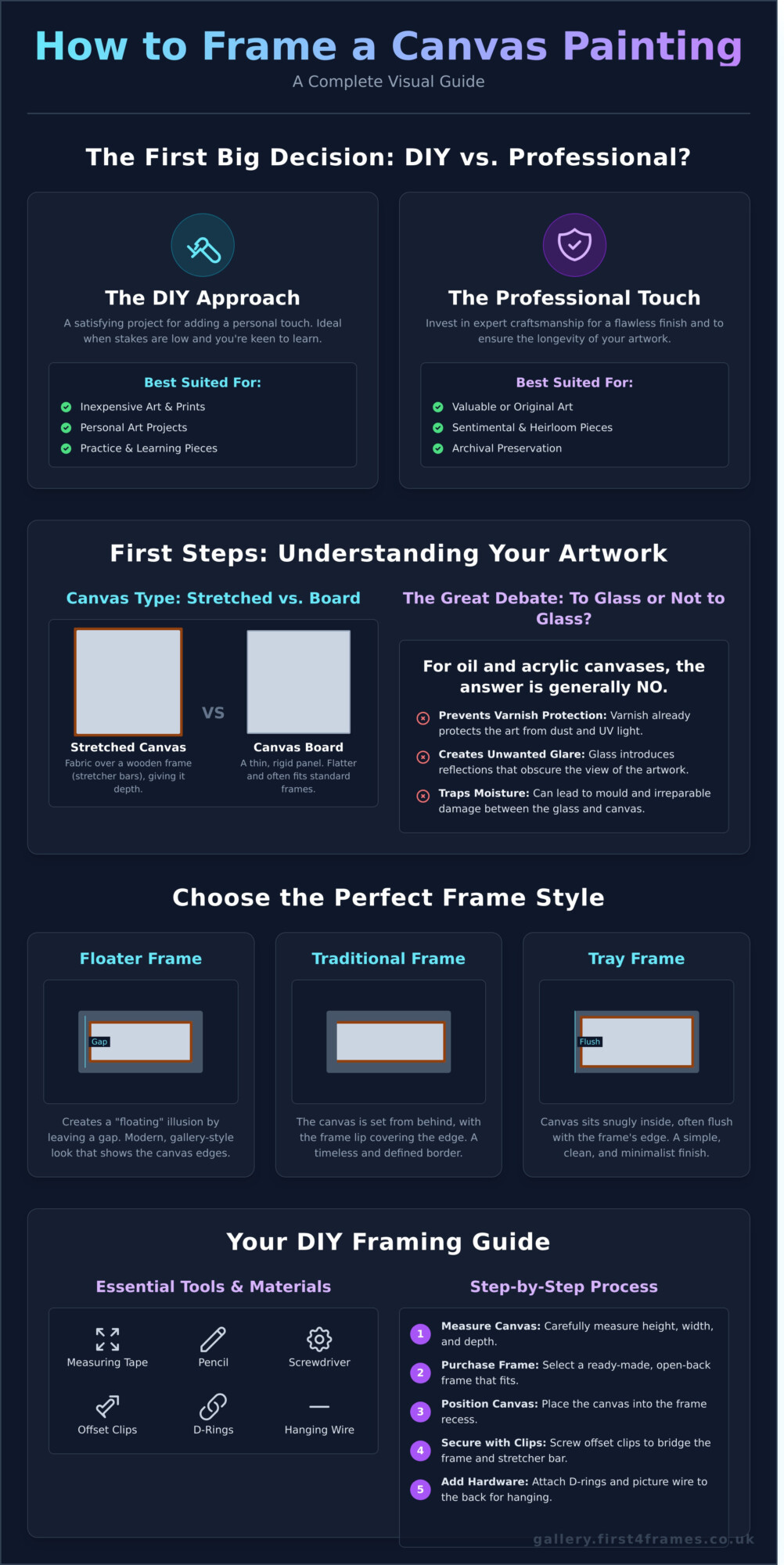
How to Frame a Canvas Painting: A Complete Guide (DIY vs. Pro)

You have a beautiful piece of art, a stretched canvas that deserves a place of honour on your wall. Yet that final, crucial step-framing-can feel daunting. The fear of damaging your painting, the confusing terminology of floater frames and stretcher bars, and the big question of DIY versus professional can leave your masterpiece leaning against a wall instead of being proudly displayed. We believe that learning how to frame a canvas painting should be an exciting and rewarding part of your artistic journey, not a source of stress.

This complete guide is designed to give you clarity and confidence. We’ll walk you through simple and satisfying DIY methods and help you understand when the premium craftsmanship of a professional is the right choice. You will discover the best frame styles to complement your art, acting as the perfect bridge between the canvas and your home décor. Let’s embark on this final step together and ensure your artwork is protected, enhanced, and ready to be admired for years to come.

Key Takeaways

  • The first step to a perfectly framed picture is identifying your canvas type to determine the right framing approach.
  • Explore the simple steps for how to frame a canvas painting at home, and learn which types of art are best suited for a DIY project.
  • Understand when to invest in a bespoke framer to ensure expert preservation and a flawless finish for valuable or sentimental art.
  • Discover how to choose the perfect frame style that enhances your artwork and acts as a beautiful bridge to your room’s decor.

First Steps: Understanding Your Canvas and Frame Options

Embarking on the journey of framing your art is a rewarding process that honours the piece and prepares it for display. The first, most crucial step in learning how to frame a canvas painting is to understand the artwork itself. The type of canvas you have dictates the entire approach, from the style of frame you choose to the hardware you’ll need. A beautiful frame acts as the perfect bridge between your art and your room’s décor, so getting these foundational details right is key to a spectacular, professional finish.

To help you get started, this video provides an excellent visual guide on preparing a canvas for framing:

Stretched Canvas vs. Canvas Board: What’s the Difference?

Most original paintings are created on stretched canvas, which is canvas fabric stretched over a wooden support frame called stretcher bars. This gives the artwork depth and dimension. A canvas board, by contrast, is a thin, rigid panel, making it flatter and often easier to fit into standard frames. It is vital to identify which you have, as the framing techniques are very different. Crucially, never cut a finished painting off its stretcher bars to make it fit a frame; this will ruin the artwork’s tension and value.

To Glass or Not to Glass? The Great Canvas Debate

Unlike paper prints, oil and acrylic paintings are rarely framed behind glass. The paint itself is durable, and artists typically apply a layer of varnish to protect the surface from dust, UV light, and environmental damage. Glass can introduce unwanted glare and, more seriously, trap moisture between its surface and the canvas, which can lead to mould and irreparable damage. Exceptions are sometimes made for delicate media like pastels on canvas or for pieces requiring extra protection in high-traffic areas.

Key Frame Styles for Canvas Paintings

The modern picture frame offers a beautiful array of styles designed specifically for canvas art. Your choice will dramatically influence the final presentation. Here are the most popular options:

  • Floater Frames: This contemporary, gallery-style frame creates the illusion that your canvas is “floating.” The artwork is mounted from behind, leaving a small, elegant gap between the canvas edge and the inside of the frame, showcasing the entire painting, including the sides.
  • Traditional Frames: A classic choice where the canvas is set into the frame from the back, much like a standard photograph. The frame’s lip (or rabbet) covers the very outer edge of the canvas, creating a timeless and defined border.
  • Tray Frames: Also known as cap frames, these are a simple and clean option where the canvas sits snugly inside a “tray.” The front of the canvas is often flush with the frame’s edge, offering a minimalist finish that doesn’t distract from the art.

The DIY Approach: How to Frame a Canvas at Home

Framing a canvas yourself can be an incredibly satisfying project, adding a personal touch to your finished piece. This approach is best suited for inexpensive prints, personal art projects, or practice pieces where the stakes are low. For those keen to learn how to frame a canvas painting at home, we will guide you through the simplest and most common method: using a ready-made, open-back frame. While building a bespoke frame from scratch is a beautiful craft, it requires advanced woodworking skills and specialised tools, putting it beyond the scope of a simple home project.

Essential Tools and Materials You’ll Need

Before you begin, gather your supplies to ensure a smooth process. Working on a soft, clean surface, like a blanket-covered table, is essential to protect your artwork and the frame from scratches. Here’s what you’ll need:

  • Measuring tape
  • Pencil
  • Screwdriver (usually a small Phillips head)
  • Offset clips (also known as Z-clips)
  • Two D-rings
  • Picture-hanging wire

Offset clips are the key to this process. These small, Z-shaped metal brackets are designed to bridge the gap between the back of the canvas stretcher bar and the frame’s recess, holding your art securely in place. They come in various depths, so be sure to choose a size that matches the depth of your canvas.

Step-by-Step: Securing Your Canvas in a Frame

With your tools ready, you can begin. Step one: Measure your canvas. Carefully measure the height, width, and, most importantly, the depth of your canvas. These dimensions are critical for selecting the right frame. Step two: Purchase your frame. Look for an open-back frame that is slightly larger than your canvas, allowing for a small gap (around 5mm) on all sides. Selecting a style that complements your artwork is crucial; for expert guidance, this guide on How to Choose the Best Frame is an excellent resource. Step three: Position and secure the canvas. Gently place your artwork face-down into the frame. Centre it carefully and use offset clips to attach the stretcher bars to the frame, screwing them in at regular intervals. Step four: Attach hanging hardware. Measure about one-third of the way down from the top of the frame on both sides, and screw in your D-rings. Thread the picture wire between them, leaving a little slack, and twist to secure.

The Risks of DIY: When to Think Twice

While the DIY method for how to frame a canvas painting is rewarding, it’s not without risks. A slip of the screwdriver can easily scratch the frame or, worse, damage the artwork. Incorrect measurements can result in a poorly fitting canvas that looks unprofessional and may even fall out. For any artwork that is valuable, sentimental, or irreplaceable, we always recommend seeking a professional framer. Professionals use conservation-grade materials and techniques that protect your art from long-term damage caused by dust, humidity, and light-a level of protection that is difficult to achieve at home.

An infographic titled How to Frame a Canvas Painting compares DIY vs. professional framing, explains canvas types, frame styles (floater, traditional, tray), and lists tools, materials, and step-by-step DIY instructions.

The Professional Touch: Why Choose a Bespoke Framer

While learning how to frame a canvas painting yourself can be a rewarding project, certain pieces of art demand a level of precision and care that only a professional can provide. For original artwork, valuable prints, or pieces with deep sentimental value, entrusting them to a bespoke framer is an investment in their beauty and longevity. A custom frame is more than a border; it’s a bridge between your art and your space, built with premium materials and unparalleled craftsmanship.

Expert Guidance and Flawless Craftsmanship

A professional framer brings years of experience in both art handling and interior design. They act as your personal consultant, guiding you through an extensive collection of mouldings, mounts, and finishes to find the perfect style that enhances your painting without overpowering it. Using precision tools, they ensure every cut is clean and every join is seamless, delivering a gallery-quality finish that is simply unattainable with DIY methods.

Protecting Your Investment with Conservation Framing

A beautiful frame should also be a protective one. Professional framers use conservation-grade techniques to shield your art from damage over time. This is crucial for preserving both the financial and sentimental value of your investment. Key conservation methods include:

This focus on professional-grade protection isn’t unique to the art world; it’s a common practice for preserving any high-value item. For example, car enthusiasts often seek out specialists like Surrey Detailing to apply protective coatings that safeguard their vehicle’s finish and long-term value.

  • Acid-free materials: Using acid-free mount boards and backing prevents the yellowing and decay that can be caused by standard materials.
  • UV-protective glazing: Specialist glass or acrylic can be used to filter out up to 99% of harmful ultraviolet rays, preventing colours from fading.
  • Proper sealing: The frame is expertly sealed to protect the canvas from dust, humidity changes, and even insects.

These principles are backed by conservation experts worldwide. For a deeper understanding, the Canadian Conservation Institute’s Guide to Framing provides excellent detail on archival techniques.

The Bespoke Framing Process Demystified

The journey to a perfectly framed piece is a collaborative and enjoyable experience. It begins with a consultation where you discuss your artwork, your personal style, and the decor of the room where it will hang. An expert then carefully measures your canvas to ensure a flawless fit. You’ll explore a curated selection of beautiful frame mouldings before the framer begins the meticulous work of building a custom frame, tailored exactly to your artwork.

Ready to give your canvas the spectacular finish it deserves? Let our experts help you find the perfect frame. Explore our bespoke framing service.

Choosing the Perfect Frame Style to Complement Your Artwork

Once you’ve mastered the technical steps, the final, creative stage of learning how to frame a canvas painting is selecting a style that elevates both the art and your space. Think of the frame as the perfect bridge between your painting and your room’s decor. A truly great frame enhances the artwork, drawing the eye inward without ever overpowering the piece itself. The key is to consider the painting’s own character-is it modern, traditional, or abstract?-and harmonise it with the colours and textures of your home.

Floater Frames: The Modern Gallery Look

For a clean, contemporary finish, the floater frame is a spectacular choice. This style creates the illusion that your canvas is ‘floating’ within the frame, with a subtle shadow gap between the edge of the artwork and the frame profile. It is the perfect partner for modern and abstract paintings, as it allows the entire piece, including the painted sides of the canvas, to remain visible. This minimalist approach honours the artwork in its complete form, offering a sharp, professional gallery aesthetic.

Traditional Frames: Timeless Elegance

Traditional frames offer a sense of timeless elegance and are defined by a ‘rabbet’-a small lip that neatly covers the outer edge of the canvas. The possibilities are vast, from simple, warm wood profiles to ornate, gilded designs that echo classical craftsmanship. These frames are ideally suited for landscapes, portraits, and traditional still life paintings. When choosing, consider the era and mood of the artwork to create a pairing that feels both authentic and beautiful.

Matching the Frame to Your Interior Design

The final consideration is how the frame will integrate into your home. A beautiful frame choice connects the art to its surroundings, creating a cohesive and polished look. Here are a few guiding principles:

  • For a minimalist or Scandinavian interior, a simple black, white, or natural wood frame with clean lines maintains a sense of calm and order.
  • In a traditional or country-style home, a more ornate or dark wood frame can add warmth and character, complementing other antique or classic pieces.
  • Consider matching the frame’s colour or material to other accent elements in your room, such as metal light fittings, wooden furniture, or a colour from a patterned cushion.
  • Don’t be afraid to create a bold contrast. A sleek, modern frame can provide a stunning update for a traditional painting, just as an ornate frame can be an unexpected, dramatic touch for a piece of abstract art.

For inspiration on how different bespoke frame styles can transform a piece of art, we invite you to explore our online gallery.

The Perfect Frame: Your Artwork’s Final Flourish

Whether you choose the hands-on satisfaction of a DIY project or the unparalleled expertise of a professional, the perfect frame is what transforms a canvas into a true masterpiece for your wall. As we’ve explored, knowing how to frame a canvas painting is about more than just the mechanics; it’s an art form in itself, requiring a careful balance of style, colour, and preservation to truly honour the piece within.

For treasured artworks that deserve a flawless, lasting presentation, our bespoke service provides the ultimate solution. With over 20 years of professional framing experience, we use only the finest conservation-grade materials to protect and enhance your art. Trusted by artists and collectors across Scotland and the UK, our passionate artisans are dedicated to creating the perfect frame for your piece. Have a painting you need framed? Get a bespoke framing quote from our experts today and let’s create something beautiful together.

Frequently Asked Questions

Can you put a stretched canvas into a standard picture frame?

Generally, a standard picture frame is not suitable for a stretched canvas. These frames have a shallow recess (or rabbet) designed for a thin print, mount, and backing board. A canvas on stretcher bars is much deeper and simply won’t fit. You need a purpose-built canvas frame or a floater frame, both of which are specifically designed to accommodate the depth of a canvas and provide a beautiful, professional finish without damaging the artwork.

How much does it cost to have a canvas painting professionally framed?

The cost for professional canvas framing in the UK varies based on the artwork’s size and your choice of frame. For a small to medium-sized painting, you can typically expect to pay between £60 and £150. For larger pieces or bespoke frames crafted from premium woods, the cost could be £200 or more. The complexity of the frame style, such as a floater frame, and the finish you select will also influence the final price for this expert service.

Do you need to put glass over an oil or acrylic painting on canvas?

It is not recommended to put glass over oil or acrylic paintings. These paints are cured to be durable and are typically protected with a layer of varnish, which allows the painting to “breathe” with changes in humidity. Placing glass over the surface can trap moisture, potentially leading to damage, or cause the paint to stick to the glass. It also creates glare, which detracts from the rich texture and spectacular colours of the original artwork.

What is a floater frame and why is it used for canvases?

A floater frame is a modern style where the canvas is set into the frame with a small, uniform gap, creating the illusion that the artwork is floating within it. This design is perfect for canvases because it doesn’t cover the front edge of the painting. It allows the entire piece, including the painted sides, to be visible. This offers a clean, contemporary, and gallery-quality presentation that truly honours the artwork and the artist’s full intention.

How do you attach a canvas painting to a frame securely?

A key step in knowing how to frame a canvas painting is using the correct hardware for a secure fit. For a typical canvas frame, you use offset clips. These are small, Z-shaped brackets that screw into the back of the frame and overlap onto the stretcher bars, holding the canvas firmly. For a floater frame, the canvas is usually attached from the rear, with screws passing through the frame’s back support directly into the wooden stretcher bars.

Should the frame be wider or thinner than the canvas?

The choice between a wider or thinner frame is a matter of aesthetic balance and personal taste. A wide, substantial frame can add presence and a traditional feel, making a bold statement that complements the artwork. In contrast, a thin, minimalist frame provides a modern, subtle border that keeps the focus entirely on the art itself. Consider the style of the painting and your room’s decor to find the perfect bridge between the art and its new home.